Saturday, December 27, 2025

Omar’s balancing act: A tightrope walk between Delhi and Srinagar

Three months in office, J&K CM Omar Abdullah is seen to yielding to the BJP-led centre despite coming to power on an anti-BJP plank. While Omar’s softened stance, evident during PM Modi’s recent visit to the valley, helps governance but risks alienating his base.  A report by Riyaz Wani
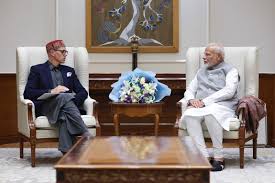
Three months into leading the J&K’s first elected government following a six years long central rule, Chief Minister Omar Abdullah is struggling to navigate the constraints of his role. Elected on a strong anti-BJP platform and as a committed ally of the INDIA bloc’s secular alliance, Omar now finds himself with no immediate escape from the BJP’s control—both within J&K and at the national level. This explains a conspicuous modulation of his political stance since coming to power: he has maintained a low-key political profile, distanced himself from the INDIA bloc and reached out to the BJP. So, when the prime minister visited J&K on January 13 to inaugurate the strategically significant Z-Morh tunnel, Omar not only visited the spot a day ahead to take stock of the preparations, he also effusively praised him in his speech during the inauguration. 

 “People participated overwhelmingly in the polls, and there was no rigging or complaints of election malpractices. Not a single polling station required re-polling. The credit for this goes to you, your associates, and the Election Commission,” Omar said at the speech.  He also thanked the PM for coming to inaugurate the Z-Morh tunnel, despite the harsh weather. “The weather favored you as not a single cloud is in the sky, and the sun is shining brightly. There is no lack of warmth in our hearts,” he added.

The contrast between Omar’s reception of PM Modi and that by the late chief minister Mufti Muhammad Sayeed’s during the PM’s 2015 visit  couldn’t have been starker. Mufti then sought an Indo-Pak dialogue and resurrection of Vajpayee-Musharraf peace process, and Omar sought restoration of statehood to the now union territory of Jammu and Kashmir. Mufti’s tone was assertive and Omar’s conciliatory. But there’s hardly any scope for value judgement here. Between the context of the two speeches, their tone and tenor, there is a world of difference: Mufti was the chief minister of a constitutionally empowered state of Jammu and Kashmir including Ladakh and Omar that of a union territory where his elected government is subservient to Lieutenant Governor.  And there’s little that he can do without the cooperation of the central government and the LG. 

What’s more, the BJP is the largest opposition party in the Assembly with 29 seats. Backed by its government at the centre, the party will always be looking for an opening to form the government. Only thing that prevented the saffron party from forming the government in the union territory was that the voters in Kashmir largely rallied around the National Conference that got 42 seats. The NC-Congress-CPI(M) have 49 seats between them. And in the event of any unlikely defection in the NC in future, the BJP could very well be forming J&K’s first Jammu-dominated elected government, led in all likelihood by a Hindu chief minister. However, even otherwise, the BJP-led central government is a de-facto ruler in the existing hybrid arrangement with power being shared between the Lieutenant Governor Manoj Sinha and the NC-Congress alliance – albeit unequally in favour of the former.  The arrangement suits the BJP and it may prefer to stick with it for an indefinite time. This reality is likely to keep the NC-led government’s urge to assert itself in check, lest it antagonize the centre.  

This has drastically narrowed the maneuvering space of the NC government. And it is unlikely to change as long as the BJP remains a dominant force at the centre, and which looks certain until an indefinite period. In fact, the chances are that the party may become even stronger in near future. Assembly elections in New Delhi and Bihar will be keenly watched. The BJP will try to win New Delhi and retain the Nitish-led government in Bihar. Both prospects look very much possible, more so after the saffron party’s stunning win in Maharashtra. Over the past decade, the BJP has recurrently sneaked from behind to snatch electoral victories from the jaws of defeat, like in Haryana and Maharashtra. So much so, that this has made it challenging to take the party’s setbacks at their face value. 

On the contrary, the opposition INDIA Bloc which got some wind back in its sails following a surprising turnaround in the Lok Sabha polls has again lost its momentum. Maharashtra loss has already caused rumblings within the bloc. Another electoral loss, and the alliance could come apart at the seams. This puts the elected J&K government apparently allied to the opposition alliance on a sticky wicket. It is not a part of the ruling BJP but is reliant on  it for everything.  And the BJP, which is a condescending benefactor here, will hardly make things easier except on its terms. The saffron party would also be loathe to alter this favourable arrangement by granting an early statehood to J&K. More so, when there also are far bigger reasons to withhold it.  The centre, it is believed, is unlikely to let go of control on the security agencies and the allied security related matters, lest it unravel the gains made in recent years. The recent rise in militancy-related violence is likely to further dissuade the central government from handing over complete control over the region to an elected government. Should this happen, a future governor will continue to wield a strong say in the affairs of J&K. 

There’s thus little hope that statehood will be restored anytime soon. Although Omar did ask for its reinstatement at the Z-Morh event, and the prime minister did assure him of his promise to do so, little is expected to change. For example, the prime minister in his speech once again stayed short of a timeline, nor did he specifically mention statehood.

That said, it will be politically unsustainable for Omar to continue to  play the role of a conciliatory and subservient chief minister. Already his praise for the PM has lent some ammunition to his opponents in the Valley, who have termed it an appeasement of the BJP that goes contrary to the spirit of his anti-Hindutva mandate.  

“Difference between a shortsighted politician and a true statesman. In 2003 then BJP PM Vajpayee during his visit to Srinagar showed great faith in Mufti sahab’s vision of peace with dignity even though PDP had a mere 16 MLAs. Today our CM despite 50 MLAs did everything to appease & normalise Delhi’s unilateral actions in August 2019 that cleaved & robbed J&K of its special status,” former J&K Chief Minister Mehbooba Mufti posted on X, formerly twitter, about the Omar’s warm reception of Modi.

On the other hand, while people in the Valley have generally been understanding of the CM’s predicament, his Z-Morh speech was seen as a little more yielding than needed. It makes Omar’s job challenging, requiring him to perform a delicate balancing act – appeasing the Centre to ensure his government’s survival while addressing the sentiments of his core constituency still reeling from the loss of Article 370 and downgrading of the once empowered state. 

NHRC for verified data on children in conflict

NHRC for verified data on children in conflict
Justice V Ramasubramanian, Chairperson, National Human Rights Commission (NHRC), India today said that it is necessary to have authentic and verified data on the children in conflict with the law to have a clear understanding of their problems and make suggestions to address them. He was chairing the meeting of the Commission’s Core Group on Children focused on the theme ‘Human rights of children in conflict with law’ in the presence of Member, Vijaya Bharathi Sayani, Secretary General, Bharat Lal, senior officers and expert speakers at its premises in New Delhi today. The meeting was attended by a number of senior officers and experts working in the field.

Justice Ramasubramanian said that going by the discussion on the subject, two major concerns have emerged including how to collect data and how to authenticate the data already available on the children in conflict with law. Therefore, he concurred with the suggestion to constitute a working group of experts to check and authenticate the available data related to the children in conflict with the law, particularly their age and numbers and not necessarily their identities in coordination and consultation with the Bureau of Police Research and Development (BPR&D), National Crime Records Bureau (NCRB), National Legal Services Authority (NALSA) and different High Courts.

The NHRC, India Chairperson also asked the experts working in the field of Juvenile Justice Care to segregate their suggestions to bring improvements by amendments in statutes, changes in rules or by SOPs, as part of the long-term and short-term measures to bring improvements in the area of the Juvenile Justice System. He also concurred with the suggestion to organise State-wise meetings of the Juvenile Justice Boards, District Legal Services Authority, State Legal Services Authority and the NHRC to find a way forward in terms of their counseling, rehabilitation and reintegration into families.

Referring to the report of a working group called ‘the Commission for the Application of Alternative Measures’ under the auspices of UNICEF titled ‘Rights of Children in Conflict with the Law 2007’, the NHRC Chairperson expressed the hope that the NHRC core group could develop solutions for Juvenile Justice Care on those lines which included recommendations for developing diversion programmes;

i.) Juvenile offenders must admit to the crime;

ii.) Juvenile offenders should not be placed in custody to participate in diversion programmes;

iii.) Juvenile offenders are entitled to a court procedure if they or their guardians disagree with the diversion measures;

iv.) Juvenile offenders may withdraw from the diversion process at any time and opt for the formal court procedure.

The diversion programme includes seven components: victim-offender mediation, admonition, local community corrections councils, joint family meetings, circle trials, juvenile courts, and community service.

The report argues that while crimes are often seen as offences against the state, they should also be viewed from the victim’s perspective, seeking reconciliation. It suggests that allowing juveniles to make amends to society can help them reintegrate faster, without a criminal record, which would help them avoid future employment or social exclusion issues.

Before this, NHRC, India Secretary General, Bharat Lal said that the Commission is committed to ensuring the protection and promotion of child rights. In this context, it has been organizing various consultations on the different thematic issues of the human rights of children and issuing advisories also from time to time. The discussion on the human rights of children in conflict with the law has also been organized to identify the challenges, to suggest measures for improvement in the Juvenile Justice System with a specific focus on juveniles in adult prisons, juveniles in correctional homes and measures for rehabilitation of juveniles in conflict with the law. He stressed that juveniles must be viewed as victims of circumstances rather than mere offenders, calling for a focus on rehabilitation measures that would help reintegrate them into society, offering them opportunities for a better future.

NHRC, India Director, Lt. Col Virender Singh gave an overview of the meeting and the three critical areas of discussion significant to the children in conflict with law.

A number of experts and senior officers like Shri Rajeev Kumar Sharma, Director General, BPR&; Ms. Isha Pandey, DIG, BPR&D; Balkrishan Goel, NHRC Special Monitor on Children; Amod K. Kanth, Founder and Mentor Prayas Juvenile Aid Centre (JAC) Society; Prof. Vijay Raghavan, Tata Institute of Social Sciences; Sourabh Ghosh, CRY; Ms Swagata Raha, Legal Researcher, & Head Restorative Practices Enfold India; Adv. Anant Kumar Asthana, Child Rights Lawyer; Ms Deepshikha, Prayas Juvenile Aid Centre (JAC) Society, among others, gave their suggestions and inputs. NHRC DG (I), Ram Prasad Meena and Registrar (Law), Joginder Singh also attended the meeting.

Some of the other suggestions emanated from the discussions are as follows;

Make information on proceedings involving Children in Conflict with the Law available on a portal, without revealing their identity;
Establish a cadre of child protection officials in all States;
Identify and delineate responsibilities within the child protection workforce, and fill vacant positions to strengthen the child care mechanism;
Conduct a social audit of Child Care Institutions, ensuring adequate manpower, including counselors;
Encourage institutional contributions to engage children in useful activities;
Strengthen the Legal Aid Mechanism for Children in Conflict with Law;
Increase ‘Community Service’ as a correctional measure for child offenders;
Revamp rehabilitation and social reintegration programs for Children in Conflict with Law;
Introduce joint training for stakeholders involved in child welfare, focusing on the behavioural aspects of child offenders;
Collate and publicise best practices for the welfare of child offenders across the country;
Increase funding and staff recruitment for Child Care Institutions;
Develop Standard Operating Procedures (SOPs) to streamline the process.
The Commission will further deliberate upon these suggestions and more inputs to finalize its recommendations to protect the human rights of children in conflict with law, in the country.

Trump’s trumpet strikes the home note

US President Donald Trump’s recent moves are quite in line with his MAGA theme. It ensures that American citizens have the first right over their country and its resources rather than aspiring non-Americans. BY KUMKUM CHADHA 

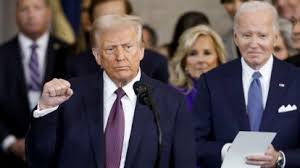
It is perhaps for the first time in recent History that the swearing in of a President of a foreign country has generated so much interest in India and amongst Indians. Yes, there were instances in the past when the who would make it question generated interest but once the election was over, the interest also subsided. 

For instance, when Barack Obama ran for the office of the President in the US, there were many Indians who wished for his win. Later, his victory speech of Yes we can did grab eyeballs with hundreds and thousands of Indians glued to their TV sets to watch and hear the first African American President: a “black” to put it bluntly.  

It was the winter of 2008 when Barack Obama was elected for the first time as President of the United States of America. 

When he addressed a frenzied crowd, some 240,000 people, he mesmerized them. He spoke of core issues and “our future” as Americans, but nothing was as magical as those three words: Yes we can: a rebuttal to those “who tell us we can’t”, to quote Obama. 

The words have lingered, perhaps etched in Memory for the decade and a half plus that they were uttered by the then President elect. 

The second time when an election in the US generated interest was when Kamala Harris was running for the office of the Vice President. Then it was less about Harris and more about an Indian making it to the second highest office of the US. That she did little for India even while carrying her Indian origins on her sleeve, during the campaign, is another matter. 

This time around when the US was set to elect its 47th President there was a kind of lukewarm interest: in fact, it was more about Trump, the man and the maverick, rather than a man running for a country’s highest office. It was more about the assassination attempt on him, dismissed by many as one that was staged, than what he was saying or promising to do: it was more about the theatrics and histrionics than content.   

 There was, of course, the usual pre-poll rhetoric about illegal immigrants and trade tariffs as there was about making America great again or MAGA so to speak. 

Indians were skeptical but also aware that pre-poll rhetoric is more for domestic consumption than one that would have international repercussions. 

But Trump being Trump, within hours of taking over, he signed over 20 executive orders: more than any US President in the past had done on Day one. 

That said, he also started by rescinding 78 executive orders approved by his predecessor Joe Biden during his Presidential tenure including the one to protect federal lands from oil drilling. 

For the record, weeks before Donald Trump assumed office, outgoing President Joe Biden had banned offshore drilling across American coastal waters, affecting 625 million acres, rather 253 million hectares, of ocean. 

Earlier, Trump had pledged to reverse Biden’s climate change policies. His campaign slogan, “Drill, Baby, Drill” had become synonymous with his plan to boost fossil fuel production in the US and reverse climate policies aimed at reducing carbon emissions.

Of the 80 odd executive orders that Trump signed, the one to end Birthright Citizenship and illegal immigration have made Indians sit up. 

Directly affecting tech workers to students, the future of hundreds and thousands of Indian families faces an uncertain future were these changes to occur. 

Among the fastest growing communities in the US, Indian Americans number around 5.4 million of the US population. 

Till Trump reversed it, the Birthright Citizenship entitled US citizenship to anyone born on American soil irrespective of the status of the parents. This, therefore, benefitted children of non-American parents desirous of making the US their home. 

Trump’s clampdown, were one to use this term, would directly affect children born to Indian nationals who are on temporary work visas including H-1B visas or those in the queue for a green card. This would also impact those parents, particularly from India and Mexico who often travel to the US specifically to give birth to enable their children to claim US citizenship. 

As for illegal migrants, on a first count, their number is around 18,000 which India has confirmed it would take back. 

But this is a tip of the iceberg because there are a large number who have yet to be identified and perhaps will be deported as and when the process is complete. The way Trump is chartering his Presidency he is clearly a man in a hurry and one who wants to hammer the I did what I said theme. 

But this is more than mere optics. His recent moves, quite in line with his Make America Great Again or MAGA theme, make the future uncertain. It ensures that American citizens have the first right over their country and its resources rather than aspiring non-Americans, staking a claim.  

Having said that, Executive orders are not cast in stone. They are subject to legal scrutiny.  

Immediately after Trump signed the order overturning Birthright citizenship, immigrants’ rights advocates sued his administration. A federal Court in Seattle went ahead and issued a restraining order, terming it as “blatantly unconstitutional”. 

As of now, those affected can breathe easy; also live in the hope that many of the executive orders, if challenged, could be thrown out by the Courts. 

Legal hurdles apart, doing away with an existing law, like the Birthright Citizenship one, would require a two-thirds vote in both the House of Representatives and the Senate as also approval by three quarters of US states.

However, on the issue of illegal migrants there is no stopping Trump from packing them back to where they came from, particularly Latin America. 

As for Indians, some 18000 plus may return soon given that the Indian government is committed to take them back. However, there may be a time lag for others subject to the identification and subsequent verification process. 

In any case India’s policy is to encourage legal migration rather than illegal migrants, so on this count, India and the US are not working at cross purposes. 

Yet, the big issue that stares in the face of the Indian government is Trump’s policy on trade tariffs. On this, India may not be on the radar immediately like Canada and Mexico for instance, but the threat looms large.

It would not be fair to say that the odds are against India and Indians whether it is on migration, citizenship rights or trade tariffs. However, it cannot be denied that these are uncertain, rather anxious times, for the Indo-US relationship. 

The road ahead may not be as rocky as many imagine it to be, it clearly is far from being smooth. 

A silver lining, if one may call it one, is the chemistry that Indian Prime Minister Narendra Modi and US President Donald Trump share. Politically, the two are, to use an American term, “buddies” but then when national interests are at stake, this chemistry could be a mere talking point. 

 Therefore, even though India’s Foreign Minister S Jaishankar sees the US as “a partner with whom we can get things done” when it comes to substantive issues, it would and should be country first, both for Indian Prime Minister Narendra Modi and US President Donald Trump. 

Therefore even while Trump’s trumpet has struck the home note, whether it is a melody or cacophony, remains to be seen. 

Washington’s power struggle and Trump’s sweeping purge

Donald Trump’s second term has sparked a fierce clash between old power groups and nationalist forces. As the White House acts fast, India is rethinking its diplomatic approach in a rapidly shifting global landscape. by Gopal Misra

Few expected that a full scale confrontation between the well-entrenched interest groups driven by a well-orchestrated imperial pro-colonial mindset and the nationalist forces committed to democratic values would flare up in the US soon after the inauguration of the new president. It, however, is happening and the world is keenly watching, if not totally dumb founded.

President Donald Trump, in spite of being attacked a number of times during the election campaign, finally occupies the world’s most powerful and coveted position for the second time. Apart from being escaped from a number of assassination attempts, Trump could be sworn-in despite the efforts of the war mongers trying to implicate him in various criminal charges.

Initially, the political differences were not an open confrontation, but the situation started worsening, when the Biden Administration decided not to work for an amicable political understanding. Instead, Biden used the federal agencies to augment the agenda of the anti-Trump forces, but later he realized that he would soon be buried in history. In a bid to protect his supporters, he initially started pardoning his family, and later his cronies in the Pentagon and even those who could be facing charges for collaborating with China in developing the deadly man-made Coronavirus.

In this context, the scholars engaged in the studies of strategic and foreign affairs in India too were taken for a surprise. They are now trying to understand and evaluate the implications for India of the prompt executive actions being taken by the White House soon after Trump’s inauguration on January 20 this year.

They also have to revisit the impact of the miscalculation of Indian PM Narendra Modi in ignoring Trump’s request to meet him, while he was engaged in the crucial struggle of his political survival. It is also being asked why his foreign office, led by  External Affairs Minister, S.Jaishankar, could not advise Modi about the political decline of Biden before he was made irrelevant by the nationalist forces in the US. It also indicates that Modi has abandoned the practice of broad consultations mostly done by people occupying high positions in the state whether it is executive or judiciary.

New Delhi taken by surprise

It is often stated that one should adhere to the basic essentials of the protocols while occupying high positions in the government. If their actions fail to follow the established norms, the country they represent and for them too the consequences could be harmful. The recent mistakes being committed even before being sworn-in for the third term by the Modi supporters cannot be ignored or forgiven. It has never been explained why they, including  Defence Minister Rajnath Singh, assisted Modi to be declared the leader of the coalition NDA, even before being endorsed by the BJP parliamentary party. Modi has failed to get a majority for the BJP in the Lok Sabha, but he was the unquestioned leader of the party. He neither faced any challenge within the ruling party nor from the Opposition. Instead, he along with his cronies opted to ignore the practice and traditions of getting himself elected as the leader of the BJP parliamentary party. Instead, he chose to indulge in cheap gimmicks in the media by getting the leadership of the NDA, thus camouflaging his mistake.

He is seen repeating such mistakes even now, and it is now reflected in his dealings with foreign powers. Fortunately, for the time being India is not a priority for the US. It gives breathing space to the mandarins in South Block, which houses three key ministries, PMO, Defence and External Affairs, to review their existing approach. They have recently been committing a series of blunders allowing anti-India forces to gain power from Maldives to Bangladesh. It is to be keenly watched whether Modi choses to correct mistakes during this period or reverts to the practice of indulging in self-praise. Being a genuine follower of Lord Rama, he may revisit his ideals and be benefitted by the truthfulness considered essential for a devout Hindu. His supporters, perhaps, need to be restrained from depending too much on the false propaganda. It has not only lost its luster and credibility, but also has become counter-productive for the ruling party and its leader.

Meanwhile, Trump has begun his cleansing mission. A large number of employees appointed in various departments of the federal government by his predecessor, former President Joe Biden, are being axed. It is also alleged that they were not only hobnobbing with the war industries, but also facilitating the influx of a large number of immigrants having little loyalties towards the US and its ideals. He has also declared an emergency on the US-Mexico border to prevent illegal immigrants.

Pardons and power plays

Earlier, just a few days before and also a little later in January this year, both Trump and his predecessor, Joe Biden, were seen performing the drama of competing with each other in pardoning their respective favourites.

It has also been noticed that within hours of being saddled in the office, Trump has not only pardoned those facing long-term imprisonment for storming the Capitol on January 6, 2021, he further bulldozed his way through by issuing executive order to sack a large number of federal employees, especially those serving in various agencies such as the Federal Bureau of Investigation and CIA. He proposes to replace them with the new appointees calling them Schedule Policy Career.

For India, the prompt endorsement of Marco Rubio as Secretary of. State by the US Senate, is perhaps a happy moment. The political tilt of Elon Musk towards Beijing is well known. In the new American establishment, Rubio’s concerns towards China are quite vocal. Interestingly, he was also able to get endorsement from a number of Democrats in the House. None opposed him in the House, which reflects the current mood in the American establishment regarding the Dragon.

Rubio’s confirmation is also being viewed as the weakening of the political clout of Elon Musk in the Trump Administration. Musk, who has vast business interests in China, might not have endorsed any anti-China measures. On the other hand, Rubio is a known hardliner and believes that China is a threat to mankind.

His views regarding Beijing are identical with Christopher Wray. In his farewell message before demitting the post of Director in the FBI, he had said that the contemporary American generation is facing unprecedented hostile action from the totalitarian Chinese regime.

American dilemma

The foundation of the US as the world’s most admired democracy, perhaps, can be traced to James Town, where in 1619, this vibrant all-inclusive democratic state was born. During the past four centuries, America has witnessed civil wars, freedom struggle from the European colonists, especially Britain, and fought for ending the slavery and now it is on the forefront in the worldwide campaign for human rights.

The transformation was not easy, but the commitment for setting up a plural society accompanied by strong yearnings for setting up a rational secular society has finally succeeded.

However, the shadow of racial and religious prejudices continue to influence the state’s agenda for continuing its supremacy in the geo-politics.

The world has witnessed the transformation of the US as a symbol of anti-colonialists to become a representative of the European colonists. Since the conclusion of World War-II, the US has been adopting the tricks of the erstwhile colonists, for example supporting the proxies of the British in Asia and Africa. The national leaders for emancipating their people from hunger and needing basic essentials for survival were branded as communists or opposed to democracy. They were promptly replaced by military dictators. From Richard Nixon to Biden, they were always promoting anti-democratic forces.

Nixon had endorsed even the genocide in Bangladesh that had caused the killing of three million Bengali Muslims and the violation of two million Muslim women. Nearly half a century later, Biden endured the end of an elected government in Bangladesh with the support of the Muslim clergy and China. In Syria, he helped al-Qaeda to occupy power.

Since Trump is opposed to any American intervention or involvement of his country’s forces, the military-industrial complex has gone against him.

Key leaders, citizens cast votes to seal Delhi’s fate

Photo : Naveen Bansal

President of India Droupadi Murmu, Vice President Jagdeep Dhankhar, senior leaders including Sonia Gandhi, Rahul Gandhi and Arvind Kejriwal have voted today in the polls for 70 Assembly seats in the national capital. 

Voting for the Delhi assembly elections began at 7 am today, and will continue till 6 pm across 13,766 polling stations in the city, with AAP, Congress, and BJP contesting to clinch the win.

There are 70 assembly constituencies which will decide the fates of 699 candidates. Around 1.56 crore citizens are eligible to vote in the city, including 83.76 lakh men, 72.36 lakh women, and 1,267 individuals from the third gender.

A total of 19.95 voter turnout was recorded till 11 am.

President of India Droupadi Murmu voted in the Delhi assembly elections. She cast her vote at the polling station in Dr. Rajendra Prasad Kendriya Vidyalaya inside Rashtrapati Bhavan complex.

The Vice President of India Jagdeep Dhankhar also reached the polling station to cast his vote.

“Matdaan’ is the biggest ‘daan’, it is the oxygen, foundation of democracy. It is the mother of all rights. The importance of democracy is when everyone votes with freedom. It helps democracy. India is an example to the world, it is the oldest, largest, strongest, vibrant democracy… This right is with every citizen. When India got freedom, this right was given, when most of the democratic countries didn’t have this arrangement. Today I consider it as a festival of democracy. The way election commission is organising, the whole world is in awe. The technique that we adopted, where results are declared fast, the whole world is appreciating. Everyone should exercise this right,” he said.

The city also witnessed a casting of votes by various prominent and strong candidates from New Delhi constituency all, including Sandeep Dikshit, Arvind Kejriwal, Parvesh Verma along with others.

“Today, in the great festival of democracy, I voted for a developed Delhi along with my family. I appeal to all my brothers, sisters, young friends, mothers and elders of Delhi and New Delhi to vote in maximum and elect a good governance in the state,” he wrote on a micro blogging site X.

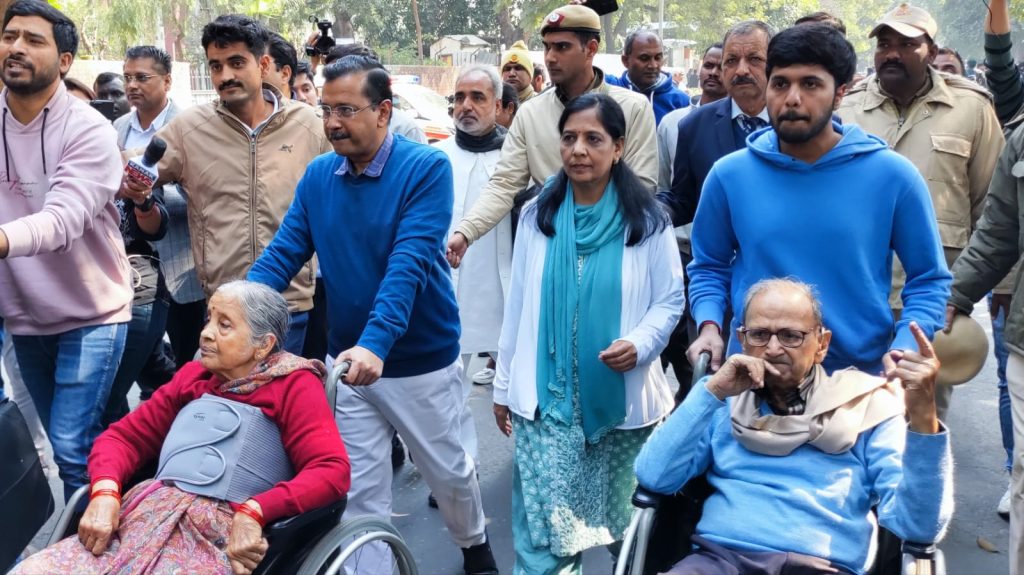
AAP national convener and former chief minister of Delhi Arvind Kejriwal reached the polling station at Lady Irwin Senior Secondary School, along with his parents, wife, and son to cast his vote.

The sitting MLA from New Delhi constituency faces a contest from Congress’ Sandeep Dikshit and BJP’s Parvesh Verma.

“”Today we have to defeat the politics of lies, hatred and fear and make truth, development and honesty win. Vote yourself and also inspire your family, friends and neighbours. Hooliganism will lose, Delhi will win,” he wrote on X.

Meanwhile, Priyanka Gandhi, Sonia Gandhi, and Rahul Gandhi also reached out to the polling station to cast their votes in the ongoing elections.

More than 30,000 police personnel and 220 companies of paramilitary forces have been deployed across Delhi to ensure a fair and smooth voting process.

Congress ups the ante in Delhi, may upset AAP’s poll arithmetic

The Delhi election battle, initially seen as a straight fight between Arvind Kejriwal’s AAP and the BJP, has turned into a three-way contest with Congress emerging as a potential spoiler. Yet, Kejriwal and BJP leaders continue to trade barbs amid shifting dynamics.  A report by Pawan Kumar Bansal

In politics there are no permanent enemies or friends. This holds true of relations between Congress and AAP as during Haryana assembly elections, Rahul Gandhi had advocated alliance with AAP but in Delhi assembly elections, the two parties are fighting like cats and dogs.  

It was believed that the Delhi battle would be between AAP and BJP, with Congress playing a minor role. However, with Congress’s aggressive campaigning, it is turning into a triangular contest. While BJP and AAP remain the main players and hot contenders to form the government, Congress is now seen as a potential spoilsport for AAP.

Political analyst Devinder Surjewala remarked that Congress would cut into AAP’s vote share, adding that while Congress candidates may or may not win, the votes they secure will significantly benefit the BJP. Relations between AAP and Congress, both members of INDIA bloc, have soured to the extent that Congress has filed a complaint against AAP over a ‘defamatory’ post on its X handle. The complaint alleges that AAP shared defamatory pictures of the Leader of the Opposition, Rahul Gandhi and AICC treasurer Ajay Maken.

Describing the post as a violation of the Model Code of Conduct, it alleges that Arvind Kejriwal is portrayed in the post as the only honest man while senior Congress leaders, including Rahul Gandhi, are depicted as dishonest. The election campaign has hit a new low, with AAP and BJP leaders engaging in cheap allegations and counter-allegations, accusing Kejriwal of making “hollow promises and false claims.” Parvesh Verma, the BJP candidate from the New Delhi assembly constituency, even resorted to theatrics by immersing Kejriwal’s cut-out in the Yamuna.

Meanwhile, Delhi CM Atishi used Republic Day celebrations to highlight her government’s achievements including its commendable work in education and health, along with providing free electricity. Arvind Kejriwal is also trying to gain the sympathy of the electorate by drawing attention to threats to his life. Kejriwal also took a jab at the BJP for failing to project its CM’s face so far.

The election is a matter of prestige for both PM Narendra Modi and Arvind Kejriwal. It will be a face-saving moment for Congress if it manages to win a few seats, as AAP may then depend on it to form the government. The BJP is deploying all weapons in its armoury to win the polls. Narendra Modi has already addressed public meetings, and Union Home Minister Amit Shah is personally supervising and monitoring what is being called “Operation Delhi.”

Considering the presence of a large number of Haryana-origin people in Delhi, Haryana CM Naib Saini and former Haryana chief minister and current Union Minister Manohar Lal are also campaigning in the city. As the voting day approaches, both AAP and BJP are competing to make promises to all sections of society. Acknowledging that several areas in Delhi still face issues of sewage and contaminated drinking water, Arvind Kejriwal has promised that, if voted to power, his government will replace all old and malfunctioning sewer lines.

On the other hand, Union Home Minister Amit Shah has promised an honorarium of Rs 20,000 per month to priests of all temples, creation of 20 lakh jobs in the private sector, the constitution of a gig workers’ welfare board, scholarships for their children for higher education, ownership rights of property to Pakistani refugees, regularisation of illegal colonies, and cleaning of the Yamuna within three years of coming to power. Accusing AAP of betraying people with false claims and promises during its decade-long rule, Amit Shah referred to Arvind Kejriwal as ‘Shriman Bhrashtachar,’ who had even earned the ire of his one-time mentor, Anna Hazare. Meanwhile, Akhilesh Yadav, Samajwadi Party’s president and former UP CM, has extended support to the AAP. It is believed that the outcome of the election will also impact national politics. AAP’s victory would elevate Arvind Kejriwal’s stature as a national leader who could take on Prime Minister Narendra Modi, while BJP’s victory in Delhi, following its victories in Haryana and Maharashtra, would add another feather to Modi’s cap.

Major administrative reshuffle in Haryana

12 IAS & 67 HCS officers transferred

Chandigarh : Haryana Government has made a major administrative reshuffle and issued posting and transfer orders of 12 IAS and 67 HCS officers with immediate effect.
Additional Chief Secretary of Health and Family Welfare, Medical Education and Research and AYUSH Departments, Sudhir Rajpal has been given the charge of Additional Chief Secretary of Women and Child Development Department in addition to his present duties.

Commissioner and Secretary of Women and Child Development and Archives Departments, Amneet P. Kumar has been posted as Commissioner and Secretary of Fisheries and Archives Departments.

Excise and Taxation Commissioner, Secretary of Excise and Taxation Department and Managing Director of Haryana Vidyut Prasaran Nigam Ltd, Ashima Brar has been posted as Commissioner and Secretary of Cooperative Department and Managing Director of Haryana Vidyut Prasaran Nigam Ltd.

Commissioner of Ambala Division, Phool Chand Meena has been posted as Commissioner of Rohtak Division.

Director General and Secretary of Archives Department Shekhar Vidyarthi has been given the additional charge of Director General, Fire Services.

Director General and Secretary of Development and Panchayat Department Sh. Dusmanta Kumar Behera has been given additional charge of Transport Commissioner and Secretary of Transport Department.

Director General of Swarna Jayanti Haryana lnstitute for Fiscal Management and Commissioner, Rohtak Division, Anshaj Singh has been posted as Director General of Swarna Jayanti Haryana lnstitute for Fiscal Management and Commissioner of Ambala Division.


Director of Human Resources Department and Administrator of Trade Fair Authority Haryana Vinay Pratap Singh has been given additional charge of Excise and Taxation Commissioner, Special Secretary of Excise and Taxation Department.

Director and Special Secretary of Tourism Department Dr. Shaleen has been given additional charge of Managing Director, Haryana State Warehousing Corporation Ltd.

Additional Deputy Commissioner-cum-District Citizen Resource Information Officer of Jhajjar, Saloni Sharma, has been posted as Additional Deputy Commissioner-cum-District Citizen Resource Information Officer of Bhiwani and District Municipal Commissioner, Bhiwani.


Harshit Kumar, Additional Deputy Commissioner-cum-District Citizen Resource Information Officer, Bhiwani and District Municipal Commissioner, Bhiwani has been posted as Commissioner, Municipal Corporation, Sonipat and District Municipal Commissioner, Sonipat.

Rahul Modi, Additional Deputy Commissioner-cum-District Citizen Resource Information Officer, Fatehabad has been posted as District Municipal Commissioner, Rewari.

Among HCS officers, Virendra Singh Sehrawat, Special Secretary, Public Works (Buildings & Roads) Department and Chief Executive Officer, Shivalik Development Agency, Ambala has been posted as Additional Labour Commissioner (Administration) and Secretary, Haryana Traders Welfare Board.

Anurag Dhalia, Secretary-cum-Chief Executive Officer, Utkarsh Society has been posted as Additional Deputy Commissioner-cum-District Citizen Resource Information Officer, Fatehabad.

Yogesh Kumar Mehta, Secretary, State Election Commission has been posted as Additional Director (Administration) and Special Secretary, Information, Public Relations and Languages Department.

Naveen Kumar Ahuja, Secretary, Haryana State Agricultural Marketing Board, Panchkula has been posted as Additional Deputy Commissioner-cum-District Citizen Resource Information Officer, Yamunanagar.

Manisha Sharma, Additional Director, Model Sanskriti Schools has been posted as District Municipal Commissioner, Palwal.

Vivek Chaudhary, Sub-Divisional Officer (Civil)-cum-Additional Collector, Shahabad has been posted as Additional Commissioner, Municipal Corporation, Panipat.

Narender Pal Malik, Chief Executive Officer, Zila Parishad, Panipat and DRDA, Panipat has been posted as Flying Squad Officer in Excise and Taxation Department.

Rajesh Kumar, Chief Executive Officer, Zila Parishad, Jhajjar and CEO, DRDA, Jhajjar has been posted as Joint Commissioner, Municipal Corporation, Faridabad.

Tirlok Chand, Joint Chief Executive Officer, Gurugram Metropolitan City Bus Limited has been posted as Sub-Divisional Officer (Civil), Badkhal.

Bharat Bhushan Gogia, General Manager, Haryana Roadways, Rohtak has been posted as General Manager, Haryana Roadways, Gurugram.

Gauri Midha, Estate Officer, HSVP, Faridabad and Land Acquisition Officer, Faridabad has been posted as Additional Chief Executive Officer, Faridabad Metropolitan Development Authority.

Jagdeep Singh, Secretary, State Police Complaint Authority, has been posted as OSD in the office of Commissioner, Hisar Division.


Dr. Pooja Bharti, Additional Director, State Transport, Haryana has been posted as Secretary, Haryana State Agricultural Marketing Board, Panchkula.


Paramjeet Chahal, Estate Officer, HSVP, Kurukshetra has been posted as Sub Divisional Officer (Civil), North Gurugram.

Sumit Kumar, Joint Chief Executive Officer, Faridabad Metropolitan Development Authority and Joint Commissioner, Municipal Corporation, Faridabad has been posted as Joint Commissioner, Municipal Corporation, Gurugram.

Ashutosh Rajan, General Manager, Haryana Tourism Development Corporation has been given the additional charge of Zonal Administrator in Haryana State Agricultural Marketing Board, Gurugram.

Ashwani Kumar, Sub Divisional Officer (Civil), Israna has been posted as Sub Divisional Officer (Civil), Nuh.

Satinder Siwatch, Sub Divisional Officer (Civil), Ambala Cantt and Estate Officer for management of government land in Excise Area, Ambala Cantt has been posted as District Municipal Commissioner, Kurukshetra.

Sanjeev Kumar, Sub Divisional Officer (Civil), Mahendragarh has been posted as Sub Divisional Officer (Civil), South Gurugram.

Pradeep Ahlawat, Sub Divisional Officer (Civil), Nuh has been posted as Chief Executive Officer, Zila Parishad, Nuh and CEO, DRDA, Nuh.

Bhupendra Singh, Joint Commissioner, Municipal Corporation, Rohtak, has been posted as Chief Executive Officer, Zila Parishad, Rohtak and CEO, DRDA, Rohtak.

Rajiv Prashad, Joint Excise and Taxation Commissioner, has been posted as Managing Director, Cooperative Sugar Mill, Karnal.

Shweta Suhag, Managing Director, Cooperative Sugar Mills, Sonipat has been posted as Estate Officer, HSVP, Rohtak and Land Acquisition Officer, Rohtak.

Anupma Malik, Chief Protocol Officer, Gurugram, has been posted as Estate Officer, HSVP, Gurugram and Land Acquisition Officer, Gurugram.

Manish Kumar Phogat, Sub Divisional Officer (Civil), Ganaur, has been posted as District Municipal Commissioner, Jhajjar and City Magistrate, Jhajjar.

Belina, Estate Officer and Land Acquisition Officer, HSVP, Gurugram-II has been posted as Sub-Divisional Officer (Civil), Mahendragarh.

Chinar, Sub-Divisional Officer (Civil), Ferozepur Jhirka has been posted as Sub-Divisional Officer (Civil), Hathin.

Ashish Kumar, Sub-Divisional Officer (Civil), Rohtak and District Registrar Firms and Societies, Rohtak has been posted as Sub-Divisional Officer (Civil), Israna.

Sanyam Garg, Joint Director and Deputy Secretary, Directorate of Human Resources has been posted as Sub-Divisional Officer (Civil), Kalka.

Pradeep Kumar, Joint Commissioner, Municipal Corporation, Gurugram has been posted as Chief Executive Officer, Zila Parishad, Rewari and CEO, DRDA, Rewari.

Anil Kumar Yadav, Deputy Secretary, Agriculture and Farmers’ Welfare Department, has been posted as Sub-Divisional Officer (Civil), Hodal.

Vinesh Kumar, Joint Director (Administration), Health Services, Haryana and Secretary, Haryana Safai Karamchari Commission has been posted as Sub-Divisional Officer (Civil), Ambala Cantt and Estate Officer for management of government land in Excise Area, Ambala Cantt.

Kapil Kumar, Sub-Divisional Officer (Civil), Thanesar has been posted as Sub-Divisional Officer (Civil), Pehowa.

Suresh Kumar, Sub-Divisional Officer (Civil), Badhra has been posted as Sub-Divisional Officer (Civil), Ratia.

Naveen Kumar, Sub-Divisional Officer (Civil), Charkhi Dadri has been posted as Estate Officer, HSVP, Faridabad and Land Acquisition Officer, Faridabad.

Hosyar Singh, Sub-Divisional Officer (Civil), South Gurugram has been posted as Sub-Divisional Officer (Civil), Julana.

Sushil Kumar, Joint Labour Commissioner (Administration) and Secretary, Haryana Traders Welfare Board has been posted as Deputy Secretary, Public Works (Buildings & Roads) Department.

Hitender Kumar, Managing Director, Cooperative Sugar Mills, Karnal has been posted as Joint Commissioner, Municipal Corporation, NIT, Faridabad.

Subhash Chander, Sub-Divisional Officer (Civil), Sampla has been posted as Sub-Divisional Officer (Civil), Sonipat.

Meetu Dhankar, Zonal Administrator, Haryana State Agricultural Marketing Board, Gurugram has been posted as Chief Protocol Officer, Gurugram.

Parveen Kumar, Sub-Divisional Officer (Civil), Julana, has been posted as Managing Director, Cooperative Sugar Mills, Jind.

Jagdish Chander, Sub-Divisional Officer (Civil), Ratia has been posted as Sub-Divisional Officer (Civil), Badhra.

Rajesh Kumar, Sub-Divisional Officer (Civil), Ellenabad has been posted as Sub-Divisional Officer (Civil), Fatehabad.

Gaurav Gupta, Joint Director (Admn.), lnformation, Public Relations & Languages, and Deputy Secretary, lnformation, Public Relations and Languages, has been posted as City Magistrate, Fatehabad.

Jai Parkash, Sub Divisional Officer (Civil), Radaur, has been posted as Secretary, Haryana Electricity Regulatory Commission, Panchkula and Joint Director (Admin.), Welfare of SCs & BCs, Haryana.

Aanchal Bhaskar, Joint Director (Admn.), lnformation, Public Relations & Languages and Deputy Secretary, Information, Public Relations and Languages, has been posted as Estate Officer, HSVP, Hisar and Land Acquisition Officer, Hisar.

Ravindra Malik, Sub Divisional Officer (Civil), Beri has been posted as City Magistrate, Sonipat. Renuka, City Magistrate, Sonipat has been posted as Subdivisional Officer (Civil), Beri.

Parvesh Kadiyan, District Municipal Commissioner, Jhajjar and City Magistrate, Jhaiiar has been posted as Sub Divisional Officer (Civil) Gannaur.

Narender Kumar, Secretary, Haryana Electricity Regulatory Commission, Panchkula and Joint Director (Admin.), Welfare of SCs & BCs has been posted as Sub Divisional Officer (Civil), Radaur.

Aman Kumar, Sub Divisional Officer (Civil), Pehowa has been posted as Sub Divisional Officer (Civil), Thanesar.

Anmol, Deputy Secretary, Revenue & Disaster Management Department and OSD to Additional Chief Secretary and Financial Commissioner, Revenue & Disaster Management and Consolidation Department, has been posted as CEO, Zila Parishad, Sonipat and CEO, DRDA, Sonipat.

Neeraj Sharma, Joint Director (Admn.), Secondary Education and Deputy Secretary, School Education Department, has been posted as Director, State Council of Educational Research and Training (SCERT), Gurugram, in addition to his present duties.

Namita Kumari, awaiting orders of posting, has been posted as Joint Commissioner, Municipal Corporation, Rohtak.

Vipin Kumar, City Magistrate, Bhiwani, has been posted as General Manager, Haryana Roadways, Rohtak.

Aashish Sangwan, City Magistrate, Charkhi Dadri has been posted as Sub Divisional Officer (Civil), Charkhi Dadri.

Ashok Kumar, City Magistrate, Nuh has been posted as Sub Divisional Officer, (Civil) Firozpur Jhirka.

Pooja Kumari, City Magistrate, Ambala has been posted as Chief Executive Officer, Shivalik Development Agency, Ambala.

Paras Bhagoria, City Magistrate, Sirsa has been posted as Sub Divisional Officer (Civil) Ellenabad.

Pramesh Singh, City Magistrate, Fatehabad has been posted as Sub Divisional Officer, (Civil) Guhla.

Anil Kumar, Under Training, HIPA, Guruqram has been posted as City Magistrate, Bhiwani.

Yash Malik, Under Training, HIPA, Gurugram has been posted as City Magistrate, Sirsa.

Abhishek Garg, Under Training, HIPA, Gurugram has been posted as City Magistrate, Ambala.

Chinmai Garg, Under Training, HIPA, Gurugram has been posted as Joint Director (Admn.), Kalpana Chawla Medical College, Karnal.

Aashish Kumar, Under Training, HIPA, Guruqram has been posted as City Magistrate, Nuh.

Jitender Kumar, Under Training, HIPA, Gurugram has been posted as City Magistrate, Charkhi Dadri.

Jagriti, Under Training, HIPA, Gurugram has been posted as Deputy Secretary, Revenue & Disaster Management, Haryana.


PM Modi takes holy dip at Sangam in Maha Kumbh

New Delhi:  Prime Minister Narendra Modi took a holy dip at Sangam on Wednesday after he arrived in Prayagraj as part of his visit to the Maha Kumbh.

After arriving at Prayagraj, PM Modi, who was accompanied by Uttar Pradesh (UP) Chief Minister Yogi Adityanath, made his way to Arail VIP Ghat, where they took a boat ride to reach the Sangam, the confluence of the holy Ganga, Yamuna, and the mythical Saraswati rivers.

Before boarding the boat, the Prime Minister and UP CM Yogi waved to the gathered crowd at Arail VIP Ghat, acknowledging the enthusiastic supporters who gathered to witness the occasion.

The boat ride, which began at 10:50 a.m., was part of the Prime Minister’s brief but significant visit to the Maha Kumbh, a spiritual gathering of millions of devotees.

Later, the Prime Minister took a holy dip at the Sangam during the Ashtami Tithi of the Magh month, marking a special occasion in the sacred calendar.

Following the bath, he offered prayers to the Ganga on the banks of Sangam.

The Prime Minister’s visit underscores the significance of the Kumbh Mela, an event that draws millions of pilgrims from across the nation.

PM Modi will return to Arail Ghat by boat at around 11:50 a.m. before departing for Prayagraj Airport at 12:30 p.m. This visit by the Prime Minister highlights the spiritual importance of the Maha Kumbh reaffirming the government’s commitment to the cultural heritage of India.

Earlier, during his visit to Prayagraj on December 13, the Prime Minister had inaugurated 167 development projects worth Rs 5,500 crore, improving connectivity, amenities and services for the general public.

The people of the area have expressed great happiness at the Prime Minister arriving in their part of the state and taking a holy dip in the Sangam.

Devotees at the Maha Kumbh believe that due to PM Modi’s efforts, Sanatan Dharam has gained new recognition.

They argued that previously, people were less aware, but now their faith and understanding have grown.

They underlined that the Prime Minister has special reverence for Sanatan Dharam, and when the country’s top leader visits Prayagraj Maha Kumbh for the second time, it will be a source of pride not just for the residents of Prayagraj but for the entire Sanatan Dharam community.

Rat Faeces, Cockroaches Found in NALSAR Canteen; Parents, Students Raise Alarm

A task force from the Telangana Commissioner of Food Safety uncovered severe hygiene violations during an inspection of the NALSAR University canteen in Shamirpet. The inspection at NALSAR, a premier law university of India revealed rat feces, cockroach infestations, and several other food safety lapses, sparking concerns among students and parents.

According to the Commissioner of Food Safety, who updated the findings on his social media account X, the team found insect-infested muskmelon seeds, raw food materials without proper labeling, and an absence of pest control measures.

Additionally, the canteen’s Food Safety and Standards Authority of India (FSSAI) license was obtained for a different address rather than the food preparation premises. There was no Food Safety Training and Certification (FoSTaC) trained supervisor, and critical documents, including pest control records and water analysis reports, were missing.

Further violations included slippery kitchen floors, windows and doors without insect-proof screens, and raw food items being stored directly on the floor without pallets. The team also found 30 kg of whole green gram and 90 kg of raw rajma without packing dates, expiry dates, or batch numbers.

The findings, shared on the official social media handle of the Commissioner of Food Safety, triggered outrage among parents, many of whom reported that their children frequently suffered from food poisoning and unexplained weight loss. Complaints about cockroaches in food were said to be common.

Parents took to social media platform ‘X’ to voice their concerns. Parents revealed that many children have resorted to online classes due to continuous health issues due to unhygienic food. “My daughter repeatedly falls sick on campus and lost a tremendous amount of weight due to health issues and poor quality of food and compromised nutrition”, maintained one parent.

Students also shared their frustrations.  “This is just the beginning of the food safety woes we face daily. Rats, roaches, and insects in the food are a common sight, and even rotten milk/spoiled eggs are being served,” posed a NALSAR student on X.

The student body has repeatedly urged authorities to implement regular inspections and enforce strict food safety measures, but their concerns have largely been ignored. With mounting pressure from students and parents, authorities may now be forced to take immediate corrective action.

Parents say they have regularly communicated the issue with the administration through email in past years but hardly any action is taken to enhance the food quality at the university mess.

The university has meanwhile converted the classes to online mode till February 13th.

Can AAP Stall Its Sliding Vote Share in Delhi?

The Aam Aadmi Party (AAP) has long enjoyed a stronghold in Delhi, dominating the city’s politics with its unique blend of governance, populism, and the image of being an alternative to traditional parties. However, recent trends suggest that AAP may face challenges in stalling the gradual decline in its vote share, particularly as the 2025 Delhi Assembly elections due tomorrow. This shift is largely due to a resurgent Bharatiya Janata Party (BJP), which has significantly strengthened its position in the national capital.

AAP first made waves in Delhi in 2013 when it emerged as a strong contender, winning 28 seats in the assembly elections, before forming a short-lived government. The party’s breakthrough came in 2015 when it swept the polls, securing 67 of the 70 seats, largely due to its strong anti-corruption narrative, populist policies, and promises of better governance. This massive mandate underscored the people of Delhi’s desire for change and a break from the entrenched Congress-BJP dominance.

However, over the years, AAP’s dominance has been slowly eroded by various factors. The party’s performance in the 2020 Delhi Assembly elections, while still victorious with 62 seats, showed a noticeable drop from its 2015 high. AAP’s vote share dipped to around 53%, a significant decrease from the 54.3% in 2015, indicating a slight erosion of its support base.

The most noticeable factor driving AAP’s decline is the growing influence of the BJP. The BJP, despite failing to win the assembly in 2015 and 2020, has steadily increased its vote share, from 32% in 2015 to around 38% in 2020. The BJP’s aggressive campaigns, aided by its robust organizational machinery and support from national leaders, have enabled it to make inroads into areas where AAP traditionally had a strong base, particularly among the urban middle class and the working-class segments.

Moreover, the BJP’s ability to capitalize on national issues and local concerns like infrastructure, has positioned the party as a credible alternative. In contrast, AAP has struggled to maintain its earlier momentum in terms of policy innovation, especially as it juggles its governance responsibilities with national ambitions, such as leading opposition unity efforts.

Despite AAP’s strong welfare programmes, including free water, electricity, and improved education facilities, it faces growing competition from the BJP, whose electoral machinery and organizational strength have shown increasing effectiveness. The party’s ability to focus on issues like national security, governance, and strong leadership resonates with a significant portion of Delhi’s electorate.

As the political landscape of Delhi continues to evolve, AAP will need to rework its strategies to counter the BJP’s growing influence and prevent further decline in its vote share. With Delhi’s voters showing signs of shifting loyalty, AAP’s ability to retain its dominant position will be tested in the elections.

MOST POPULAR

HOT NEWS