Saturday, December 27, 2025

FIITJEE fiasco: Sudden closures leave students, parents in lurch

FIITJEE centres across multiple states have suddenly shut shop leaving thousands of students and parents in distress. Allegations of financial mismanagement and faculty exodus have led to police complaints, deepening the crisis for the once-reputed coaching institute.  A report by Mudit Mathur

The abrupt closure of FIITJEE coaching centres across Delhi-NCR, Maharashtra, Karnataka, Uttar Pradesh, Madhya Pradesh, and several other regions has triggered panic among thousands of students and their parents. The premier coaching institute chain prepares students for competitive exams such as the Joint Entrance Examination (JEE). The owners’ alleged greed to extract more money from parents and diversify into other businesses reportedly led to bankruptcy. The crisis was compounded by significant losses in the turbulent share market.
Adding to the turmoil, the expert teaching faculty was fed up with the non-payment of salaries, further aggravating FIITJEE’s woes. The institute’s owners are now facing police FIRs for cheating and conspiracy, filed by disgruntled parents. Many of its reputed faculty members have left to join rival coaching groups, citing deep frustration with the abusive language allegedly used by FIITJEE founder DK Goel, whose controversial videos have been circulating on social media.
At several branches, including those in Delhi’s Laxmi Nagar, Sector 62, Noida and all three centres in Lucknow, faculty members have resigned en masse due to unpaid salaries. The closures have left parents and students in limbo, leading to the filing of two FIRs against the coaching institute chain in Noida and Ghaziabad. In Noida, FIITJEE founder DK Goel, Sector 62 branch head Ramesh Batlesh, and seven others have been booked in a cheating case after the city’s lone centre was shut down.
The Noida Police have registered an FIR following a complaint by one Satsang Kumar on behalf of the parents’ association under Section 316(2) (criminal breach of trust) of the Bharatiya Nyay Sanhita and relevant sections of the IT Act. The FIR names FIITJEE founder DK Goel, Monila Goel (shareholder), and seven others, including Partha Halder, Sadhu Ram Bansal, Rustam Dinshaw Batliwala, Shahsikan T Dubey, Mohit Sardana, Anand Raman P, and Ramesh Baltish.
The FIR states that after collecting fees from parents and promising a bright future for their children, the accused mismanaged the entire amount and, without notifying the parents, abruptly shut down the institute. The complainant also alleged that no prior notice was issued regarding the closure of the centre. “It was shocking for the parents. They were not informed under what circumstances the FIITJEE institute in Noida’s Sector 62 was shut down,” the FIR stated.
In Lucknow, a parent, Purnesh Kumar Shukla, lodged a written complaint with the SHO of Aliganj police station on January 17 against DK Goel and centre head Nitin Krishna Dubey, accusing them of deserting and closing three centres in the city. The complaint alleges that the accused committed fraud by taking advance fees from students and then suddenly closing down the operations. While FIRs have been registered against FIITJEE in other districts, the Aliganj police have yet to act on the complaint.
Ghaziabad Police registered an FIR following a complaint from parents after the Raj Nagar branch was closed around 10 days ago. In their complaint, parents accused the institute of abruptly halting operations and jeopardising their children’s academic preparations. A police complaint was also filed at the Preet Vihar police station in Delhi. A Delhi Police officer said, “We have received a complaint from a few parents. We are looking into it.” Another complaint was lodged against the institute’s Kalu Sarai branch in South Delhi.
Amid a series of police complaints of cheating, conspiracy, and duping students and parents across the country, the FIITJEE management has issued a clarification, stating that it has “not closed any centre as part of its decision. Present turmoil is temporary. Company officials are working to resume operations at all places within a reasonable time.” The management further claimed, “Overnight desertion of the centre by the Centre Managing Partner along with the entire team is the only reason for this type of condition.” FIITJEE, which operates 73 study centres nationwide, has alleged a conspiracy behind the sudden closures.
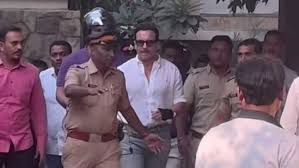
Cracking Saif Ali Khan case in a jiffy: A shout-out to Mumbai police

By Julio Ribeiro

It was in 1975 (or perhaps the first half of 1976) that I first set eyes on Saif Ali Khan. He was fast asleep on the upper berth of a coupe on a Mumbai-Ahmedabad train. The berth was booked in the name of his father, the Nawab of Pataudi, Mansoor Ali Khan, a former captain of India’s cricket team.

The Nawab and I had dinner on the lower berth, which was booked in my name. Ten years later, he came to my Chandigarh bungalow to interview me. He recalled our train journey and I inquired about his son.

A few years ago, I met Saif and his wife, Kareena, at the Mahalaxmi Race Course. It was the day of the Indian Derby. Saif and I were guests of our mutual friend, Farouq Rattonsey, whose horses had won the race in two successive years previously. I took advantage of the occasion to recount to him that train journey.

Earlier this month, I found his name and pictures splashed across newspapers and news channels for his brush with an intruder in his 11th-floor residence in Mumbai’s tony suburb of Bandra, where many Bollywood actors live. Saif was stabbed when he confronted the intruder. He had to go to a private, well-known hospital close to his home for medical treatment, including a surgery in close proximity to the spine. It was a delicate operation expertly performed by the hospital’s competent doctors. Saif recovered in five days and was discharged.

An unnecessary controversy was kicked up in the electronic and print media on unrelated issues like why his wife did not accompany him to the hospital and why he chose an autorickshaw over an Uber or an Ola. (Answer: It was easily available outside his residence).

The worst was yet to come. In the days following the assault, critics of the Maharashtra Government went to town proclaiming a total collapse of law and order. They denigrated my city of Mumbai as the most dangerous place to live in and its police force as the pits as far as security of life and property was concerned. Arnab Goswami, the doyen of sensation-seeking newshounds, found fault with every move the police made to nab the culprit. He was still smarting from the fact that the Mumbai Police had dared to arrest him and put him behind bars for a few days for trying to build up viewership through sensationalism.

Politicians went even further, making all sorts of inferences and insinuations, going to the extent of asserting that Saif was not stabbed or injured at all, but was merely playing to the ‘gallery’! BJP leader Nitesh Rane, recently inducted into the Mahayuti government, tried to introduce a communal angle into the episode. Nitesh is a known Muslim-baiter and poor Saif is consequently condemned in the minister’s eyes. I am sure that the minister is aware that Saif’s mother is Sharmila Tagore and his wife Kareena Kapoor. How much of Islam Saif himself has imbibed or follows is uncertain. As far as my knowledge goes, religion has never been a contentious issue in Bollywood.

The criticism of the police is even more disturbing. Doubts have been expressed about the identity of the man arrested, to the extent of asserting that he does not resemble the person shown entering and exiting through the staircase in the CCTV footage. The doubts have been created by elements who want to disparage the government at any cost, particularly on an occasion when a golden opportunity to berate it in the public eye presents itself, like it does when a prominent person is attacked.

Level-headed and fair-minded citizens will pat the back of the city police’s crime busters for the systematic and patient efforts they made to nab the culprit despite the tremendous pressure they faced from the onset of the investigation. It is not easy to get rid of public and political pressures to trace culprits quickly on such occasions. I have experienced such pressures myself all through my working years and hence can relate and sympathize with the officers and men entrusted with the job.

The officer who merits special mention is the DCP (Deputy Commissioner of Police) of Zone IX, Dikshit Gedam, in whose jurisdiction Bandra police station is located. He must have worked 18 hours a day in the week after the crime. He answered every question asked by the media without giving away clues that would hamper the arrest of the attacker. It was clear to an old policeman like me that he was on the right track and supervising the investigation carefully while simultaneously fending off the ‘attacks’ of the media and politicians with admirable equanimity. It is a difficult balancing act, but a dedicated police officer has to learn to navigate such obstacles if he has to succeed. Gedam appears to have passed that test with distinction. His immediate boss, Paramjit Dahiya, Additional Commissioner of Police (West Region), also had a major role to play in the investigation.

Reading between the lines, I suspect that the vital clue about the intruder’s identity came from the owner of the agency that had helped Shariful Islam, a Bangladeshi national, obtain employment in a bar in Mumbai’s suburbs. He appears to be a police informer. Shariful had been removed from his first job on the charge of theft in a restaurant. That had alerted the agency’s owner.

The fact that the intruder had crossed the India-Bangladesh border some eight months ago set off another raucous round of conjectures and accusations. Infiltration of Bangladeshis into India has taken root ever since the Pakistan Army unleashed its depredations there in 1971. Infiltration continued thereafter for economic reasons. It tapered off when Bangladesh’s economy improved and took off again when the agitation against the Sheikh Hasina government gathered steam.

To give other slants to immigration except the obvious economic one are games that politicians play. Infiltrators should be rounded up and sent back. The Mumbai Police have been doing this from the days I was its Police Commissioner and that is a good 40 years ago or more.

We have had enough of politics and amateur sleuthing in the Saif case. His Afghan ancestors had helped the East India Company win the war against the Marathas. In gratitude, the company bestowed on the Barech tribe of Pashtuns, led by Faiz Talab Khan, an ancestor of Saif, the princely state of Pataudi with 40 villages thrown in. Saif is the titular Nawab today, even though the intruder was unaware of his identity. He chose Saif’s flat because the actor had carelessly kept the bathroom window open.

(The author is former Police Commissioner Mumbai. The article was first published in the Tribune.)

Will RSS ensure Maharashtra, Haryana like success for BJP in Delhi Assembly polls?

With the campaign for Delhi Assembly polls ending, the role of the Rashtriya Swayamsevak Sangh is being keenly watched as its volunteers bat for its ideological partner, the Bharatiya Janata Party. 

The RSS’s role has emerged crucial as the BJP aims to secure power in the national capital after almost three decades. The Sangh had played a crucial role in securing BJP’s victories in the recent Haryana and Maharashtra Assembly polls. 

Photo : Naveen Bansal

Sources state that the RSS had put in place a grassroots campaign for the BJP in the Delhi polls. 

As part of its outreach, the RSS cadres held about 60,000 meetings across the city where issues related to nationalism and public welfare measures of the Narendra Modi government were discussed.

The campaign by Sangh was launched soon after the Maharashtra election and the city was divided among eight zones, catering to 30 districts and 173 nagars.

Apart from RSS pracharaks, cadres of various associate organizations also took part in the outreach program in Delhi. 

Last year, in Haryana, the BJP won 48 out of 90 seats for a third consecutive term, while in Maharashtra, the MahaYuti alliance — comprising the BJP, Shiv Sena (Shinde faction), and NCP (Ajit Pawar) — claimed 228 out of 288 seats.

The saffron win in these two states was attributed to the effective outreach by RSS narrative in favour of the party.

“Like Maharashtra and Haryana, the RSS held thousands outreach programs across Delhi through its affiliates like Laghu Udyog Bharati, Sevika Samiti and Seva Bharati, ” sources said. 

The top leadership of BJP has made it a prestige battle for the party to win the election. 

With a targeted approach during the ongoing electoral campaign, the Saffron front hopes to secure power by dislodging the Arvind Kejriwal-led Aam Aadmi Party from Delhi.

BJP Member Parliament seeks privilege motion against Rahul Gandhi over China charges in LS

New Delhi:  Bharatiya Janata Party (BJP) MP Nishikant Dubey has urged Lok Sabha Speaker Om Birla to initiate a breach of privilege motion against Congress MP and Leader of Opposition, Rahul Gandhi, for his comments in Parliament that Chinese troops were present on Indian soil.

Dubey accused the Congress leader of distorting facts and making baseless claims that “lower the prestige of our Republic”.

Rahul Gandhi, while responding to the President’s address during the Budget Session, launched a direct attack on Prime Minister Narendra Modi-led government, accusing it of failing to boost the manufacturing sector under the ‘Make in India’ initiative.

He claimed this failure had led to the presence of Chinese troops on Indian soil, adding: “The reason China is inside our territory is because ‘Make in India’ has failed. India is refusing to produce, and I’m worried India is going to give up this revolution to the Chinese again.”

Rahul Gandhi also raised concerns about unemployment, alleging that India had handed over production jobs to China.

In a letter to Lok Sabha Speaker Om Birla, Dubey slammed the Congress MP for making “an attempt to ridicule our country” and demanding action against the Leader of Opposition, for misleading Parliament.

He argued that Rahul Gandhi “shamelessly distorted historical and substantive facts” in his speech.

Parliamentary Affairs Minister Kiren Rijiju strongly refuted Rahul Gandhi’s statements, calling them “fake narratives” and accusing him of using “frivolous language” that undermined parliamentary standards.

Rijiju further stressed that the Congress MP should provide proof to back his claims.

“We would like to remind him that such kinds of frivolous acts and language should not be repeatedly used, ” Rijiju stated. He later met Speaker Birla to request proof from Rahul Gandhi about his allegations.

The former Congress chief had also made claims about China’s territorial presence, saying, “Beijing is sitting on 4, 000 sq km of our land”, and contended that the Indian Army had contradicted the government’s assertion that no land had been surrendered to China.

The BJP MPs previously on Monday moved a privilege motion against Congress veteran Sonia Gandhi over her “poor thing” remark about President Droupadi Murmu.

Fresh snowfall in Kashmir’s higher reaches

Srinagar: Several higher-altitude areas in Kashmir, including popular tourist destinations Gulmarg and Pahalgam, received a fresh spell of light snowfall overnight.

Srinagar and other parts of the valley experienced light rain during the intervening night of Saturday and Sunday, while some areas in the Jammu region also recorded light showers.

According to the Meteorological Department, Gulmarg in north Kashmir’s Baramulla district received 5.1 cm of snowfall, while Pahalgam recorded 2.8 cm and Kupwara 2.5 cm. Higher reaches, including the Pir Panjal range in south Kashmir, also witnessed light snowfall.

The MeT department has predicted generally cloudy weather with a possibility of isolated light rain or snowfall over the next 24 hours. Light snowfall and rain are expected at some places from the evening of February 3, with chances of light to moderate precipitation across Jammu and Kashmir on February 4. Another spell of rain or snow is likely in the early hours of February 5.

Meanwhile, night temperatures remained above normal in most areas, except for Gulmarg, where temperatures dipped. Srinagar recorded a minimum temperature of 2.5°C, rising from 0.8°C the previous night and exceeding the normal average by 3.1°C.

Gulmarg saw a slight decrease in temperature, recording -7.6°C compared to -7.4°C the previous night. Pahalgam’s temperature dropped to -2.6°C from -0.4°C, while Kokernag recorded -0.8°C.

Why Congress is hoping to make gains in Punjab through Delhi Assembly polls?

Photo : Naveen Bansal

A rejuvenated Congress, with an active backing of its Central leaders, is hoping for a revival in the national capital, and later in Punjab. The grand old party feels that it has been presented with a golden opportunity to reemerge in key areas like Delhi and Punjab, where the AAP grew at its expense and on false allegations against Congress’ leadership, if it is able to dislodge the Arvind Kejriwal-led party in the forthcoming Assembly polls.

There is a section of leadership in the Congress who want to utilize this opportunity to ensure that it is able to regain lost ground in the national capital. This is the reason for the aggressive involvement of top central leaders like Mallikarjun Kharge, Rahul Gandhi and Priyanka Gandhi Vadra in the last days of campaign for the legislature. 

Photo : Naveen Bansal

“Instead of backing Kejriwal in the name of opposition unity, as AAP is also a member of INDIA bloc, the focus of the party high command was on distancing itself from the AAP leader,” sources said.

This was done after the Delhi leaders convinced the central Congress leadership that the party needs to perform well on its own to regain lost ground, which would later help it I  Punjab as well. Interestingly, several Congress MLAs from Punjab have also been actively engaged in campaign for the Delhi polls over the past few weeks. 

There is a hope that if AAP is defeated in Delhi, the Congress can replicate the same electoral strategy in Punjab as well. 

There was an anger amongst party cadres that while the Congress ceded its space in Delhi and Punjab to the AAP, its top leadership was seemingly unwilling to fight back and regain its rightful share in these regions. But this strategic mistake was rectified by the Congress leadership in the ongoing electoral campaign as it launched waves of scathing attacks on Aam Aadmi Party, sources said. 

The Congress wants to reemerge as a serious political player and regain lost ground in Delhi and Punjab, hence the party high command’s rethink on political strategy. Sources pointed out that despite being in government twice, AAP has not been able to prove any charges that it had levelled against Sheila Dikshit or her ministers. 

The grand old party has been strongly putting across the point that AAP’s win against Sheila Dikshit was a conspiracy enacted through maligning its leaders without any evidence of corruption against her government and take back its share of votes in the forthcoming Lok Sabha polls. 

The grand old party is hoping to do well in about 15 Assembly seats as it tries hard to win back lost vote bank. 

The 70-member Delhi Assembly is scheduled to go for polls on February 5 and the results will be announced on February 8.

Former Judge moves HC over monetary support schemes by political parties ahead of Delhi assembly polls

A former judge , Justice (retired) SN Dhingra has moved the High Court to file a public interest litigation (PIL) against the ‘corrupt practices’ of the major political parties ahead of Delhi assembly elections.

In the PIL, he has sought directions to the Election Commission of India to frame rules for political parties over promises linked to monetary benefit schemes, to conduct an inquiry into “corrupt practices and illegal data collection”, and to strengthen monitoring mechanisms to prevent violation of electoral laws.

He has also urged HC to direct three national parties to “cease and desist from collecting personal and electoral data of voters under false pretence” and that they are directed to not share and use the data collected during elections to any third party.

The collection of voters’ data “and possible misuse without their explicit consent is a violation of their fundamental right to privacy under Article 21 of the Constitution of India,” Dhingra stated in the PIL.

In the PIL before the HC, he also highlighted that the AAP, under its scheme of Mukhyamantri Mahila Samman Yojana, has promised Rs 2,100 as direct bank transfers each month to female voters of Delhi even as the Delhi government’s Department of Women and Child Development has denied such a scheme, and in competing with the same, other parties too have promised similar sops.

Noting that there are around 71.73 lakh female voters in Delhi, the PIL states, “The proposed distribution of Rs 2,100 per month to female voters as promised by respondent parties would result in a financial burden of more than Rs 18,000 crore per annum. This constitutes over 23 per cent of the State of Delhi’s total annual budget, which is Rs 76,000 crore approximately for one fiscal year… such promises in place of vote-seeking constitute corrupt practices under Section 123(1) of the Representation of the People Act, 1951, as this seeks to unduly influence voters and amount to bribing the voters. Furthermore, the distribution of guarantee cards amounts to unauthorised election-related materials violates Section 127A of the Act.”

Congress presents ‘united strength’ ahead of Delhi assembly polls

Presenting a united face ahead of Delhi assembly polls, Congress held a joint press briefing on the last day of campaigning where its leaders attacked AAP chief Arvind Kejriwal and promised to reclaim the legacy of former party CM Sheila Dikshit. 

The briefing was attended by senior leadership of the party including party chief Devendra Yadav, candidates Sandeep Dikshit, Haroon Yusuf and senior leader Udit Raj.

Delhi Congress chief Devendra Yadav on Monday said this election seems very crucial as the people of the city are supporting the party and fighting this assembly polls for it.

“I would like to thank residents of Delhi for supporting us in this crucial time ahead of elections. We have felt that though the party is on the backfoot, the people of the city are fighting for Congress. As a result we feel strong and supported by them,” Yadav said.

Addressing the media he said that there is a need to bring back the golden period of Delhi which we witnessed under the leadership of Sheila Dikshit.

“We have always tried to take along the people who have been left behind in the society, during the Congress government in the city. Now that they say we have given free facilities, but nobody has given anything free, it was the responsibility of the government,” he added.   

Meanwhile, party leader Haroon Yusuf said that Congress has made people look at the ground reality.

“In the past 10 years, BJP or AAP used to come up with new slogans and chimes and people could not see the ground reality but now people are raising their voices against the civic and other issues in Delhi. Congress has brought common issues in front of people during the campaign in the past one month,” he said.

He also criticized former chief minister Arvind Kejriwal for the corruption and chimes.

“He makes so many promises that people get confused and he leverages the confusion to run his government and corruption. People now have realized that this man pretends to be honest,” he said.

Sandeep Dikshit said that the present government has not replied to the questions we have been asking about Arvind Kejriwal’s healthcare and education model.

“Few years back, I asked him a question,” Would you call yourself a world class education provider, what is the parameter for that? Till now they have not come back with the answer,” he said.

“Arvind Kejriwal could not deliver even average of the work we had done in 15 years of power in the healthcare and education sector. If we built 150 schools, you remain stuck on 11. They have spent thrice the money on the projects but the result was not upto the mark of what we had done,” Dikshit added.

The 70-member Delhi Assembly is scheduled to go for polls on February 5 and the results will be announced on February 8.

How solar energy is powering rural healthcare in Chhattisgarh

The installation of solar panels picked up pace from 2010-2012 onwards in Chhattisgarh. Even today, in the state’s areas where conventional grid electricity is absent, patients depend on fully solarised health centres. A report by Deepanwita Gita Niyogi

In many interior villages of Chhattisgarh, solarised healthcare centres serve the needs of rural communities. In these places, either conventional grid electrification is absent due to factors like insurgency and inaccessibility, or else, frequent power failures interrupt services.

The solarisation of public health facilities started around 2000-2001. Gradually, it was linked to the National Rural Health Mission. Sanjeev Jain, who is now retired from the Chhattisgarh Renewable Energy Development Agency (CREDA), explained the shift in rural electrification, especially in the insurgency-hit Bastar region comprising seven districts. CREDA looks after solar power installation and maintenance throughout the state.

“About 10-12 years ago, government infrastructure and power distribution companies did not reach healthcare facilities in Bastar. There was a clear lack of interest. The idea was to electrify only rural households. As a result, healthcare professionals were absent in most health centres. To tide over the crisis, some of these centres were connected to power under the domestic use category. Even today, there are forest villages where grid electricity cannot reach. In these places, solar is a lifeline,” Jain said.

A report by policy research institute Council on Energy, Environment and Water (CEEW) says the same. The focus of electricity access in India has mostly been at the household level. It is only recently that access to electricity is being recognised as critical for public services like health facilities, schools and street lighting.

“In India, primary health centres ensure last-mile delivery of healthcare services. However, one in every two PHCs (primary health centres) in India, and one in every three in Chhattisgarh, is either un-electrified or suffers from irregular power supply,” the CEEW report reads. About 90 percent of PHCs report power cuts between 9 am and 4 pm, a peak period. At such times, solar energy is vital.

Prioritizing health facility

The installation of solar panels picked up pace from 2010-2012 onwards in Chhattisgarh. A PHC usually has a mean daily electricity requirement of around 45.8 kWh (kilowatt hours). A 5kWp (kilowatt peak) solar system can meet 70 percent of its peak demand. In many health centres, CREDA deployed 2kWp solar systems to augment electricity supply.

D.D. Sidar, who works in CREDA, pointed out that in the densely forested Surguja district of the state where grid electricity is absent in many areas, patients depend on fully solarised PHCs. Even solarised community health centres and sub-health centres cater to the rural population. In partially solarised health centres, conventional grid is present and solar power is used as backup during power cuts.

At present, the number of health centres and district hospitals in Chhattisgarh stands at about 6168, of which solar-powered centres are 1549. Of these, there are 793 PHCs, 469 sub-health centres, 163 community health centres, 26 district hospitals and 98 other hospitals.

The Sustainable Development Goals explicitly state the need for universal health coverage and a robust delivery system. Solarisation of healthcare facilities is geared towards this.

Bhupesh Tiwari, who heads Sathi, a non-profit based in Kondagaon district of Bastar region, said apart from health centres, cold chains also run on solar energy. “The idea is excellent as power is not always available in remote areas. But maintenance is not often made. Sometimes it takes days to repair things once out of order.”

CREDA technician Baliram Nag agreed that in the absence of equipment, repair takes a hit even though workers are present in every block to take care of glitches. Sometimes, the battery dies out. Normally, a battery runs for five years and after that it has to be replaced.

But there are plus points in plenty. Citing the example of Narayanpur district, Tiwari informed that there are only solarised centres in the interiors. “These don’t have cold chains. But solarised health centres have improved vaccination percentage and routine immunisation.”

According to Punita Kumar, programme coordinator, climate change and health, Chhattisgarh State Health Resource Centre, an assessment was carried out on solarised health centres in 2021. Kumar said that 90 percent solarisation has been completed at the PHC level. However, sub health centres still need solar power. “Solar health centres have been a success in remote areas. Nurses felt safe when they had lights due to solar energy. It has helped retain healthcare professionals in rural areas.”

At the Bedre village PHC in Bijapur district’s Bhairamgarh block, institutional delivery takes place. Being located in a densely forested area, solar is a better alternative in this place than the conventional grid though the health centre enjoys both. Bijapur is one of the seven districts which come under the Bastar sub-division.

Ganesh Babu, the medical officer of the Barsur PHC in Dantewada district, said that in case of power cuts, the transition to solar is made. “At night, the PHC uses solar after it is fully charged during the day. About 25-30 deliveries happen at the PHC in a month.”

Rural medical assistant Mohan Kumar Dadsena, who is in charge of a PHC in Kosalnar village of Bijapur district, said like many PHCs, this one enjoys both solar as well as grid power. But it mostly runs on solar. However, sometimes, solar panels fail to charge during the monsoon. During such a time, chargeable lights are kept and mobile light is also used.

Dadsena explained that when the Indravati river swells up during heavy downpour, power failure occurs in many remote villages of Bijapur. “At such a time, there is no guarantee of conventional power connectivity for days.”

Going green

Prime Minister Narendra Modi announced at the 26th United Nations climate summit in Glasgow that India will achieve net zero emissions by 2070. One of the ways to reach this target is going solar.

Though India has set a 500 GW solar target by 2030, there are challenges in this sector. “Silicon cells are still imported from China, at least 90 percent of it,” Jain pointed out. Binit Das, programme manager-renewable energy, Centre for Science and Environment, also emphasised on the supply chain challenges in India’s solar sector and highlighted heavy reliance on imports, echoing Jain’s concerns.

“Components for photovoltaic modules are not manufactured in India. Photovoltaic cell imports have increased by more than 50 percent in the past four years.” “For instance, India depends on imported modules. During the COVID-19 pandemic, disruptions in the global solar equipment supply chains caused a significant slowdown in solar project installations,” Das noted.

Toxic tide: Rajasthan puts Punjab on notice over Sutlej pollution

The Sutlej, a lifeline for Rajasthan and Punjab, has become a battleground, with the former accusing the latter of polluting the river and triggering an interstate dispute. As pollution-linked cancer cases rise alarmingly, the crisis demands urgent intervention and accountability.  A report by Aayush Goel

Sutlej, the river that unites Rajasthan and Punjab has triggered a fresh interstate dispute with the former accusing Punjab of polluting the same. Highlighting pollution of the river water, which is the lifeline of many districts in both states, Rajasthan has asked Punjab to stop the flow of polluted and hazardous water into the Sutlej. In a letter to his Punjab counterpart Gulab Chand Kataria, Rajasthan Governor Haribhau Bagde sought his immediate intervention and preventive action.
In the letter, Bagde has told Kataria about highly polluted chemical-laden poisonous water flowing from Punjab to Rajasthan via the Sutlej, where it was supplied for drinking and irrigation purposes in at least 12 districts, including Sri Ganganagar, Bikaner and Jodhpur.
“The water polluted by effluents from heavy industries in Ludhiana, Jalandhar, Phagwara and other cities and laced with chemicals and heavy metal poisonous substances is causing cancer and other incurable diseases to the people in Rajasthan, who are using it for potable purposes,” Bagde has said. He has also forwarded to Kataria a memorandum submitted to him by the Samyukt Kisan Morcha (SKM) Sri Ganganagar unit and requested that he direct the departments concerned to take appropriate action.  Acting on the same, Governor Gulab Chand Kataria has sought a report from Chief Minister Bhagwant Mann on the widespread pollution in the Sutlej. Kataria also reviewed the ongoing work and future plans to clean and preserve the highly polluted Sutlej tributary Buddha Nullah.
Kataria who himself hails from Rajasthan (former Rajasthan Home minister) took the issue on top priority and has written to Punjab CM Bhagwant Mann highlighting the discharge of chemicals from industrial units in Ludhiana, Jalandhar, Phagwara and other cities into Buddha Nullah, which flows into the Sutlej. Kataria has urged the CM to send him a report regarding the gravity of the issue, measures taken so far to address the same and the future plan of action in that regard.
Buddha Nullah, a natural water stream originating from Koom Kalan in Ludhiana, is the main source of pollution in the Sutlej. Of its total 47.55-km length, a 14-km stretch passes through Ludhiana city and after that, it merges into the Sutlej at Walipur Kalan village in Ludhiana before entering Rajasthan. Industrial and dairy effluents, domestic sewage and solid waste pollute its water. The Sutlej originates in Himachal Pradesh and flows into Punjab near Nangal town, passing through Ropar, Ludhiana, Jalandhar, and Kapurthala districts before converging with the Beas at Harike and entering Pakistani territory.
 Concern over rising cancer cases
 “It’s been thirty years people, especially farmers and dependent families, are dying of cancer in at least 12 districts. We know what’s the cause but nobody is ready to act. Promises have been made but no action has been taken to stop the supply of highly polluted and poisonous water from Punjab to Rajasthan through the Sutlej. Not just our state but even people in Punjab districts are dying of cancer because of Sutlej pollution by industries but we are yet to see any concrete action by any government,” says Gurbal Pal Singh Sandhu, SKM chief, Ganganagar.  The concern resonates with Punjab environmentalists and even leaders. More than 1,000 farmers from Rajasthan have launched protests and even marched to Punjab in December 2024 threatening to completely block Buddha Nullah under ‘Zeher se mukti andolan’ (freedom from poisonous water movement). Though momentary announcements were made, no action was taken. Punjab farmers and activists on their part are already running campaigns and protests like ‘Kale Pani Da Morcha’ (protest against water pollution), which includes affected people from areas along the Sutlej.
“People have been dying for decades. The cause is right in front of their eyes but who cares? We have given representations, scientific studies have been conducted, and plans have been made but Buddha Nullah and Sutlej river remains the same and are killing people in both states. Punjab needs to act tough against the industrialists illegally discharging the affluent and work on alternate industrial waste management plans,” said environmentalist Kapil Arora and member of Kale Pani da Morcha. He further blamed it on lack of dedicated autonomous authority. He adds, “The government washes its hands off by issuing directions and departments fail to act and blame each other. We need single authority to act and be accountable.”
The issue, according to the Punjab Governor, has been taken up by the Union Ministry of Jal Shakti which has sought multi-sectoral and multi-departmental action by the Punjab Government. Meanwhile, the Governor chaired a high-level meeting attended by the heads of various in-line departments, including Local Government, Water Resources, Environment and Climate Change, Irrigation, Punjab Pollution Control Board (PPCB) and the Ludhiana Municipal Corporation. Not much impressed with the ongoing works, the Governor directed the heads of the in-line departments to launch a coordinated and sustained campaign to free Buddha Nullah and the Sutlej of the rampant pollution.
 The dying Sutlej
 ‘Kaala Paani’ ‘Dariaaye Maut’ is how Buddha Nullah and Sutlej are known in Punjab. The uproar against pollution and resultant diseases, especially cancer, is not new. It has been going on for at least three decades but to no effect. The first project –Action Plan for Clean River Sutlej – was launched in 1996; three sewage treatment plants (STPs) were set up at Jamalpur, Bhattian and Balloke villages but nothing much has changed ever since. In 2020, the Punjab government set up an Rs.650 crore two-year rejuvenation project for the Buddha Nullah. CM Mann, while blaming the previous government, inaugurated the state’s largest STP at Jamalpur and other projects worth Rs 315 crore for the rejuvenation of Buddha Nullah. However, a 2024 study by Punjab-based environmental researchers exposed the failure of all projects. The dedicated study of Sutlej water revealed pollution impact on water quality and aquatic life and stark contrasts in water chemistry between upstream and downstream sites, painting a worrying picture of the river’s health.
While upstream areas remain relatively unpolluted, downstream sites are plagued by moderate to severe pollution. The study, “Spatiotemporal Distribution of Cyanobacteria in Relation to Water Chemistry of Sutlej River, Punjab (India),” conducted by Gurdarshan Singh Rangra, Yadvinder Singh, Komal Thapa and Jasvir Inder Singh Khattar and Davinder Pal Singh has been published in the International Journal “Environmental Monitoring and Assessment”.
The River Pollution Index (RPI) of various sampling sites along the Sutlej river revealed significant variations in water quality. Sites with minimal human impact, like Nangal, boasted an RPI of 1.5, indicating unpolluted conditions. Conversely, areas like Jol village exhibited moderate pollution, with RPI values ranging from 3.3 in summer and winter to 4 during monsoons, primarily due to sewage waste from Nangal City and the National Fertilizer Limited. Miani village and Katli, Ropar, recorded RPI values of 2.3 and 2.8, respectively, categorizing them as negligibly polluted. Saidpur, Ropar, with an RPI of 3.3, faced contamination from agricultural runoff and Ropar City sewage. In stark contrast, Chuharwal, Ludhiana, and Talwandi Kalan exhibited alarming RPI increases, denoting severe pollution. Notably, Chuharwal marks the confluence of Buddha Nullah with the Sutlej river, while Talwandi Kalan lies downstream. The substantial pollution spike at these sites underscores Buddha Nullah’s significant contribution to pollutant levels. In a response, on August 13, 2024, the CPCB replied to the National Green Tribunal (NGT) on the pollution status in Buddha Nullah. It mentioned that three Common Effluent Treatment Plants (CETPs) in the city have been found “not complying with the disposal condition stipulated in the environmental clearance issued by the Ministry of Environment, Forest and Climate Change.
CPCB further informed NGT that it issued directions to PPCB on August 12, 2024 to take appropriate action including imposing environmental compensation. The PPCB in turn has admitted in an earlier report that the water from the Buddha Nullah is unfit for irrigation.

MOST POPULAR

HOT NEWS