As the income from trade, industries, and agriculture in Chhattisgarh is steadily increasing, leading to higher earnings and an improved standard of living for the people, the state’s economic growth rate is estimated to be 7.51 per cent this year, state government data stated.
According to the Economic Survey 2024-25 presented by the state government, the total economic output of Chhattisgarh, measured by Gross State Domestic Product (GSDP), is expected to see significant growth this year.
Last year, the state’s GSDP was Rs 3,06,712 crore, and it is projected to reach Rs 3,29,752 crore this year. This indicates a continuous rise in new industries, factories, and business opportunities across the state.
Chhattisgarh’s economy stands on three major pillars, including agriculture, industry, and services – all of which are expected to perform exceptionally well.
Agriculture plays a crucial role in Chhattisgarh’s economy. This year, the agriculture, animal husbandry, and forestry sector is expected to grow by 5.38 per cent. In 2023-24, this sector was valued at Rs 48,987 crore, and this year, it is projected to reach Rs 51,621 crore.
The services sector is expected to grow by 8.54 per cent, reaching a value of Rs 1,08,461 crore. With the expansion of tourism and digital services, this sector holds even greater potential for future growth.
This highlights that the state’s rapid economic progress proves that the state is developing at an impressive pace. If this momentum continues, Chhattisgarh could soon be among the fastest-growing states in India.
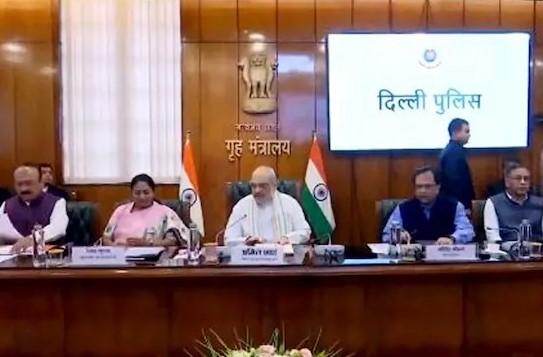
In order to improve and ensure better coordination between the newly formed government under the leadership of chief minister Rekha Gupta and Delhi Police, union home minister Amit Shah on Friday chaired an important meeting focused on law and order and women safety in the city.
The meeting which started at 11.30 am in the morning was attended by the union home secretary and IB chief along with senior officers from the Ministry of Home Affairs.
Newly elected Delhi chief minister and BJP’s debutante MLA from Shalimar Bagh Rekha Gupta along with Delhi Home Minister Ashish Sood also joined the meeting.
This comes after the BJP came back into power after 27 years in Delhi. Now, the party under its double engine government plans to improve the security measures including women safety which has always come under the scrutiny in Delhi.
The previous government had also flagged issues of poor management of the law and order and blamed the government at the centre. However, things seem to have changed ever since Gupta took the oath on February 20.
The BJP is emphasizing on fixing various issues including healthcare, infrastructure and now police management in the city.
During the meeting, the leaders discussed pointers on how to tackle the new law and order challenges in the national capital while simultaneously strengthening the police’s effort to address these challenges.
Shah has been monitoring security across the country and has previously emphasized the need for a robust law enforcement mechanism in the national capital.
Earlier on February 18, the Union Home Minister emphasized the urgent necessity of enforcing “trial in absentia” provisions as well as full implementation of new criminal laws in Jammu and Kashmir by April 2025 during a meeting with the Union Territory’s Chief Minister Omar Abdullah and Lieutenant Governor Manoj Sinha.
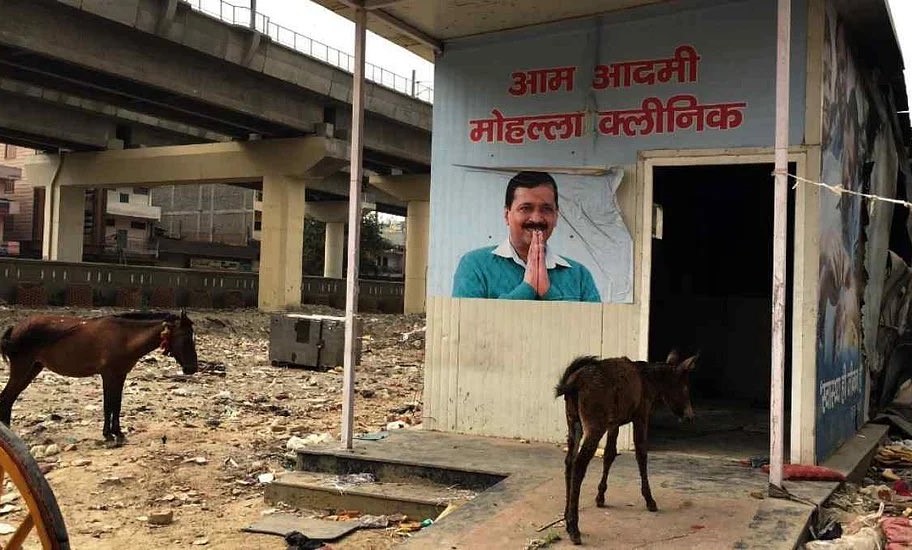
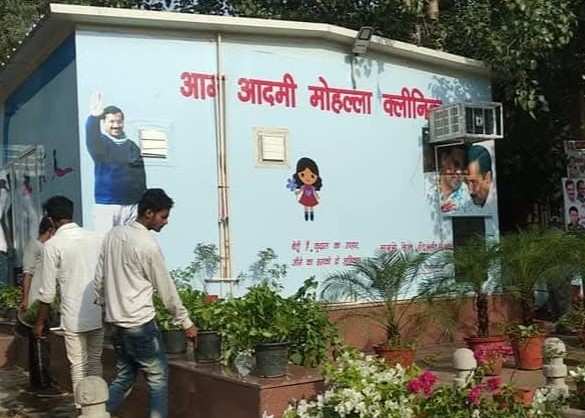
A recent audit by the Comptroller and Auditor General of India on Public Health Infrastructure and Management of Health Services revealed several discrepancies and irregularities in the healthcare infrastructure over the last six years.
The report which is yet to be tabled by Delhi chief minister Rekha Gupta in the Legislative Assembly today suggested that only three new hospitals were completed or extended which were started during the previous regime.
“There were significant delays of upto six years in their completion as well as increase in final costs from the previously tendered costs, showing patent corruption,” it said.
According to the report, the AAP government increased only 1,357 beds in the government hospitals against the budget announcement in the four budget years from 2016-17 to 2020-2021 of adding 32,000 beds.
Photo: Naveen Bansal
The report stated that either more than one patient were accommodated on single beds or patients were made to lie on floors.
It also suggested irregularities in spending funds received by the central government during COVID-19.
The previous government used only Rs 582.84 crore of the total available funds of Rs 787.91 crores for talking of pandemic.
Significant among the underutilisation of funds released under several heads was the expenditure over Human Resources. Rs 30.52 crores of the total Rs 52 crores released for the same remained unutilised, demonstrating under-payment to health staffs and lower deployment of health workers for this purpose.
“Also, Rs 83.14 crores of the released Rs 119.85 crores for drugs and supplies including PPE and masks remained unutilised, which clearly illustrates a deliberate inaction towards a severe shortage of medical infrastructure during the period, tantamount to criminal negligence,” the report stated.
The finding also highlighted the shortage of hospital staff including doctors and nurses, leading to long waiting time for major surgeries.
“50-74 per cent shortage of Doctors, 73- 96 per cent shortage of Nursing Staff, and 17 to 62 per cent shortage of paramedic staff have been reported. In Chacha Nehru Bal Chikitsalaya (CNBC), the waiting time for paediatric surgery is 12 months. At least 10 major pieces of equipment are not functional in CNBC,” it added.
Moreover, the Health and Family Welfare Department of GNCTD was unable to utilize any of the 15 plots acquired between June 2007 and December 2015 at a cost of Rs 648.05 lakh for establishing hospitals and dispensaries, despite having possession for periods ranging between six to 15 years.
The Bharatiya Janata Party, long considered a political force with its stronghold in North India, may be looking to expand its support base to South India by appointment of a leader hailing from the region.
With a party that continuously tries expanding its political footprint across the country, the move is expected to bolster its outreach in southern India.
JP Nadda, who is already on an extension, is expected to be moved out of the organization over the next few weeks. Sources stated that he is likely to be replaced by a senior leader who hails from South India and is acceptable to the Rashtriya Swayamsevak Sangh, the ideological parent of the BJP.
The new BJP chief is expected to be installed over the next few weeks, and a leader from South can make the cut. This move could resonate with voters in Tamil Nadu, Kerala, Andhra Pradesh, Telangana, and Karnataka, where the saffron front is trying to grow desperately, sources said. With over 100 Lok Sabha seats in these states, the BJP feels it has a lot of scope to expand in the region.
Interestingly, amongst these states only one National Democratic Alliance government is in power. The Andhra Pradesh government led by N Chandrababu Naidu is the only ally of the saffron party in the south, while the other four states are still under the grip of the opposition.
The appointment, if it happens, could also help reassure populations in these states that scepticism about Hindi imposition, a major controversy that flares up every few months, is addressed by the BJP on priority.
Appointing a leader from the South could signal the BJP’s commitment to being a truly pan-Indian party, shedding its “North Indian” tag. The national executive of the BJP was also held in Hyderabad in 2023, one of the most important strategy meetings ahead of 2024 Lok Sabha polls, with an eye on expansion in South India.
The BJP’s recent electoral gains in the South suggest a shift in voter sentiment that could justify elevating a southern leader. In the 2024 Lok Sabha elections, the party improved its tally in Karnataka and made unexpected gains in Telangana. While it has yet to win Assembly elections in Tamil Nadu or Kerala, its vote share has incrementally risen, indicating a slow but steady acceptance. A South Indian BJP chief could accelerate this trend by bridging cultural and linguistic divides.
If the BJP were to appoint a South Indian chief, the implications would be profound. It could galvanize the party’s southern cadre, boost morale, and attract new voters by showcasing a commitment to federalism.
The Central government has floated a revised Request for Proposal (REP) for outsourcing vital documents including Passport, Visa, and Consular (CPV) services across 23 Indian Missions or Posts worldwide. The new fee structure could increase the service costs by 15 to 20 times.
The move will place a severe financial burden on millions of blue-collar workers—who form the backbone of India’s global diaspora.
The proposed “service fee per application” mandates payment for a bundled package, including document digitization, fingerprint and facial biometric capture, and four application support services—photocopying, photography, form filling, and courier services.
According to an estimate, the service that currently costs USD5 to USD7 could now cost over USD 90 which will directly affect the Indian workers in Gulf countries, the UK, and beyond, many of whom struggle to make ends meet.
The move has sparked outrage among Indian expatriates and industry experts. Critics also question whether lobbying by select service providers—is driving this drastic pricing shift.
Meanwhile Congress MP KC Venugopal took to micro blogging site X to raise the matter and said that policies cannot be designed to deter Indians from applying for visas and returning home.
“A vast majority of our NRI brothers and sisters live paycheck to paycheck, so that they can send most of their earnings back home. The latest RFP for Consular, Passport and Visa services (CPV) at Indian missions abroad will impose a massive burden on these workers, and appears to be designed to benefit private service providers,” he wrote.
He further stated that hiking fees for CPV services by 10-15x, and charging mandatory service fees for ancillary services which used to be optional, is wholly unacceptable. “Policies cannot be designed to deter Indians from applying for visas and returning home,” he added.
“We demand an explanation from the MEA on this decision, and they must alter the tender conditions immediately,” Venugopal said.
Uttar Pradesh Chief Minister Yogi Adityanath on Thursday attributed the successful completion of Maha Kumbh 2025 to Prime Minister Narendra Modi’s leadership, calling the grand religious gathering the “Maha Yagya of unity, equality, and harmony.”
Quoting the Prime Minister’s social media post about Maha Kumbh, CM Yogi expressed gratitude for PM Modi’s guidance, stating, “Respected Prime Minister, it is the result of your successful guidance that the ‘Maha Yagya of unity, equality, harmony’ — Maha Kumbh 2025, Prayagraj — has concluded today, setting new standards in security, cleanliness, and management along with grandeur and divinity.”
He highlighted the massive participation in the event, adding, “In the last 45 holy days, more than 66 crore devotees, including revered saints and sages, have been blessed by taking a dip of faith in the holy Triveni.”
CM Yogi emphasised the spiritual significance of the festival, describing it as a celebration of humanity that spreads the message of ‘all people are one’ and strengthens global unity under the sacred sentiment of ‘Vasudhaiva Kutumbakam.’
“Your guidance and good wishes always provide new energy to all of us. Thank you very much, Prime Minister!” he added.
PM Modi, in his blog on Maha Kumbh, praised the successful organisation of the event and urged the nation to “unite and come together for the Maha Yagya of a Viksit Bharat.”
Acknowledging the efforts of the Centre, the Uttar Pradesh government, and the people of Prayagraj, PM Modi expressed appreciation for their relentless service to the millions of devotees who participated in the once-in-144-year spiritual gathering.
Recognising the challenges of hosting such a grand event, the Prime Minister also humbly sought forgiveness from the public.
“I know, organising such a huge event was not easy. I pray to Maa Ganga, Maa Yamuna, Maa Saraswati… O Maa, if we have fallen short in our worship, please forgive us. If we have fallen short in serving the devotees, who are God to me, I seek forgiveness from the public as well,” he wrote.
The Maha Kumbh 2025, which witnessed an unprecedented gathering, has been hailed as a historic event that not only showcased India’s spiritual and cultural richness but also demonstrated its exceptional capacity for large-scale event management.
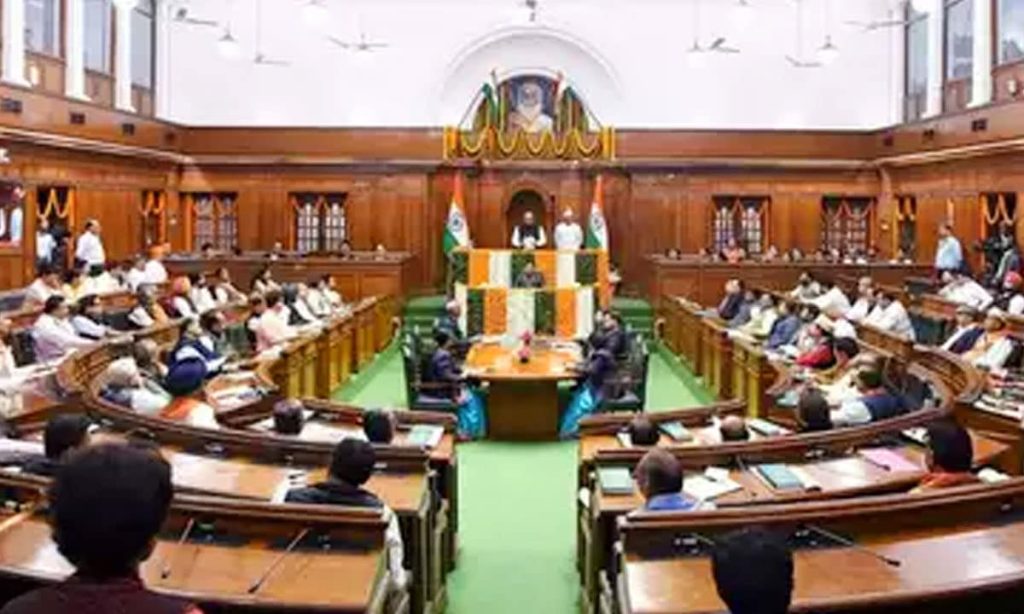
New Delhi: A discussion on the Comptroller and Auditor General’s (CAG) damning report on the previous AAP government’s excise policy began on Thursday in Delhi Assembly, with BJP MLAs hitting out at favouritism in the issue of liquor licences, opening of vends in residential areas and absence of lab test of liquor before sale in the city.
The third sitting of the House, whose session began on February 25, started with only Amanatullah Khan of the AAP representing the Opposition in the House, while the other 21 legislators staged a protest outside the premises of the Assembly due to a suspension slapped on them by Speaker Vijender Gupta till Monday.
Before the discussion on the excise policy, Malviya Nagar MLA Satish Upadhyay raised the issue of desecration of a statute of Shaheed Bhagat Singh in a park in the south Delhi colony.
“The AAP Malviya Nagar MLA did not attend to the broken arm and leg of the statute over the past three years,” he said, adding that he has now covered the statute and directed officials to repair the statue or install a new statue within a month.
He said the AAP leader’s respect for Shaheed Bhagat Singh is unreal. “If they were committed to respecting the national hero, they should have repaired the statue and walked the talk,” he said.
The poor state of the statue in Malviya Nagar park exposes the “double standards” of the AAP, which raised slogans in the House but “failed” to give due respect to the statue, said Upadhyay, adding that a similar statue in Mehrauli had also been damaged.
Later, taking part in Special Mention (Rule 280), Upadhyay raised the issue of the absence of quality check of liquor at the time of issuing licences to vendors, as exposed by the CAG report on the now-scrapped excise policy of the previous AAP government.
“The CAG report said the liquor licence did not fulfil the obligation of getting liquor samples tests. Such a policy of the AAP encouraged the sale of illicit liquor in the city,” he said.
He said the government lost an additional Rs 941 crore due to the exemptions that had to be given to the zonal licensees.
The CAG report said the exchequer lost around Rs 890 crore as the AAP did not re-tender the surrendered retail liquor licences, he said.
Greater Kailash MLA Shika Rai joined the debate on the CAG report by alleging that the easy availability of liquor in Delhi under AAP’s faulty excise policy of “one-plus-one” bottles had a negative impact on low-income groups.
“Incidents of domestic violence increased along with debt in the city,” she said, adding that at a time when many poor people were struggling to earn income, they were lured into spending a lot of money on liquor.
The CAG report tabled in the Delhi Assembly on Tuesday said that the policy of former Chief Minister Arvind Kejriwal and his ministers allegedly caused a loss of over Rs 2,002 crore to the exchequer.
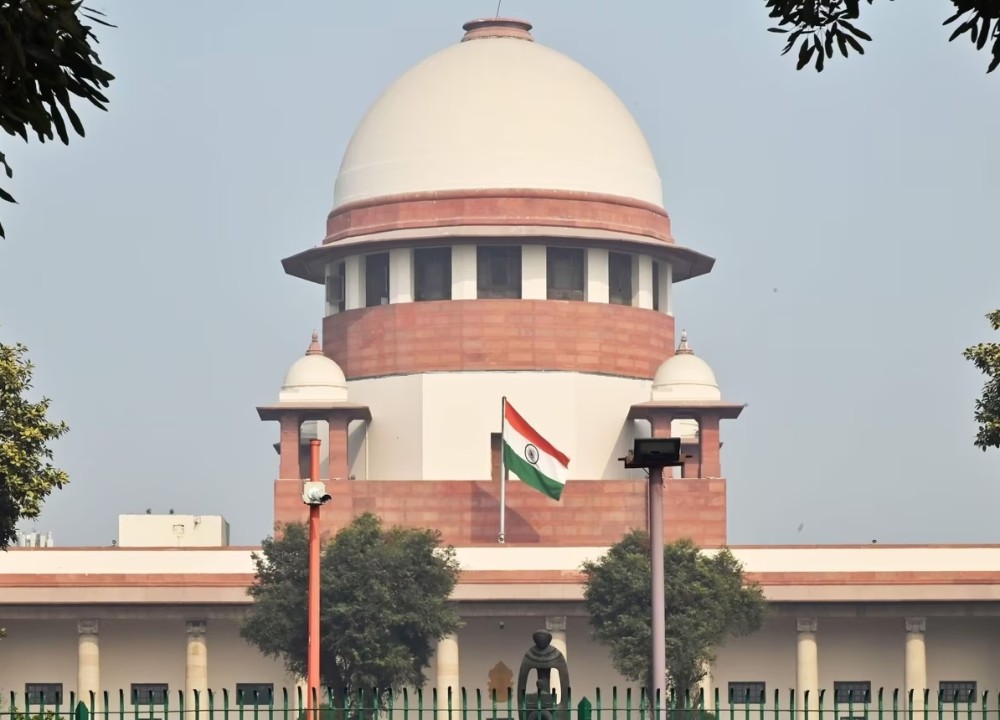
The Supreme Court on Thursday dismissed petitions challenging a Madhya Pradesh High Court directive for a trial run to dispose of approximately 340 tonnes of toxic waste from Union Carbide.
“Now the state government can proceed for trial run of the toxic waste in batches,” a government official told to media.
The petitioners, through letter petitions and special leave petitions, had challenged a high court order and argued that the government had not presented a complete study to the Madhya Pradesh High Court and had also not obtained permission from the Pithampur local body to incinerate the waste at a private facility.
The state, the petitioners argued, had obtained trial run permission by presenting half-cooked facts.
A bench of Justice B.R. Gavai and Justice Augustine George Masih responded that these concerns should be addressed to the state High Court, which is monitoring the process, an intervener and a government official told to media.
Government advocates countered that a high-power committee found the incineration process appropriate.
The Supreme Court reinforced that any objections should be presented to the state High Court only.
With the Supreme Court’s Thursday order, a government official told to media that the state government will go ahead with a trial run of the toxic waste as directed by the high court in Jabalpur.
According to reports, a heavy police force was deployed at the private facility in the Tarpura village of Pithampur, Dhar district (near Indore). The trial disposal will involve burning portions of the waste at feed rates between 90 kg/hour and 270 kg/hour, as per Central Pollution Control Board guidelines. Each trial will last three to four days. The state must evaluate the environmental and local impacts of the trial.
Earlier, the Madhya Pradesh High Court directed the state government to conduct a trial disposal of 340 tonnes of toxic waste from the Bhopal gas tragedy in batches. Chief Justice Suresh Kumar Kait and Justice Vivek Jain ordered the state to report back by March 27.
The toxic waste, stored at a private facility in Tarpura village, was previously housed at the Union Carbide India Pvt Ltd site in Bhopal for 40 years following the December 2-3, 1984 disaster, which caused extensive loss of life and injury.
Following a court order on December 3, the state government reported that on January 1, the waste was securely packed into 12 fireproof, leakproof containers. These were transported in a police-escorted convoy with medical, fire, and labour support, adhering to SOPs (Standard Operating Procedures) and Central Pollution Control Board regulations.
Public unrest fuelled by “fictitious” media reports suggested potential disaster from the waste’s disposal at Pithampur. However, the court, on January 6, instructed the government to follow the December 3, 2024, order and dispose of the toxic waste as per regulations.
Meanwhile, a few people filed petitions in the Supreme Court demanding a stay on the trial run.
Plantar fasciitis, a condition that causes inflammation in the tissue connecting the heel to the toes, is becoming increasingly prevalent among India’s young working population. While it has traditionally been linked to older adults and athletes, a concerning rise in cases has been observed among young professionals.
Prolonged standing during daily commutes, combined with long hours spent on crowded metro trains and buses, is now a leading factor contributing to this painful condition.
Plantar fasciitis is increasingly affecting younger individuals in India, particularly those between the ages of 18 and 35. According to a 2023 study by the Indian Journal of Podiatry, around 12% of young adults in urban areas have reported symptoms similar to plantar fasciitis, with many attributing their foot pain to long hours of standing during their daily commutes in metros and buses.
Dr.Satyendra Singh , Bareilly, Uttar Pradesh, Member of doctube said that plantar fasciitis is a common cause of heel pain in young athletes, particularly those involved in running, dancing, or sports with frequent jumping. While specific data on increasing cases among youth is limited, the condition is recognized as an overuse injury in this demographic.
“Surgery is the choice of treatment Surgical Release of planter fascia from its attachments from healed bone Calcaneum,” he said.
He further said that prolonged standing or walking on hard surfaces, such as during long metro or bus rides, can contribute to plantar fasciitis.
While the condition is often linked to older adults, the high prevalence among younger Indians reflects the changing nature of work culture and urban commuting patterns. According to a survey conducted by the Urban Health Research Foundation in 2024, approximately 35% of urban Indian professionals aged 18 to 35 report experiencing significant foot pain after long metro or bus rides.
Alarmingly, 22% of them described their pain as consistent with the symptoms of plantar fasciitis, including sharp heel pain, especially in the morning or after long periods of standing.
“It’s a shooting pain in heels. One can’t walk in the morning and it gets worst as the day passes. Everytime you put your foot down you experience a never-ending pain and a struggle to walk,” a patient said.
India’s bustling urban centers, such as Delhi, Mumbai, Bengaluru, and Chennai, rely heavily on public transport systems. Metro trains, buses, and local trains are the lifeline of daily commuters, but the hours spent standing in overcrowded vehicles take a toll on foot health. According to data from the Ministry of Housing and Urban Affairs (2023), over 40 million people use public transportation daily in major Indian cities, with many standing for up to 45 minutes during peak hours.
Standing for prolonged periods, especially on hard surfaces, places significant stress on the plantar fascia, the thick band of tissue that runs across the bottom of the foot. This repetitive strain, coupled with the wear and tear from crowded conditions, is causing an increasing number of young commuters to develop plantar fasciitis.
“Early symptoms are stabbing pain in the heel, particularly in the morning or following extended periods of rest. If not treated, it results in chronic pain and mobility impairment. Prevention methods involve wearing appropriate shoes, stretching exercises, and a healthy weight. Young patients with persistent heel pain must obtain medical advice to avoid chronic complication,” Dr. Ramkinkar Jha, Chief and Unit Head – Orthopaedics (Unit III), Orthopaedic Surgery, Orthopaedics, Artemis Hospitals said.
Additionally, the sedentary nature of many office jobs contributes to this issue. With long hours spent sitting in front of computers, followed by the sudden strain of standing in crowded metro trains, young professionals are facing an increased risk of developing foot conditions.
The economic consequences of plantar fasciitis in India are not trivial. A 2023 report by The National Institute of Health and Family Welfare (NIHFW) estimated that musculoskeletal disorders, including plantar fasciitis, cost Indian businesses over Rs 10,000 crore annually in lost productivity due to absenteeism and healthcare costs. The rise in plantar fasciitis among young professionals is contributing to this burden, as many are forced to take sick leave or seek medical attention for chronic foot pain.
It is increasing among the young population. When you are traveling in metro and you are standing for a long time definitely there’s no activity and sometimes people stand on one leg it causes the pain, said Dr. Ajoy SM, Consultant, Dept of Orthopaedics, Foot & Ankle Specialist, Ramaiah Memorial Hospital.
“Prevention is got to do more with exercises that we need to do. Stretching of the back of the heel is necessary and we also need to stretch out the planter fascia itself, he added.
The condition is not just an economic issue—it also impacts the quality of life for many young Indians. As commuting is an integral part of daily life, persistent foot pain can significantly reduce mobility and work efficiency, affecting both personal and professional well-being.
Preventing plantar fasciitis requires a multi-faceted approach. Footwear that provides adequate arch support and cushioning is crucial for individuals who spend long hours standing. In addition, stretching exercises and foot care routines can help reduce the risk of developing the condition.
To address the growing issue of foot health, experts urge public awareness campaigns to educate commuters about the importance of proper footwear and the potential risks of long-standing commutes. Several healthcare providers are also recommending footrests or more frequent sitting opportunities during long metro or bus rides to reduce the strain on commuters’ feet.
Plantar fasciitis is rapidly becoming a significant health concern among India’s young, urban workforce. The combination of long hours of commuting, inadequate footwear, and sedentary lifestyles is contributing to an alarming rise in foot-related health problems. If current trends continue, India’s younger generation may face long-term mobility issues, resulting in both personal suffering and economic consequences.
Even as the Mahakumbh draws to a close, bringing millions of Hindus together in a celebration of faith, unity, and tradition, the first family of the Congress has given it a miss.
While political leaders from all outfits, including Congress, have been visiting Kumbh, no one from the Gandhi family has visited Prayagraj for the religious festival.
Rahul Gandhi, as the party’s most prominent face, could have used this occasion to bridge the gap between the Congress and the Hindu majority, a demographic that has increasingly gravitated toward the BJP over the past decade. Yet, despite being in Uttar Pradesh—visiting his constituency Rae Bareli around the same time—he chose not to attend, missing a pivotal moment to reclaim the Hindu vote.
Kumbh is not just a spiritual spectacle but also a politically significant stage. For Rahul Gandhi, the Leader of Opposition in Lok Sabha, the Kumbh presented a golden opportunity to connect with the Hindu electorate—a chance he has conspicuously let slip through his fingers.
Prime Minister Narendra Modi, for instance, made a high-profile visit to the Maha Kumbh in February 2025, taking a holy dip and engaging with saints and devotees—an act that reinforced his Bharatiya Janata Party’s (BJP) image as the custodian of Hindu interests.
For the Congress, a party that has historically struggled to shed its perception as “anti-Hindu” or overly focused on minority appeasement, the Kumbh offered a chance to reset the narrative.
This despite the fact that over the past few days, Karnataka Deputy Chief Minister DK Shivkumar, former chief minister of Madhya Pradesh Digvijaya Singh and former chief minister of Rajasthan Sachin Pilot and Himachal Pradesh CM SS Sukhi have frequented the holy festivities in Mahakumbh.
This isn’t the first time Rahul Gandhi has sidestepped a major Hindu event. His absence from the Kumbh aligns with a broader pattern of reluctance to fully embrace Hindu symbolism unless it’s tied to an electoral campaign. During the 2017 Gujarat Assembly elections, he visited numerous temples to project a “soft Hindutva” image, a strategy that showed some success in countering the BJP’s dominance. Similarly, in the run-up to the 2024 Lok Sabha elections, he invoked Hindu imagery—like holding a picture of Lord Shiva in Parliament—to challenge the BJP’s monopoly over Hindu identity.
Uttar Pradesh, a state that sends 80 MPs to the Lok Sabha and remains a key battleground for the Congress’s revival. By skipping it, Rahul Gandhi has reinforced the perception that his engagement with Hindu culture is superficial and selective—limited to moments when votes are directly at stake rather than a genuine commitment to the community’s values.
Rahul Gandhi taking a dip in the Sangam, meeting with revered saints, and addressing the gathered devotees. Such a gesture could have signaled that the Congress is not disconnected from Hindu sentiments, countering the BJP’s narrative that the party is out of touch with the majority’s faith. It could have been a powerful rebuttal to accusations of Muslim appeasement that have dogged the Congress for decades, especially in a state like Uttar Pradesh where communal polarization has often tilted elections in the BJP’s favor.
Rahul Gandhi could have leveraged this to articulate a vision of Hinduism that contrasts with the BJP’s more exclusivist Hindutva ideology, appealing to both progressive and traditional voters. Instead, his absence has left the field open for the BJP to dominate the narrative, further entrenching their claim over the Hindu vote bank.
To truly challenge the BJP, the Congress must shed its image as a party alienated from Hindu traditions. The Kumbh was a low-hanging fruit—an event rooted in faith, not partisan politics—that could have bolstered Rahul Gandhi’s credibility among Hindu voters without compromising the party’s secular ethos.
By choosing to visit Rae Bareli but not extending his itinerary to Prayagraj, Rahul Gandhi has inadvertently handed the BJP another talking point: that the Congress remains indifferent to Hindu festivals and traditions unless they serve an immediate electoral purpose. This perception is particularly damaging in Uttar Pradesh, where the party’s alliance with the Samajwadi Party relies on broadening its appeal beyond its traditional base.
Rahul Gandhi’s decision to skip the Mahakumbh is a strategic misstep that underscores the Congress’s ongoing struggle to reconnect with India’s Hindu majority. At a time when the party needs to rebuild trust and expand its voter base, the Kumbh offered a rare chance to showcase a more inclusive, faith-respecting Congress—one that honors Hindu traditions while staying true to its pluralistic roots. Instead, his absence has fueled accusations of political pettiness and reinforced the BJP’s narrative dominance.