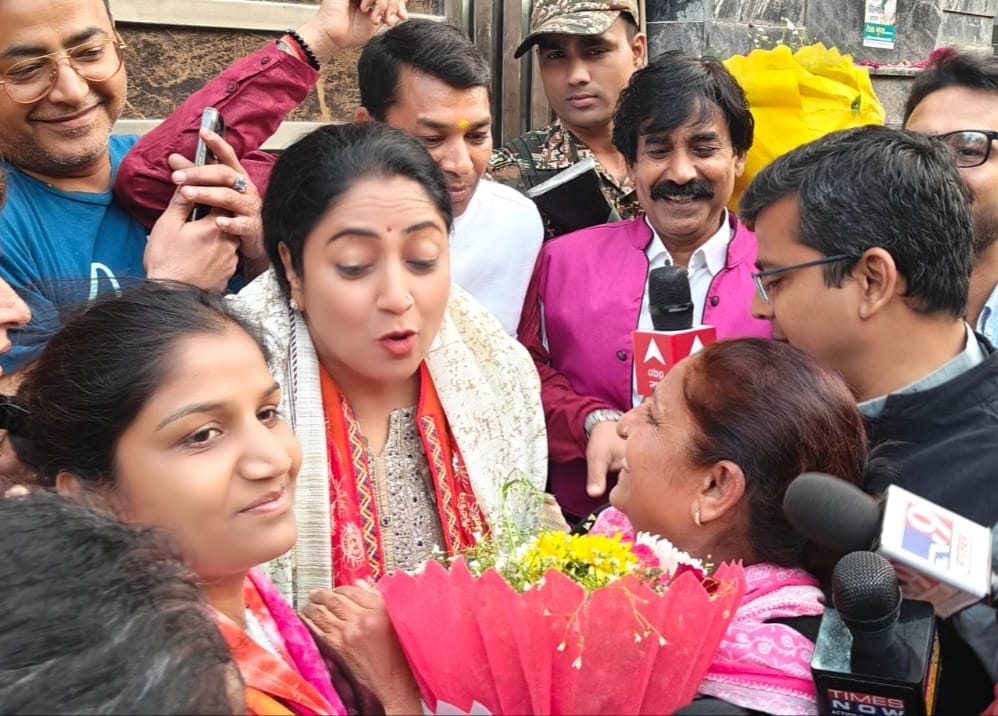
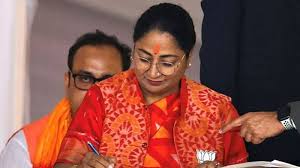
Just days into her tenure as Chief Minister, Rekha Gupta’s efforts to unify the Bharatiya Janata Party’s Delhi unit remain a work in progress. The factionalism that has long defined the party cannot be erased overnight, but her proactive outreach signals a commitment to stability. Her visit to Late Madan Lal Khurana’s home and active engagement with senior leaders has earned her goodwill, in a short time.
Gupta was sworn in as the ninth Chief Minister of Delhi, marking the BJP’s triumphant return to power in the national capital after a 27-year hiatus. A first-time MLA, Gupta’s meteoric rise to the top post was as surprising as it was historic, she became the fourth woman to helm Delhi’s government. However, her ascension has not been without challenges.
The BJP’s Delhi unit, long plagued by factionalism, has presented an immediate test of her leadership. In her initial days as CM, Gupta has embarked on a deliberate outreach campaign to unify the party’s fractured factions, reaching out to senior leaders and visiting the homes of political stalwarts, even as some within the party question her credentials as a junior leader, sources said.
The Delhi BJP has historically been a cauldron of competing interests, with factionalism simmering beneath the surface despite the party’s recent electoral success—securing 48 out of 70 seats in the 2025 Delhi Assembly elections. Senior leaders such as Parvesh Verma, who defeated AAP supremo Arvind Kejriwal in New Delhi, Vijender Gupta, a three-term MLA and former Leader of Opposition, and Satish Upadhyay, a former Delhi BJP president, were among the frontrunners for the CM post. Their sidelining in favor of Gupta, a political novice in legislative terms, stirred discontent among certain quarters.
Sources stated that whispers of dissent emerged, with some party members reportedly attempting to undermine her by highlighting her lack of experience. This internal friction threatened to overshadow the BJP’s mandate and posed a challenge to Gupta’s authority even before she could settle into her role.
However, Gupta has wasted no time in addressing these fissures. One of her earliest moves was a symbolic visit to the residence of Khurana, the BJP’s first Delhi CM (1993–1996). Khurana, a veteran who shaped the BJP’s early dominance in Delhi, remains a unifying symbol for the party’s old guard. Gupta’s visit, laden with respect for the legacy of the Khurana family, was a calculated gesture to win over senior leaders and their loyalists.
Sources close to the CM suggest that she sought to invoke Khurana’s legacy of grassroots connect and administrative acumen—qualities she aims to emulate as she navigates her tenure.
Beyond this, Gupta has actively reached out to other senior leaders within the party. Meetings with figures like Vijender Gupta and Parvesh Verma, indicate her intent to mend fences and build a cohesive team. Her approach has been one of humility and collaboration, emphasizing her reliance on the experience of seasoned leaders to complement her own organizational skills honed through decades with the Rashtriya Swayamsevak Sangh (RSS) and the Akhil Bharatiya Vidyarthi Parishad (ABVP). In fact, the strong backing of the Sangh has allowed her to approach all these issues with confidence.
“I am here to serve Delhi with the guidance of my seniors and the energy of our workers,” she reportedly said in one such closed-door meeting, signalling her willingness to bridge generational and factional divides.
Her outreach is not just about pacifying dissent but also about projecting unity ahead of a challenging tenure. Delhi’s governance model, with its overlapping jurisdictions between the state government and the Centre, demands a CM who can rally both party and bureaucracy.
Gupta’s success will hinge on her ability to take everyone within the party along. Delhi’s electorate, having handed the BJP a decisive mandate, expects swift action on promises like the Mahila Samridhi Yojana and infrastructure upgrades. If she can deliver while keeping the party’s factions in check, Gupta may well prove her critics wrong—transforming her “junior” status into a narrative of resilience and renewal for the BJP in Delhi.
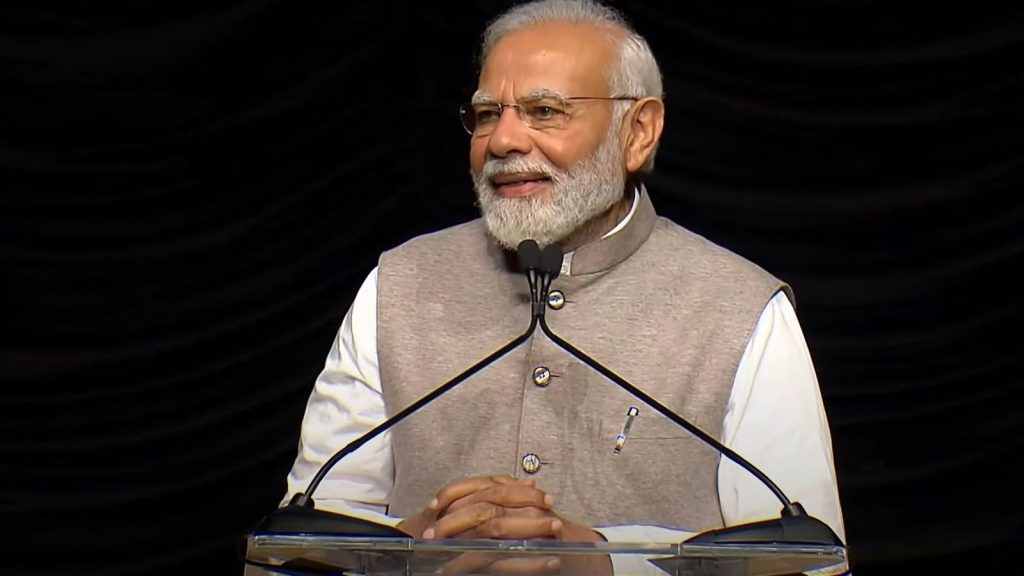
Gandhinagar: Prime Minister Narendra Modi will be on a two-day visit to Gujarat, beginning Friday, during which he will attend a ‘Lakhpati Didi Sammelan’ in Navsari district, coinciding with International Women’s Day.
During his visit, PM Modi will attend the ‘Lakhpati Didi Sammelan’ at Vansi-Borsi, where he will distribute financial assistance exceeding Rs 450 crore to over 2.5 lakh women from 25,000 self-help groups across the state.
Launched by PM Modi on August 15, 2023, the ‘Lakhpati Didi Yojana’ aims to promote women’s entrepreneurship and economic independence. The scheme supports self-help group (SHG) members who earn Rs 10,000 or more per month, or Rs 1 lakh annually, through activities like agriculture, animal husbandry, and small-scale industries. Currently, 1.5 lakh women have attained the status of ‘Lakhpati Didi.’
The ‘Lakhpati Didi Conference’ at Vansi-Borsi will see participation from 1 lakh women from Navsari, Valsad, and Dang districts, many of whom are SHG members striving to become ‘Lakhpati Didis.’
PM Modi will interact with 10 selected beneficiaries and felicitate five Lakhpati Didis with certificates.
A film highlighting Gujarat’s progress under the scheme will also be screened. Additionally, two major state-specific schemes will be launched during the event.
On March 8, PM Modi will launch the G-SAFAL (Gujarat Scheme for Antyodaya Families for Augmenting Livelihoods) initiative to boost economic self-sufficiency among women from Antyodaya families.
Over the next five years, the scheme will benefit 50,000 Antyodaya Anna Yojana (AAY) cardholder families across two aspirational districts and 13 talukas in Gujarat.
The key features of G-SAFAL include Rs 1 lakh financial assistance and vocational training per SHG woman, Rs 500 crore assistance to 50,000 women over five years, one field coach for every 50 to 60 women, and weekly coaching and capacity-building sessions.
The G-MAITRI (Gujarat Mentorship and Acceleration of Individuals for Transforming Rural Income) scheme will also be launched, focusing on rural startups and social entrepreneurship. Through the Gujarat Social Enterprise Fund (G-SEF), Rs 50 crore will be allocated to support livelihood-focused startups over five years, aiming to empower 10 lakh rural women and youth.
The key features of G-MAITRI include incentives for social enterprises in the startup and growth phases, open participation for both for-profit and non-profit enterprises supporting rural livelihoods, support for over 150 startups in five years through seed and scale startup programmes, grants of Rs 20 lakh to Rs 30 lakh for enterprise development, Rs 20 lakh assistance for seed startups and up to Rs 30 lakh for scale startups, promotion of rural development through entrepreneurship and self-reliance, and workshops and training to strengthen the ecosystem.
New Delhi:Leader of the Opposition Rahul Gandhi on Wednesday expressed deep concern over the rising number of stampedes at railway stations after interaction with coolies who helped passengers during the February 15 tragedy.
Saddened by their plight, Rahul Gandhi said he would fight for their rights with all his might.
In a post on X, he highlighted the tragic consequences of such incidents, stating, “The increasing number of stampedes at railway stations and other public places is a matter of great concern. Many innocent people lose their lives or suffer injuries in these unfortunate events. We need to come together and find ways to prevent such tragedies”.
Gandhi also sought public participation in addressing the issue, urging people to share their suggestions on improving crowd management and enhancing security at railway stations.
“If you have any ideas to improve crowd management, strengthen security, or suggest any other measures, please share them. We will listen to the voice of India!” he added.
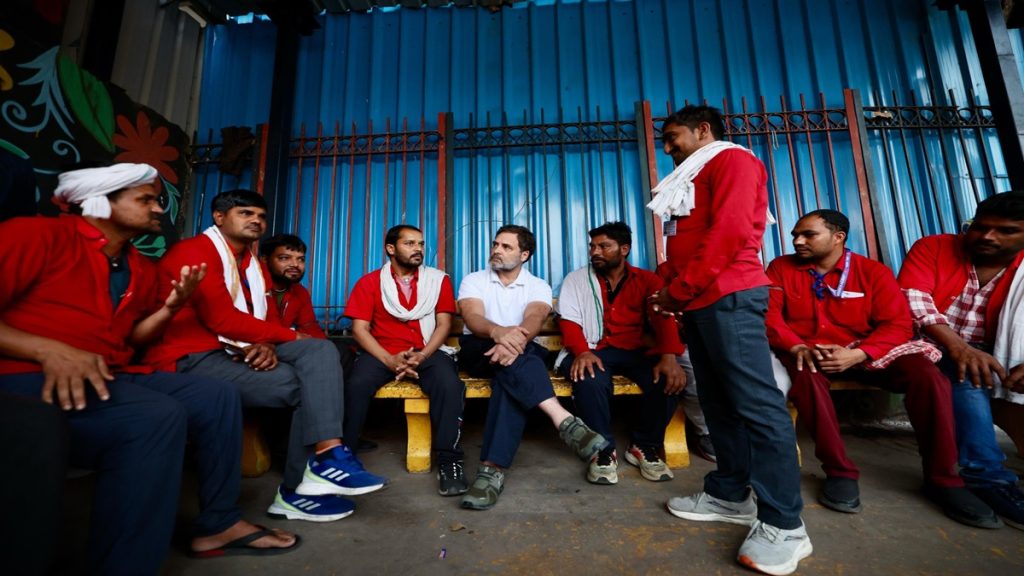
Along with his post, the Congress leader shared a video of his interaction with coolies at New Delhi Railway Station, acknowledging their critical role in assisting passengers during emergencies. He met with them to personally thank them for their courageous efforts during the February 15 stampede, which claimed 18 lives.
During their discussion, the coolies recounted the chaotic scene on that fateful night when a massive crowd gathered at platforms 14 and 15, leading to the deadly stampede. They spoke of their struggle to rescue trapped passengers, despite the dangers to their own lives.
Beyond their heroic actions that day, the porters also shared the harsh realities of their daily lives with Gandhi. Many of them revealed that they often struggle to afford a single meal, having to choose between sending money home or feeding themselves.
Gandhi remarked: “Our Porter brothers are forced to live in such hardship. They risk their lives to help others, yet their voices remain unheard.”
He vowed to take up their cause at the highest level, asserting: “During the stampede at New Delhi Railway Station, these workers put their own lives at risk to save others. But their struggles go unnoticed. I will bring their demands before the government and fight with all my strength for their rights!”
At least 18 people, including five children, were killed and over a dozen were injured in a stampede at New Delhi Railway Station on February 15, which was caused by a sudden surge of passengers waiting to board trains for Prayagraj, where the Maha Kumbh Mela was held.
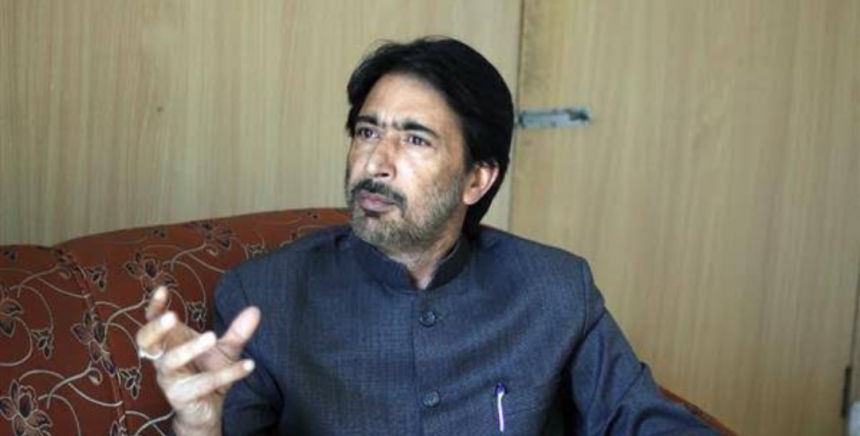
Jammu: Congress Legislature Party (CLP) leader Ghulam Ahmed Mir on Tuesday strongly advocated for a caste census in Jammu and Kashmir, arguing that it would help determine the exact population of various communities and ensure equitable distribution of benefits.
Speaking during the Motion of Thanks on the Lieutenant Governor’s address in the J&K Assembly, Mir also reiterated the Congress’s demand for full statehood with legal and constitutional safeguards for locals in government jobs and land ownership.
Mir emphasized that the abrogation of Article 370 should not mark the end of J&K’s special provisions and urged the government to explore new legal frameworks for safeguards. He pointed out that constitutional amendments continue to evolve and suggested that fresh provisions for J&K could be introduced through future amendments.
On the restoration of statehood, Mir stated that reinstating Jammu and Kashmir’s status would empower the chief minister, strengthen democracy, and address several regional concerns. He welcomed Lieutenant Governor Manoj Sinha’s remarks on statehood, saying they had generated fresh hope among the people, and urged Prime Minister Narendra Modi to fulfill his commitment to J&K’s political future.
Mir also criticized the central government’s approach to special status, noting that states like Bihar and Andhra Pradesh had sought and were being considered for special packages in exchange for political support. He questioned why similar demands for J&K faced opposition.
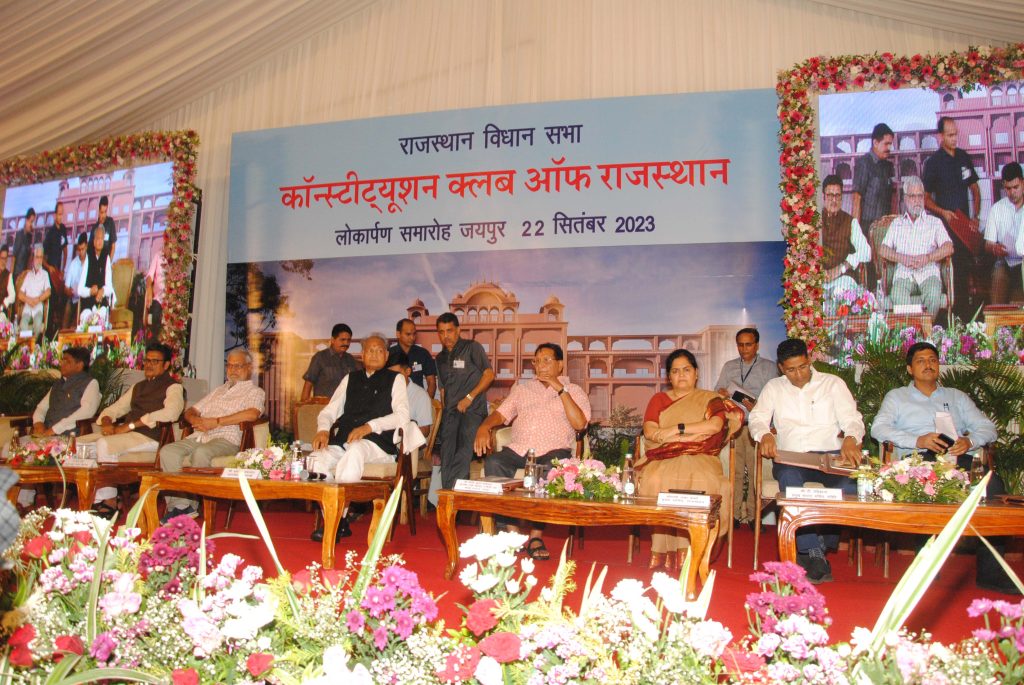
Rajasthan, March 5: On the issue of inauguration of Rajasthan Constitution Club built in Jaipur, why the congress
has erupted a row? On Tuesday, speaking in the Assembly, Speaker Vasudev Devnani informed and invited the MLAs for the inauguration by Lok Sabha Speaker Om Birla at 11 am on March 8. He said the Constitution Club built in Jaipur will be officially inaugurated by Lok Sabha Speaker Om Birla on March 8 at 11 am. Here in this club, which has been built on the lines of the Constitution Club of Delhi, MLAs can get a convenient place for study, discussions and meetings.
However, the club had been already inaugurated during congress rule in the state by the then Chief Minister Ashok Gehlot on 22 September 2023, but as the power of state has come in the hands of BJP, hence the new government is inaugurating it again.
Congress has raised questions and objections over the second time inauguration of the club and alleged that the entire politics of BJP has become limited to ‘credit and conspiracy’.
Rajasthan Pradesh Congress Committee President (RPCC), Govind Singh Dotasra, on his tweeter, slamming the BJP government stated, “The BJP government only wants to take credit by inaugurating the Constitution Club, which was completed during the previous Congress government, ‘again’ and calling it the alleged inauguration, which is a wrong tradition.”
Dotasara added, “While the people of Rajasthan know that the Constitution Club of the Assembly was constructed during the Congress government. On 22 September 2023, the Constitution Club was inaugurated by the then Chief Minister Shri Ashok Gehlot in the presence of Assembly Speaker Dr. CP Joshi and Leader of Opposition Shri Rajendra Rathore, which is mentioned on the stone plaque. But after the change of power, the BJP government kept the Constitution Club closed till now so that it could take credit by calling its ‘re-inauguration’ as the so-called inauguration.”
Dotasara, objecting the re-inauguration, said, “The executive committee constituted for the club has the right to take any decision related to the Constitution Club, but the decision of the inauguration of the club by the Speaker of the Assembly in the House is completely inappropriate and against the rules. Before taking the decision, the speaker of the assembly neither called a meeting of the executive committee nor took the opinion of the members to build a consensus.”
RPCC President Dotasara further added, “The speaker of the assembly does not belong to any party. Under the pressure of the government, questions are being raised again and again about his decisions and role.”
Attacking the Speaker Devnani, Congress leader Dotasara alleged that not providing protection to the opposition in the house many times, not asking for an apology from the minister who insulted former Prime Minister late Indira Gandhi, making political comments on a member elected by the people and sending a privilege violation proposal directly to the committee to suppress the voice of a public representative, shows his inclination towards the government and is like mocking the dignity of the constitutional post. It is not appropriate for a person sitting on a constitutional post to become a part of politics.
Rekha Gupta’s appointment as Delhi’s first woman Chief Minister sparked celebrations among women, yet her all-male cabinet raised questions about the BJP’s commitment to gender empowerment.
SPOTLIGHT-BY KUMKUM CHADHA
When Rekha Gupta’s name was announced as Chief Minister, the women of Delhi danced: literally. In her elevation, they saw a victory of women power: one that had scored over caste, community et all.
But that’s where it ended. Unfortunately.
Amid the celebratory dance and song, what stared one in the face was an all-male cabinet headed by the only woman: Rekha Gupta.
All six who comprise Gupta’s Cabinet are men: dashing all hopes of women dominating Delhi’s governance.
Before Gupta’s name was announced, there was speculation that the BJP leadership would want to give gender a push.
Naming Gupta too raised hopes that more women would be included in the Cabinet. But as it turned out, it was Gupta, the lone woman, leading an all-men pack.
Even for the Speaker of the Assembly, the choice was a man: Vijendra Gupta, a third time MLA from Rohini.
Therefore, it is not without reason that some ask: Was the BJP indulging in mere tokenism?
Until the actual announcement, Gupta’s name was kept under wraps. In fact, the BJP had sent out invites for the Chief Minister’s swearing in without saying who would finally take the oath.
But then secrecy and surprise are hallmarks of the Modi dispensation particularly when it comes to handpicking chief ministers.
Till the formal announcement, technically three and in reality, only two people are aware of what will unfold: Modi and Union Minister Amit Shah. BJP Chief J.P.Nadda name does figure but that, according to sources, is only notional.
To begin from the beginning: When Yogi Adityanath was denied permission to go abroad, he did not know what was in store.
Way back in 2017, Yogi was recovering from hectic campaigning. He needed a break and the scheduled tour was more than he could have asked for. But the Modi-Shah duo had other plans. Within days of denying him the overseas sojourn, he was told to take charge of Uttar Pradesh as its Chief Minister.
A few years later, when Bhupendra Patel was planting saplings in Ahmedabad in his home state Gujarat, he was summoned to the Party office. When his name was announced as Chief Minister, many sought to know: Who Patel? Which Patel? Why Patel? There were no easy answers and to question Modi-Shah’s decision, even then as now, is like questioning God.
That apart, lobbying is something the BJP top brass frowns upon.
In Rajasthan, when former Chief Minister Vasundhara Raje had flexed her muscle and attempted to showcase 40 MLAs in her support, she was given a go-by.
Going forward, handpicking first time MLA Bhajan Lal Sharma in Rajasthan, Mohan Yadav in Madhya Pradesh or Vishnu Deo Sai in Chhattisgarh are other examples of Modi’s out of the box decisions when it comes to Chief Ministers.
Another reason for the late announcement in Delhi, was probably the fear of dissension coming out in the open.
Parvesh Singh Verma, now in Gupta’s Cabinet, was a front runner. His claim to fame: he had defeated Aam Aadmi Party Chief and former Chief Minister Arvind Kejriwal. In the process, he earned the tag of a giant slayer.
That apart, he is the son of Delhi’s former Chief Minister Sahib Singh Verma: a fact he never forgets to flag.
Except for this and his being a Jat face, Verma has little to show.
A former MP, he was denied a ticket by the Party to contest the Lok Sabha elections last year.
Whether his recent victory was a positive vote for him or the electorate’s bid to oust Kejriwal remains a question mark.
As for being a giant slayer, in the BJP scheme of things, this does little.
In this context former Union Minister and MP, Smriti Irani comes to mind.
In the Lok Sabha election in 2019, when she defeated Rahul Gandhi in Amethi in Uttar Pradesh, her supporters expected her to be rewarded with an important portfolio in the Union Cabinet.
Mr. Modi did include her in his Cabinet but assigned her the non-descript Women and Child Development Ministry. It was to quote a BJP leader “a consolation prize” for an obvious winner.
Cut to the present, when Verma was overtaken by Gupta as CM. His body language betrayed his disappointment.
During the arti along the banks of the river Yamuna that followed the swearing in, he came across a reluctant participant.
Therefore, apart from governance challenges, Rekha Gupta would have to handle heartburn of the likes of Verma, if not cajole him at regular intervals.
As for Rekha Gupta, she does tick the gender and caste boxes. A woman, she belongs to the traders’ community.
A Vaish by caste, Gupta’s choice resonates with BJP’s traditional vote base: the trading community which proved crucial in BJP’s recent victory in Delhi.
Caste apart, Gupta’s choice was a bid to tell the women voters both in Delhi and across the nation, that gender welfare is central to Prime Minister Modi’s governance.
Rewind to Prime Minister Modi’s first speech from the ramparts of the Red Fort way back in 2014, wherein he underlined the need for a toilet in every rural home and separate toilets for girls in schools. An unusual topic by Modi’s own admission, yet it was one that touched a chord.
Quite like many of his other women-centric schemes, including a gas connection and house ownership for the woman member of a household.
Equally, during the Delhi elections, the BJP had announced women centric schemes including monthly financial assistance, free bus travel, nutritional kits for pregnant women.
That Rekha Gupta has enough on her plate is a given. Apart from her own drawing board, she has a long list of Prime Minister Modi’s initiatives to work on. In addition, she is set to rework AAP government schemes with a BJP twist and showcase them as their own.
For instance, her government has already announced renaming Mohalla clinics as Ayushman Arogya mandirs, making them corruption free and enhancing health services in the capital city of Delhi.
Gender apart, issues of caste and community also weighed in during Delhi’s Cabinet formation.
Manjinder Singh Sirsa, the richest MLA in Delhi with declared assets worth Rs 248 crores, is a Sikh. His inclusion, to quote him, is “justice done” given that the Delhi Cabinet has always had a Sikh. It was during Kejriwal’s tenure that the community was given a short-shrift.
That apart, the scars of the 1984 anti-Sikh riots in Delhi have not healed. Equally, Mrs Indira Gandhi’s decision to send the Army into the Golden Temple has alienated the Sikh community from the Congress.
Sirsa’s credentials as a devout Sikh too are intact given that he has served as President of Delhi Sikh Gurdwara Management Committee. Against this backdrop, Sirsa’s inclusion fits in.
Sikhs apart, the BJP has accommodated the Punjabi community through Ashish Sood’s induction in the Cabinet. The Punjabi vote bank played a crucial role in this election given that the BJP won 17 of the 20 Punjabi dominated constituencies across Delhi.
Quite like the Purvanchalis, which helped the BJP win in 11 of the 14 constituencies dominated by them.
Consequently, handpicking Pankaj Singh was killing two birds with one stone: a signal to the voters in Delhi as well as Bihar where the elections are due later in the year. Singh is, both, a Purvanchali and Thakur face and by that measure he simultaneously ticks two boxes at one go.
The Purvanchali voters make up for 30 percent of the city’s electorate. In 2015 and 2020, this electorate had played a key role in AAP’s landslide victory. This time around it has shifted to the BJP.
For record, Prime Minister Modi in his victory speech had specifically thanked the Purvanchalis for their electoral support.
As for the Dalits, it is for the first time that they rallied around the BJP in Delhi. Of the 12 reserved seats, the BJP claimed four in this election: enough for the BJP to include Ravinder Indraj Singh in the Cabinet. By caste, Singh is a Dalit.
The inclusion of Kapil Mishra, a Brahmin, also helped tick the caste box. That Delhi is BJP’s prize catch is a given.
The Party has returned to power in the Capital city after 27 years.
Between 1993 and 1998 when it was in power, it saw three Chief Ministers: Madan Lal Khurana who stepped down after 27 months after allegations of corruption; Sahib Singh Verma, who was replaced after 31 months because he failed to control onion prices in Delhi; and Sushma Swaraj, who had the distinction of being Delhi’s first woman Chief Minister, though only for 52 days.
Incidentally, both Khurana and Verma’s sons contested the recent Delhi elections and won their respective seats: Harish Khurana from Moti Nagar and Parvesh Singh Verma from New Delhi.
Swaraj’s daughter, Bansuri, is a familiar face given that she is an MP from New Delhi. She had campaigned vigorously for the Party in the recently concluded assembly elections. This time around, the BJP won, rather swept, the polls with 48 seats in its kitty against AAP’s 22 in the 70-member Assembly.
The Congress lost power in 2013 after a dream run for 15 years under Chief Minister Sheila Dikshit. In the three assembly elections that followed in 2015, 2020 and 2025 it secured a zero.
While on numbers, there is an interesting aside. At the national level, Gupta is currently the second woman Chief Minister in the country, after Mamata Banerjee in West Bengal.
As for Delhi, she is the Capital’s ninth Chief Minister across gender but the fourth woman to be sworn in to head Delhi. Across Parties, she succeeds BJP’s Sushma Swaraj, Congress’ Sheila Dikshit and Aam Aadmi Party’s Atishi in that order.
As far as BJP goes, she is the Party’s second Chief Minister after Sushma Swaraj.
That Gupta has hit the ground running is evident from the fact that within hours of taking over she held her first Cabinet meeting following which she made key announcements, including the decision to table CAG reports; implementing the Centre’s flagship health insurance scheme; and the promised financial assistance to women.
Having said that, it would also be good politics if the BJP builds on the strengths of AAP and its welfare schemes rather than demolishing everything that has the stamp of its adversary. It is time for the Party to rise above petty and partisan politics and focus on the welfare of those who voted it in with hope and optimism. Given BJP’s impressive tally, its Time starts now, so to speak.
The plight of the deportees from Punjab, Haryana, Gujarat, Himachal Pradesh, Uttarakhand and UP raises many questions. Is their life back home so terrible that they risk everything, even their lives, to escape to a distant land? Or, is it just the allure of the American dream? A report by Bijoy Patro
The allure of the American Dream continues to draw individuals from across the globe, including India, where a complex web of illegal immigration routes, known as “dunki routes,” has emerged. These clandestine pathways, often fraught with danger and exploitation, promise a backdoor entry into the United States, but frequently deliver only heartbreak and despair. Recent events, including deportations and the exposure of human smuggling operations, have brought the harsh realities of these journeys into sharp focus, forcing a closer examination of the motivations behind them and the devastating consequences for those who gamble everything for a chance at a new life.
The scale of the issue is significant. While deportation numbers fluctuate, the underlying problem of undocumented Indian migrants in the US persists. Data suggests thousands of individuals are subject to removal orders, with hundreds more in detention. The dramatic imagery of deportation flights, particularly those landing in Amritsar, Punjab, has ignited political debate, with accusations of targeted campaigns and counter-accusations of political opportunism. However, beyond the political rhetoric lies a deeper human tragedy.
The dunki route is not a single path, but rather a network of constantly evolving routes that snake across continents. These journeys often involve multiple countries, treacherous terrains, and unscrupulous agents who prey on the desperation of those seeking a better future. The arrest of Delhi travel agent Amit Arora, a repeat offender in human smuggling, exemplifies the criminal element profiting from this trade. Operating from seemingly legitimate offices, these agents weave tales of prosperity and opportunity, masking the true dangers and costs of the journey.
Maninder Pal Singh’s experience is a chilling testament to the lengths these agents will go to and the vulnerability of the migrants. Deported from the US, his passport revealed the telltale signs of a carefully constructed, yet ultimately failed, attempt at illegal entry. His 13-month odyssey, orchestrated by an agent, traversed multiple countries, costing him a fortune. The deliberate removal of passport pages, meant to conceal fake visa stamps, highlights the manipulation and deception inherent in the process. Maninder’s story is not unique. Social media platforms are now filled with accounts from deportees returning to Punjab, their narratives painting a grim picture of the hardships endured and the dreams shattered. Videos of perilous jungle crossings, shared by deportees like Gurvinder Singh, who now faces crippling debt after a failed attempt costing him a substantial sum, have gone viral, exposing the physical dangers of the journey.
Too distraught
The return of deportees to Punjab has sparked a political firestorm. The selection of Amritsar as a primary landing point for deportation flights has drawn criticism, with accusations of political targeting. Chief Minister Bhagwant Mann has alleged a “smear campaign” against the state, while the BJP accuses the AAP of playing politics. This political back-and-forth underscores the complex interplay of factors contributing to the problem, from economic disparities to political maneuvering. However, the human cost of these journeys transcends political divides.
Many deportees return home traumatized, burdened by debt, shame, and a sense of failure. The psychological impact of deportation, coupled with the financial ruin it often entails, can be devastating. Some, like 19-year-old Nishan Singh, are too distraught to even speak of their experiences. They carry the weight of broken dreams, the stigma of deportation, and the crushing burden of debt. Their stories are a stark reminder of the immense risks involved and the devastating consequences for those who are caught.
The dunki route is not just a physical journey; it’s an emotional and psychological one. Migrants leave behind everything familiar, driven by the hope of a better life. They endure hardship, exploitation, and the constant fear of discovery. When their dreams are shattered and they are sent back, they face the daunting task of rebuilding their lives, often with nothing but debt and despair.
Adding another layer of complexity is the involvement of gangsters. Increasingly, they are using the dunki route to escape law enforcement, leveraging their resources and connections to secure fake documents and establish international criminal networks. This not only endangers ordinary migrants, who face increased risks and exploitation, but also allows criminals to operate with impunity. The involvement of figures associated with organized crime highlights the far-reaching consequences of the dunki route and the challenges in combating it.
Mobility inequality
The World Migration Report 2024 sheds light on the growing “mobility inequality” in international migration. While the number of migrants has increased, the proportion has only slightly risen, with most migration occurring between wealthy nations. This increasing exclusion of individuals from poorer countries underscores the desperation that drives them to seek opportunities through dangerous and illegal means. Work remains the primary motivator for international migration, with migrant workers often concentrated in high-income countries.
The stories emerging from Punjab demand a comprehensive approach. While cracking down on agents like Arora is essential, it’s merely one piece of the puzzle. Addressing the economic desperation that fuels migration is crucial. Raising awareness about the risks of the dunki route and providing support to returning deportees are equally important. A deeper understanding of the push and pull factors driving these journeys is necessary. What economic and social conditions compel individuals to leave? What false promises lure them into the clutches of unscrupulous agents?
Where do we stand now?
India and the US have identified 18,000 Indian migrants who are in the US illegally.
At least 20,407 undocumented Indians could be affected by the move. Of these, 17,940 are paperless individuals with final removal orders, according to the US Department of Homeland Security (DHS). There are 2,467 others, who are currently in detention under the Enforcement and Removal Operations (ERO) division of the US Immigration and Customs Enforcement (ICE).
According to a Reuters report, US President Donald Trump has deported 37,660 people during his first month in office. This is far less than the monthly average of 57,000 removals and returns in the last full year of Joe Biden’s administration.
But the dramatic effect of the US air force C-17 Globemasters landing to deport illegal immigrants is now forcing the world to examine why young people are risking everything to reach the US – even their lives.
The viral videos and social media posts offer a stark reminder of the human drama unfolding. They provide a glimpse into the hidden world of illegal immigration, a world of desperation, exploitation, and shattered dreams. But they also offer hope, a chance to learn and find sustainable solutions. The stories of deportees are not just stories of failure; they are stories of resilience, courage, and the enduring human desire for a better life. These stories must be heard if we are to truly understand the human cost of the dunki route and create a world where everyone has the opportunity to thrive, without risking everything on a perilous journey to an uncertain future. They are a call to action, a plea for compassion, and a reminder that behind every statistic, there is a human story waiting to be told.
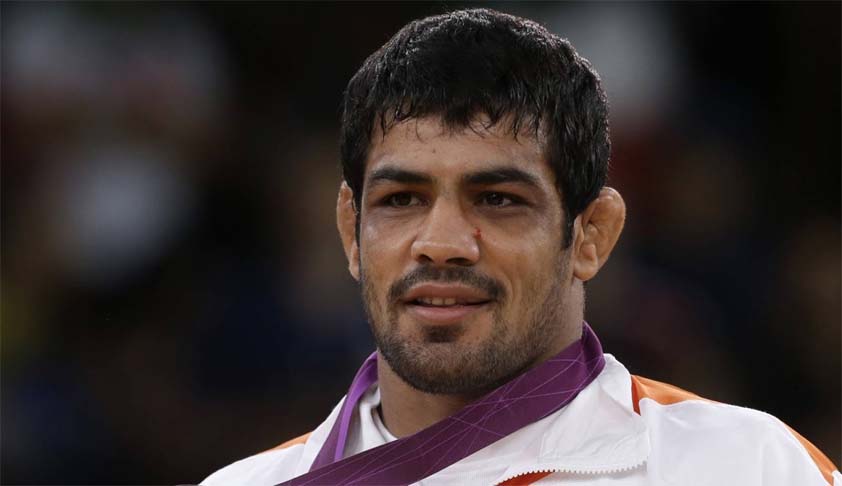
New Delhi: The Delhi High Court on Tuesday granted bail to Olympian wrestler Sushil Kumar, the prime accused in the murder case of junior national wrestling champion Sagar Dhankar.
As per the bail order passed by a bench of Justice Sanjeev Narula, the murder-accused wrestler will be required to furnish a bail bond of Rs 50, 000 and two sureties of like amount.
Sushil Kumar, along with others, is accused of allegedly assaulting former junior national wrestling champion Dhankar, a resident of Haryana’s Rohtak, and his two friends Sonu and Amit Kumar in the parking lot of the city’s Chhatrasal stadium, on May 4, 2021, over an alleged property dispute. He has been in judicial custody since June 2, 2021. He was earlier granted interim bail, for performing the last rites of his father and for undertaking surgery for his torn ligament.
Dhankar had succumbed to injuries after being assaulted by Sushil Kumar and his accomplices and according to the post-mortem report, died due to cerebral damage resulting from blunt object impact.
Sushil Kumar was arrested after staying on the run for 18 days after the death of Dhankar. According to Delhi Police officials, Kumar had travelled to Punjab, Uttar Pradesh, Uttarakhand and Haryana during the 18-day-long cat-and-mouse chase game. He was finally arrested from Delhi’s Mundka area when he had come to collect some cash and also borrowed a scooty from a national-level player. Following his arrest, he was also suspended from his Railways job.
In October 2022, the trial court had framed charges against Sushil Kumar and 17 others, setting the stage for their trial.
Additional Sessions Judge Shivaji Anand had framed charges against Sushil Kumar and the other accused under various provisions of the Indian Penal Code, including those related to murder, rioting and criminal conspiracy. According to a charge sheet filed by the Delhi Police, Sushil Kumar has been named as the kingpin of the whole murder conspiracy.
Sushil Kumar had won a bronze medal in the 2008 Beijing Olympic Games and a silver in the 2012 London Olympic Games.
Fort Knox, the fortress of US’ gold reserves, symbolises economic might and democratic ideals. Now, with Trump and Elon Musk joining hands to audit its holdings, question arises—has the vault’s legendary wealth quietly diminished over decades? by Gopal Misra
The strong vaults at Fort Knox not only keep the gold reserves of the US, but they also have the original copies of its independence, Magna Carta and other documents representing the American dream of the free democratic world.
The position of the US as the symbol of democracy and a land of immense opportunities, has been suffering decline following the decisions of the then US President Richard Nixon since 1971. He had supported the genocide of Bengali Muslims by a repressive Pakistani army equipped with American weapons. Further, apart from diluting the American commitment to democracy and civil liberties, Nixon had shocked the world by unilaterally cancelling the direct convertibility of the US dollar to gold. Thus, he diluted the spirit of the original text of the American constitution housed in the vaults of Fort Knox, he also allowed the American currency to be used without being supported by the gold reserves.
Nixon’s action was accompanied by a series of economic measures such as wage and price freezes, surcharges on imports. It, thus, ended the sovereign guarantee of his country to its paper currency. The present US President Donald Trump appears to be repeating these policies, which are remembered even today as the ‘Nixon Shock’. It had led to stagflation worldwide.
Nixon’s actions were part of a series of economic measures, including wage and price freezes and surcharges on imports, which effectively undermined the sovereign guarantee of the country’s paper currency. Today, President Donald Trump seems to be echoing some of Nixon’s policies, which are still remembered as the ‘Nixon Shock.’ It had led to stagflation worldwide. The difference, perhaps, is that Nixon had delinked the dollar from the gold reserves at the Fort Knox, but President Trump is keen to ascertain whether his country has retained the gold reserves or it has either been siphoned off by the cronies or powers that be during the successive American administrations in recent years. It is believed that the Fort Knox vaults, established in a 46-acre area, are well-fortified, and considered one of the biggest bullion deposits in the world.
Even after being delinked with the gold reserves, the investors, across the continents, believed that Washington would honor its commitment to repay the bonds at their maturity. The issue had cropped up during Joe Biden’s administration, when instead of paying back the investors, he had quietly managed to reschedule their repayment.
These vaults located in north-central Kentucky, according to the official sources, have gold deposits estimated to be 147.3 million ounces. With the gold prices in the US markets are around 3000 USD per ounce, the current value of this reserve could be in trillions. The book value, however, according to the US Mint, is being calculated at the rate of 42.22 USD per ounce.
The gold holdings had reached 649.6 million ounces in 1941, but in later years, it depleted. It is estimated that even the present reserves, perhaps, are just half of the gold holdings of the US treasury today. Trump and his associate and the billionaire, Elon Musk, however, suspect a substantial portion of the 147.3 million ounces of gold, might have also been pilfered. Trump has recently been quoted that the auditing of this reserve is necessary to confirm whether the quantity of the gold is being there. In spite of the statement of Scott Bessent, Treasury Secretary, that every year the gold reserve is being audited and it is present and accounted for, Elon Musk, according to Trump, would soon be visiting the gold reserves. It means, the Trump Administration is not sure about its existence.
New Economic Policy
Apart from delinking the dollar with the gold reserves, Nixon had told his countrymen during his countrywide telecast on 15 August, 1971, that he was imposing higher tariffs on imports. He had camouflaged these steps under the garb of a new economic policy. Trump, however, is keen to reduce his country’s financial burden by ending conflicts in Eastern Europe and West Asia and also asking the NATO members to share the cost. Similarly, he is also seeking equalization of the current balance of trade to reduce the growing deficit in the balance of trade.
The US had a trade deficit of nearly one trillion USD in 2022. Since 1976, the US trade deficit has been mounting, especially with China, oil-rich countries of the gulf in West Asia and European countries. Interestingly, the US trade with the three countries, Canada, Mexico and China account for 15, 14 and 13 percent respectively.
Just 20 days before Trump’s inauguration on January 20 this year, the US trade deficit had widened to 98.4 billion USD in December 2024. India has a much smaller trade surplus with the US with just 50 billion USD annually.
Trump may also be facing opposition within the country following sacking of a large number of federal employees and also reducing financial commitment to the poor regions of Africa, Asia and Americas.
Investigations at Fort Knox
There is a general apprehension that the ongoing investigations in gold reserves at Fort Knox, if found substantially less than being claimed, despite the delinking of dollar with the precious metal, would lead to the end of confidence in the US economy. Earlier, presidents like Barack Obama and Joe Biden had been keeping the armament industry functional by waging new conflicts across the continents to keep the dollar’s image intact. Instead of addressing the basic issue of restoring manufacturing, they had opted for the choice of making China as the manufacturing hub for manufacturing consumer goods using the state-of-the art technologies being made available to the Asian giant having a huge population of well-trained engineers and technologists.
It has led to a piquant situation that Beijing, used cheap labor having no social security or human rights, to lure the American corporate to set up units. It enabled them to access new technologies and have now started their own research for new products. On the other hand, the manufacturing hubs in the US like Detroit, remembered for its fine automobiles, or the industrial units at New York have closed down. The employable youths are being compensated by the unemployment allowances; and even allowed liberal access to drugs like marijuana. Further, even for routine work like the maintenance of buildings, roads and other civic amenities, the cheap labor from India and Central America were brought in. They included a large number of illegal migrants.
The Trump Administration’s decision to send them back to their respective home countries might further give a setback to the US economy. It might further eclipse America’s legitimacy as a superpower. The confidence in the invincibility of the dollar as one of the most sought after currencies in the world economy would finally eclipse. In other words, the Chinese currency, Yuan, might be replacing the dollar as the most acceptable currency in global trade replacing the formidable American dollar.
The Chinese dictator, Mao Zedong, who had successfully befooled Nixon and his National Security Adviser, Henry Kissinger, to accept one China policy, i.e. conceding the Chinese sovereignty on Taiwan, and also by assisting the US to dismantle the USSR, might be smiling in his grave. His country has already become an economic super power, and it is poised to reassert the Dragon’s power in Eurasia. With the American dollar losing much of its shine, Beijing will be enjoying the fact that the Americans have only proved themselves just paper tigers or tigers without teeth.
It is not known whether President Trump and his team had prepared a structured action plan before indulging in the mass scale retrenchments of the federal employees or taking up the trade issues with a macro approach. Being a real estate developer, he should have engaged an architect before dismantling the old order reeking with rampant corruption. The apprehension is that with the depletion, if not the total disappearance of the gold reserves at Fort Knox, the US economy might be facing one of the weakest moments of its legitimacy as an economic powerhouse. It may be interesting to know that the signed original constitution of the United States, declaration of Independence, Articles of Confederation, Lincoln’s Second Inauguration Address, exemplified copy of Magna Carta and a Gutenberg Bible have also been kept in this highly secured warehouse.
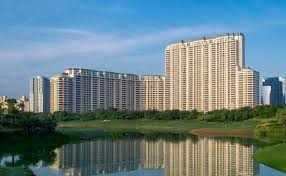
Delhi NCR has emerged as a top contender in the global luxury real estate market, securing the 6th position among 44 cities. With this, the crown of India’s Billionaire Row has shifted from Mumbai to Delhi NCR, where Rs 100 crore deals by high-net-worth Indians seem to be the norm. A report by Aayush Goel
Delhi NCR has emerged as a top contender in the global luxury real estate market, securing the 6th position among 44 cities worldwide for the highest price appreciation of luxury homes, according to the latest Prime Global Cities Index Q4 2024 by real estate consultant Knight Frank. The region saw a 6.7% increase in luxury home prices during the December 2024 quarter, reflecting a growing demand for high-end properties in India’s national capital region.
The Prime Global Cities Index, a valuation-based tracking system for prime residential prices, evaluates price changes in luxury properties across 44 cities globally. Seoul topped the list with a remarkable 18.4% surge, followed by Manila (17.9%), Dubai (16.9%), Tokyo (12.7%), and Nairobi (8.3%). A Rs 90 crore ultra-luxury apartment deal in Gurugram, a Rs 130 crore bungalow transaction in New Delhi’s posh Kautilya Marg, 2024 has undoubtedly been the year of the boom of super luxury realty. What however caught the attention was the shifting of the crown of India’s Billionaire Row from Mumbai to Delhi NCR, Gurugram to be specific where 100 crore deals by high-net-worth Indians seem to be the norm. It was at the tail end of last year when in December 2024 history was rewritten in the Indian real estate market. An ultra-luxurious penthouse in Gurugram was sold for a whopping 190 crore. Spanning an impressive 16,290 sq. ft., this opulent property in DLF’s luxury residences Camellias was bought by Info-x Software Technology Pvt Ltd through its director Rishi Parti. The deal which got Haryana a stamp duty of over 13.30 crores has taken per sq. ft. rate to around two lakhs, which is way higher than most sought-after areas in Delhi and even Mumbai. Previously, Mumbai’s Lodha Malabar held the title for India’s costliest high-rise transaction, with three apartments sold for Rs 263 crore at Rs 1.36 lakh per sq. ft. (carpet area). While the world was still digesting Camellias, the realty major’s next project Dahlias sent realtors, and investors into a frenzy. Touted to be the most expensive residential project in India has clocked sales of Rs 11,816 crore by selling 173 super-luxury apartments in just nine weeks of the pre-launch of The Dahlias. Two penthouses here have reportedly been sold for Rs 150 crore each. It’s not just Mumbai but Delhi-NCR seems to be competing with the world’s billionaire row New York as well. While 30 crores can buy you an apartment in swanky DLF’s the Magnolias in Sector 42 with a built-up area of around 5,000 sq. ft., the same amount can fetch you a 6-room penthouse with two terraces with the Empire State Building view in New York.
64 percent of luxury residential launches in Delhi-NCR
Luxury real estate in Delhi-NCR is seeing sustained growth, offering buyers a diverse range of options, from established high-end neighborhoods to rapidly developing micro-markets. As per CBRE, the real estate sector saw a growth in land deals in 2024, with transactions exceeding 2,200 acres from around 1,900 acres in the previous year, with Delhi-NCR taking the lead. Besides, the Delhi-NCR micro-markets led the chart with over 40 land deals, with Gurugram accounting for more than 60%, followed by Noida and Greater Noida with a 25% share of NCR deals. This uptick in activity across regions highlights a major shift in the luxury housing segment. According to a similar report by real estate analyst JLL, among the top seven cities in India, Delhi-NCR stood out with a remarkable 64% share of luxury residential launches in 2024. NCR saw around 23,500 residential units launched in Delhi-NCR, exceeding the total launches of 2023, which stood at 22,707 units. Gurugram dominated with 55% of the new launches, while Noida contributed 35% in 2024. Notably, over 26% of these new launches, totaling about 6,200 units, comprised luxury apartments (priced at Rs 5 crore or above).
ANAROCK data shows that a total of 25 ultra-luxury homes priced over Rs 40 crore were sold in Mumbai, Hyderabad, Gurugram and Bengaluru in the first eight months of 2024 for a collective sales value of approximately Rs 2,443 crore. It may be noted that Delhi-NCR tops the country in housing price surge in the last one year registering an increase of around 32%. According to latest year-on-year (YoY) comparison of the third quarter by CREDAI–Colliers- Liases Foras, many parts in Gurugram like Dwarka Expressway, Golf Course Road Extension and Sohna Road witnessed over 50% yearly price growth. The report highlights average housing prices across the top eight markets in India rose 11% YoY at INR 11,000 per sq ft during the third quarter of 2024. Interestingly, average housing prices have increased for the 15th consecutive quarter since 2021. While Delhi NCR witnessed the highest rise, Bengaluru stood second at 24% while Ahmedabad and Pune registered an increase of 16% and 10% respectively. The Mumbai Metropolitan Region recorded a surge of a meager 4 percent while Kolkata and Hyderabad stood at 3 percent and Chennai at 2 percent.
According to industry experts, the trend to buy luxury homes will continue in 2025 with increased demand in newly developing areas in metros, and prime areas of Tier-2 cities, with improved connectivity and world-class infrastructure, and the rise of luxury gated communities and smart homes. “The premium housing market had a sustained demand in 2024, driven by young professionals, mid-income buyers, and first-time homeowners. Key areas such as Golf Course Extension Road and the Dwarka Expressway experienced a surge in new housing projects, offering a combination of comfortable living and excellent connectivity at competitive prices. Additionally, government incentives like reduced stamp duties and home loan subsidies significantly boosted the demand for premium housing”, said Harinder Dhillon, Senior Vice-President of Sales at BPTP.
What’s driving the growth
The luxury realty in Delhi-NCR is fueled by several factors including increased affluence, a growing number of high-net-worth individuals, and the area’s appeal as a business and political hub. Additionally, the Indian luxury market is benefiting from economic stability and a positive outlook, encouraging affluent buyers to seek lifestyle upgrades in the form of more spacious, sophisticated homes. Recent infrastructure upgrades like Dwarka Expressway, Southern Peripheral Road (SPR), and Jewar Airport have given a major push to the NCR being chosen as the destination by high-net-worth Individuals with proximity to key business hubs.
“The surge in demand for ultra-luxury homes in the Indian real estate industry is fueled by a rise in wealth creation and economic resilience among affluent segments. Gurugram, particularly areas like Golf Course Road and DLF5, has emerged as a prime destination for real estate investment, witnessing record growth in capital appreciation, rental yield, and demand for newly launched projects. This shift is driven by a new-found appreciation for real estate as both an appreciating asset and a source of tangible and intrinsic value,” says Aakash Ohri, Joint Managing Director & Chief Business Officer, of DLF Homes. According to Ohri, India has witnessed a remarkable increase in the number of UHNIs (Ultra-High-Net-Worth Individuals), with expectations of further wealth growth, alongside a projected 50% growth in UHNIs over the next five years.
“In addition to this, Gurugram is luring a lot of UHNI diaspora, further bolstering the uber-luxury real estate market. Price inelasticity in luxury goods reflects the unique value and prestige associated with such products. Moreover, the appeal of super luxury homes extends beyond comfort and opulence to include a sense of community and prestige, attracting discerning buyers who previously invested in other asset classes or luxury goods”, adds Ohri.