Rajasthan, March 4 : The incident of death of a one-month-old infant girl child allegedly crushed under boots of Rajasthan police officials, who rushed into the house of a Muslim daily wage labourer in Rajasthan’s Alwar district on Sunday, has ignited a fury of anger among the public. The raid was reportedly said to be a part of an ongoing campaign by the police to crack down on cybercrime.
Quoting Razida Khan, the mother of the demised child, the media reports, “When I was sleeping on the cot with my infant daughter, the policemen arrived all of a sudden and pulled me out and sent me out of the room. They also pulled my husband out. They stepped on my infant daughter’s head and killed her.”
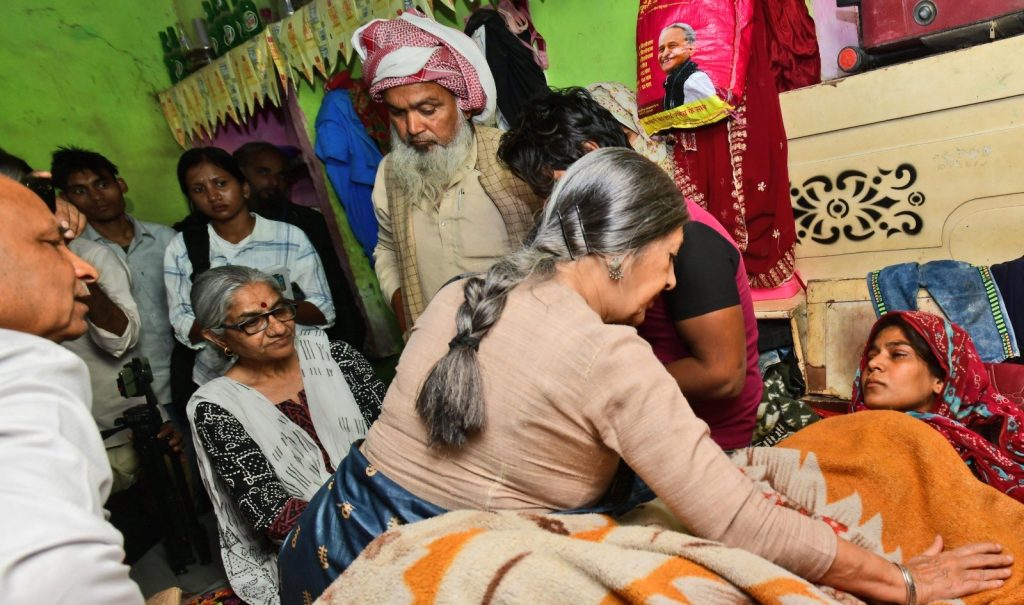
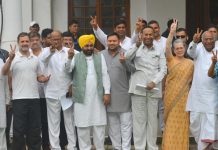
Om Tuesday, a CPIM delegation including Comrade Brinda Karat (Polit Bureau member), Comrade Kishan Parikh (Secretary, CPIM Rajasthan), Sumitra Chopra (State Secretariat member, Rajasthan State Committee), and Raisa (District Secretary), visited the family of one-month-old Alishda at Raghunathgarh Village, Alwar, who was killed due to police brutality on March 2. They expressed solidarity and demanded swift and impartial justice.
After visiting the aggrieved family, CPIM divulged that the incident occurred at 6 a.m. on March 2 when a group of policemen forcefully broke down the outer wall of Imran’s modest home. When Razida, the mother, opened the door, she was manhandled and dragged outside by male officers. The policemen, wearing boots, then jumped onto the bed where the infant was sleeping, crushing her, resulting in her immediate death.
CPIM further added that the police acted without a warrant or prior notice. Imran, a daily wage labourer with no criminal record, and his family have been subjected to this unimaginable tragedy. This horrific act highlights the vulnerability of poor and marginalized families, exacerbated by the anti-Muslim agenda perpetuated by the BJP-state government.
Condemning the incidence, the CPIM has demanded the immediate arrest of all police personnel involved, on charges of murder, Strict Punishment of the Thana in-charge responsible for the incident, starting with his immediate suspension, Provision of immediate compensation to the affected family and Measures to halt such illegal and brutal actions by law enforcement.
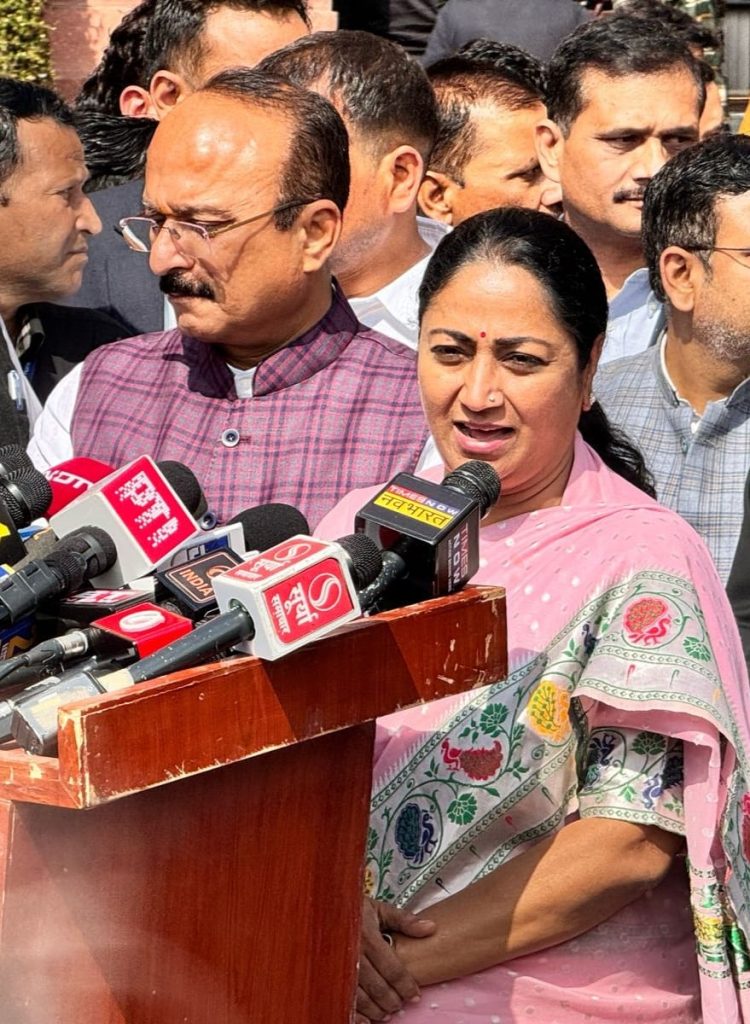
Tika Ram Jully, the Leader of Opposition has also condemned the brutal action of the police and commented in his tweet, “Crime is at its peak in Rajasthan, the government has no control over the law and order of the state. The incident of the death of a one-and-a-half-month-old girl during police action in Raghunathgarh Colony under Nauganva Police Station of Alwar district shook my heart. I have raised this issue in the assembly as well and also said through a press conference during the Lok Sabha elections that the police in Alwar are working to scare the people. The common people are being harassed by the police in Alwar, which is not justified. Under the BJP government, Rajasthan is being identified as a “crime-ridden state instead of crime-free”. Under the BJP rule, jungle raj and mafia rule have come into the state, the courage of criminals has increased so much under this government that criminals are committing criminal incidents like robbery, murder, theft and dacoity in broad daylight.”
The Christian Democratic Union’s victory paves the way for its leader, Friedrich Merz to take over from Olaf Scholz as German chancellor. Merz has voiced his intention to make Germany and EU strategically strong, distancing them from both the US and Russia. A report by Amit Prakash Singh
After the poll results, Germany now finds itself at an equidistant point between the USA and Russia. This shift appears driven by widespread fear among voters, particularly concerning the looming threat of the Russian bear. There is also a growing sense that the superpowers may abandon Ukraine, leaving it vulnerable. Additionally, the rise of “Musk Mania” among the youth, who seem less focused on the Nazi atrocities in Germany, coincides with the 80th anniversary of those events.
Some of these concerns were voiced by the U.S. Vice President J.D. Vance at a meeting in Munich on February 15, 2025, during the Munich Security Conference, where top European Union officials, strategic experts, and German political leaders gathered. He warned that free speech and fundamental values were retreating, particularly in Britain and across Europe. He criticised the conference organisers for barring lawmakers from far-left and far-right parties from participating. He declared, “There’s a new sheriff in town,” adding that Elon Musk’s views should not be considered election interference. He further remarked, “If American democracy can survive being scolded by Greta Thunberg, Europe can survive Elon Musk.” He also criticised European leaders for permitting mass migration, which he argued was a conscious decision made by politicians.
Vance’s combative speech at the Munich Conference sparked heated reactions. He continued by criticising European leaders and mainstream German parties for their “firewall” against the far-right Alternative for Germany (AfD). Later, he met with AFD leaders as political partners. Earlier, Elon Musk had appeared via video on AfD’s stage platforms, canvassing support. The youth cheered enthusiastically, visibly energized by his presence.
German Chancellor Olaf Scholz responded strongly to the attacks on Europe’s stance on hate speech and far-right ideologies. He stated that it was inappropriate for others to dictate to Germany and Europe, emphasising that such interference was unacceptable among allies. “We firmly reject that,” he said. Scholz outlined the reasons for not engaging with the AfD: its anti-immigration policies and its Nazi past, which continues to carry the stigma of ultranationalism. “Never again fascism, never again racism, never again aggressive war,” he reiterated, noting that the majority of Germans oppose anyone who glorifies or justifies criminal National Socialism—the ideology of Adolf Hitler’s 1933–45 regime.
The election for 630 seats in the new Bundestag (parliament) took place on February 23, 2025. Originally scheduled for September 28, 2025, the election was brought forward after the collapse of Scholz’s three-way coalition government. The results confirmed the strong lead predicted for the CDU/CSU (Christian Democratic Union/Christian Social Union), a centre-right alliance advocating liberal conservative policies. The CSU, active in Bavaria, is led by Friedrich Merz, the successor to Angela Merkel. The coalition secured 208 seats, affirming its dominance as expected by pollsters.
The AfD is Germany’s second-largest party, a relatively young force established in 2013. Its charismatic leader, Alice Weidel, at 46, holds a prominent position in the inner circle of reliable global leaders, including former US President Donald Trump. In this election, the AfD secured 152 seats. Weidel has stated that the party could surpass the CDU in the next election, positioning itself as the strongest party. CDU leader Merz expressed concern about the AfD’s growing success.
The third-largest party, the SPD (Social Democratic Party), is one of Germany’s oldest, founded in 1863. It advocates for social justice, workers’ rights, and a welfare state. The current leader, Olaf Scholz, 66, applied centre-left policies until the election. Under his leadership, the party managed only 120 seats. Alliance 90/The Greens had a comparatively weaker showing, securing just 85 seats. Its leader, Robert Habeck, 55, remains active on environmental issues. He previously served as the economy and climate minister in the last Scholz-led government. The far-left Die Linke party received 64 seats, having been formed in 2007 by the merger of the Party of Democratic Socialism (PDS) and the Electoral Alternative for Labour and Social Justice.
Scholz’s previous coalition government, formed with the SPD, Greens, and FDP (Free Democratic Party), collapsed, with the FDP failing to secure any seats this time. Now, Scholz must lead a caretaker government until a new coalition is formed, which could take several days or weeks.
Merz, the new leader, lacks experience in dealing with bureaucracy and government operations but is skilled at mobilising the masses and providing leadership. He is currently evaluating potential alliances and working on a common minimum programme to stabilise his government. Domestic issues such as immigration, inflation, energy, the environment, and security are pressing concerns. On the international stage, Merz faces the challenge of ensuring Ukraine’s survival amidst the pressures from superpowers while also building a strong army to protect European nations. In talks with journalists, Merz confirmed his intention to make Germany and the European Union strategically strong, distancing them from both the US and Russia. He expressed a desire for a peaceful and prosperous Europe in the years ahead.
Delhi’s newly elected chief minister Rekha Gupta announced that the government will roll out Mahila Samridhi Yojana for the monthly financial support to eligible women of the national capital by March 8.
The BJP dispensation, during campaigning for the assembly elections, had promised to implement the scheme before March 8, if voted in power. Prime Minister Narendra Modi, in his rallies, had promised to roll out the scheme for women of the city.
The scheme aims to improve the social status of economically weaker women of Delhi. Through this scheme, efforts will be made to make women self-reliant by providing them financial assistance so they can handle their expenses and not depend on anyone.
The financial assistance will be sent directly to their bank account through DBT (Direct Benefit Transfer).
BJP MP Manoj Tiwari said on Sunday that from March 8, the work of categorising will begin. To whom will we give the money if we do not have the categories formed? The registration will begin on March 8 and it will take a month’s time to finish the work.
The opposition had targeted the Rekha Gupta-led government for not announcing the implementation of the scheme in its first cabinet meeting, which took place on the day of the oath ceremony.
Meanwhile, Gupta on Monday said that the Delhi government will be presenting its budget of ‘Viksit Delhi’ 2025-26 on March 26.
She said that it will be the budget of the people whose priority is inclusive and all-encompassing development of all sections.
The government has ensured public participation in the budget by inviting women’s organizations and people associated with the education sector on March 5 while business and industrial organizations have been invited on March 6, so that their suggestions can be included in the budget draft.
“The ministers and MLAs of the Delhi government will reach out to the public in the coming days to understand the public aspirations and include the public suggestions in the budget of Developed Delhi,” Gupta stated.
The government has also invited suggestions from all sections of Delhi through email address and WhatsApp number.
Earlier in the day, Gupta visited Pitampura and held a public meeting. She inspected the development work and addressed the issues of local residents.
Taking cognizance of the problems of the public, she gave necessary directions to the officers for quick solution.
“Public service and overall development of Delhi is our primary goal for which the Delhi Government is always committed,” she wrote on a micro blogging site X.
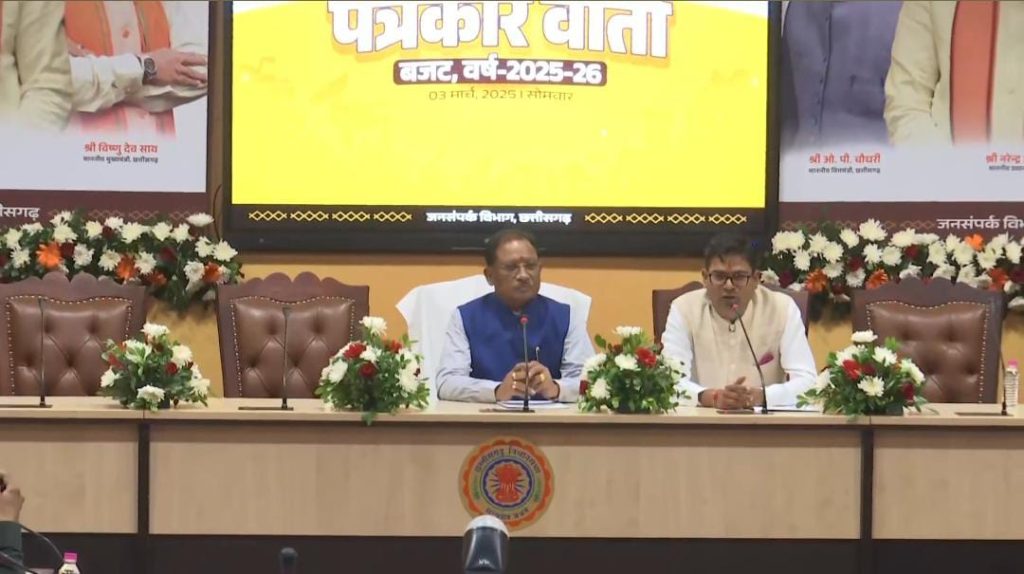
The Chhattisgarh government on Monday presented a Rs. 1.6 lakh crore budget focused on safe and developed state. In the budget, the government announced to cut down the price of petrol by Rs 1 per liter giving a big relief to the people of the state.
Earlier, the government had reduced VAT on bulk diesel purchases to 17 per cent, lowering transportation and agricultural costs. Additionally, the dearness allowance (DA) for state government employees has been increased by 3 per cent, effective from March.
Apart from this, from education, rural development, urban infrastructure to security, the government has introduced new initiatives in every sector.
The government has decided to develop the state’s first Iconic Tourism Destination with an investment of Rs 200 crore, offering nature, water, and wildlife experiences.
Meanwhile, the government will invest Rs 845 crore for Pradhan Mantri Gram Sadak Yojana, Rs 500 crore for roads in tribal area, Rs 119 crore for Mukhyamantri Gramin Sadak Yojana, Rs 100 crore for the new Mukhyamantri Ring Road Yojana, and Rs 2000 crore for the construction of new roads.
The government is going to introduce several major projects to modernize and beautify cities including Medi-City in Nava Raipur – a dedicated hub for top healthcare facilities, Education City – a centre for higher education with premier colleges and universities, and establishment of National Institute of Fashion Technology (NIFT).
Under the budget, the government will set up 17 new Nalanda Libraries for students preparing for competitive exams, Mobile Science Labs will be introduced in Bastar & Surguja.
The government will also set up Science Parks in Surguja, Bastar, Balrampur, Jashpur, and Raigarh.
In the healthcare sector, the government will introduce the Assisted Reproductive Technology (ART) at Raipur Medical College Hospital for childless couples, MRI and CT scan machines will be installed in government hospitals, and sickle cell screening centres will be established in all blocks.
The government has planned to strengthen the security measures in the state under which a Special Operation Group (SOG) will be formed, similar to the NSG, to tackle high-risk criminals.
Meanwhile, the State Industrial Security Force (SISF) will be established, modeled after CISF, to enhance security for industries and key installations.
For providing relief to businesses and common citizens, the government also removed the 12 per cent surcharge on property transfer stamp duty.
The e-way bill generation limit has been increased from Rs 50,000 to Rs 1 lakh, easing compliance for businesses, and the government has also decided to waive off pending VAT dues for small traders, providing long-awaited relief.
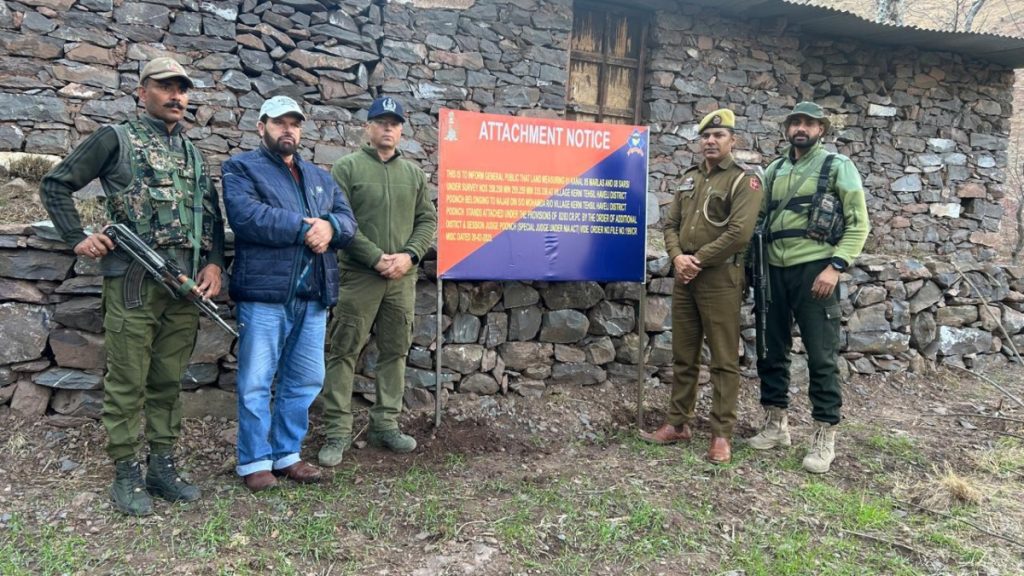
Poonch: In a major crackdown on terrorism, the Poonch Police on Sunday attached 14.8 Kanal of land worth over Rs 28 lakh belonging to three terrorists currently operating from Pakistan-occupied Kashmir (PoK).
According to officials, the properties belong to Najab Din and Mohd Latif of Kirni village and Mohd Bashir, also known as ‘Tikka Khan,’ from Qasba. These individuals had fled to PoK years ago and have since been involved in promoting terrorism, disturbing peace, and threatening social harmony in Jammu and Kashmir.
The action was carried out following a court order related to a case registered at Poonch Police Station in 2022. A police team, along with revenue officials, conducted the attachment process.
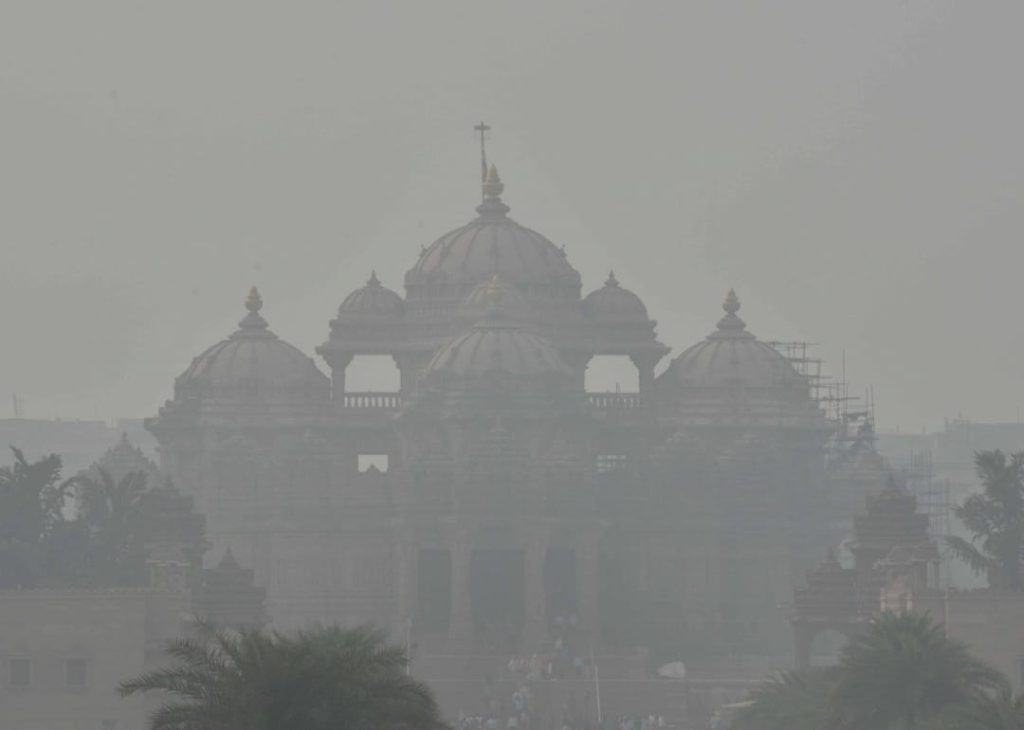
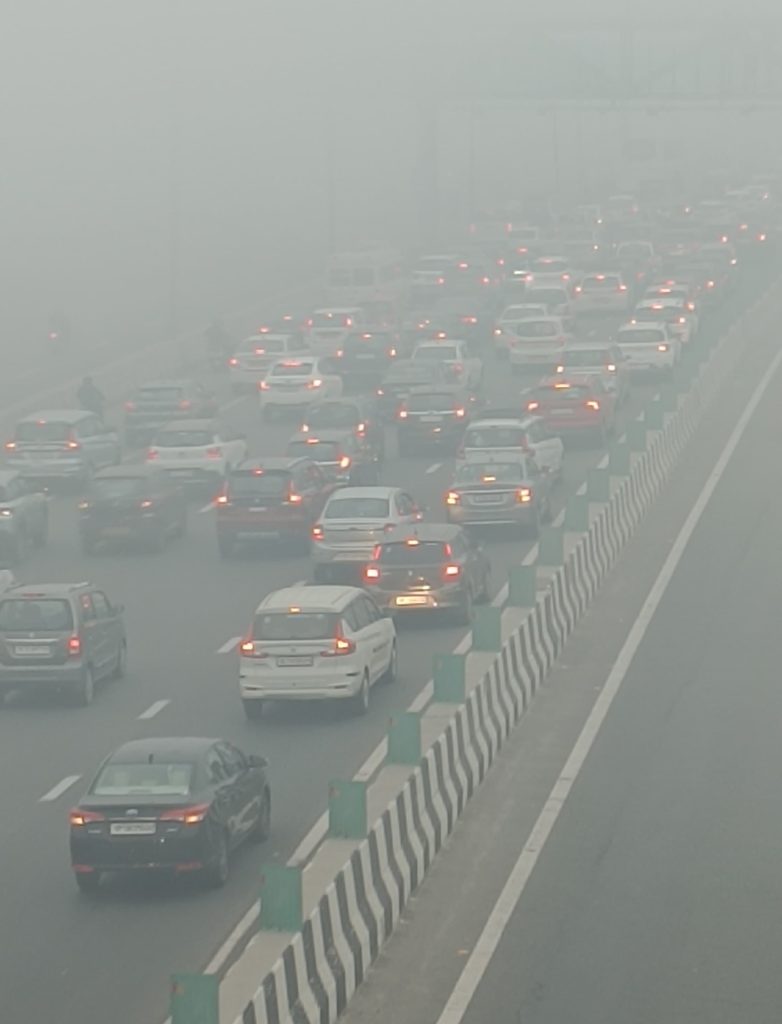
The newly formed BJP-led Delhi government has promised to cut down on pollution and has come up with an ambitious plan to improve the situation in the national capital.
The decision was taken at a high-level meeting chaired by evironment minister Manjinder Singh Sirsa.
The government plans to reduce pollution on the city’s road with procurement of e-buses and banning old vehicles on the road. According to the sources, the newly formed government is likely to procure 11000 buses including 8000 e-buses that will ply on the road by 2026.
Photo: Naveen Bansal
It has decided that all vehicles which are older than 15 years will be denied fuel. The government would come up with special equipment at petrol pumps to identify and deter polluting vehicles.
In order to reduce air pollution in the city, all the large hotels, office complexes, airports, and construction sites will have to ensure installing anti-smog guns.
“There are some big hotels, office complexes, the Delhi airport, and major construction sites in the city. We are making it mandatory for all of them to immediately install anti-smog guns to control pollution. This requirement will extend to all high-rise buildings, hotels, and commercial complexes,” Sirsa told the media.
Students from Delhi University and eco-club members from Delhi government schools will join forces to spread awareness about pollution control measures, engaging families and communities.
Government also plans to transform vacant lands in the city into lush forests, boosting its green cover and combating pollution.
An air quality index (AQI) of 124 (moderate) was recorded on Monday. It was 125 (moderate) on Sunday.
Rajasthan, March 3: The Chief Minister Bhajan Lal Sharma said that Rajasthan has taken initiative in green technology and sustainable development. Rajasthan is the first state to present a green budget and in this Rs 27, 854 crores has been set aside for green projects. He said that Circular Economy Park and Clean and Green Technology Development Centres are being set up with an investment of Rs 250 crore. The Chief Minister said that the state government will come up with a Circular Economy Incentive Scheme, which will provide assistance of up to Rs 2 crore to MSMEs and startups. Along with this, the disposal of old vehicles will be promoted through Rajasthan Vehicle Scrapping Policy. CM Sharma said that we will promote cooperation between the government, private sector and educational institutions through the establishment of Circular Economy Alliance Network to realize the dream of zero waste society.
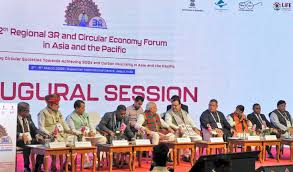
The Chief Minister was addressing the 12th Regional 3R and Circular Economy Forum in Asia and the Pacific which was inaugurated Monday in Jaipur. The inaugural session was attended by Manohar Lal Khattar, Union Minister of Housing & Urban Affairs, Bhajan Lal Sharma, Chief Minister, Rajasthan. Mr. Trevor Hedley Manemahaga, Minister of Solomon Islands, Mr. Maina Vakafua Talia, Minister of Tuvalu, Mr. Ahmed Nizam, Deputy Minister of Climate Change of Maldives joined the session. Mr. Asao Keiichiro, Minister of Environment, Govt. of Japan joined the session through a virtual message.
Rajasthan Chief Minister Bhajan Lal Sharma mentioned that a circular economy is not just a necessity for today but also for our future. He said that issues like climate change, biodiversity loss, and pollution are creating challenges for the planet Earth and the Circular Economy is the most effective way to cope with these challenges. He said that it is a system where waste is reused & recycled causing reduced energy consumption and renewable energy is promoted.
Highlighting the steps taken by the Rajasthan Government, the Chief Minister said that the Rajasthan government is playing a leading role in this mission. An Environmental Management Cell (EMC) has been established so that waste management and recycling can be done more effectively.
On this occasion, Prime Minister Narendra Modi’s special written message was shared with the delegates of the Forum emphasising that India follows & strongly advocates the P-3 (Pro Planet People) approach. He has also mentioned that India has always been more than willing to share its experiences and learnings in its journey towards Circular Economy.
In his message, PM Modi highlighted the role of 3R and Circular Economy principles in ensuring sustainable urban development and resource efficiency. He highlighted India’s leadership in global sustainability efforts, including Mission LiFE (Lifestyle for Environment) and the Panchamrit Goals announced at COP26, reinforcing India’s commitment to a net-zero future.
Inaugurating the event, Union Minister for Housing and Urban Affairs, Manohar Lal Khattar, welcomed dignitaries, industry leaders, and international representatives. He expressed pride in India hosting the 12th edition of the forum, after the successful 8th forum in Indore. The Minister highlighted Jaipur as an ideal venue due to its deep-rooted traditions in sustainability, such as rainwater harvesting and handicrafts made from recycled materials. He thanked Hon’ble CM of Rajasthan Shri Bhajan Lal Sharma for his leadership in making sustainability a key pillar in the State’s development.
Taking forward PM Modi’s vision, Manohar Lal Khattar announced the Cities Coalition for Circularity (C-3), a multi-nation alliance for city-to-city collaboration, knowledge-sharing, and private sector partnerships. He stated, “We propose that a working group of member nations be formed after this forum to finalize the coalition’s structure and operational framework.” This is expected to be a game changer in the city- city partnerships across nations. Shri Manohar Lal reaffirmed that this forum will act as a catalyst for resource efficiency and a low-carbon economy, strengthening collaboration between policymakers, industry leaders, and researchers to build a sustainable future.
During the inaugural address the Minister said “Circular Economy is not just an environmental responsibility but an economic necessity”. He pointed out that India has always practiced sustainable living, but industrialization led to an increase in waste and resource inefficiency. “Now is the time to modernize and integrate these traditional sustainable practices with technological advancements,” he said.
Khattar emphasized that under the leadership of Hon’ble Prime Minister Shri Narendra Modi, India is championing the Circular Economy on the global stage. He highlighted key government initiatives and also spoke about India’s focus on Bio-CNG, plastic waste management, and e-waste recycling, reaffirming the government’s resolve to create a low-carbon, resource-efficient society.
Union Minister Manohar Lal Khattar announced that the forum will adopt the Jaipur Declaration (2025-2034), a non-political, non-binding commitment that will guide the next decade of efforts towards resource efficiency and sustainable urban growth.
As part of the forum, the 3R India Pavilion was jointly inaugurated by Union Minister Manohar Lal and Chief Minister Bhajan Lal Sharma. The pavilion features the International 3R Trade and Technology Exhibition, showcasing innovative waste management and circular economy solutions from over 40 Indian and Japanese businesses and start-ups. The exhibition serves as a platform for industry leaders to explore cutting-edge technologies in resource efficiency and recycling.
The 12th Regional 3R and Circular Economy Forum will continue over the next few days, featuring expert discussions, policy dialogues, and collaborative initiatives to shape the future of sustainable urban development.
For a leader who once thrived on public engagement, this quiet phase of Aam Aadmi Party leader Arvind Kejriwal is being seen as a tactical pause to rebuild credibility and momentum.
Arvind Kejriwal’s silence after the Delhi Assembly polls defeat is likely fuelled by a mix of necessity and strategy. Whether he is licking his wounds, dodging the Bharatiya Janata Party’s impending probes, or plotting AAP’s next chapter, this retreat marks a stark contrast to his typically vocal persona, or a sign that his political confidence is severely shaken
On February 8, 2025, the Arvind-Kejriwal-led AAP, suffered a massive defeat in the Delhi elections, ending a decade-long reign in the national capital. The BJP stormed back to power after 27 years, securing 48 of the 70 seats, while AAP’s tally plummeted to 22. Kejriwal himself lost his New Delhi constituency, a seat he had held since 2013, to BJP’s Parvesh Verma by a margin of 4,089 votes. Since this electoral setback, the once-vocal AAP leader has largely retreated from the public eye, prompting speculation about why Kejriwal has fallen silent.
For over a decade, Kejriwal has been the fulcrum of AAP, driving its campaigns, governance, and narrative. The relentless clashes with the Narendra Modi-led Central government, legal battles, and the pressure of maintaining his “clean politics” image may have taken a toll.
His daily pressers and bold promises during the 2025 campaign, such as accusing the BJP of poisoning the Yamuna, failed to sway voters and may have alienated them instead. It seems that the former Delhi CM has understood the public’s fatigue with his confrontational style, suggesting he might be stepping back to reassess how to reconnect with an electorate that once adored him, sources said.
Moreover, the silence is also being seen as a period of introspection following a defeat that has been described as a personal and organizational blow.
Photo: Naveen Bansal
The rise of AAP in the national capital was built on Kejriwal’s image as an anti-corruption crusader and a champion of the “aam aadmi” (common man). However, the 2025 loss, coupled with his defeat, has shattered that aura of invincibility.
Sources stated that this retreat from the spotlight could be a deliberate move to assess what went wrong—be it his governance record, campaign strategy, or tarnished public image.
Another possible reason for Kejriwal’s low profile, ever since the defeat, is the need to regroup amid the fallout from corruption allegations and governance critiques that plagued AAP.
The quiet phase is also being seen as an attempt at repositioning AAP. The party still commands a respectable 43.57% vote share in Delhi and retains power in Punjab. However, the loss of Delhi—AAP’s political heartland—raises questions about its national ambitions and internal cohesion. Sources stated that Kejriwal may now focus on strengthening the party’s grassroots presence.
As AAP navigates uncharted waters as the primary opposition party in Delhi, the duration and outcome of Kejriwal’s silence will determine whether he can reclaim his relevance in India’s fiercely competitive political landscape.
The Prakriti Darshan programme at the Nandanvan zoo-cum-safari—launched in February last year—is shaping young minds through environmental education. Till now, over 19,000 students from about 300 institutes have participated in it, writes Deepanwita Gita Niyogi
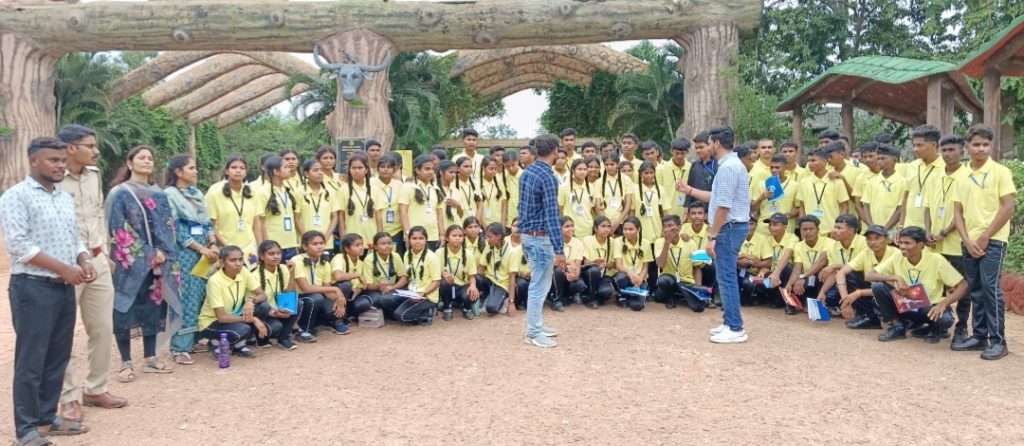
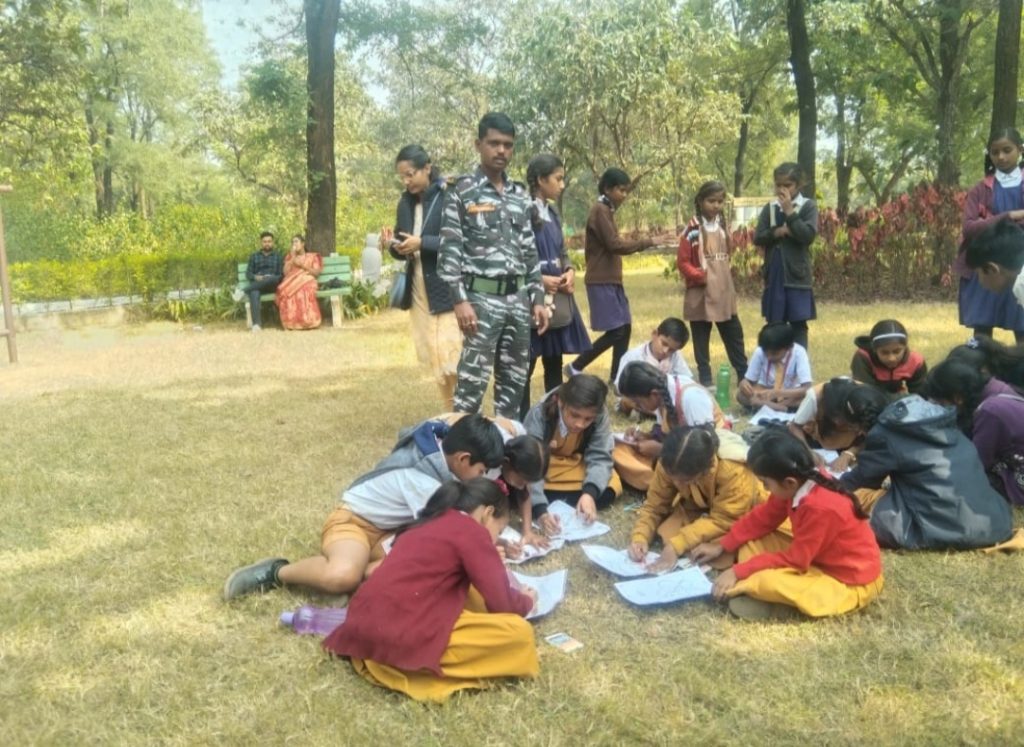
Forest guard Chandramani Sahu is in charge of the environmental education coordination programme at the Nandanvan Jungle Safari at Naya Raipur, Chhattisgarh. Here, the state forest department’s Prakriti Darshan or View Nature programme, which aims to inculcate environmental awareness in school students and college goers, is conducted regularly.
As part of the programme, participants are taken on tours, along with nature guides inside Nadanvan, which has a zoo as well as a safari arrangement, and informed in detail about forest and wildlife. While the zoo area has a foot trail, safaris take place in caged vehicles from which animals roaming in open spaces can be viewed.
“As part of the programme, the participants get to know many things like the names of trees, the identification of animals and birds and the way the food chain works. This is important as many of them lack practical knowledge. Sometimes, painting activities are also organized to heighten their interest. The tours are about three hours long. Participants come and return the same day as there is no facility for stay at Nandanvan,” Sahu told Tehelka.
In sync with nature: The educational tours at Nandanvan aligns with the state’s commitment to wildlife conservation and environmental protection. Chhattisgarh enjoys 44 percent of its geographical area under forest. However, at present, human-wildlife conflict has become a critical challenge to deal with in the state. Wild elephants, leopards and bears often venture into human settlements which leads to conflicts. The situation poses threat to both humans as well as animals. In the time of climate change, maintaining forests is important as they act as carbon sinks, regulate water cycles and support ecosystems.
Though environmental education is taught across many schools and colleges, the Prakriti Darshan initiative emphasizes on environmental awareness lessons outside classrooms as a transformative tool to bring about behavioural changes in young minds. By nurturing close links with the natural world, it encourages them to participate as volunteers for the mitigation of human-wildlife conflict. As an educational programme, it goes beyond mere recreational trips. The programme includes nature-based activity modules which provide a deep understanding of the environment.
To maximize its reach, the forest department sends formal communications to all the district education officers of the state and urges them to ensure participation from schools and colleges.
The Prakriti Darshanprogramme has been developed in collaboration with the Azim Premji University based in Bengaluru, Karnataka. Since its introduction in February last year, over 19,000 students from about 300 institutes have participated in it. The Nandanvan zoo-cum-safari spans 800 acres. The zoo is spread over 125 acres. There is also a five-acre rescue and rehabilitation centre which provides animals with natural enclosures. Through safaris enjoyed from the confines of caged vehicles, the animals are observed minutely.
As part of the herbivore safari,students get to see deer and antelopes in their natural habitats. Information is shared on sloth bears to highlight their role in the ecosystem. Participants also get to see big cats like the tiger and the lion. Students are informed of the importance of tiger conservation. The butterfly gardenis a good place to learn about pollinators. There is also an introduction made about medicinal plants and their traditional as well as modern uses.
A special initiative: An important feature of the programme is a 15-day internship opportunity in environmental and nature education for students of forestry, zoology, botany, and biotechnology. This has attracted participants from neighbouring states like Madhya Pradesh, Telangana and Odisha.
Nandanvan Jungle Safari director Dhammshil Ganviris keen to expand and extend Prakriti Darshan. “The department aims to scale up this initiative by involving more schools and colleges as well as over 7,000 eco-clubs. There is no separate funding for the learning initiative. Schools bear their own expenses.” Many schools manage the expense through the PM SHRI fund allocation. The centrally sponsored scheme of PM SHRI (PM Schools for Rising India) was approved by the Cabinet on September 7, 2022.
Currently, Upendra Kumar Sahu is an intern at Nandanvan. Though he studied agriculture, his work experience is based on forest activities which landed him here. He used to participate in nature activities like bird watching and trails. So, when he saw an advertisement regarding this opportunity, he applied for it.
According to him, the best part are the fun pre-and post-visit activities conducted on the basis of age groups. Sahu sometimes accompanies participants on a 200-metre trail inside the zoo. “Some ask many questions. Then, there are participants who don’t take much interest. On my part, I try to encourage all the participants. Students from rural areas can easily identify trees and birds. Urban students have knowledge, but fail to identify them at times.”
Arun Kumar Sahu, the principal of SAGES Hindi Medium School in Balod district, accompanied a batch of about 50 students and a few teachers to Nandanvan in December last year. Sahu said that the day-long visit thrilled the students and they derived useful information about flora and fauna.He keeps on doing excursions. Once, he took his students to a heritage site.
Managing internal rifts will be as critical as governing the city itself for the BJP as it regains power in Delhi after 27-year hiatus, with strategic backing from the RSS. A report by Nitin Mahajan
Photo: Naveen Bansal
While the Bharatiya Janata Party (BJP) has been wielding political power at the Centre and in over 20 states across the country for the past 11 years under the leadership of Prime Minister Narendra Modi, securing the Delhi Assembly has remained an elusive dream for the saffron party for almost three decades, since its last Chief Minister, the late Sushma Swaraj, demitted office in December 1998.
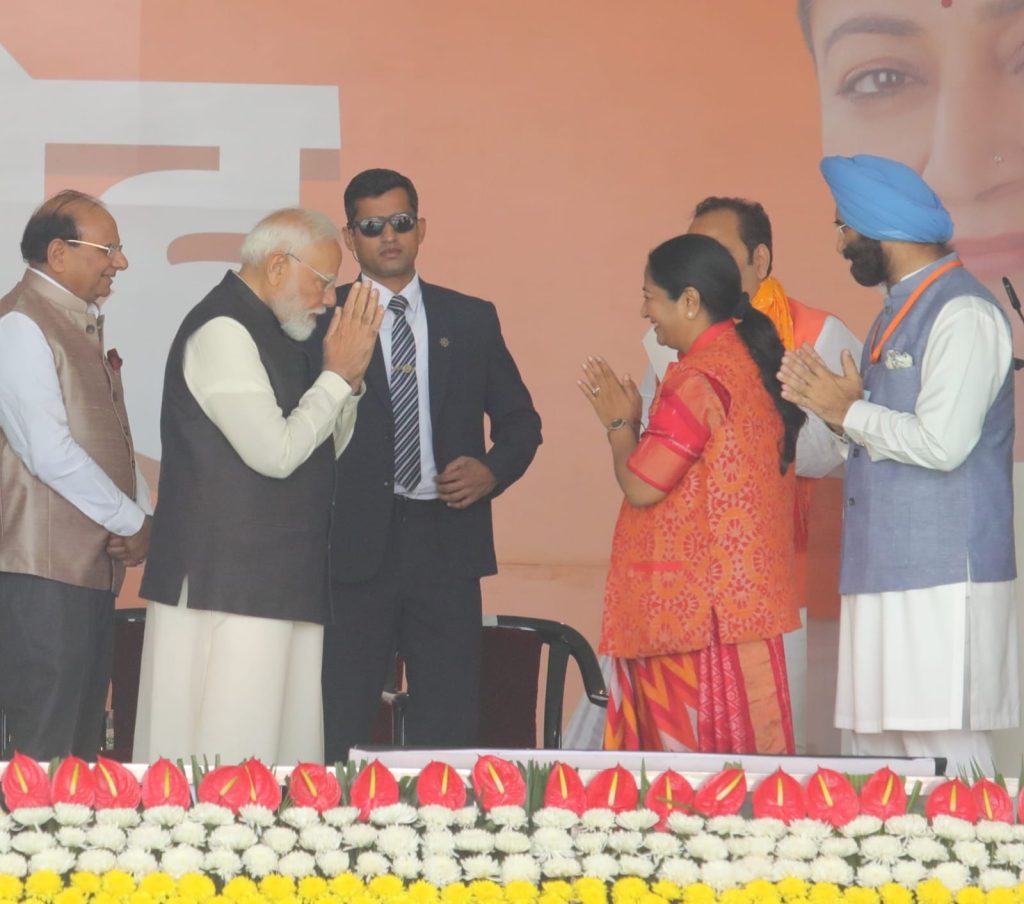
The BJP’s exile from the Players’ Building, the headquarters of the Delhi government, ended after its leader Rekha Gupta was sworn in as the chief minister of the national capital territory, along with her six cabinet colleagues on 20th February this year.
The mission of securing a political win in the national capital by defeating the Arvind Kejriwal-led Aam Aadmi Party wasn’t an easy one and the BJP leadership was aware of this predicament. And to make this task a success, the leadership of the BJP, including Prime Minister Narendra Modi, party chief JP Nadda and Home Minister Amit Shah, decided to heavily lean on the support of Rashtriya Swayamsevak Sangh (RSS) and seek an active involvement of its cadres to bolster the support for the party, just like they did in the Maharashtra and Haryana Assembly polls, a few months ago.
Photo: Naveen Bansal
After getting a go-ahead from the top saffron leadership, the RSS began working on the strategy to win over the common people of Delhi over the past several months. The mission wasn’t easy as the Arvind Kejriwal-led Aam Aadmi Party held a vice-like grip over the Delhi government and enjoyed a mass appeal due to the freebie culture— dubbed revdi culture by BJP— that his successive governments had spawned.
It took months of planning and political strategizing by the saffron leadership to formulate a plan of action for successful removal of the AAP government.
The initial process began last year, with the continued and sharpened targeting of senior AAP leaders like Kejriwal, Manish Sisodia, Satyendar Jain and others over alleged corruption cases. The BJP ensured that the AAP leadership, which prided itself on riding to the national capital’s power corridors on the back of an anti-corruption movement, could not evade these charges so easily.
A relentless pursuit and charging of these leaders ensured that Kejriwal, Sisodia and Jain were imprisoned after indictments (being charge-sheeted) by the investigative agencies. This ensured that the clean image of the AAP leadership came under a cloud and raised doubts in the minds of ordinary people.
Photo: Naveen Bansal
Interestingly, for the first time in Delhi’s electoral politics, the BJP too decided to go for a freebie model, made ever so popular by Kejriwal, in these Assembly polls. The party has been staying away from making any such promises in the past few polls in the city. However, the local leadership in consultation with the top leaders announced the party’s decision to continue the already implemented subsidies including free bus rides for women, subsidised power and potable water, if it came to power. Moreover, the BJP also went ahead and promised a monthly dole of Rs 2,500 to economically weaker, eligible women in the national capital with an aim to secure additional votes.
Meanwhile, during the run up to polls, an attempt was also made by the saffron affiliates to avoid any factionalism among the Delhi leadership. The local leaders were asked to follow the strategy devised by the central leaders and take the local cadre on board if they wanted to return to power in the national capital.
The Delhi BJP has historically struggled with internal rivalries. Leaders like Vijender Gupta, Manoj Tiwari, and Parvesh Verma have often been at odds, vying for influence. The BJP’s centralized decision-making under Prime Minister Narendra Modi immensely helped suppress factionalism.
For implementation of these political strategies, the RSS, which is the ideological parent of the BJP, played a crucial role.
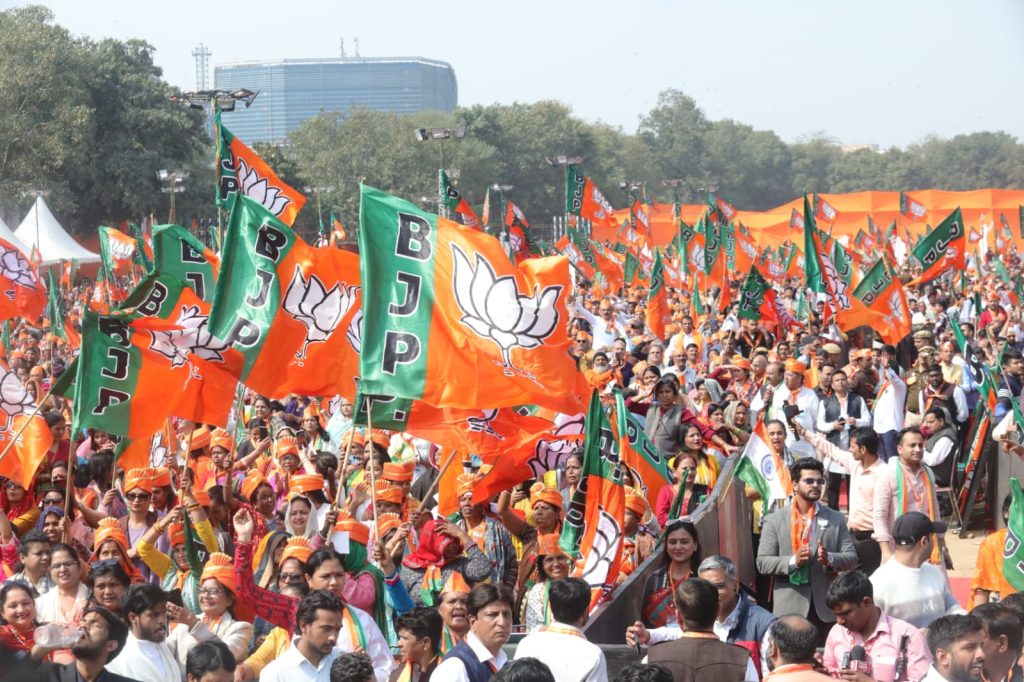
Ahead of the Delhi Assembly polls, a massive outreach program by the RSS cadre was implemented where over 60,000 meetings were held across the national capital which ensured that a ground was prepared for the BJP’s return to power in the national capital after 27 years.
Despite speculation over various names, it is understood that Gupta had a strong backing of the RSS ever since the results of the polls were announced. The Sangh had expressed complete confidence in her and had also conveyed the same to the BJP leadership.
The RSS and BJP high command reportedly favored a candidate with a “clean image” and broader appeal.
Ever since the BJP’s less-than-adequate performance in the 2024 Lok Sabha polls, the Sangh has become more hands-on in shaping electoral strategy and bolstering support for its political affiliate. The fact was clearly evident earlier during Maharashtra and Haryana Assembly polls as well, where the Sangh cadre had ensured that the BJP’s supporters came out to vote on the polling day and that it connected with the undecided and young voters of these states, ensuring impressive victories for the saffron front.
Ever since the Lok Sabha polls, the Sangh cadre had upped its outreach, where issues related to nationalism and public welfare measures of the Narendra Modi government were discussed with first time voters, youth and women. The results of these outreach meetings by the Sangh cadres have been seen in recent Maharashtra, Haryana and Delhi Assembly polls, a fact acknowledged by BJP leadership .
Last year, in Haryana, the BJP won 48 out of 90 seats for a third consecutive term, while in Maharashtra, the MahaYuti alliance — comprising the BJP, Shiv Sena (Shinde faction), and NCP (Ajit Pawar) — claimed 228 out of 288 seats.
The saffron win in these two states was attributed to the effective outreach by RSS narrative in favour of the party.
In Delhi, the campaign by Sangh was launched soon after the Maharashtra election and the city was divided among eight zones, catering to 30 districts and 173 nagars. Apart from RSS pracharaks, cadres of various associate organizations also took part in the outreach programme in Delhi.
RSS imprint on Gupta cabinet
The nomination of Rekha Gupta as Chief Minister, Delhi’s fourth woman CM after Sushma Swaraj (BJP), Sheila Diskhit (Congress) and Atishi (AAP), clearly has a stamp of approval by the RSS. The senior leader hails from the Akhil Bharatiya Vidyarthi Parishad (ABVP), the youth wing of the Sangh, and enjoys complete confidence of saffron outfits. She is considered to be a loyalist of RSS sarkaryavah (general secretary) Dattatreya Hosable.
The top leadership of the BJP is understood to have accommodated the RSS’ candidate for the Chief Minister’s post after a strong backing by the Sangh in recent Delhi Assembly polls, another acknowledgement by BJP of Sangh’s influence in selection of CM faces.
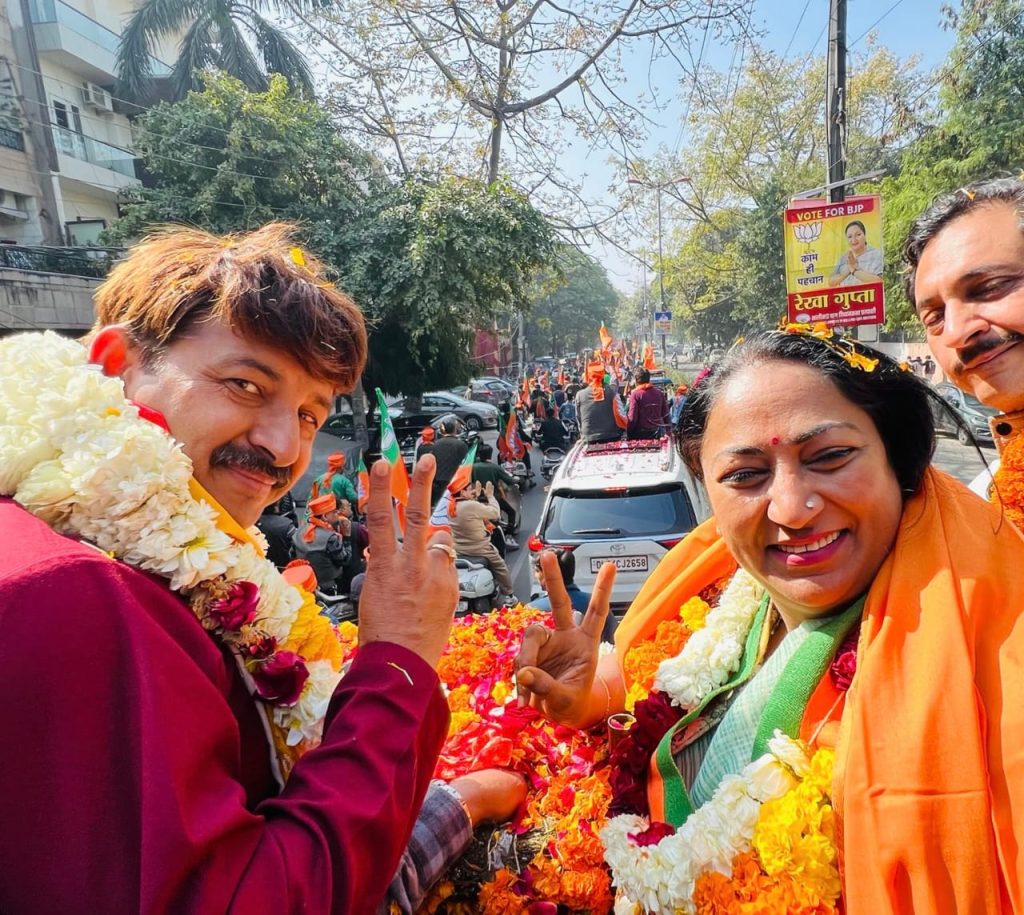
It is believed that the BJP was able to secure 48 of the 70 seats in the Delhi Assembly after trouncing the Arvind Kejriwal-led Aam Aadmi Party, largely due to the solid and unwavering support of the Sangh affiliates. Rekha Gupta’s appointment as the first woman CM under BJP rule in any state aligns with the party’s aim to secure support of female voters, who played a crucial role in its Delhi victory.
The BJP has also tried to ensure that caste equations and community aspirations are taken care of in the appointments to the Delhi government cabinet.
Gupta’s appointment is seen as potentially historic, as there has been no woman BJP chief minister in any of the 21 states where the BJP is in power. Her clean image, grassroots engagement, organizational skills, and her convincing victory in Shalimar Bagh are cited as reasons for her selection for the top post.
By appointing Rekha Gupta as the Delhi CM, the BJP has created many equations at once. She has taken the baton from CMs during Aam Aadmi Party tenure, Arvind Kejriwal (Bania) and Atishi Marlena (woman), and fulfilled the aspirations of these communities.
It sends out a positive message to the saffron cadres that even an ordinary ABVP worker can rise to become the chief minister, if you work relentlessly for the organization.
By appointing, ministers including Parvesh Verma (Jat), Ashish Sood (Punjabi, Bania), Manjinder Singh Sirsa (Sikh, Minority), Kapil Mishra (Brahmin), Ravinder Indraj Singh (Dalit) and Pankaj Kumar Singh (Purvanchali) regional, caste and community aspirations have been fulfilled.
Moreover, senior leader Vijender Gupta, who hails from bania community, has been accommodated as the Speaker of the House.
By inducting leaders from these communities, the BJP has ensured representation for all major communities and castes that have helped it in the ousting of the Arvind Kejriwal-led Aam Aadmi Party from power in the national capital.
The social engineering is expected to ensure that voting blocks and communities that supported the BJP in the recent Assembly polls and Lok Sabha polls last year receive adequate representation in the Delhi cabinet. The BJP hopes that this accommodation will boost the political standing of the saffron front in the national capital.
In other states, 15 percent of the Assembly strength can be made ministers. However, in Delhi, only 10 percent of the Assembly seats i.e. a total of 7 ministers can be made. There are 70 members in the Delhi Legislative Assembly. According to the formula in Delhi, a total of 7 ministers including the chief minister can be in the cabinet. That means one chief minister and 6 cabinet ministers.
Winning, and more importantly, holding on to the power in the national capital is very important for the BJP as it wants to showcase and develop it into a world class city. Prime Minister Narendra Modi had earlier stated that he wanted to evolve the city into a modern day metropolis that can be displayed as the pride of India. And the saffron party feels that its double engine concept would be ideal one to make the PM’s vision materialise.
There had been a feeling in the BJP that unless a friendly government took power in Delhi, it would be very difficult to achieve the target set by PM Modi. With the Arvind Kejriwal-led AAP at the helm of affairs, the saffron unit had been facing frustrating times in the national capital as several of its developmental initiatives were not implemented in the city.
As the saffron party embarks on its first term in Delhi in nearly three decades, managing internal rifts will be as critical as governing the city itself.
It is believed that a faction of state leadership is unhappy with the elevation of Gupta as the CM and could stir up trouble in the future. The BJP’s victory in Delhi is a moment of triumph, but the shadow of dissent looms large over its internal dynamics. Only time will reveal if this internal strife can be doused by the spirit of reconciliation or stir up rebellion within the saffron fold. The Delhi unit’s fractious past means that tensions could simmer beneath the surface, ready to erupt if the new government falters.
Any internal discord within the saffron front could jeopardize the goals set by the central BJP leadership and its long-term plan to retain political power in the national capital, especially as the Aam Aadmi Party, led by a wounded but resilient Arvind Kejriwal, waits to capitalize on any misstep by the BJP.
As the saffron party embarks on its first term in Delhi in nearly three decades, managing internal rifts will be as critical as governing the city itself.
The Delhi government needs to deliver on the BJP’s ambitious promises—tackling pollution, improving infrastructure, transport and providing economic relief—to maintain its vote bank’s trust. The newly-sworn in government seems to have hit the ground running with several rounds of meetings being held with government officials for review of various projects and initiation of new development works ever since the government took over.