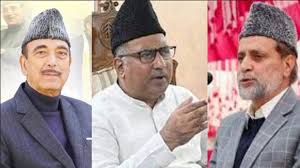
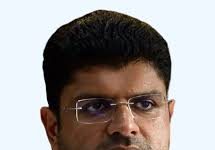
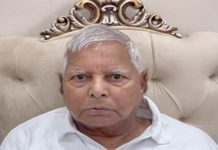
Jammu: Three political leaders from Jammu and Kashmir – Ghulam Nabi Azad, Mian Altaf, and Ghulam Ali Khatana – will represent the region in India’s all-party delegations visiting key international partners later this month as part of a diplomatic initiative to build consensus on Operation Sindoor.
As per details shared by Minister for Parliamentary Affairs Kiren Rijiju on his official X handle, the leaders have been assigned to three of the seven groups formed for the outreach.
Ghulam Nabi Azad, a former chief minister and ex-union minister, will be part of Group 1 led by BJP MP Baijayant Panda. This group is scheduled to visit Saudi Arabia, Kuwait, Bahrain, and Algeria.
BJP Rajya Sabha MP Ghulam Ali Khatana has been included in Group 2, headed by BJP leader Ravi Shankar Prasad. Their itinerary covers the UK, France, Germany, the EU, Italy, and Denmark.
National Conference MP and former minister Mian Altaf will join Group 6, led by DMK MP Kanimozhi Karunanidhi, which will travel to Spain, Greece, Slovenia, Latvia, and Russia.
The all-party delegations aim to showcase India’s united political stance against terrorism and strengthen cooperation with partner countries, including several members of the UN Security Council.
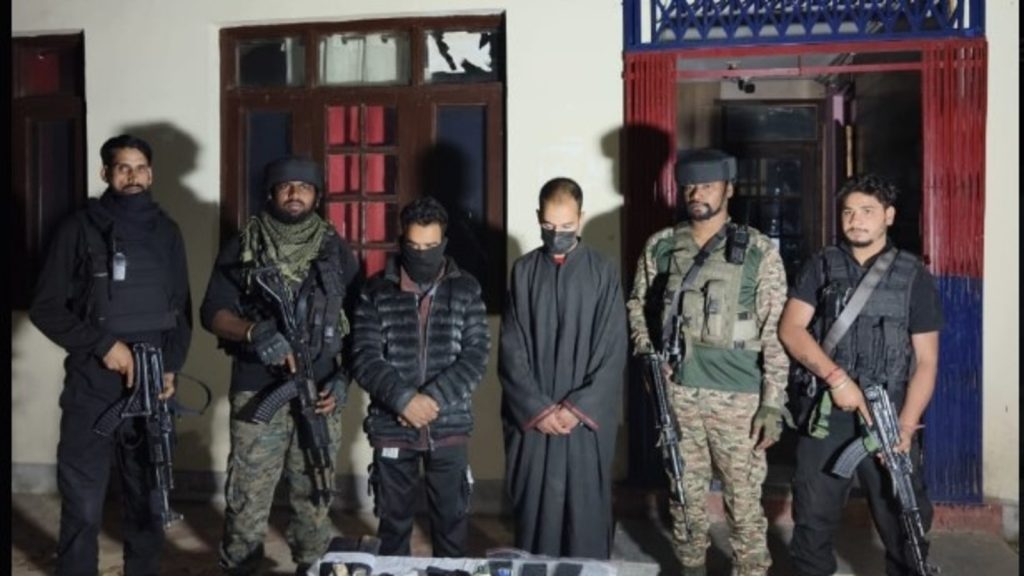
Srinagar: Security forces on Sunday arrested two individuals allegedly linked to terrorist activities and recovered arms and ammunition from their possession in south Kashmir’s Shopian district.
According to officials, the arrests were made during a joint naka operation conducted by the Army’s 34 Rashtriya Rifles, Shopian Police, and CRPF’s 178 Battalion in the DK Pora area under the jurisdiction of Imam Sahib police station.
The two arrested persons have been identified as Zahid Ahmad Sheikh of DK Pora and Anwar Khan of Kathwa. During the operation, security forces recovered two pistols, two magazines, several rounds of ammunition, two grenades, and other incriminating material.
A case under FIR No. 25/2025 has been registered at Imam Sahib Police Station under sections 13, 18, 20, 39 of the Unlawful Activities (Prevention) Act and section 7/27 of the Indian Arms Act. Further investigation is underway.
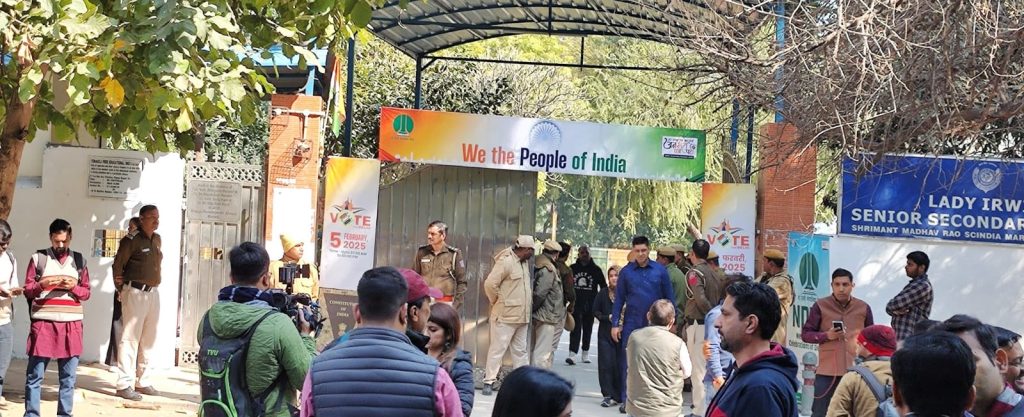
In the backdrop of recent notice from the High Court, the Delhi government has issued new Standard Operating Procedures (SOPs) for bomb threats in schools.
These SOPs include, installing CCTV cameras, making evacuation plans, holding regular safety drills, and mock drills in the schools across the national capital.
“Schools are required to maintain updated building layouts, install CCTV cameras and secure their perimeters to assist police and fire personnel during threat assessments and evacuation,” the statement stated.
The directions seem significant as around 200 schools have been victim of hoax bomb threats between 2024 and 2025.
According to SOPs designed by the Directorate of Education (DoE), “The SOP aims to instill a culture of preparedness and vigilance while ensuring a swift and coordinated response during emergencies. To maintain transparency and accountability, schools are now required to submit a monthly safety checklist to their respective district authorities.”
This comes after Delhi high court on May 2 issued notices to chief secretary Dharmendra and Delhi Police while hearing a plea accusing authorities of not implementing a comprehensive mechanism for handling bomb threats in schools.
These SOPs have been made mandatory for all schools, including government, government-aided, minority-run, and recognized unaided private institutions.
Meanwhile, the department has instructed all principals and schools to form school safety committees to oversee routine mock drills, ensure that emergency kits are maintained and coordinate on evacuation routes.
In Chhattisgarh’s Baloda Bazar-Bhatapara district, the Hum Honge Kamyab initiative is helping youngsters choose the right path, besides providing skill training for job placements. A report by Deepanwita Gita Niyogi
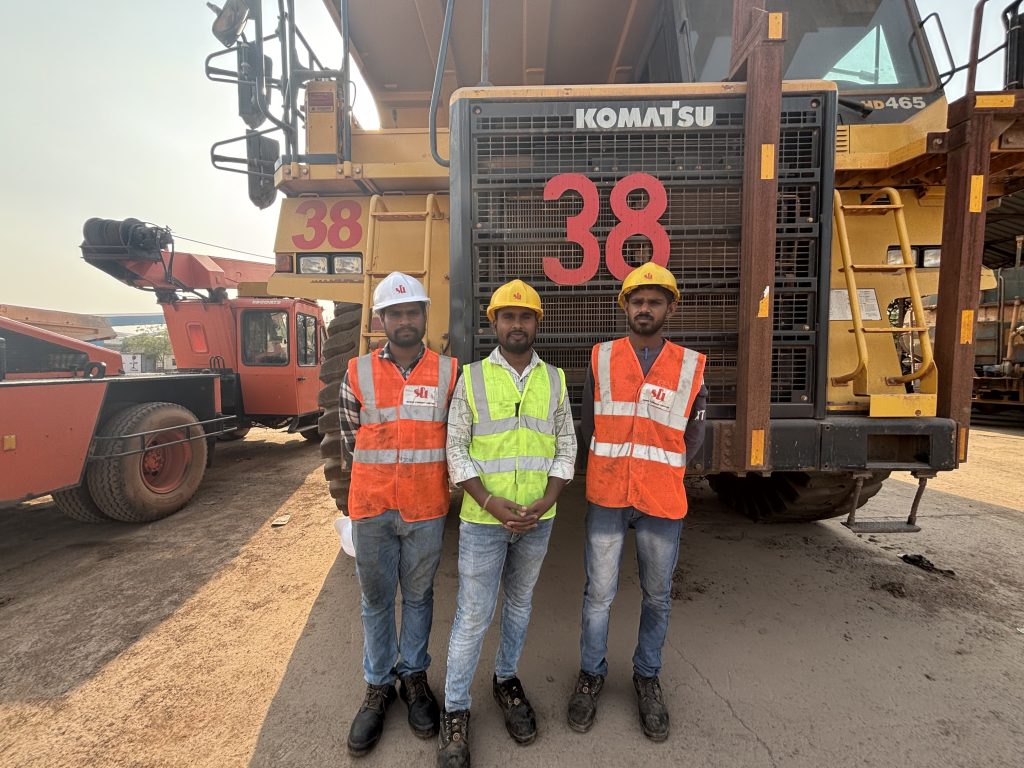
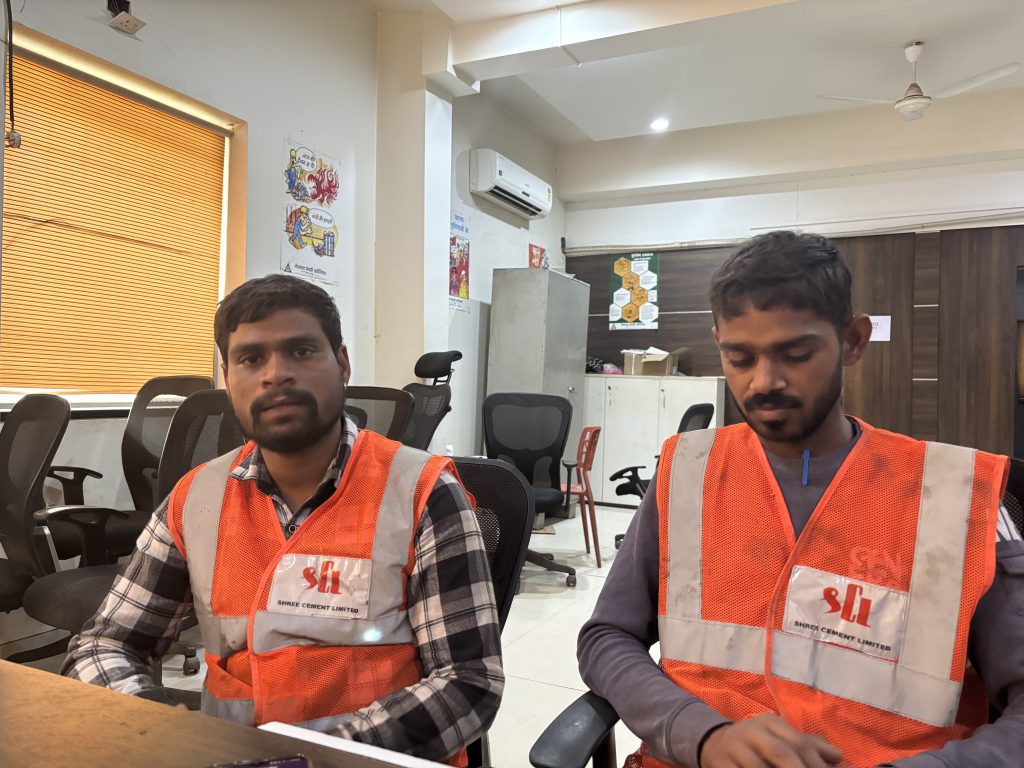
Tarun Kumar Verma has been working at the Shree Cement plant in Baloda Bazar district of Chhattisgarh for almost four months. He is a final year B.Sc student at Pt. Ravishankar Shukla University in state capital Raipur, about two hours from the district. Verma is a student of mathematics.
The 22-year old youth got the job opportunity, thanks to a district administration initiative launched in Baloda Bazar around November last year. The initiative known as Hum Honge Kamyab is helping youths get jobs through skill training, career counselling, guidance and employment. Till now, over 200 youths have been placed in various companies.
“Prior to my job at Shree Cement, I did an apprenticeship at another cement company in 2022 though I did not get an experience certificate. But it helped me bag this job. I appeared confident during the interview round. I also received guidance on how to crack the interview. A relative told me about the Hum Honge Kamyab programme,” Verma said. There are several cement plants in Baloda Bazar due to the presence of limestone mines. It is the cement hub of Chhattisgarh.
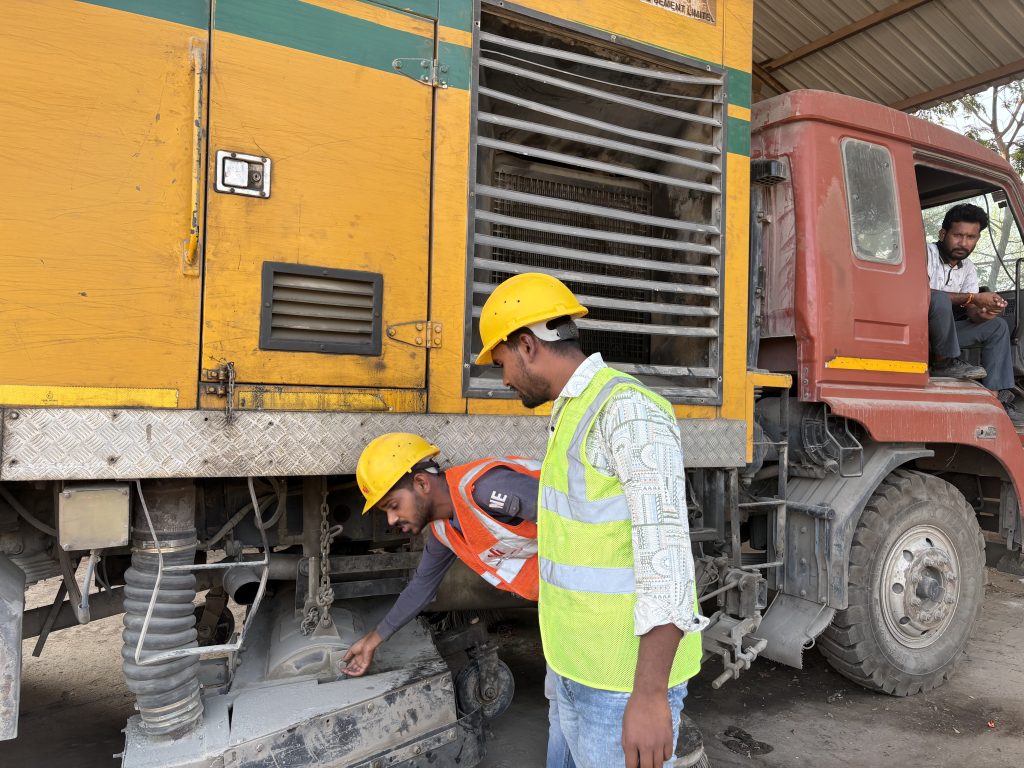
As part of his job as a mechanical technician, the youth looks after the maintenance of heavy and light vehicles used in transportation and road cleaning. He gets a payment of Rs 783 per day with deductions. “I get one day off. My home is 13 km away. The job involves safety measures such as wearing helmets at all times to protect the head, jacket and special boots needed for heavy duty. I have to check the vibrations of the vehicles.”
Verma has two friends, who are also now his colleagues. One is Umakant Verma and the second is Deolal Miri. Umakant informed that he was looking for a job and the place offered good payment. “I was not keen on continuing studies.” Miri submitted his resume at the cement plant as he had prior experience in this sector.
During a demonstration session, the trio showed what they actually do on a day to day basis with road maintenance and loading vehicles. Vehicle maintenance is carried out at the workshop nearby.
A special initiative
According to Baloda Bazar collector Deepak Soni, the Hum Honge Kamyab initiative has been merged with the district administration’s Nayi Disha Abhiyan to urge youths to aspire for higher things in life. “As the objective is to cater to current market demands, companies have been asked to modernise their skilling centers. Aspirants must undergo quality training. The training period is usually for a few months and depends on the kind of job.”
The district’s Government Livelihood College also caters to the same purpose and runs various courses. Dageshwari Sahu, who works as a counsellor and trainer here, attends various awareness camps to motivate youths. “One of the main challenges is that the attention span is less these days, primarily due to mobile addiction. Still, guidance is important. For this, I meet young people and their parents, especially in rural areas. It is important to include parents in career guidance. Sometimes, they seem confused due to the influence of social media.”
At the initial level, counsellors try to understand the interest and aptitude of youths who need jobs. They receive help in resume writing, job search and interviews. Career counselling has been integrated in school and college programmes. Support is being extended to entrepreneurs for start-ups.
Right guidance and training
The district administration is planning to launch career guidance booklets to help youths know about various job opportunities. Already, a career counselling centre has been set up for this purpose. It was inaugurated on November 5 last year.
As part of this, a youth awareness programme was launched and schools were covered. Through this, it came to light that many students had doubts over which stream to choose. Counselling has also been extended to people over 40 who want to do something new in life.
Denzil David, who works as a counsellor at the Career Information Center, pointed out that many students choose wrong streams or subjects due to peer pressure or the lack of clarity. This acts as a setback when it comes to success. David gets about 12 students daily who come to him for guidance at the centre. A few youths have gone out of the state. Women are also coming forward for skill development.
Apart from the Livelihood College, there is the SEDI (Skill and Entrepreneurship Development Institute) centre where training is also given to youths, said trainer Raj Mahobia. There is a minimal charge of Rs 2000. At present, the centre runs retail, electrician and beautician courses in its labs as part of its integration with Hum Honge Kamyab. There are both theory and practical classes here. While training in retail extends for three months, which has the highest placement opportunity, the other two run for four months. At the end of the training, certificates are given to candidates.
The World Youth Skills Day which focuses on decent work opportunity and entrepreneurship is globally observed on July 15 every year. The Ministry of Skill Development and Entrepreneurship, Government of India, focuses on technical training, skilled manpower supply for the market and upgradation of existing skills.
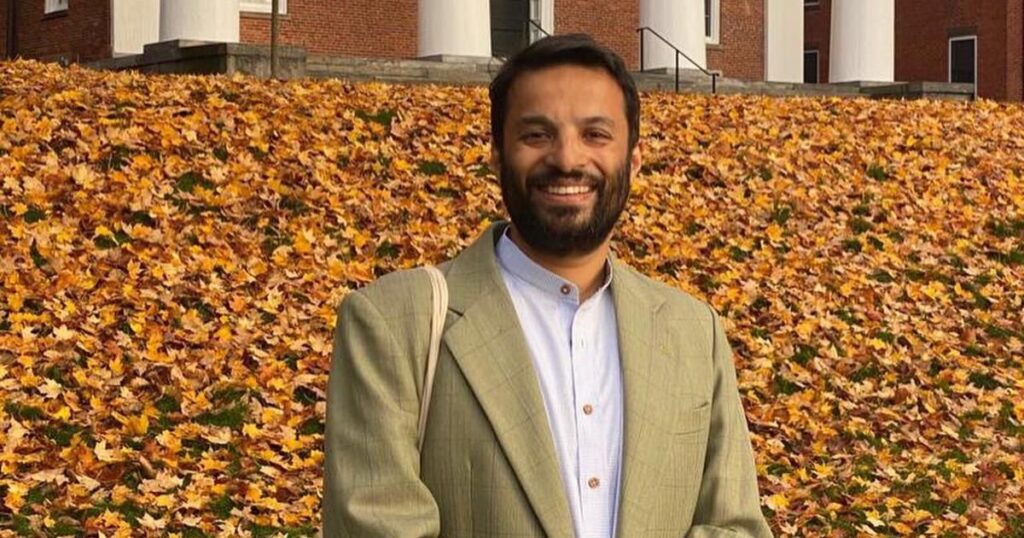
New Delhi : The DTF unequivocally condemns the arrest of Dr. Ali Khan Mahmudabad, Associate Professor at Ashoka University, under Section 152 of the Bharatiya Nyay Sanhita for alleged “acts endangering India’s sovereignty, unity, and integrity.” This action represents a blatant misuse of legal provisions to criminalise dissent and stifle academic freedom.
Dr. Mahmudabad’s social media posts, which critique jingoism and underscore the human cost of war, fall squarely within the realm of legally protected speech under Article 19(1)(a) of the Constitution. His remarks, including concerns about communal polarisation and the imperative to safeguard marginalised communities, reflect a commitment to constitutional values. To conflate such critiques with “sedition” or threats to sovereignty is not only legally untenable but also undermines the very foundations of constitutional democracy.
The charges, initiated on the complaint of a BJP functionary, appear to be politically motivated, involving an attempt to misuse laws to silence voices that challenge majoritarian narratives of the ruling dispensation. Equally troubling are the baseless accusations by the Haryana Women’s Commission, which seems to deliberately misrepresent Dr. Mahmudabad’s nuanced commentary that seeks to locate the role of women officers within the larger context of the current political conjuncture as “disparagement.” His posts explicitly lauded the armed forces’ professionalism while urging vigilance in protecting the socially oppressed from state-sanctioned, communally motivated persecution.
This custody sets a dangerous precedent, signalling that critique of government policies—no matter how well-reasoned—may be met with punitive government action. It erodes the space for critical pedagogy and dissent, essential pillars of democracy and the rule of law. All this has happened when functionaries and supporters of the ruling dispensation have been given free rein to engage in a wide-ranging illegal campaign of hate speech and communal attacks on civil servants and armed forces personnel as part of their divisive political agenda.
The DTF calls for Dr. Mahmudabad’s immediate release and the withdrawal of all charges on him which are legally baseless in their entirety. We urge academic communities and the wider democratic movement to resist this assault on freedom through constitutional means.
Statement by National Women’s Organisations
We, the undersigned women’s organisations, strongly condemn the arrest of Ali Khan Mahmudabad, Associate Professor at Ashoka University, in connection with his social media posts in the background of Operation Sindoor. This unwarranted action was strangely preceded by the summons served on him by the Haryana State Women’s Commission on 12 May 2025, after which an FIR was registered against him by the Sonipat police station.
The notice accused his posts of ‘malicious intent’ and accused him for ‘violating the dignity and outraging the modesty of women.’ Further, the media reports that the FIR against him has pressed charges of ‘sedition.’!
We consider this Notice and the subsequent arrest as a deliberate attempt to harass an academic who has supported the need for maintaining peace and communal harmony. The social media posts for which he has been targeted explicitly applaud the sacrifices of the armed forces and praised the efforts of the government in holding the Pakistan accountable for cross border terrorism. Dr Mahmudabad uses the example of the press conference led by Col Sofia Qureshi and Wing Cdr Vyomika Singh, to celebrate national unity and to highlight the urgency of fighting communal targeting and polarization.
We consider the arrest of Dr Mahmudabad as an attack on the fundamental right to freedom of speech and expression. We consider it one more instance of the misuse of police and statutory institutions like the State Women’s Commission by the BJP-led government to target intellectuals and activists especially from a specific religious community. The same Haryana SWC remains silent on growing atrocities on women in Haryana.
We demand the immediate and unconditional release of Ali Khan Mahmudabad, and the withdrawal of the FIR and HSWC summons against him.
Marking an acknowledgement of the Congress’s troubled legacy, Rahul Gandhi said he is willing to take responsibility for the party’s historical wrongs, including the 1984 anti-Sikh riots—a gesture that stirred emotions and provoked a sharp BJP backlash. A report by Bijoy Patro
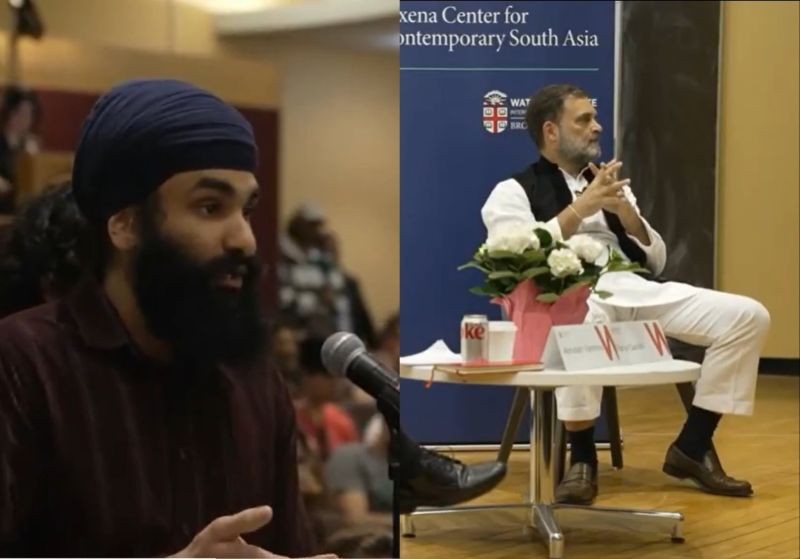
In a rare admission, Congress leader Rahul Gandhi has declared himself “ready to take responsibility” for the Congress party’s historical wrongs, including the 1984 anti-Sikh riots – one of independent India’s dark chapters. The remark, made during a public interaction at Brown University in the United States on April 21, has reignited political debate and drawn sharp responses from the ruling Bharatiya Janata Party (BJP), the Rashtriya Swayamsevak Sangh (RSS), and Sikh groups in India and abroad.
The 1984 anti-Sikh riots were triggered by the assassination of then prime minister Indira Gandhi, by her Sikh bodyguards. What followed was a wave of mob violence in Delhi and other cities, which led to the deaths of nearly 3,000 Sikhs and left a deep scar on India’s national conscience. Numerous Congress leaders were accused of inciting the violence.
Speaking at the Watson Institute for International and Public Affairs, Gandhi was confronted by a Sikh student who asked him what the Congress party was doing to reconcile with the Sikh community. Gandhi replied: “As far as mistakes of the Congress party are concerned, a lot of those mistakes happened when I was not there, but I am more than happy to take responsibility for everything that the Congress party has ever done wrong in its history.”
Gandhi, who has shown signs of altruism in his politics, continued, “I have publicly stated that what happened in the 1980s was wrong. I have been to the Golden Temple multiple times, I have an extremely good and loving relationship with the Sikh community.”
The student’s question highlighted not only the anti-Sikh riots but also Operation Blue Star – the 1984 military action at the Golden Temple in Amritsar to flush out separatists led by Jarnail Singh Bhindranwale. The Army assault left the Akal Takht heavily damaged and killed hundreds, sparking outrage across the Sikh community and setting the stage for the events that followed.
“You haven’t reconciled with the Sikhs,” the student charged, citing the Congress party’s branding of the Anandpur Sahib Resolution as separatist, and the lack of accountability for leaders like Sajjan Kumar and Jagdish Tytler. The student also pointed out the Congress party’s past stances that curtailed Sikh expressions of identity, while noting Gandhi’s warnings about the BJP’s treatment of minorities: “You tell us to fear what BJP’s India would look like. But what about your party’s record?”
BJP, RSS respond strongly
Rahul Gandhi, who is currently the Leader of the Opposition in the Lok Sabha, stressed that his conception of India was one where religious expression was never stifled. “The statement I made was that do not we want an India where people are uncomfortable to express their religion? I don’t think that anything scares the Sikhs,” he said.
The exchange, which has since gone viral on social media, marks one of Gandhi’s clearest acknowledgements of his party’s troubled legacy. His comment that he would take responsibility even for events that preceded his political career was interpreted by many as a gesture of humility – but others saw it as an inadequate response that skirted concrete accountability.
The BJP and the RSS responded strongly. BJP’s national spokesperson Pradeep Bhandari lashed out, calling on Gandhi to expel from the party all Congress leaders accused of being involved in the 1984 violence, including Sajjan Kumar, Kamal Nath, and Jagdish Tytler.
RSS-affiliated Organiser published a scathing article, stating: “More than 3,000 Sikhs were brutally killed during the 1984 anti-Sikh riots in Delhi. Mobs led by Congress leaders like Sajjan Kumar, Jagdish Tytler, and many others burned homes, looted shops, attacked Gurudwaras, and killed innocent Sikh men, women, and children.”
Referring to a recent court judgment, the RSS mouthpiece also reminded readers that a Delhi court in February 2025 awarded a life sentence to Sajjan Kumar in a case related to the killing of a father-son duo in Saraswati Vihar during the anti-Sikh violence. It was Kumar’s second conviction in relation to the 1984 massacre.
Pluralistic society
The Congress party has attempted to distance itself from some of the individuals linked to the 1984 riots. But critics argue the measures have been slow and symbolic rather than substantive.
To an extent, it must be said, the Sikhs haven’t held a grudge against history. The Congress has won elections in Punjab thrice since the anti-Sikh riots – in 1992, 2002, and 2017. The wins in Punjab must also be seen in the context of the volatile politics of the state and the sway of Akali parties.
In the 1999, 2009 and 2019 general elections too, the Congress party reaped somewhat handsome dividends at the hustings.
But, in the same breath, it must be said that during election times, the riots of 84 have reminded Sikh voters of the Congress party’s role. For example, the Congress’ influence in Sikh-populated constituencies of West Delhi remains minimal to this day, with many voters still distrustful of the party’s record on justice and reconciliation.
The Sikh diaspora has also responded with scepticism. Groups in Canada, the UK, and the US have long campaigned for justice for the 1984 victims, including lobbying for international sanctions against individuals accused in the riots. Gandhi’s remarks, while appreciated by some as a rare form of political accountability, have been described by others as a “performance” lacking policy follow-through.
During his talk at Brown University, Gandhi attempted to broaden the conversation to include his vision of India as a pluralistic society. “All our mythological figures – Lord Ram was of that type where he was forgiving and compassionate. I don’t consider what the BJP says to be the Hindu idea at all. It is much more pluralistic, embracing, affectionate, tolerant, and open,” he said.
These comments sparked another round of backlash from the BJP. “Ram-drohi Rahul Gandhi is back at it,” said BJP’s Pradeep Bhandari, accusing the Congress leader of disrespecting Hindu beliefs while attempting to portray himself as an advocate for minority rights.
But it was his candid response on the 1984 riots that dominated headlines. Political analysts say the timing of Gandhi’s remarks is significant. With the dynamism of electoral politics, and the Congress party trying to rebuild its support base among minorities, Dalits, and backward communities, such gestures could be seen as part of a broader reconciliation strategy.
An open wound
Still, the road ahead remains uncertain. Without visible actions – such as expulsions of implicated leaders, formal party apologies, or a broader truth-and-reconciliation effort – Gandhi might need to follow up on his statement so that his words may be remembered for reckoning, rather than mere rhetoric.
For many Sikhs, the 1984 riots remain an open wound. Justice has been elusive, and the perception that the Congress party has shielded perpetrators continues to cloud its credibility. Gandhi’s willingness to accept moral responsibility, though politically risky, could be a first step. But for reconciliation to be meaningful, responsibility must also translate into reform and reparative justice.
The ghosts of 1984 continue to cast a long shadow. Whether Gandhi’s remarks lead to meaningful change, or simply fade into another election talking point, remains to be seen.
At another level, Gandhi’s statement could also be a sign of him making the right moves to inject a principled position into his party’s politics.
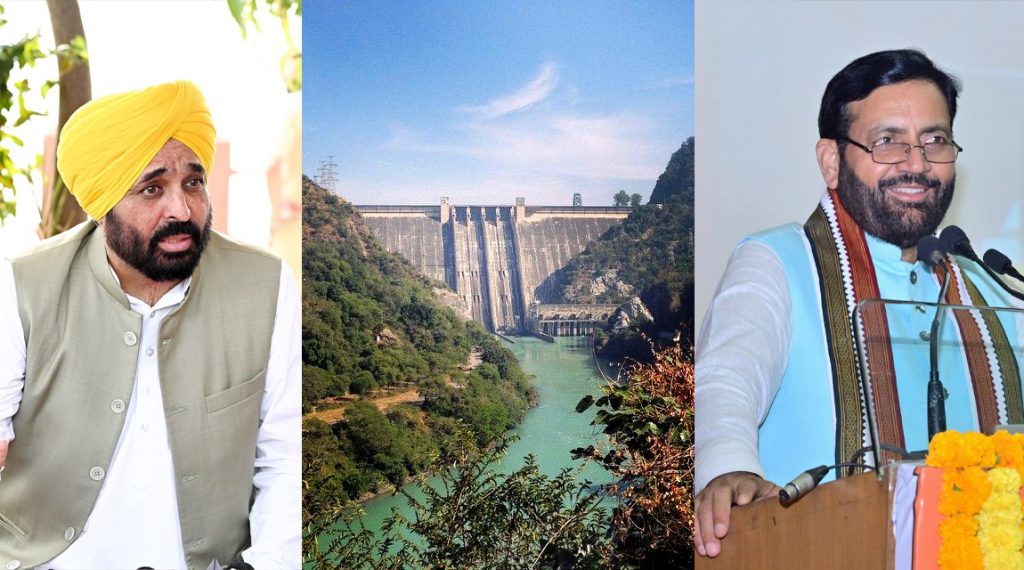
Brewing for over a fortnight, the ongoing feud between Punjab and Haryana over river water sharing, shows no sign of abating with Punjab not allowing BBMB to release water from Bhakra Nangal Dam, despite HC’s directive not to interfere with board’s functioning. A report by Rajesh Moudgil
The Punjab and Haryana High Court on May 9, last, pointedly held that prima facie a case of contempt was made out against Punjab as the state did not comply with its order directing it not to interfere in the working of Bhakra Beas Management Board (BBMB). A division bench of Chief Justice Sheel Nagu and Justice Sumeet Goel, however, also held that judicial directions, whether right or wrong, were binding until stayed or set aside.
The case stemmed from the Aam Aadmi Party (AAP)-ruled Punjab’s refusal to comply with the BBMB directive to release an additional 4,500 cusecs of water to the BJP-ruled Haryana and the subsequent confinement of the BBMB chairman by an AAP minister and workers so as to stop him from releasing water to Haryana from Nangal Dam, Rupnagar.
The BBMB chairman Manoj Tripathi was brazenly locked for over two hours by a group of party workers led by AAP minister Harjot Singh Bains in the Nangal Dam’s Sutlej Bhawan guest house, district Rupnagar, on May 8, last, despite the HC directive to the AAP government not to interfere in the working of BBMB.
Bains minced no words in declaring that they had locked the BBMB chairman inside the guest house as the latter had come to release the water from the dam to Haryana. He went on to say that while Punjab was struggling with the ongoing Indo-Pakistan tension, the BBMB chairman was making such an attempt and should be booked for treason. Chief minister Bhagwant Mann who had also rushed to Nangal, held that he will not allow BBMB officials to release water to Haryana at any cost.
Earlier, on May 5, the Punjab in a hurriedly-called assembly session passed a resolution unanimously vowing not to spare even a drop of water from its share for Haryana.
It was subsequent to the said conflict between Haryana and Punjab when BBMB decided to release more water to Haryana despite Mann’s strong objections to it.
The Punjab government refused to release extra water, claiming that Haryana had already exhausted 103% of its annual allocated share of water, while Haryana held Punjab indulged in “dirty politics” by twisting the facts.
Reading out the resolution, the Punjab water resources minister Barinder Kumar Goyal said that BJP had been trying to take away the rights of Punjab through BBMB which has become a mere puppet of the BJP government at the Centre.
The resolution also said that a network of canals and water courses has been built on a large scale since the AAP government took over in 2022. Until 2021, only 22% of Punjab’s fields received canal water while today 60% are covered, therefore, every drop of Punjab’s water has become precious and it no longer has spare water to give to any other state, he added.
Stating that Haryana with its about 3 crore population needs only 1,700 cusecs of water to meet all drinking and other human needs, Goyal held that now Haryana demands 8,500 cusecs of water while Punjab does not have extra water to meet its demand.
On May 2, Punjab in its all-party meet, put up a united show deciding that the state has no water to spare for Haryana and took a unanimous stand that any bid to force Punjab to give extra water to Haryana will be opposed. Haryana also held an all-party meeting on May 3, which condemned the Punjab government for what they held as its “unconstitutional’ actions.
Meanwhile, as the matter had reached the Centre, it advised the Punjab government to implement the BBMB decision to release 4,500 cusecs of water to Haryana for the next eight days.
For record, Punjab, Haryana and Rajasthan get their water share from Bhakra and Pong dams managed by BBMB which decides the annual quota for the trio states from May 21 to May 21, every year; the fresh row on the water sharing comes alongside the Sutlej-Yamuna Link (SYL) canal issue, which has already been brewing between Punjab and Haryana for the past several decades.
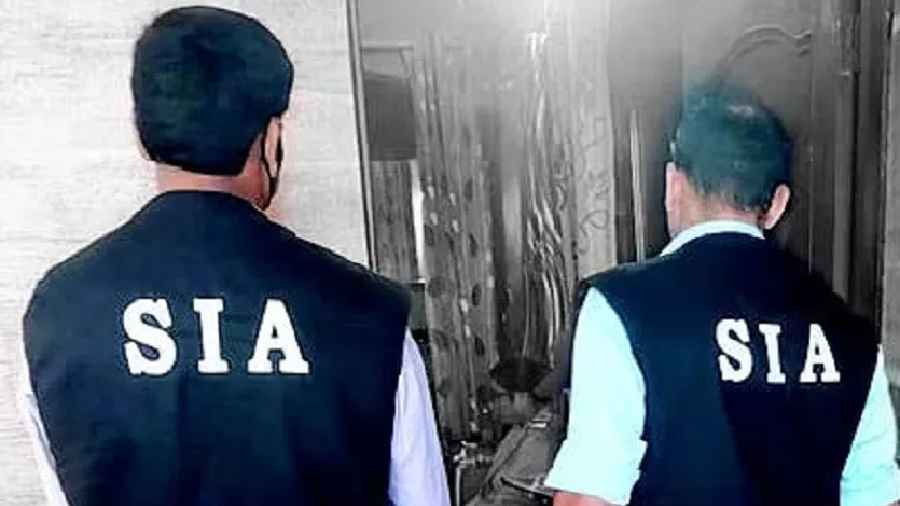
Srinagar: The State Investigation Agency (SIA) of Jammu and Kashmir Police on Saturday launched extensive raids across Central and North Kashmir as part of an ongoing operation to counter terror-linked activities.
Searches were carried out in Sopore, Baramulla, Handwara, Ganderbal, and Srinagar, officials said. The raids are aimed at breaking up networks suspected of supporting terrorism in the region.
The action comes a day after police arrested three alleged associates of the banned Lashkar-e-Taiba (LeT) outfit in the Kawoosa Narbal area of Magam, Budgam district. The arrested men have been identified as Muzamil Ahmad and Ishfaq Pandit from Aglar Pattan, and Muneer Ahmad from Meeripora Beerwah. A pistol and a hand grenade were seized during the operation.
Preliminary investigations suggest the trio had links with Aabid Qayoom Lone, a LeT operative who crossed over to Pakistan in 2020. Lone is believed to be actively involved in recruiting youth from the Narbal–Magam area and coordinating attacks from across the border.
Police said the arrested men were working under Lone’s instructions and were planning terror strikes while attempting to radicalize more young people.
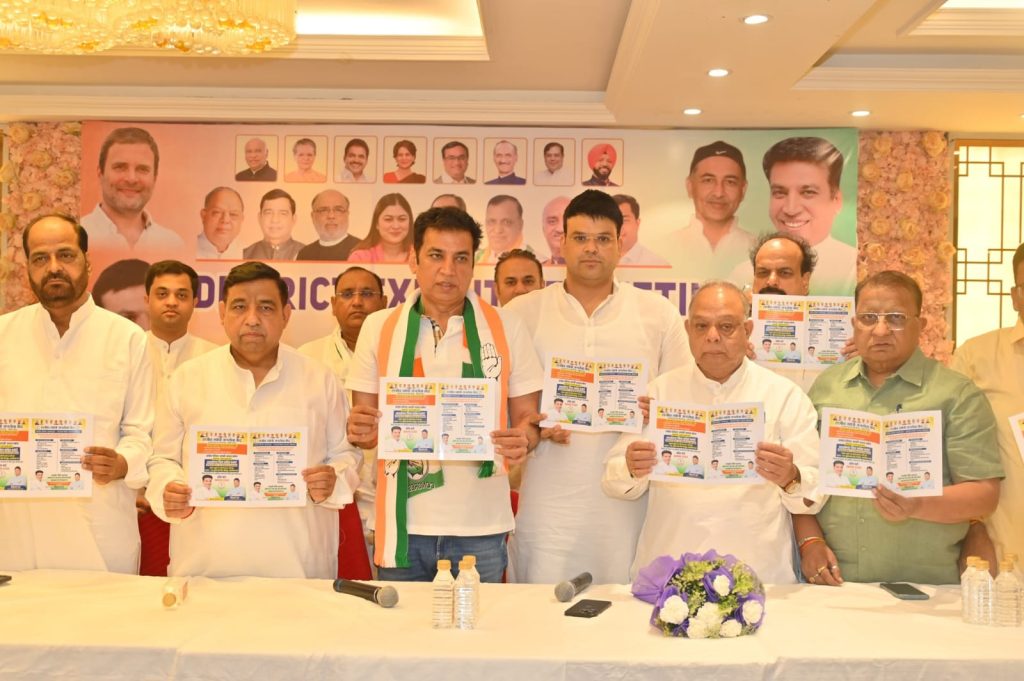
Delhi Pradesh Congress Committee president Devender Yadav has launched the “Rajiv Gandhi Jan Sewak Kendra” to help solve the problems of the people, at the Adarsh Nagar District Congress Committee meeting.
He also launched the Adarsh Nagar DCC website www.adarshnagardcc.in in the presence of a large number of Congress functionaries. The meeting was presided over by Adarsh Nagar District Congress Committee president Sidharth Rao with prominent party leaders and local residents attending the DCC meeting.
The motto of the Rajiv Gandhi Jan Sewak Kendra will be “Congress Pariwar Aap Ke Dwar—Sarkari Sewaye Aapka Adhikar”, to find solutions to people’s problems from various Government departments.
The monthly District Congress Committee meetings were held in all the 14 districts in which thousands of Congress workers took part. DPCC president Devender Yadav also addressed many DCC meetings. He said that new executive committees will be constituted in all the districts and blocks after dissolving the existing committees.
Yadav said that every district and later blocks will launch Rajiv Gandhi Jan Sewak Kendra, which will act as a grievance cell to solve the problems of the people by taking up their issues with the concerned departments of the Government. He said that it was also designed to strengthen the party at the ground level, and to be the voice of the people with regular interaction with them.
“The initiative taken by the Adarsh Nagar District president Sidharth Rao in setting up the Rajiv Gandhi Jan Sewak Kedra and the website www.adarshnagardcc.in were dynamic steps to address the many pressing issues of the people, as Congress workers have shown that even without power, they continue to serve the people as before,” Yadav said.
He further said that only Congress comes to the aid and support of the people in challenging times, like when Congress workers went out on the streets to help the helpless during the Covid-19 pandemic when the entire city was under lockout, and leaders of the AAP and BJP had preferred the safety and comforts of their homes.
Sidharth Rao said that the Rajiv Gandhi Jan Sewak Kendra will be a link between the people and the various government departments to solve their problems, as presently, common people have to run from pillar to post for the redressal for their grievances, with more often than not, people return disappointed without their works getting done.
Srinagar- Jammu and Kashmir Chief Minister Omar Abdullah has assured tourism stakeholders that he will seek financial support and loan relief from the Centre to help revive the region’s struggling tourism sector following the recent terrorist attack in Pahalgam that killed 26 people, most of them tourists.
At a high-level meeting with tourism industry representatives, Abdullah pledged to raise the matter with Prime Minister Narendra Modi and Finance Minister Nirmala Sitharaman. “We will approach this in a structured and result-oriented manner,” he said.
Senior officials including Advisor to the Chief Minister Nasir Aslam Wani, Additional Chief Secretary Dheeraj Gupta, Divisional Commissioner Kashmir Vijay Kumar Bidhuri, IGP Kashmir VK Birdi, Commissioner Secretary Tourism Yasha Mudgal, and Director of Tourism Raja Yaqoob were also present.
“I understand the challenges many of you are grappling with, be it managing establishments, retaining employees, or dealing with fixed overheads. Many among you are under pressure due to bank loans,” Abdullah told the gathering. He particularly highlighted the concerns of small-scale entrepreneurs who had recently taken loans for tourist vehicles or home-based guest accommodations.
“In this regard, I plan to engage with the Tourism Department and relevant authorities to advocate for a dedicated relief package from the Government of India,” he added.
Abdullah also proposed that financial support should extend to residents in border areas whose homes and shops have been damaged due to ongoing conflict. “For the tourism sector, we will explore the possibility of loan deferments for at least two quarters, which would provide temporary relief and reduce financial stress on stakeholders,” he said.
The Chief Minister emphasized the need for a comprehensive recovery plan, to be developed in collaboration with the Tourism Department after the Shri Amarnath Ji Yatra. “This is my suggestion for your consideration that we thoughtfully shape and finalise this plan without undue haste,” he said.
He also proposed that the revival plan include not only hotels and guesthouses, but also houseboats, shikaras, taxis, and artisans. Ideas such as themed shopping festivals inspired by Dubai’s retail events and cultural performances were discussed.
“We should also consider engaging artists for cultural performances, restarting the laser fountain shows, and introducing other attractions to enhance the tourist experience,” Abdullah said.
Despite the recent attack, he expressed optimism about the sector’s future. “I have been receiving calls from individuals and organisations eager to promote Jammu and Kashmir and bring back tourists in large numbers,” he noted, adding that he would personally take part in upcoming promotional campaigns once the situation stabilises.