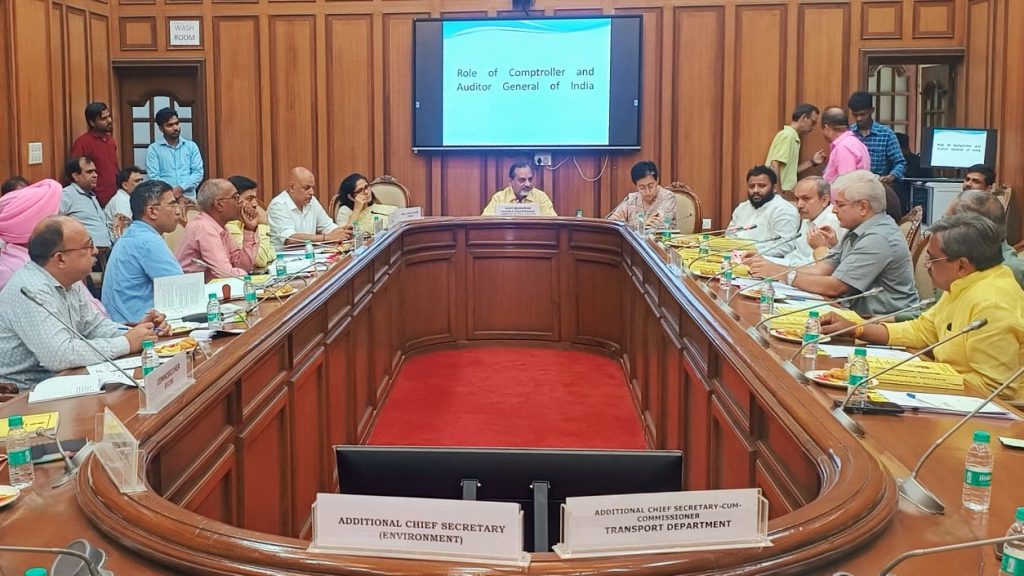
New Delhi: The Public Account Committee (PAC) has sought detailed information from various departments to ensure transparency, accountability during the discussion on issues highlighted in the Comptroller and Auditor General (CAG) reports, including air pollution, irregularities in liquor sales in the capital, and matters related to health.
The meeting was chaired by MLA Ajay Mahawar. Leaders who were present in the meeting include Arvinder Singh Lovely, Satish Upadhyay, Shikha Rai, Kailash Gahlot, Rajkumar Chauhan, Atishi, Virendra Kadyan, and Kuldeep Kumar.
Meanwhile, senior officials in attendance included the Additional Deputy CAG, Secretary of the Health Department, Excise Commissioner, Transport Commissioner, Additional Chief Secretary (Environment), Secretary of the Delhi Assembly, Finance Secretary, and others.
Speaking on the occasion Mahawar said, “The responsibility of the Public Accounts Committee is not merely to review reports, but to ensure transparency and accountability in governance in the public interest. The topics discussed today are directly related to the lives of the common people. We will ensure that meaningful discussions are held on the irregularities raised in the CAG reports and that an honest report is presented in the House.”
He said that the topics discussed here are directly related to the lives of the common people.
Mahawar asserted that the panel will ensure that meaningful discussions are held on the irregularities raised in the CAG reports, and that an honest report is presented in the House.
Earlier, Delhi Speaker Vijender Gupta said that the legislative Assembly has decided to use the CAG’s Audit Para Monitoring System (APMS) software for effective monitoring of audit paragraphs by CAG.
He directed the Additional Chief Secretary (Finance) Ashish Chandra Verma to implement the APMS.
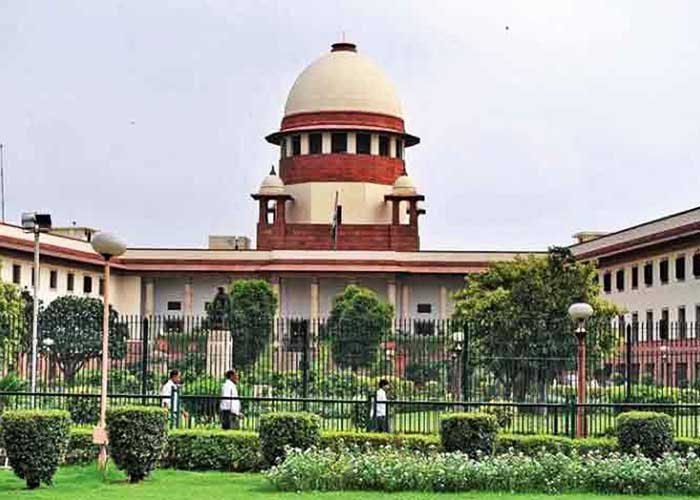
The Supreme Court of India agreed to examine a plea seeking a complete ban on “illegal” betting apps.
The petition also sought strict regulations on online gaming and fantasy sports, and the enactment of a comprehensive law.
A bench of Justices Surya Kant and N.K. Singh issued a notice to the Centre and sought its response, but refrained from issuing notices to the state governments at the present stage.
The petitioner, claiming himself “a prominent social activist, humanitarian, and President of Global Peace Initiative, which is dedicated to promoting peace and justice globally”, said the Public Interest Litigation (PIL) was filed in the interest of millions of people and to protect the sanity and democracy in India by banning “illegal” betting apps.
The petition referred to an FIR registered in March this year in Telangana against 25 Bollywood celebrities, cricketers and influencers for misleading the public by promoting betting apps.
Further, it referred to a news article regarding the suicide of 24 people from Telangana after they were unable to pay debts incurred due to online betting.
It said that the petition was filed directly before the Supreme Court to safeguard Indian youth and vulnerable citizens from the perils of unregulated online betting and gambling, often disguised as fantasy sports and skill-based gaming.
The petitioner said the plea was filed in “the larger public interest to safeguard the youth of India from the unregulated, exploitative, and dangerous online betting industry operating under the garb of fantasy sports and skill-based gaming”.
“That betting, both online and offline, is inherently a game of chance, not a game of skill, and hence falls within the ambit of gambling, which is prohibited in many states under the Public Gambling Act, 1867, ” said the petition, adding that there is no uniform central legislation to regulate online betting.
Further, the petitioner claimed that he is a globally recognised Peace Ambassador, nominated for the Nobel Peace Prize by many countries, including the US, Norway, Sudan and India, for stopping several major wars through his peace efforts and rescuing 310 orphans and street children around the world.
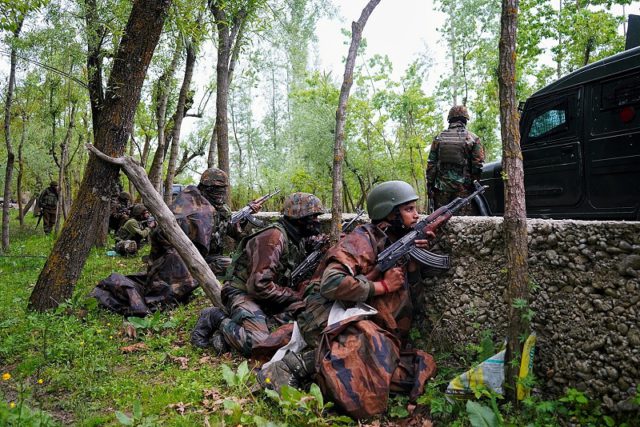
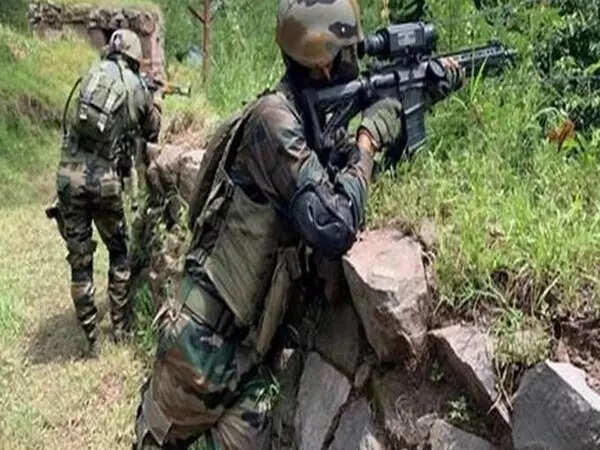
Kupwara: Security personnel take position during a cordon and search operation after an encounter between holed up terrorists and the security forces in the Chanjimulla village of Handwara tehsil in Jammu and Kashmir’s Kupwara district on May 3, 2020. Seven including two senior Army officers, two junior ranks, an officer of the local police and two terrorists were killed in the fierce gunbattle on Sunday. Two terrorists have also been killed in this encounter whose exact identity is being established. Although firing has stopped at the encounter site, but searches are going on there. (Photo: IANS)
Jammu– An Indian Army soldier was killed and two others injured during a gunfight with terrorists in the Kishtwar district of Jammu and Kashmir on Thursday. The operation is still on.
The encounter broke out in the Singhpura locality near Chatroo after security forces launched a cordon-and-search operation based on intelligence inputs about the presence of around five terrorists in the area.
The martyred soldier has been identified as Sepoy Gaykar Sandeep Pandurang, a native of Maharashtra. He was critically injured during the exchange of fire and later succumbed to his injuries. The two other injured personnel have been evacuated to the military hospital in Udhampur for treatment.
The Army’s White Knight Corps said in a statement: “One of our bravehearts sustained grievous injuries in the exchange of fire and has succumbed despite best medical efforts.”
Additional reinforcements from the Army, CRPF, and J&K Police were rushed to the site after contact was established with the terrorists. Reports suggest that two groups of Jaish-e-Mohammad (JeM) militants may be trapped in the area.
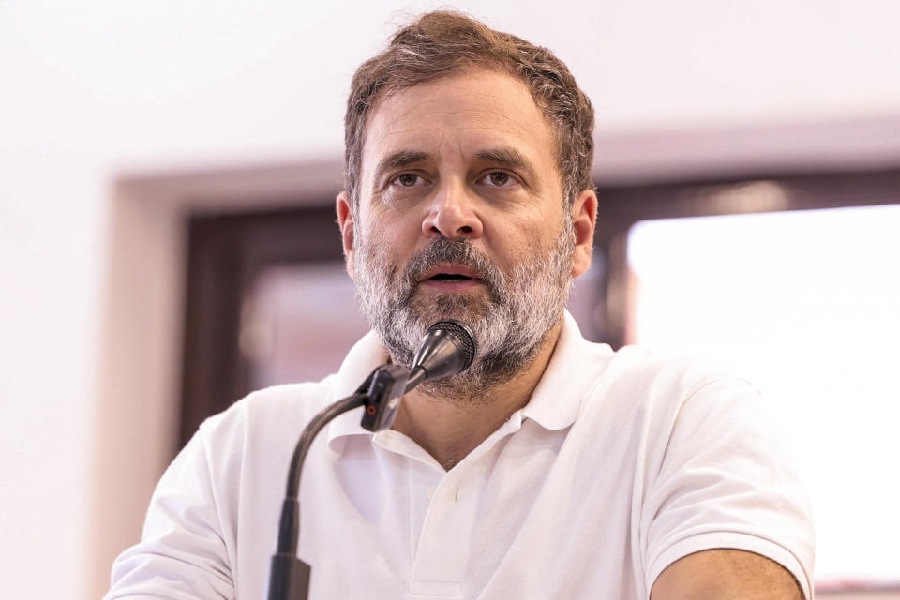
Leader of the Opposition Rahul Gandhi will visit the families affected by Pakistan shelling in Jammu and Kashmir’s Poonch district on Saturday.
Congress leader and MP Jairam Ramesh said on X, “Leader of the Opposition in the Lok Sabha Shri @RahulGandhi will be visiting Poonch tomorrow May 24th to meet the families bereaved during the shelling by Pakistan very recently. Earlier, on April 25, he had visited Srinagar where he met the injured people and other concerned parties in the barbaric terrorist attack in Pahalgam. He also met the Lieutenant Goverand the Chief Minister.”
Poonch, Rajouri, Baramulla, and Kupwara districts of Jammu and Kashmir suffered the worst damage to civilian lives and property due to heavy mortar shelling by Pakistan in retaliation for India’s targeting of terror infrastructure in Pakistan and Pakistan occupied Kashmir (PoK).
Operations against terrorists were intensified after April 22, when Lashkar-e-Taiba (LeT) terrorists segregated tourists on the basis of religion and killed 26 civilians, including 25 tourists and a local, in Baisaran meadow of Pahalgam.
The cowardly terrorist act outraged the entire nation. India launched precision-guided targeted attacks on terrorist infrastructure in Muridke near Lahore, Bahawalpur, Kotli, and Muzaffarabad in PoK. Pakistan responded by heavy mortar shelling on the Line of Control (LoC) and the International Border (IB) in J&K, targeting civilian facilities.
Around 200 houses and shops were destroyed in Pakistani shelling, while hundreds of border residents were forced to abandon their villages to move to safer locations.
The border residents have not fully returned to their homes yet as the security forces are still defusing unexploded Pakistan shells in Poonch, Rajouri, Baramulla and Kupwara districts.
India reached an understanding with Pakistan on the ceasefire, and the DGMOs of the two countries spoke on June 12.
But, Defence Minister Rajnath Singh has made it clear that the understanding will be respected only as long as Pakistan does not allow any terrorist activity on its soil against India.
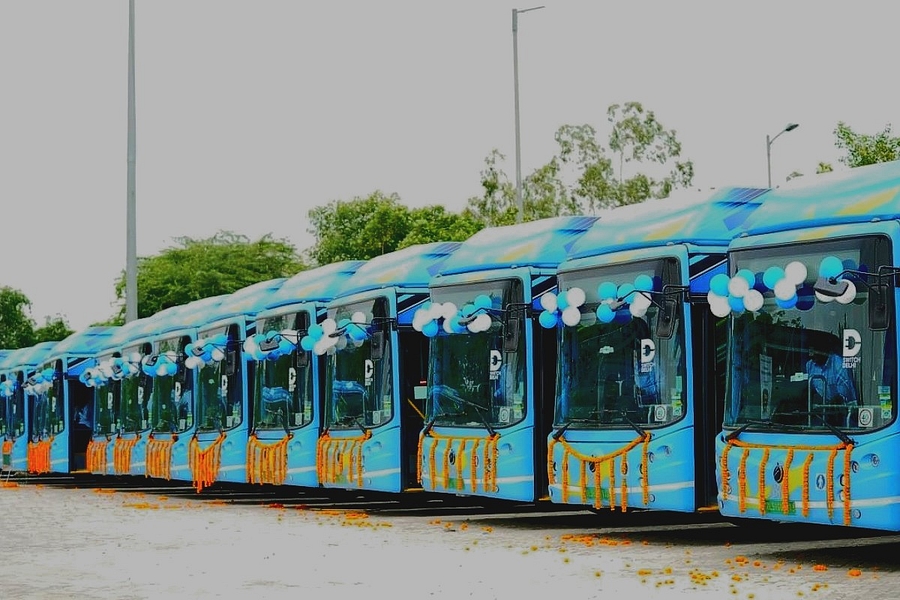
New Delhi:The Ministry of Heavy Industries yesterday assured that approximately 4, 500 electric buses will be provided to Bengaluru, 2, 000 to Hyderabad, 2, 800 to Delhi, 1, 000 to Ahmedabad and 600 to Surat under the current phase of the PM e-Drive Scheme.
The decision was taken at a meeting chaired by Union Minister for Heavy Industries H.D. Kumaraswamy on the rollout of electric buses.
“The session focused on the states of Telangana, Karnataka, Delhi, and Gujarat—marking a strong step forward in advancing Prime Minister Narendra Modi’s vision for clean and inclusive urban transport solutions across India, ” according to an official statement issued after the meeting.
“Thanks to the leadership of Prime Minister Narendra Modi, India is now taking bold strides toward sustainable urban mobility. From Bengaluru to Delhi, cities are actively embracing electric buses to make public transport cleaner, smarter, and more efficient, ” said Kumaraswamy.
“We are not merely allocating electric buses—we are shaping the future of India’s transport system with innovation and environmental consciousness, ” the Union Minister said.
“With close coordination between the Centre and states like Telangana, Karnataka, Delhi, and Gujarat, we are determined to deliver on the PM e-Drive promise, ” he added.
The PM e-Drive initiative aims to deploy 14, 028 electric buses with a total financial outlay of Rs 10, 900 crore over a two-year period from April 2024 to March 2026.
The minister said the scheme represents one of the world’s largest national efforts to electrify public transport at scale and the government was committed to timely delivery, operational readiness, and strategic partnerships with all participating states.
The Ministry of Heavy Industry (MHI) has also introduced E-vouchers for EV buyers to avail the demand incentive under the scheme.
Under the PM e-drive scheme an allocation of Rs 500 crore each has been done for the deployment of e-ambulances and e-trucks as well. This is new initiative of the Centre to promote the use of e-ambulances for comfortable patient transport.
Similarly, e-trucks have also been introduced under the scheme since trucks are major contributors to air pollution. To avail subsidy on e-truck submission of a scrapping certificate from Ministry of Road Transport and Highways (MoRTH) approved vehicles scrapping centres (RVSF) has been made mandatory.
The Municipal Corporation of Delhi (MCD) on Wednesday witnessed a historic session with all the councilors actively participating in deliberations aimed at improving civic infrastructure and providing tangible relief to the citizens of Delhi.
The Counsellor of all parties, have raised their concerns regarding the lack of desilting of drains by the previous Delhi government and almost flood like situations in the capital during every monsoons. They have also demanded assurance from the BJP government while applauding the work of Chief Minister Rekha Gupta in desilting of drains.
Mayor Raja Iqbal Singh has assured the councillors and said, “We are working under the leadership of Chief Minister Rekha Gupta to ensure that efforts will be made to mitigate the challenges shared by all the Councilors today, with the special focus on the desilting and making Delhi prepared ahead of monsoons. Gupta and all her ministers are working on the ground to ensure this.”
The highlight of the meeting also included the announcement of a comprehensive Amnesty Scheme for Property Tax, a long-awaited move expected to benefit lakhs of owners of residential, commercial and industrial properties across the city. In a bid to ease the financial burden on citizens and encourage compliance, the House has approved a full waiver of interest and late payment charges on pending property tax dues under the amnesty scheme.
In another citizen-friendly decision, the user surcharge has been scrapped entirely. This move is expected to provide substantial relief to property owners and facilitate smoother tax payments in the future.
Speaking on the occasion Singh said, “Today marks a transformative step in making MCD more citizen-centric. With the introduction of the amnesty scheme and removal of unjust financial burdens, we are enabling residents to come forward, settle their dues, and participate in the city’s development journey without fear or stress.”
Srinagar: An encounter broke out between security forces and terrorists on Thursday morning in the upper reaches of Chatroo in Kishtwar district of Jammu and Kashmir.
According to officials, a joint team of the Indian Army and Jammu and Kashmir Police launched a cordon and search operation in the area following specific inputs about the presence of militants. The operation led to contact with the hiding terrorists, triggering a gunfight.
“Op Trashi: Contact has been established with terrorists during a joint operation with @JmuKmrPolice at Chhatru, #Kishtwar today morning. Additional troops have been inducted, and operations are ongoing to neutralize the terrorists,” the Army’s 16 Corps said in a post on X.
The area is densely forested and had witnessed a similar encounter on April 12, in which three terrorists were killed. Thursday’s operation comes more than a month after that incident, indicating continued militant presence in the region. Additional reinforcements have been deployed to surround the area and prevent the militants from escaping. The operation is still in progress.
India’s swift military reaction to the Pahalgam massacre signals a hardened stance: terrorism will be met with force, Islamabad will be held to account for further mischief, and the no-first-use nuclear policy is now history. by Gopal Misra
Notwithstanding Turkey’s endorsement of the continuation of Pakistan’s policy of using its terror outfits against its neighbours — from Afghanistan to India — which recently restarted with the Pahalgam massacre of 22 April, Pakistan is now facing its existential crisis. It cannot be denied that if the Pak Army with its nuclear teeth continues to refuse the voices of sanity within its military and civilian leaderships, the entire region may be facing extreme misfortune. India, however, cannot be blackmailed.
Immediately after the unannounced visit of Saudi Arabia’s Minister of State for Foreign Affairs Adel bin Ahmad Al-Jubeir to New Delhi, and perhaps on the basis of Adel’s observation, Washington realized that the Pahalgam massacre has pushed India towards hard options, which might trigger unprecedented catastrophe in the region.
Later, US President Donald Trump stated Washington promptly mediated between the estranged neighbours and the peace was mediated. Without naming the sources, it is stated that White House had received alarming intelligence. Trump did not share the details. The intelligence reports had indicated that the ongoing conflict could have caused a nuclear holocaust.
It could not be ascertained immediately whether India would continue “Operation Sindoor” or the military operation may remain suspended till the negotiations are finally concluded. India has not committed herself to peace despite Trump’s mediation, but Pakistan has heaved a sigh of relief.
The US bid for peace in the region must have frustrated the irrepressible and over-ambitious ruler of Turkey, Erdogan, who had issued a statement that his country fully supports Pakistan’s war against India. However it has surprised few among the strategic affairs scholars in New Delhi, who think that both are keen to control their people through a massive dose of faith in their people.
They were almost in unison that Erdogan’s announcement of support to Pakistan has actually meant to enable General Asim Munir, the chief of the army and the ‘de-facto’ ruler of Pakistan, to retain his strong control on the current coalition government of Prime Minister Shahbaz Sharif. The Sharif government is considered a ‘proxy regime’ of the GHQ for extending the current term of three years to five years, and it would not affect his tenure by the superannuation age of 64 years. It means, Asim Munir would continue to hold his position till 2027.
In fact, while the erstwhile Pakistan Army chief Qamar Jawed Bajwa was keen to keep Asim Munir away from the key positions within the army establishment, the latter was benefited by the differences between the then PM Imran Khan and Bajwa. Khan was keen to get his confidante, Faize Hamid, who was then chief of the secret agency, Inter-Services Intelligence (ISI), elevated to the position of army chief. However, an element of trust-deficit also caused differences between Bajwa and Faize Hamid. Much against the wishes of Imran Khan, Faize Hamid was transferred as a commander in Quetta and Asim Munir took over as the ISI chief. During his tenure in the ISI, Asim Munir proved his credentials by masterminding the terrorist attack on a bus carrying more than 40 paramilitary personnel on 19 February 2019. Most of them succumbed to the blast. Munir’s career faced an eclipse for a while, when he was transferred to the GHQ without any significant assignment. It is stated it happened because he had exposed the corruption of Bushra Bibi, wife of the then PM Khan. However, with the removal of Khan, a new coalition came to power under the leadership of Shahbaz Sharif.
During the past five years, Shahbaz Sharif conceded maximum space to the army in the civilian administration. The GHQ responded to his loyalty by getting his elder brother and three times prime minister Nawaz Sharif exonerated by complex judicial processes and court hearings. During this period, GHQ and Shahbaz ensured that Imran Khan is convicted and awarded long-term prison terms by the country’s kangaroo courts by implicating him in false cases. His party, Pakistan Tehreek-e-Insaf or PTI, was denied poll symbols and in spite of getting a majority, was not allowed to return to power.
During the past three years, Asim Munir, frequently traveled to Washington and Beijing, winning their confidence. With the tacit support of the erstwhile Biden Administration, he quietly helped his counterpart in Bangladesh, General Waker-uz-Zaman, to oust the elected government of Sheikh Hasina. She was punished for having friendly ties with India; and now like in Islamabad, Dacca too has a hybrid government led by Muhammed Yunus, an economist. Interestingly, Yunus was promptly recognized by the US-led West and Beijing, and despite declaring themselves as the champions for democracy, none among the democratic leaders have cared to demand for fresh elections in Bangladesh.
Leaning on China, US ties
During his visits to the US, Asim Munir, has been keen to get his endorsement from the White House as well as from the deep state i.e. CIA. It is believed that his proposal to further radicalize the army was endorsed by a strong section of the deep state; further endorsed by the Biden Administration. It is also being assessed by various scholars that whether the Pahalgam incident is an attempt to ensure the continuity of the American support to the Pakistani army. However, the neutrality of the Trump Administration in the India-Pakistan conflict must have caused frustration to Asim Munir.
His confrontational approach towards the Baloch issue is also an attempt to win the confidence of Beijing. The rebellion in Balochistan is actually rooted in the exploitation of the province’s natural resources. Apart from the official agreements with the Chinese companies, the army officers are also known for allowing Chinese companies to illegally exploit the earth’s resources for mutual benefits.
Erdogan’s affinity for Pakistan
Erdogan’s support to Pakistan is quite amusing that Turkey which is being identified even today as the sick man of Europe has offered diplomatic support to Islamabad in its current conflict with India. It is believed he has offered ammunition and even a large number of drones. Interestingly, Asim is more respected for cramming Holy Koran than being a soldier, and a section Muslim clergy, especially the supporters, of the restoration of the medieval Caliphate system in the Muslim world, believe that Erdogan would finally succeed in burying the 100-year old democracy in Turkey; thus ushering in the system of governance under Islamic laws, popularly called , Nizam-e-Mustafa.
The Indian reaction to the Pakistani conspiracy has given a strong message that India will continue her zero tolerance towards terrorism and would not hesitate to punish Islamabad, and she has abandoned her no-first use nuclear policy. The US is aware of it.
The alleged shooting down of India’s Rafale fighter plane in the ongoing conflict with Pakistan has sent shock waves across the continents to the trillion-dollar weapons systems being marketed by the West. It is also a wake up call for the Indian Air Force. There are reports that 82 per cent of Pakistan’s defense supplies are now being obtained from China; on the other hand, the supplies from Russia and France are much slower than the Chinese weapons to Pakistan. There were reports that after this incident, the stock of Dassault Aviation, the manufacturers of the Rafale fighter jet, have dipped by 30 per cent, but it is being countered by the statistics that there were some fluctuations, but the company shares have actually rallied significantly, indicate year-to -year gain over 66 per cent in 2025.
It is stated that “It was 4 a.m. Wednesday, the Chinese ambassador in Islamabad was greeted at the foreign office in Islamabad to celebrate the success of his country’s fighter jet, J-10C and its missile system”. It is being stated that the Chinese software helped the Pakistani pilots to shoot down two Rafale fighters in an air to air missile combat. The Indian sources are awaiting detailed reports before confirming the news. Meanwhile, the French intelligence have reportedly confirmed the news to CNN.
The former editor of the government-owned Chinese newspaper, Global Times, Hu Jixin has claimed that with this success the Chinese defense capabilities and technologies have excelled the French and Russian systems.
In a major step towards promoting green energy and combating pollution, the Delhi Cabinet approved a slew of measures including an additional subsidy of Rs 30,000 for residential solar panel installations, procurement of advanced anti-pollution machinery, and renaming of a scholarship scheme for school students.
The move to offer a Rs 30,000 subsidy—Rs 10,000 per kilowatt—for rooftop solar systems is aimed at boosting the adoption of renewable energy in the national capital. This subsidy comes in addition to the Rs 78,000 available under the Centre’s PM Surya Ghar: Muft Bijli Yojana, taking the total financial support to Rs 1.08 lakh — the highest offered under any rooftop solar scheme in India.
According to a statement from the Chief Minister’s Office, the government plans to install rooftop solar systems in 2.3 lakh residential units over the next three years at an estimated cost of Rs 50 crore.
“Under this scheme, an average monthly saving of Rs 4,200 is expected for each household. This is a big step towards building a ‘Green Delhi’,” Chief Minister Rekha Gupta said.
Power Minister Ashish Sood said the enhanced subsidy is expected to make solar energy adoption significantly more accessible. Additionally, the government will collaborate with financial institutions to offer easy loans to cover remaining installation costs, which average around Rs 90,000. The initiative is designed to ensure residents can set up solar panels with zero upfront cost.
In another key decision, the Cabinet approved the procurement of 250 water sprinkler machines with anti-smog guns and 70 mechanical road sweeping machines to tackle dust pollution in the city. Dump vehicles and water tankers will also be procured as part of the comprehensive sanitation and dust control plan.
These machines will be deployed on roads maintained by the Public Works Department (PWD) and are expected to be fully operational before the onset of winter, when pollution levels in Delhi typically spike.
“The environment department will provide the necessary budget under the Pollution Control and Emergency Measures scheme,” CM Gupta said.
The Cabinet also approved the renaming of the Chief Minister Scholarship for Meritorious Students to the Lal Bahadur Shastri Scholarship for Meritorious Students (LBS), restoring its original name.
First introduced in 2019–20, the LBS scholarship was later renamed under the previous administration. The current government has reinstated the original name while retaining existing eligibility criteria.
Under the scheme, students from Classes VII to XII in government schools who score 80 per cent or above in the previous academic year will receive an annual scholarship of Rs 2,500.
“These decisions reflect our government’s commitment to sustainability, public health, and academic excellence,” CM Gupta said following the Cabinet meeting at the Delhi Secretariat
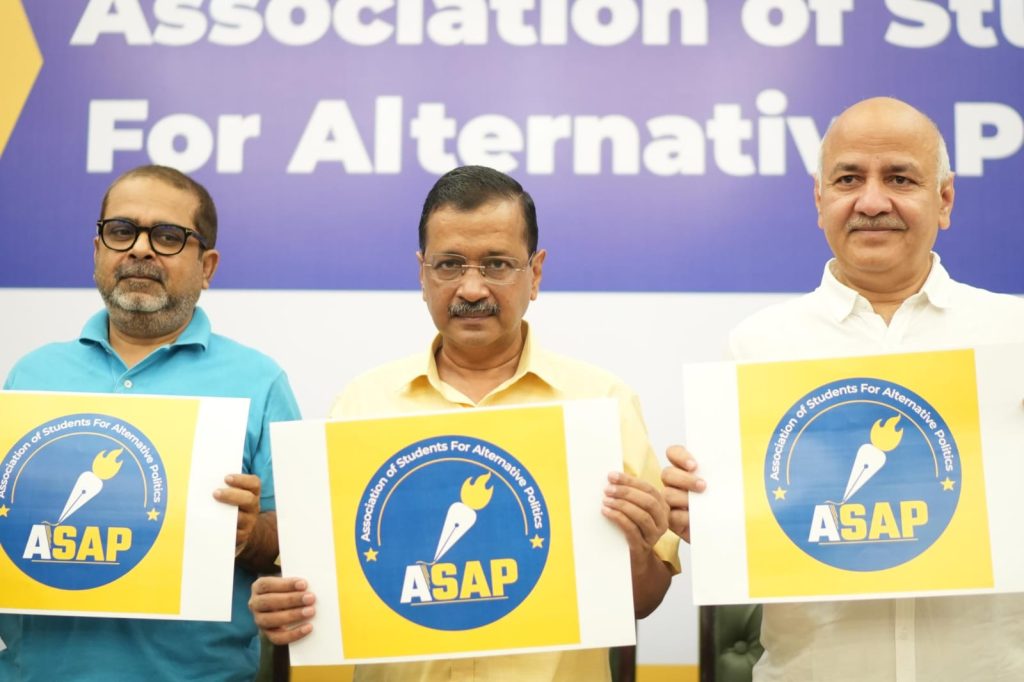
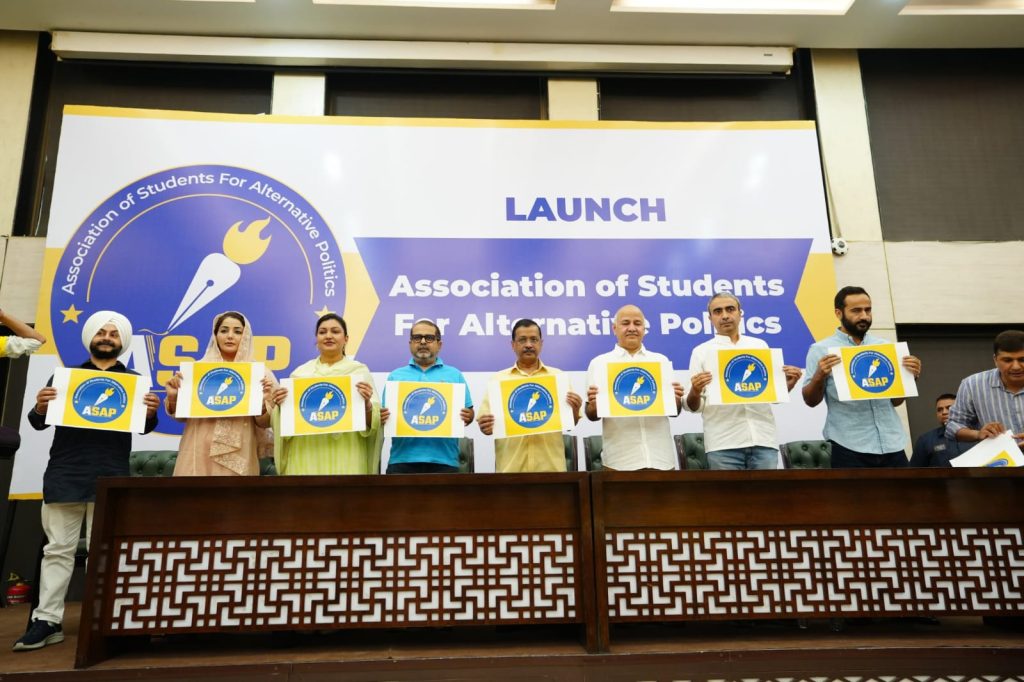
With the relaunch of its student wing to strengthen its base among the student community, Aam Aadmi Party (AAP) convener and former chief minister Arvind Kejriwal of Delhi will again be active in the national capital.
Kejriwal on Tuesday relaunched Association of Students for Alternative Politics (ASAP). This student wing, earlier known as Chhatra Yuva Sangharsh Samiti, will exclusively be led by students from across the country.
The objective of ASAP will be to spread the issues related to education, educational institutions and students across the country and find solutions to the problems by discussing them.
Speaking at the relaunch, Kejriwal said that mainstream politics is the root cause of all the problems in our country.
Photo: Naveen Bansal
“AAP ruled Delhi for 10 years and now we are in Punjab and how we run the government and the type of politics we did in Delhi was alternative politics. Every aspect of our lives is affected by the mainstream media and this is the root cause of all the problems of the country,” he said.
“The BJP has started destroying the education model created by the AAP in the past 10 years. This is because a good education is not part of mainstream politics. It is a part of mainstream politics,” he added.
The relaunch will also include a social wing within the student organisation, designed to increase student participation in social service and community engagement. ASAP is expected to contest the upcoming Delhi University Student Union (DUSU) elections in Sept this year, signalling a serious foray into campus politics.
CYSS, which was launched in Sept 2014, fought student union elections in several universities but could not replicate the success of AAP.