Saturday, December 27, 2025

What the new India-Pakistan crisis signals

The military conflict triggered by the Pahalgam attack has pushed ties between the neighbouring countries to the brink of complete breakdown. A report by Riyaz Wani
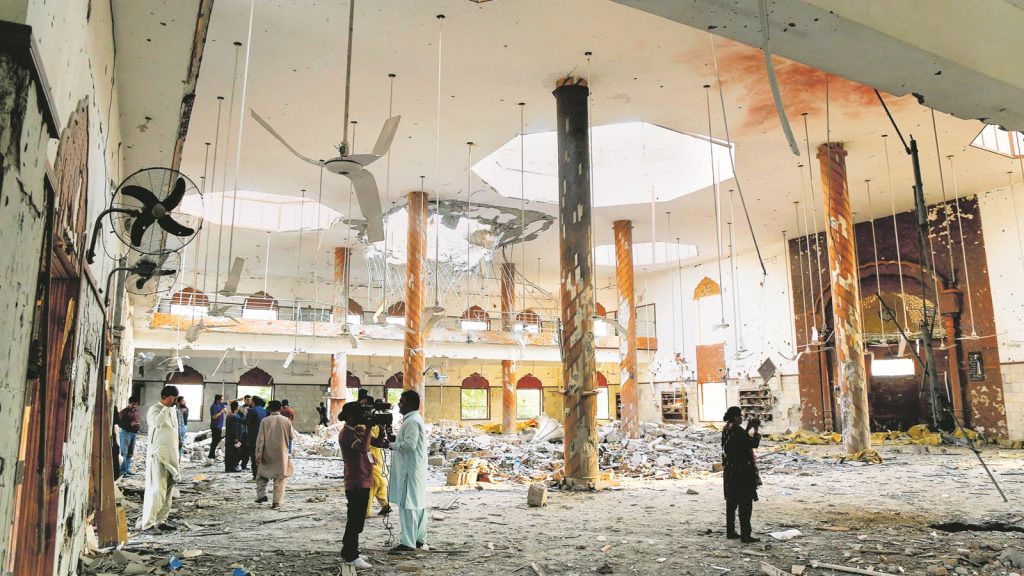
The moment 25 tourists and one pony operator were killed at Baisaran in Pahalgam on April 22, it looked certain that the gruesome event would snowball into a major standoff between India and Pakistan. With innocent tourists being the target, New Delhi found itself with little option but to respond to the attackers and their backers. Speaking at a public rally in Bihar soon after, Prime Minister Narendra Modi said that India will follow the perpetrators of Pahalgam carnage “to the end of earth.” Exactly sixteen days later, India carried out “precision strikes at terrorist camps” at nine sites in Pakistan, something that has been done for the first time. The army said “justice is served”, with New Delhi adding that its actions “have been focused, measured and non-escalatory in nature”. The following day, India destroyed Pakistan’s air defence system in retaliation to the neighbouring country’s unsuccessful attempt to target India’s defence installations with drones and missiles. India also escalated its military response by launching drone strikes deep inside Pakistan, targeting strategic locations in Lahore and Karachi, marking a significant widening of the conflict that had previously been concentrated along the Line of Control. 
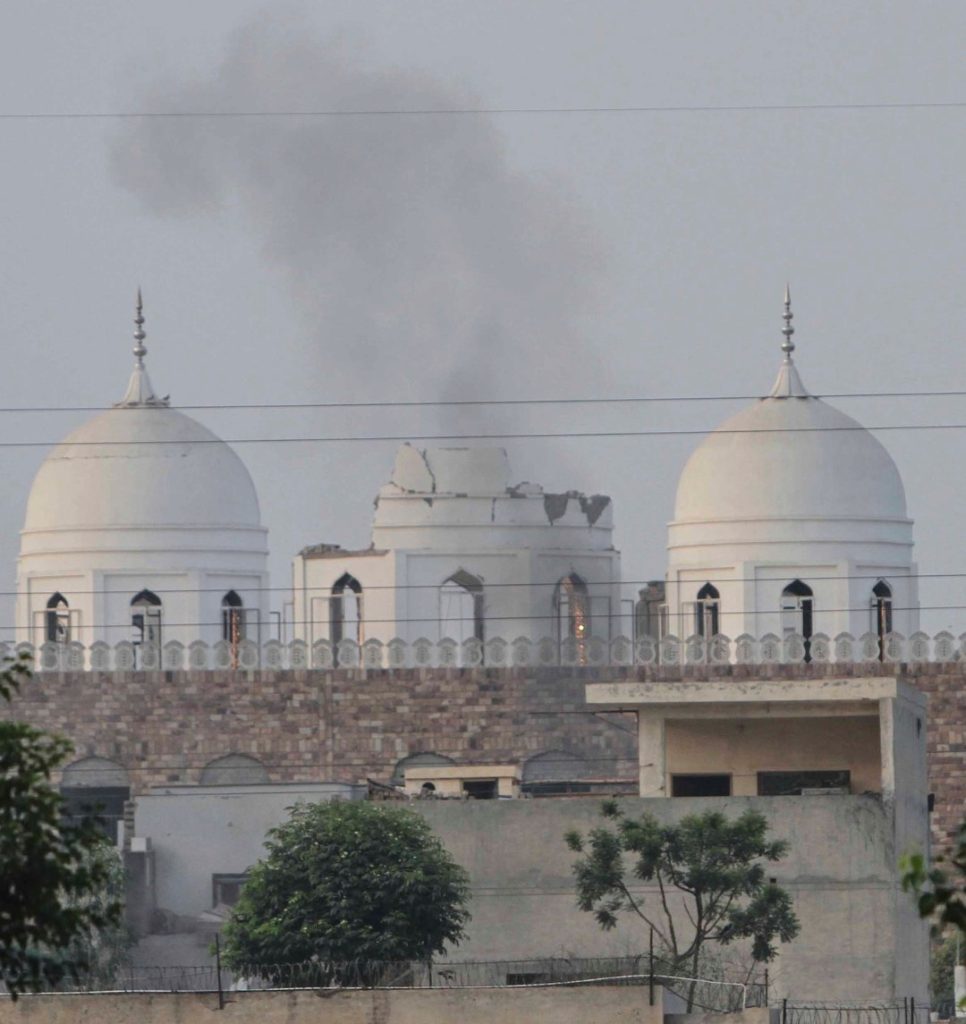
In retaliation, Pakistan quickly launched a wave of drone attacks targeting Indian military installations in Jammu and Kashmir. Pakistani drones were directed at army camps, communication hubs, and fuel storage facilities. The alert Indian air defense quickly neutralized them. 

It was the third major crisis – this one is the most serious – between the two countries since the BJP-led government took over at the centre in 2014. And on all three occasions, the crisis began following terrorist attacks in Kashmir. In September 2016, India carried out surgical strikes across the Line of Control (LoC) in Pakistan-administered Kashmir, targeting terrorist launch pads. The operation came in response to the deadly Uri attack, where terrorists killed 19 Indian soldiers at an army base. It marked a significant shift in India’s counter-terrorism strategy, moving from defensive to proactive measures. 

Again, in February 2019, following the Pulwama suicide bombing that claimed the lives of 40 Central Reserve Police Force (CRPF) personnel, India launched air strikes in Balakot, deep inside Pakistan’s territory. The 2019 operation targeted what India described as a major Jaish-e-Mohammed training camp. Both strikes heightened tensions between the two nuclear-armed neighbors and underlined India’s evolving doctrine of responding forcefully to cross-border terrorism.

Ever since the Pahalgam attack happened, both the countries took a series of non-military steps against each. Five key measures were announced: the Indus Waters Treaty, long seen as a symbol of cross-border cooperation, was put on hold; the Attari land crossing was shut; Pakistanis will no longer get visa exemptions under SAARC; and diplomatic presence in both countries was scaled back significantly. These steps go beyond the symbolic: they reflect a deep rethink of India’s approach to its western neighbour.

Pakistan, in response, suspended bilateral trade initiatives, and has threatened to withdraw from all bilateral agreements with India, including the 1972 Simla Agreement. The Simla Agreement, a landmark peace deal between the two nations, was signed shortly after the creation of Bangladesh in 1971.  

On May 8, India escalated its military response by launching drone strikes deep inside Pakistan, targeting strategic locations in Lahore and Karachi. According to Indian defense sources, the strikes were aimed at dismantling terror infrastructure and key military assets, marking a significant widening of the conflict that had previously been concentrated along the Line of Control. Explosions were reported near a military airbase in Lahore and at an ammunition depot in Karachi, with footage of the aftermath surfacing on social media. The strikes came just a day after India’s earlier air assault on Lahore’s air defence systems, part of its response to the Pahalgam terror attack.

In retaliation, Pakistan quickly launched a wave of drone attacks targeting Indian military installations in Jammu and Kashmir. Pakistani drones were directed at army camps, communication hubs, and fuel storage facilities, with reports of interceptions by India’s air defence but also confirmation of damage near Rajouri and Poonch. The tit-for-tat drone warfare heightened fears of further escalation, with both sides issuing statements accusing the other of aggression while asserting their own right to self-defence. International observers expressed growing concern over the rapid deterioration of the security situation.

On April 9 night, India launched precision strikes on three key Pakistani air bases early Saturday—Nur Khan (Rawalpindi), Murid (Chakwal), and Rafiqui (Jhang). Pakistan started Operation Bunyan un Marsoos against India, targeting military installations in Jammu, Kashmir and Punjab. The offensive involved surface-to-surface missiles and loitering munitions. The operation’s name, drawn from a Quranic verse, means ‘unbreakable wall’.

On May 10, in a surprise turn of events,  the ceasefire between the two countries came about, a result of urgent international diplomacy. Amid concerns over potential nuclear escalation, US President Donald Trump announced that both nations had agreed to a “full and immediate ceasefire” after intensive talks mediated by US officials, including Vice President JD Vance and Secretary of State Marco Rubio.

The ceasefire was welcomed by the international community, with countries like Saudi Arabia and China also playing supportive roles in the mediation efforts. However, the truce was fragile; within hours, both India and Pakistan accused each other of violating the agreement, with reports of explosions and drone intrusions in Kashmir. But things stabilized from thereon and the calm was eventually restored. 

India delivers a telling message

Will the fresh attack on Pakistan deter future violence in Kashmir? This is a question that has been India’s longstanding foreign policy quandary. What has, however, changed from the past is that India now has firmly adopted a policy of punishing Pakistan after every terror attack in Kashmir or elsewhere. The Pahalgam attack, followed by the military conflict, has plunged India-Pakistan relations, already reeling over the past many years, to their lowest low.

The military strikes against terror camps and the response from Pakistan takes the situation to an entirely new level, threatening to push the region over the brink. After the Pahalgam attack, PM Modi was constrained to go one up on the previous strikes. And there were reasons for it: The 2016 and 2019  terror attacks  were on the army personnel, something that has been happening in Kashmir. High-profile attacks on the security targets in J&K have continued unhindered over the past three decades. The Pahalgam attack was against innocent tourists. 

So, any fresh military action against Pakistan had to be bigger and visible, one that satisfied the enraged public and also inflicted a deterrent blow on the Pakistan Army. The continuing escalatory spiral is expected to end up into a full-fledged war and a possible breach of the nuclear threshold of either country. It is a doomsday scenario that alarms the world and also causes a deep concern to the people of the region. But the focus should be on the root cause of it all, the unrelenting violence in Kashmir abetted from across the border. And as long as this violence lingers, no engagement is possible between India and Pakistan.

For example, the 2016 Pulwama bombing delivered a crushing blow to any hope of India-Pakistan dialogue in the long term. And ever since, India has antiseptically avoided any dialogue with Pakistan.  In an interview to a television channel during his election campaign last year, PM Modi made it clear that  India “shouldn’t bother much about Pakistan and whether it changes its approach or not.” He added that for the preceding 10 years he had put a lock on Pakistan being a factor in running India. “Let Pakistan manage two square meals. We don’t need to waste our time,” he remarked, hinting at Pakistan’s dismal economic state of affairs.  

In fact, India, Pakistan relations have been on a slippery slope since the Mumbai attack in 2008 that derailed a promising India-Pakistan engagement which had almost culminated into a peaceful resolution of Kashmir. Ever since, the two countries have struggled to get back to some sort of engagement with India giving up the pursuit altogether down the line.  After the abrogation of Article 370, which gave Jammu and Kashmir special status under India’s constitution, both countries downgraded the diplomatic staff at their respective high commissions. Since then, the two countries are left with no diplomatic tools to communicate with each other even at a crisis time. But India has also felt no need to engage with Islamabad. PM Modi has, by and large, successfully disconnected his foreign policy from Pakistan. And with the growing economic and conventional military disparity between the two countries, India also succeeded in dehyphenating itself from Pakistan.   

 With fresh strikes on terror bases, India hopes to not just establish some degree of dominance over Pakistan but also deter cross-border terrorism by disproportionately raising the cost for this. Its success, however, remains to be seen. And for that to happen, militancy in Kashmir has to come to an end. But this is something that hasn’t happened over the past 35 years, even though it has gone through its rise and fall. The reason for this is infiltration which has continued despite the fencing along a better part of the border. 

Local militancy on the wane

True, the situation has altered drastically over the past five years. According to the figures revealed recently by the union home minister Amit Shah, 1,587 incidents of violence were reported in J&K in 2004 but the number dropped to just 85 in 2024. Similarly, civilian deaths, according to home ministry data, have fallen from 733 to 26, and security personnel casualties have declined from 331 to 31 over the same period. It is also obvious that the stone-pelting is now virtually non-existent. Strikes, once a routine method of expressing dissent, have also disappeared. Separatist politics has truly become extinct. What is more, even the local recruitment into militancy has fallen drastically. According to the official figures, the number of active militants in Jammu and Kashmir has shrunk to 76. About 59 of them are from Pakistan and just 17 are local – 3 in the Jammu region and 14 in the Valley.  Among the foreigners, three are said to belong to Hizbul Mujahideen, 21 to Jaish-e-Mohammed (JeM) and 35 to Lashkar-e-Taiba.

Official data, on the other hand, has indicated a significant drop in youth taking up guns, marking the lowest figures in 15 years. This is for the first time since 2011-12, that the number of active local militants has fallen to single digits, taking forward a trend from 2023 and 2024, with only one new recruit recorded in 2025 so far.

However, militancy has still lingered on the fringes, in the hills, and has refused to be quelled, largely because the infiltration has continued to replenish the depleted local ranks.  

Would attacks on terrorist sites in Pakistan bring the terrorism in Kashmir to an end? It is difficult to predict. That is, if the outcome of the 2016 surgical strikes and 2019 Balakot strikes is anything to go by. Militancy has continued, albeit it has steadily lost its sting.  

Would this trend towards reduction in militancy-related violence continue? There’s hope that it will, although such moments in the past haven’t been built upon but frittered away. For example, the number of militants – both local and foreign – had, more or less, declined to the same levels in 2011. This had momentarily ushered in a peaceful environment. But the numbers surged again from thereon, especially the local recruitment, with south Kashmir as its hub.  And by 2015, we had over 300 local militants in the Valley.   However, the situation since has drastically metamorphosed, and, on their face, the things seem unlikely to go back to square one. But, it is also true that Kashmir remains an unpredictable place. 

A huge blow for Valley tourism

For over three years, tourism in Kashmir has been consistently on the rise. So much so, it became not just a symbol of the prevailing normalcy but also underpinned it. In 2024, 2.95 million tourists visited Kashmir – 43,000 of them foreigners – up from 2.71 million in 2023 and 2.67 million in 2022. This year, the government expected to beat this record but the Pahalgam attack has suddenly brought it down to a trickle.

In the Valley, hotels, houseboats, and tour operators, once fully booked for the summer season, are now scrambling to offer discounts of up to 70% after mass cancellations from anxious tourists.

This sudden collapse in tourism, a sector that had flourished in recent years thanks to a lull in violence, threatens to hit the livelihood of a large number of people deeply dependent on visitors drawn to Kashmir’s snow-capped peaks, pristine lakes, and lush Mughal gardens. This even as the booking sites show deep price cuts, but the tourism stakeholders have little hope. 

“All our bookings for the next two months have been cancelled,” said Umar Ahmad, a staff at a guest house in Srinagar. “There are no fresh bookings. It is going to hurt”

The attack, which India has blamed on Pakistan, has triggered a series of diplomatic and economic measures against Pakistan. The rise in war rhetoric in the country has left local residents fearing the worst. 

The arrivals from the northern states have by and large come to a halt but those from the southern states have continued to trickle in, brushing aside the fresh security concerns. . 

Former J&K Chief Minister Mehbooba Mufti has, however, appreciated the courage of some of these visitors during her visit to Pahalgam. She assured them of the region’s “resilience and hospitality.”

But this, of course, isn’t enough.  The tourism sector forms 6.8 percent of Kashmir’s GDP and employs two million people. The sector has the potential to shore up the Valley’s beleaguered economy. But the sharp drop in tourist numbers is certain to drive up unemployment figures. Back in Srinagar, taxi drivers are once again speaking of the abrupt collapse in business. 

“I was busy before the horrific killing, driving tourists around the Valley,” said Fayaz Ahmad, a taxi driver. “Before the attack, I didn’t have time to take on more work. There’s none now”

Where do we go from here?

Would India’s strikes in Pakistan change the situation for the better? There’s no telling it would in the long term. That is, if the outcome of the strikes in 2016 and 2019 are anything to go by. However, the response may give a sense of reassurance to the tourists, persuading them to return to Kashmir in the near term. This time, things will be more challenging though: in the earlier precedents of the Indo-Pak clash, the targets of violence were security forces, this time, tourists were attacked. Tourism in Kashmir has thrived on the belief that militants do not attack them. But after the Pahalgam attack, this confidence has been shattered, and may not be repaired easily.  

The fresh conflict between India and Pakistan, has not only deepened the diplomatic and military standoff but also cast a long shadow over hopes for regional stability. While India’s forceful retaliation aimed to establish deterrence and reinforce its zero-tolerance stance on terrorism, history suggests that such cycles of violence often have had limited long-term impact on militancy in Kashmir. The repeated use of military strikes, although significant in scale and symbolism, has yet to deliver a lasting resolution to the entrenched conflict.

What is clear, however, is the immediate human and economic toll of these events, particularly on Kashmir’s fragile tourism-driven economy. With public sentiment shaken and the perception of safety eroded, especially after the targeting of tourists, rebuilding trust will be an uphill task. As both nations dig deeper into hardened positions, the likelihood of dialogue or reconciliation appears remote, leaving Kashmir’s people to grapple with renewed uncertainty. In the absence of a sustained political process and meaningful engagement, the region risks remaining locked in a perilous cycle of violence and disruption. Now that this crisis has blown over, we need a long term plan for dealing with Pakistan. The two countries can’t afford a perpetual hostility, with intermittent clashes threatening to trigger a full-fledged war. 
Back in play: The IPL pass racket

Intro for cover story: Despite a police crackdown in 2023, the illegal sale of IPL complimentary passes is back—this time with brokers targeting fans seeking high-end corporate boxes. A report by Tehelka SIT

In 2023, Tehelka exposed the sale of Complimentary Passes—clearly marked Not for Sale—as part of a racket linked to IPL matches. Soon after the story broke, the Delhi Police swung into action and busted gangs selling fake IPL tickets and reselling original ones in black outside the Arun Jaitley Cricket Stadium in Delhi. They seized 104 tickets, including 80 fakes.

One would have thought this crackdown would put a full stop to the black-marketing of IPL tickets, especially Complimentary Passes. But after a brief lull in 2024, the brokers have returned in 2025—this time with a high-end twist. They are now offering prestigious Old Club House (OCH) Corporate Box 01 Complimentary Passes—again, Not for Sale—with unlimited buffet and beer, priced at Rs 40,000 per pass.

Tehelka reporter received several calls and WhatsApp messages from a Gurgaon-based broker, currently employed with a reputed Indian airline, offering these OCH Corporate Box Complimentary Passes at Rs 40,000 each. Last time, Tehelka uncovered a nexus involving standard Complimentary Passes. This year, it’s the turn of the elite corporate boxes—whether OCH or West Corporate—whose tickets are now openly sold in the market by brokers.

 “If you want Old Club House (OCH) Corporate Box Complimentary Passes for the IPL match in Delhi on 29th April 2025 between Delhi Capitals and Kolkata Knight Riders, you’ll need to pay me 70% advance. I won’t invest from my own pocket. One pass, including buffet, will cost you between Rs 40,000 to Rs 45,000,” said Pankaj Verma, a broker, to Tehelka’s undercover reporter.

 “I have two West Corporate Box 09 tickets for the 29th April match in Delhi. The original price is Rs 27,000 per ticket, but they’re available in black for Rs 40,000 each—with unlimited buffet and beer. I currently have two tickets, and I’m arranging the third,” Pankaj told Tehelka.

 “If you only want OCH Corporate Box 01 Complimentary Passes for the 29th April match in Delhi, I have those too. I’ve got three passes with me, priced at Rs 40,000 each,” Pankaj said to the reporter.

“If you’re seeking three OCH Corporate Box 01 Complimentary Passes for the 29th April match, then you’ll have to pay me Rs 84,000 in advance—70% of Rs 1,20,000 for three passes at Rs 40,000 each,” Pankaj added.

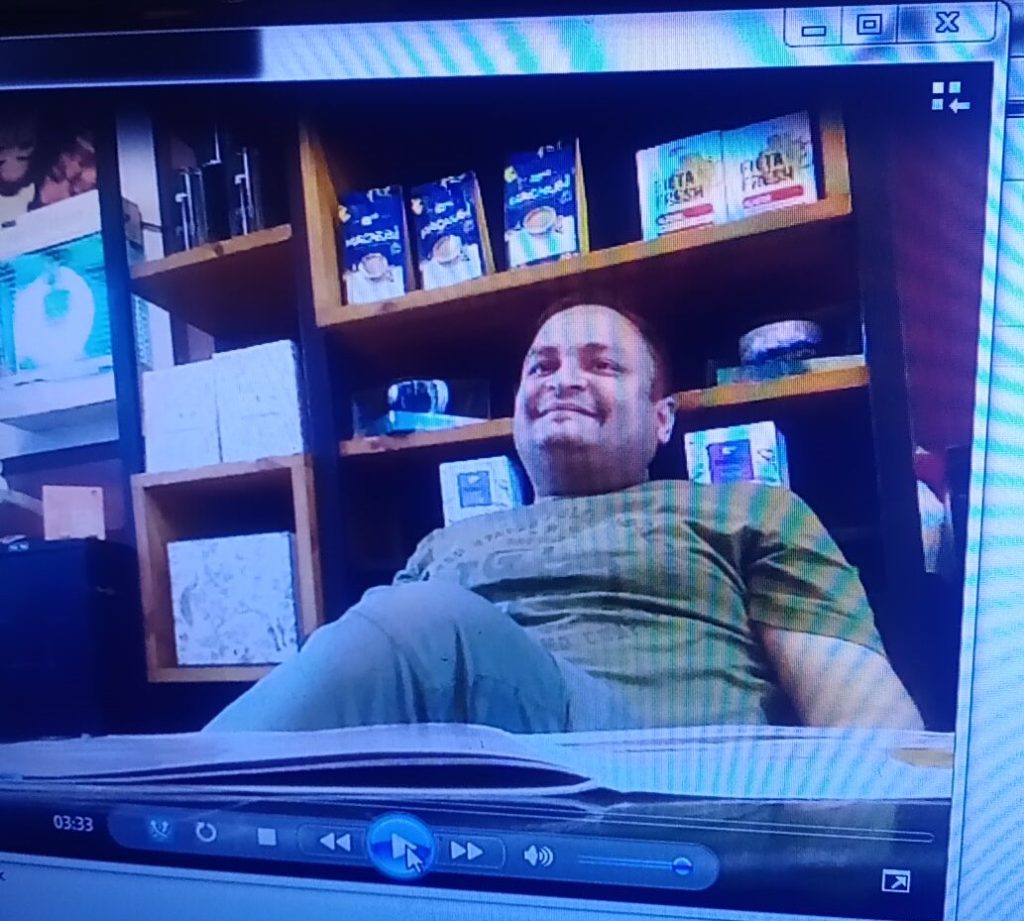
Pankaj Verma is a resident of East Delhi. Due to his airline job, he shifted to Gurgaon in 2019, while his parents continued to live in East Delhi. According to Pankaj, he is presently employed with a reputed Indian airline as a senior manager. Alongside his airline job, Pankaj also acts as a broker, selling not only regular and complimentary IPL tickets in black but also illegally dealing in prestigious corporate box complimentary passes. Tehelka first came into contact with Pankaj in 2023 when he sold complimentary passes for the 50-over ICC Cricket World Cup, held in India, to our reporter.

This year, on 26th April, Pankaj sent a WhatsApp message to the Tehelka reporter, offering Old Club House (OCH) Corporate Box 01 complimentary IPL passes—which are not for sale—for the 27th April 2025 match between Delhi Capitals and Royal Challengers Bengaluru, at the rate of Rs 45,000 per pass. He mentioned he had two box passes, which included buffet access. We dug further and asked whether Pankaj had more corporate box passes for the 29th April IPL match in Delhi between Delhi Capitals and Kolkata Knight Riders. To this, Pankaj replied that he would check and get back to us. Since the box passes were very expensive, we decided not to buy them. However, to nail Pankaj, it was necessary to purchase something from him as conclusive evidence. Therefore, we decided to buy regular tickets, which are cheaper than box passes, for the 27th and 29th April matches to be held at Delhi’s Arun Jaitley Stadium between Delhi Capitals and Royal Challengers Bengaluru, and Delhi Capitals and Kolkata Knight Riders, respectively. Accordingly, a meeting between Pankaj Verma and Tehelka’s undercover reporter was fixed for 27th April in Delhi.

On 27th April, Pankaj met Tehelka’s reporter at Star City Mall in Mayur Vihar Phase I, East Delhi. The meeting took place at Café Coffee Day (CCD). During that meeting, Pankaj informed the our reporter that he could arrange three OCH Corporate Box 01 passes for the 29th April IPL match in Delhi, but for that, he would require 70% to 80% of the payment in advance.

In the following exchange, the broker openly admits to selling free IPL passes for money. He says it’s common and done for profit. He insists on a 70–80% advance payment before procuring the tickets, explaining that he doesn’t want to risk losses. When asked about the price for three tickets, he avoids giving a clear answer but promises they’ll be the cheapest available.

Reporter- Jo box aapne mujhe bheja tha (through WhatsApp), wo 45k ka hai ?

Pankaj- Haan

Reporter- Wo to complimentary hai?

Pankaj- Complimentary to hai magar jisko kharidni hai wo kharid rahe hain, paise kama rahe hain log…kuch nahi kar saktey.

Reporter- Sir iske box karwa doge.. April 29 ke match ka?

Pankaj- April 29 wala, maine bola hai. Aap mujhe pehle payment karogey tabhi mein lunga, mein apne par risk nahi lunga.

Reporter- Kitna payment karna hoga?

Pankaj- Jo bhi payment karna hoga, box 45k ka bolta hai ya 40 ka bolta hai right? Uski 70% 80% percent payment pehle hogi, uske bad mein unse ticket mangwaoonga aur khud hi usko work karte hain, porter wagera karke bhejtey hain.

Reporter- Teen tickets ka kitna hoga Pankaj bhai?

Pankaj- Abhi mujhe nahi pata Kolkata ka kya rate chal raha hai, magar jo bhi hoga cheapest hoga.

Reporter- 29 ka kiska match hai?

Pankaj- Delhi Vs Kolkata.

[This conversation reveals how selling complimentary IPL passes on the black market has become a normal practice, with brokers like Pankaj operating openly. His demand for a large advance shows how the focus is on profit, not legality, and how unchecked commercialisation in sports ticketing has turned into a money-spinner for some.]

In this segment, Pankaj clarifies the meaning of “OCH” passes, explaining that “OCH” stands for “Old Club House,” a specific stand in the stadium. He describes the OCH stand as being situated at the front and uppermost part of the stadium, offering a premium view of the pitch, and often associated with exclusive access and amenities.

Pankaj- Ye dekhiye ye wala diya tha maine aapko…complimentary.. maine aapko box ka diya tha.

Reporter- Ye OCH ka kya matlab hai ?

Pankaj- OCH actually ek stand ka naam hai, ye aapko maine photo bheji thi na OCH ki.. ye raha.. ismein likha hota hai… Old Club House.

Reporter- Old Club House sabse aage hai aur sabse upper?

Pankaj- Haan.

Reporter- Ye pitch hai na.. sabse upper hai, OCH pocket wala ye hai.. dekhiye.

[Pankaj’s explanation shows how the appeal of prime seating spots like the OCH stand makes these passes seem more valuable. It highlights how exclusive seating is used to make big profits.]

Upon meeting Pankaj, we inquired about the availability of corporate box passes. Although we didn’t intend to purchase them due to their high cost, we were interested in knowing how many he had. Pankaj reiterated that he could arrange corporate box passes for the April 29th match but required a 70% advance payment.

Reporter- Mujhe 29 ka dijiye sir 3?

Pankaj- 29 ka sir dilwa dunga par condition wahi hai — paise mein apne nahi lagaunga.

Reporter- Kitna hoga 70% advance ka?

Pankaj- Mujhe abhi maloom nahi hai. Aaj ka match hone k baad kal ke price khulenge, 10 baje ke baad.

Reporter- Lekin ho jayega?

Pankaj- Ho jayega, paisa do aur ho jayega..haan but mujhko usko payment pehle hi karni hogi ye condition rahegi, ye wala wo mangwata nahi hai, but mein bol dunga.

Reporter- Ye bhi complimantary hoga?

Pankaj- Complimentary hoga ya jo hoga wo bata dega but advance dena hoga.

[This interaction shows how people get high-demand IPL passes through informal means. It also reveals how free passes meant for select guests are being used to make money.]

Then, Pankaj informed us that to secure three OCH corporate box tickets or complimentary passes for the April 29th IPL match between Delhi Capitals and Kolkata Knight Riders, we would need to pay him Rs 84,000 in advance, representing 70% of the total cost. He emphasized that this upfront payment was necessary for him to proceed with the arrangement.

Reporter- Mujhe 70 percent bata dijiye.. advance kitna dena hoga?

Pankaj- 40 thousand ka agar hai…ek 40 ka ho gaya to 70 percent lagbhag ho gaya 27-28 thousand and teeno ka 84 thousand.

Reporter- Guarantee hai? Aisa na ho?

Pankaj- Wo koi nahi.. hum aisa nahi karenge, aapki bhi guarantee honi chaiye aur hamari bhi!

Reporter- Phir paise kaise logey aap, phir aana padega ?

Pankaj- Haan. nahi to paytm karwa dena.

Reporter- To aap mujhe kab confirm karenge?

Pankaj- Mein aapko kal karunga, aaj 10 baje ke baad bolunga kyunki sab busy hain.. keh rahe hain phone mat karna humko.

[Despite the uncertainty, Pankaj assures the reporter that the tickets will be arranged upon receiving the advance. His insistence on a substantial upfront payment, despite the lack of confirmed pricing, highlights the risky nature of this informal arrangement.]

On April 27, Pankaj delivered three regular tickets to Tehelka’s undercover reporter: one for that day’s match between Delhi Capitals and Royal Challengers Bengaluru, and two for the upcoming April 29 game against Kolkata Knight Riders. All were sold in black. While we did not intend to purchase the high-priced corporate box passes, we inquired about their availability for April 29. Pankaj reiterated his requirement for a 70% advance payment to secure them.

The following day, April 28, Pankaj sent a WhatsApp message with a screenshot of West Corporate Box 09 tickets for the April 29 match, stating that their official price was Rs 27,000, inclusive of unlimited buffet and beer. However, he offered them to us at Rs 40,000 each, sold in black.

After this, we investigated Pankaj further and sent him a WhatsApp message stating that we needed Old Club House (OCH) corporate box tickets or passes, not the West Corporate Box tickets. In response, Pankaj WhatsApped me a screenshot of complimentary OCH corporate box passes for the 29th April match, claiming he had three of them available at Rs 40,000 each. Passes clearly marked as not for sale were being sold by Pankaj.

As of May 5, Pankaj informed us via WhatsApp that he had ten regular complimentary passes for the May 11 match between Delhi Capitals and Gujarat Titans, priced at Rs 7,000 each. He noted that this price was valid as of May 4 and could increase as the match date approached. Additionally, he claimed to have corporate box complimentary passes for the same match. He stated that purchasing ten of these passes would cost Rs 70,000.

You name it, and Pankaj has it. Throughout our investigation, Pankaj consistently offered a range of tickets—from regular to high-end corporate box passes—all available for purchase, despite many being designated as complimentary and not for sale. We even enquired about the last IPL match in Delhi on 11th May, and he had complimentary passes, tickets, and corporate box access for that match as well. His operations highlight a persistent and organized black-market network exploiting the IPL’s ticketing system.

Now, let’s get back to our meeting with Pankaj on 27th April at Café Coffee Day in Mayur Vihar. During our meeting, we inquired from him about the source of his IPL passes, including corporate boxes and regular tickets. Pankaj disclosed that he acquires these through sponsors, who receive a mix of complimentary and saleable tickets. He explained that while 80% of tickets are sold, the remaining 20% are complimentary, often distributed to sponsors’ guests. However, these complimentary tickets frequently end up being sold in the open market, contributing to the black-market trade.

Reporter- Issey pehle jo aapne bheje they (through WhatsApp) wo complimentary they shayad?

Pankaj- Nahi complimentary bhi they aur passes bhi they. Mein aapko batata hoon ye stand hota hai na wahan kuch complimentary bhi hoti hain, 80 percent sale bhi hoti hain tickets.. 20 percent nikalte hain complimentary.. jo ki agar aapke links hotey hain IPL mein ya sponsors hotey hain unko de diye jaate hain, taki unke jo guests hain wo aa jaye, rate uska bhi 95 hundred, 10k ka hai magar wo usko sale kar detey hain, aapki ticket wohi hai 95 wali

[Pankaj’s revelations expose a troubling practice: complimentary IPL tickets meant for sponsors’ guests are being sold on the black market. This harms the ticketing system and denies genuine fans fair access.]

In a candid exchange, Pankaj discloses that his involvement in the IPL ticket trade is facilitated through a friend. He clarifies that he operates on behalf of this associate, indicating a broader network behind the distribution of these passes.

Reporter- Kya- kya hai IPL 2025 mein. ?

Pankaj- Dekho sir mera to ek friend hai jo karta hai mein usi ke liye karta hoon.

[This brief dialogue suggests that Pankaj is not acting independently but is part of a larger network, possibly steered by his friend. It points to a layered ticket resale network, with people like Pankaj working as middlemen.]

During our meeting with Pankaj on April 27 at CCD  in Mayur Vihar, he disclosed that he possessed 25 regular tickets for that day’s high-profile match between Delhi Capitals and Royal Challengers Bengaluru. He mentioned that these tickets, originally priced at Rs 2,700, were being sold on the black market for Rs 5,000 to Rs 8,000 each. Pankaj also revealed that corporate box passes, which are complimentary and not intended for sale, were being sold for Rs 45,000 per pass. He attributed this to the high demand and the opportunity for profit.

Pankaj- Ab dekho 2025 mein kya hota hai.. abhi to Delhi acha khel rahai hai.. first par Gujarat hai.

Reporter- Third par Bengaluru hai.

Pankaj- Aaj kafi acha khel rahi hai…aaj hai RCB aur Delhi ka..aaj ki tickets to bahut black hui hain, stadium packed hai poora, tough matcha hai aaj.

Reporter- To kya rate chal raha hai aaj?

Pankaj- Maine bataya tha aaapko, mere pass 25 tickets thi.. wo Rs 8000 ki bik rahi hain, Box ki to aap baat hi mat karo.

Reporter- Jo box aapne mujhe bheja (by WhatsApp) wo 45 ka hai ?

Pankaj- Haan.

Reporter- Wo to complimentary hai?

Pankaj- Complimentary to hai.. magar jisko kharidni hai wo kharid rahe hain, paise kama rahe hain log…kuch nahi kar saktey.

Reporter- Aaj  k ticket ke kya rate hain sir.. Delhi wale ke?

Pankaj- Maine bataya tha aapko Rs 5000 ka Rs 8000 mein bik rahe hain.

[This exchange highlights how high-demand matches create opportunities for black market activities, with even complimentary passes being sold illicitly. It underscores the challenges in regulating ticket distribution and the need for stricter enforcement to protect genuine fans.]

In the following exchange, Pankaj assures the reporter that the IPL tickets and passes he provides are genuine, distancing himself from unscrupulous brokers, who sell counterfeit tickets outside venues like Feroz Shah Kotla (now Arun Jaitley Stadium). He admits that fake tickets, which are often colour printouts, are common, but insists he does not engage in such deception.

Pankaj- Sabse aage, koi cheating nahi hai sir, dekhiye.

Reporter- Kya keh rahe ho aap.. aapse cheating ki umeed!.. magar kai baar aisa hota hai wahan jo ticket miltey hain, jo black kartey hain, Firoz Shah Kotla, Arun Jaitely stadium ke bahar, wo fake bhi de detey hain.

Pankaj- Yes, absolutely..wo colour printouts le aate hain.

Reporter- Color printouts nikal kar wo fake de detey hain. Aur kai logon k saath hua hai aisa.

Pankaj- Hua hai, hua hoga aisa..

[This chat shows how fake IPL tickets are commonly sold near stadiums. Pankaj acknowledges the issue but is quick to distance himself from such fraud.]

Now, Pankaj presents two standard tickets for the April 27th IPL match between Delhi Capitals and Royal Challengers Bengaluru, each with a face value of Rs 2,700. He reveals that these tickets are being resold in the black market for amounts ranging from Rs 5,000 to Rs 8,000. This shows how much the price goes up in the black market and how strong the demand is for big matches.

Reporter- Ye aaj ka hai Sunday 27 April 2025..ye 2700 ki hai kya?

Pankaj- Ye 2700 ki hai magar iski already black ho gayi hai koi mujhko 5000 de raha hai.

Reporter- Iska already black mein 8000 hai, aaj k match ka..Delhi Vs Bengaluru!?


[This exchange underscores the rampant black-market trade of IPL tickets, where prices can almost triple based on demand. It reflects the challenges fans face in accessing tickets at face value, especially for key matches.]

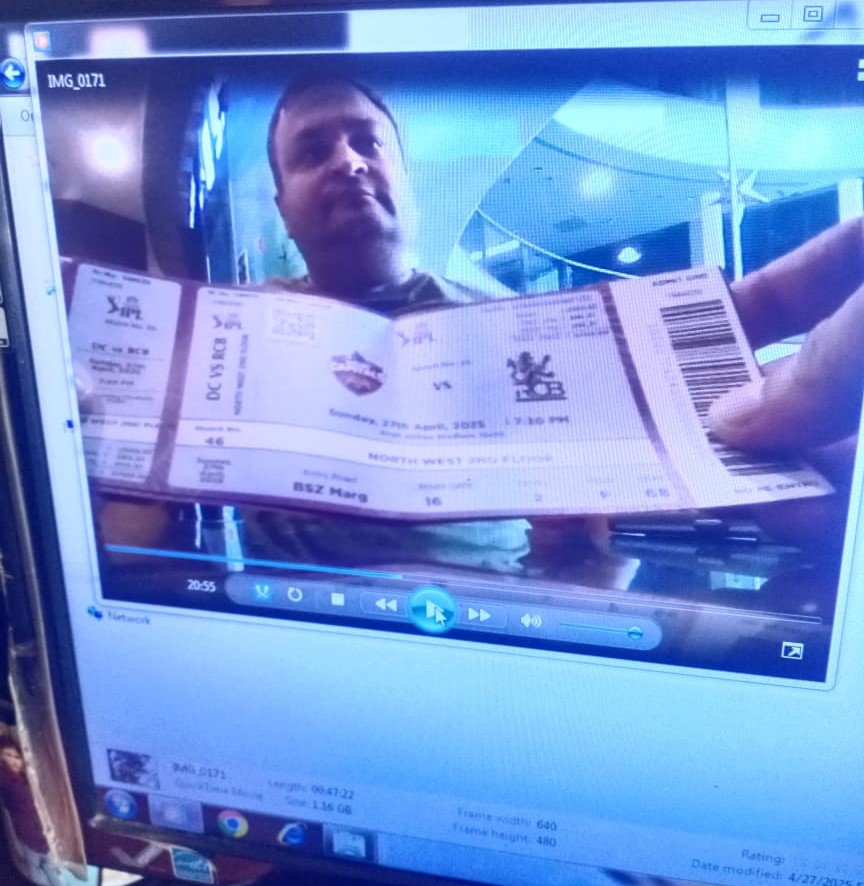
In a bid to substantiate the ongoing investigation, the Tehelka team proceeded to purchase an IPL ticket directly from Pankaj. Although the ticket’s face value was Rs 2,700, Pankaj initially quoted Rs 5,000. After negotiation, he agreed to sell one of the two tickets in his possession for Rs 4,000. The transaction was captured on camera, providing concrete evidence of the black-market sale.

Reporter- Aaj ka to 2700 hai, mujhe kitna dena hoga aaj ka?

Pankaj- 4k de dena koi aapse wo nahi hai.

Reporter- 4000.. theek hai done.

[This deal confirms that Pankaj is part of unauthorised ticket sale racket and also shows how black-market prices are often unfairly high. These practices weaken the official ticketing system.]

In this exchange, Pankaj informs the reporter that while he sold an IPL ticket for Rs 4,000, the same ticket is fetching up to Rs 8,000 near the stadium. He emphasizes that prices escalate as the match approaches, especially for high-demand games like the April 27th clash between Delhi Capitals and Royal Challengers, Bengaluru.

Reporter- Aaj ka ye mehnga hoga?

Pankaj- Bahut menhga hoga… wahan par jaogey stadium par to aur mehnga hoga.

Reporter – Rs 8000?

Pankaj- Aaram se.

[This interaction underscores the rampant black-market trade of IPL tickets, where prices can double or triple based on demand. This also highlights the challenges in regulating ticket sales for major sporting events.]

In this segment, Pankaj presents the Old Club House (OCH) corporate box passes for the April 27th IPL match in Delhi, pricing each at Rs 35,000. He emphasizes that these passes, labelled as complimentary, include buffet services, suggesting a premium experience.

Pankaj- Dekho aaj k match k mere pass ye aa gaye.

Reporter- Old Club House first floor for Rs 35000 each.. aaj ka.?

Pankaj- Haan…Aaj ka.

Reporter- Old Club House AC enclosure…. Rs 35000.

Pankaj- Including buffet.. jab ki ye complimentary pass hai.. is ki price hai Rs 35000.

[The dialogue reveals how passes meant for promotion are being sold for profit, revealing a booming resale market.]

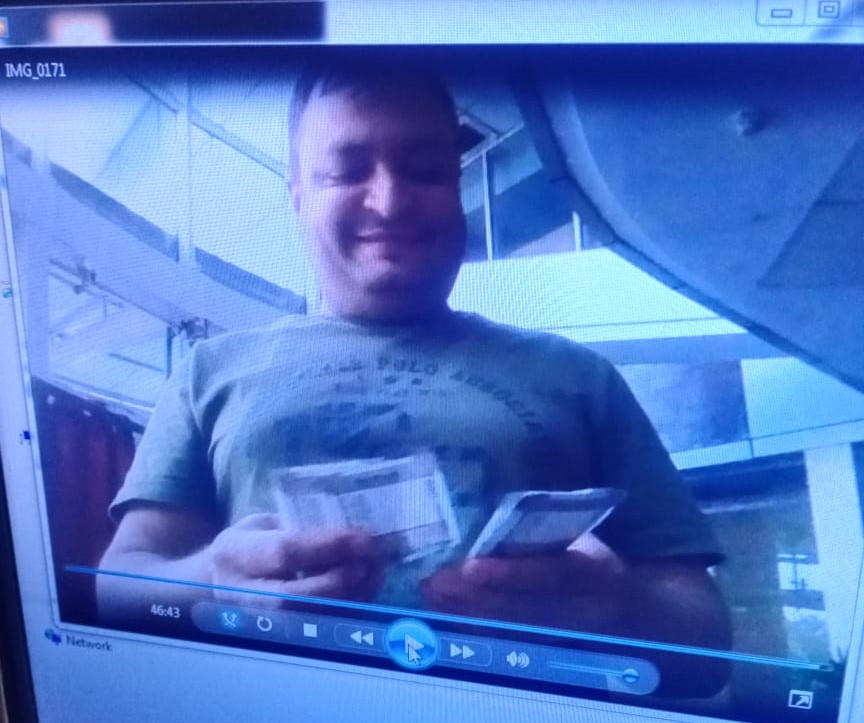
To obtain more conclusive evidence, we purchased two additional standard tickets from Pankaj for the IPL match on April 29th in Delhi, featuring Delhi Capitals and Kolkata Knight Riders. The original price of each ticket was Rs 4,500, totalling Rs 9,000 for both. However, Pankaj charged us Rs 10,000, effectively adding a Rs 1,000 premium. This transaction, conducted on camera, confirms that he sold the tickets in the black market. The payment was made in person, further substantiating the illicit nature of the sale.

Reporter- Iske lijiye sir.

Pankaj- Bas theek hai.

Reporter- Count kar lijiye?

Pankaj- Theek hai.

Reporter- 10 thousand hai.

Pankaj- Haan.. hai sir.

[In a series of interactions with Pankaj, we uncovered how black-market ticket sales worked during the 2025 IPL season. Pankaj detailed how tickets, both normal and corporate, were procured from sponsors and resold at inflated prices. This shows how common black-marketing is in the IPL, where official channels are bypassed, and fans are often exploited.]

The meeting with Pankaj concluded after we agreed to pay him Rs 4,000 after withdrawing cash from an ATM. This payment, captured on camera, was for a single ticket to the IPL match on April 27 in Delhi between Delhi Capitals and Royal Challengers Bengaluru. As previously mentioned, Pankaj sold us this Rs 2,700 ticket in the black market for Rs 4,000. This transaction provided evidence of his involvement in unauthorized ticket sales. Pankaj emphasized that the tickets he provides are genuine, assuring us of their authenticity.

Reporter- Theek hai sir.. ek ticket k paise dene hain mujhe apko..ye to same hai na jo aapne series wali di thi, iska Rs 4000 mujhe pay karna hai.

Pankaj- Haan sir.

Reporter- Deta hoon ATM se nikal kar…bhaiya ATM  hain yahan ?

Pankaj- Haan hain yahan bahut saare.

[This conversation reveals how IPL tickets often change hands through unofficial means, making it hard to keep the process transparent and fair. It underscores the challenges in ensuring transparency and fairness in ticket distribution.] As in previous years, police in Jaipur and Bengaluru have arrested several individuals for selling IPL general tickets on the black market in the on-going season too. However, this year marks a significant development: for the first time, an individual has been caught on Tehelka’s undercover camera selling high-end OCH and West corporate box complimentary passes and tickets in Delhi. These premium passes, which include unlimited buffet and beer and are not intended for resale, were found being openly sold by Pankaj Verma, an official from a prominent airline. This revelation highlights the growing scale of ticket black-marketing operations, highlighting the need for more stringent enforcement and oversight in the distribution of such passes.

Terror, Talks, Red Lines: Operation Sindoor and India’s New Normal

On the night of May 12, Prime Minister Narendra Modi delivered one of the most resolute addresses to the nation, declaring in no uncertain terms: “If Pakistan has to survive, it will have to destroy terror infrastructure. Terror and talks cannot go together. Terror and trade cannot go together. Water and blood cannot flow together.” With these words, the Prime Minister underscored a new national doctrine—every terror attack will be treated as an act of war.

Modi’s speech paid tribute to the armed forces, intelligence agencies, and scientists behind Operation Sindoor, a swift and decisive counter-strike launched on May 6 in retaliation for the brutal April 22 Pahalgam massacre. Twenty-six people, including 25 tourists and a pony operator, were targeted in an attack aimed at fomenting communal unrest. The Prime Minister had then promised retribution that would be “beyond their imagination.” True to his word, Indian jets, within 25 minutes, demolished key assets of Jaish-e-Mohammed and Lashkar-e-Taiba in a joint strike by the Army, Navy, and Air Force.

The operation’s name—Sindoor—was chosen by Modi and is laden with cultural significance. Sindoor, the red vermilion worn by married Hindu women, symbolizes sanctity, identity, and continuity. Many of the men killed in Pahalgam were married Hindus; their widows’ sindoor, metaphorically wiped away by terrorism, found resonance in this symbolic naming. This was not just a military maneuver—it was a cultural assertion and emotional response. The image of two women officers, Colonel Sofiya Qureshi and Wing Commander Vyomika Singh, leading the post-strike press briefing, added to the narrative of resilience and empowerment.

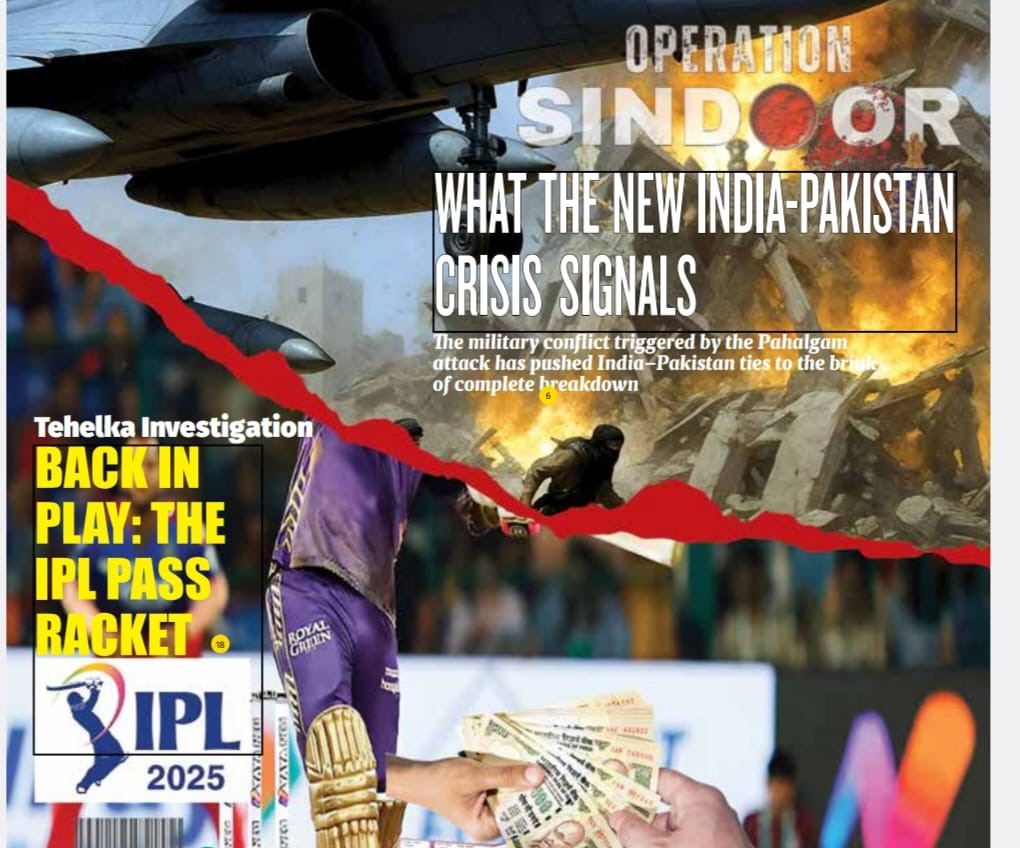
As Tehelka’s Srinagar-based Special Correspondent Riyaz Wani writes in the cover story, “What the New India-Pakistan Crisis Signals,” the moment innocent tourists became targets, a major confrontation became inevitable. New Delhi’s measured, strategic retaliation—avoiding civilian casualties while crippling much of Pakistan’s air capabilities—was a display of both resolve and restraint.

Prime Minister Modi made it clear that any future dialogue with Pakistan would focus solely on terrorism and Pakistan-Occupied Kashmir. He emphasized that the ceasefire was initiated at Pakistan’s request, not under global pressure, quietly silencing speculation around third-party mediation. He also reiterated that India would not succumb to nuclear blackmail and would respond to any provocation on its terms.

Indeed, Operation Sindoor reflects a tectonic shift in India’s counter-terrorism policy—action over appeasement, deterrence over diplomacy. The world has now witnessed a new India, one that matches words with action. The future, as the Prime Minister concluded, will depend entirely on Pakistan’s conduct.

Meanwhile, Tehelka‘s second lead story, “Back in Play: The IPL Pass Racket,” by its Special Investigation Team, reveals how black-market sales of IPL complimentary passes have resurfaced, targeting corporate box seekers despite previous police crackdowns. In another headline-grabbing moment, cricketing legend Virat Kohli announced his retirement from Test cricket, closing a golden chapter in Indian cricket. This came days after another batting great, Rohit Sharma, bid farewell to the longest format. Together, their exits mark the end of an era that redefined India’s standing as a global cricket powerhouse!

Congress flays BJP for ‘politicising’ Operation Sindoor

New Delhi: The Congress has criticised the Bharatiya Janata Party (BJP) accusing it of “politicising” Operation Sindoor for its own benefit. The party has already planned nationwide rallies to demand answers from the Prime Minister, particularly on US President Donald Trump’s claims of mediating a ceasefire between India and Pakistan and the alleged “suspension of the operation”.

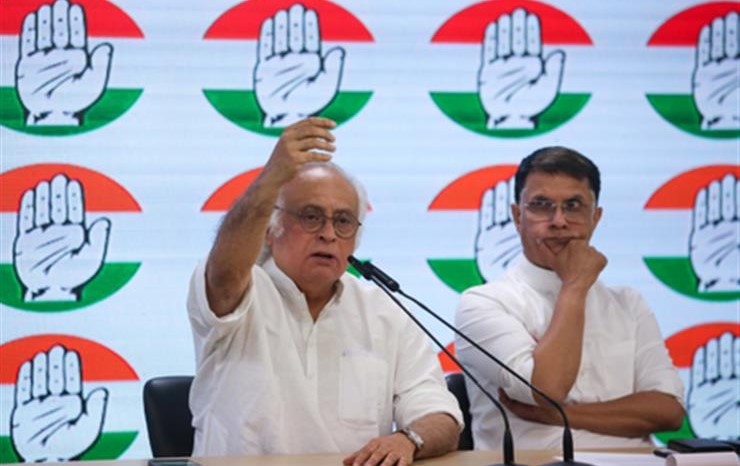
Speaking at a press conference, senior Congress leaders, including Jairam Ramesh and Pawan Khera, voiced their concerns over the “BJP’s attempt to claim credit for a military action that rightfully belongs to the armed forces and the country as a whole”.

The Congress leadership declared its intent to hold ‘Jai Hind’ rallies across different states, with LoP in Lok Sabha Rahul Gandhi expected to lead the movement and address the media later in the week.

Rahul Gandhi, Priyanka Gandhi Vadra, K.C. Venugopal, Sachin Pilot, and other leaders attended the meeting, resulting in a resolution reaffirming the party’s commitment to unity in the wake of the Pahalgam terror attack.

Congress President Mallikarjun Kharge and party MP Rahul Gandhi extended full support to the government and the armed forces.

Congress leaders have also sought a special Parliamentary session to discuss the security situation and reiterate the historic 1994 resolution on Pakistan-occupied Kashmir.

They questioned why Trump made an unprecedented “ceasefire announcement”, while the Prime Minister remained silent.

Further raising concerns, Ramesh pointed to reports that the Prime Minister would meet only NDA chief ministers on May 25, excluding those from opposition-led states. He condemned what he described as the BJP’s strategy of “maximum silence on real issues and maximum politicisation”.

The Congress has repeatedly demanded an all-party meeting chaired by the Prime Minister to clarify India’s stance on external involvement in its security affairs. Despite their calls for unity, they lamented the Prime Minister’s continued reluctance to engage. The party remains firm in its stance against the “politicisation of national security”, demanding transparency and collective resolve.

Defence Minister demands Pakistan’s Nuclear Facility Should Under Global Body Supervision

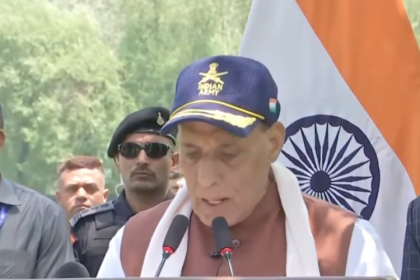
Indian Defence Minister, Rajnath Singh said on Thursday that the present ceasefire understanding is respected by India only as long as no terrorist attack takes place in the country. He also said that it was time that the Nuclear facility of Pakistan was taken over by a global watchdog.

Addressing the Indian Army soldiers at the Badami Bagh Cantonment area of Srinagar city, which is the headquarters of the Army’s 15 Corps, Defence Minister Rajnath Singh said, “Our ‘Operation Sindoor’ is undoubtedly the biggest anti-terrorist operation ever undertaken by India. We hit their chest and left a huge wound on it after they tried to attack our head.”

The Defence Minister started his address by paying homage to the bravehearts of the country who laid down their lives during the recent hostilities between India and Pakistan. He also paid tribute to the 26 people killed by terrorists in Baisaran meadow in Pahalgam on April 22.

“Operation Sindoor is the dream seen by every Indian soldier who aims to track down and destroy terrorism across the border. They tried to break our social fabric by killing innocent civilians after segregating them on the basis of religion. We attacked them on the basis of their evil intentions”, he said.

He also said, “India will not succumb to any Nuclear blackmail by Pakistan as has been proved by the strikes on terror targets by us.

“It is time that the Nuclear facility of Pakistan is taken over by an international body so that their Nuclear bluff is called forever.”

The Defence Minister quoted Swami Tulsi Das and said, “Swami Tulsi Das has said in ‘Ramcharitmanas’ that whenever intentions are noble and honest there is peace and prosperity and whenever intentions are evil and vengeful, misery and violence becomes their destiny.”

Rajnath Singh also quoted poet Ramdhari Singh Dinkar and said, “National poet Ramdhari Singh Dinkar has said nobody wants to be afflicted by disease, but once disease inflicts a person, serving him sweets will not cure him. Hard remedies have to be sought and used.

“India has always stood for peace, but when our sovereignty and integrity is challenged we have to make hard choices.”

The Defence Minister added that Pakistan had assured Atal Bihari Vajpayee that they would not allow their soil to be used for terrorism but they did not fulfil that commitment.

“Let me tell you that the present understanding is based on the assurance that no terrorist activity will be undertaken from across the border. I know there was huge anger in your hearts and in every heart across the country. I must commend you for not letting that anger overtake you.

“You have avenged the innocent killings of civilians by hitting the right targets,” Rajnath Singh said.

“Where has Pakistan landed itself today? It is said that the line of beggars begins from where Pakistan stands. They begged to get the IMF loan while India is among those countries who give funds to IMF to be given to poor countries.

“If any terror attack takes place in our country then our revenge and message will go a long way. The Prime Minister has already redefined the country’s response to terrorism.

“A new normal has been created and this will be resorted to by us whenever there is a terror attack in India”, the Defence Minister asserted.

He said the Prime Minister Modi had made it clear that terror and talks will not go together.

“The only talk with Pakistan would be about Pakistan-occupied-Kashmir”, the Defence Minister reiterated.

Rajnath Singh said it was a fulfilling experience for him to be among the brave soldiers of the country who made the nation proud.

Jammu and Kashmir Chief Minister Omar Abdullah, Army chief General Upendra Dwivedi, GoC-in-C Northern Command Lt Gen Pratik Sharma, GoC of 15 Corps Lt Gen Prashant Srivastava and other senior Army officers were present during the Defence Minister’s address.

Our relations, our dealings with Pakistan will be strictly bilateral says EAM Jaishankar

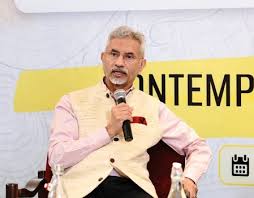
Making India’s longstanding position clear once again, External Affairs Minister (EAM) S. Jaishankar on Thursday said that any issues pertaining to Pakistan will be dealt with Islamabad bilaterally.

“Our relations, our dealings with Pakistan will be bilateral and strictly bilateral. That is the national consensus for many years and there is absolutely no change in that consensus, ” EAM Jaishankar told reporters after the inauguration of Embassy of Honduras in New Delhi.

Over the last few days, US President Donald Trump has repeatedly referred to the India-Pakistan conflict essaying his role as a peacemaker who is committed to resolving conflicts in the world.

Earlier this week, the Ministry of External Affairs (MEA) had cleared that any issues pertaining to the Union territory of Jammu and Kashmir have to be addressed by India and Pakistan bilaterally.

“That stated policy has not changed. As you are aware, the outstanding matter is the vacation of illegally occupied Indian Territory by Pakistan, ” MEA spokesperson Randhir Jaiswal told reporters during a weekly media briefing.

The EAM also emphasised that India has achieved “key goals” that it set out to do by destroying the terrorist infrastructure during Operation Sindoor.

“I think the Prime Minister made it very clear that the only talks with Pakistan will be on terror. Pakistan has a list of terrorists who need to be handed over, they have to shut down the terrorist infrastructure. They know what to do. We are prepared to discuss with them what is to be done on terrorism. Those are the talks which are feasible, ” stated EAM Jaishankar.

Spelling out India’s position on a host of issues following the highly-successful Operation Sindoor, Jaishankar highlighted that New Delhi received massive international support after the heinous Pahalgam terror attack on April 22 which resulted in the death of 26 innocent civilians.

The Resistance Front (TRF), an international terrorist organisation affiliated to the Pakistan-based Lashkar-e-Toiba (LeT), owned responsibility for the killings.

“Let me say a few things here. One, we actually got a lot of international support. Many ministers, many leaders called the Prime Minister, and many ministers called me as well. We had a Security Council resolution which very clearly stated that the perpetrators of this attack should be held accountable. On the morning of May 7, we held them accountable through the action that was taken through Operation Sindoor, ” the EAM said.

Delhi High Court asks NIA to file response to Engineer Rashid’s bail plea

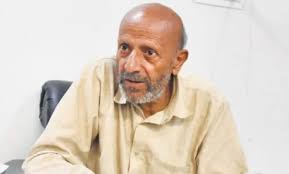
Delhi: The Delhi High Court on Thursday sought the response of the National Investigation Agency (NIA) to jailed MP Engineer Rashid’s application moved in a terror funding case against him by the investigating agency.

The Bench of Justice Subramonium Prasad and Justice Harish Vaidyanathan Shankar issued the notice to NIA on Rashid’s appeal challenging a trial court’s refusal to grant him regular bail in the matter.

Rashid has been in jail since 2019 in the terror funding case under the Unlawful Activities (Prevention) Act (UAPA).

In 2024, Rashid won the Baramulla Lok Sabha seat by defeating incumbent Jammu and Kashmir Chief Minister Omar Abdullah by over two lakh votes.

He was later granted interim bail to campaign during the Jammu and Kashmir Assembly elections.

In March this year, Additional Sessions Judge, Chander Jit Singh of Patiala House Court denied regular bail to the MP. Rashid has previously also been granted custody parole to attend the Parliament proceedings.

On Thursday, the High Court also heard a plea filed by Rashid to challenge the criminal charges framed against him by the trial court. NIA objected to this plea, stating that it had been filed after a considerable delay.

“There is a substantial delay in this matter. There is a delay of 1100 days”, Special Public Prosecutor (SPP) Akshai Malik submitted.

Senior Advocate Siddharth Luthra, who also appeared in the matter for the NIA and argued, “The mandate of law is that delay beyond 90 days cannot be condoned. He will have to explain the grounds for the delay. There is a substantial delay. This is something I am opposing.”

In response, the counsel representing Rashid argued that the delay can be condoned by the Court.

“90-day period is not sacrosanct and the power to condone is with the Court, especially when matters relate to life and liberty,” he said.

The Court asked that a reply be filed on the limited point of condonation of delay and listed the matter for hearing on July 29. Advocates Aditya Wadhwa and Vikhyat Oberoi represented Engineer Rashid.

J&K CM visits shelling-hit Uri, assures relief and bunkers

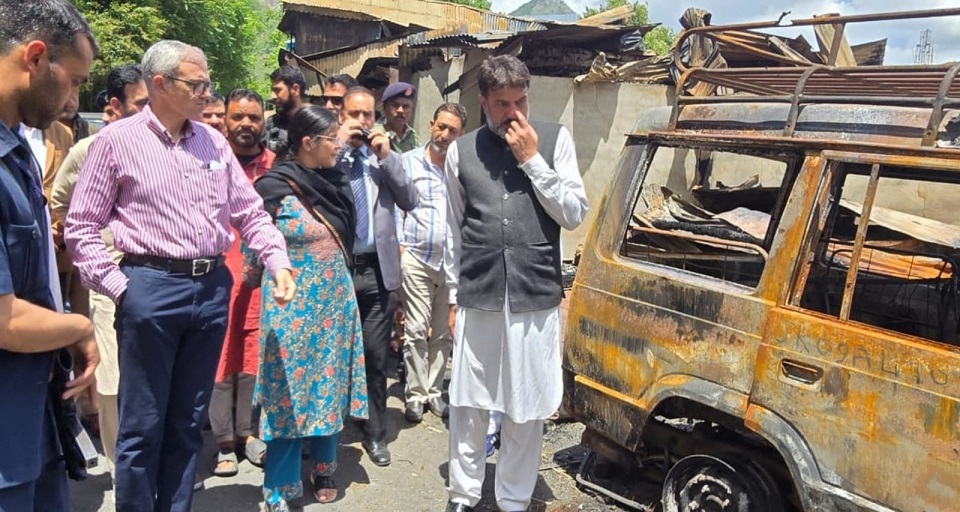
Srinagar- Jammu and Kashmir Chief Minister Omar Abdullah on Wednesday visited shelling-affected areas in Uri and assured government help to rebuild damaged homes. 

“The pain of my people is deeply personal,” he said.

Abdullah, accompanied by his advisor Nasir Aslam Wani and local officials, visited Salamabad, Lagama, Bandi, and Gingal in north Kashmir’s Baramulla district. Interacting with affected families, he said, “It is our responsibility to provide you with help from the government so that your houses are rebuilt.”

He promised to raise the demand for individual bunkers with the Centre. “Wherever I went, be that in Jammu or Kashmir, there is a demand for more bunkers… we will immediately provide relief to the people first and then take up the issue,” he said.

On X, Abdullah posted, “This land has endured so much, from the impact of the 2005 earthquake to the pain of cross-border shelling. Yet, its people rise every time, with courage in their hearts and resilience in their spirit.”

Referring to the intensity of the recent shelling, he said, “There was ruthless shelling on our civilian areas for 2-3 days. It seemed that there was a deliberate attempt from across to inflict maximum harm on the civilians.”

He also met the family of Nargis Begum, who died in the shelling. “No words can express the depth of their grief or the magnitude of this tragedy. We stand with them in this hour of grief,” he wrote on X.

People from all walks of life show solidarity with Armed Forces in Capital

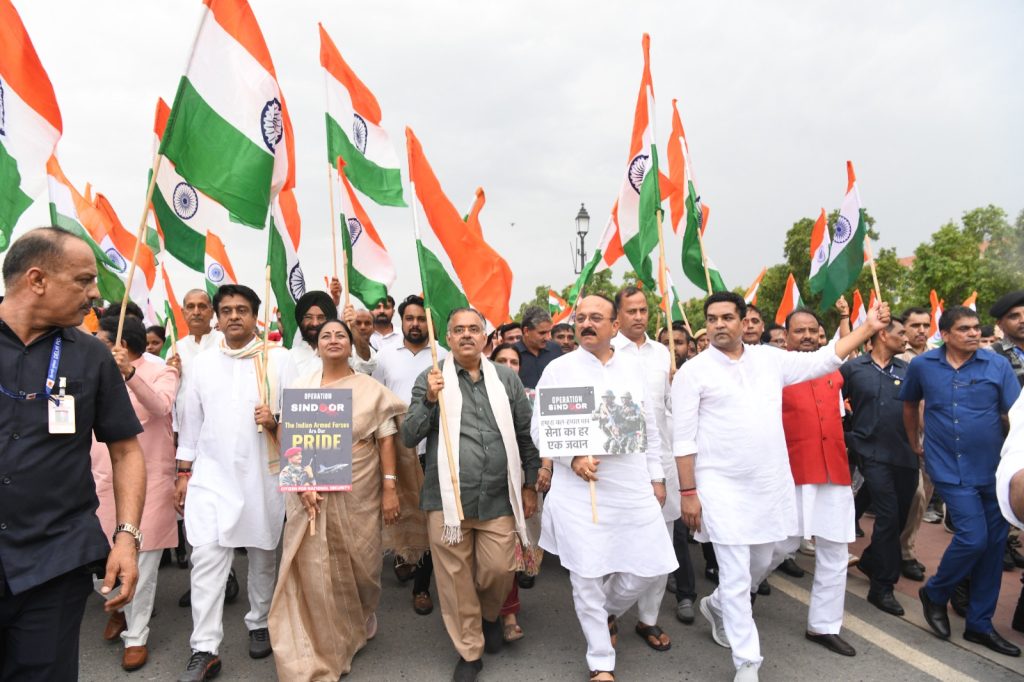
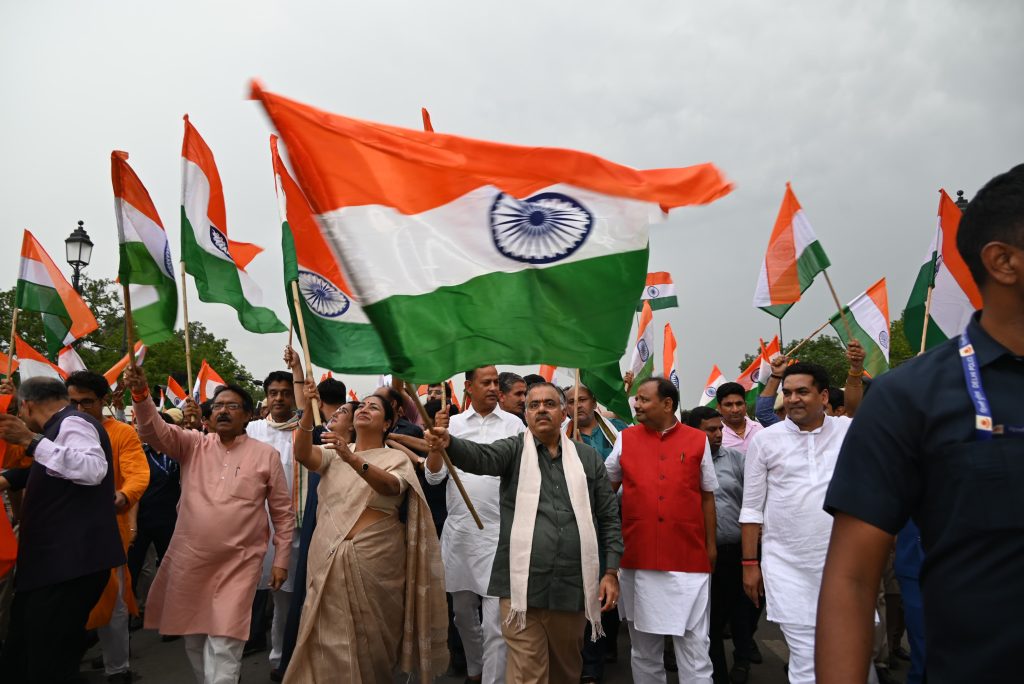
A large number of tricolours were swept through New Delhi on Tuesday evening with thousands of people gathering at India Gate, participating in the Tiranga Shaurya Samman Yatra, organized by the Delhi government to honour the Indian Armed Forces in the backdrop of Operation Sindoor.

The huge gathering marched from Kartavya Path to the National War Memorial. The participants included people from all walks of life including schoolchildren, NCC cadets, civil defence volunteers, doctors and others. They were chanting slogans such as ‘Vande Mataram’ and Bharat Mata Ki Jai.

The Yatra was led by Chief Minister Rekha Gupta and many senior BJP leaders including Union Minister of State Harsh Malhotra, MPs Manoj Tiwari and Ramvir Singh Bidhuri, Bansuri Swaraj, Delhi Government Minister Pravesh Sahib Singh, Manjinder Singh Sirsa, Ashish Sood, Kapil Mishra, NDMC Vice-Chairman Kuljeet Singh Chahal, several MLAs, municipal councillors, and senior Delhi BJP officials.

Rekha Gupta stated that the Tiranga Yatra represents Delhi’s support for Prime Minister Narendra Modi’s strong stand against Pakistan-sponsored terrorism.

She said, “Our brave soldiers have sent a message across Pakistan with their courage at the border — that India will no longer remain silent in the face of terror. Prime Minister Narendra Modi has also declared that now, any kind of firing or attack from Pakistan will be treated as an act of terrorism and met with a befitting reply.”

BJP General Secretary Tarun Chugh stated, “India has changed. This new India desires peace but is ready to go to any extent for the total eradication of terrorism.” He said under PM Modi’s leadership, the country has made it clear that India will not tolerate any form of nuclear threat.

“Terror and talks cannot go together. The facade of ‘terror and trade’ is over. Whenever there is bloodshed, water will be stopped. Operation Sindoor is paused, not ended. Now, any dialogue with Pakistan will only be about Pakistan-occupied Kashmir or the complete eradication of terrorism,” Chugh added.

BSF Jawan repatriated to India

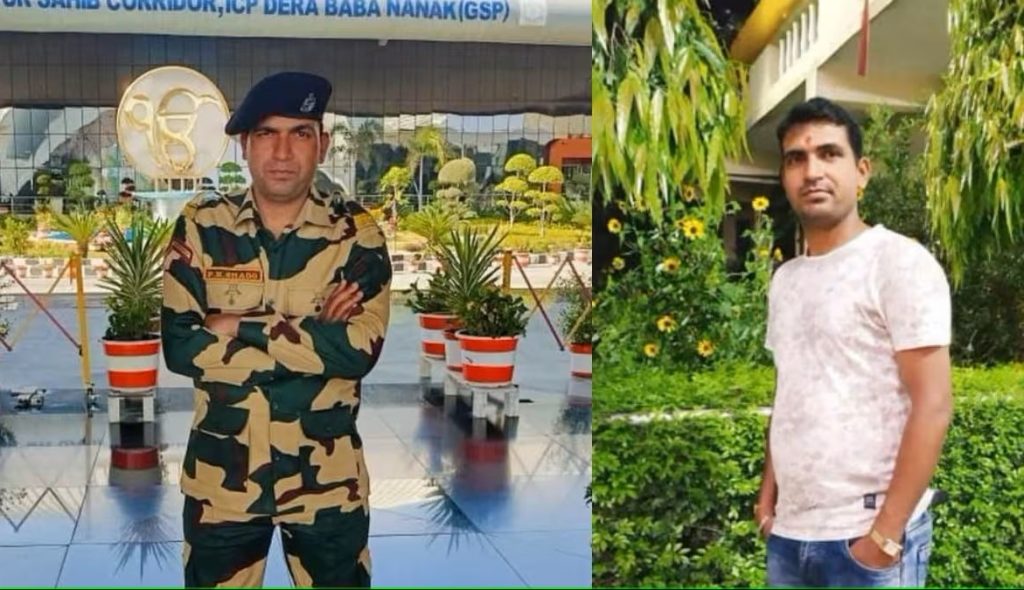
The family of a BSF jawan heaved sigh of relief when he was repatriated to India through the land transit route of Attari Wagah border of Indo-Pak here today.

In a statement issued here today by the BSF stating “Today BSF Jawan Purnam Kumar Shaw, who had been in the custody of Pakistan Rangers since 23 April 2025, was handed over to India at about 1030 hours through the Joint Check Post Attari, Amritsar. The handover was conducted peacefully and in accordance with established protocols”. 

MOST POPULAR

HOT NEWS