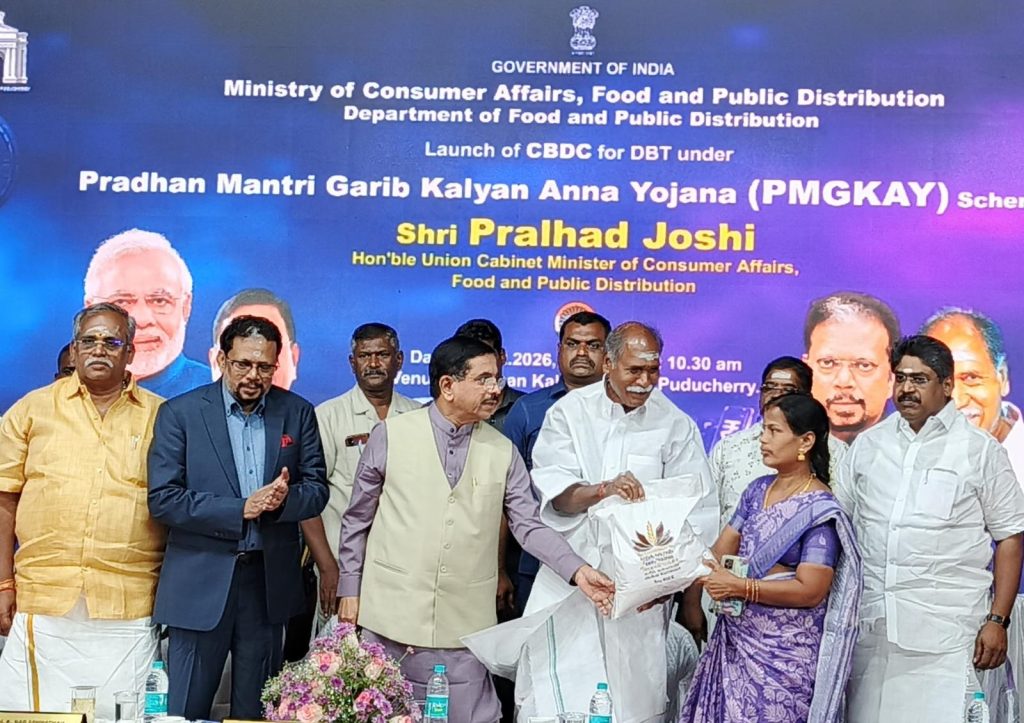
In a first-of-its-kind reform in India’s welfare architecture, the Centre has launched a Central Bank Digital Currency (CBDC)-based “Digital Food Currency” pilot project integrating the digital rupee into the Public Distribution System (PDS) when Union Minister for Consumer Affairs, Food and Public Distribution Pralhad Joshi inaugurated it.
Under the initiative, food subsidy will be credited directly to beneficiaries as programmable digital currency —issued by the Reserve Bank of India. These digital tokens, stored in CBDC wallets, can be redeemed exclusively for entitled food grains at Fair Price Shops and authorized merchants, ensuring purpose-bound use of subsidy funds.
Calling it a “transformative milestone” in India’s food security framework, Joshi said the integration of CBDC into PDS would enhance transparency, efficiency and accountability while empowering beneficiaries. “Every grain, every rupee, every entitlement,” he said, outlining the government’s vision to ensure that more than 80 crore beneficiaries receive their entitlements seamlessly.
Officials said the system addresses persistent challenges such as biometric authentication failures and e-POS connectivity issues by enabling secure, real-time and traceable transactions. The model also accommodates feature phone users, widening its accessibility.
PMGKAY, described by the Centre as the world’s largest food security programme, provides free foodgrains — including wheat, rice and millets — to eligible beneficiaries. According to the Minister, international assessments have recorded that nearly 25 crore people have moved out of multidimensional poverty over the past decade, aided in part by sustained welfare interventions. Surveys, he added, indicate that household food expenditure has declined significantly due to free grain distribution, allowing families to redirect savings towards milk, vegetables and other nutritional needs.
The pilot builds upon India’s digital welfare backbone — the Jan Dhan-Aadhaar-Mobile (JAM) trinity — and follows years of digitisation reforms in food distribution. These include nationwide portability under One Nation One Ration Card (ONORC), Aadhaar-enabled e-POS systems, the Rightful Targeting Dashboard, supply-chain optimisation through Ann Chakra, and grievance redressal via Ann Sahayata.
With the digital rupee now entering ration shops, the government is positioning CBDC not merely as a financial innovation but as a governance tool — one that could redefine how subsidies are delivered at the last mile.
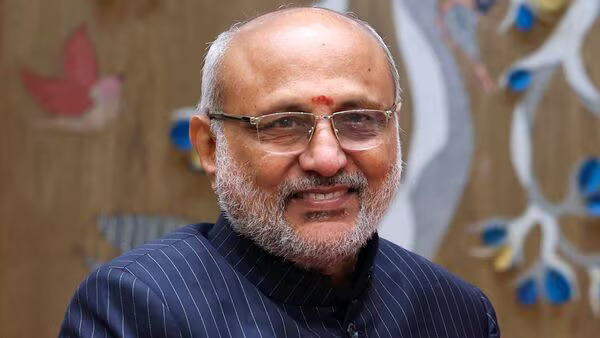
Vice President C P Radhakrishnan on Thursday said respecting the sentiments of others lies at the heart of democracy, as he addressed students during his maiden visit to Kashmir and declared, “Yeah hum sabka Kashmir hai” (this is Kashmir for all of us).
The Vice President was speaking as chief guest at the 21st convocation ceremony of University of Kashmir in Srinagar.
Emphasising democratic values, Radhakrishnan said, “We are democrats. We have to accept the sentiments of others.” He underlined that in a democracy, respecting the sentiments of others is as important as respecting one’s own.
Recalling his tenure as Governor of Jharkhand, he said, “When I was Jharkhand Governor, ‘Ek Bharat Shreshtha Bharat’ programme was introduced. A team of young J&K students had visited Ranchi. I asked Raj Bhavan people to serve all non-vegetarian food to them. I know most of them are non-vegetarians, though I am a vegetarian,” he said. “Why am I telling you this? We are democrats. We have to accept the sentiments of others,” he added.
The Vice President also urged the country to shed what he described as a colonial mindset in order to become a global leader in innovation. Encouraging graduating students to develop solutions rooted in Indian knowledge systems and local needs, he said, “We need not feel inferior. We must first throw out our colonial mindset.”
Praising the Prime Minister’s special scholarship scheme for students from Jammu and Kashmir, he said the initiative strengthens national integration. “By enabling students to study in institutions across the country, he said, the scheme deepens emotional bonds and unity. When places are connected, people are connected. When people are connected, hearts are closely connected”.
Advising students on the responsible use of technology, Radhakrishnan cautioned against overdependence on social media. “You should always be mindful of social media usage. It has to be controlled. You should not become addicted to anything, including social media,” he said.
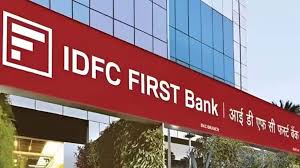
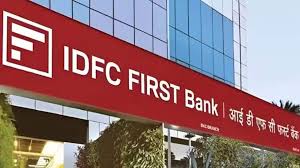
Private lender IDFC First Bank has disclosed an alleged fraud of Rs. 590 crore at its Chandigarh branch involving accounts of the Haryana Government, prompting swift action from the state’s Finance Department, including the immediate delisting of two private banks from government business.
In a communication to the National Stock Exchange of India and the Bombay Stock Exchange, the bank said it had identified an aggregate amount of Rs. 590 crore “under reconciliation” across certain accounts at the branch. The discrepancy came to light after the state’s Development and Panchayats Department sought closure of its accounts and transfer of funds to another bank, following which a mismatch was detected between the account balance and departmental records on February 18.
The bank stated that four suspected officials have been placed under suspension pending investigation. It has also appointed an independent external agency to conduct a forensic audit and filed a complaint with the police. The lender indicated that the alleged fraud was committed by its employees and “potentially” involved other parties.
Acting on the disclosure, the Haryana Finance Department has delisted IDFC First Bank and AU Small Finance Bank from handling government business with immediate effect. All departments have been directed to close their accounts in these banks and transfer funds to other approved institutions.
Official sources said the Crime Branch has been asked to examine the matter, and the government is considering registration of an FIR.
An internal communication from the Development and Panchayats Department reportedly flagged irregularities in two accounts opened under the MMGAY-2.0 (Mukhya Mantri Gramin Awas Yojana) scheme in the two private banks. Detailed scrutiny of account statements revealed unauthorised credit and debit transactions despite no corresponding instructions from the department.
The letter also noted that similar unauthorised transactions were observed in accounts of two other departments.
The state government has constituted a committee to conduct a detailed inquiry into the matter. Meanwhile, the Finance Department has instructed all Administrative Secretaries to open accounts only in nationalised banks. Opening accounts in private or corporate banks will now require prior approval.
The department warned that any accounts opened in violation of prescribed procedures will be treated as “irregular and liable to immediate closure.” Non-compliance may attract administrative and financial action under applicable government rules.
Additionally, all boards, corporations and departments have been directed to reconcile their bank accounts in line with prescribed norms by March 31.
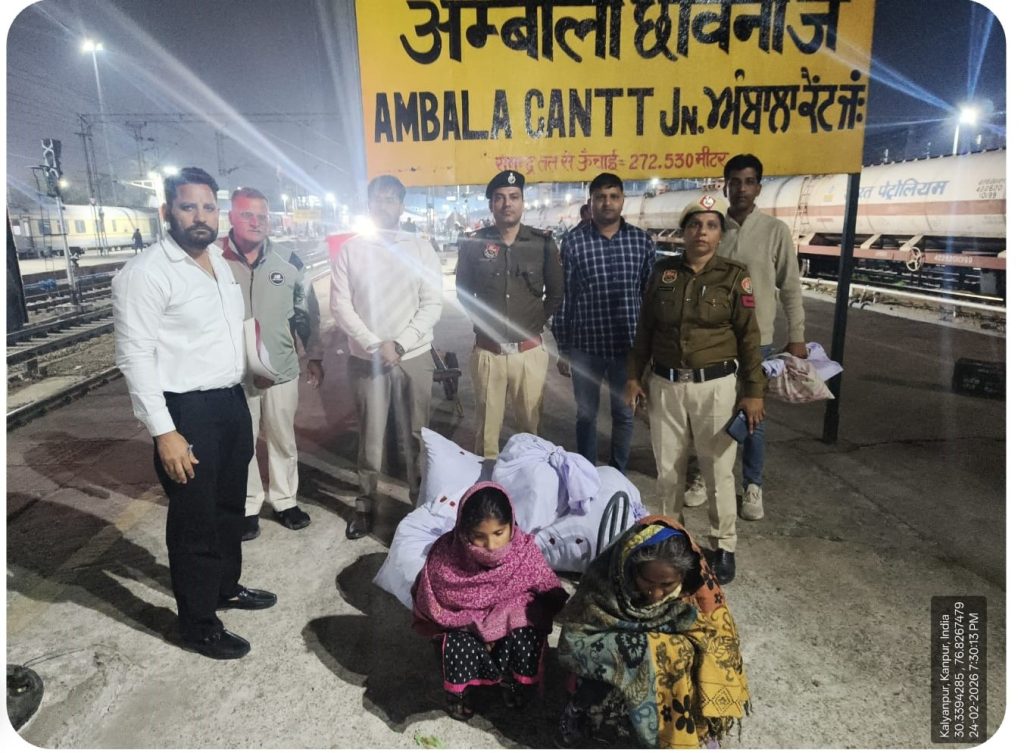
The arrested accused have been identified as Makhni Devi, wife of Bilatu Mandal, and Anjana Kumari, wife of Vibhansh Kumar, residents of Village Puwari Tola, Nawabganj, Police Station Kursela, District Katihar (Bihar).
Haryana Director General of Police Ajay Singhal stated that Haryana Police is working with full commitment to make the state drug-free. He said that a zero-tolerance policy has been adopted against drug traffickers, and coordinated and continuous action is being taken to eliminate the drug network from its roots. He appreciated the alertness and professional approach of the GRP team. He stated that such operations will not only curb drug trafficking but will also help protect the youth from the menace of drugs.
GRP Superintendent of Police Nitika Gehlot informed that a special checking campaign was being conducted at Ambala Cantonment Railway Station under the leadership of Inspector Sanjay Kumar, In-charge CIA GRP Haryana, keeping security and vigilance in view. Upon receiving specific intelligence regarding drug trafficking, a special team was constituted comprising Assistant Sub-Inspector Manjeet Singh, ASI Satbir Singh, ASI Parmeshwar Nath, Head Constable Rocky, Kulbir Singh, Constables Dharmender, Yogesh, Satish, and Women Head Constables Kulwant Kaur and Neeru.
During the check, the activities of two women appeared suspicious to the police team. On suspicion, three large bags and one backpack in their possession were searched as per due procedure, leading to the recovery of a total of 55 kg 670 grams of ganja from all four bags. The recovered quantity falls under the category of ‘commercial quantity’. In this regard, a case has been registered under the NDPS Act at Police Station GRP Ambala Cantonment, and both accused have been arrested. The accused were produced before the court and have been taken on a six-day police remand.
During preliminary interrogation, accused Anjana Kumari disclosed that she had brought the ganja from Gorakhpur and was taking it along with her mother-in-law, Makhni Devi, to Dhanas (Chandigarh). The GRP is conducting a detailed investigation into the backward and forward linkages of the case to identify the main supplier and other persons involved in this illegal network, and to ensure strict legal action against them
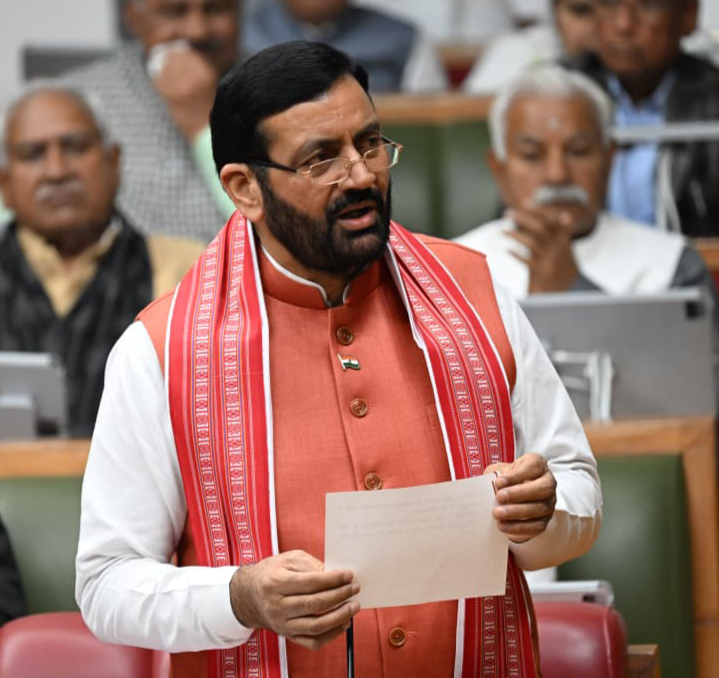
Haryana Chief Minister Nayab Singh Saini today made a significant announcement during the ongoing budget session of the Haryana Legislative Assembly informing that the government, in a meeting held on February 24 , approved the final alignment for the Gurugram-Faridabad-Noida-Greater Noida Namo Bharat RRTS-cum-Metro Corridor.
Describing the project, the Chief Minister said that it will be a 64 -kilometer-long corridor , of which approximately 52 kilometers are in Haryana. This is not just a new rail line , but a transformative step that will integrate major economic centers like Gurugram , Faridabad, and Noida within the NCR region . It will provide fast and seamless travel options to millions of commuters, while also addressing traffic congestion and having a positive environmental impact.
The Chief Minister informed the House that an integrated RRTS and Metro section of approximately 14.5 kilometers has been planned in the Gurugram area, from IFFCO Chowk to Gwal Pahari. This section will include important stations such as Sector 29, Millennium City Centre , Sector 52, Wazirabad , Sector 57 , and Sector 58/61 . It will connect with the Delhi Metro’s Yellow Line , the Gurugram Metro Corridor, and the Rapid Metro, providing multi-modal connectivity to commuters. Its objective is not only to reduce travel time but also to integrate the entire city’s transit network.
Similarly, in the Faridabad region, an integrated section of approximately 16 kilometers from Sainik Colony to Badshahpur has been approved , which will include the NIT area , Bata Chowk , Sectors 12 to 15 , and major parts of New Faridabad. Connecting with the Delhi Metro’s Violet Line, it will further strengthen regional connectivity and spur industrial and residential development.
The Chief Minister said that our government has prioritized not only infrastructure in this project , but also citizen convenience and environmental balance. It has been decided to install noise barriers on viaducts being constructed within cities , so that the quality of life with modern transportation is not affected and people can get relief from noise pollution.
He said that this project will bring new opportunities for investment, employment, and balanced urban development to Haryana. Given the growing population and traffic pressure in cities like Gurugram and Faridabad, this corridor is being designed with future needs in mind. The Chief Minister said that he assures the House that the DPR will be finalized expeditiously, and work will be expedited to provide world-class, safe, and modern public transportation to the citizens of Haryana. This is not just a transportation project, but a powerful step that will connect Haryana’s future.
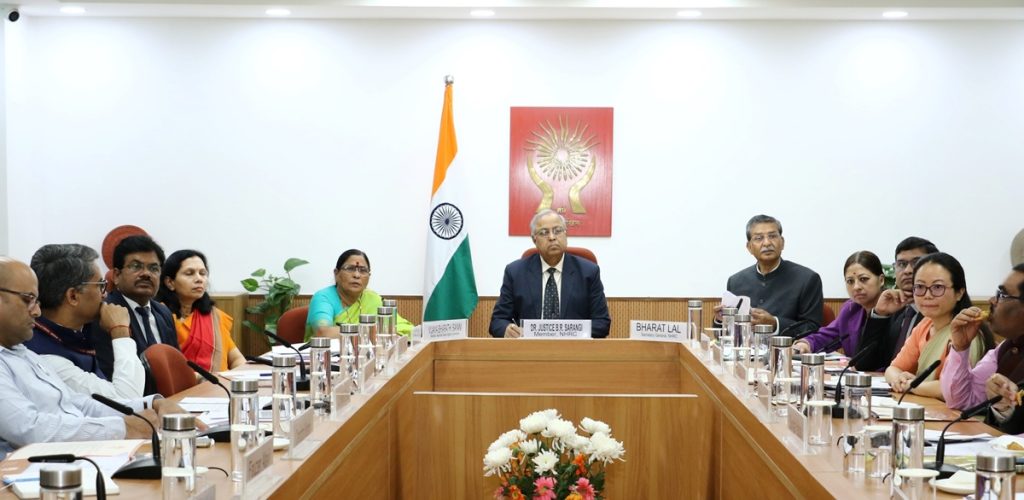
The National Human Rights Commission (NHRC), India today organised an open house discussion in hybrid mode on ‘Rethinking Beggary: Bridging Gaps between Policy, Practice and Dignity.’
Justice Sarangi said that begging is a social evil and continues to remain a serious social concern in the country. He remarked that the persistence of begging, even in a nation that is today among the world’s largest economies, reflects a deeper structural and social challenge that requires urgent and sustained attention. He described begging not merely an economic issue but a social malady that affects the dignity and constitutional rights of vulnerable sections of society.
He emphasised that the Constitutional promise of the Right to Equality before law under Article 14 must be meaningfully realised for all citizens, including those engaged in begging. He said that every individual is entitled to live a safe, secure and dignified life. He noted that several states have enacted legislation addressing begging. However, mere existence of legal provisions is insufficient unless there is an assessment of the actual outcome of such legislations, particularly in terms of rehabilitation, reintegration and measurable improvements on the ground.
Justice Sarangi stressed the need to examine whether the intended objectives of the NHRC Advisory (2024) concerning the protection and rehabilitation of impoverished, uneducated children, women and differently-abled persons engaged in begging and SMILE-B Scheme (Support for Marginalised Individuals for Livelihood and Enterprise) of the Government of India have translated into meaningful change. He emphasised review of the progress of these measures and identifying gaps in execution. He said that reducing and eventually eliminating begging requires a rights-based, rehabilitation-oriented strategy grounded in constitutional values of equality, dignity and social protection.
NHRC, India Member, Vijaya Bharathi Sayani emphasised the urgent need for a coordinated national strategy with clear timelines and accountability mechanisms to address issues related to women, children and labour in the context of beggary. She stressed the importance of developing a national portal and conducting a comprehensive data survey, stating that without reliable data, effective policymaking is not possible. She also called for strict action against beggary mafias and trafficking networks and underlined that long-term rehabilitation must be prioritised over short-term, temporary measures.
In his address, NHRC, India Secretary General, Bharat Lal emphasised that India is known for its strong legal framework and constitutional values, which provide a robust foundation for ensuring dignity and rights for all citizens. However, he underlined that government officials alone cannot achieve this objective and they must work in close collaboration with NGOs and civil society organisations. He further observed that while the government often operates through sectoral programmes, there is a need to adopt a bottom-up approach – addressing issues one sector at a time while keeping the larger objective of social inclusion in focus.
Yogita Swaroop, Senior Economic Advisor, Ministry of Social Justice and Empowerment highlighted the 2011 Census data on persons engaged in begging and outlined key initiatives, including the SMILE Scheme, aimed at their rehabilitation, education and skill development. She also apprised the gathering of the Government’s compliance with the directions of the Supreme Court in cases related to beggary and reiterated the vision of a “Begging-Free India,” focused on dignity and sustainable reintegration.
Shailendra Singh, Deputy Director General, Unique Identification Authority of India (UIDAI), highlighted UIDAI’s initiatives to provide Aadhaar to destitute persons, particularly children and persons with disabilities, enabling them to access government welfare schemes. He informed the participants about two Standard Operating Procedures (SOPs) issued in consultation with the Ministry of Women and Child Development and the Ministry of Social Justice and Empowerment to streamline enrolment. He emphasised the need for wider dissemination of these procedures, along with UIDAI’s outreach camps in shelter homes.
Mohd. Tarique, Founder of Koshish Trust said that there needs to be a change in the perspective of state authorities in dealing with beggars. He stressed the importance of training and capacity-building of officials to ensure a more sensitive and effective approach.
Before this, setting the agenda for the meeting, NHRC, India Joint Secretary, Saidingpuii Chhakchhuak provided an overview of the three technical sessions including ‘Addressing the Scope and Challenges of Beggary,’ ‘Data, Documentation and Ground Realities’ and ‘Rehabilitation, Employment and Long-Term Solutions.’
Some participants suggested undertaking a nationwide survey and hotspot mapping exercise to generate disaggregated, real-time data (gender, age, disability, region); accelerating Aadhaar enrolment through camp-based outreach in shelters and hotspots, ensuring inclusion of children and persons with disabilities; initiating strict action against organised beggary rackets and trafficking networks and formalising partnerships with NGOs for identification, outreach, counselling and last-mile delivery.
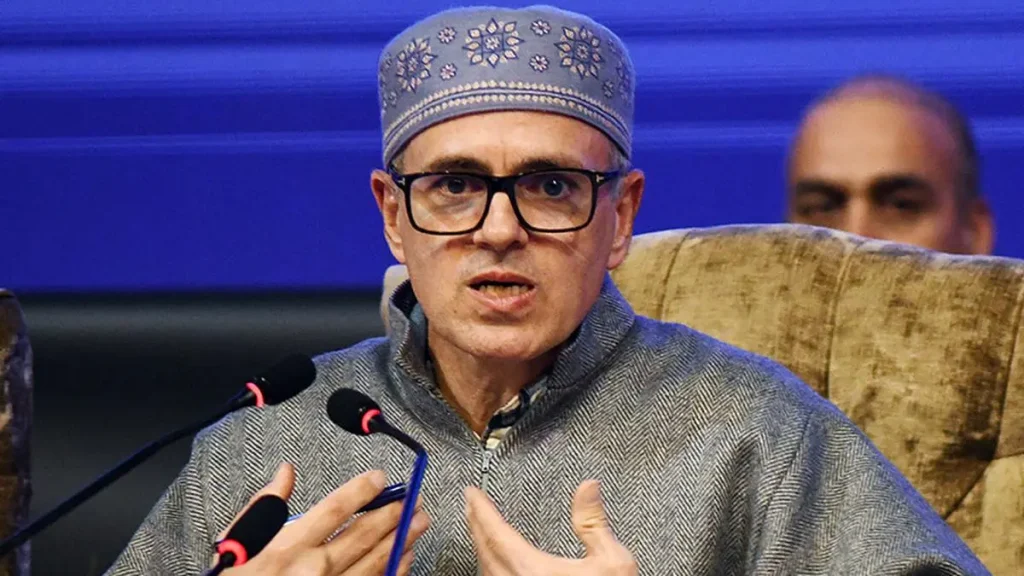
Chief Minister Omar Abdullah on Monday advocated the introduction of artificial snow generation systems in Gulmarg, saying the move was essential to safeguard winter sports and sustain tourism in the face of changing snowfall patterns.
Addressing the inaugural ceremony of the 6th edition of the Khelo India Winter Games (KIWG)-2026, the Chief Minister said climate variability was posing serious challenges to traditional winter games in the region. He welcomed athletes and officials, underlining the need to adapt infrastructure planning to evolving weather conditions.
“The recent snowfall patterns have become unpredictable which force the authorities to rethink long-term planning for winter sports infrastructure,” the CM said.
He reiterated the government’s commitment to developing Gulmarg into an international skiing destination and ensuring uninterrupted sporting activities despite climate-related disruptions.
“Reliance solely on natural snowfall is no longer sustainable. There is a need for the introduction of artificial snow generation systems to secure the future of winter games,” CM Omar said.
Acknowledging concerns surrounding artificial snow projects, he maintained that such steps were necessary to prevent setbacks to tourism and allied sectors.
“Such an initiative will also protect the livelihoods linked to winter tourism. Time has come for us to move towards artificial snow generation. I understand concerns about water and electricity usage, but if we do not create this infrastructure, a day may come when we will not even be able to ski in Gulmarg, and that would be truly unfortunate,” the CM said.
Highlighting the economic dependence of locals on winter tourism, he said several stakeholders directly rely on seasonal snowfall.
“People associated with tourism like sledge operators, ski guides, ski instructors, ATV drivers, all make their living from this snow,” CM Omar said.
“It is our duty to provide the means and infrastructure that promote tourism and ensure its sustenance,” he added.
The Chief Minister said the administration would provide all possible support to athletes and upgrade sports infrastructure to groom more international-level competitors from Jammu and Kashmir. He congratulated skier Arif Khan for his achievements and expressed hope that more sportspersons would rise through such events.
He also stressed that participation in sports was as significant as winning medals.
“Sustained investment in winter sports and tourism will position Gulmarg among leading global skiing destinations while ensuring economic stability for local communities,” CM Omar said.
Later, speaking to reporters on the sidelines of the event, he asserted that artificial snow generation had become inevitable.
“No matter how many winter games there are, they are not possible without artificial snow. Yesterday, in Italy the closing ceremony of the Winter Olympics was held and without artificial snow, these Olympics would not have been possible,” the CM said.
He added that similar facilities must be created in Gulmarg.
“It has to be done in both ways- one is for sports, so that one day, we are also in a medal position there and secondly, for tourism,” CM Omar said.
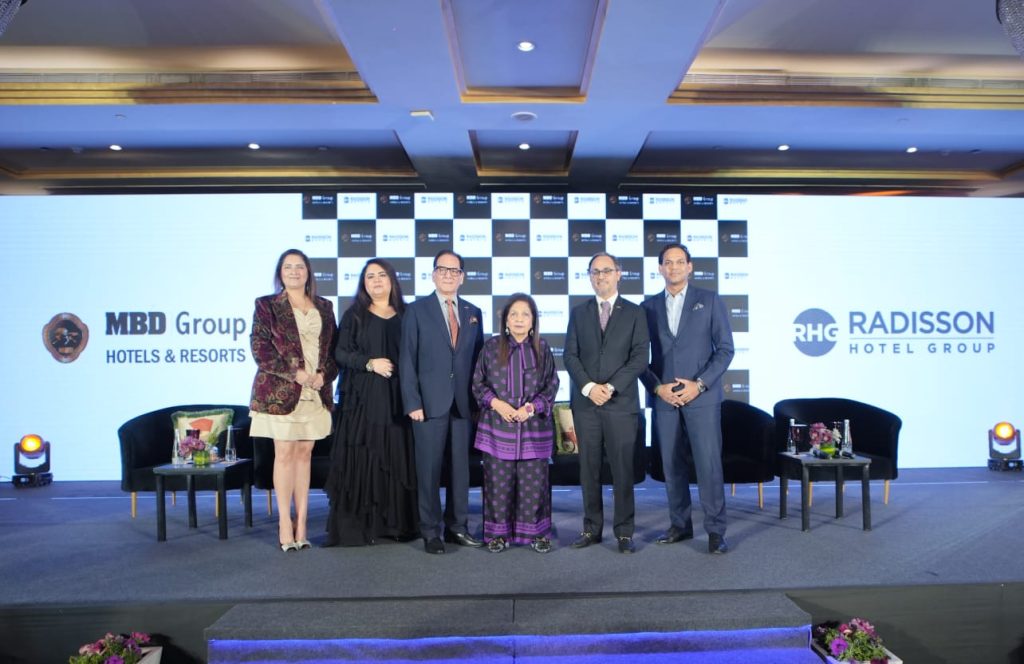
Strategic Partnership Framework -: Under this strategic partnership, MBD Group will support the development of Radisson Collection and Radisson RED hotels across India. Alongside RHG’s independent development initiatives and broader partner network, MBD Group will also undertake business development, management and franchising functions, for both brands at identified and mutually agreed locations, thereby further contributing to RHG’s growth strategy in one of its key markets.
*Radisson Blu MBD Noida to Transition to Radisson Collection MBD As part of this strategic partnership, the iconic Radisson Blu MBD Hotel Noida, the first five-star hotel will transition to Radisson Collection MBD after undergoing a comprehensive upgrade aligned with the brand’s global standards. The hotel is among the highest-performing properties in RHG’s portfolio in India. This repositioning reflects RHG’s strategy to strengthen its luxury portfolio in India by elevating established landmark hotels within its premium brand tier, alongside continued development of Radisson Collection and Radisson RED through its broader partner network.
Driving Next Phase Growth in India’s Luxury & Lifestyle Hospitality Segment “India’s premium hospitality market continues to see strong growth, alongside rising demand for contemporary, design-led lifestyle experiences. This strategic partnership further strengthens our ability to expand Radisson Collection and Radisson RED across key Indian markets, alongside our broader development initiatives. MBD Group has been a trusted partner to Radisson Hotel Group for over two decades, and together we are well positioned to scale these brands while creating distinctive hotels that respond to evolving traveler expectations and reinforce our long-term commitment to India,” said Nikhil Sharma, Managing Director & Chief Operating Officer, South Asia, Radisson Hotel Group.
“The collaboration supports our development momentum in India’s premium hospitality segment. Our development efforts with MBD team’s aid shall help us finding a higher quantum of opportunities in addition to our robust growth capabilities. With a clear asset-light focus, we are well positioned to scale strategically while sustaining long-term brand value,” said Davashish Srivastava, Senior Director, Development, South Asia, Radisson Hotel Group.
Strategic Vision and Growth Roadmap
Commenting on the alliance, Sonica Malhotra Kandhari, Joint Managing Director, MBD Group, said, “This partnership marks a decisive strategic milestone in MBD’s hospitality evolution. The first decade of partnership is targeted to deliver 50 co-branded hotels across Radisson collection MBD and Radisson RED MBD hotels predominantly through an asset light model. MBD’s prop book exposure will be around 25%. Radisson Collection MBD targeting luxury will have an extremely thought-through placement whereas Radisson RED MBD targeting lifestyle segment will be a far aggressive expansion. MBD will leverage on its pan Indian brand presence, operational excellence and no 1 leadership performance position amongst all Radisson Hotels in the country.”
Sonica further added, the planned portfolio is expected to follow an approximate mix of 80% managed and franchised hotels and 20% owned properties, reflecting a shared focus on scalable, asset-light expansion. The collaboration brings together Radisson Hotel Group’s global brand strength and MBD Group’s deep understanding of the local markets and operational expertise aimed at addressing the growing demand for high-end luxury and design-led lifestyle hospitality”
Design Philosophy and Brand Positioning Monica Malhotra Kandhari, Managing Director, MBD Group, added, “Luxury today is defined by aesthetic refinement and immersive experiences. With our project design and management expertise at MBD, we aim to deliver design excellence that elevates guest experiences. Radisson Collection MBD will reflect timeless, rooted and curated luxury, while Radisson RED MBD bringing bold, playful and socially driven design and MBD superimposing its beautiful cultural narratives will redefine luxury and lifestyle hospitality in India. MBD has exhibited pinnacle performance be it education or hospitality and with this partnership we aim to become number no1 luxury and lifestyle brand, Indian origin with Global confluence in the most elegant way.”
Together, Radisson Hotel Group and MBD Group are committed to shaping a new generation of luxury and lifestyle destinations across India, delivering sustainable long-term value for owners and partners while contributing to the continued evolution and strengthening of the country’s hospitality ecosystem. complementing RHG’s ongoing independent growth initiatives in the market.
Three Jaish-e-Mohammad terrorists, all believed to be Pakistani nationals, were killed in an ongoing encounter in the Passerkut area of Chhatru in Kishtwar district on Sunday, officials said. Security forces recovered the charred remains of the slain terrorists along with weapons and other war-like stores from the site.
The joint operation, codenamed Operation Trashi-I, was launched on specific intelligence inputs. While three terrorists have been neutralised, one or two others are suspected to be still on the run, and search operations are continuing in the area.
Though the identities of the slain terrorists were not officially confirmed, it is believed that top Jaish commander Saifullah, a Pakistani national wanted in several encounters since 2021, may be among those killed. However, official confirmation was awaited.
The encounter began around 11 am after security forces established contact with terrorists hiding in a temporary hutment in the difficult terrain of Passerkut. According to local sources, the forces came under heavy fire, triggering a fierce exchange.
Earlier, on February 4, security forces had killed one terrorist during Operation Trashi-I in the Dichhar area of Chhatru. However, Jaish commander Saifullah had managed to escape.
A major financial irregularity amounting to Rs. 590 crore has surfaced at IDFC First Bank’s Chandigarh branch, involving accounts linked to the Haryana Government. A case has been registered in connection with the alleged fraud, and the bank has suspended four of its employees pending investigation.
According to official sources, the irregularity came to light during an internal reconciliation process. The bank subsequently informed the Stock Exchange about the development and initiated internal action against the concerned officials.
The issue pertains to funds held in accounts operated on behalf of the Haryana Government. Upon noticing discrepancies, the state government directed the bank to close the concerned accounts and transfer the funds to another bank. During the reconciliation exercise that followed, the bank detected a fraud amounting to Rs. 590 crore.
In a regulatory disclosure, the bank stated that it has taken immediate corrective steps, including suspending four employees allegedly connected with the matter. The case has now been formally registered, and further investigation is underway to ascertain the modus operandi and identify accountability.
Officials indicated that detailed forensic scrutiny is expected to determine how the irregularities occurred and whether there was any systemic lapse in oversight mechanisms.
The bank has not yet disclosed whether the misappropriated funds have been fully recovered. Meanwhile, authorities are examining the financial trail to establish the extent of liability and possible criminal involvement.
Further updates are awaited as investigative agencies proceed with the probe.