Sunday, December 28, 2025

Bihar voter verification, opposition vs EC —SC hearing on July 10

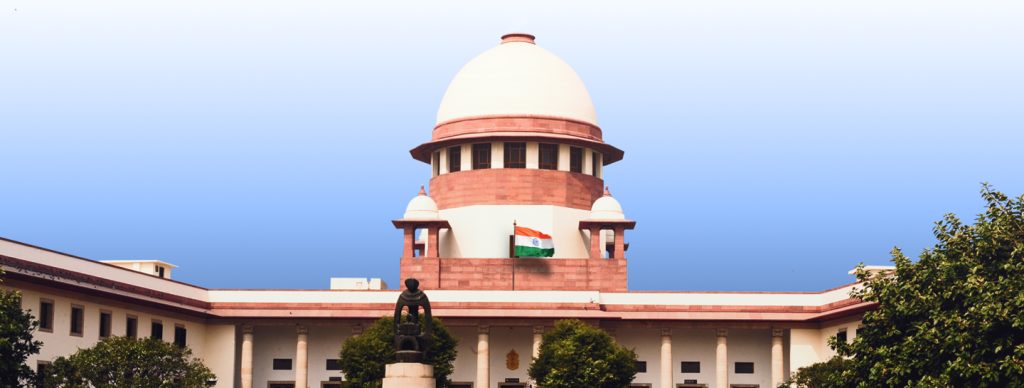
The Supreme Court on Monday agreed to take up petitions challenging the Special Intensive Revision (SIR) of electoral rolls in Bihar on July 10. 

A Bench of Justice Sudhanshu Dhulia and Justice Joymalya Bagchi listed the matter for hearing on Thursday with senior advocates Kapil Sibal, Abhishek Manu Singhvi, Gopal Sankaranarayanan and others mentioning petitions filed by various NGOs and political parties to seek urgent hearing.

Apprehending that a large number of voters may get disenfranchised, petitions have been filed by NGOs and political leaders, including the Association for Democratic Reforms (ADR), the People’s Union for Civil Liberties (PUCL), activist Yogendra Yadav, TMC MP Mahua Moitra and RJD’s Manoj Jha,.

Noting that there were eight crore electorate in Bihar, Sibal and Singhvi called the exercise an impossible task. “The timeline is so strict, and by July 25 if you don’t submit the form, you will be out,” Singhvi said to which Justice Dhulia pointed out that the timeline did not have sanctity as elections had not been notified, according to reports

Controversy, the timeline

The EC on June 24 issued instructions to carry out an SIR in Bihar “to weed out ineligible names and ensure only eligible citizens are included in the electoral roll,” a decision that led to much hue and cry from the opposition camp in the poll-bound state.

Congress president Mallikarjun Kharge called it a “conspiracy by the BJP-RSS to snatch away the voting rights of Dalits and other deprived sections” .Observers say that the sudden announcement also took the opposition ‘Mahagadbandhan’ (Grand Alliance), by surprise, forcing them to look for new strategies to counter it which tracking existing plans.  

Following a controversy over an advertisement, the EC on Sunday asserted that SIR was “being implemented smoothly at the ground level” and that “there was no change in instructions”. It also made it clear that while voters were required to “submit their documents any time before July 25, 2025,” those who failed to do so would get an opportunity “during the claims and objections period.” 

“SIR in Bihar is progressing as per Election Commission’s order dated June 24, 2025. As per that order, the draft electoral rolls that will be issued on August 1, 2025, will contain the names of the existing electors whose enumeration forms are received,” it said

The exercise, the first since 2003, aims to weed out ineligible individuals and ensure only eligible citizens were included in the electoral rolls and that it had become necessary due to rapid urbanisation, frequent migration, young citizens becoming eligible to vote, non-reporting of deaths, and inclusion of the names of foreign illegal immigrants, as per the EC 

However, apprehending potential disenfranchisement of nearly three crore voters, the ADR had on Saturday filed a PIL and urged the top court to stay its implementation.

Political implications

Assembly polls are due in Bihar later this year and the exercise aiming to cover nearly eight crore voters by July 25 has become a major political issue in the state. 

The opposition apprehends that those weeded out will largely be their voters. RJD leader Tejashwi Yadav has also questioned why the current exercise is being carried out only in Bihar.

The BJP-led NDA, in turn, accused the opposition of trying to come up with an “excuse ahead of a certain defeat in elections”.
Why Great Nicobar Project is again in eye of storm

The ambitious infrastructure project has sparked strategic and environmental concerns; According to the Environment Ministry, the project has been cleared after due consideration of potential environmental impacts on island ecology

Describing the ambitious Great Nicobar Infrastructure Project “a recipe for ecological and humanitarian disaster,” Congress leader Jairam Ramesh on Monday accused the Narendra Modi government of being “insistent and persistent” with the project despite risks involved.

“It is abundantly clear that the Great Nicobar Infrastructure Project is a recipe for ecological and humanitarian disaster. I have had a detailed exchange with the Union Minister of Environment, Forests, and Climate Change on this catastrophe but the Modi Govt is insistent and persistent,” Ramesh said, providing a link to his exchange with Union Environment Minister Bhupender Yadav  

Ramesh said many professionals have continued to speak out against the project and pointed to a report that the “environmental impact study conducted for this project completely downplayed the earthquake risks. As the December 2004 tsunami demonstrated, such risks are for real. Moreover, there are other geodynamic sources of risk that cannot be brushed aside”.

According to the Environment Ministry, the decision on development of the Great Nicobar Island project had been taken after due consideration of potential environmental impacts on island ecology and taking into account the significant strategic, defence and national importance of the developmental projects.

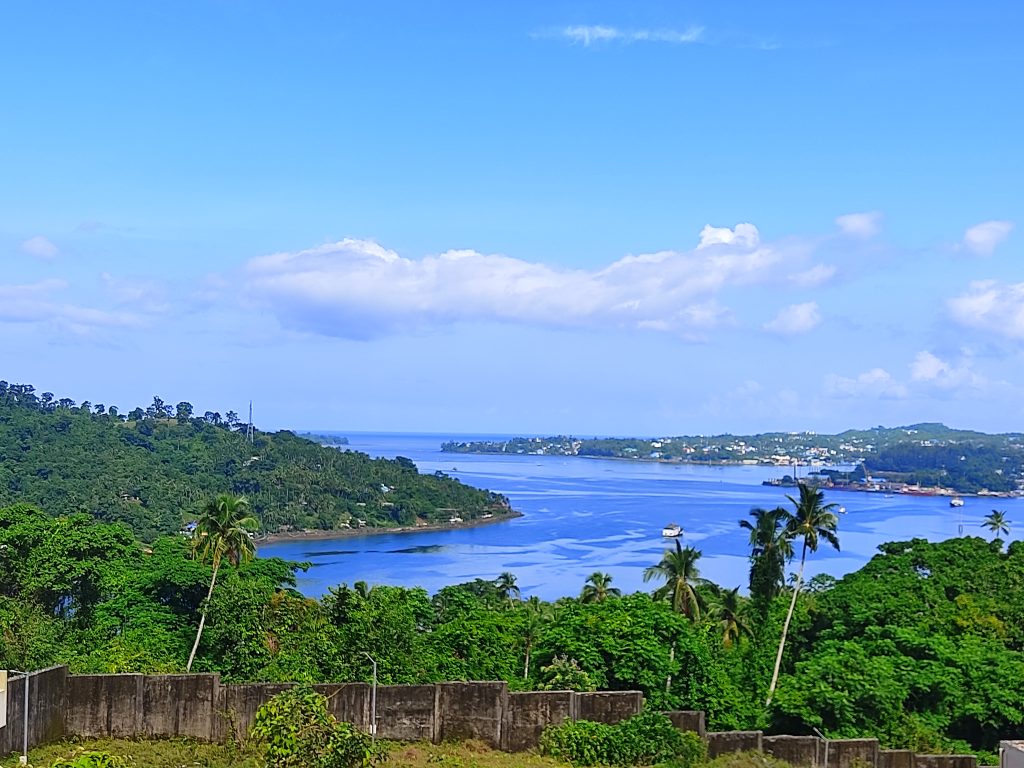
The Great Nicobar Project is a strategic infrastructure development plan for Great Nicobar Island in the Andaman Sea, aiming to establish a trans-shipment port, an international airport, a township, and a power plant. 

Earlier this year Tribal Affairs minister Jual Oram told the Rajya Sabha that the government had not received any information about objections to the project,  either raised by the tribal council of Great Nicobar Islands or documented in a video report by anthropologist Vishvajit Pandya.

Oram also said the project was in national interest and will not have any “environmental impact nor displace any tribals.” 

“When the tsunami happened (in 2004), because the area was low-lying, they (the tribal communities) had problems and moved out…” he said, also adding that no one will get displaced.

Listing the steps taken, the Environment Ministry also told Parliament a couple of years back that “several studies were conducted to carry out the environmental impact assessment and studies regarding their consequent mitigation measures were undertaken by the top statutory and non-statutory bodies.

“A detailed scrutiny of the EIA/EMP report took place during the appraisal of the project by an independent Expert Appraisal Committee (EAC) having experts from the field of science and engineering. The Environmental Clearance accorded contains as many as 42 specific conditions dealing with each component of the project for the safeguard of marine and terrestrial biodiversity.

“Further, three independent Monitoring Committees to oversee the implementation of Environmental Management Plan is also prescribed in the Environmental Clearance letter namely (i) Committee to oversee pollution related matters (ii) Committee to oversee biodiversity related matters (iii) Committee to oversee welfare and issues related to Shompen and Nicobarese.”

Piyush Goyal Bats for ‘Vocal for Local’ at Kashmir Trade Meet

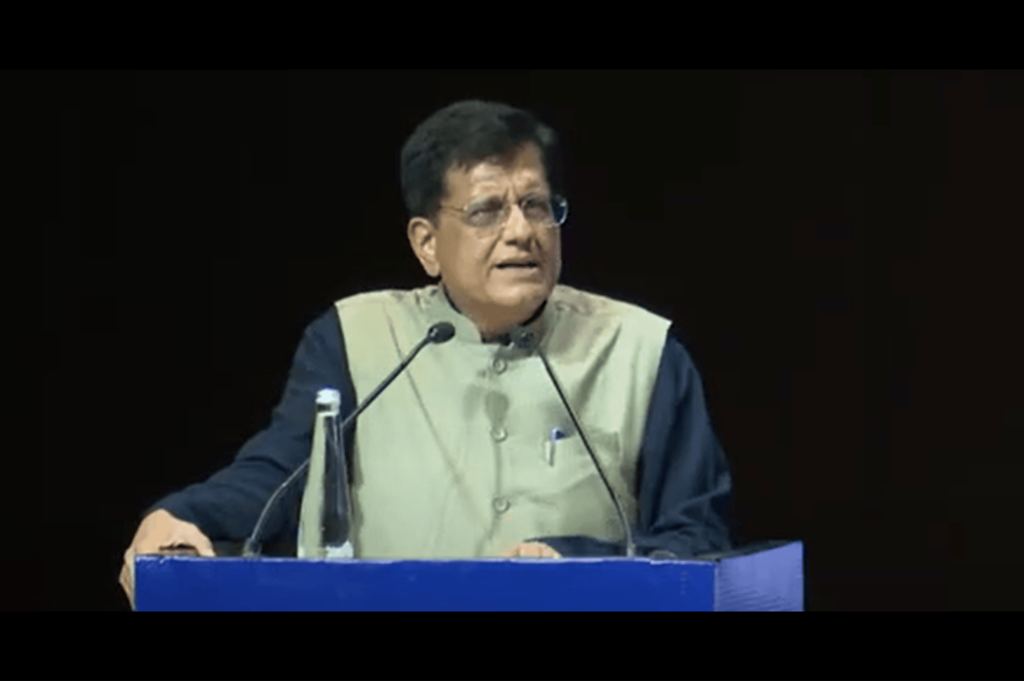
Srinagar: Union Commerce and Industry Minister Piyush Goyal on Sunday urged traders and entrepreneurs in Jammu and Kashmir to embrace the ‘Vocal for Local’ campaign and explore global markets for regional products.

Speaking at a conclave organized by the Federation of Trade and Industry of India (FTII) in Srinagar, Goyal said the central government was committed to boosting local industry and exports from the region.

“The conclave centred on the theme ‘Vocal for Local’, and everyone here pledged to promote indigenous products and take them global,” Goyal told reporters on the sidelines of the event.

The campaign, launched in 2020, encourages consumers to buy domestically produced goods while supporting small and medium enterprises in becoming globally competitive.

The minister said he met with local traders and business leaders to discuss ways of enhancing the export potential of Kashmiri products. He added that the government had invested in industrial development across the Union Territory, including sectors like healthcare, manufacturing, and food processing.

“Through a ₹28,000 crore incentive scheme, industrial units have been developed in key sectors,” Goyal said, adding that Kashmir must move forward on the path of industrialization.

Referring to the recent terrorist attack in Pahalgam, Goyal condemned the incident and called it an assault on the region’s economy. “Kashmir has shown that it won’t be cowed by terrorism anymore,” he said.

He also credited the people of the Valley for their support of Operation Sindoor, a military response to cross-border terrorism. “The government has given a strong and fitting reply to Pakistan’s continued support for terror,” Goyal said.

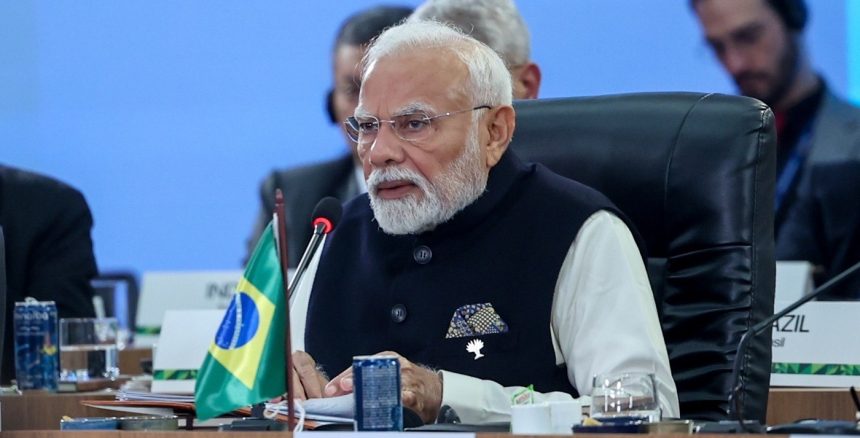
Terrorism ‘a grave threat facing humanity’, Pahalgam attack onslaught on entire humanity—PM Modi

Prime Minister Narendra Modi has called the Pahalgam terror attack in April 2025 not just an attack on India, but an onslaught on the entire humanity.

Speaking at the 17th BRICS Summit in Rio de Janeiro, Brazil, PM Modi called the terrorism “a grave threat facing humanity.”

The Pahalgam terror attack in April 2025 was not just an attack on India, but an onslaught on the entire humanity, he said, calling for strong global action against terrorism. Emphasising that there should be no double standards in dealing with terrorism, he said that those funding, promoting or providing safe havens to terrorists must be dealt with in the harshest terms.

PM Modi also thanked the BRICS leaders for condemning the Pahalgam terror attack in the strongest terms and called upon the countries to strengthen global fight against terrorism

There should be zero tolerance in dealing with the menace, he added, calling conflicts, from West Asia to Europe, “a matter of deep concern.”

He further added that India has always called for dialogue and diplomacy to resolve such conflicts and was ready to contribute towards such efforts.

BRICS leaders held discussions on various issues, including reform of global governance, enhancing voice of the global south, peace and security, strengthening multilateralism, development issues and Artificial Intelligence.

The Prime Minister addressed the inaugural session on “Reform of Global Governance and Peace and Security”.

Later in the day, the Prime Minister also addressed a session on “Strengthening Multilateral, Economic-Financial Affairs and Artificial Intelligence.”

Addressing the session on Global Governance and Peace and Security, Prime Minister reaffirmed India’s commitment to enhancing the voice of the Global South. He noted that developing countries required greater support for sustainable development, in terms of access to climate finance and technology.

Addressing the session on “Strengthening Multilateralism, Economic-Financial Affairs and Artificial Intelligence”, Prime Minister expressed that diversity and multipolarity were valued strengths of the BRICS. At a time when the world order was under pressure and the global community facing uncertainty and challenges, the relevance of BRICS was evident, he said

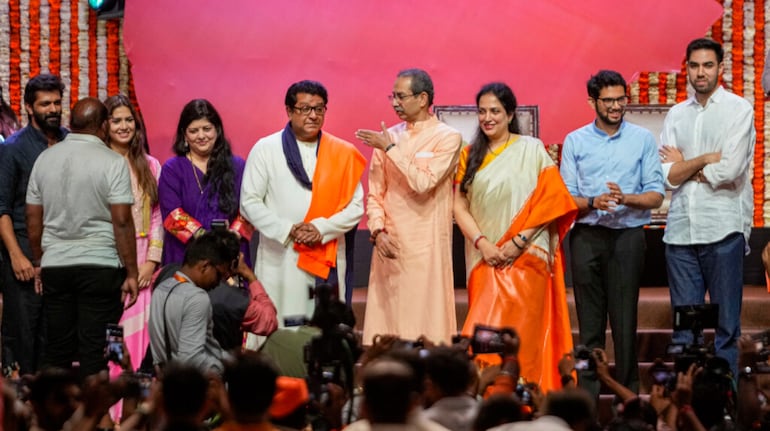
Coming together of Thackeray cousins—theories, speculations abound

Raj Thackeray and Uddhav Thackeray reunited after 20 years at a public rally in Worli, Mumbai, for an event called ‘Awaj Marathicha’—the Voice of the Marathi.

Following the joint rally of Shiv Sena (UBT) chief Uddhav Thackeray and Maharashtra Navnirman Sena (MNS) Raj Thackeray, cadres of the two sides are now hoping that the bonhomie witnessed on Saturday will soon translate into an alliance for local body elections.  Whether that will happen remains to be seen but conspiracy theories and speculations are abound over why and who scripted the reunion.

Raj Thackeray and Uddhav Thackeray reunited after 20 years at a public rally in Worli, Mumbai, for an event called ‘Awaj Marathicha’—the Voice of the Marathi. The event had been jointly organised by Shiv Sena (UBT) and MNS to mark the withdrawal of government resolutions related to the three-language policy in primary schools.

Politics is all about optics, in those terms the rally was a success. But for many observers, Raj’s response to Uddhav was “a bit reserved”, thus giving rise to speculations that there may be many a slip between the cup and the lip. In any case the two cousins need to trash many issues and think beyond local body polls if they want to establish “Brand Thackeray” again for political survival faced with the might of the BJP.

‘Brand Thackeray’

The Shiv Sena led by Eknath Shinde—the breakaway faction which is a part of the ruling Mahayuti government led by the BJP—has dismissed the possibility of re-emergence of ‘brand Thackeray’ or impacting Maharashtra politics in a big way.

Shinde’s supporters say that even during the days of Bal Thackeray the party could not have formed the government independently and that the Thackeray cousins have come together just to protect their individual interests, not for the Marathi manoos.

Meanwhile, efforts are being made to ensure no further disputes over language

Theories abound

Theories abound over who scripted the reunion, one is that Chief Minister Devendra Fadnavis did that to “cut down to size deputy CM Eknath Shinde”. Leaders from the ruling Mahayuti and opposition Congress-NCP(SP) point to some closed-door meetings between Fadnavis and Raj to buttress that claim.

It was after the meeting that the Fadnavis government issued a revised GR on Hindi as third language that restarted the agitation against the decision, they claim.

After that the estranged Thackeray cousins planned separate rallies. Then Raj called up Sanjay Raut for a joint rally and what followed is now in public domain. A day after the reunion, Fadnavis launched his podcast series titled, ‘Maharashtra Dharma’ to talk about Maharashtra’s spiritual history and tradition of social reformers. The point is the reunion can cause division of traditional Shiv Sena votes in upcoming local body polls and in turn setback to the Shinde-led Sena.

Another theory is that NCP (SP) chief Sharad Pawar is the one who advised the cousins to get together in order to make the breakaway factions of Shiv Sena and NCP (currently with the BJP) non-entities otherwise they themselves would become irrelevant.

Though according to Thackeray supporters, cousins acted on their own, in mind pressure from respective cadres and the need of the hour. Afterall, earlier this year, Raj did speak of making up with estranged cousin Uddhav.

Women in Defence—breaking new glass ceilings

Around 2016, the then Defence Minister Manohar Parrikar said that the induction of women in the Armed Forces will be done in a phased manner. Timelines will be decided for the three forces — the Army, IAF and Navy — after taking into account issues of facilities like training and accommodation, Parrikar said

The remarks were significant in many ways, also indicating lack of separate accommodation for women in field areas when posted in combat or warships.  

India has come a long way since then.

For the first time in Indian military history this year, 17 women cadets graduated from the National Defence Academy the premier military training institution considered a complete male bastion—thereby marking a historic step toward gender-inclusive military leadership and opening the path for future women service chiefs. The graduation of the first batch of women cadets from the NDA in May marked the end of seven decades of male exclusivity.

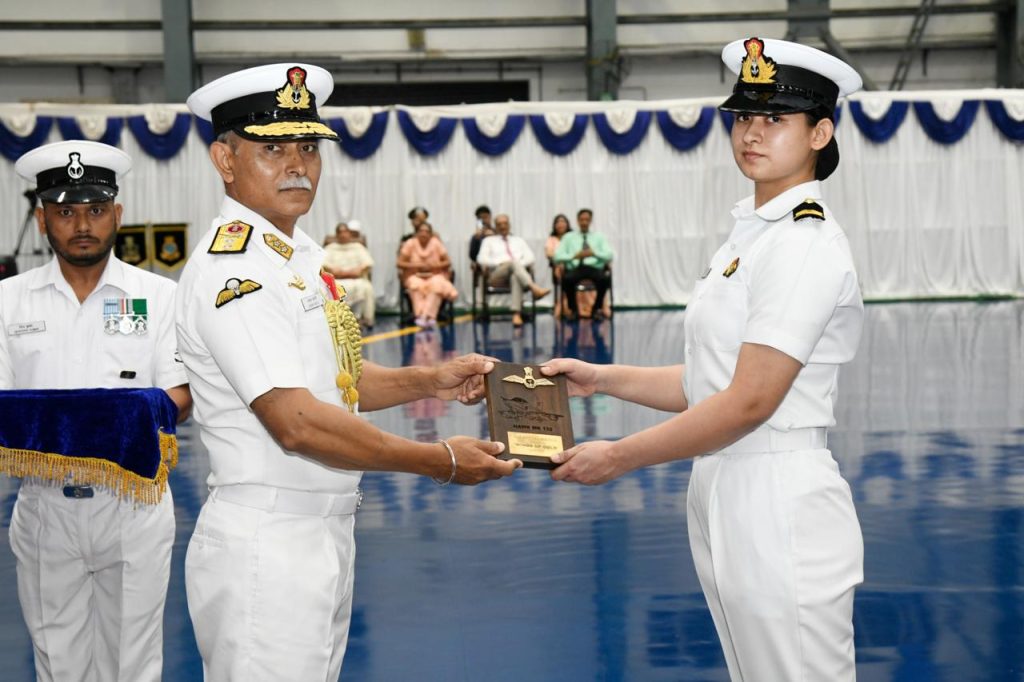
Then on Thursday Sub-Lieutenant Astha Poonia made history, becoming the first woman officer to be streamed into the fighter flying cadre of naval aviation, shattering another new glass ceiling, and paving the way for a new era of women fighter pilots in the Navy.

The Ministry of Defence on Friday announced that Poonia had successfully completed the Basic Hawk Conversion Course at INS Dega in Visakhapatnam, earning the prestigious ‘Wings of Gold’ from Rear Admiral Janak Bevli, Assistant Chief of Naval Staff (Air) at the winging ceremony. She will now undergo a year-long advanced training programme to qualify for operating MiG-29K fighter jets, which are flown from the decks of the Navy’s aircraft carriers — INS Vikramaditya and INS Vikrant.

While Indian Navy has already inducted women officers as Pilots and Naval Air Operations Officers in MR aircraft and helicopters, streaming of Poonia into the Fighter Stream highlighted Navy’s commitment towards gender inclusivity in Naval Aviation and promoting Nari Shakti, fostering a culture of equality and opportunity, the MoD said

Senior officers say that doors to women in the combat/fighters (again considered an exclusive domain of men) may have been opened “a bit hesitantly,” but it was “now going great guns, progressing in a systematic, planned way”  In fact, India is among the few countries globally to have broken the gender barrier even though they comprise only about 4% of the force as compared to 16% in the US.

Women in forces

Women have been serving in administrative and technical roles in various corps for a long time. Initially they joined military service through the Military Nursing Service established in 1888, and then the Indian Army Medical Corps in 1958 in which women doctors received regular commissions.

Launched in 2022, the Agnipath scheme includes women recruits in Army, Navy, and Air Force—another paradigm shift in recruitment norms.

The IAF has also been inducting women as fighter pilots and allows women in all combat roles. The Navy too has opened all branches, including submarines and aviation, to women officers and many are serving on-board ships and in combat aviation roles. Women officers also played a key role in Operation Sindoor, highlighting their leadership in military strategy. 

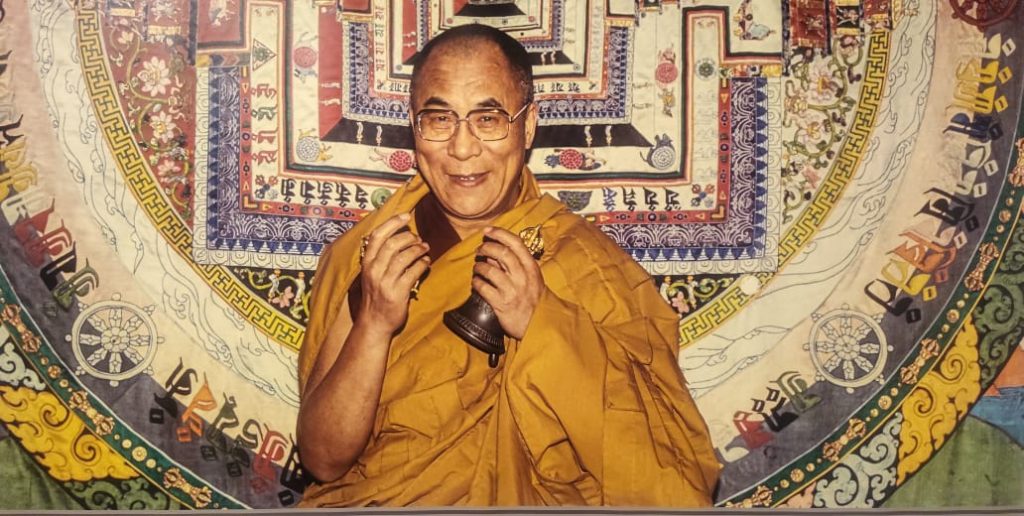
“My 50 Years With Dalai Lama”: Delhi witnesses rare photo exhibition on his 90th birthday

Photo: Naveen Bansal

Marking Dalai Lama’s 90th birth anniversary, Vijay Kranti, a senior journalist, Tibetologist, photographer and a longtime close associate of the Tibetan leader has showcased his over 50 years of association through his photographs of the spiritual leader.

He has put up a unique photo-exhibition of some of his exclusive, interesting and historic portraits and camera-studies of Dalai Lama at the AIFACS art gallery in New Delhi.

He has taken these photos over five decades during his numerous one-to-one interview sittings and travels with the Dalai Lama in India and some other countries as his personal photographer. 

Interestingly, a parallel exhibition of another set of Vijay’s photos of the Nobel Peace prize winning monk statesman is also on show at Freiburg in Germany these days.

Speaking to Tehelka, Kranti said, “I was 23-year-old when I first met Dalai Lama. I thought he would be same as other spiritual leaders who often are very self-centered and more concerned about their comfort; but when I saw his commitment for Tibetan community and his association with people. I was quite impressed.”

The photo-exhibition titled “My 50-Years With Dalai Lama” was inaugurated by Balbir Punj, a famous journalist, columnist, author and a former member of the Upper House.

The selection of photos for this exhibition makes it a special event as it aesthetically depicts some important and historic moments related to Dalai Lama.

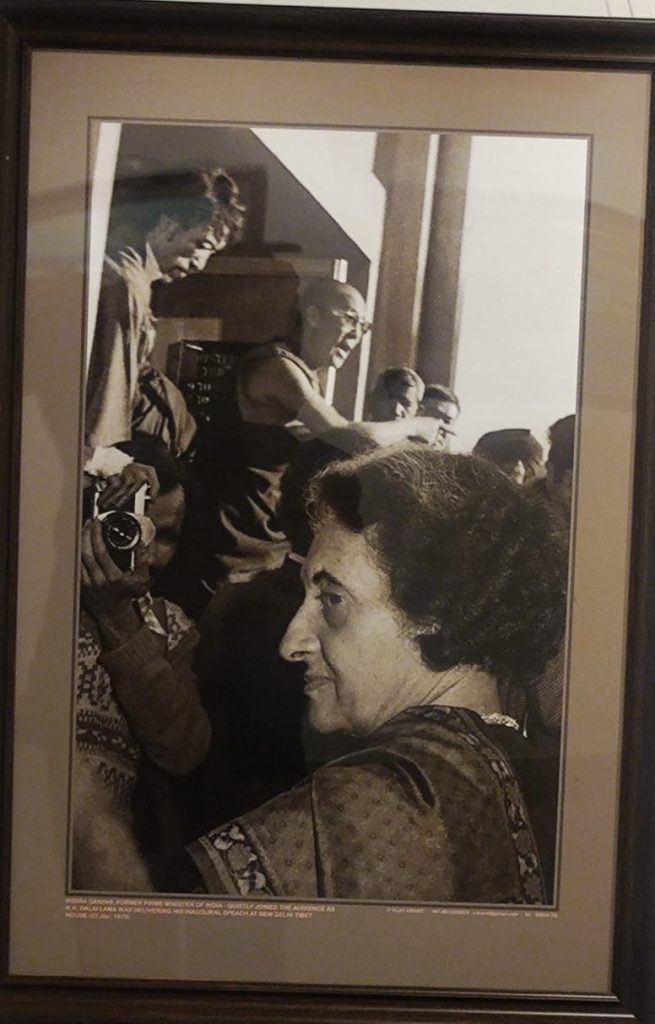
One photo which stands out for its historic importance is the one which shows Indira Gandhi, former Prime Minister of India, standing as an ordinary member among the crowd while Dalai Lama is addressing a large gathering at the inaugural function of Tibet House of New Delhi on 23rd January 1979.

Photo: Naveen Bansal

“I was stunned as I saw Gandhi quietly making her way through the crowd and stopped just next to me to have a good view of the Dalai Lama. Those were the days when she was out of power. But her decision to quietly join such an event was a special moment. The distance between her and my camera was too short for the focus. So I had to make efforts to push myself back to get the necessary focal space……”, said Vijay Kranti.

Vijay has preserved his film negatives and transparencies quite methodically and religiously since 1972 when he met Dalai Lama first time for a news magazine interview. Yet another photo shows Dalai Lama receiving Guard of Honour from a contingent of soldiers of the Indo-Tibetan Border Police near Leh.

Use only BIS-certified helmets for safety, Govt to consumers

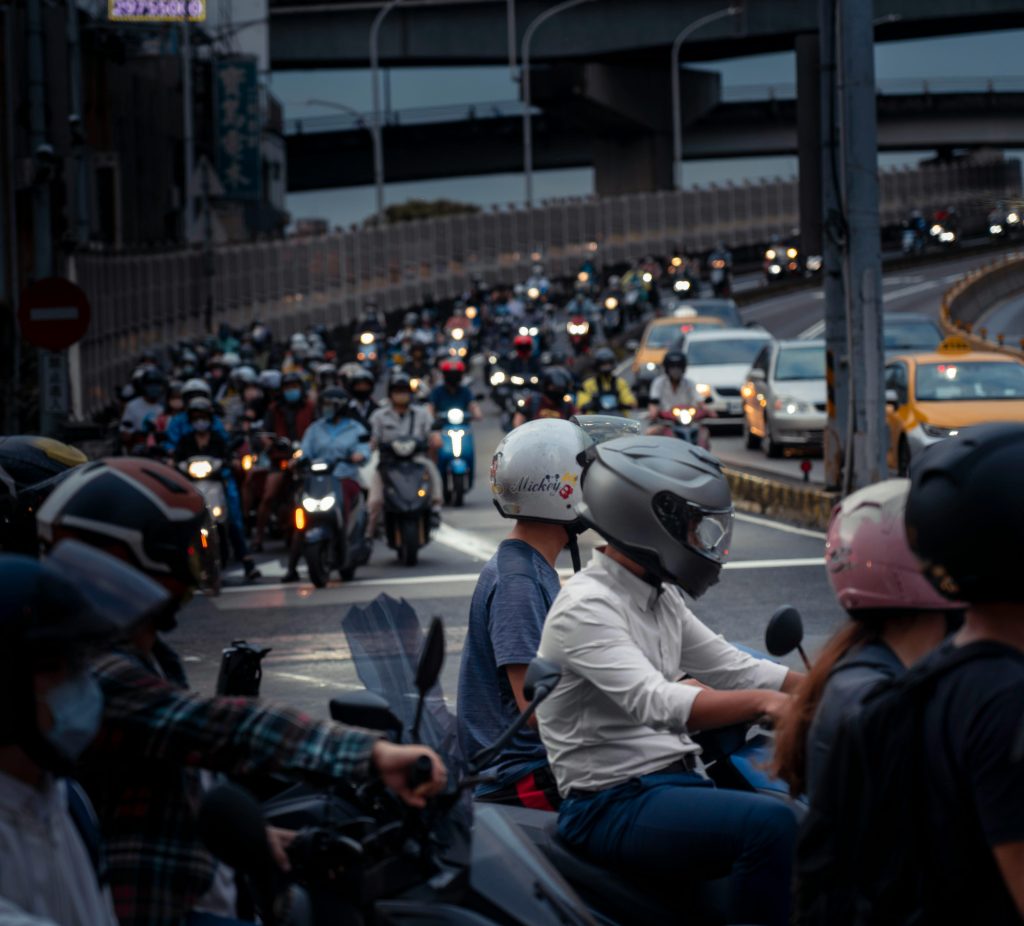
While wearing a helmet is mandatory under the Motor Vehicles Act, 1988, its effectiveness depends on quality, it says

The Department of Consumer Affairs and the Bureau of Indian Standards (BIS) today appealed to consumers across the country to use only BIS-certified helmets, calling for strict enforcement against the manufacture or sale of those without BIS certification.

As of June 2025, there are 176 manufacturers across India holding valid BIS licenses for protective helmets. While wearing a helmet is mandatory under the Motor Vehicles Act, 1988, its effectiveness depends on quality, according to an official statement.

“With over 21 crore two-wheelers on Indian roads, rider safety is paramount. Sub-standard helmets compromise protection and defeat their purpose. To address this, a Quality Control Order has been in force since 2021, mandating ISI-marked helmets certified under BIS standards (IS 4151:2015) for all two-wheeler riders,” it said

The Department has observed that many helmets sold on roadsides lack the mandatory BIS certification, posing significant risks to consumers and numerous fatalities in road accidents. Therefore, there is an urgent need to tackle this issue head-on, it added.

To enforce quality standards, BIS conducts regular factory and market surveillance.

In the last financial year, over 500 helmet samples were tested and more than 30 search-and-seizure operations were carried out for misuse of the BIS Standard Mark.

In an operation carried out in Delhi, over 2,500 non-compliant helmets were seized from nine manufacturers with expired or cancelled licences.

Similar action at 17 retail and roadside locations led to the seizure of around 500 substandard helmets, with legal proceedings underway.

Praveen Khandelwal conducts inspection old Delhi market along with officials

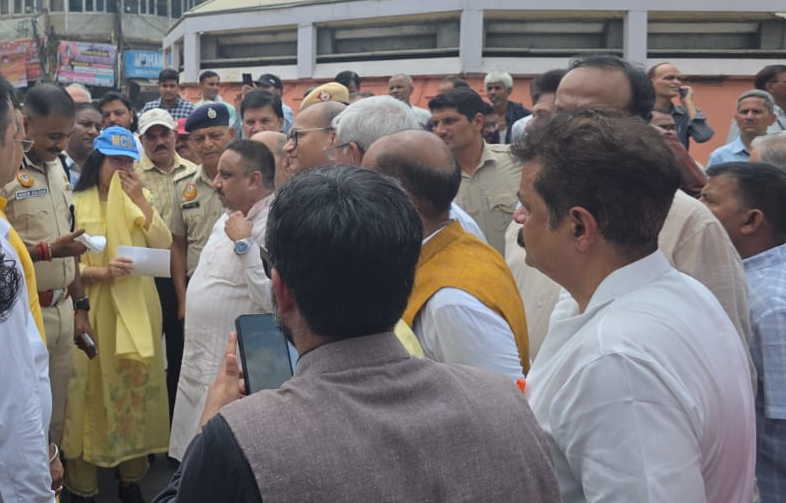
Praveen Khandelwal, Member of Parliament from Chandni Chowk has conducted an inspection tour of Chawri Bazar, Sitaram Bazar, and Mata Sundari Gurudwara area along with senior officials of the region.

During the inspection, he directed municipal officials to remove certain permanent encroachments in Chawri Bazar. He also instructed officials from the Jal Board and PWD to repair sunken sewer lines and potholes on the roads, and directed the police to control illegal parking and rickshaws.

He instructed the police to remove illegally parked scooters at Hauz Qazi Chowk and asked for proper repairs of the roads in Sitaram Bazar.

Khandelwal was accompanied by the Deputy Commissioner of the City Zone of the Municipal Corporation of Delhi, Deputy Commissioner of Delhi Police (Central Delhi), and officials from the Municipal Corporation, Police, Delhi Jal Board, Public Works Department (PWD), BSES, and Delhi Metro.

Also present were Chandni Chowk District BJP President Arvind Garg. He asked the Deputy Commissioner of the City Zone of the Municipal Corporation to plan the removal of illegal encroachments by scrap dealers especially behind Deendayal Upadhyay Park on Mata Sundari Road, near the gate of Lok Nayak Hospital, and from around the Gurudwara Sahib.

Poor condition of public toilets in Delhi reflects failure of Swachh Bharat Abhiyan: Congress

File Photo

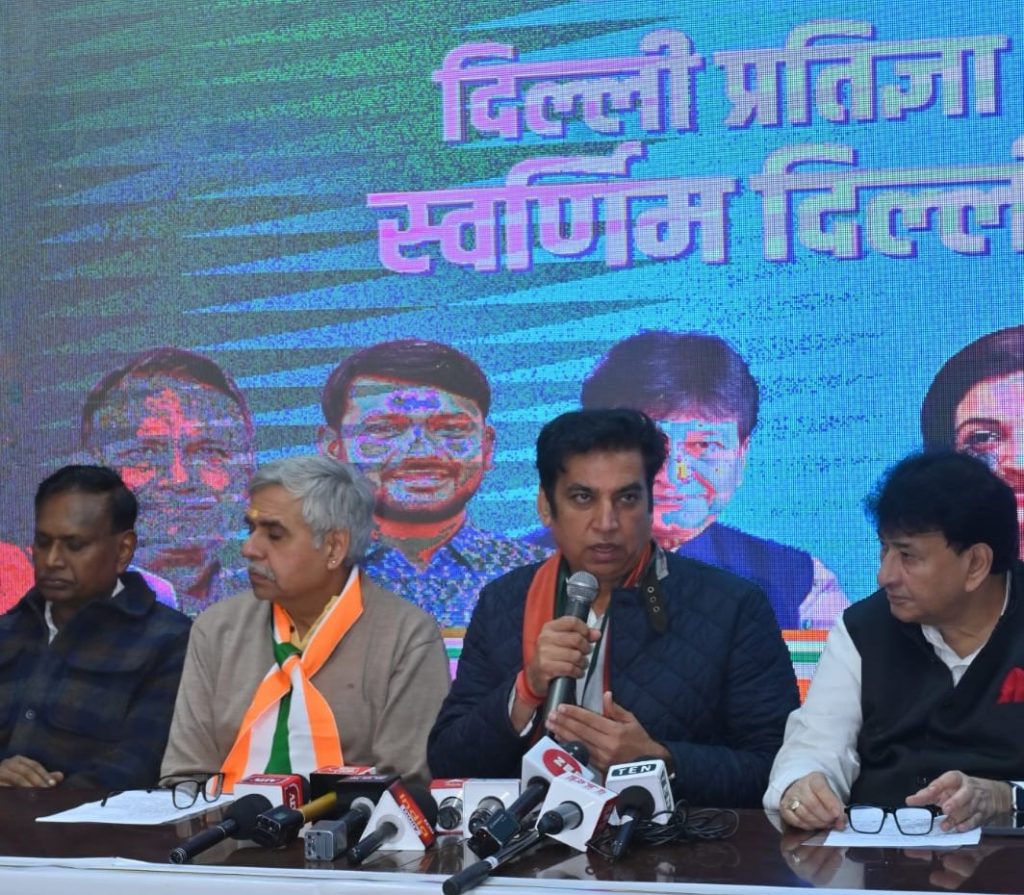
Delhi Pradesh Congress Committee president Devender Yadav said that the Delhi High Court observation on the abject condition of public toilets in city is a reflection of public untilities in the capital of the country as it has not yet been declared open defecation-free state.

He said that the terrible state of public toilets exposes the failures of the BJP government and the previous Aam Aadmi Party government in ensuring cleanliness and making the city open defecation-free as PM Modi’s Swatch Bharat Abhiyan has not made any impact in Delhi.

Yadav said that  BJP’s “Triple Engine” government is running on the pattern of the previous AAP government, as the Chief Minister, Mayor and Ministers are busy doing politics of photo-ops instead of ensuring adequate civic facilities to the public.

“This was the reason the Delhi High Court expressed displeasure over the functioning of the Delhi Government, Delhi Development Authority and the Municipal Corporation of Delhi over their indifference and insensitivity in the maintenance of public toilets in the capital,” he said.

He said that governments have charged crores of rupees as tax from the public under the Swachh Bharat Abhiyan for the last 11 years, but the condition of toilets in the capital is pathetic.

Pointing out the areas where public toilets are not in good condition Yadav said that while  markets in areas including Chandni Chowk, Paharganj, Nehru Place, Azad Market, Janakpuri, Tilak Nagar, and Rajouri Garden have given to the Delhi government and the Delhi Municipal Corporation crores of rupees in taxes.

“Photos of the terrible condition of toilets of  Sangat Rashan Bazar, Grain Market and General Market of Paharganj expose the failure of the concerned agencies,” he said.  

Yadav said that the capital is plagued by the accumulation of garbage and dirty condition of toilets without clean water, power and clogging. Yadav said that Prime Minister Modi started the Swachh Bharat Abhiyan on 2 October 2014, but even after 11 years, the Abhiyan could not get the country rid of its filth.  “When the sanitation system in the capital is in such a terrible state, the sanitation  condition in other  cities can only be imagined. Under the Swachh Bharat Mission Rural, 11 States with rural zones have declared themselves as open defecation-free, but it is very unfortunate that Delhi is not declared as an open defecation free state despite being the capital of the country,” he said.  

MOST POPULAR

HOT NEWS