In Indian homes, conversations about property are common. Conversations about death are not. And somewhere between these two silences lies a document that most families never create — a Will.
Across the country, families spend decades building assets: a house purchased after years of savings, a small plot of land in the hometown, jewellery passed through generations, bank deposits, mutual funds, and retirement savings. These are not just financial assets; they are symbols of security and legacy. Yet, when the person who built them passes away without leaving a Will, these assets often become the very reason families fall apart.
As someone who has worked closely with legal and governance frameworks, I have seen a pattern repeat itself across households, regardless of wealth. A parent assumes their children will “understand” how assets should be divided. A spouse believes nominations in bank accounts are enough. Families believe they are too small, too simple, or too united to require formal documentation.
Unfortunately, the law does not function on assumptions.
When a person dies without a Will, their assets are distributed according to statutory succession laws such as the Hindu Succession Act, 1956 or other applicable inheritance laws. These laws are structured, but they cannot capture the personal realities of every family — who cared for ageing parents, who financially supported the household, or which child needs greater support. The law follows rules; families live through relationships.
The result is often conflict.
Across India’s courts, thousands of inheritance disputes remain pending. Siblings who once shared a home find themselves across legal benches. Properties remain locked in litigation for years. Bank accounts freeze. Businesses stagnate. The emotional cost of these disputes is often far greater than the financial value of the assets themselves.
And almost always, the conflict begins with the same sentence: “There was no Will.”
What makes this situation more troubling is that creating a Will is neither complex nor expensive. Indian law does not require elaborate documentation. A Will simply needs to clearly express a person’s intentions regarding their assets, be signed by the testator, and be witnessed by two individuals. Registration is optional, though it may add credibility. The document can even be changed multiple times during a person’s lifetime as circumstances evolve.
In other words, the barrier is not legal complexity — it is awareness and mindset.
Many people also assume that nominations in bank accounts or insurance policies solve the problem of inheritance. In reality, a nominee often acts only as a custodian of the asset, holding it on behalf of the legal heirs. Without a Will clarifying the true distribution of property, nominations alone cannot prevent disputes.
India today is witnessing an unprecedented expansion of household wealth. More families own property than ever before. Financial investments, mutual funds, retirement plans, and digital assets are becoming common. The modern Indian household has far more complexity in its asset structure than previous generations.
Yet our approach to inheritance planning has not evolved at the same pace.
In many developed countries, writing a Will is considered a basic element of financial planning — as routine as buying insurance or opening a bank account. It is seen not as a morbid exercise, but as a responsible step toward protecting family stability.
India must move toward the same culture.
A Will allows individuals to make thoughtful decisions about their legacy. Parents can ensure fairness among children. Guardians can be appointed for minors. Trusted individuals can be named as executors to manage assets responsibly. Even charitable contributions and social causes can be included.
Most importantly, a Will removes uncertainty.
In the absence of clarity, speculation fills the space. And speculation often breeds conflict.
There is also a strong case for wider public awareness on this subject. Financial institutions, legal bodies, and policymakers can work together to promote estate planning as a normal household practice. Simplified processes, awareness campaigns, and digital registries could significantly reduce the number of inheritance disputes that burden families and courts alike.
But even before policy catches up, the responsibility lies with individuals.
Every parent who has worked to build a home, every professional who has created savings for the future, and every family that values harmony must ask a simple question:
If something were to happen tomorrow, would my family know exactly what I wanted?
If the answer is uncertain, the time to act is now.
A Will is not merely a legal document. It is a final act of clarity and care for the people we leave behind.
And in today’s India, it is a responsibility no household can afford to postpone.
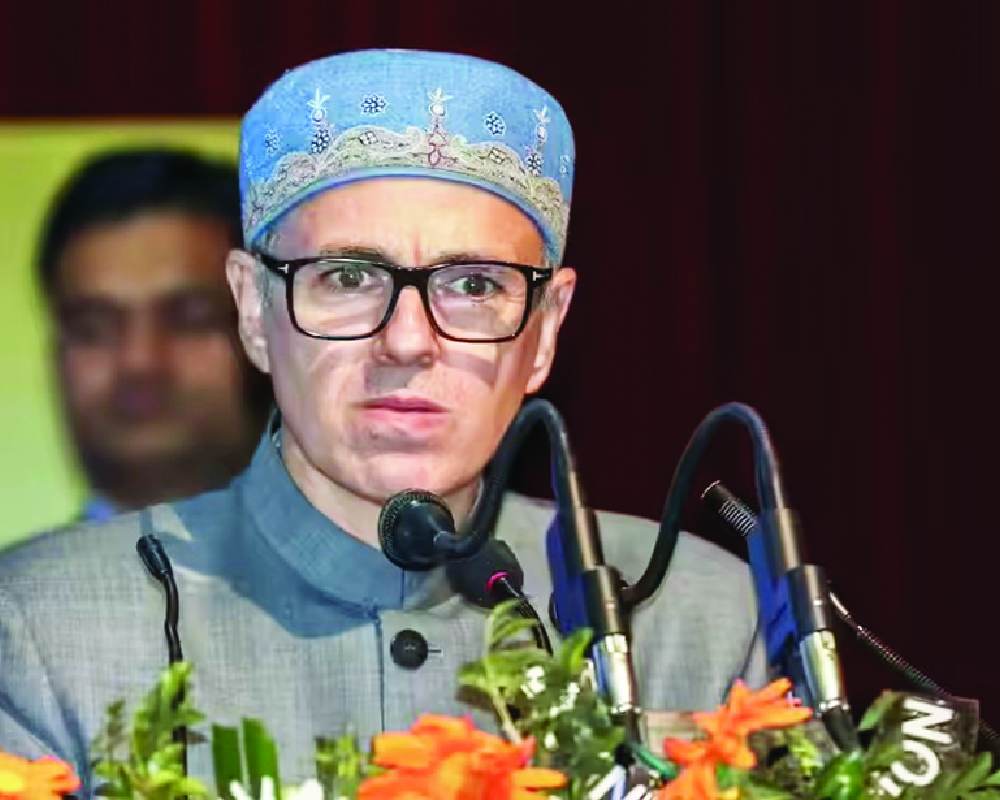
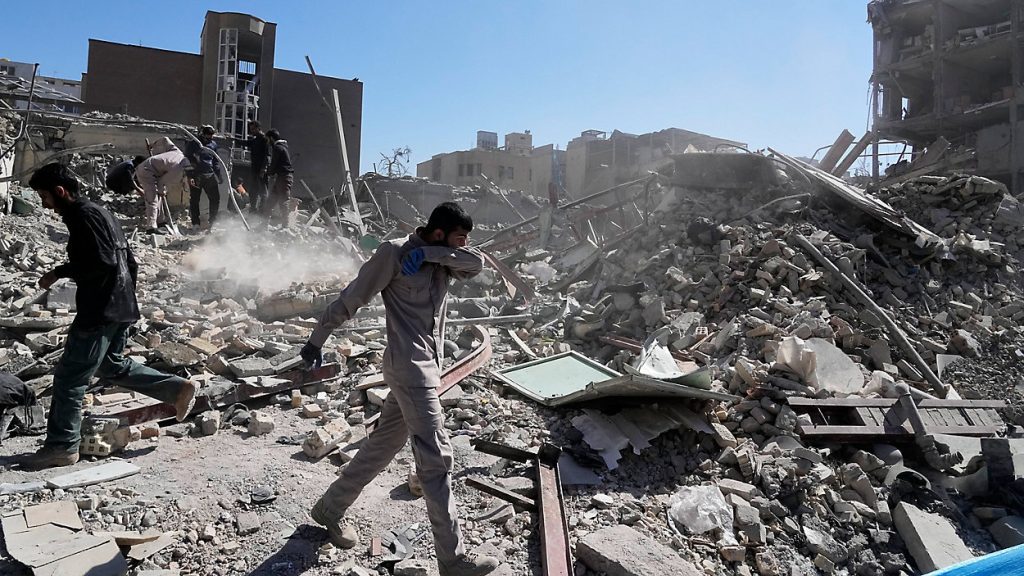
By Riaz Wani Political reactions emerged in Jammu and Kashmir after Chief Minister Omar Abdullah’s remarks on the killing of Iranian Supreme Leader Ayatollah Ali Khamenei and the subsequent police action against protesters in the Valley.
The comments drew criticism from National Conference MP Aga Syed Ruhullah Mehdi and Peoples Democratic Party (PDP) legislator Waheed Ur Rehman Parra.
Abdullah had chaired a meeting of civil society members earlier this week and appealed for communal harmony following protests in Kashmir.
Reacting to the meeting, Ruhullah questioned the chief minister’s approach in a post on X.
“When and how was the communal harmony disturbed by the mourners which forced the assembly of this ‘group’ to call for communal harmony. What message is he trying to send? Whose point is he asserting and advocating? Is he trying to become an instrument of the establishment to justify their unjustifiable actions?” Ruhullah said.
He also demanded the release of people detained after the protests.
“The only call that he and this ‘group’ should have made was to ask for the immediate release of our youth and unconditional withdrawal of FIRs against them. Who does he represent? I thought we elected a representative for us who would stand for us against all odds,” he added.
Meanwhile, police have registered a First Information Report (FIR) against Ruhullah for allegedly “creating fear, disturbing public order, and inciting unlawful activities”. No National Conference leader has publicly commented on the FIR so far.
PDP leader Parra also criticised Abdullah, accusing the ruling party of failing to clearly condemn the strikes.
“Mr. Abdullah and his party leadership avoided issuing a strong condemnation of the strikes. Why hasn’t the government passed a formal resolution through the Cabinet if it intended to take a clear stand on the issue. Silence on such issues raised questions,” Parra said.
Separately, National Conference president Farooq Abdullah said the Centre should describe the U.S. attack on Iran as a “wrong step”.
“Such actions by the U.S. could destabilize the region and impact the entire world. The Indian government should be giving a statement on this. New Delhi must present its official stance on the escalating tensions,” he said.
Farooq Abdullah also warned that the ongoing tensions could potentially trigger a wider global conflict if not handled carefully.
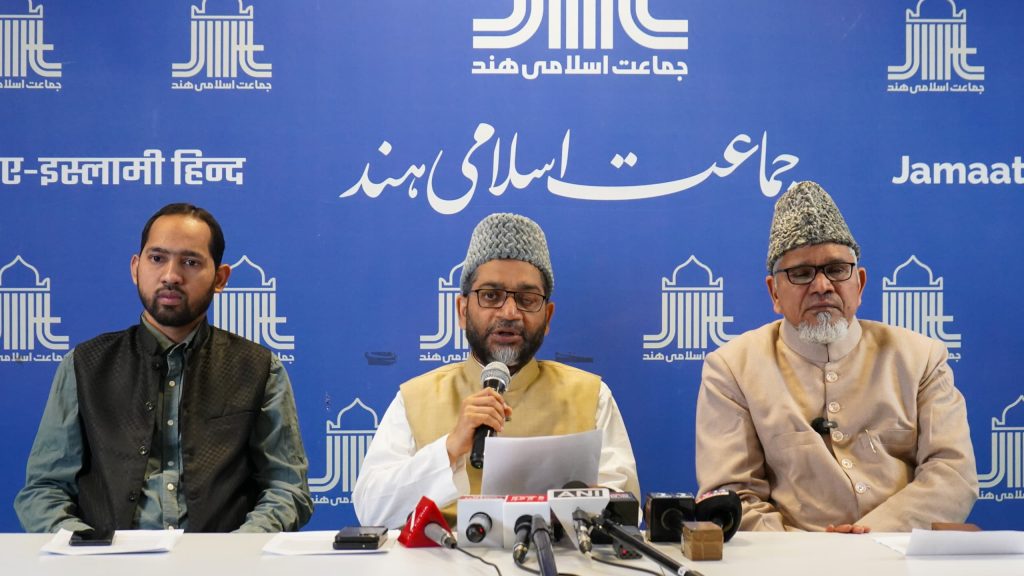
By Jamshed The President of Jamaat-e-Islami Hind (JIH), Syed Sadatullah Husaini, have expressed serious concern over the challenges related to women’s dignity, rising economic distress, and the escalating military conflict in West Asia.
Speaking on the occasion of the upcoming International Women’s Day, Syed Sadatullah Husaini said that while the day is meant to celebrate the achievements and contributions of women, the continuing rise in crimes against women reminds us that the struggle for safety, dignity, and equal opportunity remains far from complete.
According to the National Crime Records Bureau (NCRB), more than 4.45 lakh cases of crimes against women were registered in India in 2022 alone. These include cases of rape, sexual assault, domestic violence, harassment, trafficking, and cruelty by husbands or relatives. The NCRB recorded over 31,000 rape cases in the same year, which means that on average nearly 85 rape cases were reported every day.
Cases of domestic cruelty alone accounted for more than one-third of all crimes against women, showing how violence often occurs within homes and families. He further observed that within this broader picture, the problem of missing women is also alarming. NCRB data shows that every year, several lakh women and girls are reported missing across India, with a large number still remaining untraced. Women and adolescent girls remain particularly vulnerable to trafficking, forced labour, exploitation, and sexual violence.
He also pointed out that the problem of sexual exploitation reflects a deeper moral crisis in society. The revelations surrounding the Epstein trafficking network, which exposed the systematic exploitation of vulnerable young women and minors by powerful individuals, have shaken public conscience across the world. Jamaat-e-Islami Hind believes that protecting women’s dignity requires not only strict laws and swift justice but also a strong moral and ethical framework based on respect, modesty, and accountability.
Turning to economic issues, the JIH President said that recent developments after the presentation of the Union Budget 2026–27 have reinforced concerns about rising economic distress. The budget placed overwhelming emphasis on supply-side incentives while paying insufficient attention to income distribution, employment generation, and social protection. As global uncertainties deepen and domestic pressures rise, the benefits of growth continue to remain unevenly distributed while large sections of ordinary households struggle with stagnant incomes, rising living costs, and limited social security.
He noted that the ongoing war in West Asia is already exposing India’s economic vulnerability. With crude oil prices rising sharply and the rupee coming under pressure, India’s import bill and inflation risks are likely to increase. For an economy that imports more than four-fifths of its crude oil, such geopolitical shocks translate directly into higher fuel costs, transport inflation, and fiscal strain. These pressures will inevitably affect household budgets and small businesses. Syed Sadatullah Husaini said that the labour market situation also remains deeply troubling. A significant portion of India’s workforce continues to be trapped in informal and precarious employment. The rapid expansion of the gig economy has further intensified this trend, with millions of young workers engaged in platform-based work without adequate job security, fair wages, or social protection. Studies indicate that a large share of gig workers earn less than Rs15,000 per month and lack access to basic labour safeguards such as health insurance, pension benefits, or legal protection.
Speaking on the war in West Asia, the JIH President reiterated the organisation’s grave concern over the ongoing joint military aggression by the United States and Israel against Iran. These attacks constitute a blatant violation of national sovereignty and a grave breach of international law. He condemned the airstrike on the Shajareh Tayyebeh girls’ school in Minab in southern Iran, in which around 160 to 170 schoolchildren were killed saying it has shocked the conscience of the world and raised serious questions about the protection of civilians during armed conflict.
He warned that the present confrontation must not be allowed to escalate into a wider regional conflict involving the Gulf and the broader Middle East. Iran has the right to defend its sovereignty, yet the situation must not develop into a wider conflict that draws neighbouring countries into direct confrontation and deepens divisions in the Muslim world. Wisdom, prudence, and sound diplomacy are urgently needed to prevent the region from sliding into a prolonged and destructive war. He concluded by stating that lasting peace and stability can only be achieved through dialogue, respect for sovereignty, and a firm commitment to justice and international law.
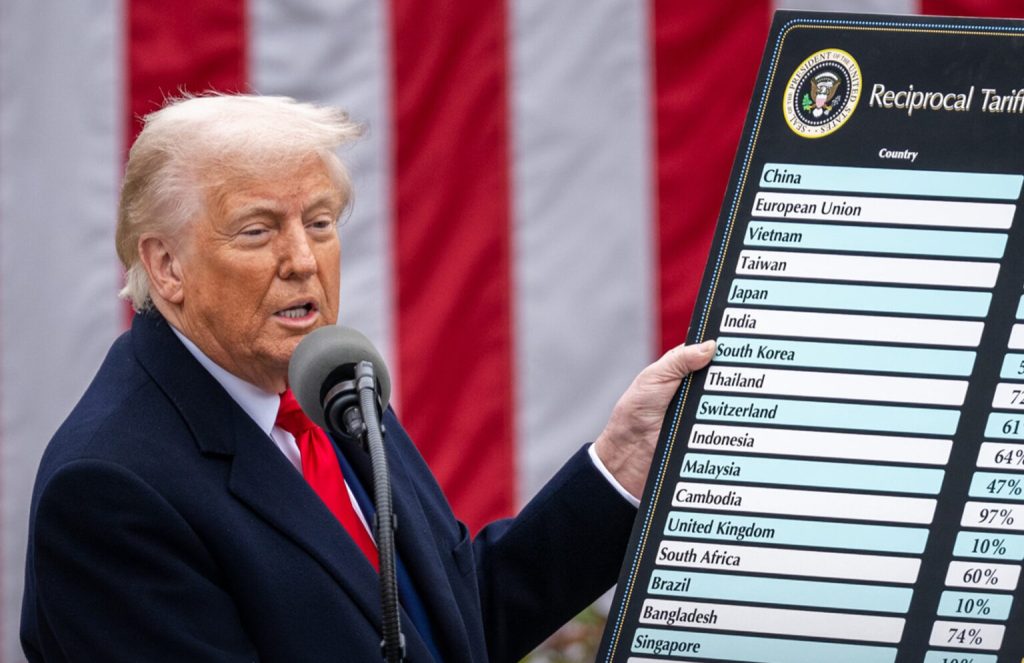
By Charanjit Ahuja In a landmark 6–3 ruling, the Supreme Court of the United States has struck down former President Donald Trump’s sweeping “emergency” tariffs, holding that he exceeded his statutory authority by invoking emergency economic powers to impose broad import duties. The judgment is more than a domestic constitutional rebuke. It recalibrates the balance of power in U.S. trade policy, injects fresh uncertainty into global commerce, and carries important implications for India.
At the heart of the dispute was the use of the International Emergency Economic Powers Act (IEEPA), a 1977 law designed to empower presidents to respond swiftly to genuine national emergencies — typically through sanctions, asset freezes or restrictions on financial transactions.
The Court’s majority concluded that IEEPA does not explicitly authorize the imposition of tariffs. Tariffs, in constitutional terms, amount to taxes, and taxation authority rests primarily with Congress. Expansive use of emergency powers to restructure trade policy triggers what American jurisprudence calls a “major questions” concern — requiring clear legislative approval.
In effect, the Court has drawn a bright constitutional line: presidents cannot rely on general emergency statutes to unilaterally redesign U.S. trade architecture.
President Trump reacted sharply, calling the ruling disappointing and asserting that alternative legal routes remain available. He subsequently announced a 10% global tariff for 150 days, reportedly relying on Section 122 of the Trade Act of 1974, which allows temporary safeguard measures without prior congressional approval.
This new approach differs in two critical ways: It is uniform, applying equally to all trading partners. It is time-bound — beyond 150 days, congressional consent would be necessary.
While narrower than the previously struck-down emergency tariffs, the move signals that tariff activism remains central to Trump’s trade strategy.
Impact on India
Tariff compression — from uncertainty to uniformity, and for Indian exporters, the most immediate shift is structural. Earlier reciprocal tariffs had created a patchwork of rates — some considerably higher than standard Most-Favoured-Nation (MFN) levels. The Court’s intervention effectively wipes out those differentiated emergency duties.
Under the newly announced 10% global tariff regime, India faces: a flat 10% temporary duty (in addition to baseline MFN tariffs). This has resulted in greater predictability compared with fluctuating reciprocal rates.
For sectors such as textiles, engineering goods, auto components, chemicals and certain pharmaceuticals, this uniform structure may reduce pricing volatility and contract risk in the short term.
The recent ruling of the Supreme Court of the United States striking down former President Donald Trump’s emergency tariffs has not only reshaped American trade law — it has also directly affected India’s diplomatic calendar.
In a significant development, the Government of India has put on hold the scheduled visit of its trade negotiation team to Washington, pending greater clarity on the U.S. tariff regime. The move reflects caution, not confrontation — and signals how deeply legal uncertainty in the U.S. is influencing bilateral economic engagement.
Trade negotiations are built on predictability. When tariff structures are unclear or subject to judicial reversal, it becomes difficult to lock in meaningful concessions.
India’s decision to defer the visit appears driven by three practical considerations: The Supreme Court’s ruling invalidated broad emergency tariffs imposed under the International Emergency Economic Powers Act. However, President Trump has responded with a temporary 10% global tariff for 150 days under a different statutory provision.
From India’s perspective, negotiating market access terms while one tariff framework has just been struck down, another temporary regime is in place, and congressional approval may be required for permanence, would risk entering commitments against a moving legal backdrop.
The 150-day global tariff is, by design, provisional. Any agreement structured around this rate could become obsolete if Congress modifies the tariff, the administration alters its strategy, or further litigation reshapes executive authority again.
The court’s ruling arguably strengthens India’s hand. If sweeping executive tariffs face constitutional limits, the U.S. may need more durable, congressionally backed agreements. India, therefore, has little incentive to rush negotiations under temporary uncertainty.
Importantly, the pause does not signal a breakdown in relations. President Trump has publicly stated that existing arrangements with India remain unchanged and that there are no immediate plans to renegotiate standing understandings. That reassurance helps prevent market panic, but it does not eliminate the need for clarity.
The postponed visit suggests that talks are delayed, not abandoned, and India is recalibrating its strategy. Technical-level consultations may continue virtually, and formal high-level negotiations will resume once tariff architecture stabilises.
The pause creates a short window of watchfulness: Exporters must factor in the temporary 10% tariff. Long-term pricing and supply contracts may remain cautious. Sector-specific concessions under discussion may face a delay.
Industries such as textiles, auto components, pharmaceuticals, chemicals, and engineering goods — all sensitive to U.S. tariff changes — will likely adopt a wait-and-see approach until negotiations resume.
India’s decision reflects broader diplomatic discipline. It has consistently preferred predictable, rule-bound trade frameworks over sudden unilateral shifts. The Supreme Court ruling reinforces the importance of statutory backing in U.S. trade commitments.
By postponing the delegation visit, India avoids appearing reactive to short-term political developments in Washington. Instead, it signals that serious economic partnerships require stable legal foundations. The judgment has effectively rebalanced U.S. trade authority toward Congress. Any future large-scale tariff structure may require legislative endorsement. That could lead to slower but more durable agreements — something India may view as advantageous.
India’s trade team is expected to reschedule its Washington visit. In fact, the pause may ultimately strengthen negotiations by ensuring that both sides engage under clearer parameters. In fact, India’s decision to put its trade delegation visit on hold should not be interpreted as friction in bilateral ties. Rather, it reflects pragmatic statecraft.
The Supreme Court’s ruling has triggered a constitutional and policy reset in the United States. Until that reset crystallises into a stable tariff framework, India appears unwilling to anchor trade concessions to uncertain foundations. In diplomacy — as in commerce — timing matters. By choosing patience over haste, India is signalling that the future of India–U.S. trade will be negotiated not in turbulence, but on firmer legal ground.
However, Indian firms that paid elevated duties under the now-invalidated regime may explore refund claims. However, such processes could be prolonged, involving U.S. customs authorities and potential litigation.
Thus, while the judgment offers policy clarity, it may generate compliance and cash-flow complications for exporters in the interim.
Bilateral Trade Arrangements
President Trump has stated that existing trade arrangements with India remain intact and that there are no immediate plans to renegotiate agreed frameworks.
This suggests that ongoing sectoral understandings remain operational. Negotiated concessions already in place are not automatically voided. Bilateral dialogue continues, albeit against a shifting legal backdrop.
However, the Court’s ruling alters the negotiating environment. Any future tariff concessions or escalations will now need clearer statutory grounding in U.S. law, making executive-driven unpredictability harder, though not impossible.
The judgment subtly strengthens India’s bargaining position. If unilateral executive tariffs face legal scrutiny, Washington may rely more heavily on: Congress-backed trade arrangements, sector-specific negotiated accords, and structured bilateral frameworks.
For India, this reduces the risk of abrupt policy reversals based purely on executive discretion. India can now argue for: rules-based tariff commitments, clearer dispute-resolution mechanisms, and long-term predictability embedded in statute rather than executive order.
This aligns with India’s broader trade diplomacy approach — incremental liberalisation paired with strategic autonomy.
The ruling reinforces Congress’s primacy in taxation and trade regulation. Future presidents — regardless of party — may find it more difficult to impose sweeping tariffs without legislative buy-in.
That does not eliminate protectionism, but it channels it through more formal political processes. For global markets, including India, legal clarity reduces systemic uncertainty. Uniform temporary tariffs are easier to model than unpredictable reciprocal escalations. Businesses can plan supply chains with greater medium-term confidence.
India, positioning itself as a reliable manufacturing and supply-chain partner amid global realignment, could benefit from a more rules-bound U.S. trade regime.
Future India–U.S. agreements may now be more narrowly sectoral, requiring congressional endorsement in the U.S, moving incrementally rather than through sweeping executive initiatives. This could slow headline-grabbing breakthroughs but enhance durability.
The Supreme Court’s ruling is not a simple victory or setback for India — it is a structural reset. In the short term, tariff uncertainty persists due to the 150-day global duty. Businesses must monitor potential legislative developments in Washington.
In the medium term, India gains negotiating space. Predictability improves relative to the earlier emergency regime. In the long term, a more constitutionally anchored U.S. trade policy may favour stable, negotiated partnerships over abrupt executive shifts.
For India — a rising economic power seeking dependable access to global markets — that structural predictability may ultimately prove more valuable than temporary tariff concessions. The episode underscores a broader truth: in global trade, legal architecture matters as much as economic strategy.
When we analyse why the US Supreme Court ruled against the tariffs, we find that the core legal issue was authority: The tariffs in question were imposed under the International Emergency Economic Powers Act (IEEPA) of 1977, which allows the president to regulate economic transactions in declared national emergencies.
The court’s majority held that IEEPA does not confer the power to impose import tariffs, because IEEPA’s text does not explicitly mention tariffs or duties. Tariffs are, fundamentally, taxes, and under the U.S. Constitution, such powers are reserved for Congress unless clearly delegated. Using a broad emergency law for economic trade policy, the court said, was a “major question” that required clear legislative backing.
Thus, most of the tariffs — especially broad “reciprocal” tariffs applied against many trading partners — were invalidated.
Rather than abandoning tariff policy, President Trump quickly invoked Section 122 of the Trade Act of 1974 to impose a temporary global tariff: A 10 % duty on imports from all countries (later floated to 15%), effective for 150 days without congressional approval.
Before the ruling, U.S. tariffs on Indian goods had fluctuated wildly: At one point, Indian exports faced reciprocal duties as high as 25 % or more, depending on product categories. An interim framework negotiated in early 2026 aimed to reduce those to around 18 % and restore duty-free access in key categories.
After the Supreme Court ruling, India’s exports currently face a flat 10 % global tariff in addition to the U.S. Most-Favoured-Nation (MFN) rate, reducing duties compared with earlier reciprocal tariffs. If Trump’s proposed 15% ceiling rate under Section 122 materializes, India’s effective duties would rise somewhat but remain lower and more predictable than under the old regime.
Why this matters is that heavy industries such as textiles, auto components, pharma, and engineering goods are sensitive to U.S. import taxes. Shift from high punitive tariffs to a uniform 10–15 % regime improves price competitiveness and planning certainty for Indian exporters.
Geopolitical Trade Dynamics
India’s trade ties with the U.S. have broader geopolitical dimensions: India is diversifying global supply chains and strengthening ties with Western markets. A predictable U.S. trade policy could make India a more attractive source for critical goods, especially in sectors like pharmaceuticals and electronics.
The ruling reduces some tariff-related uncertainty in global markets by undoing a patchwork of complex duties. This could help global trade sentiment improve, although the newly invoked temporary tariffs still create some ambiguity.
The Supreme Court’s judgment represents a major legal check on executive trading power and brings longer-term structural clarity to how the U.S. imposes tariffs. For India, the decision is a net positive in terms of predictability and negotiations, though the situation remains fluid: Short-term volatility persists due to temporary tariffs and evolving tariff rates. Medium-term opportunities may unfold if India and the U.S. can agree on a formal trade deal anchored in statutory tariff commitments. Long-term implications hint at a more rules-based U.S. trade posture, possibly benefiting stable partners like India.
In short, while the legal reset shook up existing arrangements, it also strengthens the case for negotiated frameworks and could ultimately enhance India’s export prospects in the world’s largest economy.
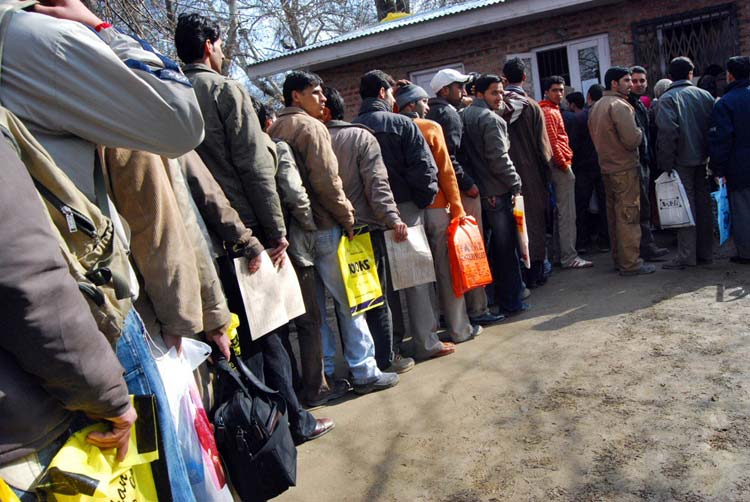
By Riaz Wani Jammu and Kashmir’s unemployment rate continues to remain significantly higher than the national average, with the Union Territory recording a jobless rate of 6.7 per cent in 2024–25 compared to 3.5 percent nationally, the government revealed during the recent session of Legislative Assembly.
Responding to a question by legislator Mubarak Gul, Deputy Chief Minister Surinder Choudhary, who also holds the Labour and Employment portfolio, cited data from the Periodic Labour Force Survey (PLFS) of the Ministry of Statistics and Programme Implementation. He said the unemployment rate among persons aged 15 years and above in J&K has remained consistently above the all-India average for the past six years.
“In 2024–25, the unemployment rate in the UT stood at 6.7 percent against the all-India average of 3.5 per cent. The rate was 6.1 per cent in 2023–24 compared to India’s 3.2 per cent, while in 2022–23 it was 4.4 per cent against the national figure of 3.2 per cent,” he said, quoting official figures.
The government said it had undertaken an extensive baseline survey across the Union Territory in January last year in collaboration with district administrations under Mission YUVA to assess the employment landscape.
Stating that tackling unemployment, particularly among youth, was a priority, the government said its strategy extended beyond short-term job provisioning. It emphasised sustainable livelihood creation through entrepreneurship, skilling initiatives and institutional reforms “so that youth become job-creators rather than job seekers”.
“In this context, Mission YUVA has emerged as a transformational initiative, witnessing unprecedented enthusiasm and participation from youth across the Union Territory,” it said.
According to the government, over 1.71 lakh youth have registered on the Mission YUVA platform since its launch, resulting in around 70,000 formal enterprise applications. The scale of participation, it said, reflected growing confidence in the programme.
However, concerns over the cost burden on job aspirants were also raised in the House. In response to a question from Pulwama MLA Waheed ur Rehman Para, the General Administration Department disclosed that the Jammu and Kashmir Public Service Commission (JKPSC) and the Jammu and Kashmir Service Selection Board (JKSSB) together collected Rs 48.88 crore in application fees from candidates between 2023 and 2025. Of this amount, JKPSC collected Rs 17.90 crore, while JKSSB earned Rs 30.98 crore.
Para criticised the fee collection, saying it was “despite the government’s explicit promise that all application forms would be made free”. He alleged that charging high fees from unemployed youth not only contradicted the stated policy but also amounted to “blatant exploitation of unemployed aspirants, who are already under severe economic distress.”
In a separate reply, Education Minister Sakeena Itoo told the Assembly that the de-freezing of teacher posts is under “active consideration” of the government to address staff shortages in schools across J&K.
Meanwhile, separate official data placed the number of registered unemployed youth in the Union Territory at 3,57,328 as of November 2025, highlighting the scale of the employment challenge. During November alone, 481 new job seekers were added to the unemployment registers.
A regional breakdown shows that the Kashmir Division accounts for over 2.08 lakh registered unemployed youth, compared to more than 1.50 lakh in the Jammu Division. District-wise figures reveal significant variation, with Anantnag reporting the highest number of registered unemployed youth at 32,298, followed by Pulwama (28,671) and Kathua (26,798). Srinagar has 23,826 registered unemployed youth, while Kulgam stands at 21,446. Kishtwar recorded the lowest figure at 8,870, followed by Reasi at 12,376.
The data also indicates a gender gap in registrations. Of the total registered unemployed youth, 2,33,845 are male and 1,27,301 are female.
Economists and labour experts caution that the registration figures may not fully capture the true extent of unemployment, as they primarily reflect educated youth seeking government jobs. According to earlier PLFS data, J&K’s unemployment rate stood at 6.1 per cent, nearly double the national average of 3.2 per cent, suggesting that many job seekers outside formal registration systems remain unaccounted for.
While the government has reiterated its focus on entrepreneurship and skill development under Mission Youth and Mission YUVA, experts stress that sustained private investment, industrial expansion and economic diversification will be critical to generating stable employment and absorbing the growing number of educated youth entering the labour market each year.
Despite PM Modi pitching India as a global champion of “inclusive Artificial Intelligence,” the AI Impact Summit, which was meant to project India as a rising force in the global AI ecosystem, didn’t measure up to that ambition, though it has succeeded in shaping narrative momentum, writes Charanjit Ahuja
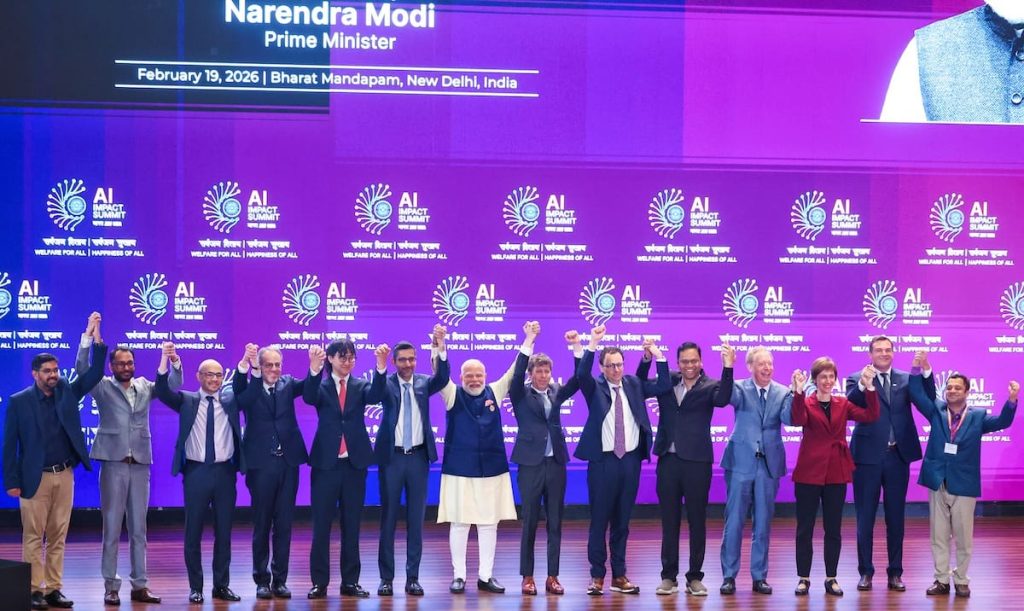
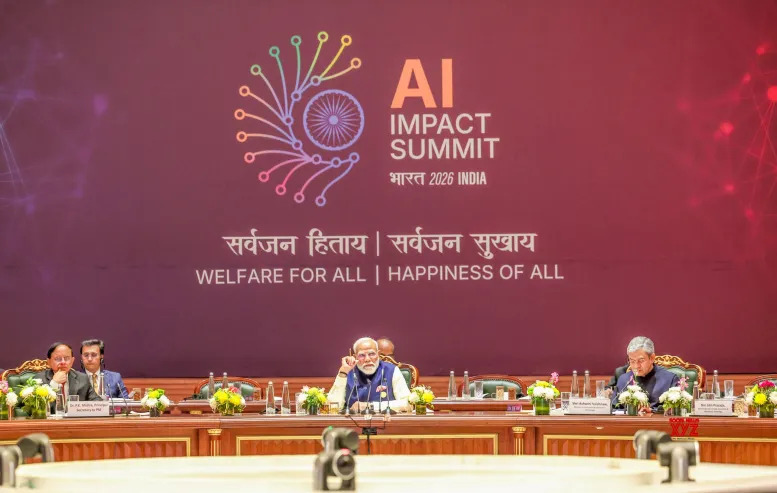
Prime Minister Narendra Modi has pitched India as a global champion of “inclusive Artificial Intelligence,” unveiling before delegates of over 100 countries, the MANAV framework and calling for the democratisation of AI technologies so they become instruments of empowerment rather than exclusion. However, the AI Impact Summit, held in New Delhi, which was meant to project India as a rising force in the global artificial intelligence ecosystem, didn’t measure up to it, though it has succeeded in shaping narrative momentum.
Instead, controversy overshadowed the event after a quadruped “robot dog” showcased at a private university — presented as part of a Rs 350-crore research initiative — was widely alleged to be a commercially available Chinese product rather than an indigenous breakthrough. The episode triggered criticism from sections of academia, the political opposition, and industry observers, who argued that symbolism had overtaken substance. More importantly, it reignited a deeper debate: where does India truly stand in the global AI race — and what structural gaps still hold it back?
AI experts say that key areas where India continues to face serious challenges include modern AI — particularly generative models — which runs on high-performance computing (HPC) infrastructure powered by advanced GPUs and semiconductor fabrication capacity.
India currently imports the majority of its high-end AI chips. The country lacks large-scale domestic semiconductor fabrication ecosystems and has limited access to cutting-edge GPU clusters compared with the U.S. and China. By contrast, American tech giants operate massive AI data centres, while China has built state-supported compute infrastructure at scale. Without affordable and abundant compute capacity, Indian start-ups and research institutions struggle to train frontier models domestically.
India has strong applied IT capabilities but lags in frontier AI research. Challenges include limited funding for long-term, blue-sky AI research, brain drain of top AI talent to Silicon Valley, Europe and Singapore and lower representation in high-impact AI journals and foundational model development. While Indian-origin researchers are prominent globally, much of that innovation occurs outside India’s institutional framework.
AI systems depend on high-quality, well-annotated datasets. India faces several hurdles like fragmented and siloed public datasets, concerns over privacy, consent, and surveillance, and limited availability of structured datasets in regional languages.
Although India has rich linguistic diversity, building large, curated multilingual datasets remains a massive task. The absence of standardised, open, high-quality data slows AI development tailored to Indian realities.
AI is not just software — it is deeply tied to hardware ecosystems. India’s semiconductor manufacturing is still nascent. Compared with the U.S., which leads in chip design, Taiwan and South Korea in fabrication, China in scaling domestic supply chains, and India remains heavily import-dependent. Without a strong hardware base, long-term AI sovereignty remains vulnerable to geopolitical supply disruptions.
While India has articulated ambitions around inclusive and ethical AI, regulatory clarity remains limited. Key concerns include: Liability in cases of AI-driven harm. Standards for algorithmic transparency. Deep fake and misinformation safeguards. Intellectual property treatment of AI-generated content.
Investors and innovators often seek predictable regulatory environments. Uncertainty can dampen large-scale capital commitments.
India produces millions of STEM graduates, yet advanced AI skill depth remains concentrated in elite institutions. Issues include: Limited AI-focused faculty in Tier-2 and Tier-3 colleges. Insufficient integration of AI in vocational and school-level education. There are concerns about job displacement in IT services and back-office industries. While AI promises productivity gains, it also threatens labour-intensive sectors where India has traditionally been competitive.
The controversy surrounding the robot dog exhibition reflects a broader perception problem of showcasing imported technology as domestic innovation risks reputational damage, high-profile announcements without peer-reviewed validation erode credibility, and public-private research claims require transparency and technical scrutiny. India’s global tech credibility depends not on spectacle but on demonstrable breakthroughs — published research, patents, scalable products, and globally competitive start- ups.
While India has a vibrant start-up ecosystem, AI ventures face funding constraints: Frontier AI requires long gestation periods and high capital expenditure. Risk appetite for deep-tech is lower compared with consumer-tech ventures. Dependence on foreign venture capital may complicate strategic autonomy. Scaling AI infrastructure is capital-intensive; without patient funding, many start-ups pivot prematurely to service models.
AI development is increasingly geopolitical. The U.S.–China technology rivalry affects access to advanced chips, cross-border research collaboration and cloud service dependencies. India must navigate this complex terrain carefully to avoid technological isolation while protecting strategic autonomy.
The AI Impact Summit’s controversy may ultimately serve as a useful wake-up call. India possesses a vast talent base, strong digital public infrastructure, a thriving start-up culture and a large domestic market for AI deployment. But ambition must be matched by structural investment, research depth, and institutional credibility.
The path forward requires: Massive expansion of compute infrastructure. Transparent, peer-reviewed research outputs. Strong academia-industry collaboration. Clear regulatory frameworks. Sustained public funding for deep-tech innovation.
If India aspires to be a genuine AI powerhouse, it must move beyond optics and episodic showcases. The real test lies not in exhibition halls, but in laboratories, data centres, and globally competitive products. The AI race is long-term. India’s challenge is to convert potential into proof.
Modi sets AI governance tone
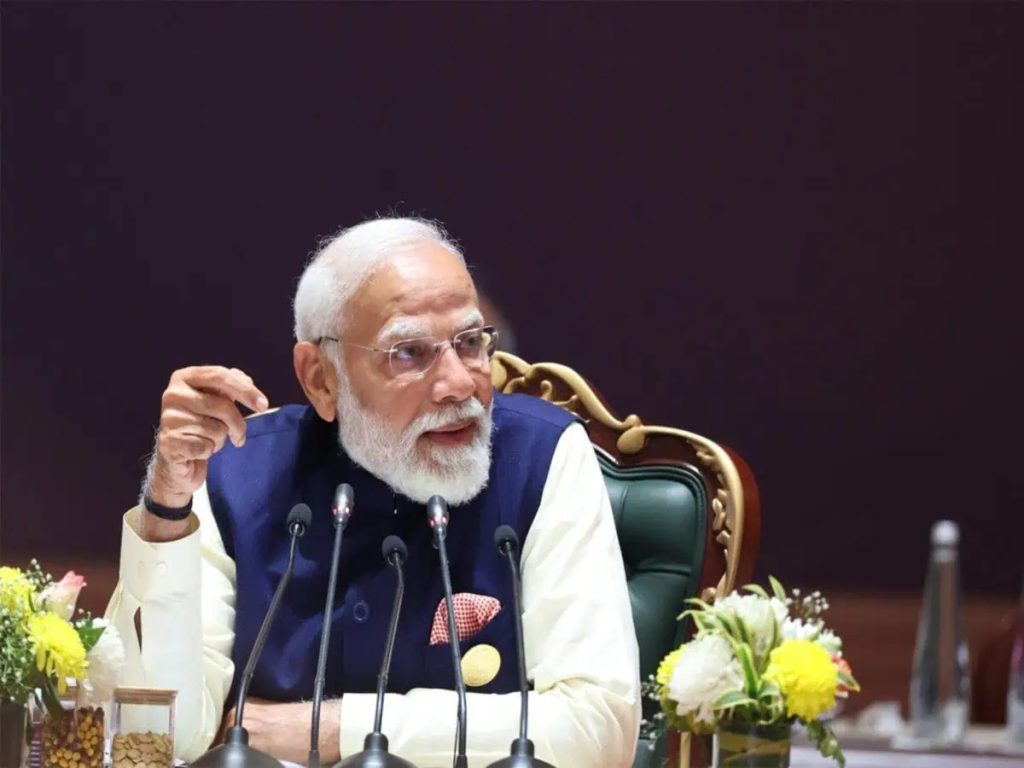
It is said that well begun is half done. Prime Minister Narendra Modi has set the ball rolling. Addressing delegates from nearly 100 countries at the AI Summit, he argued that AI must not deepen the digital divide or concentrate power in a few corporations or nations.
“Artificial Intelligence will benefit the world only when it is shared with young minds,” he said, framing access to computing, data, and education as essential public goods in the 21st century.
The centrepiece of the summit was the unveiling of the MANAV framework, positioned as India’s blueprint for ethical, inclusive, and human-centric AI governance.
Though detailed operational guidelines are expected later, officials outlined their pillars:
M – Mass access: Democratising AI tools through public digital infrastructure.
A – Accountability: Embedding transparency and audit mechanisms.
N – Non-discrimination: Guardrails against bias and algorithmic exclusion.
A – Augmentation: AI as a complement to human capability, not a replacement.
V – Value creation for society: Prioritising healthcare, agriculture, education and climate resilience.
Government sources described MANAV as an extension of India’s digital public infrastructure model — similar in philosophy to Aadhaar and UPI — but tailored for AI ecosystems.
Modi framed AI not merely as a technological race but as a development accelerator for the Global South. He proposed: AI-driven crop advisory systems for small farmers, multilingual AI tools for education, public health analytics for disease surveillance, and climate modelling for disaster-prone regions. India positioned itself as a bridge between advanced AI economies and developing nations seeking affordable, ethical solutions.
The Prime Minister urged international collaboration over regulatory fragmentation. He stressed: Interoperable AI standards. Cross-border research partnerships. Shared datasets for non-commercial use and capacity building for youth in developing countries. Delegates from Africa, Southeast Asia, and Latin America welcomed the emphasis on equitable access, while European representatives underscored the importance of aligning with emerging global AI safety norms.
The summit, however, was not without domestic political friction.
The opposition Indian National Congress criticised the government’s approach, raising several concerns. The Congress leaders argued that while the government speaks of democratisation, data governance in India, the country remains highly centralised. They questioned: Who will control the datasets underpinning AI tools? What privacy safeguards will be built into MANAV? Whether independent oversight mechanisms exist.
Opposition voices and trade unions warned that rapid AI deployment could disrupt employment in sectors such as IT services, back-office operations, and manufacturing. They accused the government of underplaying labour transition risks.
Some critics argued that advocating global AI inclusion rings hollow while Rural broadband penetration remains uneven, government schools face digital infrastructure gaps, and funding for higher education research is constrained. Civil society organisations also flagged the absence of detailed safeguards against algorithmic bias, surveillance misuse, and deepfake manipulation.
Despite ambitious rhetoric, observers noted several areas where the summit appeared to falter: While MANAV was presented as a framework, it stopped short of publishing enforceable guidelines, clarifying whether it would become legislation, and defining liability structures for AI harms. Without regulatory specificity, critics argue, the initiative risks being perceived as aspirational rather than operational.
Though India emphasised AI infrastructure expansion, no detailed funding roadmap was disclosed regarding domestic semiconductor capacity, high-performance computing clusters, and public AI research grants. Global investors are likely to watch for fiscal commitments before deepening engagement.
The summit called for cooperative governance, but geopolitical realities complicate consensus. Divergent approaches between the U.S. model emphasising innovation-first growth, the European Union’s regulatory-heavy AI framework, and China’s state-centric model make harmonised global standards difficult.
India’s attempt to carve a middle path — innovation with inclusion — will require sustained diplomatic balancing.
India’s AI Positioning
The summit signals India’s intent to move from a service-oriented IT powerhouse to a policy-shaping AI nation. By foregrounding inclusion, India is aligning its technological narrative with its development diplomacy.
For Modi, the message is clear: AI should not replicate historical inequities. Instead, it should serve as a leveller — empowering youth, farmers, students, and small enterprises.
Whether MANAV evolves into a robust institutional framework or remains a high-level vision will determine how the summit is ultimately judged.
The immediate next steps include: publishing detailed guidelines under the MANAV framework, clarifying regulatory architecture, addressing labour transition policies, and engaging opposition and civil society in structured dialogue.
The AI Summit has succeeded in shaping narrative momentum. The harder task now lies in converting that momentum into measurable outcomes. As India stakes its claim in the AI century, the balance between ambition and accountability will define not only the success of MANAV but also the credibility of its call for inclusive artificial intelligence.
INDUSTRY LEADERS WEIGH INDIA’S AI ROLE
“In India, we can scale personal superintelligence very fast … India has moved from being a technology consumer to a leader in the global AI start-up landscape.” — Alexandr Wang, Chief AI Officer, Meta
“No technology has me dreaming bigger than AI. This hub will house gigawatt-scale compute and a new international subsea cable gateway bringing jobs and cutting-edge AI to people and businesses across India.” — Sundar Pichai, Google CEO, after announcing Google’s full-stack AI hub in Visakhapatnam.
“Technology always disrupts jobs, but we always find better things to do. India, the world’s largest democracy, is well positioned to lead in AI—not just to build it, but to shape it and decide what our future looks like.” — Sam Altman, CEO, OpenAI
“India has an absolutely central role to play in these questions and challenges, both on the side of the opportunities and on the side of the risks.” — Dario Amodei, CEO, Anthropic
When India and the United States revealed the framework of an interim bilateral trade agreement earlier this month, it was hailed in some quarters as a “landmark step.” But in Kashmir’s orchards and handicraft clusters, the mood is far from celebratory. For many here, the deal has triggered a deeper anxiety: that in the fine print of global geopolitics, a fragile regional economy could be left dangerously unprotected.
At the heart of the concern lies one commodity that defines Kashmir’s rural economy — the apple.
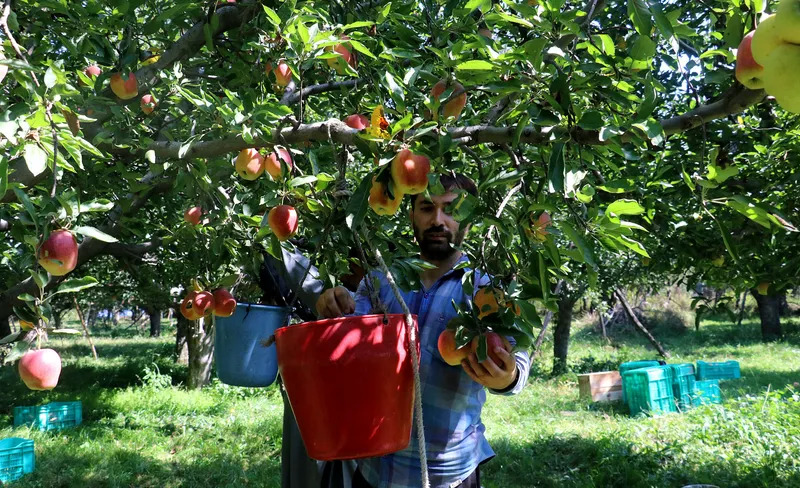
Kashmir accounts for roughly 78–80 percent of India’s annual apple production, estimated at around 25–28 lakh metric tonnes. The sector employs nearly 3.5 million people directly and indirectly and contributes more than 8 percent to the region’s GSDP. In villages across the Valley, apple orchards are not just farmland; they are generational legacies.
“I’ve spent my life nurturing these trees, just like my father and grandfather did,” said Basharat Ahmad, an orchardist from Budhan in north Kashmir. “But now, with these trade tensions, our entire way of life feels like it’s under attack.”
Tariffs, waivers and a changed equation
Under the evolving trade understanding, India has reportedly agreed to reduce tariffs on a range of American goods, including food and agricultural products. For apple growers in Kashmir and Himachal Pradesh, the possibility of a zero-duty regime on US apples is particularly alarming.
Until 2019, the United States faced a 50 percent duty on apple exports to India. After Washington raised tariffs on Indian steel and aluminium, New Delhi imposed an additional 20 percent retaliatory duty on US apples and walnuts. That move dramatically altered trade flows. Imports of US apples plummeted from 1,27,908 tonnes in 2018-19 to just 4,486 tonnes in 2022-23. Other countries – Turkey, Italy, Chile, Iran and New Zealand – filled the gap.
When India removed the additional 20 percent retaliatory duty in 2023, the government maintained that the original 50 percent Most Favoured Nation (MFN) duty remained intact. It also introduced a Minimum Import Price (MIP) of Rs 50 per kg for apples (excluding Bhutan), arguing this would prevent “flooding” and “predatory pricing.”
Now, growers fear that if tariffs are slashed further, or waived entirely, those protective layers may disappear.
“We think any move to reduce tariffs on imports of American fruit would be detrimental to our horticulture,” warned Bashir Ahmad Basheer, president of the Kashmir Valley Fruit Growers Cum Dealers Union (KVFGU). “When you have American apples available at cheaper rates relative to Kashmiri apples, this will threaten the viability of our horticulture sector.”
An uneven playing field
The structural imbalance between Indian and American apple farming adds to the anxiety. Domestic growers estimate that Indian orchards yield 7–8 tonnes per hectare on average, while growers in the US and other advanced horticulture economies can produce between 40 and 70 tonnes per hectare, thanks to superior mechanisation, high-density planting, and state support.
Former Kashmir Chamber of Commerce and Industry (KCCI) office-bearer Nasir Hamid Khan captured this disparity starkly in a recent article published in a local Kashmir daily: “I do not see how our farmers would compete with the industrialised, advanced farmers of the United States. They are 200 years ahead.”
That comment reflects more than frustration. It highlights a core structural concern: productivity gaps, access to technology, supply chain infrastructure, and cold storage capacities place Kashmiri growers at a significant disadvantage in a free-market scenario.
Even without American competition, the industry has been under strain. Growers already contend with erratic weather, scab and mite infestations, rising pesticide costs, expensive transportation, inadequate cold storage, and periodic market gluts. The devastating floods of 2025, which led to large quantities of apples being dumped along roads and into water bodies due to disrupted transport, remain a painful memory.
According to National Conference spokesperson Imran Nabi Dar, the sector has suffered losses of around Rs 2,000 crore this year due to adverse weather, road closures and floods. “Kashmiri apples are not only superior in taste but are also highly beneficial for health. No foreign apple can compete with the quality of Kashmiri produce,” Dar said, urging the Centre not to grant tax exemptions to imported fruit.
Monopoly fears and market dynamics
Some analysts warn that a complete waiver of duty for US apples, while other countries continue to face MFN tariffs, could distort the market. Nasir Hamid Khan argued that such a scenario could effectively hand the US a dominant position in India’s apple import market, displacing competitors and creating what he described as a de facto monopoly.
While India imports roughly five lakh tonnes of apples annually, projected to rise further, a sudden surge in competitively priced American produce could exert downward pressure on domestic prices. For a sector where margins are already thin, even a modest price crash can ripple across the Valley’s economy.
The KVFGU has gone a step further, demanding not only resistance to tariff reductions but an increase in tariffs to 100 percent on American apples. “Government will have to do this. Without such measures, horticulture will no longer be the mainstay of Kashmir’s economy,” Basheer said.
Carpets and the reciprocity question
The trade deal’s implications extend beyond horticulture. Kashmir’s handicrafts – carpets, shawls, papier mâché and artisanal goods – also face headwinds.
Previously, Indian carpets entering the US reportedly attracted a relatively low duty of around 2.9 percent. Under recent tariff revisions, that figure has surged, first through retaliatory measures and penalties, and now to what is described as an 18 percent “reciprocal tariff rate.”
For exporters already operating on tight margins, an 18 percent duty in a key market like the US is significant. The sector fears paused orders, renegotiated contracts and deferred payments.
Nasir Hamid Khan questioned the logic of calling the new tariff structure reciprocal. In his words, only those who negotiated or welcomed the deal “would be in a position to explain the reciprocity of the deal and how a whopping six-fold increase to 18 percent could be termed as a landmark step.”
Nasir argued that the KCCI, instead of celebrating the deal, should have acknowledged the risks posed by higher tariffs on handicrafts and the waiver of duties on US agricultural products.
“It is time that the Kashmir Chamber of Commerce and Industry understood the fact that the body is the most important watchdog of economic interests of Kashmiris,” he wrote, suggesting that silence on critical economic issues has “irreparably” hurt local interests over the years.
Between geopolitics and ground reality
From New Delhi’s perspective, negotiating tariff adjustments with Washington may be part of a larger strategy to manage escalating global trade tensions. The US has described its tariffs as a response to what it sees as India’s “excessively high” duties on American products. For India, the calculus may involve preserving broader strategic and economic ties with the US, even at the cost of sectoral concessions.
But in Kashmir, where the economy is narrowly concentrated and deeply agrarian, the impact is felt more directly.
The uncertainty itself is damaging. Exporters are reassessing pricing models; orchardists are calculating potential losses; traders are watching for signs of policy clarification on minimum import prices and safeguard mechanisms.
The road ahead
Much remains unclear. Will the Minimum Import Price remain in force? Will safeguards be introduced to prevent predatory pricing? Will negotiations lead to a softening of US tariffs on Indian handicrafts? Or will Kashmir’s growers and artisans have to adapt to a more competitive, less protected marketplace?
For now, the Valley’s apple economy stands at a crossroads. The stakes are not merely commercial.
As Basharat Ahmad looks over his orchard in Budhan, the trees are preparing for another season. But the question looming over Kashmir’s hills is whether global trade diplomacy will allow those trees, and the millions who depend on them, to continue bearing fruit.
Bollywood’s steady arrival in Rajasthan’s Mandawa has created jobs, boosted tourism, and renewed attention to its heritage havelis. But beneath this growth lies a discreet network managing locations, logistics, and clearances, quietly reshaping the town’s economy and relevance. A report by Tehelka SIT
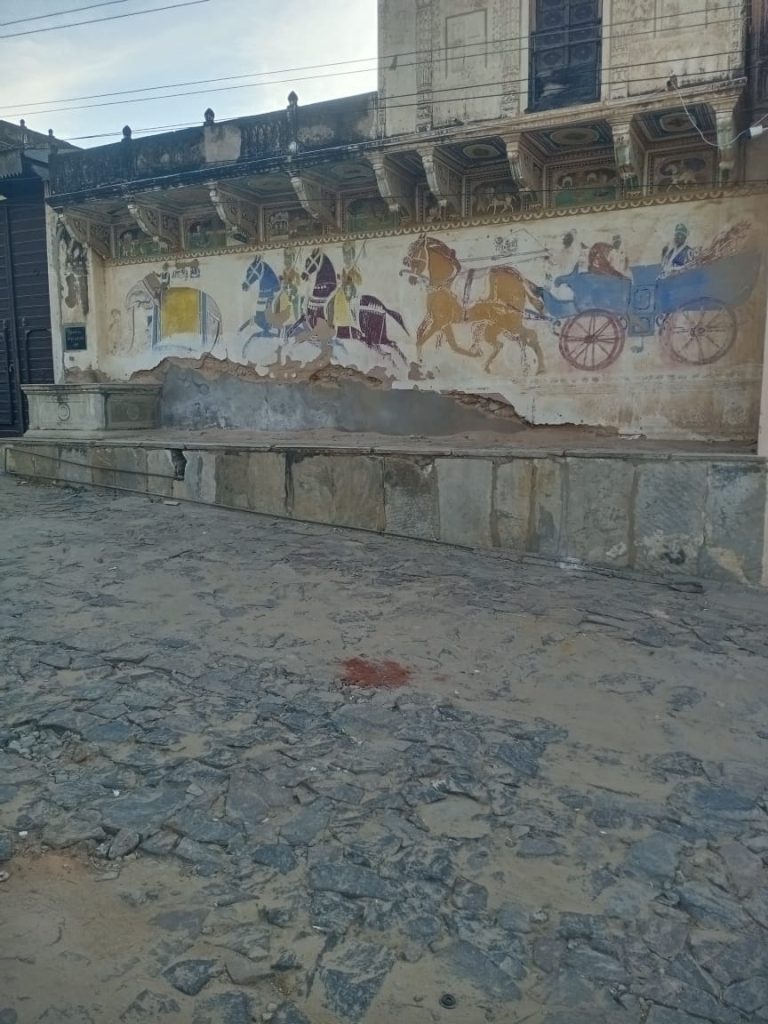
Behind the painted havelis of Mandawa in Rajasthan lies a lesser-known world shaped by Bollywood’s frequent visits. For years, film crews have lived, worked, and left their imprint on this quiet heritage town.
But beyond the glamour and economic buzz, locals speak of private habits of film stars, special arrangements, and quiet transactions rarely seen by the public eye. Tehelka’s investigation pieces together these firsthand accounts to reveal how Bollywood’s presence has truly reshaped Mandawa—both visibly and behind closed doors.
“Actor Salman Khan’s food used to be cooked in red wine, and I can vouch for this, because I used to issue red wine from the bar to Salman’s cook, who had come with him from Mumbai. His cook used to prepare mutton and chicken for him in oil, and instead of water, they used to add red wine,” said Pooran Singh, a bar manager at a heritage haveli in Rajasthan, to Tehelka’s undercover reporter.
“After completing his day’s shooting, Salman Khan would go to the gym, and after that, around 7 pm every day, he would sit on the rooftop of the haveli with director Kabir Khan, his bodyguard Shera, and others, drinking Bacardi White Rum. They used to drink till 2 am, and I was the one who made pegs for them. It was the winter season, so they sat on the roof with gas heaters around, and Salman would drink so heavily that he could barely walk properly once he was done,” added Pooran.
“I have also served actor Aamir Khan at my haveli. Whenever he returned from shooting, he used to ask for fresh juice. He ate dal and rice with his hand and used to lick his fingers; he never used a spoon. Aamir is a nice man. He stayed at our haveli with actor Sanjay Dutt, actress Anushka Sharma, and director Rajkumar Hirani,” said Pooran.
“I also like actor Ajay Devgn. He used to drink alcohol inside his room, and often asked me for a beedi, which he smoked. Once, when a beedi could not be arranged but he insisted on one, I told him the haveli chowkidar smoked beedi. He went to the chowkidar and smoked beedi with him,” said Pooran.
“Earlier, only foreigners used to come to this place. Now, after Bollywood began shooting here, it has become popular among Indians as well,” added Pooran.
“This place is also famous for destination weddings, not only among Indians but also foreign nationals. In the last 12 destination weddings at my haveli, either the boy or the girl was a foreigner,” said Pooran.
“I have met around 50 film stars so far at this place, like Vijay Varma and others. I cannot even remember all their names properly. Recently, I met actor Saif Ali Khan, who was shooting for his film Jamhooriyat here,” said Deepak, a staff member at a heritage haveli.
“The Bollywood likes this place for shooting, and it is called Mini Mumbai because it is full of heritage havelis. People of this area are also getting employment because of film shoots. For one film shoot, around 1,000 people are needed for various purposes, and all of this comes from the local area, giving them employment,” added Deepak.
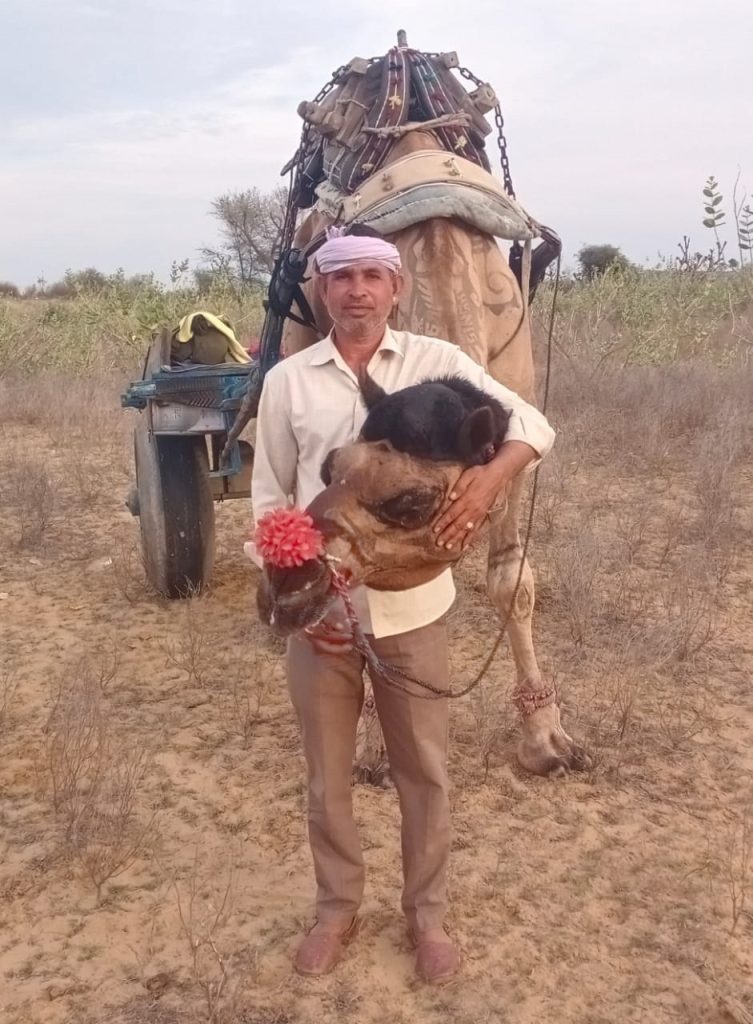
“My camel has been used in five to seven films shot here. With this place becoming Bollywood’s favourite destination, many films are shot here, generating employment for locals. They do not just require my camel; sometimes they require bullock carts, horses, vehicles, and more. All this creates work opportunities for locals,” said Gopal Singh, a camel cart owner.
“For the last 20 years, I have been in the film production business in this area and have worked on around 20–22 films. Blockbusters like PK, Bajrangi Bhaijaan, Jab We Met, Love Aaj Kal, Shuddh Desi Romance, and others were were shot here with my logistical support. Filmmakers from Mumbai and Delhi approach me three months in advance for haveli bookings and logistics. I arrange everything, including permissions from the local administration,” said Sandeep Singh, a government-approved tour guide.
“Bollywood loves shooting here because the architecture of the havelis resembles that of Pakistan, so films based on Pakistan are shot here to create that feel. Secondly, all categories of havelis are easily available. Film shoots have also generated employment in this area,” added Sandeep.
“For film shoot permissions, I often pay money under the table to the local officials,” Sandeep claimed.
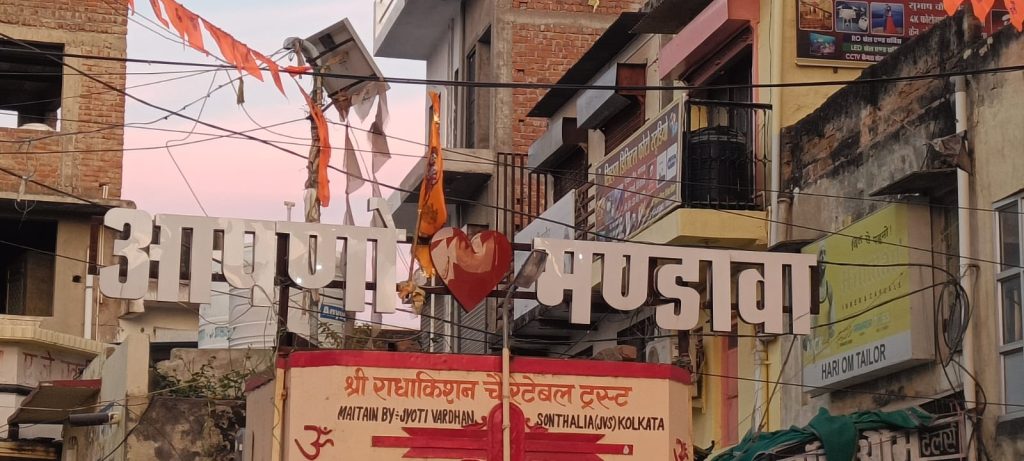
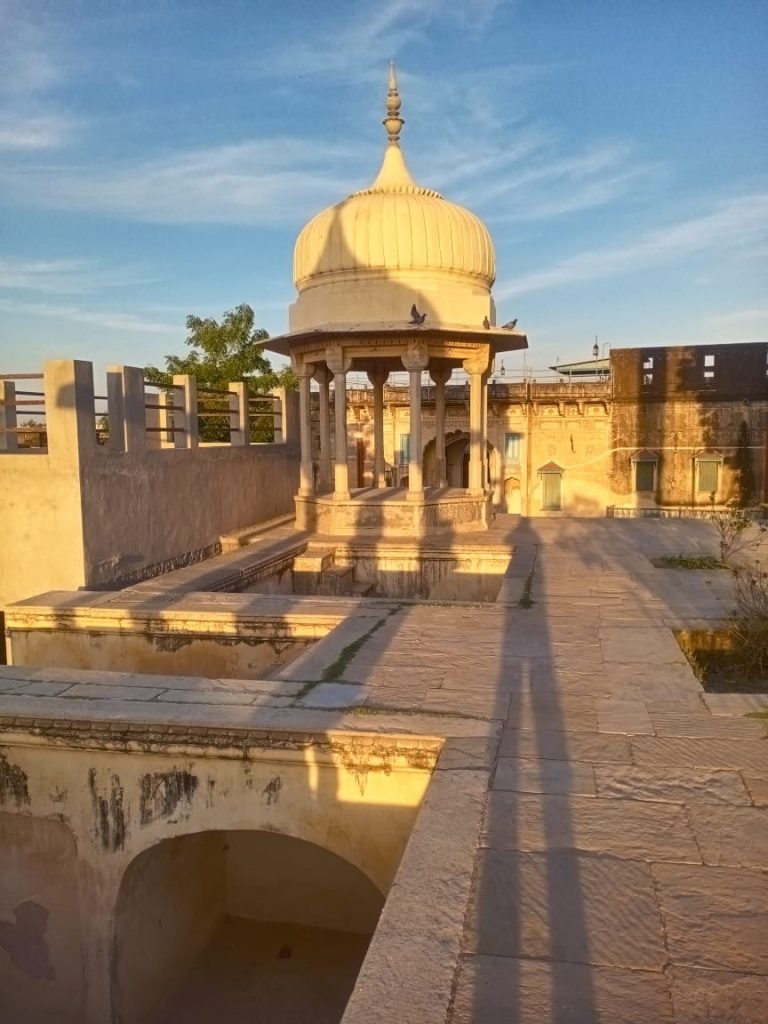
The above excerpts are accounts from residents of Mandawa, a historic town in Rajasthan’s Shekhawati region in Jhunjhunu district. Founded in 1755 by Thakur Nawal Singh, Mandawa is widely featured in the media as an “open-air art gallery” famed for its painted havelis and as a premier Bollywood filming location. It is also known for its heritage hotels, including Castle Mandawa. Once a key stop on historic trade routes, the town attracted wealthy merchants who built elaborate homes, making it a major tourist destination known for its architecture, art, and film shoots. Local residents take immense pride in their cultural heritage.
Mandawa’s havelis were primarily built by wealthy Marwari merchant families such as the Goenkas, Chokhanas, and Ladias between the 18th and 20th centuries. These traders, enriched by caravan commerce, constructed opulent fresco-covered mansions as status symbols and family homes. Many Bollywood films, including Ae Dil Hai Mushkil and Mimi, were also shot here. Mandawa remains deeply connected to the Marwari community. Though many later migrated to cities like Kolkata, Mumbai, and Ahmedabad, the town continues to serve as a cultural anchor.
Despite its rich heritage and popularity as a filming destination, Mandawa has not received the sustained national attention it merits. It has, in many ways, become a forgotten town, even as major productions continue to shoot there. Recently, Saif Ali Khan wrapped up a film shoot in the town.
Tehelka travelled to Mandawa and met several locals who narrated lesser-known stories of Bollywood stars who came there for film shoots. In this course, we met bar manager Pooran Singh, presently working at Vivaana Culture Hotel.
In the exchange below, Pooran recounts an incident from 2015, when Bollywood star Salman Khan came to Mandawa for the shooting of his film Bajrangi Bhaijaan. At the time, Pooran was working at the heritage haveli Castle Mandawa, where Salman Khan and his film unit were staying. According to Pooran Singh, Salman’s meals were prepared using red wine by cooks who had accompanied him from Mumbai and were given a separate space in the kitchen. Pooran said he could vouch for this, as he personally issued red wine from the hotel’s bar to Salman’s cook for preparing mutton and chicken.
Pooran- Haan, unko kitchen ka ek part de rakha tha.. wahin banate they wo.
Reporter- Kya- kya banate they?
Pooran- Wo pata nahi kya banate they, red wine mein banta tha itna pata hai.
Reporter- Red wine mein?
Pooran- Haan mutton, chicken sab red wine mein banta tha.
Reporter- Matlab tel ghee mein to maine suna hai.. magar red wine mein?
Pooran- Haan matlab tel mein to jaise bana diya, paani ki jagah red wine daalna hai.
Reporter- Accha, ye aapke saamne aapne khud dekha hai?
Pooran- Haan.
Reporter- Aapke saamne?
Pooran- Arey haan haan… maine hi to issue kiya tha unke liye red wine bar se.
Reporter- Accha bar bhi hai hotel ke ander?
Pooran- Haan, bar se, sir.
[The above dialogue suggests that Salman Khan’s meals were specially prepared by his own cooks using red wine in place of water. It also indicates that the hotel bar supplied the wine to the actor.]
Now Pooran Singh shared another account about actor Salman Khan, who was in Mandawa for the shooting of Bajrangi Bhaijaan in 2015. According to Pooran, after completing his day’s shoot, Salman Khan would go to the gym and then, around 7 pm every day, sit on the rooftop of the haveli with director Kabir Khan, his bodyguard Shera, and others, drinking Bacardi White Rum. Pooran said they would drink till around 2.30 am, and he was the one who made pegs for them. It was winter, so they sat on the roof with gas heaters around, and Salman Khan would drink heavily, and by the end of the night, he could not walk properly, Pooran added. Pooran also told Tehelka that he was the one serving alcohol to Salman Khan during his stay.
Pooran- Aur jo Bajrangi Bhaijaan hai Salman Khan, wo sab wahan ruke they Castle Mandawa mein…?
Reporter- Aapke saamne?
Pooran- Mein hi service karta tha Salman ko daaru ka..
Reporter- Arey nahi … kya naam hai aapka?
Pooran- Pooran Singh.
Reporter- To Salman Castle Mandawa mein ruke they?
Pooran- Haan 26 din ruka tha wo Castle Mandawa mein…
Reporter- Kaun si daru peeta tha?
Pooran- Bacardi wine.
Reporter- Bacardi Rum?
Pooran- Haan ji, sardi thi na us samay…poori bottle kheechta tha wo… khada bhi nahi ho pata tha, itni pee leta tha.
Reporter- Kya din mein pee leta tha?
Pooran- Nahi sham ko 7 baje se, chat par.
Reporter- Chat par khule mein?
Pooran- Nahi wo heater lage rehtey they gas ke…
Reporter- Akela bethta tha ya sab ke saath?
Pooran- Nahi, Kabir Khan ke saath, director ke saath, ek uska wo tha.. kya naam hai… Shera…
Reporter- Uska jo bodyguard hai?
Pooran-Haan.
Reporter- Matlab khule aasman ke neeche gas heater lagakar?
Pooran- Haan dhai baje jaata tha wo kamre mein.
Reporter- Itni pee leta tha?
Pooran- Poori bottle akele pee jata tha… Bacardi white rum..
Reporter- Aap hi serve karte they?
Pooran- Haan.
Reporter- Aapko tip diya tha?
Pooran- Diya tha jaate samay… saade saat hazaar (7.5k) …
Reporter- Aapko kam nahi laga?
Pooran- Usne nahi diya.. uske saath jo tha, usko bola “inko tip de do”.
[This interaction indicates that Salman Khan stayed at Castle Mandawa for 26 days during the shooting of Bajrangi Bhaijaan. Pooran claims the actor drank late into the night and that he himself handled the service.]
Pooran then recounted another episode involving Bollywood superstar Aamir Khan, who came to Mandawa for the shooting of PK, filmed before Bajrangi Bhaijaan. Pooran said Aamir Khan, along with his unit, also stayed at Castle Mandawa, where he was employed. He said he personally served Aamir Khan during his stay. According to Pooran, whenever Aamir returned from shooting, he would ask for fresh juice. He said Aamir ate dal and rice with his hand and would lick his fingers, and never used a spoon. “Aamir is a nice man. He stayed at our haveli with actor Sanjay Dutt, actress Anushka Sharma, and director Rajkumar Hirani,” Pooran said.
[This exchange portrays Aamir Khan as simple in his habits and disciplined in lifestyle. It suggests he avoided alcohol and kept to basic food and fresh juice. Pooran presents him as grounded despite his stardom.]
As we spoke to Pooran, he continued to share accounts about Bollywood stars who had come to Mandawa for film shoots. This time, he spoke about actor Ajay Devgn. Pooran said he liked Ajay Devgn and claimed that the actor used to drink alcohol inside his room and often asked him for a beedi, which he smoked. Pooran added that on one occasion when beedi was not available, he told Ajay Devgn that the haveli’s chowkidar smoked beedis. The actor then went and sat with the chowkidar to smoke one. Pooran also says he worked there for 11 years and saw several major actors. He mentions the visits of Rishi Kapoor, Sushant Singh Rajput and Parineeti Chopra during the shooting of Shuddh Desi Romance.
Reporter- Aapko kaun accha laga?
Pooran- Mujhko sabse accha laga Ajay Devgan, usko beedi chahiye hoti hai.
Reporter- 11 saal mein 3 superstar ko dekh liya aapne?
Pooran- Rishi kapoor ko bhi dekha, wo aaye they “Shudh Desi Romance” ke liye, Sushant Rajput aur Parineeti Chopra bhi they.
Reporter- Ajay Devgan ko kaise dekha aapne…wo daru nahi peeta?
Pooran- Wo to room se hi pee kar aata tha khana khane, phir bolta tha beedi le aa mere liye.
Reporter- Aapse bolta tha?
Pooran- Mein bola is samay to milegi nahi market band ho gaya, bola “kahin se lekar aa.” Maine bola chowkidaar peeta hai shayad, bola chawkidar peeta hai theek hai mein chala jata hoon…phir uske saath beth kar beedi pi usne..
[This account suggests Ajay Devgn kept simple habits despite his fame. It emerges that Pooran portrays him as informal and comfortable with ordinary staff. Such recollections show how film stars briefly become part of local life during shoots.]
Why is Bollywood coming to Mandawa, a small town in Rajasthan, for film shooting? In response, Pooran said Mandawa is considered lucky for Bollywood, and most of the films shot here have gone on to become blockbusters. He mentions that Saif Ali Khan stayed there for over a month in 2025 for the shooting of his film Jamhooriyat. Pooran also says several scenes shown as Pakistan in Bajrangi Bhaijaan were actually shot in Mandawa and nearby places.
Reporter- Aisa kyun hai Bollywood Mandawa-Rajasthan mein zyada shooting karta hai?
Pooran- Bolte hain jo Mandawa mein shoot hoti hai, wo film superhit hoti hai.
Pooran- Abhi Saif Ali Khan bhi rehkar gaya peeche, us samay garmi thi; August ka mahina tha.
Reporter- Kis film ke liye?
Pooran- Jamhooriyat.
Reporter- Jamhooriyat?…. Jamhooriyat ki shooting kab hui hai ?
Pooran- August-September mein hui thi.
Reporter- 2025 mein? Kitne din raha wo?
Pooran- Ek mahine se zyada.
Pooran- Aapne Bajrangi Bhaijan film dekhi? Usmein Pakistan part hai wo poora Mandawa hai, ladki ko chodne jaata hai wo poora Jaisalmer hain, jo Om Puri Masjid se aata hai, Salman burka pehan kar cycle chalata hai.. wo poora Mandawa hai..
[The above exchange suggests Mandawa is widely used to depict Pakistan locations in films. It emerges that major actors continue to stay there for long shoots. Such accounts show how cinema quietly reshapes the identity and importance of small towns.]
Now Pooran spoke about the economy of Mandawa. He said earlier only foreign tourists visited this place, but after Bollywood began shooting films here, it also became popular among Indian visitors. He added that hotels started filling up, which in turn created more employment opportunities for locals.
Pooran- Pehle Mandawa mein sirf foreigner aate they. Jabse shooting hui hai na, tab se log aur aane lage.
Reporter- Shooting ke baad Indians aane lage?
Pooran –Haan.
Reporter- Yahan film ki shooting itni hui hai to rozi-rozgar bhi bada hai Mandawa ka?
Pooran- Haan, hotels full hone lag gaye. Usske baad bahut tourist bada hai film ki shooting se.
[This episode suggests film shooting helped boost tourism and hotel business in Mandawa. It emerges that cinema played a direct role in drawing Indian visitors. So we learn how film projects can quietly transform local economies. Such change shows the wider influence of cinema beyond entertainment.]
Now Pooran told us how Mandawa is becoming a popular destination for weddings alongside Bollywood film shoots, resulting in more employment opportunities for locals. Pooran said Mandawa is gaining popularity for destination weddings not only among Indians but also foreign nationals. He added that in the last 12 destination weddings at his haveli, either the groom or the bride was a foreigner.
Reporter- Yahan shadiyan bhi bahut hoti hain?
Pooran- Abhi hamne December mein karwai 6 shadi…
Reporter- Isi Vivaana Culture mein?
Pooran- November mein 3, January mein 1, February mein 1 karwa di.. ek aur hai.
Reporter- Bahar ke log aakar shaadiyan karte hain?
Pooran- Abhi tak 12 shadi hui hain yahan.. ya to ladka foreigner tha ya ladki foreinger thi …dono Indian nahi they koi bhi shaadi mein..
[This account suggests Mandawa is emerging as a destination wedding venue. It emerges that foreign visitors are choosing its heritage hotels for ceremonies. Tourism often grows in unexpected ways. Such trends show how heritage towns find new relevance in modern times.]
After Pooran, Tehelka met Deepak, who works as a service staff member at Vivaana Culture Hotel. Deepak told Tehelka that during his hotel industry career in Mandawa, he has met around fifty film stars. He said he recently met Saif Ali Khan, who was shooting for his film Jamhooriyat there. Deepak added that he, along with Pooran, had also served Salman Khan when they were working at Castle Mandawa. He described Mandawa as a “Mini Mumbai,” saying Bollywood loves shooting here because of its heritage havelis. Deepak also said film shooting has created many employment opportunities for the local people.
Reporter- To aap kis se mile Deepak?
Deepak- Mein kareeb 50 (film actors) se mil chukka.
Reporter- 50 stars.. kaun- kaun hain?
Deepak- Vijay Verma hain, aur bahut se hain inke to naam bhi yaad nahi.
Reporter- Haal mein filhaal kis se mile ho?
Deepak- Saif Ali Khan se.
Reporter- Kaun si film ki shooting chal rahi hai?
Deepak- Jamhooriyat ki. Iissey pehle 120 Bahadur ki.
Reporter- Tum itne star se mil liye.. sabse accha kaun laga?
Deepak- Aamir Khan.
Reporter- Itni filmon ki shooting kyun hoti hai Deepak Mandawa mein?
Deepak- Small Mumbai hai.. mini Bombay.
Reporter- Kyun aate hain sab itna?
Deepak- Kyunki jagah aachi hai, haveliyaan hain.
Reporter- Janta ko kaise fayda hua hai, local aadmi ko?
Deepak- Janta ko…jaise local crowd chahiye hota hai, security chahiye hota hai, parchoon dukan sab, tent hain, sab cheez to lekar aa nahi sakte shooting mein..ek shooting mein kam se kam 1,000 log chahiye hote hain, 1000 to chal nahi sakte, wo kareeb 300 aadmi chalte hain, phir 700 aadmi idhar ke local hi chahiye hote hain na, jaise gadiyan hain.
Reporter- Film ki shooting se rozgar bada hai iska matlab.
Reporter- Bajrangi Bhaijaan mein aap hi they?
Deepak- Haan.
Pooran- Iski aur meri duty thi Salman ke saath.
Reporter- Daru peeta tha wo kyu Deepak?
Deepak- Haan.
Pooran- Aur wo salaad bhi nahi leta tha daru ke saath, cigarette peeta tha daru peeta tha.
[The above dailogue suggests film shoots provide large-scale local employment in Mandawa. It emerges that productions depend heavily on local manpower and services. Cinema here is not just glamour; it functions as an economic engine for the town.]
After Pooran Singh and Deepak, Tehelka met Gopal Singh, a camel cart owner who uses his camel for commercial purposes. He told the Tehelka reporter that since Bollywood started shooting in Mandawa, many job opportunities have been generated for the local people. He says filmmakers hire vehicles, camels, bullock carts, and horses from nearby people. Gopal adds that hotel owners inform him whenever such work is needed.
Reporter- Film industry jab se Mandawa mein aayi shooting karne to yahan logon ko rozgar bhi mila?
Reporter- Aapko kaise pata chalta hai shooting ka?
Gopal- Mandawa mein hotel wale hain unse contact hai mera. Jab unko zaroorat hoti hai, wo hotel walon ko boltey hain, hotel wala humko bula leta hain.
[This account shows film shooting creates practical jobs for ordinary villagers. Gopal says filmmakers hire vehicles, camels, bullock carts, and horses from nearby people. Gopal adds that hotel owners inform him whenever such work is needed. He stays in touch with hotels to get these assignments. His account shows how locals are directly linked to film activities.]
The brief interaction with Gopal Singh shows how Mandawa’s film activity has reached ordinary workers like him. He confirms that filmmakers from Mumbai regularly come here and that the town is seen as a film city. Gopal explains that while he himself does not act, his camel is hired for shoots and he goes along with it. He recalls his camel’s role in several films and mentions a recent shoot, though he cannot remember its name. This shows how film work has quietly entered everyday lives in Mandawa.
Reporter- Accha Mumbai se bahut sare filmmakers yahan aate hain Mandawa mein?
Gopal- Haan, aate hain.
Reporter- Mandawa ko kehtey hain film city?
Gopal –Haan..Film city.
Reporter- Bajrangi Bhaijaan, PK.
Gopal- Kacche Dhaage.
Reporter- Haan to kitni filmon mein aapne kaam kiya hai?
Gopal- Lagbhag 5-7 filmon mein kaam kiya hai.
Reporter- Aapne?
Gopal- Haan, mera camel jaata hai.
Reporter- Aap jaate ho ya camel?
Gopal -Camel ke saath mein bhi to jata hoon na, sir.
Reporter- Kaun-kaun si film mein aapke camel ne kaam kiya hai?
Gopal- Punjab ki aayi thi, naam to yaad nahi hai mujhe,
[Gopal told Tehelka that his camel has been used in at least five to seven film shoots. This exchange shows how a camel owner has found work because of film shoots in Mandawa. It shows how cinema lifts small livelihoods. We learn that film activity is not glamour alone but daily income for locals.]
Now Tehelka met Sandeep Singh, a government-approved and well-known tour guide of Mandawa, who said he has also been involved in film production for a long time. He told Tehelka that before coming to Mandawa for a shoot, Bollywood film producers and directors call him about three months in advance and inform him about the locations they require. According to their needs, he arranges those locations for them, said Sandeep.
Reporter- Kaun kaun si filmon ki shooting hui hai yahan?
Sandeep- PK ki, Bajrangi Bhaijaan, Mimi ki, Jab we Met, Love Ajkal ki hui hai, Shudh Desi Romance, Mirziya ki hui hai. Ye sab to maine karwa rakhi hai.
Reporter- Matlab?
Sandeep- Mandawa mein kaam karta hoon film production ka, jab bhi unhe zaroorat padti hai, Bombay se aa rahe hain, Delhi se aa rahe hain, kareeban 2-3 mahine pehle hamara kaam shuru ho jata hai, pehle hamko unhe location bhijwani padti hai, hum image bhejte hain, kaisa makaan wagera poora page bana rakha hai hamne. Phir wo aa kar yahan dekhtey hain, kaunsa unhe pasand aaya phir uske maalik se baat karni hoti hai, wo sab hum karte hain. Phir jab clear ho jata hai mamla tab collector se permission letey hain, film shuru kartey hain, kitna bada celebrity aa raha hai, uske liye kitni security chaiye, wo karte hain.
[In this interaction, Sandeep explains his role in arranging film shoots in Mandawa. He says he works with film production teams and helps them find suitable locations. It becomes clear that people like Sandeep play a key role in connecting filmmakers with the town. Such work quietly strengthens the local economy.]
In this exchange, Sandeep Singh explains how official permissions are obtained for film shoots in Mandawa. He says he handles all paperwork and clearances from the Collector and other authorities. However, he also indicates that the process is not straightforward and bribes have to be paid to the local administration to secure permissions and complete other arrangements for Bollywood film shoots.
Reporter- To ye sari permission DM se, collector se?
Sandeep- Sab mein hi karta hoon.
Reporter- Sab aasani se ho jaati hai kya?
Sandeep- Lagta hai usmein kuch…poora paper work hota hai, aasani se nahi, table ke neeche se…
Reporter- Accha paisa waisa dena padta hai?
Sandeep- Haan.. hum sab dekh lete hain.
[This account indicates that securing shooting permissions may involve more than formal paperwork. It emerges that unofficial payments smoothen the process. Sandeep makes it clear that he manages these arrangements himself.]
Sandeep said that he has been associated with film production for the last 20 years. He revealed that he has helped arrange around 20–22 film shoots in Mandawa over the past two decades. He also narrated to Tehelka how he first came into contact with Bollywood. He explains that his link with the film industry began in 1999, when filmmakers stayed nearby and used STD-PCO booth near his shop to make calls. Through these regular contacts, he slowly built trust and connections. What began as a small service point turned into his entry into film production work. Over time, he became a key local person for arranging shoots.
Reporter- Kitni shooting ho chuki Mandawa mein?
Sandeep- Kareeb 20-22 hum karwa chuke hain.
Reporter- Aapne ye pakad kaise banai Bollywood mein?
Sandeep- Kareeb 20 saal se kar raha hoon.
Reporter- Shuruaat kaise hui?
Sandeep- Jab Kacche Dhaage film bani Ajay devgan ki, us time kya tha communication ki ye cellphone nahi they. Aur meri ye shop hai handicraft ki, us time yahan par STD-PCO laga rehta tha… reality bata raha hoon mein aapko.
Reporter- Ye 1998-99 ki baat hai ?
Sandeep- Ye 1999 ki baat hai. To jo bhi director, aur log.. to ye samne Castle Mandawa mein hi hotel hai, usi mein wo sab ruke they. Jab unko koi phone karna hota tha, wo yahin aate they, to wo log baatchit karte they, jaise hame ye cheez chahiye, wo cheez chaiye…
Reporter- Matlab STD-PCO booth ne aapko film industry se jodh diya.
[This exchange shows how a simple STD-PCO booth opened the door to Sandeep’s film work. We learn that long association and trust built his strong links with Bollywood. Through these regular contacts, he slowly built trust and connections.]
In this exchange, Sandeep explains why filmmakers repeatedly choose Mandawa for their shoots. He says the town’s haveli architecture closely resembles Mughal-era buildings seen across the border, allowing it to easily double for Pakistan on screen. He also points to the wide range of hotels available in and around Mandawa. This makes it easier for entire film units to stay nearby without logistical strain.
Reporter- Film industry ke log Mandawa kyun pasand karte hain shooting ke liye?
Sandeep- Uska sabse bada reason jo hai ye hamari Mandawa mein jo haveliyaan hain, unka jo architecture hai plus Pakistan mein jo haweliyaan hain unka architecture—Mughal architecture, wo similar hai. Mostly filmon mein jo Pakistan ka scene dikhana hota hai wo sab Mandawa mein hai.
Sandeep- Doosra reason ye hai ki yahan har category ke hotel available hain, to unka jo unit ke rukne ka hai, wo sab yahan easily available hai, kai baar unko jaise location pasand aa gayi lekin 20-30 km tak rukne ki vyavasta nahi hai. To yahan kya hai har category ke hotels hain…
[This exchange shows why filmmakers keep returning to Mandawa as it offers Pakistan-like visuals without leaving India. Sandeep’s remarks show that visual similarity and practical convenience together make Mandawa a preferred filming base. It is apparent that heritage alone is not enough—facilities matter equally.]
In this exchange, Sandeep explains how film shoots create steady work for locals in Mandawa. He says filmmakers need local people to appear in scenes, including women, men and children. He arranges them and ensures they are paid for their roles. He adds that haveli owners also earn money when their properties are used. His account shows how film activity spreads income across the town.
Reporter- Yahan rozgar accha milta hoga logon ko?
Sandeep- Haan rozgar accha milta hai. Pehle to ye hai ki jaise shooting ho rahi hai, unko local crowd chahiye, to jaise 50 auratein, 20 aadmi, bacche wo sab mein arrange karta hoon, sabko paise miltey hain, mere ko milte hain, mere through unko milte hain. Jab haweli mein koi shoot hota hai to unke owner ko paisa milta hai.
[This exchange highlights the direct link between film shoots and local livelihoods. Residents earn as crowd actors, fixers and property owners. It emerges that cinema brings income beyond glamour. Such dependence quietly ties Mandawa’s economy to Bollywood’s presence.]
Before our conversation drew to close, Sandeep Singh said that he and his younger operate Mandawa Production, a company that handles end-to-end arrangements for film shoots, including security, catering and other on-ground support.
Reporter- Bouncers sabhi ke aate hain?
Sandeep- Haan, waise wo bhi hum provide karwate hain, Jaipur mein mera dost hai, jitney bouncers chahiye mil jaate hain, unhe local mein jo kuch chaiye hota hai, even catering etc. bhi karwate hain hum. Mera Mandawa production house hai, mein hoon, mera chota bhai hai.
Reporter- Mandawa production house se company banai hui hai?
[Sandep’s role goes beyond guiding and includes handling ground logistics for film units. This shows that film shoots depend heavily on local operators who manage security and daily needs. It emerges that such middlemen have become essential to the system.]
According to Sandeep, he provides everything on demand—even drugs—when clients, whether European or Indian, ask for them. Mandawa is a quiet town, just a six-hour road journey from Delhi, and it has maintained its originality, away from commercialisation. Sandeep said there are more than 3,000 heritage havelis in the Shekhawati region, of which Mandawa is a part. He said these havelis are not yet declared heritage by UNESCO, but efforts are underway to secure that certification.
Sandeep added that ninety percent of the havelis belong to Marwari Baniya families who migrated elsewhere but retained caretakers for the properties. Ten percent of the havelishave been sold to wealthy locals or businessmen from Delhi and other cities, and are now being converted into heritage hotels. Unsold havelis are rented for film shoots for Rs 1 lakh per day or more, depending on their condition. This also reveals the informal networks quietly sustaining Mandawa’s growing film-linked economy behind its preserved façade.
by Jayanta Ghosal Donald Trump, the president of the United States, famously claimed to have prevented eight conflicts. He was credited with averting eight conflicts. That made him an aspirant for the Nobel Peace Prize. Additionally, an attack on Iran occurred during the time of peace negotiations, as directed by the same Donald Trump. Who was the primary attacker? Israel. America and Israel worked together to execute it. They had already invaded Iran together and caused damage eight months prior. Numerous Iranian army officials lost their lives. Even Iran’s nuclear program has caused Israel and the United States a great deal of trouble. That, too, they had attacked. However, Ayatollah Ali Khamenei, Iran’s supreme religious leader, was assassinated this time.
Both Trump and Benjamin Netanyahu, Israel’s Prime Minister, view this as excellent news. Iran’s ballistic and nuclear programs continued under Khamenei. Khamenei had restricted Iranian citizens’ rights. They desired Iran’s existing Islamic government to be overthrown. They sought an Iranian administration that would not pose a threat to them and would prevent Iran from developing ballistic missiles and nuclear weapons. In other words, Khamenei was a threat to the US and its citizens. Following the Islamic Revolution in 1979, Iran’s 38-year Pahlavi monarchy came to an end, and Islamic governance took over. Khamenei had said that America was plotting to overthrow him after all these years. However, the recent events demonstrate that the war has not ended, as Iran has once more threatened to invade.
Iran, according to modern history, does not lower its head. Israel and numerous Western nations opposed Iran under US guidance. Iran, however, is against this circumstance. Iran has initiated counter-operations, and it appears that it won’t stop. Iran, moreover, is also pursuing retaliatory strikes. The subject of Iran’s future course is now very important. This is because, after 47 years, this is the largest challenge facing the Islamic Republic. What is being watched is whether Iran will now approach Trump with some understanding rather than conflict, or whether it will respond differently. The question of who will be the next man is also becoming increasingly difficult. One thing is certain, though: the Third World War may not be occurring in reality. However, several types of wars are raging all over the world.
Russia and Ukraine, for example. NATO is supporting Ukraine in the conflict between Russia and Ukraine. Once more, the United States frequently threatens to attack Taiwan. China and Taiwan are still at odds. And America declares, “We’re going to conquer Taiwan.” China and the United States are experiencing a new strain. In addition, there are issues with Tibet. There has also been conflict between Pakistan and Afghanistan. Both Afghanistan and Pakistan are Muslim nations. India and Pakistan are still at odds. However, ties between India and the Afghan Taliban regime have now improved. Jaishankar recently met with the foreign minister of the Taliban. Therefore, there used to be the First World and the Second World in such a scenario—one allied bloc, which is a collection of friendly nations, and another opposed to the bloc. The new power balance that developed following the Cold War is no longer in place. America and China are now creating a new axis: America vs China. Russia is with China. Bangladesh and Pakistan likewise support China and Russia. India, a large country, is very confused. Since Iran is on one side, we also cannot deteriorate our ties with them. Since India used to import oil from Russia, Iran, and the United States, it must now buy almost 80% of its oil from the international market. Why should only one nation provide it to India? India should only accept it from America, according to America. The United States is blocking both Iranian and Russian imports. India is struggling in the midst of all of this. It is attempting to continue as a non-aligned nation while preserving ties with China and the United States. However, these intermittent conflicts—and war is never limited—are occurring despite the lack of an organised Third World War. One feature of war is that no one can predict when it will end.
The entire world is therefore engaged in a global conflict, even though the Third World War is not formally recognised. Additionally, war poses a threat to civilisation. Violence is the result of war. War hinders human progress. What are we seeking? We desire education and progress. Human welfare is negatively impacted by war. Share markets have plummeted there, and possibly all over the world. The price of gold is increasing. Inflation and price increases. So, are we in the middle of another civilizational crisis? Although the United Nations is an organisation, what part does it play in bringing about peace? People with awareness are against war. War is something that only certain leaders desire. Are they truly acting in humanity’s best interests?
The Embassy of India in Tehran said on Wednesday that Indian students, including several from Kashmir, have been moved out of Tehran to safer locations due to the ongoing strikes in the Iranian capital.
In a statement, the embassy said the relocation was carried out as a precautionary measure amid rising security concerns in the city.
“Due to the heightened risk perception in Tehran city, the Embassy of India has relocated most Indian students who were in Tehran to safer locations outside Tehran,” the embassy said.
According to the embassy, arrangements for transportation, food and accommodation have been made for the relocated students.
The mission has also set up control rooms to assist Indian nationals in Iran and coordinate evacuation efforts.
Meanwhile, videos circulating on social media on Wednesday showed students travelling on buses from Tehran to what appeared to be safer areas. Several Kashmiri students were reported to have reached the city of Qom.
However, the embassy said some students declined the relocation offer and have chosen to remain in Tehran.
For those who continue to stay in the city, the embassy said its earlier advisory remains in place.
“They have been advised to stay where they are, remain indoors as far as possible, and stay away from windows,” the advisory said.
The embassy also asked Indian nationals to exercise caution and avoid areas where protests or demonstrations may take place.
Students in Iran said they had earlier decided not to leave the country as they believed the situation might improve with diplomatic talks underway. Many also pointed out that their final examinations were only weeks away and leaving now could mean losing an academic year.
Some students also cited logistical challenges, noting that only two flights per week operate between Tehran and New Delhi.
Back in Kashmir, families of students studying in Iran expressed concern over their safety amid the escalating violence. Parents staged sit-ins in several parts of the region, urging the government to speed up evacuation efforts.
“We have no contact with our children. We don’t know where they are and how they are,” the parents’ delegation said.
They appealed to the Ministry of External Affairs to accelerate evacuation arrangements in view of the deteriorating security situation.
The embassy has asked Indian nationals in Iran to remain in regular contact through the emergency helpline numbers issued by the mission.
On Tuesday, Omar Abdullah said students from Kashmir currently in Iran were being shifted to relatively safer locations within the country.