Saturday, December 27, 2025

Operation Sindoor—Parliament set for heated debate

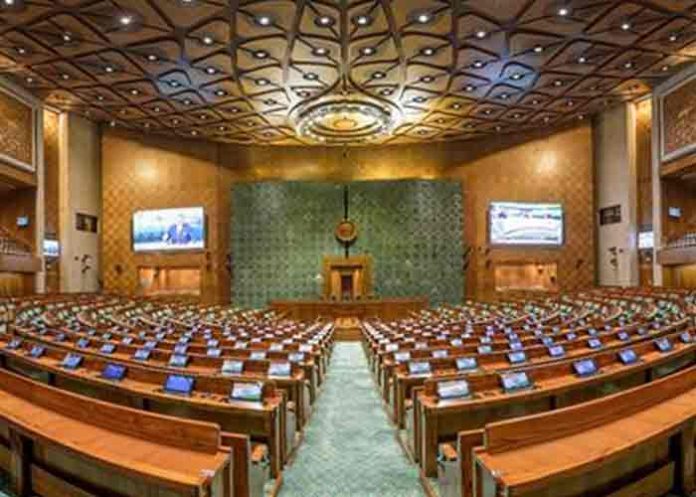
On Monday, the Lok Sabha is scheduled to begin debate followed by the Rajya Sabha a day later.  The coming week will see the ruling BJP-led NDA and the opposition lock horns over several critical issues, fielding their best brains to outdo each-other in the two Houses
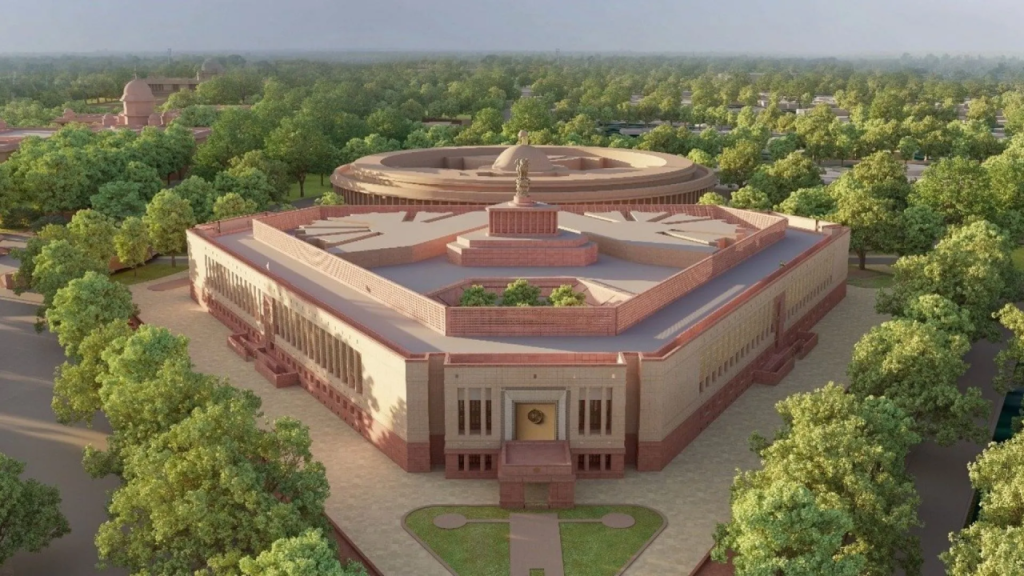
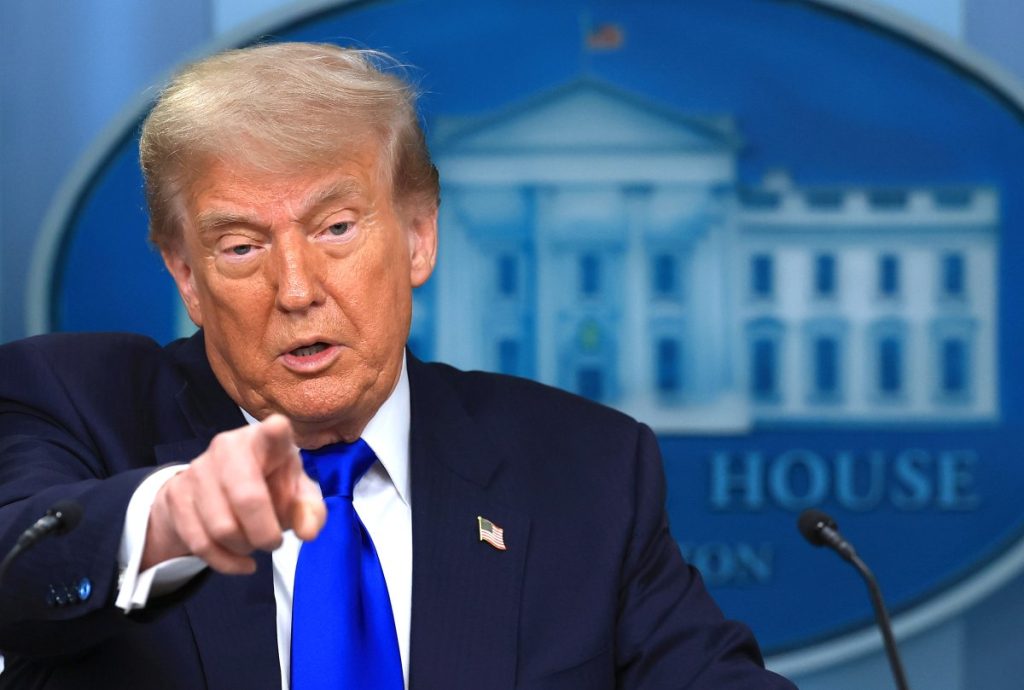
Ahead of a discussion in Parliament  on Operation Sindoor, the Congress on Sunday outlined events since the horrific Pahalgam terror attack, prominent among them being US President Donald claim “26 times” that he stopped the confrontation by threatening to cut off trade with India, whereabouts of terrorists and statements by some top government functionaries regarding “tactical mistakes.”

On Monday, the first week of incessant disruptions in the Monsoon Session is expected to give way to heated exchanges on the terror attack and the Operation Sindoor, which targeted terror sites in Pakistan-occupied Kashmir and Pakistan after Pahalgam. The Lok Sabha is scheduled to begin debate on Monday followed by the Rajya Sabha a day later with the ruling BJP-led NDA and the opposition locking horns over several critical issues, fielding their best brains to outdo each-other in the two Houses.

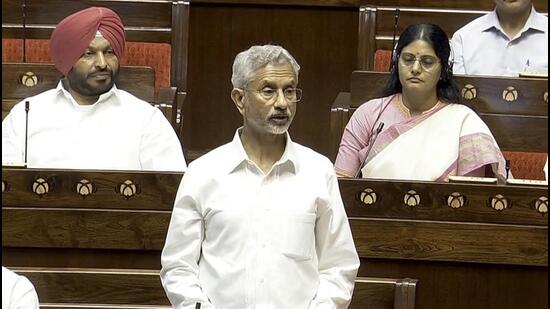
From the government side, Home Minister Amit Shah, Defence Minister Rajnath Singh, and External Affairs Minister S Jaishankar are expected to lead, with a possibility of an “intervention” by Prime Minister Narendra Modi, according to reports. Leaders of the Opposition in both Houses—Rahul Gandhi and Mallikarjun Kharge—may lead the charge with Samajwadi Party’s Akhilesh Yadav and top guns from opposition benches adding to the ammo.

Rahul Gandhi has repeatedly attacked the government’s foreign policy, claiming India did not get international support in Operation Sindoor, while also citing Trump’s mediation claims. Led by PM Modi, the BJP and the government have lauded Operation Sindoor for “meeting 100 % of its objectives and proving the mettle of country’s indigenous defence weapons.”
A day ahead of the debate in the Lok Sabha, Congress leader Jairam Ramesh also posted a long statement encapsulating the event since the horrific terror attack in which 26 innocent people lost lives. “The Pahalgam terror attacks took place on April 22, 2025. The terrorists directly responsible have still not been brought to justice. Reportedly they were involved in earlier terror attacks in Poonch (Dec 2023) and Gangagir and Gulmarg (Oct 2024),” he said

Ramesh said since May 10, Trump claimed 26 times that he stopped Operation Sindoor by threatening to cut off trade with India, and that five fighter jets may have been shot down.  “He has hosted the Pakistan Army Chief for lunch which has never been done before. The US Central Command Chief, Gen. Michael Kurilla called Pakistan a phenomenal partner in counter-terrorism operations. And just day before yesterday the US Secretary lauded Pakistan in his meeting with its Deputy PM.” he added.

Questioning the ruling side over statements by top officials, Ramesh said: “On May 30th, 2025, the Chief of Defence Staff General Anil Chauhan made significant revelations on tactical mistakes in the first two days of Op Sindoor. These revelations were made in Singapore. On June 29, 2025, the Indian Defence Attache in Indonesia, Group Captain Shiv Kumar, said that political decisions hampered military operations during Operation Sindoor and also appeared to have indicated the extent of our aircraft losses.”

The first week of session was a virtual washout, it remains to be seen how well the second week progresses.

The ruling NDA is also expected to field its members from the multi-party delegations who travelled across the world to present India’s case. It remains to be seen whether the Congress will field Shashi Tharoor, who had led one of the delegations.

Meanwhile, the ongoing Special Intensive Revision (SIR) of electoral rolls in Bihar by the Election Commission continues to be a major bone of contention between the government and the Opposition.
Trump again! About Obama, Cambodia, Thailand and Nobel Peace Prize 

Ever since he returned to the Oval Office he has been trying to be known as a peacemaker

With US President Donald Trump in the Oval Office, there cannot be a dull day or so proves his first six months in office.  

On Saturday, Trump once again took a jibe at former President Barack Obama, this time using one of the world’s most infamous police chases. Trump posted a doctored image on his social media platform Truth Social, mimicking the infamous OJ Simpson white Ford Bronco chase. The edited image shows Obama as a fugitive driving the Bronco with Trump following closely behind in a police cruiser. 

A few days back Trump shared an AI-generated video showing Obama being arrested in the President’s Oval Office by FBI agents.

Since returning to office in January 2025, Trump has intensified criticism of political opponents, especially Obama. Alleging that the federal government was weaponised against him, Trump is targeting Obama primarily in connection with the investigation into Russia’s interference in the 2016 presidential election. 

The claims are said to be unsubstantiated and widely refuted, however, there are a couple of theories why he is doing it. One is that it has got to do with Trump’s Nobel Peace Prize aspirations and another is that these are his “diversionary tactics” to take care of prevailing issues in America and, to an extent, also the recent bad press over article alleging that he wrote a lewd letter to Jeffrey Epstein for his 50th birthday.

Incidentally, the 2009 Nobel Peace Prize was awarded to Obama for his “extraordinary efforts to strengthen international diplomacy and cooperation between peoples.”

Trump—the ‘peacemaker’  

The fact is ever since he returned to the Oval Office he has been trying to be known as a peacemaker. Trump on Saturday called upon Cambodia and Thailand to put an end to the ongoing deadly border conflict, threatening them that America would not make any trade deal with them if they did not announce a ceasefire. 

Trump said the conflict reminded him of “Pakistan and India,” which he again claimed was “brought to a successful halt,” by him. Meanwhile, Cambodia has accepted his request for a ceasefire while Thailand stressed the need for a dialogue between the two countries. Both countries also “thanked him for his concern and efforts.”

Earlier on 24 June, Israel and Iran agreed to the “ceasefire mediated by the US and Qatar”

The previous evening, Trump had written that an agreement to a ceasefire between Israel and Iran for the Iran–Israel war would go into effect the following day. 

Will PM Modi’s visit to Maldives benefit its tourism industry?

In early 2024, a diplomatic row between India and the Maldives made headlines after controversial remarks by Maldivian politicians targeting Indian Prime Minister Narendra Modi’s visit to Lakshadweep. What began as a series of political jibes quickly escalated into a social media storm and eventually triggered a tourism-driven fallout. With India now actively promoting Lakshadweep as an alternative to the Maldives, the regional tourism landscape is undergoing a quiet yet significant transformation.

The controversy began when Maldivian ministers posted derogatory comments about PM Modi’s promotion of Lakshadweep as a domestic tourist destination. The remarks were viewed by many Indians as both disrespectful and diplomatically inappropriate.

What followed was a public and social media-driven backlash across India, with widespread calls to boycott the Maldives as a tourist destination.

In response, several Indian travel agencies reported cancellations of bookings to the Maldives, and many Indian celebrities and influencers endorsed Lakshadweep as a serene, untouched, and culturally rich alternative.

Capitalizing on the momentum, PM Modi shared photographs and messages highlighting the beauty and potential of Lakshadweep. With clear turquoise waters, coral reefs, and a less commercialized tourism structure, Lakshadweep suddenly emerged from relative obscurity into the spotlight.

This was not merely a travel suggestion—it was a soft power move. India’s renewed focus on developing Lakshadweep as a sustainable tourism hub sends a signal that it is both capable and willing to nurture its own island destinations without relying on foreign ones.

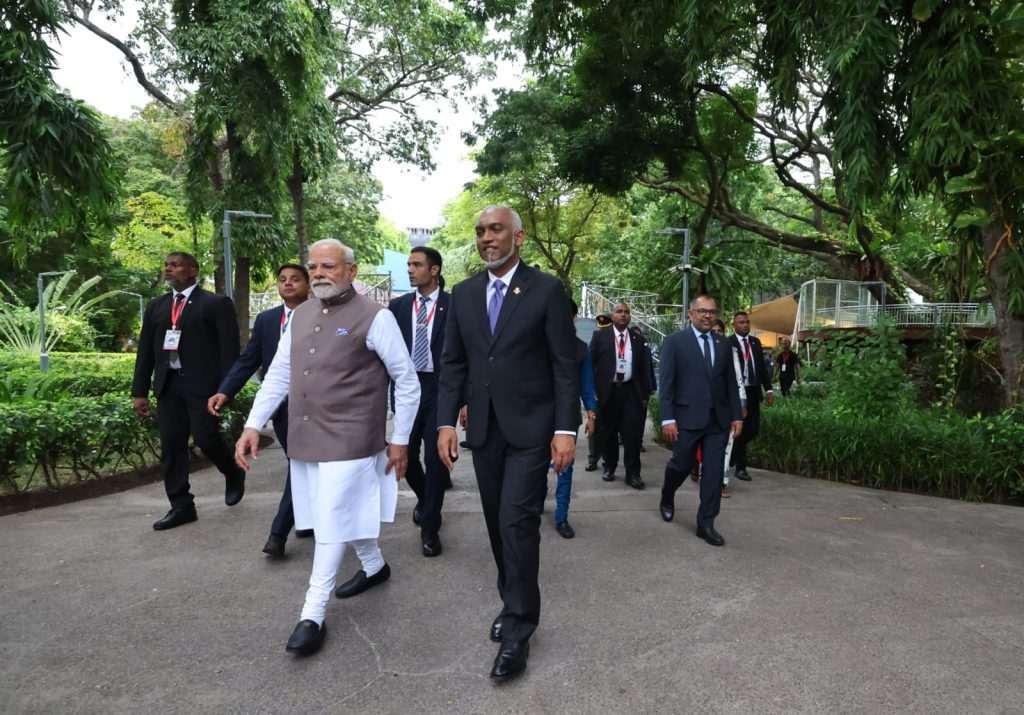
However, the recent visit of Prime Minister Narendra Modi to Maldives and signing several MoUs to boost bilateral ties could change the situation with the tourism industry of both the nations.

Aakarsh Gupta, Executive Producer, Nas Daily believes that PM Modi’s recent visit to the Maldives signals a clear diplomatic reset.

“I think it will definitely revive Indian tourist confidence. I’m actually planning my next visit there soon, and I won’t be surprised if many others follow,” he added.

He said that Lakshadweep did get a moment in the spotlight after the conflict and that’s great for Indian tourism. But until there’s serious investment in connectivity, stays, and ease of travel, it won’t replace the Maldives.

“The Maldives has spent decades building an ecosystem that welcomes global tourists. Lakshadweep is just getting started. So yes – Modi’s 2025 Maldives visit will likely shift the spotlight back, and we’ll see Indian tourists returning in big numbers. And hopefully, it also pushes India to develop its own island gems more seriously,” Aakarsh added.

Meanwhile, according to a study conducted by NumroVani, Only 15 per cent of people who answered said they were likely to arrange a trip to the Maldives in the next six months.  A big 62 per cent said they were hesitant or unwilling to travel to the location right now, mostly because they don’t trust the country, there have been recent political difficulties, and they think the Maldives isn’t ready to welcome Indian tourists now.

Sidhharrth S Kumaar, Founder, NumroVani said, “PM Modi’s trip to the Maldives is a good diplomatic move, but our data shows that Indian tourists aren’t rushing back just yet.”

“People are still apprehensive, and trust needs to be reestablished via real, long-term participation, not simply political symbolism. The mood right now is to wait, watch, and make smart choices,” he added.

The coming years will reveal whether this bold pivot yields sustained benefits or remains a symbolic move born of a diplomatic rift.

Scheme to provide legal aid to families of soldiers launched

In order to safeguard the interest of those who protect the nation, the government has come up with a new initiative named NALSA Veer Parivar Sahayata Yojana 2025.

In one-of-its-kind initiative the soldiers will be provided with legal assistance while they serve in harsh terrains and far-flung regions. This landmark judicial move sends a message: You serve the country at the borders, we will take care of your family at home.

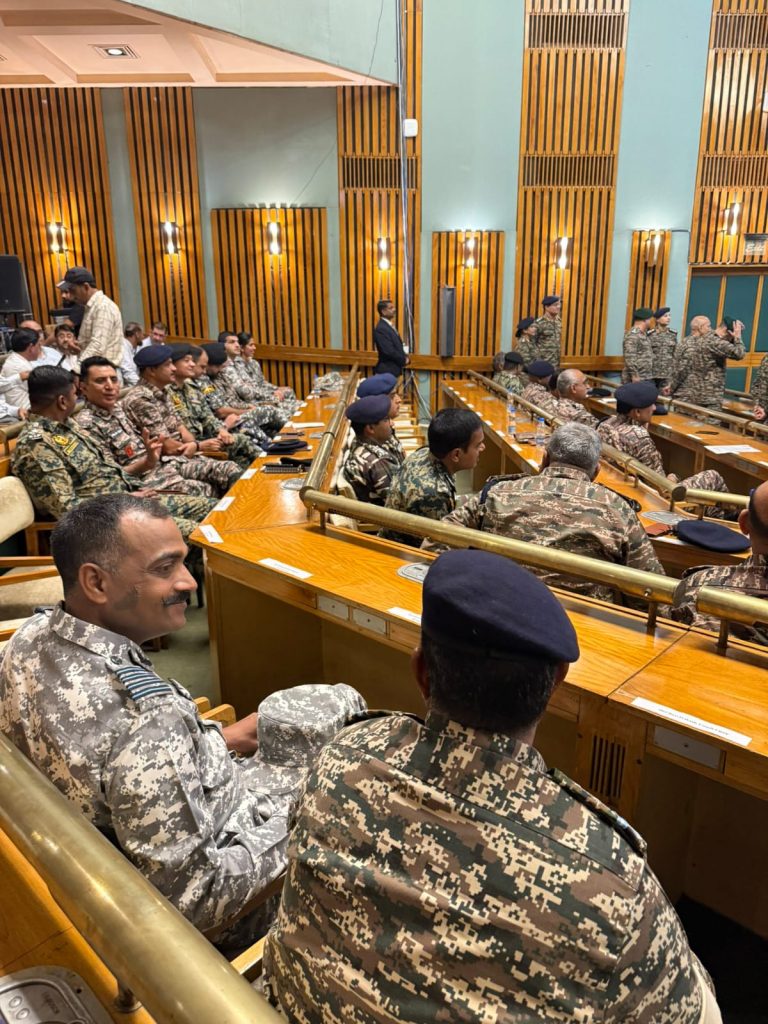
The scheme was formally launched at a conference in Srinagar by Justice Surya Kant, Executive Chairman of the National Legal Services Authority (NALSA).

The new scheme is tailored to address a longstanding issue: soldiers deployed in isolated areas often lack the ability to follow through on legal cases involving family property, domestic disputes, or land matters.

For example, a soldier stationed in Jammu and Kashmir may have limited access or zero leave to appear in court proceedings back home in Kerala or Tamil Nadu.

Under the scheme, NALSA will intervene to ensure that such cases are properly represented in courts across the country.

The support will also extend to paramilitary personnel, including those from the Border Security Force (BSF), Central Reserve Police Force (CRPF), Indo-Tibetan Border Police (ITBP), and others who serve in similarly isolated and high-risk conditions.

July 26 Kargil Vijay Diwas—more than just a date on calendar

The war ended in India’s favour with legacy extending beyond battlefield gains, it was also a victory in the hearts and minds of common Indians. It is one of the most emotional chapters in Indian military history, a powerful reminder of the lengths our soldiers can go for the country, their valour and sacrifices which continue to fill the hearts of every Indian with respect, gratitude, and pride.

Prime Minister Shri Narendra Modi today greeted the countrymen on Kargil Vijay Diwas.

“Heartfelt greetings to the countrymen on Kargil Vijay Diwas. This occasion reminds us of the unparalleled courage and valour of those brave sons of Mother India who dedicated their lives to protect the nation’s pride. Their passion to sacrifice everything for the motherland will continue to inspire every generation. Jai Hind,” he wrote on X

Kargil Vijay Diwas

Kargil Vijay Diwas is observed on July 26 every year.

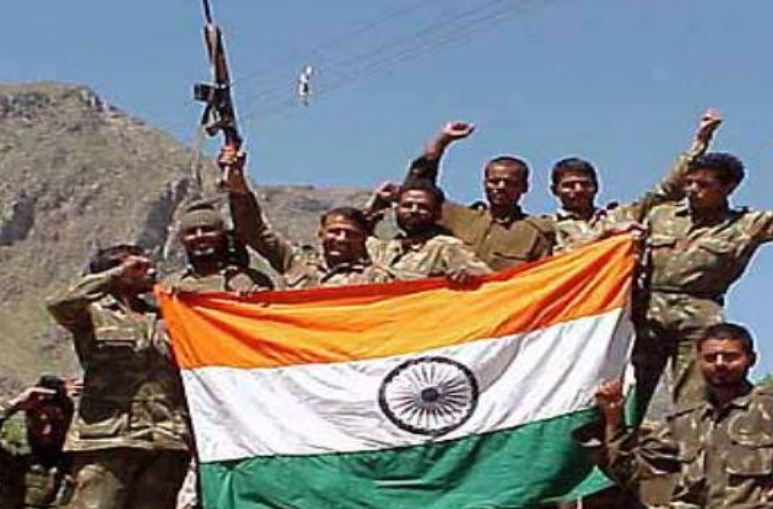
On this day in 1999, the Indian Army announced the successful culmination of ‘Operation Vijay,’ declaring victory after nearly three-month-long battle in the icy heights of Kargil, including high altitude locations like Tololing and Tiger Hill. It marks the day India regained control of the infiltrated peaks in the Kargil district of Jammu and Kashmir.

Photo: Naveen Bansal

The conflict officially ended on July 26, 1999, with India emerging victorious. However, to achieve that a price had to be paid.

The official death toll on the Indian side was 527.

More than a date

But who can forget the valour of martyrs like Captain Vikram Batra who left a lasting impact on so many lives, and others who made the supreme sacrifice. At the crucial moments of the war (capture of Point 5140 and the assault on Point 4875) Batra made the final act of sacrifice with battle cry of “Durga Mata Ki Jai,”

Batra’s “Either I will come back after hoisting the Tricolour, or I will come back wrapped in it, but I will be back for sure, “yeh dil maange more!”, Captain Manoj Kumar Pandey “if death strikes before I prove my blood, I swear I’ll kill death,” continue to inspire.

As India celebrates the 26th anniversary of this triumph, tributes and memorial ceremonies are being held to honour the fallen heroes. 

The war ended in India’s favour with legacy extending beyond battlefield gains, it was also a victory in the hearts and minds of common Indians. It is one of the most emotional chapters in Indian military history, a powerful reminder of the lengths our soldiers can go for the country, their valour and sacrifices which continue to fill the hearts of every Indian with respect, gratitude, and pride.

What happened in 1999

In the summer of 1999, the world watched as Pakistani soldiers, disguised as terrorists, infiltrated winter-vacated Indian Army posts atop the rugged peaks of Kargil. This brazen act was a desperate attempt by the Pakistan Army to alter the Line of Control (LoC), cut off Ladakh from Kashmir, and internationalise the Kashmir issue.

What followed was a fierce military campaign — the Kargil War — in which the Indian Army, displaying unparalleled courage and grit, evicted the intruders from every height they had occupied. The war ended in Pakistan’s tactical and diplomatic defeat, exposing not only the military adventurism of its army but also the fragility of governance in the regions it occupies.

The triumph beyond

The victory in Kargil was not just territorial, it was also symbolic of India’s long-term commitment to inclusive development in J&K

Once synonymous with the battlefield, Kargil now stands as a symbol of resilience and renewal. The under-construction 14.2-km Zojila Tunnel promises all-weather connectivity between Kargil and Srinagar. Solar power plants light up remote villages in Suru Valley and the expansion of Kargil Airport will connect this once-remote district to the rest of the country and beyond.

While India continues to build — tunnels, institutions, careers, and confidence — Pakistan focuses on strategic land use, often at the cost of its own citizens, in contrast, Pakistan-occupied Kashmir and Pakistan-occupied Gilgit-Baltistan are more like military buffers and economic corridors than homes to real people with dreams.

Rahul mocks PM Modi; BJP lauds PM Modi for surpassing Indira’s record

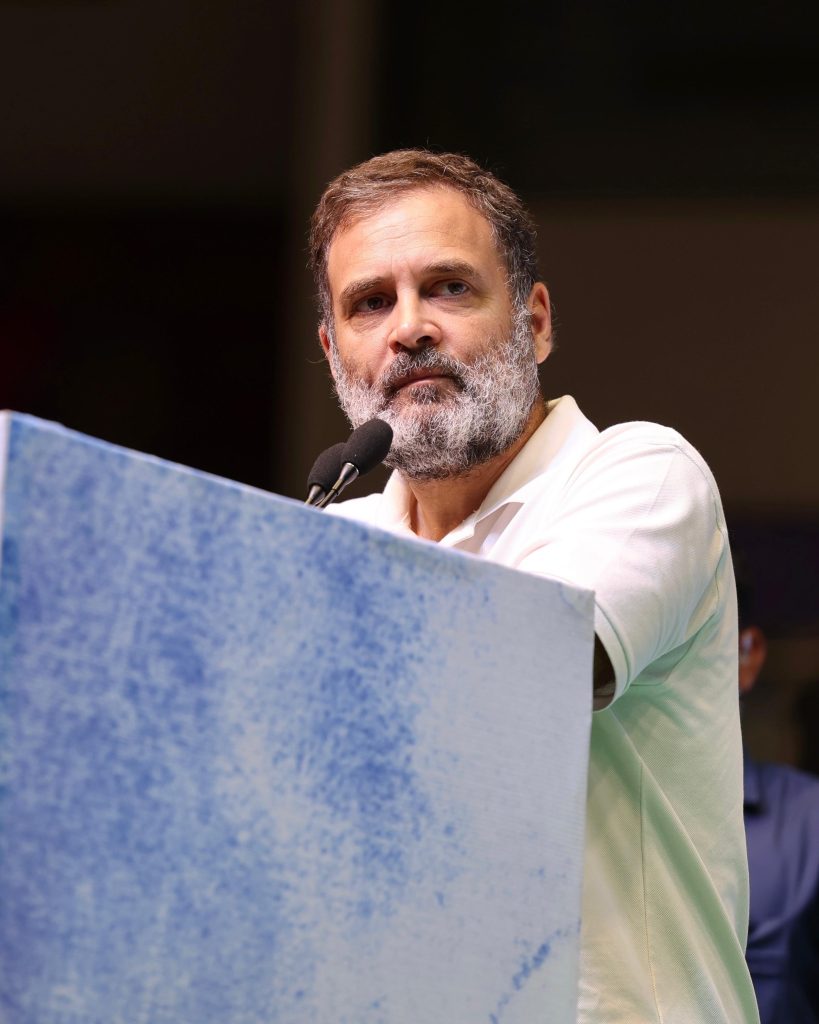
Leader of opposition in Lok Sabha Rahul Gandhi on Friday mocked Prime Minister Narendra Modi, dismissing his public image as “showmanship” with no real “substance”. 

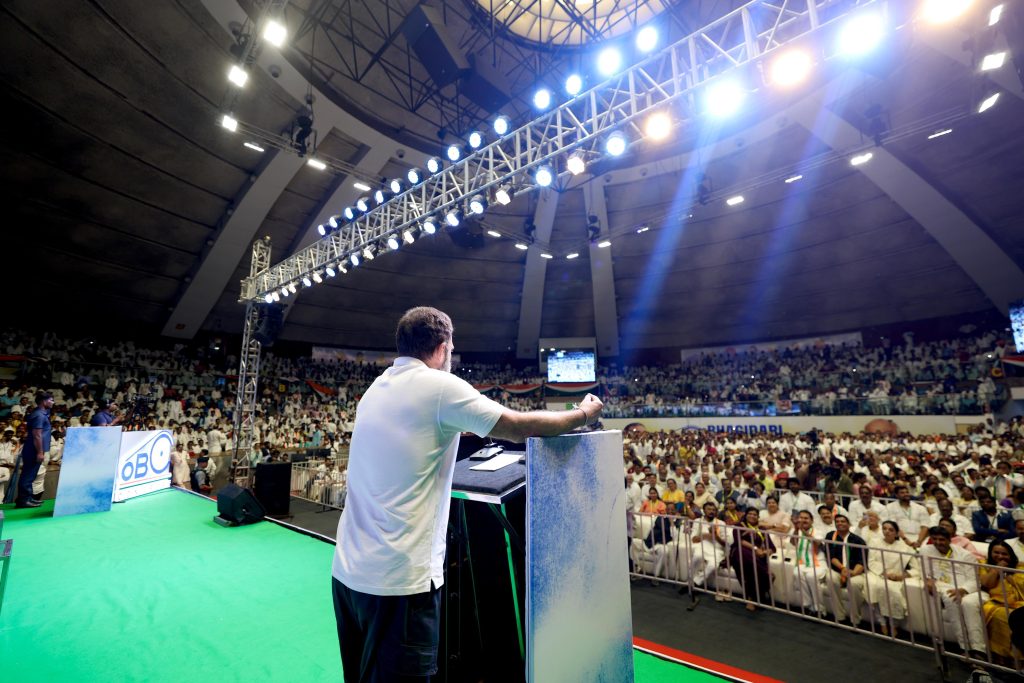
Speaking at Congress’ OBC Leadership—‘Bhagidari Nyay Mahasammelan’—on Friday, he posed a rhetorical question to the audience saying “you know what the real problem is in politics?”

To this someone responded with PM Modi’s name.

“The media has simply blown it out of proportion, I have met him. It’s all just showmanship, no substance,” he said.

This is not the first time that Rahul has targeted PM Modi over his public image.

Last month, while highlighting the failures of several schemes, including ‘Make in India,’ he said that PM Modi was more about “catchy slogans” than delivering real solutions to economic challenges.

The BJP hit out at Congress and Rahul Gandhi for his remarks and also “levelling absurd allegations” on Election Commission for conducting Special Intensive Revision (SIR) of electoral rolls in Bihar, suggesting that it reflect their “mindset” of recognising constitutional bodies on the basis “of whether they won the elections or not.”

Party spokesman Sudhanshu Trivedi also reflected on PM Modi surpassing Indira Gandhi and becoming the second-longest-serving PM of India in consecutive terms.

 “PM Narendra Modi has completed 4078 consecutive days of his tenure. Surpassing Indira Gandhi’s record, after Jawaharlal Nehru, he has become the longest-serving PM. His tenure is marked with golden chapters of development,” he said.

 “PM Narendra Modi is a PM who was elected through a public mandate. Whereas, when Indira ji and Nehru ji became the PMs for the first time, it was not through a public mandate but due to the situation,” he added.

PM Modi is the first non-Congress PM to mark this achievement.

He is also the first PM born after Independence and the longest-serving PM from a non-Hindi speaking state.

SIR to be conducted nationwide, says ECI

In order to protect the integrity of the electoral rolls, the Election Commission of India (ECI) has decided to conduct Special Intensive Revision (SIR) in the entire country.

“The Commission has now decided to begin the Special Intensive Revision in the entire country for the discharge of its constitutional mandate to protect the integrity of the electoral rolls,” ECI said in an order dated July 24.

It stated, since the general elections to the Legislative Assembly in Bihar is expected in later part of this year, hence the Commission has decided to conduct Special Intensive Revision in the state of Bihar as per the Guidelines and schedule attach.

“The schedule for the Special Intensive Revision in the rest of the country shall be issued separately in due Course,” it added.  

The ECI further said that maintaining the integrity of the electoral roll is fundamental for the conduct of free and fair elections.

“The electoral machinery, eligibility conditions, manner and procedure for preparation of electoral rolls are provided under the RPA 1950 and the Registration of Electors Rules, 1980 TER, 1960, framed under the RPA 1950,” it stated in the order.

This comes amid the uproar by the Opposition over the alleged discrepancies in the process of voter list updating during SIR in Bihar ahead of the Assembly elections later this year.

Rashtriya Janata Dal’s (RJD) Tejashwi Yadav criticized the SIR in Bihar and even hinted at boycotting the 2025 elections in the state.

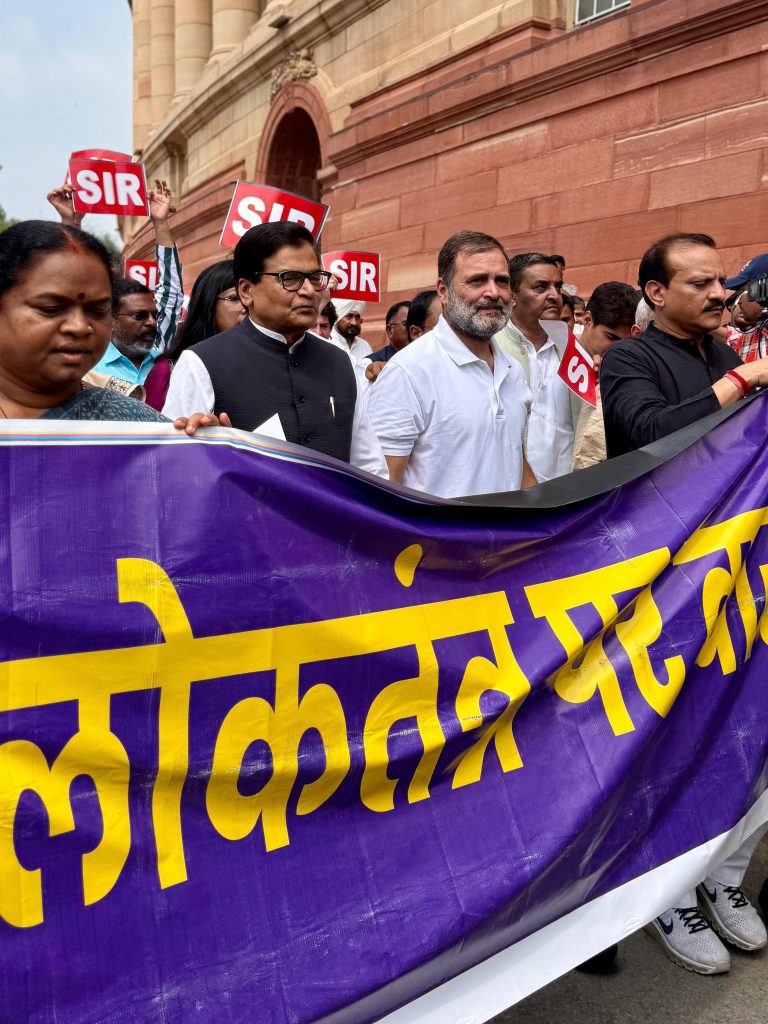
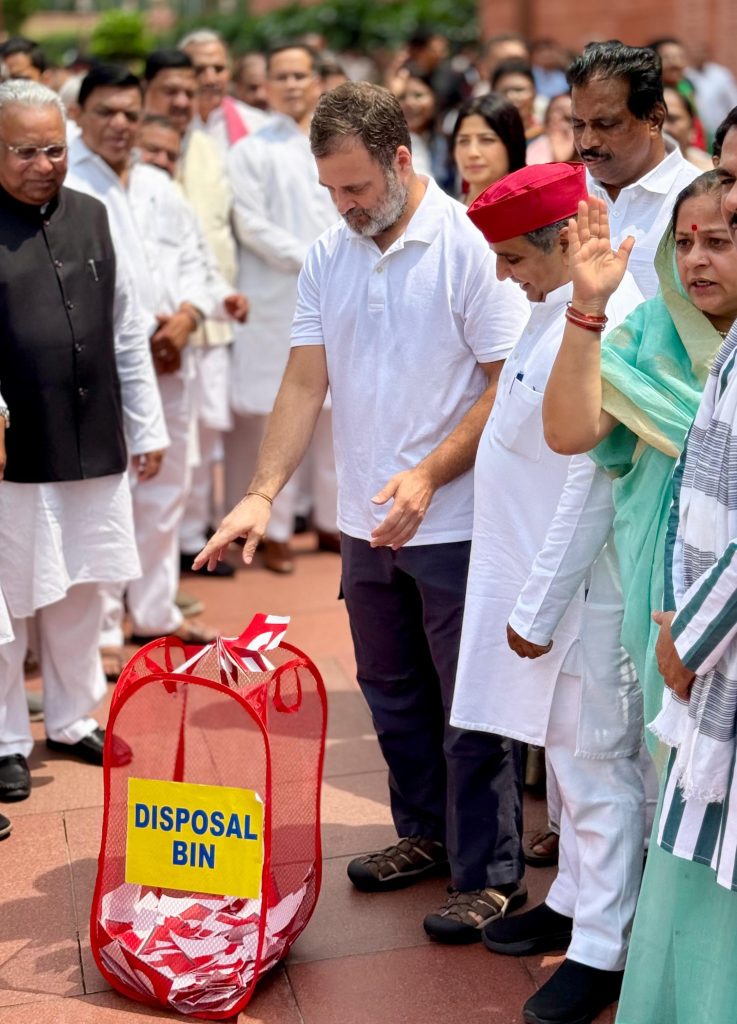
Meanwhile during the ongoing monsoon session in Parliament, the Opposition leaders including INDIA block staged a protest in the House complex where they registered their protest by tearing down the papers with SIR written on them, into the disposal bin.

Leaders including Rahul Gandhi and Mallikarjun Kharge also launched a protest march in the complex against the voter list update process in Bihar, demanding special discussion on the issue in both the houses.  

The last intensive revision in Bihar, was conducted by the Commission in the year 2003 with reference to Jan 1, 2003 as the qualifying date. The Commission has previously exercised its powers under enabling statutes in the years such as 1952-56, 1957, 1961, 1965, 1966, 1983-84, 1987-89. 1992, 1993, 1995, 2002, 2003 and 2004 to undertake Intensive Revision of electoral rolls for all or some pans of the country for afresh preparation of electoral rolls through enumeration.

No foreign mediation in India-Pakistan ceasefire, Govt  tells Parliament

Srinagar: The Government of India has firmly denied any role of foreign countries, including the United States, in brokering the recent ceasefire with Pakistan. In a written reply in the Lok Sabha, the Ministry of External Affairs said the decision to halt military operations on May 10, 2025, was entirely based on India’s own strategic considerations.

The Ministry clarified that the ceasefire was the result of direct communication between the Directors General of Military Operations (DGMOs) of India and Pakistan, a conversation that was initiated by Pakistan.

The reply noted that India had already achieved its objectives by May 8, two days before the ceasefire took effect. These included the targeted destruction of terror camps in Pakistan and Pakistan-Occupied Jammu & Kashmir (PoJK) believed to be linked to the April 22 terror attack in Pahalgam, Kashmir.

“This was a focused, measured and non-escalatory response, carried out with clarity and restraint,” the government said.

While acknowledging that India had diplomatic conversations with several countries, including the US, the government rejected speculation that any foreign power influenced its decision to cease military operations. It also dismissed reports suggesting that the US linked trade discussions to the ceasefire.

On May 9, a day before the ceasefire, India had informed US Vice President J.D. Vance that it would respond firmly if Pakistan chose to escalate.

Reiterating its longstanding position, the Ministry said, “There will be no third-party mediation on the Kashmir issue. All outstanding matters with Pakistan will be addressed bilaterally.” It added that Prime Minister Narendra Modi had personally conveyed this position to the US President.

Thailand-Cambodia—another confrontation with potential to ‘develop into war’

Thailand’s acting Prime Minister Phumtham Wechayachai has warned that the fighting with Cambodia “could develop into war” but “for now it remains limited to clashes.”

There seems to be another confrontation brewing in the world with a potential to “develop into war”, this time in Southeast Asia. According to international media, the death toll from clashes between Thai and Cambodian troops has risen to 15 in Thailand and one in Cambodia. As many as 120,000 people living along both sides of the disputed border separating the two countries have fled in the ongoing fighting     

Thailand’s acting Prime Minister Phumtham Wechayachai has warned that the fighting with Cambodia “could develop into war” but “for now it remains limited to clashes.” “The situation has intensified and could escalate into a state of war”, Wechayachai was quoted as saying on Friday, adding that for now, the clashes have involved heavy weapons.

Thailand has already recalled its ambassador to Cambodia, which too has withdrawn diplomats from Thailand and ordered all Thai diplomats to leave.

The confrontation  

This has been the bloodiest military confrontation between the two Southeast Asian neighbours in more than a decade. The recent violence is a result of a long-running border dispute between the two countries.

According to reports, there has been significant escalation in the dispute in recent days, resulting in armed clashes, civilian casualties and diplomatic breakdowns. It is also causing significant humanitarian crisis in the region

The root cause

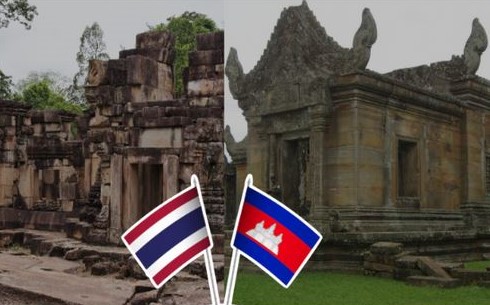
At the root of the conflict are contested territories and some ancient Hindu temples like Preah Vihear located along shared border in the Dangrek Mountains

The dispute basically stems from colonial-era maps drawn by France, which was controlling Cambodia in the early 20th century.

One of these maps depicted the border along a watershed line but placed the Preah Vihear temple on the Cambodian side.

According to the International Court of Justice, “Cambodia complained that Thailand had occupied a piece of its territory surrounding the ruins of the Temple of Preah Vihear, a place of pilgrimage and worship for Cambodians, and asked the Court to declare that territorial sovereignty over the Temple belonged to it and that Thailand was under an obligation to withdraw the armed detachment stationed there since 1954.

“Thailand filed preliminary objections to the Court’s jurisdiction, which were rejected in a Judgment given on 26 May 1961. In its Judgment on the merits, rendered on 15 June 1962, the Court noted that a Franco-Siamese Treaty of 1904 provided that, in the area under consideration, the frontier was to follow the watershed line, and that a map based on the work of a Mixed Delimitation Commission showed the Temple on the Cambodian side of the boundary. Thailand asserted various arguments aimed at showing that the map had no binding character.

“One of its contentions was that the map had never been accepted by Thailand or, alternatively, that if Thailand had accepted it, it had done so only because of a mistaken belief that the frontier indicated corresponded to the watershed line.

“The Court found that Thailand had indeed accepted the map and concluded that the Temple was situated on Cambodian territory. It also held that Thailand was under an obligation to withdraw any military or police force stationed there and to restore to Cambodia any objects removed from the ruins since 1954”.

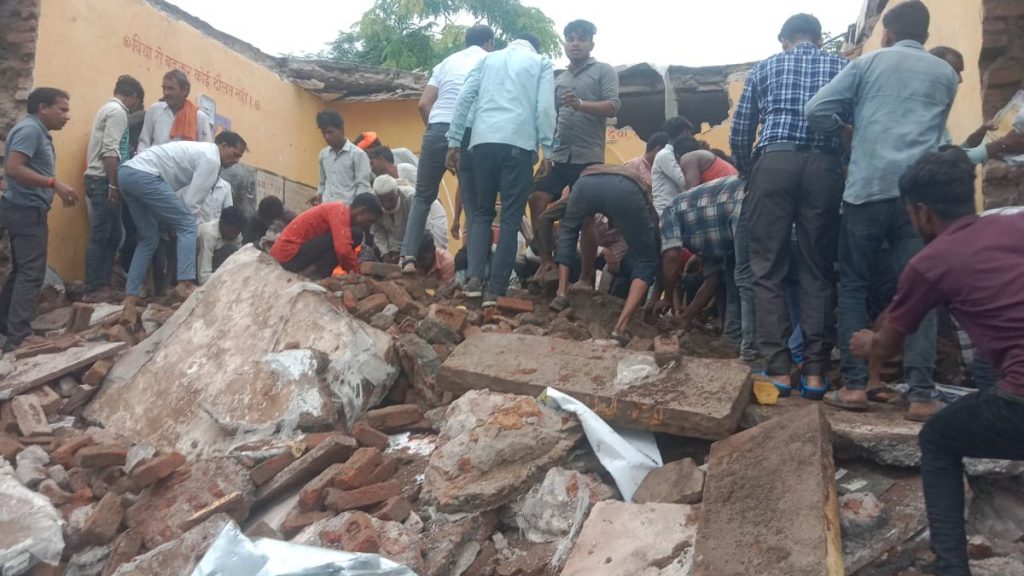
Seven children dead, two in ICU as school building collapses in Rajasthan

Around seven children of a government school in Rajasthan’s Jhalawar district were killed and two were critically injured after the building of the school collapsed on Friday.

The incident occurred at around 8.30 am at Piplodi government school in Manohar Thana.

According to officials, nearly 60 children, besides teachers and staff members, were present in the premises when the roof of the single-storey building collapsed.

The building was in a dilapidated condition and several complaints were raised in this regard earlier. The school offers education till Class 8.

Expressing grief over the incident, Rajasthan Chief Minister Bhajanlal Sharma said the concerned authorities have been directed to ensure proper treatment of the injured children.

“The tragic incident of the collapse of the school roof at Piplodi in Jhalawar is extremely sad and heart-breaking,” he said.

All the children were between eight and 11 years of age. Two children are admitted in the Intensive Care Unit.

According to eyewitnesses and local villagers, the roof suddenly caved in due to persistent heavy rainfall over the past few days. The sound of the collapse was followed by screams and confusion as dust and debris engulfed the area.

Visuals from the site showed local residents rushing to rescue the trapped ones. At least four JCB machines also arrived at the spot to help clear the debris.

Officials in the district administration, including the collector, and disaster relief teams also helped with the rescue operations. Family members of the school children rushed to the spot on learning about the building collapse.

Prime Minister Narendra Modi said the incident was “tragic and deeply saddening”. “My thoughts are with the affected students and their families in this difficult hour. Praying for the speedy recovery of the injured. Authorities are providing all possible assistance to those affected,” his office said in a post on X. 

MOST POPULAR

HOT NEWS