Saturday, December 27, 2025

Creating bridge between Hindus, Muslims—Mohan Bhagwat meets Islamic scholars

A proposal has been made to initiate dialogue between mandirs and masjids, imams and pujaris, and gurukuls and madrasas to create trust between the two communities.
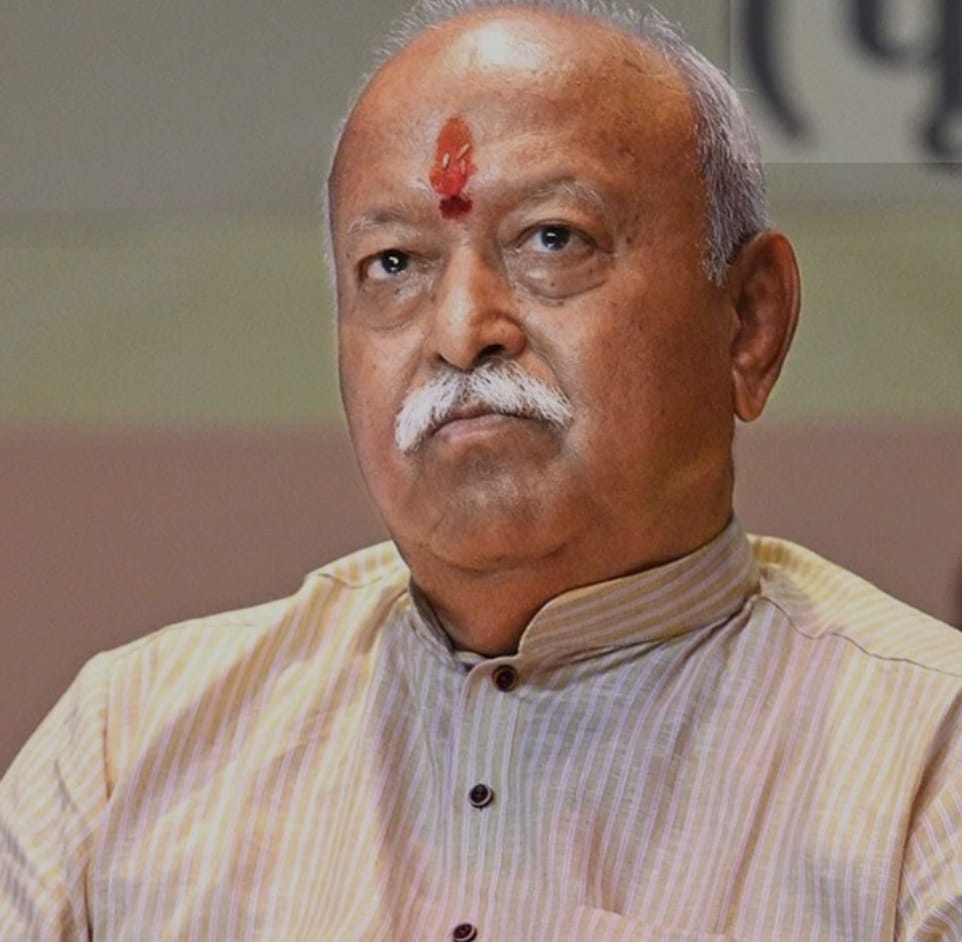
Photo: Naveen Bansal

Rashtriya Swayamsevak Sangh (RSS) chief Mohan Bhagwat and senior functionaries of the organisation on Thursday met prominent Islamic scholars, imams, muftis and madrasa heads in which a host of “national issues,” including ways to clear “misunderstandings” between the two communities were discussed. The two sides expressed need to start a series of dialogue between Hindu and the Muslim communities and as part of its centenary celebrations, the Sangh will now start a series of ‘samvaad’ (dialogue) between mandirs and masjids, pujaris and imams and gurukuls and madrasas.
Coming amid discontent of the Muslim community with the ruling BJP over Waqf Amendment Act and some other issues, the meeting holds importance as the aim was to create a bridge between Hindus and Muslims and better understand each other’s religion and contain the trust deficit. All India Imam Organisation chief Imam Umer Ahmed Ilyasi said the objective was to clear misunderstandings between Hindus and Muslims.

The closed-door meeting was also attended by senior RSS functionaries like Krishna Gopal, Ramlal and Indresh Kumar and lasted for about three-and-a-half hours. Around 60 prominent imams, muftis and representatives of Islamic seminaries like Deoband and Barelvi sects and representatives from both Shia and Sunni communities attended the meeting.  A proposal was made to initiate dialogue between mandirs and masjids, imams and pujaris, and gurukuls and madrasas to create trust between the two communities.

While Sangh and  Muslim community representatives deliberated on how to create harmony, better understanding and contain “negativity” between the communities, issues like the Waqf Act, vote bank politics, mob lynching, and ways to contain propaganda to create a divide between Hindus and Muslims also came up for discussion, according to sources.

“Samvaad is the first step to create trust and create ‘sadbhav’. Most of the times we find that whatever is said against each other (communities) is because of negative news or propaganda. There are continuous efforts to create a rift and divide between the two communities. We are trying to create a bridge so that people try to understand each other’s religion by talking with each other,” Ilyasi was quoted as saying

Harmony is also a very important requirement for a country to progress and develop, he added

“Through this initiative the Muslim community and the RSS want to work towards bridging the trust deficit between the two communities and development of the country,” Ilyasi said.

Calling the discussion “positive”, the Sangh called it a part of a continuous process of dialogue with all the sections of society. The sarsanghchalak emphasised that “the most important and basic fact is that we are all citizens of one country and share one soul,” sources said. Head of national publicity and media department Sunil Ambekar said “the main objective is to explore how everyone can work together in the interest of the country. Today’s discussion was also positive.”

The RSS also has a Muslim organisation—the Muslim Rashtriya Manch. Established under the guidance of K S Sudarshan, the Manch calls itself an independent Muslim body aligned with nationalist ideals.
India-UK sign mega free trade agreement, boost annual trade, unlock new jobs

99% of Indian exports (textiles, leather, pharma, jewellery, seafood, engineering goods) to the UK now enjoy duty free access; ‘Britain is open for business,’ UK PM Keir Starmer said

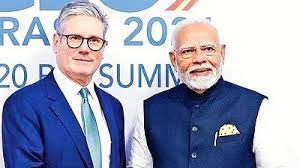
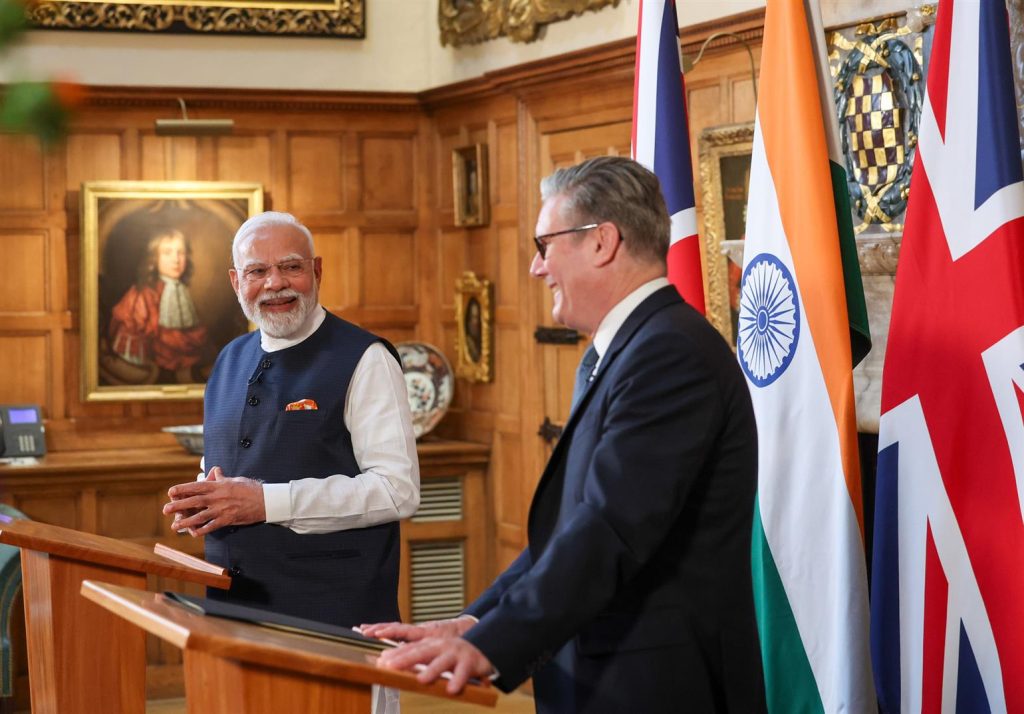
Prime Minister Modi addressing joint press statement with UK Prime Minister Keir Starmer in London

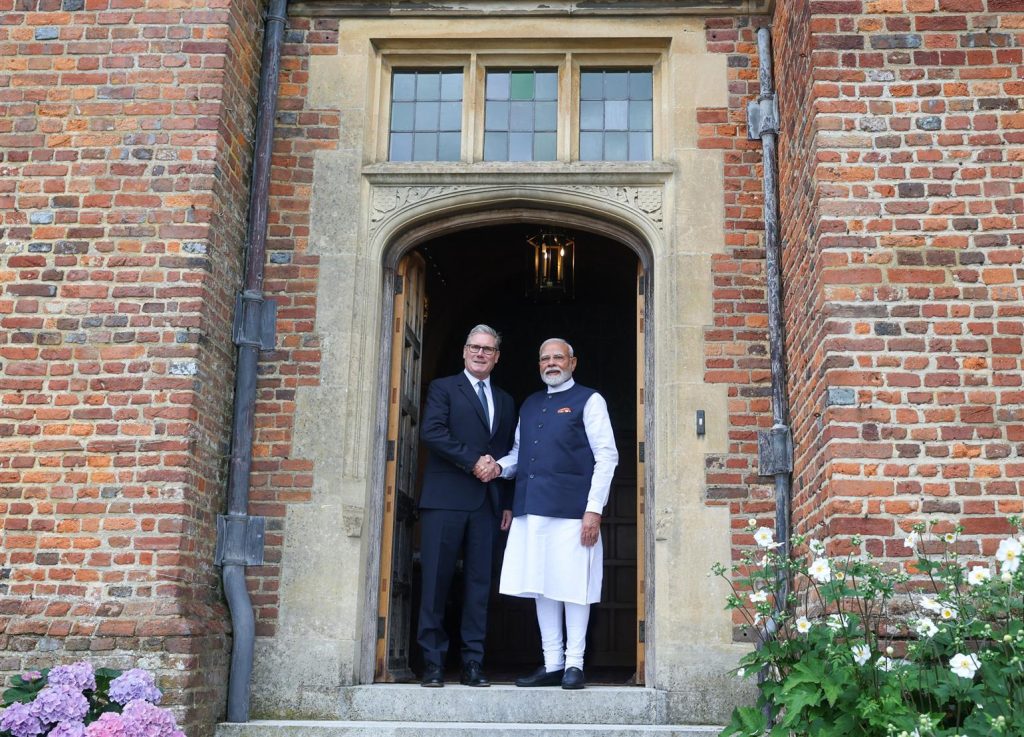
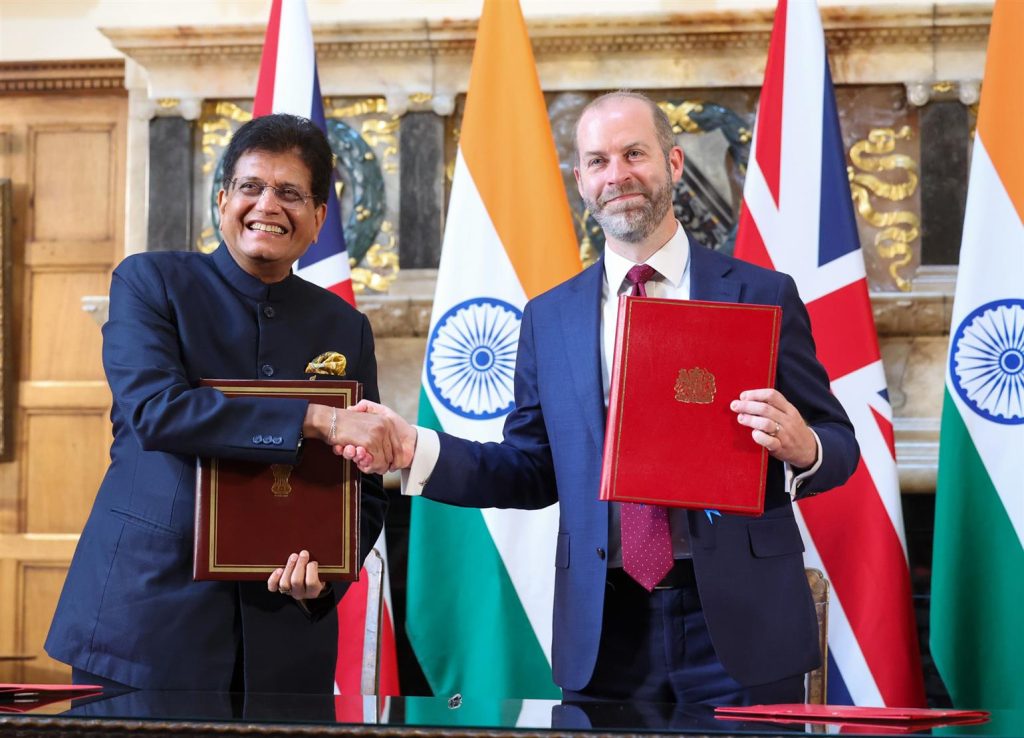
ndia and the United Kingdom made history by officially signing the Comprehensive Economic and Trade Agreement (CETA) during Indian Prime Minister Narendra Modi’s visit. The pact, sealed at Chequers by Commerce Minister Piyush Goyal and British Trade Secretary Jonathan Reynolds in the presence of PM Modi and UK PM Keir Starmer, is projected to elevate bilateral trade by US $34 billion annually

At a time when the India-US trade agreement faces multiple uncertainties, CETA is expected to give a big boost to the Indian economy and trade with duty-free export of many items, including agricultural produce like Basmati, fruits and vegetables.

The agreement is being called as the UK’s largest bilateral pact since Brexit and India’s most ambitious pact with a Western country. Official UK figures forecast an increase in bilateral trade by nearly 39 % in the long run when compared to 2040 projected levels of trade in the absence of the agreement. The deal is expected to increase bilateral trade by $34 billion annually, thereby making it the most significant trade pact for the UK since leaving the European Union and the most comprehensive one India has signed.

Union Minister for Commerce and Industry Piyush Goyal and UK Secretary of State for Business and Trade Jonathan Reynolds at the Signing Ceremony of the Comprehensive Economic and Trade Agreement (CETA) in London

CETA is a result of three years of negotiations

The agreement will ensure cheaper goods for consumers and new markets for farmers and exporters, along with visa relief for professionals, boosting both the economies.

According to officials, India will gain from tariff elimination on about 99 per cent of tariff lines (product categories) covering almost 100 per cent of the trade values, unlocking “thousands of jobs” and also cutting tariffs on British whisky, cars and an array of other items.

Under the agreement, several key sectors will now enjoy zero-duty access to the UK market with agricultural products and processed food industry getting new opportunities for growth. India will see an elimination of tariffs on around half its exports to the UK, including textiles, footwear and agricultural produce such as mangoes and grapes. Indian craft drinks like Feni from Goa, artisanal wines from Nashik, and toddy from Kerala will find shelf space in high-end UK retail and hospitality chains.

The India-UK CETA promises immediate and significant benefits for a range of labour-intensive sectors that form the backbone of India’s MSME sector, employing millions across the country.

PM Modi with the UK PM Keir Starmer

‘Blueprint for shared prosperity’; PM Modi  

Slashing tariff lines across 99 per cent of Indian exports, the deal is set to unlock thousands of jobs while cutting tariffs on British whisky, cars and several other items. Farmers and food processing units are set to benefit from the FTA. Basmati rice, cotton, groundnut, fruits, vegetables, onion, pickles, spices, tea, coffee, among other items will be exempt from duties when exported to the UK. Mobility provisions include India’s professionals—yoga instructors, chefs, IT, healthcare—receiving 1,800 work visas annually and a three year exemption from UK national insurance contributions

“I’m really pleased and privileged to welcome you here today on what I consider to be a historic day for both of our countries, and the delivery of the commitment that we made to each other,” said Starmer, as he greeted PM Modi

Calling the UK and India as “natural partners”, PM Modi said the two nations are “writing a new chapter” in their history. “This will inject new energy into the services sectors of both countries, especially in technology and finance. It will promote ease of doing business, reduce cost of doing business and increase the confidence of doing business,” he added

“This agreement is more than just an economic partnership; it is also a blueprint for shared prosperity. On the one hand, it paves the way for enhanced market access in the UK for Indian textiles, footwear, gems and jewellery, seafood, and engineering goods. It will also unlock new opportunities for India’s agricultural produce and processed food industry. Above all, this agreement will be especially beneficial for India’s youth, farmers, fishermen, and the MSME sector.

“On the other hand, UK-made products such as medical devices and aerospace components will become more accessible and affordable for Indian consumers and industries.

“Alongside the trade agreement, a consensus has also been reached on the Double Contribution Convention. This will inject new momentum into the service sectors of both countries, particularly in technology and finance. It will enhance the ease of doing business, reduce operational costs, and boost confidence of doing business. Additionally, the UK economy will benefit from access to skilled Indian talent,” PM Modi said

What DBT said

According to the UK Department for Business and Trade (DBT), once the trade pact comes into force, India’s average tariff on British products will drop from 15 per cent to 3 per cent. It means British companies selling products to India, from soft drinks and cosmetics to cars and medical devices, will find it easier to sell to the Indian market.

Whisky producers will benefit from tariffs slashed in half, reduced immediately from 150 per cent to 75 per cent and then dropped even further to 40 per cent over the next 10 years, giving the UK an advantage over international competitors in reaching the Indian market

Every region of the UK will benefit. The clean energy industry will have “brand new, unprecedented access” to India’s vast procurement market as the country.

Possibility or just threat—decoding Tejashwi’s hint of RJD boycotting 2025 Bihar polls

Some of the key issues before the Special Intensive Revision was announced included job crisis in Bihar, youth leaving the state in search of livelihoods, education and better future, its strained healthcare system, law and order, crimes against women and marginalised, caste and identity politics, but the opposition focus has now shifted to SIR

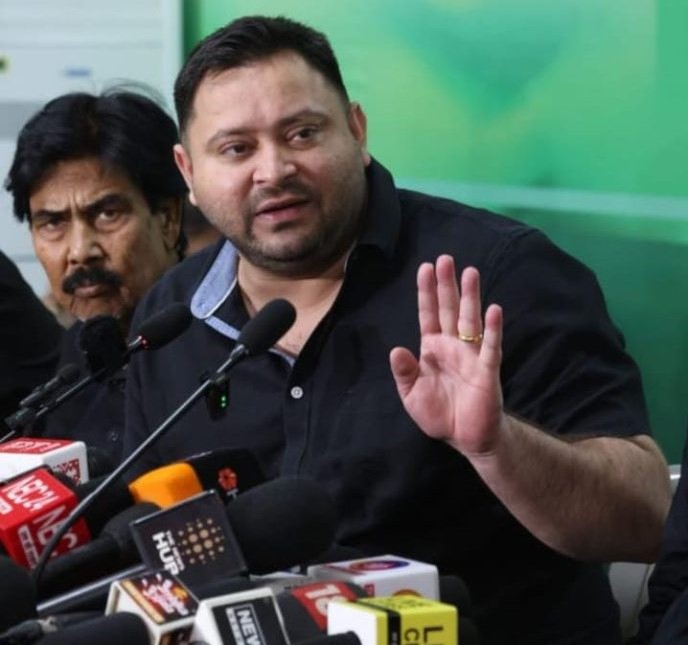
Amid the ongoing protests in Bihar and the Parliament over the controversial Special Intensive Revision ahead of the upcoming Bihar Assembly elections, RJD’s Tejashwi Yadav on Wednesday hinted that his party may boycott the 2025 polls scheduled later this year

The remarks at a press interaction sparked speculations whether this was a real possibility or just a threat amid the growing concerns over SIR that has thrown the plans of the Opposition in the state ruled by the NDA into a tizzy. 

Some of the key issues before the  Special Intensive Revision was announced included Bihar’s job crisis, its youth leaving the state in search of livelihoods, education and better future, its strained healthcare system, law and order, crimes against women and marginalised, caste and identity politics, but the opposition focus has now shifted to SIR.

Those aware of the political developments  in Bihar say that before the announcement of the SIR, the opposition camp comprising RJD, Congress and Left parties were riding high on positive ground reports and a strategy to target Chief Minister Nitish Kuma on various issues, all of which now appear irrelevant at this point

Has the BJP scored a hit with SIR remains to be seen but as Bihar heats up politically  all eyes will now be on the RJD’s next move.

Leader of opposition Tejashwi Yadav said many things in his press conference but what stood out was his allegation that SIR was commissioned by BJP to “undermine the democratic process and manipulate voter data”.

“If they want to win the elections through fraudulent means, then what’s the point of conducting them?” he told reporters in Patna, questioning the authenticity of emerging data about illegal immigrants infiltrating the electoral rolls through fraud.

Tejashwi said he wouldn’t rule out RJD skipping an electoral process it didn’t believe in. “Ho sakta hai (That is possible). We will consult our (INDIA bloc) partners and the people before taking a final call,” he said at a joint press conference with INDIA bloc partners.

Congress backed RJD’s stand, saying it was aware of allegedly large scale irregularities in revision of the rolls while Left parties said it was “too early to say anything about a poll boycott” but acknowledged Tejashwi’s concerns about many names being struck off the electoral rolls.

According to ruling JD(U), the boycott threat reflected opposition’s apprehension about their grim prospects in the elections

SIR-Opposition is protesting in Parliament

Special Intensive Revision

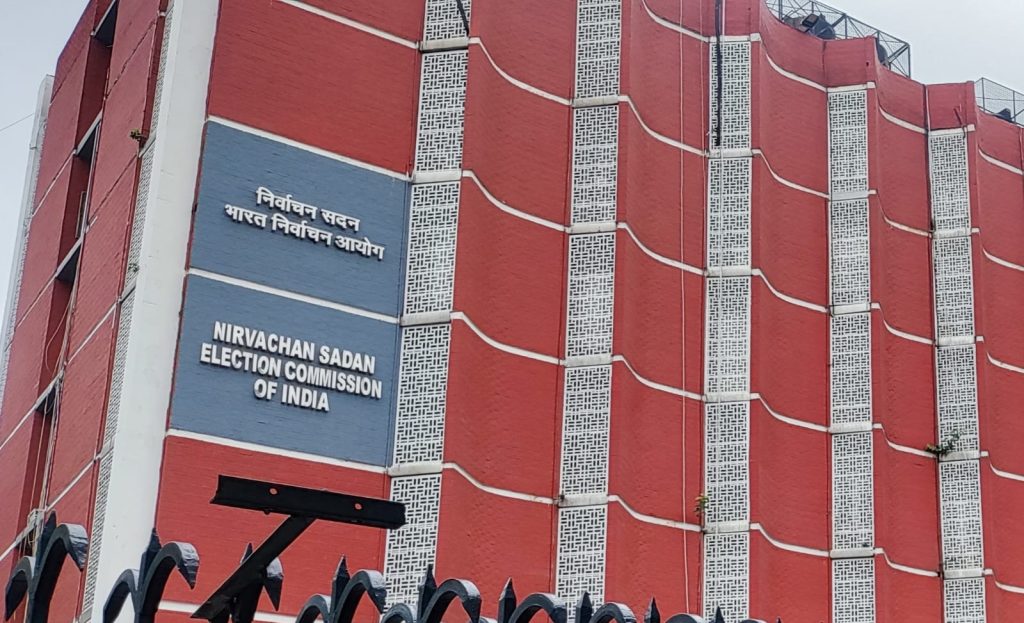
Amid the ongoing opposition protests in the Parliament on the Special Intensive Revision (SIR) of electoral rolls in Bihar, the Election Commission Wednesday said that seven lakh electors have been found to be enrolled at more than one place while one lakh electors are untraceable

The first phase is near completion and on “August 1 at the completion of the first phase of SIR, the Draft Electoral Roll will be published,” the EC’ statement said.

“No eligible elector to be left out, no ineligible person to be included,” the EC said.

Till July 23, 98.01% electors have been covered; 20 lakh deceased electors reported; 28 lakh permanently migrated electors reported; 7 lakh electors found enrolled at more than one place; 1 lakh electors untraceable; 15 lakh electors’ Forms not returned; 7.17 crore electors’ forms (90.89%) received and digitised

In case there is any error in the Draft Electoral Roll, electors or political parties can file an objection with the concerned ERO or AERO of that Assembly Constituency by September 1. “Similarly, if any eligible person does not find their name in the Draft Electoral Roll, they can file their claims up to 1 September 2025,” it said

Bihar SIR—98.01% electors covered, Draft Electoral Roll on August 1

First phase of Bihar SIR nearing completion: Till July 23, 98.01% electors covered; 20 lakh deceased electors reported; 28 lakh permanently migrated electors reported; 7 lakh electors found enrolled at more than one place; 1 lakh electors untraceable

Amid the ongoing opposition protests in the Parliament on the Special Intensive Revision (SIR) of electoral rolls in Bihar, the Election Commission Wednesday said that seven lakh electors have been found to be enrolled at more than one place while one lakh electors are untraceable

The first phase is near completion and on “August 1 at the completion of the first phase of SIR, the Draft Electoral Roll will be published,” the EC’ statement said.

“No eligible elector to be left out, no ineligible person to be included,” the EC said.

Till July 23, 98.01% electors have been covered; 20 lakh deceased electors reported; 28 lakh permanently migrated electors reported; 7 lakh electors found enrolled at more than one place; 1 lakh electors untraceable; 15 lakh electors’ Forms not returned; 7.17 crore electors’ forms (90.89%) received and digitised

In case there is any error in the Draft Electoral Roll, electors or political parties can file an objection with the concerned ERO or AERO of that Assembly Constituency by September 1. “Similarly, if any eligible person does not find their name in the Draft Electoral Roll, they can file their claims up to 1 September 2025,” it said

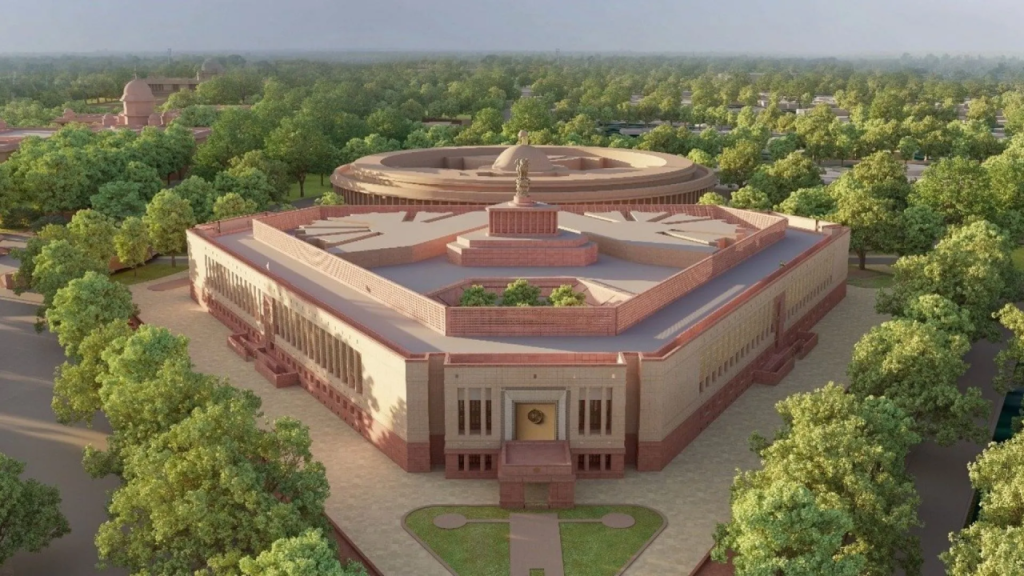
Both Houses of the Parliament were adjourned for a third consecutive day of the Monsoon session on Wednesday, as opposition continued disrupting the proceedings, reiterating the demand for discussions on several issues, including the SIR of electoral rolls in Bihar.

According to the EC, in the first phase of Bihar SIR, the lists of all primarily incorrectly included electors, and those who have not yet returned their Enumeration Forms have been shared, on July 20 with 1.5 lakh Booth Level Agents (BLAs) nominated by District Presidents of all 12 major political parties of Bihar.

Bihar electors who are currently temporarily residing outside the state, and have not registered as electors elsewhere, can fill their form online or through the ECINet mobile app, or take a printout of the form. They can fill and sign the printed form and send it to their BLO through a family member, or  they can fill and sign their printed form and send the printed form to BLOs’ mobile via WhatsApp.

India-UK FTA—‘cheaper scotch, cars cosmetics, chocolates, biscuits, medical devices’

Resetting trade ties, India and the United Kingdom are set to sign a Free Trade Agreement (FTA) on Thursday, which will potentially increase two-way trade by billions of dollars annually. 

Close to 90 % of UK exports especially aerospace, spirits like scotch whisky, cosmetics, salmon, chocolates, biscuits and medical devices would be cheaper in India after the India-UK Free Trade Agreement (FTA).

Prime Minister Narendra Modi will witness the signing of the FTA.

In a statement before leaving for the UK, PM Modi said a meeting with his counterpart Keir Starmer will provide an opportunity to further enhance economic partnership, aimed at fostering prosperity, growth and jobs creation in both countries.

“India and UK share a Comprehensive Strategic Partnership that has witnessed significant progress in recent years. Our collaboration spans a wide range of sectors, including trade, investment, technology, innovation, defence, education, research, sustainability, health and people-to-people ties. 

“During my meeting with Prime Minister Rt Hon Sir Keir Starmer, we will have the opportunity to further enhance our economic partnership, aimed at fostering prosperity, growth and jobs creation in both countries. I also look forward to calling on His Majesty King Charles III during the visit,” PM Modi said  

India-UK trade

The India-UK bilateral trade crossed record $ 55 billion in 2024 and is expected to  reach $ 100 Billion in five year, the FTA would result in changes in trade. 

“Tariff on scotch whisky and gin would come down from 150% to 75% immediately and to 40% over 10 years. Tariffs on UK-made cars, currently exceeding 100%, will be reduced to 10%, allowing British cars like Jaguar to explore the Indian market.

“Close to 99 % of India exports to the UK would be covered under the FTA that is expected to boost textiles, footwear, auto components, gems, jewellery, furniture, sports goods, chemicals, and machinery. Some of these goods presently face tariffs between 4% and 16% in the UK,” according to those in know of the development

Over 1,000 Indian companies currently operate in the UK, employing more than 1 lakh people and having a collective turnover of over $ 91 billion.

There are about 700 British companies in India with a total turnover of US $59 billion employing over 5 lakh people.

Indian companies have invested around $20 billion (Rs 1.73 lakh crore).

The UK has invested close to $36 billion (Rs 3.11 lakh crore) in India, making it the sixth-largest foreign investor.

An official assessment of the UK Government says the FTA “will increase GDP by £4.8 billion and UK wages by £2.2 billion each and every year in the long run. Bilateral trade is also expected to increase by £25.5 billion each and every year in the long run”.

During his London visit, PM Modi will also interact with Indian and British business delegations to push for greater trade between the two countries.

The FTA includes a ‘youth mobility scheme’ allowing 3,000 young professionals from each country to live and work abroad for up to two years.

On Tuesday night, the Union Cabinet led by PM Modi okayed the text of the FTA after legal teams sifted through the terms and gave it a final ‘legal scrubbing’.

Foreign Secretary Vikram Misri said “there is the obvious legal scrubbing, for any such agreement needs to go through. We are continuing to work on those and last-minute work on that is continuing”.

The FTA was announced on May 6 after Modi-Starmer had a telephonic talk.

Delhi Extends EV Policy to 2026, Sets Stage for Broader Public Involvement in Clean Mobility

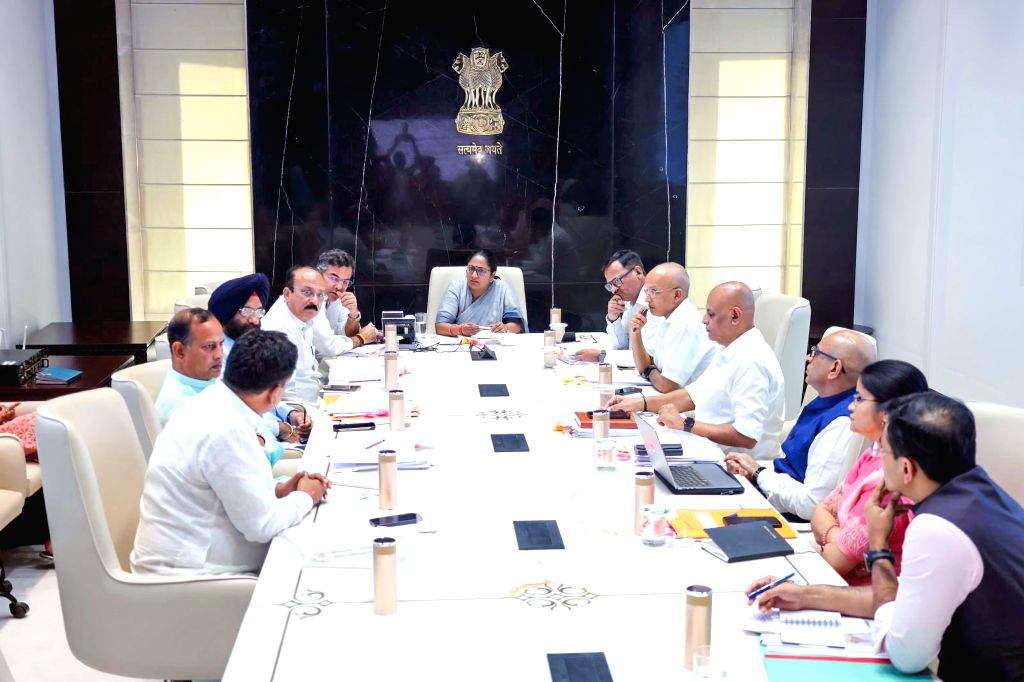
In a significant move to advance sustainable transportation, the Delhi Government has extended its current Electric Vehicle (EV) policy until March 31, 2026, or until a new framework is introduced—whichever comes first. The decision was finalized during a cabinet meeting led by Chief Minister Rekha Gupta at the Delhi Secretariat on Tuesday.

According to officials, the extension allows time for in-depth consultations and policy enhancements to align with Delhi’s long-term environmental goals. The updated policy is expected to prioritize public engagement and industry collaboration to create a more effective and inclusive EV roadmap.

“This is a crucial period for listening and evolving,” said Transport Minister Pankaj Kumar Singh. He emphasized that the forthcoming policy will incorporate inputs from citizens, environmental groups, industry stakeholders, and academic institutions to ensure it is both forward-looking and inclusive.

Key focus areas of the revised policy will include expanding the city’s EV charging infrastructure, reassessing existing financial incentives, formalizing battery recycling and disposal systems, and defining roles for public-private partnerships in the EV ecosystem.

Aligned with the broader ‘Green Delhi’ mission, the extended policy reaffirms the government’s commitment to reducing air pollution and fostering a resilient, eco-conscious urban transport system.

Officials reiterated that the move not only strengthens Delhi’s clean air agenda but also lays the foundation for a more adaptive and innovative EV framework in the national capital.

Police arrests wanted criminal after brief encounter

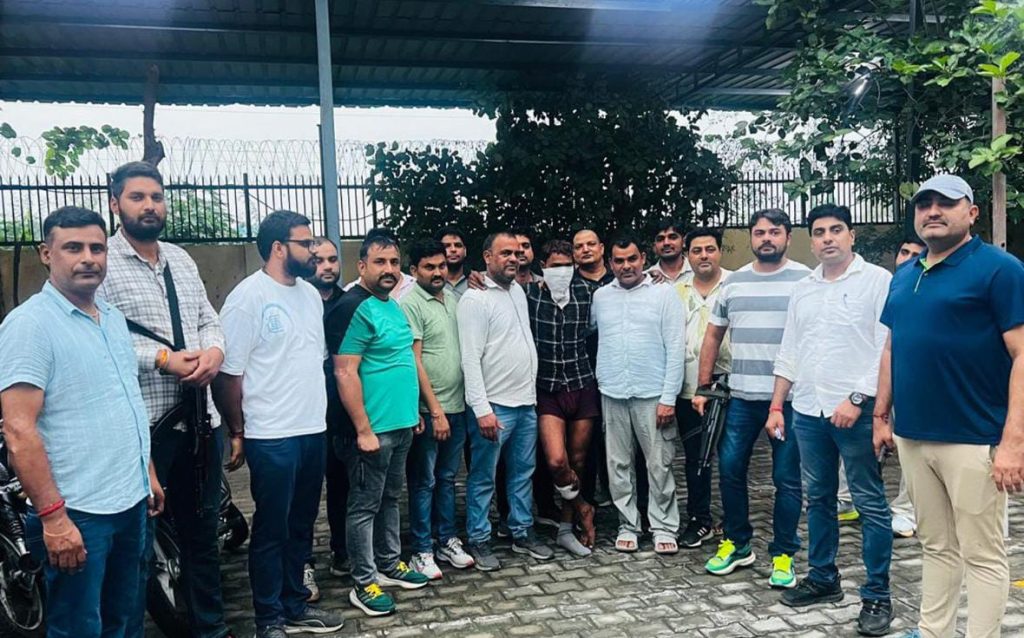
The Delhi Police on Tuesday arrested a wanted criminal involved in violent attacks on police teams and a robbery case after a brief encounter in east Delhi’s Ghazipur area.

The accused has been identified as Khemchand alias Sameer (35) who belonged to Jharkhand’s Godda district, living in Sant Nagar, Burari, Delhi.

The incident happened when a joint operation by Anti-Narcotics Squad East District and Special Staff East District was launched after he attacked two police personnel Meerut road, opposite ISBT, Anand Vihar.

The police have seized one sophisticated loaded pistol, live and empty cartridges, and a stolen TVS Apache motorcycle from the accused.

“On the intervening night of 17-18 July 2025, at around 05:30 am, two police personnel — ASI Md. Qasim and CT Krishanpal of PS PIA, while on routine ERV patrolling duty, noticed three suspicious men on a TVS Apache motorcycle riding against traffic on service road no. 56, T-Point Meerut Road, Opp. ISBT Out Gate, Anand Vihar, Delhi. Upon being stopped for verification, the suspects launched a sudden and violent attack on the police team using batons from the police vehicle, causing severe head injuries to both officials,” Abhishek Dhania, IPS, Deputy Commissioner of Police said.

According to Dhania, they snatched ASI Qasim’s mobile phone, wallet, official documents, and cash before fleeing the scene.

“The suspects abandoned their motorcycle and a baton used in the attack. With assistance from HC Sachin of Maharajpur Picket, the injured were rushed to LBS Hospital, Khichripur for medical aid,” he said.

Realizing the sensitivity of the case, two dedicated teams were formed under overall supervision of Anti-Narcotics Squad and Special Staff East.

On July 21, 2025, acting on specific information, it was learned that Khemchand was planning another major offence and would be visiting the Paper Market area around 12:00–12:15 am to meet his associates.

A joint raiding team was swiftly deployed and strategically positioned near the suspected spot. Upon being spotted, Khemchand was directed to surrender.

“Instead, he impersonated a police officer and tried to flee. When cornered again, the accused opened fire on the police team. In self-defence, the police team retaliated, resulting in injury to the accused. He was immediately shifted to LBS Hospital, Kalyan puri for treatment,” police said in a statement.  

Further investigation is underway to identify and apprehend remaining associates.

During interrogation, accused revealed that his primary motive behind committing repeated crimes, including robbery, stemmed from his deep-rooted addiction to drugs and the need to sustain his drug habit and livelihood.

Is Shashi Tharoor India’s next vice-president, will Congress contest?

If election happen, it can go down as ‘narrowest contest’, but in mind the numbers, the BJP-led NDA has the edge; the question is will the Congress and opposition field a candidate, and does he or she have a chance

Jagdeep Dhankar resigned on Monday, leaving the country in a suspenseful tizzy over why he did that and who will be the next Vice President of India. As the Election Commission of India gets ready to initiate the process of holding an election to the post, names of leaders ranging from Bihar Chief Minister Nitish Kumar to Congress’ Shashi Tharoor are doing the rounds.

In mind the number game, the BJP-led NDA has the edge. The question is will the Congress and opposition field a candidate, and does he or she have a chance in case of a contest. The opposition has not taken a formal call but sources say it may field a candidate and force a contest as it had done in 2017 and 2022 vice-presidential polls.

The number game         

The fact is that so far as the numbers are concerned, the BJP and NDA allies have at least 150 more members than the opposition in the Vice Presidential Electoral College which includes MPs from the Lok Sabha and the Rajya Sabha. With support of 422 of 787 MPs across both Houses, numbers stack up in favour of NDA, but fight may be closer than earlier times

The BJP has 240 members in Lok Sabha and 99 in Rajya Sabha. If the members of allies are included, the ruling side has more than 457 members in both houses of Parliament. The government recently also filled the four nominated seats in Rajya Sabha.

Meanwhile, the Congress—the largest opposition party in both houses—has 99 members in the Lok Sabha and 27 in the Rajya Sabha. Along with the INDIA bloc parties and friends, the total strength adds up to around 300 in the two houses. 

The Rajya Sabha also has parties that are said to be non-aligned. They include at least 18 members belonging to the Biju Janata Dal, which is now BJP’s rival in Odisha, the YSR Congress and Bharat Rashtra Samithi. These parties in the past have largely backed the BJP in case of controversial legislation. 

Narrowest contest

This will also be the narrowest contest between the two sides. 

In 2017, BJP Candidate Venkaiah Naidu won with a margin of 272 votes. 

In 2022, Jagdeep Dhankhar won by a margin of 346 votes.

Trinamool Congress Party had abstained during the 2022 polls, claiming that they were not consulted by the Congress before announcing Alva’s nomination. 

TMC has 35 MPs in Parliament. 


“It Is our last day in Kashmir’: Shoaib Ibrahim shares Vlog shot with wife Dipika Kakar before Pahalgam attack

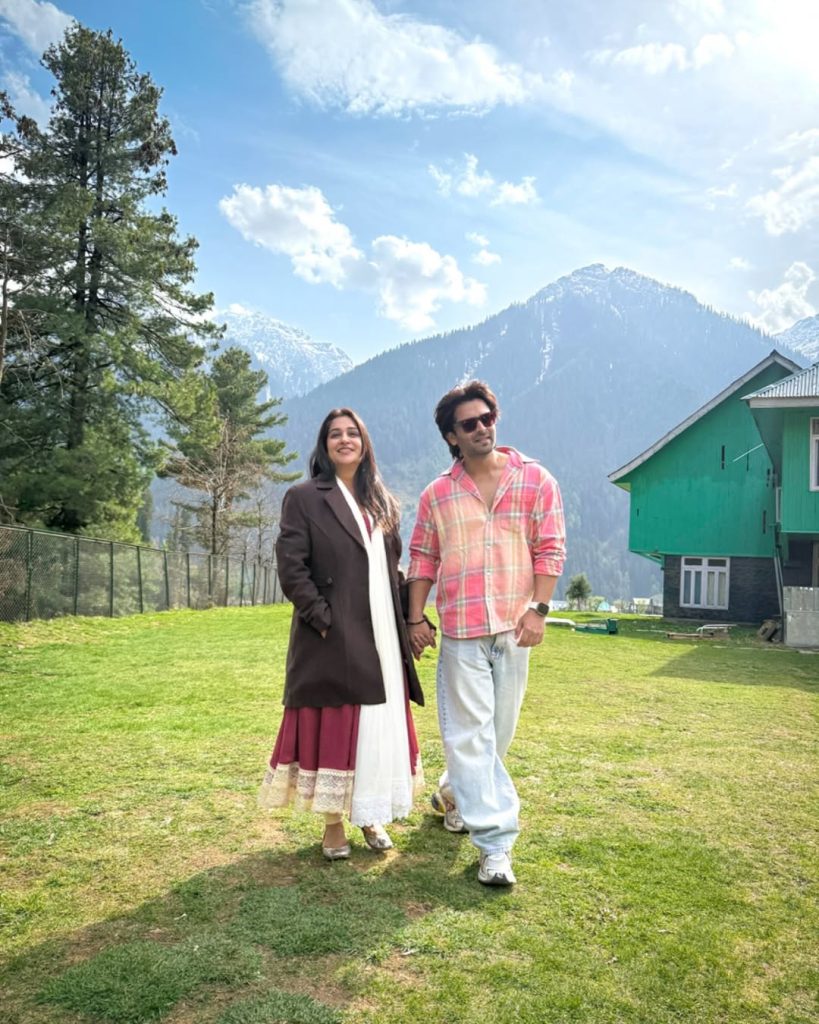
Srinagar – Actor Shoaib Ibrahim shared a new vlog this week, offering an emotional glimpse into his family’s April trip to Kashmir,  footage shot just a day before the Pahalgam terror attack.

In the video, Shoaib and his wife Dipika Kakar can be seen enjoying a peaceful shikara ride on Dal Lake and walking through the vibrant Tulip Garden with their son Ruhaan and Shoaib’s cousin. “It is our last day in Kashmir,” Shoaib says in the video, capturing the family’s final hours in the valley before flying out.  on the morning of the attack.

Dipika, who was later diagnosed with a cancerous liver tumor, also appears in the clip and reflects fondly on the experience. “This clip from Kashmir is my personal favorite, it was the most beautiful,” she says.

The vlog comes months after Shoaib faced criticism for announcing a travel vlog soon after the April attack. At the time, some social media users accused him of being insensitive, to which he later responded: “Why are Dipika and I only targeted?”

In the latest vlog, Shoaib also mentioned that Dipika is now dealing with certain side effects. “She has developed mild ulcers,” he said, referring to the targeted therapy she is undergoing post-surgery.

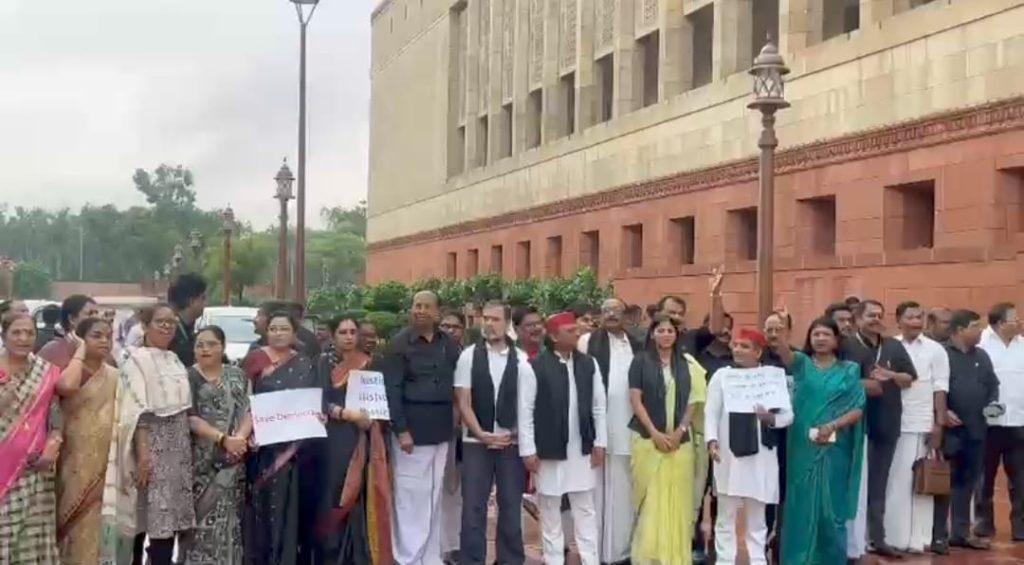
Monsoon Session: Opposition protests rock both Houses of Parliament

Photo: Naveen Bansal

The monsoon session of Parliament on the third day remained disrupted as protests by the Opposition rocked both the Houses on Wednesday.

The Lok Sabha and Rajya Sabha were adjourned within minutes of proceeding started as Opposition members staged protest outside demanding government’s attention on the key issue.

The Opposition members are demanding special discussion on the Special Intensive Revision (SIR) in the electoral rolls of Bihar ahead of Assembly Election in the state.

With assembly elections looming, the Opposition has alleged that there are discrepancies in the revision process which could affect the integrity of the upcoming elections.

They have been demanding the discussion on the issue for a long time since the process was started on the direction of Election Commission of India and demanding from government to look into the matter the addressed the issue for fair elections in the state.

A massive political controversy was erupted in Bihar following the Election Commission of India’s (ECI) decision to carry out a Special Intensive Revision (SIR) of the state’s voter rolls—a move that drew sharp criticism from opposition parties.

The SIR, the first of its kind in Bihar since the adoption of computerized electoral rolls in 2003, aims to clean the voter lists of ineligible entries, including duplicates and non-citizens. According to the ECI, this exercise is mandated under Article 326 of the Constitution and the Representation of the People Act, which restrict voting rights to Indian citizens aged 18 and above.

MOST POPULAR

HOT NEWS