Saturday, December 27, 2025

Government flags industrial pollution in Singrauli, vows stronger monitoring and action

A wide angle shot of white smoke coming out of the nuclear plants

The Ministry of Environment, Forest and Climate Change has acknowledged lapses in environmental compliance by certain industrial units in Singrauli, a district in Madhya Pradesh known for its dense concentration of coal-based and heavy industries.

In a written reply to the Lok Sabha, Minister of State Kirti Vardhan Singh confirmed that at least one industrial unit in the region had failed to meet mandated environmental standards during inspection.

Accordingly, the Central Pollution Control Board (CPCB) inspected three units in Singrauli under the Online Continuous Effluent/Emission Monitoring System (OCEMS). While two of the units were found compliant, one was initially non-compliant and subsequently issued a show-cause notice. After intervention, the unit corrected its deficiencies and returned to compliance.

Singrauli, also recognized as a Severely Polluted Area (SPA) under the Comprehensive Environmental Pollution Index (CEPI), faces environmental stress due to the concentration of red and orange category industries, including thermal power plants and aluminium manufacturing units.

The government is implementing a multi-tiered strategy to combat pollution in the region, including real-time monitoring through OCEMS, Automatic alerts via SMS when pollutant levels exceed prescribed limits, Periodic inspections based on industry category—quarterly for high-pollution sectors, and annually or biennially for others, Action plans by the Madhya Pradesh Pollution Control Board (MPPCB) targeting pollution from power plants, coal fields, fly ash runoff, and untreated domestic wastewater.

Notably, Hindalco Industries Ltd. and Mahan Energen Ltd. were among the inspected facilities. Hindalco’s Mahan unit was found non-compliant during a 2017 inspection but met standards after corrective measures. More recent inspections in 2023 and 2024 confirmed compliance at other sites.

The Ministry emphasized that robust legal provisions under the Environment Protection Act, Water Act, and Air Act are being enforced, with inspections and penalties aimed at ensuring industries adhere to environmental standards.

Environmentalists have long criticized the ecological toll of unchecked industrial expansion in Singrauli. With growing public concern and legislative scrutiny, the government appears to be taking a more assertive approach to pollution control in one of India’s most industrialized and environmentally sensitive regions.

Women’s participation in India’s workforce increased sharply: Govt

Representative Image

In a significant development reflecting socio-economic shifts, the Ministry of Labour and Employment revealed that women’s participation in India’s workforce has risen sharply in recent years.

Responding to a question in the Lok Sabha, Minister of State for Labour and Employment, Sushri Shobha Karandlaje, reported a jump in the female Labour Force Participation Rate (LFPR) from 23.3 per cent in 2019-20 to 41.7 per cent in 2023-24.

Despite increasing access to higher education among Indian women, the challenge remains to translate this into proportional formal employment. However, the government notes a clear move towards formalization.

Payroll data from the Employees’ Provident Fund Organisation (EPFO) indicates that nearly 27 lakh women joined the formal workforce during 2024–25 alone.

To address persistent barriers and promote gender parity in the workplace, the government is implementing a suite of initiatives. These include the Pradhan Mantri Mudra Yojana, Stand-Up India, Mission Shakti, PM Kaushal Vikas Yojana, and the Namo Drone Didi and Lakhpati Didi schemes, all aimed at skilling, financing, and empowering women in diverse sectors.

Moreover, the government is bolstering infrastructure with working women hostels and crèches in partnership with industry, as announced in the 2024–25 Union Budget. New programmes such as NAVYA are also training adolescent girls aged 16–18 for emerging and non-traditional job roles.

An advisory issued in January 2024 further emphasizes inclusive workplace policies, recommending flexible hours, paternity leave, and family-friendly practices to promote gender-balanced employment.

While India’s female LFPR still trails global averages, this multifaceted policy drive reflects a concerted effort to not only increase women’s presence in the formal workforce but to reshape workplace norms in the world’s most populous nation.

Bihar SIR—SC promises to step in immediately if mass exclusions found

“Bring 15 people they (ECI) says are dead, but found alive… we will look into it,” SC tells petitioners; Hearing now on August 12 and 13.

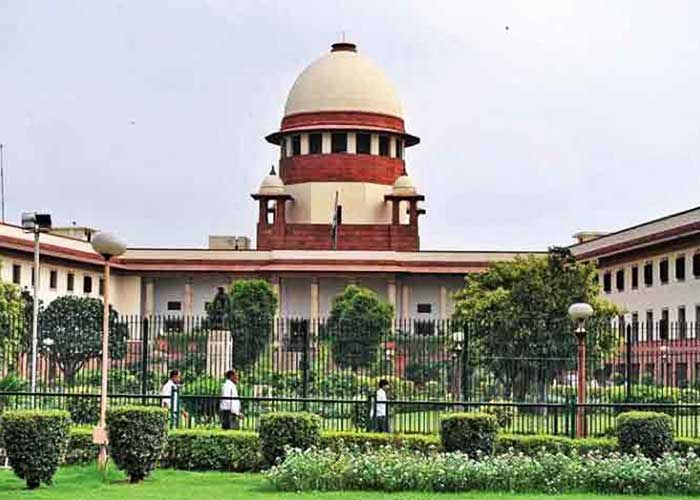
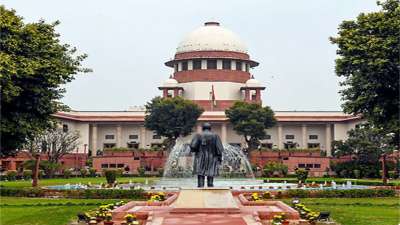
The Supreme Court  assured on Tuesday that it would step in immediately if persons omitted as dead from the draft electoral roll as part of the Special Intensive Revision (SIR) conducted by the Election Commission of India (EC) in Bihar are found “very much alive”.

Fixing a timeline for considering a batch of pleas challenging the SIR exercise in Bihar, the Apex Court said that hearing on the issue will be held on August 12 and 13. A bench of Justices Surya Kant and Joymalya Bagchi also asked the petitioners challenging the poll panel’s decision to file their written submissions by August 8.

The scheduled will be published on August 1

The Bench also said that they would not hesitate to act if the list was riddled with “mass exclusions”, but asked petitioners to wait till the draft list. Apprehensions till then can only be speculative. “Bring 15 people they (ECI) say are dead, but found alive… we will look into it,” Justice Bagchi was quoted as saying, addressing senior advocate Kapil Sibal and advocate Prashant Bhushan for petitioners.

The petitioners have criticised the SIR as “citizenship screening”. Apprehensions have also been raised by Opposition parties and NGOs, including Association for Democratic Rights, that 65 lakh people in Bihar have been excluded from the draft electoral roll with an explanation that most of them were either dead or had permanently shifted.

Justice Bagchi reasoned that the draft roll would be prepared on the basis of a January 7, 2025 list of voters assembled after a special summary revision of the Bihar electoral roll. An ECI affidavit in the Apex Court stated that voters in the existing January 2025 electoral roll would feature in the draft roll on August 1, provided they submitted their enumeration forms, with or without documents.

The EC said electors unable to make it to the draft roll had a further period of 31 days, till September 1, 2025, to make their claims and get corrections done before the final roll came out on September 30, 2025.

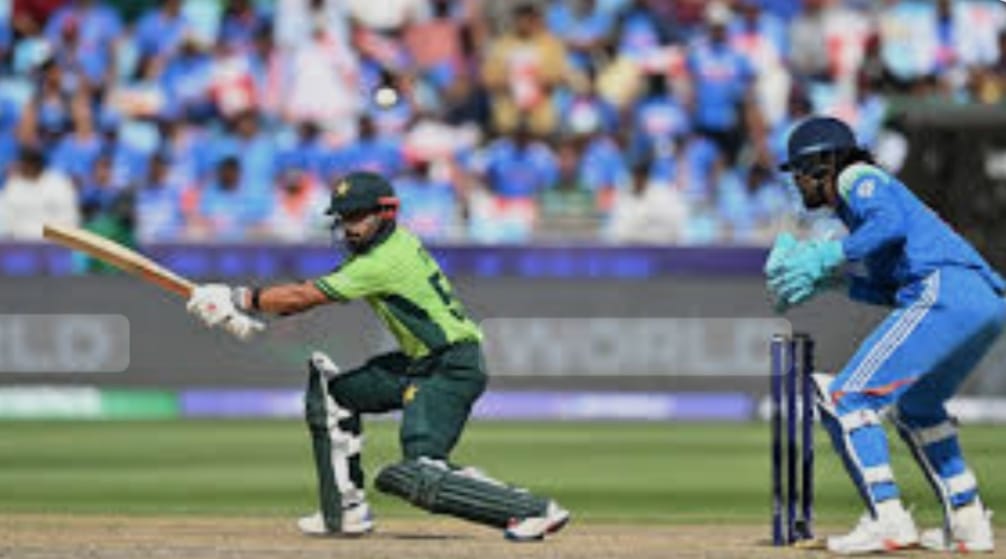
Why India-Pak cricket match cannot be cancelled, despite the backlash

‘My conscience does not allow me to watch India-Pakistan match’  AIMIM chief Asaduddin Owaisi said yesterday; Does the government has the courage to call families of those who died and say that we took revenge in Operation Sindoor and now you watch the Pakistan match, he also questioned, raising a larger question on whether India and Pakistan should engage in such activities in current circumstances.   


On the first day of the debate on Operation Sindoor and Pahalgam attack, the Lok Sabha witnessed fierce exchanges between the Treasury and Opposition’ benches. Many statements were made on US President Donald Trump’s repeated claims on him brokering a ceasefire between India and Pakistan.

An interesting part was a cheeky dig by Congress’ Deepinder Hooda at the Narendra Modi government.  Hooda said, “Donald ko chup karao, Donald ka muh band karao ya phir Hindustan mein McDonald’s ko band karao,” basically telling the government first “silence” Donald Trump on the issue of ceasefire.

However, what really grabbed attention was AIMIM chief Asaduddin Owaisi’s comments connecting the upcoming India-Pakistan cricket match and the Pahalgam terror attack in which 26 innocent lives were lost. There has been much backlash in social media ever since the date of the match was announced.

Voicing discomfort over watching the Asia Cup match scheduled just three months after the Pahalgam terror attack, Owaisi said “when Pakistan’s aircraft cannot come into our airspace, their boat cannot come into our water, trade has ended, how will you play a cricket match with Pakistan? When we are not giving water, we are stopping 80 percent of Pakistan’s water, saying that blood and water will not flow, you will play a cricket match”.

“My conscience does not allow me to watch that match,” said the Hyderabad MP, who has also been part of the government’s outreach initiative following Operation Sindoor.

Speaking on the floor of Lok Sabha, Owaisi also asked if the government has the courage to call families of those who died and say that we took revenge in Operation Sindoor and now you watch the Pakistan match, thus raising a larger question on whether India and Pakistan should engage in such activities in the current circumstances.   

India and Pakistan are scheduled to play a group stage match on September 14, as per the Asia Cup 2025 schedule.

However, despite widespread criticism and backlash, the India-Pakistan match cannot be cancelled, say experts

“This is not a bilateral contest but a multi-nation tournament. If India does not play or forfeit the match, it may get sanctioned by the Asian Cricket Council/ICC. It will also give Pakistan a huge advantage, giving them a walkover,” they add.   

All three Pahalgam attackers killed in Srinagar encounter: Amit Shah

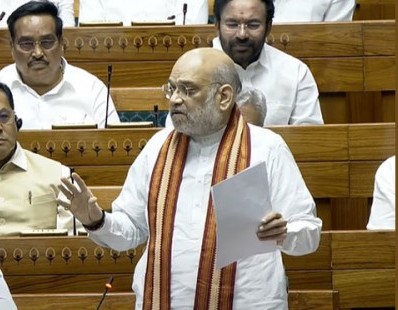
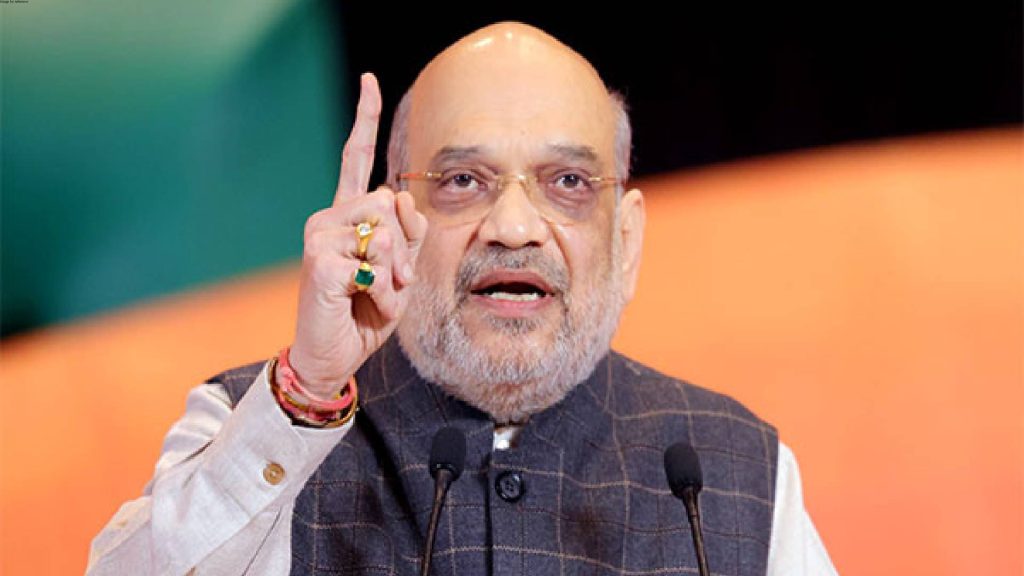
Union Home Minister Amit Shah on Tuesday informed Parliament that the three militants responsible for the April 22 attack on pilgrims in Jammu and Kashmir’s Pahalgam have been killed in a military operation in Srinagar.

Addressing the Monsoon Session, Shah said the joint counterterrorism effort, code-named Operation Mahadev, was carried out by the Indian Army, Jammu and Kashmir Police, and the Central Reserve Police Force (CRPF).

The militants, identified as Suliman, Afgan, and Jibran, were all foreign nationals from Pakistan and listed as A-category terrorists. Shah revealed that the security forces recovered Pakistani voter cards and Pakistan-manufactured chocolates from the site, further confirming their identities and origins.

“Suliman, a senior commander of the Lashkar-e-Taiba, was directly involved in the April 22 Pahalgam attack and the earlier Gagangeer assault,” the Home Minister said, citing concrete evidence gathered by security agencies.

The Pahalgam attack had claimed the lives of 26 people, including several pilgrims and a local resident, and triggered tensions along the India-Pakistan border, briefly escalating into a military standoff.

Bihar SIR-accept Aadhar, voters’ card: Supreme Court, all eyes on final hearing 

Include Aadhar and voters’ card as identity proof, it told EC on Monday; The Apex Court, which rose early yesterday, said it would announce on July 29 (Tuesday) an early date and a proper schedule for hearing the final arguments in the case.

In a major development in the ongoing fight over the controversial Special Intensive Revision (SIR) in Bihar, the Supreme Court on Monday again asked the Election Commission of India to accept Aadhaar and the Electors Photo Identity Card (EPIC) as identity documents. “Mass inclusion” and not “en masse exclusion” should be the outcome of the exercise, it said. The EC continued to resist, saying Aadhaar, EPIC, and ration cards could be forged easily.

The Apex Court, however, refused to halt the publication of the draft electoral rolls for poll-bound Bihar, scheduled for August 1. The two-judge bench comprising Justices Surya Kant and Joymalya Bagchi said it would fix the schedule for the final hearing on Tuesday when “an early date and a proper schedule for hearing the final arguments in the case would be announced,” according to reports

Petitioners, including activists and political parties, are calling the revision “citizenship screening”.

Earlier also the SC had asked the EC to consider the three documents.

On Monday it again said that the Bihar voters should be allowed to submit Adhaar and voter Identity card as documents for SIR. The risk of forgery (the reason EC cited to rule out the three documents, including ration card) could happen with any of the 11 proofs allowed, it said.

Any document on the earth can be forged, Justice Surya Kant remarked. Instead of “en masse exclusion,” there should be, “en masse inclusion”. So, proceed with Aadhaar and EPIC, include these two documents in the list of 11 permitted documents, he was quoted as saying.

Justice Joymalya Bagchi said that none of the 11 “indicative” documents acceptable as proof of identity were of a conclusive nature, whether residence or caste certificates.  

Shah slams opposition for no faith in EAM; Jaishankar denies US role in ceasefire; Trump makes claim again

No call between PM Modi and Trump from April 22 to June 1, at no stage, in any conversation with the US, was there any linkage with trade and what was going on, Jaishankar said; India and Pakistan would still be warring with each other, if not for his intervention, said  Trump on the same day

The discussion on Operation Sindoor in Lok Sabha on Monday witnessed heated exchanges between the Treasury and Opposition benches on various issues, including repeated claims by US President Donald Trump of brokering a ceasefire between India and Pakistan. Interestingly even while the debate was on in the Lok Sabha on Operation Sindoor and the Pahalgam terror attack, the US President repeated the claim, this time in Scotland.

As External Affairs Minister S Jaishankar apprised the House on India’s stand and response to Pahalgam attack, he was interrupted many times by Opposition leaders, forcing a visibly upset Home Minister Amit Shah to get up and berate them, warning that they will continue sitting on opposition’ benches for the next 20 years because they do not have faith in their own foreign minister but on some other country.

Shah said: “…I have an objection that they (Opposition) do not have faith in an Indian Foreign Minister but they have faith in some other country. I can understand the importance of foreign in their party. But this doesn’t mean that all the things of their party should be imposed here in the House. This is the reason why they are sitting there (opposition benches), and will remain sitting there for the next 20 years.”

Seeking to end speculation over any involvement of Trump in ceasefire, Jaishankar, “there was no call between Prime Minister Narendra Modi and US President Donald Trump from April 22 to June 17”. Responding to repeated claims by Trump of mediation in the India-Pakistan confrontation that followed Pahalgam terror attack, Jaishankar also asserted that at no stage, in any conversation with the US, was there any linkage with trade and what was going on between India and Pakistan

But Trump on Monday again said that India and Pakistan would still be warring if not for his intervention. He made the remarks before beginning talks with UK Prime Minister Keir Starmer at Trump Turnberry golf course in Scotland, according to reports, which added that the US President also repeated his claim that he used trade as leverage to get New Delhi and Islamabad to stop fighting in early May this year

India has consistently denied Trump’s claims that he was instrumental in bringing about the May-10 ceasefire between the two countries. Interestingly, speaking in the Lok Sabha Congress MP Deepender Singh Hooda was also quoted as saying “Donald (Trump) ko chup karao, Donald ka muh band karao ya phir Hindustan mein McDonald’s ko band karao”, basically that first he government needs to make Trump keep quiet on ceasefire issue.

Meanwhile Jaishankar also went on to remind the House that the Doklam crisis was on, the Leader of Opposition decided to get a briefing not from the government, not from the MEA, but from the Chinese ambassador.  

Speaking of India’s growing diplomatic influence, Jaishankar said that the Resistance Front (TRF), which claimed responsibility for the April 22 Pahalgam terror attack, has now been designated a global terrorist organisation. He also emphasised the strong multilateral condemnation of the Pahalgam attack from groups like Quad and BRICS and individual countries.

‘If we do not claim PoK today,’ then when,’

Responding to Rajnath Singh’s statement that India did not seek war or territorial gain, Gogoi asked, “If we do not claim Pakistan-occupied-Kashmir today, then when?”; “Rajnath Singh ji says the government’s intention was not to start a war. I ask, why? Why was war not our intention,” he also questioned.

Deputy leader of opposition Gaurav Gogoi on Monday launched a blistering attack on the BJP-led NDA government, accusing it of intelligence failure and failing to prevent the Pahalgam terror attack. Questioning lapses that led to the Pahalgam terror attack and criticising the centre’s counter-terrorism response, Congress’ deputy leader in the Lok Sabha asked why five terrorists responsible for the Pahalgam attack had not been caught.

Opening the Opposition’s debate in Lok Sabha, Gogoi took on Defence Minister Rajnath Singh saying he talked of ‘ghus ke marenge (will hit you inside your country)’. “He said the same thing when Pulwama happened. He said we dismantled the terror infrastructure after Pulwama, Uri then how did the terrorists come to Baisaran,” Gogoi asked. “Rajnath Singh ji gave a lot of information, but as the Defence Minister, he never mentioned how terrorists from Pakistan reached Pahalgam and killed 26 people,” he said in the speech shortly after the opening statement by Defence Minister

He also sought to know how many Rafale jets were shot down during India’s Operation Sindoor against Pakistan. Gogoi was referring to a statement of Chief of Defence Staff General Anil Chauhan, who said in an interview that India suffered initial losses in the air but declined to give details and US President Donald Trump’s claims that 5-6 (fighter) jets were shot down. “One jet costs millions…we want Rajnath Singh to tell the truth. How many jets were shot down? India has the courage to listen to the truth,” Gogoi said.

Responding to Rajnath Singh’s statement that India did not seek war or territorial gain, Gogoi also asked, “If we do not claim Pakistan-occupied-Kashmir today, then when?”

“Even today, Rajnath Singh ji is saying Operation Sindoor has only paused and not stopped. He says if Pakistan attacks again, we will respond. On one hand, they say terror infrastructure has been dismantled and on the other hand, they say terror attacks can happen again. Rajnath Singh says the government’s intention was not to start a war. I ask, why? Why was war not our intention,” he also questioned.

“Rajnath Singh said in 2016 that our strikes would destroy terrorist infrastructure. He repeated this in 2019. But today, the operation remains incomplete because Rajnath Singh hinted that Pakistan may act again in the future, how long will this continue?” Gogoi asked.

Also raising the ceasefire issue, Gogoi said “on May 10, our ambassador said India would respond. By evening, a ceasefire agreement was announced. If Pakistan was truly on its knees, why did we stop? Whom did we bow before?”

He criticised India’s foreign policy posture, referring to the Shanghai Cooperation Organisation (SCO) Summit joint declaration. “At the BRICS summit, only the attack in Kashmir was condemned in the declaration, not Pakistan….what do you have to say about the $1 billion IMF and $800 million ADB packages to Pakistan?”

Rajnath warns Pakistan; also slams opposition saying never asked how many enemy jets shot down   

As Singh began the Operation Sindoor debate in Parliament, the Indian Army Special Forces scored a massive win by gunning down at least three terrorists, including Hashim Musa, the mastermind behind the recent Pahalgam terror attack that claimed 26 lives, according to reports  

Defence Minister Rajnath Singh on Monday warned Pakistan, saying that if any misadventure occurs from its side in the future Operation Sindoor will resume. He also slammed the opposition, accusing them of prioritising wrong issues during the ongoing discussion on Operation Sindoor in the Lok Sabha.    

As Defence Minister Rajnath Singh began the Operation Sindoor debate in Parliament, news came in of the Indian Army Special Forces scoring a massive win by gunning down three Pakistani terrorists near Srinagar. They included Hashim Musa, the mastermind behind the recent Pahalgam terror attack that claimed 26 lives, according to reports. At least three terrorists were neutralised in the fierce gunfight, the Army’s Chinar Corps confirmed on X, adding that the operation is still ongoing. However, the Army officially is yet to reveal the identity of those killed in Operation Mahadev.

Opening the debate in the Lok Sabha on the Pahalgam terror attack and Operation Sindoor, he said seven terror camps were fully destroyed and that India has proof of the damage incurred inside PoK and Pakistan. The attacks, he said, were non-escalatory in nature. India wants peace because its basic nature is of ‘Buddh’ and not ‘yudh,’ Singh said

The Defence Minister said that the Operation Sindoor was “paused” as the armed forces had achieved the desired politico-military objectives and that there was “no pressure” to end it. On May 10, when the Indian Air Force struck hard at multiple airfields in Pakistan, Pakistan admitted defeat and offered to cease hostilities. This offer was accepted with the caveat that this Operation has only been paused. If any misadventure occurs from Pakistan’s side in the future, the Operation will resume, he said.

Responding to queries raised by some opposition MPs, Singh said their line of questioning did not reflect the nation’s sentiment. “Few members of the opposition have been asking how many of our aircraft were shot down? I feel their question does not adequately represent our national sentiments. They have not asked us how many enemy aircraft our Armed Forces shot down?” he said

“If they must ask a question, it should be whether India destroyed terrorist bases, and the answer to that is, yes… If you have a question to ask, ask this: Were any of our brave soldiers harmed in this operation? The answer is, no, none of our soldiers were harmed,” he added. 

Calling for focus on larger national objectives instead of what he termed “comparably minor matters,” Singh said unnecessary questioning could distract from national security and the morale of armed forces. Terming the military operation “historic,” Singh said “before executing Operation Sindoor, our forces studied every aspect and chose options that would cause maximum damage to terrorists, while ensuring no harm to innocent civilians.” 

Critical rare metals found in coal fly ash: Centre  

Almost indispensable in advanced technologies, strategic resources of these REEs are now shaping international relations, determining a nation’s technological leadership, military capability and energy transitions. 

Waste material coal fly ash is also a potential resource of valuable rare earth elements (REEs) which are retained and concentrated upon combustion. The government today told the Parliament that when coal-derived fly ash and bottom ash samples collected from Singareni Thermal Power Plant (STPP) and overburden clay samples were analysed for trace elements, they showed total REEs in fly ash and clays of about 400 ppm.

“Further, overburden, lignite and fly ash samples, collected from mines and thermal power plants of NLC India Limited at Neyveli, were also analysed for REEs and trace elements. It was found that fly ash from thermal power plant contains a concentration of REE (2100 mg/kg) comprising of both lighter and heavier REE with Yttrium content of 300 mg/kg,”  Union Minister of Coal and Mines G Kishan Reddy told the Rajya Sabha in a written reply.

What are REEs?  

REEs include rare elements like Lanthanum, Cerium, Praseodymium, Neodymium, Promethium, Samarium, Europium, Gadolinium, Terbium, Dysprosium, Holmium, Erbium, Thulium, Ytterbium, Lutetium and Scandium and Yttrium.

Besides their importance in various technological applications, REEs present in coal fly ash have an added advantage of potential for recovery from waste material. Fly ash, a byproduct of coal combustion, contains REEs that can be extracted and utilised, potentially mitigating supply risks associated with traditional mining, say experts

REEs and their geopolitical importance

Almost indispensable in advanced technologies, strategic resources of these REEs are now shaping international relations, determining a nation’s technological leadership, military capability and energy transitions.  

In April China imposed export restrictions on seven rare earth elements like Samarium, Gadolinium, Terbium, Dysprosium, Lutetium, Scandium and Yttrium as retaliation against US tariffs imposed by President Donald Trump. It was not a total ban but restrictions tightened export licences, enabling China to limit global shipments. Companies needed special export licenses to export them.

China’s grip on over 90 % of these resources compelled nations to trade on its terms

Why are they indispensable?   

REEs are vital for technologies like EV motors, smartphones, missiles and many more.

The Union Cabinet in January approved the launch of the National Critical Mineral Mission (NCMM) to secure critical mineral supply in the country.

The mission aims to reinforce India’s critical mineral value chain across all stages—from exploration and mining to beneficiation, processing, and recycling of end-of-life products—and ensure self-sufficiency in fulfilling the industrial demands for critical minerals.  The NCCM also focused on recovery of critical minerals from sources such as overburden, tailings, fly ash, and red mud.

Coal India Limited has undertaken R&D projects related to rare earth elements found in coal mine waste.

What next

Results from assessment of REE and other economic resources from the North Eastern Region (NER) Coalfield, indicate that total REE is low, but heavy REE contents are relatively high, according to Reddy.

Results from appraisal of Gondwana sediments—coal, clay, shale, sandstone—f or Trace Elements & REE concentration in the Singrauli coalfield, indicate that REE are “promising” in nature (with an enrichment of ≈250 ppm on a whole coal basis in coal samples and ~400 ppm in non-coal samples). However, the economical extraction of the REE is subject to technical advancement and economy of scale.

The Singareni Collieries Company Limited (SCCL) has signed MoUs with Institute of Minerals and Materials Technology (IMMT), Bhubaneswar; Non-Ferrous Materials Technology Development Centre (NFTDC), Hyderabad; and IIT, Hyderabad for research in this field.

MOST POPULAR

HOT NEWS