Saturday, December 27, 2025

India responds to Trump, says ‘will take all steps necessary to secure India’s national interest’

This is India’s first official statement on the issue; Trump on Tuesday said imports from India might be hit with a tariff rate of 20 to 25 per cent as the trade agreement between the two nations has not yet been finalised yet. “I think so,” he said when asked if 20-25 percent would be a possible tariff rate for India. Later he announced 25 per cent tariffs beginning August 1
File Photo

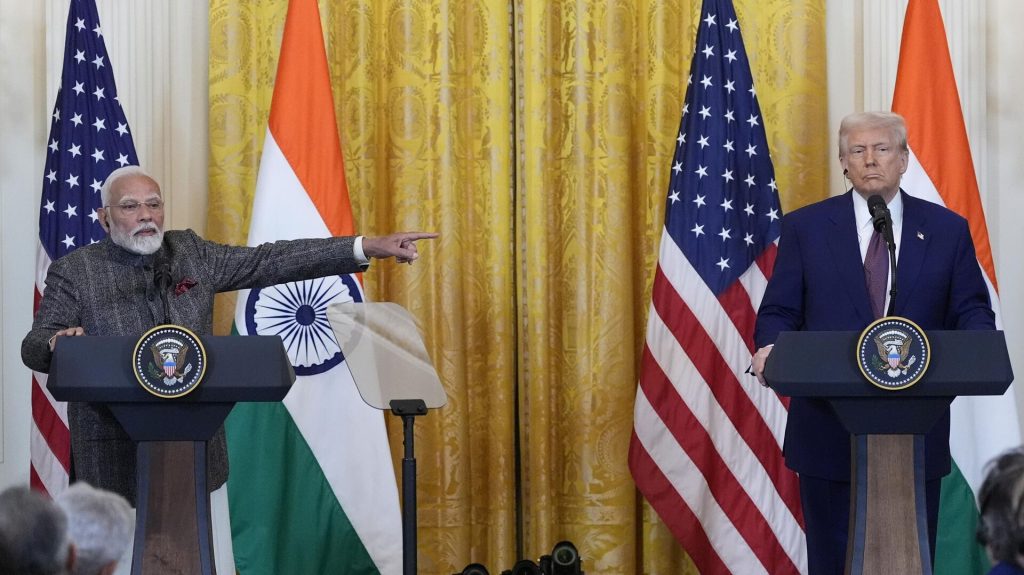
Responding to US President Donald Trump imposing “25 per cent,” tariff on India, the Narendra Modi government today said it will take all “steps necessary” to secure the country’s national interests as it has been the case with other trade agreements including the latest Comprehensive Economic and Trade Agreement with the UK. In a short but clear statement issued late evening, the Ministry of Commerce said that the “Government has taken note of a statement by the US President on bilateral trade.  The Government is studying its implications.”

This is India’s first official  statement on the issue.

“India and the US have been engaged in negotiations on concluding a fair, balanced and mutually beneficial bilateral trade agreement over the last few months. We remain committed to that objective.

“The Government attaches the utmost importance to protecting and promoting the welfare of our farmers, entrepreneurs, and MSMEs.

“The Government will take all steps necessary to secure our national interest, as has been the case with other trade agreements including the latest Comprehensive Economic and Trade Agreement with the UK,” according to a statement issued by the Ministry of Commerce and Industry headed by Piyush Goyal. Earlier External Affairs Minister S Jaishankar met Goyal after Trump’s initial statement of 20-25 percent tariffs on India on the sidelines of the ongoing Monsoon Session of the Parliament, sources said

August 1 is the deadline for implementation of reciprocal tariffs on various trading partners, including India. The deal remains unfinalised despite several rounds of discussions and any further delays could negatively impact the Indian economy and stock market but sources in know of developments say that for a government which is facing backlash on Trump’s repeated claims on brokering ceasefire between India and Pakistan, it needs to be extra caution while finalising the deal in mind the interests of people, especially the farmers   

Recently India and the United Kingdom made history by officially signing the Comprehensive Economic and Trade Agreement (CETA) which is projected to elevate bilateral trade by $34 billion annually. At a time when the India-US trade agreement was facing uncertainties, CETA was described as India’s most ambitious pact with a Western country.

What Trump said

Trump on Tuesday said that imports from India might be hit with a tariff rate of 20 to 25 per cent as the trade agreement between the two nations has not yet been finalised yet. Travelling back to Washington after a five-day visit to Scotland, Trump told reporters on-board the Air Force One “I think so,” when asked if 20-25 per cent would be a possible tariff rate for India.

  “…India is my friend. They ended the war with Pakistan at my request… India has been a good friend, but India has charged basically more tariffs than almost any other country. You just can’t do that,” Trump was quoted as saying.

Later he announced 25 per cent tariffs beginning August 1.

August-1 deadline

Coming just ahead of the August-1 deadline for the implementation of reciprocal tariffs on various trading partners, including India, Trump’s comments are significant. Sources familiar with the developments say that Trump may speak with Prime Minister Narendra Modi before the final nod to the long-anticipated deal.

Though Indian equity benchmark indices—Sensex and Nifty—traded higher on Wednesday, there continues to be a lingering uncertainty over the much-delayed agreement. Gold and silver prices also remained bullish in the domestic futures market on the back of persistent uncertainty over the deal, driving investors into safe-haven assets.

The issue 

Trump in April announced increased tariffs with an objective to reduce the US’ trade deficit, which he later paused at a reduced 10 % till negotiations.

Agricultural products and genetically modified crops remain some of the main sticking points from the India side. A key point of contention is America’s insistence on greater access to Indian markets for its agricultural, dairy, and GM products, India argues that such access could negatively impact the livelihoods of its farmers.

The US is pushing for reduced tariffs on its industrial goods, electric vehicles, dairy products, wines, apples, etc Some farmer groups are also urging the government to exclude agriculture from the agreement entirely. The tariffs on Indian products could hurt India’s export as the US is India’s top export destination with nearly 20 per cent share in the country’s total outbound shipments. 

Deal not finalised, imports from India could face 20-25% tariffs, says Trump

August 1 is the deadline for implementation of reciprocal tariffs on various trading partners, including India; Sources familiar with developments say the US President  may speak with Prime Minister Narendra Modi before the final nod to the long-anticipated deal.

US President Donald Trump on Tuesday said that imports from India might be hit with a tariff rate of 20 to 25 per cent as the trade agreement between the two nations has not yet been finalised yet. Travelling back to Washington after a five-day visit to Scotland, Trump told reporters on-board the Air Force One “I think so,”  when asked if 20-25 per cent would be a possible tariff rate for India.

 “…India is my friend. They ended the war with Pakistan at my request… India has been a good friend, but India has charged basically more tariffs than almost any other country. You just can’t do that,” Trump was quoted as saying.

Coming just ahead of the August-1 deadline for the implementation of reciprocal tariffs on various trading partners, including India, Trump’s comments are significant. Sources familiar with the developments say that Trump may speak with Prime Minister Narendra Modi before the final nod to the long-anticipated deal.

Meanwhile, Indian equity benchmark indices—Sensex and Nifty—traded higher on Wednesday, supported by strong earnings from Larsen & Toubro, boosting investor sentiment. However, upside remained limited amid caution ahead of the US Fed’s policy decision and lingering uncertainty over the much-delayed agreement.The outcome of the US Federal Open Market Committee meeting is expected later today. Its next policy meeting is scheduled for September 16-17.

Gold and silver prices also remained bullish in the domestic futures market on the back of persistent uncertainty over the deal, driving investors into safe-haven assets. However, a stable dollar and weak demand limited the gains.

Trump in April announced increased tariffs with an objective to reduce the US’ trade deficit, which he later paused at a reduced 10 % till negotiations.

According to US Trade Representative Jamieson Greer, additional time was required for negotiations with India to assess the country’s readiness to expand the market to American exports. Agricultural products and genetically modified crops remain some of the main sticking points from the India side. A key point of contention is America’s insistence on greater access to Indian markets for its agricultural, dairy, and GM products, India argues that such access could negatively impact the livelihoods of its farmers.

The US is pushing for reduced tariffs on its industrial goods, electric vehicles, dairy products, wines, apples, tree nuts and In contrast while India wants high tariffs on agricultural and dairy products. Some farmer groups are also urging the government to exclude agriculture from the agreement entirely.

The tariffs on Indian products could hurt India’s export as the US is India’s top export destination with nearly 20 per cent share in the country’s total outbound shipments.
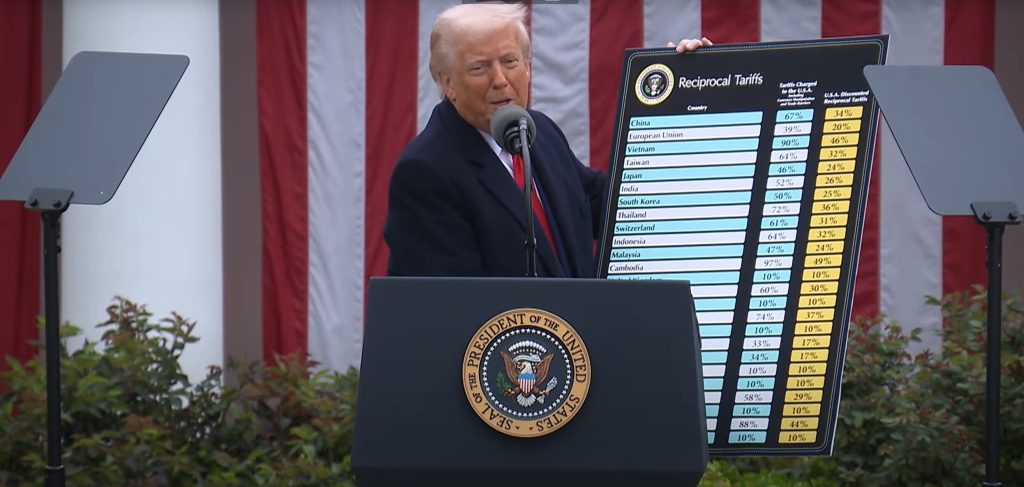
The deal remains unfinalised despite several rounds of discussions. Delays could negatively impact the Indian economy and stock market.

Major win for India, UN report links TRF to Pahalgam terror attack,

This is also the first time LeT and Pakistan-based terror groups have found mention in the monitoring team’s report after several years 

A United Nations (UN) Security Council report has linked The Resistance Front—a front for Pakistan-based Lashkar-e-Taiba (LeT)—to the Pahalgam terror attack, a development which is being seen as a diplomatic win for India.

The ‘Thirty-sixth report of the Analytical Support and Sanctions Monitoring Team submitted pursuant to resolution 2734 (2024) concerning ISIL (Da’esh), Al-Qaida and associated individuals and entities’ clearly talks of the LeT/Pakistan-based terror groups

This is also the first time LeT and Pakistan-based terror groups have found mention in the monitoring team’s report after several years. When the UNSC had issued a statement after the April 22-Pahalgam attack killing 26 civilians, Pakistan (currently a non-permanent member) had blocked any reference to the TRF or even to Pahalgam. Pakistan’s foreign minister Ishaq Dar said that the country had removed any reference to TRF in the UNSC press statement condemning the Pahalgam attack.

People familiar with the matter said that the mention of the TRF in the MT Report is how the world views Pakistan’s lies and deceitful narrative. This development is particularly notable as all decisions of the 1267 Sanctions Committee, including MT reports, are adopted by consensus by the members of the Security Council, they added.

“Pakistan’s strategy of plausible deniability using secular and modern names like ‘The Resistance Front’ and ‘People Against Fascist Front’ for its jihadi proxies to divert attention from LeT/JeM and give an indigenous appearance to its terrorist activities in Jammu & Kashmir now stands punctured.

“The inclusion of TRF in the MT Report  despite Pakistan’s efforts for its removal highlights Pakistan’s undeniable involvement in fomenting terrorism in Jammu and Kashmir and attests India’s credibility in the UN on the CT front,” said those in the know

The biannual report from the Security Council’s monitoring team for sanctions on al-Qaeda and the Islamic State linked the TRF to the Pahalgam attack and warned that terrorist groups could exploit tensions between India and Pakistan.

“On 22 April, five terrorists attacked a tourist spot in Pahalgam, in Jammu and Kashmir. Twenty-six civilians were killed. The attack was claimed that same day by The Resistance Front (TRF), who in parallel published a photograph of the attack site,” the report said.

“The claim of responsibility was repeated the following day. On 26 April, however, TRF retracted its claim. There was no further communication from TRF, and no other group claimed responsibility. Regional relations remain fragile. There is a risk that terrorist groups may exploit these regional tensions,” it said.

The report stated, without naming specific countries, that one UN member state said the attack “could not have happened without Lashkar-e-Tayyiba (LeT) support, and that there was a relationship between LeT and TRF”, while another member state said the “attack was carried out by TRF, which was synonymous with LeT”.

In an obvious reference to Pakistan, the UN Security Council report said: “Yet one Member State rejected these views and said that LeT was defunct.” Pakistan has for long taken the official position that LeT is “defunct” since authorities imposed a ban on it.

Following the Pahalgam attack, a team of Indian officials travelled to the US in mid-May and briefed the monitoring team of the 1267 Sanctions Committee and other partner countries on the activities of TRF and presented a dossier on the group. The team also met representatives of the UN Office of Counter-Terrorism (UNOCT) and Counter-Terrorism Committee Executive Directorate (CTED) as part of efforts to get TRF designated as a global terror group by the Security Council.

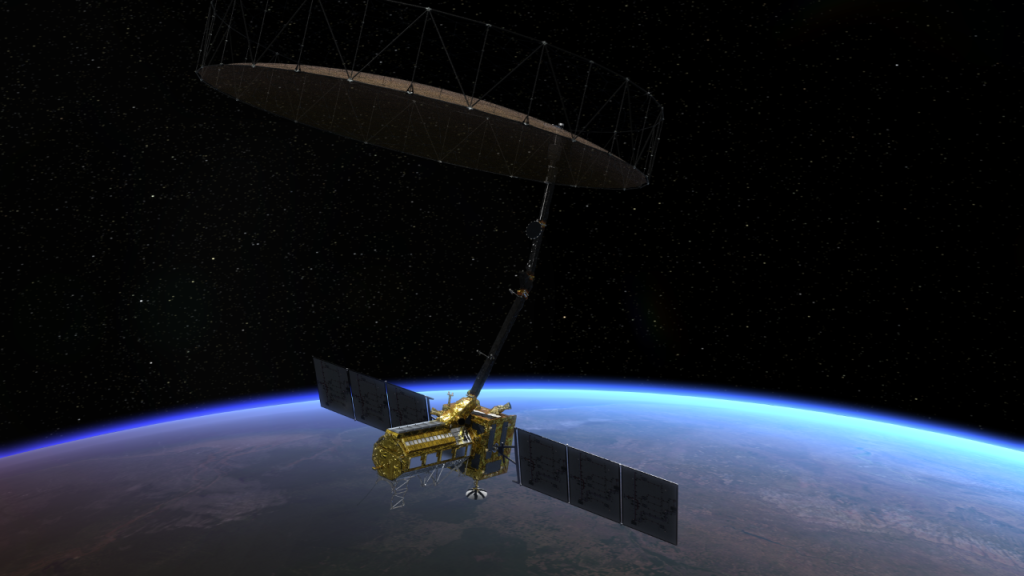
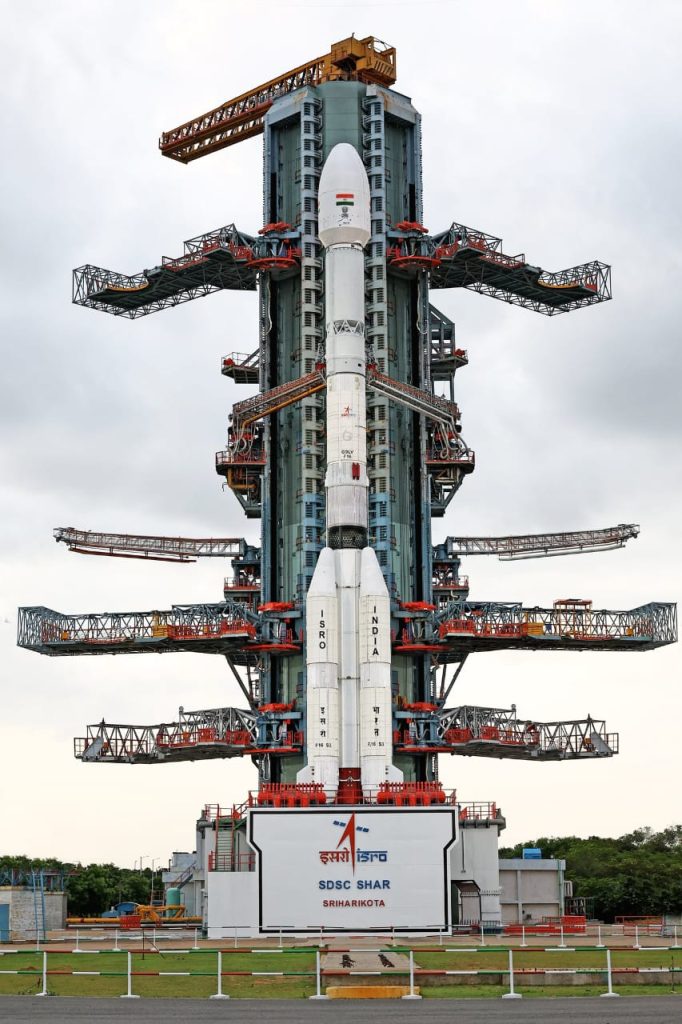
NASA-ISRO NISAR satellite to monitor earth like never before, launch today

India and US, in a joint mission are going to launch the NASA-ISRO Synthetic Aperture Radar (NISAR) satellite from Satish Dhawan Space Centre, Sriharikota which will image the global land and ice-covered surfaces, including islands, sea-ice and selected oceans every 12 days.

NISAR mission’s primary objective is to study land & ice deformation, land ecosystems, and oceanic regions in areas of common interest to the US and Indian science communities.

This is the biggest collaboration to date between India and the US. NASA has contributed the L-Band Synthetic Aperture Radar (SAR), a high-rate telecommunication subsystem, GPS receivers, and a deployable 12-meter unfurlable antenna. ISRO, on its part, has provided the S-Band SAR payload, the spacecraft bus to accommodate both payloads, the GSLV-F16 launch vehicle, and all associated launch services.

The data acquired through S-band and L-band SAR from a single platform will help the scientists to understand the changes happening to planet Earth.

“This will help to measure the woody biomass and its changes track changes in the extent of active crops understand that changes in wetlands extent map Greenland’s & Antarctica’s ice sheets, dynamics of sea ice and mountain glaciers characterize land surface deformation related to seismicity, volcanism, landslides, and subsidence & uplift associated with changes in subsurface aquifers, hydrocarbon reservoirs among others,” ISRO stated.

NISAR exemplifies the potential of India – US partnership to harness strong convergences in the strategic and scientific realms, towards enhancing prosperity of the two countries and beyond. It also underlines the ability of the scientific communities of the two countries to deliver outcomes for the people through mutual collaboration and sustained engagement.

Earlier this year, a NASA-ISRO effort through AXIOM  realized sending the first Indian astronaut to the International Space Station (ISS). Group Captain Shubhanshu Shukla visited the International Space Station (ISS) from 25 June to 15 July 2025 In February 2025, PM Modi and President Donald Trump also called for more collaboration in space exploration, including on long duration human spaceflight missions, spaceflight safety and sharing of expertise and professional exchanges in emerging areas, including planetary protection. 

Opposition stages protest in Parliament complex

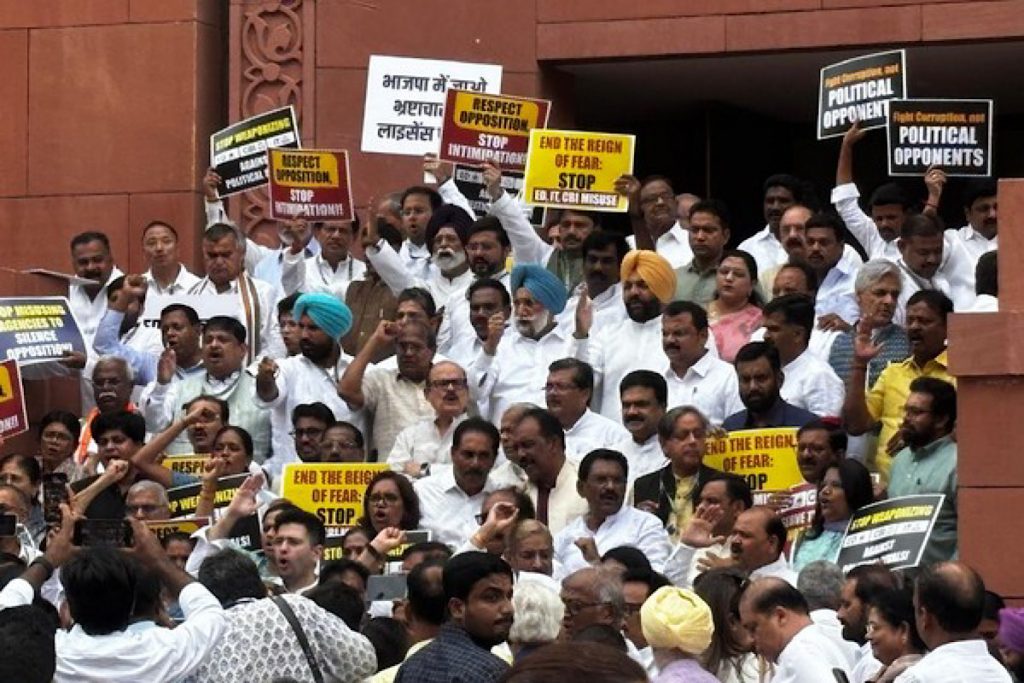
In order to register their protest on Special Intensive Revision (SIR) in Bihar’s electoral rolls, several MPs of the INDIA bloc and Congress leader Sonia Gandhi, on Wednesday raised slogans against the practice in Parliament complex.

The MPs were seen holding a huge banner in front of them which read “SIR-Loktantra Pe Vaar” as they lined up near the steps of the Makkar Dwar of the House.

With “Stop SIR” placards in hands, many MPs of the Opposition from Congress, DMK, TMC and others participated in the protest and raised slogans.

The Parliament has been witnessing protests from the Opposition on several issues including demand of special discussion on Operation Sindoor and SIR in Bihar.

This was the seventh day of the Parliament when all the Opposition MPs staged a protest against the SIR after discussion on Operation Sindoor was held.

The last intensive revision in Bihar, was conducted by the Commission in the year 2003 with reference to Jan 1, 2003 as the qualifying date. The Commission has previously exercised its powers under enabling statutes in the years such as 1952-56, 1957, 1961, 1965, 1966, 1983-84, 1987-89. 1992, 1993, 1995, 2002, 2003 and 2004 to undertake Intensive Revision of electoral rolls for all or some pans of the country for a fresh preparation of electoral rolls through enumeration.

Two terrorists killed in LoC encounter in J&K’s Poonch during Operation Shivshakti

Srinagar: Two terrorists were killed in an encounter with Indian Army troops along the Line of Control (LoC) in Jammu and Kashmir’s Poonch district late Tuesday night. The gunfight, part of the ongoing Operation Shivshakti, broke out in the Degwar sector after troops detected suspicious movement near the Kalsian-Gulpur area.

According to officials, the Army acted swiftly after surveillance teams picked up signs of infiltration near the LoC fence. A cordon was established, leading to a brief but intense exchange of fire that resulted in the elimination of two heavily armed infiltrators.

The operation was launched on the basis of joint intelligence inputs from the Army and the Jammu and Kashmir Police. 

“OPERATION SHIVSHAKTI: In a successful anti-infiltration operation, alert troops of the #IndianArmy eliminated two terrorists attempting to infiltrate across the Line of Control. Swift action and accurate firepower thwarted the nefarious designs. Three weapons have been recovered (sic).” the Army’s 16 Corps (White Knight Corps) posted on social media, confirming the operation.

Three weapons were recovered from the slain militants. Security forces are continuing to comb the area to rule out the presence of any more infiltrators.

Project Cheetah—Has Kenya, South Africa paused new translocations to India?

After Kenya, South Africa appears to have hit a pause button on sending more cheetahs to India until a fresh review on health conditions of those previously sent, according to reports.

Around 20 cheetahs were brought to Madhya Pradesh’s Kuno National Park after India launched the ambitious reintroduction project for the species declared extinct in the country. Eight cheetahs were sent by Namibia in September 2022 and 12 were brought from South Africa in February 2023.

Reports quoting officials said a team, which included National Tiger Conservation Authority official, also visited South Africa for discussions, highlighting the success of Project Cheetah, on how the big cats were adapting to Kuno, coexisting with animals, including leopards, and also human populations since release of those in the wild.

The panel also explained reasons behind the deaths of cheetahs in the year of introduction

Amid conservationists questioning the project, India re‑introduced around 20 African cheetahs (from Namibia and South Africa) to Kuno National Park starting September 2022. However, around nine to 10 cheetahs had died, including both adults and cubs, due to various reasons.

Seven deaths (including three cubs born in India) occurred within enclosures at Kuno National Park. By January 2024, total deaths reached 10 due to various causes like chronic illness, mating-related injuries, septicaemia from maggot infections around radio collars, and heat stress. Around July 2025, at least one recent death was confirmed — an adult female named Nabha. Currently the cheetah population is around 26, including surviving adults and cubs.

Officials say that though initial losses were significant, the project saw the birth of cubs with active efforts to stabilise surviving animals and that India plans to continue importing more cheetahs and expand to additional parts. For the delay in doing so, they cite other reasons

India is working on diplomatic channels with Botswana, South Africa and Kenya but talks with South Africa were delayed after the formation of a new political coalition there last year. Botswana has committed to four cheetahs and discussions are underway. As far as Kenya is concerned negotiations with it are for long-term collaboration, as per reports

Meanwhile experts have recommended enhanced veterinary care, better habitat planning and experts’ intervention to reduce mortality.

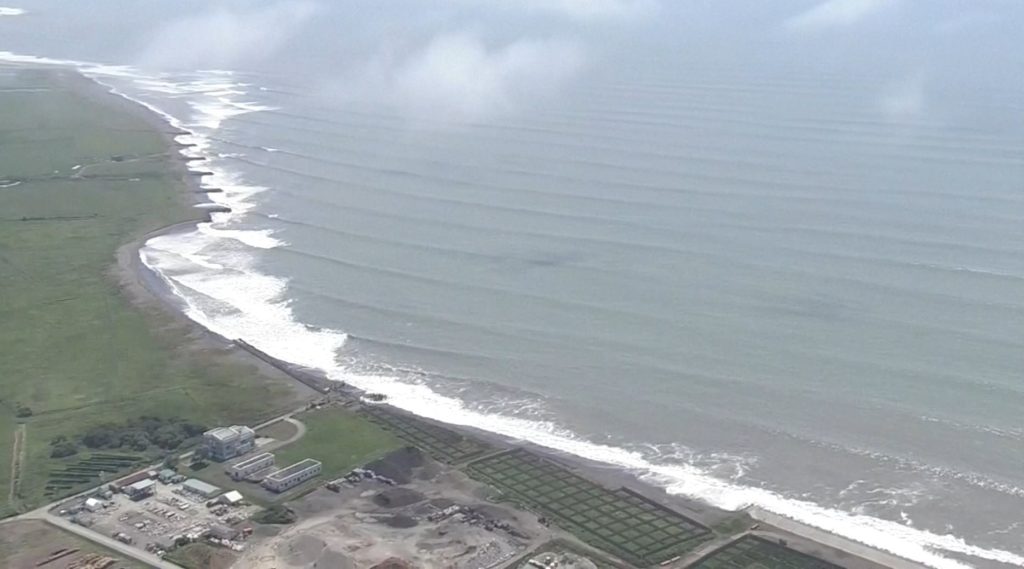
Massive Quake Off Russia’s Kamchatka Triggers Pacific-Wide Tsunami Alerts

A colossal magnitude 8.8 earthquake struck off Russia’s Kamchatka Peninsula on Tuesday, sending tremors through the Pacific and triggering tsunami warnings across multiple nations. The earthquake’s epicenter was located roughly 136 kilometers east of the coastal city of Petropavlovsk-Kamchatsky, deep beneath the seafloor near one of the world’s most seismically active subduction zones.

The immediate aftermath saw authorities in Russia, Japan, the United States, and several Pacific islands scramble into emergency mode. Tsunami alerts rippled outward as scientists tracked the potential spread of destructive waves.

In Russia’s far eastern Kuril Islands, waves reaching up to four meters were reported in the town of Severo-Kurilsk, forcing evacuations and temporarily severing power and communications. While there were no immediate reports of deaths, minor injuries and structural damage were confirmed. The Sakhalin region declared a state of emergency as aftershocks continued to shake the area.

Japan issued a tsunami advisory for its eastern coastline, including Hokkaido and parts of Honshu. Although initial wave heights remained under one meter, authorities took no chances. Over 900,000 people were evacuated from coastal areas. Operations at the Fukushima Daiichi nuclear plant were suspended briefly as a precaution—an unsettling reminder of the country’s vulnerability to seismic sea waves.

Across the Pacific, Hawaii activated tsunami alert systems. Sirens blared on Maui and Oʻahu as emergency shelters opened and coastal areas were cleared. The Pacific Tsunami Warning Center initially projected wave impacts along Midway Atoll and later extended advisories to Alaska’s Aleutian Islands and the U.S. West Coast.

California, Oregon, and Washington issued coastal advisories, asking residents to steer clear of beaches, harbors, and low-lying areas. Emergency services in places like Crescent City—a town notoriously hit by past tsunamis—stood on alert. By late Tuesday, most alerts for Hawaii and the continental U.S. had been downgraded or lifted as wave energy dissipated with minimal inland impact.

The Kamchatka Peninsula lies along the volatile “Ring of Fire”—a horseshoe-shaped belt of fault lines circling the Pacific Ocean. The region has a long history of massive earthquakes and tsunamis, some with devastating consequences.

One of the most deadly tsunamis in Russian history occurred in 1952, when a magnitude 9.0 earthquake off Kamchatka sent waves nearly 18 meters high crashing into Severo-Kurilsk, killing over 2,300 people. It remains a haunting benchmark for the power of tectonic upheaval in the region.

Japan, too, carries deep scars. The memory of the 2011 Tōhoku earthquake and tsunami still looms large. That magnitude 9.1 quake generated towering waves up to 55 meters high, claimed nearly 18,000 lives, and triggered a nuclear meltdown in Fukushima—the most severe nuclear accident since Chernobyl. Tuesday’s evacuations and nuclear plant shutdowns were tinged with echoes of that catastrophe.

Even the United States bears its own tragic tsunami history. In 1964, a magnitude 9.2 quake in Alaska sent waves barreling down the Pacific, killing more than 130 people and damaging infrastructure as far south as California. Towns like Crescent City have since installed tsunami sirens and reinforced seawalls, but the threat remains real.

Seismologists have warned that Tuesday’s quake may not be the last. Aftershocks ranging from magnitude 6.0 to 7.0 have already followed the main quake. The Pacific Tsunami Warning Center is continuing to monitor undersea seismic activity and wave propagation data.

Despite early alarm, officials emphasized that the broad network of tsunami detection buoys and warning systems functioned as intended. Emergency responses were swift, and most evacuations were completed without chaos.

While damage from this latest tsunami appears limited, the quake has stirred memories of past disasters—and underscored the unpredictability of nature. For coastal communities across the Pacific, vigilance remains essential.

No world leader told India to pause Operation Sindoor, it is still on, says PM Modi in response to Rahul Gandhi’s dare

PM Modi used armed forces to protect his image after Pahalgam, claimed Rahul Gandhi; “If Narendra Modi has even 50 per cent of the courage of Indira Gandhi, he should declare in the House that Trump is lying about the ceasefire,” he said speaking in the Lok Sabha

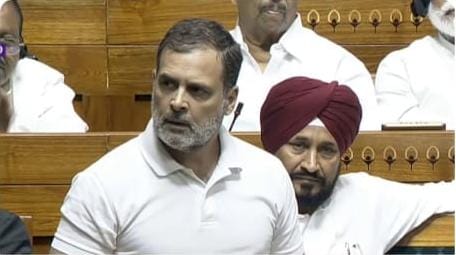
Leader of the opposition in Lok Sabha Rahul Gandhi launched a blistering attack on Prime Minister Narendra Modi during the debate on Operation Sindoor, describing the military exercise in response to the Pahalgam terror attack as an attempt “to protect the PM’s image.” He also dared PM Modi to call US President Donald Trump “a liar” in Parliament for his repeated claims that he used trade as leverage to effect a ceasefire and that fighter jets were shot down during the India-Pakistan conflict. “If Narendra Modi has even 50 per cent of the courage of Indira Gandhi, he should declare in the House that Trump is lying about the ceasefire,” Gandhi said speaking in the Lok Sabha.

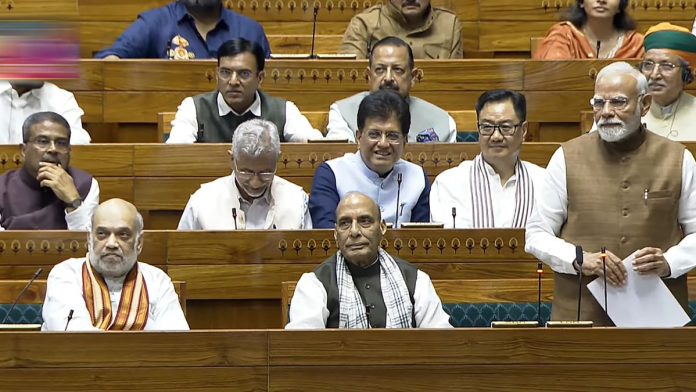
PM Modi disputed Trump’s claims of mediation to pause hostilities between India and Pakistan, asserting that no world leader told India to pause Operation Sindoor. The Indian armed forces taught such a lesson to those behind the Pahalgam attack that the “masters of terrorism” are still losing their sleep over it, he also said responding to the two-day debate on Pahalgam and Operation Sindoor in the Lok Sabha. The attack was aimed at instigating riots in India and the country’s unity foiled that attempt, the PM also added

Narrating the sequence of events leading to the May 10  when ceasefire was announced, PM Modi said on the night of May 9 he received a call from US Vice President JD Vance which  he could not take because he was busy in a meeting with the armed forces. “I returned the call of VP Vance and he told me Pakistan is planning a major attack on India. My answer was if Pakistan is thinking this it will pay a heavy price,” he said adding that true to their word Indian armed forces destroyed Pakistan’s defences.

“Our armed forces avenged April 22 within 22 minutes with precision attacks,” he said

“India had clarified from day one that its goal was to destroy terrorists, terror hubs and its actions were non-escalatory and that Operation Sindoor is under way. India has proved that nuclear blackmailing will not work anymore. Pakistan’s airbases and assets have suffered heavy damage. Many of their airbases are still in ICU,” he said”

According to PM Modi, key terrorist infrastructure in areas like Bahawalpur and Muridke, long considered out of reach, were “razed to the ground” by Indian forces using Made-in-India weaponry. “This is the era of technology-based war. If we had not prepared in the last 10 years, the damage could have been unimaginable,” he noted.

“After the success of the operation, the Indian Army informed the Pakistan Army that we have achieved our goal, this was done to assess Pakistan’s mind…we had achieved our goals. When Pakistan decided to back terrorists, our armed forces responded with force delivering a message they would remember for years. Our missiles hit all corners of Pakistan, this brought Pakistan to its knees. This was when Pakistan phoned our DGMO and appealed — bas karo, bahut maara, ab zyada maar jhelney ki taqat nahi hai. Please stop the attack,” said PM Modi, adding that this was when India paused hostilities.

The PM said India had brought the perpetrators of Pahalgam attack to justice and questioned the opposition for raising doubts about the timing of Operation Mahadev which killed the three Pakistani terrorists on Monday.

Questioning the intent behind the government’s post-Pahalgam response, Gandhi alleged that political considerations were placed above military objectives. “Yesterday, Rajnath Singh ji said Operation Sindoor began at 1.05 am and lasted 22 minutes. The most shocking revelation was that at 1.35 am, India called Pakistan to inform them that we had hit only non-military targets and did not wish for any escalation,” Gandhi said, quoting the Defence Minister.

Gandhi who talked of “fusion” between Pakistan and China which the government failed to realise, also questioned why PM Modi couldn’t ask Trump how he could invite Pakistan General Asim Munir on a lunch.

He also cited remarks by India’s defence attaché in Indonesia who reportedly said that aircraft losses happened due to restrictions placed by political leadership, accusing  the government of sending Indian pilots into hostile territory after asking them not to attack their military installations.

 He also  referred to CDS General Anil Chauhan’s comment that tactical errors had been corrected in follow-up strikes. “I want to tell CDS Anil Chauhan ji that you made no tactical mistake. The Indian Air Force did not make any mistake. The only mistake was that the political leadership sent them into battle with one hand tied behind their backs,” Gandhi said 

Talked of my mother’s tears but did not answer why was war stopped, Priyanka slams government

“My mother’s tears were brought up … .My mother shed those tears when her husband (Rajiv Gandhi) was martyred by terrorists. If I am standing in this House and speaking about the 26 people killed in the Pahalgam terror attack, it is because I know and can feel their pain”: Priyanka Gandhi Vadra

Launching a blistering attack at the BJP-led NDA government, Congress leader Priyanka Gandhi Vadra on Wednesday said the leadership is not just about taking credit but also taking responsibility.

US President Donald Trump repeated claims on ceasefire between India and Pakistan reflects Prime Minister Narendra Modi’s “irresponsibility”, Priyanka said, also lashing out at Home Minister Amit Shah for accusing her mother Sonia Gandhi of “shedding tears for terrorists killed in the 2008 Batla House encounter.

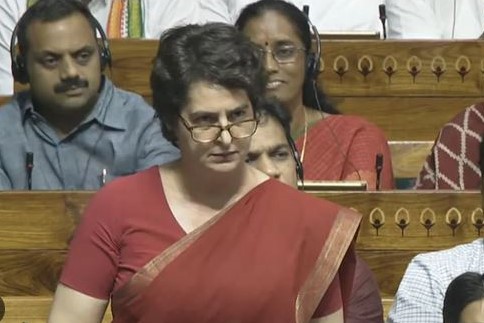
“My mother’s tears were brought up. I will respond to this. My mother shed those tears when her husband (Rajiv Gandhi) was martyred by terrorists. If I am standing in this House and speaking about the 26 people killed in the Pahalgam terror attack, it is because I know and can feel their pain,” she said speaking during the debate on Operation Sindoor and Pahalgam terror attack in the Lok Sabha.

Priyanka also reminded PM Modi that leadership is not just about taking credit but responsibility also needs to be taken. “First time in the history of our country, the war was stopped abruptly and the announcement of the decision was made by the US President. This is reflective of the irresponsibility of our PM,” she said,

She also questioned whether it is not the responsibility of the PM, the Home Minister, the Defence Minister, and the National Security Advisor to ensure people’s security. “Did the government not know that thousands of tourists go to Baisaran Valley… Why was there no security there? Why were they left at God’s mercy,” she said.

Did no government agency know that such a dastardly terror attack is going to happen and a plot is being hatched in Pakistan, she questioned, calling it a “big failure of our government and intelligence agencies.”

“Who will take responsibility for this? Has anyone resigned? They keep talking about past but who will answer about what is happening in the present,” she said.

Earlier, Shah accused the former Congress chief of sympathising with the two Indian Mujahideen terrorists killed in the encounter, while turning a blind eye to the sacrifice of the officer who died in action.

“I remember one morning, I saw (Congress leader) Salman Khurshid crying on the TV. He was coming out of Sonia Gandhi’s residence… He said that Sonia Gandhi was sobbing at the Batla House incident. She should have cried for Shaheed Mohan Sharma instead of the terrorists of the Batla house…” Shah said

“I have saved that speech of Salman Khurshid on my mobile phone. Decide a time for tomorrow. I can share it here. People will also watch,” he said.

MOST POPULAR

HOT NEWS