PM Modi invited President Putin to visit India later this year for the Annual Bilateral Summit
File Photo
A day after his telephonic conversation with Brazilian President Luiz Inácio Lula da Silva,
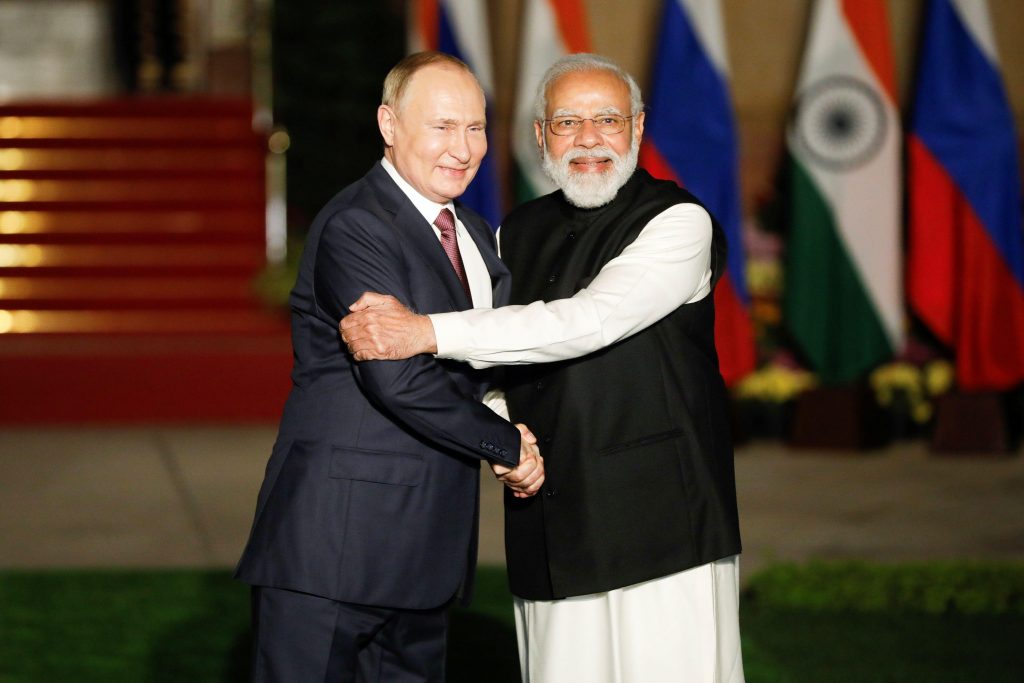
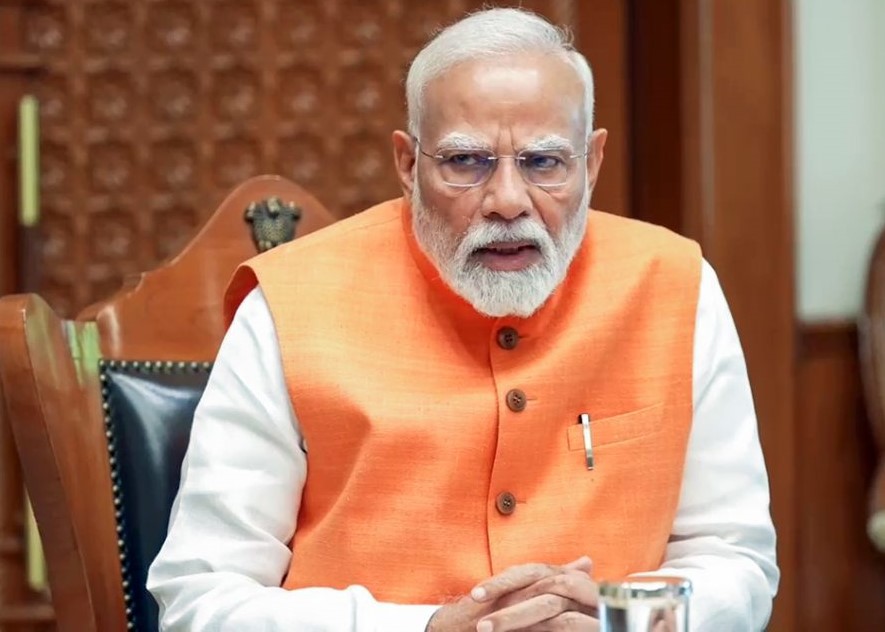
Prime Minister Narendra Modi on Friday talked to Russian President Vladimir Putin. Sending a strong message to US President Donald Trump who has been punishing India with higher tariffs for trade ties with Russia, the two leaders also reviewed progress in the bilateral agenda and reaffirmed commitment to further deepen the Special and Privileged Strategic Partnership between India and Russia, according to the PMO
President Putin briefed the PM on the latest developments concerning Ukraine. While thanking President Putin for his detailed assessment, the Prime Minister reiterated India’s consistent position for peaceful resolution of the conflict. PM Modi also invited President Putin to India later this year for the 23rd India-Russia Annual Summit, the PMO said
Trump on Wednesday announced an additional 25 percent tariff on India for purchases of Russian oil, bringing the total duties on India to 50 percent, among the highest for any country in the world. Amid ongoing tariff tensions, on Thursday Brazilian President Luiz Inácio Lula da Silva also dialled PM Modi and both leaders committed to deepening strategic partnership, including in trade, energy, tech, defence, health and more.
Yesterday National Security Advisor (NSA) Ajit Doval had called on Putin at the Kremlin.
Doval is in Moscow for talks on bilateral energy and defence ties and to prepare the ground for Putin’s visit to India later this year, according to reports.
India has already vowed to take “all actions necessary to protect its national interests” in response to Trump imposing additional 25 percent tariff on Indian imports, taking the total tariffs to 50 percent,
An official statement by the Ministry of External Affairs noted that the “United States has in recent days targeted India’s oil imports from Russia” while India made clear its position on these issues, “including the fact that our imports are based on market factors and done with the overall objective of ensuring the energy security of 1.4 billion people of India.”
“It is therefore extremely unfortunate that the US should choose to impose additional tariffs on India for actions that several other countries are also taking in their own national interest,” it said, reiterating “these actions are unfair, unjustified and unreasonable.”
“India will take all actions necessary to protect its national interests,” it added
After the Congress MP gave a detailed presentation on Thursday to the media on how “vote theft” happened, the ECI asked him to send a signed declaration under oath to that effect, through the CEO of Karnataka. CEOs of Haryana and Maharashtra have also sought written declarations from him detailing his allegations
Photo: courtesy Congress
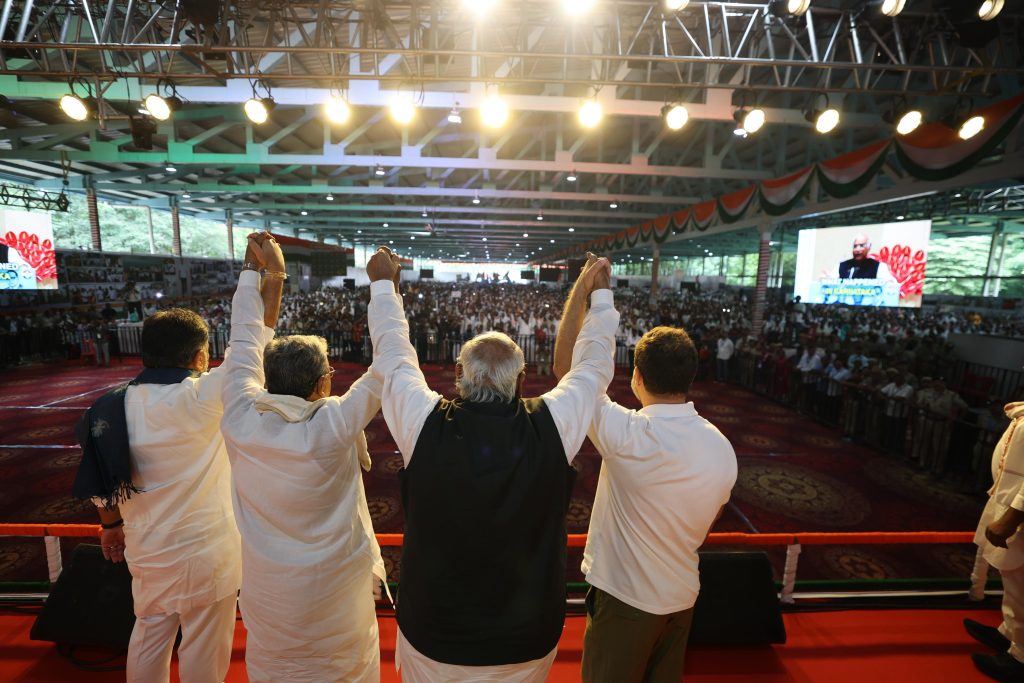
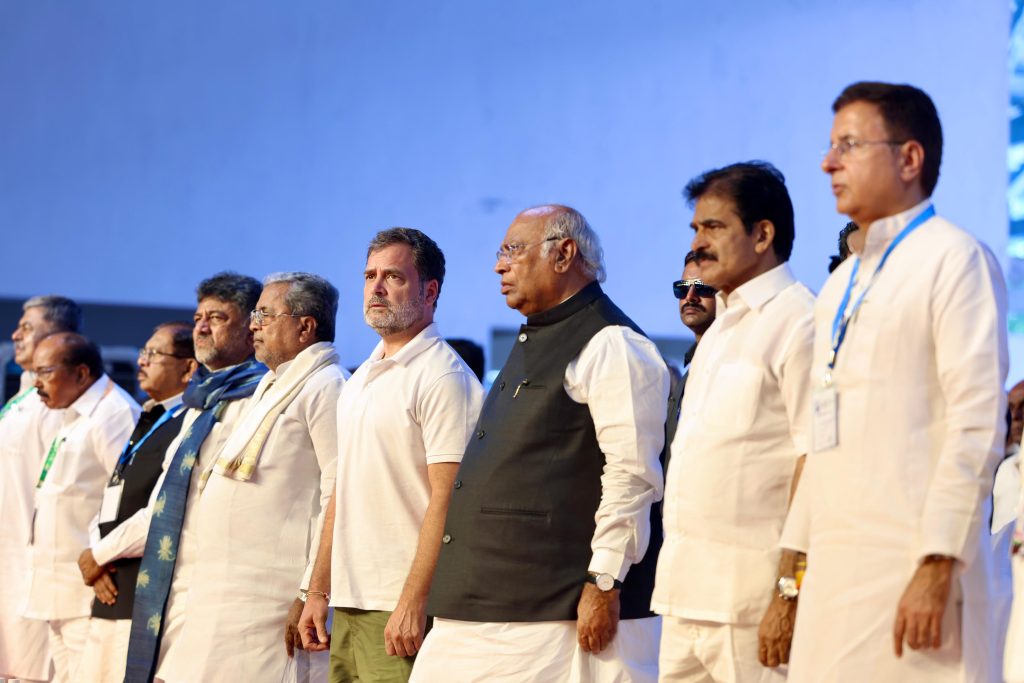
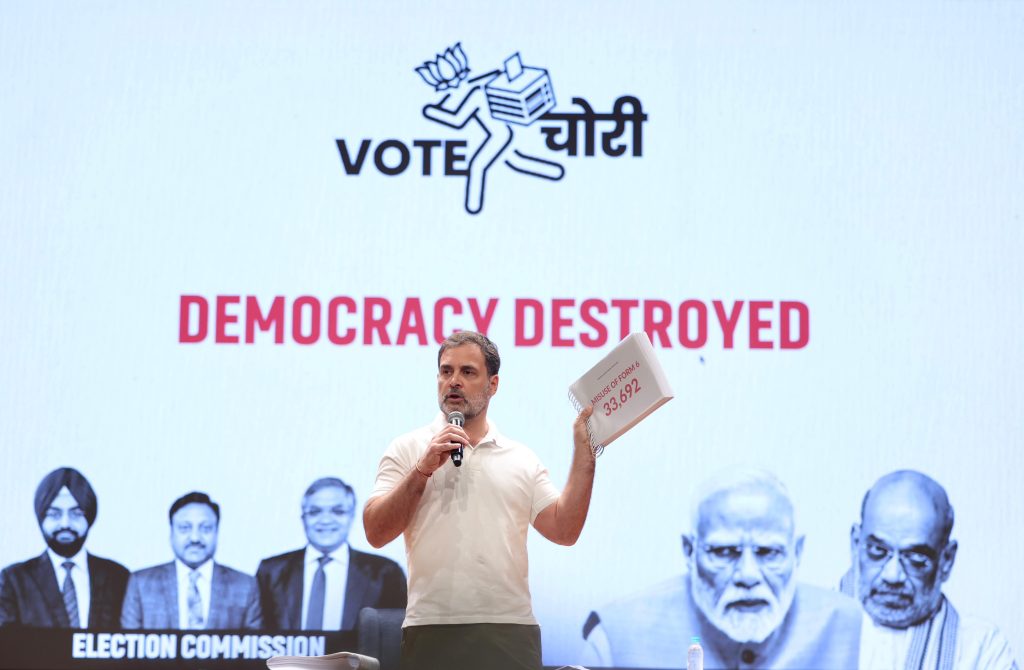
Congress leader Rahul Gandhi on Friday repeated his allegation of “vote theft” against Election Commission and demanded the full electronic voter list at a rally in Bengaluru. Speaking at the ‘Vote Adhikar Rally’ in Bengaluru, Gandhi said the EC is asking me to take an oath on the vote theft, it “knows that if people start asking them questions, their entire structure will collapse”
“The Election Commission demands an affidavit from me. It says that I’ll have to take an oath. I have taken the oath of the Constitution in Parliament. Today, when people are asking questions to the Election Commission, it has closed its website – MP, Maharashtra, Rajasthan, Bihar…The Election Commission knows that if people start asking them questions, their entire structure will collapse,” he said speaking at the rally
Notably Chief Electoral Officers (CEOs) from at least three states have asked him to submit names of electors he claimed were wrongfully included or excluded from the voter rolls. The EC also asked for a signed declaration so that “necessary proceedings” could be initiated. Officials say if what Gandhi is saying is true, then there should be no issue in signing a declaration saying that. “He should either submit a signed declaration of his charges under oath or apologise to the nation,” they add.
After the Congress MP gave a detailed presentation to the media on how “vote theft” happened, the ECI asked him to send a signed declaration under oath to that effect, through the CEO of Karnataka. CEOs of Haryana and Maharashtra have also sought written declarations from him detailing his allegations
The Karnataka Election Commission asked Gandhi to submit a formal declaration supporting his “vote chori” claim, along with the names of electors allegedly wrongfully included in the voter list, in order to initiate necessary proceedings.
Specifically citing an example of a Lok Sabha constituency in Karnataka in the 2024 elections, Gandhi claimed “huge criminal fraud perpetrated by BJP through EC,” describing it as a “crime” against the Constitution.
They were stolen in five different ways—duplicate voters, fake and invalid addresses, bulk voters in a single address, invalid photos, and misuse of Form 6, which is given to first-time voters for enrolment, he said. Yesterday also he slammed the EC for demanding from him a signed declaration on his claims, saying that he had made the remarks publicly and they can “take it as an oath.”
“I am a politician, what I say to the people is my word. I am saying it to the people publicly, take it as an oath. Interestingly, they haven’t denied the information,” he said
Photo: courtesy Congress
Speaking at the Vote Adhikar Rally he again made the said allegations—fake and invalid address; no address or House No; up to 80 people shown living in one-bedroom houses, and the house owners being BJP leaders; either no photo or such small-size photo that face can’t be recognized; and misuse of Form 6, meant for first-time voters. There were about 34,000 such voters with age up to 80-90 years using Form ^, he said.
Brazil dials India while a section of Chinese media backs India in tariff wars
The term “Global South” is often used to describe nations that may be developing or underdeveloped, mainly in Africa, Asia, and Latin America. However, not anymore, with change in times these countries are becoming more prominent globally, pushing for a fairer world system and working together on development issues through what is being called ‘South-South’ cooperation.
In fact they are openly challenging the so-called wealthier countries of the “Global North,” primarily North America and Europe, on the basis of shared political, geopolitical and economic needs
Shift in equation
The shift in global wealth and influence towards ‘Global South,’ especially China and India, is something that US President Donald Trump needs to factor in while taking decisions like he has been in his 2.0 avatar, say analysts
In fact, a section of Chinese media backed India, saying that some Indians are now beginning to realise that what they thought was a strong partnership with the US may have only been one-sided, according to reports
The article titled ‘India’s strategic balancing hits the wall of US unilateral hegemony’ in a publication argued that India is being punished not for buying Russian oil but for not doing what the US wants, they added
World is changing
The article also hinted that in America’s eyes, India may never have been treated as an equal partner, just someone to use when convenient.
Trump on Wednesday issued an executive order slapping an additional 25% tariff on Indian goods as a penalty for buying Russian oil, doubling it to 50%.
After the new tariff, India now shares the top spot with Brazil, which is also facing a combined 50% tariff under Trump’s adjusted trade regime
India has already said that it will take “all actions necessary to protect its national interests” in response to US President Donald Trump imposing additional 25 percent tariff on Indian imports, taking the total tariffs to 50 percent,
Amid ongoing tariff tensions Trump, on Thursday Brazilian President Luiz Inácio Lula da Silva also dialled Prime Minister Narendra Modi with both leaders committing to deepening strategic partnership, including in trade, energy, tech, defence, health and more.
Meanwhile, National Security Advisor (NSA) Ajit Doval called on Russian President Vladimir Putin at the Kremlin on Thursday, the Kremlin press service said.
Doval is in Moscow for talks on bilateral energy and defence ties and to prepare the ground for Putin’s visit to India later this year, according to reports.
India now shares the top spot with Brazil, which is also facing a combined 50% tariff under Trump’s adjusted trade regime.
Amid ongoing tariff tensions with US President Donald Trump, on Thursday Brazilian President Luiz Inácio Lula da Silva dialled Prime Minister Narendra Modi with both leaders committed to deepening strategic partnership, including in trade, energy, tech, defence, health and more.
Trump on Wednesday issued an executive order slapping an additional 25% tariff on Indian goods as a penalty for buying Russian oil, doubling it to 50%. India now shares the top spot with Brazil, which is also facing a combined 50% tariff under Trump’s adjusted trade regime.
But while India’s elevated tariffs are linked to its Russian energy trade, Brazil’s are said to be tied to political developments there.
The Prime Minister recalled his visit to Brazil last month during which the two leaders agreed on a framework to strengthen cooperation in trade, technology, energy, defence, agriculture, health and people-to-people ties.
Building on these discussions, they reiterated their commitment to take India-Brazil Strategic Partnership to new heights, according to a statement from PMO.
In a tweet following his conversation, PM Modi said, “Had a good conversation with President Lula. Thanked him for making my visit to Brazil memorable and meaningful. We are committed to deepening our Strategic Partnership, including in trade, energy, tech, defence, health and more. A strong, people-centric partnership between Global South nations benefits everyone.”
The two leaders exchanged views on various regional and global issues of mutual interest and agreed to remain in touch.
Meanwhile, National Security Advisor (NSA) Ajit Doval called on Russian President Vladimir Putin at the Kremlin on Thursday, the Kremlin press service said.
Doval is in Moscow for talks on bilateral energy and defence ties and to prepare the ground for Putin’s visit to India later this year, according to reports.
“Let’s not forget that the Prime Minister is in office with a very slender majority, just 25 seats. And we are saying to the Election Commission, you are not in the business of destroying Indian democracy, you are meant to protect it,” he said
Photo: courtesy Congress
Congress leader and Leader of Opposition in the Lok Sabha Rahul Gandhi on Thursday made very serious allegations against the Election Commission of India, accusing it of “large-scale voter fraud” in electoral rolls since the 2024 Lok Sabha elections in “collusion” with the ruling BJP. Raising questions over the fairness of recent elections, he claimed a deep “nexus” between the BJP and the EC.
Addressing the media, he showed “evidence” of fake voters and fake addresses in recent Assembly elections in states like Maharashtra, Haryana and Madhya Pradesh which went in the favour of the BJP. Results from Maharashtra confirmed the INDIA bloc’s suspicion of electoral malpractice, he said
Specifically citing an example of a Lok Sabha constituency in Karnataka in the 2024 elections, he claimed “huge criminal fraud perpetrated by BJP through EC,” describing it as a “crime” against the Constitution. He also slammed the EC for demanding from him a signed declaration on his claims, saying that he had made the remarks publicly and they can “take it as an oath.”
“I am a politician, what I say to the people is my word. I am saying it to the people publicly, take it as an oath. Interestingly, they haven’t denied the information,” he said
Gandhi said they analysed the voter data of the Lok Sabha constituency of Bangalore Central and the Mahadevapura Assembly segment in it from the 2024 Lok Sabha polls. “Our internal polls indicated that we were expected to win 16 seats in Karnataka (in the 2024 Lok Sabha elections). However, we won nine. We then focused on the seven unexpected losses and chose the Mahadevapura Vidhan Sabha constituency. All the data we have here is from the 2024 elections, sourced from the Election Commission.
“In the Mahadevapura Assembly segment, Congress received 1,15,586 votes and BJP 2,29,632 votes.
“Congress won all the Vidhan Sabhas except Mahadevapura, where the BJP swept and secured a victory margin of 1,14,046 votes. This seat significantly contributed to their election win, and the Lok Sabha result went in their favour on that seat,” he said.
“This discrepancy is a huge imbalance. We started examining the details and discovered that approximately 1,00,250 votes were stolen in the Mahadevapura Assembly,” he said, alleging fake names, duplicate entries, invalid addresses, and bulk additions to “influence the poll outcome.”
He also gave the example of one Gurkirat Singh Dang who appeared four times, in four different polling booths, with the same name and address. “And there are 11,965 such duplicate entries in just one constituency,” he said.
“There are fake addresses, which did not exist,” he added
“Why doesn’t BJP ever face anti-incumbency,” he also questioned, claiming a “pattern” that was becoming “increasingly hard to ignore.”
“Anti-incumbency hits every party in every democracy. But for some reason, the BJP is the only party that does not suffer from it,” he said. referring to Haryana, Madhya Pradesh, and Maharashtra elections where opinion polls, exit polls, and even Congress’s internal surveys predicted very different outcomes
“Exit polls and opinion polls were saying one thing. Our internal polling showed the same. Then suddenly, the result moves in the opposite direction,” he added
“In Maharashtra, the addition of more voters in 5 months than in 5 years raised our suspicions. Then there was a huge jump in voter turnout after 5 pm, but our workers on the ground reported no such turnout. Something wasn’t adding up,” he said.
He also criticised the EC for refusing to share the voter list in a machine-readable format, making it nearly impossible for parties to properly audit the rolls. “Let’s not forget that the Prime Minister is in office with a very slender majority, just 25 seats. And we are saying to the Election Commission, you are not in the business of destroying Indian democracy, you are meant to protect it,” he said
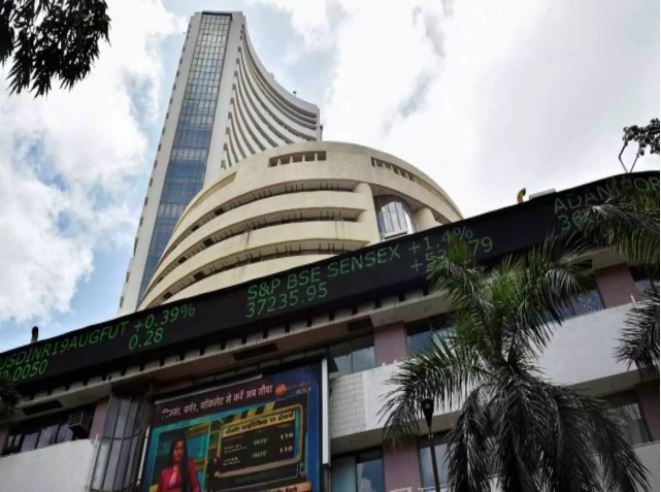
Indian markets seemed to ignore US President Donald Trump’s 50 per cent tariff threat with Sensex and Nifty both recovering from their day’s lows demonstrating resilience despite prevailing global uncertainties.
According to reports, the recovery was primarily driven by buying in banking, pharma and select IT sectors. Apparently, some analysts believe that Trump’ tariff may end up benefiting IT services through currency depreciation. Though markets did open under pressure initially, shrugging off apprehensions, they rebounded strongly
“Both BSE Sensex and NSE Nifty staged a strong rebound, dismissing all the fears sparked by Trump’s announcement of fresh tariffs on Indian imports,” they said
“After falling nearly 0.9% in early trade, the benchmark indices ended in positive terrain, driven by value buying,” analysts said, adding that the 21-day implementation window (given by Trump) also gave some negotiation space. Plus, of course, the market’ ability to recover from intraday lows also proved India’s underlying strength and buying appetite at lower levels, they added.
Trump on Wednesday announced an additional 25 percent tariff on India for purchases of Russian oil, bringing the total duties on India to 50 percent, among the highest for any country in the world. India in response said it will take “all actions necessary to protect its national interests”
Prime Minister Narendra Modi on Thursday also gave a veiled response to Trump’s tariff threats on India, saying that India will “never compromise” on the interest of farmers and that their interests were his government’s top priority. “For us, the interest of our farmers is our top priority. India will never compromise on the interests of farmers, fishermen and dairy farmers,” PM Modi said, speaking at the MS Swaminathan Centenary International Conference.
Without naming the US or Trump, PM Modi added that he was aware of the cost of taking such a stand. “I know we will have to pay a heavy price for it and I am ready for it. India is ready for it, he said
The official statement by the Ministry of External Affairs noted that the “United States has in recent days targeted India’s oil imports from Russia” while India made clear its position on these issues, “including the fact that our imports are based on market factors and done with the overall objective of ensuring the energy security of 1.4 billion people of India.”
“It is therefore extremely unfortunate that the US should choose to impose additional tariffs on India for actions that several other countries are also taking in their own national interest,” it said, reiterating “these actions are unfair, unjustified and unreasonable.”
“India will take all actions necessary to protect its national interests,” it added
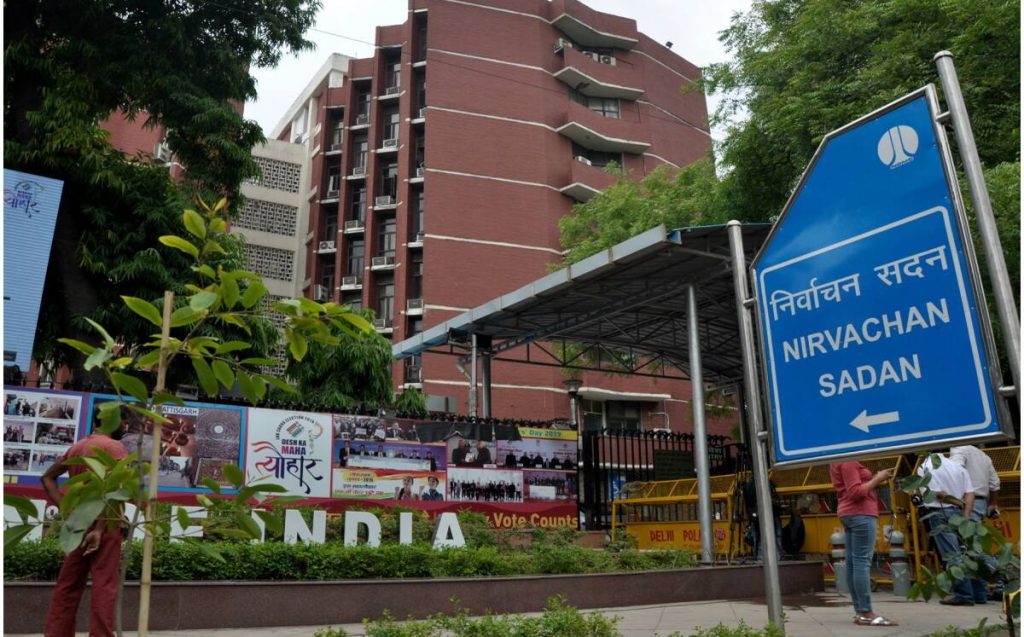
The Election Commission of India (ECI) on Thursday notified the schedule for the Vice-Presidential Election, 2025, through a Gazette of India Extraordinary. If necessary, polling will be held on September 9.
According to the ECI notification, the last date for filing nominations is August 21, 2025 while the scrutiny of nominations will be conducted on August 22.
August 25 has been set as the final date for the withdrawal of candidatures.
Voting will be held on September 9 between 10 am and 5 pm.
Earlier, the Commission through separate notifications issued on the 25th of July, 2025, has appointed PC Mody, Secretary-General, Rajya Sabha, as the Returning Officer for the Vice-Presidential Election, 2025 and Garima Jain, Joint Secretary and Vijay Kumar, Director, Rajya Sabha Secretariat, as the Assistant Returning Officers.
In accordance with Rule 3 of the Presidential and Vice-Presidential Elections Rules, 1974, the Returning Officer issued a public notice on August 7, detailing the nomination process. Candidates or their proposers or seconders can submit nomination papers at Room No. RS-28, First Floor, Parliament House, New Delhi, between 11 am and 3 pm on working days, excluding public holidays, no later than August 21.
“Each nomination must include a certified copy of the electoral roll entry showing that the candidate is registered as an elector in any parliamentary constituency. A deposit of Rs15,000 is also required, either in cash at the time of submission or via earlier deposit in the Reserve Bank of India or a Government Treasury, with a valid receipt enclosed,” the ECI stated.
Scrutiny of nomination papers will be conducted at Room No. F-100, Sangoshthi-2, First Floor, Parliament House, at 11 am on August 22. Withdrawals must be submitted by 3 pm on August 25 by the candidate or an authorised proposer or seconder.
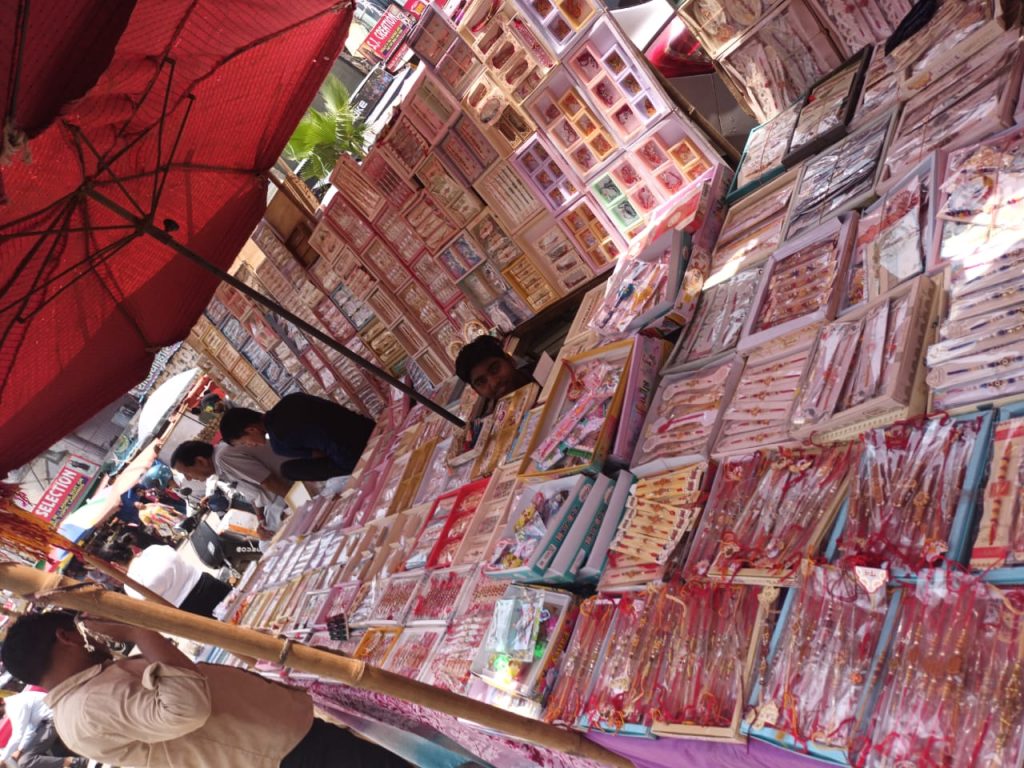
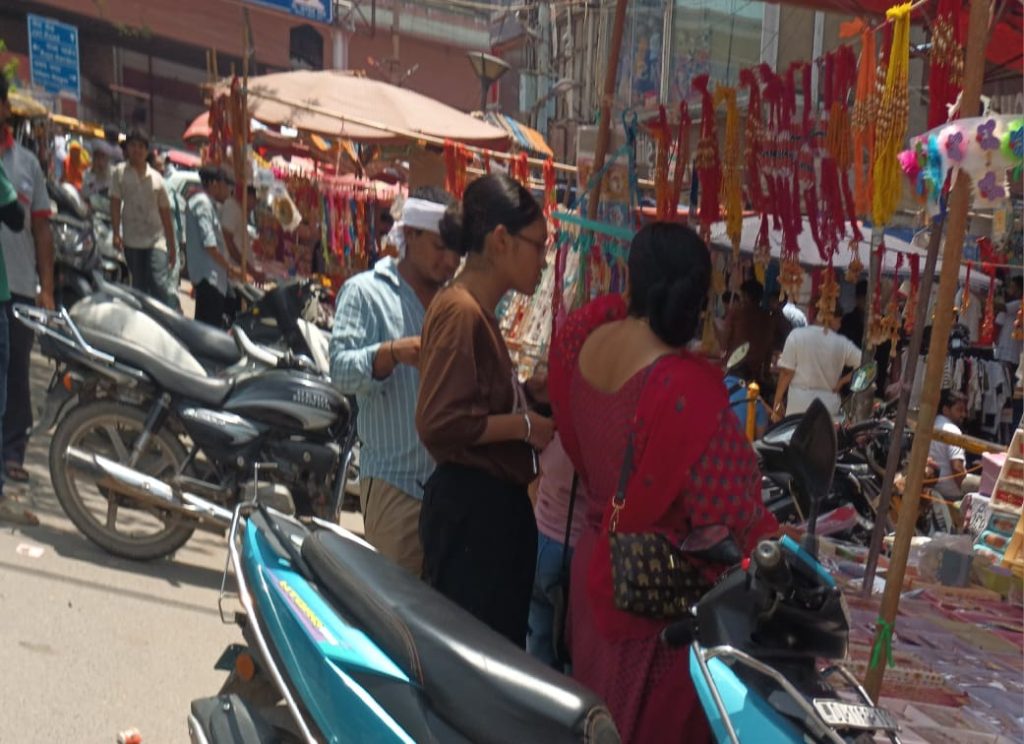
With just two days left for the festival of Raksha Bandhan, markets across Delhi and the rest of India are witnessing massive footfall, filled with festive cheer and high energy.
According to the Confederation of All India Traders (CAIT), this year, the market is expected to generate a whopping Rs 17,000 crore in trade, while sweets, fruits, gifts, and related items may contribute an additional Rs 4,000 crore.
The markets across Delhi are busy and bustling with people from all walks of life are going to buy the holy thread for the festival. Shopkeepers have displayed hundreds of rakhies with different style and design having different price rang.
One can see rakhi from priced at Rs 10 rupees to whopping thousands of rupees. Some jewelry shops have also come up with rakhi made out of silver and gold for the people who want to celebrate in a particular manner.
This year’s Raksha Bandhan carries a deeper emotional and patriotic significance, as it coincides with the anniversary of the Quit India Movement, and comes shortly after the heroic success of Operation Sindoor by India’s armed forces. As a result, markets are decked with threads of emotion and trays of nationalism, turning into magnets for enthusiastic consumers.
In the backdrop, markets have come alive with vibrant colours, joyful crowds, and a wide variety of rakhis displayed in every shop.
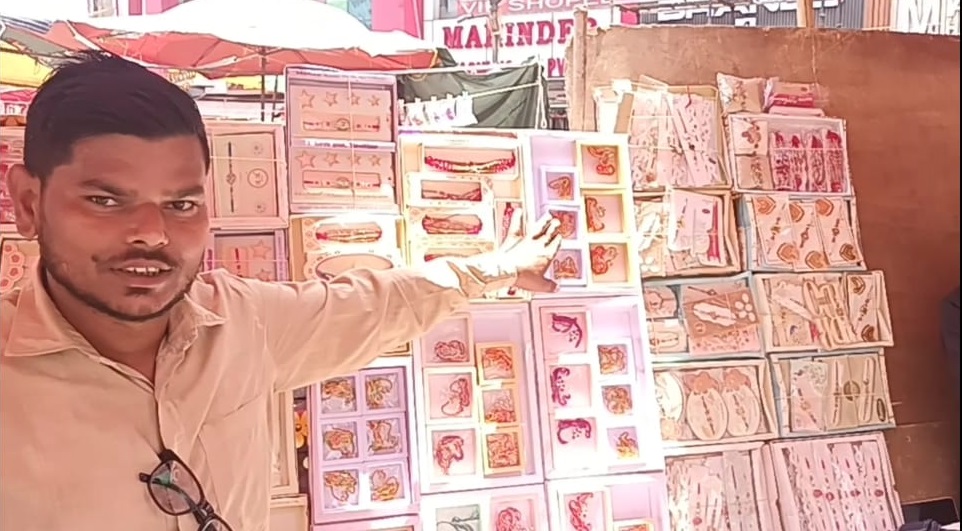
Stalls overflow with beautifully crafted rakhis ranging from traditional threads with beads and rudraksha to modern designs featuring cartoon characters, personalized names, and even eco-friendly options.
Glittering lights and festive decorations add to the excitement, while shopkeepers showcase their latest collections to attract eager buyers. Whether it’s for a little brother, an elder sibling, or even a bhabhi, there’s a rakhi to suit every taste, making the celebration of this special bond even more memorable.
“We have different types of rakhi for everyone. We have items for children to adults. This year the designs are different and moreover, the evil eye design is in trend. Everyone is looking for this design. We have huge demand for this rakhi,” said Munna, a shopkeeper.
Another shopkeeper said, “This year, we have a wide variety of rakhis to suit everyone’s taste and budget. From traditional Mauli rakhis with rudraksha beads to modern designs, we have it all. Designer rakhis with Kundan, pearls, and stones are also in high demand, especially the ones with miniature idols of Ganesha or Krishna. We’ve also stocked up on lumba rakhis for bhabhi and rakhi sets for the whole family. Customers are loving the creativity and uniqueness in the designs this year!”
Meanwhile, Member of Parliament from Chandni Chowk and CAIT Secretary General Praveen Khandelwal said innovative rakhi designs lead market trends this year.
“This year’s Rakhi market is abuzz with innovative, theme-based rakhis – ranging from ‘Vocal for Local’, ‘Digital Rakhis’ with QR codes, to designs inspired by Operation Sindoor, Modi Rakhi, Atmanirbhar Bharat, Jai Hind, Viksit Bharat, Bharat Mata Ki Jai, and Vande Mataram. These have gained tremendous popularity among buyers,” he added.
Khandelwal added that many of these rakhis are handmade by local women entrepreneurs, self-help groups, and artisans, boosting women empowerment and domestic industries.
He emphasized that Indian consumers now prefer to celebrate festivals with pride and self-respect, actively supporting Make in India products.
Not just in Delhi, the rakhi fever is all over the India, In the diamond city Surat, there is a craze for gold, silver, and diamond Rakhis during Raksha Bandhan.
Expensive Rakhis ranging from Rs 5,000 to Rs 5,00,000 are available. Customers are buying these Rakhis not only for the festival but also as an investment.
Sisters are choosing these rakhis for their brothers so that they don’t just wear it for rakhi but can wear anytime of the year and can use the rakhi as bracelet.
The festival is celebrated annually by siblings with pomp and show. The day hours the unbreakable and precious bond between brothers and sisters where the sister ties this holy thread on her brother’s wrist and in return, he promises to protect her forever.
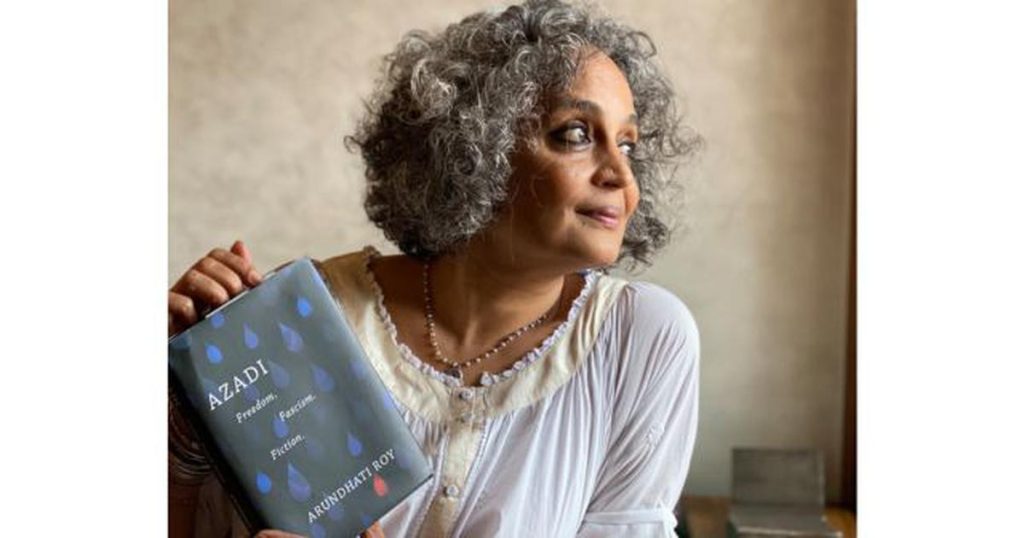
The Jammu and Kashmir administration has ordered the forfeiture of 25 books, citing concerns that the titles promote secessionist ideology and incite violence against the Indian state. The banned books include works by prominent Indian and international writers such as constitutional expert A.G. Noorani, Booker Prize-winning author Arundhati Roy, British historian Victoria Schofield, and LSE professor Sumantra Bose.
The order, issued on August 5 by the Union Territory’s Home Department, states that these books propagate a “false narrative” on Kashmir and have played “a significant role” in influencing youth towards militancy. The move comes on the sixth anniversary of the abrogation of Article 370.
According to the order, the books are being seized under Section 98 of the Bharatiya Nagarik Suraksha Sanhita (BNSS) 2023, which empowers the government to declare publications as forfeited. The order claims the titles have “contributed to the radicalisation of youth” through the “distortion of historical facts, glorification of terrorists, vilification of security forces, religious radicalisation, and promotion of alienation.”
It further states that these books have violated Sections 152, 196, and 197 of the Bharatiya Nyaya Sanhita (BNS) 2023, which relate to acts endangering national sovereignty, promoting enmity between groups, and making assertions prejudicial to national integration.
Some of the notable titles on the list include The Kashmir Dispute by A.G. Noorani, Azadi and Kashmir: The Case for Freedom by Arundhati Roy, Kashmir in Conflict by Victoria Schofield, Contested Lands by Sumantra Bose, A Dismantled State by Anuradha Bhasin, and Independent Kashmir by Christopher Snedden.
Also included in the list are books by academics and researchers such as Seema Kazi, Hafsa Kanjwal, David Devdas, and foreign scholars Piotr Balcerowicz and Agnieszka Kuszewska.
The books, many of which have been published by leading houses like Penguin, HarperCollins, Bloomsbury, and Routledge, can no longer be printed or distributed under the current order.
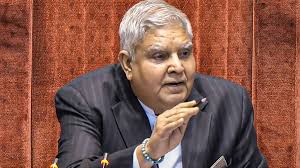
Former V-P Dhankhar’s abrupt resignation two years before term-end has sparked intense speculation. Was it a health issue, a political misstep, or behind-the-scenes manoeuvring in Delhi’s power corridorsBY KUMKUM CHADHA
When the Opposition was asking for Jagdeep Dhankar’s head, the former Vice President did not oblige. Few months on, he has finally gone and done what the Opposition MPs were demanding.
And how? Also why?
Dhankhar has quit citing health reasons. The haste in which he resigned has left almost everyone stunned.
Dhankhar took over as Vice President in August 2022. He put in his papers two years ahead of time. Dhankhar was due to retire in 2027.
There are various theories doing the rounds. For starters, it is believed that Dhankhar, after the Opposition’s demand, had mellowed and was in a mood to accommodate those who were, in the past, baying for his blood.
Another, that he had deliberately gone against the BJP leadership’s strategy on Justice Yashwant Varma and given the Opposition the advantage that the BJP desperately wanted to accrue. The Government was caught off guard given that it did not want to take up the Opposition sponsored notice.
For record, Justice Varma, a judge of the Allahabad High Court, is under a lens following large amounts of burnt cash found at his official residence.
The process of impeachment had already been started by the Government in the Lok Sabha. As many as 153 members had signed in support of the impeachment motion.
Dhankhar receiving the notice from Opposition MPs and going ahead and announcing it in the Rajya Sabha instead of letting Lok Sabha Speaker Om Birla do it in the Lok Sabha did not go down well with the ruling dispensation. It was seen as a bid to undercut the Government’s motion in the Lok Sabha: “Dhankhar jumped the gun by informing the Rajya Sabha that a notice had been received for Justice Sinha’s removal,” said a BJP insider.
The government, sources aver, was keen to remove Varma through a consensus. Accordingly, the 145 signatures against the 100 required to move a motion in Lok Sabha, also included members of the Opposition.
But Dhankhar went ahead and told the Rajya Sabha that he had received a notice from 63 MPs, in support of the motion for Justice Varma’s impeachment. This put the ruling Party in an awkward situation because it robbed it of the advantage to take a high moral ground on corruption.
What made it worse for the government was that all the signatories were MPs from the Opposition.
Why were the BJP MPs from the Rajya Sabha kept out? A simple answer: they had no idea about the notice in the Rajya Sabha.
Technically, Dhankhar was right in informing the House of the notice he had received but politically he not only dug his grave but also jumped in.
Three, he had got fed up of playing second fiddle to Lok Sabha Speaker Om Birla and decided to flex his muscle: “By taking up the matter in the Rajya Sabha also, the presiding officers of both houses will form the three-member committee to probe the matter” sources said.
So was it oversight or a gameplan?
Read in a sequence, this appears part of a game plan but given that it was Dhankhar at the helm, it is unlikely that he thought of taking on the powers that be. After all it was under the Modi government that he had enjoyed immense power—whether at the Raj Bhawan or as Vice President of India. So, for him to turn the tables on his benefactor makes little sense. Also having reached the Vice President’s post, he had little to gain by aligning with the Opposition.
Therefore, more than intent, it was a miscalculation on Dhankhar’s part: he had not imagined that the Government would actually show him the door.
However, there is speculation about his ambition to see himself as President of India. But a snub from the powers that be, nipped this in the bud. Stung by the realization that there is no upward movement, he decided to turn the tables.
Another take is that Dhankhar’s exit was designed to accommodate Bihar Chief Minister Nitish Kumar as Vice President of the country. The possibility cannot be ruled out but the hastiness with which Dhankhar resigned or was made to do so, is contrary to the way the BJP government functions.
For starters, it never does anything in a hurry; neither does it trip. Therefore, if Dhankhar had to make way for Kumar, his resignation could have happened before the monsoon session of Parliament rather than it being “there in the morning, gone in the afternoon” kind of a situation. Also, there was no reason for the government to land itself in a situation where it is faced with questions that have no clear answers. As things have panned out, more than the exit, it is the hastiness that is raising eyebrows.
A counter argument to the Nitish Kumar theory is that he remains a formidable player and for the BJP to go to the polls in Bihar minus Nitish would be counter- productive. Add to this, the assertion by the BJP that the next Vice President will be one of their own: read the BJP.
However, at the time of going to Press, everything was in the realm of speculation: why had Dhankhar resigned suddenly and who would fill in for him?.
At another level, Dhankhar’s exit has come handy for the Opposition.
The same Opposition that was baying for his blood is now singing peans, hailing him kisanputra, a farmer’s son.
The somersaults are an interesting read. Congress’ Jairam Ramesh said that Dhankhar should withdraw his resignation in “national interest”. Rewind to the time when Ramesh had alleged that Dhankhar behaved like a “cheerleader for the government instead of a neutral umpire”. Ramesh was also among those leading the Opposition’s no-confidence motion. In a sudden change of heart, Ramesh is all praise for Dhankhar’s “fearlessness”.
Congress President Mallikarjun Kharge has also come out in support of Dhankhar. Kharge had often accused Dhankhar of not allowing him to speak in the House.
The Dhankhar-Opposition camaraderie is a newly founded one. Till his resignation, he was at loggerheads with the Opposition. If Trinamool MP Kalyan Banerjee had mocked Dhankhar by mimicking him, he had also commented on his “wearing a suit worth lakh of rupees”.
Samajwadi MP Jaya Bachchan’s run in with Dhankhar had something to do with what she perceived as an “unacceptable tone” of his voice during the session: “I need an apology” the actor-turned-politician had thundered nearly a year ago.
This time around, the tables have turned: Dhankhar has reportedly been axed for “obliging” the Opposition vis a vis the impeachment motion of Justice Yashwant Varma.
But can it brush under the carpet the rocky relationship of the past?
It is common knowledge that all through his tenure, be it as Governor or Vice President, Dhankhar has been at loggerheads with the Opposition. Therefore, for him to toe the Opposition line is a bit of a stretch.
Till the time of going to Press, everything is in the realm of speculation. There are more questions than there are answers. The key being: who next?
Dhankhar’s resignation sure has muddied the waters: whether it is by accident or design it has given the Opposition a handle to brow-beat the government.