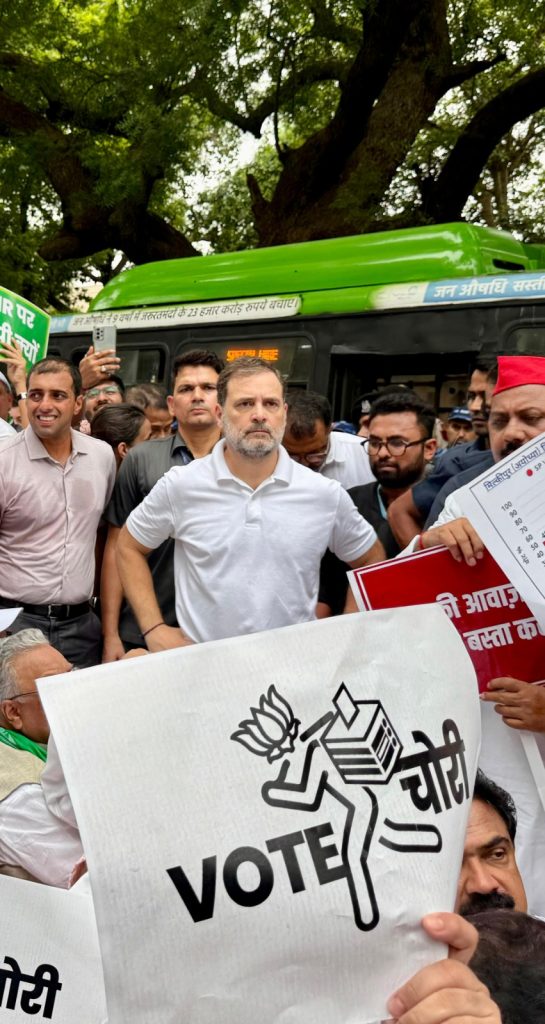
Vote Chori Protest: Police detains Rahul Gandhi among Opp MPs

Photo credit: X account of Rahul Gandhi

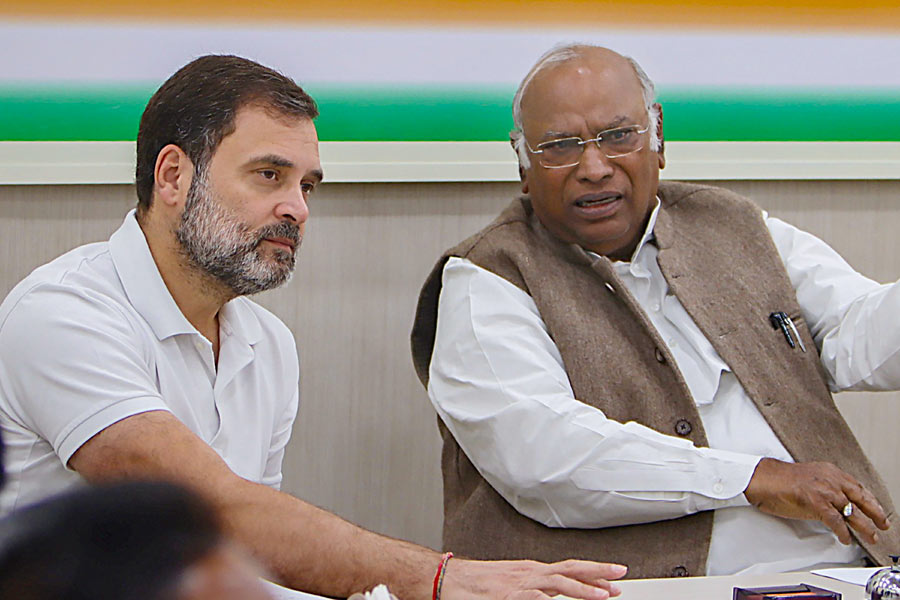
Opposition MPs including Leader of Opposition (LoP) in the Lok Sabha Rahul Gandhi were on Monday detained by Delhi Police as they took out a march from Parliament House to the Election Commission headquarters to protest against the Bihar Special Intensive Revision (SIR).

While Gandhi was being detained and taken away in a police van, he said, “This fight is not political, but it is aimed at saving the Constitution. This fight is for one man one vote and we want a clean and pure voter list.”  

Among other detained MPs include, Priyanka Gandhi, Mallikarjun Kharge, and Sharad Pawar.

The MPs were raising slogans and carrying placards accusing the Election Commission of India of collusion with the government in “vote chori”, wearing white caps marked with red cross over the words “SIR” and “vote chori.”

The march began at Parliament’s Makar Dwar with the national anthem but was halted at Transport Bhawan, where police had set up heavy barricading.

Meanwhile Samajwadi Party chief Akhilesh Yadav accused authorities of using police to stop them reaching the Election Commission.

Yadav could be seen climbing the barricades and chanting slogans against SIR.

His actions were mirrored by other opposition leaders, who scaled the barriers as a symbolic rejection of what they see as state overreach.

The Opposition has been raising the demand for special discussion on SIR in the Parliament since the monsoon session has started.

The SIR began in Bihar in June, and the voters have time till September 1 to approach the authorities against wrongful deletion of names.

This process concluded by July 25. In the first stage of SIR, voters were provided with “enumeration forms”, either by booth-level officers (BLO) or booth-level agents (BLA) nominated by political parties, which they were to return after putting their signatures and appending documents acceptable as proof of identity.

However, the protest has significance in the backdrop of recent press conference of LoP Rahul Gandhi where he alleged “vote chori” by the ruling government with the help of ECI.

Addressing the media, he showed “evidence” of fake voters and fake addresses in recent Assembly elections in states like Maharashtra, Haryana and Madhya Pradesh which went in the favour of the BJP. Results from Maharashtra confirmed the INDIA bloc’s suspicion of electoral malpractice, he said.
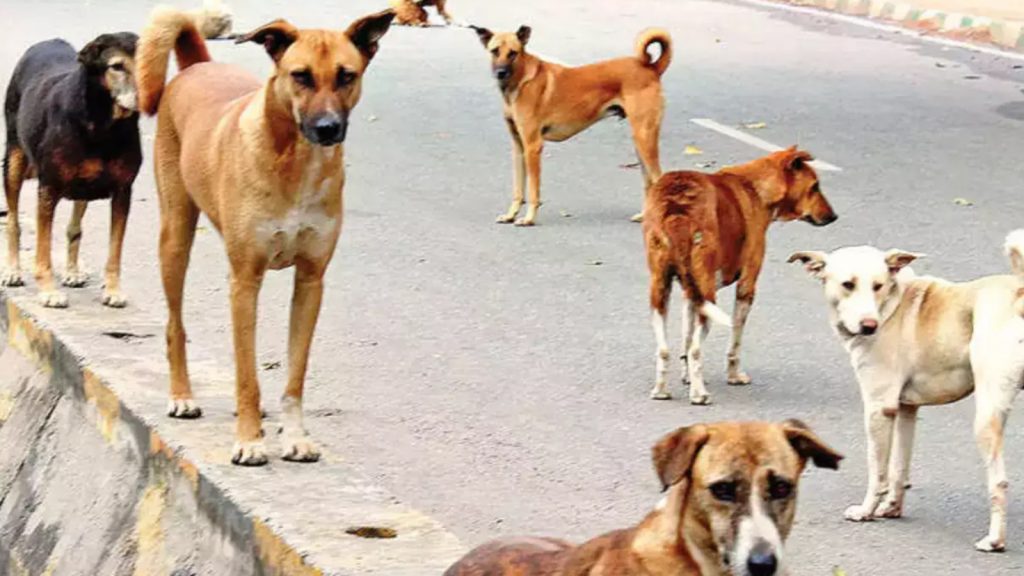

Shift all stray dogs to shelters away from residential areas: SC

File photo

In the backdrop of rising cases of dog bites and deaths due to rabies, the Supreme Court on Monday directed to shift all stray dogs in Delhi-NCR away from residential localities.

Further the apex court stated that if any organization found blocking the process will face the strictest action. Following the order, the Delhi government was swift to ensure its timely implementation.

The bench of Justice JB Pardiwala and Justice R Mahadevan was hearing the matter after taking note of rising incidents of rabies deaths following stray dog attacks.

The court said it will hear arguments only from the Centre, and no petitions from dog lovers or any other party will be heard on this subject.

“We are not doing this for us, it is for the public interest. So, no sentiments of any nature should be involved. Action should be taken at the earliest,” Justice Pardiwala said.

“Pick up dogs from all localities and shift them to shelters. For the time being, forget the rules,” he told amicus curiae Gaurav Agarwala, who suggested the steps that can be taken to address the stray dog menace.

When Justice Pardiwala sought Solicitor General Tushar Mehta’s opinion on the matter, he was told that a site in Delhi had been identified for relocating stray dogs, but the plan was stalled after animal rights activists obtained a stay order.

“All these animal activists, will they be able to bring back those who have fallen prey to rabies? We need to make streets absolutely free of stray dogs,” the bench said, adding that it won’t allow any adoption of stray dogs either.

Civic authorities in the Delhi NCR region spanning the national capital, Noida, Ghaziabad and Gurugram, have been directed to immediately build dog shelters, move stray dogs and update the court. These shelters, the court said, must have professionals who can tackle dogs, carry out sterilisation and immunisation and these dogs should not be let out. CCTVs, the court said, must be installed to ensure that dogs cannot escape from these shelters. The civic authorities have also been instructed to start a helpline for reporting dog bite cases. “Round up all stray dogs from all localities, whether sterilised or unsterilised,” the court said.

Mehta told the court, “We cannot sacrifice our children just because of a few dog lovers.”

The court said civic authorities can decide how they carry out this task and that they can form a dedicated force if needed. Anyone blocking the exercise would face action for contempt of court, it warned.

The court also noted that the availability of rabies vaccine is a major concern. “The authorities concerned, more particularly the government Of NCT Delhi, are directed to put detailed information about the place where such vaccines are available, the stock of vaccines and the number of persons who report for treatment on a monthly basis.”

According to official data from the Municipal Corporation of Delhi, a total of 49 rabies cases were reported in the national capital between January and June this year, news agency PTI reported last month. As many as 35,198 animal bite incidents were reported in the capital during this period.

Inside the fake news factory

When social media arrived, it was hailed as a treasure trove that would make everyone well-informed. But slowly, its reality unfolded. Today, nearly 70 per cent of the information circulating on social media is either fake or unverified. Clearly, forming opinions or sharing such content has become a risky affair—sometimes even landing people in legal trouble.

Despite the government introducing laws to curb fake news, its dominance persists. From politics to Bollywood and beyond, misinformation is weaponised to sling mud and shape narratives.

A recent investigative article in Falmouth University’s journal by senior journalist Dr Kit Chapman sheds light on how widespread this menace is, warning that unchecked information can easily spread far and wide. Chapman urges journalists to adopt five key steps to ensure accuracy and impartiality:

  1. Has the information been fact-checked before?
  2. Does it seem credible enough to be quoted?
  3. What does the actual data say?
  4. Is the claim truly as presented?
  5. Could this be deliberate deception?

Veteran journalist Om Thanvi adds, “The flow of fake news is so massive that people often believe even malicious propaganda to be genuine. Many reputations have been tarnished beyond repair because of this disinformation.” His advice: learn to distinguish between fact and fiction.

The impact has been profound. A sustained social media campaign of fake messages tarnished Rahul Gandhi’s image, branding him “Pappu.” Similarly, in West Bengal, misinformation claimed that Chief Minister Mamata Banerjee wanted to turn the state into a “Muslim nation.” Such falsehoods, amplified with edited videos and fabricated data, fooled even educated audiences.

The line between fact and fabrication is now so blurred that it becomes nearly impossible to distinguish one from the other—especially during crises. Consider the Covid-19 pandemic, which saw an avalanche of fake updates. Even during recent wars worldwide, misleading visuals and claims went viral, and TV channels weren’t immune either.

Tools like RTI and platforms like fact-check initiatives exist to verify information, yet most people seldom bother. Political propaganda and hate-driven misinformation spread fast because they are packaged to shock. But remember: peddling fake news is a crime—and punishable by law.

Indus treaty deadlock reignites Kashmir’s fight for water rights

Kashmiris see the IWT as a historic injustice that robs them of control over their most valuable resource – water. CM Omar Abdullah has urged the Centre to clear two stalled projects—the Tulbul Navigation Project and Chenab Water Lift Scheme—to mitigate the situation, writes Riyaz Wani

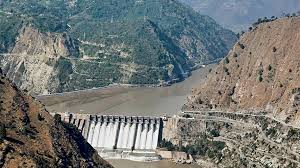
In the wake of India putting the Indus Water Treaty with Pakistan in abeyance, following the April terror attack in Pahalgam that killed 26 people, mostly tourists, Jammu and Kashmir Chief Minister Omar Abdullah has urged the central government to clear two key infrastructure projects – the Tulbul Navigation Project in Kashmir and the Chenab Water Lift Scheme in Jammu – which he said are critical to the region’s water security and development.

Speaking in a recent interview, Omar reiterated his criticism of the IWT, calling it unfair to Jammu and Kashmir. He said the treaty had long deprived the region of the right to regulate and store its own water, and restricted hydropower projects to run-of-the-river models, limiting their potential.

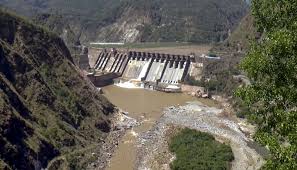
He said that his government is focusing on medium-term projects that could be implemented without delay, starting with the Tulbul Navigation Project in Sopore. Stalled since 1987 due to Pakistani objections, the project, also known as the Wular Barrage, would regulate flow on the Jhelum river, enhance navigation, and boost winter power generation.

While India revived interest in Tulbul after the 2016 Uri attack, Pakistan has refused to cooperate in five rounds of talks under the Permanent Indus Commission from 2017 to 2022. Indian officials maintain the project is within treaty limits as it is not designed for storage or irrigation, but for non-consumptive regulation.

Omar has proposed the installation of drop gates at Tulbul to manage water levels more efficiently. He said the project would ensure steady flow into Wular Lake, benefitting both tourism and employment in the Valley.

The second proposal, the Chenab Water Lift Scheme, is aimed at tackling growing water scarcity in parts of Jammu. First conceptualized in 2008, the scheme would draw drinking water from the Chenab river to serve drought-prone areas in the region. Omar said the river could support water needs for the next 20 to 30 years.

He confirmed that discussions with the Centre have taken place and a senior advisor to the Prime Minister recently visited the UT to review the proposals. The J&K government is also seeking permission to approach an international funding agency for the Chenab scheme.

The Indus Water Treaty, signed in 1960 and brokered by the World Bank, has long governed the distribution and usage of the Indus basin’s five rivers. Its suspension has brought to the fore old grievances, not just between India and Pakistan, but also from within Jammu and Kashmir, the region most affected by the treaty’s provisions.

Under the treaty, India controls the three eastern rivers (Ravi, Beas, Sutlej) and Pakistan controls the three western rivers (Indus, Jhelum, Chenab), with India allowed “limited use” of the western rivers (for hydropower, agriculture, etc.).

The ruling Bharatiya Janata Party has progressively adopted a more assertive stance on water-sharing with Pakistan. In 2019, Prime Minister Narendra Modi went as far as stating that India would prevent “every drop” of water from the eastern rivers from reaching Pakistan. 

Since terminating the treaty isn’t legally feasible, J&K leaders demand that New Delhi quantify and compensate for the state’s losses under the treaty.

In short, Kashmiris see the Indus Waters Treaty as a historic injustice that robs them of control over their most valuable resource – water – and stifles their economic growth and energy independence.

Despite being the source of Indus, Jhelum, Chenab, Jammu and Kashmir has emerged as the biggest loser under the treaty. The region is struggling to meet its own irrigation and energy needs. Experts estimate that only 40% of Kashmir’s cultivable land is currently irrigated. Ironically, despite being rich in water resources, Kashmir remains a power-starved state.

Hence the demand for the clearance of the Tulbul Navigation Project and the Chenab Water Lift Scheme.  However, it remains to be seen how the Centre responds to the demand.

Air Chief’s statement—Congress doubles down on PM Modi, says it is ‘all the more shocking’

In view of the new revelations made by the Air Chief Marshal Amar Preet Singh today, it becomes all the more shocking why the PM suddenly stopped Operation Sindoor on the evening of May 10, Congress questionsTheir point is when Indian Armed Forces were doing so well, why did we not go all the way and bring Pakistan to its knees, who stopped India.

File Photo

The BJP may be demanding an apology from Leader of Opposition Rahul Gandhi after public revelations by Air Chief Marshal AP Singh on damage caused by the Indian Air Force to Pakistani jets and assets, Congress, however, strengthened its attack against Prime Minister Narendra Modi wondering then why did he go for ceasefire on May 10. “This is all the more shocking,” Congress leader Jairam Ramesh said, asking “where did the pressure on the PM come from and why did he capitulate so very soon?”

Their point is when Indian Armed Forces were doing so well, why did we not go all the way and bring Pakistan to its knees, who stopped India.

“In view of the new revelations made by the Air Chief Marshal Amar Preet Singh today, it becomes all the more shocking why the PM suddenly stopped Operation Sindoor on the evening of May 10, Congress questions,” he wrote on X.

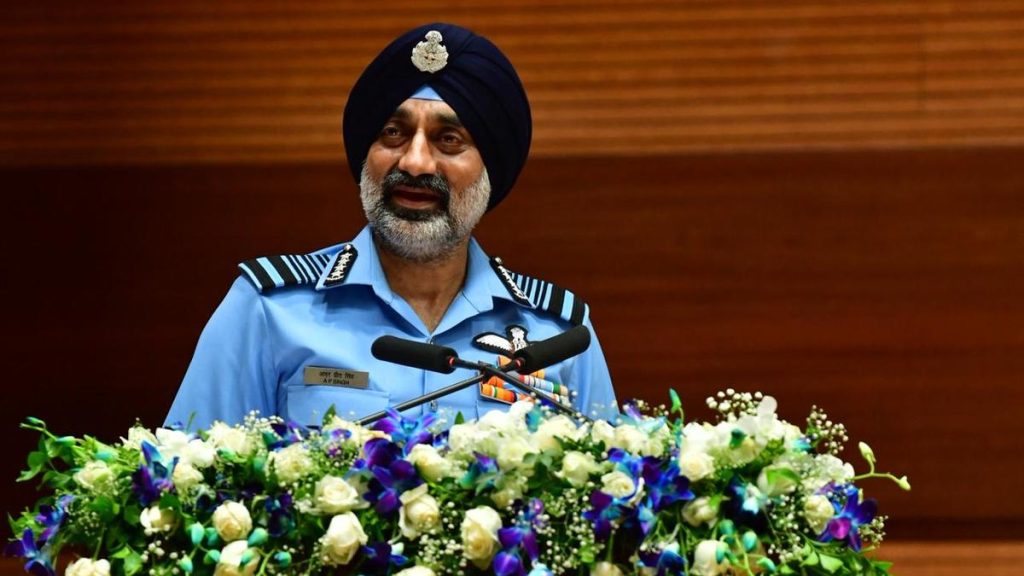
For the first time the senior-most IAF officer on Saturday publicly confirmed damage to Pakistan Air assets, as many as six Pakistan Air Force aircraft, including five fighter jets and one large aircraft, during Operation Sindoor. Air Chief Marshal A.P. Singh said the IAF not only destroyed terrorist infrastructure but also achieved an air defence victory by downing five Pakistani fighter jets and one AEW&C aircraft, as also an F-16.  He also countered claims of political constraints on the armed forces during the operation, asserting they had full freedom for planning and execution.

However, referring to Trump’s repeated claims that he helped “settle” tensions between India and Pakistan, Congress leaders say no one is questioning the valour, might and bravery of Indian Armed Forces but the motives of the political party running the country and its leadership coming clean on the issue 

Six Pak jets shot down in Op Sindoor, says Air chief

This is the first public confirmation of number of Pakistani fighter jets shot down by India during Operation Sindoor in May

For the first time a senior officer of the Indian Air Force (IAF) on Saturday publically confirmed the damage to Pakistan Air assets, as many as six Pakistan Air Force aircraft, including five fighter jets and one large aircraft, during Operation Sindoor

Air Chief Marshal A.P. Singh stated that the IAF not only destroyed terrorist infrastructure but also achieved an air defense victory by downing five Pakistani fighter jets and one AEW&C aircraft, as also an F-16. 

He also countered claims of political constraints on the armed forces during the operation, asserting they had full freedom for planning and execution.

 “We have at least five fighters confirmed killed and one large aircraft which could be an ELINT aircraft or an AEW&C aircraft which was taken out from a distance of about 300 km, which is the largest ever recorded surface-to-air kill that we can talk about,” IAF Chief Marshal Singh said delivering the keynote address of the 16th Air Chief Marshal L.M. Katre Memorial Lecture in Bengaluru.

“Apart from these (aircraft), there are a large number of UAVs and drones, some of whose missiles had fallen in our territory; we have recovered them. Lot of wreckage has been recovered, which is being studied so we can make out what they did, where they were launched from, what route they followed, what kind of systems they had, what generation they belonged to, what kind of features they had, etc.,” reports quoted  him as saying

“Our Air Defence systems have done a wonderful job. The S-400 system, which we had recently bought, has been a game-changer. The range of that system has really kept their aircraft away from their weapons, like those long-range glide bombs that they have; they have not been able to use any one of those because they have not been able to penetrate the system,” he also said.

The BJP criticised Leader of Opposition Rahul Gandhi, demanding an apology from him and the Congress. 

After Tamil Nadu, Karnataka also shuns Centre’s NEP, ‘Hindi imposition’  

Hindi ‘imposition’ : Apart from preserving unique character of respective states through state-specific policies, political parties also have objections to Hindi as the third language. From arguments like “cultural imposition”, “undermining India’s unity”, “threat to regional languages” and “going against educational principles of mother-tongue instruction”, there are many objections to NEP’s three-language policy, n which  Hindi is the third language, English and regional language being the other two  

The Karnataka State Education Policy Commission, headed by economist and former UGC Chairman Prof Sukhadeo Thorat, on Friday submitted a report to Chief Minister Siddaramaiah, recommending several reforms in school and higher education in mind Karnataka’s socio-cultural, linguistic and economic realities, according to reports

Moving away from the Centre’s National Education Policy (NEP) 2020, Karnataka plan is to localise curriculum by developing a Comprehensive Curriculum for School Education (CCSE), It includes many proposals like replacing the NEP’s 5+3+3+4 model with a 2+8+4 framework. Significantly it also introduces a two-language education policy where Kannada or the mother tongue is taught alongside English, reflective of Siddaramaiah’s objection to three-language policy which he calls “Hindi imposition”.

Notably, on Thursday Tamil Nadu Chief Minister MK Stalin also released the State Education Policy (SEP), asserting that it was designed to reflect the “unique character” of the state and reiterating his government’s firm opposition to the Centre’s NEP.

Stalin said that the state will strictly adhere to its long-standing two-language policy. “Through this education policy, we don’t want students just to mug up, but think and get educated. Physical education will be taught along with studies. Importantly, I want to say firmly that we will follow a two-language policy and it is our firm policy,” Stalin was quoted as saying.

Maharashtra recently saw MNS supremo Raj Thackeray and estranged cousin Uddhav Thackeray (Shiv Sena UBT) reuniting after 20 years at a public rally for an event called ‘Awaj Marathicha’—the Voice of the Marathi.

The event was organised by Shiv Sena (UBT) and MNS to mark the withdrawal of government resolutions related to the three-language policy in primary schools. 

The BJP-led state government’s attempt to make Hindi compulsory from Class I sparked protests. The policy was ultimately rescinded, with a committee now reviewing the matter

Arguments against Hindi

From arguments like “cultural imposition”, “undermining India’s unity”, “threat to regional languages” and “going against educational principles of mother-tongue instruction”, there are many objections to NEP’s three-language policy in which  Hindi is the third language, English and regional language being the other two    

Language is a strong marker of identity and any perceived threat can trigger strong emotional responses, thereby making it a great political tool. Stalin has always been a critic of the NEP 2020, especially the section that recommends that students learn three languages, calling it imposition of Hindi

In fact, resistance in Tamil Nadu was first recorded around the 1937–1940 agitation, when attempts were made to introduce Hindi in schools. Leaders like Periyar, and now Stalin,  opposed such moves, calling them “divisive and undermining India’s unity”

West Bengal has also witnessed protests against policies aiming to mandate a specific quota of communication in Hindi. In Northeast, states like Manipur, Mizoram have recorded protests from local groups and student leaders against inclusion of Hindi in education, arguing it “threatens” regional languages and “goes against basic principles of education in mother-tongue instruction”.

Two soldiers killed as Kulgam operation in Jammu and Kashmir enters 9th day

Srinagar: Two Army personnel were killed on Saturday in an ongoing anti-insurgency operation in the Akhal forest area of south Kashmir’s Kulgam district, now in its ninth day.

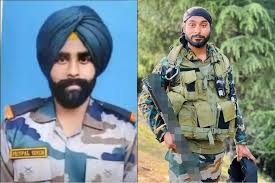
The slain soldiers have been identified as Lance Naik Pritpal Singh and Sepoy Harminder Singh, officials said. The Army paid tribute to their “supreme sacrifice” and expressed condolences to the bereaved families.

The operation, which began on August 1 after intelligence inputs about the presence of terrorists, has so far left two militants dead and 11 security personnel injured. The identities and affiliations of the slain militants are yet to be confirmed.

Security forces have maintained a tight cordon in the dense forest area, with drones, helicopters, and para commandos deployed to track down the remaining militants. Senior police and Army officers, including J&K DGP Nalin Prabhat and Northern Army Commander Lt Gen Pratik Sharma, are monitoring the operation. Further details are awaited.

Widespread rains across; but Himalayan foothills Himalayas received more than 50% average rains this week  

Lopsided rains: Overall weekly cumulative rainfall departures over meteorological subdivisions were more than 50% of long period average along foothills of the Himalayas with highest for West Uttar Pradesh (141%) for the week ending August 6, according to the IMD; While most of the meteorological subdivisions in central India received deficient to large deficient rainfall during the week, all-India weekly rainfall departure was 24% below than the long period average, showing how lopsided rains were this week

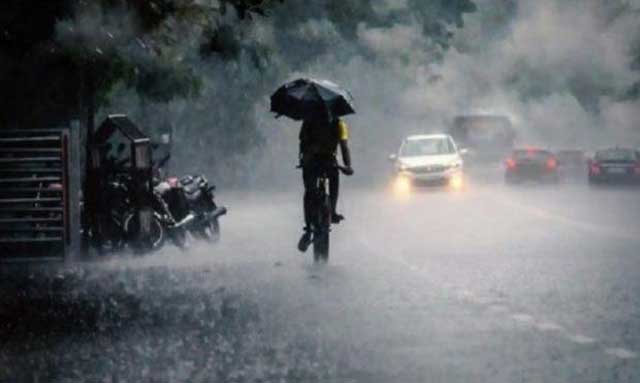
Torrential rains lashed many parts of North India on Saturday with the India Meteorological Department (IMD) issuing alerts for several districts of Uttar Pradesh and Uttarakhand. Delhi and surrounding National Capital Region (NCR) also awoke to a deluge of heavy rain this morning, resulting in waterlogging in some areas along with traffic jams. The IMD had declared an Orange Alert for most of Delhi a Yellow Alert for the larger NCR region, expecting more rains

The weather office has also issued an advisory for Himachal Pradesh, predicting heavy rains in most areas of the hill state and an Orange Alert for three districts on August 11 and 12 and a Yellow Alert for the rest of the districts.

Several districts of UP and Madhya Pradesh are witnessing flood-like conditions with rivers either close to or above the danger marks. Varanasi and Prayagraj are among the worst affected areas, as flood water has entered several low-lying areas.

The weather department has also predicted a fresh spell of rain over northeastern parts of the country for the next seven days. Central India and parts of Rajasthan may witness rainfall during the upcoming week. According to the IMD, heavy to very heavy rainfall is likely in Uttarakhand, Punjab, J-K and Himachal Pradesh and extremely heavy rainfall is expected in Haryana and western Uttar Pradesh till August 12.

An alert has also been sounded for Bihar and Jharkhand till August 10. Several parts of Bihar are also facing flood-like conditions with many rivers flowing above danger levels. According to the IMD, extremely heavy rainfall reported over Himachal Pradesh and Uttarakhand during August 5 and 6 were due to very slow movement of an active western disturbance across western Himalayan region during the period.

Overall weekly cumulative rainfall departures over meteorological subdivisions were more than 50% of long period average along foothills of the Himalayas with highest for West Uttar Pradesh (141%) for the week ending August 6, according to the IMD. While most of the meteorological subdivisions in central India received deficient to large deficient rainfall during the week, all-India weekly rainfall departure was 24% below than the long period average, showing how lopsided rains were this week

According to the analysis of weekly overall rainfall distribution during the week-ending on August 6 and this year’s Southwest Monsoon rains (June 1, 2025 to August 6, 2025) for the country as a whole, the weekly cumulative all India rainfall (from July 31 to August 6, 2025) in percent departure from its long period average (LPA) was minus 24%. All India seasonal cumulative rainfall during this season (June 1 to August 6, 2025), however, was 3% in positive

Ukraine denies giving land to the occupier

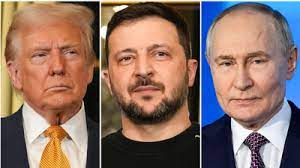
Since many years Russia and Ukraine war has been a sparking issue and many diplomats, big leaders and even United Nations have tried their best to resolve this long lasting war, but the conflict is still in process. US President Donald Trump who claimed that he managed ceasefire between India and Pakistan who were in a low intensity conflict after terror attack in Pahalgam on 22 April 2025, recently suggested a peace deal for Ukraine and Russia conflict also. He suggested peace deal which include swapping of some Ukraine territories.  This ceding land is rejected by  Ukraine President Volodymyr Zelensky . Ukraine said that ‘they will not give Russia awards for what it has done’, and ‘Ukraine will never give their land to the occupier’.

In a statement Zelensky wrote on social media that Ukraine territorial integrity is enshrined in their constitution, and must be non negotiable and said lasting peace must include Ukraine voice on top. Trump said in an interview that he will meet Russia President Putin even if he did not meet with Zelensky. Trump-Putin meeting will be seen as a breakthrough in the more than three year war. This meeting will be scheduled in Alaska.

One of the senior fellow for Russia and Eurasia at the international institute for strategic studies, told the AP that scheduling the meeting at Alaska was clear, its ‘symbology’ is clear as that the location is in favour of Russia. Russia will win the discussion and it will be easy for the Putin making his point we once had this territory and we gave it to you. And now Ukraine had this territory and should give it to us, a great strategy for Russia to win negotiation.

Many countries officials reacted to the idea of ceding land saying it may not be capitulation but it would be a loss. A 67 year old Ihor Usatenko, an old prisoner said he would consider ceding territory on condition for compensation and possibly some reparations.

MOST POPULAR

HOT NEWS