Judiciary under attack as political discourse sinks to a new low

The Supreme Court Bench’s observation about BJP spokesperson Nupur Sharma for her remarks regarding Prophet Muhammad has invited criticism in the form of an open letter sent to the CJI

When a Supreme Court Bench observed about the former BJP spokesperson Nupur Sharma, ‘The way she has ignited emotions across the country. This lady is single handedly responsible for what is happening in the country’, it was amply clear that the political discourse in the country has sunk to a very low level.

Referring to the remarks she had made regarding Prophet Muhammad during a TV debate, the court made these observations while hearing a petition filed by Nupur Sharma to club multiple FIRs registered against her across the country. The court also observed that she should have apologised to the nation on TV, adding: ‘She was too late to withdraw.’ More relevantly, the court pulled up the TV channel for organising a debate on a contentious ‘sub judice topic’ for the possible motive of ‘fanning an agenda’.

The matter should have ended here but it didn’t. Days after the judgement, an open letter was sent to CJI NV Ramana, signed by 15 retired judges, 77 retd bureaucrats and 25 retd armed forces officers, against the observation made by Justices Surya Kant & JB Pardiwala while hearing Nupur Sharma’s case in the Supreme Court. Former judges, government officials, and officers from the armed forces who have retired have criticised the recent ruling by the Supreme Court against suspended BJP leader Nupur Sharma.

In the open letter to CJI NV Ramana, they claim that the Supreme Court went beyond “Laxman Rekha” and demanded “rapid corrective” measures. Notably, on July 1, the highest court criticised Nupur Sharma for remarks she made against the Prophet Muhammad, claiming that her statements are upsetting and reek of arrogance. The SC bench had stated that it was too late and that her remark had caused regrettable circumstances despite her remorse for her remarks against the Prophet Mohammad.

Former judges, government officials, and officers from the armed forces asked for the roster of Justice Surya Kant to be withdrawn until he attains superannuation and at least be directed to withdraw the remarks and observations made during the hearing of the Nupur Sharma case. The signed statement further said that, “By no stretch these observations, which are not part of the judicial order, can be sanctified on the plank of judicial propriety and fairness. Such outrageous transgressions are without parallel in the annals of Judiciary.”

Almost at the same time, a  group of noted former civil servants on Wednesday sought the withdrawal of the Supreme Court’s “gratuitous observations” against activist Teesta Setalvad and others during a verdict that reaffirmed Prime Minister Narendra Modi’s exoneration in the 2002 Gujarat riots. An Ahmedabad court had on July 2 sent Ms Setalvad to 14-day judicial custody.

In an ‘open letter’, they also asked the top court to issue a clarification to the effect that it was not their intention that Ms Setalvad, who was detained a day after the verdict and arrested the next day by the Gujarat police for alleged fabrication of evidence with regard to the riot cases, should face arrest. They urged the Supreme Court to order her unconditional release.

“Every day of silence lowers the prestige of the court and raises questions about its determination to uphold a core precept of the Constitution: safeguarding the basic right to life and liberty against questionable actions of the state,” said the open statement signed by 92 former civil servants.

The signatories include former Union Home Secretary G K Pillai, former Foreign Secretary Sujatha Singh, ex-Chief Information Commissioner Wajahat Habibullah, former Health Secretary K Sujatha Rao, ex-IPS officer A S Dulat and former IAS officer Aruna Roy, among others. The recent three-judge bench verdict in the Zakia Ahsan Jafri Vs State of Gujarat, decided on June 24, 2022 has, to say the least, left citizens totally disturbed and dismayed, the statement said.

They said it is not just the dismissal of the appeal that has surprised people but the “gratuitous comments” that the bench made about the appellants, their counsel and supporters. “In the most astonishing comment, the Supreme Court has lauded the officials of the Special Investigation Team who have defended the State and has excoriated the appellants who have challenged the findings of the SIT,” the statement said, citing para 88 of the judgement.

The Supreme Court had on June 24 upheld the SIT’s clean chit to PM Modi and 63 others in the 2002 communal riots, saying there is no “title of material” to show the violence after the Godhra train carnage was “pre-planned” owing to the criminal conspiracy allegedly hatched at the “highest level” in the state.

“We would urge the Supreme Court Justices to suo motu review their order and withdraw the observations contained in Para 88. We would also request them to adopt the course of action advocated by a distinguished former member of their fraternity, Justice Madan Lokur,” said the statement issued by the former civil servants.

As if this was not enough, an organized army of trolls was busy manufacturing and spreading fake news regarding the judges, with fake and distorted photographs being shared to demonstrate a false proximity with leaders of the Indian National Congress. Propaganda portals issued dangerous and openly contemptuous statements against the Judges. A prominent TV channel was exposed and booked for running fake news for which it was forced to tender an apology.  Chhattisgarh CM Bhupesh Baghel hit out at UP Police for “trying to save the accused instead of supporting Chhattisgarh Police”.  A day after a fracas with the Uttar Pradesh Police when they sought to arrest Zee News anchor Rohit Ranjan from his Ghaziabad residence, the Chhattisgarh Police declared him an “absconder” after finding his home locked. Acting on a first information report (FIR) registered against Ranjan based on a complaint by a state legislator for allegedly “mischievously twisting” a statement issued by Congress leader Rahul Gandhi, a Chhattisgarh Police team reached the journalist’s residence, but found their path obstructed by personnel of the UP Police.

In the meanwhile, a senior Judge of the Karnataka High Court has made startling allegations in open Court. Justice HP Sandesh exposed the pressure and threats of transfer he was facing and reminded every citizen that his foremost duty was to the Constitution. “It appears that the attacks on judges are not just random and piecemeal incidents, rather the attack is Organised, Standardised, and Institutionalised! The main objective behind such campaigns is to Demoralise, Pressurise, and Terrorise the judiciary,” said the Congress spokesperson, Abhishek Singhvi.

Significantly, now Justice JB Pardiwala has advocated framing rules and regulations for social media. Justice JB Pardiwala, Supreme Court judge, was part of the 2-judge bench that had last week said that suspended BJP leader Nupur Sharma’s ‘loose tongue’ had set the whole country on fire. Netizens have criticised the observations on social media. Justice Pardiwala expressed a deep concern over media trials of the judiciary. Justice JB Pardiwala said, “Personal attacks on judges for their judgements lead to a dangerous scenario where judges have to think about what the media thinks instead of what the law really thinks,” he added. “In India which cannot be defined as a completely mature or defined democracy, social media is employed frequently to politicise purely legal and constitutional issues,” he further added.
 

Scribes, activists bear the brunt as govt tries to muzzle dissent

Amid shrinking space for the expression of dissent with human rights activists, journalists, academicians and lawyers languishing in jails, the government is also trying to stamp down on peaceful protests by adopting high-handed measures. A report by Mudit Mathur

Two basic yardsticks are uniformly considered to determine the success of a democratic government – freedom of speech to all its citizens and press to criticise policies of the government including ethos of its political leadership and speedy free and fair trial to all the persons as a valuable right to life and liberty. These rights are guaranteed under the Constitution of India – which is backbone of our governance system where dissenting views have been inherently characterised as an essence of vibrant democracy.

Shockingly, the journalists critical of the power centres are being unlawfully arrested in an arbitrary manner, intimidated through strategic filing of multiple first information reports and unfair detention in prison under the colonial laws of sedition under which real nationalist freedom fighters like Mahatma Gandhi, messenger of peace and nonviolence, and Lokmanya Tilak were convicted for their powerful writings in “Young India” and “Kesari” by imperialist British rulers. How can such oppressive laws still remain in the statue books of free India?

Though Supreme Court of India agreed to consider series of petitions challenging constitutional validity of sedition laws and Union government also agreed in the court to re-examine and reconsider Section 124A of the Indian Penal Code which criminalises the offence of sedition, but the misuse of the colonial-era sedition law for muzzling media freedom and social activism is drawing the sharp focus of the nation. It always suits ruling political classes as police act as its extended arm to abuse law to muzzle dissent and thwart healthy political discourse. Unfortunately, our politicians remained in colonial hangover even after 75 years of independence (Amrit Mahotsav) and continued with such laws.

Amid shrinking space for the expression of dissent with human rights activists, journalists, academicians, lawyers languishing in jails, peaceful protests are also muzzled adopting highhanded measures. India signed “2022 Resilient Democracies Statement” joining G7 countries and vowed to enable “open public debate, independent and pluralistic media” and  “free flow of information online and offline”, fostering legitimacy, transparency, responsibility and accountability for citizens and elected representatives alike. “We hail all courageous defenders of democratic systems that stand against oppression and violence, and will step up international cooperation to improve the resilience of democratic societies globally,” it stated.

The International forum‘2022 Resilient Democracies Statement’, along with G7 nations had coincided with the arrest of the co-founder of India’s most trusted fact-checking portal, AltNews. Mohammed Zubair’s detention is the latest in the series of infringements on the rights and protections of journalists in India that precisely describes real state on the domestic front.

Zubair was arrested on 27th June, following a complaint by a Twitter user over a satirical tweet posted more than four years ago in 2018, allegedly mocking the Hindu god Hanuman, purportedly hurting religious sentiments of the complainant after four years. Press and human rights groups see it as an attack on the freedom of expression.

The tweet in trouble is a photo of the “Honeymoon Hotel” with its name changed to read “Hanuman Hotel.” Another Twitter user recently retweeted it, calling it an afront to his religious sentiments. Zubair, who has been in the forefront of calling out disinformation and rising hate speech against minorities in the country, was arrested days after bringing international attention to controversial remarks made by a ruling party official against Islam’s Prophet Muhammad. The comments made by the ruling Bharatiya Janata Party’s (BJP) former spokesperson Nupur Sharma during a television debate drew widespread condemnation from Islamic nations and the US.

Secretary general of the Editors Guild of India, Sanjay Kapoor said, “The arrest is extremely disturbing. Zubair was active in tackling disinformation in the last few years. This made him a direct target of fake news generators.” Kapoor pointed out that there are signs suggesting this intolerance has grown in scale and intensity in the wake of the present right-wing government’s rise to power with its strict definition of nationalism.

Other international press bodies, such as the Committee to Protect Journalists and the International Press Institute, a global network of editors, journalists and media executives defending press freedom, also condemned the arrest, calling for Zubair’s unconditional release.

India was ranked 150 among 180 countries in this year’s World Press Freedom Index. The BJP government filed sedition charges against six senior and reputed media persons including Zafar Agha, Vinod Jose, Anant Nath, Paresh Nath, Mrinal Pande and Rajdeep Sardesai for “misleading the public.” Siddique Kappan, another Muslim journalist, has been in prison since October 2020, when Uttar Pradesh police arrested him on charges of terrorism, sedition and promoting enmity between groups, among others.

Similar cases were registered against many tribal rights and human rights activists, environmentalists and besides targeted action against student’s bodies for their ideologically divergent views. As many as 65 journalists were targeted and charged under various legislations threatening large scale victimisation just aimed at quietening factual reports during strong pandemic surge between 15 March 2020 and 10 July 2020.

Violence against journalists

Another report released by the Right and Risk Analysis Group on press freedom in last February disclosed at least six journalists were killed and 121 journalists and media houses were targeted in India last year. At least 34 journalists faced attacks from non-state actors, mainly political party activists, mafia and online trolls. Eight female journalists faced arrest, summons, police complaints and sexual harassment, the report said.

Earlier on 11th May, the apex court in a historic development, ordered that the 152-year-old sedition law under Section 124A of the Indian Penal Code should be effectively kept in abeyance till the Union Government reconsiders the provision. In an interim order, the Court advised the Centre and the State governments to refrain from registering any FIRs under the said provision while it was under re-consideration.

The court while agreeing to re-examine constitutional validity of sedition laws, observed, “We expect that, till the re-examination of the provision is complete, it will be appropriate not to continue the usage of the aforesaid provision of law by the Governments.” “We hope and expect that the State and Central Governments will restrain from registering any FIR, continuing any investigation or taking any coercive measures by invoking Section 124A of IPC while the aforesaid provision of law is under consideration”, ordered a bench, comprising the Chief Justice N.V. Ramana, Justice Surya Kant and Justice Hima Kohli.

Bollywood actor, occasional writer and social commentator Swara Bhasker expressed in her media writings, “Mohammad Zubair and Teesta Setalvad are the latest addition to this list and these are only the ‘high-profile’ arrests. How many forgotten poor are languishing in our prisons?” “Not everyone has to suffer long periods of detention without bail, though. Pro-government Arnab Goswami was granted bail by the Supreme Court in a hearing after eight days in custody. Tajinder Bagga of the BJP never even reached jail — he was given protection from arrest by the High Court of Punjab and Haryana in a midnight hearing. Rabble-rouser Yati Narsinghan also got swift bail a few months ago, in multiple cases,” she mentioned.

“Sudha Bharadwaj spent three years in jail in the Bhima Koregaon case before she got bail. Stan Swamy, 81, died in jail, after being denied both a water sipper and bail. Siddique Kappan is in jail for, literally, only having boarded a train, and Umar Khalid is in jail for a speech where he propagated the principles of our Constitution. Khalid Saifi has been in jail since February 2020 and his family has complained of his deteriorating health. Natasha Narwal’s father, Mahavir Narwal, a retired professor, died without seeing his daughter free. Anand Teltumbde was arrested by the National Investigation Agency in April 2020 and is in jail.” Swara pointed out.

“Mohammad Zubair and Teesta Setalvad are the latest addition to this list and these are only the ‘high-profile’ arrests. How many forgotten poor are languishing in our prisons? For dissenting citizens, minorities, poor citizens with no ‘contacts’ or ‘backing’, Dalits, Kashmiri Muslims and avowedly left-leaning citizens, what is most worrying about the conduct of our judiciary is the reluctance to grant, or outright denial of bail. They are charged with draconian sections that are non-bailable — often the Unlawful Activities (Prevention) Act or sedition,” she lamented.

Legal luminaries are shocked over the preferential treatment given to Rohit Ranjan, a Zee News anchor, providing him interim protection from arrest in multiple FIRs for admittedly running a doctored video of Rahul Gandhi fanning communal passions for which he tendered apologies. On the other hand, Alt News journalist Zubair failed to have similar treatment. Legal circles are debating over disturbing trend of decay in uniform justice delivery system based on equity before law.


How hopelessly helpless we actually are!

It would be an  understatement to say that there are worries and more worries as intolerance and the aftermath holds sway…Yes, I  sit apprehensive and  worried and  forlorn, wondering  what’s in store…

I’m shaken after seeing the video of an eight  year old boy sitting on the roadside, holding the  body of his 2 year baby brother, whilst  his father Poojaram Jatav goes looking for an affordable vehicle which could carry the dead child to their  home in the Ambah tehsil in Madhya Pradesh’s  Morena.

Some sad and shocking backgrounders. Foremost, the child was anaemic and unwell and so the father decided to get him to the district hospital in Morena but he was declared dead during the treatment. And when the father wanted an ambulance to get home with the body, the hospital simply refused and the father couldn’t afford to hire any of the private ambulances. It’s then he went looking for a vehicle, leaving the body with the older brother who was found sitting with the body on the roadside, for hours…To compound the tragedy for the family, the mother of these children was not around; she had left for her parent’s  home three months back and Poojaram Jatav was said to be looking after the children (four of them) singlehandedly.

What happens to the future survival of the three remaining children and also Jatav’s own well-being when the family is apparently very poor and disadvantaged? What happens to the survival of thousands of such families and children who cannot afford to get the basic food and medical care? Who is responsible for the famished-hopeless-anaemic existence of a large percentage of our fellow citizens? Who is answerable? Who is accountable? Who all of the political and administrative who’s who, who ought be questioned for the sheer plight and misery and sorrow of our people?

Today economic slowdown and very apparent signs of recession are writ large. The blatant rights violations are also right here.  We have never been so very violent and abusive in our approach…where onslaughts seems to be the order of the day.

It would be an  understatement to say that there are worries and more worries as intolerance and the aftermath holds sway…Yes, I  sit apprehensive and  worried and  forlorn, wondering  what’s in store…what’s  next…what lies ahead…how dark would the shades of gloom get, when only disappointments and disillusionment hold out.

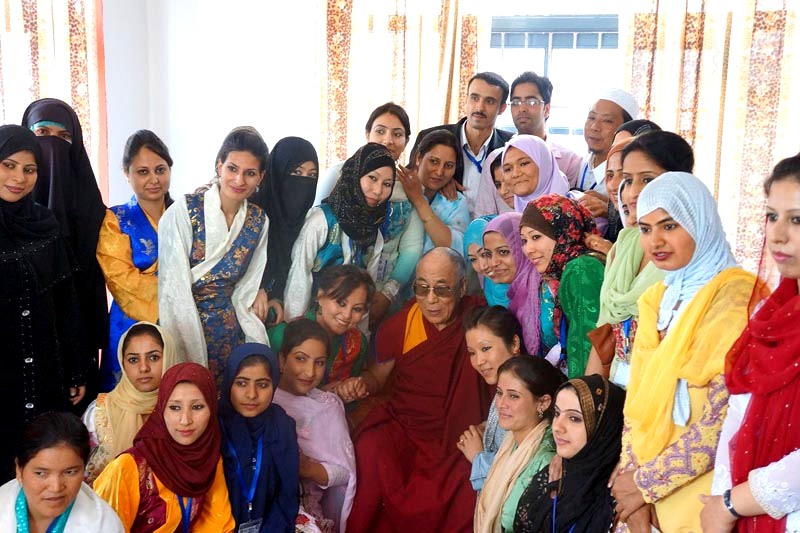
Tebetan refugees in Valley look up to Dalai Lama

As His Holiness Dalai Lama celebrated his 87th birthday on 6 July, one was reminded of the Tibetan refugees living in the Srinagar city. For these Tibetan refugees, their leader is the Dalai Lama. Nobody else matters to them.

The Tibetan refugees are perhaps the smallest minority group in the Kashmir Valley. Several years back, what had taken me by complete surprise was to see this well-planned basti of Tibetan refugees living in the heart of Srinagar—close to the Makhdoom Sahib dargah. On a rainy afternoon, when I was walking around the area to take closer look at how they lived, I’d asked a couple of Tibetan boys if they could direct me to their families. What I got in return were angry looks from them. Undeterred, I continued walking in the rain and slush, down a row of houses, and stopped near a group of young Tibetan men. They stopped chatting almost immediately. Spewing aggression, they’d said, “We are not interested in talking to anyone. We are not concerned about any crisis here… Muslims we are, but we have our own schools, masjid, shops… we keep to ourselves.”


No door opened to me in this Tibetan colony. Yet, I was reluctant to give up and went to the basti again and yet again. Each time I was greeted with the same sort of rebuffs and hostile looks. Even when I suggested that I would treat them to momos and special tea at one of ‘their’ restaurants, they had responded with a firm no. Perhaps, they were wary of strangers or of the security bandobast around. On each of my visits, I had spotted armed security men standing atop the Hari Parbat hill, their guns pointing at the basti.

When I’d asked the locals what they thought of these Tibetan refugees living this way, they’d told me: They are Muslims but they are different from us. They live here but for them the Dalai Lama is their only leader. Even culturally they are very different… they are not like us Kashmiris.

That could perhaps explain why they lived huddled together in this colony, having little involvement with the local politics and politicians and people. Their main source of economic survival was embroidery, tailoring and owning eateries. I could spot many small-scale tailoring units; sitting tucked in tight spaces with embroiderers making enchanting designs on a variety of pherans and kameez and scarves.

I never got any clear answers on whether these Tibetans even travel down to Dharamshala or New Delhi to interact with other Tibetan refugees living in exile in India. They seemed to be completely engrossed and happy in their own world and relayed disgust at any sort of intrusion.

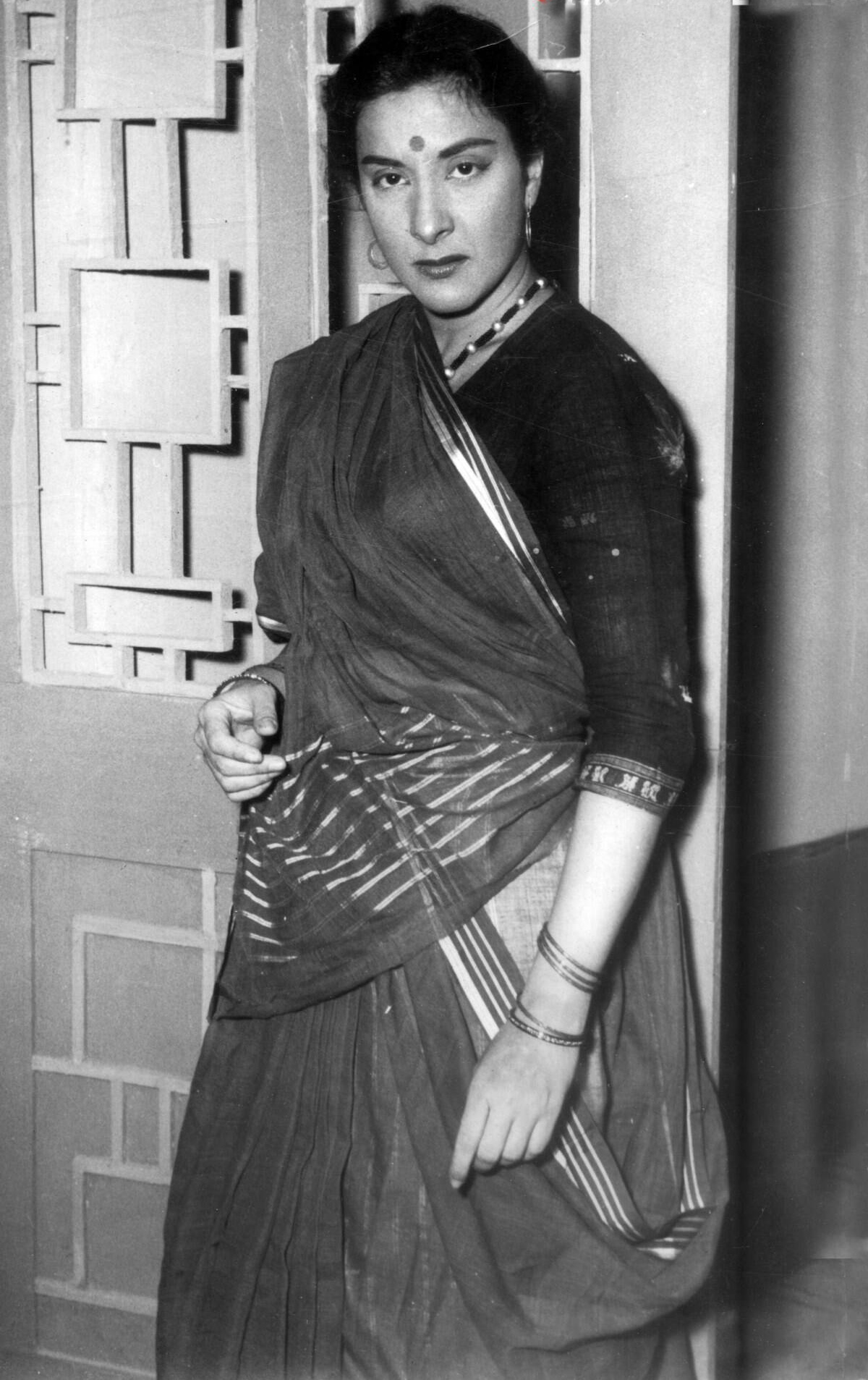
Remembering Nargis Dutt

Last month, I was keen to write on Nargis Dutt (she was born on June 1, 1929  in Kolkata ) but space constraints came  in way. Never mind, now belated focus on her.

Quoting Khushwant Singh from his essay on her:

“Nargis  Dutt  was  introduced to me  through the  then editor of  Femina, Gulshan Ewing. I’d  seen her film Mother India…I think when she met me,  they  – the  Dutts – were  not  doing too well and she had almost retired  from films. She  told  me  that  two of her children  were studying  at the Sanawar  School, not  far from  my  home in Kasauli and with that she  asked  she could  stay  at  my Kasauli cottage during the Sanawar Founders’ week ..With that I’d quipped, ‘Only one condition and the condition is that I have your permission to tell  everyone that Nargis slept in my bed!’ ”

“She had a great sense of humour and laughed heartily hearing this. And years  later, when we were both  nominated to the Rajya Sabha and  given seats next to each other and  whenever anyone  tried to  introduce  us, she would  say  – ‘You  don’t have to introduce us. I have slept in his bed!’”

To quote Khushwant Singh still further, “One thing that intrigued me was her (Nargis  Dutt’s ) faith. Was she a Muslim or Hindu or both or nothing? She wore a bindi on her  forehead, married a Brahmin, gave her children Hindu names and was often seen at Swami Muktanand’s ashram at Ganeshpuri. Nevertheless she was  buried with Muslim rites in a  Muslim graveyard with her husband reciting the fateha. I can’t think of any Indian family which better exemplified the  principle of Sarva Dharma Samabhav.”


Regime change likely to end Lankan political crisis for now

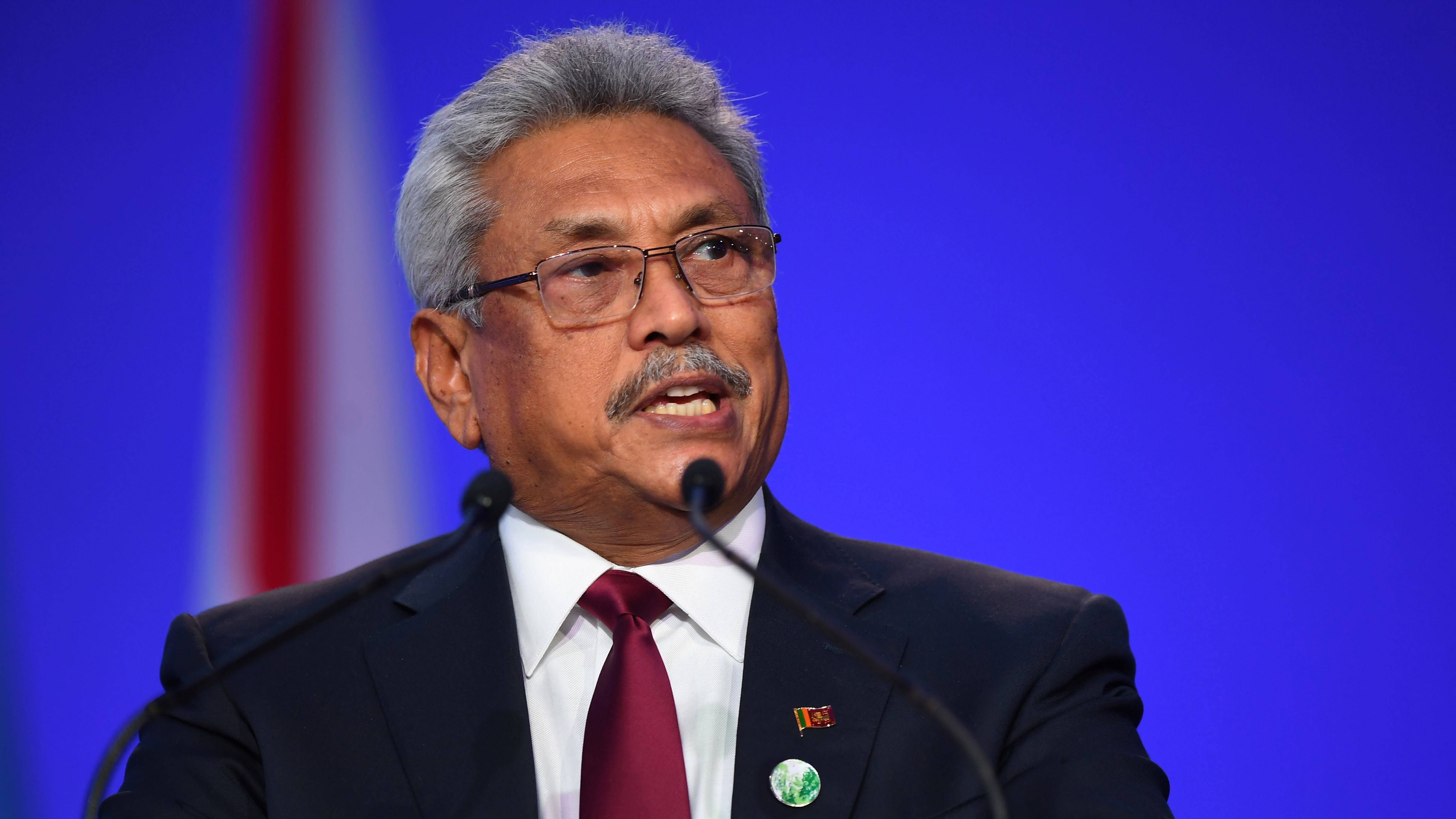
With Speaker Mahinda Yapa Abywardena announcing that Sri Lankan Parliament will elect a new president to succeed Gotabaya Rajapaksa, decks have been cleared for a consensus nominee for the top position. A report by Gopal Misra

It was anticipated; it did not have any surprise element when the world witnessed the ignominious exit of Sri Lankan president Gotabaya Rajapaksa abandoning his palace to seek refuge in some naval ship. He is expected to be replaced by a new president on July 20, thus ending the political crisis of the island nation at least for the time being, but the country’s economic seize may continue to haunt the country for many more years.

It appears that with Speaker Mahinda Yapa Abywardena announcing that Sri Lankan Parliament will elect a new president to succeed Gotabaya Rajapaksa on July 20, decks have been cleared for a consensus nominee for the top position as well as the formation of an all party government to replace the outgoing regime.

The political-economic crisis of Sri Lanka, perhaps, is a wakeup call for countries, including India, where Chinese are investing huge funds. It is being stated that if the Chinese funds could destabilise Sri Lanka, thereat to India could be much deeper, where the Chinese funds have penetrated in key sectors, including infrastructure, academic institutions and IT industries.

There is an element of surprise that in spite of its burgeoning dollar reserves, why China did not rescue Sri Lanka from the current economic crisis. Apart from the Chinese debt trap, Sri Lanka’s economic woes have increased during the regime of the outgoing government due to the poor governance, lack of transparency and the rampant corruption at the highest level.

It is often stated that the Chinese companies do not hesitate in bribing the concerned authority for obtaining a project in the developing countries of Asia, Africa and Latin America. In a bid to woo the local rulers, the bribe amount is often as high as 20 per cent of the project cost, which is generally paid to the concerned authorities and political bosses in advance through various shell companies.

The year-long acute economic crisis has led to fury on the streets of Sri Lanka forcing the president and the prime minister to quit finally. The protestors have also set the private residence of Sri Lanka Prime Minister Ranil Wickremesinghe on fire.

China’s economic help to Sri Lanka, according to the experts of geo-politics, was a part of obtaining strategic, political and security leverage against India in the Indian Ocean region. The Chinese, perhaps, expected that the financial crisis might be used to trigger off yet another ethnic crisis in the island nation. It, however, appears that India’s prompt assistance to Sri Lanka has foiled the Chinese agenda.

During the past 12 years or so since Mahinda Rajapaksa came to power, he and his brothers have been ruling the country. They had become darling of the majority population, Sinhalese, after defeating the Tamil insurgents. Mahinda’s brother Gotabaya, who was defence secretary in his government later became the president. It is alleged that he has been playing a key-role in the siphoning off the country’s precious resources to ‘unknown destinations’, thus pushing his country to this the unprecedented economic crisis.

India increases surveillance

As soon as the report of angry crowd storming the presidential palace in Colombo, reached New Delhi, India promptly intensified surveillance along Sri Lankan waters by deploying additional hovercrafts and patrol boats. The surveillance has been stepped up to prevent an influx of illegal immigrants or anti-India elements. Meanwhile, the spokesperson of the External Affairs Ministry, Arindam Baghchi, has assured that India stands with the people of Sri Lanka during this crisis. He further stated,  “We are closely following the recent developments in the island nation.”

It may be noted that the port cities of Hambantota and Colombo have been leased to China for 100 years. China is now the second largest lender to Sri Lanka. It was holding more than 10 per cent of Sri Lanka’s outstanding foreign debt in 2019. India, however, stepped in to reduce the debt burden of Sri Lanka by offering a liberal financial package of USD 500 million for fuel imports and also one billion USD credit lines for importing essential goods from India. India has also provided a financial cushion to Sri Lanka by providing USD 2.4 billion through currency swaps, loan deferrals and other credit lines, but she could not rescue the island’s economy from the Chinese debt-trap.

The ruling party’s narrative had claimed that the Port City of Colombo (PCC), would make it a financial hub like Dubai and Singapore. It was asserted that the project would transform Sri Lanka’s tourism-and-tea economy into a thriving, multi-services international hub. It was estimated to cost USD14 billion, largely funded by potential investors who will buy into the idea of the financial hub and set up shop there. Initially, China invested USD 1.4 billion to help PCC reclaim 269 hectares of land on the Indian Ocean. In exchange, China has got about 116 hectares of the land there on a 99-year lease.

Biden’s crucial visit to the Middle East

It is not Sri Lanka alone, as many as five other countries or regions too are facing economic crisis. They include Afghanistan, Venezuela, Russia, Sudan and the countries of the Middle East. They are beneficiaries of the Chinese funds and facing acute economic challenges. In this context, the US President Joe Biden’s two-day visit (July 15-16, 2022) to the Middle East is considered quite significant for the political and economic stability of the region.

The ongoing Russia-Ukraine war and its financial backlash might not be only inflicting an economic catastrophe on Russia, but its repercussions might adversely affect the global economy. Four months after a military coup, Sudan has plunged into further turmoil. The cash-strapped country had announced in March that it would float the country’s currency as economic conditions deteriorated further. The move is likely to cause a swift increase in prices of commodities and services in response to a drop in the value of the pound.

Similarly, despite Chinese investment, the ongoing economic crisis in Venezuela has been continuing for decades. One out of every three Venezuelans is food-insecure and in need of urgent food supplies. Further, the Covid-19 pandemic has worsened the country’s humanitarian and economic crisis. The consistent shortages of fuel, electricity and clean water have sparked several riots over years, leaving hundreds of migrants with no choice but to flee again.

The situation in the Middle-East countries including Lebanon, Syria, Iraq, Libya and Yemen are facing humanitarian catastrophe, with fast-spreading poverty and an economic implosion that threatens to throw the region into even deeper turmoil.

Similarly, the situation in Afghanistan’s economic and humanitarian crisis continues to be grave. Since the withdrawal of the US force from Afghanistan, the country is facing acute food shortage. It is estimated that at least 55 per cent of the population is expected to be in crisis or emergency levels of food insecurity amidst the reports that many Afghan children are succumbing to starvation every day. The Chinese, however, have reportedly decided to start mining in the country within a year or so.

It is being stated that apart from evolving a NATO type security cover involving the major Arab countries having a joint defence shield from Israel, closer economic ties might also be promoted among the countries of the region. It is being planned, especially when the Beijing’s strategy regarding Iran and other strategic measures are now known to the regional powers.  There may be efforts for cementing new alliances taking into account of the economic crisis of Sri Lanka.


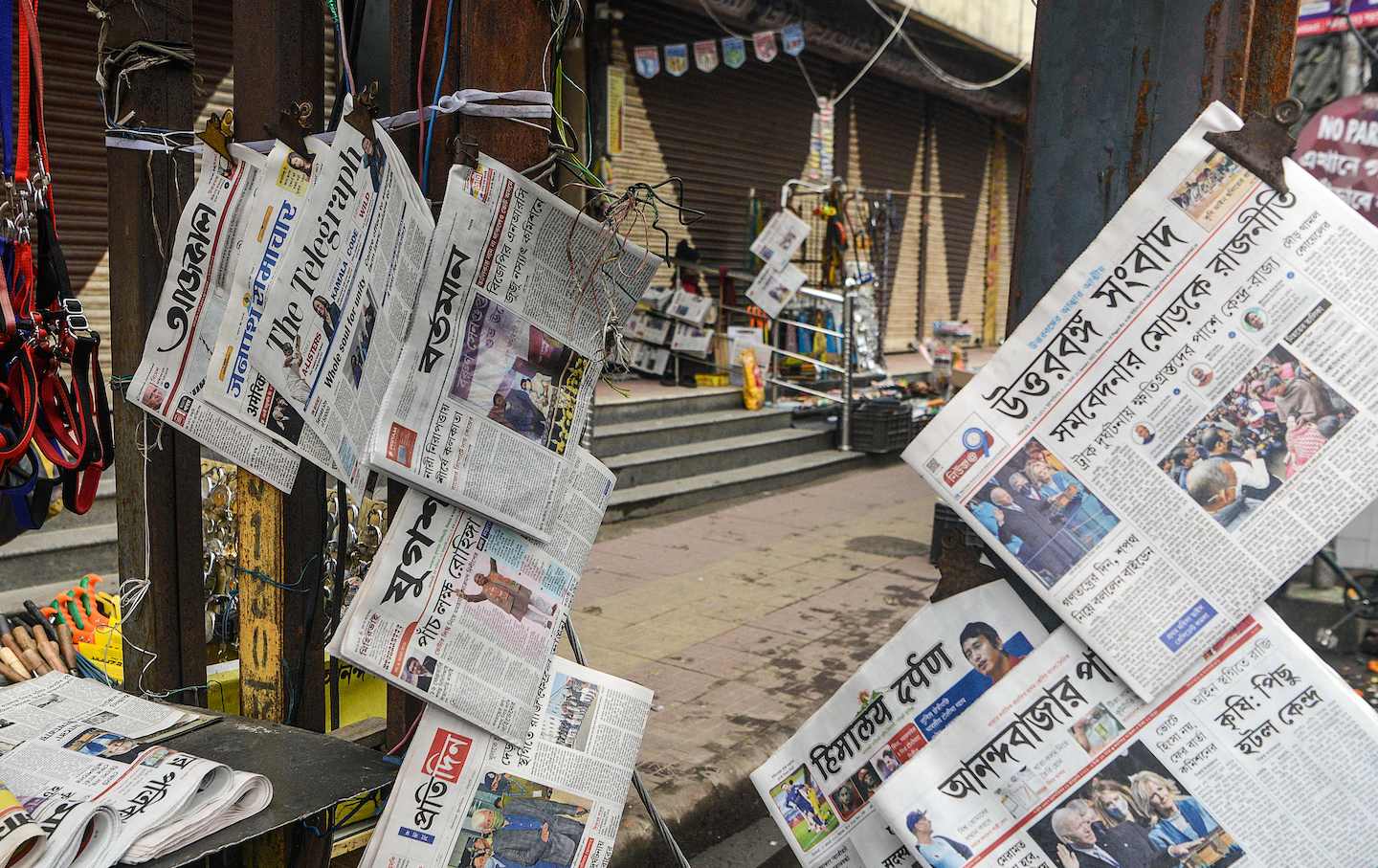
Is it curtains for printed newspapers?

A recent study has revealed that America is losing two newspapers every week. However, in India, the newspapers’ advertising and subscription revenue is set to increase by 20 per cent next fiscal year

There are very depressing developments concerning the printed newspapers in the US. Digital media is threatening the very survival of the newspapers as we see them today. A recent study by Northwestern University’s Medill School of Journalism, Media and Integrated Marketing Communications has revealed that America is losing two newspapers every week, though most of these happen to be weeklies.

According to the study, the number of newspapers in the US came down to 6,377 by the May-end in 2022 from 8,891 in 2005. This is not owing to the coronavirus pandemic though 360 newspapers have declared closure since the end of 2019. However, except for 24, all the ill-fated publications were weeklies. Sadly, the number of journalists working in print media has come down to 31,000 from 75,000 as reported in 2006. The number of printed daily newspapers (100 of them are considered truly dailies) is also declining, but, interestingly, the uneasy development has been caused mainly by the growth of newspaper chains, national and regional ones, which have been buying smaller publications. The annual newspaper revenue also fell to $21 billion from $50 billion during this period as it is believed that advertisers now find digital news platforms more attractive and paying.

Now the good news. In India, however, the situation is very encouraging, contrary to what is happening in the US. Rating agency Crisil came out with a study in March 2022, claiming that Indian newspapers’ advertising and subscription revenue is set to increase by 20 per cent next fiscal year, from Rs18,600 crore in 2021 to Rs 27,000 crore (the pre-pandemic level was Rs32,000 crore).  This is despite the fact that the cost of the newsprint has gone up substantially owing to the supplies having been hit hard by the unending Russia-Ukraine war. The reason is that Russia has been the biggest newsprint exporter to India for a long time.

It must be pointed out here that newsprint contributes to 30-35 per cent of the total cost of a newspaper and there has been a 60 per cent increase in the newsprint price this year mainly because of the war in Europe. Yet, the rising cost of newsprint has been found to be less painful because of the circulation of newspapers not reaching the pre-pandemic level. As we all know, the production cost of a newspaper copy is far higher than charged by newspaper managements.

The newspaper reading public now prefers to get its news hunger satiated through digital media more than print media, but most people buy newspapers for greater satisfaction and better quality of writing. Newspapers any day remain more reliable and trustworthy because of their strict system of checking and cross-checking as news stories pass through various stages before getting into print.

Despite all this, the circulation of Hindi and regional language dailies has been rising fast after a sharp decline in the intensity of the pandemic. English language newspapers, however, are slower in getting new readers, which is not surprising keeping in view the reality that English remains confined mainly to the elite classes.

In India, too, one can see a major threat to print media from its digital contenders in the coming few years as the situation exists in the US and other Western democracies. Already for a large number of people, digital media is the preferred source of news today. But digital media, as the situation prevails, is also helping print media to grow as serious newspaper readers rely on the printed word more than what they get in the digital form and through TV channels. How long this situation will continue remains to be seen.

As we see it today, digital news platforms are the first to report a development which is followed by television channels. Newspapers are the last to carry it, though one can find the latest news on their digital platforms the same day in seconds after a news story breaks. So, the question is: keeping the quality and reliability factors aside, why should anyone read printed newspapers? Will there not be a day when people will stop reading printed newspapers? This question was recently put to some experts by an international information disseminating organisation called Quora and their answers were interesting.
A novelist expressed the following viewpoint, “I can foresee a world in which a few print newspapers exist as a somewhat niche product sustained by a relatively small subscriber base of enthusiasts who probably pay more in real terms for their papers than they do today.  However, he is not very enthusiastic about the future of printed publications. He said, ” As a journalist myself, who has witnessed at first hand the closure of numerous print publications and the layoffs accompanying these closures, my view is that the outlook for print is not good.”

An author, who claims to have worked for Reuters and Time magazine, is hopeful of the future of newspapers though times are bound to change. “There will always be a place for print. There is something uniquely satisfying about holding  a paper in your hands and it adds solidity to the information you are reading. There are also studies indicating that we absorb information from print media better than what we read online, ” asserts the author.
According to a veteran journalist, “They are both dying out (some have ceased to exist) and evolving. They are dying out because of decreased advertising and circulation. They are evolving because all of the major print newspapers that I know about have an online presence, delivering basically the same content via the web.”

A study conducted a few years ago made it clear that the printed word will never get extinct. It will survive despite the trying times it would be faced with. Experts are of the view that printed papers will continue to be published, but these would be too costly and very few people would be able to afford such publications. Those who value quality and reliability will continue to patronise print media.

By all accounts, it appears that in India, the onslaught of digital media is unlikely to be as severe as it is seen at this stage, and the situation would favour the printed newspapers. This is because of poor Internet connectivity and speed in the villages. This situation is bound to come in the way of web newspapers or news portals becoming a replacement for the printed papers.


India reports 20,038 new COVID-19 cases, 47 fatalities

India reported a single-day rise of 20,038 new coronavirus infections, pushing the tally of cases to 4,37,10,027, while the count of active cases of the disease has increased to 1,39,073, according to Union Health Ministry data updated on Friday.

The death toll due to the disease has climbed to 5,25,604 with 47 new fatalities being reported, the data updated at 8 am showed.

Active cases now comprise 0.32 % of the total infections, while the national COVID-19 recovery rate was recorded at 98.48 per cent, the health ministry said.

An increase of 2,997 cases has been recorded in the active COVID-19 caseload of the country in a span of 24 hours, the data showed.

The daily positivity rate was recorded at 4.44 % and the weekly positivity rate at 4.30 per cent, according to the ministry.

The number of people who have recuperated from the disease surged to 4,30,45,350, while the case fatality rate was recorded at 1.20 per cent, as per the data.

According to the ministry, 199.47 crore doses of vaccines have been administered in the country so far under the nationwide COVID-19 vaccination drive.

India’s COVID-19 infection tally had crossed the 20-lakh mark on August 7, 2020, 30 lakh on August 23, 40 lakh on September 5, 50 lakh on September 16, 60 lakh on September 28, 70 lakh on October 11, 80 lakh on October 29, 90 lakh on November 20 and the one-crore mark on December 19, 2020.

The country crossed the grim milestones of two crore cases on May 4, 2021, three crore on June 23, 2021, and four crore on January 25 this year.

Forty-seven new fatalities due to the disease were reported in the country 20 from Kerala, five from West Bengal, four from Maharashtra, three from Punjab, two each from Assam, Bihar, Haryana and Uttarakhand, and one each from Delhi, Goa, Gujarat, Himachal Pradesh, Karnataka, Nagaland and Sikkim.

Union Health Minister Mandaviya bats for nano fertilisers

Union Minister for Health, Chemicals and Fertilisers Mansukh Mandaviya on Thursday appealed to the states to popularise the indigenously developed nano fertilisers and replace chemical fertilisers with them.

The farmers are given fertiliser bags, each at a cost of Rs 266 while the actual cost to the government is Rs 2,300, the union minister said.

“India’s fertiliser consumption is 35 per cent of the world’s and India imports 70 lakh to 100 lakh metric tonnes every year,” Mandaviya said during the inaugural session of the National Conference of State Agriculture and Horticulture Ministers here.

According to him, farmers are given fertiliser bags at Rs 266, which actually costs the government Rs 2,300. The country gives fertilisers to the farmers at a highly subsidised rate, he added.

“The Government of India spends Rs 2.5 lakh crore as subsidy on fertilisers, which is somewhat equivalent to the annual budget of any big state like Karnataka,” Mandaviya said.

The Union Minister said Indian scientists have realised the problems faced by the government and developed nano fertilisers.

Each bottle of nano fertiliser is equivalent to a fertiliser bag and each bottle costs Rs 240.

“One crore nano fertiliser bottles are equal to four lakh tonnes of fertiliser bags. Can we popularise them? I, myself have used it in my 100 acres of land and found it very efficient,” Mandaviya said.

The minister also said studies have been done on the nano fertiliser bottles and added that they were found to be safe and effective. Further, it is indigenous and a step towards ‘Atmanirbhar Bharat’.

Mandaviya told the gathering that by 2025, nine nano fertiliser plants will be set up in the country with a target to replace two lakh metric tonnes of chemical fertilisers.

“We want to achieve one nation, one fertiliser in the coming days under the Bharatiya Jan Urvarak Yojana (Indian People’s Fertiliser Scheme), which will be launched soon,” the union minister said.

Mandaviya also appealed to the states to check diversion of subsidised fertilisers to the industries.

He asked the states to set up their own dashboards as the centre has done under the Integrated Fertiliser Supply Management System (IFSMS) at the local level.

Union Agriculture Minister Narendra Tomar, Karnataka Chief Minister Basavaraj Bommai, Karnataka Agriculture Minister B C Patil, union ministers and agriculture ministers from various states and senior officials took part in the event.

Recession fears, soaring inflation may cool fuel prices

Following a sudden crash in crude prices, optimists are hoping that oil prices will come down in India with global prices settling at as low as $50 a barrel in view of tumbling stock markets and current recessionary malaise. A report by Narvir Rooprai

Oil has posted its worst trading day in almost three months as recession fears gripped markets. Oil plummeted by about $10 a barrel on concerns of a looming global recession curtailing demand, even with expected supply disruptions as oil and gas workers in Norway went on strike. Crude futures settled below $100 on July 6 after falling more than 8 per cent.

Prices of petrol and diesel remained stagnant across the country for the 45th consecutive day till July 4, 2022. In Delhi, petrol continued to retail at Rs 96.72 per litre, while diesel stands available for Rs 89.62 per litre. In Mumbai, one litre of petrol is priced at Rs 111.35, while a litre of diesel is priced at Rs 97.28.  It is such a grim issue that the Centre had to slash the excise duty on petrol by Rs 8 per litre and diesel by Rs 6 a litre. In a tweet, Finance Minister Nirmala Sitharaman had said that this will reduce the price of petrol by Rs 9.5 per litre and diesel by Rs 7 a litre. By the way, India is world’s third-biggest oil consumer.

Ever since the Russian invasion of Ukraine in February, oil prices have been rising, hitting $127 per barrel on March 8, 2022. But new concerns about the global economy going into a major recession have seen the price crash to below $100. There are signs of oil coming under further downward pressure in the coming days.

The pandemic led to fall in oil prices as a result of nations coming to a sudden halt. The Covid pandemic turned into another phase when the outbreak itself and the lockdowns led to a dramatic cut in demand, oversupply of oil and rapid build-up of stocks. Prices even fell to below $20 per barrel in April 2020, the lowest since February 2002 before recovering subsequently during the rest of 2020 and much of 2021.

Experts point out that there is fear lingering of another coronavirus outbreak and also oil prices have been prone to violent swings as traders fled to the exits after Russia invaded Ukraine, drying up liquidity. The latest plunge came as equities slid and the dollar surged.  There are fears that an economic slowdown will cut demand for petroleum products. Oil prices have been under pressure in the past month as central banks aggressively raised interest rates. Experts opine, “A growing number of analysts are expecting that many of the world’s leading economies will suffer negative growth in the next few months, and this will drag the US into a recession.”

There is a strong likelihood of recession that has begun to curtail oil demand.  Oil futures sank along with equities, which often serve as a demand indicator for crude, as investors fretted about the possibility of an economic downturn as central banks across the world take aggressive actions to limit inflation.

Besides recession portends, a coordinated release of additional oil from strategic reserves of major consumers such as the US, China, India, Japan and South Korea has also affected the fuel market sentiment. Major oil consumers like the US, China, India, Japan and South Korea  for the first time reacted strongly to the supply squeeze by producers’ cartel by announcing a coordinated release of additional oil from their respective reserves to cool down raging oil prices. Last year India on November 23 joined the consumers’ group against artificial control of output by the cartel, the Organisation of the Petroleum Exporting Countries  and its allies. The impact of all these factors is likely to ease oil prices.

At the same time, in South Korea, inflation hit a near 24-year high in June, adding to concerns about slowing economic growth and oil demand. Data showed growth across the euro zone slowed further last month, with forward looking indicators suggesting the region could slip into decline this quarter as the cost of living crisis keeps consumers wary. In a related development, G7 leaders agreed last week to explore the feasibility of introducing temporary import price caps on Russian fossil fuels, including oil, in an attempt to limit resources to finance Moscow’s military operation in Ukraine.

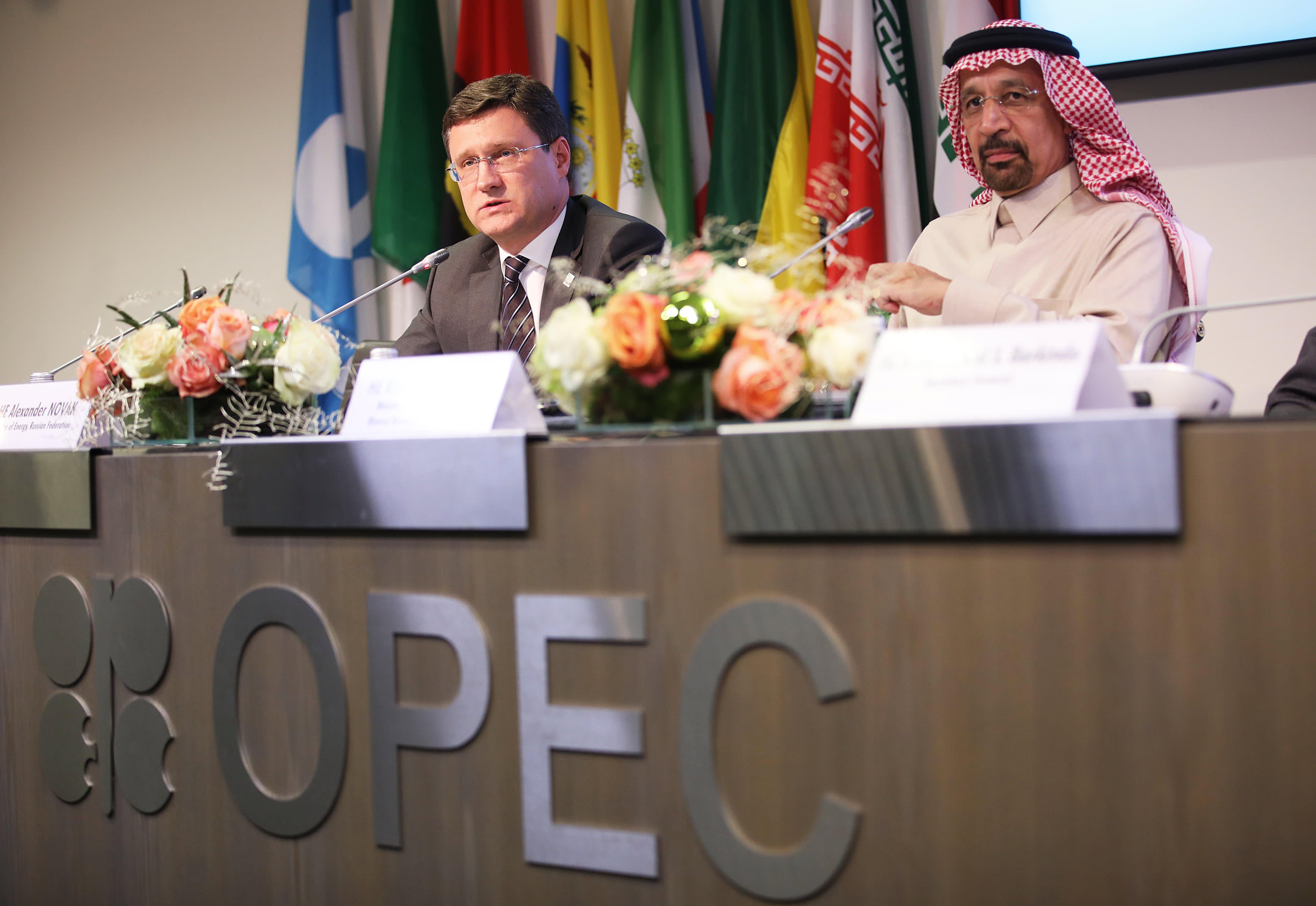
The downtrend in price may even threaten the future of OPEC as a defender of the oil cartel’s interests as members questioned the very rationale for the existence of the organisation. In April 2020, when international oil prices plunged below $20 a barrel following global lockdowns due to the Covid-19 pandemic, the producers’ cartel decided to control output. On April 12, OPEC-plus announced an unprecedented 9.7 million barrel a day output cut to check falling crude oil rates. Despite a rise in demand, the grouping did not restore supplies, which led to a spike in international oil prices.

The Centre may not cut excise duty on petrol and diesel but the transport fuel prices may still come down after a fall in global crude prices due to Organisation of Petroleum Exporting Countries and its allies’ move to raise production. OPEC and its allies have agreed to increase global oil production by 400,000 barrels per day. They are committed to restoring all of the cuts made at the beginning of Covid-19.

Nations with predominantly oil-dominated economies, particularly the Gulf Arab countries, have been found to go to any extent to protect their market shares rather than the common goals of the organisation. It is obvious that the shape of the global oil market is determined by oil monopolies, cartels and oil producing nations colluding to jack up prices artificially but recession fears are enough to bring down crude prices.

“Oil is still struggling to break out from its current recessionary malaise as the market pivots away from inflation to economic despair,” Stephen Innes of SPI Asset Management said in a note. Investors are becoming more concerned. Experts say that if the Biden administration goes to the extent of easing the restrictions on fracking, prices could even fall below $50.

Experts said increased production and lower demand due to new Covid cases will automatically lower the price of crude oil leading to a cut in pump prices of petrol and diesel in the coming days provided there is no duty hike by the government.


Punjab politics hots up over SIT report on sacrilege incidents 

Even though the SIT of the Punjab police in its final report has blamed the Sirsa-based Dera Sacha Sauda head for the 2015 sacrilege cases, the Congress has alleged that AAP government is trying to hush up the sacrilege cases,  reports Rajesh Moudgil

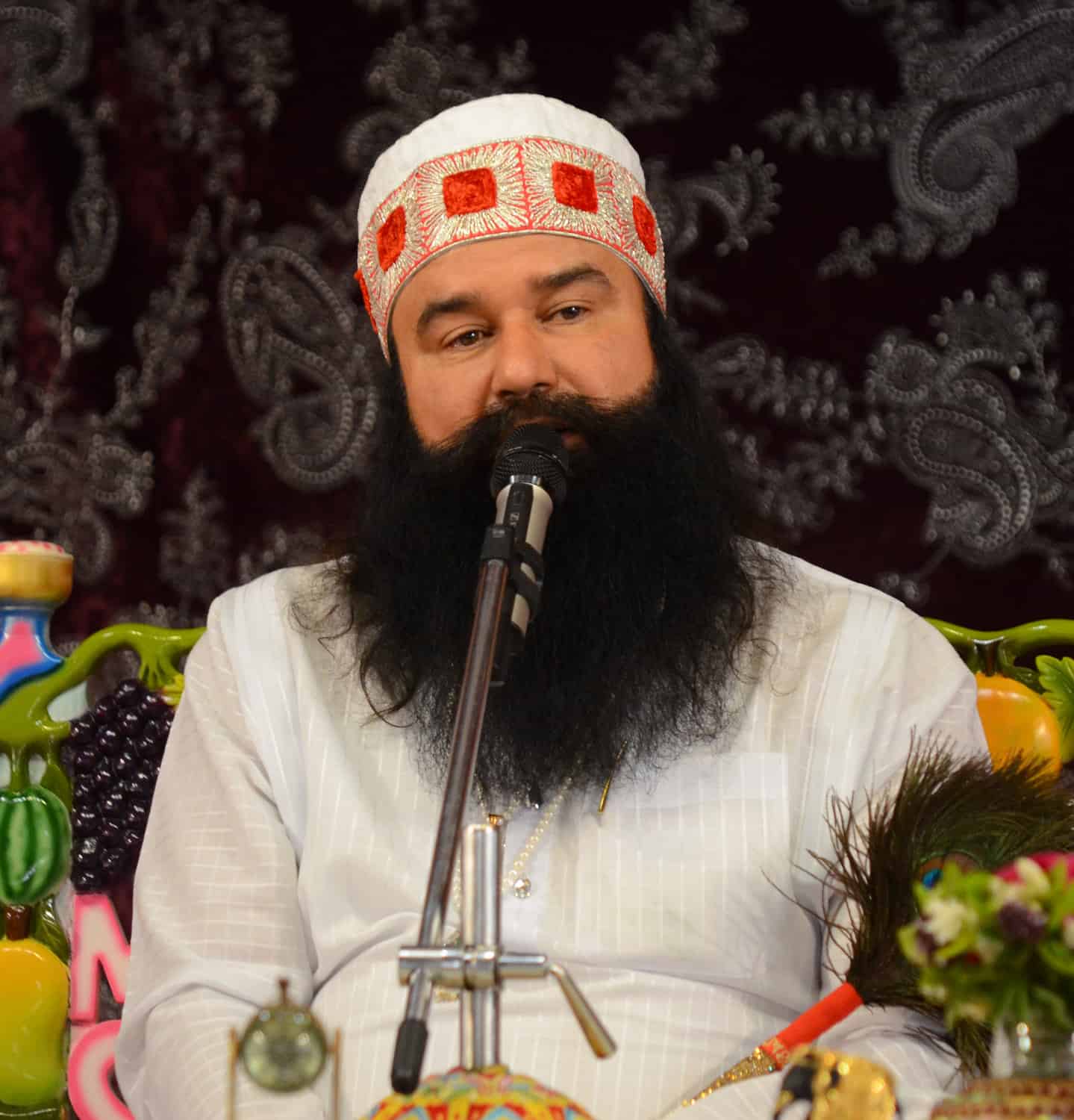
The final report of the special investigation team (SIT) of the Punjab police probing into the three seven years old sacrilege cases has concluded that the crime was committed by the followers of Sirsa-based Dera Sacha Sauda on the instructions of Dera head Gurmeet Ram Rahim as revenge against allegedly insulting remarks against the Dera.

Even as these cases – which took place in 2015 – as well as the incident in which two anti-sacrilege protesters were killed in police firing that year, rocked the state, the demand for the arrests of those responsible for the sacrilege and police firing had also dominated the past two state elections since.

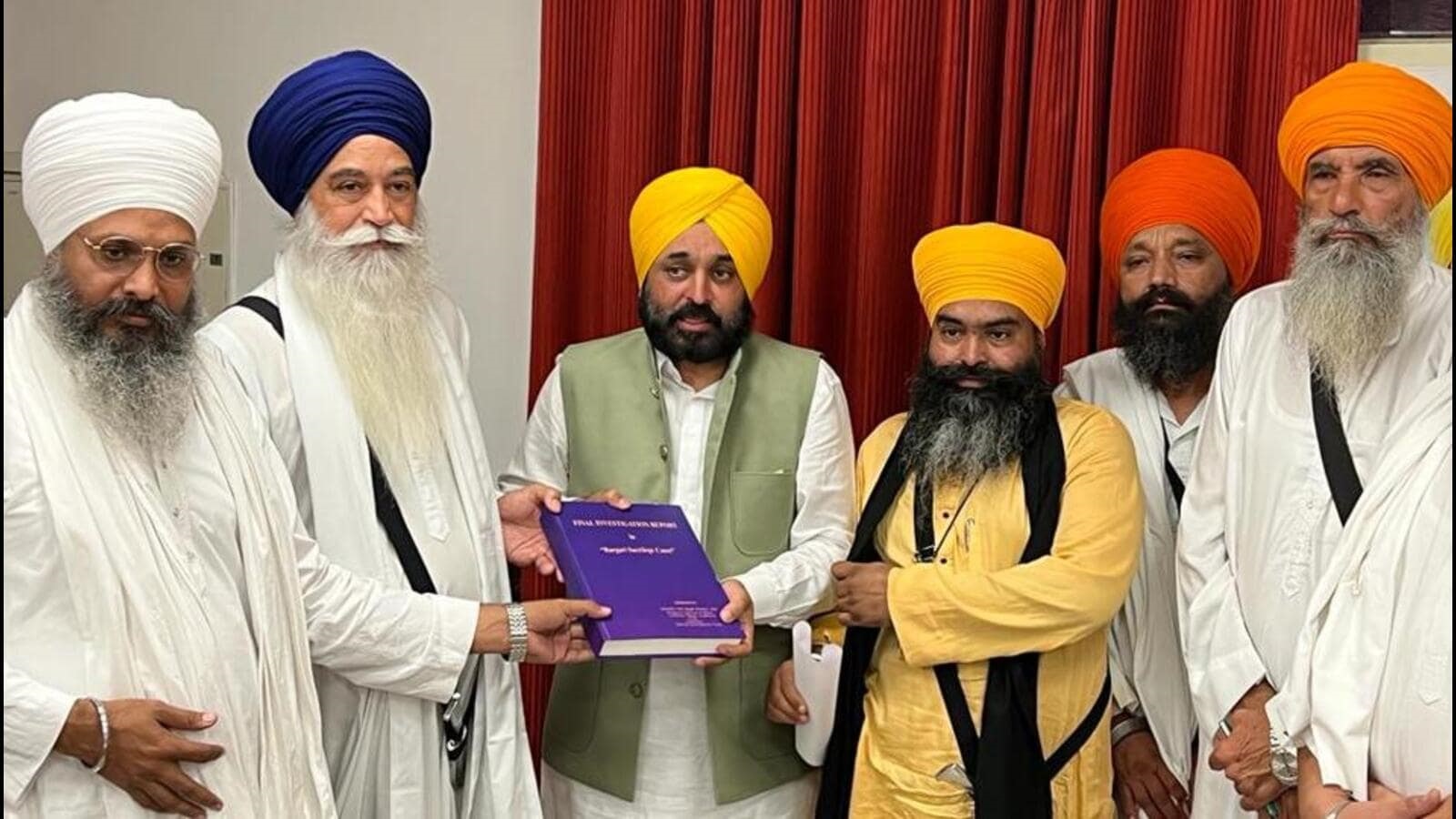
Submitted to the state government in April this year, the SIT report was made public a few days ago by chief minister Bhagwant Mann who handed over its copies to a delegation of Sikh leaders comprising Major Singh Pandori, Chamkaur Singh, Bhai Rupa, Resham Singh Khukhrana and Baldev Singh Joggewala, who had been pursuing the case.

The SIT was constituted on April 4, 2021, on the directions of the Punjab and Haryana High Court and in its final report, it has squarely blamed Sirsa-based Dera Sacha Sauda head Gurmeet Ram Rahim as the conspirator besides naming several of his followers, some of whom are already in jail and three who have been absconding.

The 467-page SIT report also counters several claims made by the Central Bureau of Investigation (CBI) which did not find any evidence of Dera Sacha Sauda’s involvement.

For the record, the first case of sacrilege pertained to the theft of Guru Granth Sahib from Gurdwara Sahib at Burj Jawahar Singhwala on June 1, 2015, while on September 25, two posters containing derogatory remarks against the Sikh religion, Sikh preachers, and Guru Granth Sahib were found pasted outside Dhodha Peer Gate at Burj Jawahar Singhwala. The third incident was reported on October 12, when the pages of Guru Granth Sahib were found strewn outside the Bargari gurdwara as well as in the village streets.

According to the SIT report, the accused, Sukhjinder Singh alias Sunny, Shakti Singh, Baljit Singh, Randeep Singh alias Neela, Ranjit Singh alias Bhola, Nishan Singh, Narinder Sharma and Gurmeet Ram Rahim Singh (undergoing sentence at Sonaria Jail, Rohtak) were involved in the theft incident and later in throwing around the holy pages.

The SIT report also said the prime accused, Mohinder Pal alias Bittu – who was killed in Nabha jail by inmates in 2019 – and his companions were upset due to the insulting remarks against Dera and the non-release of the film ‘MSG-2’ featuring the Dera head.

The SIT head, Surinder Pal Singh Parmar said that the SIT had collected irrefutable material and circumstantial evidence and named 12 accused, including Gurmeet Ram Rahim, and filed charge-sheet against them in these cases. It also reads that all three cases were inter-connected and the crime was committed under a well-planned conspiracy by the accused Dera head.


It is pertinent to note that Sikh outfits and political parties, including the Congress and the AAP had been blaming the Shiromani Akali Dal (SAD) government, the SAD president Sukhbir Badal and former Punjab CM Parkash Singh Badal for inaction in the sacrilege incidents. However, the SIT’s final report has no mention of any political involvement of the then SAD-BJP government or the Badals in its conclusion.

Political charges, counter-charges

However, tearing into the AAP government’s SIT report, the Punjab Congress president Amarinder Singh Raja Warring alleged that the AAP government was trying to hush up the Bargari sacrilege cases. He alleged that the AAP had betrayed all the expectations it had raised among people who voted it to power as it was following the script of the Akali Dal government, which had also tried to hush up the matter.

He went on allege that the way the Akalis had handed over the case to the CBI, apparently to hush it up, as SIT failed to find anything and identify the culprits, same way the AAP had scripted a report that seeks to exonerate the real culprits.

Former deputy chief minister during the previous Congress government, Sukhjinder Singh Randhawa also said that the Congress regime had asked the SIT to probe the political links in sacrilege incidents to reveal who tried to save the Dera. The final report was submitted after the AAP formed the government. It is strange no one among them raised this issue with the SIT that why political links were not probed, he said and asked why chief minister Bhagwant Mann was now silent on the issue.

The SAD leaders have also sought a public apology from the AAP and the Congress for the revelations made by the SIT report.

Akali leaders including Harbhajan Singh Dang, Ranjit Singh Dhillon and Harish Rai Dhanda accused the AAP and the Congress of conspiring against SAD for their political benefit and added that they were also exploring legal options to take action against them. They also alleged that the rival parties were responsible for the entire conspiracy as they only had benefited from the situation.

Dhillon went on to allege that the incidents of sacrilege increased after the AAP came to power in Punjab, including the sacrilege attempt at the Golden Temple, but no investigation has been conducted in that case. The two parties teamed up to defame SAD and they should now tender a public apology, he added.

However, trashing rival parties’ claims, the AAP leader and Rajya Sabha member Raghav Chadha said that the sacrilege incidents occurred during the SAD regime and Congress saved culprits while the AAP government has delivered justice.

Referring to the recent order of a Moga court in which three persons had been sentenced to three-year jail in the first case of sacrilege, Chadha alleged that Akalis allowed it to happen and Congress shielded the guilty while finally, AAP government has made sure that the guilty were put behind jailed.


Neeraj Chopra a huge inspiration for me: Arjun Babuta

Backed by Abhinav Bindra and inspired by his college senior Neeraj Chopra, young shooter Arjun Babuta is looking to “deliver” a strong performance at the World Championship and secure an Olympic quota.

The 23-year-old has played a pivotal role in India’s impressive show at the ongoing ISSF World Cup in Changwon, Korea, having claimed two gold for the country.

“Neeraj Chopra and I studied at the same college in Chandigarh, although he was a batch senior than me. But what he achieved at the Olympic Games in 2020 was a huge motivating factor for athletes like me and he is indeed a huge inspiration,” Arjun said to media

“Sport is very difficult for young athletes who go through the grind every single day. But Neeraj’s historic feat has lifted an entire generation of young athletes, including me, who are hungrier than ever to win something for India in the grandest stage,” he added.

Babuta’s double gold-winning feat at the World Cup will, in all likelihood, earn him a place in the Indian side for the upcoming World Championships in Cairo.

He said that qualifying for the Paris Olympic Games is his biggest “goal in life” right now.

“I was 19 when I missed the Tokyo Olympics qualifying event in 2019. The pain and agony was excruciating, but I practised round-the-clock to ensure that I win medal at the World Cup,” Arjun said.

“The prime focus, right now, is to deliver a top performance at the World Championships and qualify for the Paris Olympics,” he added.

The 23-year-old Punjab man said he grew up hearing stories about Abhinav Bindra’s historic gold medal-winning feat at the 2008 Beijing Olympics, when he became the first Indian to win an individual yellow metal at the Games.

“His achievements moulded me as a shooter. A towering personality like him who changed Indian sports in 2008, taught me so many things about life and sport,” Arjun remarked.

In his formative years, Arjun was trained by the renowned Lt Col JS Dhillon (retd), who coached Bindra, too, as a rookie in 1995.

“Dhillon Sir’s coaching lessons have taken me where I am today. He told me back long back that I can become the next Abhinav Bindra if I perform consistently and also gifted me his shooting equipments,” Arjun said.

Arjun said the inclusion of the legendary Austrian Thomas Farnik as the chief foreign rifle coach was extremely timely, and the former helped him to fine-tune his game in a big way.

“Thomas sir (Farnik) has had a huge positive impact in my performances at this World Cup. His love for the game, the role he plays as a mentor, is simply outstanding,” Arjun said.

“The roles played by Joydeep sir (Karmakar) and Suma (Shirur) have been amazing too,” he said.

Arjun said that while his life has changed as an athlete after winning his first ever gold medals for India, but he would look to continue working hard to realise bigger dreams.

“It feels like a dream but the journey has just begun for me. I want to continue working hard and achieve far bigger dreams to make my country proud,” Arjun said.

“I would like to dedicate this win to my parents back home.

MOST POPULAR

HOT NEWS