The Delhi High Court on Monday rejected a public interest litigation (PIL) seeking to stop the operation of SpiceJet airline for allegedly flying its aircraft in breach of professional and safety obligations.
The court cannot stay the operation of an airline on the basis of a PIL and press reports, a bench headed by Chief Justice Satish Chandra Sharma said while dealing with the petition by lawyer Rahul Bhardwaj.
The bench, also comprising Justice Subramonium Prasad, stated that the law provided a “robust mechanism” for the aviation industry and recorded the DGCA’s stand that it has already initiated action and issued show cause notices in relation to incidents mentioned in the present case.
In the recent past, the petitioner alleged, there have been instances concerning the “landing” of SpiceJet aircrafts, its aircraft taking off without passengers’ baggage and employees not being paid.
The court said the “DGCA is very much working” and there is no reason to grant the relief sought by the petitioner.
“The court cannot stop a particular airline to operate in the country based on averments in a PIL and press clippings,” it said.
Many precious stones have gone missing from the country’s most-loved monument. And there is no clue as to their whereabouts, reveals an investigative report by Tehelka SIT.
“You can shut down the Taj. You can demolish it, if you like. You can also do away with it”. That stinging comment from the Supreme Court on July 11, 2018 had ignited a debate of unusual interest over preserving India’s most-loved and most-visited monument. It was another judge of the Supreme Court who raised yet another red flag. In September 2015, when justice Kurian Joseph visited the Taj Mahal with his family, something caught his eyes: fumes of acrid black smoke coming towards the monument. It emerged from a crematorium, Mokshadham, nestled between the Taj and the Agra Fort. In a letter to the then Chief Justice of India, Justice Joseph sought the intervention of the apex court. Should the crematorium be shifted or should chimneys with wet scrubbers be installed to ensure zero carbon emission? But efforts to shift the cremation site have not worked. [They hadn’t worked even when the Dr. S.Varadarajan committee on atmospheric environmental quality and preservation of the Taj Mahal suggested its removal in 1994]. This is one of the four official burning ghats in Agra. But, it is the most used, with up to 100 bodies burnt every day, each requiring about 300 kg of woods, informs a source.
Lawyer M.C. Mehta’s public interest litigation in the 1980s had resulted in the stringent orders against the Mathura oil refineries for significantly reducing ambient air quality around the Taj. Since then, the Supreme Court has directed action to clean the Taj, declaring 10,400 square kilometers of area the Taj Trapezium Zone [TTZ], closing down or relocating polluting units. Mehta has alleged that the upkeep of Taj is in a shambles. The colour of the marbles has toned down, cracks are appearing, minarets are showing signs of tilting, material are falling off, chandeliers are crashing, CCTVs don’t work, drains around the area are clogged, illegal encroachments, industries and activities are mushrooming in the vicinity, while a dying Yamuna is putting the foundation of the Taj at risk and also promoting invading insects. Pollution is still the biggest problem.
A lot has been written in media on these challenges faced by Taj Mahal. But no media attention has been given to the missing precious and semi-precious stones from the Taj Mahal. Tehelka carried out an investigation to know where the precious and semiprecious stones of the Taj Mahal are going? The investigation is based on several RTIs, which focussed on the missing stones of the Taj Mahal. On viewing the Taj Mahal closely, one finds many marble green leaves missing. In parts, whole segment of semi-precious stones are missing. An official of the Archaeological Survey of India [ASI], responsible for the maintenance of the Taj, on the condition of not naming him said, “Many tourists come and use their keys to take inlay pieces out”. But when asked from where the tourists get the keys, when all pointed elements carried by the tourists are taken away from them at the Taj entry by the security staff, the official failed to comment.G. Kishan ReddyG. Kishan Reddy
Kurian Joseph
It is said that Taj Mahal changes its colour thrice in a day. It looks more white on cloudy days. Not many people would know about the changing colours of the Taj Mahal. According to the ASI and a senior tour guide of Agra, Taj Mahal is made of several colourful precious stones, which is responsible for the monument changing its colour thrice a day. These stones are Neelam, Panna, Ruby, Aqeeq, Moonga and Firoza. According to the experts, the main white marble mausoleum is made of such precious stones. These stones are also found on the other parts of the monument and on the Royal Gate of the Taj Mahal. Experts say such
precious stones are responsible for making the main mausoleum more colourful and beautiful not only in sunlight but also on full moonlight, where people used to gather in a big way to get a glimpse of Taj in full moon light called “Chamki.” However, this has become a history now because the entry to the Taj has been banned now on the full moon light due to security reasons.
The precious stones of the Taj Mahal are missing not only from the Royal Gate but from the other parts of the monument as well. This was revealed in RTI reply. In reply to an RTI application, the ASI has admitted that it has issued a tender for the repair work of the Taj Mahal. As per the two RTI replies, the ASI disclosed that from the year 2015-16 to the year 2018-19, before the Covid lockdown, the agency had spent lakhs of rupees for filling the gaps of the missing precious stones of the Taj Mahal. But when asked about the missing precious stones of the Taj Mahal through RTI, the [ASI] officials replied as follows:
Questions posed in the RTI:
[ 1 ] What ASI does with the precious stones of the Taj Mahal, which comes out from any part of the monument or get broken after falling down on the ground ?
[ 2 ] Where the fallen and broken precious stones of the Taj Mahal are kept by the ASI. And how many precious stones of such kind, fallen from which part of the monument, are with the ASI ?
[ 3 ] How many incidents have occurred in any part of the Taj Mahal, where the precious stones have fallen naturally and broken down. But ASI have not recovered the fallen and broken precious stones from the spot?
[ 4 ] How many incidents have been detected by the ASI at the Taj Mahal indicating that someone has taken inlay pieces out ?
ASI’s replies to RTI posers
[1 ] Broken stones damaged badly are removed permanently. Less damaged stones are kept for re-use.
[ 2 ] We don’t have any records of such stones.
[ 3 ] We don’t have any record of this.
[ 4 ] ASI also doesn’t have any records as to when such precious stones have started coming out and falling down from the mausoleum. ASI also doesn’t have any record of number of missing stones incidents from the Taj Mahal between the year 2011 to 2021.
When asked who does the inlay work at the Taj, the ASI says it doesn’t hire any agency for the repair work, but it does it itself.
When asked through RTI about the amount ASI spent on fixing stones in the gaps left behind by the missing stones of the Taj Mahal from the year 2011 to 2021, the ASI replied that only four times during this period they have undertaken the stone work. The amount spent by the ASI on such work is as follows, said the ASI.
[ 1 ] In 2018-19 Rs 51 lakh worth stone work was done at the Taj Mahal.
[ 2 ] In 2017-18, Rs 42 lakh worth stone work was done at the Taj.
[ 3 ] In 2016-17 Rs 20 lakh worth stone work was undertaken in the monument.
[ 4 ] In 2015-16 also stone work was done, but the expenditure shown in RTI reply was Rs 12141, which looks incomplete after watching the inlay work done at Taj. When countered, the central information officer refused to give any other information apart from the one given in RTI.
Royal Gate most affected
According to the information received through RTI on the missing stones of the Taj Mahal, Royal Gate of the monument is the spot from where maximum number of cases of missing stones were found. According to the first RTI reply in 2015-16, 2016-17, 2017-18, thrice ASI has undertaken the stone repair work on the Royal Gate of the monument, amount of which has been in lakhs. In 2017-18, Rs 42 lakh were spent on the repair work. In 2016-17, Rs 20 lakh worth repair work was done.
And in the year 2015-16, Rs 12141 were spent on the repair work. This figure looks incomplete. According to the people who do inlay work, amount of Rs 12141 is nothing for the inlay work. The labour who do inlay work charges more than that.
Apart from this, in 2018-19, ASI spent Rs 50.92 lakh on the inlay work in the Taj Mahal. Royal Gate is the spot which has reported the maximum number of missing stones cases. This was revealed in an RTI. The ASI has not given any stone missing information from any other part of the Taj Mahal.
The information received through two RTIs from the Agra circle ASI shows that the department is giving wrong information on the amount spent on the inlay work carried out at the Taj Mahal. According to the first RTI, the ASI accepted that in the year 2015-16 to 2021, thrice in the years 2015-16, 2016-17 and 2017-18, inlay work was carried out at the Taj Mahal. But through the second RTI when information was sought from the ASI about the inlay work carried out at the Taj Mahal during the year 2011 to 2021, the ASI gave only one year 2018-19 inlay work information to us. Why ASI is hiding inlay work information? Why in reply to two RTIs, the ASI is giving two different information on inlay work ? These questions can only be best answered by the ASI itself.
Types of stones the Taj is made up of
If we believe the two books “The Taj and its environment” by Maulvi Moinuddin written in 1924 and “The immortal Taj Mahal” by historian R.Nath, written in 1970, the Taj Mahal is made up of 42 precious stones. Maulvi Moinuddin’s book revealed the number of stones and their origin, from where they were brought to built the Taj Mahal. If we believe his book, the names and number of stones and from where they were brought to built the Taj Mahal are as follows:
[ 1 ] Aqeeq– Baghdad– 540
[ 2 ] Firoza– Tibet–670
[ 3 ] Moonga–Indian– 143
[ 4 ] Neelam—Origin unknown — 74
[ 5 ] Jawaharaat—Origin unknown– 42
[ 6 ] Ruby– Badaksaal– 142
[ 7 ] Heera–Panna– 625
[ 8 ] Pukhraj– Origin unknown — 97
[ 9 ] Abri– Gwalior– 427
[ 10 ] Garnet– Ganga– 52
Apart from these stones, one lakh seep were also used in building the Taj Mahal. Stones Sang-e-Moosa was also used in building the monument. But it has been largely missing from the walls of the Taj Mahal.
In reply to an RTI request as to how many incidents of broken and fallen stones have been reported from the Taj Mahal during the year 2011 to 2021, the ASI says it has no such record. On the other hand, a few media reports of 2015 and 2016 have reported five incidents of stones falling from the monument. Out of these, two incidents were reported from the Taj minarets. From these minarets, stone Sang-e-Moosa fell down on the ground. The media reported all these incidents. But according to RTI reply, ASI has no such record of fallen stones of the Taj Mahal. Stones Sang-e-Moosa can be spotted not only in Taj’s minarets but in other part of the monument too. Sang-e-Moosa stone was used to make the Taj walls more beautiful. Like in Taj, in white minarets, Sang-e-Moosa was used to make them more attractive.
Incidents which happened in two years
[ 1 ] In December 2015, stones fell down from the Taj Mahal’s minarets
[ 2 ] In April 2015, stones fell down from the Royal Gate of the Taj.
[ 3 ] In May 2015, a stone fell down from the Sarhindi Begum tomb.
[ 4 ] In June 2015, black stones fell down from the Royal Gate of the Taj.
[ 5 ] In July 2016, stones fell down from the south-west minarets of the Taj.
If experts and media reports are to be believed, Sang-e-Moosa stones often fall down from the Taj minarets. To make Taj minarets more attractive it was made of three stones, including stone Sang-e-Moosa. All Taj minarets are made of white marble. On 12th September 2021, an RTI request was sent to ASI asking information regarding the inlay work done in the minarets after the stones fell down. In the RTI, the information of the inlay work done in the Taj minarets during the year 2011 to 2021 was sought. According to the rule, the applicant should get RTI reply within 30 days. But in this case, the applicant got RTI reply in 38 days. That too, an incorrect one. Information was sought regarding the Taj Mahal’s minarets. But ASI replied about the walls of the Agra fort. When the applicant went for the first appeal. The appeal officer replied that the information applicant sought has been given to him. That meant that even the appeal officer didn’t check whether the answer given to the applicant match with applicants’s RTI question or not.
An ASI official, who served in the Taj Mahal on the condition of not publishing his name told Tehelka, “Whenever any precious stone falls down from the Taj Mahal, the rules say it should be tested first to see whether it is fit for re-use or not. If it is found fit in the test. Then it is re-used at some other place. If found not fit for use, then after some writing formalities it is sent to the Taj museum. If the quantity of unfit stones are more, then the rule says it should be sent to other ASI museum”.
While speaking to Tehelka, senior tour guide and the president of the Guides Association of Agra, Shamshuddin said, “In the making of the Taj Mahal very expensive stones were used. It becomes even more expensive in the present time. They are more than 400 years old. Above all their value is enhanced by the fact that were used in the Taj Mahal. Whether the fallen stone belongs to the Taj Mahal can be judged by the sign left on those stones by the artisans who built Taj Mahal.”
If Shaalu, Inlay worker and a resident of Tajganj Agra is to be believed, for any Inlay work — whether on a building or any decorative item — three artisans are required. One for cutting stones; second for carving stones; and third for fixing that stone in the main building. But the ASI has hired only one employee instead of three for the Inlay work. That too in the year 2000, revealed an RTI. How ASI is getting the inlay work done through one employee can be best answered by only the ASI. Presently, this employee too has been assigned some other job instead of inlay work.
Stones go missing from Fatehpur Sikri too
Fatehpur Sikri is known for sufi saint Hazrat Sheikh Salim Chisti’s Mazaar. Some believed that he was a guru of Mughal emperor Akbar. While entering the main building from Buland Darwaza, one can spot the Mazaar of the Sufi saint. This Mazaar was also made up of precious stones and seep. Attractive paintings can be spotted on the walls of Dargaah. But even from this Dargaah, precious stones are missing. Even the seep found on top of the sufi saint grave are found missing. The number of missing seeps and stones run into thousands.
Tourists coming to Fatehpur Sikri would not have known about the missing colourful stones from the Dargaah. It was only after ASI issued an estimate tender for the repair work at Dargaah, that people came to know about the missing stones from the Dargaah. In this ASI tender estimate, it was clearly stated which work to do and which stone is to be used. This estimate report mentioned the colourful stones. The report carries the information regarding the stones for inlay work and what quantity of stone is required.
The Stones demanded by ASI.
[ 1 ] 196 yellow tiger marble
[ 2 ] 21 yellow star marble
[ 3 ] 161 black star marble
[ 4 ] 213 black half star marble
[ 5 ] 318 black marble
[ 6 ] 89 tiger marble, half singara
[ 7 ] 32 yellow half star marble
[ 8 ] 20051 seep.
Note: According to the estimate report the cost of all colourful stones are between Rs 600 per piece to Rs 5000 per piece.
According to the RTI reply, ASI in the year 2019-20 and 2020-21 spent Rs 50 lakh for the repair work in Fatehpur Sikri Dargaah. They spent Rs 50 lakh on the repair work of Dargaah roof. Broken and weak stones were replaced by the fresh ones. Painting and inlay works were also done. Despite this, the seep from the top of Dargaah’s grave and pillar are missing. And hardly any seep is left on the two pillars. Colourful paintings from the walls are in a bad shape. Sources say that in Dargaah, Rs 70 lakh were spent on the repair work, and not Rs 50 lakh as told by the ASI. In Taj Mahal inlay work case also, the ASI gave two different replies in two different RTIs.
When Pune-based Trust left in a huff
After watching the condition of Fatehpur Sikri Dargaah, the Pune–based Uttara Devi Trust sent a proposal to ASI for its repair, for which they were willing to pay. Just after the paperwork between the trust and ASI was completed, the trust started releasing the fund. If sources are to be believed, the trust offered to spend Rs 1 crore on the repair work of Dargaah. But RTI revealed that so far only Rs 50 lakh worth work was done in Dargaah. Sources say that the trust has already spent Rs 70 lakh on the Dargaah’s repair. But dissatisfied with the working style, the trust withdrew the offer and left Agra after spending Rs 50 or 70 lakh, whichever figure is correct, on the Dargaah repair. When contacted, the Uttara Devi Trust official refused to comment saying, “We have spent money we wanted to spend on Dargaah repair.” He refused to comment further on this issue. But some trust members are still residing in Fatehpur Sikri feeding 550 poor persons daily.
When contacted for his version on the issue of missing stones of Taj Mahal, R.K. Patel, the superintendent of ASI, Agra circle, says “Not only in Taj Mahal, but in all the monument where inlay work has been done, we try to re-use the fallen stones. Sometimes, we get complaint of stones getting cracks after they fall down from the main monument. Sometimes a substance used for fixing the stones in the walls releases the stone. In that case we try to fix that stone again”. “If sometime the stone is not in a condition of re-use, then we use another piece at that place. But number of such stones is less”. But when asked repeatedly about the stones which are left behind, Patel gave no direct answer but instead said, “What we will do with any material, it all depends on the condition. For that we use our experience too, which thing to use where, and lots of methodology is involved in it. No one or two methods are involved in this”. “What we do with the fallen out stones, we have already replied that in RTI,” adds Patel. But in reality no such reply has been given in the RTI. The ASI has even denied keeping record of such fallen stones of the Taj Mahal in the RTI. In the end, Patel invited us to his office for answering all our questions.
ASI boss’s take on the issue
When contacted for his version on the missing stones of the Taj Mahal, ASI director of conservation and public relation officer [PRO] Vasant Kumar Swarnkar said, “ Fallen stones are preserved in various ways.
Fallen stones of the monument which are not fit for re-use are sent to ASI museum. Sometimes they are sent to ASI stone testing lab. Sometimes these stones are sent to some universities, colleges and institutes for research purpose of the students”.
Nobel laureate Rabindranath Tagore reportedly described Taj Mahal “a teardrop on the cheek of time” that has for over four centuries, stood as a masterpiece of architecture inspired by love. Of late, concerns have been expressed over its upkeep and official apathy. A report by the IIT Kanpur submitted to the CPCB found “The volume of PM 2.5 particles in the air is rising due to the burning of coal as the filter papers placed at the Taj Mahal for these investigations showed burned particles and ash of plastic, paper and solid waste. The Supreme Court had ordered a moratorium on the expansion of industrial units in cities like Mathura and Vrindavan after “acid rains” were noticed in Taj’s vicinity. Taking to task the authorities for the “sheer apathy of the officials”, the Apex Court drew a parallel between the Taj Mahal and the Eiffel Tower of Paris to say that the mausoleum was perhaps more beautiful but “Eiffel Tower, which looks like a TV tower, gets 80 million visitors every year, eight times more than what Taj Mahal attracts”.
The Tehelka Cover Story in this issue is about the missing precious stones of Taj Mahal. Unflinching credibility and truth have been at the core of Tehelka journalism and the story relies on information gathered under the Right to Information Act. The RTI reply confirms that precious stones of the Taj Mahal are missing not only from the Royal gate but from the other parts of the monument. The RTI reply says that broken stones damaged badly are removed permanently. However, about the number of missing stones, the RTI reply by Archaeological Survey of India says, “We don’t have any records of such stones”. The ASI also does not have any records of the number of missing stones incidents from the Taj Mahal between the year 2011 to 2021.
It is a well-known fact that the Mughals had an insatiable desire for gems, precious metals, and decorative arts. Information reveals that as many as 28 kinds of rare stones were used in the inlay work in the Taj Mahal. There has been a question mark over the missing stones and diamonds inlaid in the cenotaphs and precious stones sourced from Rajasthan, Punjab, Tibet, China, Sri Lanka, Arabia and Afghanistan. Visitors find that Taj Mahal changes its colour thrice in a day because of these colourful stones.
Tehelka story tries to answer some unanswered questions besides expressing turning down of colour of marble, cracks, minarets showing sign of tilting, material falling off, chandeliers crashing, drains around the area getting clogged, illegal encroachments and industries mushrooming in the region while a dying Yamuna putting the foundation of the Taj at risk and also promoting invading insects. It is high time for the government to come with a vision document for the Taj Mahal!
This is not about Sharma, Manimekalai or Moitra; neither is it about the BJP, TMC or any other political party. It is about today’s India, losing its secular identity with faiths crossing paths.
Maqbool Fida Husain, the celebrated artist, who spent his sunset years away from his home in India, liberally used the freedom of expression tool, to bring alive the gods on canvas. Except there were only Hindu deities that were on his radar. Worse still, he painted them in the nude: Goddess Saraswati in black and white and Parvati as Aparn, or without leaves among others.
Hell broke loose when the barefoot painter dared to paint India, inflamed in red. Once again in the nude, this was among Husain’s most controversial works: a weeping woman portrayed as India, titled Bharat Mata.
For record, Husain claimed that he had never given that title, even as right-wing organizations like VHP and RSS were baying for his blood. There was a reward on his head and he was forced into exile in 2006.
Till his death in the summer of 2011, Husain longed to return to India even if it was, to quote his friend “for half an hour for a cup of chai ”. He never could: either for his khus chai at the Irani café in Mumbai or the jalebi at the Cricket Club.
During one of his conversations, Husain had reportedly spoken about the age-old tradition of painting and sculpting gods and goddesses. His argument: Hindus were tolerant enough to understand the art.
“Why don’t you paint Islamic history” he was once asked by some Muslims from Hyderabad: “Do you” he had then shot back, “have the tolerance that Hindus have?”.
Irrespective, Husain toyed with Hindu gods and goddesses despite protests and legal cases being slapped against him. A Hindu organization went as far as calling him “anti-national and perverse artist”.
One shudders to think how things would have panned out were Husain alive today?
For starters, his Muslim identity would have come handy for the rabid. They would have demanded his head for irreverence, blasphemy and sacrilege, conveniently forgetting that Husain is perhaps the only artist to have painted the Ramayana and Mahabharata in over a hundred canvases.
Pitch the past with the present: a Nupur Sharma or a Mahua Moitra belittling the gods. They may not have a brush in hand but they sure are wielding a hate weapon which is irreparably damaging the social fabric of what once was secular India.
In the present context, secularism is a thing of the past. However, over-exploited and misused the term may have been, it did act as an adhesive to a country called India: a country that is fast becoming Hindustan. The fact that this sentiment draws its strength from the powers that rule, gives it legitimacy and validity.
If BJP’s Sharma is in the line of fire for insulting the Prophet, Mahua Moitra of TMC, has supported a smoking Kali. Both Gods from different genres: Islam and Hinduism respectively.
Nupur Sharma raised a storm with what has popularly become to be known as the Prophet remark.
It started on a television debate and spilled to the streets.
Till the storm erupted , Sharma was a familiar face on Indian news channels, vociferously defending the BJP as its Party Spokesperson.
In May this year, Sharma made adverse remarks against Prophet Muhammad which sparked a massive outrage, both nationally and globally. She had apparently lost her cool when another panelist, a Muslim, had mocked Hindu God Shiva.
The clip went viral and Sharma’s head was on the chopping block.
If Muslims in India took to the streets, the Arab world slammed India over the comments. Some went as far as pulling out Indian products from their supermarkets.
Sharma’s suspension from the Party did little to placate Islamic nations. Or the fact that she withdrew her remarks unconditionally.
On its part, the BJP distanced itself from the comments stating that these were “views of fringe elements”.
The definitions were decidedly skewed because to disown an official spokesperson and dub her as fringe is too much to digest.
Back at home, riots broke out across several parts of India. Protestors hit the streets and incidents of vandalism, stone-pelting and police vehicles being set on fire, were reported from different states.
Apart from Jharkhand, West Bengal, Bihar and Uttar Pradesh, incidents of violence were reported from the national capital of Delhi. If Jama Masjid was the hub in Delhi, in Maharashtra, women led the protests.
When Vishwa Hindu Parishad (VHP) jumped to Sharma’s defence stating that the matter would be decided by the Court, little did it know that it was walking on fire.
It had not bargained for the caustic observations by the apex Court wherein it stated that Sharma’s remarks were made for “cheap publicity, a political agenda or for some nefarious activities”.
Castigating her, the Court observed that Sharma had a loose tongue; had set the entire country on fire, threatened the security of the nation and is single handedly responsible for what is happening across the country.
Harsh words for someone seeking justice from the same Courts that chose to damn her.
If the Court’s observations put Sharma in the dock, there was also an outpouring of support for her.
As many as 117 retired judges and civil servants shot off a letter, dubbing the comments to be “unprecedented”. The “Lakshman Rekha”, they added, “had been surpassed”.
Till the Courts stepped in, Sharma was the villain of the piece. There were only a handful who shed tears, pointing a finger at the BJP for making her a sacrificial goat.
Politicians, too, were quick to jump in.
Congress leader Rahul Gandhi squarely blamed Prime Minister Narendra Modi, Union Home Minister Amit Shah and company for vitiating the atmosphere in the country and creating an environment of “anger and hatred”.
Sitaram Yechury of CPI (M) said it was an “indictment of the divisiveness BJP promotes and the hate its leaders and trolls consistently fan”.
Meanwhile, Sharma fought a lone battle with rabble rousers demanding her head.
However, within the BJP, there were misgivings about Sharma being made a scapegoat.
Apart from the BJP succumbing to international pressure and acting against one of its own, there was a worry about the messaging.
This has two dimensions: on the one hand, it was about the morale of the rank and file. The Party cracking the whip on Sharma for doing her job has not gone down well in some sections.
Worse still, it has shown the BJP as a Party willing to compromise when the going gets tough. That the BJP succumbed under international pressure is a given. The way things have panned out, it is unlikely that the second rung will willingly stick its neck out.
The other dimension, and perhaps the more important one, is political.
he BJP bending over backwards to be at someone’s bidding, read Muslims, may not augur well for the saffron Party.
Even if backlash is a strong word to use in this context, BJP’s core vote bank, namely the Hindus, are likely to feel let down by a Party that they have backed to the hilt. At least till now. Of course with the Party being on a high, these are minor storms that it can well battle.
The dust has yet to settle on the Prophet versus Shiva controversy, as it were, when another demon raised its head. And this time around it is goddess Kali, known for slaying the devil.
It all started with a movie poster shared by filmmaker Leena Manimekalai wherein a woman depicted as goddess Kali is seen smoking a cigarette. She is also shown wielding the trident and a sickle as well as carrying the LGBTQ+ community flag: “My Kaali is queer. She is a free spirit. She spits at the patriarchy”, announced the controversial filmmaker.
A section of the Hindu community was up in arms seeking legal action against Toronto based, Manimekalai.
A political dimension to the entire controversy was given by Mahua Moitra, an MP and a vocal member of the Trinamool Congress.
Moitra stirred the hornet’s nest by saying that Kaali is a “meat eating and alcohol accepting goddess”.
Moitra is partially right because goddess Kaali’s worship necessitates bali or sacrifice. How the smoking bit fits in, is anyone’s guess.
Quite predictably, the TMC distanced itself from Moitra’s remarks stating that whatever Moitra had said was in her personal capacity.
Even while there was a clamour for her resignation, the Party chose not to act against Moitra. Neither did it dub her an outcast or to use BJP’s terminology, a fringe element.
If anything, Party chief and West Bengal Chief Minister Mamata Banerjee said that mistakes made by people can be rectified.
But this is not to suggest that Moitra is having it easy. She is facing multiple FIRs for her comments.
One reason for the TMC not doing a Nupur Sharma on Moitra, could, perhaps, be that the pressure was not as intense.
Sharma was on slippery ground because being a Hindu, she had taken on a Muslim god.
On the other hand, Moitra, a Hindu herself, was attacking one of her own. This, in one sense, made her crime comparatively minor. More importantly, there was no ground for communal tension.
Unlike Sharma who immediately apologized, Moitra remains defiant. Firebrand as she is, this probably is in her DNA.
But this is not about Sharma, Manimekalai or Moitra; neither is it about the BJP, TMC or any other political party. This is also not about the Party in power pitched against ones that are not; or one community demanding the head of another. Neither is it a test of anyone’s endurance.
It is much worse. It is about a nation that seems to be fast losing its sanity. It is about fanatics creating a deep and almost irreparable divide. It is about today’s India, losing its secular identity and fast becoming a Hindustan where faiths cross paths and Gods are mocked at be it the Prophet, Shiva or Kaali.
Post the “Government of India Act 1935”, the then British-Indian government had appointed distinguished men and women of high calibre, and unimpeachable integrity as the Governors of the Indian provinces. But there has since been much diminution in the calibre of the Governors who subsequently held the exalted position, writes Raj Kanwar
Eminent women such as Sarojini Naidu, Vijaya Lakshmi Pandit and Padmaja Naidu had performed their gubernatorial duties with much dignity and poise. Post Independence, great men like KM Munshi, Sir HP Mody, VV Giri, Sir Girja Shankar Bajpai, Dharam Vira, Govind Narain and their ilk walked like Colossus in their respective Governor Houses.
But alas there has since been much diminution in the calibre of the Governors who subsequently held the exalted position or are currently occupying Raj Bhawans in the capitals of various states.
Who is then ‘qualified’ to become a state Governor? “A citizen of India who is at least 35 years old,” says the Constitution. It doesn’t lay down any qualifications as to the education or experience. By this yardstick, almost every third Indian is constitutionally eligible to be appointed a Governor. As far as I can recall, no one below the age of 60 or so has ever been made a state Governor. Ironically, this relatively young age of 60 is intended for those bureaucrats who had managed to earn such a highly prized sinecure for the “services rendered” in the course of their respective careers. The politician, who is past his or her ‘use-by date’, too is a favorite for the tenancy of a Raj Bhawan. Quite often, retired army generals or their counterparts from Navy or Air Force also got a look in and given the gubernatorial assignment.
Axe falls on RSS-backed Governors
The controversy relating to the qualifications of a Governor had taken the centre stage in May 2004 when the Manmohan Singh government sacked four Governors namely, Vishnu Kant Shastri (Uttar Pradesh), Kailashpati Mishra (Gujarat), Babu Parmanand (Haryana) and Kidarnath Sahni (Goa). Incidentally, all the sacked Governors were hardcore RSS pracharaks, and had been appointed by the previous National Democratic Alliance (NDA) government headed by Atal Bihari Vajpayee. Their replacements were largely chosen from among those Congressmen who had lost in the elections held earlier.
The former Home Minister Buta Singh was made the Governor of Bihar while R.L. Bhatia became the Kerala Governor. While Balram Jakhar, a former Speaker of the Lok Sabha, was appointed as the Governor of Madhya Pradesh. B.L. Joshi, a former police officer, was consecutively made Governor of Uttarakhand and Uttar Pradesh while the chartered accountant and freedom fighter Rameshwar Thakur was appointed as the Governor of Odhissa. Likewise, Nawal Kishore Sharma who too was a ‘lost warrior’ was made the Governor of Gujarat.
Choice on whims and fancies of the rulers
The choice of the new Governors was purely on the whims and fancies of the then powers that be. More often, some of the choices came as a surprise, but a little digging showed a ‘godfather’ lurked somewhere in the background. Fortuitously, the choice of the Governors in the first two decades after 1947 had broadly fallen on eminent public men and women. It needs to be noted that the first UP Governor was no less a person than Sarojini Naidu, famously known as the ‘Nightingale of India’. Unfortunately, she died in harness in 1949. Other equally eminent women who then adorned the gubernatorial offices were Vijaya Lakshmi Pandit (Maharashtra), Padmaja, Sarojini Naidu’s daughter (West Bengal), and Sharda Mukherjee (Gujarat), wife of Air Marshal Subroto Mukherjee.
In the next round of women Governors, Ram Dulari Sinha (Kerala), Rajendra Kumari Bajpai (Puducherry), Sheila Kaul (Himachal Pradesh), Rama Devi (both Himachal Pradesh and Karnataka), Pratibha Patil (Rajasthan) and Kamla Beniwal (Gujarat) were the Congress leaders of lesser prominence who then needed to be rehabilitated. They neither distinguished nor disgraced themselves and quietly demitted their offices when their terms ended. Sarla Grewal née Khanna was perhaps the first woman civil servant to have been made a Governor. She was in fact the second woman in the country to have joined the IAS in 1952 and had retired as the Cabinet Secretary. I had known her briefly when she was the deputy commissioner in Shimla. The appointment of VS Rama Devi as the Governor of Himachal Pradesh in 1997 too had attracted unseemly attention since earlier she had held, albeit briefly, the office of the Chief Election Commissioner of India.
Even, 10 years before India became independent, Vijaya Lakshmi Pandit had emerged as an articulate politician, and became the first woman to have been twice made a minister in the United Provinces (UP). She was also elected in 1946 to the Constituent Assembly. Following India’s independence in 1947, Pandit entered the diplomatic service and became India’s Ambassador to the Soviet Union; she had remained in that post for two years until 1949. Her next assignment was as India’s Ambassador to the United States from 1949 to 1951. From 1955 to 1961, Pandit occupied many important diplomatic posts including that of India’s High Commissioner to the United Kingdom. Earlier in October 1946, she had become the first woman to head a delegation to the United Nations General Assembly. And then seven years later in 1953, she earned the unique distinction of becoming the first woman President of the UN General Assembly.
Gradual Erosion
Unfortunately, there had been gradual erosion in the ‘qualifications’ of woman governors after the first two hoary decades. Imagine the likes of the lucky Pratibha Patil, who later rose on to become even the President of India. She did not distinguish herself as a Governor. The less said the better about her performance as the President. Kamla Beniwal was in the eye of storm in the Rs. 1000-crore Jaipur Development Authority land scam. Fortuitously, Vijaya Lakshmi Pandit and Margaret Alva perhaps were the only women Governors who had bestowed much dignity and grace upon their offices.
The choice and the “qualifications” of the Governors of late have become somewhat questionable since those appointments are not strictly made on merits; the only criterion is the “loyalty and the services rendered” by a favourite, and the need to reward and rehabilitate him or her. Even though the office of Governor, by and large, is symbolic, yet its importance simply cannot be sidelined. Governors have to possess high educational qualifications, and innate charm and grace; they also must be men and women of unimpeachable background.
Highly educated at helm
Those earlier Governors were refined and highly educated men of great distinction. Consider stalwarts like Dr. KM Munshi, Sir HP Mody, VV Giri who had acquitted themselves with much grace and dignity during their respective tenures as the Governor of UP. Dr. Munshi was the profoundest of them all, and as the ex-officio Chancellor of the universities in the state, he had organized the first “Inter-University Chancellor’s Camp” in June 1953 at which outstanding students from the various universities in the state were invited to spend a fortnight with him at Raj Bhawan in Nainital.
Some other notable Governors in those early years were eminent civil servants like Sir Girja Shankar Bajpai, Dharam Vira and Govind Narain. Additionally, many outstanding leaders such as MM Pakwasa, Sri Prakasa, Raja Maharaj Singh, Pattabhi Sitaramayya, Bhagwat Dayal Sharma, Kailash Nath Katju, Asaf Ali, Sadiq Ali, Shankar Dayal Sharma, Bhim Sain Sachar et al were also made Governors. Other equally well known Governors were Gurmukh Nihal Singh, Sampurnanand, Sardar Hukam Singh, Balram Jakhar and some more of similar calibre.
The appointment which raised hackles
THE appointment of Ashwani Kumar, a former CBI director, as Governor of Nagaland in March 2013 was then described by many critics as “unfortunate and improper”. Almost all the opposition parties had then accused CBI of being “a handmaiden and ‘B’ team of the government”. Thus the choice of Ashwani Kumar fell flat on the yardstick of “propriety”.
And now the Modi era
The great success of Bharatiya Janata Party under the leadership of Narendra Modi in 2014 general elections had generated an exciting sense of euphoria among the BJP leaders and the cadre. Some of the more ambitious among them started angling for gubernatorial offices. The then Governors appointed by the outgoing UPA government were indirectly told to resign. Five of them: BL Joshi (Uttar Pradesh), MK Narayanan (West Bengal), Shekhar Dutt (Chhattisgarh), Ashwani Kumar (Nagaland) and BV Wanchoo (Goa) resigned on their own accord. Two of them, namely HR Bhardwarj (Karnataka) and Devanand Konwar (Tripura) had retired a month before, while Lt. Governor of Puducherry Virendra Kataria, who must have dilly-dallied a bit, was shown the door by the government.
Those vacancies were promptly filled up by eager beavers and go-getters. Kalyan Singh, who was earlier the chief minister of Uttar Pradesh, was appointed the Governor of Rajasthan, and Mridula Sinha, who was at one time the president of BJP Mahila Morcha, got Goa. Likewise, Vajubhai Rudabhai Vala, once the Speaker of the Gujarat Assembly, and Vidyasagar Rao, who had served as a Union minister of State in the Ministry of Home Affairs in Atal Bihari Vajpayee government, were respectively made Governors of Karnataka and Maharashtra.
The new State of Uttarakhand
The new state of Uttarakhand was fortunate to have had a veteran politician Surjit Singh Barnala, as its first Governor on 9 November 2000; he was formerly the chief minister of the Punjab. His tenure in the state had just lasted over two years when he was transferred to Chennai as the Governor of Tamil Nadu where he spent nearly seven years. Barnala was succeeded by Sudarshan Agarwal, who was the secretary general of the Rajya Sabha for nearly 12 years. Agarwal’s tenure of less than five years was eventful in many ways. He will, however, be remembered for his contribution in the field of education and health. His Him Jyoti Boarding School that provides free education to the poor girls from the hills is a living testimony to his tenure.
A retired police officer BL Joshi then took over on 29 October 2007 as the third Governor of this young state. He was in Dehra Dun barely for two years before he was transferred to Uttar Pradesh as the Governor. Incidentally, he and I became good friends, and that friendship even continued when he moved to Lucknow’s Raj Bhawan. Post-retirement, Joshi returned to his home state Rajasthan, but alas did not live long to enjoy his retired life.
A distinguished leader in her own right, Margaret Alva had become the state’s fourth Governor in August 2009. She had been both a prominent Congress leader and distinguished Parliamentarian for 30 long years, and conducted her affairs with great dignity and poise, and made many friends including this writer. Her tenure lasted less than three years before she retired.
A lacklustre tenure
Aziz Qureshi, a former politician from Madhya Pradesh, became Uttarakhand’s fifth Governor on 15 May 2012. His lacklustre tenure of fewer than three years had become controversial in a different sense. Following the installation of the Narendra Modi government in May 2014, Qureshi had gone to the Supreme Court alleging that the Home secretary Anil Goswami had asked him to resign from the post or face removal by the Centre. That claim by Qureshi was vehemently denied by the Union Home minister Rajnath Singh adding that “there was no move to remove him since he held a constitutional post at the pleasure of the President.”
Dr. Paul’s term was unique
There was a good deal of relief in official and political circles when Qureshi’s controversial tenure ended on 8 January 2015 with the appointment of Dr. Krishan Kant Paul as Uttarakhand’s sixth Governor. Dr. Paul’s tenancy at Raj Bhawan was very much like a summer shower on a parched land. An officer of the Indian Police Service belonging to 1970 batch of AGMUT cadre, Dr. Paul had spent much of his police career in Delhi, the Andaman & Nicobar Islands, and the beautiful hills of the Northeast. During his 37-year long and distinguished career, he was involved in the investigation of several sensitive national and international cases that included the assassination of Indira Gandhi, and the Cricket match fixing controversy.
His tenure as the Governor was unique in more ways than one. At my suggestion, he organized at Raj Bhawan monthly get-togethers of well known journalists, noted authors like Ruskin Bond, Stephen Alter, Jaskiran Chopra, Satish Sharma et al that were lapped up by the literati. The Independence Day, the Uttarakhand Day and the Republic Day events on the expansive grounds of Raj Bhawan that were largely attended by prominent citizens including senior civil and military officials were among the most looked forward to functions of his tenure. He also occasionally invited distinguished writers, scientists and important officials at “Sit-Down” dinners and lunches.
Incidentally, his wife Omita too was an accomplished civil servant in her own right. An officer of the Indian Information Service, she had been associated in various capacities with President Pranab Mukherjee, finally retiring as his Secretary. She and Dr. Paul were classmates from the undergraduate level till they both were able to secure their respective Master’s degrees in Chemistry; and happily it was the personal chemistry between these two that caused them to tie the marital knot on 9 May 1970.
A controversial development
The otherwise smooth tenure of Dr. Paul suddenly turned controversial on 18 March 2016 when nine rebel Congress MLAs together with 27 BJP legislators met him and sought the dismissal of the then Congress government headed by chief minister Harish Rawat. But the incumbent chief minister who met him the following day insisted that he enjoyed overall majority in the 70-seat Assembly. Dr. Paul then asked him to prove his majority by 28 March.
Both the Congress and the BJP separately met President Pranab Mukherjee, and sought his intervention in resolving the political crisis in the state. The BJP delegation requested the President to get the floor test advanced from 28 March to 18 March. The Party also asked the President to direct the Governor to immediately dismiss the Rawat government. But a Congress delegation, led by Ghulam Nabi Azad strongly countered the BJP’s contention. Three developments then occurred. (i) the day before the Rawat government was to face the floor test, President’s Rule was imposed in the state, and the Assembly placed under ‘suspended animation’, (ii) a Division Bench of the Uttarakhand High Court quashed the imposition of the President’s Rule, and ordered a floor test on April 29, and (iii) the floor test was accordingly held and the results put in a sealed cover to be submitted to the Supreme Court. However, the Congress had claimed a victory, and BJP conceded defeat in the floor test.
An uneventful tenure
Baby Rani Maurya was state’s seventh Governor. After the highly acclaimed tenure of Dr. Paul, her appointment to this gubernatorial post was something of an anti-climax. Ironically, her elevation came as a big surprise even to her friends, kin and BJP cadre in Agra. She was the Mayor of Agra from 1995 to 2000. Later in 2007, she had contested elections to the state Assembly as a BJP candidate but lost. Consequently, she was made one of the secretaries of the State BJP. Incidentally, she was the treasurer of Scheduled Caste Morcha when Ramnath Kovind was its President. Thus it was her proximity to Kovind that came handy when he became India’s President. And that possibly explains her appointment as Uttarakhand’s Governor. Her tenure, to say the least, was uneventful; she had dispensed with all those public get-togethers at Raj Bhawan on Republic and Independence Days at which a cross section of prominent citizens and officials were invited. By and large, she remained a RSS/BJP karyakarta, and perhaps flocked only with “birds of the saffron feather”.
However, she resigned on 8 September 2021 for no obvious rhyme or reason; she had by then completed only two of her five-year term as the Governor. Later in the UP state general elections, she was elected as an MLA hoping to be made a minister with an important portfolio to boot. But alas her dream remained just a dream. From the exalted stature of the Governor of a state, she is today just one of the 403 MLAs in UP. What a fall in political fortune for “our Baby Rani”.
Army General takes charge
Thus the appointment of Lt. Gen. Gurmit Singh, PVSM, UYSM, AVSM, VSM as the eighth Governor of the State on 9 September 2021 came as a big relief. A much decorated officer, Gen. Singh had superannuated from the Army on 31 January 2016. During his nearly four decades of service, he had held the prestigious appointments of Adjutant General and Corps Commander of Strategic XV Corps that overlooks the Line of Control in Kashmir. As the Additional Director General of Military Operations, he had also handled China’s operational and military-strategic issues. Additionally, Gen. Singh had represented the Indian Army at the numerous talks with China in respect of the disputed border cases. In the course of his distinguished military career, Gen. Singh has had the opportunity of twice visiting Pakistan, as also Myanmar.
Just within 10 months of his tenure as the State’s eighth Governor, Gen. Singh has gained much popularity particularly among his co-religionists and Punjabi brethren. He is equally popular both among the elite and the hoi polloi too. Incidentally, I was among the first few Dehra Dun residents who have had the unique privilege of meeting Gen. Singh when I presented him my two Books. That was on 21 September last year. In his very first letter expressing his pleasure at meeting me, he had written, “Your wisdom, depth and intellect are deeply endearing. It would be a pleasure interacting with you in the coming times.” He had also generously sent me special birthday greetings together with a cake that was specially delivered at my residence on 8th October morning by a constable from Hathibarkala Police Post. I was then simply overwhelmed by his magnanimity.
Unfortunately and inexplicably, a sudden coldness seems to have now descended on the Raj Bhawan vis-à-vis poor me. For the past few weeks, my mails and phone calls to the Governor himself and his ADCs have remained unanswered. Once a cherished guest, I seem to have all of a sudden become a persona non grata at the Raj Bhawan. All of this saddens me much.
Army Generals as Governors
Gen Singh however was not the first Army general to have been made a Governor. The successive governments in India were generally inclined to select retired Army generals as the State Governors. It was perhaps more a matter of convenience than strategy. Or even both as in the case of Northeastern and other strategic states. Hence, the appointment of Lt. Gen. Bakshi Krishan Nath Chhibber as the first Governor of Punjab in 1994 did not come as a surprise. He had remained in office for five years. Likewise, Lt. Gen. J.F.R. Jacob was successively the Governor of two states; Goa’s Governor in 1998 just for 18 months, and then the Governor of Punjab for nearly three years and a half from November 1999 to May 2003.
Another general, Lt. Gen. Krishna Mohan Seth was appointed as the Governor of the strategic state of Tripura in June 2000; he remained in that position until May 2003. He was also the Governor of Chhattisgarh — the second Governor of the new state — from June 2003 to January 2007. The next was the former Army Chief, Gen. Joginder Jaswant Singh who was the Governor of Arunachal Pradesh from January 2008 to May 2013. Incidentally, Gen. Singh was the first Sikh Chief of the Army Staff, and the sixth Army General to have occupied the gubernatorial office.
Other Army generals who have had the distinction of occupying Raj Bhawans in various states were Gen SF Rodrigues, Lt Gen SK Sinha, Lt Gen Ajay Singh and Lt Gen MM Lakhera. The latest to join the galaxy of the Army generals is Lt. Gen. Gurmit Singh who enjoys the unique honour of being the first Army general to become the Governor of our state of Uttarakhand.
Now considering the “qualifications” of about 100 past and current Governors, it looks that anyone of us would easily “qualify” to be appointed as a Governor. In fact, the qualifications of many of us are far superior to those lucky “worthies” except that we lack a “godfather”. It is thus important that a detailed “code of selection” be put in place for the Governors.
Footnote: Bhagat Singh Koshiyari is a hardcore Rashtriya Swayamsevak Sangh (RSS) karyakarta. He was imprisoned for participating in agitation against the Emergency. He has had an eventful political career both in the undivided Uttar Pradesh and Uttarakhand holding important positions in the two states. As the incumbent Governor of Maharashtra, he had played his cards adroitly and somehow managed to install a coalition government headed by Shiv Sena dissident leader Eknath Shinde and BJP stalwart Devendra Fadnavis.
For the Congress, the proposed Bharat Jodo Yatra is an opportunity to regain national relevance ahead of the 2024 national polls while the BJP’s Sneh Yatra is an attempt to reach out to the left-out segments, cover the gaps and consolidate its position, reports Amit Agnihotri
Ahead of the 2024 national elections, political yatras seem to have become the order of the day as both the Congress and the BJP are trying to reach out to the voters.
The Congress plans to launch a nationwide yatra from Kashmir in the north to Kanyakumari down south from October 2, on the birth anniversary of Mahatma Gandhi.
The grand old party has termed the foot march the Bharat Jodo Yatra, which is the Congress response to the BJP’s alleged divisive politics.
The ruling party in turn is gearing up to conduct its own Sneh Yatra (affection march) across the country to establish connection with the downtrodden sections of society.
The plan is the brainchild of PM Modi, who first mentioned the idea at the party’s recent conclave in Hyderabad.
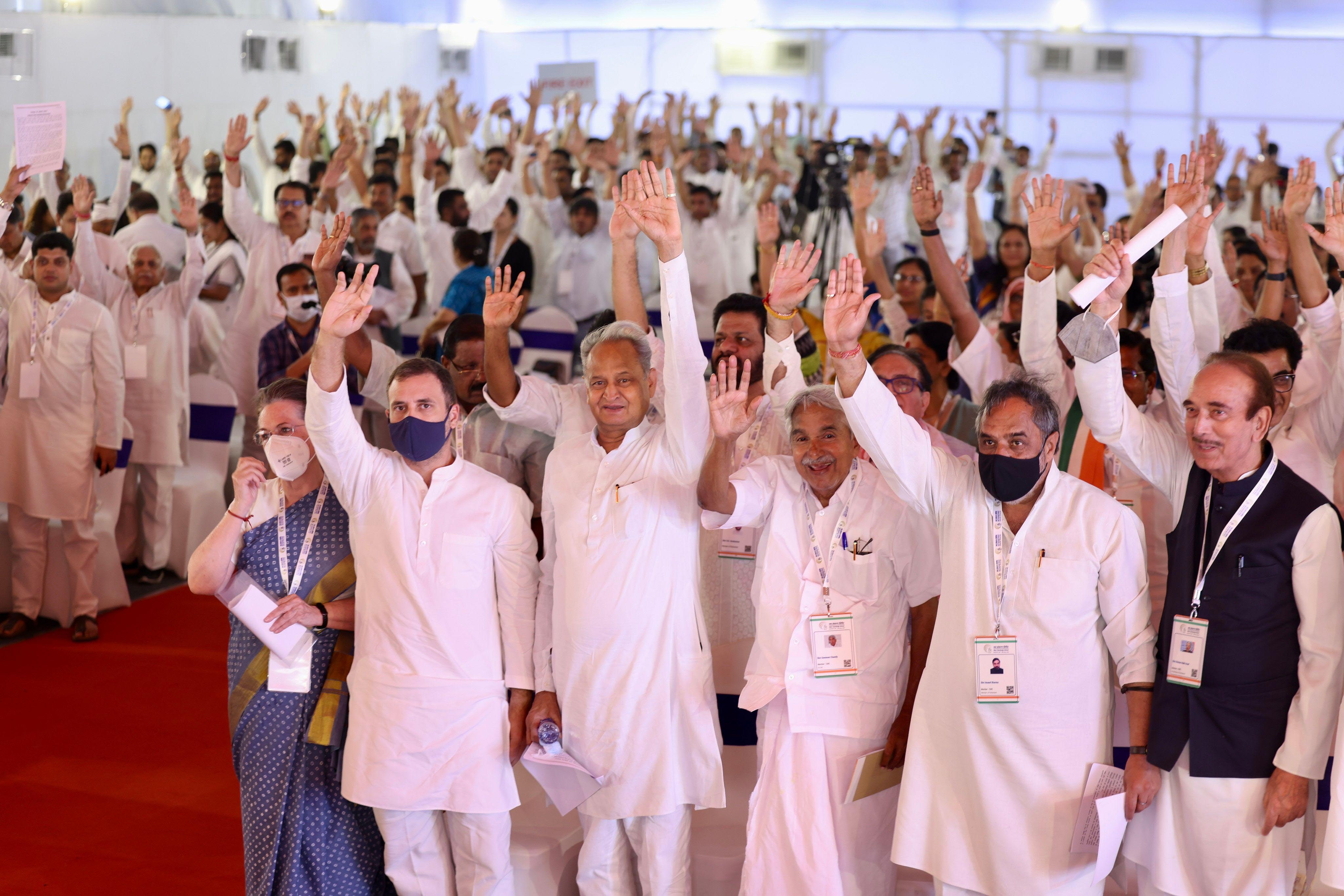
Congress president Sonia Gandhi had announced the party’s nationwide yatra at the Udaipur “Chintan Shivir” in May, saying, “The yatra is to strengthen the bonds of social harmony that are under stress, to preserve the foundational values of our Constitution that are under assault and to highlight the day-to-day concerns of crores of our people.”
The first meeting of the Central Planning Group for Bharat Jodo Yatra, headed by veteran Digvijay Singh, took place on June 5. Rahul Gandhi also attended the meeting in which Jairam Ramesh, Shashi Tharoor, Jothi Mani, Indian Youth Congress chief B V Srinivas, Mahila Congress chief Netta D’Souza and National Students’ Union of India (NSUI) president Neeraj Kundan were also present.
Through the nationwide yatra, the Congress is trying to revive the party across the states. The party lost the 2014 and the 2019 national elections and is currently in power in only two states Rajasthan and Chhattisgarh.
The party is trying to regain its original character that was shaped during decades of struggle before the country’s freedom in 1947. “Exactly 80 years ago, in the year 1942, Mahatma Gandhi gave a call to the nation, “Quit India” or “Bharat Chodo”! In the year, 2022, our call to the nation is “Unite India” or “Bharat Jodo”,” the Udaipur Nav Sankalp Declaration reads.
Explaining the yatra at the Chintan Shivir, Rahul Gandhi had said a nationwide effort was needed to re-establish the party’s connect with the people.
“It is a complaint. Our entire discussion, our conversation…is about our internal matters…who is getting which post. Internally that is our focus. In today’s time, this internal focus will not work. Our focus should be external. We will have to turn our gaze to the people and we will have to go to the people. Not just for us…for the country… Be it our senior leaders, junior leaders, or workers, we should go to the people and sit with them without thinking about anything…,” Rahul had said.
“Their issues…we should understand. And the connection that we used to have with the people…we will have to re-establish that connection…the people want that… they understand that only the Congress can take the country forward,” he said.
“That is the only way… Shortcuts will not help. It cannot be done through any shortcuts. It can only happen by shedding sweat. We can do it. You can do it. We have the ability and that is our DNA. This organisation has come out of the people and we will have to go to the people again,” the former Congress chief had said.
Before the Bharat Jodo yatra, the Congress has suddenly become very aggressive and has protested against the central government’s policies like the Agnipath defence jobs scheme, high prices of essential food items and fuel, faulty GST and the BJP’s alleged links with the terrorists across the country.
The trigger for the Congress aggression was the ED notices to the Gandhis in the alleged National Herald money laundering case. Rahul Gandhi reached the ED office on June 13 and the entire Congress came out on the streets to express solidarity with him.
The Congress particularly played up the alleged links of the several terror-accused over the past years with the BJP nationally and slammed the ruling party after the Supreme Court pulled up its suspended member Nupur Sharma for making provocative statements against Prophet Mohammed. Sharma had to be suspended as the Centre faced flak from the Gulf countries over her remarks.
The nationwide yatra of the grand old party is expected to flag all these issues, said party insiders, in order to dent the ruling dispensation.
For the ruling party which was getting hit regularly, the plan to launch a yatra to connect with the down trodden segments of society appears to be an attempt to counter the growing public criticism.
The BJP is now preparing for national campaign to reach out to non-Hindu communities, especially Pasmanda Muslims and Dalit Christians, who constitute a bulk of the population of the minority communities.
The Sneh Yatra is part of the BJP’s campaign that the party works for the benefit of all communities and will present this effort as an attempt to “satisfy” the left-out communities rather than “appeasing” them.
The party has been upbeat since it won the two recent Lok Sabha by polls in Azamgarh and Rampur, which have significant Muslim population and had been strongholds of rival Samajwadi Party.
Traditionally, the Muslims and the other minorities have not been voting for the BJP in large numbers but the ruling party believes it can change that trend with renewed effort. This would also allow the saffron party to market itself as a party for all in face of criticism that it only panders to majority interests, and boost its nationalist agenda.
Organization
The yatras will test the organizational strength of the two national parties as well as their ability to launch and carry out large scale public programmes over the coming months.
The Congress is preparing its organization for the future challenges and is in the process of having half of all office bearers below 50 years of age. But the fact is that the party organization has been weakened due to decades of neglect. The fact that the party shrunk across the states since 2014 also contributed to this trend.
The 3500-km yatra from Kanyakumari to Kashmir will pass through 12 states and is the first such major exercise in decades, covering the entire stretch of the country from south to north.
In contrast, the BJP has been regularly working to strengthen its organization over the past eight years and has also been able to improve its vote share.
Interestingly, the BJP has a brute majority with 301 out of total 543 members in the Lok Sabha and has 92 out of the total 245 members in the Rajya Sabha, but there is no Muslim representation after Mukhtar Abbas Naqvi’s Rajya Sabha term came to an end recently.
The BJP has explained the situation saying religion of the representatives was not important and the central government was doing a lot of work for the minority community. But the Congress targeted the ruling party saying it was against giving any representation to the minorities.
Over the past years, Rahul Gandhi has dubbed the party’s fight against the BJP as an ideological one and claimed that the Congress vision of taking everyone along was relevant for the country.
The BJP in turn claims that it is working for the development of all and cites the beneficiaries of the various welfare schemes to support its view.
For the Congress, the proposed nationwide yatra seems like an opportunity to regain national relevance ahead of the 2024 national elections while the reach out to the left-out segments is an attempt by the BJP to cover the gaps and consolidate its position.
In one stroke of the pen, the US Supreme Court removed nearly 50 years of Government protections for abortions and gave the states the right to make the procedure illegal within their jurisdictions
In a shocking decision, that is sure to take American society, economy and the civil and reproductive rights of women back by centuries, the US Supreme Court recently overturned Roe v. Wade. In one stroke of the pen, the apex court removed nearly 50 years of Government protections for abortions and gave the states the right to make the procedure illegal within their jurisdictions if they so decide.
In its infinite “wisdom,” the court argues that the word “abortion” is not there in the American Constitution. By the same yardstick, one can plead that neither do the words “fetus” or “fetal life” or “potential human life” exist in the US charter. In fact, the 14th Amendment clearly identifies “persons born” as the basis for granting human rights.
Infuriatingly, in today’s day and age, when women are at the forefront in many fields across the world and in America, the court’s misogynistic argument dispenses with the idea that women have the liberty to make decisions regarding their own body and empowers states to elevate the rights of the unborn.
Obviously, the ruling was met with disbelief, shock, anger and horror not just in the US, but all around the world. Because, if the US, which is considered to be the free world, and a supposed beacon for human rights, equality and liberty has taken such a conservative and retrogressive decision, then it could happen in any country around the world, affecting millions of women in their reproductive years. In one ruling, women of child-bearing age could be deprived of their hard-won liberty and equality.
So, globally, women shuddered, empathized with and lamented the lot of females in America as this regressive decision would impact their lives in a bad way.
And this is not just alarmists making up stories. These are hard and well-researched facts, that untimely, unplanned and repeated pregnancies and a huge brood negatively impact the mother’s life. And I’m not talking about health here because the dangers of repeated childbirths on the physical well-being of the mother have been done to death. I’m talking about the impact on their education, careers, earning power and financial independence.
For instance, according to a study by the US Centre for Disease Control (CDC) on teenage pregnancies, “pregnancy and birth are significant contributors to high school dropout rates among girls. Only about 50 per cent of teen mothers receive a high school diploma by 22 years of age, whereas approximately 90 per cent of women who do not give birth during adolescence graduate from high school.” Corroborating these findings, a research paper based on state abortion data that was published by Kelly Jones, professor of economics at American University, says that a complete ban on abortions would lower attainment of college degrees by women by 5.6 per cent. Conversely, access to abortions increased their chances of finishing college by about 20 per cent.
Sadly, despite the obvious benefits of giving women reproductive freedom, handing over their right to decide, to state legislatures was always the objective of retrogrades supporting the “pro-life” or anti-abortion movement, with the more traditional and conservative among them wanting to establish a national policy to ban abortions throughout America. Thankfully, simply overturning Roe will not help the anti-abortion lobby achieve this goal as it would need Government action or another landmark yet damning (for women’s rights) Supreme Court ruling that would grant constitutional rights to fetuses.
For the sake of American women and for generations to come, one just hopes that this doesn’t happen anytime soon. Because, look at the ramifications of this for a country like the US where teenage pregnancies are commonplace. According to the CDC, the country’s teen birth rate is significantly higher than in other western industrialized nations including neighbouring Canada. And the US Department of Health and Human Services data says that in 2020, the teen birth rate was 15.4 (births for every 1,000 females ages 15-19). And given the age of these mothers, in 2020 nine in ten (91.7 per cent) of these births occurred outside of marriage. Even more alarmingly, not all teen births were first births and in 2020, roughly 15 per cent of live births to 15 to 19-year-olds were at least the second child born to the mother. These are shocking numbers, and more so because these pregnancies and births take place in families where education and economic security levels are low. And they still want to take away the right to abortion!!!!
Now chew on this: according to the World Health Organisation (WHO), complications during pregnancy and childbirth are the leading cause of death for 15–19-year-old girls globally. “Adolescent mothers (ages 10–19 years) face higher risks of eclampsia, puerperal endometritis, and systemic infections than women aged 20 to 24 years, and babies of adolescent mothers face higher risks of low birth weight, preterm delivery and severe neonatal conditions,” says the WHO study. Given these reports and statistics, the right to reproductive choice should not even be questioned!
Unfortunately, the negative impact of an untimely pregnancy does not end with the mother herself, as according to the CDC, the “children of teenage mothers are more likely to have lower school achievement and to drop out of high school, have more health problems, be incarcerated at some time during adolescence, give birth as a teenager, and face unemployment as a young adult.”
And it’s not just the negative impact on teenaged or single mothers that should be taken into consideration, the consequences of bearing too many and unplanned children on married, working mothers, are as bad. Before the Roe decision in 1973, a measly 40 per cent American women were working outside the home. This number went up significantly in the 1980s and today it has gone up to 60 per cent, which shows that there is a direct relation between reproductive choice and the financial independence of women. Sadly, the court’s decision will to a large extent reverse the gains American women have made in the workforce, and adversely impact the nation’s economy too. In particular, it will hit the job security and earning capacity of single mothers and low-income families the most as the cost of childcare in the US is prohibitive and will negatively impact household budgets.
And what of the men? Unwanted pregnancies impact their lives too! Ask the teenager in love who had to drop out of school or college to take up whatever work he could get in order to provide for his girlfriend and the baby unexpectedly on the way? Or the trauma of having to become a dad when he himself is barely out of his childhood and certainly doesn’t want to or is ready to shoulder the responsibility. Or the father, who works hard to provide for his family and who can’t afford to be burdened with another mouth to feed, educate and provide for.
The court’s ruling has already begun upending lives in the US and strict limits or total bans have already gone into effect in a dozen states and about a dozen more states are set to impose additional restrictions. Shut abortion clinics have left many who don’t have the means or support structure to travel outside their state for a procedure in the lurch and holding a baby they can’t afford or want. One wonders if the court stopped to think of the ramifications of its decision because more and more girls and women will be pushed by their circumstances to resort to unsafe means of abortion like quacks, or self-harm.
It’s easy for pro-life activists to say that people should take precautions, and I agree that people should take precautions but what of pregnancies resulting from rape? And pregnancies in transgender men, gender non-conforming people and others? Also, what of women in marriages where there is an abusive and dominating partner who sees frequent childbirths as a way to keep the spouse tied to him and totally dependent on him financially, because which workplace will tolerate a worker who gets pregnant again and again, even if they are the most brilliant person?
It is a horrible truth but according to the National Intimate Partner and Sexual Violence Survey, a whopping 2 million American women became pregnant as a result of rape by an intimate partner, and 5 per cent of them reported that, at some point in their life an intimate partner had tried to impregnate them when they did not want a baby. The state prohibiting abortion expands the power and control of the abuser and further traps victims, denying them autonomy and freedom.
And as the world is a global village now, the ramifications of such a retrograde decision would have an impact on the lives of women internationally, because often times the judiciary takes a certain case as a precedent, even if it is halfway around the world. For instance, when the 1973 Roe v. Wade decision by a US court established vital protections against violations of individuals’ rights to bodily autonomy, its effect was not only felt in America but also around the world. Globally courts relied upon Roe to articulate their own constitutional recognition of reproductive rights and bodily autonomy, including in India.
Thankfully, the women in India have not much to worry about because even though we are supposedly a Third World nation, our judiciary is quite progressive and liberal in its thinking, especially where the rights of women are concerned. Because they are well aware that access to abortion is a human right vital to ensuring health, equality, and autonomy and even the United Nations recognizes that.
Plus, what will be the quality of life of children brought into this world by unwilling parents? Who see them as an impediment to their emotional, financial and professional well-being. There will be more abandonment of such unwanted babies by unwed mothers thus forcing the US Government to take on their responsibility and burdening the already beleaguered economy more. In the case of married couples forced to bring in another child they can ill-afford, there will be a rise in abuse of children by angry and frustrated parents. There might be more divorces, too, as economic hardship drives a deeper wedge between the already struggling couple. Once again the State will be looking for foster homes for the unfortunate children who did not ask to be brought into this world in the first place. So, who does this decision benefit, one is forced to ask.
And it’s not just the right to choose that this ruling effects. It casts a shadow over
debates raging across America over the nature of rights under the Constitution.
It also signals a huge change in how America will read the Constitution from now on and regresses from a living reading to an original one.
For the uninitiated, in a living Constitution, the meaning of the document’s language changes
as the beliefs and values of society change, ensuring that more rights can emerge over time. This is how the right to abortion, privacy and gay marriage came into existence.
Originalism rejects the living Constitution and it is the viewpoint taken by the judges who overturned Roe. Under originalism, the Constitution is static until officially altered through an amendment. In originalism, if a right is present in the original text of the Constitution, including the Bill of Rights then the decision is beyond the reach of majority rule.
Hence, the rights that have been recognized by the court over time – abortion and gay marriage, among others – are simply not constitutional rights in the view of the new majority and thus are up for question and in the hands of state legislatures. This perpetuates an unjust social system in which power resides in the hands of a few while others are treated as second-class citizens. This does not augur well for many of the people and the hard-won civil rights in the free world. America would do well to listen to the impassioned plea made by its President Joe Biden and vote for his Government in November so that they can restore Roe by passing a national law. Americans must defeat this regressive mindset that will take the US into the dark ages.
Bhagwant Mann-led AAP government succumbed to pressure after more than 10,000 people, including NGO workers, members of farmers’ unions and others assembled at the project site and threatened to start a movement against the project, reports Aayush Goel
In what has left greens across the state elated and hopeful of revival of environment on state’s priority list, Bhagwant Mann-led AAP government has gone ahead and cancelled the ambitious Textile Park in KoomKalan, Ludhiana.
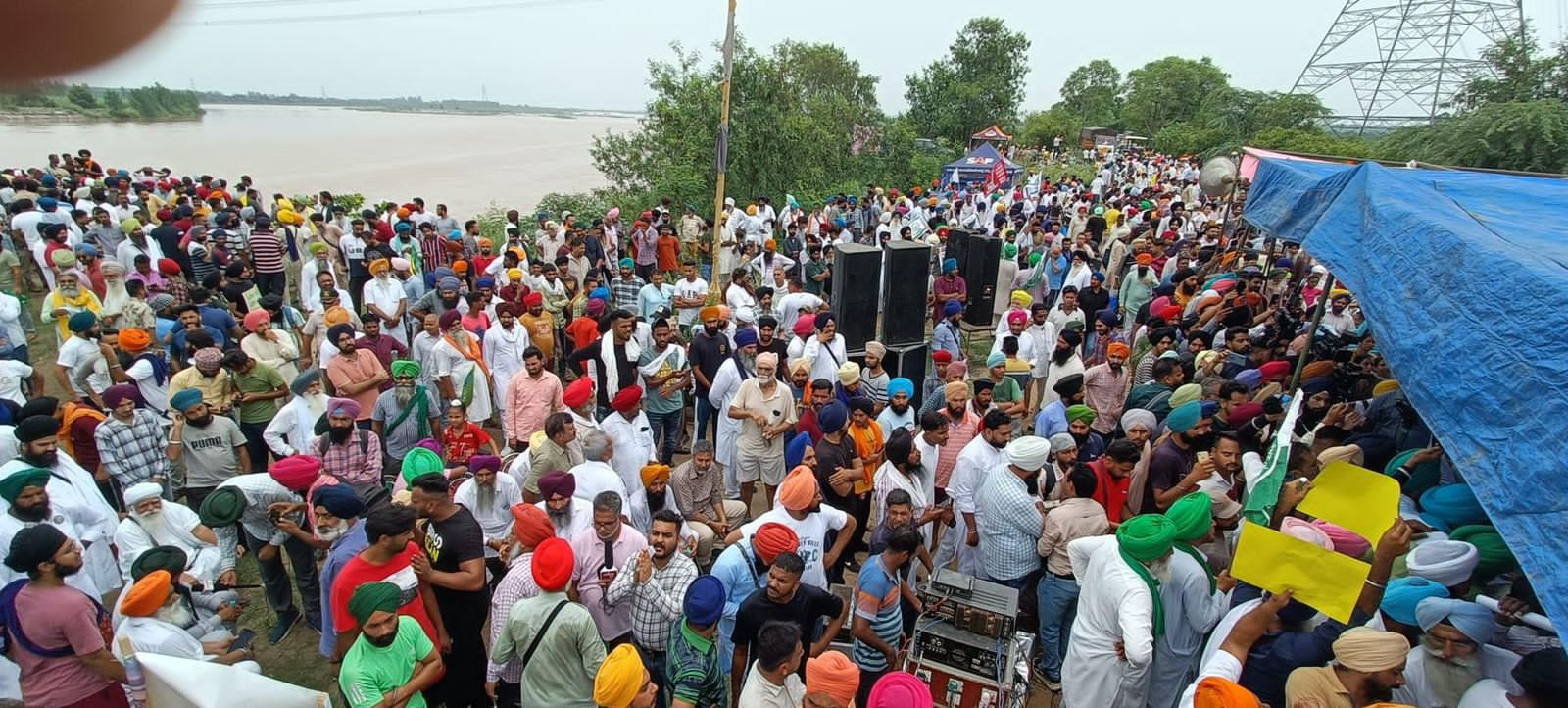
Approved as part of PM-MITRA scheme, the project was dubbed as the last nail on degrading environmental health of the state and Ludhiana district in particular. The project was to be set up in natural flood plains of Sutlej river bordering one amongst few surviving forest patches of state, the Mattewara forest. Punjab CM Bhagwant Mann had in Vidhan Sabha supported the project. However, it took a u turn and scrapped it when more than 10,000 people – including politicians, members of farmers’ unions, student leaders, and NGO workers – assembled at the project site in Mattewara, vowing to start a permanent movement against the project.
“It was all politically and financially profit driven. The project would have not only disturbed the biodiversity of the protected forest, but would have also led to chemical discharge from factories into the river and make this area a cancer zone like other areas of Punjab. This move gives us hope that now the environment will be considered with importance. We have won this and hopefully be able to eliminate other threats in state and revive dying Satluj. Sutlej is the drinking water source of around 1 crore people who either consume it directly or indirectly.” says Dr Amandeep Singh, an environmentalist and member of Public Action Committee (umbrella body of over 50 NGO’s fighting against the project)
No Industry on River Banks: CM Bhagwant Mann
“I would categorically like to announce that not only in Mattewara but the state government will not allow any industry to come up on the river banks of Punjab to avoid any sort of water pollution. The site for the project was located near Mattewara forest and on the floodplains of Sutlej river but the Amarinder Singh-led government ignored the environmental and ecological costs of the initiative. The project would not only lead to water pollution in the area but also entail felling a considerable number of trees in the vicinity,” said Mann.
Flip Flop by AAP Government: Opposition
While residents and environmentalists lauded the scrapping of the project opposition has termed this flip flop an evidence of a non-competent government.
“The Punjab government‘s announcement of scrapping the Mattewara project shows this Government’s lack of commitment and the inexperience of the CM. The AAP opposed this project during the tenure of the previous government. The party however went on to implement it when it came to power. The CM even defended it in Vidhan Sabha and has now withdrawn it due to public pressure. This constant flip-flop is an embarrassment and shows the lack of vision on the part of AAP for Punjab.” said leader of Opposing Congress leader Pratap Bajwa.
The controversial project
A Mega Integrated Textile Region and Apparel Park, under the PM-MITRA scheme was being undertaken jointly by the Centre and the state government. Initially it was named as Mattewara Textile Park for its proximity to Mattewara forest but after public outrage, the name was changed. As per the Union Ministry of Textiles, this park was to be one amongst seven such parks that would come up across the country with the objective of sustainable industrialisation that does not harm the environment to “meet the United Nations sustainable development goals.” The 957.74 acres of land was acquired so far, falling near the Mattewara forest and on the river Sutlej floodplains. Out of this, 416 acres were allegedly forcefully acquired from the Dalit-majority Sekhowal village despite the Gram Sabha of the village having passed a resolution against it. The acquired land will now be returned.
Mattewara forest and nearby site to be converted to Biodiversity park.
The now cancelled project site touches Mattewara forest from two sides and river Sutlej on one side. Spread over 2,300 acres, the forest is the sole lung of Ludhiana district which is one amongst top polluted districts in India. Punjab is among the states with poorest forest cover with just 3.7 percent of its land under forest. It has minimal untouched forest patches scattered across Punjab and Mattewara is one amongst them. The forest is not just rich in flora but also houses several animal and avian species including Peacocks, Sambhar, Antelopes (nilgai), Monkeys, Deers etc.
The government has now announced to set up a biodiversity park which would also include government land diverted for the textile park earlier.
Sutlej Pollution Threat
Not just the forest but environmentalists fear of toxic discharges in Sutlej post setting up of any projects on Sutlej banks. The river is popularly known as the dead river in Punjab owing to high levels of pollution. According to records, the state was disposing of around 2000 kilolitres of wastewater per day in the river in year 2021, apart from the enormous amount of industrial effluents mainly via Buddha Nullah in Ludhiana. There are 2423 industries in the river Sutlej catchment area, which either directly or indirectly release their trade effluent into Sutlej. Buddha Nala is the district’s oldest rivulet and one of key channels of Sutlej pollution. The water in the nullah is rich in toxins and merges with Sutlej making it highly polluted. The polluted water has been recognised as a key reason behind the high number of cancer patients across the river course which runs across the Malwa region till Rajasthan. The water is being used directly or indirectly by many for crop irrigation, household works, and for drinking.
“Industries set up on the banks of Staluj and discharging effluents in it directly or indirectly are killing the river. Thousands of villagers still depend on Sutlej for drinking water and other needs and we cannot have one more polluting project on its banks. The government decision is encouraging and we will now fight to get other polluting units also moved out,” says Bhavjit Singh, activist and member of the Public Action Committee (PAC).
Alternate Site at Kandi area a Solution?
The opposition headed by Congress leader Pratap Singh Bajwa has suggested that this project, if vital to the state’s economy, can be shifted to Kandi area where there is more environmental stamina to recover any loss and needs economic attention.
“We understand the fight between development and the environment. Yes the project can be an economic booster but the current site is not the place. The fragile ecological balance will collapse. This can be set up at a place where environmental replenishment is easy and there is a need for economic development. We suggest Kandi area,” said Bajwa. It may be noted that Shivalik hills are situated along the eastern boundary of Punjab and this sub-mountainous or semi-hilly area is locally called as Kandi area. This area is spread across around 10 kilometre belt along the border with Himachal Pradesh. Most parts of Hoshiarpur and Pathankot districts and some parts of Roopngar, NawanShahr and Mohali districts lie in Kandi area of Punjab.
With the resignation of the state Congress president Ghulam Ahmad Mir, the Congress in Jammu and Kashmir has taken the first step to re-invent itself in the union territory. The resignation of Mir has resolved the rift within the state Congress, reports Riyaz Wani
With the resignation of the state Congress president Ghulam Ahmad Mir, the Congress in Jammu and Kashmir has taken the first step to re-invent itself in the union territory. Though a successor is yet to be chosen, it looks likely that the party would choose someone who has credibility and a mass following.
For now, however, the resignation of Mir has resolved the rift within the state Congress. Earlier this year, a section of the senior party leaders deemed close to top Congress leader Ghulam Nabi Azad had revolted against Mir, threatening a vertical split in the party. In December last year, Azad addressed around ten impressively attended rallies in parts of the Jammu division and southern Kashmir, something that at the time greatly contributed to the revival of political activity in the union territory.
While Azad may have lost the last parliamentary election to the current union minister Jitendra Singh, he enjoys a good deal of goodwill in parts of Jammu and Kashmir if not an easily identifiable support base. This is because he has always deftly straddled the political divide between Kashmir and Jammu. In Jammu, his pro-India credentials remain impeccable – an attribute now even certified by the Prime Minister Narendra Modi when he lavishly praised him in Parliament last year.
And, in Kashmir Valley, his advantage is that no one expects him to be adversarial towards New Delhi, a characteristic that is expected of every Kashmir based leader. So Azad’s involvement could be a key to Congress revival in the union territory. But the question is whether the Congress high command would appoint an Azad loyalist as the new state president? More so, at a time when Azad has fallen foul of the Gandhis and is part of the G23, the group of Congress leaders seeking reforms within the beleaguered national party.
Whatever decision the high command takes would be critical for not only the revival but also the survival of Congress in the union territory. The party has witnessed a steep fall in its electoral fortunes in the state turned union territory since the landslide victory of the BJP in the Jammu division in 2015 Assembly elections. The saffron party won 25 of the 37 seats in the division enabling it to be a part of the coalition government with the PDP which got 28 seats.
Earlier, from 2002-2015, Jammu and Kashmir has had three successive coalition governments – PDP-Congress, NC-Congress and PDP-BJP.
The coalitions began with the advent of the PDP in 1999. The party formed by the former Congress leader Mufti Mohammad Sayeed and his daughter Mehbooba Mufti morphed into a credible Opposition by 2002 when it ended the NC’s vaunted political hold on Kashmir in the then Assembly polls. The new reality turned Congress into a kingmaker over the following twelve years. With the Valley’s seats split between them, the NC and PDP were hardly in a position to form the government without Congress’s support. But in 2015 polls when Congress was decimated in Jammu, the BJP stepped into the breach, obliging the single largest party PDP to share power with the saffron party.
Ever since, the BJP has been on a roll not only in J&K but also across the country. Would the Congress mount a serious challenge to the party in the fresh assembly polls in the UT to be likely held later this year? This will largely depend on who is at the party’s helm in the UT and how the party will politically rejuvenate itself. And also, how far is Azad involved in the process. Congress’s electoral performance would be crucial in determining who rules J&K once Assembly polls are held.



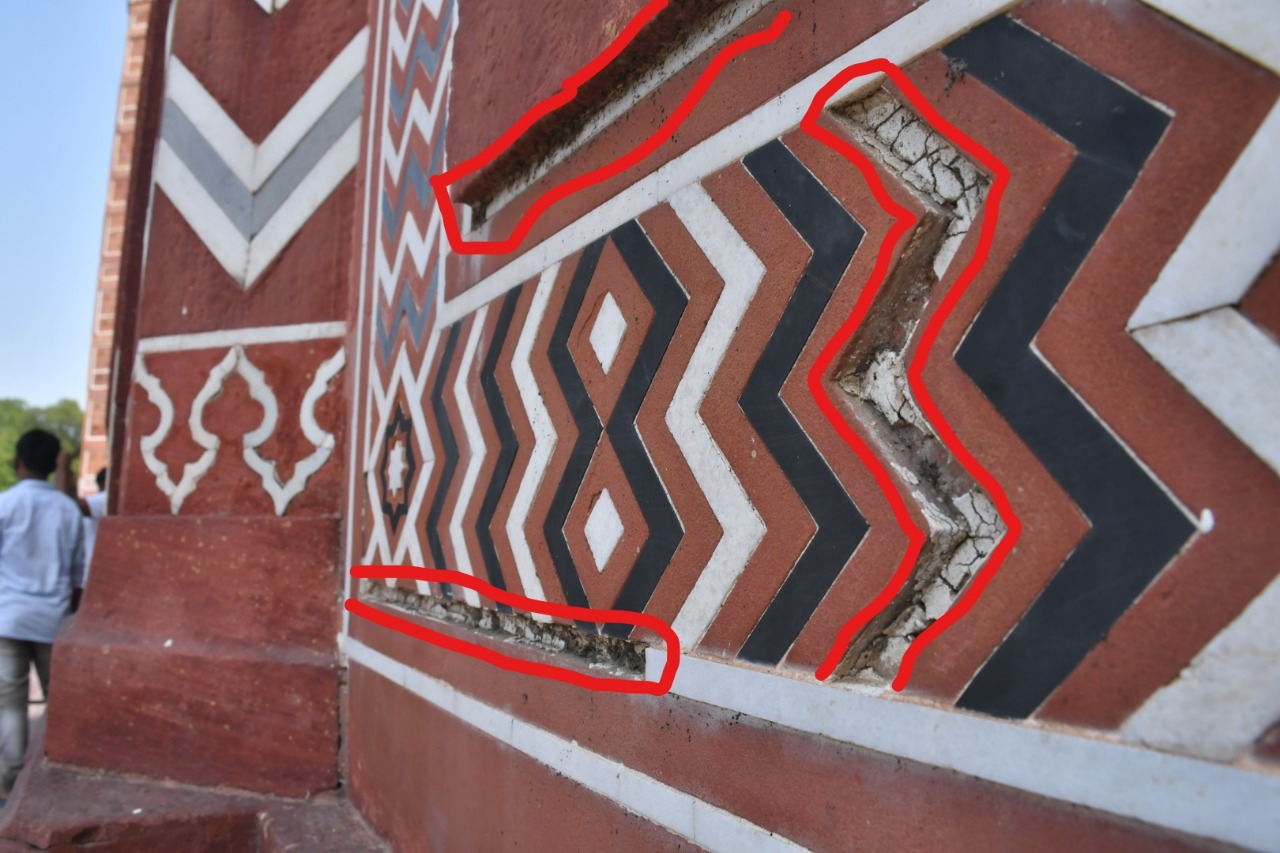
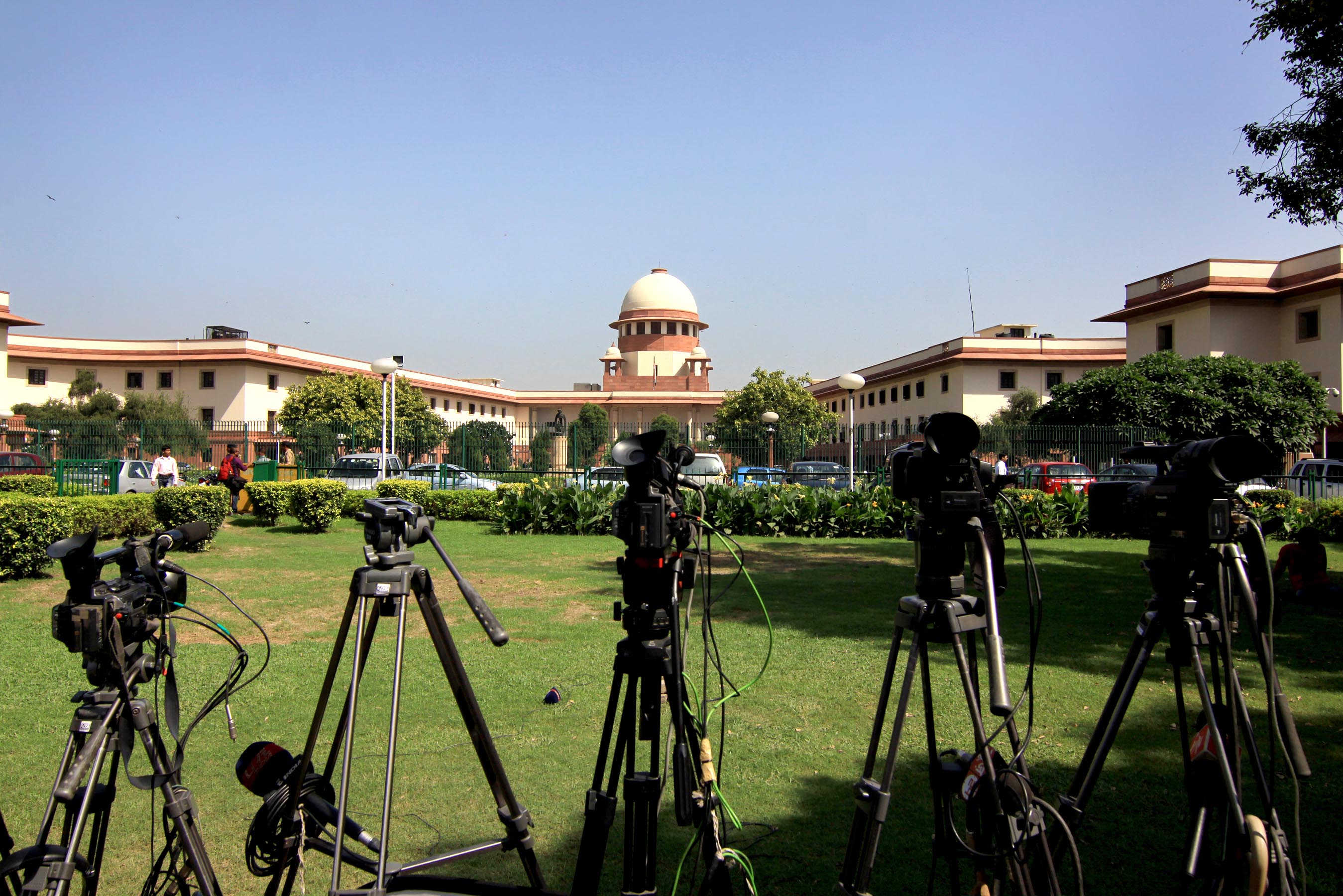
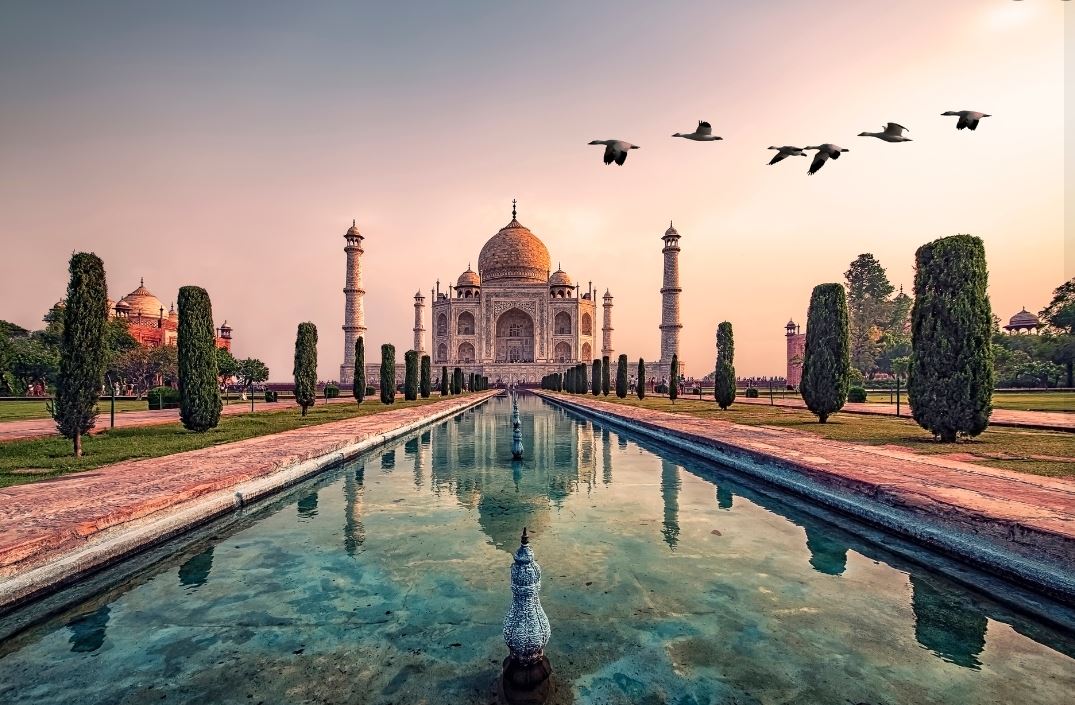
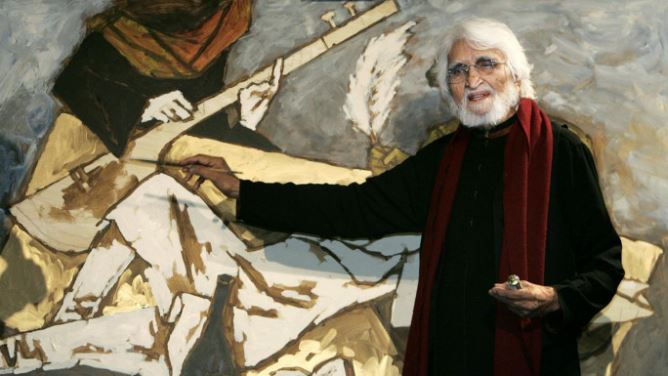
 Pitch the past with the present: a Nupur Sharma or a Mahua Moitra belittling the gods. They may not have a brush in hand but they sure are wielding a hate weapon which is irreparably damaging the social fabric of what once was secular India.
 Moitra stirred the hornet’s nest by saying that Kaali is a “meat eating and alcohol accepting goddess”.
 Eminent women such as Sarojini Naidu, Vijaya Lakshmi Pandit and Padmaja Naidu had performed their gubernatorial duties with much dignity and poise. Post Independence, great men like KM Munshi, Sir HP Mody, VV Giri, Sir Girja Shankar Bajpai, Dharam Vira, Govind Narain and their ilk walked like Colossus in their respective Governor Houses.
 Who is then ‘qualified’ to become a state Governor? “A citizen of India who is at least 35 years old,” says the Constitution. It doesn’t lay down any qualifications as to the education or experience. By this yardstick, almost every third Indian is constitutionally eligible to be appointed a Governor. As far as I can recall, no one below the age of 60 or so has ever been made a state Governor. Ironically, this relatively young age of 60 is intended for those bureaucrats who had managed to earn such a highly prized sinecure for the “services rendered” in the course of their respective careers. The politician, who is past his or her ‘use-by date’, too is a favorite for the tenancy of a Raj Bhawan. Quite often, retired army generals or their counterparts from Navy or Air Force also got a look in and given the gubernatorial assignment.
 The choice of the new Governors was purely on the whims and fancies of the then powers that be. More often, some of the choices came as a surprise, but a little digging showed a ‘godfather’ lurked somewhere in the background. Fortuitously, the choice of the Governors in the first two decades after 1947 had broadly fallen on eminent public men and women. It needs to be noted that the first UP Governor was no less a person than Sarojini Naidu, famously known as the ‘Nightingale of India’. Unfortunately, she died in harness in 1949. Other equally eminent women who then adorned the gubernatorial offices were Vijaya Lakshmi Pandit (Maharashtra), Padmaja, Sarojini Naidu’s daughter (West Bengal), and Sharda Mukherjee (Gujarat), wife of Air Marshal Subroto Mukherjee.
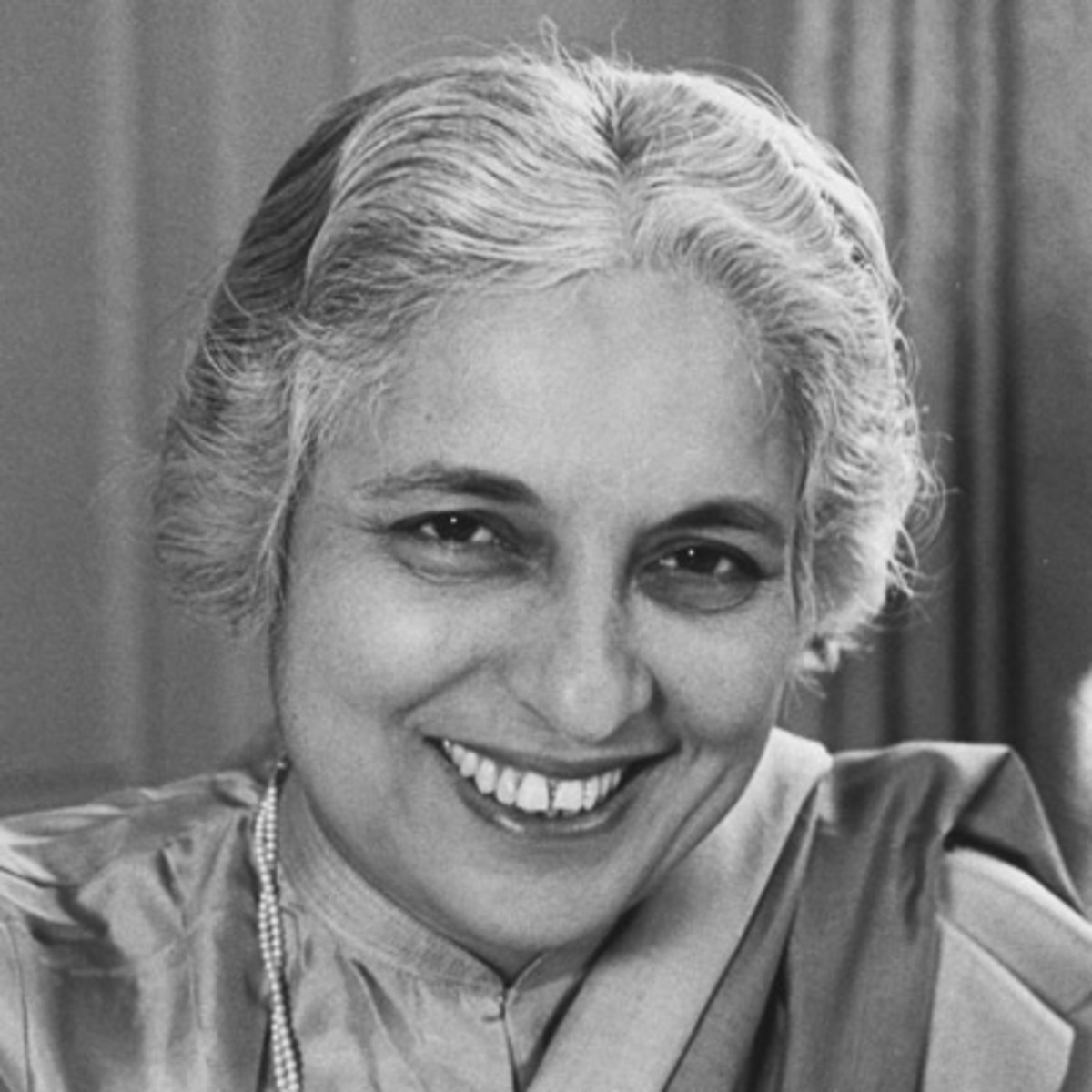 Even, 10 years before India became independent, Vijaya Lakshmi Pandit had emerged as an articulate politician, and became the first woman to have been twice made a minister in the United Provinces (UP). She was also elected in 1946 to the Constituent Assembly. Following India’s independence in 1947, Pandit entered the diplomatic service and became India’s Ambassador to the Soviet Union; she had remained in that post for two years until 1949. Her next assignment was as India’s Ambassador to the United States from 1949 to 1951. From 1955 to 1961, Pandit occupied many important diplomatic posts including that of India’s High Commissioner to the United Kingdom. Earlier in October 1946, she had become the first woman to head a delegation to the United Nations General Assembly. And then seven years later in 1953, she earned the unique distinction of becoming the first woman President of the UN General Assembly.
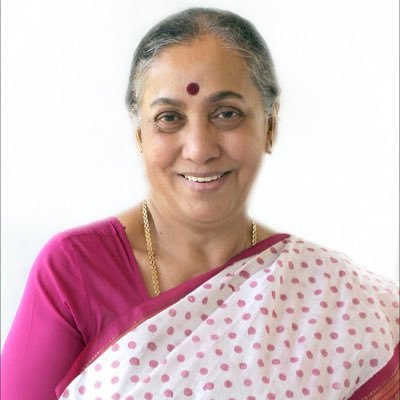 The great success of Bharatiya Janata Party under the leadership of Narendra Modi in 2014 general elections had generated an exciting sense of euphoria among the BJP leaders and the cadre. Some of the more ambitious among them started angling for gubernatorial offices. The then Governors appointed by the outgoing UPA government were indirectly told to resign. Five of them: BL Joshi (Uttar Pradesh), MK Narayanan (West Bengal), Shekhar Dutt (Chhattisgarh), Ashwani Kumar (Nagaland) and BV Wanchoo (Goa) resigned on their own accord. Two of them, namely HR Bhardwarj (Karnataka) and Devanand Konwar (Tripura) had retired a month before, while Lt. Governor of Puducherry Virendra Kataria, who must have dilly-dallied a bit, was shown the door by the government.
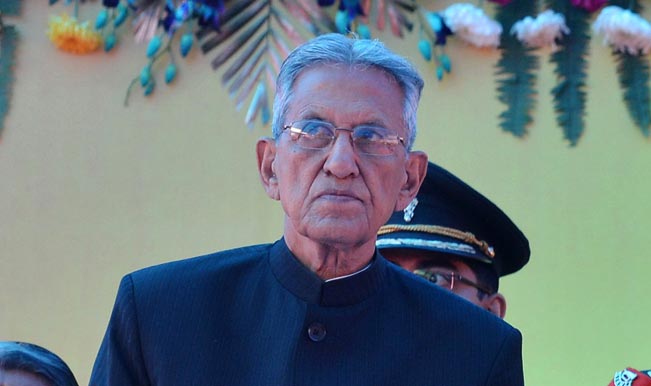 Those vacancies were promptly filled up by eager beavers and go-getters. Kalyan Singh, who was earlier the chief minister of Uttar Pradesh, was appointed the Governor of Rajasthan, and Mridula Sinha, who was at one time the president of BJP Mahila Morcha, got Goa. Likewise, Vajubhai Rudabhai Vala, once the Speaker of the Gujarat Assembly, and Vidyasagar Rao, who had served as a Union minister of State in the Ministry of Home Affairs in Atal Bihari Vajpayee government, were respectively made Governors of Karnataka and Maharashtra.
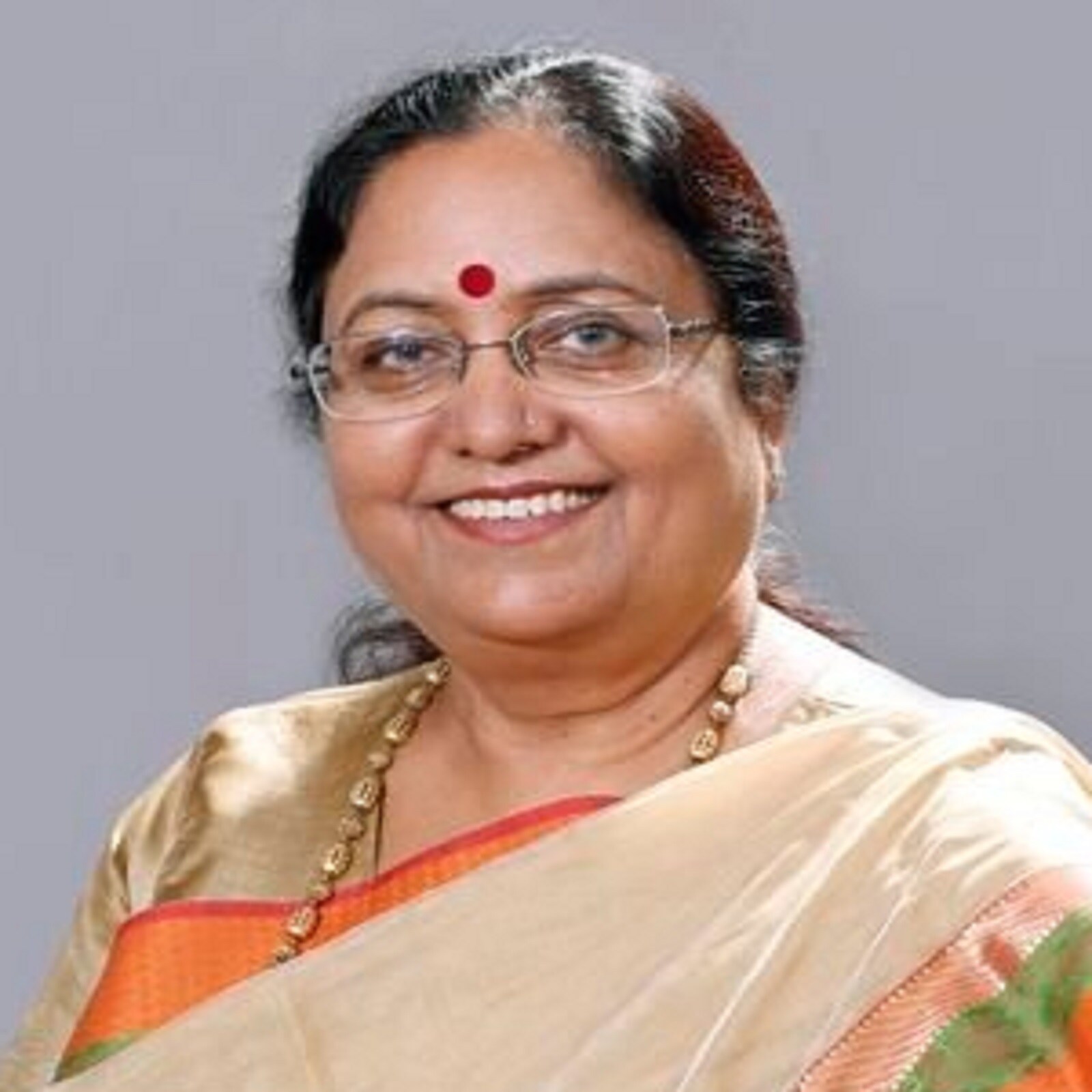 There was a good deal of relief in official and political circles when Qureshi’s controversial tenure ended on 8 January 2015 with the appointment of Dr. Krishan Kant Paul as Uttarakhand’s sixth Governor. Dr. Paul’s tenancy at Raj Bhawan was very much like a summer shower on a parched land. An officer of the Indian Police Service belonging to 1970 batch of AGMUT cadre, Dr. Paul had spent much of his police career in Delhi, the Andaman & Nicobar Islands, and the beautiful hills of the Northeast. During his 37-year long and distinguished career, he was involved in the investigation of several sensitive national and international cases that included the assassination of Indira Gandhi, and the Cricket match fixing controversy.
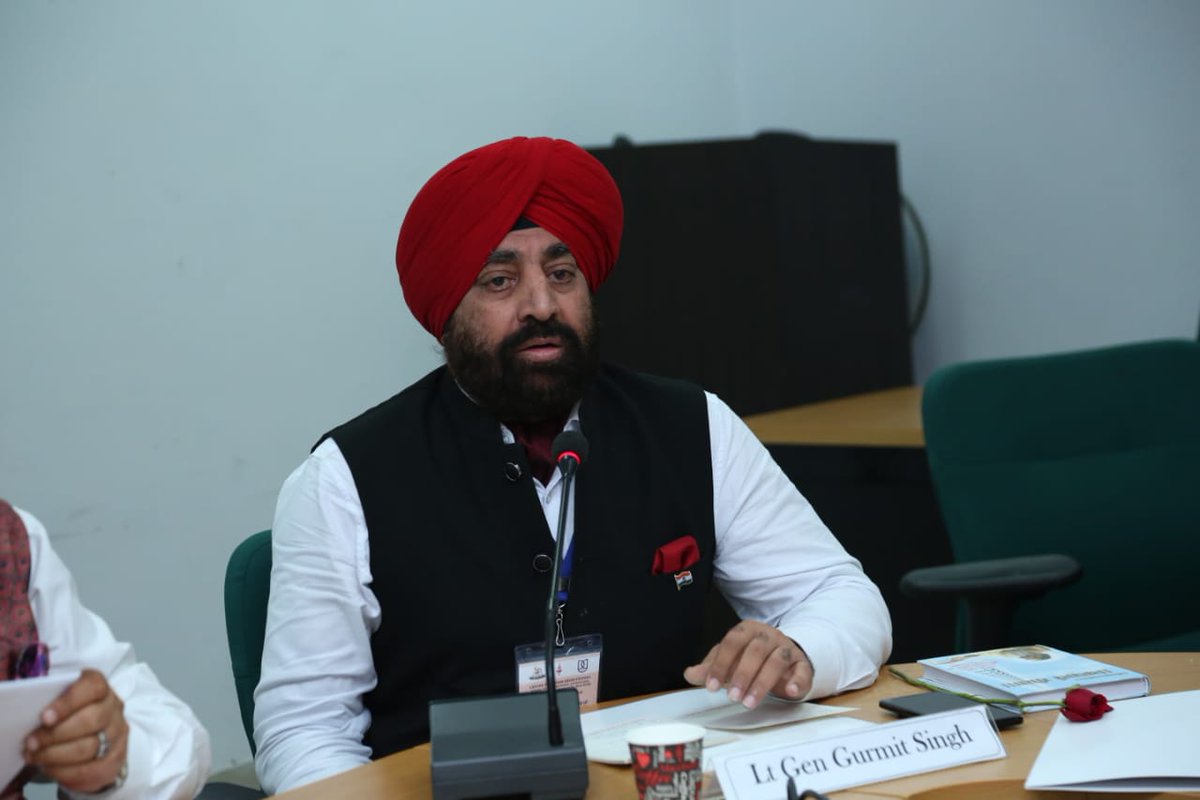 Both the Congress and the BJP separately met President Pranab Mukherjee, and sought his intervention in resolving the political crisis in the state. The BJP delegation requested the President to get the floor test advanced from 28 March to 18 March. The Party also asked the President to direct the Governor to immediately dismiss the Rawat government. But a Congress delegation, led by Ghulam Nabi Azad strongly countered the BJP’s contention. Three developments then occurred. (i) the day before the Rawat government was to face the floor test, President’s Rule was imposed in the state, and the Assembly placed under ‘suspended animation’, (ii) a Division Bench of the Uttarakhand High Court quashed the imposition of the President’s Rule, and ordered a floor test on April 29, and (iii) the floor test was accordingly held and the results put in a sealed cover to be submitted to the Supreme Court. However, the Congress had claimed a victory, and BJP conceded defeat in the floor test.