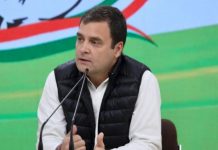
Union Minister for Commerce and Industry Piyush Goyal on Monday introduced the Jan Vishwas (Amendment of Provisions) Bill in Lok Sabha.
The Bill was earlier approved by the Union Cabinet. The members of the Committee will be chosen by the Speaker and the Committee shall make a report by the first day of the next Session.
This exercise builds on the success of the Jan Vishwas (Amendment of Provisions) Act, 2023 — the first consolidated legislation to systematically decriminalise minor offences across multiple Acts. The 2023 Act, notified on 11th August 2023, decriminalised 183 provisions in 42 Central Acts administered by 19 Ministries/Departments.
According to the Ministry of Commerce & Industry, the 2025 Bill expands this reform agenda to cover 16 Central Acts administered by 10 Ministries and Departments.
“A total of 355 provisions are proposed to be amended — 288 provisions decriminalised to foster Ease of Doing Business, and 67 provisions proposed to be amended to facilitate Ease of Living,” the ministry said.
Jan Vishwas (Amendment of Provisions) Bill, 2025 also proposes 67 amendments under New Delhi Municipal Council Act, 1994 (NDMC Act) and Motor Vehicles Act, 1988 to facilitate Ease of Living.
Four Acts — the Tea Act, 1953, Legal Metrology Act, 2009, Motor Vehicles Act, 1988, and Drugs and Cosmetics Act, 1940 — were part of Jan Vishwas Act, 2023 and are proposed for further decriminalisation under the current Bill. The Jan Vishwas (Amendment of Provisions) Bill, 2025 marks a significant milestone in India’s regulatory reform journey.
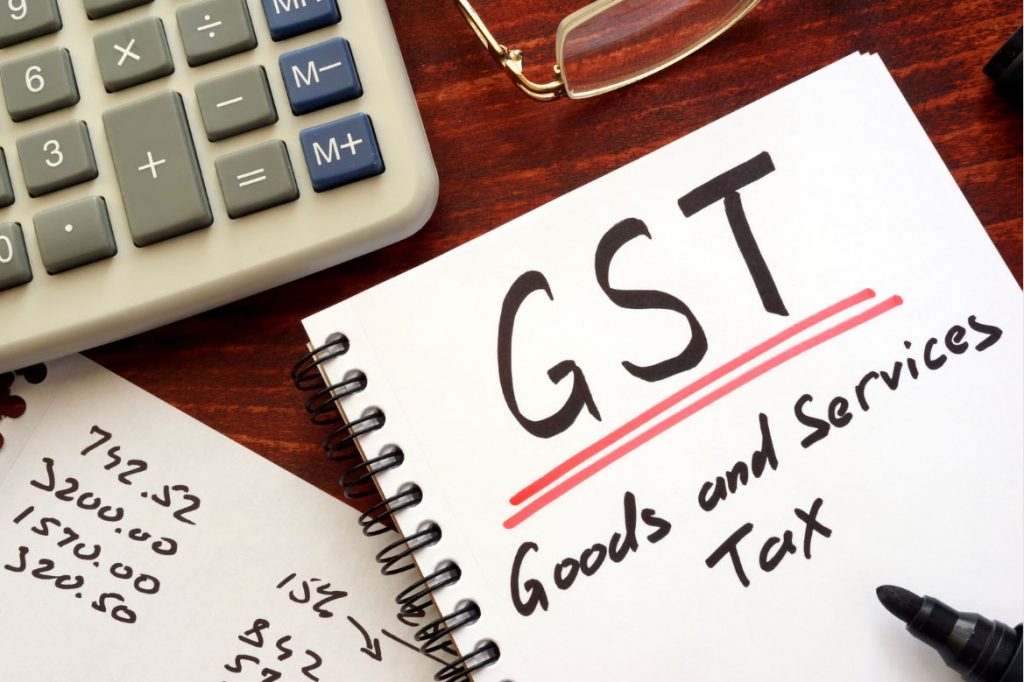
In a significant policy shift aimed at supporting the middle class and revitalising the automobile sector, the central government has proposed a reduction in Goods and Services Tax (GST) on entry-level vehicles, including two-wheelers and small cars.
The proposal follows Prime Minister Narendra Modi’s Independence Day announcement of a “Next Generation GST,” which envisions a streamlined tax structure. As part of this reform, the government is considering replacing the current four-tier GST system with a simplified two-rate structure of 5 per cent and 18 per cent across all goods.
Currently, passenger vehicles are taxed at 28 per cent GST, in addition to a compensation cess ranging from 1 per cent to 22 per cent depending on factors like engine size and body type.
Under the proposed reform, the 28 per cent slab would be lowered to 18 per cent, potentially eliminating the compensation cess for many entry-level vehicles.
The move could significantly reduce the cost of mass-market vehicles such as hatchbacks, compact SUVs, commuter motorcycles, and scooters—segments that account for the majority of vehicle sales in India.
A reduction in GST for two-wheelers, which remain the primary mode of daily transportation for millions of Indians, is expected to make them more affordable and drive up demand. The government hopes the tax cut will serve as a catalyst for growth in the auto industry while providing relief to consumers amid rising living costs.
The DMK has suggested that the opposition coalition should field a candidate from Tamil Nadu against Radhakrishnan, sources say
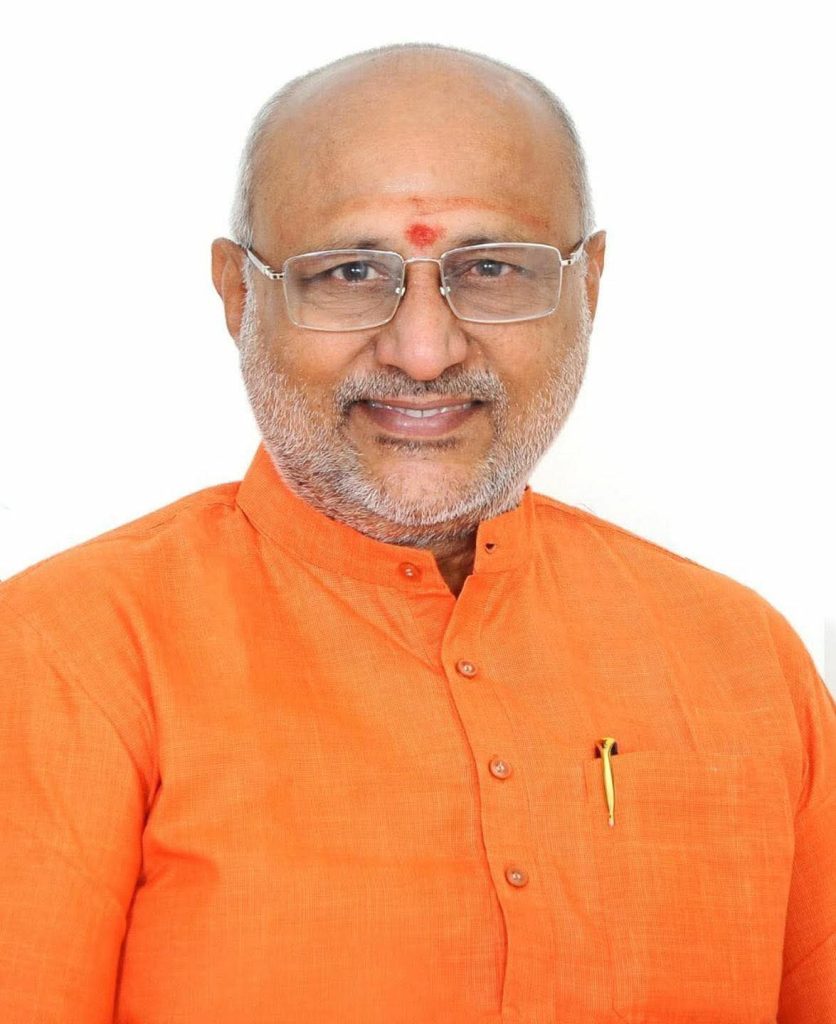
NDA’s vice-president nominee CP Radhakrishnan
The BJP-led NDA may have tried to corner the ruling DMK in Tamil Nadu by urging it to support the nomination of CP Radhakrishnan for the post of vice-president but state Chief Minister MK Stalin is said to have asked INDIA bloc to field its own candidate from the key southern state.
The DMK has suggested that the opposition coalition should field a candidate from Tamil Nadu against Radhakrishnan, sources say.
‘Son of Tamil soil’
BJP Tamil Nadu president Nainar Nagendran on Monday described the nomination as a “historic moment”, calling Radhakrishnan “the son of Tamil soil”.
Apparently, Defence Minister Rajnath Singh also spoke to Stalin, asking him to support a common candidate for the post before the BJP formally announced the name. The senior BJP leader has been tasked with building consensus on NDA’s vice president nominee and will supervise the election on BJP’s behalf. Union Parliamentary Affairs Minister Kiren Rijiju has been made his election agent.
Singh is said to have dialled several Opposition leaders, including Congress’ Sonia Gandhi, BJD chief Naveen Patnaik and Congress chief Mallikarjun Kharge to seek support, sources said, adding that he will also be interacting with leaders of other parties
Radhakrishnan also called on Stalin before the BJP announced his candidature, “but Stalin did not make any commitment,.” according to reports.
Tough call for DMK
The fact is, it is a tough call for the DMK. Opposing a candidate from Tamil Nadu may not go down well with Radhakrishnan’s community ahead of Assembly elections next year. At the same time, however, the key INDIA bloc partner cannot be seen politically backing a BJP candidate.
Tamil Nadu Congress leaders are in touch with central leadership which is expected to take a call on opposition’ candidate soon.
Some DMK leaders also said that the NDA naming a Tamilian did not make it “pro-Tamil”.
DMK rival AIADMK has hailed the decision
The NDA move is seen as a significant political messaging for the southern state dominated by Dravidian politics.
“I urge all MPs from Tamil Nadu, regardless of political differences, to support him. This is a significant chance for someone from Tamil Nadu to become Vice President of India. All MPs should support CP Radhakrishnan,” AIADMK leader Edapadi K Palanisamy was quoted as saying
The nomination of Radhakrishnan signals social engineering and fits the BJP’s expansion plans in South India where, apart from Karnataka, the saffron party has not been able to do much in other four states, particularly Tamil Nadu and Kerala.
A man with strong pan- South India appeal, he comes with strong connection with BJP’s ideological fountainhead RSS.
Special Representative meeting to work out a “fair, reasonable and mutually acceptable” solution to the pending boundary issue comes ahead of PM Modi’s scheduled visit to China, is being seen as another sign of a diplomatic thaw with Beijing amid trade tariffs tensions with US
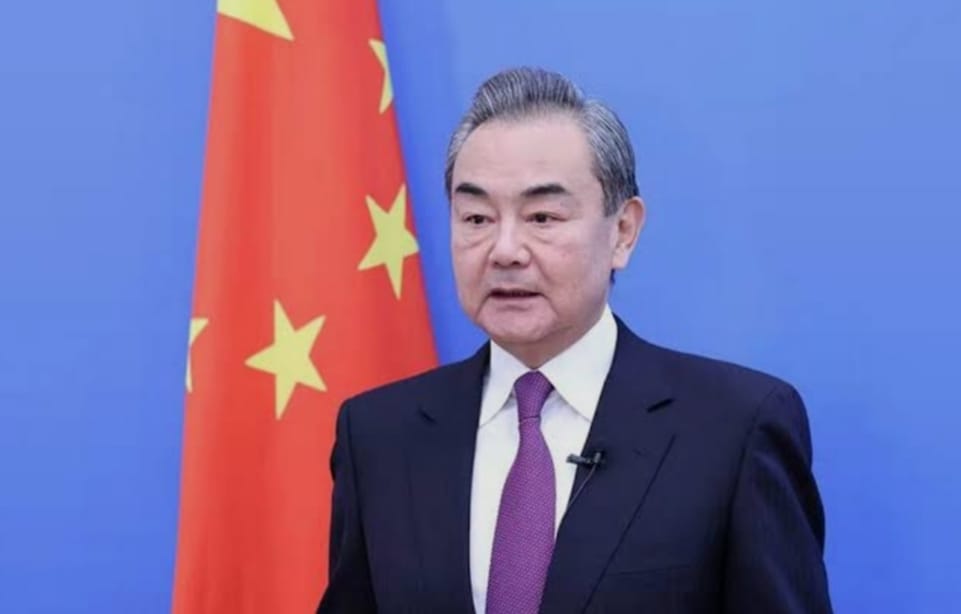
Chinese Foreign Minister Wang Yi will meet Prime Minister Narendra Modi during his two-day visit to India, according to the Ministry of External Affairs. Coming ahead of PM Modi visit scheduled visit to China for the annual summit of the Shanghai Cooperation Organisation (SCO), the meeting is significant keeping in mind the pending issue of de-escalation of troops since October last year when the two sides agreed on disengagement from two friction points along the Line of Actual Control (LAC).
Talks between Wang and National Security Adviser (NSA) Ajit Doval on the pending boundary issue during the 24th round of the Special Representatives (SRs) dialogue will lay the groundwork for a “way forward” for the meeting between PM Modi and Chinese President Xi Jinping.
PM Modi’s visit to China for the first time in over seven years is being seen as another sign of a diplomatic thaw with Beijing amid the trade tariff’ tensions with the US.
Pending issue
India twice (in June and July) pressed upon China to de-escalate from the present positions and resolve “friction” along the LAC—the de-facto boundary between the two neighbours.
At his July meeting with Wang in Beijing, External Affairs Minister S Jaishankar stressed the need to work towards addressing the border issue as well as troop build-up along the LAC while earlier in June Defence Minister Rajnath Singh also underscored the need for “permanent solution” to the border demarcation problem and suggested a roadmap for a permanent de-escalation of troops along the LAC.
Meeting on the sidelines of the Shanghai Cooperation Organisation (SCO) Defence Ministers’ meeting in Qingdao the two ministers held in-depth discussions on the need to maintain peace and tranquility along the India-China border—which is also the main aim of the SR’ meetings.
‘Unresolved’ LAC, ‘buffer zones’
In October 2024 after South Block announced a breakthrough in India-Chinese border talks and the disengagement process started at the LAC, the government maintained that troops will now return to pre-2020 positions. However those in know of developments say “buffer zones” were not included in the patrolling arrangement.
In December, Jaishankar told the Lok Sabha that moratorium on patrolling in the buffer zones created between February 2021 and September 2022 in some locations along the India-China LAC to end the military stand-off “can be revisited as the situation demands”,
Analysts say the rationale of having a moratorium on patrolling despite China’s repeated moves to push the LAC westward into the territory of India is worrying. “The two sides do not have a demarcated border and LAC acts as a de-facto boundary. The issue of de-escalation of troops from along the LAC has been pending since October last year when the two sides agreed to dis-engage from two friction spots,” they add.
India had suggested a “three Ds” — disengagement, de-escalation and de-induction — step-wise approach.
While disengagement was completed in October 2024 (pulling back troops from an eyeball-to-eyeball deployment) de-escalation and de-induction remain a challenge.
According to reports, thousands of troops, backed by drones, guns, tanks, missiles, aircraft, helicopters, etc., are positioned on both sides of the LAC.
SR meetings
Last year in October, PM Modi and President Xi resumed stalled bilateral relationship by tasking the SRs with overseeing steps to ensure peace and tranquillity in border areas.
They were asked to work out a “fair, reasonable and mutually acceptable” solution to the pending boundary issue.
The two SRs last met in China in December.
Apart from the border issue, there is also a proposal to restart trade through land borders.
The Rajya Sabha proceedings on Monday were adjourned till 2 pm following protests by Opposition members over the rejection of their 19 adjournment notices on various issues.
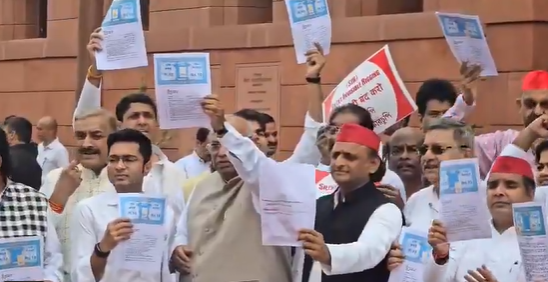
Many Opposition MPs of INDIA bloc held a protest in the Parliament House complex against the Election Commission’s voter roll revision in Bihar.
Leader of Opposition in Rajya Sabha and Congress president Mallikarjun Kharge and others present in the protest raised slogans “vote chor, gaddi chhor” and “vote chori band karo”
The leaders also held huge banners that read “vote chori” and held posters demanding “stop SIR”.
Leaders of Congress, TMC, DMK, Left parties and RJD and Samajwadi Party were seen holding posters and banners right outside the Makar Dwar of Parliament.
The opposition has been protesting in both Houses of Parliament against the SIR, alleging that the EC’s exercise is aimed at “disenfranchising voters” in Bihar ahead of the assembly elections due later this year.
They have been demanding a discussion on the issue in both Houses. Barring discussions on Operation Sindoor in the two Houses, Parliament has seen little business ever since the Monsoon session began on July 21 due to repeated adjournments, mostly over the SIR issue.
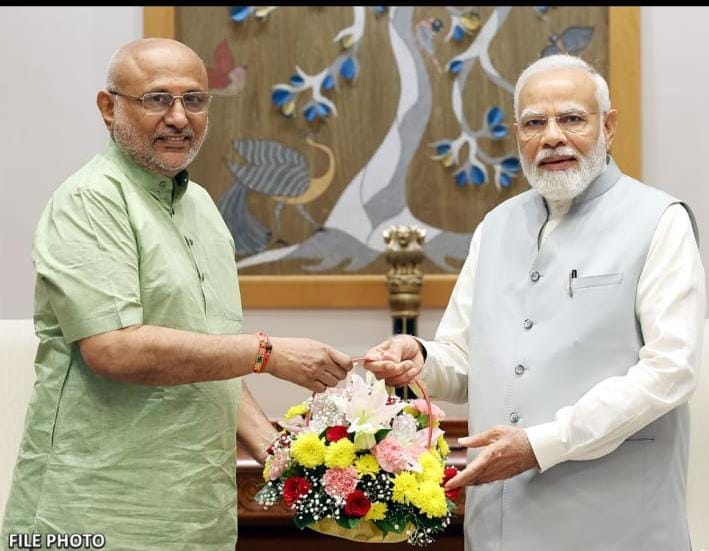
CP Radhakrishnan: A man with strong pan-South India appeal; he also comes with strong connection with BJP’s ideological fountainhead RSS and unlike former VP Jagdeep Dhankhar does not carry any political baggage, say analysts
Photo: courtesy PM’s X account
The BJP on Sunday announced Maharashtra Governor C P Radhakrishnan—former president of the party’s Tamil Nadu unit with strong RSS connection—as the ruling NDA’s candidate for the Vice-Presidential elections to be held shortly.The former Lok Sabha MP has also served as the Governor of Jharkhand and is credited for strengthening the saffron foundation in South India during his tenure as the Tamil Nadu BJP president, analysts say
In those terms the BJP’s VP choice ahead of the Assembly elections in Tamil Nadu early next year is in line with the party’s attempts to strengthen roots in South India. Apart from this, Radhakrishnan is also expected to improve BJP’s electoral prospects in Tamil Nadu by helping smoothen matters with former ally AIADMK, given his good relationship with the Dravidian parties in the state.
BJP president JP Nadda has sought Opposition’s support for Radhakrishnan and hoped for a “unanimous election,” whether rival parties will agree remains to be seen
Prime Minister Narendra Modi praised him for “dedication, humility and intellect.”
“During the various positions he has held, he has always focused on community service and empowering the marginalised. He has done extensive work at the grassroots in Tamil Nadu. I am glad that the NDA family has decided to nominate him as the Vice Presidential candidate of our alliance,” he said
Poles apart from former VP Dhankar
Radhakrishnan will replace Jagdeep Dhankhar who, analysts say, is “poles apart in both strategic and pan-South Indian appeal” from the former VP.
As a political person he is seen as inclusive, plus coming from the Sangh’ background he fits the saffron requirements perfectly. Analysts say his temperament also fits the key Constitutional role better as the Rajya Sabha needs balance and not aggression.
Dhankhar was picked in 2022 amid farmers’ protests and was seen as a message to Jats that they are a part of the central power structure.
Radhakrishnan, who also signals social engineering, fits the BJP’s expansion plans in South India—where apart from Karnataka the saffron party has not been able to do much in other four states, particularly Tamil Nadu and Kerala.
A man with strong pan- South India appeal, he comes with strong connection with BJP’s ideological fountainhead RSS and unlike Dhankhar does not carry any political baggage.
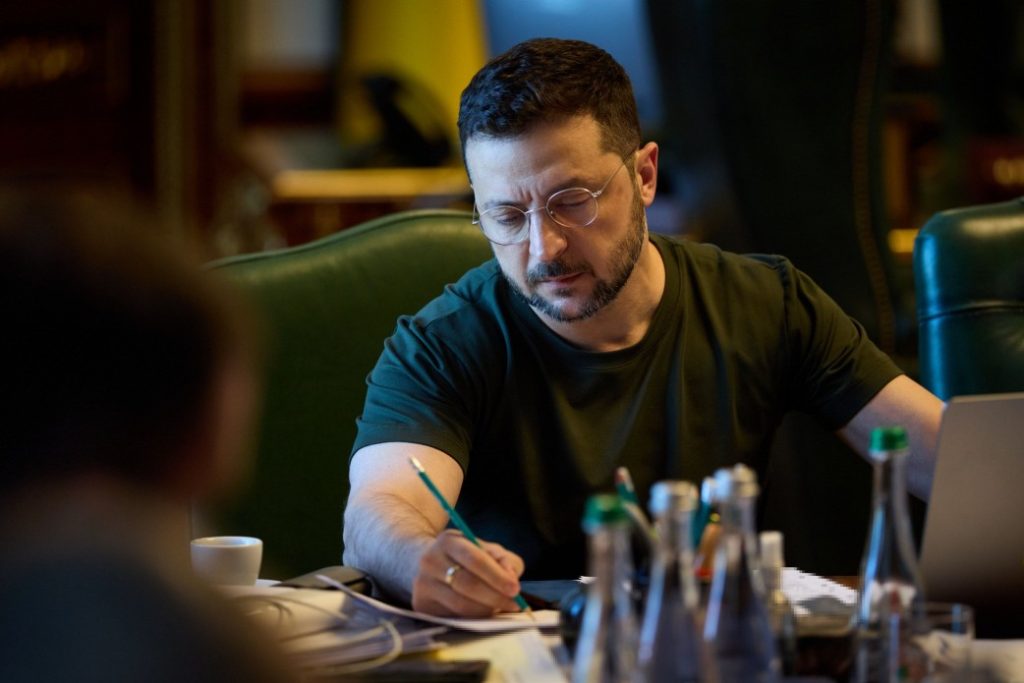
Ukraine sees NATO as protection and a path to Western integration, for Russia Ukraine in NATO is a direct threat to its security, influence, and regional power. This tension over NATO is one of the central drivers of the ongoing war between the two countries
Photo: courtesy Ukraine government official website
Ahead of his meeting with Ukrainian President Volodymyr Zelenskyy, US President Donald Trump said that Kyiv can “end the war with Russia almost immediately” but it must abandon dreams of a NATO membership and bringing Crimea back to Ukraine.
“President Zelenskyy of Ukraine can end the war with Russia almost immediately, if he wants to, or he can continue to fight,” Trump said in a post on Truth Social
“Remember how it started. No getting back Obama given Crimea (12 years ago, without a shot being fired!), and NO GOING INTO NATO BY UKRAINE. Some things never change!!!” he added.
NATO stands for the North Atlantic Treaty Organisation—a military alliance formed in 1949 after World War II, mainly to provide collective defence against the threat of the erstwhile Soviet Union.
Trump’s “No getting back Obama given Crimea,” is a criticism of former President Barack Obama’s response to Russia’s 2014 annexation of Crimea.
Trump’s meeting with Zelenskyy
A day after US President Donald Trump and Russian President Vladimir Putin held high-level talks, Ukrainian President Volodymyr Zelenskyy on Saturday talked peace and “readiness to work with maximum effort” to achieve that.
The Ukraine President will be in Washington DC on Monday the question is will he comply to the conditions that seem an absolute victory for Putin
Victory for Putin?
This is practically what Putin wanted
Ukraine’s desire to join NATO and Russia’s resistance to it are rooted in deep historical, political, and security concerns
Ukraine sees NATO as protection and a path to Western integration, Russia sees Ukraine in NATO as a direct threat to its security, influence, and regional power. The tension over Ukraine and NATO is one of the central drivers of the ongoing war.
Before the Alaska summit, the Europeans had tried to establish with Trump in joint consultations five points for possible peace talks, including a ceasefire and security guarantees.
According to Zelenskyy, it was important that Europeans are involved at every stage to ensure reliable security guarantees together with America.
Ahead of the meeting with Putin, Trump has repeatedly spoken about Ukraine and Russia swapping land to end the war.
His ambition to win the Nobel peace Prize is well known. Recently he also said he might “have to start liking” his political rival Hillary Clinton after she suggested she would nominate him for a Nobel Peace Prize if he successfully brokered a deal between Russia and Ukraine.
The question is will Zelenskyy agree to the conditions?
The Crimea angle
Crimea’s annexation marked the beginning of open Russian aggression against Ukraine. It is also a core issue in the war, and its future will heavily influence any eventual peace settlement.
In 2022, when Russia launched a full-scale invasion, one of its goals was to secure a land corridor from Russia to Crimea via southeastern Ukraine (Donetsk, Mariupol, etc.) and protect it militarily from any potential Ukrainian counterattack.
Crimea remains a red line for Russia, Putin has said he will never return it. For Ukraine, retaking Crimea is a major war aim.
Almost all countries (including the UN) consider Crimea to be illegally occupied by Russia.
Analysts say yatra has the potential to energise key voter segments, the opposition, and highlight the ‘vote chori’ narrative, whether it manages to do that depends on how effectively the campaign translates awareness into voter turnout
Photo: courtesy AICC
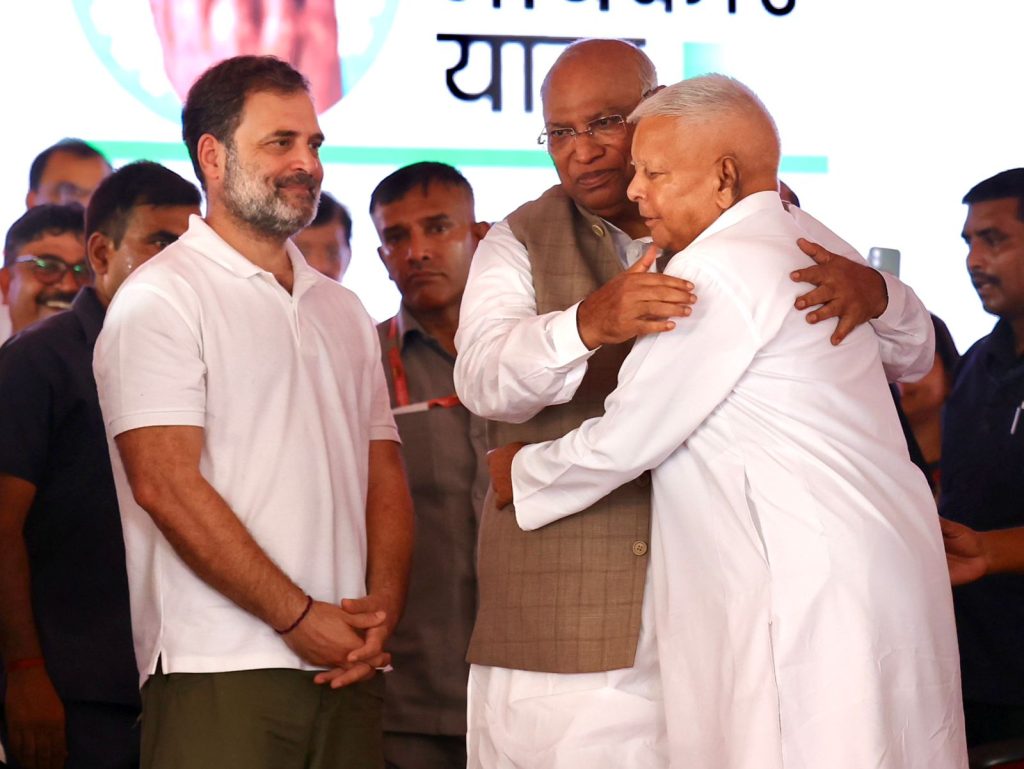
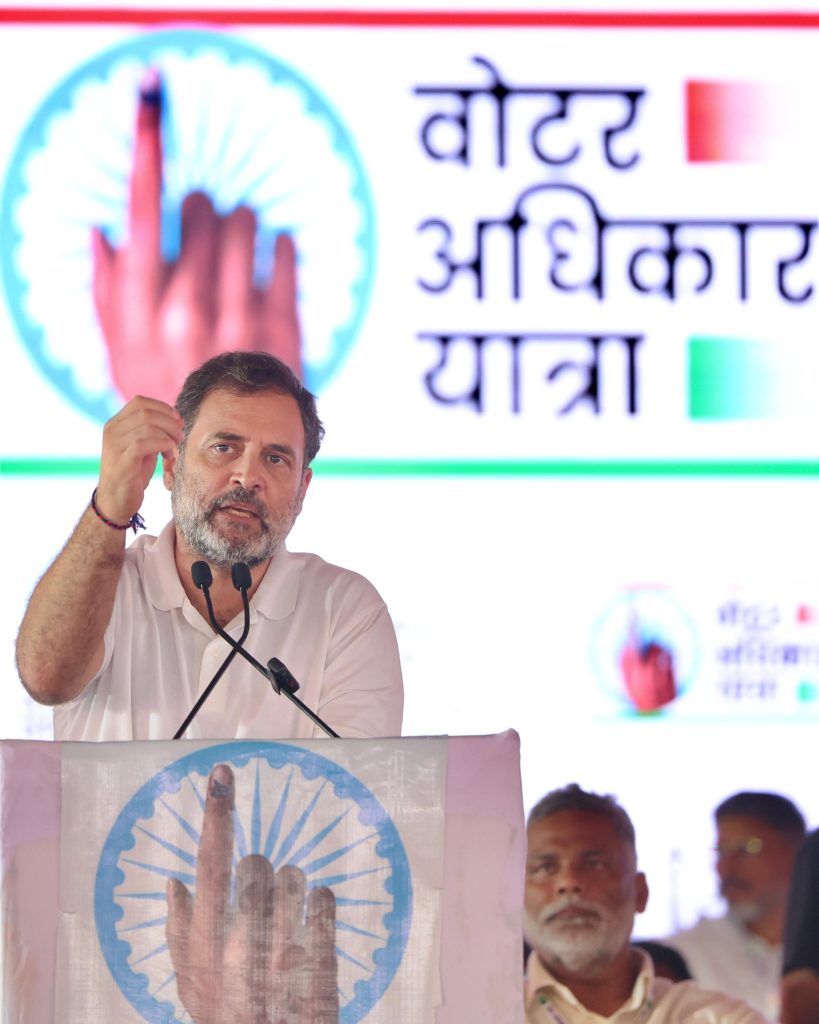
Leader of the Opposition in Lok Sabha Rahul Gandhi on Sunday began his 16-day “Voter Adhikar Yatra” from Sasaram in poll-bound Bihar. Addressing a gathering before starting his 1,300 km yatra covering over key districts, Gandhi claimed the entire country knows the Election Commission is “stealing” votes and elections in collusion with the BJP but the INDIA bloc will not let them succeed in their “conspiracy” to steal Bihar Assembly polls by voter additions and deletions through the Special Intensive Revision of electoral rolls.
RJD leader Tejashwi Yadav said the BJP was taking the EC’s help to remove the genuine voters from the draft rolls and was cheating the people in the name of SIR.” RJD chief Lalu Prasad urged people to “throw out the thieves and BJP to save Bihar and strengthen the democracy.”
The yatra is being organised just months before the Bihar assembly polls
Gandhi has repeatedly described yatra as a “decisive battle to save democracy, the Constitution, and the principle of one person, one vote.”
Yatra—objectives
The main objective, of course, is to protest against alleged voter disenfranchisement via the SIR process, highlight and oppose the exercise which Congress alleges is being used to disenfranchise key communities—especially Dalits, Adivasis, minorities, and economically weaker groups—by incorrectly deleting or adding voters’ names.
Gandhi is accusing the EC and the ruling BJP of manipulating the voter list to facilitate “vote chori” and the yatra is designed to raise awareness among citizens, especially youths, farmers, workers, and marginalized groups, about their democratic rights, urging them to stay alert against attempts to violate the principle of “one person, one vote.”
The march also showcases solidarity among INDIA bloc parties. Leaders from RJD, CPI(ML), CPI, CPI(M), and others are participating, signaling collective resistance to what they view as “institutional erosion of voter rights.”
Photo: courtesy AICC
Will it make a difference
The yatra has mobilised allies across the INDIA/Mahagathbandhan alliance and will pass through strategic constituencies, strongholds and swing seats in key regions, including in regions like Magadh, Seemanchal and Mithila
It has provoked substantial reactions, including social media, whether it translates into votes is the big question.
Gandhi’s earlier yatras—Bharat Jodo Yatra and Bharat Jodo Nyay Yatra—helped revive Congress’s image, and analysts attribute part of its assembly successes in Karnataka and Telangana to these mobilisations. However, electoral gains were not visible in Madhya Pradesh, Rajasthan, and Chhattisgarh. The BJP has dismissed the yatra as a “circus meant more for spectacle than policy impact”
Clearly the yatra is strategically aimed at improving the party’s and the coalition’s strike rate, therefore it is not just a mass messaging. If it galvanises voters—especially around exclusion fears—it could boost turnout and sentiment in favor of the INDIA bloc.
But raising awareness is one thing, winning elections in close, polarised contexts is another.
The historic impact is likely to be mixed, much like in earlier yatras.
The bottom line
Sasaram from where the yatra started holds deep symbolic and political significance both for Bihar and India as the whole. Besides, it also has a large Dalit and backward caste population, which are the key to opposition’s message about voter disenfranchisement under the Special Intensive Revision electoral rolls by direct appeal to communities who fear being erased.
Analysts say yatra has the potential to energise key voter segments, the opposition, and highlight the ‘vote chori’ narrative, whether it manages to do that depends on how effectively the campaign translates awareness into voter turnout
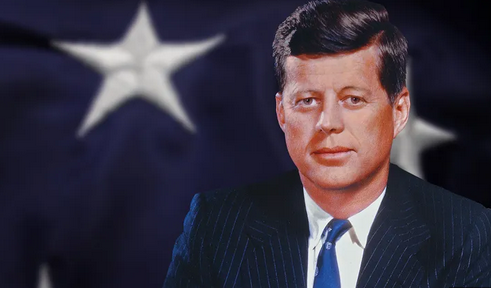
From 1944, long before he became President, John F. Kennedy battled to save himself and his men while adrift in the South Pacific. Extract from “Survival” by John Hersey, a Reporter at Large with newyorker.com
Our men in the South Pacific fight nature when they are pitted against her, with a greater fierceness than they could ever expend on a human enemy. Lieutenant John F. Kennedy, the ex-Ambassador’s son and lately a PT skipper in the Solomons, came through town the other day and told me the story of his survival in the South Pacific. I asked Kennedy if I might write the story down. He asked me if I wouldn’t talk first with some of his crew, so I went up to the Motor Torpedo Boat Training Centre at Melville, Rhode Island, and there, under the curving iron of a Quonset hut, three enlisted men named Johnston, McMahon, and McGuire filled in the gaps.
It seems that Kennedy’s PT, the 109, was out one night with a squadron patrolling Blackett Strait, in mid-Solomons. Blackett Strait is a patch of water bounded on the northeast by the volcano called Kolombangara, on the west by the island of Vella Lavella, on the south by the Island of Gizo and a string of coral-fringed islets, and on the east by the bulk of New Georgia. The boats were working about forty miles away from their base on the island of Rendova, on the south side of New Georgia. They had entered Blackett Strait, as was their habit, through Ferguson Passage, between the coral islets and New Georgia.
The night was a starless black and Japanese destroyers were around. It was about two-thirty. The 109, with three officers and ten enlisted men aboard, was leading three boats on a sweep for a target. An officer named George Ross was up on the bow, magnifying the void with binoculars. Kennedy was at the wheel and he saw Ross turn and point into the darkness. The man in the forward machine-gun turret shouted, “Ship at two o’clock!” Kennedy saw a shape and spun the wheel to turn for an attack, but the 109 answered sluggishly. She was running slowly on only one of her three engines, to make a minimum wake and avoid detection from the air. The shape became a Japanese destroyer, cutting through the night at forty knots and heading straight for the 109.
The thirteen men on the PT hardly had time to brace themselves. Those who saw the Japanese ship coming were curiously paralyzed by fear: they could move their hands but not their feet. Kennedy whirled the wheel to the left, but again the 109 did not respond. Ross went through the gallant but futile motions of slamming a shell into the breach of the 37-millimetre anti-tank gun, which had been temporarily mounted that very day, wheels and all, on the foredeck.
The urge to bolt and dive over the side was terribly strong, but still no one was able to move; all hands froze to their battle stations. Then the Japanese crashed into the 109 and cut her right in two. The sharp enemy forefoot struck the PT on the starboard side about fifteen feet from the bow and crunched diagonally across with a racking noise. The PT’s wooden hull hardly even delayed the destroyer. Kennedy was thrown hard to the left in the cockpit, and he thought, “This is how it feels to be killed.” In a moment, he found himself on his back on the deck, looking up at the destroyer as it passed through his boat. There was another loud noise and a huge flash of yellow-red light, and the destroyer glowed. Its peculiar, raked, inverted-Y stack stood out in the brilliant light and, later, in Kennedy’s memory.
…..A moment later, a PT came alongside. Kennedy jumped onto it and hugged the men aboard—his friends. In the American tradition, Kennedy held under his arm a couple of souvenirs: one of the improvised paddles and the Japanese gas mask.
With the help of the natives, the PT made its way to Bird Island. A skiff went in and picked up the men. In the deep of the night, the PT and its happy cargo roared back toward base. The squadron medic had sent some brandy along to revive the weakened men. Johnston felt the need for a little revival. He felt he needed quite a bit of revival. After taking care of that, he retired topside and sat with his arms around a couple of roly-poly, mission-trained natives. And in the fresh breeze on the way home, they sang together a hymn all three happened to know:
Jesus loves me, this I know, For the Bible tells me so; Little ones to him belong, They are weak, but He is strong. Yes, Jesus loves me; yes, Jesus loves me . . .
With less than a month left for the elections of India’s new Vice President, political activity in the capital has intensified. Both the BJP-led National Democratic Alliance (NDA) and the Opposition’s INDIS bloc are preparing for what could be a defining contest ahead of the next round of state and national polls. Sources say Opposition is expected to field a candidate to take on the NDA’s choice
File Photo
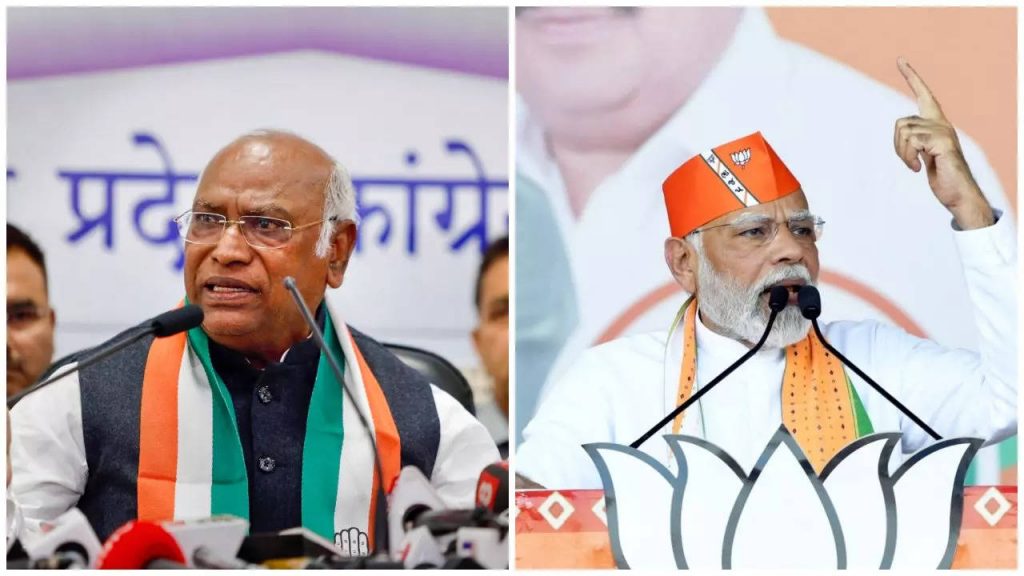
ongress president Mallikarjun Kharge has convened a high-level meeting of Opposition floor leaders on Monday.
The objective, say those in know of developments, is to arrive at a united strategy for the Vice Presidential election. The Opposition is hoping to capitalise on its growing coordination in Parliament and present a single candidate against the NDA’s nominee.
The move may also be a critical test of Opposition unity
NDA huddle under PM Modi
The NDA, on the other hand, has scheduled its Parliamentary Party meeting for August 19
Chaired by Prime Minister Narendra Modi, the agenda includes upcoming legislative priorities and also a decision on the NDA’s Vice Presidential candidate.
According to sources, a closed-door discussion on August 17 will narrow down choices before the official announcement.
Who could be NDA’s pick?
Speculation is rife within political circles, several names are doing the rounds but with Prime Minister Narendra Modi and Home Minister Amit Shah at the helm of affairs, it can be virtually anyone
In the meantime a couple of names have been doing the rounds, V K Saxena, Delhi’s Lieutenant Governor, known for administrative acumen and Arif Mohammad Khan, Governor of Bihar, a seasoned politician who ticks most of the requisite boxes.
Analysts say the BJP’s choice will be more than symbolic and most likely someone with saffron background
The Vice President also serves as the Chairman of the Rajya Sabha, a role crucial in steering debates and ensuring the passage of key bills. With the Upper House often posing hurdles, the ruling alliance is likely to choose a candidate with both political weight and Parliamentary tact.
Opposition’ unity test
For the Opposition, the challenge is not just picking a strong candidate, but doing so collectively.
Past Vice Presidential and Presidential elections have often seen divisions among non-NDA parties, weakening their impact. This time, Kharge is pushing hard for consensus, but whether regional players align remains to be seen.
Beyond numbers
While the NDA holds a clear numerical advantage, the Vice Presidential race is also a battle of optics and messaging.
As political meetings pick up pace, the Vice Presidential election is no longer being viewed as a routine constitutional process. Instead, it is emerging as a symbolic battleground for balance of power, strategy, and future alignments in politics.