Anatomy of a troll army

Tehelka SIT takes an inside look at India’s political troll factory, where hired online operatives work to attack and discredit political rivals.
Rohan Mishra

 “West Bengal Chief Minister Mamata Banerjee can be trolled on social media for a week for Rs 25 to 50 lakh. The same is the rate for Bihar Chief Minister Nitish Kumar. If you want the trolling to continue for a month, the amount runs into crores,” said Kamal Nayan Mishra, alias Rohan Mishra, founder-director of XXXX Technology Private Limited, to a Tehelka undercover reporter.

“I have a fixed rate of Rs 10 lakh per candidate for the upcoming assembly elections in West Bengal and Bihar. For Rs 10 lakh, I will completely destroy the image of any candidate—regardless of party—through social media trolling!,” Rohan says while explaining his ‘services.’
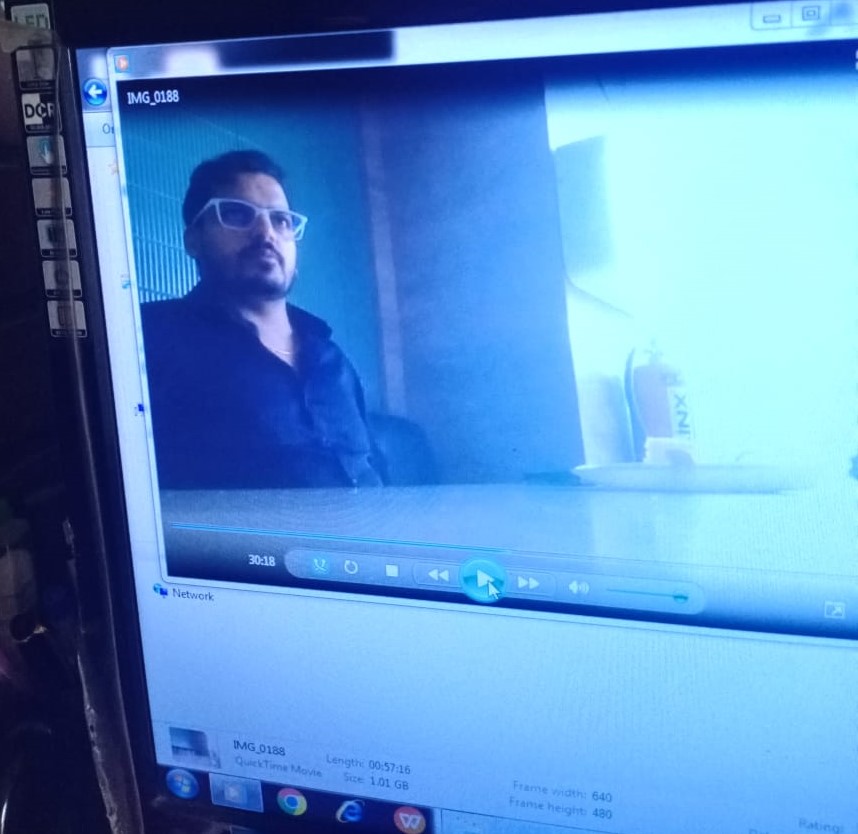
“Mamata Banerjee, Nitish Kumar and Uddhav Thackeray are easy targets because they don’t have strong IT teams. On the other hand, it is difficult to troll Arvind Kejriwal, Maharashtra’s Chief Minister Devendra Fadnavis and MNS chief Raj Thackeray because their IT cells are very strong,” he said while offering a glimpse into his target-selection criteria.

“It is tough to go after BJP-led Central government cabinet ministers, their senior bureaucrats and BJP-ruled state chief ministers. They strike back hard, and their digital teams are so effective that it backfires on us,” Rohan added.

  “It’s easy to troll someone on behalf of the BJP-led Central government because they are in power—and if anything happens to us, they will protect us,” he told Tehelka.
“MLAs and MPs across political parties are easy to target. Trolling them doesn’t usually backfire. The going rate is Rs 2.5 to 3 lakh per week if the trolling is done from Nepal. If it’s done from Malaysia, the rate increases to Rs 4 to 5 lakh per week. Rates in Nepal are lower because trollers there are easier to trace, unlike in Malaysia where the government doesn’t cooperate with India and the investigation is stonewalled. That’s why Malaysia is costlier,” Rohan said while explaining the intricacies of the trade.

“In Congress-ruled Karnataka, Chief Minister Siddaramaiah is easy to troll, but not Deputy Chief Minister D.K. Shivakumar—he’s a strong man, and he will hit back,” he claimed.

“Trolling is no longer done from within India. It now happens from countries like China, Pakistan, Malaysia and Nepal, where the risk of being caught is much lower. Since India has good relations with Nepal, the risk of trollers getting caught is higher there as compared to countries like Malaysia, China or Pakistan. That’s why Nepal remains cheaper than the others,” he said.

By definition, trolling on social media involves posting deliberately provocative, offensive or disruptive content online to upset people and provoke strong reactions. While India doesn’t have a specific law that directly addresses “trolling”, several actions associated with it—such as defamation, criminal intimidation, promoting enmity, and sexual harassment—are punishable under existing laws.

Recently, during Operation Sindoor, a precision military operation by India targetting terror hubs in Pakistan in response to Pahalgam terror attack, Indian Foreign Secretary Vikram Misri and his family were trolled after he announced a ceasefire between India and Pakistan. The trolling drew sharp condemnation from IAS and IPS associations and several political leaders who rallied behind Misri. Over the years, trollers have targeted a range of individuals from different sections of society—some have been arrested, but many remain untraceable.

To understand the inner workings of this trolling industry, Tehelka conducted an undercover investigation—one that hasn’t been attempted before. We met Kamal Nayan Mishra alias Rohan Mishra, founder-director of XXXX Technology Private Limited, headquartered in Noida. The meeting took place at a restaurant in Noida. We posed as clients seeking to have someone trolled online.

In the opening moments of the sting below, the undercover reporter asks a straightforward question—has Rohan Mishra ever arranged trolling on social media? The answer is equally straightforward. Without hesitation, Rohan admits to doing it “many times”—for clients, for employees, and as part of PR. Though he refuses to name names, he confidently assures that the job gets done, and done well enough so that no one looks for a second vendor.

Reporter- Ye batao, trolling karwai hai kabhi social media par?

Rohan- Haan, ab tak kis kis ki karai hai bata nahi sakta aapko…kabhi client ke liye, kabhi employee ke liye…ho jata hai sab par akele nahi…link mein hi karna padta hai.

Reporter- Ye cheezein to openly hoti nahi hai….agar aapne karai hai to mein baat karwaoon.

Rohan- Karai hai; par kiski, ye nahi bataunga; lekin karai hai — ye part of PR hi hai.

Reporter- Mein price ki baat nahi kar raha…kaam ho jaayega?

Rohan- Kaam ho jayega.

Reporter- Karaya hai aapne pehle?

Rohan- Bahut baar karaya hai…ek baar aap karaogey na, aap baat hi nahi karna second wale se, jabtak mein pehla kaam karke na aa jayun.

[What we see here is how normalised online trolling has become in the business of image management. Rohan treats it like any other PR service. The larger concern is this: when distortion becomes routine, truth stands little chance.]

Before getting to our actual purpose, we asked Rohan whether he could troll politicians—like MLAs, MPs, Chief Ministers, and senior bureaucrats. In response, Rohan admitted that he could troll West Bengal Chief Minister Mamata Banerjee, Jammu and Kashmir’s Omar Abdullah, and Bihar’s Nitish Kumar, as all of them have relatively weak IT teams. According to him, MLAs and MPs from any party can be targeted easily. However, it is difficult to troll Cabinet Ministers of the BJP-led Central government, their Chief Ministers, and senior bureaucrats. Since they are in power and backed by strong IT teams, such attempts could backfire on him, he explained. Arvind Kejriwal, too, Rohan said, is hard to troll because he has a strong digital team as well.

Reporter- Trolling matlab gaaliyan bakna?

Rohan- Jo bhi hai…abuse karna, bully karna, sab hai social media par.

Reporter- Aap batao kahan se karwaoge?

Rohan- Nepal se.

Rohan (continues)- Profile kya hai?

Reporter- 2 politicians hain, 2 bureaucrats hain, 1 businessman hai.

Rohan- Kya.. grade kya hai inka?

Reporter- Bureaucrat to maan lo A grade.

Rohan- Politician mein MLA ka ho jayega.

Reporter- MLA ka kara dogey?

Rohan- Haan ..Mantri ka na ho, na Cabinet Minister ka.. kyunki unki poori team hoti hai…unke saath dikkat hai.. MLA ka dikkat nahi hai…wo backfire nahi kartey.

Reporter- Member of Parliament?

Rohan- Haan wo bhi chalega.. bas Minister na ho….wo costly bhi hai.

Reporter- Wo dene ko taiyyar hain… ek CM hai.

Rohan- CM ka to nahi ho payega….accha BJP ka na ho?

Reporter- BJP ka nahi hai…par CM hai… BJP ka na ho aisa kyun?

Rohan- Unka control hai…badi team hai BJP ki.

Reporter- Matlab aapko pakad lenge…magar Nepal se kar rahe hain phir kyun pakad payenge?

Rohan- Main kehta hun starting ka kyun risk lena…CM bhi bada hai.. pehle baki logon ka dekhtey hain.

Reporter- CM doosri party ka de deta hoon?

Rohan- Haan, theek hai.

Reporter- Aap to bol rahe they BJP chodhkar sabke CM ho jayega?

Rohan- Haan aap party ka naam batao?

Reporter- TMC.

Rohan- Phir to ho jayega…inka ho jayega.

Reporter- Mamata Banerjee?

Rohan- Haan inka ho jayega…koi dikkat nahi hai.

Reporter- Bengal ki CM…ho jayega?

Rohan- Kejriwal mein dikkat hai.

Reporter- Kyun?

Rohan- IT ka banda hai….uski IT team strong hai….Mamata ki IT team strong nahi hai….Jammu-Kashmir ki bhi…Mumbai wale ki hai strong.

Reporter- Jammu & Kashmir wale ki aur Mamata ki nahi hai?

Rohan- Nahi hai.

Reporter- Mumbai ka hai…Fadnavis?

Rohan- Haan… BJP ka hai na.

Reporter- Mamata ka ho jayega?

Rohan- Mamata ka ho sakta hai.. Bihar ka ho sakta hai…Nitish ka bhi.

Reporter- Nitish babu ki trolling ho jayegi?

Rohan- Aaram se.

Reporter- BJP ke saath hai wo to?

Rohan- Ho jayegi. Usmein BJP ka fayda hoga!

Reporter- Kyon? Trolling negative hi hogi positive to nahi hogi?

Rohan- Obviously.

[As the undercover conversation progresses, Rohan explains how social media trolling works—not just as online abuse, but as a planned operation. What’s noteworthy is how clinically it’s discussed.]

Rohan confessed that wherever the BJP is in power in India, he will generally not troll their ministers or their MLAs. Nor will he target Rahul Gandhi or Priyanka Gandhi. He said he could troll the current Chief Minister of Karnataka, Siddaramaiah, but not the Deputy Chief Minister, D.K. Shivakumar—because Shivakumar, according to him, is more influential. Rohan claimed he only goes after those where trolling doesn’t backfire. He added that Jharkhand Chief Minister Hemant Soren may not have a strong IT team, but regions like Jamtara are full of fraudsters who could easily trace the trolling back to him.

Reporter- Kis kis ki trolling ho sakti hai, aap bata do?

Rohan- Jahan jahan BJP active hai party mein…satta mein na ho bas sarkaar mein…baki unka Karnataka mein jo hain Congress ke hi hain CM.. uska ho jayega…

Reporter- D.K. Shivakumar?

Rohan- No….uska nahi ho payega.

Reporter- Kyun?

Rohan- Zyada hype hai.

Reporter- Siddaramaiah se zyada?

Rohan- Haan.

Reporter- Rahul-Priyanka?

Rohan- Hone ko to ho jayegi… backfire karega.

Reporter- Mujhe inka karana nahi hai, apni jankari ke liye pooch raha hoon.

Rohan- Backfire jitna jhel pao utna hona chahiye.

 [As the conversation turns to specific names, Rohan lays out his informal criteria for who can be trolled. The rule, as he puts it, is simple: troll only those whose backlash you can absorb. This exchange shows how calculated and cautious the trolling business really is.]

Rohan assured us that nothing would happen to him for trolling even as he nonchalantly explains how online trolling operations are routed through foreign countries like China, Pakistan, Malaysia and Nepal in order to evade accountability. He claims Indian operators use routers to mask their identity, ensuring that the origin appears to be outside India. 

Rohan- Backfire jitna jhel pao utna hona chaiye…hum kya kartey hain router lagatey hain, mera naam kahin nahi rahega…mera kuch nahi hoga, jo aayega Nepal se aayega, Malaysia se, China se aayega…sabse badiya China se…latest hoga.

Reporter- Sarey log China ke honge karne wale?

Rohan- China se.

Reporter- Wo pakad mein nahi aatey?

Rohan- Pakad mein aatey hain…kuch kar nahi saktey na unka.

Reporter- Pakistan se bhi hota hai?

Rohan- Haan..China ka wahi se to aata hai…China ka headquater Pakistan hi hai.

[This exchange reveals how some trolling networks exploit international servers to dodge Indian laws. Rohan explains even if these operatives are detected, little can be done since they fall outside Indian jurisdiction.]

Rohan told Tehelka that if the BJP asked him to troll someone, he would do it without any hesitation, because the party is in power and would protect him if he got into trouble while trolling.

Rohan- Dikkat kya aati hai koi support nahi karta…agar BJP karae to koi dikkat nahi.

Reporter- Accha BJP chahe kisi ka karwae?

Rohan- Koi dikkat nahi…

Reporter- Sarkar mein hai.. bacha legi?

[In this brief but telling exchange, Rohan admits that the real challenge in trolling arises only when there’s no institutional backing. This snippet lays bare the sense of impunity that political backing can provide.]

We then presented our own fake deal to Rohan, saying we wanted one woman, supposedly involved in a romantic dispute, along with one man, a psychiatrist based in Australia, to be trolled on social media. Rohan agreed to take up the task and demanded Rs 2 to 2.5 lakh for trolling the woman for a week from Nepal. He assured us that it would take Indian authorities at least a decade to track them down.

 Reporter- Accha hame karani hai..ek hamare dost hain..Australia mein rehtey hain…ek to unki trolling.

Rohan- Profile kya hai?

Reporter- Kuch nahi woe  psychiatrist hain…Brisbane mein rehtey hain detail mein de dunga.

Rohan- Kuch cheezein pata honi chahiye trolling mein?

Reporter- Saari cheezein to theek nahi hoti trolling mein…kuch farzi bhi hota hai.. aur ek client hain, unka affair chal raha hai kisi se.. shadi nahi ho pa rahi…. wo ladki kahin aur shadi kar rahi hai…ladki ki trolling karwani hai shaadi na ho paaye

Rohan- Ho jayega…bas photo mil jaaye uska…

Reporter- Wo sab hum provide karwa denge.

Rohan- Kya hota hai ID banti hai pehle…

Reporter- Ab ye ladki aur Australia wale ka aap kharcha bata do?

Rohan- Aap details de do pehle.

Reporter- Wo mein de dunga.. aap idea to de do?

Rohan- Ladki ke to Rs 2-2.50 lakh lagega

Reporter- Kitne din hogi trolling?

Rohan- 7 din.

Reporter- 7 din lagataar?

Rohan- Matlab hoti rahegi.. phir shant beth jayege… phir hogi…

Reporter- Kis platform par?

Rohan- Instagram par, kyonke Twitter par koi fayda nahi hai…agar public figure hai to Twitter par hota hai fayda…..Facebook aur Instagram sahi hai is case mein.

Reporter- X par nahi hota?

Rohan- X par hota hai agar public figure ho…

Reporter- Lekin kahin pakad mein na aaye hum log?

Rohan- Nahi, pahuchtey pahuchtey 10 saal lag jayenge!

[This disturbing exchange shows that even private citizens, with no political stature, can be targeted for online harassment—for a price. What we see here is how casually lives can be disrupted, just to serve someone’s malice.]

When we expressed concern that the woman might be driven to suicide after being trolled, Rohan advised us to operate from Malaysia instead of Nepal to deal with this possible scenario. According to him, trolling from Malaysia carries a lower risk of getting caught because the Malaysian government does not cooperate with Indian authorities. However, he hastened to add that this option would be more expensive, costing around Rs 4 to 4.5 lakh per week.

Reporter- Aisa na ho ladki suicide etc kar le trolling ke baad?

Rohan- Haan ye to hai…ladki kahan ki hai?

Reporter- Gurgaon ki.

Rohan- Ye Nepal se ho jayega….magar kahin wahi galti na ho jaaye.

Reporter- Suicide wali?

Rohan- Haan…kyunki usmein govt support nahi karti…Malaysian govt Indian govt ki support nahi karti..

Reporter- Malaysia se ho jayega?

Rohan- Haan.. magar 4-4.50 lakhs starting hai…

Reporter- Aur Australia wale ka?

Rohan- Wo suicide to nahi karega?

Reporter- Nahi.

Rohan- Wo Nepal se karega.. 2.50 lakhs starting hai..7 din ka package hai…7 din lagataar karega…ek haftey ka 2.50 lakh.

Reporter- Matlab 1 month karwatey hain to 2.5 lakh multiply by 4.. matlab 10 lakh ho gaya…aur Malaysia se karwatye hai to…?

Rohan-  Rs 4 se 4.5 lakh se starting hai.

Reporter- Ek haftey ka…Australia wale ka to 20 lakh padega…

[As the conversation turns darker, the reporter raises a chilling concern—what if the woman being trolled ends up committing suicide? Rohan acknowledges the risk but doesn’t back down as he calmly suggests ways to deal with such a situation.]

 The conversation now shifts to the operational side of the trolling business, where Rohan lays out payment terms and precautions. He insists on advance payment—initially 50%, rising to 100% for future deals. He also gave us some precautionary tips to avoid being caught by the authorities. He said we should never talk about trolling over the phone and should avoid carrying our phones to the meeting point, to avoid our location being traced. Third, we should avoid meeting at places with CCTV cameras. He advised us to borrow cash from someone instead of withdrawing it from the bank to make the payment, warning that any financial trail could come under police scrutiny if something untoward were to happen to him.

 Rohan- Jaise chaltey samay aapko advance payment karna hoga…pehla deal mein 70-30 kartey hain…baaki uske baad to advance letey hain poora…pehle paisa liya uske 7 din baad shuru kartey hain kaam, kuch connection liya…uske baad bahut alert rehna padta hai, agar milne bhi aa rahe hain to phone se koi communication nahi rakhtey.

Reporter- Pakde gaye to poochtey honge kahan mile, kaise mile?

Rohan- Haan. Isliye phone par baat nahi kartey, location le liya jahan camera na laga ho…

Reporter- 70 percent advance?

Rohan- Pehli baar 50 percent kar dena.

Reporter- Malaysia Nepal dono ka 50 percent advance?

Rohan- Sab ka, ye to pehli baar hai isliye mein kar raha hoon. Iske baad jab bhi kaam hoga, 100 percent payment hoga…aapka kaam aapko lekar aana hai hamara kaam hamko karna hai…sara payment hoga cash…

[This part shows just how organised and transactional the business of trolling has become. For Rohan, trolling isn’t personal—it’s a professional “service,” priced and protected like any other trade.]

The discussion turns to election season trolling, where Rohan confidently offers his services to target candidates in Bihar elections from any party—BJP, RJD or JDU—with a fixed package of Rs 10 lakh per candidate. He promises to “destroy” reputations with relentless negative trolling over a month, designed to haunt the candidate right up to the polls. Rohan added that in state assembly elections, he is not afraid of the BJP because state ministers don’t come after you as aggressively as cabinet ministers at the Centre. His approach, he says, is the same across states like Bihar, Bengal, and Jharkhand.

Reporter –Agar Bihar ki koi trolling aati hai hamare pass?

Rohan- Ho jayegi.

Reporter- RJD ki, BJP ki, ya JDU ki?

Rohan- Ho jayegi.  Ek candidate ka 10 lakh lenge…..barbaad kar denge 10 lakh mein..trolling se sab!

Reporter- Hai aapka package?

Rohan- Sirf negative..barbaad kar denge!

Reporter- Kitne din?

Rohan- Mahina bhar chalega…break de de kar chalega, matlab chunav tak usko pareshan kartey rahenge…chahe kisi ka ho.. BJP ka ya RJD ka?

Reporter-Chahe kisi ka bhi ho..yahan kyun nahi darr rahe tum?

Rohan- Cabinet Minister ka apna izzat hai…yahan Bihar mein kuch nahi…Cabinet minister hamare peechey pad jayenge…ye nahi.

Reporter- State ke Minister nahi padenge….apko Centre se zyada dikkat hai?

Rohan- Sabko hai, sirf hame nahi.

Reporter- To ye 10 lakh aapka ek candidate ka hai?

Rohan- Haan….hum chunav se 3 mahina pehle start kar denge…pehle hum try karenge ticket usey mil jaaye, ticket milta hai ek mahina pehle, confirmation jab aata hai na.

Reporter- Bengal mein next year chunav hain.. wahan kya ho sakta hai?

Rohan- Same hai. Bihar ho gaya, Bengal ho gaya, Jharkhand ho gaya…in sabka same hai.

[This exchange reveals trolling as a premeditated election weapon, priced and timed to disrupt political campaign.]

Now, Rohan told us about the rates for social media trolling in South India. He reveals that social media trolling rates in South India are almost double compared to North India. The reason, he explains, is that people in the South are generally more educated and capable of pushing back, making trolling a riskier business. He confirms that while states like Bihar, Bengal, Uttar Pradesh, Rajasthan, and Jharkhand have a standard rate of Rs 10 lakh per candidate, the price doubles for states like Kerala and Karnataka.

Rohan- South ka zyada hai…double hai.

Reporter- South mein double kyun hai?

Rohan- Wahan par log zyada padde likhe hain…backfire kar saktey hain.

Reporter- Matlab South mein bewakoof banana asaan nahi hai? Kaun kaun se state bataye aapne.. Bihar, Bengal, Uttar Pradesh, Rajasthan, Jharkhand… yahan 10 lakh per candidate?

Rohan- Haan…Kerala, Karnataka bhi ho gaya.. yahan bhi double lagega.

[This exchange reveals how regional social dynamics and education levels influence trolling costs. It underscores that online harassment is a calculated risk, priced according to the likelihood of targets retaliating or exposing the perpetrators.]

Rohan further explains the two-fold strategy behind election trolling. First, there is trolling targeted at those vying for party tickets, aimed at boosting the client candidate’s own chances. Second, once the tickets are decided, trolling shifts to pulling down client candidate’s opponent in the poll arena. The goal is clear: damage the rival’s image to secure a political edge.

 Reporter- Maan lo mein chunav ladh raha hoon mera opposite jo hai uski trolling karni hai.

Rohan- 2 tarah se trolling hoti hai…ek to wo jo ticket maang raha hai aur ek wo jo aage chal raha hai…ticket mein to jo aage hai usko peeche karna hai trolling se…aapka naam parallel dikh raha hai to jo aage hai usko down karna hai.

Reporter- Ye aap election ticket ki baat kar rahe hain?

Rohan- Ticket ke liye aap ja rahe ho ussey pehle.

Reporter- Ek to trolling ye ho gayi, ab doosri?

Rohan- Wo jo saamne wala hai usko down karke…negative trolling se.

[This reveals how trolling is used strategically, not just as random abuse but as a calculated tool to influence political outcomes. It underscores the weaponisation of social media in elections, where reputations are targeted with ethics taking a back seat.]

In the next exchange, Rohan tells us the rates for trolling Mamata Banerjee and Nitish Kumar on social media. He demanded Rs 25-50 lakh per week for trolling either of them, and said if it continues for a month, the amount would run into crores. For MLAs and MPs, the rates drop to between Rs 5 and 8 lakh, depending on the individual’s profile.

Reporter- Mamata ka kispar karwaogey?

Rohan- Twitter par hoga na, paise zyada lagengey, ismein darr hota hai na account suspend honey ka.

Reporter- Aur Nitish ka?

Rohan- Wahi same hai…25-50 haftey ke lag hi jayenge.

Reporter- Matlab ek Mahina karwaogey to crore se oopar ho jayega. Bas hamarey liye koi dikkat na ho, dekh lena.

Reporter (continues)- MLA, MP ka kitna hoga?

Rohan- 5-7-8 lakh…depend karta hai na kaun hai.

[While Rohan discusses the platforms and costs involved in trolling high-profile politicians like Mamata Banerjee and Nitish Kumar, it comes to fore how social media platforms and their policies shape the economics of trolling. Rohan reasons that Twitter trolling is expensive because it entails the risk of account suspension while quoting the weekly price at Rs 25-50 lakh.]

Rohan admitted to Tehelka that during the 2024 general elections, he was caught hacking the social media account of a candidate contesting the Lok Sabha elections. As a result, his original SIM card was blocked, and he is now using a new one. In another admission, Rohan said his partner was once caught trolling someone on social media, after which they destroyed their laptop to avoid detection. He insisted that we use the term “negative PR” instead of trolling while conversing with him.

During the conversation, Rohan claimed that the social media trolling of Foreign Secretary Vikram Misri’s family during Operation Sindoor was carried out from Malaysia. He repeatedly stressed that the BJP-led central government and its bureaucrats are hard to troll because of their power, and attempts can backfire on him. He cited Maharashtra Chief Minister Devendra Fadnavis and MNS’s Raj Thackeray as tough targets due to their strong IT teams, while Uddhav Thackeray is easier to troll because of his weak IT setup.

Rohan Mishra and his father are the two directors of his company. Officially, his name is Kamal Nayan Mishra, as shown on his Aadhaar and PAN cards, but he deals with clients under the name Rohan Mishra. He met the Tehelka reporter using this alias. When questioned about the dual identity, he explained that handling such “negative” work requires evading authorities, so he uses a different name with clients as a precaution.

Asked to show evidence of his previous trolling work, Rohan said they do not keep records; the work is created and subsequently destroyed to avoid controversy. He also refused to reveal client names, citing it as a business strategy. Rohan invited us to assign him low-profile social media trolling to test his skills. At the time of writing, he called to say he is currently engaged in another social media trolling project.

So, the Tehelka investigation exposes the hidden, systematic nature of paid political trolling in India—an industry that thrives in the shadows, carefully balancing risks and rewards while shaping public opinion in concerning ways.

 Tehelka SIT Report Impact

Tehelka Special Investigation Team’s (SIT) story “The Great Vehicle Transfer Con” has been warmly appreciated by our readers and social media users. The investigation exposed a thriving black market in Delhi-NCR, where used-car dealers and brokers exploit loopholes in the system to register vehicles on fake addresses—using forged rent agreements and Aadhaar details—for a price.

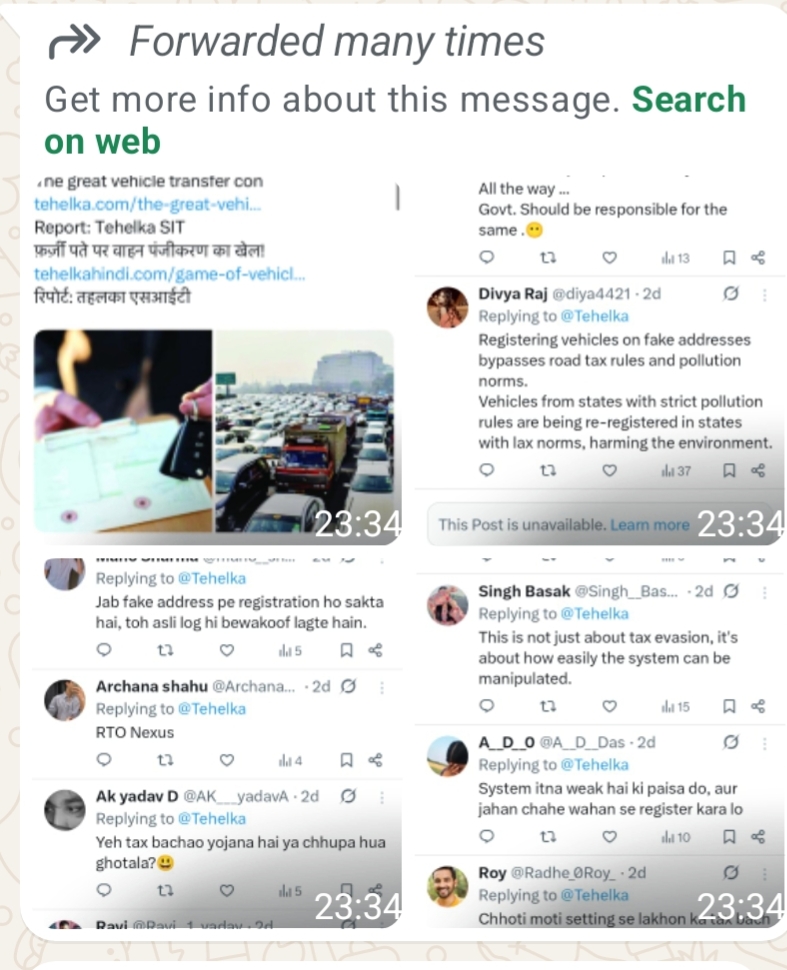
The report has been widely viewed on X (formerly Twitter), with the platform registering 16K views and around 500 ‘likes.’ Viewers on X and Facebook responded warmly, with many, like Kavita Sharma, hailing it as an “Excellent investigation.”

Meanwhile, the exposé on the fake vehicle registration racket and its deep security implications has also left many readers exasperated. Some alleged a deep nexus between used-car dealers and authorities such as the RTO, while others expressed frustration at how law-abiding citizens feel cheated after learning the facts. Mano Sharma summed it up bluntly: “Jab fake address per registration ho sakta hai, toh asli log bewakoof hi lagte hain.”
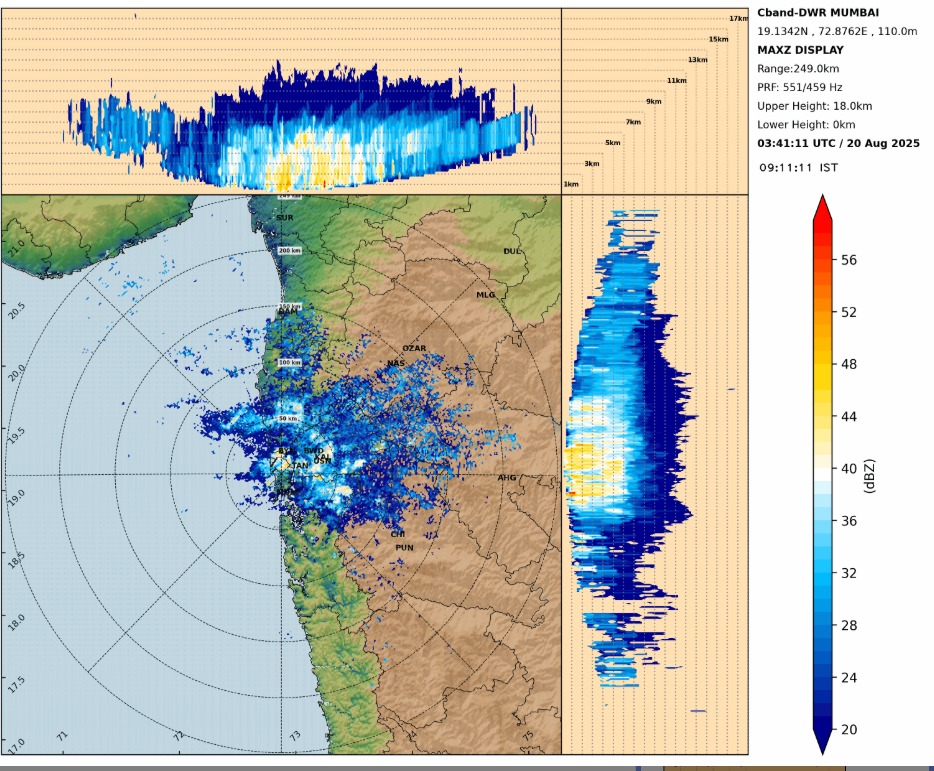
Maharashtra battered, ‘Maximum’ city sinks, infrastructure buckles again

At least 21 persons have died statewide over the past five days, and hundreds displaced or rescued from flooded areas; respite expected from Thursday; Tuesday’s monorail incident, in particular, highlighted glaring safety oversights, raising fresh questions about commuter safety and emergency preparedness in mind climate change.

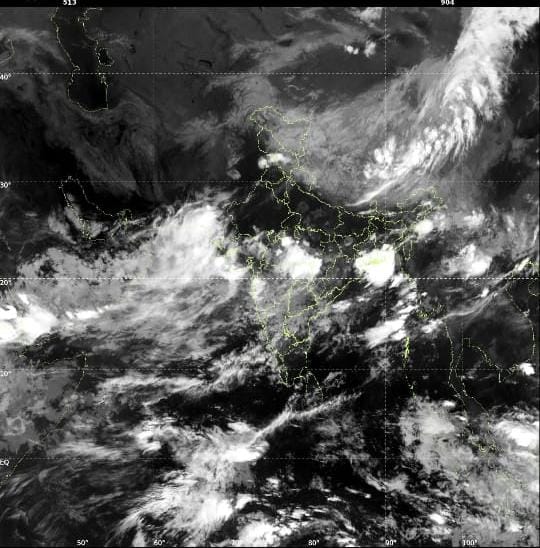
Image courtesy IMD: Intense to very intense convection over North Arabian Sea, Gujarat, north Konkan, Madhya Pradesh, Vidarbha, northeast Odisha

On Tuesday Mumbai was thrown into turmoil as two overcrowded monorail trains stalled mid-air between stations, trapping 782 passengers for hours. A city-wide power outage cut off electricity and air-conditioning, leaving passengers in stifling conditions. One person was reportedly hospitalised due to suffocation, while emergency services launched a large-scale rescue operation to evacuate everyone safely.

This dramatic episode unfolded as Maharashtra grappled with one of its most punishing spells of rain in recent years. At least 21 persons have reportedly died statewide over the past five days, and hundreds displaced or rescued from flooded areas. Mumbai’s public transport system — a vital lifeline for millions — has been severely disrupted, with multiple local trains cancelled and flights delayed or grounded due to waterlogged runways and low visibility.

Cracks in the city’s backbone

Mumbai is called the Maximum city for reasons other than rains, it is for maximum opportunities it offers being India’s economic engine, home to the Bombay Stock Exchange, major corporate headquarters, and a thriving Bollywood film industry. Every year lakhs of migrants arrive here in search of work and success

However, despite repeated warnings and decades of similar crises, the  infrastructure of the Maximum city remains chronically ill-equipped to handle extreme weather. Drainage systems continue to fail under pressure, flood-prone zones remain unfortified, and even newer transport infrastructure like the Monorail has proven vulnerable.

Tuesday’s monorail incident, in particular, highlighted glaring safety oversights, raising fresh questions about commuter safety and emergency preparedness.

The swelling Mithi River came dangerously close to breaching the danger mark, the India Meteorological Department (IMD) has extended its red alert for Mumbai through Wednesday, though rainfall is expected to taper slightly by Thursday.

Climate connection

Mumbai recorded over 200 mm of rainfall in just 24 hours on Tuesday — a level categorised as ‘extremely heavy’ by the IMD.

According to the IMD’s latest data, rainfall (mm, >100mm) recorded over different parts of Maharashtra between 830 AM August 19 to 8 AM August 20 are as follows:

Matheran (Raigad):382.5mm

Mahabaleshwar (Satara): 278.0mm

Vikhroli (Mumbai suburban): 229.0mm

IIGHQ New Panvel (Raigad): 217.5mm

Karjat (Raigad): 211.5mm

Mumbai Airport (Mumbai suburban): 208mm

Byculla Mumbai (Mumbai city): 193.5mm

Mumbai Santacruz (Mumbai city): 176mm

Juhu Airport (Mumbai suburban): 149.5mm

Bandra (Mumbai suburban): 137mm

Chiplun (Ratnagiri): 123.5mm

Bhayander (Thane): 100.5mm

Image: courtesy IMD

Convergence of weather systems

It is being driven by a convergence of weather systems—a low-pressure area over the Bay of Bengal and an east-west trough in the Arabian Sea, which together are pumping excess moisture into the western coast.

Unlike the infamous 2005 floods, which saw nearly 944 mm of rain in a single day, this event is marked by sustained downpours over several consecutive days. Prolonged, high-intensity rainfall is becoming more common, another sign of changing climate dynamics and oblivion of our planners to it.

Warmer oceans are amplifying monsoon systems, increasing frequency and intensity of extreme weather events, say experts

A city drowns

As rainfall patterns grow more erratic and infrastructure continues to lag behind, Mumbai finds itself increasingly vulnerable to natural and man-made crises. The events of this week have served as yet another wake-up call — not just about emergency preparedness, but about the urgent need for sustainable urban planning, resilient infrastructure, and serious investment in climate adaptation.

Centre to table J&K Reorganisation (Amendment) Bill in Lok Sabha today

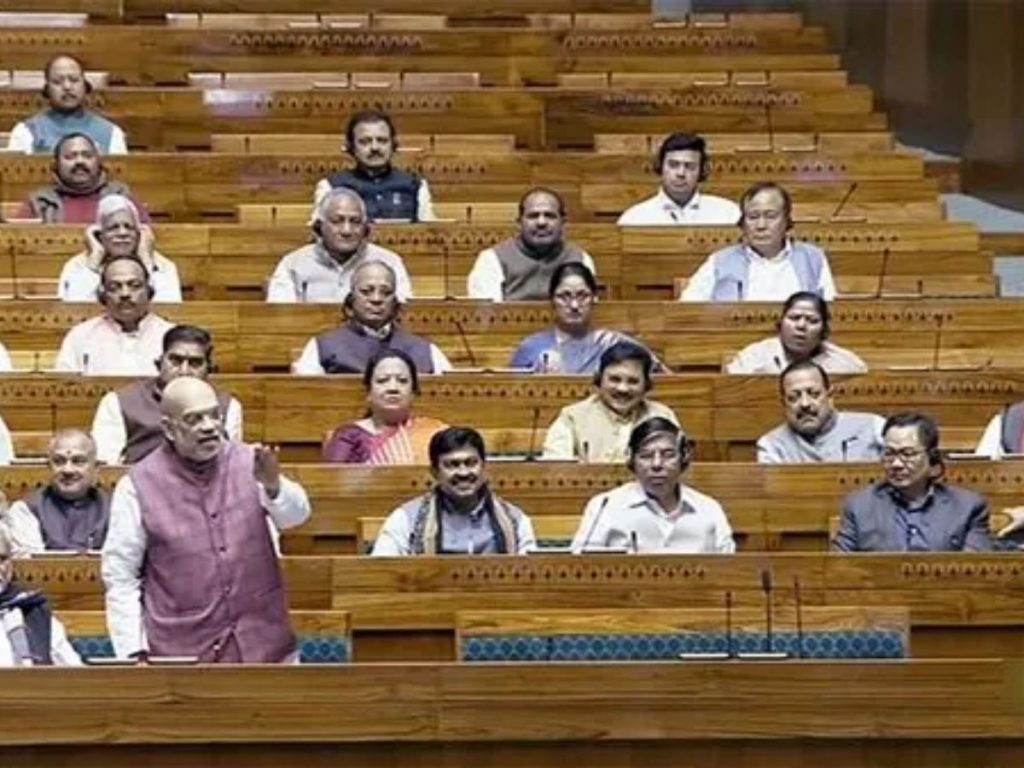
The Union government is set to introduce The Jammu and Kashmir Reorganisation (Amendment) Bill, 2025 in the Lok Sabha today, aiming to create a legal framework for removing a Chief Minister or Minister if arrested in connection with serious criminal offences.

Union Home Minister Amit Shah will present the bill, which will later be referred to a Joint Committee of both Houses for detailed deliberations. The proposal is part of a revised list of government business for August 20–21 that also includes The Constitution (One Hundred and Thirtieth Amendment) Bill, 2025 and The Government of Union Territories (Amendment) Bill, 2025.

According to the Statement of Objects and Reasons, the amendment seeks to address a gap in the Jammu and Kashmir Reorganisation Act, 2019, which currently has no provision for removing an arrested Chief Minister or Minister.

“It is expected that the character and conduct of Ministers holding office should be beyond any ray of suspicion,” the statement notes. “A Minister, who is facing an allegation of serious criminal offences, arrested and detained in custody, may thwart or hinder the canons of constitutional morality and principles of good governance and eventually diminish the constitutional trust reposed by people in him.”

Key provisions of the bill:

  • If a Minister is detained for 30 consecutive days for an offence punishable with at least five years in prison, the Lieutenant Governor must remove him on the Chief Minister’s advice. If no advice is given by the 31st day, the Minister automatically ceases to hold office.
  • If a Chief Minister is similarly detained, he must tender his resignation within 31 days. If he fails to do so, he automatically ceases to hold office the following day.
  • The amendment clarifies that such individuals may be reappointed after release from custody.

The Home Minister emphasized that elected representatives must “rise above political interests and act only in the public interest and for the welfare of people,” and said the bill is designed to “uphold constitutional morality and good governance.”

The amendment will come into effect on a date notified by the Centre in the Official Gazette once passed by Parliament.

Rahul will be PM after next Lok Sabha polls, says RJD’s Tejashwi Yadav

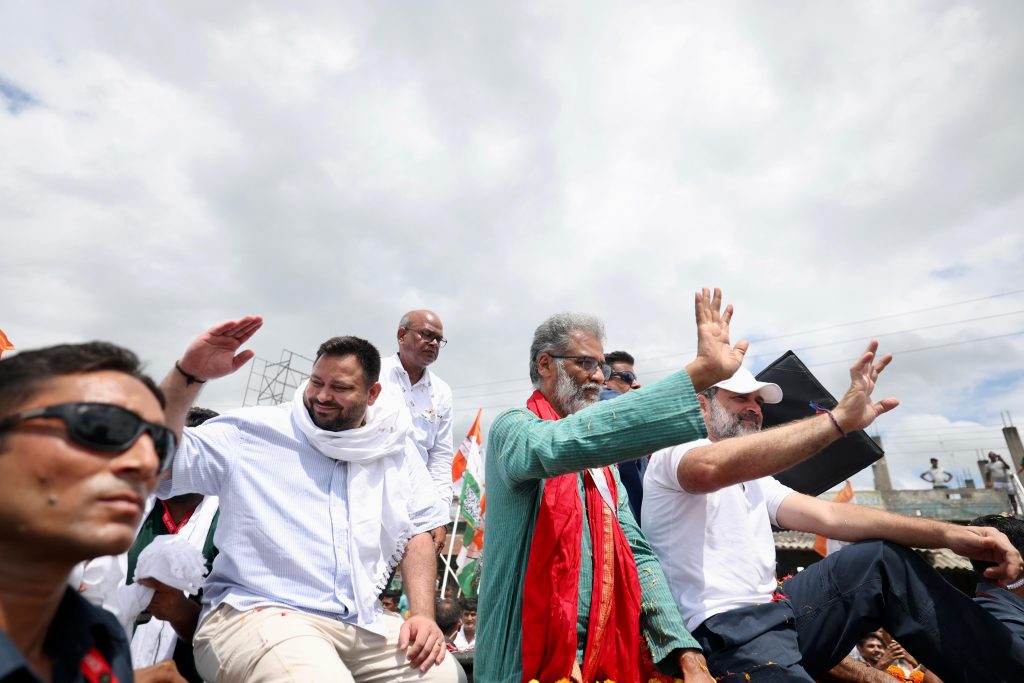
 “Next time, we will make Rahul Gandhi the Prime Minister,” Tejashwi Yadav said with Gandhi by his side while leading the ‘Voter Adhikar Rally’ in Bihar’s Nawada

Photo: courtesy AICC

RJD leader Tejashwi Yadav on Tuesday said the opposition will work towards making Congress leader Rahul Gandhi the Prime Minister in the next Lok Sabha elections, thus indicating that the Leader of Opposition in the Lok Sabha may be the face of the INDIA bloc in the next general elections  

“Next time, we will make Rahul Gandhi the Prime Minister,” Tejashwi Yadav said with Gandhi by his side leading the ‘Voter Adhikar Rally’ in Bihar’s Nawada.

Asserting that the youth have also resolved to remove the “old and rickety” NDA government in Bihar, Tejashwi said the time has come for the young generation to get a chance to run the State. “The Nitish Kumar-led government has become ‘khatara’ (rickety) and needs to be urgently replaced. The young should now get a chance… We have a vision for Bihar. The youth have resolved that they will remove from power this old and rickety government, and ensure that Rahul Gandhi is the PM after the next Lok Sabha polls,” he was quoted as saying

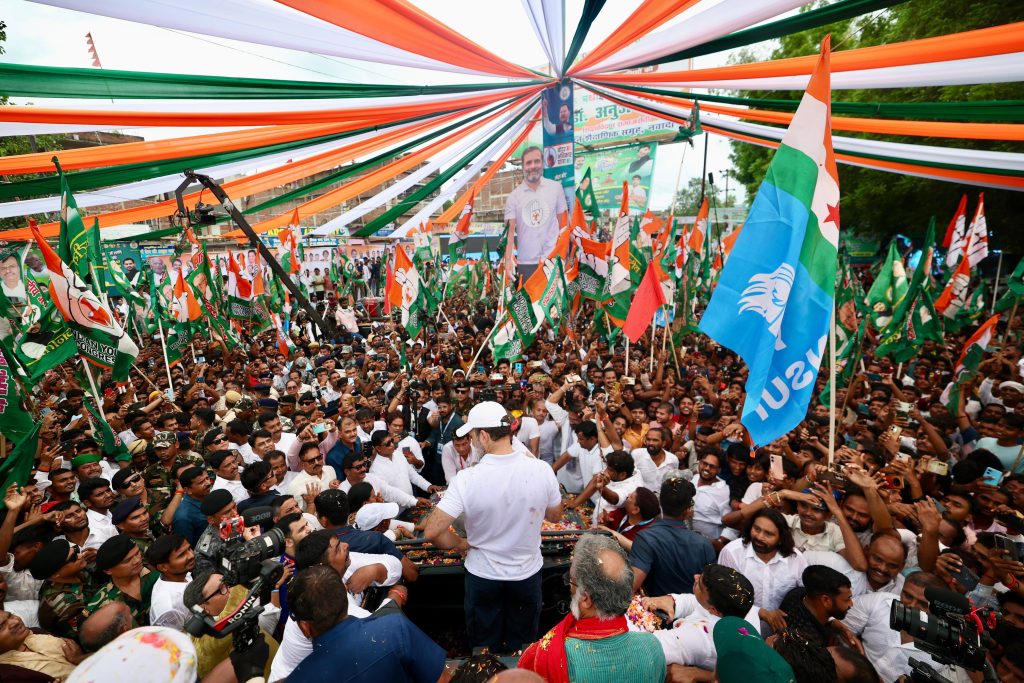
Gandhi on Sunday began his 16-day “Voter Adhikar Yatra” from Sasaram in poll-bound Bihar.

Photo: courtesy AICC

Yatra—objectives

The main objective, of course, is to protest against alleged voter disenfranchisement via the SIR process, highlight and oppose the exercise which Congress alleges is being used to disenfranchise key communities—especially Dalits, Adivasis, minorities, and economically weaker groups—by incorrectly deleting or adding voters’ names.

Gandhi is accusing the EC and the ruling BJP of manipulating the voter list to facilitate “vote chori” and the yatra is designed to raise awareness among citizens, especially youths, farmers, workers, and marginalized groups, about their democratic rights, urging them to stay alert against attempts to violate the principle of “one person, one vote.”

The march also showcases solidarity among INDIA bloc parties. Leaders from the RJD, the CPI (ML), the CPI, the CPI(M) and others are participating, signalling collective resistance to what they view as institutional erosion of voter rights.

The yatra has mobilised allies across the INDIA/Mahagathbandhan alliance and provoked substantial reactions, including social media, whether it translates into votes is the big question. 

Gandhi’s earlier yatras—Bharat Jodo Yatra and Bharat Jodo Nyay Yatra—helped revive Congress’s image, and analysts attribute part of its assembly successes in Karnataka and Telangana to these mobilisations. However, electoral gains were not visible in Madhya Pradesh, Rajasthan, and Chhattisgarh. The BJP has dismissed the yatra as a “circus meant more for spectacle than policy impact”

Kishtwar cloudburst: Death toll rises to 64 as rescue operations intensify

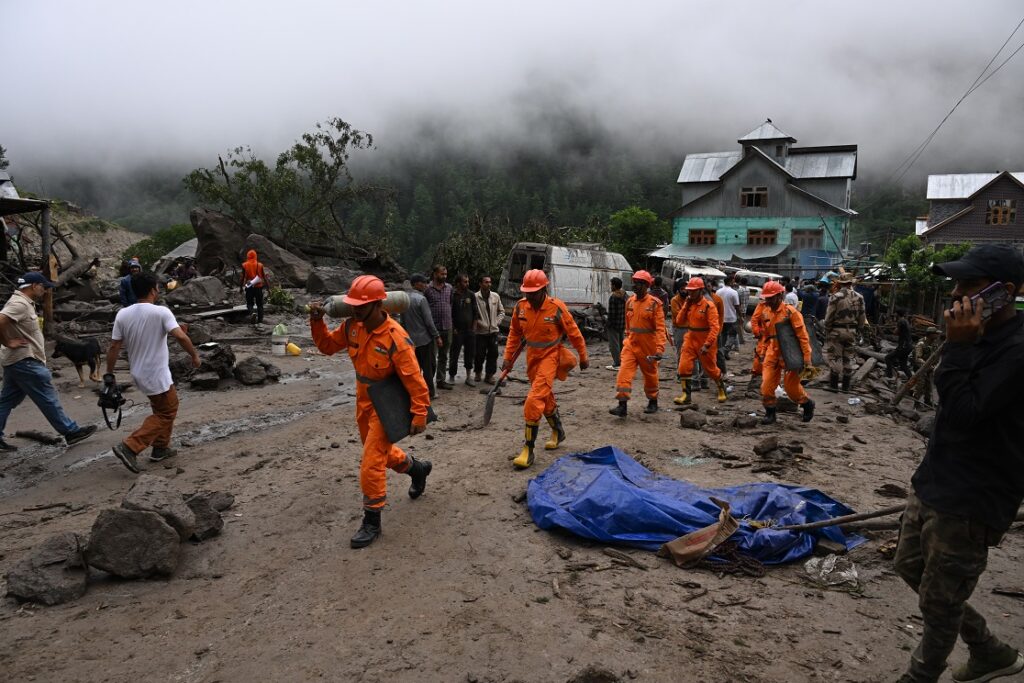
Srinagar: The death toll in the devastating cloudburst at Chisoti village in Jammu and Kashmir’s Kishtwar district climbed to 64 after rescuers recovered the body of a woman on Tuesday, officials said.

The decomposed body was found downstream as weather improvement allowed search teams to expand their operation. Sniffer dogs also located human remains under debris, believed to belong to a victim recovered on the first day of the tragedy.

The cloudburst on August 14 triggered flash floods that destroyed a makeshift market, a community kitchen for Machail Mata pilgrims, and damaged houses, temples, and infrastructure. Among the dead are three CISF personnel and a Special Police Officer.

Rescue teams, including the Army, NDRF, SDRF, CISF, BRO, police, and local volunteers, are working round-the-clock at multiple sites. Heavy machinery, sniffer dogs, and even controlled explosions are being used to clear giant boulders blocking access.

A Bailey bridge built by Army engineers on Sunday has restored some connectivity to Chisoti and the Machail Mata shrine. Over 160 people have been rescued, while the list of missing has been revised down to 39.

The annual Machail Mata yatra, suspended since the disaster, remains halted for a sixth consecutive day, though authorities are expected to allow a ‘Charri’ pilgrimage group to proceed later this week.

Vice President elections—it is B Sudershan Reddy versus CP Radhakrishnan

The common point is that both come from South India, Reddy from Andhra Pradesh (present day Telangana) and Radhakrishnan from Tamil Nadu; While the BJP-led NDA holds a numerical advantage, the contest is also about optics and messaging; This Vice Presidential contest is an ideological battle, says Kharge

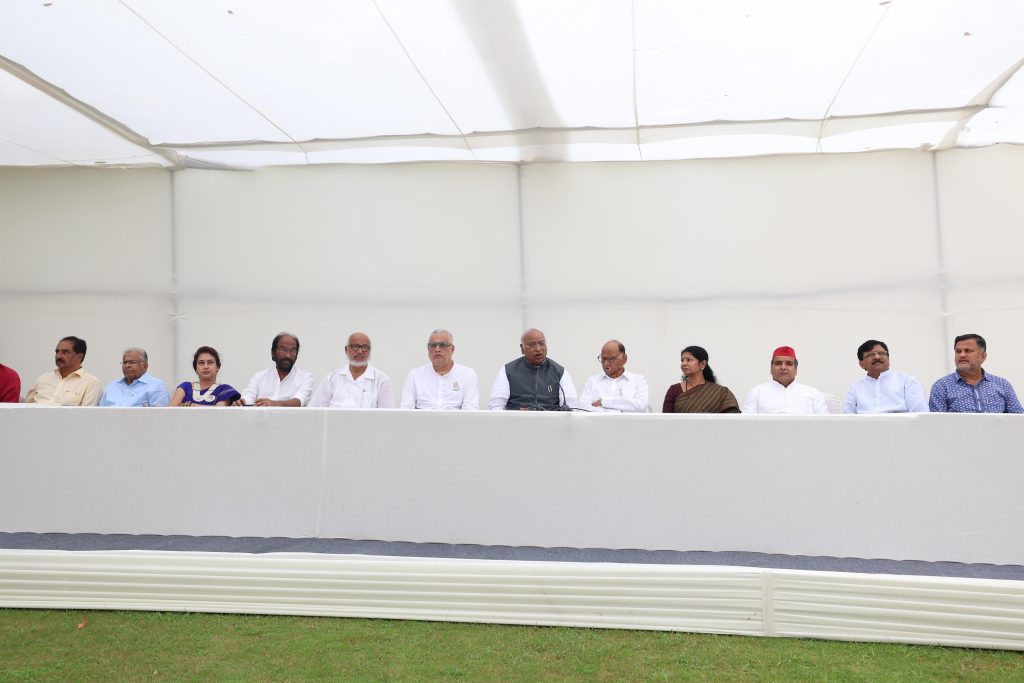
Former Supreme Court judge B Sudershan Reddy is the INDIA bloc’ candidate for the post of the Vice President against Maharashtra Governor CP Radhakrishnan, the BJP-led NDA candidate for the elections to be held shortly. 

“B Sudershan Reddy is one of India’s most distinguished and progressive jurists. He has had a long and eminent legal career, including as judge of the Andhra Pradesh High Court, Chief Justice of Guwahati High Court and Judge of the Supreme Court,” Congress President Mallikarjun Kharge said announcing his name.

“He has been a consistent and courageous champion of social, economic and political justice. He is a poor man and many judgments if you read, will know how he favoured the poor people and also protected the Constitution and fundamental rights,” Kharge added.

The BJP on Sunday announced the name of Radhakrishnan—a former Lok Sabha MP who has also served as the Governor of Jharkhand and is credited for strengthening the saffron foundation in the south during his tenure as the Tamil Nadu BJP president

This contest is an ideological battle: Kharge 

“All Opposition parties have nominated Shri B. Sudershan Reddy garu as their joint candidate for the position of the Vice President of India. 

“Shri B. Sudershan Reddy garu is one of India’s most distinguished and progressive jurists. He has had a long and eminent legal career including as Judge of the Andhra Pradesh High Court, Chief Justice of Guwahati High Court and Judge of the Supreme Court. He has been a consistent and courageous champion of social, economic and political justice. 

“He reflects, fully, the values that shaped our country’s Freedom Movement so profoundly, and the values on which our country’s Constitution and Democracy have been anchored. 

“All these values are under assault and therefore, our collective and determined resolve to fight this election,” Kharge said.

Opposition’ unity test

Trinamool Congress leader Derek O’ Brien said Reddy’s name was decided unanimously and the Aam Aadmi Party (AAP), too, was on board.

Reddy will file his nomination on Thursday, Kharge said.

Born on July 8, 1946, Reddy was appointed the judge of the Supreme Court on January 12, 2007 and retired on July 8, 2011 after a four-year stint.

For the Opposition, the challenge was not just picking a strong candidate but doing so collectively. Past vice presidential and presidential elections have often seen divisions among non-NDA parties, weakening their impact.

Numbers’ edge 

The common point is that both come from South India, Reddy from Andhra Pradesh (present day Telangana) and Radhakrishnan from Tamil Nadu.

However, as far as numbers are concerned, the BJP-led NDA has an edge.

The BJP and NDA allies have at least 150 more members than the opposition in the Vice Presidential Electoral College which includes MPs from the Lok Sabha and the Rajya Sabha. With support of 422 of 787 MPs across both Houses, numbers stack up in favour of NDA, but fight may be closer than earlier times

The BJP has 240 members in Lok Sabha and 99 in Rajya Sabha. If the members of allies are included, the ruling side will have more than 457 members in both houses of Parliament. The government recently also filled the four nominated seats in Rajya Sabha

The Congress—the largest opposition party in both houses—has 99 members in the Lok Sabha and 27 in the Rajya Sabha. Along with the INDIA bloc parties and friends, the total strength would be around 300 in the two houses.

The Rajya Sabha also has parties that are said to be non-aligned. They include at least 18 members belonging to the Biju Janata Dal, which is now BJP’s rival in Odisha, and the YSR Congress, which has already signalled support for the NDA candidate, and the Bharat Rashtra Samithi. These parties in the past have mostly backed the government in case of controversial legislation.

In 2017, BJP Candidate Venkaiah Naidu won with a margin of 272 votes.

In 2022, Jagdeep Dhankhar won by a margin of 346 votes.

Beyond numbers

While the BJP-led NDA holds a clear numerical advantage, the contest is also about optics and messaging. 

As political parties get down to the business of electing the new Vice President, the election is being seen beyond the realm of a routine Constitutional process, a fight to maintain  balance of power and strategise future alignments.

China and India vow to boost multipolarity and global democracy

China has agreed to maintain momentum of bilateral ties with India and emphasize that both countries act as major powers and contribute to promoting world multipolarization and democratization of international relations.

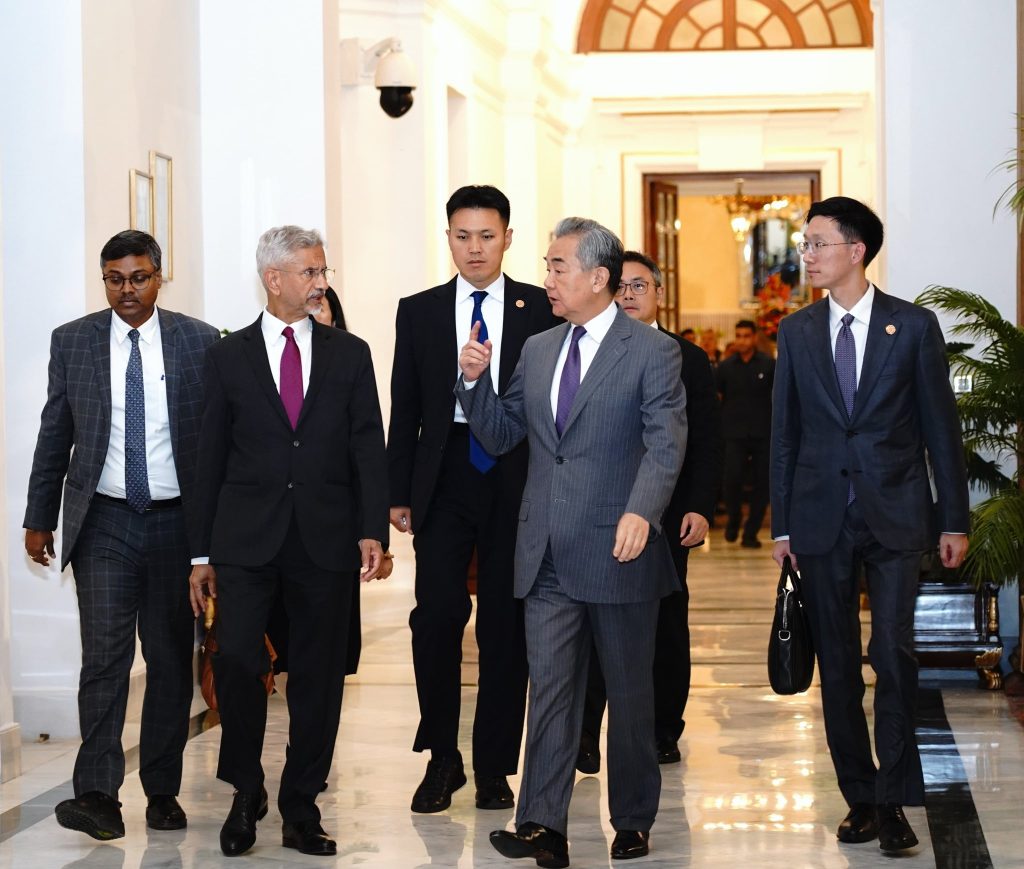
This consensus came from talks between Chinese Foreign Minister Wang Yi who is visiting India, and his Indian counterpart Subrahmanyam Jaishankar.

Sharing the brief of the meeting on micro blogging site X, Chinese Ambassador to India Xu Feihong informed that Yi said that as the two largest developing countries with a combined population of more than 2.8 billion, China and India should demonstrate a sense of global responsibility, act as major powers, set an example for developing countries in pursuit of strength through unity, and contribute to promoting world multipolarization and democratization of international relations.

“Wang Yi noted that it is imperative for the two sides to have correct strategic perceptions, view each other as partners and opportunities rather than rivals or threats, and invest their valuable resources in development and revitalization. The two countries should explore right ways for neighboring major countries to coexist with mutual respect and trust, pursue common development and achieve win-win cooperation,” Xu added.

During the meeting, Yi emphasized that China is willing to uphold the principle of amity, sincerity, mutual benefit and inclusiveness, and work together with neighboring countries, including India, to jointly build a peaceful, secure, prosperous, beautiful and friendly home.

“China and India should remain confident, move in the same direction, remove barriers, expand cooperation, and consolidate the improvement momentum of bilateral relations, so that revitalization processes of the two great eastern civilizations can be mutually beneficial, providing certainty and stability to Asia and the world at large,” he said.

Meanwhile, China has agreed to lift the curbs on export of fertilizers rare earth magnets and minerals as well as tunnel boring machines to India.

Yi, who is in India on a two-day visit, assured Jaishankar that China had already started responding to Indian requests on these three items.

Countering US tariff terror, India strengthens bonds with Russia, China 

PM Modi and Russian President talk for second time in a fortnight while ongoing border talks with China are indicative of the pace of consultations between India and the two key foreign powers

File Photo

Following his Alaska’ meeting with US President Donald Trump in Alaska, Russian President Vladimir Putin on Monday called Prime Minister Narendra Modi to inform him about the discussions. PM Modi told Putin that India has consistently called for a peaceful resolution of the Ukraine conflict and supported all efforts in this regard in his conversation with Putin who presented his “assessment” of Alaska talks with Trump.

“Thank my friend, President Putin, for his phone call and for sharing insights on his recent meeting with President Trump in Alaska. India has consistently called for a peaceful resolution of the Ukraine conflict and supports all efforts in this regard. I look forward to our continued exchanges in the days to come,” PM Modi wrote on X 

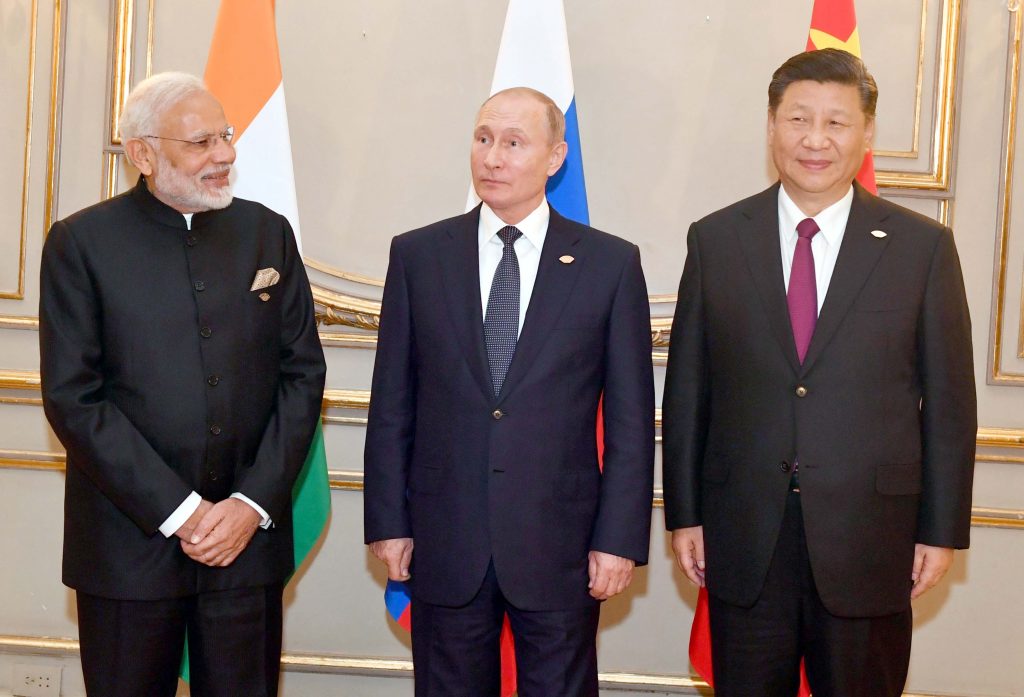
This is the second conversation between PM Modi and the Russian President in a fortnight. This and ongoing border talks with China are indicative of the pace of consultations between India and two key foreign powers.

India-China’ outreach  

Chinese Foreign Minister Wang Yi’s ongoing two-day visit to India comes ahead of PM Modi’s scheduled visit to China for the annual summit of the Shanghai Cooperation Organisation (SCO). The visit is significant keeping in mind the pending issue of de-escalation of troops since October last year when the two sides agreed on disengagement from two friction points along the Line of Actual Control (LAC).

Wang’s meetings, first with External Affairs Minister S Jaishankar and then National Security Adviser (NSA) Ajit Doval on the pending boundary issue during the 24th round of the Special Representatives (SRs) dialogue will lay the groundwork for a “way forward” for the meeting between PM Modi and Chinese President Xi Jinping.

PM Modi’s visit to China for the first time in over seven years is being seen as another sign of a diplomatic thaw with Beijing amid the trade tariff’ tensions with the US.

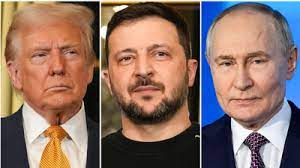
Trump and Zelenskyy talk peace, security, prepare for a ‘Trilat’ with Putin

“Again, this was a very early step for a War that has been going on for almost four years,” says Trump; However, many contentious issues would need to be sorted before peace and security can be achieved to end the long going Russia-Ukraine war.

US President Donald Trump and Ukrainian President Volodymyr Zelenskyy on Monday talked peace and security at a closed-door meeting in Washington DC. However, many contentious issues would need to be sorted before peace and security can be achieved to end the long going Russia-Ukraine war.

Following his meeting with Zelenskyy and European leaders, Trump said a peace agreement to end the war in Ukraine was attainable. The US would help Europe in providing security to Ukraine as part of any deal to end the war, he also said addressing the media at the White House. Zelenskyy said he was ready to sit down and talk to stop the war, “we need to stop this war, to stop Russia and we need support—American and European partners”.

Trump said he had called Russian President Vladimir Putin and “began the arrangements for a meeting, at a location to be determined, between President Putin and President Zelenskyy. After that meeting takes place, we will have a Trilat, which would be the two Presidents, plus myself”

Top European leaders were also present at the meeting that followed Friday’ talks between Trump and Russian President Vladimir Putin in Alaska. Striking a far friendlier note, a big step up from their last meeting, Zelenskyy and Trump expressed hope that the talks at the White House could lead to trilateral talks with Putin to bring an end to the war.  The meeting in private came six months after their disastrous last appearance when Trump and Vice-President JD Vance gave Zelenskyy a public dressing-down. This time Trump greeted the Ukraine President outside the White House, shaking hands with him and expressed delight at his black suit, a departure from his typical military clothes.

Trump’s take  

“I had a very good meeting with distinguished guests, President Volodymyr Zelenskyy, of Ukraine, President Emmanuel Macron, of France, President Alexander Stubb, of Finland, Prime Minister Giorgia Meloni, of Italy, Prime Minister Keir Starmer, of the United Kingdom, Chancellor of the Federal Republic of Germany, Friedrich Merz, President of the European Commission, Ursula von der Leyen, and Secretary General of NATO, Mark Rutte, in the White House, which ended in a further meeting in the Oval Office.

“During the meeting we discussed Security Guarantees for Ukraine, which Guarantees would be provided by the various European Countries, with coordination with the United States of America. Everyone is very happy about the possibility of PEACE for Russia/Ukraine.

“At the conclusion of the meetings, I called President Putin, and began the arrangements for a meeting, at a location to be determined, between President Putin and President Zelenskyy. After that meeting takes place, we will have a Trilat, which would be the two Presidents, plus myself. Again, this was a very early step for a War that has been going on for almost four years. Vice President JD Vance, Secretary of State Marco Rubio, and Special Envoy Steve Witkoff, are coordinating with Russia and Ukraine. Thank you for your attention to this matter!” he wrote on Truth Social

European support for Ukraine

Zelenskyy was backed by leaders of Britain, Germany, France, Italy, Finland, the European Union and NATO. According to Zelenskyy, it was important that Europeans are involved at every stage to ensure reliable security guarantees together with America. Trump said European countries would be involved. “They are a first line of defence because they’re there, but we’ll help them out

Issues remain

The US President said all would prefer an immediate ceasefire but he was optimistic that an agreement could be reached to deter aggression in Ukraine. He also suggested that he no longer believed reaching a ceasefire was a necessary prerequisite for striking a peace agreement, backing a position staked out by Putin and opposed by Zelenskyy and most European leaders.

Zelenskyy is said to have already all but rejected the outline of Putin’s proposals from the Alaska meeting. They include handing over the remaining quarter of its eastern Donetsk region, which is largely controlled by Russia.  Before the Alaska summit, the Europeans had tried to establish with Trump in joint consultations five points for possible peace talks, including a ceasefire and security guarantees. Ahead of the meeting with Putin, Trump has repeatedly spoken about Ukraine and Russia swapping land to end the war. 

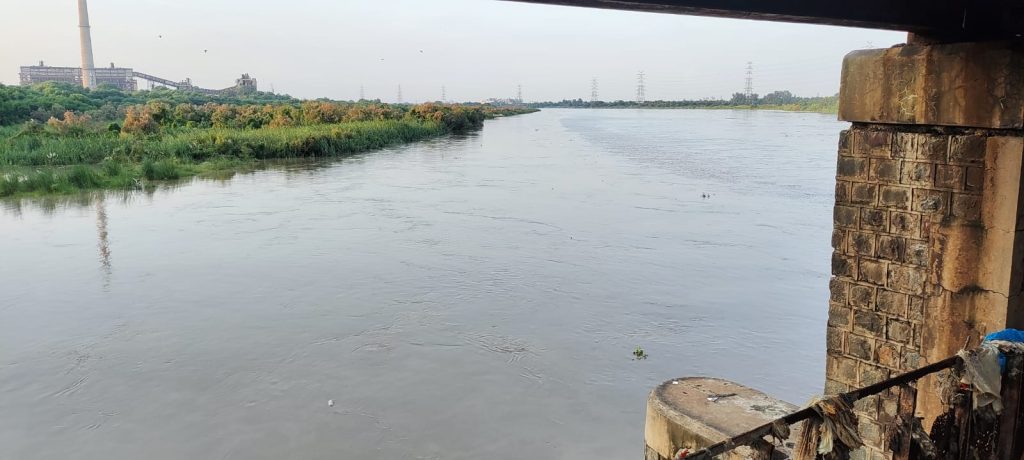
Yamuna touches danger mark in Delhi, also offers insight for revival

While this spike in water levels may pose some flood risks, it also revealed a hopeful fact that what the Yamuna really needs to survive and thrive is not crores in rejuvenation schemes, but something much simpler — ‘aviral’ and ‘nirmal’ free and uninterrupted flow

Photo: Naveen Bansal

The Yamuna river surged past the danger mark for the second consecutive day on Monday, reaching 204.80 metres at the Old Railway Bridge. With all 18 gates of Haryana’s Hathnikund Barrage opened for the first time this monsoon season, officials warn that water levels may breach 206 metres by early August 19, the point at which evacuations begin, according to reports

While this spike in water levels may have posed flood risks, it also revealed a hopeful insight that what the Yamuna really needs to survive and thrive is not crores in rejuvenation schemes, but something much simpler — ‘aviral’ and ‘nirmal’ free and uninterrupted flow

A gasping river back to life, albeit briefly

As the late environmentalist Manoj Mishra of the Yamuna Jiye Abhiyan often said, floods prove that all the Yamuna needs is ‘aviral’ (continuous/uninterrupted) flow, not just funding.

The words ring true as one watches the river, even if temporarily, reclaims its form, a wider, cleaner, alive version. This flooding may have prompted red alerts, but it also washed away — and quite literally — industrial filth, sewage and neglect.

The sad part is that it takes a flood to remind the city of what the Yamuna once was, and could be again. Delhi’s elders recall swimming at ghats and rafting downstream, scenes unimaginable now amid stagnant black water choked with pollutants.

For decades, Yamuna has been reduced to a drainage canal, a sad casualty of urban sprawl, encroachment, and unchecked extraction for power, agriculture, and domestic use. With among the highest Biochemical Oxygen Demand (BOD) and faecal coliform counts in the country, it’s become a symbol of environmental failure. But the surge proves that when given space and flow, the river can still cleanse and regenerate.

A wake-up call for planners, policy makers

Perhaps, instead of throwing more money at cosmetic clean-up drives, planners and governments must address the root issue: restoring ecological flow, letting the Yamuna breathe and flow uninterrupted and untamed, especially during monsoon months

And it just might achieve more than any budgeted rejuvenation project ever has.

Today may be about flood management but it is also about reimagining the future of a city’s relationship with its river, the current crisis has offered the insight.

MOST POPULAR

HOT NEWS