Cinema back in Kashmir, a sign of normalcy!

The opening of a multiplex in Srinagar marks the return of cinemas to the valley after over three decades, and also the return of a degree of normalcy. However, many dismiss these developments as a callous effort to negate the tragedy of the past three decades, writes Riyaz Wani

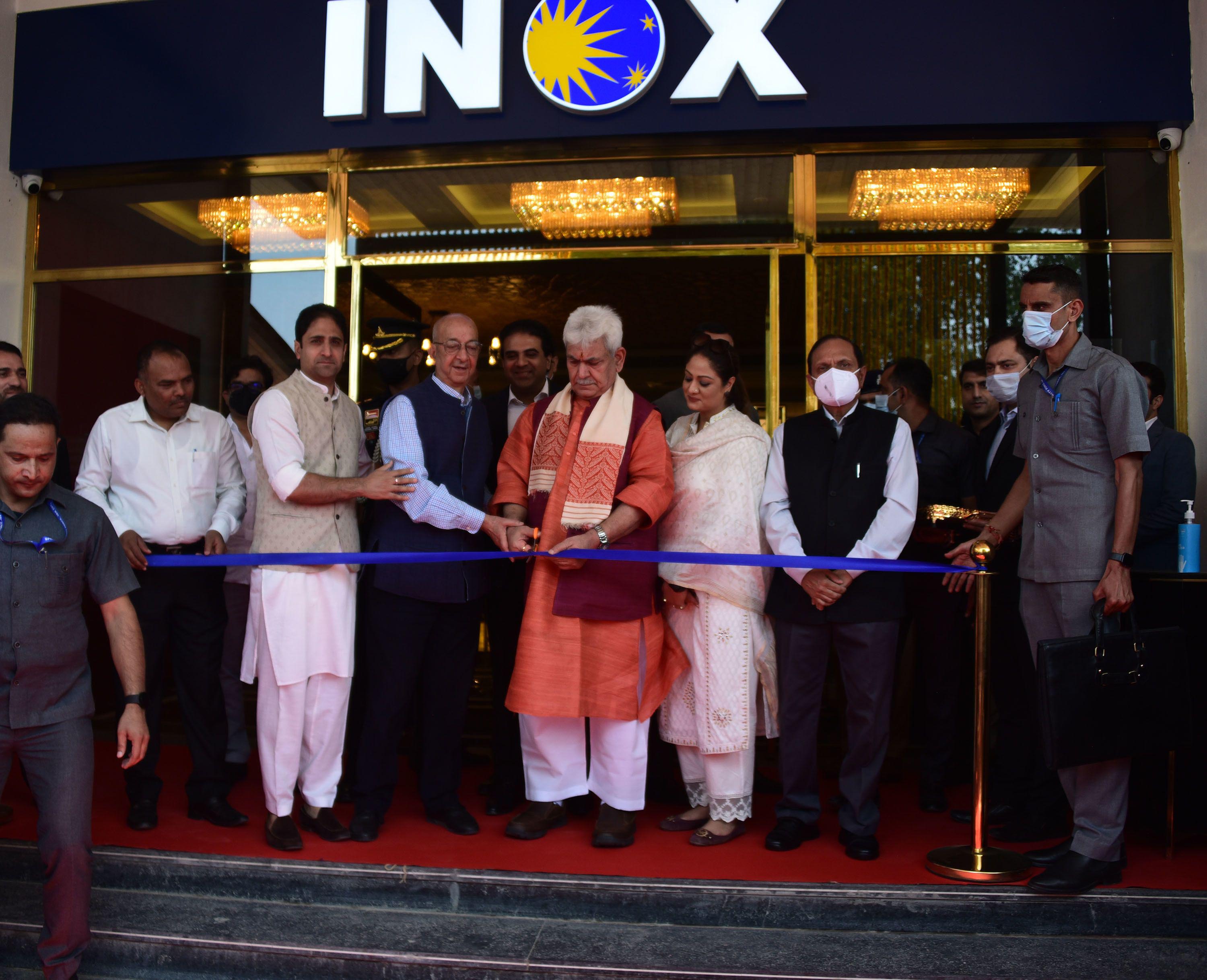
Last week, a multiplex was opened in Srinagar, bringing cinemas back to Kashmir Valley after over three decades. Located in Srinagar’s high security Sonawar area, the theatre’s inaugural film was Aamir Khan’s Laal Singh Chaddha, a big-budget remake of the 1994 American classic “Forrest Gump” which was, in part, shot in Ladakh and Srinagar.

In 1989, as militancy gripped the Kashmir Valley, theatre owners downed their shutters. Though there was an attempt to reopen a cinema hall along the posh Residency Road in 1999, a grenade attack on the moviegoers killed one and injured several others, forcing the authorities to close down the theatre again.

Ever since, no other cinema hall has dared to screen any movie. Some of them like Palladium in Lal Chowk have been burnt and the others like Shah Cinema near Qamarwari have been used to accommodate the security personnel.

So, opening of the multiplex is a big development as it testifies to the return of a degree of normalcy to the union territory.

“A major socio-economic revolution has been sweeping through Jammu and Kashmir during the last three years,” said Manoj Sinha, the region’s lieutenant governor during the inauguration of the multiplex. “It is a reflection of a new dawn of hope, dreams, confidence and aspirations of people.”

Despite the turmoil, many movies have been shot in Kashmir over the last three decades. This has included the films of Bollywood megastars such as Shah Rukh Khan, Salman Khan and Aamir Khan, with the last one shooting sequences of Lal Singh Chaddha last year.

About 20 movies have been shot in the Valley during the troubled period, a number of them reflecting Kashmir either as an abode of unyielding terror, or an unremitting battleground between India and Pakistan. Shah Rukh Khan, who shot Jab Tak Hai Jaan a decade ago, used Kashmir’s breathtaking geography as a backdrop for a love story rather than as a subject for a story about terrorism. Two years before before Jab Tak Hai Jaan, Ranbir Kapoor starrer Rockstar was also shot in the Valley. It restored the Valley to its original image as a romantic abode after the intervening dose of conflict cinema.

Bollywood’s return to the Valley – and now followed by a multiplex –  however, portrays more than peace. The film industry is instrumental in shaping and reinforcing Kashmir’s pastoral image around the globe. It was Raj Kapoor who brought to the world the Valley’s fabled scenic beauty when he shot Barsaat here in 1949. As Nimmi sang ‘Hawa main udta jaye mera lal dupatta malmal ka’, Kashmir’s lush meadows formed the backdrop.  Similarly, long before the dotcom revolution made it familiar to millions around the world, the snowscapes of Kashmir resonated to Shammi Kapoor’s ‘yahoo’ call in Junglee.

But unlike in the past, Bollywood and Kashmir relationship is no longer spontaneous and natural. Like everything else in the Valley, it has also become political. Movie-making in Kashmir is about peace, about reinforcing Kashmir’s image as a paradise on earth but in the current context this inference of Bollywood re-entry will struggle to sound innocent. It will, in fact, appear politically motivated.  True, Bollywood shoots and the reopening of cinema are the biggest advertisement so far for peace in Kashmir. It will certainly help bring more tourists to the region. Both of these are desirable ends.  But actually, this is not how these things are understood in Kashmir. Many people tend to look at these developments as a callous effort to negate the tragedy of the past three decades.

There is a reason for this. Tension in Kashmir is between a simmering, dormant political conflict and elaborately contrived imagery of peace. Imagery is often deliberately played up as normalcy or sometimes even genuinely mistaken for peace. And this imagery is about the arrival of tourists, a peaceful Amarnath yatra, Bollywood shoots and of course, the unnaturally high turnout in polls, sometimes well-attended public meetings of the mainstream politicians, and now the re-opening of cinemas. All these events together make Kashmir appear as an eminently normal place but cumulatively they forge no genuine peace, a fact not acknowledged by the promoters of this normalcy.


Return of the Cheetah a boon for ecosystem

Cheetah is the only large carnivore that got  wiped out from India, mainly due to over-hunting. The Action Plan highlights the nation’s preparedness in bringing the cheetah back.

About the Action Plan for introduction of Cheetahs in India, Union Minister for Environment, Forest and Climate Change, Bhupender Yadav informed that “Project Cheetah aims to bring back independent India’s only extinct large mammal – the cheetah. As part of the project, 50 cheetahs will be introduced in various National Parks over five years.”

Cheetah happens to be the only large carnivore that got completely wiped out from India, mainly due to over-hunting and habitat loss. The Action Plan highlights the nation’s preparedness in bringing the cheetah back. Conservation of Cheetahs has a very special significance for the national conservation ethic and ethos. The very name ‘Cheetah’ originates from Sanskrit and means ‘the spotted one’.

Besides conserving the big cat, the initiative in itself is a boon to the ecosystem. Cheetahs live in open plains; their habitat is predominantly where their prey live – grasslands, scrub and open forest systems, semi-arid environments and temperatures that tend to be hotter compared to cooler regimes. In saving cheetahs, one would have to save not only its prey-base comprising certain threatened species, but also other endangered species of the grasslands and open forest ecosystems, some of which are on the brink of extinction. It is also observed that among large carnivores, conflict with human interests is lowest for Cheetahs. They are not a threat to humans and do not attack large livestock either.

Genesis of the plan

Discussions to bring the cheetah back to India were initiated in 2009 by the Wildlife Trust of India. Experts from across the world, officials of the Government of India including Ministry of Environment, Forests and Climate Change and representatives of the state governments met and decided to conduct site surveys to explore the reintroduction potential. Former cheetah range states- Gujarat, Rajasthan, Chhattisgarh and Madhya Pradesh, were prioritized. It is also observed that among large carnivores, conflict with human interests is lowest for Cheetahs. They are not a threat to humans and do not attack large livestock either.

The locally extinct cheetah-subspecies of India is found in Iran and is categorized as critically endangered. An important consideration during such conservation efforts is that the sourcing of animals should not be detrimental for the survival of the source population. Since it is not possible to source the critically endangered Asiatic cheetah from Iran without affecting this sub-species, India will source cheetahs from Southern Africa, which can provide India with substantial numbers of suitable cheetahs for several years.

Cheetahs from Southern Africa have the maximum observed genetic diversity among extant cheetah lineages, an important attribute for a founding population stock. Moreover, the Southern African cheetahs are found to be ancestral to all the other cheetah lineages including those found in Iran. Hence, this was therefore considered ideal for the country’s reintroduction programme.

Sanctuaries recommended

Amongst the 10 surveyed sites of the central Indian states, Kuno Palpur National Park (KNP) in Madhya Pradesh had been rated the highest. This is because of its suitable habitat and adequate prey base. KNP is 748 sq. km. in area, devoid of human settlements, forms part of Sheopur-Shivpuri deciduous open forest landscape and is estimated to have a capacity to sustain 21 cheetahs.

Kuno is probably the only wildlife site in the country where there has been a complete relocation of villages from inside the park. Kuno also offers the prospect of housing four big cats of India – tiger, lion, leopard and cheetah – and allowing them to coexist as in the past.

The other sites recommended for holding and conservation breeding of cheetah in India, in controlled wild conditions are:

Nauradehi Wildlife Sanctuary (1,197 sq. km, habitat 5,500 sq.km), Madhya Pradesh

Gandhi Sagar Wildlife Sanctuary – Bhainsrorgarh Wildlife Sanctuary complex (~2500 sq.km), Madhya Pradesh

Shahgarh bulge in Jaisalmer, Rajasthan (4,220 sq.km)

Mukundara Tiger Reserve as fenced enclosure (~80 sq.km), Rajasthan

As expected, this historic moment that coincided with PM’s 72nd birthday had its share of brickbats.  Congress general secretary and in-charge communications, Jairam Ramesh alleged that the “PM hardly ever acknowledges continuity in governance. Cheetah project going back to my visit to Capetown on 25.04.2010 is the latest example,” Ramesh, who was the Environment and Forest minister during 2009-11, said in a tweet. When tigers were first translocated to Panna and Sariska during 2009-11, there were many prophets of doom, Ramesh said, adding that they were proved wrong. “Similar predictions are being made on the Cheetah project. The professionals involved are first-rate and I wish the project the very best!” he said.

The PM himself captured the moment on a camera as the cheetahs scampered about, checking out their new home. Jet-lagged after a 9,000-km overnight flight from Namibia to Gwalior, and then to the Kuno helipad, the cheetahs looked at their new surroundings a bit tentatively at first, but were soon sprinting about. “Decades ago, the age-old link of biodiversity was broken and became extinct, today we have a chance to restore it,” PM Modi said, adding: “Today, the cheetah has returned to the soil of India.”

It’s very rare for a species extinct in one part of the world to be replaced by a lot from another, especially an apex predator. The whole world had its eyes on the world’s first inter-continental large wild carnivore translocation project, a mission that took decades to dream and years to plan and work out.

Cheetahs were officially declared extinct in 1952. The PM went on to say, “Humanity gets very few opportunities to reform the past to create a new future, we’re fortunate to have got that opportunity today. We’re fortunate to have got the opportunity of rebuilding that cycle of bio diversity which was broken decades ago due to cruel hunting of the three last surviving Cheetahs in the country during 1947.”

Finally in the Amrit Kaal of Azaadi (75th year of India’s independence), the country has succeeded in bringing about the Cheetahs’ return and rehabilitation with full energy. But this day is the result of years of efforts by experts along with their counterparts from Namibia and South Africa, a development which doesn’t find much importance, if viewed politically.

The return of Cheetahs again brings home the point that the environment for India doesn’t just signify sustainability and security, but it’s also the basis of sensuality and spirituality for us. Our cultural existence since time immemorial has hinged on conservation of environment and wildlife species. The message of India of the 21st century is that Economy and Ecology aren’t contradictory, but complementary.

According to the Action Plan, the aim of Cheetah translocation is to establish viable cheetah metapopulation in the country that allows the cheetah to perform its functional role as a top predator and provides space for the expansion of the cheetah within its historical range thereby contributing to its global conservation efforts.  Another objective is to use the cheetah as a charismatic flagship and umbrella species to garner resources for restoring open forest and savanna systems that will benefit biodiversity and ecosystem services from these ecosystems. Yet another aim is to enhance India’s capacity to sequester carbon through ecosystem restoration activities in cheetah conservation areas and thereby contribute towards the global climate change mitigation goals.

MMS scandal rocks Chandigarh University 

Huge protests erupted on the varsity campus after reports emerged that private videos of the inmates of girls’ hostel had gone viral on internet. The police have arrested four persons, including the girl who shot the video, in the case so far, writes Rajendra Khatry

The MMS scandal rocked the Chandigarh University (CU) Mohali recently. Alleged Videos of university girls bathing in the hostel bathroom reportedly secretly shot by an inmate and sent to her boyfriend in Shimla which was rumored  forwarded on social media was shocking indeed.

Various rumours served as trigger points. Shock and outrage over the indecent incident  reverberated throughout the country. Massive protests were seen at Chandigarh University Mohali by the students in Mohali at  midnight after their talks with the authorities apparently failed following the videos of objectionable  videos of 60 hostel girls in the university were rumoured to be leaked.

In the midst of the sudden protests in the university, the matter was reported to the police. Later four persons- a girl student of Chandigarh University and two men from Himachal Pradesh were arrested in the incident under Sections 354-C of IPC and the IT Act. One of the persons arrested-Sunny Mehta, was reported to be the girl’s boyfriend who had made the video. The other was named Rankaj Verma. The Mohali police got a 7-day remand for them from the court.

Meanwhile the Punjab Police later arrested the fourth accused, an Army man posted in Arunachal Pradesh in the Chandigarh University video clip case, according to Director General of Police (DGP) Gaurav Yadav. This was the fourth arrest in the case.

The accused was identified as Sanjeev Singh of Jammu who is suspected to be blackmailing the accused girl student. He was arrested from Sela Pass in Arunachal Pradesh with the support of the Arunachal Pradesh Police, Assam Police and Army authorities. He is allegedly the person who was calling up and sending messages to the accused girl to click more photos and videos. As of now, he is the main accused.

Earlier Massive protests were held by Chandigarh University students on the campus in Mohali at midnight after their talks with the authorities apparently failed. Students shouted “We want justice,’’ slogans. The protest was against the accused for making videos of her fellow hostel mates and sending them to a man in Himachal Pradesh’s Shimla, who reportedly uploaded these videos on the internet. Students were in a state of shock when a few of them reportedly saw such objectionable videos online.One or two girl students even got shocking  international calls, saying their indecent videos had been uploaded on the internet.  There were rumours that MMS of 60 girls in the hostel were  leaked.

The Punjab government immediately set up a Special Investigation team (SIT) to investigate the matter over which there was such an outrage. As the news spread like wildfire, panic stricken parents from many parts of the country rushed to the Chandigarh University to take back their daughters/sons staying in the hostel. No study holiday was declared by the university till September 25.

Meanwhile in a leaked video being investigated by the police, the woman suspect was seen admitting to the fellow students that she was being pressured to send the objectionable photos and videos of the girls. “ We are verifying the facts,” according to SIT in-charge Rupinder Kaur Bhatti.

Kharar DSP Rupinder Kaur Sohi also visited the university campus to investigate the matter. Also experts led by Forensic Science Lab Deputy Director Ashwini Kalia checked the common washroom in the D Block of Le Corbusier girls hostel.

Even as the police arrested the three suspects — the Chandigarh University girl and two Himachal youths — on 7-days remand, they began investigating the role of a fourth suspect, along with the photo of another girl, as part of their investigation into the video leak incident. The accused was a first-year MBA student, according to the police.

Many protesting students reportedly claimed that after the videos went viral, some girl students living in the hostel attempted suicide. But the police and the university authorities vehemently refuted the suicide attempts claim immediately.

Mohali Senior Superintendent of Police (SSP), Vivek Soni also reportedly denied any incident of death, injury or attempt to suicide in the aftermath of the video leak and said that only one girl had fainted who was immediately hospitalised and was stable.Electronic devices and mobile phones were taken into custody by the police and  were sent for forensic examination.

SSP Soni said the accused girl student stated that she only  sent her photographs to her friend but they also tried to verify whether she had sent pictures of other girls as well.

According to the police, they tried to verify  claims that the student who was accused of leaking the videos, was being blackmailed by any man. A case under section 354C pertaining to voyeurism under the Indian Penal Code and Section 66E of the Information Technology Act (punishment for violation of privacy) had been registered against the woman at Kharar (Sadar) police station.

The Chandigarh University also clarified that no girl had attempted suicide. Also no girl was admitted to any hospital in the incident. According to the CU, all the rumours of objectionable videos shot of other girl students were totally false and baseless. No videos were found of any student which was objectionable except a personal video shot by a girl which was shared by her with her boy friend.

Punjab Chief Minister Bhagwant Mann expressed grief over the incident and ordered a high-level probe into the matter. “Sad to hear about the Chandigarh University incident…Our daughters are our pride…have ordered a high-level inquiry into the incident. Will take strict action against the guilty persons. I am constantly in touch with the administration and I appeal to all of you to avoid rumours,” the chief minister tweeted in Punjabi.

Commenting on the issue Delhi Chief Minister and AAP supremo, Arvind Kejriwal said that the incident was very serious and shameful. He promised the harshest punishment  to the culprits.

On the other hand, BJP leader Som Parkash demanded strict action against the culprits. “It is an unfortunate incident. Police must  take serious action against those involved in this incident. Such incidents should not occur again, he demanded.

In a damage control exercise the CU management held a meeting with the staff members and appealed not to panic. The management asked them to remain positive during the present crisis.

Even as the investigation in the MMS scandal goes on, the sensational matter has reached the Punjab and Haryana High Court. An advocate of the HC, Jagmohan Singh Bhatti filed a case demanding CBI probe in the matter. In his complaint Bhati alleged that the Chandigarh University and the Punjab government had totally failed to carry out a fair investigation and at the same time the students of the university were not being allowed to protest. The Punjab police should not put any kind of force on the students.This matter concerns the safety and security of the girl students and should be probed thoroughly, said Bhatti.

Founded by CU’s Chancellor Satnam Singh Sandh,  the Chandigarh university is huge. As many as 20,000 students from India and abroad are enrolled in it. 4000 girls are pursuing various courses at the university located in Dharuan, in Kharar of the Mohali district in Punjab. Among the top ranked private universities in India, Chandigarh University became the youngest University to make it into QS World University Ranking. The university has had a meteoric rise in the last few years, and there were talks that it was a deliberate attempt to check its progress by rivals who felt threatened by its growth.

Women remain soft targets for perpetrators of cyber crime

The MMS scandal which broke out at a private varsity in Punjab recently has raised question before the government and the civil society as to why women continue to be the soft targets for perpetrators of cyber crime,  writes Sunny Sharma

Cybercrime has become a serious issue in the modern day. Hacking, morphing, sextortion, breach of privacy are various types of cybercrimes that occur. Women and children are the most vulnerable to cybercrimes. According to the National Crime Records Bureau (NCRB) report released on August 29, 2022, the number of cybercrime incidents in 2021 has gone up by 18.4 per cent since 2019, but the number of such cases against women has risen at a significantly steeper 28 per cent. The data says that of the 52,974 incidents reported in 2021, 10,730 — 20.2 per cent — were reported as cases of crime against women, the data revealed. Cyber-crimes against women primarily include instances of cyber blackmail, threatening, cyber pornography, posting/ publishing of obscene sexual materials, cyber stalking, bullying, defamation, morphing and creation of fake profiles.

Though Punjab does not figure among the top states relating to cyber-crime against women as per the NCRB data. But Punjab yet again topped the list of crime rate (per lakh population) in cases lodged last year under the Narcotics Drugs and Psychotropic Substances (NDPS) Act, the data released by the National Crime Records Bureau said. As per details, Punjab recorded 32.8 per cent crime rate (per lakh population) in 2021, which was the highest in the country. As per the NCRB report, the projected population of Punjab was 304.04 lakh in 2021 and there were 9,972 cases of NDPS Act reported in the state during the year.

However, when massive protests broke out on the Chandigarh University campus at Mohali (not to be confused with Panjab University, Chandigarh) post-midnight on September 17, after students alleged that “private” and “objectionable” videos of several women hostel inmates were leaked on the internet, it was clear that women were still soft targets for the perpetrators of cyber-crime. The students alleged that videos of nearly 60 girls taking bath in the hostel were leaked. On the other hand, the varsity issued a statement that one video was circulated. Moreover, it was recorded and circulated by the accused herself. The authorities claimed that that the girl had made her own video and shared it with her friend in Himachal Pradesh.

An FIR under Section 354-C (voyeurism) of the Indian Penal Code and Information Technology Act has been registered in the matter and further probe is on, the police said. Refuting rumours about the death of any student on the campus in connection with the controversy, the university said that the video had been leaked by a girl student, who herself sent the video to one of her friends. The development came to the fore after Chandigarh University’s pro-chancellor issued a statement clarifying there has been no suicids or death on campus.

Cyber-crimes against women keep happening intermittently with impunity. In the year of 2001, Ritu Kohli’s case was the first case of cyber stalking reported in India. The victim complained to the police against a person, who was using her identity to chat over the internet. She further complained that the perpetrator was also giving away her address online and using obscene language. Her contact details were also leaked leading to frequent calls at odd hours. Consequently the ‘IP’ address was traced and police investigated the entire matter and ultimately arrested the offender, Manish Kathuria. The police registered the case under Section 509 of the Indian Penal Code for outraging the modesty of Ritu Kohli. But Section 509 of the Indian Penal Code only refers to a word, gesture or act intended to insult modesty of a woman and when the same things are done on the internet, then there is no mention about it in the said section. India’s cyber laws never had a particular provision for cyber stalking nor any other sections for protection of women. None of the conditions mentioned in the section covered cyber stalking. Thus, Ritu Kohli’s case alerted the Government to the urgent need to make laws regarding the aforesaid crime and regarding protection of victims under the same. As a result, Section 66A was added in Information Technology Act, 2008 (ITAA 2008) and it prescribes imprisonment for a term which may extend to three years and with fine for sending offensive messages through communication service etc.

But are various Acts exhaustive enough to protect women from cybercrime?  There is still a   question mark over it. In the past, a teacher at a private university in Rajasthan was threatened by her final-year students that either she increase their marks or they would circulate her private videos in student groups. She reported the incident to police, and it came out in the investigation that the videos were self-recorded and sent to her boyfriend, a final-year student in the same university, who in turn shared those with his friends, who were now blackmailing her.

In another case, a woman received a private picture of her 13-year-old daughter on WhatsApp, with a message demanding similar pictures of her. The texter wrote that if she refused, then her daughter’s image would be all over the internet. The messages had come from an international virtual number. Police tracked the IP address to the minor’s boyfriend, who revealed that the girl herself had sent him these pictures on demand.

In another case, a Class X girl and her boyfriend, a first-year college student, shot their video while having intercourse. Her boyfriend believed that she was cheating on him with another boy and, out of vengeance, he sent this video to the girl’s father with the message: “Your daughter is not loyal to me.” The girl had sent him more than 100 private pictures shot in front of the mirror, and he kept saving those in the private photos folder on Facebook. Police deleted all the images from his social media account and ensured he didn’t have any backup.

Cybercrime can be reported online on cyber cells of state police. These can also be reported at cybercrime.gov.in. There are no specific provisions in the IT Act, 2000 that specifically deal with the crime against women as do the provisions of the Indian Penal Code, or the Code of Criminal Procedure for that matter. In a recent development, the government constituted an expert group to prepare a road map for effectively tackling cyber crimes. Based on the group’s recommendations, the Cyber Crime against Women and Children (CCPWC) scheme has been approved by the government. Crimes which are especially targeted against women may be enumerated as cyber-stalking, cyber defamation, cyber-sex, dissemination of obscene material and trespassing into one’s privacy domain, which are very common now-a-days. Section 67 of the Information Technology Act makes publication, transmission and causing to be transmitted and published in electronic form any material containing sexually explicit act or conduct punishable. This means viewing cyber pornography is not illegal in India. Merely downloading, viewing and storing such content does not amount to an offence. What a dichotomy?


BJP gets a Sikh face, Capt a chance to stay relevant in Punjab

The induction of Capt Amarinder Singh into the BJP opens up new political vistas for both the former Congress stalwart as well as the saffron party in Punjab. While the BJP gets a Sikh face it needed, the erstwhile royal a chance to survive in politics. A report by Rajesh Moudgil

In former Congress veteran Capt Amarinder Singh – who joined the BJP merging his nascent  Punjab Lok Congress (PLC) with it – on September 19, the BJP has found a Sikh face, the saffron party needed. He suits the party as he is acceptable among Hindu electorate in Punjab especially for being a staunch opponent of Khalistanis and their sympathisers.

Moreover, the BJP in Punjab was also desperately on the lookout to strengthen its base in the state since 2020 after its long-time ally Shiromani Akali Dal (SAD) dumped it over now-repealed farm laws.

Also, a scion of the erstwhile Patiala royal family, Capt Amarinder, 80, on the other hand, appeared politically weak, also desperate to stay politically relevant. He had remained chief minister of Punjab for two terms – from 2002-2007 and from 2017-2021 but was unceremoniously removed from the post in September 2021 – just four months ahead of his second tenure’s completion – because of the bitter bickering in the party. Following this, Singh floated the PLC after resigning from the party as well soon after last year, ending his over 40 years of association with the Congress.

Though his detractor, Charanjit Singh Channi replaced him and remained chief minister briefly, the February 2022 assembly elections gave the Congress a brutal drubbing. Both Capt Amarinder and Channi lost the elections while the Aam Aadmi Party (AAP) swept the polls winning 92 out of total 117 seats in Punjab.

Congress could win only 18 seats. The Shiromani Akali Dal (SAD) won three, its ally BSP one, the BJP two while only one independent candidate could win.

However, the PLC which had also contested the elections in alliance with the BJP, not only failed to win even a single seat but also got fewer votes than NOTA (none of the above) ones. Shockingly, Capt Amarinder also lost his home turf of Patiala (urban) to AAP candidate by a margin of over 19,000 votes and Channi, both his seats he was fielded from.

Even though Capt Amarinder’s joining and PLC’s merger into the BJP was anticipated as it gives him a chance to remain politically relevant, his political rivals believe that the joining is also his attempt to save his family from Enforcement Directorate (ED) cases; Capt Amarinder’s son Raninder Singh, who also joined the BJP, faces a case under foreign exchange management Act (FEMA).

However, Capt Amarinder’s wife Preneet Kaur, is still the sitting Congress MP from Patiala as the Congress has not sought her resignation nor has she offered to quit the party.

It may be recalled that some of his former colleagues and Cabinet ministers have also joined the BJP. They include Raj Kumar Verka, Gurpreet Kangar and Balbir Sidhu, Rana Gurmeet Sodhi and Sundar Sham Arora, besides former Punjab Pradesh Congress Committee (PPCC) chief Sunil Jakhar, who had once worked closely with him, but had later parted ways.

Others who also joined BJP with him included former deputy speaker Ajaib Singh Bhatti, who had been expelled by the Congress as his wife had contested 2022 assembly polls from Bhadaur segment against official party nominee and then Chief minister Charanjeet Channi, two-time MLA Harchand Kaur, who had already canvassed for the BJP candidate Kewal Singh Dhillon, during Sangrur by-poll, former MP from Ludhiana, Amrik Singh Aliwal and Kewal Singh, who had represented Bathinda Lok Sabha seat when it was reserved segment and  former MLAs Prem Mittal and Harjinder Thekedar also joined the party.

Speaking on the occasion, Capt Amarinder, however, said that he was sure his party (PLC) would be useful for BJP in the upcoming elections in Himachal Pradesh and Haryana.

Political scientists including Dr Ronki Ram, Shaheed Bhagat Singh Chair Professor in political science, Panjab University, however, opine that Capt Amarinder Singh’s joining could favour the BJP in plural ways. “Capt Amarinder, who himself is a former Army officer, has a say and sway in Punjab, and his political narrative also gels with that of BJP thesis on national integrity’’, Dr Ronki Ram says.

He goes on to say that while Capt Amarinder has been a tall leader in the state in the past, the electorate in the state can now also see the difference between his approach and functioning and the former Congress chief minister Charanjit Singh Channi and current AAP chief minister Bhagwant Mann.

It is also pertinent to mention here that Capt Amarinder had said on the occasion of joining BJP that his and BJP’s ideology was the same. He said that Punjab faced threats from across the border in Pakistan and Punjab was hemmed in by two borders, two hostile nations and that it was necessary to protect the country. He lauded BJP for its commitment to national security and termed it as one of the reasons for his joining it. The BJP also acknowledged him as a “nationalist’’.

Meanwhile, Punjab BJP unit president Ashwani Sharma has also met Capt Amarinder along with other senior BJP leaders including Srininvas, Dr Subhash Sharma, Jiwan Gupta and Rajesh Bagga. It was the first meeting between senior Punjab BJP leaders with Capt Amarinder Singh after he joined the party in Delhi. They discussed the prevailing political scenario in Punjab and future course of action of the party. Capt Amarinder later tweeted: “Pleased to host the state BJP president Ashwani Sharma ji and other senior leaders of the party at my residence today. Together we will work hard for a better and secure future of our state and our country.”

Capt’s journey so far

Born on March 11, 1942, Amarinder joined the Indian Army in 1963 through Indian Military Academy (IMA), served for three years till 1966; he also took part in the 1965 India-Pakistan War.

He joined Congress and became MP in 1980 though left the party in protest against the Operation Blue Star in 1984 despite being a close friend of former prime minister late Rajiv Gandhi. Capt Amarinder joined Akali Dal and was the agriculture minister in the then Surjit Singh Barnala government in 1985.

He, however, returned to Congress  in 1998 when he was denied a ticket for election in 1997 by Akali Dal. Led by Capt Amarinder, the five-time MLA and two-time MP, the party had also won nine of the total Lok Sabha seats in 2019. However, Capt Amarinder was unceremoniously removed as chief minister in September 2021 due to rumblings in the party following which he also quit from the party.

For record, it was an ugly power tussle in the Congress that created ugly divisions within the party because of the feud between Capt Amarinder and other senior leaders including Navjot Singh Sidhu which raged with Sidhu and several other Congress legislators flaying Capt Amarinder Singh’s functioning and holding multiple rounds of meetings with the central leadership and that led to its his exit and subsequently Congress’ debacle in 2022 polls.


Weren’t we better off  in those good old days?

Those were the days when we actually lived. And lived quite happily. Not like today where even the basic traces of survival are turning out to be such a nightmare…an ongoing struggle for survival

Earlier one could step out without wondering whether it was summer or winter or spring or autumn. No longer. To be checked and re-checked the time, day and month of the year. Why? Can’t commute during the ‘peak hours’ of the working days; with commuters scurrying around in that frenzied way. And worsening those strains during the winter fog, autumn smog, summer heat and, of course, during the monsoon flood fury …every chance of getting drenched if not drowned!

Enough of those daily disasters to demolish any of those romantic notions of rain. Forget all those romantic couplets, verses, folk songs and Bollywood lyrics on monsoon rains.

Wrapped in nostalgia, I sit all sad and  sullen, wondering  rather aloud: weren’t we  better off  in those good old  days  when  ‘developing’ or ‘under-developed’  we were  with  fewer  wants. Just two square meals and that once-in-a-while dining-out break seemed to take care of everyday wants. The skies up there looked blue. The flowers bloomed. The human face looked carefree and hassle free. The human form was still about intact. Those were the good old days when we actually lived. And lived quite happily. Not like today where even the basic traces of survival are turning out to be such a nightmare…an ongoing struggle for survival.

With today’s climate turning murky in all possible ways, basic day-to-day survival is getting nothing short of hellish existence. Darker lies our lives as the camouflages more than choke. Never before have we witnessed the sheer destruction of human being. In these so-called developed times, we are more prone to deaths and decay.

Why don’t we talk of the terrible hunger pangs killing hundreds? Malnutrition deaths could frighten you and I, but for the rulers these are just numerical numbers. They can  talk of  vote-banks and  money-banks but  not of  roti or  milk banks, from where  those  basics could flow out to help save the lives of  hundreds of our  dying malnourished  children.

Perhaps, another  nail in the  coffin,  can’t  call it the  last  nail, as shockers are continuing to hit  each single day – is the  reality of trafficking and abuse of our  young. There seems a nexus to it as trafficking seems ongoing.

Environmental pollution is killing our very organs. Not to overlook the noise pollution hitting the very heart. And the limbs cannot be left spared with strays around. In fact, in these recent times, humans have been detailing the havoc caused by monkeys and dogs and pigs on the prowl. Blatantly attacking pedestrians and intruding into homes and fields yet there is nobody out there to harness their moves. Shouldn’t human beings be shielded from these deadly attacks? In fact, though we talk of dengue and viral fevers but little focus on rabies. Why? What’s become of us to be overlooking these deadly animal bites and attacks. At least during the Raj days, strays were kept far away from the residential quarters but today who the hell cares whether our flesh is ripped through and we die a painful death.

How Partition impacted Bollywood

September 23, 2022 marked the National Cinema Day. Whilst on cinema, I’m focusing on this recently launched book, authored by the well-known academic, Ishtiaq Ahmed- ‘Pre-Partition Punjab’s Contribution to Indian Cinema’( Aakar Books).

Though settled in Stockholm, Ishtiaq Ahmed has kept in touch with several of Bollywood’s personalities whom he has written about in this book. After all, such detailed books can only be written if the author carries a deep, passionate and genuine connection with the subject.

Quite obviously, Ishtiaq Ahmed has written this book with an emotional connection with the filmstars. As he comments right at the start, in the very preface to this book, “The idea of publishing a book on Punjab’s contribution to Indian cinema has tempted me for a long time. An incorrigible film buff, my career as an academic, however, demanded that I devote first and foremost attention to the harsh and stark reality of politics, power, democracy, dictatorship, the state, government and citizens. Such concerns apparently were far removed from cinema. But not quite.”

In this book, Ishtiaq Ahmed has brought to the fore a long list of those who made Bollywood! Or Bollywood made them. Focusing on all those men and women who’d in those years past by, reigned the film scene in Mumbai. Perhaps, they were destined to be part and parcel of India’s film industry, after going through major upheavals during the Partition of India. All of those details are put together in this book, as Ahmed delves deep into the Partition phase. To be precise, to all the who’s who affected with the upheaval, with shifting base from Lahore.

To quote him, from this book: “Beautiful Punjabi men and women headed towards Bombay and Calcutta, because in the formative years the Lahore film industry had limited capital, and essentially produced Punjabi language films, which had limited outreach. Villains, character actors, comedians, bit actors, story writers, scriptwriters, song writers, music directors, directors, producers, filmmakers, studio owners from the Punjab – all those who sought employment opportunities and nurtured ambitions to make a name for themselves at the all India level – headed towards Bombay and Calcutta. The advantage they enjoyed over other nations from South Asia was their Urdu-Hindi (Hindustani) language skill. The competition they faced was from Urdu and Hindi speakers of Northern India, Bihar, and the princely state of Hyderabad in southern India.”

Ishtiaq Ahmed has brought forth several other details, which many of us wouldn’t have been aware of. To quote him, “The rioting of 1947 set in motion irreversible, irrevocable migration. B.R. Chopra and I.S. Johar were planning films in a big way for Lahore but had to run for their lives. Ramanand Sagar left in July, as did Gulshan Rai. Comedian actor Om Prakash (of Fateh Din fame, an all time favorite skit by Radio Lahore), comedian bad-man Jeevan and many others also left Lahore for Bombay. O.P, Nayar recorded the immortal song ‘preetam aan milo/dukhia jiya bullai, aan milo’ at His Master’s Voice studio in Lahore. He left Lahore in 1948 when it became clear that people with the wrong religion were not going to return to their home on either side of the Punjab. Writer Rajinder Singh Bedi escaped, sitting on top of a railway carriage carrying loads of Hindus and Sikhs out of Lahore. Song writer Naqsh Lyallpuri began his literary career in Lahore as a journalist but had to leave Lahore in 1947. Punjabi singers Surinder Kaur and Prakash Kaur, and Pushpa Hans also left Lahore. Music director Sardul Singh Kwatra was bewitched by a Muslim woman he loved, but had to leave for India at the time of  Partition.”

And Ishtiaq Ahmed does not miss out detailing the migration, which took place in the other direction too! Yes, he brings into focus all those literary and film connected personalities who headed towards Lahore: “Nazir and his wife Swaran Lata, Noor Jahan and her husband Shaukat Hussain Rizvi, character artist Alauddin and many others headed for Lahore. Manto came in January 1948, music directors Ghulam Haider and Khurshid Anwar followed some years later, and director M Sajid in 1969 or 1970. MeenaShorey, Khurshid and Mumtaz Shanti also migrated to Lahore.”

Families also stood divided at the turn of Partition; some shifting out, others staying back.  “While Nazir shifted to Lahore, his nephew K Asif stayed on in Bombay. Kardar stayed on but his brother Nusrat Kardar and son Rauf Kardar returned to Lahore. While Suraiya, her mother and grandmother settled in Bombay, many of her other relatives shifted to Lahore.”

Also, webbed in are details to some of the “cross-religious marriages that created peculiar challenges. Raj Kapoor’s mama (maternal uncle) married a Muslim, converted to Islam and stayed in Lahore. A unique case of reverse migration took place as well: poet Sahir Ludhianvi (Abdul Hai Fazl Mohammad) left Lahore for India.”

*******

Alzheimer’s disorder

September stands for World  Alzheimer’s  Day. And each year, I do make it a point to focus on the Alzheimer’s Disorder (AD), as its awareness seems rather low in our country, unless, of course, one’s parents or grandparents get affected by it. My father battled with this disorder for several long years in the early 1990s, till he passed away.

It is a disorder that affects the memory cells, which start shrinking, fading, declining, and deadening. And with that, what is affected is not just the memory but also the AD-stricken person’s entire personality. He or she finds it difficult to perform routine tasks or even recognise relatives, family and friends.

And as it accelerates, physical movements are also greatly affected. Some withdraw into a shell; others turn aggressive and have to be handled with much care and sensitivity. Though till date there is no cure for AD, two very basic essentials to take care of those affected by AD are an abundance of gentle handling and emotional support and love.

Also, avoid shifting a patient from his or her familiar home settings, as that could further aggravate their condition.

I do realize that whenever I focus on the AD  disorder I always quote these lines of poet-writer Kamala Das. Why?  Because they aptly describe how AD affects its victims. These lines are from her poem titled ‘Alzheimer’s’, tucked in her book ‘Closure’:

‘Alzheimer’s disease 
is a spider
deadlier even than
the tarantula. 

It weaves its web 
within the brain,
a web rugged like
wrought-iron
and thought-proof. 

My mother 
For seven years had
Alzheimer’s.
It looked out
through her eyes
although she was
silent as a safe
plundered bare,
emptied of memories,
her disease talked. 

Like a Buddhist monk, 
it said life is sorrow …’



How Malik keeps throwing barbs at Modi, and getting away with it

Taking the political circles by surprise, Meghalaya Governor Satya Pal Malik has been taking on Prime Minister Narendra Modi on various issues, especially the farmers’ agitation and handling of Kashmir, for some time now,  writes Pawan Bansal

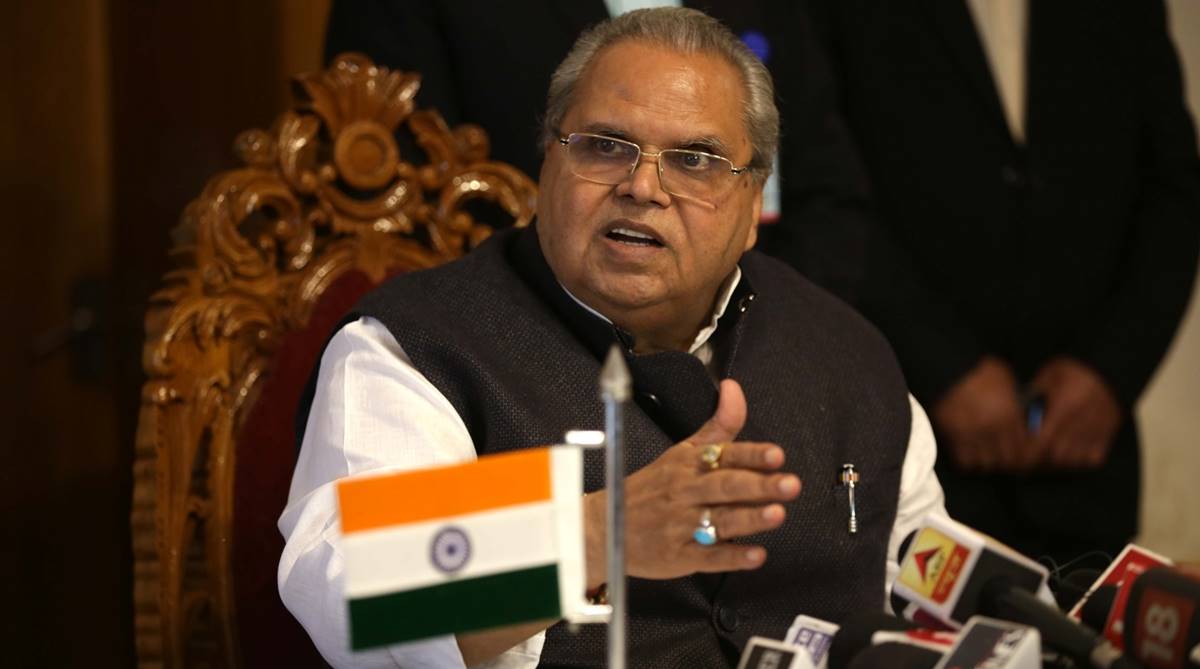
Meghalaya Governor Satya Pal Malik’s continuous tirade against Prime Minister Narendra Modi on various issues, especially farmers’ agitation and sensitive Kashmir issue, have been creating a storm in the political and media circles. Throwing norms associated with a constitutional post to the winds, Malik is openly accusing Narender Modi of causing considerable damage to the  interests of farmers and jawans of the country.
It is an open secret that some Governors in the past had indulged in toppling elected state governments at the instance of their political masters. Jagdeep Dhankhar, who is now the Vice-President of the country, during his stint as Governor of West Bengal had locked horns with the Chief Minister Mamata Banerjee by openly criticising her for the poor law and order situation in the state.

The Governor is supposed to send his secret report about the state to the Home Minister instead of mentioning it publically. Three decades back, the then Haryana Governor, G.D.Tapase,  had administered the oath of chief minister’s office  to Bhajan Lal, despite his party, the Congress not enjoying a majority in the House. Interestingly, Tapase had a day earlier invited Devi Lal, leader of Lok Dal-BJP alliance, which was having majority support, to prove their strength before him. Tapase had given one month’s time to Bhajan Lal to prove his majority on the floor of house which he proved by engineering defections from opposite camp by luring the MLAs with ministerial posts. The Governor’s action had led to widespread resentment among followers of Devi Lal, so much so that one of  them blackened Tapase’s face at a public function.

But Satya Pal Malik’s case is very strange as instead of dancing to the tune of his political masters, he has launched a tirade against his political mentor who had appointed him governor of Jammu and Kashmir, but was later shifted first to Goa and then to Meghalaya .
Malik,  hailing from Western UP, started politics under the mentorship of late Ch Charan Singh and later he joined BJP and was considered a blue eyed boy of  PM Narender Modi.
He was appointed Governor of Jammu and Kashmir and it goes to his credit that he ensured peaceful implementation of the Union Government’s decision to abolish Article 370. His role was hailed in the backdrop of the fact that the opposition leaders, Mehbooba Mufti and Farook Abdullah, had threatened serious consequences in case Article 370 was abolished .

Malik was getting wide publicity for tactfully handling the sensitive situation much to disliking Modi who after some time shifted him to Goa, a small state. From here, their relations started deteriorating. After sometime, he was shifted to Meghalaya. Malik alleged that a senior functionary of RSS had tried to influence him for clearing a file for tender amounting crores of  rupees. The BJP government by not accepting the demands of agitating farmers further annoyed Malik and he started criticising Modi apparently aiming to save his vote bank which mainly consists of farmers. For proving his credentials as a pro farmer leader, he even invited  them to visit Goa telling them that he will ensure their stay in the presidential suit in the Raj Bhawan .

Malik claims that he was given hints that if he kept mum and he would be made the vice-president but he declined. Recently, Jagdeep Dhankhar, former Governor of West Bengal was appointed as Vice-President which reportedly further annoyed Malik. At a social function in Rohtak in Haryana recently, Malik hit out at the Centre government saying that lives of the jawans in Kashmir had been ruined under Prime Minister Modi’s rule. At Nuh again,  Haryana epicentre of farmers agitation in Haryana, Malik alleged that the scheme for farmers for  MSP for  farm produce has not seen the light of the day because of the business interests of Adani . Once Malik even alleged that farmers have to rise again to get their dues for MSP on crops accepted  and even offered to join the agitation by resigning from his post.

Malik said, “If  MSP is not given, then there will be another battle, and this time it will be a fierce fight as the government cannot frighten the farmers by ED and CBI.” But the people wonder why the government is not removing him from his post despite his open outburst against PM Modi. It is widely believed that the government does not want him to project himself as victim for  fighting for farmers by removing from his post and is waiting for  superannuation of his term.


India is the anchor of security in this region: Sri Lankan envoy

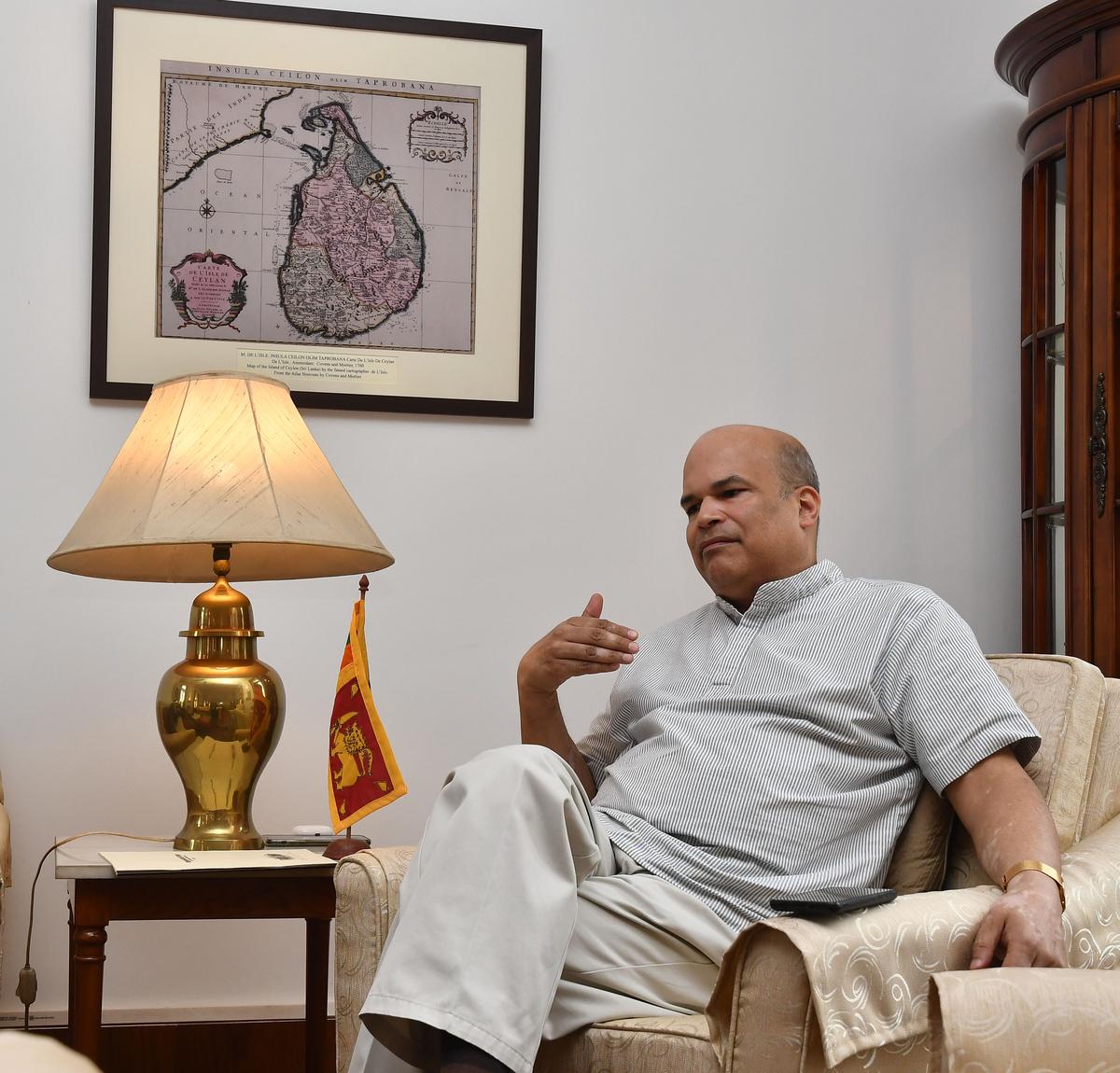
Recently, Sri Lanka was in turmoil as the economy went for a toss, and people came out on the streets against the political class targeting President Gotabaya Rajapaksa with ‘Go Gota Go’ slogans that saw the former leader run for life. He fled to the foreign shores handing over the Presidency to former President Ranil Wickremesinghe, the man who can turn the sinking economy around, as the present Ambassador of Sri Lanka to India, Milinda Moragoda says. In a free-wheeling interaction with Priti Prakash, the High Commissioner gave a fair picture of what went wrong with their economy, how is it being addressed now besides touching upon issues such as trade with India, investments and docking of the Chinese ship at Colombo. Following are the excerpts from the interview:

  1. India extended financial assistance worth $4 billion to Sri Lanka. How long will it take for Sri Lanka to stabilize economically and politically?
  2. India is the anchor of security in this region. Without India we would not have been able to last this far. We are grateful to India for their support. We see our resurgence as a two-step   way to recovery. First, stabilization, and then revival phase in which India will play a key role. Revival will come through investments, market access and looking at new areas for integration. The only way we can turn this around is growth and India is a key component of that. We are trying to reach some point of agreement with the IMF and are hopeful that other countries will also join.
  3. India had conveyed her concerns over the docking of Chinese ship in Sri Lanka. How do you see these issues in the larger context of regional integration?
  4. It is a challenge. Our region has so many armed powers, and the strategic and political scenario is very complex. We are talking to India over how to avoid such incidents in future. How do we have better and transparent communication, and how can we develop some kind of a framework to avoid such issues. Lot of technologies today are dual purpose technologies. They can be used for both peace and war, and we may not be familiar with them. So we need to have a better understanding. But for us, India is the anchor for security. No disputes about that.

Approval for this was granted at a time when we were in a state of chaos on the ground. Having granted it, we couldn’t have done anything after that. The lesson learnt is that we need to have very close coordination and cooperation with India. We are working on a framework of operation. There was no intention of working against India’s security interests. If China is a friend, India is a family.

It has been our basic foreign policy that India’s security interests are our own security interests. The accord that was signed in 1987 had mentioned that India would not allow Indian soil to be used against Sri Lanka and similarly Sri Lanka would not allow maritime borders to be used against India. It is just a matter of how we implement it and how we engage. Some time ago, we had a similar understanding for a submarine that came from China in 2014. It is a process. We have to learn that it doesn’t happen again. Such things are done on a routine level unless something stark comes up. The permission was given when our former President was about to leave. There was no political involvement in this decision.

Our country gets over 300 naval ship visits from India, also from the US navy and a large number of research vessels from China as well. Most of them come to Colombo, Hambantota.

  1. How and when do you see the economic resurgence of Sri Lanka happening? When can we expect the trade to resume?
  2. India and Sri Lanka are collaborating in many spheres like the electricity cable link connecting Sri Lanka with India at Trincomalee as an energy hub, a refinery and investments in ports. Trincomalee oil tank farm is now being jointly managed by Sri Lanka and India. That could potentially be in link with the pipeline with India for oil supply and a logistic centre.

Colombo port is largely a port servicing India. Adani Ports has invested and that work will start in coming weeks. Whether it is fresh investment or buying existing businesses in Sri Lanka or developing or expanding them, focus will be on economic integration.

We are working on making connectivity better. While flights to Jaffna are starting, we are exploring more connectivity to other Indian cities too. We must think of out of the box ideas. Tourism is the quickest way to start, a low hanging fruit. Before Covid, 20-25% of the tourist arrivals in Sri Lanka were from India. India is our main market for tourism.

ITC is building a first star class hotel by spending about 400 million dollars, which is opening next year. Integrated gaming resort is coming up. Wedding and event tourism is happening. We are working on Comprehensive Economic Partnership.  West terminal investment would be worth 600 million dollar which is a joint venture between Adani, a local conglomerate and the state.

In the IT sector, India is playing a key role. HCL, TATA and Infosys are investing in Sri Lanka. There is potential for renewable wind and solar energy in the northwest of Sri Lanka.

  1. Are there any political changes on the anvil after the recent people’s unrest resulting from the economic crisis?
  2. The blowback we saw in the last few days was because people felt politicians were looking after themselves more than the people and nothing was coming to the ground. One of the reasons for corruption in Sri Lanka is the voting system which needs to be corrected. We have a very convoluted voting system which makes one spend millions and millions of rupees to even contest a local seat. So a change is being worked out at the provincial council level for voting.

Our youth feel that our economy hasn’t been delivering for them. The lesson learnt is that we have to find ways for growth and employment. With India, it’s more of a strategic and economic relationship than transactional. We want India to grow.

  1. What actually went wrong in Sri Lanka that led to this political crisis?
  2. We have invested heavily in the social sector. We invested in education, health, in some way at the cost of the economy. But we didn’t invest in growth. Presently, we spend 80% of our revenue on salaries and pensions for our state sector employees in a population of 20 million. Seventy four per cent is spent on interest payment alone for our debt. So we begin every year by borrowing and in dollars. Our enterprises are losing money as we are losing on electricity, on petroleum. Whatever comes in gets stuck in our banking sector. Covid and Ukraine crisis brought all this to the fore. It was a problem that was waiting to happen.
  3. How much aid from China are you getting?
  4. Ten percent of our debt is Chinese. We are looking at re-structuring it. A discussion for stabilisation of our economy is going on with China and other countries. Our President is visiting Japan.
  5. Fishermen issue is a long-standing problem between Sri Lanka and India. Is any solution to the issue in sight?

We have to find a solution to this complex problem. There are three elements to it. First is the legal side, and the law is clear on this. Second is the ecological side, if the fishing belts on our sides get denuded, they will lose the fish. Environmentally, overfishing can be a problem. Then there is the livelihood issue. We are trying to ensure that we work together on this aspect.  Tamil Nadu fishermen use much bigger trawlers, which is bad news for the seabed.  Discussions on this issue are on and we are trying to encourage them for deep sea fishing.


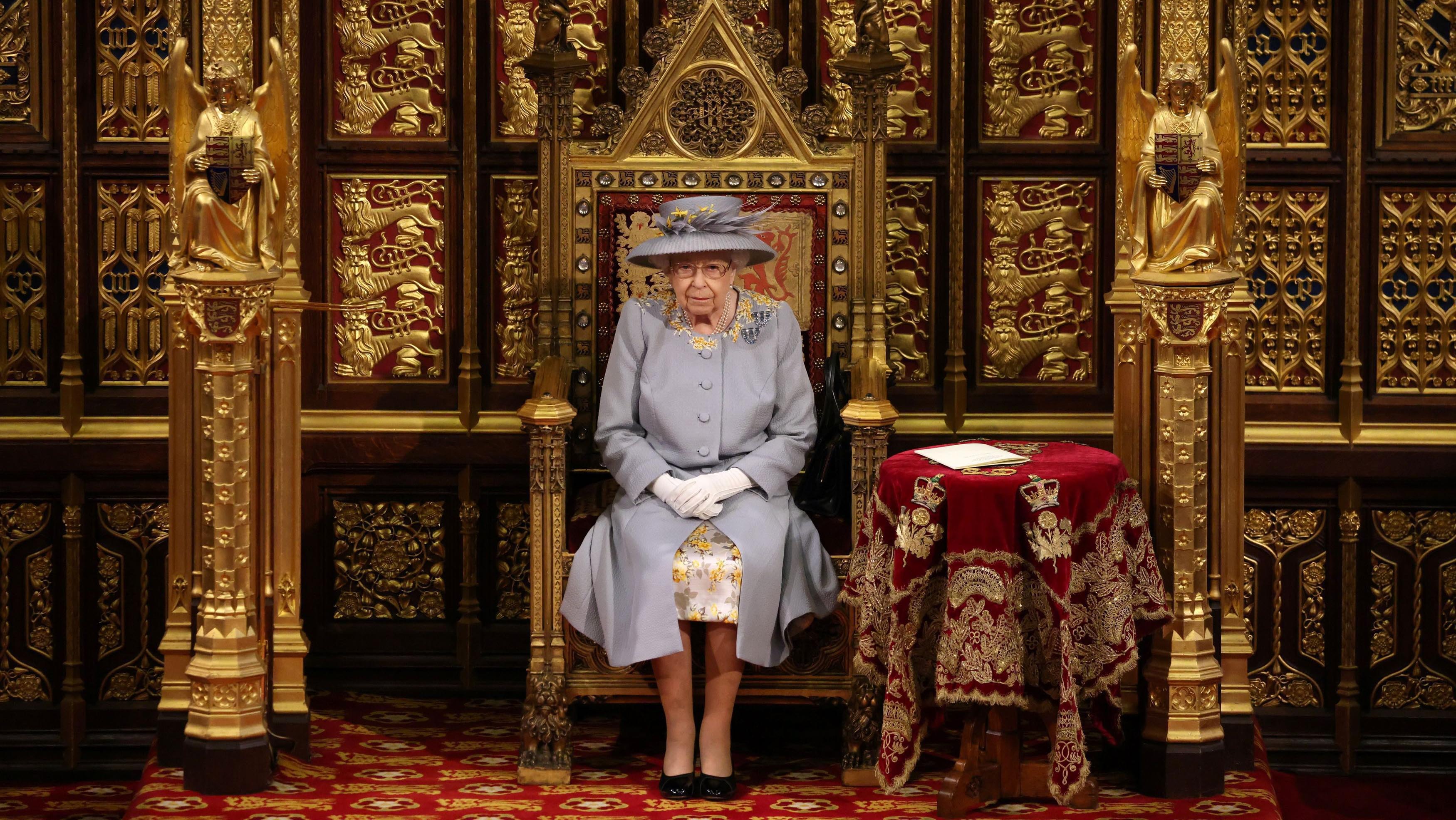
From giant to dwarf UK, longevity made the Queen see it all

Queen Elizabeth life’s life span was of 96 years and she was monarch for 70 years. While the length of  her reign contributed to the timeless aspect of monarchy, she is also discredited with being witness to declining United Kingdom. A report by Kulsum Mustafa

Longevity comes with a price tag. While it widens your horizon and allows you to be a part of decades, on the flipside it also laces your life with a lot of pain and loneliness. You are witness to the passing away of many of your loved ones, suffer from illness and pain but above everything  many of your loved ones die before you, there are new diseases and above all you find yourself  watching helplessly the erosion  of traditions, values and above all institutions so much valued and revered. Queen Elizabeth had life span of 96 years and she was monarch for 70 years. While the length of her reign contributed to the timeless aspect of monarchy, she is also discredited with being witness to declining United Kingdom. While in the pre-World War-II  period the glory of Britain was at its peak but today it is at its very lowest ebb.

British, the colonizer of America has its old history. From London they ruled over 20 per cent of the global population, Britain’s monarchy had sway over one third of the world. Essential factors of great power are five- population, territory,  resources, endowment, economic capability,  military strength and political stability and competence . In almost all these fronts Britain dropped about very low.

Britain today has just 14 scattered Islands, wherein too the wave of dissolution hovers over the shores. Scotland referendum underlines the decline of English culture and confidence. It was in her era that the much quoted line ‘‘The sun never sets on the British Empire’ was also laid to rest. What she leaves behind for her son, 77 years old Charles who will find life tough as a king King. He will have to carry the load of monarch on his shoulders.

Even before the news of her death was formally announced to the world by the BBC newscasters dressed in formal black protocol dress, there was a rush of posts on the social media of condolence, but more in lighter note of the all that was foreign in British starting with the foreign origin of the queen herself. Videos of all things foreign stolen from other countries, starting with the Kohinoor studded in Her Majesty’s crown, started doing rounds.

Retaining roots and traditions, accepting change leading to positive change. Monarchy provides cultural and psychological stability. Eternal values of duty, service, decency and self discipline.  Her majesty. Permanent values though called archaic British monarch role formal and ceremonial. Three royals – Diana Harry and Meghan collapsed under the strain.

By middle of twentieth century, this position was taken over by fast emerging US, it did not hold power to dictate the world affairs. East Asia emerged as the focal point of global  influence and EU also reduced Britain’s elitest status.

When she realized that monarch was in danger, she tried to reach out more to democracy. What cannot denied is that Queen Elizabeth was a natural ruler. She gracefully strode over many a royal and social crisis. She gracefully glided over the popular public hysteria after the death of Princess Diana. She negotiated most difficult situations like the turmoil created  by her son and his wife inside the place and of course the referendum of Scotland. Throughout, the queen stood her ground and held her head high.

The world witnessed her humane side during the Covid-19 pandemic which hit UK the hardest. When the entire country was reeling under the impact of the virus, her television address to the nation came as soothing and supportive. She consoled those suffering and gave the British public confidence and solace to see if they want to stay with UK or leave it for independence after 307 years of being with England.

Despite the decline and erosion of Britain, it is a fact that in Britain, Monarchy and democracy walks hand in hand, each striving to keep up its presence. What the era of King Charles brings will have to be seen. But it is for sure that for the British and the foreign tourist, the era of royalty will continue to provide a fairy tale ambience to England and the sparkle from her majestic crown and sword still continue to excite the people, especially the tourists who collect in thousands outside the Buckingham Palace to watch the ‘change of guard” or visit the many summer and winter palaces to feel as near as possible to the British Royalty.


India’s peace push amid battlefield setbacks for Putin

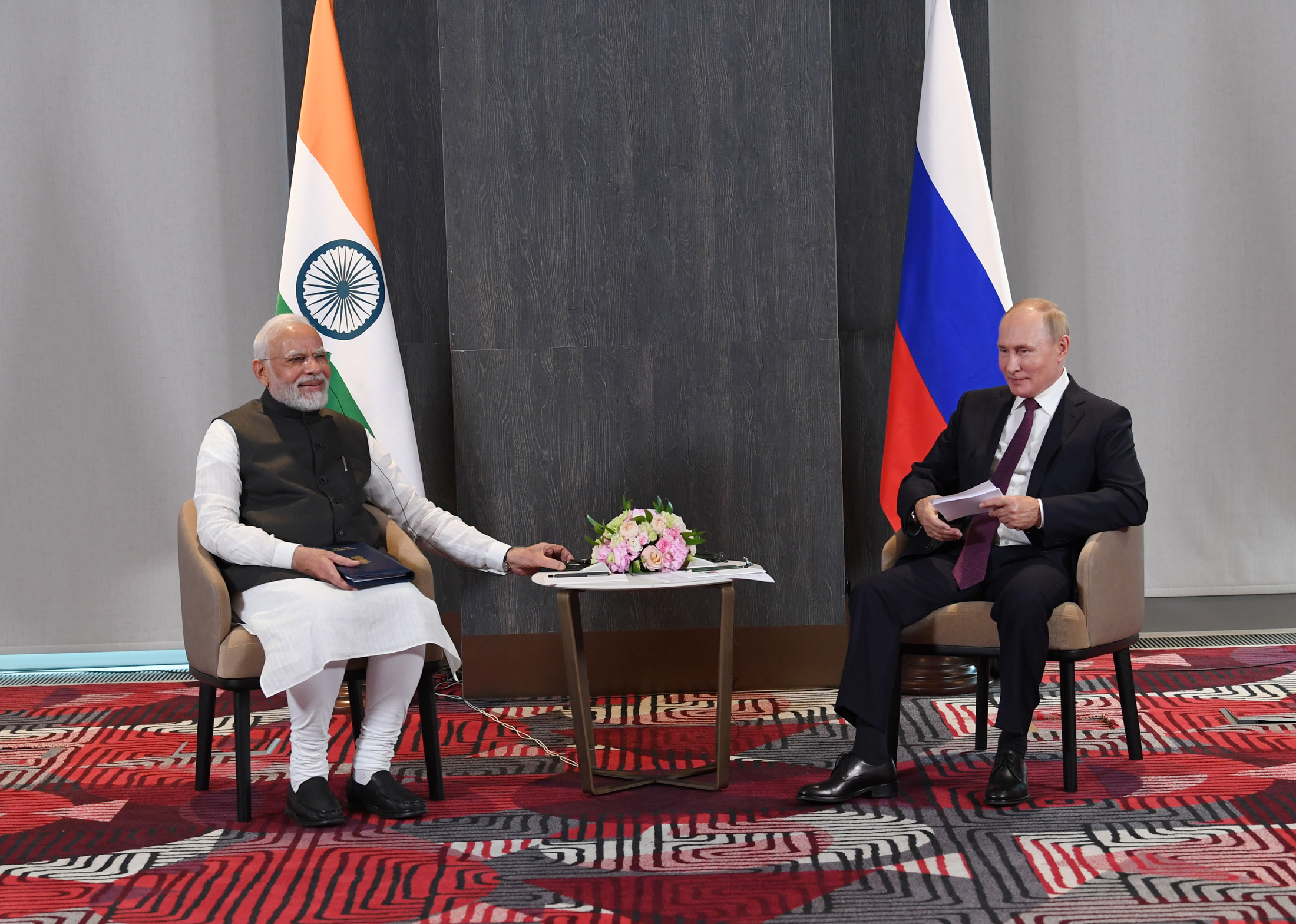
When PM Modi asked Russian Prez Vladimir Putin for immediate cessation of the conflict at SCO, it was a warning wrapped in a call for peace that initiative must be taken before the dark clouds of the nuclear holocaust envelop the mankind.

It was a loaded message from India to all the stakeholders of the ongoing seven-month old Ukraine-Russia war, when Prime Minister Narendra Modi, asked Russian President, Vladimir Putin, for immediate cessation of the conflict. It was a strong warning wrapped in a call for peace that effective initiative must be taken before the dark clouds of the nuclear holocaust envelop the mankind.

The significance of the meeting between Modi and Putin at the Shanghai Cooperation Organization (SCO) on June 14, 2022 at Samarkand in Uzbekistan, explains that India’s concern in this avoidable conflict was twin-fold. While it has triggered off a man-made human tragedy, also the use of the new generation weapons, especially from the USA, to Ukraine might further enrage the Russians.

It was quite ridiculous on the part of some leading American newspapers describing Modi’s suggestion as a ‘bold stand’. Little did these much-acclaimed media platforms realize that ‘a desperate Putin’, facing domestic opposition to the war as well as the recent setback to his forces, is being pushed to the brink, thus further eclipsing prospects of an immediate peace in the region.

Within a week of this meeting, Putin addresses the Russian nation for a partial mobilization of its reserved 2.5 million strong forces. He tells his countrymen that our motherland is under threat, and it is accompanied by a decision to hold the Russian-speaking population of Luhansk, Donetsk, Kherson and Zaporizhzhia provinces. These territories are estimated to constitute 15 per cent of the Ukrainian territory. Putin, who had promised the SCO to soon work for peace, appears to be facing massive setbacks, if not total defeat, on the war front. In his televised address, the Russian leader warned the West that he isn’t bluffing over using all means at his disposal to protect Russian territory. This was a veiled reference to Russia’s nuclear capability.

Russians Oppose War

Within a few hours of Putin’s announcement for partial mobilization for raising a force of 25 lakh soldiers, there were reports of countrywide demonstrations against the war accompanied by a large number of young men, mostly in the age group of 30-35 leaving the country.

They are seeking first available flights to countries like Armenia, Georgia, Turkey and Dubai, not affected by the sanctions imposed by the West. The Russians could travel to these destinations without obtaining a visa. Those who could not get a flight are trying to escape via land routes to countries like Finland or Mongolia. According to the media reports,  there are traffic jams at the checkpoints on the borders.

Meanwhile, there are reports that the police cane-charged demonstrators in big cities like Moscow and St Petersburg, who were raising slogans, such as ‘let our children live!” and ‘send Putin to the trenches!’ Their videos are being uploaded.

It may be noted that the Russians have been demonstrating against the war since February this year, but the agitation has now become countrywide. Within hours of Putin’s address to the Russian nation, a huge demonstration took place in Moscow. The security forces arrested more than 1400 demonstrators, but the protest could not be suppressed. A press note from the organizers of the protests, Vesna, stated, “Mobilisation means that thousands of Russian men—our fathers, brothers and husbands—will be thrown into the meat grinder of war. What will they die for? For Putin’s palace?”  “It further exposed the poor performance of the Russians in the battlefields that  the authorities at first said that only professionals were fighting and that they would win. It turned out that they were not winning. So the war is no longer somewhere out there; it has come to our homes,” it further added.

Earlier, it is estimated that more than three thousand protestors had demonstrated against the war on February 24. The demonstration was organized by a political activist, Marina Livinovich, who was detained before she could reach the venue, Pushkinskaya Square.

Interestingly, during the World War-II, the Russians and Ukrainians were fighting together against the forces of Nazi Germany, but this conflict is considered fratricide. The Russians and Ukrainians have family ties; therefore, it is not surprising that few among Russians are ready to accept this war as a war for saving the Russian nation.

India, perhaps, sensing the growing disenchantment of the Russian people regarding the war, has offered a window for peace to the countries engaged in this unnecessary war. It was reflected during the speech of India’s External Affairs Minister S. Jayashankar before the UNSC on June 22. He not only endorsed Modi’s request for immediate ceasefire, also indicated that negotiations could begin even under the auspices of UN; however, much will depend upon the USA. Unless, it permits, the major European powers, especially France and Germany, might not be able to take any substantial initiative. The West believes that due to growing anger among the people, Putin’s downfall is imminent.

China’s double speak

During the past seven months of this European war, China has been quite vocal in supporting the Russian invasion, but it did not extend any substantial military assistance to its ally. Its support to the war could be one of the strategies to occupy Taiwan, but the commitment of the democracies worldwide to the independence of Taiwan might have deterred it from invading the island nation. It is also believed that China might have imitated Russia by marking its troops. It appears that for the time being, the Chinese have postponed Taiwan’s annexation plan. It cannot repeat the annexation of Hong Kong, where it deliberately ended the two systems under one nation much against its international commitment.

The Chinese have just been offering only verbal support to Russia, but according to the western sources it neither gave weapons nor ammunition to its ally. Meanwhile, according to the Japanese media, Russia is obtaining ammunition from North Korea for its artillery. The disclosure comes days after Russia received initial shipments of Iranian-made drones, some of which American sources said had mechanical problems. U.S. government officials said Russia’s decision to initially turn to Iran, and now to North Korea, was a sign that sanctions and export controls imposed by the United States and Europe were hurting Moscow’s ability to obtain supplies for its army. Moscow had hoped that China would be willing to buck those export controls and continue to supply the Russian military, but it is being noticed that although China was willing to buy Russian oil at a discount, but is quietly abiding by the sanctions aimed at Moscow’s military. It did not try to sell either military equipment or components.

Meanwhile, the U.S. Commerce Secretary, Gina Raimondo, has repeatedly warned that if Semiconductor Manufacturing International Corp., China’s largest computer chipmaker, or other companies violate sanctions against Russia, the United States will shut down those businesses, cutting off their access to the American technology they need to make semiconductors.

Amidst these developments, it appears the Indian efforts for peace might enable an honourable exit for Russia in this war.


MOST POPULAR

HOT NEWS