Peeping Toms are on the rise

The recent row over the alleged leak of private videos of girl students of Chandigarh University, Mohali, on internet has brought home the vulnerability of women to digital voyeurism, writes Dr. Sangita Laha

It was shocking to see a massive protest by students of Chandigarh University, located in Mohali, Punjab, in recent days. The news made headlines on several TV Channels. The reports covered the protest which erupted after rumours of objectionable videos of inmates of girls hostel on the campus being leaked online started doing the rounds. Surely, it left many of us aghast. The incident stirred the MMS controversies again putting a question mark over the safety and security of young girls/women staying in hostels either for pursuing further studies or eking out a living in the big cities. The earlier Delhi Public School MMS scandal had brought a whole new layer of notoriety to the culture of sensual pleasures.

Such incidents occur quite often. To look back, The Economic Times broke news on April  1, that the Mumbai Police has filed a charge sheet against well-known Bollywood choreographer in a sexual harassment case dating back to 2020. The choreographer is known for his work in blockbuster films and was charged with sexual harassment, stalking and voyeurism.

In 2015, the case of Union minister Smriti Irani finding a CCTV camera at Goa’s Fab India store brought back the focus on digital voyeurism. Being a Union minister, her case received a lot of media attention. The incident happened a few days after a woman found a mobile phone strapped to a changing room door of a Van Heusen store in Lajpat Nagar’s Central market in Delhi, a popular shopping hub.

One of the first cases of digital voyeurism was reported in Pune in 2003 when a peon in an establishment at Sahakar Nagar installed a web camera in a changing room. In 2005, a landowner was arrested for filming women tenants. In 2007, two MMS clips from the changing rooms of a renowned departmental store in Kolkata started making the rounds. In one, a girl was shown changing clothes while in the other a couple was shown having sex. A year later, a shop assistant was found filming women in a garment store from below the trial room door in Kolkata. Usually, the person committing voyeurism is called a ‘voyeur’ or ‘peeping tom’. Though voyeurism doesn’t harm any person physically but leaves the victim with mental trauma and pressure. It torments a woman, invading her right to privacy.

There are many such incidents. Alfred Hitchcock alludes to the theme of voyeurism in his film ‘Rear Window,’ and emphasised the tendency for human beings to watch others for their own amusement. Rear Window examines how voyeurism can be a possible form of entertainment for an individual. Jeff is an active voyeur by profession, a photographer, making him naturally inclined towards watching people. A case of voyeurism could arise under two circumstances; one, a person actually sees someone spying, and two, they suspect that they are being spied on.

As per the statistics, about 42% of college students without any previous criminal background have engaged in voyeuristic acts as they have high-tech gadgets and mobile devices. This has taken voyeurism to new heights in India. Every new phone available in the market today comes with a minimum of 5 megapixel camera, and access to superfast internet. About 80 percent of the youth have access to a smart-phone with these basic features. Besides, several types of spy-cameras such as pen cameras and button cameras are available at affordable prices.

What is voyeurism?

Voyeurism is an act of spying on people who are engaged in private activities like undressing, showering, or any other action which is of a private nature. A person may engage in an act of voyeurism simply by using his/her naked eyes, or by using cameras or binoculars. In other words….peeping through when the victim is unaware that his/her private acts are being watched or captured by someone.

What does the law say?

The Criminal Law Amendment Act, 2013 inserted Section 354-C into the Indian Penal Code, criminalizing voyeurism. Sending obscene material (photos, pictures, films, messages) to a woman through social media is an act of sexual harassment under the IPC. Showing or sending a woman pornographic or sexually explicit material without her consent is a form of sexual harassment under Section 354-A IPC. The punishment for this offence can range from 3 years and a fine or both. But, in almost all the cases, the voyeur does not interact directly with the subject of his interest, who is often unaware of being observed. This reduces the chance of the incident being reported. Hence, the voyeur goes scot free. Taking advantage of the situation, he coerces the victim to meet his demand.

The concept of ‘Voyeurism’ started with the Information Technology Act 2000. With the incorporation of provisions like sections 66E, Sec 67, Sec 67A and Sec 79, the act covers the prohibition of all activities like transmitting, recording, capturing, recording of obscenity, and capturing a sexually explicit act. The separate section has been introduced in the IT Act, 2000 by Information Technology Amendment Act, 2008 by the influence of Section 1801 of Video Voyeurism Prevention Act of 2004, a Federal Law of USA. It strengthened the laws against voyeurism in India. Section 66E of IT Act, 2008 recognizes the right to protect the human body from unreasonable and obscene intrusion by video technology and adequately protects the individual privacy from the crime of video voyeurism which destroys personal privacy and dignity by secretly videotaping or photographing unsuspecting individuals. Section 67A of the IT Act states that if material which is published online is sexually explicit; the person can be imprisoned for 5 years and is liable to pay a fine of up to Rs 10 lakh. The police say regardless of whether the victim has a proof or not, a complaint should be filed.

Combating voyeurism

Combating voyeurism is not an easy task, and it cannot happen overnight by merely passing laws with punitive measures. Agencies must be set up by the government to run a periodic check on restaurants, hotels, clothing stores, malls, and other places which are open to public. Such places should be checked routinely for breaches in privacy. If these are found to be faulty in ensuring such protection, then heavy fines and other penalties should be imposed on them. This would force the hands of the store keepers or managers into taking effective measures in ensuring privacy protection in their stores.

(The author is an Associate Professor of National University of Study & Research in Law)


Why privacy laws in India need a revamp?

The viral news about recording and the circulation of Chandigarh University hostel girls’ private videos set off a storm of panic and anger leading to calls for a fool proof Right to Privacy.

Tehelka Cover Story in this issue by Dr. Sangita Laha, Associate Professor & Dean, National University of Study and Research in Law, “ Peeping Toms are on the rise” explains why the recent row over the alleged leak of private videos of girl students of Chandigarh University, Mohali, on internet has brought home the vulnerability of women to digital voyeurism.

The incident hogged national limelight after protests by students erupted and anxious parents rushed to the university campus to take their daughters home. The reported sharing of “objectionable videos” of fellow boarders at the hostel plunged the private university into a spiral of fear, rumours and unrest, culminating in few arrests though the authorities claim there had been no privacy breach.

But by the time Dr R.S. Bawa, Pro-Chancellor, Chandigarh University, in a statement said, “There were reports that 60 objectionable MMS were shared on the social media following which some girls attempted suicide. This is totally false and baseless. During a preliminary investigation by the university, no video was found from any student, except a personal video shot by a girl which she had shared with her boyfriend”, the news had already spread like wildfire. The students question if there were no videos, why a first year PG student of the university who was at the epicentre of the controversy was arrested, along with her reported boyfriend from the Army and two other persons, one of them being a native of Rohru village in Himachal Pradesh’s  Shimla district.

The incident has raised pertinent questions  before the authorities and the society as it amounts to breach of privacy.  It’s a wakeup call because similar incidents keep happening every day and every hour in the country, and the majority of those are not reported due to lack of awareness about relevant legal provisions, fear of social stigma and trust deficit as far as law enforcing agencies are concerned.

In this case, the Punjab CM Bhagwant Mann instituted a probe into the episode, pointing out that “daughters are the dignity and pride of Punjab”. A magisterial probe and the constitution of a special investigation team followed.  The Chairperson of National Commission for Women, Rekha Sharma, too wrote to the Punjab DGP urging him to deal with the matter strictly. Subsequently, an FIR of the incident was filed under Section 66E of IT Act (violation of privacy) and the accused as of now have been charged with section 354C of IPC (voyeurism) after the harrowing incident.

The incident has once again resulted in clarion calls for Right to Privacy because the violation of the privacy of the students is a concern which remained completely amiss amidst the public rage given that the laws have barely kept up pace with cyber-crimes.


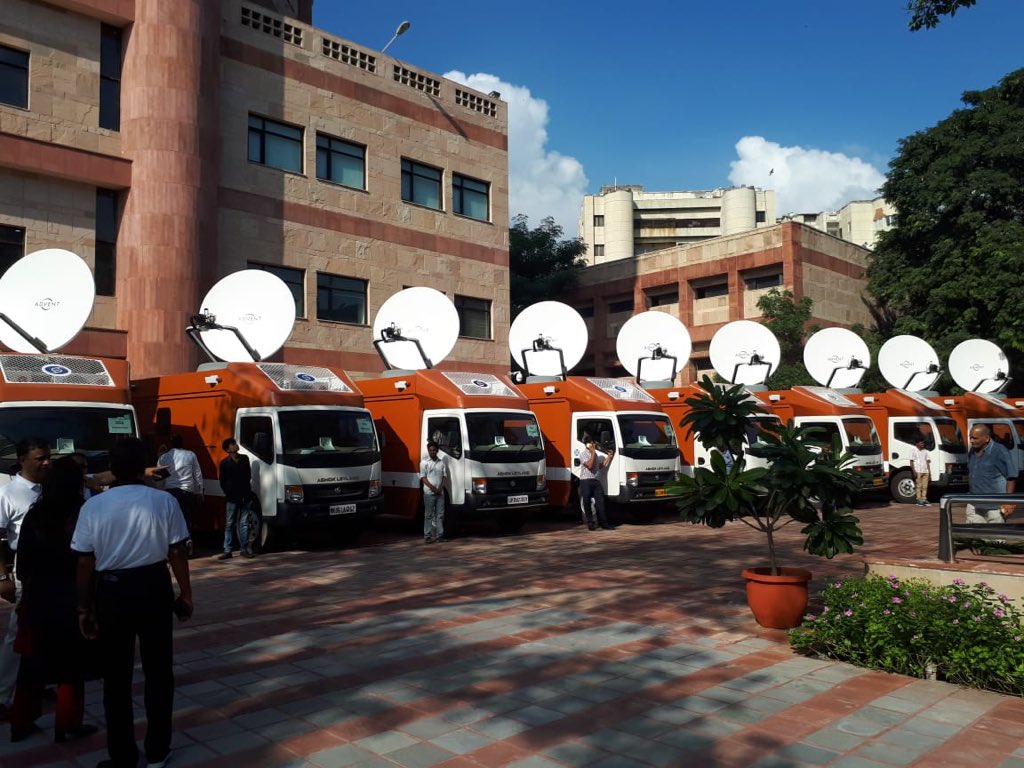
Two years on, Prasar Bharati Recruitment Board yet to take off!

Accumulated vacancies in the Prasar Bharati are massive and disproportionately all time high at 22,333. It is learnt that 70 per cent of total vacant posts have been filled up in flagrant violation of rules on contract from organisations and personnel of RSS stock, writes M Y Siddiqui

Prasar Bharati (Broadcasting Corporation of India) Recruitment Board, set up to fill up direct recruitment vacancies for Akashvani  (All India Radio) and Doordarshan (DD), with effect from July 1, 2020 under a notification by the controlling Ministry of Information and Broadcasting on February 12, 2020, is yet to take off. An inquiry reveals that the Board is currently seized by the recruitment process for physically impaired persons. It is silent about filling up massive vacancies. As a result, Prasar Bharati is now a truncated public broadcaster, reduced to as a whole and sole propaganda machinery of the union government. Before the commencement of Prasar Bharati Recruitment Board, a limited number of critical vacancies in Group B and Group C categories, in Border States, was filled up through the Staff Selection Commission (SSC).

Meanwhile, accumulated vacancies in the Prasar Bharati are massive and disproportionately all time high. According to a latest official figure, combined total vacancies of AIR and DD are 22,333 out of combined total sanctioned posts of 47,829. Out of these vacancies in AIR (Akashvani) are 10,247 and 12,086 in DD. Total sanctioned strength of employees in AIR is 26,129 and in DD 21,700. Combined strength of employees in Prasar Bharati in position is 24,496, of which 11,453 are in AIR and 14,043 in DD. It is learnt that 70 percent of total vacant posts have been filled up in flagrant violations of the general recruitment rules on contract from organisations and personnel of the RSS stock.

Contractual employment is a new normal and willfully done by the central and state governments to avoid democratic obligations with no job guarantee, very low remunerations with no health, children education allowance, accommodation and denial of after retirement social security benefits like pension. The governments, both at the centre and states, carry on with a massive contractual employment taking advantage of unprecedented rise in poverty, unemployment and high costs of living of our people. The result has been poor governance in all segments of public administration. The worst casualty can be witnessed in the education and health quotient of the people. Employability of graduates in the country is less than 5 percent in the globalized Indian economy.

Prasar Bharati Recruitment Board is charged with recruitment in the posts of personnel below joint secretary level in the union government. Public broadcasters maintain that pending regular employment by the Board, vacancies are being filled by promotion in keeping with the extant instructions of Department of Personnel and Training (DoP&T). Prasar Bharati is still jostling with auditing performance cum relevance of each post in the light of fast changing technology and various recommendations of committees/commissions on AIR and DD reforms. Reticence on filling massive vacancies through much hyped and much touted Prasar Bharati Recruitment Board is baffling for the people in the know.

News services of both the AIR and DD have lost their sheen and have been reduced as a sole propaganda tool of the one-man union government so much so that people hardly know who are the ministers in the respective ministries. This is primarily because individual ministers do not matter for Prasar Bharati. Earlier, AIR news bulletins, especially at 9 p.m. used to set benchmarks for the front-page news in the following morning newspapers. It is no longer the case now. So was the importance of Spotlight for students, job seekers, researchers on current affairs and development news. AIR news bulletin used to compete with news agencies as well. Besides, AIR and DD used to be a treasure house of the country’s cultural quotients in music, classical and modern, art and strides made in all round development and progress. Now everything is diluted in a partisan way from the RSS angle. In the process, well meaning people and intellectuals resort to social media for independent minded live wire bold media professionals for news, their analysis and evaluation on YouTube, Facebook, Twitter, online news portals etc. There are all round deterioration in newscasts, documentary films, educational, informational and entertainment programmes.

The current union government, rather than creating new jobs, is not even filling up massive vacancies in the sanctioned posts. News services in both AIR and DD are overwhelmingly manned by contractual employees from RSS stock, which together with the so-called captive mainstream corporate electronic and print media deny the people their inherent democratic rights to know the factual scenario of problems being faced by the people at large and their critical appraisal on the public broadcasters indicating that Indian democracy is on its last leg gasping for breath!


Whose applecart would AAP upset in Himachal, Gujarat?

Though publicly both the Congress and the BJP have downplayed the threat from the AAP  in HP  and Gujarat assembly polls, the two national parties are gearing up for three-sided contests and are designing their strategies accordingly, reports Amit Agnihotri

The Gujarat and Himachal Pradesh assembly polls have traditionally been a fight between BJP and Congress traditionally but the entry of AAP has turned the coming elections into a three-cornered contest.

Interestingly, both the national parties, the BJP and the Congress say the new party neither has an organization nor a popular leader in the two states and has entered the fray just to make a splash.

Tall claims are being made by all the parties. The BJP says it would retain the two states, the Congress says it would stage a comeback while the AAP says it would dislodge the saffron party. However, the claims would be tested only when the results are out. For now, the two national parties have taken note of the three-sided contest and are designing their strategies accordingly.

The AAP decided to contest polls in Himachal Pradesh after the party’s recent victory in neighbouring Punjab while the Delhi-based party chose to fight polls in Gujarat sensing a huge anti-incumbency of the BJP, which has been in power for the past 27 years.

The AAP appeals to the same voters as that of the Congress, prompting the grand old party to describe the new outfit as tourists in Himachal Pradesh. “Parties like AAP woo the voters with promises and then forget about them. They are like tourists and will go back after the polls. Our main fight is with the BJP, which has not done anything over the past five years,” AICC Secretary in charge of Himachal Pradesh Tajinder Pal Singh Bittu said.

In Gujarat, the Congress describes the AAP as BJP’s B team and says the new outfit has come to the western state only to divide the anti-BJP votes. “The AAP is in Gujarat as the B team of BJP just to divide the opposition votes. There is no third front. The main contest is between Congress and BJP. People remember the work that was done during the previous Congress governments. They are fed up with the BJP and will vote for change. We will form the next government and bring development back in the state,” AICC in charge of Gujarat Raghu Sharma said.

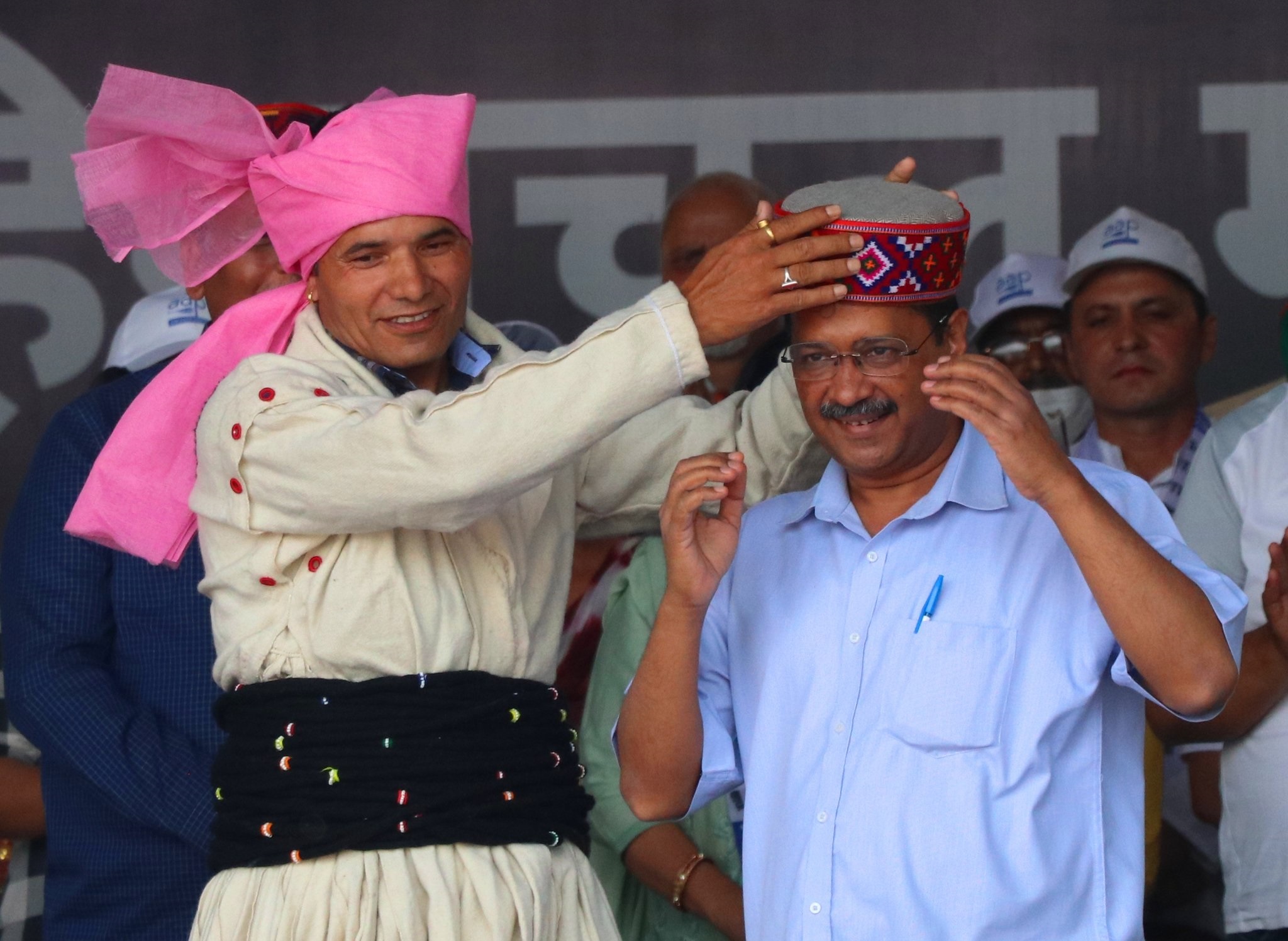
The AAP, which lacks a base in the two poll-bound states, is banking on the image of Delhi chief minister Arvind Kejriwal, who is promising better government schools, locality clinics and a free power besides a clean government to the voters.

Both the Congress and the BJP have questioned the claims of the Delhi government in these areas. Former Congress MP Sandeep Dikshit, son of former chief minister Sheila Dikshit, addressed a press conference in Ahmedabad to expose the claims of the Delhi government.

Between the two states, the Gujarat polls have a national significance as it is the home state of PM Modi and Union Home Minister Amit Shah. PM Modi has made several visits to Gujarat over the past months and it is certain that elections in Himachal Pradesh would also be fought in his name.

If the Congress is able to end the BJP rule in Gujarat, it would be a major boost for the grand old party ahead of the 2024 national elections. If the AAP wins there, and it is a big if, the victory would present the new outfit as a substitute of the Congress, which at present rules only in Chhattisgarh and Rajasthan.

A win in Gujarat would reinforce the claims of AAP that the 2024 national polls would be fought between PM Modi and Delhi chief minister Arvind Kejriwal, who has national ambitions. Already, Kejriwal has started saying the Congress is finished and claimed that a recent CBI probe in the alleged liquor scam, involving his deputy Manish Sisodia, was a BJP ploy to stop the AAP from gaining ground in Gujarat.

The AAP is hopeful in Gujarat as it had done well in the local body polls last year winning 31 seats in Taluka Panchayats, nine in municipalities and two district panchayat seats. Before that, AAP had registered its presence in Surat by winning 27 municipal corporation seats at the expense of the Congress, which failed to win any in that town. Over the past months, both Kejriwal and Sisodia have made several visits to Gujarat to woo the voters.

The Congress, which regularly targets the AAP, supported the CBI probe saying that the Kejriwal government had been indulging in corruption in Delhi and was using the money made through unfair means to fund its campaigns in Gujarat and Himachal Pradesh.

In 2017, the Congress had won 77 seats and had come close to the halfway mark of 92 in the 182 member Gujarat assembly. The BJP had won 99. The Congress has lost 14 MLA since then. Yet, the grand old party claims it will outperform the saffron party this time. A few months ago, Congress president Sonia Gandhi named Rajasthan chief minister Ashok Gehlot as observer for the Gujarat polls.

In Himachal Pradesh, the Congress brought in a new team headed by Pratibha Singh, wife of former chief minister Virbhadra Singh, as the state unit chief and is banking on the legacy of her husband and the veteran leader. The party is also projecting Pratibha Singh, CLP leader Mukesh Agnihotri and campaign chief Sukhvinder Singh Sukhu as the trimurti which will bring the party back to power. Sonia Gandhi has named Chhattisgarh chief minister Bhupesh Baghel as observer for the hill state. Rahul Gandhi is expected to campaign in the two states.

However, the grand old party has been suffering from infighting in both the poll-bound states and has lost several leaders to the BJP over the past few years. In Gujarat, it lost a young leader Hardik Patel to BJP besides several MLAs. In Himachal Pradesh, Congress leaders Pawan Kajal and Lakhwinder Singh Rana joined the BJP, followed by Ram Lal Thakur.

The BJP, which rules in the two states, has slammed the AAP saying it was doing drama. In turn, Kejriwal urged BJP workers to take money from the saffron party but support his party. He also claimed that BJP workers were joining the AAP in large numbers.

AAP’s track record

Earlier, the AAP had contested the Goa assembly polls alleging the Congress lacked aggression to take on the BJP. The new party also tried its luck in Uttarakhand, UP and Rajasthan but did not succeed. The new party had claimed that people of Goa and Uttarakhand were fed up with both the national parties due to mis-governance and corruption and wanted to try out a new party. AAP founder and Delhi chief minister Arvind Kejriwal had campaigned in Goa and Uttarakhand also.

Poll promises

Amid a freebies vs welfare schemes debate going on in the country, Congress and AAP have made a lot of promises to woo the voters in the two states. The BJP in turn is banking on the work done by its governments in Gujarat and Himachal Pradesh but is also concerned that both the Congress and the AAP can dent its prospects.

The Congress recently announced eight promises for Gujarat. These include free treatment up to Rs 10 lakh, farm loan waiver up to Rs 3 lakh, Rs 5 per litre subsidy to milk-cooperatives, Rs 4 lakh assistance to 3 lakh families of Covid victims, strict anti-corruption laws and scrutiny of corruption over past 27 years, including jail to guilty, hiring for 5 lakh government jobs and ending contract system within one year of getting elected, additional 5 lakh jobs in 2 year and 10 lakh jobs by 2024, with 5 lakh jobs reserved for women and an unemployment allowance of Rs 2000 per head for the youth.

The promises are being publicised as “Rahul’s guarantees” to the voters of Gujarat, which the Congress alleges, is actually lagging in several social welfare indicators. “Gujarat is a state of businesspeople. They have suffered under the BJP rule for 27 years and now want a change. The condition of the poor including the tribals is the same. There are no good roads, schools, and hospitals in the villages,” said AICC in charge Raghu Sharma.

To stress what the Congress did when it ruled Gujarat, a separate campaign is being run by the local leaders to highlight the projects completed earlier. These include key educational institutions like IIMs, cooperatives like Amul and the Narmada Sagar dam.

The Congress guarantees in Himachal Pradesh include revival of the old pension scheme, free power up to 300 units, 5 lakh jobs, allowance of Rs 1500 per woman, Rs 680 crore start-up fund, mobile clinics, English-medium schools besides fair prices for fruit growers, buying 10 litre of milk per day from cattle owners and purchasing cow dung from them at Rs 2 per kg.

Noting that the guarantees were to end the woes of the hill state, Rahul urged the people to read the document carefully and then vote for the development of Himachal Pradesh.

Arvind Kejriwal too has announced free and quality education for all students in government schools, to improve infrastructure of existing government schools and set up a large number of new schools in Gujarat, if voted to power. He also said that all private schools will be audited and made to return “extra money” collected from parents and that the services of teachers working on a contract basis will be regularised and they will be offered job security.

In Himachal Pradesh, Kejriwal has promised Rs 1,000 per month to every woman aged above 18 years, free and quality education to every child, free healthcare services to everyone and Rs 1 crore to the kin of soldiers from the state who laid down their lives in the line of duty.


Will Congress rise like a phoenix?

The response to the Yatra and Rahul has got political rivals worried, and we are seeing a different Congress emerging, slowly and surely. No wonder, everyone is sitting up and taking notice.

A few months ago when the Congress Party rejected political strategist Prashant Kishor’s offer to chart its future course, there were many who got frustrated with the Grand Old Party and wrote it off. Many, like me, castigated the party for ignoring the writing on the wall and single-handedly destroying any chances the country had of having a credible opposition to the ruling party, which is vital for a vibrant and healthy democracy. That was in May. Cut to September and we are seeing a different Congress emerging, slowly and surely. And everyone is sitting up and taking notice.

It all began with the Grand Old Party raising relevant points connected to the common man’s woes. Even though trolls tried to brush aside the timid attempts by a totally decimated party to rake up pertinent issues like joblessness, price rise, unprecedented hike in petrol and diesel prices, women’s security or the lack of it, farmers’ woes, and so on, the party did not give up. They kept at it tenaciously and as a result, this time the Parliament Session saw a much more confident and outspoken party, willing to hold the ruling dispensation accountable and not be silenced.

But what really surprised Congress watchers was the way they came out to defend an ailing Sonia Gandhi when she was called for grilling by the ED in the National Herald Case. One may or may not approve of the mayhem they created on the streets of the national Capital and the fact that they were seen to be behaving as obstructionists, but it was certainly interesting to see the way the party, which over the years seemed to have become lethargic owing to repeated humiliations at the hustings, was galvanized into action. They sat on dharnas on the streets, took beatings and detentions, and called out Delhi Police and the ruling party, but they did not back down. This side of the Congress was certainly not seen in a long time.

When Rahul Gandhi was grilled by the ED relentlessly for inhumanly long hours day after day, the whole nation watched with bated breath. Most thought that someone who has grown up in a protected environment in the lap of luxury could come undone after sustained questioning by the hackneyed and seasoned officers of the ED, but he always came out at the end of the day, looking tired and haggard but calm and composed. In a way, the experience with the ED was Rahul Gandhi’s baptism by fire, and he seems to have come out of it stronger, more confident, responsible, and dignified.

And now there is the much-talked-about and keenly-watched ‘Bharat Jodo Yatra’ which has seen the Gandhi scion come out of his comfort zone and connect with the masses. The outpouring of love and support from the aam aadmi for a party that seemed to have lost its relevance in national politics and become distanced from the grassroots has been an eye-opener for many cynics, Congress baiters, trolls, political commentators and political rivals. So much so, that rival parties which had written off the Grand Old Party, have been compelled to resort to the kind of gimmickry that one has come to expect from them by raking up frivolous issues to distract from the real narrative. The good thing is that for once the senior leaders, spokespersons and particularly the IT cell of the Congress are not comatose and they are exposing detractors and shutting down controversies that are sought to be created.

However, the party and those who plan Rahul Gandhi’s schedule would do well to do background checks on the people the Gandhi scion meets, the clothes he wears, and the questions he asks because he is under public scrutiny like never before and even a little misstep is magnified and turned into a controversy. For instance whoever set up the meeting with a controversial pastor with even more controversial questions to be asked of the man certainly doesn’t have the best interests of the Congress at heart. Plus, whoever slipped the Burberry T-shirt into his suitcase and Rahul’s image managers should be fired for the lack of sartorial advice. Good that the Congress shut that bit of controversy down as fast as it came up, but considerable damage was done by then.

Take a page out of the book of some other politicians who have cultivated their images with so much effort over the years. Plus the Congress’ media machinery that seems to be rusted has to be oiled again. Remember it’s all about the perception and photo ops. Here again, the Congress would do well to learn from some past masters in the game of the perfect photo ops.

Hopefully, so many days into the yatra the Congress would have realized how controversy factories work and what close scrutiny the yatra, yatris and particularly the Gandhi scion is being subjected to. One thing is clear, the response to the yatra and Rahul has got political rivals worried. He can’t be taken lightly anymore and seems to be set on reviving the fortunes of the party which had become tired, old and far from grand in the eyes of many aspirational regional netas with their eyes fixed on Delhi. It’s no coincidence that Mamata Banerjee, who had declined to align with the Congress, is now thinking about burying differences with the party. And this revelation came from none other than a stalwart like NCP supremo Sharad Pawar, an astute politician who is known to measure his words. Speaking to reporters in Mumbai recently, Pawar had said TMC chief Banerjee is “ready to bury her differences with the Congress in the national interest and come together to form an anti-BJP front before the Lok Sabha polls.” According to her own party leader Sougata Roy, “Sharad Pawar is a very senior leader of the country, and I don’t think he has made the remarks without consulting our party chief.”

The relationship between the Congress and TMC hit an all-time low last year, after the latter had slammed the Grand Old Party as “incapable and incompetent”, which had gone into a “deep freezer.” Plus, in a major jolt to Opposition unity, TMC abstained from the vice-presidential election, as it did not agree with the process the candidate was decided upon without keeping the party in the loop. That Mamata is willing to mend fences with the Congress can only be attributed to the party’s rising political relevance and popularity with the masses in the States it is passing through. Of course, the South is its playground but still, it can’t be neglected.

Another positive development is the forthcoming Congress presidential poll. At long last, after two decades, the party will be getting a non-Gandhi as a president. Fresh blood in an organization always brings fresh ideas and rejuvenates those who are ambitious as there is hope for growth. Rahul of course will remain at the helm of things behind the scenes, much like his mother Sonia was for a very long time, but at least there will be a space for new ideas and democracy in the new organizational setup. With a non-Gandhi at the helm for the first time since 1998, the party can to an extent counter criticism over dynastic politics ahead of the 2024 General Elections.

Rajasthan Congress strongman and Chief Minister Ashok Gehlot, had thrown his hat into the ring for the presidential election and was also the High Command’s choice for the top job. However, his chances were marred by his over ambition and the unprecedented indiscipline and defiance shown by his MLAs in their bid to keep Sachin Pilot out of the Chief Minister’s chair. Now Gehlot is out of the picture entirely and his future as the Rajasthan Chief Minister, too, is in doubt. Even though it is good that the party High Command has come down heavily on this indiscipline but one wonders for how long will Gehlot nurse his wounds and what his next step will be and when.

All the high-octane drama over the election now leaves the charismatic Shashi Tharoor, the astute Digvijaya Singh and the dark horse (if sources are to be believed) Mallikarjun Kharge in the fray. Even though the Leader of Opposition had not formally thrown his hat into the ring till this piece went to press but his name was doing the rounds as frontrunner for the party chief’s post and that too with the blessings of the Gandhis. However, who will remain standing till the end, only time will tell.

Kharge or Digvijaya’s election to the top post will signal the party’s attempt to maintain a balance between the Young Turks and the Old Guard, whose rivalry within the party is legendary. On the other hand, if Tharoor is elected, it will send a very positive message that democratic values are still alive within the party (as opposed to Ghulam Nabi Azad’s accusations after quitting the Congress) and even a rebel can head the Congress and that one should have the courage of conviction to stand up for the good of the party if it is going in the wrong direction.

One wishes that veterans like Captain Amarinder Singh, Kapil Sibal, Ghulam Nabi Azad and Jyotiraditya Scindia were there to witness the change and maybe add to the list of contestants. But unfortunately, their time and patience with the Congress had run out and they parted ways. One only wishes that the party had made an effort to hold them back instead of declaring publicly that “whoever wants to leave can go.” Loyalty is not something that is easily found and these leaders were die-hard Congressmen who had put in a lot of blood, sweat, and tears for the party. Their loss at a time like this will be felt.

However, despite everything, the winds of change that are blowing within the party are good. Rahul may not be willing to don the mantle of the party chief anymore but there is no doubt about it that he has taken the dying Grand Old Party off the ventilator. But whether it results in the Congress getting into the driving seat whereas the Opposition unity chariot is concerned or whether it garners the party a larger vote share in the 2024 elections, only time will tell. But one thing is certain, no matter who becomes the next party chief, he has his task cut out for him. He has to find acceptance not only from the Gandhis but also within the rank and file of the party which is used to bowing to the wishes of the dynasty. He has to stamp down on factionalism in the Congress, and stem the exodus of party leaders, especially the veterans. He has to address the issues raised by the G23, end sycophancy and dependence on the Gandhis and he has to keep the fighting spirit and the momentum that the yatra has created alive and kicking, not just in the South but also in the rest of the nation, till the General Elections. Also, he should realise that if he can’t improve the party’s showing at the hustings, he won’t have the same protection that Sonia and Rahul had had and the blame would squarely lie on his shoulders. So the new party chief will need very strong shoulders indeed to take the party into its next phase. One wishes that the Congress would rise up like a phoenix because a stronger Congress only means a stronger Opposition in the country and Parliament. And that can only be good for India.


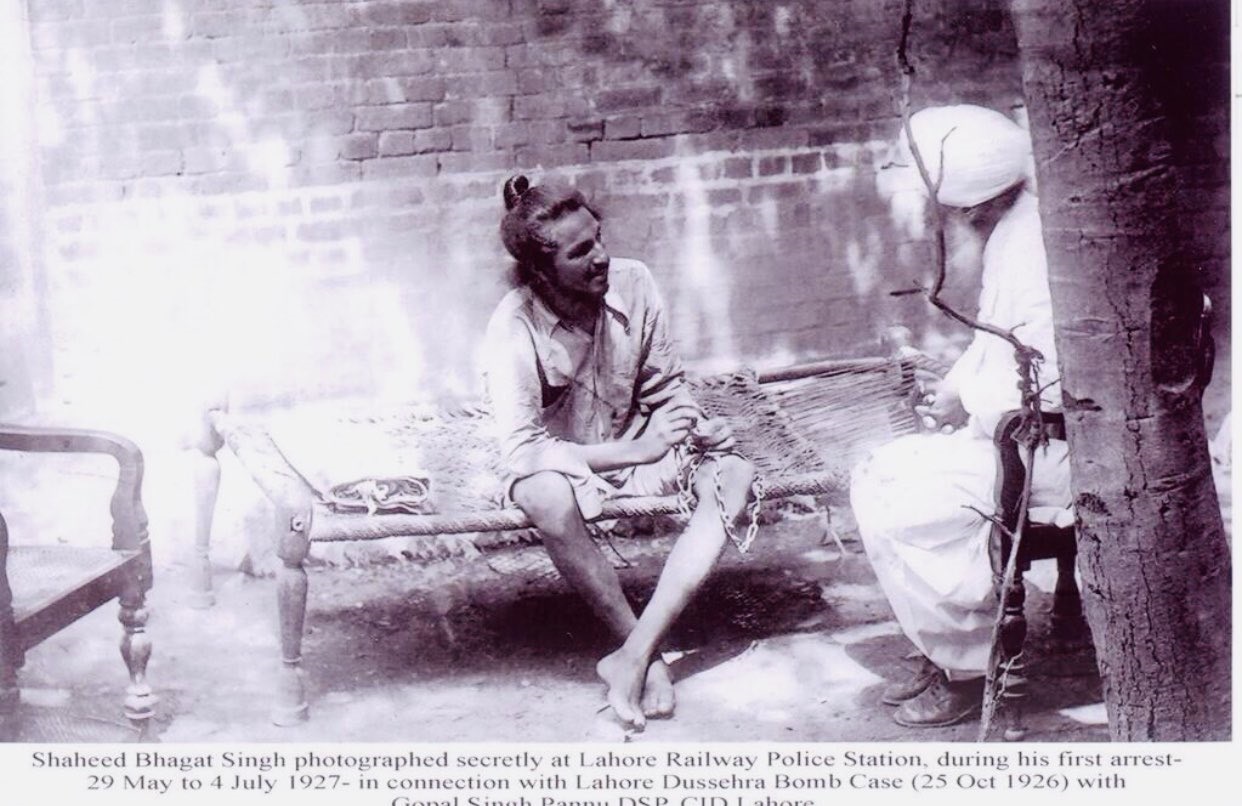
Bhagat Singh was a political ideologue of highest calibre

Shaheed Bhagat Singh, whose 115th birth anniversary fell on September 28 last, was  not only a great patriot and revolutionary socialist but also a Marxist thinker and ideologue of high calibre. Quite early in his life, he had become a voracious reader. He was only 23 when he was hanged in 1931.  One wonders how he had packed so much in his short and eventful life, writes Raj Kanwar

Fortuitously,  literature on the Soviet Union and the revolutionary movements in Italy, Ireland and Russia, and the writings of Marx, Engels and Lenin, were easily available in Lahore at the Dwarkadas Library that had been founded by Lala Lajpat Rai. From an early age, Bhagat Singh was one of the major users of the Library. He greedily read books on revolutions. No wonder then that Bhagat Singh and his comrades ‘looked upon the Socialist Russia as an ideal’, writes Editor DN Gupta in his book “Select Speeches and Writings of Bhagat Singh”.

A voracious reader

That was not all; his reading interest extended to novels by the iconic writers of those times like Charles Dickens, Victor Hugo, Oscar Wilde and the like who wrote on widely varied themes. Dickens was an English writer and social critic who lived in the 19th century (1812-1870) England. The general theme of his books largely revolved around ‘Humour’ and ‘Pathos’ as in ‘Oliver Twist’. Oscar Wilde on the other hand is best remembered for his epigrams and plays in the second half of the 19th-century-England. His most talked about play was “The Picture of Dorian Gray”, in which he tells an English Lady, “The only way to get rid of a temptation is to yield to it.” Another favourite author of Bhagat Singh was Victor Hugo — the French poet playwright, novelist, statesman and a human rights activist. His famous novels were ‘Les Misérables’ and ‘The Hunchback of Notre Dame’. All these authors wrote on subjects as different as chalk and cheese.

In an article on Bhagat Singh in the Times of India, historian Prof. MM Juneja (formerly of Chhaju Ram Memorial Jat PG College, Hisar) had written: “Bhagat Singh studied a lot till his arrest on 8 April 1929. He continued reading albeit with greater vengeance even in jail. One of his co-prisoners Shiv Verma had then said, ‘Though we all had a passion for reading, Bhagat Singh was in a class by himself. His love for books was legendary. As per some estimates, he had read nearly 50 books while in the School, and about 200 during his College days till his arrest in 1921, and approximately 300 books during his incarceration of 716 days (April 8, 1929 to Mar 23, 1931).’

His love for books endured till the last minute

Throwing some light on Bhagat Singh’s thirst for books, Raja Ram Shastri, a well-known librarian of Dwarka Das Library, Lahore (now shifted to Chandigarh), had once told Shiv Verma, ‘Bhagat Singh literally used to devour books. He would read books, make notes, discuss with his friends and critically examine his own understanding in the light of new knowledge, rectifying the mistakes that came to be discovered.’

His love for books endured till his last breath, literally! Pran Mehta, Bhagat Singh’s lawyer was allowed to meet him on March 23, 1931, just a few hours before the hanging. Bhagat Singh was then pacing up and down in the condemned cell like a lion in a cage. He welcomed Mehta with a broad smile and asked him if he had brought him Vladimir Lenin’s book, ‘State and Revolution’. As soon as he was handed the book, Bhagat Singh began reading it as if he was conscious that he did not have much time left. Soon after Mehta’s departure, Bhagat Singh was told that the time for hanging had been advanced by 11 hours. By then, he had finished only a few pages of the Book.

In the same context, a close associate of Bhagat Singh, Manmathnath Gupta wrote about those last moments, “When called upon to mount the scaffold, Bhagat Singh was reading a book by Lenin or on Lenin, he continued his reading and said, ‘Wait a while. A revolutionary is talking to another revolutionary.’ There was something in his voice which made the executioners pause. Bhagat Singh continued to read. After a few moments, he flung the book towards the ceiling and said, “Let us go.”

Bhagat Singh’s patriotism was inbred

Not many among generations X and Z would perhaps know about Bhagat Singh and his heroic battle against the erstwhile colonial British rulers! In some ways, he was a genius and a born-leader. In fact, his patriotism was inbred. His father Kishan Singh was in Lahore Central Jail, and uncle Ajit Singh in Mandalay jail when Bhagat Singh was born. He had grown up listening to the stories of the exploits of both his father and the uncle. The Ghadar movement had also left a deep imprint on his impressionable mind. What had impressed him the most about the Ghadarites was their international outlook that separated religion from politics. “He was particularly inspired by the courage, self-sacrificing spirit and patriotism of another revolutionary Kartar Singh Sarabha who was hanged in the first Lahore Conspiracy Case when he was barely 19. He adopted Sarabha as a role model and carried his photograph in his pocket.”

The massacre in Jallianwala Bagh in Amritsar on April 13, 1919 too had left a deep scar on his young mind so much so that he drove all the way from Lahore to Amritsar just to kiss the ground that had been sanctified by the martyrs’ blood.

In the first decade of 20th century, Bhagat Singh’s family lived in a non-descript village Banga (Tehsil Jaranwala) in Lyallpur (now Faisalabad in Pakistan). His father, Kishan Singh owned a fair amount of agricultural land. Bhagat Singh’s academic career had begun moderately in the district primary school where he studied up to class V. He completed the rest of his schooling from Lahore’s iconic DAV High School (it was the alma mater of this writer too).

From the DAV School, Bhagat Singh moved to the National School in 1921 that had been founded by the trio of Lala Lajpat Rai, Bhai Parmanand and Sufi Amba Parshad (Bhatnagar). He was then just 14. It was there that he had also met his future comrades – Sukh Dev, Bhagwati Charan Vohra and Yashpal. At the National School, Prof. Jai Chandra Vidyalankar had become his mentor of sorts, and narrated the exploits of the revolutionaries in the erstwhile United Provinces (now Uttar Pradesh). All those revolutionary stories had so deeply inspired the young teenager that he then and there decided to dedicate his life to the cause of liberating Bharat Mata from the clutches of the British Imperialists.

A dynamic writer too

Apart from being a voracious reader, Bhagat Singh was also a dynamic writer. “Within just a period of seven years (1923-30), he wrote on various subjects like God, mysticism and religion, language, art, literature, culture, biographies of past and contemporary revolutionaries and other political leaders, and most important of all on party organization and revolution,” writes DN Gupta in his book. Bhagat Singh had constantly fought against ‘obstructionist, sectarian and communal ideologies’. No wonder then that the most outstanding and path-breaking pamphlet on religion and existence of God  “Why I am an atheist”, and the reasons for believing so was written by him during the evening of his life.

If Bhagat Singh was to appear on today’s political horizon, he would feel aghast at the increasing emphasis that the current ruling dispensation in India placed on the supremacy of religion to the exclusion of everything else. He had once told his comrades that “communalism was a great enemy of Indian society and Indian nationalism. Religion should at best be considered as the ‘private concern’ of an individual.”

Sadly there was  not much love lost between the Congress and Bhagat Singh. And he would be an anathema to the current ruling BJP dispensation. Thankfully, at least AAP (Aam Admi Party) swears by Bhagat Singh, and has
raised him to an iconic stature in the Punjab where it is the ruling party.

(Raj Kanwar is a 92-year old Dehra Dun-based veteran journalist, writer and author. His latest books are Dateline Dehra Dun  and its sequel.)


tehelkaletters@gmail.com

Has M’rashtra re-run fear made Mamata soften stance on Modi?

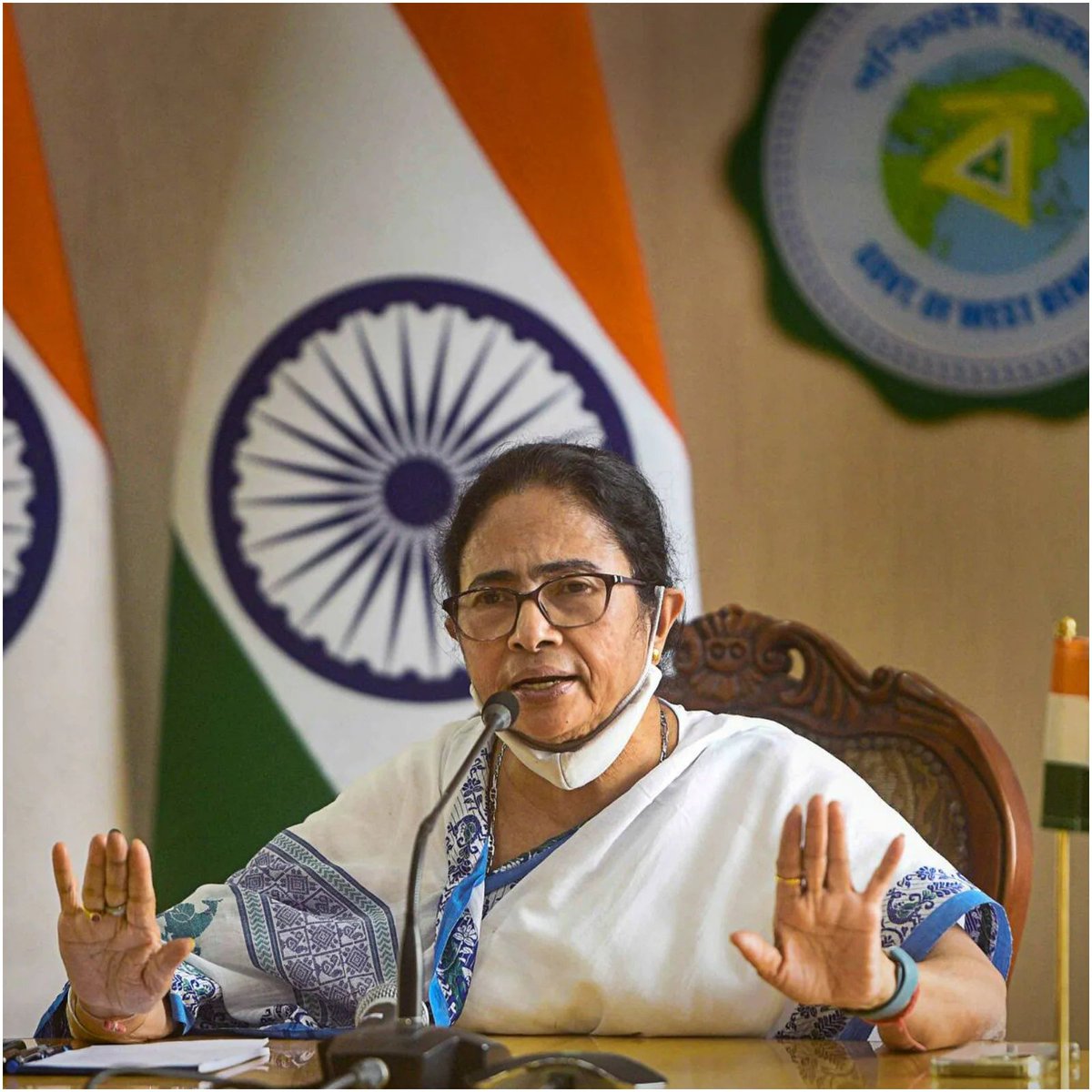
The opposition parties are upset over the shift in stance of Bengal CM Mamata Banerjee, who has surprisingly given a ‘clean chit’ to PM Narendra Modi over the raids on her own party leaders and is also showing unduly softer approach towards the RSS. A report by Mudit Mathur

The opposition parties are upset over the shift in stance of Bengal Tigress Mamata Banerjee who has surprisingly given a ‘clean chit’ to Prime Minister Narendra Modi over the raids on her own party leaders and is also showing unduly softer approach towards the Rashtriya SwayamSevak Sangh (RSS). Mamata, who emerged on national scene last year as a glue for the opposition unity after Prime Minister Narendra Modi and Home Minister Amit Shah faced humiliating defeat in high voltage acrimonious and no-holds-barred election in West Bengal.

Mamata’s remarks have come when Congress leader Rahul Gandhi is leading his Bharat Jodo Yatra and drawing overwhelming public response. Arvind Kejriwal is going to challenge PM Modi on his home turf Gujarat where Assembly elections will take place by the year-end. JDU’s Nitish Kumar and K Chandrashekar Rao of the TRS are working hard to unite anti-BJP forces. BSP Supremo Mayawati in UP has also started attacking BJP and Samajwadi Party chief Akhilesh Yadav for his inability to play an active role as leader of the opposition. Lalu Prasad Yadav and Nitish Kumar are planning to meet Sonia Gandhi to rope in Congress in the wider opposition unity keeping in view potential threat posed by BJP to democracy, plurality, constitutional institutions and ethos of the nation.

So, what’s behind the ‘clean chit’ of sorts for PM Modi from Mamata Banerjee, who was projecting herself as the rallying point of opposition unity? Or her softer stance on the RSS? Among many conspiracy theories, the popular perception is that she fears that what recently happened in Maharashtra could be repeated in West Bengal too or that escalating pressure from various probe agencies can take her near and dear into its firm grip.

That the replay of Maharashtra like episode is a conceivable political proposition was hinted by the actor-tuned- BJP leader Mithun Chakraborty, who had revealed in July last that 38 TMC leaders were in touch with his party. CM Banerjee denied any dissent in the party but inner pressures compelled her to go for a cabinet rejig. Despite that, her inner party troubles are not yet over. Earlier, Mamata expressed apprehensions about BJP’s plan to put most of TMC leaders behind the bars before 2024 elections.

Thus, the West Bengal government is really battling a deep crisis after the ED arrested the then minister Partha Chatterjee in an alleged money laundering case linked to a school jobs scam in Bengal. She had sacked him and also her education minister Paresh Adhikari. Cash valuing Rs.50 crore and jewellery of Rs.4.5 crore were seized from the residence of Chatterjee’s aide during raids by ED and fixed deposits valuing Rs.16.97 crore were recovered from the relatives of Anubrata Mondal by the Central Bureau of Investigation. Many other TMC leaders are also under the scanner of central probe agencies. Mamata’s nephew and heir, Abhishek Banerjee, is facing ED heat in a coal smuggling case that could lead to his  detention.

Responding to Mamata’s ‘clean chit’ to PM Modi, the Leader of the Opposition, Suvendu Adhikari said, “The saffron party and the prime minister do not need validation from her and her remarks are meant only a ploy to protect her and her party.” After Maharashtra, he hinted at a similar fate awaiting the West Bengal government too. Adhikari’s remarks came in the assembly where the ruling TMC passed a resolution against what it said was the “partial role of CBI, ED, IT and other central agencies”.

During the debate on this motion, Banerjee said, “I don’t believe the Prime Minister is doing all this (misusing the agencies). CBI and ED are not under him…All are under Home Ministry…all is being done by BJP leaders.” “Businessmen are leaving the country and running away. They are running away because of fear and misuse of ED and CBI. I don’t believe Modi is getting this done,” she added.

Targeting the BJP, Mamata said, “They (BJP) are more than dictators, more than Hitler, more than Stalin, more than Mussolini and more than what not… If the agencies raid the homes of BJP leaders, they will find piles of currency.” “The Prime Minister must look into the excesses of Central agencies,” she urged.

Mamata was visibly upset with the kind of pressure the central investigating agencies had brought upon her close aides and after July she mellow downed her roars against prime minister Narendra Modi after meeting the chief minister of Assam, Himanta Biswa Sarma, the state where rebel Maharashtra MLAs had camped during Shinde’s stunning coup to take the reins of Maharashtra with pro-Hindutva posture. In July, she had a one-on-one meeting with Prime Minister Narendra Modi and also attended a meeting of Niti Aayog chaired by the PM.

The Congress party had supported the joint presidential candidate proposed by her but she did not support Congress nominee Margaret Alva for vice presidential poll and opted to abstain from voting against Jagdeep Dhankhar with whom she had bitter relations when he was the  Governor of West Bengal. Subsequently, the West Bengal government also joined hands with Gautam Adani and Mukesh Ambani’s corporates. She sought to justify her decision by saying that politics and industry should not be mixed and that the state’s growth was her priority. Her credibility to fight for larger opposition unity has been marred with her conspicuous actions.

The Congress leader in Lok Sabha, Adhir Ranjan Chowdhury said, “Mamata is trying to broker peace between her party and the PM as she feels cornered. Everyone knows why she is doing this. The ruling party is under fire from the central agencies probing several corruption cases on the direction of the court.” “Mamata Banerjee’s clean image has been destroyed. Mamata is now trembling in fear,” Chowdhury further said, adding that Banerjee’s proximity to the BJP and RSS is a known fact as her party was once part of the NDA.

Communist Party of India (Marxist) central committee member Sujan Chakraborty said that Banerjee’s association with the BJP and RSS goes back to 1998, when her party was founded. Her party is an “offshoot of RSS,” alleged Chakraborty. “People are upset as they do not know the internal mechanisms of the TMC and the BJP at play over here. We are not upset as we have prior knowledge of this,” Chakraborty further disclosed.

A recent analysis revealed by a prominent English daily stated that of the 72 political leaders who came under the CBI lens between 2004 and 2014, 43 (60 percent) of them were from the Opposition. On the other hand, 124 prominent leaders have come under the CBI scanner in the eight years of NDA rule since 2014. At least 118 of them are from the Opposition, constituting 95 percent of the tally.

Prominent leaders from the Opposition who are under the CBI’s radar under the NDA rule include 30 leaders from the TMC, 26 from Congress, 10 from RJD and BJD each, six from YSRCP, five each from BSP and TDP, four each from AAP, AIADMK, SP and CPM, three from NCP, two each from NC and DMK and one each from PDP and TRS besides an Independent.

The CBI, under the NDA, has probed key Congress politicians and their relatives such as party president Sonia Gandhi, Rajasthan Chief Minister Ashok Gehlot, former Madhya Pradesh Chief Minister Kamal Nath and former Punjab Chief Minister Captain Amarinder Singh.

As far as action against Opposition leaders under UPA rule is concerned, the BJP topped the list of parties with 12 cases faced by its leaders. Prominent names on this list of NDA leaders included then Gujarat minister Amit Shah, former Karnataka Chief Minister B S Yediyurappa; Bellary mining baron Gali Janardhan Reddy, former Defence Minister George Fernandes and former Information and Broadcasting minister Pramod Mahajan.

The list of politicians facing the Enforcement Directorate (ED) is just similar to the CBI. Since 2014 out of 121 ongoing cases BJP leaders are facing just six cases. The party-wise break-up of the Opposition in the ED’s net since 2014 reflect Congress (24), TMC (19), NCP (11), Shiv Sena (8), six each of DMK and BJD, five each of RJD, BSP, SP  and TDP, three each of AAP, INLD and YSRCP, two each of CPM, NC and PDP, two Independents, and one each of AIADMK, MNS, SBSP and TRS.

Congress president Sonia Gandhi and Rahul Gandhi are facing an ED probe in the National Herald case after a Delhi court took cognizance of a private complaint by BJP’s Subramanian Swamy. The agency was the first to raid a company associated with Sonia Gandhi’s son-in-law Robert Vadra, questioning him multiple times in a money laundering case. Former finance minister P Chidambaram and his son Karti, relatives and family members of key Congress politicians, including Kamal Nath, Rajasthan CM Ashok Gehlot’s brother, Agrasen, Capt.Amarinder Singh have also faced investigations.

The NCP leaders Sharad Pawar, Ajit Pawar, Anil Deshmukh, Nawab Malik and Praful Patel; Shiv Sena leaders Sanjay Raut and Anil Parab; and, former Bihar CM Lalu Prasad Yadav and his family, Kerala CPI(M) leader Kodiyeri Balakrishnan’s son are also under ED scanner. TMC politicians, including West Bengal Chief Minister Mamata Banerjee’s nephew Abhishek Banerjee too are facing serious probes relating to various scams tarnishing the political image of Mamata Banerjee.

The BJP has shown in Maharashtra how it acquired capabilities to topple the democratically elected government of Shiv Sena-led alliance by engineering defections through alleged misuse of  ED and CBI. Goa also saw similar political adventure. Jharkhand also experienced tremors. Assam Chief Minister Himanta Biswa Sarma found impunity from probes after defecting to BJP from Congress.

However, Bihar chief minister Nitish Kumar was outsmarted the saffron party who sensed the game plan of poaching its leaders and successfully saved his government by switching sides with the support of Tejashwi Yadav of Rashtriya Janata Dal, founded by his father Lalu Prasad Yadav, a bête noire of PM Modi. Now both have come together to forge a larger alliance of opposition parties in the name of saving the nation and democracy in India.

In a first public rally of BJP post-split with Nitish in Purnia district of Bihar, the stalwart poll strategist of the BJP and Home Minister, Amit Shah,attacked Nitish and Lalu calling Nitish “a habitual betrayer.”  “Nitish pursued the politics of  “swaarth aur satta (self-interest and power), Lalu has joined his government and Nitish Kumar is sitting in the lap of Lalu,” he sarcastically remarked.

“There is an atmosphere of fear. I have come to tell you that Seemavarti districts are part of India and nobody needs to be afraid. There are fears among people. You have no reason to fear as there is the Narendra Modi government at the top.  Nobody can dare do manmaani (excesses),” Shah assured. Shah targeted those areas where Asaduddin Owaisi of All India Majlis-e-Ittehadul Muslimeen (AIMIM) badly damaged RJD prospects.

The BJP could not build up its own stronghold in Bihar due to lack of  political awareness among its people and now bank on small party like Lok Janshakti Party (LJP) of Chirag Paswan who has weak organisational strength.

The reverberations of Congress leader Rahul Gandhi’s “Bharat Jodo Yatra” has accelerated realignment process across political spectrum as parties reposition themselves for 2024 general elections. The decision of Gandhi family to keep out of the race for the party presidentship in upcoming organisational elections have caused discomfiture among the rank and file of the saffron brigade whose campaign on dynasty plank  against the Congress has been rendered meaningless now.

It reflected in a fresh outreach of saffron camp when RSS chief Mohan Bhagwat met Imam Umer Ahmed Ilyasi, the chief cleric of the All India Imam Organisation and other Muslim intellectuals including former Delhi Lieutenant-Governor Najeeb Jung, former Chief Election Commissioner S.Y. Quraishi, former Aligarh Muslim University Vice-Chancellor Lt Gen Zameer Uddin Shah (retd.), Rashtriya Lok Dal national vice-president Shahid Siddiqui and businessman Saeed Shervani in Delhi. The 75-minute meeting was said to be aimed at exploring ways to foster brotherhood and promote the theme of religious inclusivity.

Portraying Bharat Jodo Yatra as an ideological struggle against the RSS-BJP, Rahul Gandhi said, “Millions were now involved in the programme to try and unite the country.” “Divided and hateful India is unacceptable. An India where youngsters don’t get jobs is not acceptable. An India where the poor are drowned in high prices is not acceptable,” he asserted. “The most important thing today, more than 2024, is Bharat ko toda ja rahah ai, nafrat failayi ja rahi hai (India is being disintegrated, hate is being spread). This is unacceptable—that is our main message,” he emphasised.

“I am clear that my goal is to put it across to the people of India that the hatred, violence and arrogance now visible in India are not good for the country. This country has a tradition of humility, compassion and non-violence. That’s the true India. We are not going to accept an India that is divided, hateful,” Rahul said in his press conference even as he evaded questions with regard to his decision to not contest the Congress presidential poll.

Rahul Gandhi’s interaction with the masses sends signals of Congress’s revival which may be more cause of concern for the regional parties who came to power due to desertion of Congress voters base after demolition of Babri Mosque and post Mandal politics of India. The clear picture of the 2024 Lok Sabha election would depend on how regional parties strategize together to pose a collective challenge to the might of Modi-Shah duo, amid a series of raids aimed at discrediting leaders belonging to opposition parties.



Ladakh disengagement opens up more geopolitical space for India

In the backdrop of a difficult relationship with China, India has to strike a tricky balance between the emerging US and China-led blocs. Resolution of another friction point in Ladakh has given India more elbow room in finding its way around. A report by Riyaz Wani

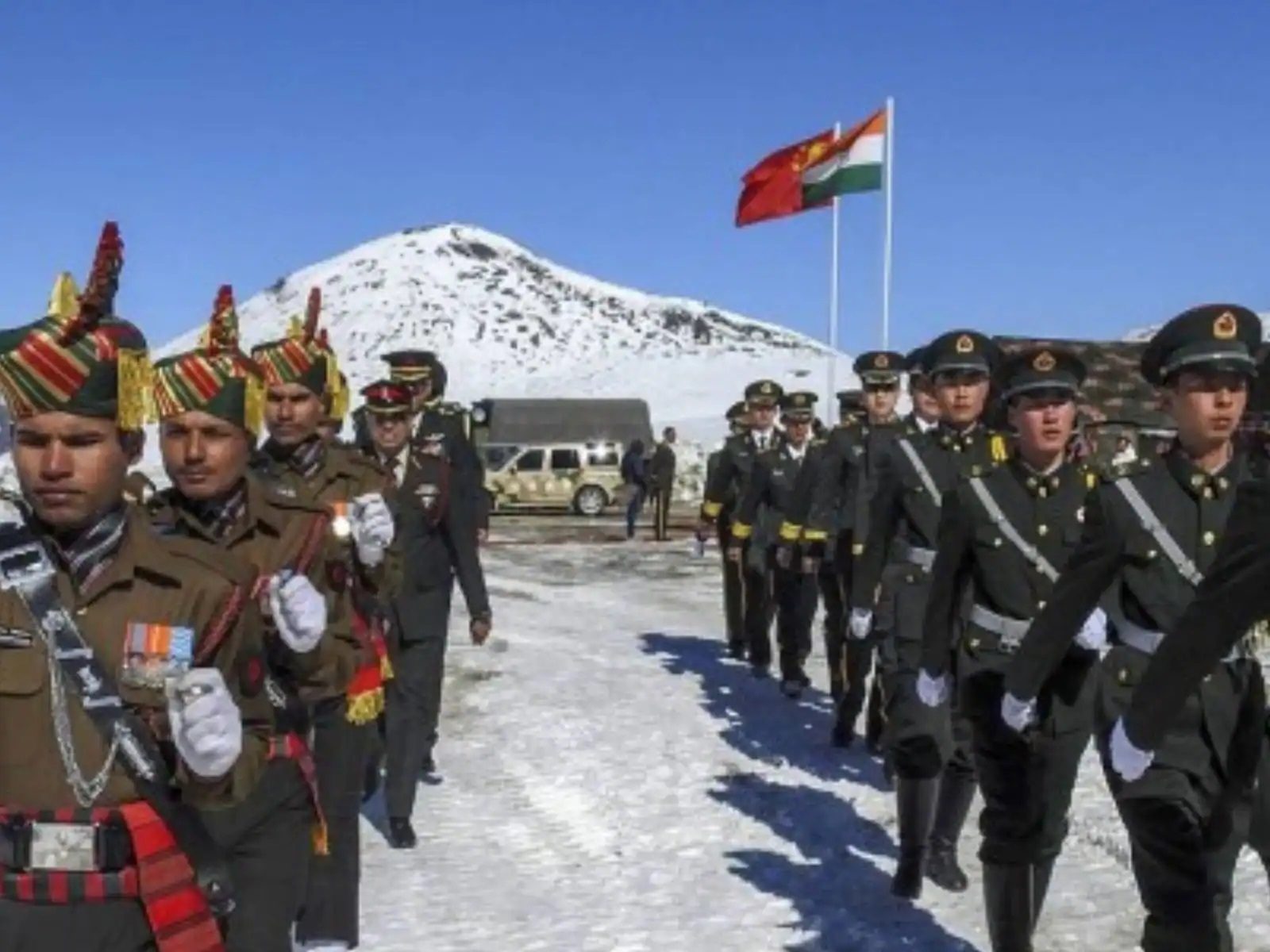
In a sign that the lingering stand-off between India and China may be finally coming to an end, the two countries have completed disengagement from the Gogra-Hotsprings border area in Ladakh after reaching a consensus in the 16th round of India-China Corps Commander-level meeting.

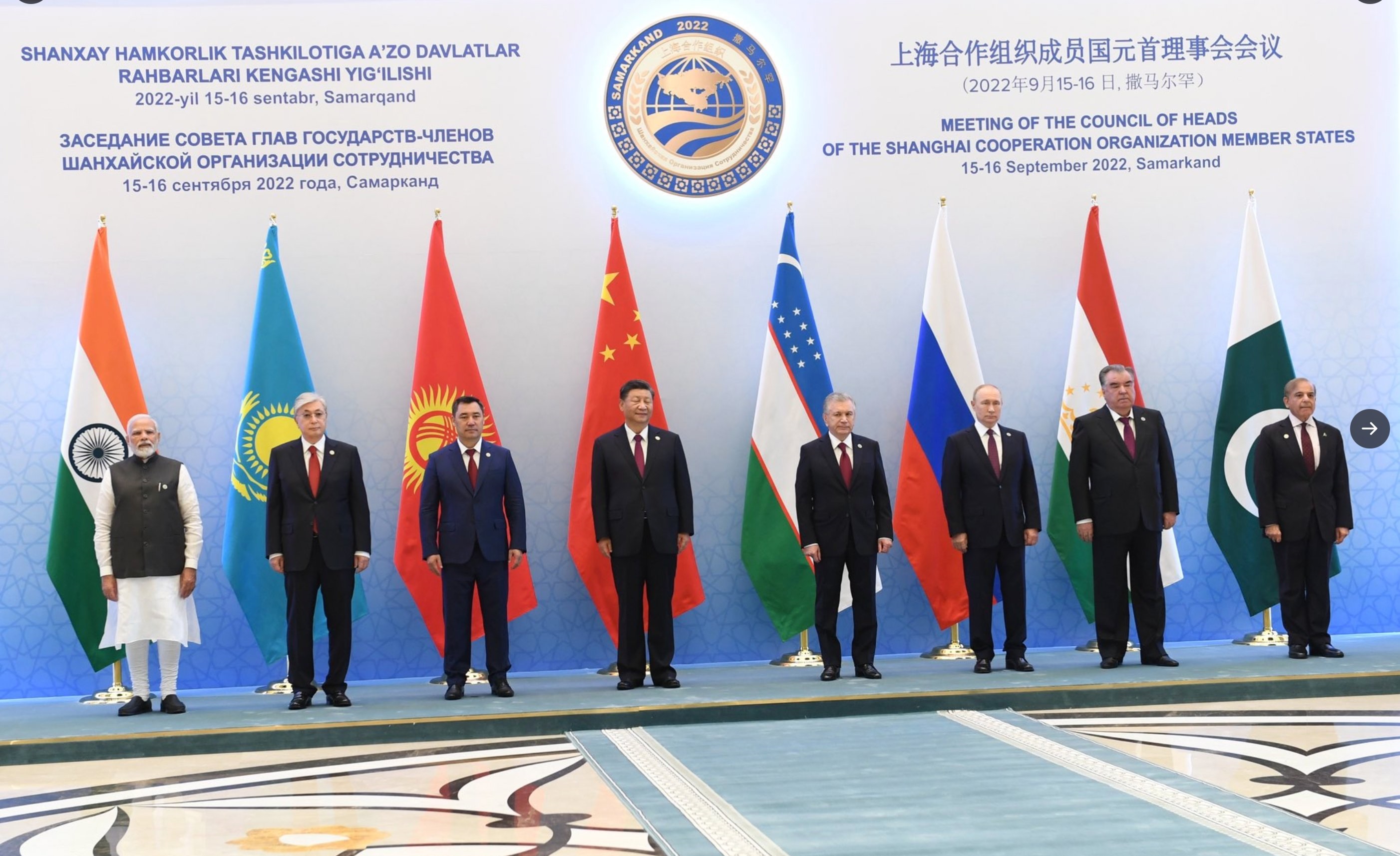
The move came just ahead of the Shanghai Cooperation Organization meeting in Uzbekistan which was held on September 15-16. The meeting was attended by the leaders of Shanghai Cooperation Organisation (SCO) member countries including Prime Minister Narendra Modi,  Chinese President Xi Jinping, Russian President Vladimir Putin and Pakistani Prime Minister Shahbaz Sharif.

India and China have been engaged in a bitter standoff ever since the Chinese army staged incursions across the Line of Actual Control in multiple areas in April-May 2020. The situation came to a head in May 2020 when 20 Indian soldiers lost their lives during a scuffle along the border. Ever since, multiple Corps Commander-level talks and a few meetings between the foreign  ministers of the two nations yielded little result.

Meanwhile, the People’s Liberation Army has enhanced its military profile along the border by deploying thousands of its soldiers and equipment. In recent years China has reportedly more than doubled its total number of airbases, air defence positions and heliports near the Indian border.

The problem in the negotiations so far has been that China has been loath to go back to the status quo ante and has asked for mutual withdrawal. The incursions in the first place have been staged by China and the communist giant was not ready to vacate it unless India also withdrew from a portion of the border on its side of the LAC.  But New Delhi could hardly afford to do it, not least because it considers the area its own. Doing so would have been politically costly for the BJP government at the centre which was already facing severe flak for vacating Kailash ranges as part of its Pangong Tso agreement. But through sustained negotiations they have finally found an amicable way out along two points.

Last year, in a first breakthrough in talks,  India and China pulled back their troops from the south bank of Pangong lake area in eastern Ladakh following their agreement for “synchronised and organised disengagement”. But subsequently, there was no progress on the other three points of friction – Galwan Valley, Depsang, Gogra-Hot Springs. But Gogra-Hot Springs has been resolved again. There is hope that, like  the two friction points so far,  the two countries will find a diplomatic solution to the stand-off at Galwan Valley and Depsang also, sooner than later.

Over the last close to three years,  the stand-off along the LAC has  become a high stakes war of nerves between the two countries. But New Delhi approached the situation very cautiously and waited if China’s intermittent statements of reconciliation were translated into action. There was also a realization that the complete de-escalation would be a long haul.  This seems to have paid off for now.

It remains to be seen whether the two nations will be able to reach a similar agreement on Galwan Valley and Depsang also.

Opposition to agreement

The agreements on Pangong Tso and Gogra-Hot Springs have invited a fair degree of flak from the political parties and some analaysts who have viewed the mutual withdrawal as surrender to China.

Congress leader Rahul Gandhi slammed the centre and alleged that the government had ceded thousands of kilometres of Indian territory to China.

“Mr Modi and his minions have ceded thousands of kilometres of Indian land to China,” Gandhi asked. “When exactly are we getting it back.”

The critics have also alleged that as part of the truce, buffer zones were created in which neither side was allo­w­ed to patrol their troops. But the locals and elected representatives of Ladakh have also claimed that these zones have been created in areas previously under Indian control.

Konchok Stanzin, an elected councillor from the region, said that the Indian army is vacating areas which were not disputed at all, while Chinese troops are stationed in the areas traditionally patrolled by India. He also claimed India had already ceded land during a 2021 agreement to withdraw from areas around Pangong Tso lake.

“We seem to be giving our land happily. If India’s approach remains the same, we are going to lose more land,” he said. “Our concern is no longer only about Chinese incursions but voluntarily giving up our own land.”


End of standoff?

That said, the disengagement along two friction points shall go a long way to calm the LAC which over the last three years had brought Indian and Chinese armies eyeball to eyeball and on the brink of war. This will also go some way to take some pressure off the Indian Army which was stretched along the LAC, with harsh winter making it even more difficult.

However, India’s military brass remains deeply skeptical about China’s intentions. Speaking at a recent event organized by Bharat Shakti, Army chief General Manoj Pande said there are still two friction points at the LAC in eastern Ladakh that India and China need to move forward.

“I am sure we will be able to find resolution towards these two friction points. That is our immediate aim to disengage from these friction points before we look at the next step of de-escalation, which will involve pullback by troops and tanks,” he said

Similarly, speaking at the 49th annual management convention of the All India Management Association, Navy Chief Admiral R. Hari Kumar said that China remains a formidable challenge and has increased its presence not only along India’s land borders, but also in the maritime domain by leveraging anti-piracy operations to normalise its naval presence in the Indian Ocean Region (IOR).

More geopolitical space 

The disengagement along the two friction points, however, has opened up more geopolitical space for India. Despite a difficult relationship with China, India has maintained its strategic autonomy and independent foreign policy. During the ongoing Ukraine war, India hasn’t entirely gone along with the west’s line and maintained its age-old relationship with Russia. India has continued to buy cheap oil from Russia despite western sanctions.

India has also tried to strike a tricky balance between the emerging US and China-led bloc. It is true that China has become a far bigger power than India, both economically and militarily. So much so that China is now seen as a credible rival to the US which has otherwise been the sole superpower since the break-up of the USSR in 1989.

India’s choices are thus stark: It has to either cooperate with China in a subservient position. Or try standing up to Beijing by entering into a formal alliance with the US and becoming an active member of Quadrilateral Security Dialogue – a grouping comprising the US, Japan, Australia and India – also called Asian NATO. Both choices have their consequences, more detrimental than favourable to India. So, New Delhi has so far been chary of committing itself to either side so as to maintain its strategic autonomy. This would involve negotiating its relations with Beijing and also engaging with the US. And going by the cautious and mature handling of the LAC standoff, the union government has been doing a good job so far.


A beacon of hope for abandoned and disabled kids

Drishti Samajik Sansthan has adopted hundreds of mentally challenged, disabled children who had been abandoned by their parents since neonatal stage.  The NGO made them self-reliant and helped them gain human dignity. A report by Mudit Mathur

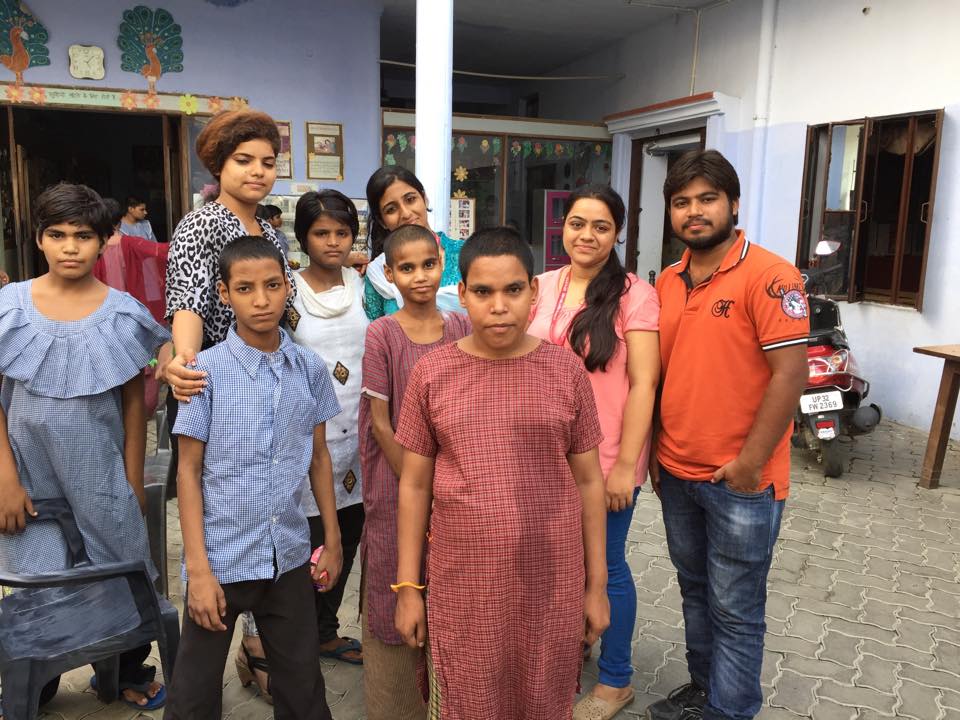
Drishti Samajik Sansthan made life meaningful for hundreds of mentally challenged, disabled children who were left abandoned by their parents. Drishti adopted them from the neonatal stage, made them self-reliant and helped them gain human dignity. The NGO’s philanthropic human gesture has been recognised globally and has been awarded many a time for its unique effort in bringing out hidden capabilities of these multiple challenged, specially-abled children to become self-supporting.

Drishti is home to 250 special children, mostly girls and even infants with congenital conditions like hydrocephalus, deafness and mental retardation. Some of them are also survivors of abuse and exploitations of various kinds. Many of these children are hyperactive and their energy needs to be channelized. The training begins with activities of daily living (ADL) and goes on to add elements like occupational and speech therapy, social interaction and finally skill-building. Skill building comes as a solution to both. The artwork, Rakhis by the children is put up for sale in exhibitions while the range of fabric woven by them is always in demand.

This compassionate vision was conceptualised by founder of the Drishti, Neeta Bahadur, who was deeply moved after she visited some rural areas of Lucknow where she had gone to cover a story as Reporter working for the Pioneer newspaper. “She saw specially-abled children abandoned by their own families. This incident hurt her sensitivity her conscience and inspired thousands of thoughtful ideas in her mind, and thus, Drishti was born in 1990,” narrated Dhiresh Bahadur, who is a serving officer of State Bank of India and has sacrificed job promotions in order to carry on these charitable activities as his lifelong mission after the tragic death of his wife Neeta in 2014.

Drishti initially prepared 400 Braille books covering the UP-Board syllabus from 9th to 12th class for blind children with the help of a manual braille. Then, it recorded over 400 audio cassettes covering the same syllabus and helped the blind students of that school to get 100% result in UP Board exams, of both 10th and 12th, with some children even receiving a distinction. The journey to uplift such kids just did not stop there. It further enlarged its activities with the help of socially responsible like-minded people.

“There was hardly any school for special children when Drishti was started in a rented house in the Aliganj area of Lucknow. Now, it has its own home housing about 250 children with a range of disabilities. Neeta’s focus was always on the behavioural pattern of these specially-abled children. Usually, children belonging to severe and profound intellectual disability categories are abandoned by their families because they find it difficult to raise a child like that. But Neeta didn’t give up, rather she developed customized lesson plans based on every child’s needs,” recalls Dhiresh.

“In villages, people are skeptical about sending their children to school, especially when they are disabled. Neeta wanted to change that social perception. She used to go to villages in person and convince their parents so that no child remained deprived of education,” said Atharva Bahadur who has taken up the charge of Drishti as its Director. His wife, Shalu, is actively involved in all kinds of activities that Neeta used to perform affectionately for these special kids.

Drishti has many inspiring stories rehabilitating many specially-abled kids bringing them up from the ocean of despair to a meaningful life. Maqbool, 15, has overcome cerebral palsy and has mastered the skill of extracting cold pressed mustard oil. He was abandoned by his parents when he was just six-year old. Neeta and Dhires had opted for him as his social parents when he was suffering from depression and was prone to violent aggression. Now, he works for the recently launched spice workshop of Drishti and gets remuneration. Started a month ago, the unit has the capacity of churning out at least 500 litres of oil and over 80-90 kilograms of spices per day.


Unemployment, local issues find resonance in HP polls

With 68 assembly seats at stake in the hill state, all the three competing political parties, the BJP, the Congress and the AAP,  are out offering freebies and promising solution to the issues which have been plaguing the lives of Himachalis for long time, reports Aayush Goel

With over two months left for the forthcoming assembly polls, the quaint hill state of Himachal Pradesh has transformed into a political hotbed.  With just 68 assembly seats, the poll narrative of the state is being governed by local and hyper local issues with unemployment ruling the political turf. Be is Congress riding on traditional poll logic of anti-incumbency,  the Bharatiya Janata Party banking on its Modi magic and a ‘split’ opposition or AAP exuding confidence after Punjab’s landslide win, all three major contenders are out offering freebies and solutions to the problems that have been long plaguing the lives of Himachalis. The state’s unemployment figures have reached a staggering 8.82 lakh as per the government records while opposition parties like Congress place it at around 15 lakh.

Latest figures revealed by the industries and labour department showed that the number of youths registered in employment exchanges across the state stood at 8,82,269.  While the outgoing Thakur government in its budget presentation, said 30,000 jobs will be created in 2022-23. This so far seems easier said than done. With industries being primarily restricted to parts of districts like Kangra, Solan, Una and Sirmaur, job creation remains a herculean task. The issue was aggravated by the Covid-19 pandemic which resulted in the closure of over 40 Industrial units, rendered people jobless, and hit the tourism industry big time. Unemployment along with inflation is set to impact all 68 constituencies of the state.

Apple agitation

Coupled with unemployment, the ongoing Apple agitation in the state that has resurfaced after 3 decades is believed to be a key issue. The apple growers from across the state are out on the streets. Combined under newly launched Sanyukt Kisan Manch (SKM) over 27 apple growers’ bodies are protesting against the sharp rise in the cost of production and dwindling profit margins. The six per cent increase in GST on cartons, coupled with a sharp rise in the rate of trays used inside the boxes and similar issues have forced apple farmers to launch mega protests against the government and private companies procuring and storing apples. Faced with what they call an existential crisis, the apple growers are determined to ensure that their issue is addressed this poll season as it affects at least 27 assembly constituencies, mainly in Shimla, Kullu, Mandi, Kinnaur, Chamba and Sirmaur.

Tribal tag for Hattee community

The ruling BJP, the Union Cabinet, chaired by Prime Minister Narendra Modi has approved a constitution amendment bill that seeks to grant tribal status to the Hattee community living in the Trans-Giri region of Himachal Pradesh’s Sirmaur district. The Hattee population is spread across four of five segments in Sirmaur district, and comprises around 50% of the district’s total population. While they are concentrated in the four constituencies of Sirmaur district (Shillai, Paonta, Renuka, and Pachhad), they play a significant role in at least nine seats in Shimla and Sirmaur.

Other issues

A major segment of the state is that of the government employees who are agitating and demanding implementation of the old pension scheme. They have been holding protest rallies in different parts of the state. Employees’ votes along with those of their families are among the deciding factors in poll outcomes in Himachal Pradesh.  Similarly, the simmering resentment against the recently introduced Agneepath scheme of the Centre for recruitment in the armed forces will play a pivotal role in districts like Kangra with 15 assembly constituencies. The districts of Mandi, Hamirpur and Bilaspur have a large representation in the military and paramilitary forces of the nation. “The absence of organized protests does not mean that there is no resentment,” said a political observer. Then there is the dissatisfaction among the people whose lands have been acquired for various four-lane projects, with regard to compensation. The same is the case with people protesting against the proposed airport coming up in the Balh area of Mandi which is the home district of the chief minister.

While they may not have a solution three months before Himachal Pradesh goes to the polls, it’s raining guarantees and freebies for voters from all political parties. Started by AAP, the state election is being ridden this time on a wave of promises where each political party is out guaranteeing a better tenure, a better life and better Himachal to voters.

BJP’s Mission Repeat

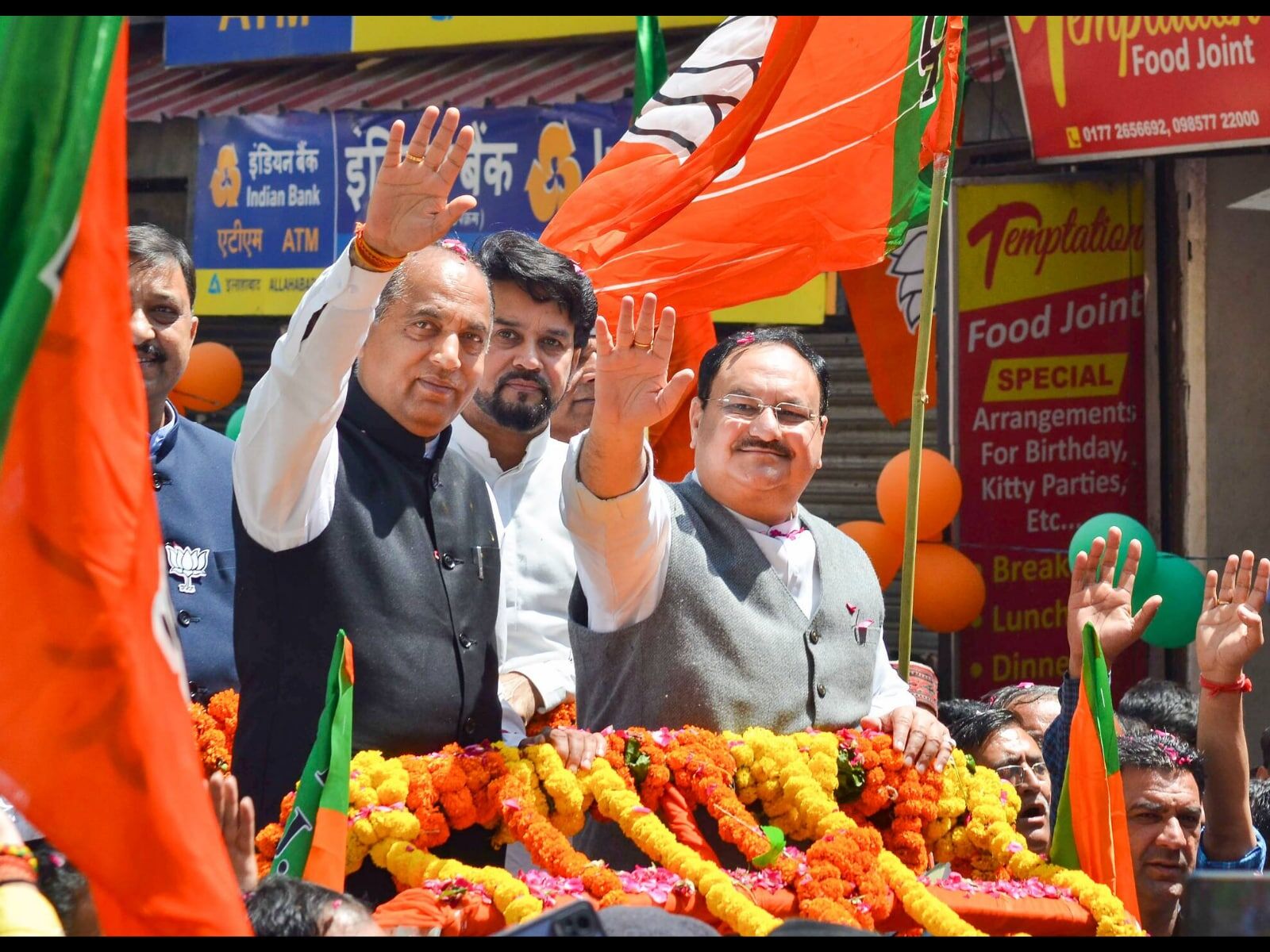
The ruling BJP is confident enough to claim that the party will reverse the trend of the ruling party not being able to retain power in HP, and  will form the next government even as it dismisses anti-incumbency. The party is organizing itself at a micro-level with the slogan ‘Mission Repeat’ under the leadership of the PM Narender Modi who addressed the state virtually on September 24. The party offers no guarantees by publicizing and riding the so-called development wave it brought for Himachal.

The party claims development is their biggest achievement, with every section of society benefiting from not one but several schemes. Some mega projects like the Rohtang Atal tunnel, bulk drug pharma park, medical devices park and AIIMS at Bilaspur are being cited in this regard. The party has already announced Rs 340 crore worth sops like free power and water as well as  50% discount for women who travel on HRTC buses. The consumers of up to 125 units would get zero bill and the decision would benefit about 11.5 lakh consumers by Rs 250 crore. No water bill would be charged from all families living in rural areas and financial benefits of Rs 30 crore will be provided to all rural families of the state.

“This trend of the BJP governments returning to power, be it in Uttarakhand, Haryana or Uttar Pradesh, is owing to the popularity of the PM. How can Himachal remain untouched by this trend, especially when the PM has a special emotional connection with the state, which he considers his second home. Besides, the Congress prospects will be marred as it is leaderless, visionless and deeply fragmented. Also, it doesn’t have a big leader like Virbhadra this time. “Two time sitting Congress MLA from Kangra, Pawan Kajal joining BJP will give us an edge. We will definitely form the government in the state as development done by BJP in the state is the key,” said BJP state president Suresh Kashyap while talking to Tehelka.

Congress’s 10 guarantees

Congress believes the state is low-hanging fruit for it, given the fact that none of the parties has ever won the state election consecutively. The party continues to play up the legacy politics. New state party chief Pratibha Singh banks on her late husband, former CM Virbhadra Singh’s legacy and has announced 10 public-oriented guarantees promised by the Congress on returning to power. These include restoration of old pension scheme for employees, creating five lakh jobs, Rs 1500 monthly financial assistance for women between 18 to 60 years, 300 units free power, fixing MSP of fruits by growers, Rs 680 crore interest free loan for start-ups, quality education with four English medium schools in every assembly segment, mobile health vans, commitment to buy 10 litres milk from those rearing cows and purchase of cow dung at the rate of Rs 2 per kg to promote organic farming.

“BJP has failed people and not fulfilled any promises it made during the 2017 assembly polls. There is rampant unemployment and corruption and after giving a chance to BJP people want to get back to us as we are more connected and considerate to them. When anti-incumbency has always been a factor and affected populist leaders like Virbhadra Singh, how will an unpopular CM Jairam Thakur escape it? We have also successfully defeated BJP in HP bypolls in the Mandi Lok Sabha seat and all three assembly seats of Fatehpur, Arki and Jubbal-Kotkhai held in October 2021.” said Sukhvinder Singh Sukhu, chairman of Congress campaign committee in the state while talking to Tehelka.

AAP promises Delhi model 

Riding high on its victory in Punjab, Aam Aadmi Party promises a Delhi model to Himachal Pradesh. The party is not making promises but issuing guarantees to voters. The party has so far announced guarantees of employment to youth, pilgrimage to elderly, support to panchayats and farmers and guarantee of a conducive business environment for traders in the state. AAP promised to create 6 lakh government jobs in Himachal Pradesh and pay Rs 3,000 per month as unemployment allowance to jobless youth till they find work. It has announced free pilgrimage for senior citizens to their choice of religious place. They have guaranteed a corruption-free administration, free and quality education and medical treatment for Himachal residents. “We don’t promise, we exhibit and guarantee. See what we have done in Delhi, we will do the same for you,” party supremo Arvind Kejriwal had announced in Mandi, the CM’s home turf. The party is registering an increasing influence in the state while Congress calls it team B of BJP. The ruling BJP dismisses it as no opposition but a bunch of rogues.

“We will repeat Delhi and Punjab victory here also as people have seen things improving there. Yes, the BJP has snatched a few of our leaders by threatening them but that does not affect the party as we bank on work not names. AAP will claim Himachal,” AAP spokesperson Gaurav Sharma said while talking to Tehelka.

Defections galore

The state political scenario has been witnessing a major defection trend since sounding of poll bugle this April. The worst affected is the Aam Aadmi Party. The party’s then state president Anoop Kesari, organization general secretary Satish Thakur and Una unit president Iqbal Singh switched sides with BJP. They were soon followed by state women wing president Mamta Thakur and four other members. The shift has hit the party severely.

Similarly the former Congress party’s working president Pawan Kumar Kajal jumped ship and joined the BJP. He is a popular OBC leader, two-time MLA from Kangra and has a huge voter base in the district. Besides Kajal, Lakhvinder Singh Rana, the two-time MLA from Nalagarh, also joined BJP. The desertions by two Congress MLAs has come at a time when it is hoping to return to power in Himachal.

Two independent MLAs, Hoshiyar Singh from Dehra in Kangra and Prakash Rana from Jogindernagar in Mandi district have also joined the BJP. The party has gained an edge but also suffered a blow in electorally significant Kangra when former legislator Surender Kumar “Kaku” returned to the Congress after a brief sojourn lasting just over three years with the saffron party.

Kaku, 68, who belongs to other backward classes (OBC), a dominant community in the population-wise largest district of Himachal Pradesh, was elected from Kangra in 2003. He, however, lost the next two elections in 2007 and 2012 while Congress denied him a ticket in 2017 preferring Pawan Kajal, who joined the BJP last month. Meanwhile, the BJP has successfully put off the speculation of Anil Sharma, sitting party MLA from Mandi, joining the Congress. He was forced to step down as power minister after his son Ashray Sharma fought the Mandi Lok Shaba election in 2019 on Congress ticket. Anil Sharma said that he and his family will work to strengthen the BJP and will contest from the Mandi Sadar seat on the BJP ticket. He also said that his son will join BJP soon.

Himachal poll

Total assembly seats

68

Total number of voters 53,76,077

Men-27,18,055

Women- 26,58,005

Highest number of voters – 1,01,627 Sulah assembly constituency of Kangra district

Lowest number of voters – 24,024 Lahaul and Spiti constituency

2017 Assembly results:

BJP

44 seats (vote share 48.8%)

Congress

21 seats (vote share 41.7%)


MOST POPULAR

HOT NEWS