Why US and the west are cosying up to Pakistan again?

Recently, Germany’s Foreign Minister called for a UN role in resolving the Kashmir issue, raising India’s hackles. Earlier, the US had cleared  the sale of $450 million F-16 aircraft equipment to Pakistan. Riyaz Wani looks at the reason behind the apparent shift in US stance on Pakistan.

Germany’s foreign minister Annalena Baerbock on October 7 called for UN role in resolving the Kashmir issue while praising the LoC ceasefire of February 2021 at a joint press conference with Pakistan foreign minister Bilawal Bhutto in Bonn. India took strong exception to Baerbock’s statement and urged Germany to focus instead on the cross-border terrorism sponsored by Pakistan in Kashmir.

German foreign minister’s statement was met with surprise in India and is being seen of a piece with the newfound warmth between the west and Pakistan. This shift became apparent by the sudden rekindling of the US-Pakistan ties in the recent past. It was evident when recently the US state department spokesman Ned Price said that both India and Pakistan were US partners, in response to the External Affairs Minister S Jaishankar raising questions over the “merits” of the US-Pakistan relationship.

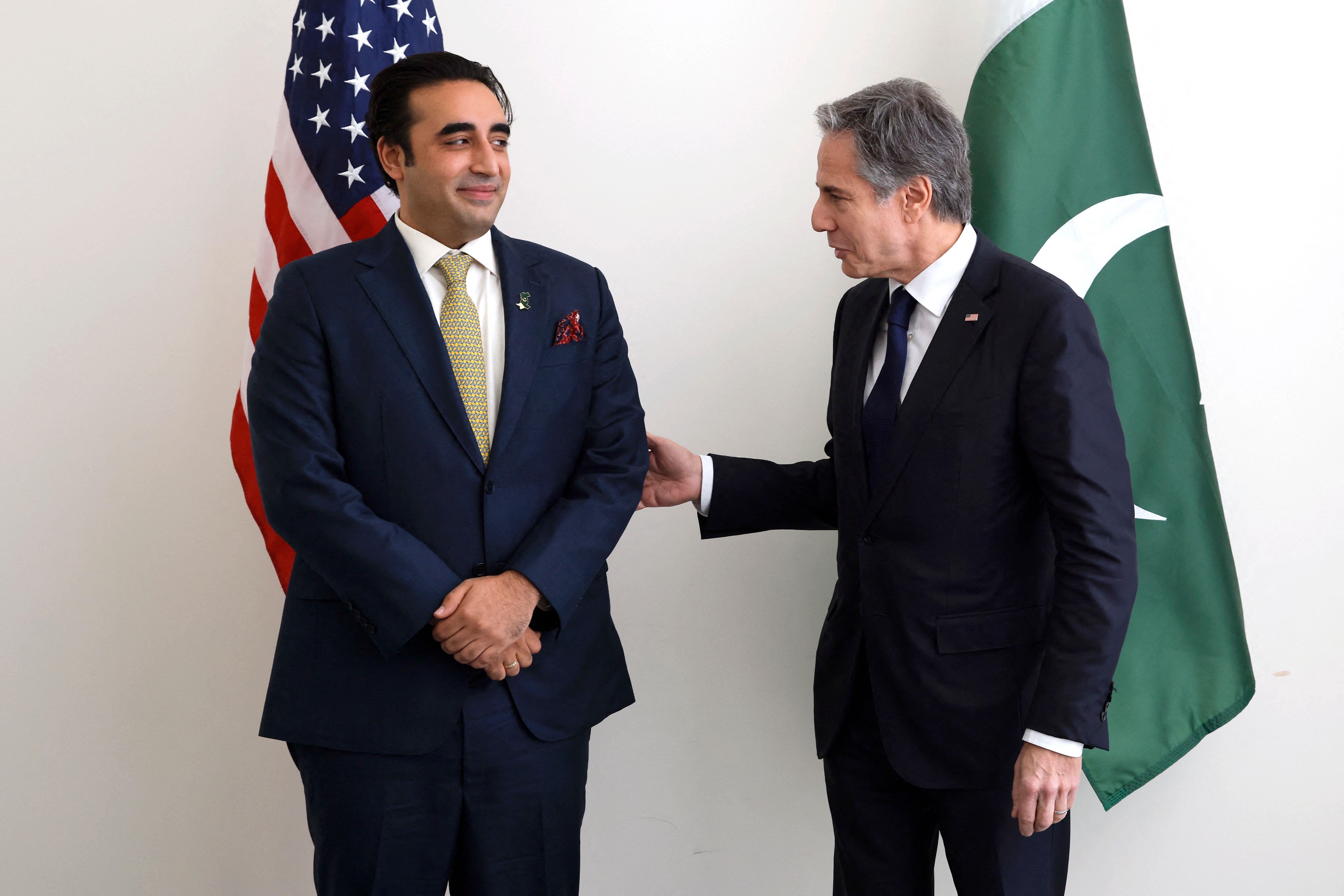
What is more, the warmth has been visible in the interactions between US Secretary of State Antony Blinken and Pakistani foreign minister Bilawal Bhutto. Earlier in September, the US State Department approved a Foreign Military Sale (FMS) to Pakistan for the sustainability of the Pakistan Air Force F-16 fleet and equipment at the cost of $450 million.

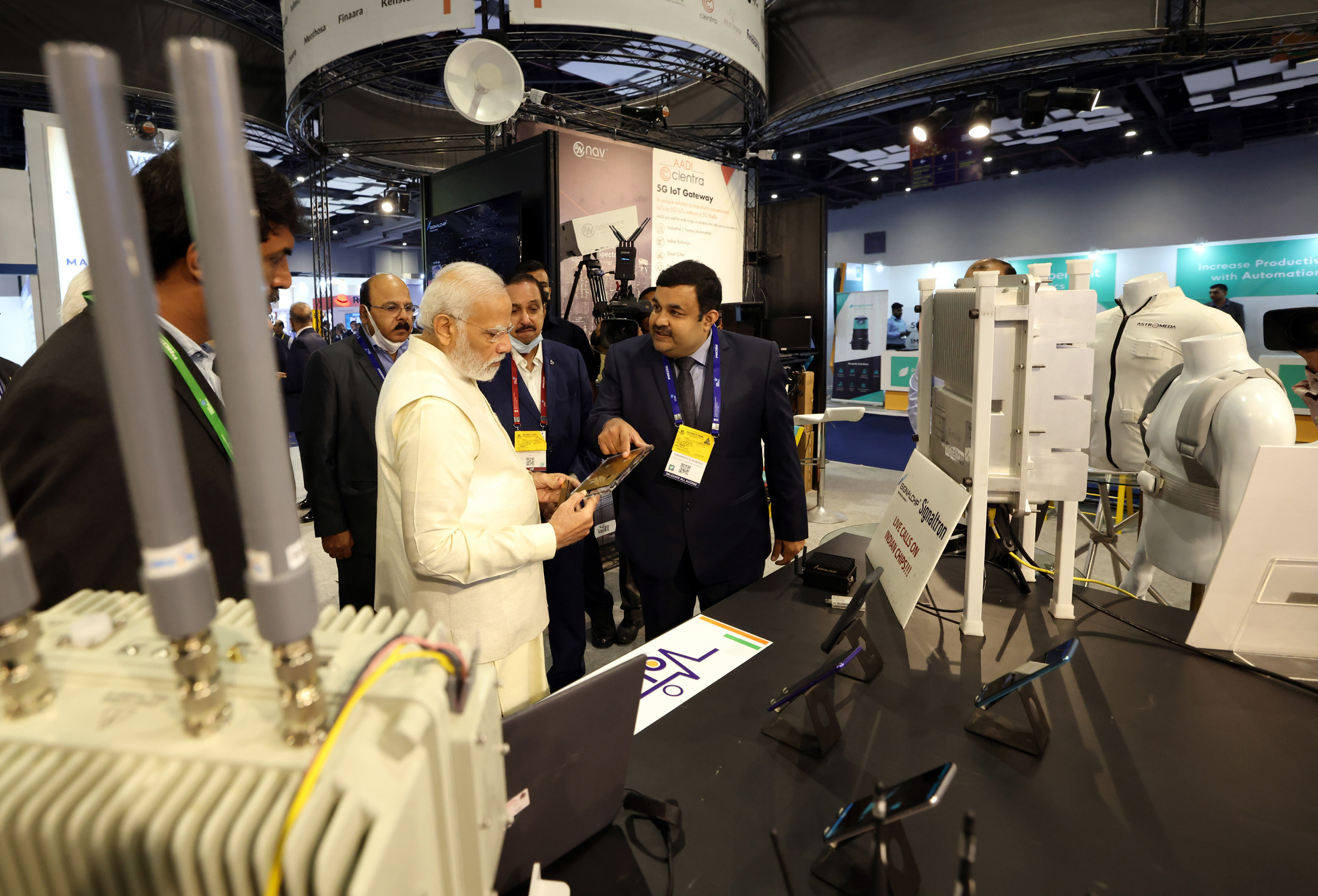
Though the tilt towards India is still there, in recent months, the US has made an effort to accommodate Pakistan which under Imran Khan was threatening to draw closer to the China-Russia axis. But with Khan’s loss of power in a no-confidence vote which he blames on the US, Washington has sought to repair its otherwise frayed relations with Islamabad and has also begun to respond to its concerns. And going by Price’s statement, the US may also be playing a furtive role to get India and Pakistan to restore engagement.

“We also want to do everything we can to see to it that these neighbours have relations with one another that are as constructive as possible. And so that’s another point of emphasis,” Price said as part of his response to Jaishankar’s criticism.

Also, the US envoy to Pakistan, Donald Blome toured Pakistan Occupied Kashmir and held meetings there with government officials and civil society. In tweets, the Embassy of the United States in Pakistan referred to the occupied territory as “AJK” (Azad Jammu and Kashmir), echoing the Pakistani claim that it is the liberated part of Kashmir. On the contrary, New Delhi has had no ambassador in India for the last two years.

Developments like these have been a source of concern for New Delhi which sees it as a renewed appeasement of Pakistan.  Many analysts in India see it as a punishment for India’s pursuit of an independent foreign policy in response to the ongoing war in Ukraine. Besides abstaining from western resolutions against Russia, India continues to import oil from the country at discounted rates, something that has not pleased the western countries.

Rather than join the western camp, India has sought to play a mediatory role in resolving the Ukraine crisis. Prime Minister Narendra Modi during his meeting with Russian president Vladimir Putin on the sidelines of the recent Shanghai Cooperation Organization meeting told him that “this is not an era of war” and that the Ukraine issue should be settled by diplomacy.

Although it is still early days, there are clear signs that the west is seeking Pakistan as an ally again, while holding on to its ties with India. But in doing so, they are running up against the age-old India-Pakistan rivalry and their divergent ideas of national interest.


Govt’s population control measures finally bearing fruit?

According to the Sample Registration System data 2020, India’s general fertility rate has declined by 20 per cent over the last decade. The current decline means that India will not overtake China to become the most populous nation globally.

The total fertility rate for Hindu women has come down to 1.94, Muslim women 2.2, Christian women 1.88, the Sikh 1.61 and the Jain 1.6 and so on. What does that mean for India?

India has made history as government efforts to control the population growth are finally showing the much-needed result. So much so that the fertility rate has dipped even below the replacement level. This momentum of a fall in fertility rates is bound to have positive connotations for the country whose population may not now surpass that of China by 2030.

All the communities are witnessing a decline in fertility. The total fertility rate for Hindu women was at 1.94, and for Muslim women it was 2.2. The Christian community has a fertility rate of 1.88, the Sikh community 1.61, the Jain community 1.6 and the Buddhist and neo-Buddhist community 1.39. Simply speaking, it is the average number of children in a nuclear family.

Replacement level fertility represents the level at which a population exactly replaces itself from one generation to the next, thus leading to zero population growth if the level is sustained over a sufficiently long period. This rate is roughly 2.1 children per woman for most countries, although it may modestly vary with mortality rates. Replacement level fertility will lead to zero population growth only if mortality rates remain constant and migration has no effect.

Overpopulation in India has been a big challenge and most of the problems in the country like poverty, unemployment and illiteracy are an offshoot of the burgeoning numbers. According to the Sample Registration System data 2020, India’s general fertility rate — the number of children born per 1,000 women in the reproductive age group of 15-49 in a year — has declined by 20 per cent over the last decade.

The current decline means that India will not overtake China to become the most populous nation globally. As per the latest data, the average general fertility rate stands at 68.7 for 2018-2020 whereas, for 2008- 2010, it was 86.1. The falling fertility rate can be attributed to several structural interventions, such as increase in the age of marriage, improved literacy rate among women, and easy and wider availability of modern contraceptive methods, among others.

The Sample Registration System data is in line with the National Family Health Survey-5 that illustrated India’s total fertility rate — births per woman of reproductive age — fell from 2.2 in 2015-16 to 2.0 in 2019-2021.

However, the dip in total fertility rate is not uniform as in rural areas it is 20.2 per cent as compared to 15.6 per cent in urban areas. The TFR of a rural woman is 2.2 while that of an urban woman is 1.6. Therefore, it could be argued that while social and economic developments might be driving the decline in fertility rates nationally, literacy, economic empowerment, women’s awareness and agency remain disproportionately distributed, leading to anomalies.

The National Family Health Survey (covering 14 States and UTs) saw a total fertility rate range from 1.4 in Chandigarh to 2.4 in Uttar Pradesh. Many states have achieved replacement level of fertility (2.1) except Madhya Pradesh, Rajasthan, Jharkhand and Uttar Pradesh.

According to reports, five states with a total fertility rate above 2 were Bihar, Meghalaya, Uttar Pradesh, Jharkhand and Manipur. Just shy of total fertility rate 2 were Haryana, Assam, Gujarat, Uttarakhand and Mizoram at 1.9. Six states – Kerala, Tamil Nadu, Telangana, Arunachal Pradesh, Chhattisgarh and Odisha – were at 1.8. Further at 1.7 were Maharashtra, Karnataka, Andhra Pradesh, Himachal Pradesh, Nagaland, and Tripura. And TFR was the lowest in this survey in West Bengal, at 1.6.

Significantly, the data shows that Muslims’ fertility rate has declined the sharpest among all religious communities over the past two decades. The data also show that Jammu and Kashmir — a Muslim majority region — has recorded the steepest decline in general fertility rate among all the states.

Despite its fertility decline, India still has the world’s second largest population size. However great or rapid the decline, the population growth rate is an estimated 1.9% a year. Only three countries in the world have a higher rate of growth: Nigeria, Pakistan, and Bangladesh.

Fertility decline is attributed to increased literacy, urbanization, industrialization, modern communication and transportation, and women’s status. The availability of government family planning services has also contributed to the fertility decline. Fertility decline has occurred faster in urban areas, which are concentrated in cities of over 100,000 people.

Overall Contraceptive Prevalence Rate (CPR) has increased substantially from 54% to 67% in the country according to the Union Minister of State for Health and Family Welfare, Dr. Bharati Pravin Pawar. Use of modern methods of contraceptives has also increased in almost all States/UTs. Unmet needs of family planning have witnessed a significant decline from13 percent to 9 percent. The unmet need for spacing, which remained a major issue in India in the past has come down to less than 4 percent.

Institutional Births have increased substantially from 79 percent to 89 percent in India. Even in rural areas around 87 percent of births are delivered in health facilities and the same is 94 percent in urban areas. Population growth is attributed to improvements in health and mortality. Life expectancy has increased to 60 years, and infant mortality declined to 74 per 1000 live births.

The Total Fertility Rate — which is the average number of children who would be born to any woman in her lifetime – had declined from 2.2 in 2015-16 to 2.0 in 2019-21 as per the findings of the fifth round of the National Family Health Survey, or NFHS-5. India’s total fertility rate of two is currently below the replacement level of fertility of 2.1 children per woman.

Meanwhile, below-replacement fertility results eventually in negative population growth and extinction of the population in the long term. Between 1992-93 and 2019-21, India’s total fertility rate declined from 3.4 children to 2.0 children.

The total fertility rate ranges from 1.1 children per woman in Sikkim to three children per woman in Bihar. Five states are yet to achieve a replacement-level of fertility of 2.1, according to the NFHS-5. These states are Bihar (2.98), Meghalaya (2.91), Uttar Pradesh (2.35), Jharkhand (2.26) and Manipur (2.17).

The total fertility rate among women in rural areas has declined from 3.7 children in 1992-93 to 2.1 children in 2019-21. The corresponding decline among women in urban areas was from 2.7 children in 1992-93 to 1.6 children in 2019-21. In all NFHS surveys, irrespective of place of residence, the fertility rate peaks at the age of 20-24, after which it declines steadily.

Another interesting aspect was that the number of children per woman declines with women’s level of schooling. Women with no schooling have an average of 2.8 children, compared with 1.8 children for women with 12 or more years of schooling.


Mulayam had admirers across the political spectrum

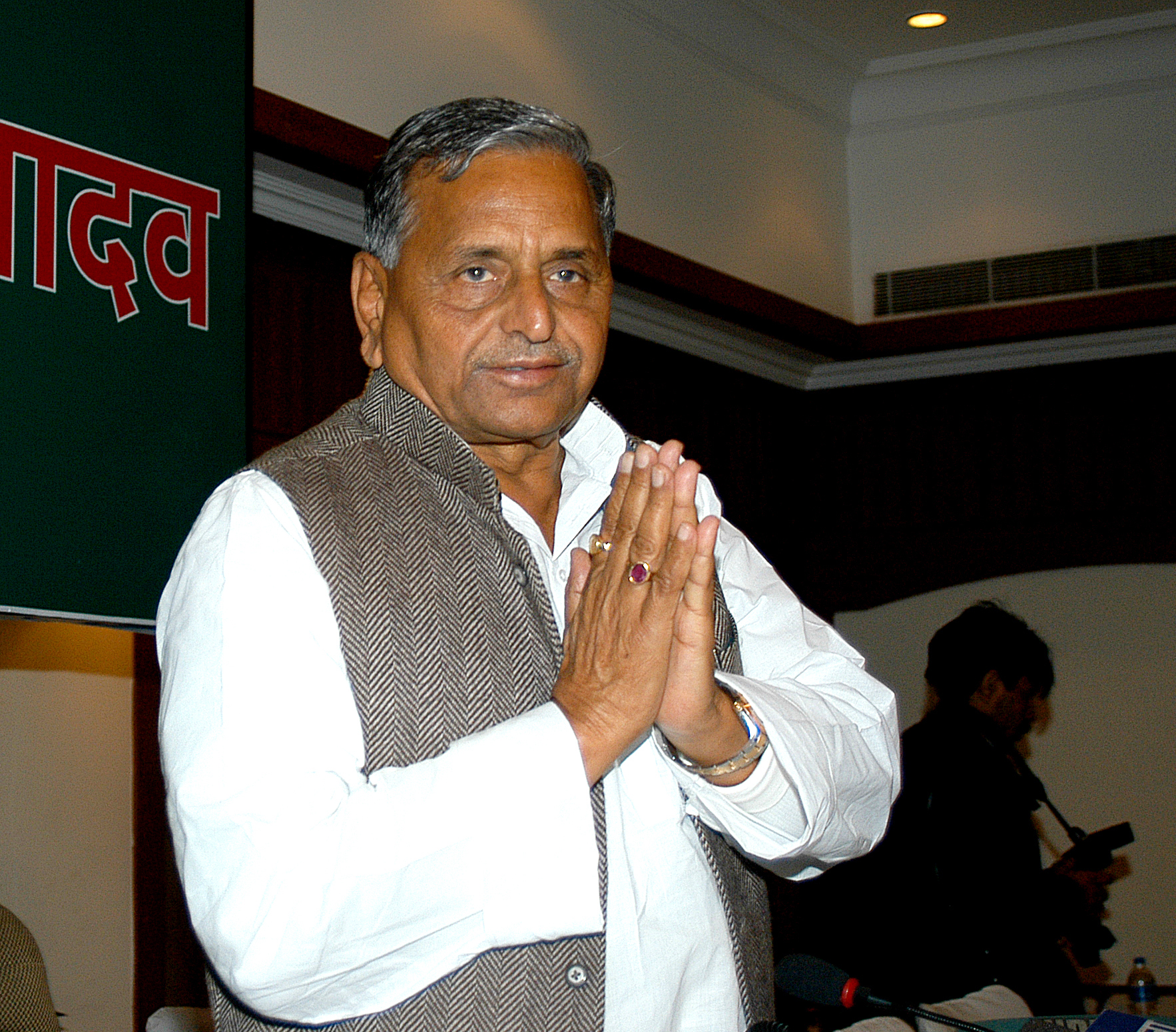
The death of the tallest Samajwadi leader, Mulayam Singh Yadav, 82,  left a big void in the politics of the Uttar Pradesh where for the last five decades he remained a formidable centre of power despite many ups and downs he faced in his political career, writes Mudit Mathur

The death of the tallest Samajwadi leader, Mulayam Singh Yadav, 82,  left a big void in the politics of the Uttar Pradesh where for the last five decades he remained a formidable centre of power despite many ups and downs. His social and political journey depicts his untiring grassroots struggle through which he managed to realise the dream of his mentor and socialist ideologue Dr Ram Manohar Lohia to root out the Congress from the state. Congress could not revive since 1989 after the powerful emergence of Mulayam Singh Yadav in the state.

Born on November 22, 1939 into a farming family in Saifai near Etawah in Uttar Pradesh, Yadav was the head of the state’s most prominent political clan. In his initial political days, he was a close associate of farmers’ leader Chaudhary Charan Singh, who formed Bhartiya Kranti Dal in 1967 after resigning from the Congress. Just at the age of 28, Mulayam Singh Yadav fought and won assembly election from Jaswant Nagar as a candidate of Samyukta Socialist Party. Charan Singh became the chief minister with the help of socialist leaders Dr Lohia and Raj Narain. After that, Mulayam Singh continued to rise high and high.

He was elected MLA 10 times and an MP, mostly from Mainpuri and Azamgarh, seven times. He was also the defence minister (1996-98), and chief minister thrice (1989-91, 1993-95, and 2003-07). And briefly, he even appeared to have a shot at the prime minister’s post. He was a strong player in national political scenario as a national leader but UP remained his bastion where Yadav played out his politics well. Beginning as a teenager who was influenced by socialist leader Ram Manohar Lohia. He started his career as teacher in Karhal Mainpuri but his political ambitions and goal to bring change in the lives of poor and downtrodden motivated him to join active politics.

Mulayam Singh Yadav had good links and patronage of many Congress leaders of socialist background but he held special respect for veteran leader Narayan Dutt Tiwari, who as chief minister gave him security cover and encouraged him as helping hand in his politics. Tiwari was fed up with the working of his two ministers Bir Bahadur Singh and Balram Singh Yadav who joined hands to harass Mulayam’s supporters in the local political rivalry. Tiwari most of the time helped him as chief minister of the state.

Mulayam Singh Yadav had unique qualities to win friends. His political foes too got refuge in his protection. His two political rivals, Balram Singh Yadav and Darshan Singh Yadav, later joined his Samajwadi Party and became members of Parliament.

Across the political spectrum, Mulayam Singh Yadav has pan India recognition that witnessed huge turnout of masses and political leaders from all the political parties at his funeral. Even Prime Minister Narendra Modi is one of his admirers, and kept good terms with him.

With the age-related ailments Mulayam Singh Yadav scripted transfer of all his powers to his only son Akhilesh Yadav despite inner skirmishes among family members and trusted old timers like his younger brother Shivpal Singh Yadav and Mohd Azam Khan.

The coronation of Akhilesh Yadav in 2012 as chief minister gave a clear message to his supporters that now,  Akhilesh will carry his legacy forward. It would be interesting to watch how deftly Akhilesh will be able to consolidate his supporters to remain a powerful political force.


Panipat units in a spot over air quality control panel’s fiat

Several of dyeing units of Panipat recently shut operations for failing to comply with directions of the Commission for Air Quality Management (CAQM) to switch to green fuel. These industries have flagged high cost factor and sought more time to follow new norms, writes Rajesh Moudgil

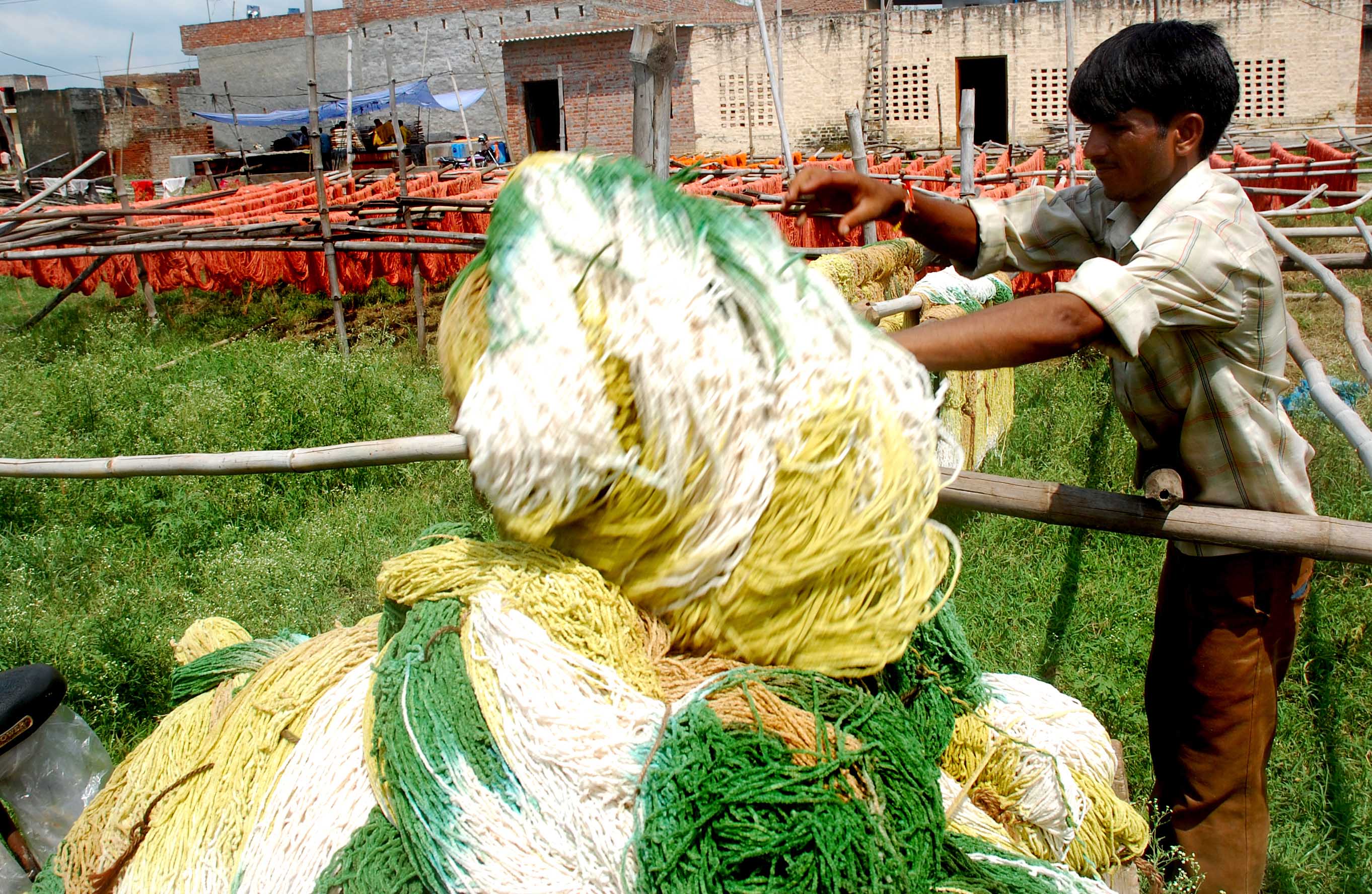
Under surveillance of various pollution controlling agencies since long, several of the 400-odd dyeing and other related industrial units running on coal in Panipat, have now been forced to suspend their operations since October 1 last for failing to shift to piped natural gas (PNG), CNG, LPG, biogas, propane, butane or biomass fuels generated from crop waste and wooden blocks by September 30, 2022 deadline.

The panel had issued directions in February this year that any industry found running on the conventional fossil fuel in the NCR would be shut down after September 30. The panel had also directed that the operations in the industries should be carried out on green fuel from October 1 and that the industry running on coal would be fined Rs 1 crore and jail-term of upto five years.

These industries, however, have their own side of story of hardships and distress and their associations have also repeatedly represented it before the state and the Central agencies.

Several of the industrialists rue that the Panipat units have already been facing hardships: earlier because of Covid-19 and now because of the recent slowdown because of the Ukraine conflict and recession fears in the United States and Europe and that with the shutdown, exporters’ orders worth crores of rupees are at stake.

These units also fear that their closures would have a cascading impact on a large number of other units associated with the business, besides severely hitting the livelihood of a huge number of workforce.

The members of the Panipat Exporters Association (PEA) have recently written to the M.M. Kutty, chairman, Commission for Air Quality Management, National Capital Region (NCR) and adjoining areas, urging upon it for relaxation in maximum permissible standard for particulate matter (pm) and also seeking time till March 31, 2024 to comply with the new norms.

While expressing its gratitude to Haryana Pollution Control Board (HPCB) for its decision to set up a common boiler in the Industrial Sector 29-II, Panipat in the next about a year’s time, the PEA, however, has drawn the attention of the panel towards panel’s direction for industries located in national capital region (NCR) beyond the jurisdiction of government of national capital territory of Delhi (GNCTD). The panel has directed these industries to completely switch over to green fuels by September 30, 2022, where gas infrastructure and supply was available.

The PEA has pointed out that the cost of running a boiler on PNG is about three times higher than that of the boiler running on coal and therefore it is not economically viable to shift all the existing boilers to PNG or biomass fuels as it leads to heavy investment, expenditure and a time-consuming process.

Moreover, while only about 25-30% of the units are running their boilers on biomass fuel – rice husk, all units in NCR (Panipat region) would be closed as they cannot compete with rest of India as per the given new norms.

The PEA has further pointed out that the HPCB’s current emission parameters are 600 mg /Nm3 against which revised parameters (80 mg/Nm3) are quite low. Stating that it is impractical to absorb such a drastic decrease in the maximum permissible emission standards, the PEA has further stated that while the industry is concerned with environment and fully supports environment conservation, most of the units are maintaining existing norms set forth by CPCB by installing abatement technology and meeting all the pollution control norms.

Stating that the units have even installed online continuous monitoring system connected to CPCB and HPCB server, the PEA president Lalit Goel and other industrialists also held that the PEA is already holding discussions with a Gujarat-based company to setup common boiler in the industrial sectors which is expected to be operational within a period of one year.

THE HPCB ACTION

Meanwhile, the teams of the Haryana pollution control board (HPCB) have already launched a special drive to ensure the compliance of the new norms under which coal-fired units located in the NCR have been told to shift to green fuel or face closure.

The HPCB regional officer Kanwaljit Singh, however, said that according to official records there are 389 units of which 165 have already given their consent for the PNG supply. There are only about 25 to 30 units which have shut down their operations while the remaining are in the process of complying with the new norms, he added.

He told the media that the HPCB team had also conducted a field survey and there was not even a single industry flouting the norms. He held that they had also given the alternative of the biomass fuel to the owners of industrial units which would as well help to deal with the issue of stubble burning in the state.

However, on the other hand, to the question as to why the industrialists are reluctant to shift to the green fuel, Bhim Singh Rana, president of Panipat Dyers’ Association, has also told media that not only the PNG was costlier than coal but the equipment used for the shift were also not available as per requirement. He reiterated the industrial units’ plea to the government to give about two years’ time to comply with the new norms.

The industrialists held that the units which had been forced to shut down for failing to adopt the new technology were facing huge losses of crores of rupees a day and the livelihood of tens of thousands of workers was at stake. They say that the closure of the dyeing units would also hit hundreds of other units which were based on raw material prepared by the dyeing units.


5G is finally here but the challenges loom large

When PM Narendra Modi on October 1 launched the 5G at the 6th edition of India Mobile Congress, he set the ball rolling for a new era.  Will it prove a boon by unleashing an infinite opportunities or a bane because of its adverse environmental impact? A report by Sunny Sharma

The world of cellular networks is getting better by the day. The introduction of the fifth-generation cellular network, 5G, is changing the game and is already replacing the 4G networks and offers seamless services to users in need of internet data. Even the developers benefit from the 5G network as they get to deploy their applications faster than ever.

India, at present, ranks at the bottom of the heap in terms of Internet speed.  As we embrace the fifth-generation (5G) mobile network technology, there’s a discernible buzz that faster and more reliable cellular services will be the new normal in the near future. The enthusiasm over connection speeds 10 times faster than 4G is articulated in a recent consumer survey. Almost 90 per cent said they intended to upgrade to the new network, notwithstanding the likely higher costs and adoption disruptions the telecom giants could face.

However, like everything else, 5G has its own advantages and disadvantages and in this article, we should have a look at those. The fifth-generation cellular network is much faster than its predecessor when it comes to functioning on smartphones or any other device. The casual users get access to movies and videos in seconds using 5G and the organizations can use it for automation, advanced web conferencing, and more using up to 20Gbps of internet speed it provides. With faster speed than ever, 5G also provides a very low latent network as compared to 4G or 4G LTE, and applications such as AI, IoT, virtual reality could operate very seamlessly using the cellular network.

One of the best things about the introduction of 5G is that its delivery capacity is a hundred times better than that of 4G. Users can get much better performance as 5G allows a smooth transition between cellular and Wi-Fi wireless strategies. Probably the biggest advantage of 5G is the increased bandwidth it provides aiding in faster transfer of data. It provides connectivity across multiple devices such as drones or sensors as well. The option to smoothly connect with IoT can help industries to increase their productivity among other things.

Hacking threats

Even though 5G is a faster and efficient cellular network in history, it does have very limited availability. Only developed cities around the globe may benefit from the 5G network and it will be a while until everyone gets access to it.  The 5G frequency can be hindered very easily by tall trees and buildings and even rain. More towers are needed to increase the coverage which is expensive as well as time-consuming.

Although users get amazing download speed with 5G network, the upload speed, however, is not that fast and isn’t even more than 100Mbps as compared to 4G. The other issue users face is the draining battery because of the usage of 5G connections. New battery technologies are required to be introduced by manufacturers in order to resolve the issue.

The increased bandwidth of 5G also creates a higher probability of hacking than ever before. Companies using it across multiple devices need to deploy extra security infrastructure in order to protect their data. The lack of encryption also makes it quite easier for hackers to attack exactly where they want to. Consumers need to be more aware of the security while using 5G networks.

Impacting aviation, environment

In January this year, several airlines including Air India cancelled flights to US as the telecom operators in the country were trying to roll out 5G operations in the country. One of the major reasons behind the cancellation of flights was the interference of technology with flight operations.

A lecture on the expert conference on Wireless and Health at IIAS has shown that milli meter range electromagnetic frequencies have the ability to affect organic matter. Essentially, the frequency has reached a level where it now directly interacts with human cells.


It’s for CEC to decide how he wants history to remember him

Does the CEC’s sudden move to ask political parties to provide authentic information to voters on the financial viability of their poll promises hint at the poll panel buckling under political pressure?

India is a country where 20 crore people stay Below the Poverty Line and a whopping 51.5 per cent of the nation’s wealth, is in the hands of a handful of people, just one per cent to be precise. Significantly, a massive 60 per cent of the population has a measly 5 per cent share in the country’s economic pie. India is also a country where there is heavy taxation and welfare schemes from the State are few and far in between. And most of the time they are inadequate. For instance, take the various pension schemes where small amounts ranging from Rs 1000 to Rs 5000 per month are transferred into the accounts of the beneficiaries. In today’s world, how does one expect a person, let alone a family survive on paltry sums like that? Similarly, Rs 6,000 a year for poor farmers is not something that will take them very far given that our retail inflation jumped to a five-month high of 7.41 per cent in September due to surging food prices. However, one cannot blame the successive governments, too, because with such a massive population and so many looking to it for help, whatever welfare funds there are get spread quite thin, even though the cost to the exchequer is massive.

In fact, the situation has some of the stakeholders in the government of the day worried too, with RSS general secretary Dattatreya Hosabale recently flagging up the issues of poverty, unemployment and rising inequality. “Poverty in the country is standing like a demon in front of us. It is important that we slay this demon. That 20 crore people are still Below the Poverty Line is a figure that should make us very sad. As many as 23 crore people have less than Rs 375 income per day. There are four crore unemployed people in the country. The labour force survey says we have an unemployment rate of 7.6 per cent,” Hosabale said during a recent webinar organised by RSS-affiliate Swadeshi Jagran Manch as part of its Swawalambi Bharat Abhiyan.

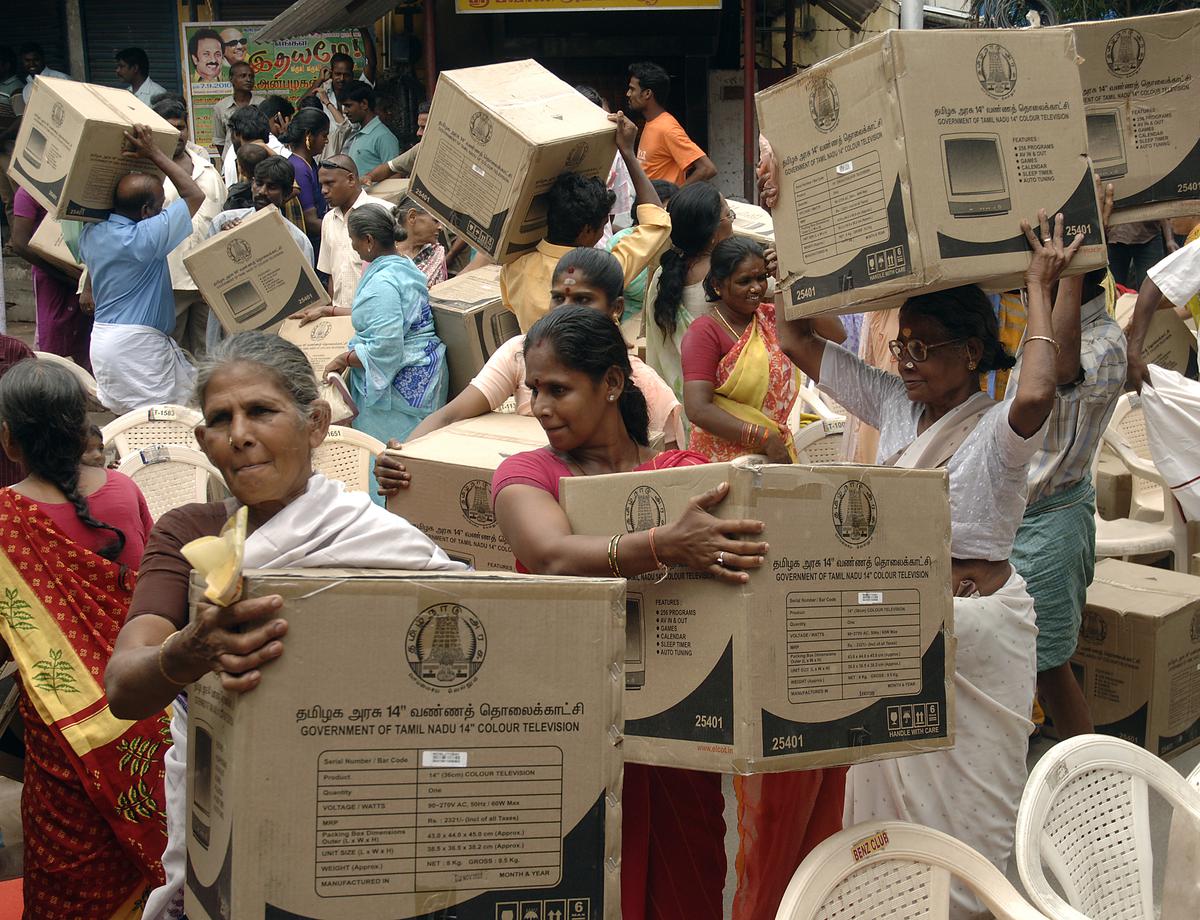
Hosabale echoed what the Opposition has been saying all along about rising inequality, poverty and inflation. So, in such a situation, one cannot blame the beleaguered people who look to the Government for some doles. Particularly during election time, as all Indians are privy to the joke that the netas are only seen by the electorate once in five years when they come asking for votes. The General Elections or Assembly elections are the only time when the janata is janardan and in order to appease the janardan the netas bring offerings like sarees, gold, TV, money, pressure cookers, and even cycles and laptops. Some promise development and some promise to make life easy by giving pecuniary benefits.

Some parties don’t offer consumer goods as freebies but promise intangible welfare measures like good education, healthcare, and some tangible ones like subsidies on power and water bills, to name a few.

It may make the toes of the privileged curl with embarrassment that their fellow countrymen/women vote on these lines, but it is the reality of millions of underprivileged Indians that they cannot make both ends meet and so election time windfalls are welcomed by them.

Besides, welfare measures are not a favour to anyone as the Directives Principles of State Policy in Part IV of the Constitution say that the State Government should promote the welfare of people who are Below the Poverty Line or economically weak and cannot progress without support.

However, these “freebies” have always been a matter of debate in the country. The “Haves” tend to disapprove of them but the “Have Nots” vote for them.

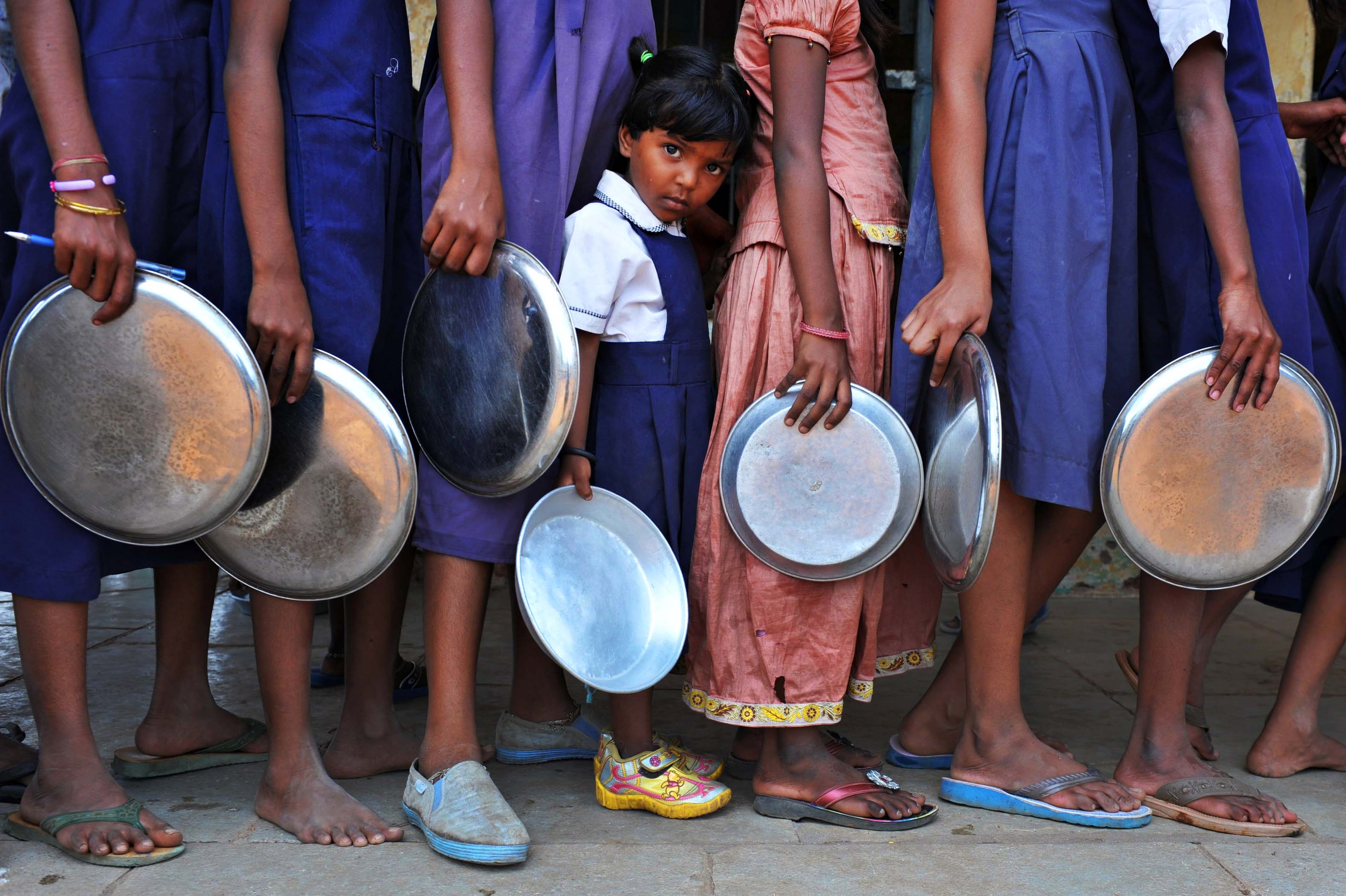
For instance, when the Mid-Day Meal Scheme (MDMS) was launched in Tamil Nadu in the 1980s, there were many controversies surrounding it. But look at it today! The MDMS has become one of the cornerstones of primary education in the country and India has won global accolades for it.

With the world recently having passed through a major pandemic that saw economies and lives destroyed, these welfare measures are finding more and more takers, even in the Middle Class. But a major debate has been triggered in the country about freebies, particularly those promised during election time. It’s disheartening to see how much of our public discourse is biased towards the privileged. Given the rampant inequality and the number of underprivileged in India, we should actually be racking our brains on how to ameliorate the suffering of those living Below the Poverty Line by ramping up pension, social security, healthcare and education. But no, we are obsessing over the precious little that the underprivileged get.

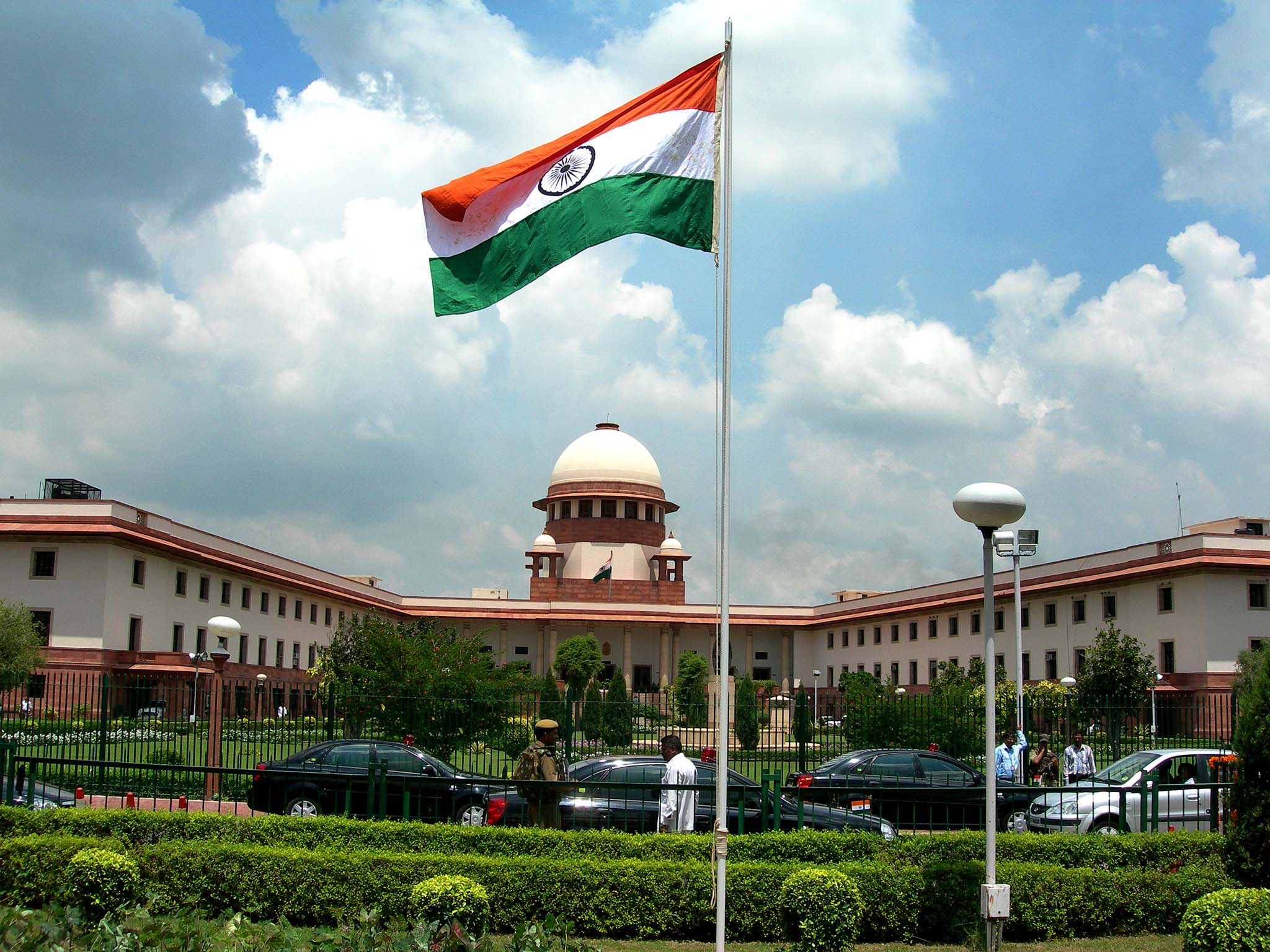
With many States poised to go to the polls in the next few months, the matter of “irrational freebies” — that was first brought up by the RBI in its 2022 report on state finances (spurred to be fair by the economic disaster witnessed by our neighbour, Sri Lanka) and was followed up by the Prime Minister’s remarks on the “revadi culture” — has reached the Supreme Court.

The Central Government wants “freebies” stopped for its own reasons, while the Opposition parties assert, for their own reasons, that their schemes are for the welfare of the people and, thus, must continue.

That political parties will always be on different sides of the fence when there is some major political discourse or debate raging in the country, is a given. But what is unsettling is that now, that autonomous and hallowed institution, the Election Commission of India (ECI) has been dragged into this debate, which it should not have been sucked into in the first place.

No matter what the national view on the various issues that plague India and the fierce political debates that precede every election, one thing that never changed was the fact that the Election Commission always kept out of it all because it’s supposed to be apolitical and non-partisan. It is an autonomous body and has nearly always had the spine to stand up to the Government of the day if asked to do something that is detrimental to the interest of democracy and fair and free elections. The ECI is an institution in itself and all political parties hope to get justice from it as and when the need for it arises. The importance of an objective, strong and equitable ECI cannot be overemphasized for the survival and smooth functioning of a democracy like ours.

Under Article 324 of the Constitution, the Commission’s role and responsibilities are well defined and it has, so far, desisted from intervening in matters other than conducting “free and fair elections”. That’s why the sudden decision by the institution to ask all recognised national and state political parties to provide authentic information to voters on the financial viability of their poll promises has come as a surprise to political parties and citizens alike. The ECI has asked parties to submit their views on the issue by October 19. This has raised quite a storm, with many saying it’s a simple overreach by the poll panel.

Significantly, some time ago, the ECI had told the Supreme Court that “there is not much (it) can do to control the distribution of freebies by a winning party nor can it seize election symbols under the existing laws.” The statutory body took the position that it cannot regulate the distribution of “freebies” and that it is for the voters to decide whether they should elect leaders who offer such “freebies.”
So, this U-turn by the ECI, saying “The Commission notes that the consequences of inadequate disclosures by political parties get attenuated by the fact that elections are held frequently, providing opportunities for political parties to indulge in competitive electoral promises, particularly in multi-phase elections, without having to spell out their financial implications more particularly on committed expenditure,” has raised eyebrows and has triggered accusations of the poll panel buckling under political pressure.

The ECI has taken the plea that if the “parties make adequate disclosures on the financial implications of their promises, the electorate will be able to make informed poll choices.” The ECI wants political parties to elaborate on the rationale for announcing such promises and their financing plan.

Contrasting statements by the ECI in a matter of a few months raise doubts about its independence and non-partisan nature. It has been accused in the past of helping the Government by delaying the announcement of the Model Code of Conduct in a poll-bound State in order to enable the ruling dispensation to announce major projects just before elections.

The ECI’s letter makes one wonder if the poll panel has forgotten that it is supposed to be an autonomous regulator and watchdog for democracy. The ECI’s proposal to change the model code goes against the spirit of competitive politics. More importantly, none of the transformational welfare and social development schemes in India would have become a reality if such bureaucratic overreach had been the norm.

It is no wonder then that several political parties have raised objections to the ECI’s overreach, with the Left parties saying it was not the poll body’s job to “regulate” policy pronouncements and the Congress pointing out that “it is simply not its business” and “will just be yet another nail in the coffin of democracy in the country.”

Significantly, in the S Subramaniam Balaji vs. State of Tamil Nadu case in 2013, the top court had said that the Representation of the People Act (1951) did not restrain political parties from making promises in their election manifesto. This is because the manifesto is a policy statement and the party will only be called upon to implement it if it forms a government. Therefore, the letter seeking mandatory disclosure of the financial ramifications of election promises makes one wonder about the poll panel’s powers to undertake such an act.

Last, but not least, one would like to point out that despite the fact that the Executive controls the ECI’s finances and appointments, over the decades, particularly under the guidance of TN Seshan, the agency earned a reputation for conducting free and fair elections and not bowing to political pressure. In fact, former CEC TS Krishna Murthy termed TN Seshan’s tenure a “turning point” in the history of the poll panel.

“If the history of the Election Commission is written, it has to be divided into two parts — pre-Seshan era where the Commission functioned as a department of the Government and the post-Seshan era when the Commission became more independent,” he wrote in ‘Miracle of Democracy: India’s Amazing Journey.

Since time immemorial, institutions that uphold democracy are under pressure to align themselves with different ideologies, and more so with the ideology of the government of the day. The ECI is under similar pressure now. How it conducts itself will have major ramifications not just for the institution itself but also for democracy and its future. The current CEC has to decide now, how he wants history to remember him.


Adampur by-poll a litmus test for Haryana’s coalition govt

Congress’s Jai Prakash, former Union Minister, is pitted against BJP’s Bhavya Bishnoi for by-election in Adampur, a Bishnoi stronghold. Meanwhile, AAP is betting on party-hopper Satender Singh to help the party make a maiden foray into the state, writes Rajendra Khatry

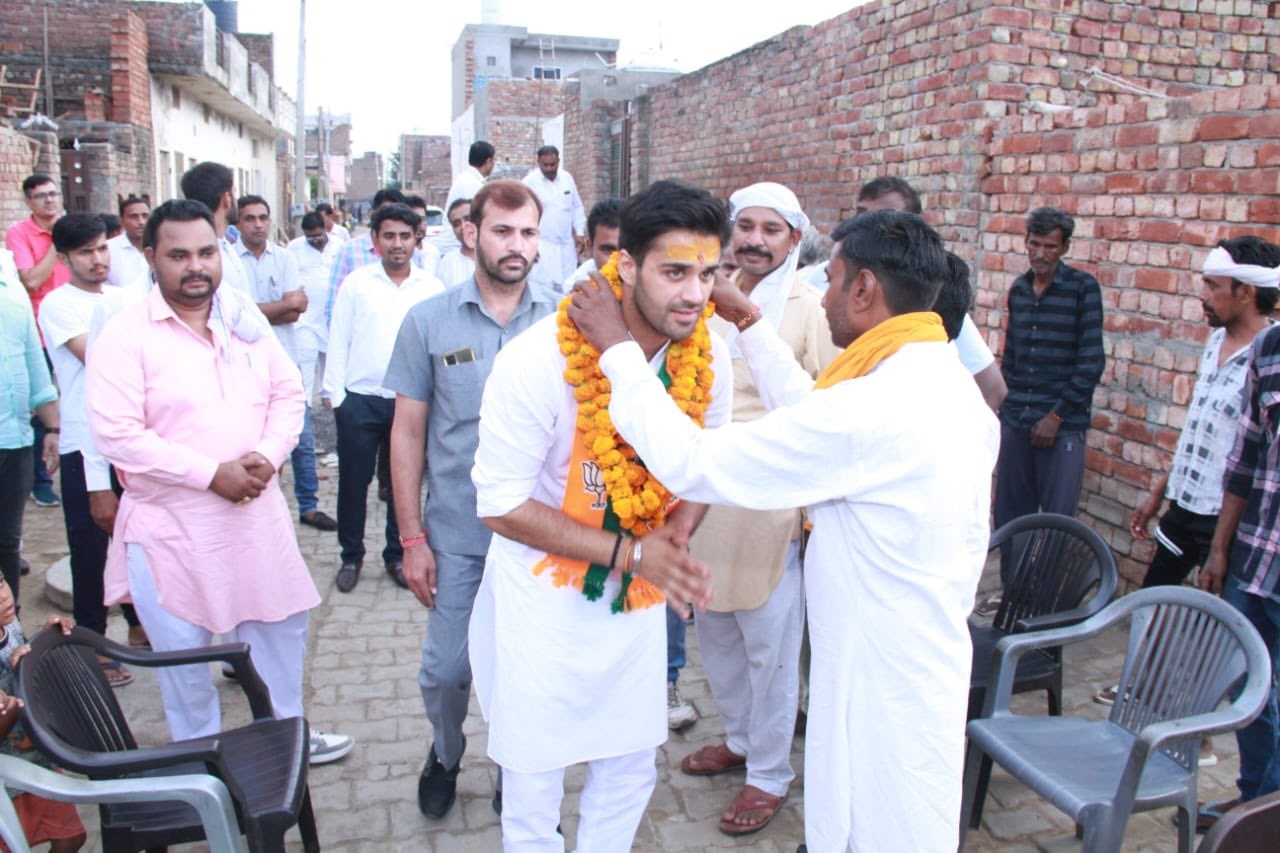
 The by-election in Haryana on November 3 on the Adampur seat will be a litmus test for the BJP-JJP coalition government in Haryana. The ruling BJP-JJP coalition lost both the by-elections held during its term. However, the BJP is very hopeful of winning the Adampur seat as it has fielded Bhajan Lal’s grandson and Kuldeep Bishnoi’s son Bhavya Bishnoi from the seat.

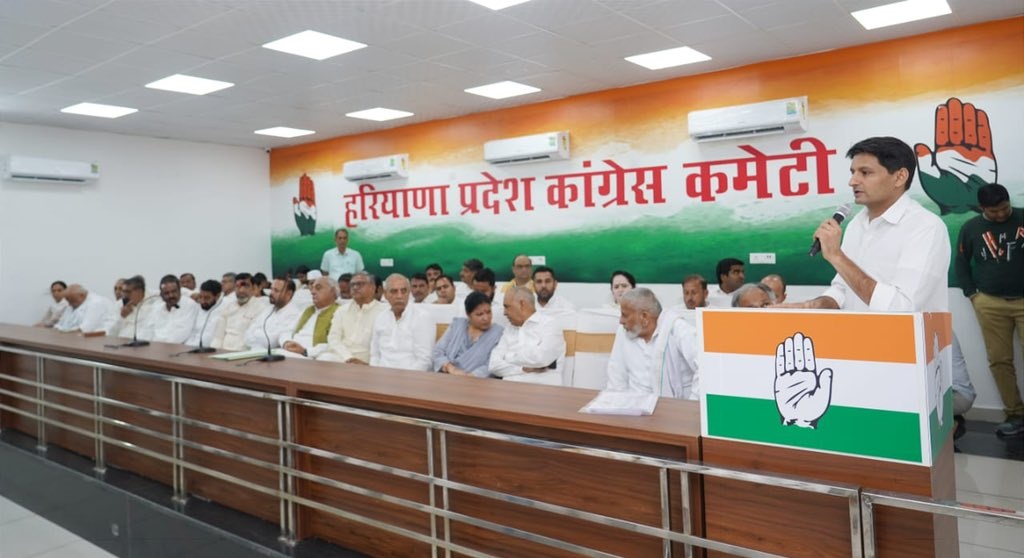
Congress, the main opposition party in Haryana, has fielded former Union Minister  Jai Prakash who is expected to give a tough fight to Bhavya Bishnoi. Bhupinder Singh Hooda had said that the Congress would put up a strong candidate in Adampur.

Meanwhile, the Aam Aadmi Party is also trying to enter Haryana through this election. Boosted by the massive victory in Punjab, AAP is making serious efforts to win the by-elections in Haryana now. AAP supremo Arvind Kejriwal has been frequently visiting Hisar and holding rallies.

The AAP has fielded Satender Singh who quit the BJP to join AAP. The Indian national Lok Dal (INLD) has not named its candidate yet. Satender had contested the 2014 Assembly elections from Adampur on a Congress ticket. But later, he quit the Congress to join the BJP. He changed his mind again recently and joined the AAP.

Adampur constituency has been a stronghold of the late Chief Minister Bhajan Lal’s family. For the last 50 years this family has been winning the seat starting. From Bhajan Lal to his son Kuldeep Bishnoi and Kuldeep’s wife Renuka Bishnoi have been the winners so far.

Kuldeep’s son Bhavya Bishnoi is contesting the by-poll from Adampur. Interestingly it is for the first time that any member of the family will be contesting the poll on a BJP ticket. Bhavya is facing a case under the Black Money (Undisclosed Foreign Income and Assets and Imposition of Tax Act, 2015). The matter is pending against him.

The Adampur by-election is a big test for not only the Bishnois, who are under great expectation and pressure to protect their legacy, it is also posing a stiff challenge to the Congress under Bhupinder Singh Hooda who is fighting to defend the traditional bastion. Rajya Sabha MP and Bhupinder Hooda’s son, Deepender Hooda has been frequenting Adampur to canvass support for the Congress party.

After the announcement of the candidates of Aam Aadmi Party and BJP for the Adampur by-election, the IT cells of both the BJP and AAP  have become super active.  Both the BJP and the AAP have been indulging in social media war in the Adampur by-election.

Former Chief Minister and Leader of the Opposition in Haryana, Bhupinder Singh Hooda believes that Adampur has always been a Congress seat and should remain so now, but the Bishnois are out to prove the veteran Congress leader wrong. Haryana BJP president Om Prakash Dhankar feels extremely confident of winning the Adampur seat. According to Sudesh Kataria, Haryana BJP spokesman, with Kuldeep Bishnoi joining the BJP, it will ensure victory for the party.

Incidentally, Kuldeep Bishnoi and his wife Renuka Bishnoi had also reached the Haryana assembly for the first time after winning a by-election. Now preparations for the entry of Bhavya have started.

AAP declared Satender Singh as its candidate for the Adampur assembly seat. This will be the fourth by-election in Adampur assembly in the last 24 years. In the three by-elections held so far, the members of Bhajan Lal family won all. The 29-years-old Bhavya Bishnoi had contested the first election in his political career in 2019 from Hisar Lok Sabha on the Congress seat, but he was defeated by Brijendra Singh, son of Union Minister Birender Singh of the BJP.

Haryana’s Deputy Chief Minister Dushyant Chautala of the JJP had finished second. BJP MP Brijendra got 60,3289 votes, Dushyant Chautala got 28,9221 votes while Bhavya Bishnoi had polled 18,4369 votes. In the 2019 Lok Sabha elections, the Bhajan Lal’s family had to face defeat for the first time in their booth in Adampur.

The coalition government in Haryana under the leadership of Chief Minister Manohar Lal is in the third year of its second term. This is the third by-election in the state during the coalition government. The BJP lost both the previous by-polls in Baroda and Ellenabad constituencies to the Congress and the Indian National Lok Dal, respectively.

Kuldeep Bishnoi had won from Adampur on a Congress ticket. The BJP fielded TikTok star, late Sonali Phogat against Bishnoi, but she lost.

Later, the seat fell vacant after Kuldeep Bishnoi’s resignation. Kuldeep quit the Congress to join the BJP. The BJP was reportedly keen on fielding Kuldeep Bishnoi again from the vacant Adampur assembly seat which he had vacated after quitting Congress and joining the BJP. But Kuldeep, who has been grooming his son Bhavya, wanted the ticket for Bhavya and the BJP acceded to his demand.

As for himself, Kuldeep Bishnoi has the 2024 Lok Sabha elections in mind where he would like to contest the elections from the Hisar seat. But the problem is Brijendra Singh, son of senior BJP leader Birender Singh is the present incumbent of the  Hisar Lok Sabha seat and the BJP will be hard put to deny an incumbent ticket in the 2024 Lok Sabha elections.

According to political experts, the main challenge to the BJP candidate in Adampur will be from the Congress. Elections to Panchayati Raj Institutions are to be conducted soon. Therefore, this by-election of Adampur by political parties is considered very important.

In the 2019 assembly elections, the winner Kuldeep Bishnoi Bishnoi of the Congress had polled 63,693 votes which was 51.7 per cent of the total votes polled. On the other hand BJP’s candidate Sonali Phogat had polled 34,222  votes with a polling percentage of 27.78 per cent.

This election is important for the Congress because Hooda would like to prove the rising trend of Congress victories in Haryana. If Congress wins the election, it will be considered to be the first step by the party to return to power in 2024. Congress would like to capitalise on the anti-incumbency factor against the ruling coalition government.

If the BJP bags the Adampur by-poll, it would prove to be a morale boosting win. It would also prove helpful to the party in the forthcoming Panchayat elections. The BJP will claim that the people are satisfied with the performance of the Manohar Lal government. The BJP is trying to increase its penetration in the stronghold of former Chief Minister Bhajan Lal on the pretext of Kuldeep Bishnoi.


Will Communist Party of China anoint Xi Jinping as president for life?

The forthcoming CCP meet may ratify the decision of Parliament to amend the constitution allowing leaders to serve beyond the age of 68, thus paving the way for Xi Jinping to remain in power for another five or 10 years, or even longer

The Chinese media calls Xi Jinping, 69,  a ‘Lingxiu’ or the Leader, thus declaring him the unquestioned ‘emperor’ of the Middle Kingdom as he seeks the party’s mandate for remaining in power till he breathes his last. His admirers believe that he, perhaps, is keen to witness his dream of ensuring China’s rise as the only super power on the earth during his tenure as the ruler.

Xi Jinping had already initiated the groundwork for the extension of his tenure in 2018. It was a part of his strategy for keeping himself in power by getting the country’s basic law, the Constitution, amended in Parliament, and also crowding the party’s central organisations with his ‘favourites’. He is expected to be anointed as the life-time president by a ‘docile’ leadership at the 20th Congress meet of the Communist Party of China (CCP) on Sunday, October 16, this year. He is keen to be remembered like the legendary leader, Mao Zedong.

Since time immemorial, China, like Egypt, is called the Middle Kingdom. The Chinese consider themselves as ‘invincible’ people. In the contemporary world, European travellers found China, a region full of unexplained mysteries and customs. They also endorsed the Chinese people that their country is a beautiful place. It was also named Zhōngguó or the central beautyFor most of the Chinese people, it is Shenzhou, a divine land. The Portuguese sailors perhaps called it China. For them, its social and political systems remain shrouded in mystery, and so the contemporary political developments.

During the past 10 years, Xi Jinping’s assertive nationalist postures connecting the people with their glorious past might have been adding to his popularity. It is hoped his leadership would be unanimously endorsed in the forthcoming party meet.

At present, the world’s attention is focused on the political developments in China. Whether Xi gets his tenure, or whether gets consigned to the dustbin of history, only time will tell. With the Chinese economy achieving phenomenal successes in recent years, it is no surprise that the eyes of political analysts and world leaders are riveted on the ongoing political developments in the country. China overtook the economy of the European Union in 2021. A forecast states that China will become the world’s largest economy by 2028. It may be recalled that in 1987, the GDP of India and China was almost equal; but in 2021, China’s GDP was 5.46 times higher than that of India. China crossed the $1 trillion mark in 1998, while India crossed it nine years later in 2007. Therefore, political developments in China may cast their shadow on most prosperous countries. So it is natural for the world media to keep a close watch on the country’s political developments, especially the outcome of the forthcoming party congress.

A Charismatic Leader

Xi Jinping, son of a prominent provincial leader, Xi Zhongxun, has been a paramount leader of China since 2012. In recent years, he has emerged as a charismatic leader too, who knows how to play international power games promoting his country’s ‘imperial’ interests. His father was purged during the Cultural Revolution, when Xi was in teens. He was exiled to serve in rural areas. Later, he battled to assert his political clout, from which he finally emerged successful.

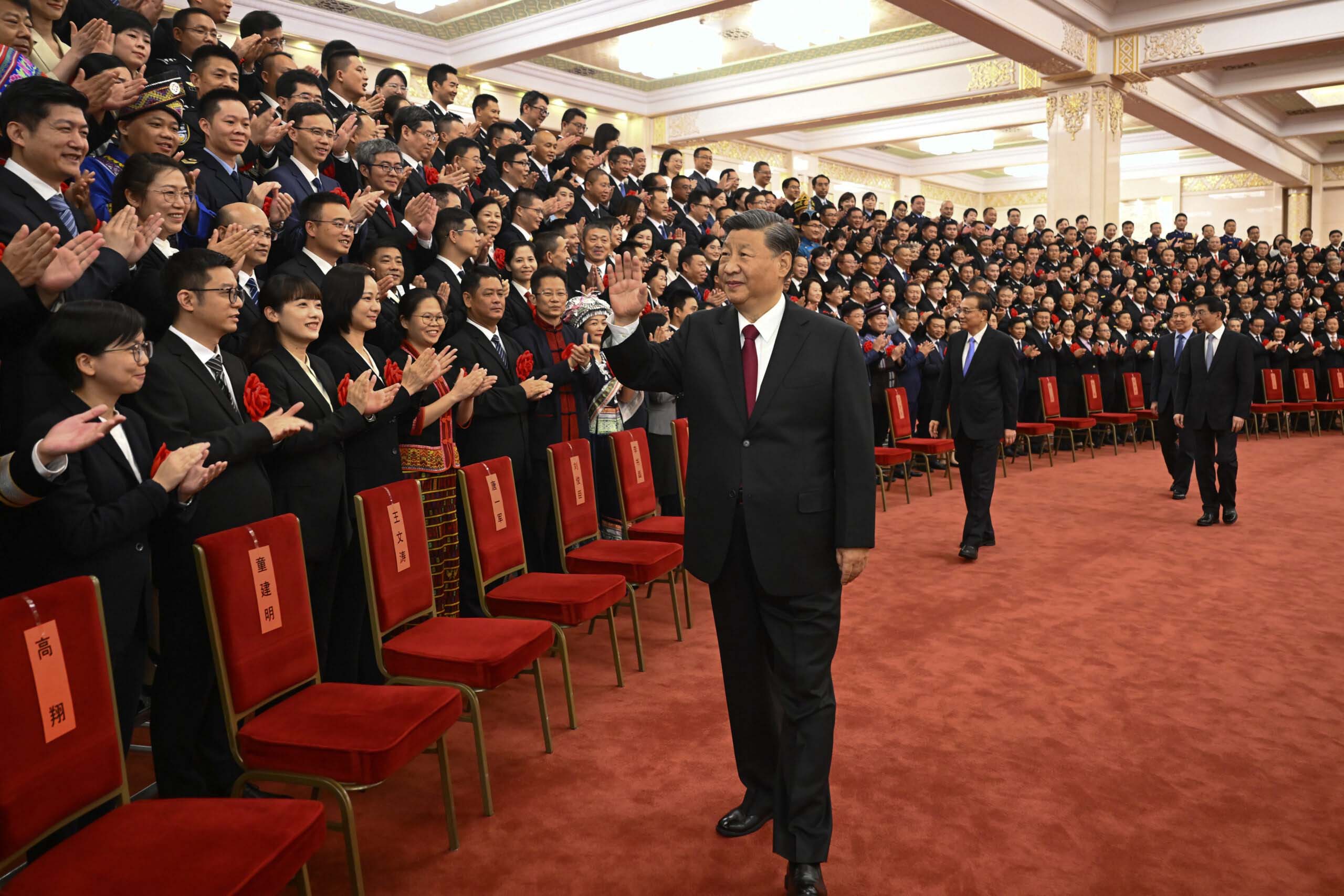
His decision to return to Beijing even before the end of the SCO summit, and later his sudden ‘disappearance’ following his return triggered rumours that he might have been kept under the house arrest or he has been removed from the key institutions like People’s Liberation Army (PLA); however, his reappearance on the Chinese television, just a few days before the crucial party Congress ended the suspicion that Xi Jinping has been removed or put behind the bars. TV grabs of his presence at a market in Beijing have not only ended the rumours regarding his political future, it appears that he would get the desired extension at the party’s congress. On the television, he was shown visiting a display at the Beijing Exhibition Hall on the theme of “Forging Ahead into the New Era ” accompanied by Premier Li Keqiang and other top leaders, thus dispelling the rumours regarding his uncertain future.

The forthcoming crucial party meeting is expected to ratify the March 2018 decision of Parliament to amend the constitution allowing leaders to serve beyond the age of 68 and also to remove the restriction of no more than two five-year terms in the same position. Xi, who had succeeded in getting the 40-year old provision, enacted in1982, scrapped in Parliament would now be readying himself as the new Mao Zedong, if the party ratifies the changes in the constitution. Unless of course some last minute rebellion takes place against him. The 1982 Constitutional provision was an attempt to prevent the concentration of power, but emboldened Xi  supporters are confident that he would get a massive mandate in the party’s congress. It would, thus, be paving the way for him to remain in power as the head of the country for another five or 10 years, or even longer.

In the Chinese system, the party congress is usually an opportunity to review the mandate of the party’s leadership, including the state functionaries or the ‘autocrats,’ estimated to be more than  170,000, controlling nearly 1.5 billion people. It is yet to be seen how these local party leaders, who have been successful in keeping the dissent within the country under strict control, are able to contain any anti-Xi resolution in the party’s congress. The reports indicate that there is rampant corruption among the local Chinese leaders. They make money even by imposing restrictions on the movements of the citizens from one city to another. The party is expected to endorse the continuation of Xi Jinping as the leader of the country (as president), leader of the Communist Party of China (CCP), as its general secretary and head of the military, as chairman of the Central Military Commission.

.


Supreme Court’s ruling on abortion opens a Pandora’s box

The Apex court has ruled that all women, irrespective of their marital status, are entitled to legal abortion till 24 weeks of pregnancy under the MTP Act sparking a huge row with lawyers and doctors on one side and NGOs and women activists on the other, writes Amitabh Srivastva

A recent judgment of the Supreme Court on the definition and scope of the Medical Termination of Pregnancy Act has created a huge controversy with lawyers and doctors on one side and NGOs and women activists on the other.

A case was filed in the Supreme Court by an unmarried woman who wanted to undergo MTP after 23 weeks which was denied by the High Court.

A Supreme Court Bench compromising Justice DY Chandrachud, AS Bopanna and JB Pardiwala in a landmark judgment started by observing that women in this judgment included not just cis-gender women born as women but others too who had the reproductive system and may require MTP.

Secondly, the Court said that all women irrespective of their marital status were entitled to safe and legal abortion till 24 weeks of pregnancy under the MTP because making distinction on the basis of marital status was “constitutionally unsustainable.”

This is significant because as Dr. Surbhi Singh, a gynaecologist explains, “Under Rule 3 B of the MTP Act, the upper limit for abortion in normal cases is 20 weeks but it is 24 weeks for special categories of women who cannot seek medical aid or justice easily. These include (a) rape or incest victims (b) minors (c) if the relationship status of pregnant widow or divorcee changes (d) physically handicapped (e) mentally handicapped or ill (f) abnormal foetal deformation which could endanger the life of the new born (g) disaster or emergency victim or human or man-made disaster.”

Dr. Singh is particularly relieved that now they would not have to seek permission from the parents or husbands if a woman came to them for MTP.

“We were caught in a dilemma when such cases came to us. Whether to adhere to our confidential relationship with a patient or to inform the parents under law. Many times doctors took advantage of this situation and exploited the hapless woman at great personal and professional risk of course.”

However the issue becomes critical because lawyers like Shashank Shekhar argue that sexual assault or even consensual sex by minors and on minors is a crime under POCSO meant to protect the interests of children and this law overrules every other law in the country.

Taking a confrontationist posture, Shashank Shekhar who has been a member of the Delhi Commission for Protection of Child Rights says, “Either they have to change the MTP Act or amend the POCSO Act. Both can’t exist together. Any sexual assault on a minor has to be reported because their consent means nothing in law. The problem is that sex between youngsters and even live in relationships has become fashionable but the limit for minors has to be restricted.”

He lamented that even after 75 years of independence, selective abortion is still easily available in India at a price and that is responsible for the skewed male-female ratio in most states of the country.

Officially knowing the gender of the baby in the womb has been banned in India but as Shashank Shekhar said it was easily available at a price.

Interestingly, in Western countries there was no ban on such practices because they celebrate the birth of a girl with as much gusto as a boy.

Asked if the dowry system was responsible for the rising female infanticide cases in the country, he counters,”Should we remove the social evil of dowry or remove the girl from this world?”

Dr. Surbhi Singh however appeals to the courts to amend the POCSO law to make things easier for girls who want to have full control over their body.

She also wants the law makers to be flexible about POCSO with changing times.

“I think parents of minor children involved in sexual acts should have the option to allow their children to have the right to abortion with anonymity and move ahead in life. If a child who has committed a murder is given a second chance after completing his term in a reform home why not a girl who has been part of a sexual activity,”,she argues.

As of now doctors have been in a dilemma on this because illegal abortions under IPC 1860 Section 312 provides for jail term which can be extended up to three years.

The Brahmastra in this judgment, of course, is the provision that marital rape should also form part the MTP Act.

“A woman may also form part of the survivors of sexual assault or rape…due to a non-consensual act by the husband,” reads the order.

The issue of criminalizing marital rape in India has been discussed in great detail by the Delhi High Court this year and the two Judges of a Delhi High Court Bench gave different interpretations while the Centre has been dragging its feet on this not committing either way.

All their ministers have commented in Parliament on the issue that if this was made a law, thousands of households would lose their peace. In other words, the Government agrees that such problems exist in thousands of families.

However, Justice Chandrachud clarified that he was not commenting on the issue of criminalising marital rape as such but only adding it as one of the categories for the purpose of MTP Act.

Dr Kiran Aggarwal, a professional doctor and child rights activist for several years argues that the issue with criminalising marital rape is that there is no fool proof method of proving it and it could give rise to a multitude of litigations.

“As of today any sexual activity by males, females or transgenders is a crime if they are under 18. But when it comes to married women the law says that forced sex with a wife above 15 cannot be termed rape. Officially, the age of marriage of girls has been progressively going up from 12 to 15 to 18 and now to 21 but in marital rape they are still keeping the exception of non-consensual sex with a wife aged 15,” she said.

The issue is not as simple as it seems. While the age of marriage of girls is being raised to 21 in India, the age of consent for sex remains at 18.

Interestingly, while India has been gradually raising the age of consensual sex from 12 to 18, Dr.Kiran Aggarwal says the WHO advisory wants the age of marriage to be brought down from 16 to 13.

Like Shashank Shekhar many activists feel that the Supreme Court order makes no mention of female infanticide or the sex of the child inside the womb.

A section of generation next women feel that a liberal law should prevail allowing the choice of sex of children to would be parents. They argue that it’s a fallacy to assume that every parent will choose a male child.

There are several examples of childless couples adopting children and most of them have adopted girls.

They argue that once we ensure that girls are given a share in father’s property instead of dowry and they can stand on their own feet, the would be parents would happily choose daughters if given an option.


Shouldn’t the hate speeches be banned!

What can an average citizen of this country do to counter these communal slogans? Try and make others sense that the dangerous build-ups that one is witnessing seem leading towards civil strife.

In these recent days a bunch of political men have publicly come up with provocative communal statements and hate slogans. Even giving public statements to be equipped with swords and arms. And at one particular rally in Karnataka they were seen carrying swords. All in full public view.

Shouldn’t these hate speeches and communal slogans be banned! Aren’t these eerie build-ups outrageously horrifying…out to destroy us! Shouldn’t these communal characters be halted and banned and jailed!  Aren’t these moves just too dangerous for our very basic survival, for once civil strife spreads out it could get un-controlled.

What can an average citizen of this country do, to counter these hate speeches and communal slogans? Wake up to these disasters staring in the face. Try and make others sense, drill into their heads that the dangerous build-ups that one is witnessing seem leading towards civil strife.

Years back, when I had asked actor turned politician, Sunil Dutt, what could be the possible solution to halt communal poisoning cum rioting, he said,“There can  be only one solution! Only last night I was going through the latest ‘Time’ magazine and the photographs of the civil war ridden Somalia shocked  me so much that I couldn’t eat. It was dinner time but I couldn’t touch a morsel. Just couldn’t! Those pictures of the hapless humans injured and ill, crawling about, rendered so frail and weak that many couldn’t even walk, hit! They relayed the havoc taking place because of the ongoing civil strife in Somalia. I’m  going to  suggest  those photographs should  be  displayed  all over our  towns and  cities, at all public places  —in colleges, schools, universities, offices, libraries. And  displaced  with  this caption: “See what internal war and  civil strife and  unrest  can do  to  you, to your  country, to your  fellow countrymen!”

*******

She stood up for the rights of the citizens

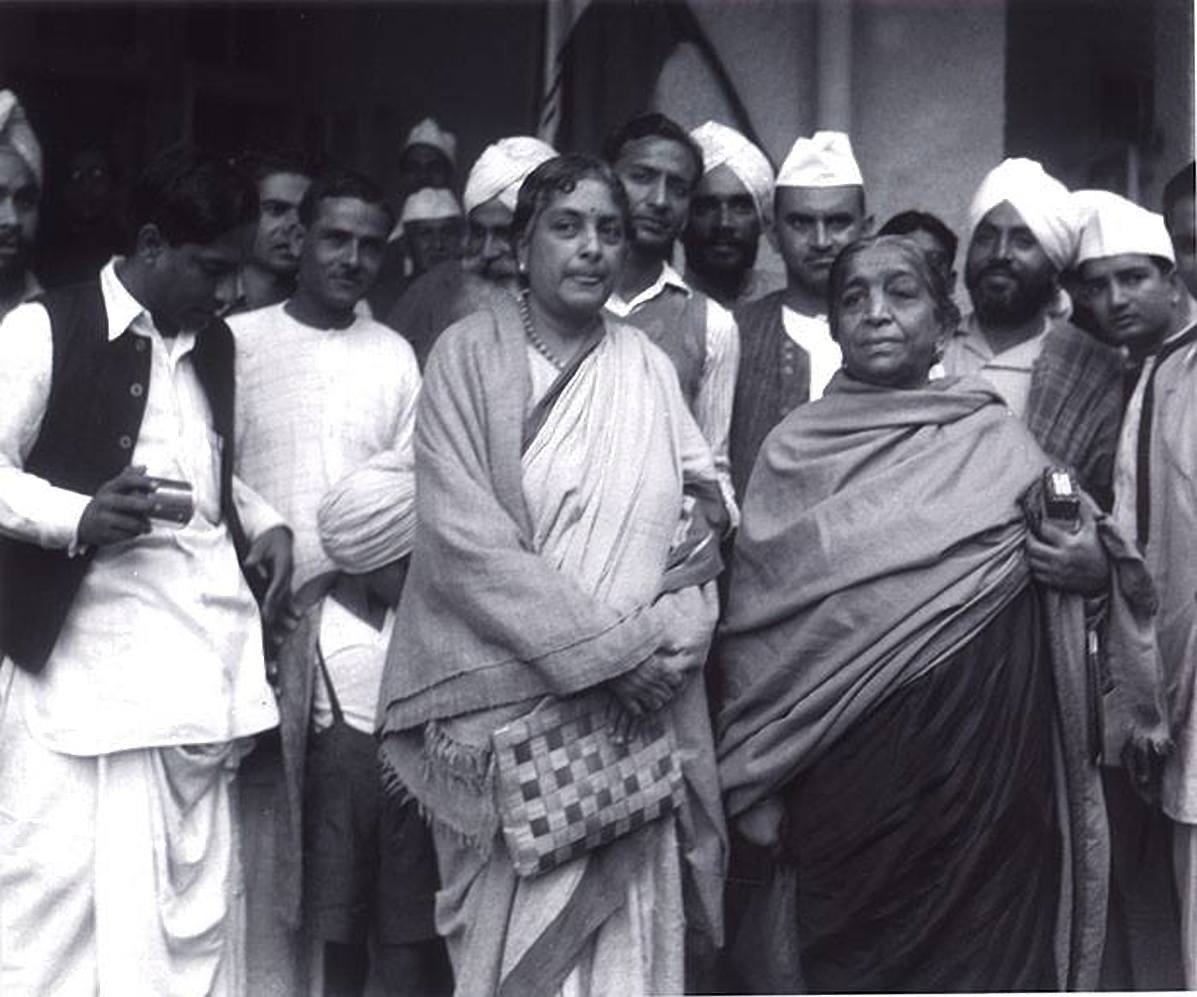
Kamaladevi Chattopadhyay had passed  away on 29  October 1988,  but till date she is remembered  as the woman who stood up for the rights of the citizens. In her memoir, ‘Inner Recesses Outer Spaces’ there are  more than glimpses of her observations on the various aspects – the challenges of being a prisoner,  the post-partition plight of refugees, the role of Muslims in the freedom movement.

She was strong, independent and daring. In fact, when Mahatma Gandhi had announced the Satyagraha movement in 1930, she was one of the only two women chosen for inclusion in the frontline unit of seven volunteers at Bombay (Mumbai) who marched to the beachfront to boil seawater and make salt. Later, in a startling move, Kamaladevi marched to the High Court and asked the magistrate present whether he would be interested in buying the ‘Freedom Salt’ she had just prepared!

Although she used to interact with several leaders associated with the freedom struggle, including Pandit Jawaharlal Nehru, Maulana Abul Kalam Azad and Sardar Vallabhbhai Patel, Mahatma Gandhi figures the most in her writing. She comments how everyone in those days was trying to understand his philosophy of non-violence: “Impatiently, we looked to Gandhiji for a sign, but none seemed visible. We had not yet grasped his uncanny capacity to gauge a situation accurately, and the ability to act at the proper psychological hour. … Though we fretted, we knew that when the hour came, he would strike and strike hard and one day it would be the final stroke.”

In addition, she has highlighted his aversion for security ‘bandobast’. To quote her,  “The past few weeks before it [his assassination], one had been persistently hearing of threats to the Mahatma… then the bomb explosion. Still it did not carry reality. Who would want to kill one who was an embodiment of love and compassion? … When it happened many blamed the victim himself, for he sternly forbade any security measures. For him his life was not worth it if it was to be guarded by weapons. If such a moment came, it meant it was time for him to go. He could live only if he could serve and his service was welcomed… What a different world we live in now. The public today is universally suspected. The more important a public function, the more ferocious the display of weapons.”

Kamaladevi has been among the handful of commentators who focused on the contributions made by the Muslim community, including women, in the Independence movement. She writes: “The picturesque Begum Hazrat Mahal played an active part in the 1857 war by personally leading her troops into the battle.”  She dwells on other details too, “In the early days of the Civil Disobedience movement under Gandhiji, a body of Muslim theologians was founded called Jamiat-ul-Ulema-i-Hind to get all Muslim religious leaders to fight the British. …When the Satyagraha movement was launched in 1930, the Jamiat was amongst the earliest to take the plunge, followed by the Ahrar Party of Punjab, the Shia Political Conference, the Khudai Khidmatgar of the North West Frontier ”

Detailsof the days she spent in prison  should be read  by all those who are working on  jail reforms and considering improving prison conditions for the  better survival of the  jailed inmates. She describes life in confinement: “A prison brings out the worst in people is a common phrase much bandied out. No doubt confinement within a limited space has its own exasperations apart from discomforts; its capacity of irritation is limitless… Here we are placed in a heterogeneous group drawn from hundreds of homes, diverse communities with different habits, speaking babble of tongues… Prison to me was a trial in other ways. I am not a gregarious animal and it is a great trial to live for months on end in small crowds. …It’s is not surprising that one’s outlook gets cramped, sense of values distorted and people are inclined to be irritated over trifles, which are exaggerated.”


MOST POPULAR

HOT NEWS