Sunday, December 28, 2025

India’s aggressive posture on PoK leaves observers guessing

DM’s remarks that full integration of J-K will complete only when PoK will be reunited with India reveals that the government is no longer hampered by the continuing violence in Kashmir as it seeks to take the offensive into the territory occupied by Pakistan, writes Riyaz Wani

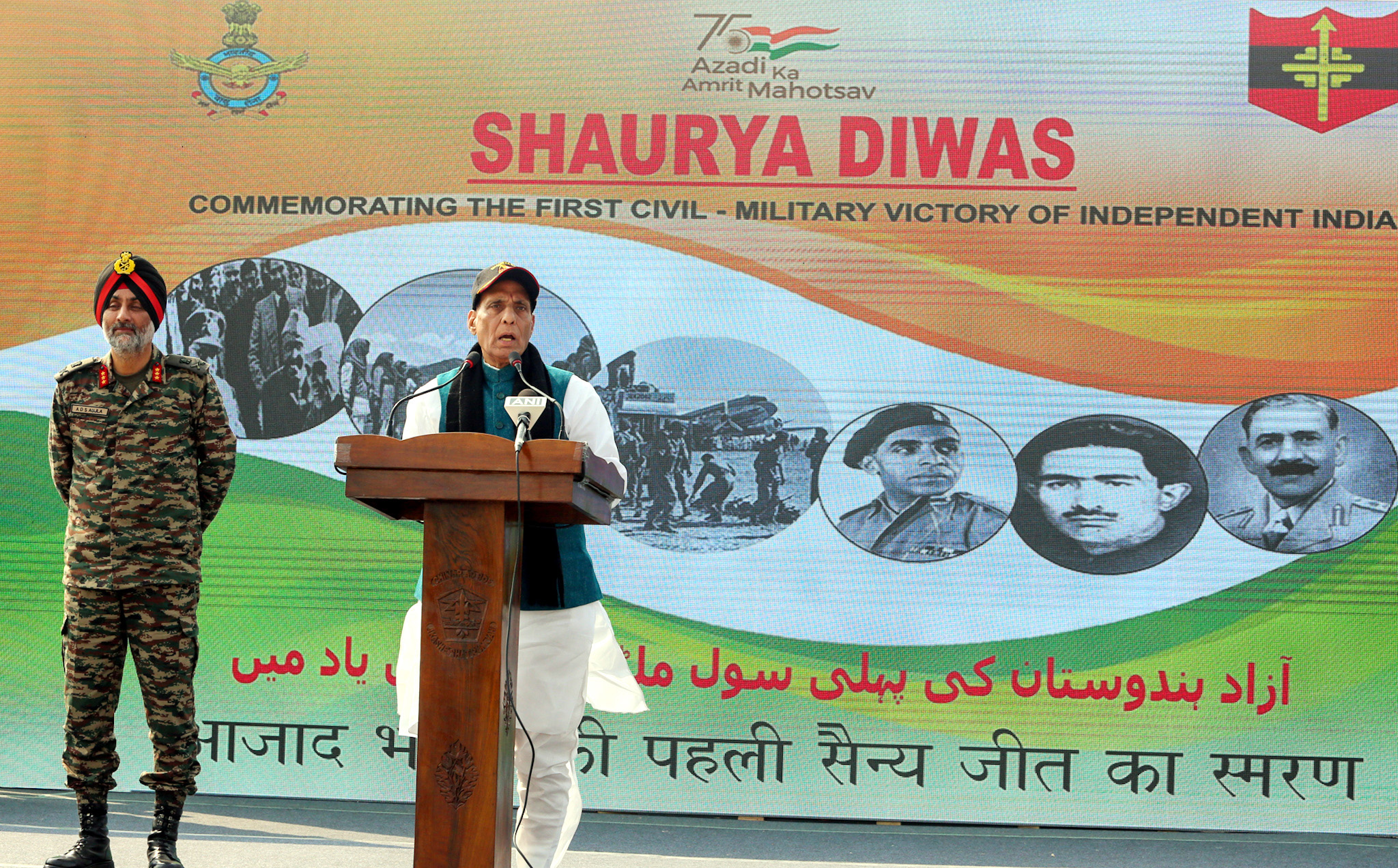
Visiting Jammu and Kashmir on October 27 to celebrate the landing of Indian soldiers in the former state on the same day in 1947, Defence Minister Rajnath Singh said the mission of full integration of J&K that started on August 5, 2019 “will complete when Gilgit-Baltistan and areas of the Pakistan Occupied Kashmir (PoK) will reunite with India.”

“This is just the beginning. The mission will complete only when Gilgit Baltistan and areas of PoK reunite with India. Also, when justice is delivered to the refugees of 1947 and they get their land and homes back. The day is not far away,” Singh said while referring to the resolution passed by Parliament on retrieving PoK in 1994. “We feel the pain of residents of PoK, facing atrocities and violation of their rights at the hands of Pakistan. On this side, Kashmir and Ladakh are set on a new path of development and prosperity (post-August 5, 2019).”

The Defence Minister’s statement has since elicited no response from Pakistan which also stakes claim to the entire Jammu and Kashmir and seeks a plebiscite in the region as per the United Nations resolutions. This has made Kashmir a longstanding bone of contention between the two countries, leading to three wars between them so far and the ongoing decades-long turmoil in the region.

Making Singh’s threat to take Pakistan Occupied Kashmir by force was more telling was the occasion – October 27, 1947 – when Indian Army first landed in Kashmir a day after the then Maharaja of the state signed the instrument of accession.

This is the second time this year that the defence minister has called for taking back the PoK. Earlier during his visit to the union territory in July, Singh said Jammu and Kashmir would always be an integral part of India and the parts of Kashmir and Gilgit-Baltistan have been illegally occupied by Pakistan. He also expressed India’s resolve to capture Pakistani-controlled parts of Kashmir as well. “If Amarnath is on this side, how can Maa Sharda remain on the other,” Singh said in Jammu on the occasion of Kargil Vijay Diwas.

However, experts have cautioned against any bid to recapture PoK which India considers its legitimate part by virtue of the Instrument of Accession whereby the entire J&K as it existed then – including Gilgit-Baltistan – is said to have joined India.

PoK has grown in importance over time in India’s strategic calculus because of its location. It shares borders with Pakistan’s Punjab, North-West Frontier Provinces, the Wakhan Corridor of Afghanistan to the north-west, China’s Xinjiang province to the north, and Jammu and Kashmir to the east.

But since China has investments in PoK and especially in Gilgit-Baltistan which has become a part of its Belt Road Initiative, it is feared that an attack on PoK would trigger “a two-front situation.”

“India could face retaliation from China also,” said Naseer Ahmad, author of Kashmir Pending. “This could result in war simultaneously with the two countries which would not be a helpful situation from India’s point of view,”

Deteriorating relations with Pakistan

If anything, the defence minister’s adoption of an aggressive line on PoK reflects the dismal state of India’s relations with Pakistan which has currently plunged into chaos following ousted Pakistan prime minister Imran Khan’s protest march towards the Pakistani capital during which he survived an assassination bid.  .

The Pakistani government has tried to stop the march, but to no avail.  Khan has been claiming his government was toppled by the United States miffed with his growing closeness to Russia and China. He has been demanding the resignation of the government and the holding of fresh elections. While the Pakistan government, backed by the military establishment, is unlikely to resign in the near term, Khan’s stubborn political campaign has destabilized the country. At the same time, his popularity has skyrocketed and in case of an early election, he is expected to return to power with a landslide majority.

One fallout of this troubled situation in the country is that there is no hope for an India-Pakistan dialogue. The three and a half years of Khan’s term saw relations between the two neighbours nosedive.  And with the revocation of Article 370 in August 2019, the ties deteriorated almost to the point of no return. Khan became one of the fiercest critics of the Indian government. But in February 2021, the militaries of the two countries dramatically signed a ceasefire agreement.

The move came reportedly following an extended back-channel dialogue between the two countries. But thereafter there were no efforts to improve the relations. Or to resume dialogue that otherwise appeared a logical course of action following the ceasefire. The reason for this was Pakistan’s insistence that India reverse the repeal of Article 370 but for New Delhi, the move is now a fait accompli.

Going forward, the situation looks bleak. Should Shabaz Sharif’s government continue, there will be little chance of the relations between India and Pakistan reviving in the near to medium future.

Meanwhile, a halt to the frequent firing exchanges along the Line of Control has made a redeeming difference to the lives of lakhs of border residents on both sides of the border.  But it won’t change anything as far as the situation in the Valley where militancy continues to linger. This problem could certainly have been addressed through a dialogue between the two countries, whose chances now look slim until after the fresh national elections are held, first in Pakistan in 2023 followed by one in India in 2024. Sharif’s survival in power or otherwise will make no difference to this reality.

Persisting militancy

Although Kashmir was regarded as one of the places that could be most impacted by a Taliban controlled Afghanistan, this hasn’t happened even a year after the militia’s return to power.  Over the last three years, even though the militancy in Kashmir has been low-key, and a large number of militants have been killed, the militancy is very much alive and kicking.

Ever since the withdrawal of J&K autonomy in August 2019, around 500 militants have been killed in the UT, most of them local youths. Though this has reduced the number of militants, the violence has continued unchanged. And over the last year, the violence has increased as militants have chosen to attack soft targets – civilians, panchayat workers, J&K police personnel visiting home, outsiders and minorities – instead of engaging security personnel. Security forces, as a result, now not only have to combat militancy but also protect a large section of the population including many from among their own ranks.

In such a context, the defence minister’s PoK remarks reveal that India is no longer hampered by the violence in Kashmir, and seeks to take the offensive into the part of the territory occupied by Pakistan. But as of now, the execution of this strategy on the ground has little practical possibility.


Suspense hangs over who will succeed Gen Bajwa?

Pakistan Army chief Gen Bajwa has stressed that the army would remain politically neutral even as ex-PM Imran Khan resumes the long march after recovering from the gun-shot injuries he received in alleged assassination bid on him

With the date of the superannuation, November 29, of the army chief, General Qamar Javed Bajwa, drawing closer with each passing day, hectic parleys are underway in London, Rawalpindi and Lahore. While the Pakistani PM, Shehbaz Sharif, who had made an impromptu visit to London just after the session of the Climate conference at Sharm-el-Sheikh in Egypt on November 6, now has returned home, perhaps, much more determined to tackle ex-PM Imran Khan’s ongoing agitation. His brother and a three-time prime minister, Nawaz Sharif, has asked Shehbaz to take a tough line against the agitation.

Meanwhile, Gen Bajwa presided over the meeting of 23 three-star generals, including army’s corps commanders, reiterating that the army would remain politically neutral and stand by the civil authorities; it has no intention to impose martial law or undermine the constitution, it was further resolved. If Khan’s agitation becomes violent, the civil authorities would be assisted by the Pakistani Rangers. It was also noted that the police from Sindh have already arrived in Islamabad.

Nawaz Sharif was deposed with the connivance of the army and the higher judiciary just before the elections in 2018, thus paving the way for Khan as and his party to win the polls. Apart from instructing Shehbaz to take tough line against Khan and asked him not to relent on the issues such as ordering an early elections much before the end of the present tenure of the Pakistan National Assembly, extending Bajwa’s tenure on the plea that the new chief should be decided by the new PM after the polls.

With General Bajwa reiterating that he would not seek or accept any extension as the army chief, the generals’ conference has decided that after November 20, the names of three senior most generals should be sent to the prime minister through the defence ministry. The senior most generals are Sahir Shamshad Mirza, Azhar Abbas and Nauman Mehmood Raja, president of the National Defence University. Faize Hamid is among the junior most officers in this list.

Shehbaz Sharif, who is empowered to appoint the new chief, would be deciding the new chief; but the situation continues to be unpredictable. The army veterans have demanded that the appointment of the new army chief should be done after the polls only. The main reason for this uncertainty could be attributed to the martial laws imposed on the country, a civilian government could never complete its five-year term.

In Pakistan, it has been the army taking the key decisions on the key issues. Seldom, they are taken into confidence whether Pakistan should give nuclear know-how to North Korea or should be producing the dirty bomb in collaboration with Ukraine.

The rise of Imran Khan in politics has exposed new dimensions in the country’s politics. His multi-dimensional blitzkrieg against his political adversaries appears to have outwitted his rivals, as well as stunned the political analysts and observers. Following the assassination attack, he now occupies the centre-stage of Pakistan’s national politics. If polls are held immediately, he is poised to trounce his political rivals, a fact known to his political opponents making them nervous.

President’s Role  
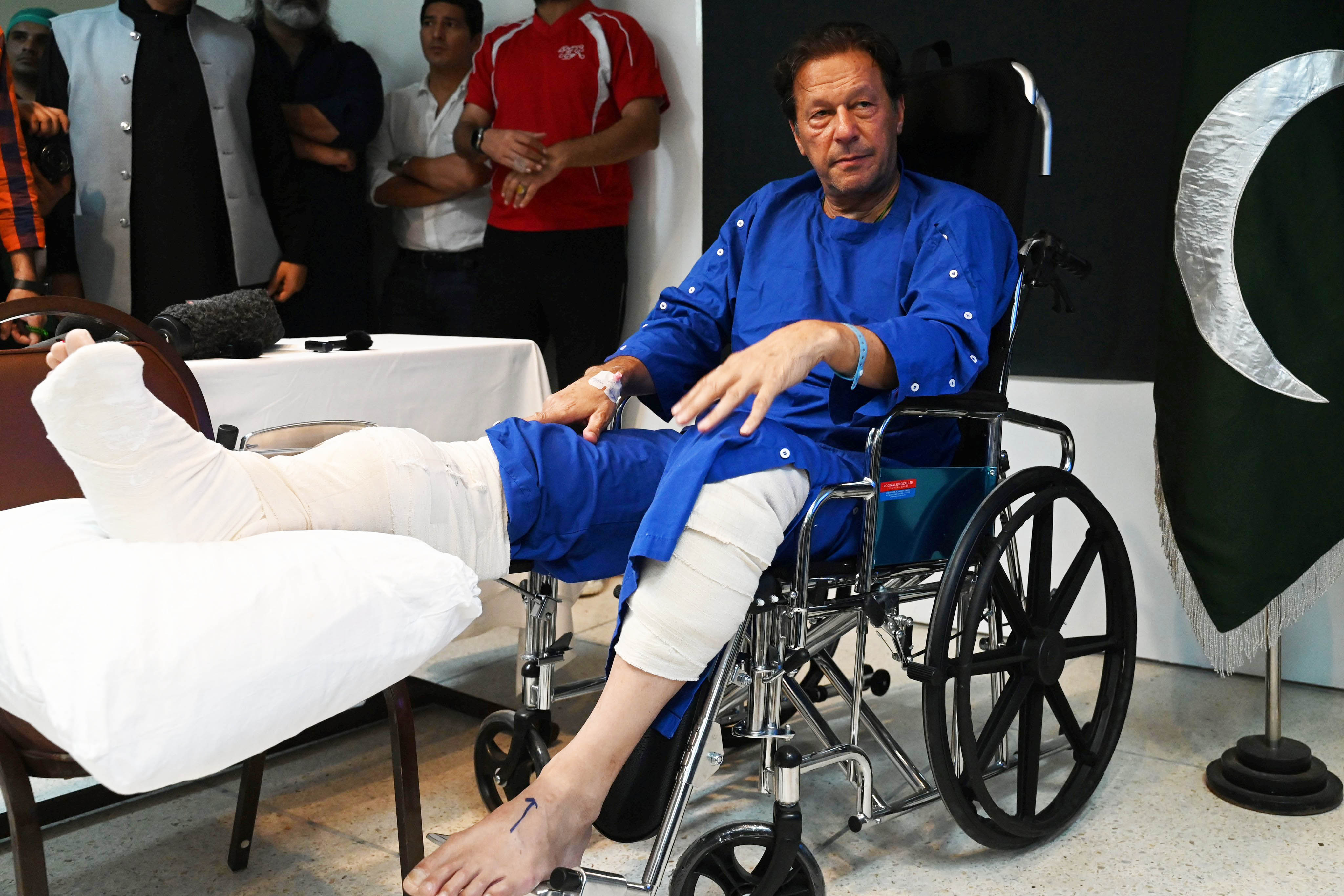
There are reports that before Khan’s decision to resume his march towards Islamabad, President Arif Alvi had secret parleys regarding the appointment of new army chief with Khan in the hospital, where he was being treated for his gun-shot injuries received on November 3. It is also stated that Alvi had met Lt. General Faize Hamid, one of the generals seeking the coveted position at a private residence in Lahore. Earlier, he reportedly had facilitated meetings between Khan and Bajwa requesting him to accept extension till the new polls scheduled in 2023 are held. Shehbaz Sharif has rejected the suggestion, but it cannot be ruled out that he might reject the proposal or delay it, thus, a new constitutional and institutional crisis might hit the country.

Bajwa nonplussed

The army chief, Bajwa appears to be nonplussed regarding the ongoing political developments. He is making farewell visits to different army centres. Before demitting the office, he has rekindled the defence ties with the Pentagon, and has got huge financial and defence assistance. It is also reported that in lieu of this bonanza for his resource-starved country, he has quietly committed massive defence cooperation with Ukraine. It could include the two countries cooperating in the development of ‘dirty bombs’ i.e. explosive unleashing radioactivity, as alleged by Russia. The Pakistani foreign office has promptly rejected this charge levelled by a senior Russian functionary, Irgor Morozov, before a media channel, but few take this denial seriously. It is quite well known in the international arena that neither Shehbaz Sharif nor his foreign minister, Bilawal Bhutto Zardari are privy to the army’s such deals. Earlier, the civilian leaders were seldom allowed to share such information. Meanwhile, India is not totally unaware of the fact that recently Mohammed Zahoor, a Pakistani businessman in Ukraine, has recently bought two fighter planes for Ukraine. He has reportedly been playing a key-role in promoting the ongoing defence ties between the two countries.

Meanwhile on the home front, Bajwa has adopted a ‘tolerant posture’ towards the young agitators of Imran Khan’s procession. They are heard hurling personal abuses, but he has instructed no covert or overt action against them. It has enabled him to present himself as a tolerant military officer, thus shedding off the blame for installing a hybrid government under Khan in 2018. Similarly, the accusation that the army had connived in ousting Khan’s Pakistan Tehreek-i-Insaf (PTI) government in April, 2022, has not been convincing enough for the common people. A sizable number of them appreciate the army’s new non-political avatar. The army or ISI could have taken strong action against such hooligans, but they have maintained restraint just requesting the civilian government led by the PTI in Punjab to take appropriate action under the law, thus further establishing GHQ’s new found love for democracy before its citizens.

Struggle for Civilian Supremacy!

Interestingly, the armed forces have always been accused of  interfering in the country’s politics, but in the ongoing political drama, the ruling coalition led by Shehbaz Sharif as well as  the country’s main opposition, PTI, are vying with each other yearning for the love from the GHQ. They seek support and confidence from the armed forces in this struggle for power.

The genesis of the ongoing political confrontation can be traced to the ‘internal power struggle’ within the GHQ. Both Bajwa and the then ISI chief Faize Hamid had ensured electoral success of Imran Khan during the 2018 National Assembly polls. In 2019, Bajwa asked for a three-year extension, which needed new legislation, and for this Bajwa had to seek the support of the two main political parties, PML-N and PPP; these two out-fits army wanted to destroy with the help of Khan for containing to their respective political clouts. However, by helping Bajwa to get extension, the army chief’s relations with them improved significantly. Finally, the army became neutral in the struggle for power and refused to interfere in the fall of the Khan government, when it lost no confidence motion in April this year. Apart from the improvement of the GHQ relations with the PML-N and the PPP, the army was blamed for the poor performance of the Khan Government it had imposed on the people. During the Pakistan Democratic Movement (PDM) rallies, the army’s political role was being scanned and criticised. Thus, finally, the army declared itself ‘politically neutral’.

This changed stand has earned the wrath from Khan and his party, PTI.  Khan was keen to retain the office of the prime minister till November 30, to enable him to elevate his confidant, Faize Hamid, as the new army chief. Since Faize Hamid and Bajwa had ensured his victory in the 2018 elections, he expected that this ‘co-operation’ should continue in future too.

Khan’s political management

Imran Khan, a cricketer turned politician, who had won the World Cup for his country in 1992, initially was considered a novice in the country’s public life. Since, April 10, this year, when he was ousted from power through a no-confidence vote in the National Assembly, he appears to have outwitted the country’s heavy-weight political leaders across the political spectrum. He now successfully occupies the centre-stage of Pakistan’s murky politics.

He amazes political commentators and analysts across the continents, when he could publicly criticise the army chief, Qamar Jawed Bajwa, his mentor, thus winning the heart of democracy-loving people of a nation, which has been a ‘garrison state’ since its inception in 1947. He was wounded, when fired at on November 3, but uses it as yet another opportunity to malign the government and those who do not belong to the gang of his supporters at the GHQ. He asks the police of Punjab, a province under the rule of his party, PTI,  to file an FIR against Prime Minister, Shehbaz Sharif, Interior Minister, Rana Sanaullah Khan , and Director General of Inter-Services Intelligence (ISI), Maj Gen Faisal Naseer, but the request was not complied with. However, the Supreme Court intervened and ordered the FIR to be lodged against the three accused. Khan again hits the headline.

In a bid to dilute the political impact of the firing on Khan, the beleaguered federal government under Shehbaz Sharif requested the issue should be tackled by a full bench of the Supreme Court. The apex court’s intervention again put Imran Khan as the only leader in the public domain.

Interestingly, the complainant and the authorities very well know that the FIR has little legal value because in this medico-legal case, the necessary protocol was not adhered to, which must have been followed under the criminal procedure. After being wounded in the firing, Khan should have gone to a nearby government hospital in the Gujranwala for completing the medico-legal procedure, and the FIR could have been automatically registered, but he chose to drive another three hours to Lahore to get treatment in the Shaukat Khanam Cancer hospital. The accusation may not be able to sustain the judicial scrutiny, but in public perception, he has successfully put the PM and his key minister in the dock.

The Islamic Card

In Pakistan’s four provinces, Khan’s party, PTI, has a significant presence. It governs Khyber Pakhtunkhwa (KPK) and Punjab, and is the main opposition party in Sindh. It also has significant representation in Balochistan. In the KPK, it works in cooperation with the ISI and Pakistani Taliban to contain the political influence of Awami National Party led by Asfandyar Wali Khan, scion of the legendary Frontier Gandhi Abdul Gaffar Khan. He has been accusing Imran Khan and his party, PTI, responsible for the killing of  hundreds of members of the ANP in Karachi and Peshawar areas. The PTI is known to be in hand and glove with the Tehreek-i-Taliban Pakistan (TTP)

During his tenure as PM, Imran Khan, like his predecessors, has never hesitated in using Islamic card for political purposes, though in his personal life, the religion has a little role. It appears that he ardently follows his predecessors such as Z.A. Bhutto, who had declared the Ahemdias as non-Muslims by amending the constitution. Nawaz Sharif during his three innings as the PM had introduced Sharia Law in the country. Therefore, it is not surprising that he calls Osama bin-Laden, world’s most feared terrorist, as the martyr in the National Assembly, and leads the festivities welcoming the American departure from Afghanistan on August 15, 2021.

Khan, who emerges as a charismatic leader, leads a political outfit, PTI, created by the country’s secret police, Inter-state Intelligence (ISI). Being a successful cricketer, he knows how to use each ball to hit the boundary! And he does it in the country’s politics. He accuses America of being behind his ouster from power in April this year, but engages a public relations company to lobby for him in Washington!

Imran Khan, a living icon for the youths of his country, was being groomed by the Pakistani army to become the civilian face of a ‘hybrid regime’, in which the army rules without imposing martial law. It appears that Khan is still committed to this agenda of marginalizing the country’s two mainline political parties, PPP and PML-N, but the GHQ under Bajwa appears to have abandoned the agenda.

It is true that both the PPP and PML-N were born in the nurseries of the ISI, but over the years, these political outfits had become assertive, quietly challenging the hegemony of armed forces in the country. It, however, negates the role of the army believed to have been entrusted by the outgoing imperial power, Britain. According to a Sweden-based political scientist, Ishtiaq Ahmed, who has authored, ‘Pakistan: the Garrison State’,  the outgoing British power had ensured that the army should have the main role in the new state carved out from Mother India to serve the geo-political interests of the erstwhile colonial powers, later represented by USA.

He asserts that being unsure of a united India’s support under Mahatma Gandhi and Jawharlal Nehru to the erstwhile colonial powers; it became imperative for the outgoing imperial power to set up a vassal state. Pakistan’s decision to collaborate with Ukraine in its ongoing war with Russia further proves that it continues to serve the West’s strategic interests. The resumption to financial assistance to Pakistan is not just a reaffirmation of the close ties between the Pakistani army and Pentagon, but it will be matter of little surprise, if Pakistan sends its Jihadists to Ukraine against Russia soon.

How Imran outmanoeuvred his rivals

The story of Imran Khan-‘the enfant terrible’ is just a new political experiment for those closely watching the ongoing political developments in Pakistan. He is keen to push Pakistan towards martial law but so far, the army chief, Bajwa and PM Shehbaz Sharif have successfully thwarted the game. The federal government in Islamabad and the GHQ at Rawalpindi finally breathed a sigh of relief on the night of Thursday, November 3, 2022, when the news of the survival of Pakistan’s former PM Imran Khan, reached them. He was hit by two bullets at the Allah Wala Chowk in Wazirabad in the Punjab.

With the arrest of the assassin on the spot, there is now no mystery in this murderous attack to be unfolded. However, it is being debated on television channels regarding the motive of this attempt on Imran’s life enhancing their TRPs (television rating points), but without adversely affecting Imran’s political windfall.

Imran Khan, thus, has proved himself an avant-garde. He continues to outsmart his political peers, establishes his genius as a politician.

He is really the “enfant terrible” for his mentors in the ISI and the GHQ. He is unconventional and clever and ready to overwhelm Pakistani politics.

Can Alvi throw a spanner

Lt. General Faize Hamid, the corps commander of Bahawalpur, and former Inter-Services intelligence (ISI) chief, is in contact with Arif Alvi, and Imran Khan.

It cannot be ruled out that Alvi may delay the appointment of the new army chief proposed by the Shehbaz Government, but the PDM has decided to hold a joint session of the National Assembly and the Senate for ratifying the proposal. Alvi is being outwitted    again, when he had refused to swear-in Shehbaz Sharif as the new PM.



Do celebrities have the right to privacy?

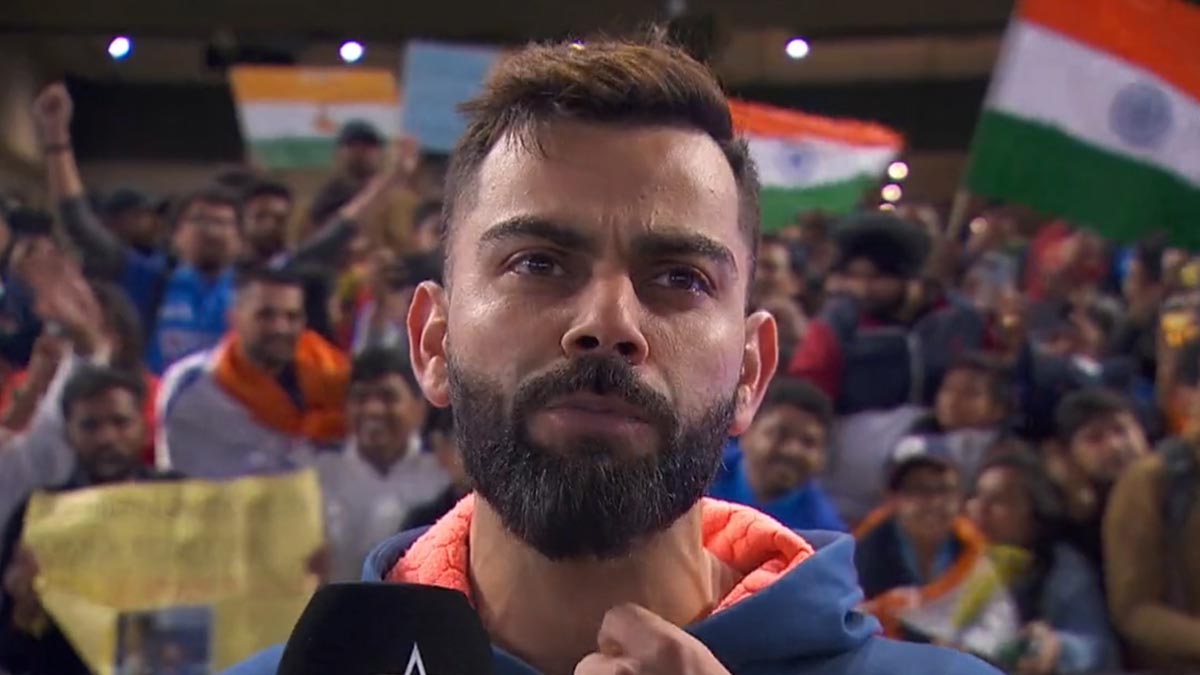
Cricketer Virat Kohli was appalled when he found that someone had made a video recording of  his hotel room in his absence, and posted it on social media, again bringing into focus the issue of right to privacy.

Inarguably one of the finest batsmen that India has produced, Virat Kohli was ranked as one of the world’s most famous athletes by ESPN and one of the 100 most influential people in the world by Time magazine. He has over 27 crore followers on the two biggest social media platforms.  Added to his cricket fans are fans of the Hindi cinema, for he is married to actor Anushka Sharma.

Yet like anyone else, Kohli deserves privacy in an exclusive hotel in sleepy Perth Australia. However, Kohli’s privacy was breached when someone, presumably a hotel employee or someone with hotel management’s concurrence entered his room in his absence, made a video recording of the room and Kohli’s belongings, and posted it on social media. Naturally, Kohli was ‘appalled’ and felt ‘paranoid about my privacy’ while his wife film star Anushka Sharma too made an issue of it.

Do celebrities or even ordinary folks have any rights to privacy?  The Chandigarh University video leak of girl hostellers too had brought into focus the issue of privacy invasion in the digital age.  The Supreme Court of India decision (2017) holds that the right to privacy is a fundamental right under Articles 14, 19 and 21 of the Constitution.

It may be recalled that a former Chief Justice and a Judge of the Punjab and Haryana High Court, Justice N.K. Sodhi had sometime ago moved the High Court against the installation of  “surveillance cameras” at the residence of the Chief Justice. Justice Sodhi claimed that the high-resolution, infra-red cameras installed on the “tall poles” violated his right to privacy.

Justice Sodhi had contended that a notice was required to be displayed for general public’s information that the area is under CCTV surveillance. But it was not put up. A CCTV camera cannot be located at a place where it collects information which invades an individual’s privacy. He had added that the Chief Justice is well-protected at his residence, while moving in his vehicle and at the High Court, and the CCTV cameras cannot prevent an untoward incident

The cases related to invasion of privacy continue despite a nine-judge bench of the Supreme Court ruling that citizens enjoy a fundamental right to privacy, and that it is intrinsic to life and liberty and thus comes under Article 21 of the Indian constitution.

In its 547 page judgment, the Supreme Court had overruled verdicts given in the M.P. Sharma case in 1958 and the Kharak Singh case in 1961, both of which said that the right to privacy is not protected under the Indian constitution. The judgment also included a two-page final order, which states that MP Sharma and Kharak Singh are overruled, and the right to privacy is fundamental.

The lead judgment of 265 pages, authored by Justice D.Y. Chandrachud and co-signed by Chief Justice Khehar and Justices Nazeer and Agrawal stated that the judgment in M P Sharma holds essentially that in the absence of a provision similar to the Fourth Amendment to the US Constitution, the right to privacy cannot be read into the provisions of Article 20 (3) of the Indian Constitution. The judgment does not specifically adjudicate on whether a right to privacy would arise from any of the other provisions of the rights guaranteed by Part III including Article 21 and Article 19. The observation that privacy is not a right guaranteed by the Indian Constitution is not reflective of the correct position. M P Sharma is overruled to the extent to which it indicates the contrary.

Life and personal liberty are inalienable rights. These are rights which are inseparable from a dignified human existence. The dignity of the individual, equality between human beings and the quest for liberty are the foundational pillars of the Indian Constitution. Life and personal liberty are not creations of the Constitution. These rights are recognised by the Constitution as inheriting in each individual as an intrinsic and inseparable part of the human element which dwells within.

Privacy is a constitutionally protected right which emerges primarily from the guarantee of life and personal liberty in Article 21 of the Constitution. Elements of privacy also arise in varying contexts from the other facets of freedom and dignity recognised and guaranteed by the fundamental rights contained in Part III. Privacy is the constitutional core of human dignity. Privacy has both a normative and descriptive function. At a normative level privacy sub-serves those eternal values upon which the guarantees of life, liberty and freedom are founded. At a descriptive level, privacy postulates a bundle of entitlements and interests which lie at the foundation of ordered liberty.

Privacy includes at its core the preservation of personal intimacies, the sanctity of family life, marriage, procreation, the home and sexual orientation. Privacy also connotes a right to be left alone. Privacy safeguards individual autonomy and recognises the ability of the individual to control vital aspects of his or her life. Personal choices governing a way of life are intrinsic to privacy. Privacy protects heterogeneity and recognises the plurality and diversity of our culture.

It is important to underscore that privacy is not lost or surrendered merely because the individual is in a public place. Privacy attaches to the person since it is an essential facet of the dignity of the human being.  The Supreme Court had observed that the Constitution must evolve with the felt necessities of time to meet the challenges thrown up in a democratic order governed by the rule of law. The meaning of the Constitution cannot be frozen on the perspectives present when it was adopted.

The Supreme Court had observed, “Technological change has given rise to concerns which were not present seven decades ago and the rapid growth of technology may render obsolescent many notions of the present. Hence the interpretation of the Constitution must be resilient and flexible to allow future generations to adapt its content bearing in mind its basic or essential features”.

A law which encroaches upon privacy will have to withstand the touchstone of permissible restrictions on fundamental rights. In the context of Article 21, an invasion of privacy must be justified on the basis of a law which stipulates a procedure which is fair, just and reasonable. The law must also be valid with reference to the encroachment on life and personal liberty under Article 21. An invasion of life or personal liberty must meet the three-fold requirement of (i) legality, which postulates the existence of law; (ii) need, defined in terms of a legitimate state aim; and (iii) proportionality which ensures a rational nexus between the objects and the means adopted to achieve them.

The dangers to privacy in an age of information can originate not only from the state but from non-state actors as well and the Supreme Court had commended to the Union Government the need to examine, and put into place a robust regime by ensuring a sensitive balance between individual interests and legitimate concerns of the state.


India may broker peace between Russia, Ukraine at G-20 meet

PM Modi is set to present an exhaustive peace initiative for immediate end to hostilities between Russia and Ukraine at the G-20 summit. Besides China and US, most of the European powers are expected to throw their weight behind India’s initiative. A report by Gopal Misra

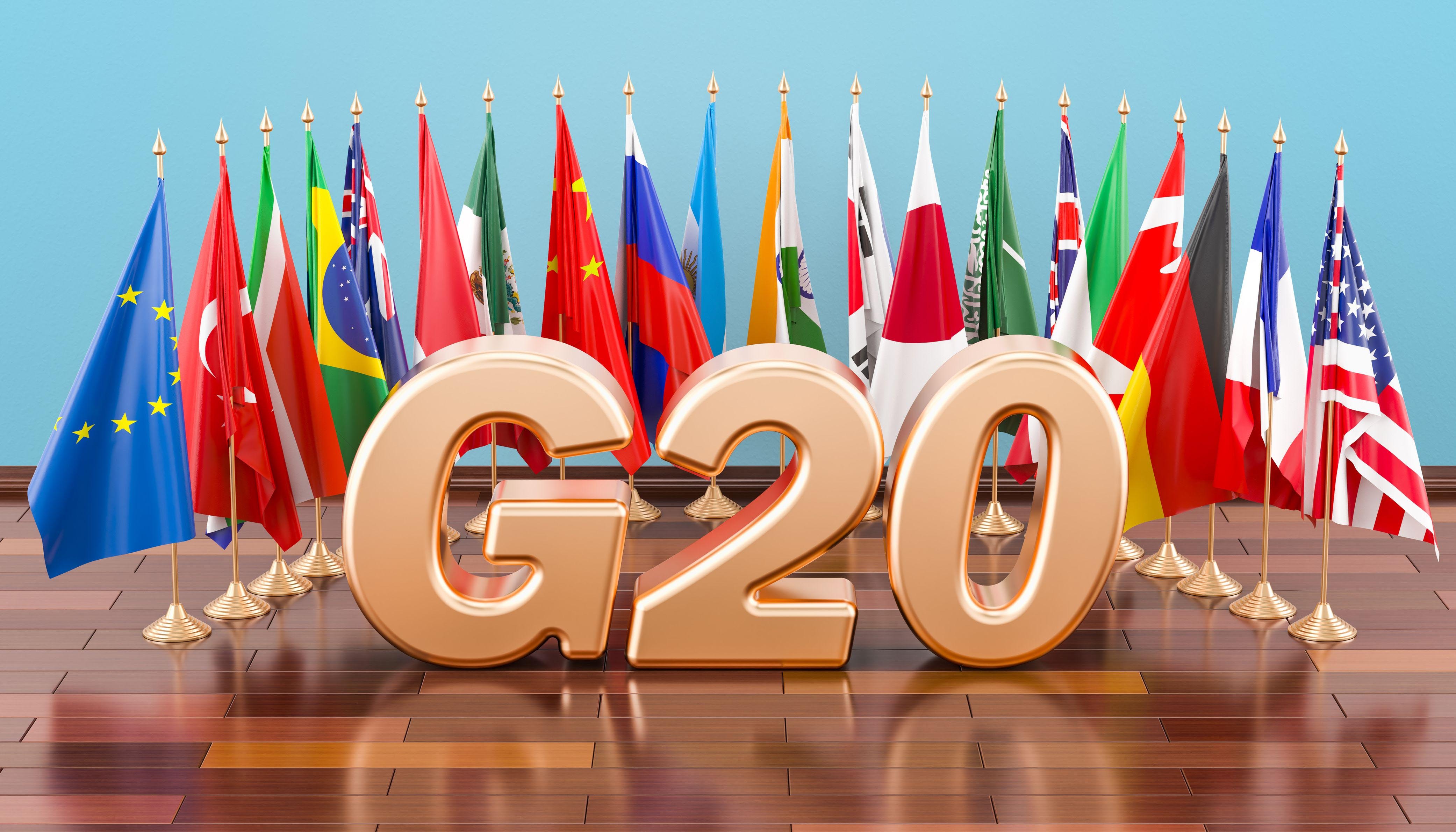
Indian PM Narendra Modi is expected to present an exhaustive peace initiative for immediate ceasefire in Russia-Ukraine war at the G-20 meeting. American President Joe Biden, empowered with a reasonable success in the US mid-term polls, will be meeting his Chinese counterpart, Xi Jinping on the sidelines of the international meet, especially, when the reports of an embarrassing retreat of Russian forces from the southern city Ukrainian, Kherson have already poured in.

It could not have been a more opportune time for India to embark upon a peace offensive at G-20 amidst the reports that the elections held reaffirm that most of the Americans are averse in prolonging the 10-month old Russia-Ukraine conflict, especially when the anti-war protests have already overwhelmed Europe. If Europe is under siege due to an unprecedented energy crisis, the Americans are facing the rising heat of spiralling inflation, pushing up prices of essential goods by 40 per cent.

It is not known what Biden is going to tell Jinping, but it is expected that he might persuade China to work out a reasonable framework for ending the conflict. Jinping being a strong negotiator might ask the US to dilute NATO’s agenda against China including the much talked about militarisation of India-Pacific under the umbrella of QUAD comprising America, India, Australia and Japan.

Biden, having an agenda for his party, Democrat’s victory in the 2024 presidential polls, knows quite well that it is going to be difficult for him to continue his liberal ‘blank cheque’ war funding to Ukraine.

Just a week before the G-20 summit scheduled in Indonesia on November 15-16, S Jaishankar, foreign minister, had held a series of meetings with his Russian counterpart Sergey Lavrov, and had also exchanged ideas with the US Secretary of State, Antony Blinken. Jinping reinvigorated with a new five-year term by amending the country’s basic law, perhaps, like to promote peace through ‘back-door’ diplomacy.

Initial indications are that Russian President, Vladimir Putin, may be participating only through a video call, therefore, Modi and Jinping have to contribute to the peace process, if Biden endorses. Earlier, Modi had embarked upon  his peace initiative at the SCO summit held in Uzbekistan in September 2022, when he told Putin that war has no place in the contemporary world.

The peace proposal may get support of the most of the European powers at G-20, but Modi’s meeting with the new British PM, Rishi Sunak, could be substantial, especially when the U.K. is providing lethal weapons to Ukraine. In the US, Biden’s political opponents accuse him of trying to compensate for his eroding popularity by seeking open sale of marijuana and releasing a large number of criminals. It was considered as a last minute effort of a beleaguered president seeking a political constituency among the country’s drug addicts.

Trump, who never accepted Biden victory to the presidency accusing of manipulating poll verdict, has been cautioning   Americans that their country would soon be ravaged on Democrats’ supporting illegal immigration, criminals and drugs.

The US Congress, composed of the House of Representatives and the Senate, is controlled by Biden’s Democrats, but the Republicans have established a majority in the House of Representatives. In the Senate too, the Democrats and Republicans have equal strength of 49 each. The electorate of Georgia would be again voting for the Senate seat on December six, which is expected to decide who finally controls the House. Earlier, in the polling, none among the contestants could get more than 50 per cent as mandated in the state law to qualify for the Senate in Georgia.

The mood in the USA is to discontinue the ongoing war against Russia through Ukraine, considered a proxy of the West. Meanwhile, since India will be hosting the G-20 summit in 2023, therefore, it is natural for Modi to be keen in ending conflict. He is ready to go an extra mile for ending the unnecessary avoidable war. India expects that the war should not overshadow the summit, when the world leaders meet in New Delhi next year.


How to coo ‘thank you’ to the nuns of alma mater?

The best way is to stand  up and  speak out when Christian and  missionary educational  institutions  are  targeted  and attacked  by  the  political  mafia and goon  brigades.

As the  Loreto Convent, Lucknow, celebrates its  150th  anniversary, it is  time to  congratulate the Loreto nuns for their  selfless service to  hundreds and  thousands of  us. Today if we can communicate in English, it is because of the efforts of the nuns. Their teaching went beyond the routine; we were made aware of the basic core values that touch our very existence

It is time to sit back and reflect:  how can we coo ‘thank you’ to the nuns. Perhaps, the  best and apt possible way  would be  to  stand  up and  speak out when Christian and  missionary educational  institutions  are  targeted  and attacked  by  the  political  mafia and goon  brigades.

Today there’s apprehension and unease amongst the minority communities in the country, as there seems to be no control over the violence unleashed by the mafia. It wouldn’t be amiss to say that in particular locations and situations they seem to be hand in glove with a particular political lot. Needless to add that in such situations the minority communities are targeted on any given alibi. The most used alibi nowadays is religious conversions! This provokes me to react: those of us who studied in convent schools, were not converted to Christianity!

It is time to speak out:  Where is our collective togetherness — will it remain only in the textbooks or along the fairy tale strain? What is the point for any of the Indian political rulers of the day to fit in their speeches ‘sabka saath, sabka vikaas’, when it holds out little substance, and is far away from the ground reality?

******

In love with bygone era

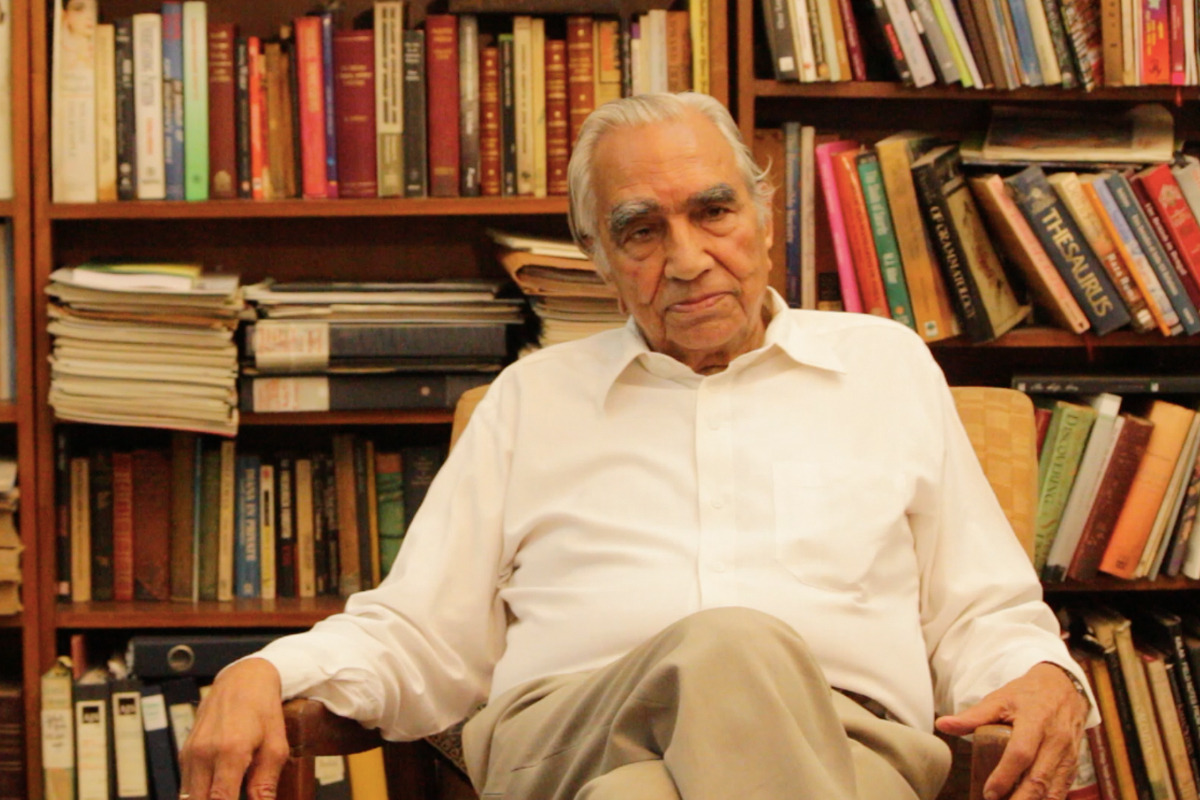
Author- diplomat Pran Nevile was passionately obsessed with the bygone era. This retired diplomat was fascinated by the past and with the characters who had then held sway. This is amply evident from the volumes he has authored. As a retired civil servant he could have just about sat back and relaxed with the frills hanging around; but he chose to write on. No, no computers for him, but with the very basics, with the simple pencil or pen he wrote several books.

The titles of these are telling enough — Love Stories from the Raj; Nautch Girls of India; Beyond the Veil; Rare Glimpses of the Raj; Stories from the Raj: Sahibs Memsahibs and Others; K.L. Saigal: Immortal Singer; Lahore — A Sentimental Journey.

Nevile was obsessed with the bygone era and the characters who flourished then. The  only  explanation for this  could  be  that  one heap of emotions for those  bygones…  as one’s roots play a definite role in building the personality and perception, so, perhaps, the biggest blow that can come one’s way is to be forced to leave one’s city or town or village. As Nevile wrote in his preface to his  book on Lahore: “This book on the Lahore of my days was conceived in the lonely dining room of Hotel Astoria in Geneva in November 1963. I was having breakfast when I heard someone calling me in Punjabi, `Motian aleo, Hindustan de o ke Pakistan de?’ (Prince of Pearls, are you from India or Pakistan?) I looked back, responding promptly, `Badshao aao baitho, main Lahore da han’ (Your Royal Highness, please come and sit down, I hail from Lahore). In no time we became very friendly, a blend as it were, of ghee and khichdhi (clarified butter and curried rice) and talked about our glorious city. The conversation released a flood of memories deeply imprinted on my mind for decades. I have tried in these pages to commit them on paper. ”


And what  could be  termed   refreshing  and positive is that in the epilogue, written after he re-visited Lahore after all those decades, in 1997 and again in 1999, he didn’t come up with any sort of bitterness nor Pak-bashing. The epilogue seems a furthering or say stretching of his emotional bonding with that city and its people. As though none of the political dents created by the politicians there and here, had managed to disrupt his bonding with the people of his birthplace. Also evident it was that through music and  those musical geniuses and singing stars of the  past, he wanted to connect the people of this sub-continent.

******

Dehra Dun loses its prominent citizen

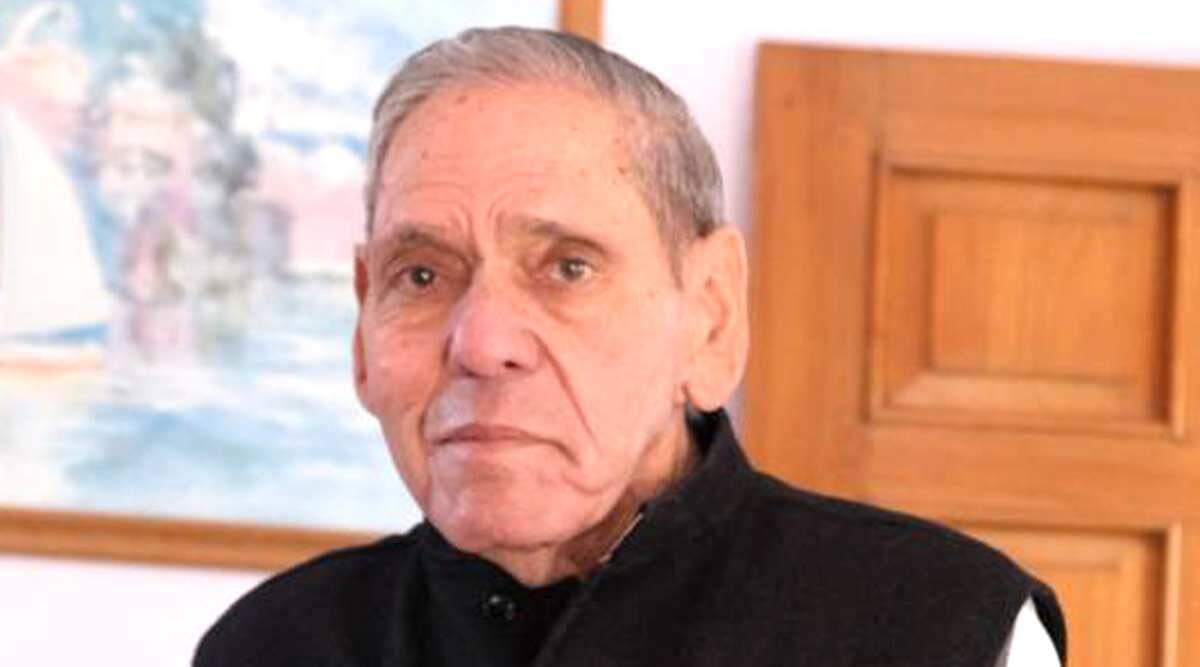
I had reviewed two books authored by Raj Kanwar and what was evident was his love and  bonding with the city of  Dehra Dun.  He had painstakingly put together all possible aspects to the residents of the city of Dehra Dun. Together with detailed backgrounders to their work and family and professional spheres. Writ large Raj Kanwar’s passionate commitment to his city Dehra Dun and to its residents. In fact, diplomat Navtej Sarna best sums it up in his foreword to one of the books — “Raj Kanwar has seen it all, lived it all. He has made his life and writing synonymous with the best of Dehra Dun. He has distilled into Dateline Dehra Dun the best of what he has experienced, the exceptional people he has met along his journey and the evolution he has seen. This is a treasure trove of his memories being pulled out straight from his heart. All those who share his love for the Valley will enjoy the Book and others will be inspired to learn about the little heaven that it was.”

In fact, his volumes must be read by all those fascinated by the Dehra Dun city and what it holds out. They could also be a researcher’s delight or a scholar’s guide…the list could be long because they are laced with facts and factors which otherwise would have gone about un- noticed or un-traced.

Though in his early 90s, he had plans to write yet  another volume. He relayed his forthcoming book would be titled — Writer of Obituaries. He elaborated why he decided to write on death and obituaries. “The year 2012 was an inauspicious one for many of the Dehra Dun’s prominent citizens. Over 15 of my friends, some older and few younger, had passed away, one after another, leaving me to write their obituaries…Too many of my friends had died during that year and I really dreaded writing their obituaries” He’d  also focused  on a stark reality connected to death. “Today death has become a billion dollar business worldwide. As I delved more and investigated further, I learned that the business of DEATH has assumed multiple dimensions. It starts with a notice of death, publication of obituary, making of arrangements for a funeral, cremation or burial and followed by many post cremation rituals that vary from religion to religion, caste to caste and of course from family to family.”


Hijab row triggers a spike in the sale of Islamic clothing!

Traders at Pukka Bagh in Moradabad, which is UP’s biggest Islamic clothing market, claim that instead of adversely affecting the business, anti-Hijab protests sparked spurt in sales. It seems the row made the community to take to wearing of hijab with more zeal, writes Kulsum Mustafa

In the narrow, long, meandering lanes in Moradabad’s congested Pukka Bagh which houses Uttar Pradesh’s biggest Islamic clothing outlets, out of the 200 odds shops,  largely selling women’s clothing, jewellery, and cosmetics around 50 shops exclusively sell abayas, hijab, chaddar, stoles, scarf caps, and traditional burqas and umera clothing. These are available here in retail and also wholesale. Peetalnagri or City of Brass is also the state’s leading center for Islamic clothing.

“Ours is the biggest market in Uttar Pradesh, compared only to Hyderabad and Mumbai. While we supply to the nearby districts like Bijnore, Bareilly, Najibabad, Rampur, Lucknow, etc,  our products are also distributed to other parts of India,” said Shehzad Raja, owner of the biggest store of these clothing, which dates back to over 25 years..

Explaining the difference between hijab and burqa, he said that Abaya is the Arabic word for a  loose outer garment. It is worn both by men and women. Burqa, also an  Arabic term for a loose-fitting garment that covers the head, face, body, and sometimes the eyes. It is exclusively for women.

Shehzad claimed that instead of affecting their business, the sale of these Islamic clothing increased after the anti-Hijab protests in Karnataka and also in parts of UP.  Explaining the fashion of designer hijabs and Abaiyas instead of the traditional black burqas, Shehzad gave the credit to the trend of holding large wedding receptions, many times in mixed gatherings in banquet halls instead of at home.

He explained that women now have to travel far for wedding functions which are organized in hotels and resorts, because of this the traditional burqa, which was an outer garment and was taken off at the threshold of the wedding venue has changed into a formal abaya, which serves the dual purpose of both a covering as well as the formal dress. He said that Abaya or hijab is a style statement now.

Shehzad’s 20-year-old son Aman Ali, who has been in this business for nine years agrees to his father’s contention and states that it is now all the more important that they stock the latest designs. The range of Abayas in his shop is huge. They start from Rs  600 and go up to Rs 1500. “Youngsters are forever looking for new designs and thanks to the internet, they are aware of the hot-selling designs in Saudi and Dubai. So we customize what they desire,” added Aman.

Agreeing that the customers have become very choosy now regarding the abaya and hijab, Mohd Imran of MA Cloth House said that the sellers have to stock the latest replicas which are trending in Muslim countries. He said most of the material for these garments is imported from China, local tailors are used for turning them into copies. The price in Moradabad market is very low compared to the original garment prices which may go up as high as 35,000.

According to Abdul Qadir, the Abaya trend has picked up in the last few years and the anti-hijab stir, which, according to him, was a political gimmick, only made the community take up the wearing of hijab with more zeal.

“Girls in the age group of 6 to 10 are also donning hijab nowadays and that has given a thrust to the Hijab industry all over India,” said Mohd Imran who manages his grandfather’s shop of over a quarter century.

Retail Prices

Abaiya —————Rs 700 TO Rs 7000

Hijab ………………Rs 150 TO Rs 600

Chaddar…………….Rs 200 TO Rs 600

Stole……………….Rs 150 TO Rs 500


Mourning the journalists’ demise in Covid-19 disaster

According to a Geneva-based global media safety and rights body, nearly 2000 media workers died of Covid-19 in 95 countries until March 2022. Press Emblem Campaign (PEC) however believes that the actual number of victims is certainly higher, reports Nava Thakuria

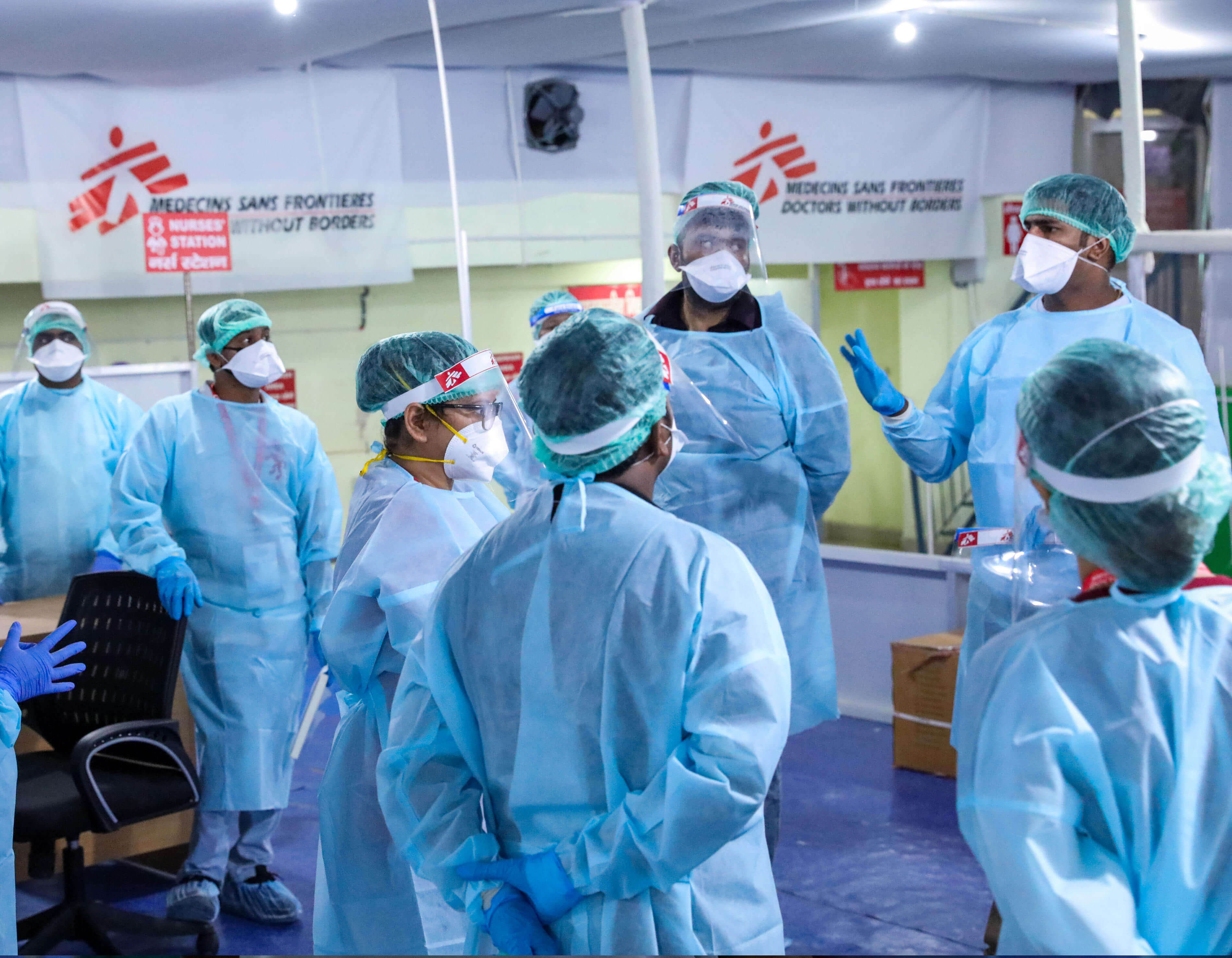
Novel coronavirus-infected diseases have not left us till now (probably it will live with the human race for some more years), but the increased immunity, enhanced by the massive vaccination drive across the world, has slowed down the health disaster to a great extent. Thousands may get infected with the new variants of coronavirus, but the number of casualties has come down drastically. It’s perhaps the time to pay tributes to the practicing doctors, nurses, health and sanitation workers along with the police and press persons who worked as frontline corona warriors and many even sacrificed their precious lives.

No concrete statistics are available on how many frontline corona workers died in the global health disaster that began in the second half of 2019. According to a Geneva-based global media safety and rights body, nearly 2000 media workers (and former journalists) died of Covid-19 in 95 countries until March 2022. Press Emblem Campaign (PEC) however believes that the actual number of victims of the pandemic is certainly higher, as causes of death (of journalists) were often not specified and in many cases, it was not reported properly.

In some countries, there is no reliable information about the corona media casualties. The media workers (particularly ground reporters, cameramen and photographers), because of their professional demand, had to go to the field and thus got exposed to the newfound virus. They played an important role in the immediate fight against the virus, commented PEC president Blaise Lempen. Speaking to this writer from Geneva, he added that PEC started the corona-ticker to condole and pay tribute to the journalists killed by the Covid-19 around the world.

Among the affected countries, Brazil recorded the highest number of corona media casualties (314), followed by India (284 victims), Peru (199), Mexico (129), Colombia (80), USA (70), Bangladesh (69), Italy (61), Venezuela (60), Ecuador (52), Argentina (50), Indonesia (43), Russia (42), Iran (35), United Kingdom (33), Dominican Republic (31), Turkey (30), Pakistan (27), Egypt (23), Nepal (23), Bolivia (21), Honduras (20), South Africa, Spain, Ukraine (19 each), Panama (17), Poland (14), France, Guatemala, Nigeria (11 each), Afghanistan, Nicaragua, Zimbabwe (10 each), Algeria, Cuba, Paraguay (9 each), Philippines (8), Uruguay (7), etc.

The list also include Kazakhstan, Kenya, Romania (5 each), Morocco, Cameroon, Iraq (4 each), Albania, Azerbaijan, Costa Rica, Portugal, Salvador, Sweden (3 each), Austria, Belarus, Belgium, Benin, Bulgaria, Canada, Chile, Germany, Ghana, Greece, Guyana, Sri Lanka, Switzerland, Uganda (2 each), Angola, Barbados, Bosnia, Czech Republic, Democratic Republic of Congo, Israel, Jamaica, Japan, Jordan, Kirghizstan, Kosovo, Latvia, Lebanon, Lithuania, Malaysia, Malawi, Mali, Moldova, Mozambique, Myanmar, New Zealand, Norway, Palestine, Saudi Arabia, South Korea, Thailand, Togo, Tajikistan, Tunisia, UAE and Yemen (1 each).

India’s north-eastern region with a population 60 million, where a vibrant media with hundreds of newspapers, satellite and cable news channels still survive, lost over 20 journalists to the pandemic. Besides three north-eastern scribes, who died while working outside the region, all others succumbed to the virus infection related ailments in their own localities while performing their duty as corona warriors. Assam witnessed the highest number of corona-casualties, whereas Mizoram, Nagaland, Arunachal Pradesh and Sikkim have not reported any incident of journo-death due to Covid-19.

The shocking news broke for the Guwahati-based media fraternity on 3 July 2020 with the demise of Rantu Das (54 years old), the printer & publisher of Asomiya Khabar, who was declared dead because of corona-complications. Rural reporter Dhaneswar Rabha (35) lost his battle to corona virus on 6 September. Diagnosed with chronic kidney diseases and put on regular dialysis, Rabha died in Guwahati medical college hospital while undergoing corona treatment. Journalist’s Forum Assam has documented the Udalguri-based reporter as the first journo-victim to Covid-19 pandemic in northeast India (Kolkata’s photojournalist Ronny Roy was the first scribe in India to lose his battle against the novel coronavirus infection).

Barak valley-based senior journalist Ashim Dutta (66) died next day at Silchar medical college hospital. A pass-out from Gauhati University, Dutta was also suffering from kidney ailments and needed dialysis regularly. Talented young journalist Aiyushman Dutta (35) succumbed to Covid-19 complications in April 2021. A prolific feature writer, Aiyushman was also a founder of Guwahati International Music Festival. The list of victims also includes radio news presenter Golap Saikia along with Moran-based journalist Jadu Chutia (49), Chaygaon-based scribe  Shivacharan Kalita (60), Bokajan-based reporter Rubul Dihingiya (44), Nagaon-based  reporter Humeswar Hira (63), Barpeta-based journalist and academician Bijanlal Choudhury (80), etc.

New Delhi-based Assamese journalist couple Nilakshi Bhattacharyya (55) and Kalyan Barooah (60) died of Covid-19 aggravated ailments after hospitalization in the capital city. Similarly, illustrator and cartoonist Anirban Bora (43) also passed away fighting the corona battle. Assam lost two media luminaries namely Dr Lakshmi Nandan Bora and Homen Borgohain to the corona aggravated ailments. Saraswati and Sahitya Academy awardee and former president of Asom Sahitya Sabha, Padma Shri awardee author-journalist Bora (89) died while undergoing treatment. Earlier, veteran journalist, editor, litterateur Homen Borgohain (88), also an academy awardee and former president of Sahitya Sabha, passed away following post-corona complications.

Both Manipur and Tripura lost four journalists to the corona disaster. Imphal-based senior author-journalist Sagolsem Hemant (65), who worked for various local newspapers died while undergoing treatment. Ukhrul-based television journalist Thotshang Shaiza (52), Imphal-based scribe Lairenjam Bijen Singh (45) and Saikhom Shantikumar (51) also joined in the victims’ row. Tripura witnessed the demise of Kokborok news channel reporter Jitendra Debbarma (46), Agartala-based freelancer Tanmoy Chakraborty (40), journalist- turned-politician Gautam Das (70) and Kumarghat-based senior journalist Manik Lal Das (58) while battling against corona infection. The only corona media victim from Meghalaya, Syndor Singh Syiem (67) died of post Covid-19 complications. The Shillong-based veteran journalist was associated with a number of Khasi newspapers.

Need not to mention that with all these casualties, the pandemic also crushed the Indian mainstream media to a large extent. In fact, the newspaper industry is struggling to survive with the rapid invasion of internet empowered digital (social) media outlets. Relentless corruption in many offices of proprietors and editors, less promotional activities for budding reporters, a visibly low space dedicated to the readers for interaction etc, have ruined the profession. Now a large number of print media owners start shifting to digital space (from publishing physical newspapers) and close down their editions in different localities as well as cut salaries and even lay-off employees citing the shrinkage of advertisement revenues since the pandemic hit the country.

Besides the Union government in New Delhi, which has been disposing a compensation packages of Rs 5 lakh to each of media corona victim families across the country by a phased manner, some State governments (like Odisha, Uttar Pradesh, Tamil Nadu, Punjab, Andhra Pradesh, Chhattisgarh, Bihar, Telangana, etc) also extended compensation packages to their journo victim families separately. But the bitter truth remains that no journalist based in the region has been compensated by the concerned state governments here.


The author is a northeast India based journalist


Haryana outclass Punjab to clinch 2nd Balramji Das Tandon Inter State Under 16 Cricket Tournament

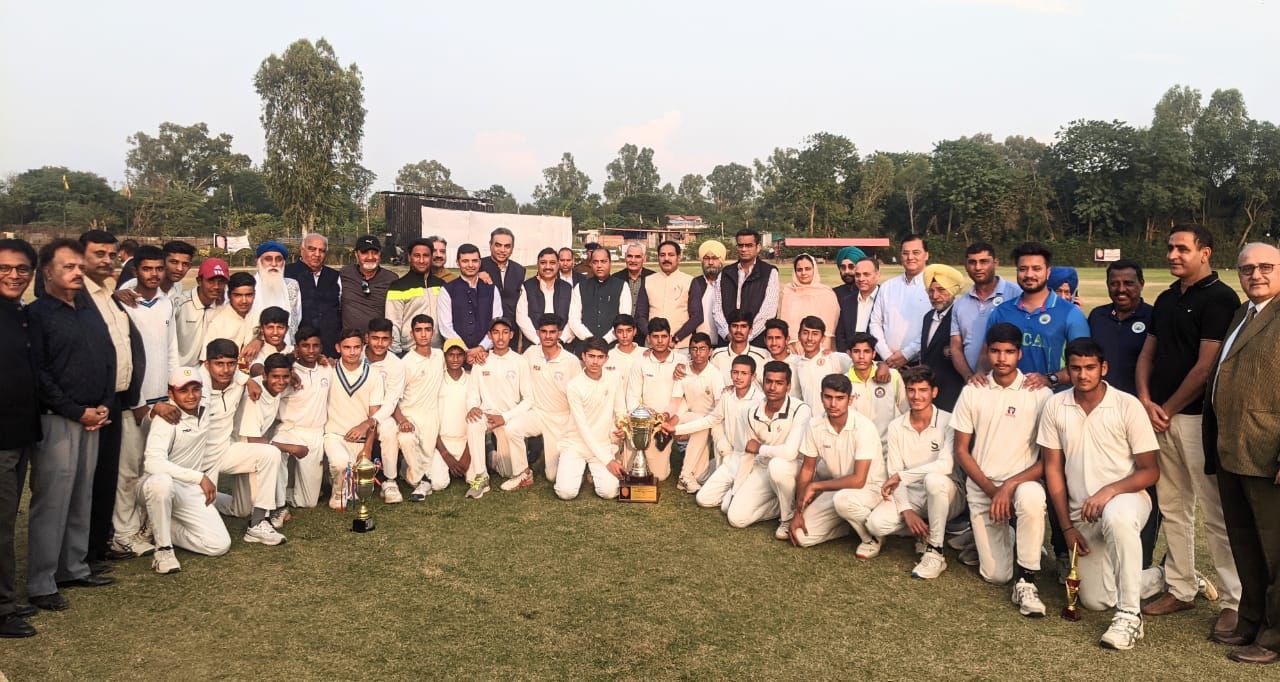
Haryana defeated Punjab by an innings and 16 runs to clinch the  second edition of BCCI recognized Second Balramji Das Tandon Inter State Under 16 Multi Days Cricket Tournament being played at Mahajan Cricket Ground, IT Park in Chandigarh.

Punjab was bundled out for 156 on the final day of the match wherein  Aditya Sharma (4/42) and Parish Dhillon (4/42) had the major share of the four wickets each. Rahul Sharma (55) was the top scorer for his side. In reply to Haryana’s 266 runs in the first innings, Punjab was reduced to mere 94 runs, followed by 156 runs in the second innings.

The winning and runner-up teams were felicitated by Himachal Pradesh Chief Minister Jai Ram Thakur, Advisor to UT Administration Dharampal and BCCI selection committee chairman Chetan Sharma in the presence of UT Cricket Association President Sanjay Tandon and Secretary Devendra Sharma.

In his address, UTCA President Sanjay Tandon said that his late father Balramji Das Tandon was always a frontrunner for promoting the talent of children and youth of the region. He affirmed that numerous talents are the outcome of this annual tournament being organised in his memory.

He said that UTCA has expanded the scope of this tournament from inter-zonal to inter-state tournament. More state teams will be included in this tournament in the upcoming edition to make it a pan India tournament.

In his address, HP Chief Minister Jai Ram Thakur  appreciated the organizers and emphasized that their efforts will provide a new dimension to cricket in the country. Speaking on the occasion, the Chairman of selectors committee,  BCCI, Chetan Sharma said that junior cricket is the foundation of the game, which is much needed in the present times. The tournament not only fills that gap but also scouts for talent for the immediate seniors format.

Punjab’s Rahul Kumar was adjudged the best batsman for scoring 315 runs in three matches in the tournament with a century and a half-century, while Haryana’s Jai Kaushik was awarded the best bowler for clinching a total of thirteen wickets in two matches. UTCA’s Shaswatam was adjudged the best all-rounder, scoring 235 runs in two matches with four catches and three stumps.

Six teams including Chandigarh, Punjab, Haryana, Himachal Pradesh, J&K and Delhi were participating in this tournament which was held from 1st to 15th November. The tournament was recognized by the BCCI.

Present on this occasion also includes PCA Secretary Dilsher Khanna, HCA President Kultar Singh Malik, HPCA Secretary Avneesh Parmar, DDCA Secretary Siddharth Verma and former cricketers.

Decks cleared for Rampur by-poll as court rejects Azam Khan’s plea

District and Session Judge of Rampur dismissed the application of Samajwadi Party leader Azam Khan wherein he had prayed to stay the operation of orders of conviction passed by the trial court during the pendency of appeal against it before the session court, writes Mudit Mathur

On the directive of Supreme Court, the District and Session Judge of Rampur heard and dismissed the application of Samajwadi Party leader Azam Khan wherein he prayed to stay the operation of orders of conviction passed by the trial court during the pendency of appeal against it before the session court. The session court order paved the way for holding by-election in Rampur assembly constituency that was declared vacant in view of the disqualification of Azam Khan, who represented this constituency nine times and has been holding the fort since 1980.

In case, if his conviction continues, then he will be debarred from contesting elections for further six year after the completion of sentence, which would be virtually an end ofpolitical journey of 74 years old Azam Khan. TheMP-MLA / ACJM(First) Court of Rampur convicted him on October 27 for making derogatory indecent comments against Prime Minister Narendra Modi, Chief Minister, district magistrate, Anjaneya K. Singh and his team of officers in Milak during electioneering of the Lok Sabha Elections in 2019, and sentenced him to three years of imprisonment with penalty of Rs. 6,000.

The prosecution machinery of the Yogi Adityanath government was proactively involved and geared up from Delhi to Lucknow to oppose stay application before Rampur Session Judge. Additional Advocate General of UP government in Supreme Court, Garima Prasad, specially came to Rampur to appear for the state. She was assisted by Anil Pratap Singh, Joint Director prosecution S.P. Pandey and prosecuting officer Amarnath Tiwari. Former Additional Advocate General Imranullha Khan and Supreme Court advocate Zubair Ahmed Khan argued for Azam Khan.

Azam Khan was convicted under Sections 153A (promoting enmity between two groups), 505 (statement conducing to public mischief) of IPC and section 125 of the Representation of People Act 1951. An FIR was lodged against him on April 9, 2019, after the returning officer took cognizance of the matter after a report was placed before him in this regard. After being convicted, Azam Khan was disqualified from the Uttar Pradesh Assembly.

Earlier a day before, the Supreme Court intervened into the matter of disqualification of Samajwadi Party leader Mohammad Azam Khan which revealed undue haste, who just in a flicker of moment lost his membership of state assembly soon after a trial court convicted him for the offence of inflammatory, socially divisive hate speech, inciting religious feeling s– damaging peace and tranquillity. The next very day on 28 October, state assembly declared his Rampur seat vacant and with the same lightning speed, the election commission of India acted to hold by-election there.

The apex court was critical of the way it dealt differently with BJP legislature Vikram Saini from Khatauli constituency, who too stood disqualified on 11October. But he was declared disqualified only after Azam Khan counsel Javedur Rahman brought it on the records – filing a writ petition finding to be remediless once process of election begins with the issuance of notification for holding by-election.

Senior Advocate P Chidambaram, appearing for Khan, submitted before the bench of Chief Justice of India D.Y. Chandrachud, Justice Hima Kohli and Justice JB Pardiwala that the declaration of the Rampur seat as vacant was a politically motivated decision. On November 5, 2022, the Election Commission of India issued a press release declaring the schedule for by-elections in five assembly constituencies across various states including the 37-Rampur Assembly Constituency. The Gazette notification is due to be issued on 10 November 2022.

Chidambaram also informed the bench that Khan’s appeal against the conviction and his application for a stay of conviction is scheduled for hearing on November 15, however, in the meantime, the ECI would notify the by-elections and this would cause irreparable loss to Khan.

In order to enable the petitioner to have an opportunity to move the Sessions Court to apply for stay of the conviction, the apex court directed that the Additional Sessions Judge, Rampur before whom the appeal has been filed shall pre-pone the hearing of the application for stay of conviction and take it up peremptorily on 10 November 2022 and the application for stay of conviction shall be disposed of by the Additional Sessions Judge on the same day on 10 November 2022.

The top court further directed that the Gazette notification for declaring the election schedule for the 37-Rampur Assembly Constituency may be issued on or after 11 November2022 depending upon the outcome of the application for stay of conviction. Now the chief election officer will issue notification for Rampur by-election and nominations shall be accepted from 12 November till 18th November, scrutiny on 19 November, withdrawal till 21 November and poll shall be held on December 5th and counting on 8th December.

Though Samajwadi Party is in a hurry to field a Muslim face from Rampur but it would be difficult to ignore Azam Khan’s political influence on the masses. The Rampur by-election will not be a cakewalk for ruling BJP or Congress though it was traditionally held by Congress before the emergence of Azam Khan on the political scene of the district.


Loyalty with Bhajan Lal family runs deep in Adampur

With BJP’s Bhavya Bishnoi, the grandson of former three-time chief minister late Bhajan Lal, securing a win over former CM Hooda’s pick Jai Prakash in Adampur by-poll, it is clear that Lal clan continues to have a sway over voters in its stronghold. A report by Rajesh Moudgil

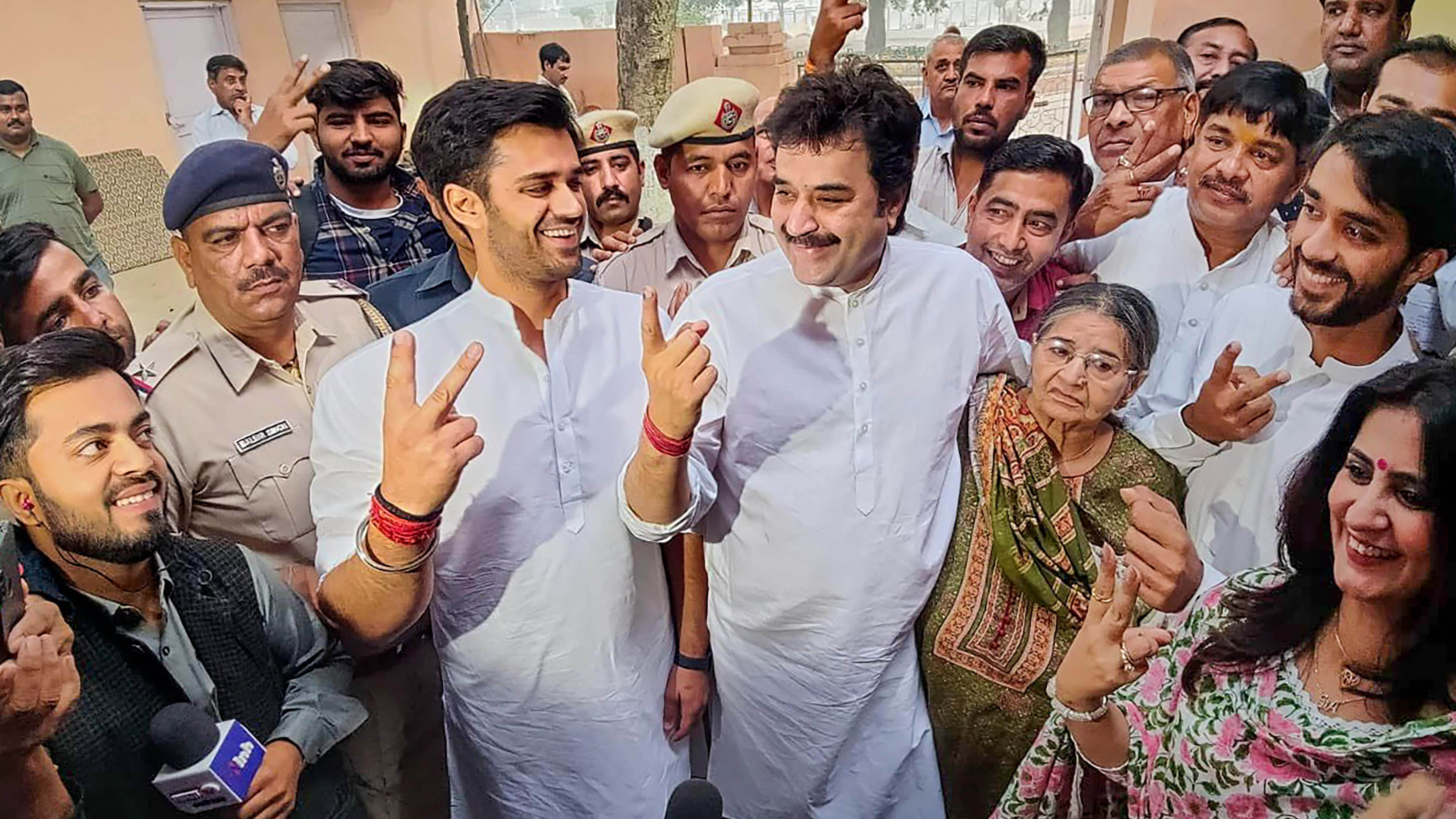
With his win from Adampur assembly seat, Bhavya Bishnoi, 29, the son of former Congress leader Kuldeep Bishnoi, has not only retained the family stronghold but also registered his maiden victory of his political career, beating Congress’ Jai Prakash, aka JP, 67, with a margin of 15,714 votes.

Except for the two candidates named above, all the other candidates including Kurda Ram Nambardar of Indian National Lal Dal (INLD) and Satinder Singh of Aam Aadmi Party (AAP) ate the dirt as they lost their deposits.

This bye-election was necessitated after Kuldeep Bishnoi had quit Congress in August this year and joined BJP reportedly for not making him the state party chief, much to the chagrin of party top leader Bhupinder Singh Hooda.

Hooda and his MP son Deepender Hooda repeatedly visited Adampur, while AAP national convenor and Delhi CM Arvind Kejriwal, and his Punjab counterpart, Bhagwant Mann campaigned for AAP nominee Satinder Singh. The INLD supremo, O P Chautala led the campaigns for party’s candidate Kurda Ram Nambardar. The contest saw three CMs Manohar Lal Khattar (Haryana) and two former CMs, besides a battery of several senior leaders frequenting Adampur and thus making it a battle of prestige for the major players.

However, Adampur seat has always been won by Bhajan Lal or his family members since 1968. Bhavya is the third generation and fifth member of Bhajan Lal family to have won the seat as earlier, besides his grandfather, his grandmother Jasma Devi, father Kuldeep Bishnoi and mother Renuka Bishnoi have represented the seat. In all, Bhajan Lal or one of his family members have won 15 times from Adampur assembly.

Yet, this bypoll was not a cake walk for Bhavya as he had faced a brutal drubbing as a Congress candidate in his maiden electoral test in 2019 for Hisar parliamentary poll when he even lost his deposit against BJP’s Brijendra Singh.

This bypoll was also crucial for the BJP as it had lost two bypolls since it came to power in 2014 – Baroda seat to Congress in 2020 and Ellenabad seat to INLD in 2021.

Interestingly enough, all the four candidates in the fray were in Congress previously. Bhavya, nonetheless, hoped to have an advantage; as he belongs to the Bishnoi community while his trio rivals came from the Jat community which comprised over 45% of votes in this constituency having over 1.7 lakh votes followed by Bishnoi votes – with over 25%. The seat also has over 25% SC votes and about 10% each of OBC, Brahmin, Baniya and Punjabi votes. This means Congress might fail to garner its traditional vote share and the Jats’ might get divided in Adampur. And, it seemed to have worked

Wrong move?

On the other hand, Hooda or other Congress leaders may hate to admit it, reports were galore that Hooda’s pick Jai Prakash entered the fray with a tag of  “an outsider’’ as he belonged to Kaithal district.

Hooda, who is currently leader of Opposition in state assembly, also invited wrath from some quarters within the party after he and his MP son Deepinder Hooda pushed themselves full throttle into the campaigning for JP so as to garner credit in case of his victory.

Such was the scenario of the campaign that even a senior leader remarked that leaders intending to just mark their presence at the campaign and just to do a formality for JP were not really required. This reportedly offended several of the senior leaders. It was said to be in this wake that some of the senior party leaders winced in distaste.

Former party president Kumari Selja, Randeep Surjewala, Kiran Chaudhry were conspicuous for their absence during campaigning.

Khattar’s shrewd move

The BJP, its ally Jannayak Janta Party (JJP) and a battery of all the senior leaders of the two partners on the other hand closed ranks behind Bhavya. The support worked wonders for the young candidate despite the fact that the JJP (deputy chief minister Dushyant Chautala) and the family of Bhajan Lal had always been bitter rivals before.

Then came the final blow – the scathing attack by chief minister Manohar Lal Khattar on his predecessor Bhupinder Singh Hooda, and there could not be a better timing for the same; Khattar asked the people of Adampur to “teach a lesson” to those who “betrayed” former chief minister Bhajan Lal … and end the long gap of 26 years for the Bhajan Lal family for being out of government.

Khattar went on to say, that Bhajan Lal was contender for CM’s chair but overnight a conspiracy was hatched to sideline him and those who hatched it are now seeking votes from you today. They betrayed the people of Adampur, he said and added that it was time to “teach a lesson to them and settle the scores’’.

Pertinently, it was in 2005 that the Congress had won the assembly election winning a whopping 67 of the total 90 seats of Haryana under the leadership of Bhajan Lal. However, the Congress high command, appointed Hooda as the chief minister side-lining Bhajan Lal. The Congress veteran and his younger son Kuldeep left Congress 2007 and floated their own Haryana Janhit Congress.

Accusing Hooda of not doing any development work in Adampur constituency because it was Kuldeep Bishnoi’s area during his two terms as the chief minister between 2005 and 2014, and he was MLA from there, Khattar asked the people of Adampur to make Bhavya victorious, saying that “now he would take care of the rest’’.

Stating the BJP-JJP had ended caste-based politics, which prevailed in the state earlier, Khattar pointed out that during the Congress rule at the Centre and in Haryana, the scams and corruption were rampant. Lashing out at Hooda and his Deepender, Khattar alleged the Congress in Haryana had been reduced to a party of “Bapu beta’’ (father-son).

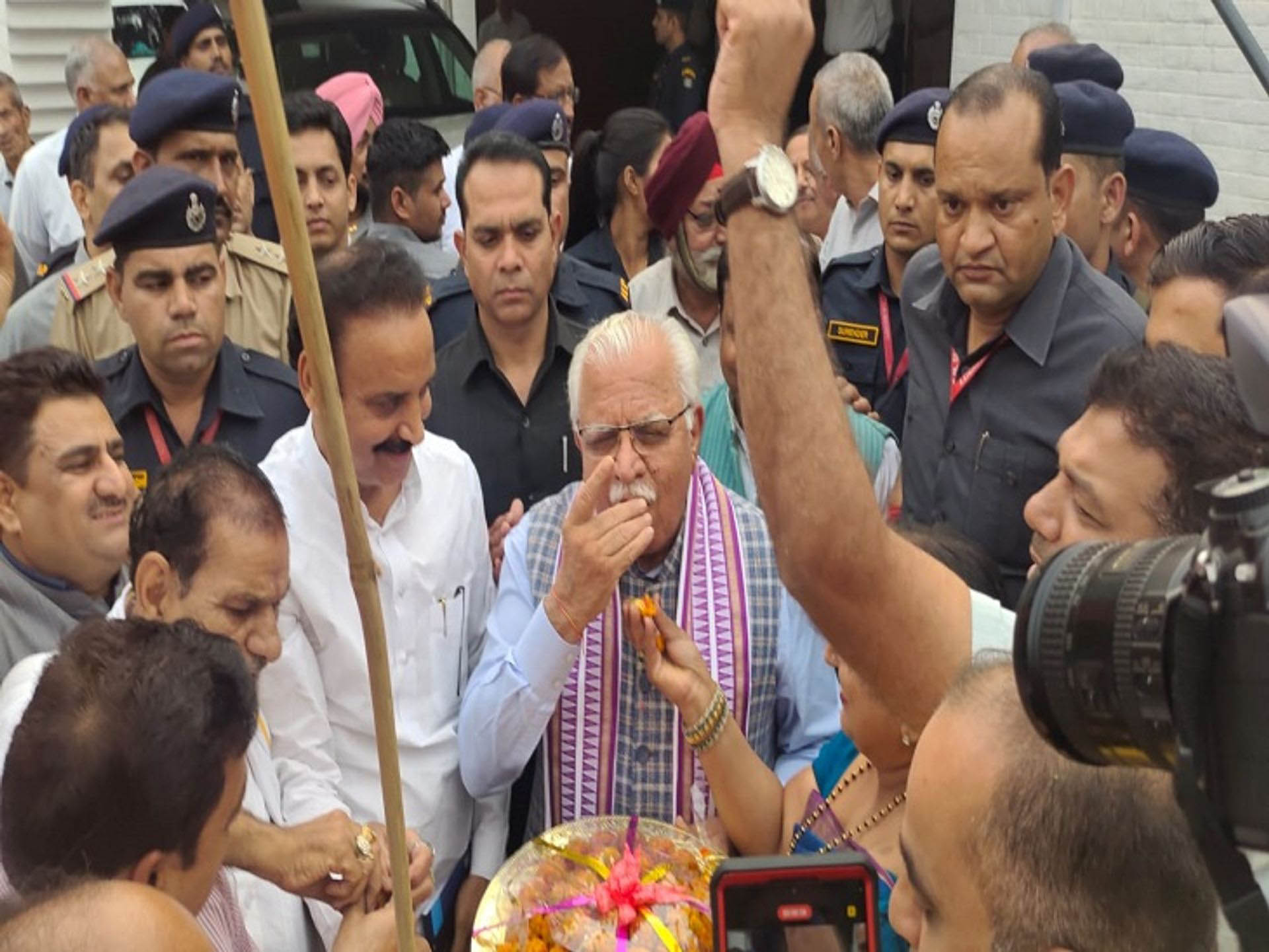
Hailing Bhavya’s win, Khattar said that with this victory, now, the number of the BJP members had reached to 41, while the Congress had come down to 30.

Among the top leaders the BJP fielded senior ministers in the Khattar government included home minister Anil Vij as well as a number of party MLAs, ministers and MPs from the state.

Cong strong in state: Hooda

However, Hooda and party state chief Udai Bhan have held after the results that the Adampur bypoll outcome clearly showed the Congress was very strong in every region of the state.

Bhan held that even though the BJP, JJP, INLD and the families of Bhajan Lal, Chautala, Birendra Singh had united against Congress, the people of Adampur, despite all their gimmicks, coalitions and secret and alliances gave around 52,000 votes to Congress.

MOST POPULAR

HOT NEWS