Saturday, December 27, 2025

Political patronage powering liquor mafia’s free run in Hry?

Every day, truckloads of liquor are smuggled from Haryana to other states, particularly where prohibition is enforced, in connivance with the authorities, writes Pawan Kumar Bansal

About four decades ago, nearly one hundred persons died and an equal number were blinded by consuming spurious liquor at Narwana and Kalanwali towns of Haryana. The issue was raised in Lok Sabha by MP Maniram Bagri resulting in resignation of then Excise and Taxation Minister, Balwant Rai Tayal and suspension of then Narwana DSP Sitaram Sharma  who had tipped off the  owner of liquor  vends about impending raid and he had escaped after destroying the stock of spurious liquor. Since then, liquor mafia has emerged very powerful and trade is being run in a foolproof manner.

The practice of smuggling of liquor, illegal sale of liquor and pilferage of  liquor  in a clandestine manner from the godowns, where the licensee had stocked their liquor, as well as from some godowns, where the Excise Department had kept the seized stock of illegal liquor, continued even during the Covid-19 pandemic period when there was complete lockdown in the State

The Special Enquiry Team headed by IAS officer TC Gupta, constituted to probe the allegations of sale of liquor in a clandestine manner and pilferage of liquor from the godowns of licensees which was smuggled outside the state during the Covid-19 lockdown period, has mentioned how it has happened with the connivance of the police and the Excise Department. Although the constitution of above team was also mere eye wash as it has neither the power to summon any one or seize the record under the CrPC.

It is learnt that the Excise Department had refused to supply the information sought by the team. Highly placed sources said that a powerful minister in the cabinet of Chief Minister Manohar Lal had taken all the relevant record from the office of Excise and Taxation Commissioner. The SET has recommended deeper probe and action against at least a dozen senior offices of the Excise Department for their dubious role, in its report submitted a year ago but the government is yet to take any follow up action.

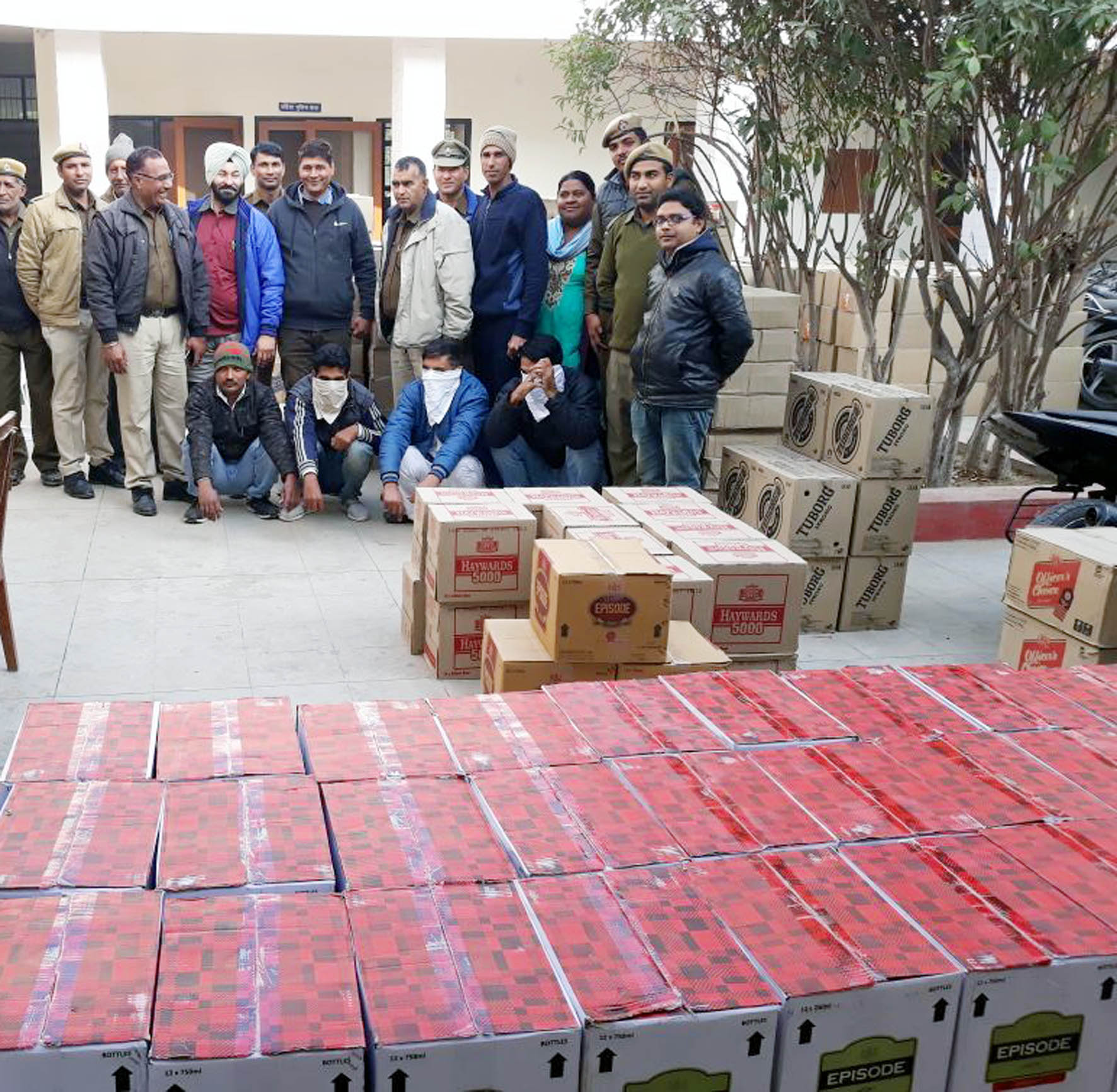
There are about one dozen distilleries and bottling plants in the state which manufacture liquor. Under the very nose of police and Excise Department officers, trucks of liquor are taken from these distilleries and liquor is smuggled to other states, particularly, Gujarat and Bihar, where it fetches the smugglers good price due to prohibition enforced there while depriving the state of excise duty.

Taking huge money at the time of fixing of price of liquor being manufactured in the distilleries is other source of corruption in which politicians also get major cut. Other source of corruption is supply of liquor from the wholesale vend to retail vends across the state. Here also a large quantity is brought without issuing permits and that goes for smuggling to other states. Selling  home-made liquor is  not much sought after business now a days as it involves the risk of deaths due to spurious liquor and this job is left for small bootleggers who operates at local level under  patronage of police and Excise Department authorities .

The plight of Kulbir Malik, driver of a liquor contractor of Panipat, is an eye opener and it   has all the ingredients of a Bollywood potboiler. The employer of Kulbir Malik, Narender Narwal  allegedly ran business to the tune of about Rs 100 crore taking vends in his name. Now the case is being investigated by three agencies, Panipat Police, Enforcement Directorate, and Income Tax authorities on the intervention of Haryana Home Minister Anil Vij, whom the complainant Kulbir Malik has met seeking justice at his Public Durbar held at Ambala. He was allegedly framed in false cases by the Panipat police to help his employer. Home Minister Anil Vij told Tehelka that he too was shocked to listen to the plight of Kuldip Malik adding that he will ensure that the probe reaches its logical conclusion.

Panipat District Police Chief Shanshak Kumar Sawan said that a case has been registered under sections 34, 420, 467, 468, 471 and 506 of IPC against liquor contractor Narender Narwal, Anil Paruthi and Manu Paruthi on basis of a complaint lodged by Kulbir Malik, which is being investigated from all angles including  the role of those police officers who had allegedly framed Kulbir Malik in false cases. The investigation process is also monitored by the DGP Parshant Aggarwal..

Panipat incident has also exposed the working of Taxation Department as how the employer of Kulbir Malik formed dummy firms on basis of fake documents. Spurious liquor tragedy in the area claiming lives of a dozen persons led to registration of case against employer of  Kulbir Malik.

Police arrested Kulbir Malik for selling spurious liquor saying that vends from where liquor was purchased are in his name. According to the FIR, Kulbir Malik pleaded innocence explaining that he was merely a driver drawing monthly salary of Rs 15,000, but nobody listened to him. He was beaten up in police custody and was allegedly forced to sign blank papers and was forced to admit own that he was the owner of the vends.

Poor Kulbir Malik was arrested and sent to jail and released on bail in June last year. He ran from pillar to post meeting senior police officers pleading that he was innocent and framed in the case but no one listened to his plight.

He met Home Minister Anil Vij in mid of November and Vij took drastic action. He rang up DGP Parshant to send Panipat Police team to Ambala where the complainant was sitting with him and take him to Panipat in police  protection and register the case against the liquor contractors. Anil Vij also spoke to Neha Yadav, Deputy Director of Enforcement Directorate, Chandigarh for probing the case from money laundering angle. Vij also spoke to Income tax authorities for taking action Deputy Chief Minister Dushyant Chautala did not pick up the phone.

Now, come to the sale and smuggling of liquor during the Covid-19 period. The SET  had observed that in the neighbouring Punjab, recently, a huge quantity of unaccounted liquor had been detected in the premises of a distillery the owner of which also has a distillery in Haryana. Although CCTV cameras have been installed in all the distilleries, liquor manufacturing units and the wholesale licenced premises of L-1 and L-13, but shockingly no SOPs  have been issued by the Excise Department regarding the CCTV, camera’s operations, monitoring and storage of feed  thus leaving the scope of manipulation and tampering by the vend owners to facilitate in spiriting away liquor from the distillery without paying the excise duty.

The SET has observed that it cannot be ignored that smuggling of liquor from neighbouring states especially Punjab through Haryana and illegal sale of  liquor had been taking place in the state especially during the lockdown period mainly because of the flaws in the functioning  of the Excise Department, non-implementation of its own instructions, lack of monitoring  and in some instances  possible collusion or negligence on the part of some excise officials as well as police officials .


India prevails as G-20 leaders stop short of condemning Russia

Leaders at the G-20 conference stressed that in a multi-polar world, China and India will have to play a crucial role in reviving the European economy, which has worsened following the outbreak of the Ukraine-Russia war

In 2021, the European Union had set up a €672.5 billion recovery fund in response to the Covid-19 pandemic, but the situation worsened following the outbreak of the Ukraine-Russia War. With the conflict, which broke out in February this year, entering the 10th month, the world scenario, both in terms of economy and political, is grim as well as challenging. The significance of the G-20 conference comprising world’s richest and most powerful countries held in Bali, Indonesia, held on November 15-16 this year increased manifold in this backdrop. The agenda of this summit was set in with the marathon meeting of more than three hours between the US president Joe Biden, with his Chinese counterpart, Xi Jinping, held just a day before at the same venue.

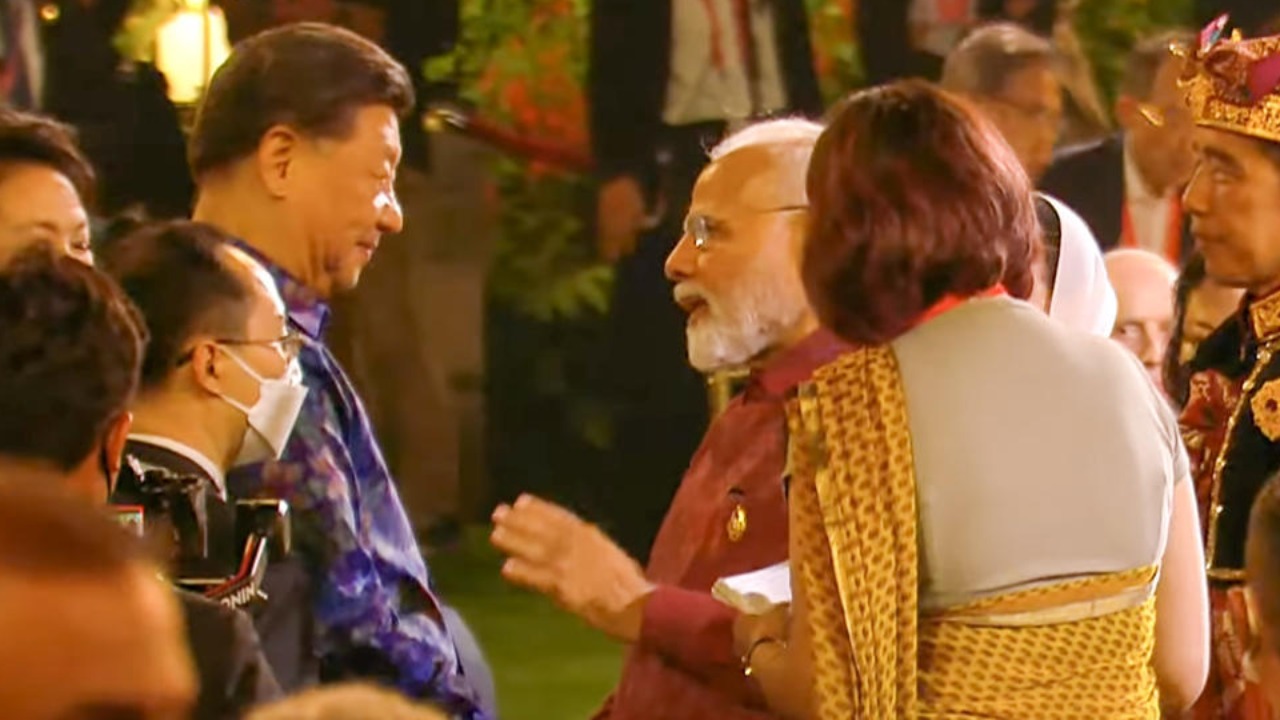
The two leaders representing America, world’s most powerful country, and China, now an economic superpower, committed themselves to compete and excel, but they agreed that there was no place for ‘cold war’ in the contemporary world. For India, now the chairman of the G-20, the summit entrusted a proactive role in the geo-politics. Earlier, in September this year, she was also assigned the presidentship of the Shanghai Cooperation Organization (SCO). During the Bali summit, the Indian Prime Minister, Narendra Modi, and Xi Jinping did not have any detailed discussion on the sidelines, but the leaders had a handshake accompanied by a warm smile.

There was a general consensus that the funds raised in 2021 were inadequate. The global economies, albeit to some extent the European economy, need the South Asian economies, especially Chinese and Indian, for restoring its health. German Chancellor, Olaf Scholz, recently stressed on deeper cooperation with the region. He had been to Beijing just two weeks before the G-20 Summit and repeatedly stated, “Deepening cooperation is crucial because we all feel that the geopolitical ground beneath our feet is shifting.” He was hopeful of finalization of the ongoing negotiations for free trade agreements (FTA) of the European Union (EU) with Australia, India and Indonesia. At present, Vietnam and Singapore are the only countries having a free trade agreement with the EU. Meanwhile, the crucial meeting between the British PM, Rishi Sunak, on the sidelines of the G-20 is expected to propel FTA between the two countries.

Xi Jinping, who appeared to be reinvigorated by a fresh five–year term in office, was seen having a series of meetings with world leaders. Similarly, Indian PM Narendra Modi, now having the responsibility of steering the SCO and G-20 too interacted with leaders of Britain, France and Germany. There were no formal talks between Modi and Xi, but they did exchange warm handshakes, thus opening the possibility of a renewed intense cooperation between the two Asian giants. However, much would depend upon the withdrawal of the Chinese forces to the 2020 pre-Galwan position in Eastern Ladakh. It is also believed that the backroom diplomacy of the two leaders, perhaps, has ensured that Russia is not condemned for invading Ukraine. Besides, it was felt that the security concerns of Russia need to be taken care of.

Biden-Xi Jinping Talks

With the Chinese assurance that it would not occupy Taiwan by force and America assuring that it would be adhering to ‘one-China policy’, the Joe Biden-Xi Jinping summit at Bali could be called ‘historic’. It had enabled the agenda of cooperation and competition in the geo-politics that was further endorsed at the G-20 meeting. The two world leaders have also reasserted that there could be no repeat of the ‘cold war’. The talks have definitely impacted the G-20 declaration for better cooperation among the nations across the continents. It focused on a human-centred policy, which is inclusive, fair; sustainable that leads to greater social justice, decent work, and social protection for all. It also includes supporting all vulnerable countries, fully including migrants in recovery efforts working to integrate persons with disabilities, women, and youth. Three G-20 leaders who did not attend the meeting were Brazil’s President Jair Bolsanaro, Mexico’s President Andres Manuel Lopez Obrador; and Russia’s President Vladimir Putin.

For India, perhaps, destiny had already been assigned to be a harbinger of peace. Just two months before the G-20 summit held on November 15-16, Modi tells Russian president Vladimir Putin that “war has no place in today’s world”. They had met on the sidelines of the SCO at Samarkand, Uzbekistan in September this year.

It is stated that it was due to Indian efforts that at G-20, the world leaders avoided direct condemnation of Russia, thus providing a ‘window for  peace’ to the Kremlin. Biden too did not blame Russia for the conflict, but endorsed the G-20 document that peace must immediately be restored in Ukraine.

It may also be noted that before attending G-20, Biden flew to Cambodia, and reassured American allies in the Indo-Pacific that his administration would not leave allies in lurch. His address to the Association of Southeast Asian Nations (ASEAN) is considered a deliberate effort for building confidence among the countries of the region scared of the growing economic and military might of China.

During his meeting with Xi Jinping, he might have spelt out the concern of the countries of the region; and America’s commitment to promote free economy and democracy, though competing with China in trade, business and technology.

India as a Midwife

India chairs two crucial institutions, SCO and G-20, when for the first time during the past 35 years, the geo-politics is moving from a uni-polar regime to a multi-polar era. She being in a crucial role leading the two key global institutions has to be in a driving seat steering the world to go through the ordeal of ending the American position as the only Superpower.

The recent American climb down is much more pronounced, especially when only a few weeks ago, two documents regarding American strategy explaining its key security factors were released in Washington. The documents had referred to China’s growing economic, technological and military power and its expansionist designs across the continents. Biden’s conciliatory approach could also be attributed to the recently held mid-term polls of the American Congress. In spite of the failure of the Republican Party to gain any spectacular victory in the House of Representatives, and Democratic Party getting a razor-thin majority in the Senate, it might not be possible for the Biden administration to continue funding the war. The war has already hit the world economy, supply chains and even food security. The European continent comprising the world’s most prosperous countries, perhaps, is facing its biggest survival challenge since World War-II years. The economic challenges accompanied by the European war has forced the US-led western powers to accommodate China as a superpower immediately, and perhaps, later India too, when the world moves towards a multi-polar world, thus ending the 35-year old hegemony of the US as the only Superpower on the earth. The status it had been enjoying since the collapse of the USSR in the nineties.

(A New Delhi-based independent columnist offers an in-depth study. The views expressed are his own.)


Delhi police left red faced as 3 rape and death case convicts walk free

Embarrassment for the Home Ministry headed by Amit Shah as the five-member bench of the Supreme Court unanimously opined that shoddy investigation by the Delhi Police had left them with no option but to acquit the three convicts. A report by Amitabh Srivastva

Three persons convicted to death for gang rape and death of a girl 12 years back in Najafgarh by the Delhi High Court are free, thanks to a judgment of a five member Bench of Supreme Court.

Even as candle-marches for Justice for Kiran Negi in the country are on, there is shock and disbelief at the casual way in which the highest authorities in the country are taking the matter.

Advocate Asheesh Kumar working with Prayas JAC tells Tehelka in an exclusive chat that many people may not know that the culprits had not even asked for a pardon. Their petition was to convert the death penalty to life imprisonment but the Supreme Court in its power vested  under Article 142 looked at the evidence before it and set them free.

“The Indian judicial system works under the principle that no innocent person should be punished, due to lack of evidence, however heinous the crime. Here the SC found that the fundamental rights of accused including the right to cross examine the witnesses and witness parade were not followed through.”

Among major lapses pointed by the highest court were

1. None of the witnesses could identify the accused in court

2. None of the witnesses had identified the Red Indica car as they had not seen it.

3. The hair found on the body was suspected to have been put later.

4. The date of death according to post mortem was between 10.02.2012 and 11.02.2012 while prosecution claimed it was night of 09.02.2012 and 10.02.2022.

This is not the first time that the investigation of Delhi Police has come under scanner. During the cases involving the riots in North-East Delhi in 2020, the Delhi High Court had passed strictures against the Delhi Police for botched up investigations.

As a result, even the Supreme Court had vented its anger about it in its order in 2021, saying,”The capital of the country can ill afford another repetition of the occurrence (Delhi riots).”

The exasperation of the Supreme Court was due to the fact that litigation had been going on for more than a year about those arrested for the riots in Delhi in 2020, most of whom had to be released for lack of evidence by the Delhi High Court.

This happened even after the then Delhi police commissioner SN Shrivastava had boasted at a press conference in February 2021 that “extensive use of technologies like facial recognition, drone mapping, retrieving deleted data from electronic devices, CCTV footage, GPS, DNA and fingerprints had helped in arresting the accused in north-east riots, leading to the arrest of 231 accused.”

And now the whole country is in a rage since November 8, 2022, when the Supreme Court Bench comprising the then Chief Justice, UU Lalit, Justice Bela M Trivedi and S Ravindra Bhat released three men convicted of the brutal rape and murder of 19-year old Kiran Negi, a resident of Qutub Vihar, Phase II in Dwarka in February, 2012. The girl was returning home from her work with two other girls.

Before she could reach home she was accosted and kidnapped by three persons in a red Tata Indica. After the police complaint, Rahul (26), Ravi and Vinod (both 22) were picked up. The body of Kiran was found in a mustard field, 30 kilometres away in village Rodhai of Rewari district of Haryana.

This time, the embarrassment for the Home Ministry headed by Amit Shah is worse because the three accused had been convicted and sentenced to death by a Delhi court in February 2014 and subsequently by the Delhi High Court in August 2014.

This rape, incidentally, happened to be even more brutal than that of Nirbhaya which occurred on a December 16 the same year.

Fully aware that there would be huge repercussions of their judgment, the Bench was unanimous that a shoddy investigation by the Delhi Police, which is the best equipped in the country probably only second to Tamil Nadu, left the Court with no option but to acquit the three convicts.

As per the court order, of the 49 witnesses examined by the court, no witnesses had identified the accused.

It also stated that neither the trial court nor the high court examined the underlying basis of the findings in the DNA reports.

Realising the impact this decision was going to send, the highest court candidly admitted that if the accused involved in the heinous crime go unpunished or are acquitted, agony and frustration may be caused to society in general and to the family of the victim in particular.

However,  no conviction should be based merely on the apprehension of indictment or condemnation over the decision rendered, the bench said,

It said that every case must be decided by the courts strictly on merit and in accordance with law without being influenced by any kind of outside moral pressure or otherwise.

This clear indictment of the Delhi Police means all the talk of filing a review petition in the Supreme Court by various authorities such as the Chief Minister of Uttarakhand or the Lt Governor of Delhi amounts to barking up the wrong tree.

Unless the Delhi Police, allegedly over-worked by protecting the VIPs of the capital, revises its style, and reworks on the case nothing is going to happen.

Instead of meeting the Law Minister, the CM Pushkar Dhami should have met the Home Minister Amit Shah to have a few heads rolled in Delhi Police.

Even so, the Supreme Court has surprisingly not suggested what action should be taken against the agency for such serious lapses.

And as the hapless parents of the girl are running from one VIP to another seeking justice, Home Minister Amit Shah is camping in Gujarat to ensure a success for the BJP in Gujarat not to be bothered about a simple gang-rape and murder case in Delhi.

No police officer in Delhi is willing to talk on record on this huge lapse but off the record, some of them said that the police particularly in Delhi are working under tremendous pressure and such ‘minor’ lapses do happen.

But Asheesh Kumar doesn’t agree. “I agree there is pressure from the media on the trial court when such a high profile case comes before it but the High Court and Supreme Court cannot break under media glare. As for the police, this pressure is part of their training drill. The police are conditioned to work under the Emergency Response System so this argument does not work,” he said.

A lot of people are scared of commenting on the Supreme Court judgment for fear of contempt proceedings.

But senior advocate of the Supreme Court, Shashank Shekhar clarifies that criticism of an SC judgment is totally acceptable once the judgment has been pronounced.

“This contempt problem is there only as long as the case hearing is pending. But the problem is that the court itself is confused about what constitutes contempt. Many times contempt proceedings are initiated which are dismissed by judges later on as trivial. But for the person who has been summoned, his errand to appear in court for five years has been started.”

Asked if a review petition could change the decision, he said, “Unless there is fresh evidence or something that the Court has missed out on, chances of changing the judgment are rare. And moreover the same Bench will be looking at the same evidence, so expecting a different judgment means expecting a miracle. It’s like children applying for a review of their mark sheets. What actually happens is a re-totalling of the marks, not re-evaluation.”


Conserving seeds to protect the future of food

ICRISAT, established in 1972, has the Rajendra S Paroda gene bank which preserves the seeds of 11 crops collected from across the world. This is essential for food security, writes Deepanwita Gita Niyogi

The International Crops Research Institute for the Semi-Arid Tropics based in Hyderabad is a global organization which conducts agricultural research in Asia and sub-Saharan Africa. Popularly known as ICRISAT, it was established in 1972. It has the Rajendra S Paroda Genebank or seed bank which preserves the seeds of 11 crops collected from across the world.

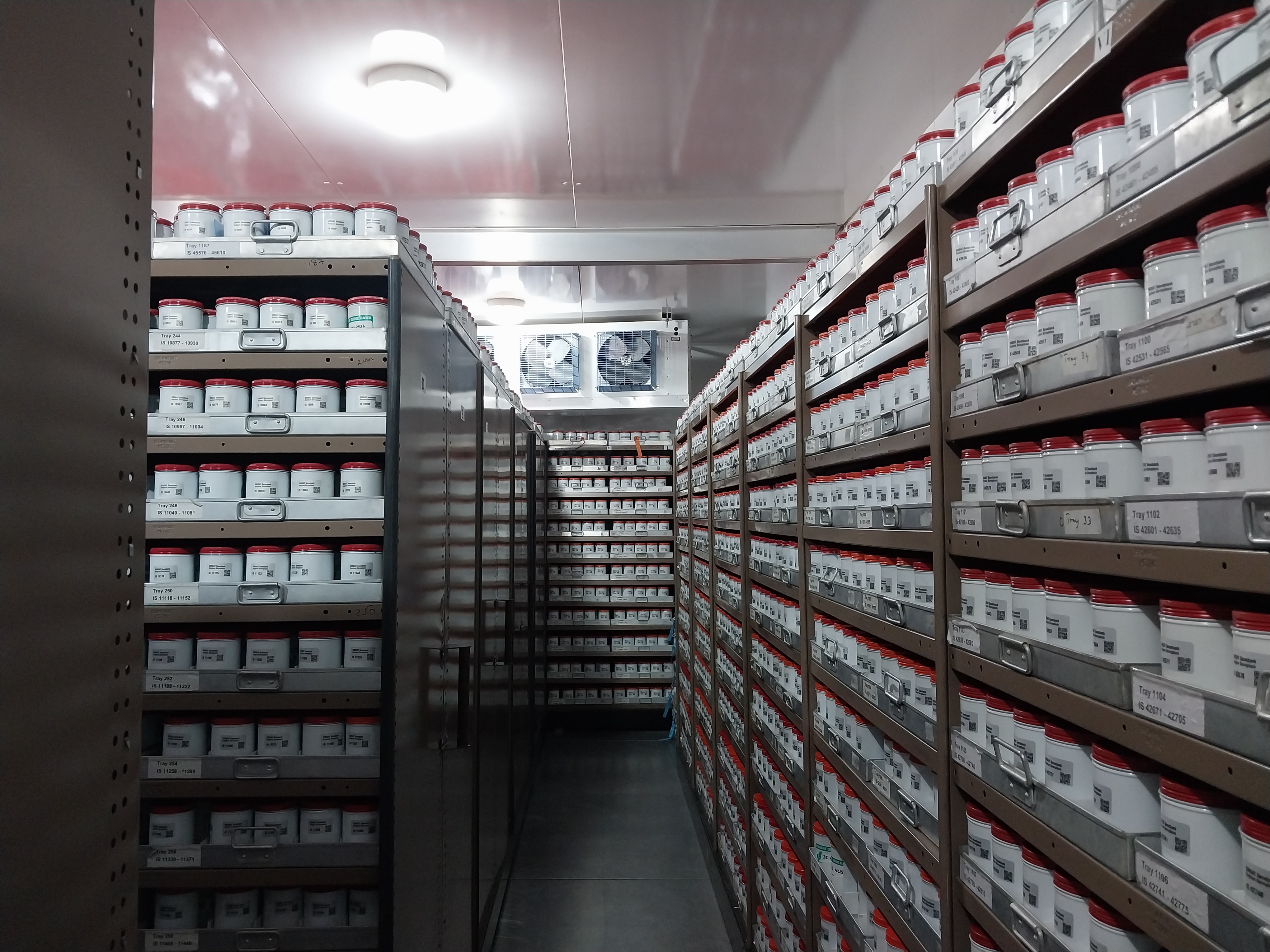
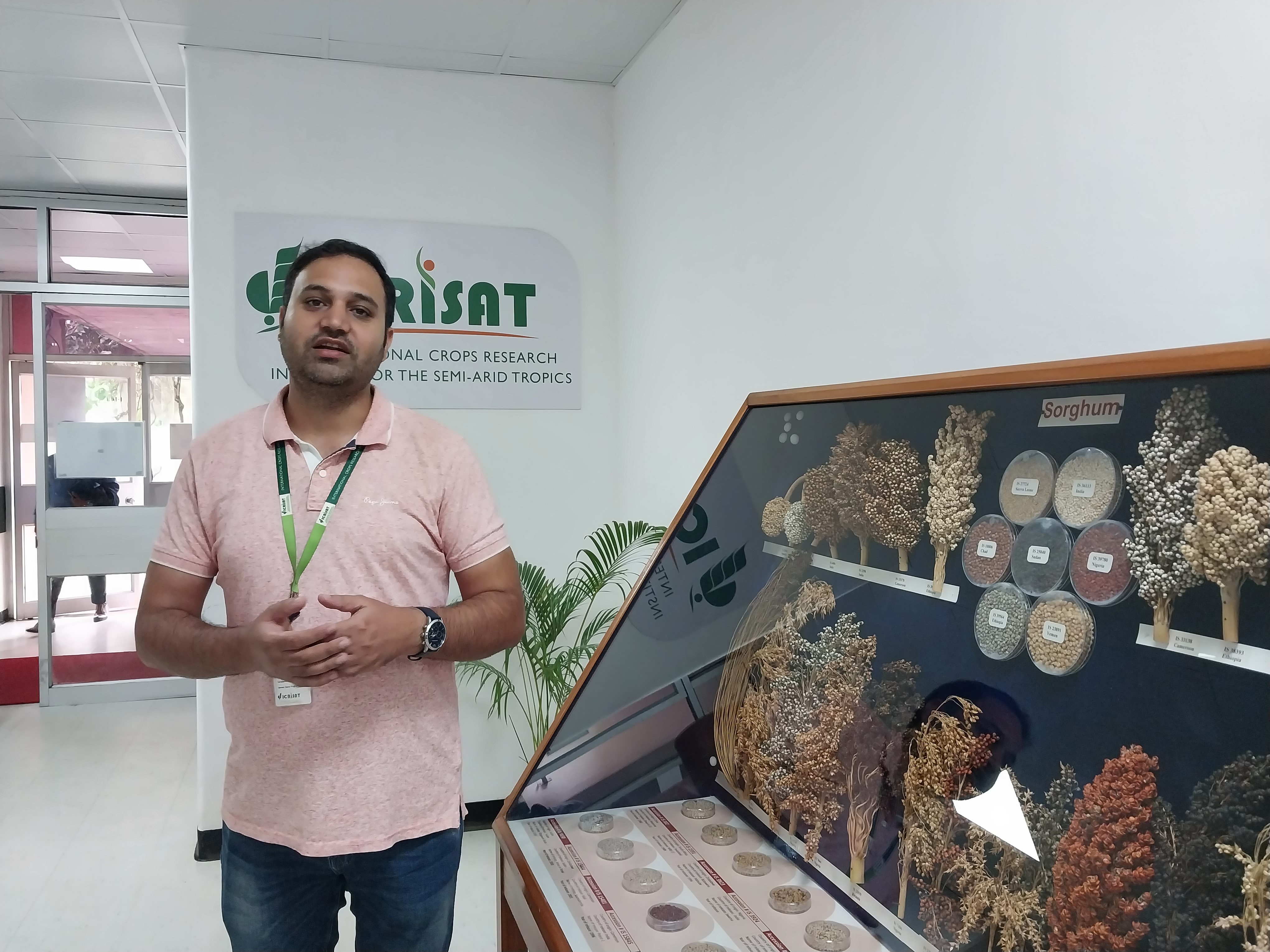
Seed preservation promotes biodiversity in the face of threat due to a changing climate. In the case of sorghum, the gene bank has 42,799 accessions or varieties collected from 92 countries. The sorghum panicles kept in wooden boxes with glass covers showcase amazing diversity. These have been collected mainly from African countries.

At ICRISAT, the seeds which have been conserved are high yielding and resistant to pests and diseases. Even farmers can take these if they want. The gene bank is over 40 years old. If needed, seeds can be conserved for 100 years too.

“We conserve the seeds of many crops in advance at the gene bank. This is essential for nutritional as well as food security,” said Ovais Peerzada, seed laboratory manager at the ICRISAT genebank.

Among the seeds of 11 crops conserved are sorghum, pearl millet, chickpea, pigeonpea, groundnut, finger millet, foxtail millet, little millet, kodo millet, proso millet and barnyard millet. Recently, ICRISAT carried out safety duplication of its seeds by sending some of the materials to another gene bank in the United States.

“When farmers get new seed varieties in the market, they may forget traditional ones available earlier. So, the genebank stores seeds as a precaution so that these do not disappear with time,” Peerzada added. Farmers also store seeds at the community level in villages but it is not scientifically carried out. Seed varieties also make crop reintroductions possible in future when some varieties may outperform others.

Arhar, the source of protein

Among pulses, the genebank has arhar or pigeon pea collection with 13,787 varieties collected from across the world showcasing a wide range in the shapes and sizes of pods. In chickpeas, which was introduced in India from outside, there are over 20,000 accessions. In groundnut, which is also a leguminous crop, there are more than 15,896 varieties. Leguminous crops provide nitrogen to the soil. The groundnut collection is mostly from South American countries like Bolivia and Peru.

Talking about the preservation of so many varieties or accessions, Muzamil Baig, quality manager at the gene bank, explained that multiple varieties ensure there is minimal chance of seeds disappearing over time.

“We know the origin of each variety and store details. There are two rooms at the gene bank where seeds are stored for medium term as well as long term at very low temperatures,” said Baig. In fact, one of the rooms has sub-zero temperature.

The seeds are preserved in plastic containers. While the medium-term seed storage is meant for preserving seeds for 20-22 years, the long-term is meant for more than 50 years. Temperatures and humidity have to be controlled for seed preservation. Distribution, regeneration and multiplication happen only through medium-term seeds. The seeds are dried and then preserved to slow down ageing. Long-term seeds should not be disturbed, the experts pointed out.

In seed conservation, low temperature and humidity have to be carefully maintained. The room containing the medium-term seeds is now full as the collection is being enriched continuously. The viability of seeds is monitored after every 20 years. The gene bank has seeds as old as those dating back to 1974.

Conserving millet seeds

Millets are ancient grains. According to Peerzada, the dialogue around millets in view of the International Year of Millets 2023 mostly centre around ragi or finger millet but the focus should be on minor millets as well. In the ICRISAT gene bank, 24,663 varieties of bajra or pearl millets are there and 7,519 ragi ones. Millets are rich in calcium and iron.

The millet panicles have an amazing range. Among bajra or pearl millet panicles, the longest one is from Niger and the smallest is from Chad. Another millet panicle has spine-like structures to keep birds away. “It is a natural adaptation to prevent birds from feeding,” said Senthil Ramachandran, manager of germplasm conservation.

Apart from ICRISAT, the Indian government has the national gene bank which has more than 4.5 lakh accessions or varieties. At the global level, seeds are also conserved at the Svalbard Global Seed Vault in Norway. Started in 2008, it is underground and many nations preserve their seeds there.

According to Peerzada, it is important to look at centres of origin or where the crops originated first when it comes to preservation of seeds. “Many crops came to India as a result of trading like the chickpea which travelled to the country from the Mediterranean via Afghanistan. There is a need to know what is unique about each variety. Breeders choose a few varieties and then develop new ones.”

It is also necessary to evaluate the varieties to know if they are prone to diseases. If farmers are interested in getting seeds, they can view the seed database, make selection and then send a request to ICRISAT. Over five grams of a particular seed is handed over when asked for.


A political memoir that is refreshingly different

Till date our Indian politicians dwell on sheer politics in their memoirs and autobiographies. And with that, the family is kept in the background, but Mohsina Kidwai seems to have  broken this trend. A book review by Humra Quraishi

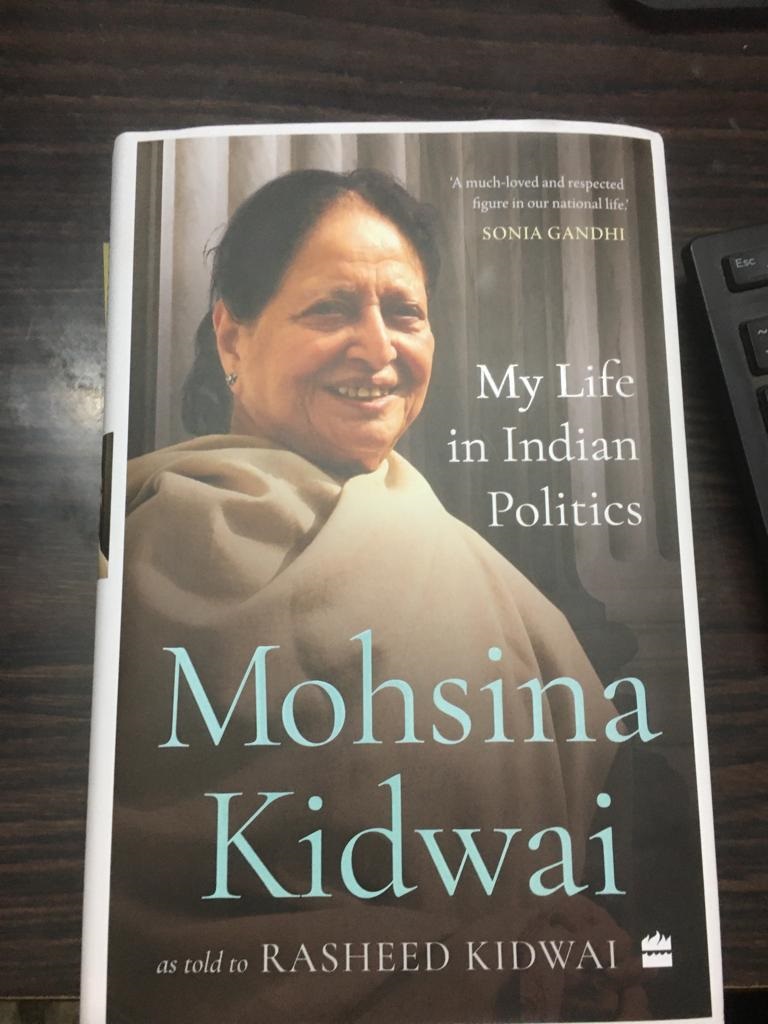
Just read and re-read this book by the veteran political figure, Mohsina Kidwai. An account of her life and times. This recently launched book is not just off beat and refreshingly different but relays that there is more to a political personality than politics. The spouse and children and the extended family is also of immense significance as they do play a role, directly or indirectly.

Till date our Indian politicians dwell on sheer politics in their memoirs and autobiographies. And with that, the family is kept in the background, but Mohsina  Kidwai seems to have  broken this trend.

Of course, she  has dwelt  on her  political  journey, starting off way  back in 1960,  but  webbed and in-webbed  are the  details to her  family, especially  her three daughters and their children and spouses.

Also, what comes across is  not  just Mohsina  Kidwai’s loyalty  to the  Congress party  but also  to the  Gandhi family. As she details her interactions with the late Indira Gandhi, she also focuses on those several instances where Indira Gandhi was there for her. Space constraints hold me back from writing details to several such occasions.

Let  me put  in details  to one such instance, “  My  election as a  MP  meant  I  had to make  frequent trips to  Delhi. On one such trip I had to attend a public  meeting for a  municipal by- election, accompanied by  party  leaders,  Balram  Jakhar and  Buta  Singh. I had just begun speaking when someone hurled a stone on my forehead, splitting the skin open. I was rushed to the Wellington Hospital by my colleagues and party workers. Five stitches were needed to sew up the wound.

Indira Gandhi left work to visit me in the hospital. She told me this was the beginning and that there would be more challenges ahead as Congress proceeded on its comeback trail. Indiraji  dialled my  Lucknow  number and spoke to my eldest daughter  Seema, explaining patiently  to her what had happened…She also specifically  told  Seema not to  panic  seeing my  blood smeared  picture in the  next  morning’s  newspapers…”

There’s also this passage, where Mohsina describes her last meeting with Indira  Gandhi. “On 25 October 1984, I met Indiraji for the last time  before her  assassination. I had gone to discuss some  political  issues with her about  Meerut (  my  parliamentary  constituency in 1980 )  and remember something that  occurred to me  just  as I was about to  leave the room. ‘Indiraji, I am not sure if I should tell you this,’  I told her, ‘but on your  recent  visit to Lucknow. I noticed you have a  lot of  new faces in your  security. Please becareful, Indiraji.’

Indiraji had smiled, ‘ Mohsina  I have  immense faith in my country and in its  people and  I am absolutely sure from the  bottom of  my  heart that they will never  let me down,’  she said.”

Title of the book– ‘My Life In  Indian Politics- Mohsina  Kidwai

as told to  Rasheed Kidwai’

Authors  –  Mohsina  Kidwai and  Rasheed  Kidwai

Publishers –  HarperCollins  Publishers  India

Pages  –  261

Price  –  Rs 699


BJP claims better performance than UPA govt in economic domain

The political tussle between Congress and BJP has intensified with respect to the ‘politics of performance’. While Congress is constantly trying to put the Modi government in the dock regarding the economic condition of the country and rising inflation, BJP claims that their government has fared much better in the domain of economy.

Comparing the size of the country’s economy in the tenures of UPA and NDA governments, BJP expressed on twitter that during 10 years of the UPA government, India moved up just one notch as the world’s largest economy. On the other hand, the Indian economy has climbed up five places to become the world’s fifth largest economy in just eight-and-a-half years of under Modi.

India moved from 11th to 10th largest economy in ten years of UPA while India has moved from 10th to 5th largest economy in eight and half years of BJP-led NDA

President of India awards coveted MAKA Trophy to Vice Chancellor Guru Nanak Dev University

President of India, Droupadi Murmu today presented the coveted “Maulana Abul Kalam Azad Trophy” (MAKA) to the Guru Nanak Dev University for its all round best performance in sports for the year 2021-22 in an investiture ceremony held at Ashoka Hall of the Rashtrapati Bhawan this evening. The University received this for a record of 24th times.

In a release issued here today by the GNDU  Vice-Chancellor, Prof. Jaspal Singh Sandhu and Dr. Kanwar Mandeep Singh,  In-charge Sports Department of the University received this trophy. Prof. Karanjieet Singh Kahlon, Registrar of the University was also present. The replica  of trophy and award money of Rs. 15 lakh was also presented to the University by the President for the promotion and development of sports. Before the presentation of award, a citiation was also read out depicting the commendable sports achievements of the University.

Guru Nanak Dev University Amritsar has won the India’s prestigious Maulana Abul Kalam Azad Trophy (MAKA Trophy) of the year 2021-22 with Overall top performing University in International / National / Inter-University Championships.

The University won this trophy for a record number of 24th times from the President emerging again as the ‘top university in sports’ of India after the gap of three years.

It is pertitent to say that Guru Nanak Dev University has produced 6 Padmashree Awardees, 36 Arjuna Awardees, 2 Dronacharya Awardees and 44 Maharaja Ranjit Singh Awardees. The University would also celebrate the victory of this trophy on December 01 in Auditorium of Centre on Study in Sri Guru Granth Sahib at 02.00 pm alongwith the contributors of this trophy, sports personal and coaches.

This trophy was instituted in 1956-57 as a running trophy by the Ministry of Education, Government of India in the name of first Union Education Minister, Maulana Abul Kalam Azad and is awarded by the President of India each year to a University which has all round best performance in sports at inter-university, national and international competitions.


Mamata Banerjee to finalise Trinamool’s strategy for Parliament’s winter session

New Delhi : West Bengal Chief Minister and Trinamool Congress supremo Mamata Banerjee will meet all the party MPs in New Delhi next month and finalise the strategy for the upcoming winter session of Parliament.
In all probability, party sources said, she will be holding the meeting at Lok Sabha member Saugata Roy’s official residence on December 7. The meeting will deliberate on the issues to be highlighted during the session.
“All the Lok Sabha and Rajya members of the party have been asked to be mandatorily present at the meeting, ” said a senior leader of the party who did not wish to be named.
Sources further said that the chief minister will also outline on how to counter issues raised by other party MPs on the events of controversies in the state.
The Chief minister will be going to Delhi to attend a meeting of all the state chief ministers convened by the Indian Prime Minister Narendra Modi for discussions on the G20 summit which will be hosted by India next year.
However, Mamata Banerjee has already announced that she will be attending the meeting not as the chief minister of West Bengal but as the national president of All India Trinamool Congress.
Although nothing has been confirmed as yet, speculations are rife over the possibility of a one-on-one meeting between the Prime Minister and chief minister on the occasion of the latter’s visit to the national capital. The chief minister also has plans to visit Ajmer Sharif during her visit.
Party sources said that attempts are on to fix meetings with the leaders of a couple of other non-BJP parties with the chief minister in the national capital. However, nothing on this count has been finalised as yet.

14th Edition of “Aero India 2023” to be Held from 13-17 February 2023 in Bengaluru

Bengaluru: Asia’s Biggest  Air show “AeroIndia2023” announced by the Minister of Defence (MOD) ,The “14th edition of Aero India,” Asia’s largest aero show, will be held at the Yelahanka Air force Station in Karnataka’s Bengaluru from February 13. Air Force Station Yelahanka has been hosting the show since 1996.

Amid speculation and reports that the show would be shifted out of Bengaluru to Lucknow, Aero India 2021 was held in Bengaluru and Defence Minister Rajnath Singh had clarified that Bengaluru was the best city to host the show. “Most of the industries related to aerospace are located in Bengaluru and Karnataka. This makes the city the most ideal place to hold the air show,” Singh had slated.

Hindustani Aeronautic Limited (HAL), the nodal agency that organises defence events in the country, will organise the aero show this year. Since restrictions for international travellers were eased in the country, organisers are expecting that this year’s registration will exceed all previous editions.

The previous 13th, which was held in 2021, edition of the biennial event was held in a hybrid model  reduced to a three-day affair due to Covid pandemic. which is held for over five days, will return to its old avatar during the 2023 edition.

Asia’s premier air show The 14th Aero India is expected to be bigger and better than the previous editions. The first edition of Aero India was held in 1996. Since then, the event has grown over the years, earned a great reputation, and grabbed eyeballs from across the world. It has also seen increased participation from both exhibitors and the public, statement said.

The  Aero India show is a premier global trade show which provides an opportunity for the international arms industry to showcase their products, technologies and solutions to the Indian military and decision makers and also to engage with India’s emerging Aerospace and Defence industry.

There are two main defence related expositions organised by the defence ministry in India. One is the Aero India show which is for the Air Force and another is Defence expo. The Defence expo 2022 was held at Gandhinagar, Gujarat in October 2022. The Defence expo is India’s premier military trade show for land, naval and homeland security systems.

The last 13th edition of Aero India was limited for business visitors and was not open to the general public. The event was also one of the first largest hybrid aero show. Delegation from 43 countries along with 530 companies participated in the event.

Drone from Pakistan brings 3 Kilogram narcotics shot down by BSF

Border Security force foiled smuggling bid while capturing the drone and 3.110 kgs  narcotic at Indo-Pak border.

In a statement issued here today, BSF said that on 28th Nov’ 2022 at about 2247 hrs, BSF troops deployed at Indo-Pak  border heard buzzing sound of suspected drone entering from Pakistan into Indian territory in the area falling near Village – Chaharpur, District – Amritsar (Rural).

As per drill, the troops tried to intercept the suspected drone by firing. Bullet hit the Drone due to which it fell down on the ground.  Immediate after the whole area was cordoned. The Police & concerned sister agencies were informed.

Further, during initial search, BSF party recovered 01 Hexacopter (Wt – appx – 18.050 kgs) in partial damaged condition along with three suspected narcotics packets in a white colour polythene attached underneath (Gross wt – 3.110 kgs) lying in farming field on own side of border fencing near Village – Chaharpur.

MOST POPULAR

HOT NEWS