Saturday, December 27, 2025

Shadow of mining on tribals’ access to forest

Residents of Khodgaon village in Narayanpur district of Chhattisgarh await the recognition of community forest resource rights in the midst of prevailing tension over the disputed Rowghat Mines Project, writes Deepanwita Gita Niyogi

Leaving behind her parental home in Bijapur, a southern Chhattisgarh district affected by Maoist insurgency, Rina Dugga arrived in Khodgaon around 2014 after her marriage. Dugga belongs to the Gond community, one of the largest tribal groups of India. Like many rural women, she depends on the forest for sustenance.

To empower tribal communities who have been historically marginalised, India passed the Forest Rights Act (FRA) in 2006 which allows them right over forest resources through the issuance of van pattas (land titles).

Chhattisgarh, in central India, has about 45 per cent forest cover, a precious resource to mitigate the effects of climate change. However, the mad rush for extraction of natural resources has become the cause of turf war between communities, insurgents and state-owned entities as the threat of deforestation looms large in tribal areas of the state.

Mining is one of the primary causes of deforestation. Apart from dense forests, Chhattisgarh has vast reserves of coal and iron ores. In recent times, widespread protests have broken out in places where tribals are keen on protecting forest cover by opposing mining.

Mindless mining

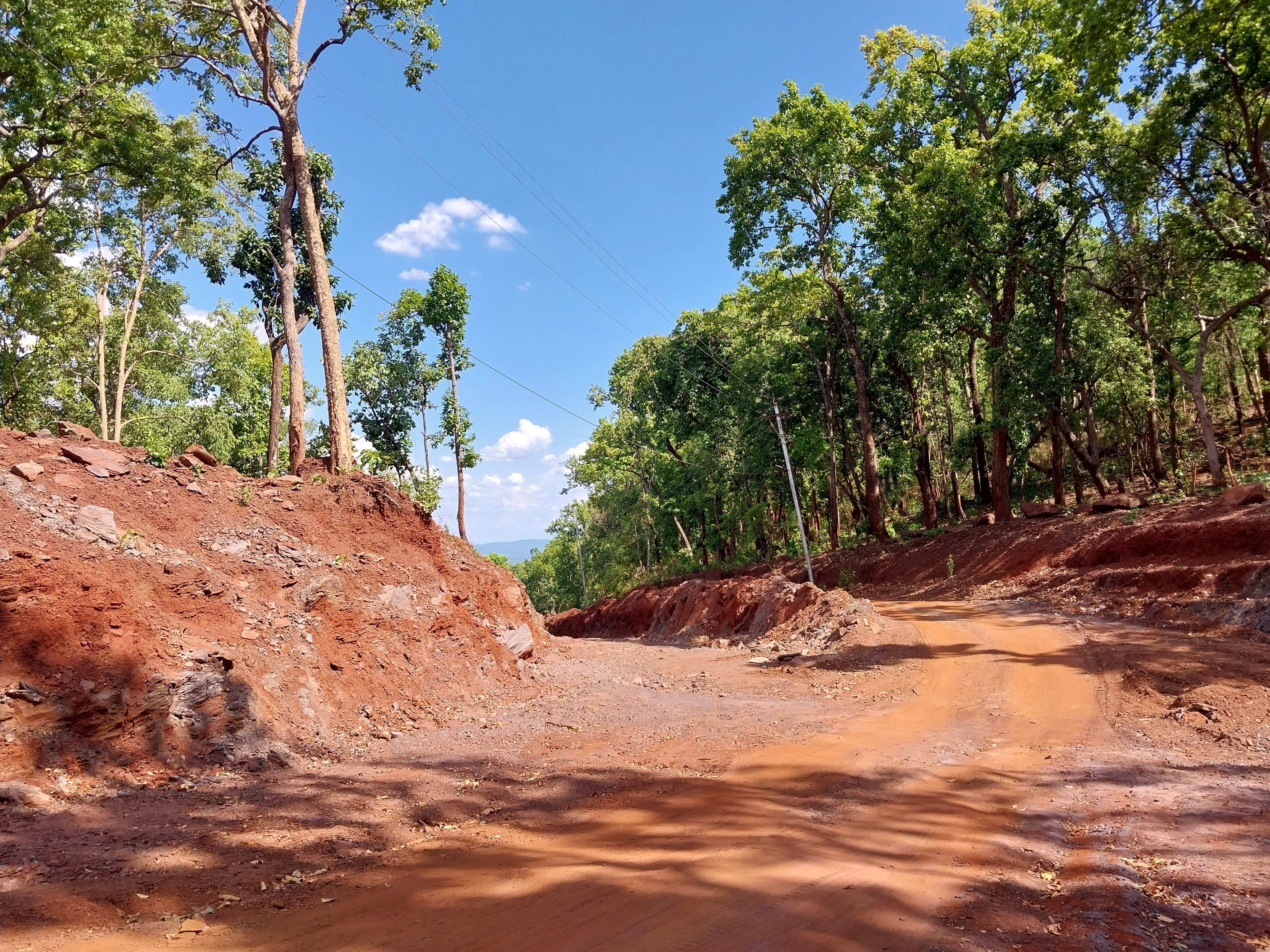
On a humid afternoon, lush forest and heaps of red earth greeted the eyes on the way to Anjrel situated on the hilltop. After a point, bikes failed to move uphill and walking was the only option to reach Anjrel, a scenic village near Khodgaon, where the fear of an uncertain future was palpable among residents.
“Mining has started. It is possible that Anjrel may be displaced. Those living below like the people of Khodgaon will also face severe problems. Many people cultivate mustard and paddy. If mining activity increases what will happen to our cultivable lands?” questioned Phulwa Mandavi.

The Rowghat mines project spread over the Matla forest reserve spans Narayanpur and Kanker districts of Chhattisgarh in the sensitive Bastar region. With an estimated reserve of 731.93 MT, the lion’s share belongs to the Bhilai Steel Plant, a unit of the public sector Steel Authority of India Limited. Supply will take place over the next 20 years.

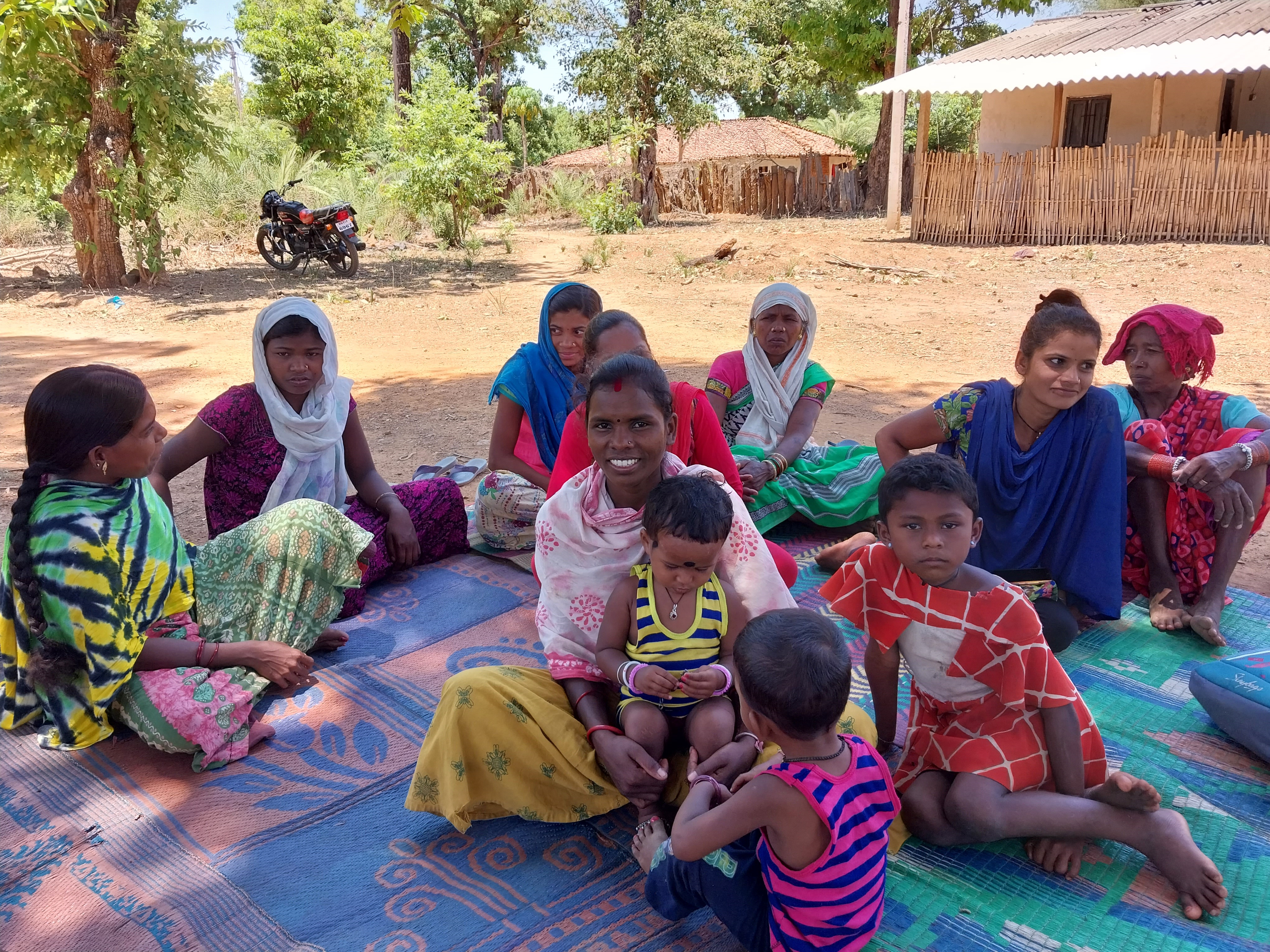
During an informal gathering at Khodgaon, Dugga arrived with her child, clad in a yellow saree. “I am worried about the status of the community forest resource rights (CFRR) which empowers communities to manage forest under the FRA. The people of the village placed the CFRR claim in August but are yet to receive the title.” The land title is usually a one-page document.

Besides collection of minor forest produce throughout the year, Dugga’s livelihood also depends on five acres of paddy land. But at present everything hangs in balance with many residents being called to the local police station after a scuffle broke out in September.

Conflict is nothing new here and has been on since 2009 with many locals opposing the Rowghat project. Dugga pointed out that gram sabha meetings did not take place with  the sarpanch (village head) in favour of the mines.

Recognising forest rights

After coming to power in 2019, Chhattisgarh Chief Minister Bhupesh Baghel emphasized on CFRR keeping in mind the vast Adivasi population dependent on forest wealth. The state has 7.5 percent of India’s tribal population.

Sharad Lele of the Ashoka Trust For Research in Ecology and the Environment, who is working in Chhattisgarh on FRA, said the Act has multiple rights but the most important one is CFRR which is given to communities to manage forest. Till June 2022, 3731 CFRR claims have been settled covering 1532316.866 hectares.

While Khodgaon’s residents await their CFRR title claim on 579.900 hectares, the presence of police and paramilitary personnel for protection of the mines is adding to the restlessness.

“Mining has started despite protest. Vehicles plying on the road carrying ore are posing a threat to the school and the anganwadi (child day care centre) in Khodgaon. Gradually, pollution will spread to cultivable lands and water sources. Locals will find it difficult to cross the road,” said Narsingh Mandavi, one of the protesters from Binjli village, some five km from Khodgaon.
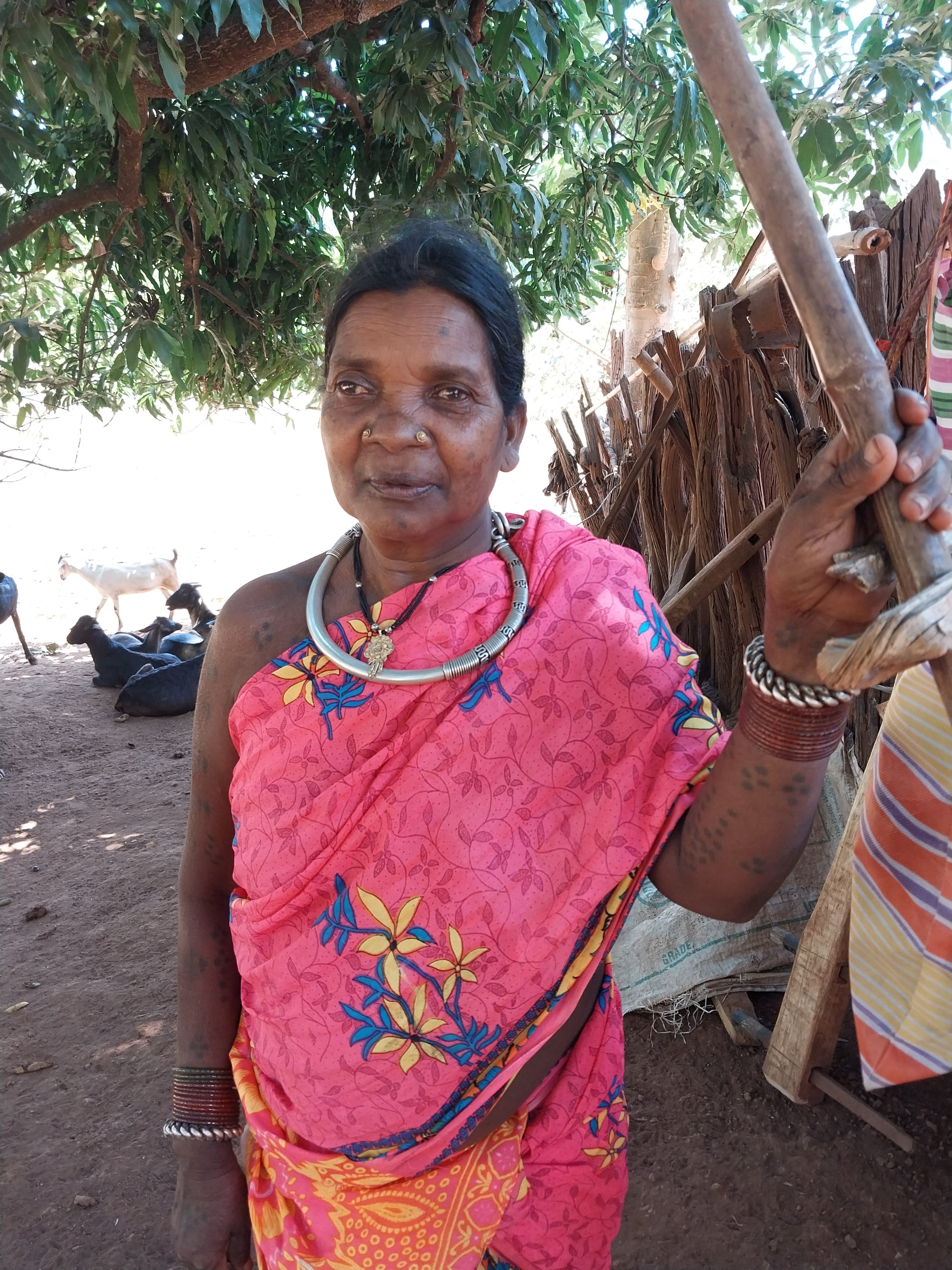
His main concern is that entering the forest will be difficult for women in the presence of heavy security. Besides minor forest produce, many gather fuel wood from the forest as cooking gas is expensive.

Khodgaon resident Suresh Dugga, who works at the Ramkrishna Mission Ashram in Narayanpur, feared that as a result of massive tree felling, women would face difficulty in finding valuable things like mushroom, mahua (Madhuca longifolia) flowers, tendu leaves (Diospyros melanoxylon) and medicinal herbs. After the September incident, women are mostly avoiding grazing and foraging. A social activist working in the area, who wished anonymity, predicted that conflicts would rise in future. The situation is still tense in the village. Some residents spoke of being threatened and called to the police station for statements.

Awaiting a better future

Iron ore mining will affect almost 54 villages though the official estimate of 22 is much less. According to Narsingh Mandavi, most people in the area want the mines to shut down. Some are hopeful of the protest getting stronger in the coming days.

Amidst the prevailing tension, Dugga and her husband Digeshwar are also looking forward to filing individual claim on an acre of land under the FRA where she has constructed a house. But land measurements are not taking place with the patwari (one who keeps land records) being dissuaded from doing the job, she claimed.

Locals are being needlessly harassed for opposing the mines. “Even women are being called to the police station. While this is happening, ore is being transported illegally in tippers,” Nohrit Mandavi, associated with the Chhattisgarh Bachao Andolan, said.

Khodgaon resident Lakhan Nureti pointed out stepping out of homes and entering the forest have become grave issues. “Many people are being implicated in false cases. I am a farmer and have no idea what will happen to my field. Women are afraid to go to the jungle but nobody is bothered about us.”

(The story has been covered with the International Women’s Media Foundation’s Howard G Buffet grant.)



Manish Tewari’s 4th adjournment notice in LS on Chinese transgressions

New Delhi:  Despite being denied discussion on the Chinese transgressions, Congress MP Manish Tewari on Friday again moved an adjournment notice in the Lok Sabha on the issue.

This is his fourth notice in the last as many consecutive days.

“We have had the Hon’ble Defence Minister give a statement. However, there are crucial questions that need to be asked: Why are these clashes happening, first Galwan and now Yangtse? What do the Chinese want? Is the Government aware of Chinese mal-intentions? Have we lost any territory to the Chinese as a result of these aggressions, if so, how much and how does the Government plan to get it back?” the notice said.

The notice said a detailed discussion was required on the grave situation at the border with China in the Tawang sector in Arunachal Pradesh.

“This is the first physical clash between the two armies since August 2020 which took place at Rinchen La in eastern Ladakh. Bilateral trade with China is at an all-time high. Between 2020 to the present, imports from China have nearly doubled from $27.3 billion to $52.4 billion.

“That the Chinese are attempting to come inside the Indian territory is a portentous sign. From Eastern Ladakh, the Chinese seem to be eyeing Arunachal and the 2, 500 KM Eastern Sector of the LAC. Reports suggest that China has built massive infrastructure and there is additional troop buildup on the LAC. At least three additional PLA brigades are reportedly deployed at the LAC.

“These clashes are in addition to what has been happening in Eastern Ladakh where, despite multiple rounds of talks, sixteen in total, China has vehemently refused to vacate areas it reportedly occupied after the major clash on May 5, 2020.

“The crises in areas such as Depsang and Demchok remain unresolved. Locals who hitherto travelled to the Charding La- Nilung Nalla Junction have been denied access by the Chinese. Graziers have also been blocked from accessing the area.

“China has, in the meantime, reportedly built substantial military infrastructure all across the Line of Actual Control. China is unwilling to restore the status quo in Ladakh, a situation that puts India at a massive disadvantage. This House has spent no time discussing this crucial issue.

“I urge the Government to take this matter with utmost seriousness and have a detailed discussion in Parliament with regard to the border situation with China, ” the notice reiterated.

Seven held for beating, parading man nude on roads at Sirsa

Sirsa: It was shocking when a youth Vishal resident of Mela Ground Sirsa was mercilessly beaten, stripped paraded him nude all over on the roads by a group of seven persons led by a youth Sanju mastermind in the case running hair dressing saloon at Parshu Ram Chowk at Sirsa over some old dispute on Tuesday late evening. Surprisingly, in-spite of policemen standing nearby no one came for rescue the victim. A case was registered against seven persons involved in beating the victim already arrested identified as the prime accused Sanju, Yash, Gagandeep, Kamal, Jashan, Bhavdeen and Karan presently under police custody. Meanwhile SP Sirsa Dr Arpit Jain suspended in-charge police station and sent him to line. The investigation in the case was handed over to Sadhu Ram DSP.

Seven people were arrested on Wednesday on charges of thrashing and parading   24-year-old man naked in busy market over an some old dispute, DSP said, the accused made the video of the incident and the same went viral. We took cognizance of the matter and arrested seven persons for attempt to murder and the case has been registered under sections 342 (wrongful confinement), 323(punishment for voluntarily causing hurt) and other relevant sections of the IPC. DSP told media persons that two another accused involved in beating Vishal are yet absconding and search is on for their arrest. The injured youth is undergoing treatment at civil hospital, Sirsa,


Raise IT exemption limit to Rs 5 lakh and pluck low hanging fruit : ASSOCHAM urges Govt in pre-Budget recommendations

New Delhi: In its pre-Budget recommendations, ASSOCHAM has said the government should increase the exemption limit for income tax to at least Rs 5 lakh so that more disposable income is left in the hands of consumers and the economy gets a consumption boost and further leg-up in the recovery. Without accounting for rebates, the present exemption limit is Rs 2.5 lakh for the assesses.

In a media interaction, ASSOCHAM President Sumant Sinha said buoyancy in both the direct and indirect taxes should give enough elbow room to the government for raising the income tax exemption limit.

The government must respond to the proactive steps other nations are doing to support the production of green hydrogen as India strives to become a major energy producer. Attention should be given to sustainable and green industries to promote job growth and a green economy. Economy security bigger than manufacturing security, he said. Advancing the green economy, achieving energy independence, making investments in green industries, and reducing the use of fossil fuels are all steps for Atmanirbharta.

”Boosting consumption by leaving more money in the hands of the consumers, is a low hanging fruit for a further recovery in economic growth, ” said Deepak Sood, Secretary General ASSOCHAM.

The chamber said along with the consumption, the other path to a sustainable growth would be further promoting investment. In this direction, the ASSOCHAM said that  15% corporate tax rate for new investments in manufacturing can be extended to all sectors, including services.

Suggesting another relief measure, it said the interest for late payment of the GST should be reduced to 12 per cent from 18 per cent . ”The penal interest rate of 18 per cent is too high , particularly for the MSMEs ”

Measures like Production-Linked Incentive (PLI) scheme, with an outlay of around Rs 2-lakh crore for 13 sectors, were introduced in 2021. PLI has done much to boost domestic manufacturing, investment as well as job creation. It is therefore advised that the government should continue to focus on it.  Reports suggest  proposals are in works to extend the Rs 35,000 crore PLI scheme to various sectors.

While exporters are asking for credit at affordable rates, MSMEs are asking for restructuring of existing loans, giving them room for a fixed term of one year of moratorium and two years additional timeline to repay term loans. They have also asked for extension of the NPA (non-performing assets) classification period to 180 days from 90 days as they struggle to get timely payments from their buyers, leading to defaults in payments.

There is also a need to identify new sectors in MSMEs, like the travel and tourism industry. By prioritizing tourism infrastructure development, it will lead to employment creation as well as growth of MSMEs. In addition, opportunity, innovation, new tech goods, and leveraging tech solutions to the global market should be used for increasing economic activity and employment.

It is necessary for MSME to be more connected to the world. What is needed is a transparent, paperless, end-to-end system to facilitate on-time payment, which will not only inject liquidity into the market but also encourage businesses to reinvest. This is part of a collective effort to popularise and increase acceptance for the “Make in India”

In an environment of global challenges like recession looming large over several major economies of the world, high inflation, supply disruptions caused by a protracted Ukraine-Russia war and uncertain and volatile energy prices, India remains resilient helped by pragmatic government policies, food security, financial stability and the never-say-die spirit of our people.

The IMF has projected that more than one-third of the global economy will contract in 2022 or next year. Economies such as the US have seen inflation unprecedented for several decades.  The US inflation is well above seven per cent, forcing the Federal Reserve to revise interest rates several times , keeping upward of 4 per cent. This had implications for the emerging economies including India which have been witnessing flow of global funds to the US dollar as an asset class. The recent pressure on the Indian rupee was a result of these developments , but the RBI rose to the occasion managing the situation pretty well.

The INR is quite stable now; in fact the fund flow is reversing inward again, taking all the components together. So, our macro economy remains not only stable but also growing upward of six per cent. According to the latest RBI estimates, the Indian economy is projected to grow by 6.8 per cent for the FY’23. We largely agree with the RBI assessment, with an upward bias.

As for inflation, while the signs of peaking have started appearing for the major economies as well, these are still tentative. However, as the drop in CPI to 11 month low of 5.88 per cent for November shows, inflation in India is more likely to have peaked, though remains above the RBI comfort level of 4 per cent. But it has come down below the RBI upper end of 6 per cent.

The 6.3 per cent GDP growth for the second quarter of the current financial year had a large contribution from the catch-up recovery in services like trade, hotels and transport  in the post-Covid period. However, there was a contraction in manufacturing by 4.3 per cent. The contraction in manufacturing continues even in the latest numbers of industrial production for October.

Manufacturing contracted by 5.6 per cent in October 2022 over the corresponding month of the previous year. While the government has extended several schemes like PLIs, extension of lower corporate tax 15 per cent up to March 31,2024 , global disruption in supply chain, rising prices of raw material would have made an impact on the manufacturing. While the raw material prices have started easing, new challenges like rising interest rates have to be tackled. However, we must add that the nagging twin balance sheet problem has largely been addressed. A lot of deleveraging has taken place thanks to a robust capital market which was effectively utilised by the corporates for fresh equity infusion and retiring expensive debts.

The manufacturing which is one of the largest job creators is expecting a boost from the Budget. This is also important for India to take full advantage of the China Plus policies of the global corporations in the unfolding world economic order. Labour reforms which were initiated by the Centre by codification of different labour laws have not been implemented by most of the states.

Public finances despite all the odds have remained robust, giving elbow room to the government to maintain the tempo of capital expenditure. The Central government had committed   effective capital expenditure of Rs 10.68 lakh crore for 2022-23 , about 4.1 per cent of the GDP. We would expect this expenditure to increase by at least 10 per cent in the next fiscal. The tax revenue has remained buoyant that would not only allow the government to spend aggressively but also keep the fiscal discipline in place so that no negative impact goes to the financial markets and inflation.

While the Indian macro situation looks far more positive than most of the major economies, we need to remain focused on growth. The next year’s budget would be a catalyst for enabling India to be the fastest growing economy of the world. Our focus should be both boosting consumption and investment.

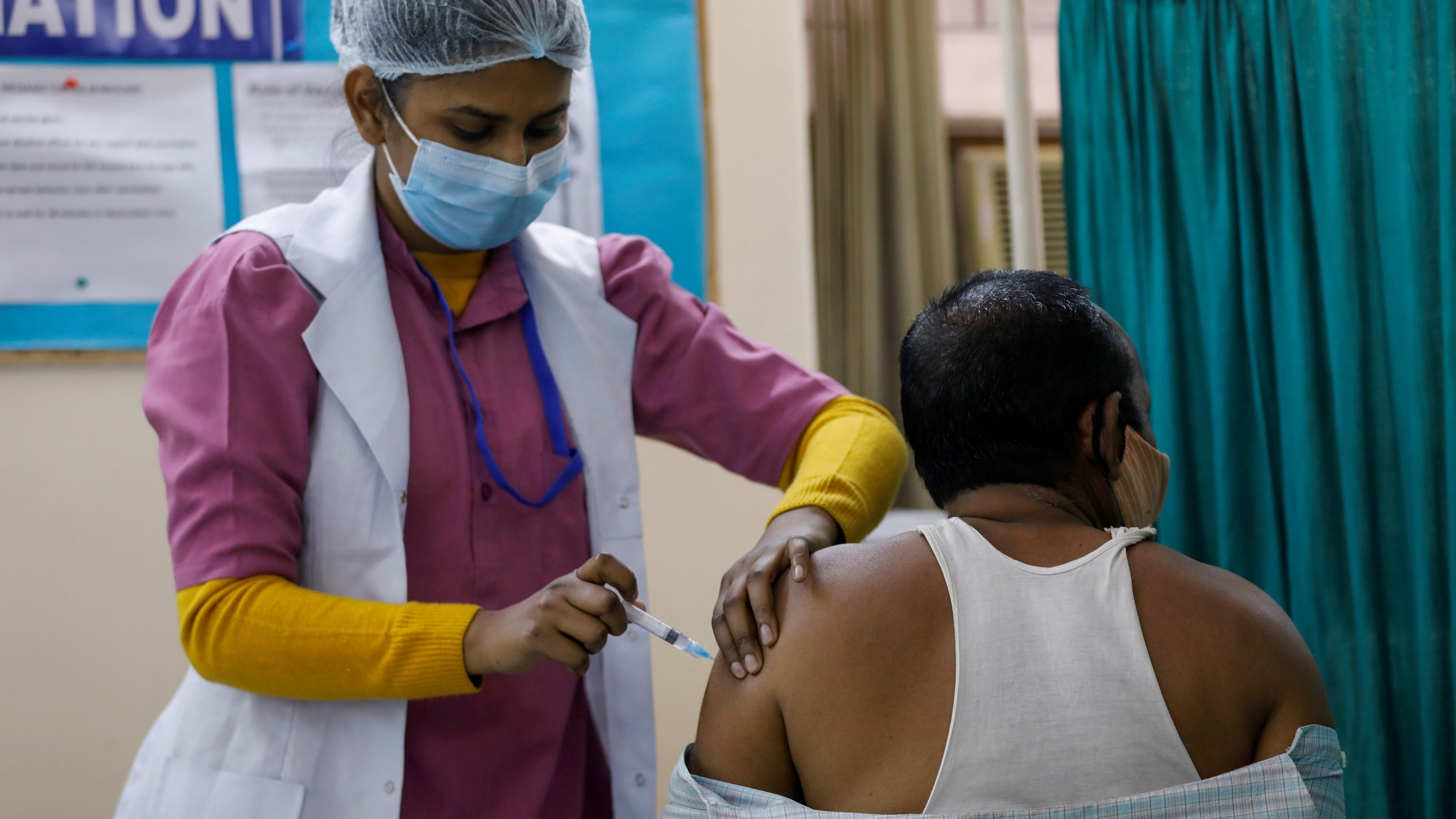
Worrying signs emerge of a link between Covid, vaccine and heart attack?

Heart attack has become a dreaded word owing to several recent deaths of young and middle-aged people post coronavirus. Is there a correlation between covid infection, its vaccine and the risk of heart disease? A report by Sunny Sharma

In the most recent instances of TV celebrities, namely a stand-up comedian Raju Srivastav, who was admitted to AIIMS for over 45 days after he suffered a heart attack. Last month, actor Sidharth Shukla breathed his last due to a massive cardiac arrest. A gym trainer collapsed on his chair after a workout as well as videos of a man dressed as Hanuman dancing in Ram Leela and collapsing while performing, other younger people have also died while performing Garba in Gujarat.

Covid infection & heart risk

New studies have revealed that Covid infection has severely raised the risk of heart disease, especially among the younger age groups. The increasing number of deaths due to heart attack in the country and abroad is concerning. A sudden surge in deaths due to heart attack during the Covid pandemic has baffled clinicians, policymakers and the common man equally. The experts are still not sure if and how these deaths are correlated with Covid.

However, according to a study based on the US Department of Veterans’ Affairs data, people who had contracted Covid face a substantially high risk of cardiovascular issues, including heart attack and stroke. These problems may also happen in people who had relatively mild Covid and have fully recovered from it.

In a recent study published in a journal, Nature, it was reported that people who recovered from severe Covid had extremely high risk of developing cardiac issues till a year later, including heart swelling and lung thromboembolism, which were up to 20-time higher than those uninfected. Further, those who had mild infection and recovered at home without hospitalisation also had risk of heart attack (8 per cent higher) and heart inflammation (2.5-fold higher).

A study at Yale University reported the presence of an excessive number of auto -antibodies in the people hospitalised with severe Covid. Most of these antibodies are against one’s own tissues and cells and can inadvertently attack the body tissues, including the heart, and weaken their architecture. The coronavirus enters through the ACE2 receptor found in organs and tissues such as the lungs, neurons, liver, kidney, intestine and also the heart and blood vessels. The clots may block the blood supply to vital organs like the heart or brain and cause heart attack or stroke, respectively.

Vaccine effects?

“Recently, we have seen a lot of young people dying of acute heart attack and cardiac arrest in particular while doing physical activity like dancing, driving, at wedding ceremonies and all. Now post Covid vaccine too, we have seen an increase in cardiac events even when infected with a milder form of Covid infection. Waves spurred by Omicron are lighter but they have got their own effect,” says Dr Viveka Kumar, Principal Director & Chief of Cath Labs (Pan Max) – Cardiac Sciences. “Vaccine is not a complete answer yet because vaccines also led to certain side effects and caused cardiac events. There are people who have had only vaccines and within a week or a month’s time, we saw that a patient came down with a heart attack. Side effects of the vaccine are of lesser intensity but Covid infection is causing increased cardiovascular events especially cardiac arrest,” adds Dr Kumar.

Dr Mukesh Goel, Senior Consultant Cardiothoracic and Heart and Lung Transplant Surgery of Indraprastha Apollo Hospitals, says, “It’s now known that Covid causes widespread blood clots in small vessels of various body organs including the heart. It also causes inflammation of heart muscle called myocarditis”.

Even a mild case of COVID-19 can increase a person’s risk of cardiovascular problems for at least a year after diagnosis, another new study1 shows. Researchers found that rates of many conditions, such as heart failure and stroke, were substantially higher in people who had recovered from COVID-19 than in similar people who hadn’t had the disease. “It doesn’t matter if you are young or old, it doesn’t matter if you smoked, or you didn’t,” says study co-author Ziyad Al-Aly at Washington University in St. Louis, Missouri, and the chief of research and development for the Veterans Affairs (VA) St. Louis Health Care System. “The risk was there.”

North-western University in Chicago, Illinois has found in its research, “People who had recovered from COVID-19 showed stark increases in 20 cardiovascular problems over the year after infection. For example, they were 52% more likely to have had a stroke than the contemporary control group, meaning that, out of every 1,000 people studied, there were around 4 more people in the COVID-19 group than in the control group who experienced stroke. The risk of heart failure increased by 72%, or around 12 more people in the COVID-19 group per 1,000 studied. Hospitalization increased the likelihood of future cardiovascular complications, but even people who avoided hospitalization were at higher risk for many conditions”.

Rising heart attacks

New data analysis from the Smidt Heart Institute at Cedars-Sinai found that deaths from heart attacks rose significantly during pandemic surges, including the COVID-19 Omicron surges, overall reversing a heart-healthier pre-pandemic trend.

Prior to the COVID-19 pandemic, heart attacks were the leading cause of death worldwide but were steadily on the decline. However, the new study—recently published in the peer-reviewed Journal of Medical Virology—shows that heart attack death rates took a sharp turn and increased for all age groups during the pandemic.

Using data from the Centers for Disease Control and Prevention’s National Vital Statistics System, the Cedars-Sinai researchers identified 1,522,699 deaths from heart attacks—medically called acute myocardial infarctions—between April 1, 2012, and March 31, 2022.

Investigators then compared age-related mortality rates between pre-pandemic and pandemic periods, as well as demographic groups and regions.

Reasons for the spike in heart-related conditions could also be related to psychological and social challenges associated with the pandemic, including job loss and other financial pressures that can cause acute or chronic stress leading to cardiac disease. The research team members say they have long known that infections such as the flu can increase risk for heart disease and heart attack, but the sharp rise in heart attack deaths is like nothing seen before.

Key findings from the study include:

*In the year before the pandemic, there were 143,787 heart attack deaths; within the first year of the pandemic, this number had increased by 14% to 164,096.

*The excess in acute myocardial infarction-associated mortality has persisted throughout the pandemic, even during the most recent period marked by a surge of the presumed less-virulent Omicron variant.

*Researchers found that although acute myocardial infarction deaths during the pandemic increased across all age groups, the relative rise was most significant for the youngest group, ages 25 to 44.

*By the second year of the pandemic, the “observed” compared to “predicted” rates of heart attack death had increased by 29.9% for adults ages 25-44, by 19.6% for adults ages 45-64, and by 13.7% for adults age 65 and older.


Dragon’s Tawang dare to power Xi Jinping’s global ambition?

This time, Dragon chose a new conflict theatre near the world famous Tawang monastery in Arunachal on December 9. It is quite known that the 300-strong Chinese force could not have been deployed without Chinese Prez Xi Jinping’s  ‘specific instructions’, writes Gopal Misra

After getting a new five–year term as the president, Xi Jinping, has embarked upon his mission to establish China as a superpower. For this, he is ready to subdue India, which he believes, though mistakenly, an impediment to his aspiration in establishing his country’s hegemony in the region as well as globally.

With a hope that the two countries would be cooperating with each other forgetting the June 2020 Galwan clashes, Indian PM Narendra Modi exchanged pleasantries with Xi Jinping at the G-20 summit held at Bali in November this year. Earlier, they did not have any communication at the Shanghai Cooperation Organization summit held in Uzbekistan in mid-September.

Xi Jinping had reciprocated to Modi with his ‘mysterious smile’, but India did not lower her vigil. She was not surprised, when Dragon chose a new conflict theatre near the world famous Tawang monastery in Arunachal on December 9. It is quite known that the 300-strong Chinese force could not have been deployed without his ‘specific instructions’.

The other issues being discussed in New Delhi is why did the Chinese supremo trigger a new conflict on India-Tibet border during his visit to Saudi Arabia? Did he want to message the oil-rich region that the USA and its ‘new ally’ India was no match to its military power? The world, however, is closely watching the tight-rope diplomacy of China buying oil from Saudi Arab and Iran simultaneously.

It appears that by investing in the Middle-East, China is dreaming of an Islamic Arc, a strategic asset for its geo-political ambitions. It continues to invest in Pakistan to use as a proxy against India, but recent support in Pakistan for a peaceful co-existence with India, might upset its plans. The thaw in the relations of the estranged neighbours is being promoted on various mainline and social media channels. The notable supporters of India-Pakistan co-operation are two distngushed figures from Pakistan, Professor Ishtiaq Ahmad, a Sweden-based political scientist, and Sajid Tarar, a pro-Trump Republican Party leader. These developments must have upset Xi Jinping’s strategy to use Pakistan and other Muslim countries to be used against India.

Interestingly, India has reportedly communicated to China that its third war, the “Reconquest” of Arunachal Pradesh or Southern Tibet, scheduled in 2035-2040, published in the Chinese newspaper, Wenweipo, on July 8, 2013, would be getting a befitting resistance from India. India has been closely watching the ongoing developments on her borders with Tibet. It has also been noted that since China has been getting stiff resistance from Taiwan and being supported by the western powers. It might reschedule its wars. Instead of annexing Taiwan called the 1st War: scheduled in 2020-2025, it might impose war on India, though scheduled as the third war China.

The situation continues to be tense on the border; the stand off appears to have been diffused by the local commanders for the time being. It is now for Xi Jinping to explain his role in the proposed strategic alliance among the three powers, Russia, India and China.

Meanwhile, India, continues to be vigilant and is aware of the Chinese war game, Wei-Hai (“encirclement”). It is believed to be a copy of the ‘Chaupad’ played against the Pandavas by Shakuni, the cunning maternal uncle of the Kaurvas. It is also being traced to the Chinese strategist, Sun Tzu, which is based on cheating and overwhelming, the opponent. However, it is for China to decide whether it wants to behave like a big power or continues to indulge in its past practice of cheating and manipulating like an upstart in the geo-politics.


Simply put, it is brand Modi that works

There sure were issues besetting the BJP in Gujarat ranging from unemployment, inflation to exam paper leak etc. But the overriding factor towering above all else was Modi’s larger than life persona

If there is any one party that has turned the anti-incumbency factor on its head it is the BJP. It would also not be incorrect to say that it has somewhat changed the definition. Gone are the days of a pattern, so to say or the alternate government syndrome.  Recent and not to recent trends have demonstrated that those in power can continue to remain in power for years on end. The reasons could be different but the outcome can favour one Party for several terms.

A case in point are the results in Gujarat wherein the BJP is celebrating its seventh consecutive win and has put pollsters and analysts on the backfoot.

The recent victory has matched the feat of the Left Front which was in power for seven consecutive terms in the state of West Bengal: from 1977 to 2011 when the diminutive Mamata Banerjee ousted the giants almost single-handedly.  This is a comparison which the BJP will certainly not gloat over given that the Left and the BJP are daggers drawn.

The fact that BJP would win was a foregone conclusion. Losing Prime Minister Narendra Modi’s home state was, in a sense, unthinkable even though there were opinions to the contrary.

One view that had many takers was that while the BJP would win, it would lose some seats as compared to its previous tally: “People are fed up” said critics “and the Modi wave is on the wane”. Wishful thinking though because while this did not defy logic, it certainly did contradict ground reality. Given the BJP’s spectacular victory, going into the reasons, at this point, may just be an academic exercise.

There sure were problems ranging from unemployment, inflation to price rise to exam paper leaks, postponement of government recruitment examination to discontent among farmers, land acquisition due to upcoming government projects and so on and so forth.

But the overriding factor towering above all else is Modi’s larger than life persona. This works like nothing else does, more in Gujarat than in any other state. Therefore, for it to pay dividends where Modi ruled as Chief Minister for well over a decade was and should have been a foregone conclusion. Hence the surprise was not the victory or BJP getting another term but the number of seats it bagged.

It is here that the debate on anti-incumbency kicked in. It was not about winning or losing but about the number of seats the BJP would win. The consensus: win it would, but with a reduced number of seats. Reason: Anti-incumbency: after all for how long can they afford to rule and that too with a record number.

It is this argument that the recent results in the state of Gujarat turned on its head. The BJP not only bettered its previous record but won impressively. It was its best ever performance in Gujarat: 156 seats in the 182 member assembly.

That apart it is a marked improvement over its 2017 tally where it was unable to reach three digits: its tally remained at 99. This was described as its worst tally since 1995.  Worse still, it was only 21 seats ahead of the Congress Party. Probably it is this which hurt more than the Party not being able to cross the 100-digit mark.

That notwithstanding, the BJP seemed desperate to reach the three digit figure. Not that it was a magic-number but it was one that could at least be perceived as a face-saver. Therefore when it failed to get it on its own, it took help from an independent candidate who “pledged support” to the dwindling fortunes of the saffron Party. The three digit tally was more of a psychological victory for the BJP.

But this time around, the story is completely different. Everything went the BJP way and the numbers stumped even the best of analysts.

So people sit up and ask: what is it that works for the BJP? Is it governance? Is it intent? Is it the Hindutva hard-sell? Is it saying what the majority community wants to hear? Or is it polarisation? While it is tough to segregate one from the other or club them together, the fact remains that it is a personality cult that does the trick for the BJP. Simply put, it is Modi that works.  If it is his personal charisma that invades minds, his work on the ground pays dividends.

Decoding the first, it is a fact that Modi’s personal charisma works like nothing else does.

Critics have often dismissed it as more hype than substance, as it were.

Equally it is true that when Modi speaks everyone sits up and listens. And his words, promises and claims, however hollow and exaggerated they may be, leave an indelible mark in the minds of an average voter, particularly in Gujarat which apart from being Modi’s home state is also one which he has governed; and one where his policies of development scored over  divisive and communal politics.

That apart, one must concede that many of the pro-poor schemes launched by the Modi-led government at the Centre have worked to the Party’s advantage.

But this is not to say that the BJP rank and file was not shaky or nervous about the poll outcome in Gujarat. If that were not so, Modi would not have campaigned as vigorously as he did addressing one meeting after another and storming the state with rallies and road shows. If reports are anything to go by, Prime Minister Narendra Modi’s 50 kilometre roadshow in Ahmedabad was the “longest and largest” in the country. So if one were to sum up the Gujarat victory it is the original Modi hai to mumkin hai slogan finding resonance here.

At this point, one may stop to ask: if Modi is BJP’s trump card as Gujarat results have demonstrated, then why did it lose Himachal Pradesh?

There are no easy or straight answers for this except the age-old reasons be it infighting, factionalism or anti-incumbency.

Himachal Pradesh is among those states which traditionally moots for an alternative Party in every election. It is as the Himachalis, or natives say the “rivaaz” or tradition in this laid-back state.

Add to this, the heavyweights pulling in different directions: Party President J.P.Nadda, Union Minister Anurag Thakur or now outgoing Chief Minister Jairam Thakur looking after their respective camps. More importantly, the Party did not throw its weight behind the hill state as it did in Gujarat. Prime Minister Modi did campaign but it was nothing compared to the carpet bombing in Gujarat. This was clearly because the BJP could not afford to have a poor showing there at any cost.

That Gujarat was a prestige battle is a given and particularly this time around because these state elections are perceived to have a bearing on the forthcoming general election in 2024. Therefore the message from Gujarat is more important than one emanating from Himachal Pradesh or from the bypolls that were held alongside be it in Uttar Pradesh, Chhattisgarh, Rajasthan or Odisha among others.

Consequently, the BJP is upbeat because Gujarat’s spectacular win belies all talk of the Modi-wave being on the wane. If anything the results have demonstrated that the going is good, and as of now 2024 is for the BJP “a done-deed” as it were.

Having said that, there is also a message for the Congress. Its victory in Himachal Pradesh and its increasing the tally of the states it now rules, however insignificant, is something it can work towards and cash in on.

Thanks to this election, if 2024 means good tidings for the BJP, the Congress too can set its house in order and hope to reap the benefits of its Himachal-win. And, to borrow a phrase, its time begins now.


Himachal result shows BJP is not invincible after all

The BJP’s landslide victory in Gujarat has bolstered its confidence of retaining power in 2024. However, the Congress win in Himachal Pradesh has negated the myth that the BJP is invincible and showed that PM Modi’s personal appeal has its limitations. A report by Amit Agnihotri

As 2022 came to an end, all the three parties, BJP, Congress and AAP had reasons to welcome 2023 with a smile.

The reason was that the BJP registered a record win in Gujarat by winning 156 out of 182 seats, the Congress won Himachal Pradesh by bagging 40 out of 68 seats and the AAP became a national party by winning 5 seats and 13 percent vote share in Gujarat, besides ending the saffron party’s 15-year rule in Delhi municipal polls.

The Gujarat and Himachal Pradesh polls were watched keenly across the country as they would have a bearing on the Madhya Pradesh, Karnataka, Rajasthan and Chhattisgarh assembly in 2023, ahead of the 2024 national polls.

Going by the Gujarat result, in which PM Modi’s personal appeal and the BJP’s better election machinery made all the difference, many in the saffron party have started claiming a third term for him at the Centre.

However, the Himachal Pradesh result negated the myth that the BJP is invincible and showed that PM Modi’s personal appeal had its limitations.

For the Congress, which is conducting a nationwide yatra to revive the party ahead of 2024 national polls, the Himachal Pradesh win came as a morale booster but its worst ever performance in Gujarat elections showed that the road ahead for the grand old party’s resurgence was a long one.

Gujarat is a bigger state which sends 26 seats to the Lok Sabha against Himachal Pradesh, which has only 4 parliamentary seats.

The AAP had claimed it would defeat BJP in Gujarat and emerge as the national replacement of the Congress in 2024 but the zero seats in Himachal Pradesh and just 5 in Gujarat showed that mere hype would not change the ground reality for the new party.

The poor performance of AAP showed that there was little scope for a third force in the two states where the main fight would continue to be between BJP and Congress.

Congress

The grand old party ran a low-key campaign in Himachal Pradesh while highlighting the various guarantees it had given to the voters.

Rahul Gandhi did not campaign as he was busy with the Bharat Jodo Yatra but made an appeal to the voters on the voting day November 12.

Priyanka Gandhi Vadra led the party’s campaign along with Chhattisgarh chief minister Bhupesh Baghel and Sachin Pilot while Congress president Mallikarjun Kharge also held rallies in Himachal.

Later, Congress leaders credited Priyanka Gandhi Vadra for the good showing in the Himachal assembly elections. This was Priyanka Gandhi’s first electoral success after the party had lost Uttar Pradesh assembly polls while she spearheaded the canvassing there earlier this year.

The Congress had brought in a new team in the hill state last year headed by AICC in charge Rajeev Shukla who opted for Pratibha Singh, wife of former chief minister Virbhadra Singh, as state unit chief to win back the state.

The grand old party was affected by infighting and defections in the hill state but factions of state unit chief Pratibha Singh and senior leaders Mukesh Agnihotri and Sukhvinder Sukhu stayed together.

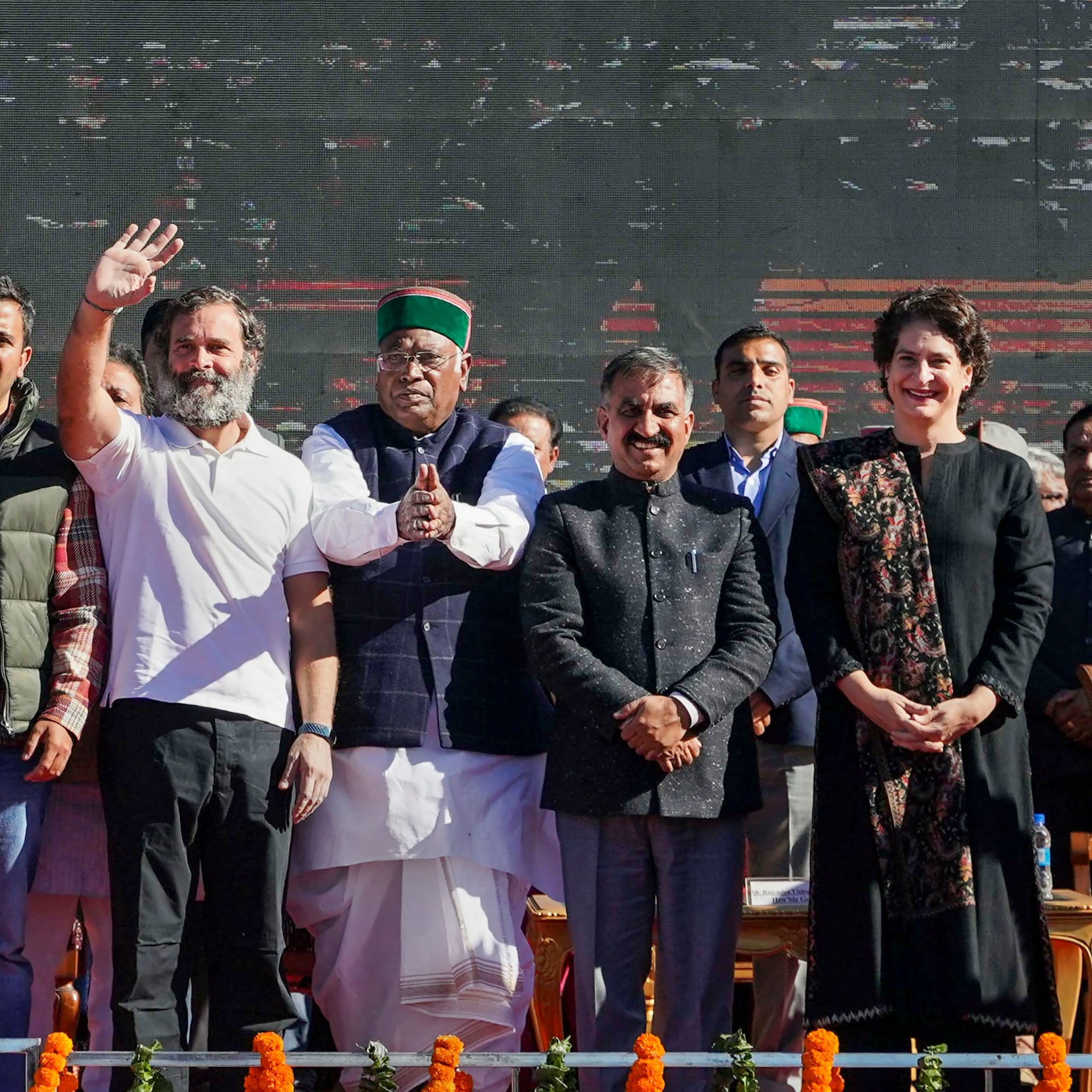
After the polls, there was a tussle between Pratibha Singh and Sukhu but the latter was finally named the Himachal Pradesh chief minister with Agnihotri as his deputy. Kharge, Rahul and Priyanka attended Sukhu’s oath taking ceremony in a show of strength.

Pratibha Singh, the sitting Lok Sabha member from Mandi, a seat which fell vacant after her husband and former chief minister Virbhadra Singh’s death, accepted the high command’s decision gracefully.

However, Gujarat turned out to be a big disappointment for the Congress, which had been banking on the BJP’s huge 27-year anti-incumbency to stage a comeback in the western state.

After giving a tough fight to the BJP in the 2017 Assembly polls in Gujarat by winning 77 seats, the Congress hit rock bottom with just 17 seats. Both Kharge and Rahul Gandhi accepted the defeat with humility.

“We humbly accept the mandate of the people of Gujarat. We will reorganize, work hard and continue fighting for the ideals of the country as well as the rights of the people of the state,” Rahul Gandhi said in a tweet in Hindi.

“The Gujarat results are disappointing. We need to introspect, take tough decisions and develop new leadership in the state,” Jairam Ramesh said.

He blamed the AAP and AIMIM for helping the BJP win in the western state.

Earlier, the party was affected by infighting as several of its MLAs joined the BJP over the past few years. The notable shift was Hardik Patel.

AAP

The Aam Aadmi Party contested Himachal Pradesh assembly polls for the first time but drew a blank and got just 1 percent vote share. In many seats like Dalhousie, Kasumpti, Chopal, Arki, Chamba, and Churah, AAP candidates got less votes than ‘None of The Above’ NOTA option.

AAP had started its campaign in Himachal on a high note before the November 12 elections with party convener Arvind Kejriwal and Punjab Chief Minister Bhagwant Mann holding rallies and road shows but they soon gave up due to lack of response from the voters. The party contested 67 out of 68 seats in Himachal but could not win even a single seat.

In Gujarat, the AAP lacked a popular face as its chief minister nominee and had no party organization. To make up for this shortcoming, the party had to depend on paid workers and media hype to project itself as the party which could defeat the BJP.

Like the Congress, the AAP too had made several promises like free electricity, Rs 1,000 to women, jobs for youths, quality education and health facilities, and improvement in rural infrastructure to woo the Gujarat and Himachal voters.

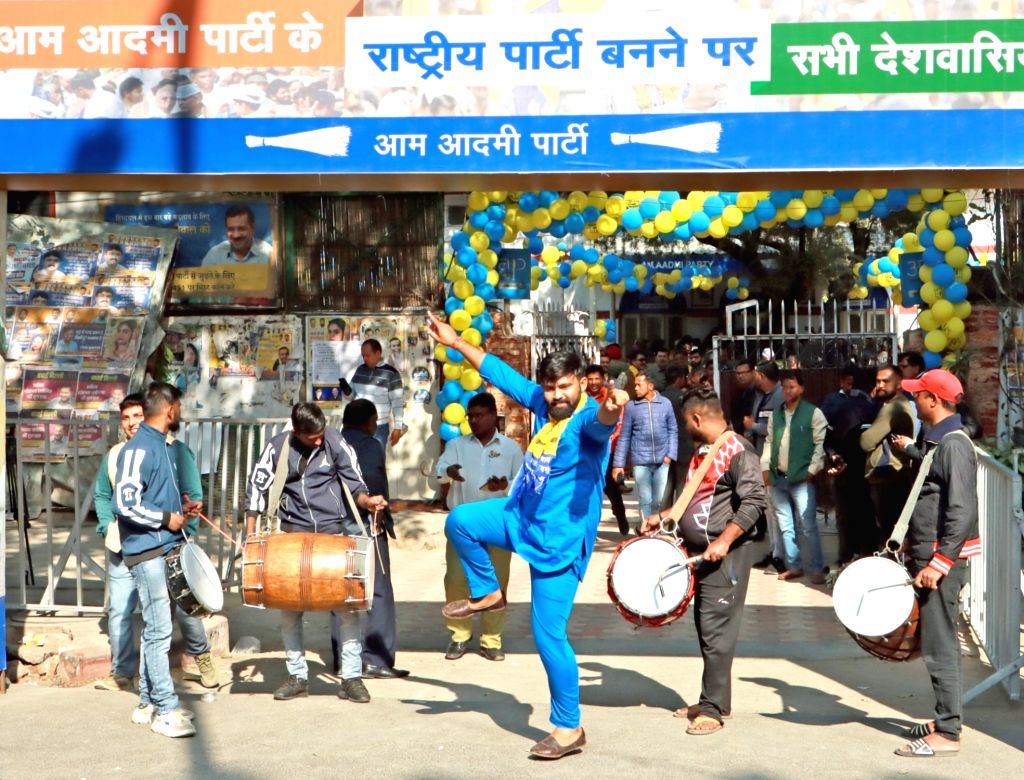
The AAP got a 13 percent vote share in Gujarat which made it eligible to be recognised as a ‘state party’ by the Election Commission. Since Gujarat is the fourth state where the AAP got the ‘state party’ recognition, besides Delhi, Punjab and Goa, it will be eligible for a national party recognition as well.

After the Election Commission’s formal nod, the AAP will become the eighth party currently with national status, the others being Congress, BJP, Mayawati’s BSP, the Communist Party of India (CPI), the CPI (Marxist), Sharad Pawar’s Nationalist Congress Party and Mamata Banerjee’s Trinamool Congress.

AAP Rajya Sabha member Raghav Chadha said the Aam Aadmi Party gained the status of a national party within 10 years of its formation. He took potshots at the saffron party saying that the BJP had in fact lost two polls, Himachal and the Delhi municipal elections.

The Delhi MCD polls were held on Dec 4 along with that of Gujarat on Dec 1 and Dec 5 and put pressure on the AAP to manage both. Yet, Kejriwal’s promise to clean up Delhi in five years convinced the voters to give AAP a majority in the municipal body and end the BJP’s 15-year rule. The Congress remained a marginal player in the local body indicating the Delhi unit needed an overhaul.

BJP

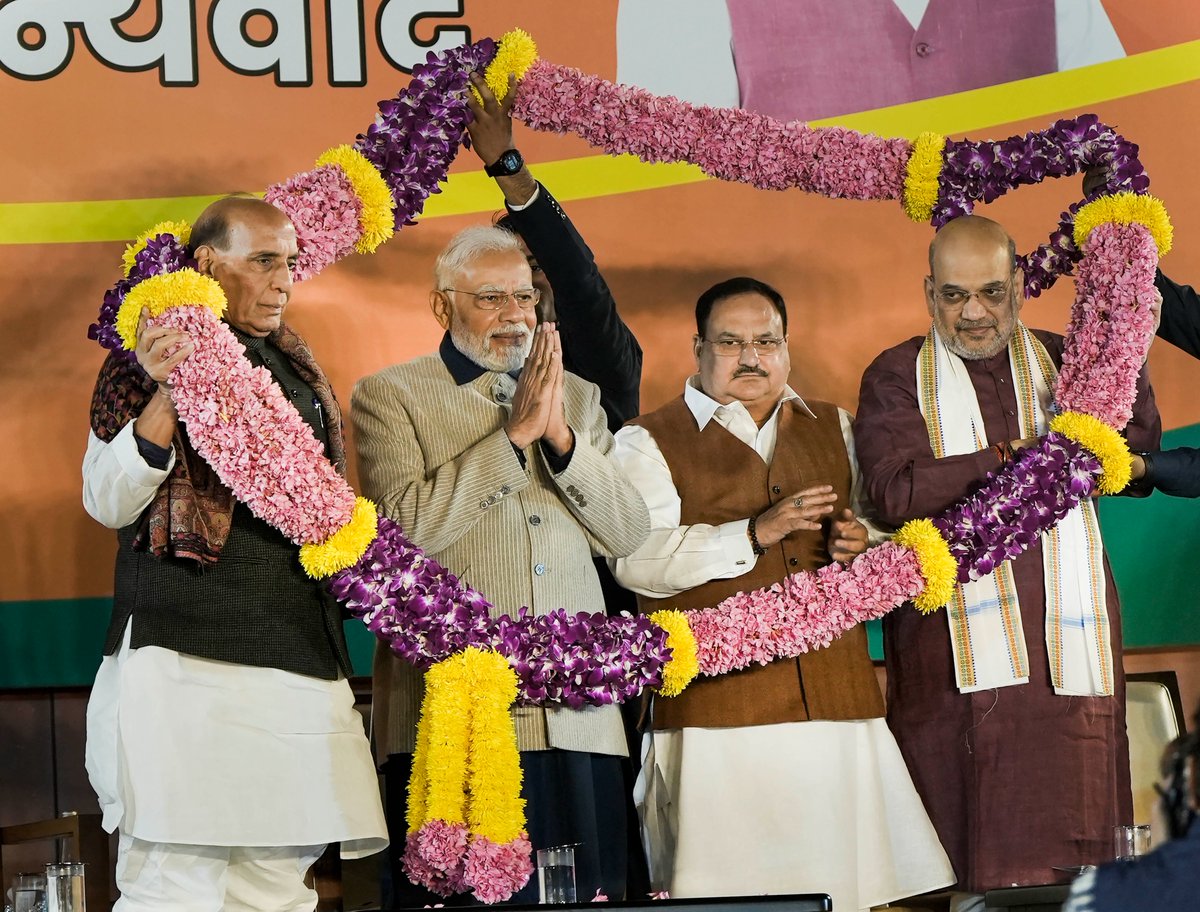
The BJP celebrated its big win in Gujarat even as party chief JP Nadda attacked the AAP for challenging it there. PM Modi too targeted the new party without taking any names. “Those political parties that try to exploit the fault lines and pose new challenges to India from within just to make some political gains, those parties are being watched and understood by the people of the nation,” PM said.

“They might find a lot of things to exploit and divide the people, but there is one thing that unites us all – our motherland. And we in BJP work only for the benefit of the motherland. Today, BJP is the first choice of most people in India,” he said.

Former Gujarat chief minister Bhupendra Patel, who won by a record margin, was elected for a second term by the new MLAs. Interestingly, Patel was brought in only last year in place of former chief minister Vijay Rupani to curb anti-incumbency.

In Himachal Pradesh, the BJP had to deal with rebel candidates on 21 out of 68 seats. Further, despite being the home state of JP Nadda, presence of various party factions led by Nadda, Union minister Anurag Thakur, and Chief Minister Jairam Thakur affected the party. Also, while Gujarat does not send many soldiers, Himachal Pradesh is home to a large number of ex-servicemen families, who had been affected by the controversial “Agniveer” defence jobs scheme.

The hill state has a large number of people who prefer government jobs and the Congress’ promise of bringing back the Old Pension Scheme, made the voters shift towards the opposition party. The BJP’s claim of double engine governments did not appeal to the Himachal voters as they believed in the Congress allegation that no development took place in the past five years.

Former chief minister Jairam Thakur said his party would learn from the shortcomings while PM Modi noted the difference between vote shares of BJP and Congress was not much.


AAP gets a national stature on the back of Gujarat show

Though written off by many in Gujarat, AAP managed to breach Modi-Shah’s fortress to some extent. With most of the candidates fielded by AAP being first timers, the party still managed to bag five seats including two held previously by BJP and two by Congress, writes Aayush Goel

Zero in Himachal Pradesh and single digit in Gujarat but still Aam Aadmi Party has a spring in its stride and celebration in ranks. The decade old party, known for its ‘health and education’ promises, has finally arrived and transformed into a national party. The party is celebrating the 12.9-per cent vote share with six per cent vote share in at least four states: Delhi, Punjab, Goa and now Gujarat. In several of the 34 seats in Gujarat where it came second, it polled over 20 per cent of the vote.Victory in Gujarat made BJP the only party other than the Communist Party of India (Marxist) to have won seven straight assembly elections. The CPI (M), which ruled West Bengal for 34 years from 1977 to 2011, had also won seven straight elections.

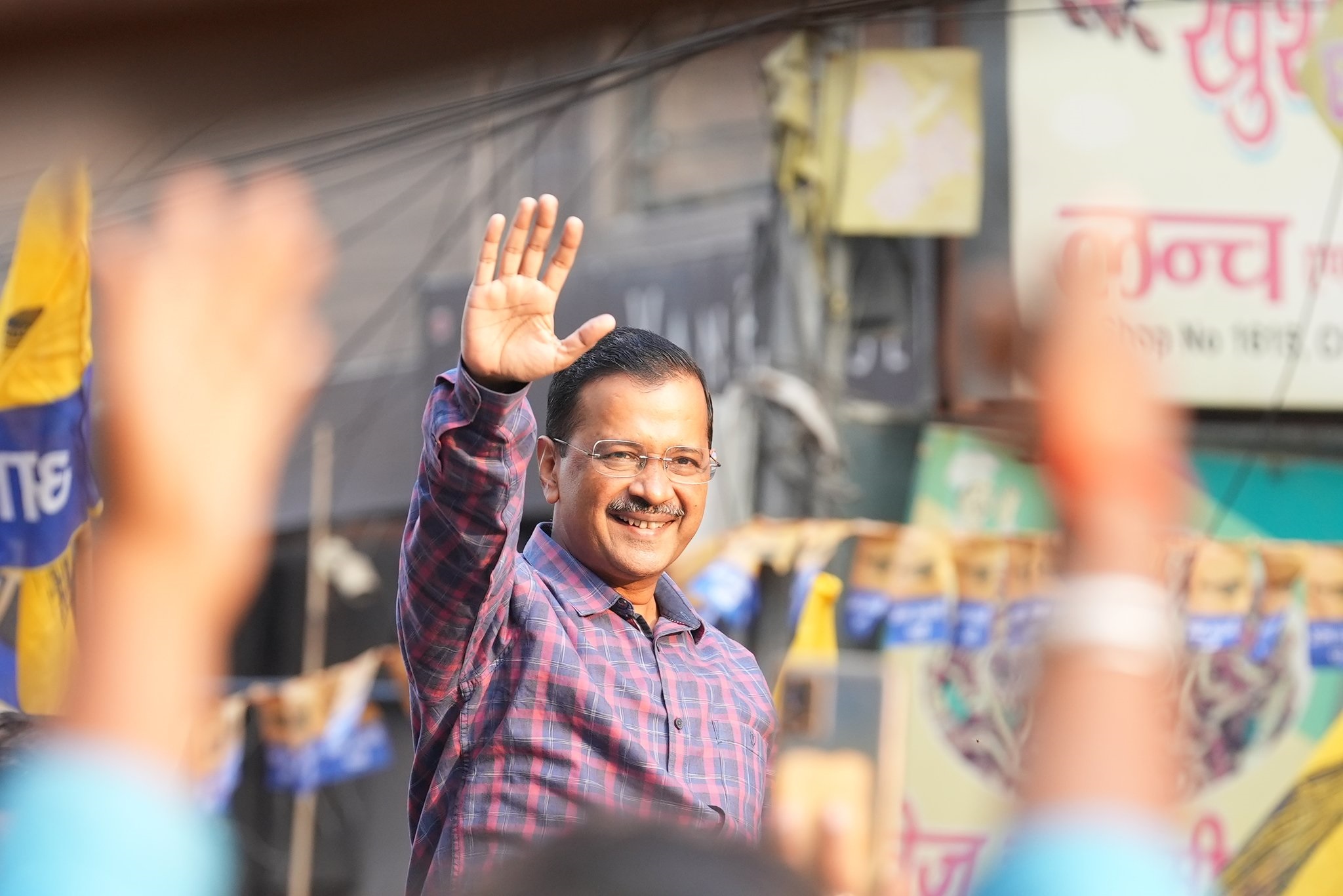
Meanwhile, an elated party supremo and Delhi CM Arvind Kejriwal said in a video message: “Gujarat’s people have given us the national status that only a few parties have. It’s an amazing achievement for a small, young party.” With Punjab and Delhi under its wings and newly achieved status of national party AAP is now focussed on mission 2024. Senior party leader and MP Sanjay Singh says they have moved to the next battle of Modi versus Arvind Kejriwal in 2024. “Ten years and we went on from being a movement to the fastest growing political party to national party in 10 years. Now we are up for our ultimate role to take on the biggest political party in 2024. It will be Modi versus Kejriwal,” said Singh.

The Gujarat feat

While the party was written off by many with Gujarat polls being called Congress-BJP fight, AAP managed to breach Modi-Shah’s fort in Gujarat. Majority of candidates fielded by AAP on 180 seats were first timers and the party still managed a win on five seats including two held previously by BJP candidates and two by Congress. Though over 120-odd AAP candidates lost their deposits for not getting even one-sixth of the total votes polled and top leaders like chief ministerial face Isudan Gadhvi, state unit president Gopal Italia, former Patidar agitation leaders Alpesh Kathiria, Manoj Sorathiya, Dharmik Malaviya were vanquished but it got a toe hold in Gujrat. It won five seats, four in Saurashtra and one tribal seat in South Gujarat. More significantly, by pocketing a popular vote of 12%, AAP gained the national party status. Amongst the winners, AAP’s Bhupendra Bhayani defeated Harshad Kumar Ribadiya who had won from Congress in 2017 and had switched to BJP this year from Visavadar. Bhayani got 45 percent of the vote share in the seat which was former CM Keshubhai Patel’s stronghold. Similarly, in Jamjodhpur, AAP’s Hemantbhai Ahir defeated Congress Candidate with 47 per cent of vote share. AAP’s Sudhir Vaghani and Umesh Makwana are star winners who secured BJP-held seats of Gariadhar and Botad, respectively. AAP’s Chaitar Vasava made a mark in Tribal Gujarat winning the reserved ST seat of Dediapada with 55 per cent of the vote share. AAP emerged second in total 34 seats and managed to get an average of 20% of the votes. “We are just a decade old party that talks of common man issues and promises development. We may have not replicated Delhi or Punjab here but made a dent in Modi-Shah winning streak and Gujarat elections has transformed the party, our candidates got major vote share even where they lost. This highlights that we have made an entry and will soon win,” says party state president Gopal Italia.

MCD win set the tone

While Gujarat gave the party its ‘national’ tag it however won in Delhi civic elections which started the carnival for Gujarat. The fact that just a day before the BJP’s Gujarat success, AAP defeated BJP in Municipal Corporation Delhi elections inspite of huge odds proved the party’s grit and mettle.

AAP had the odds stacked against it like elections being delayed from March to December, municipal ward boundaries changed, its leaders charged with corruption and some stalwarts even sent to  jail. The BJP gave it all it had in these elections with several union ministers and even the PM taking part in the election campaign. But still, AAP prevailed, ending the 15-year run of BJP in MCD.

Out of 250 wards, the party won 134, while the BJP got 104, and the Congress could secure only 9. The victory means that AAP took control of the civic body for the first time in the national capital where it has a government. The party will now finally be able to deal with control over key civic sectors, such as waste management, primary education in corporation schools and collection of property tax. It was not just the win but also the share of votes which left the party in a promising position.

The AAP’s vote share stood at 42.05 per cent this time as compared to 26.23 per cent in 2017. This increase is along expected lines, since it had won just 48 out of 270 seats in the last elections. The victory was a special win for the party as Delhi is where the story started in 2013, riding on the popularity of the Anna Hazare-led anti-corruption movement. The win also gave a blow to desire to dominate every tier of the government local, state and central.

Taking a modest route with a win, Kejriwal went ahead talking about an inclusive approach to governance “Aaj tak jitni rajneeti karni thi, kar li. Ab milkar kaam karna hai (Whatever politics had to be done, is done. Now we have to work together)… For those who did not vote for us, I want to tell them that we will first complete their pending work. We need the support of all, especially the central government. From this stage, I seek the blessings of the Prime Minister and the Centre to fix Delhi,” he said.

Punjab cabinet reshuffle on cards?

Every time AAP scores, the memories of Punjab landslide victory is refreshed in their minds. It was the party’s first win outside Delhi. It won 92 out of 117 assembly seats defeating many heavy weights including  five-time chief minister Parkash Singh Badal, two-time chief minister Amarinder Singh, former deputy chief minister Sukhbir Singh Badal and state Congress party chief Navjot Singh Sidhu. The win changed the state’s decade’s old politics forever and highlighted voter’s need for change and hope.

Now, a day after the Gujarat and Himachal Pradesh Assembly poll results, a post-mortem of the performance of all AAP ministers, MLAs and office-bearers of the party unit in the state has begun in Punjab. The report card of all functionaries in the party and in the government is expected to be presented at the meeting of the party’s national executive scheduled for December 18 in Delhi.

As the party has started the exercise, speculation is rife about changes being made in the state party’s organisational structure. A reshuffle in the state cabinet could also be effected after this meeting.

Himachal: A lost chance?

While AAP has a lot to celebrate but the Himachal defeat has left many disheartened. The local leaders feel that while chasing the Gujarat dream they lost out on Himachal. As per the latest poll results, the party got a little over 1% of the vote share. AAP candidates lost their security deposits in most of the state’s 68 constituencies.

Soon after AAP won the Punjab assembly elections in March this year, pollsters were confident that AAP would do well in neighbouring Himachal Pradesh too but it failed “We had a good chance that we messed up. We were doing great till June and July but everything went haywire since then as we were abandoned for Gujarat,” said a senior party leader. The local leaders feel AAP could have dealt with both states but Himachal was abandoned. During the course of the campaign here, the party changed its state in-charge thrice – first it was Durgesh Pathak, then Sandeep Pathak and then Harjot Bains, a minister in the party’s Punjab government. So, this election season left AAP with a lot to celebrate. However, there were also some lessons to be learnt for the fast growing party.


Poll results: Mixed signals and their implications

AAP will be keen to expand its sphere of political activity in states where Congress and the BJP are the major contenders for power and try to replace Congress in Opposition space gradually.

The recent election results were a mixed bag for the parties in fray. AAP wrested the control of MCD from the BJP while Congress secured a morale-boosting victory in Himachal Pradesh. Meanwhile the BJP registered a resounding win in Gujarat for the remarkable seventh consecutive time.

AAP a force to reckon with

The verdict handed out by the electorate of Delhi in the elections to the Municipal Corporation of Delhi (MCD) on December 4 has favoured AAP in winning 134 seats in a house of 250 with BJP winning 104 seats and Congress securing 9 seats along with 3 others. The voting percentage of AAP stands at 42. 05%, for the BJP it is 39.09% and for Congress, it is 11.68%. Relative to last polls held for the MCD, AAP has recorded a big jump in its vote share whereas both the BJP and Congress have registered a decline in their respective vote share.

Within less than a decade of its existence, AAP has emerged as a force to reckon with in north Indian politics in general and Delhi in particular. Having commanded a resounding victory in the past two elections held to the Delhi state assembly, it has brought MCD under its tutelage. After winning a landslide victory in Punjab and staging a good show in the recently-held Gujarat assembly election, AAP has qualified to be declared as a national political party. Many experts believe that it has a bright future in Indian politics in the ensuing years.

A glimmer of hope for Congress

The electoral outcome of the recently-held assembly election in Himachal Pradesh has enabled Congress to secure 40 seats in a house of 68, with the BJP winning 25 seats and AAP failing to open its account and others mostly comprising independents securing 3 seats.  Many experts opine that Himachal Pradesh for the past some decades has followed a tradition of change of regime after every five years and the recent verdict of assembly elections favouring Congress at the helm and ousting the BJP out of power is in consonance with that tradition. Undoubtedly, the BJP was very hopeful of retaining power in the state in defiance of the so-called tradition and it also pulled all stops to retain the power with the help of a horde of senior BJP leaders and Central Ministers engaged in electioneering for the party.

On the other hand, Congress’s top brass leadership was absent from the scene and only Priyanka Gandhi and the Chief Minister of the Congress-ruled state of Chhattisgarh were looking after the electoral campaign of the party. Nevertheless, the state unit of Congress and party workers worked hard to capitalize on the anti-incumbency factor and the growing disenchantment of the local communities against the ruling BJP to the advantage of Congress. Another factor favouring the Congress was the dissidents from the BJP who had been denied the tickets by the party and were contesting as independents, thereby denting the votes of the BJP. Some of these dissidents have even won a couple of seats. However, the razor-thin margin in the total votes polled by the Congress and the BJP is alarming for the Congress which is called upon to keep its flock intact and deliver on what it has promised to keep saddled into power.

Modi juggernaut rolls on

The verdict handed out by the electorate of Gujarat is unique and admirable in many respects. Its uniqueness lies in enabling the BJP to retain power for the seventh consecutive term with a landslide victory with unprecedented 156 seats in a house of 182 along with over 52% of votes polled. The thumping BJP victory has broken all previous records. Larger than life image of the personality cult of Prime Minister Modi, the BJP’s well-concerted strategy of election management at the micro level, money power, official machinery, and other immense resources at its disposal have seemingly proved instrumental in overshadowing the local issues like Morbi tragedy, price rise, unemployment etc.

The Congress which has been the main political rival of the BJP in the state of Gujarat could manage to save its grace by securing 17 seats relative to 77 seats won by it in 2017. Experts attribute many factors responsible for the poor electoral performance of Congress in Gujarat. In the first instance, it is argued that Congress’s top brass failed to take Gujarat polls seriously and their casual approach has cost the party dearly in terms of loss of seats. Secondly, the Congress repeated the mistake it had committed in Punjab by overemphasizing on OBC, SCs/STs and minorities along with failing to understand rival’s moaneuvres of projecting it as a pro-Muslim party.

The BJP leadership cleverly used its time-tested strategy of communal divide by raking up the Godhara issue and claiming that the state has been riot-free for over two decades and reminding people how stern lessons were taught to the offenders under the BJP rule. And there is an alternative strategy with Congress to counter BJP’s Hindutva and communal divide. AAP has been able to secure 5 seats and a share of over 10% of votes and it has entitled it to claim the status of a national party.

The way ahead

Some analysts have opined that the outcomes of assembly elections in Himachal Pradesh and Gujarat have different prospects and lessons for the main contending parties – AAP, the BJP and Congress – with AAP becoming more enthusiastic to expand its sphere of political activity in states where Congress and the BJP are the major contenders for power and try to replace Congress in Opposition space gradually. While conceding brighter prospects for AAP, some analysts also argue that AAP cannot be an alternative to Congress because the alternative to Congress is Congress itself.

Besides, the resounding victory of the BJP in Gujarat has undeniably bolstered the morale and image of the BJP which has successfully experimented with the Gujarat Electoral Model, unlike its previous emphasis on the so-called Gujarat Model, In this new model, the larger-than-life personality cult of its leader is capable of eclipsing and overshadowing the local issues and the possibility of the BJP of encashing on this model in forthcoming state assembly elections in 2023 cannot be ruled out.

While delivering on its promises in Himachal Pradesh without brooking any delay, Congress needs to ponder seriously over its electoral strategy, organizational strength, and an alternative programme in response to BJP’s policy of hatred and communal divide. Congress of the day is engaged in the national freedom struggle of the Gandhian Era where morality is the basis of any struggle. But it is confronted with a rival of the 21st century who can go to any extreme to grab power.

Undoubtedly, Bharat Jodo Yatra being undertaken by Rahul Gandhi is a good step in connecting with the people; nevertheless, there is a need for the local and provincial Congress workers to keep that connect with the people alive in the areas already covered and to be covered in the near future. An organizationally well-knit Congress with the rule in some states can be the rallying point for Opposition unity.

.


MOST POPULAR

HOT NEWS