Saturday, December 27, 2025

Trouble mounts for Ashish Mishra as court frames murder charges

The trial court in UP was left with no other option after stringent observations of the apex court as it framed murder and conspiracy charges against Ashish Mishra, union minister Ajay Mishra’s son, and his 13 accomplices for their role in Lakhimpur carnage, writes Mudit Mathur

After failing to get any reprieve from High Court to Supreme Court and almost a year-long dilly dallying on the chargesheet filed before the trial court in early January, Ashish Mishra, the son of Union Minister of State for Home, Ajay Kumar Mishra faced a major jolt on December 6th, 2022. Finally, the trial court in Uttar Pradesh was left with no other option after stringent observations of the apex court as it framed murder and conspiracy charges against him and his 13 accomplices for their alleged role in the Lakhimpur Kheri carnage and fixed 16 December for production of evidences beginning a regular trial.

The Additional District and Sessions Judge I Sunil Kumar Verma framed charges of murder and various offences under the Indian Penal Code (IPC) and Section 177 of the Motor Vehicles Act against Mishra and 13 other accused persons. The charges against Mishra and others have been framed under Sections 147 (rioting), 148 (rioting armed with deadly weapons), 149 (offence committed in prosecution of common object), 302 (murder), 307 (attempt to murder), 326 (voluntarily causing grievous hurt by dangerous weapons), 427 (mischief causing damage), 120B (criminal conspiracy) of the IPC and Section 177 of the Motor Vehicles Act.

Another accused, Block Pramukh of Palia and brother-in-law of minister, Virendra Shukla, will be tried for causing the disappearance of evidence for hiding Scorpio SUV used in the crime, being part of convoy. Three BJP workers, Shyam Sundar Nishad, Shubham Mishra and Hari Om Mishra, who were allegedly lynched by farmers in retaliation were also named as accused in charge sheet.

The Special Investigation Team (SIT) constituted by the Supreme Court has in its 5000-page long chargesheet vindicated all the allegations against Union Minister’s son, Ashish Mishra Monu and his 13 associates, confirming his presence in the Thar Mahindra jeep and firing gun shots at farmers on 3rd October 2021 in Tikunia area of Lakhimpur Kheri. Now, he has to face trial for murder and well-planned conspiracy. However, the Sanyukt Kisan Morcha is not satisfied over sparing the union minister Ajay Mishra Teni from the ambit of probe despite his name appearing in the draft for FIR filed by deceased farmers’ families.

A convoy of three vehicles, including one owned by Union Minister of State for Home, Ajay Mishra Teni, ploughed into a group of protesting farmers killing four farmers and a journalist. In retaliatory ferocity, three accused BJP workers were lynched on the spot of the ghastly massacre as their speeding vehicle overturned just after the incident.

The eyewitness account and video footage of a nearby petrol pump followed with testimonies of 99 witnesses were recorded under section 164 CrPC before the court, and all of them have professedly pointed out the presence and involvement Ashish Mishra at the spot. Testimonies of witnesses were verified through investigation at the spot.

The SIT had earlier submitted in court that the incident was “a planned one and not an act of negligence.” The court later dropped the sections pertaining to “accident” from the FIR and included sections 307 (attempt to murder), 326 (voluntarily causing grievous hurt using weapon which is likely to cause death), 34 (criminal acts done by several persons in furtherance of common intention) of the IPC, along with sections 3/25, 5/27 and 30 of the Arms Act.

SIT investigations also mentioned ballistic findings confirming gunshots on farmers who were returning home from the site of protest over the three farm laws. The CCTV footage from petrol pump also confirmed his presence on the crime spot contradicting the minister’s claims that his son was not present there when the crime occurred.


AIIMS cyber-attack a wake-up call amid India’s digital push

If the ransomware attack is indeed an international conspiracy, as suspected, there are wider national security implications, and should lend urgency to developing robust safety locks

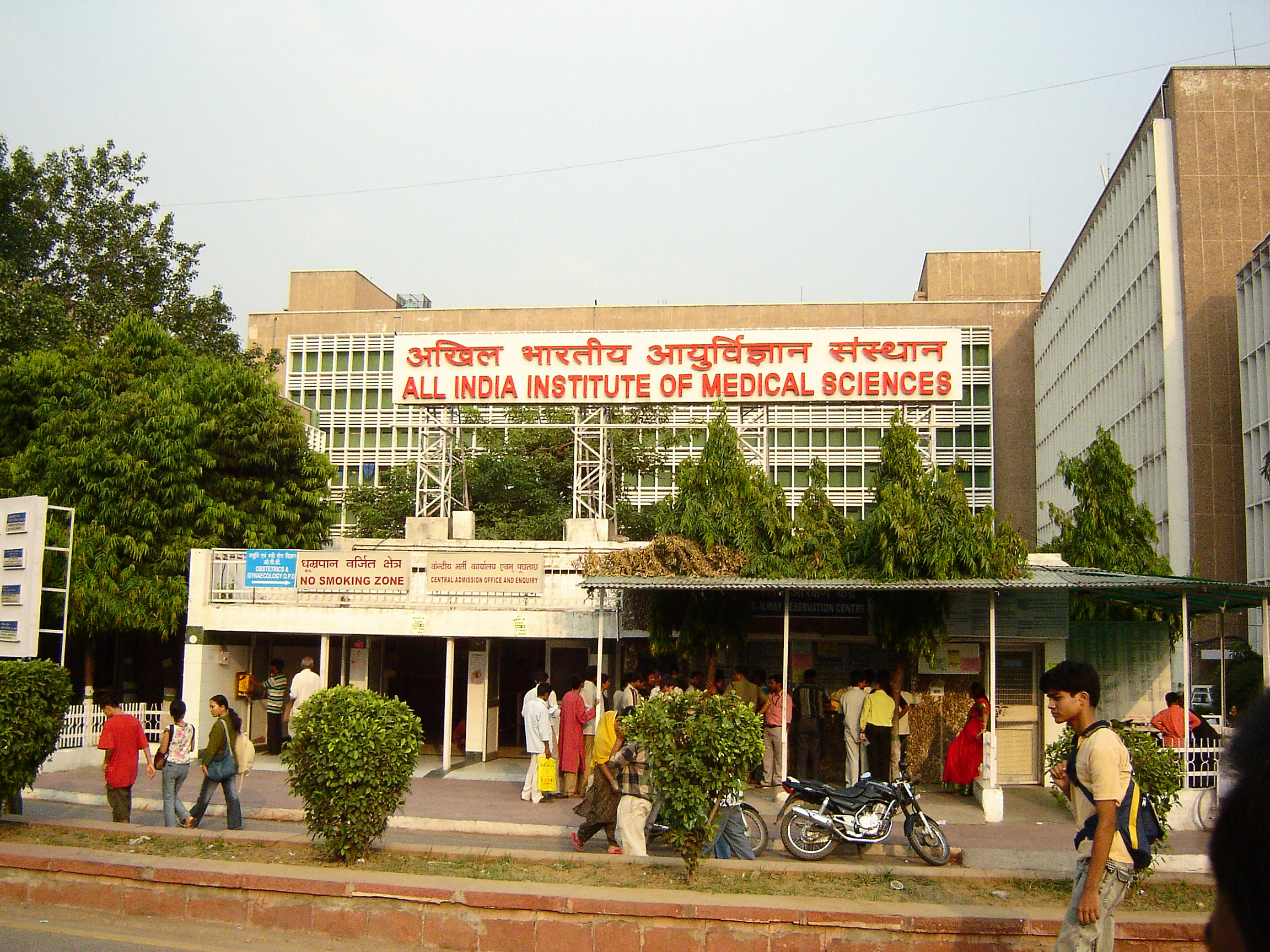
The cyberattack on the servers at the All India Institute of Medical Sciences (AIIMS)  is a serious jolt and a wake-up call amid the country’s push towards Digital India exposing its vulnerabilities.

That the hack originated from another country and the possible involvement of a foreign state actor should lend urgency to developing robust safety locks.  If the sophisticated ransomware attack is indeed an international conspiracy, as suspected, there are wider national security implications.

On 30 November, just days after the strike on AIIMS, there were reportedly as many as 6,000 attempts to hack the server of the Indian Council of Medical Research (ICMR).

More attempts

On December 2, news came of hackers selling over 150,000 patients’ data records belonging to a Tamil Nadu-based multispecialty hospital — for just $100 per download. Analysts said the IT vendor of the hospital was targeted first and via that vendor’s systems as initial foothold, the hackers got into the hospital system.

Last month, the server of Safdarjung Hospital was also down for a day after a cyberattack. In March, the National Institute of Mental Health and Neuro Sciences (NIMHANS) had faced a cyber- attack.

Major concern is the uptick in cyberattacks on medical institutions in the country post the Covid pandemic. Hackers and criminal syndicates have been targeting large volumes of patient data.

How it happened

The attack on AIIMS came to light on November 23 when users found they could not access a key application that manages appointments, stores medical records and hosts reports from diagnostic tests carried out by the facility.  There are records showing that on November 23 at 7:07 am, the final transaction at the AIIMS server occurred. The server was eventually compromised. Two email addresses used by the hackers to send RANSOMWARE were dogA2398@protonmail.com and mouse63209@protonmail.com.

The breach in security particularly affected e-hospital application, stopping the online functioning of OPD, emergency and other patient care services in the AIIMS premises. The massive cyber-attack derailed everyday work, appointments and registration, billing, patient care information and lab reports. The attack corrupted files and data on main and backup servers of the mega-hospital. Everything was moved to manual mode at the AIIMS.  On the mega hospitals’ primary and backup systems, the hack corrupted files and data. At the All India Institute of Medical Science (AIIMS), everything was switched to manual mode, and the giant handling four million patients a year sputtered on paper systems for more than a week.

Doubts over data security

On 19 July 2016, the Delhi AIIMS, India’s biggest tertiary care hospital, completed implementation of the e-Hospital project under the Narendra Modi government’s Digital India Initiative. In doing so, it became the country’s first fully digital public hospital.

Six months after full digitisation, on 9 January, 2017, Dr Deepak Agrawal, from the neurosurgery department, who was then chairperson of the computerisation committee, wrote to the Union Health Ministry. In his letter, he pointed out that the e-hospital installation by the National Informatics Centre (NIC) — the government department responsible for setting up IT infrastructure — had not been bolstered with appropriate systems for upkeep and security. “There is no database administrator, security administrator and system administrator at site for the installation, putting the whole project at risk,” wrote Dr Agrawal.

Four months later, the medical superintendent of AIIMS, Dr D K Sharma, also brought up similar issues in a report about the implementation of the e-Hospital. Writing to the health ministry, he reported that the AIIMS online registration system was seeing more than 6,500 new appointments and over 5,000 follow-ups daily, but he also flagged major concerns. “There is no disaster backup for maintaining continuity of operations in case of primary site failure, despite repeated requests to the NIC for the same,” wrote Dr Sharma.

The minutes of the meeting on the progress of implementation of the e-Hospital application in AIIMS on 16 July 2016 say that the NIC is the driving IT force behind the digital transformation done in AIIMS. But Dr Sharma’s letter to the ministry states that the NIC had no service agreement with the hospital. “There is no service-level agreement with NIC, because of which the vendor (NIC) cannot be held accountable for any lapses in service,” he wrote. “Upkeep time does not meet international standards.”

Probe so far

Police has registered an FIR under IPC Section 385 (putting a person in fear of injury in order to commit extortion), 66 and 66-F IT Act. Initial analysis has found that four servers — two application servers, one database server and one backup server — were found infected.  The encryption was triggered by one of the Windows servers attached in the same network, but files of this server were not encrypted.

The NIA has sent a team to AIIMS.  The Indian Computer Emergency Response Team (CERT-In),  nodal agency to deal with cyber security threats like hacking and phishing has also deputed a team to look into the matter. It works under the Ministry of Electronics and Information Technology. In addition, the Defence Research and Development Organisation (DRDO), the Delhi Police, the Intelligence Bureau, CBI and Home Ministry are also probing the incident. Initial investigation has also revealed that the attacker has two proton mail addresses — “dog2398” and “mouse63209” — which have been identified from the headers of the encrypted files.

The National Informatics Centre (NIC) eHospital at the AIIMS uses 24 servers for various hospital modules and four of these servers — primary and secondary database servers of eHospital, primary application and primary database servers of laboratory information system (LIS) — were infected with ransomware.

The AIIMS administration is not ready to break its silence over the ransomware attack at AIIMS Delhi and still it is not even clear whether the AIIMS servers have been freed from the clutches of hackers or not. However, it is being said that data is being recovered gradually, due to which, an online OPD has been started.

Safety saves

Do we really believe that our data is even safe? Today everything is on the cloud hence it is prone to cyber-attacks/threats and hacktivists don’t lose an opportunity. So the loophole exists even for the strongest of organizations. It has been observed that where important data are stored online, the authorities had perhaps not made provisions of data backup facility including server mirroring.

Tangible hackers could easily access the internal network bypassing easy passwords which is rare in govt networks. The system administrator must ensure they don’t respond to insecure emails containing stealth cipher urls which can be lethal injector for critical malwares, trojan, ransomware(s) and keep changing password frequently.  Last but not the least mismanaged multicast ports are a major threat to data hack which gives full access to the gateway inside despite having multiple secured layers topography. It is time we equip our system to counter phishing attempts.


NC leans on old warhorse Farooq Abdullah. But will the move pay poll dividends?

In post-Article 370 Kashmir, new dynamics operate and the nature of politics has changed. This has drastically reduced the scope for Abdullah, already hemmed in by his advanced age, to do his normal politics and get a majority of people to vote for his party, writes Riyaz Wani

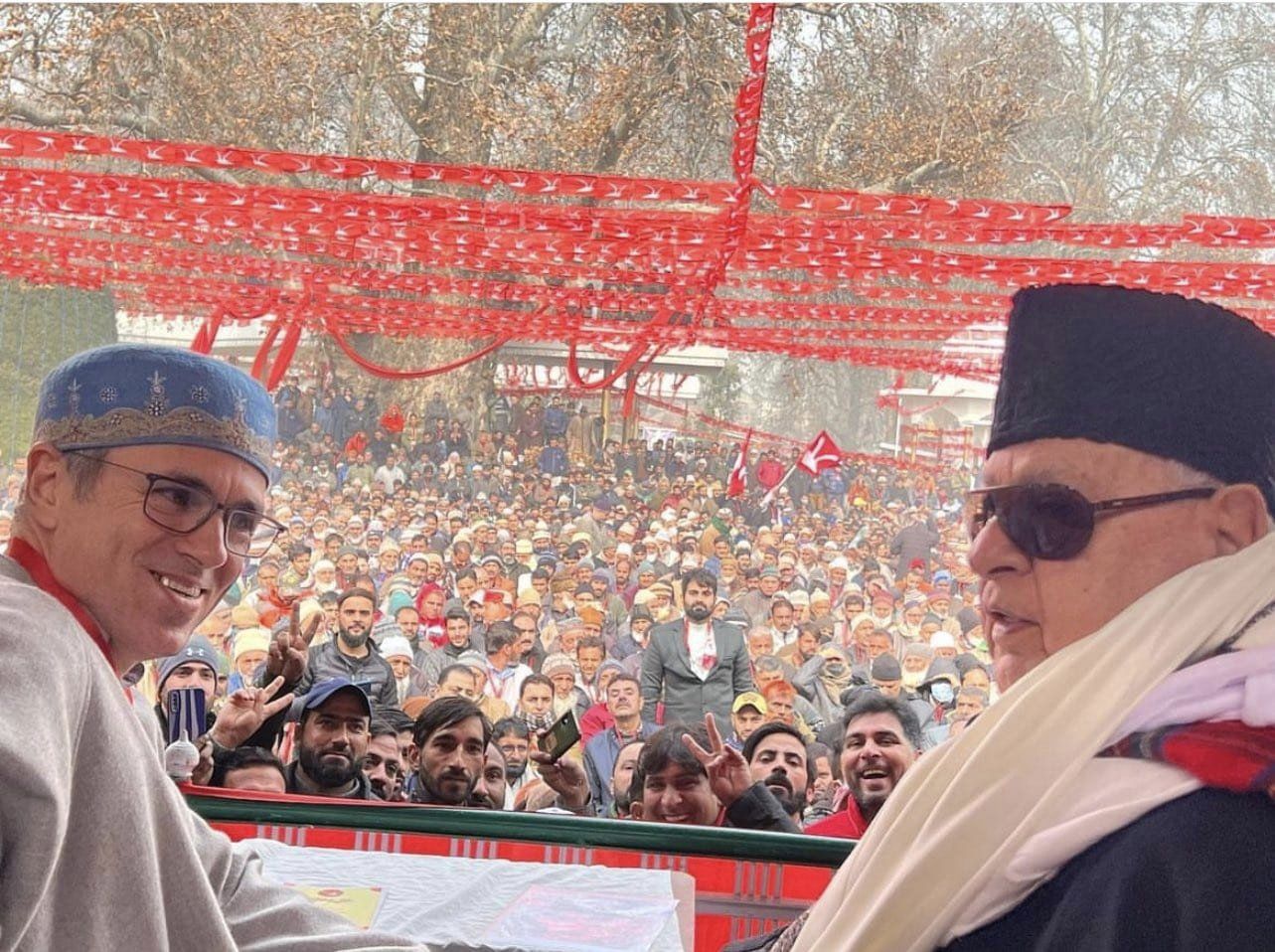
A fortnight after Dr Farooq Abdullah, 85, suddenly announced his resignation as the president of National Conference, he was re-elected as the party president on December 5 as a consensus candidate.  At the end of it, nobody was any wiser as to why Abdullah resigned in the first place and why he stood again for re-election, more so when one of the reasons he gave for quitting was to pave the way for the younger generation to take over.

National Conference general secretary Ali Mohammad Sagar said only Abdullah’s nomination was received till the last date of filing the nominations.

Abdullah has been the perpetual president of the NC since he took over the reins of the party after his father, the NC founder Sheikh Mohammad Abdullah passed away in 1982. His son Omar Abdullah has been the working president.

Abdullah’s continuation at the helm is certain to help the party in the run up to the Assembly elections likely to be held next year. The decks for Assembly elections have already been cleared after the Delimitation Commission submitted its final report about the increase in the number of the Assembly seats and the redrawing of electoral constituencies.

The National Conference, which is a part of the People’s Alliance for Gupkar Declaration (PAGD) with the PDP, has decided to contest elections alone, after indicating early this year that the alliance will fight polls jointly.

Though it may have appeared logical for the PAGD to decide to fight polls together, their experience of doing this during the District Development Council polls in 2020  didn’t inspire  much confidence. The parties squabbled with one another over seat-sharing and later also fielded proxy candidates against each other. Though the PAGD still managed to win a majority of seats in the DDC elections, it left a bad taste in mouth among the partners. Soon after the elections were over, the People’s Conference led by Sajjad Gani Lone quit the PAGD citing the issue of proxy candidates. Or so he claimed. Lone has since gone about strengthening his party in the north.

However, the rest of the PAGD has stuck together. The parties might arrive at a post-poll alliance in case they have enough seats to form a government which looks unlikely considering the political scene in the union territory has become crowded now.

Crowded scene 

With the arrival on the scene of  the newly floated party of Ghulam Nabi Azad, there are now many parties vying for political power.

Azad’s is the second political entity after the Apni Party to have come up after the abrogation of Article 370 in August 2019. Now, there are around eight parties  – BJP, NC, PDP,  Congress, PC, Apni Party, AAP and Azad’s party –  helmed either by major leaders or the major political organizations. This excludes other minor organizations such as the Panthers Party, Communist Party, Engineer Rashid’s party etc. Such a congested political space is unlike any other state in the country – some of which with a disproportionately larger population – where the principal electoral contest is largely confined to two to three parties.

This has made Abdullah’s presidency critical for the National Conference. Along With Omar, he is the party’s most identifiable face, both locally and at the national level.  Soon after electing Abdullah again as its president, the National Conference called for the restoration of Article 370 and 35A of India’s constitution and statehood to Jammu and Kashmir.

The party also made a strong pitch for holding Assembly elections. The demands were made in a resolution passed at the delegate meeting to elect Abdullah as party president. The meeting was held at the mausoleum of National Conference founder Shiekh Mohammad Abdullah on his 117th birthday.

“It was promised by the country’s Home Minister that the much-awaited assembly elections will be held after the delimitation process is over. Now that the process is complete and the final updated voter list is out, still there is no announcement for assembly elections,” the resolution read.

“Considering the political situation in J&K, this delegate session resolved that Articles 370, 35-A be restored to their original, undiluted form,” the resolution further said. “It also demanded that the Centre should restore full statehood to Jammu and Kashmir and announce the assembly election dates at the earliest.”

The resolution urged the people of India to rise to the occasion and ask the BJP-led central government to undo injustices in Jammu and Kashmir.

This is a rhetoric that the National Conference expects will resonate with people during the elections. More so, the demand for the withdrawal of Article 370 and 35A, which although unrealistic under the circumstances, plays to the sentiment of Muslims in the region.

Tough competition

But the rhetoric of the National Conference on Article 370 faces a tough challenge from that of the PDP on the issue. PDP president Mehbooba Mufti has been peddling a hawkish narrative on the revocation of J&K’s special status.  Addressing  a gathering in Srinagar recently,  Mufti said that the centre will be forced to restore Article 370.

“I swear by Allah whatever BJP snatched from us on August 5, 2019 will be brought back with interest,” she said while referring to the abrogation of J&K’s special status under Article 370 by the Centre,” she asserted while addressing the party’s youth convention in Srinagar on November 27. “India is not the BJP. J&K acceded to India of Gandhis, Nehrus, Abul Kalam Azads and we won’t allow the country to become BJP’s battleground.”

The National Conference, on the other hand, has maintained a more diplomatic stance on the issue. In doing so, it not only expects to broaden its appeal across the religious and regional divide in the union territory, it also doesn’t want to antagonize the centre, which is hostile to a strident political demand for autonomy. Will adopting a political middle ground pay off for the National Conference. The situation in the UT has become far too complex to lend itself to an easy prediction. In the Kashmir Valley alone, there are six reasonably well-placed parties including National Conference which are jockeying for power.

Could senior Abdullah make a difference? Very unlikely. No doubt, Abdullah has been in politics for over forty years and he has been a great survivor so far. He has led his party to electoral triumphs, with one of them of 1987 being the most contentious. The Assembly election that year is believed to have been widely rigged by the National Conference in league with the Congress and is thus considered a trigger for the subsequent separatist struggle.

In post-Article 370 Kashmir, new dynamics operate and the nature of politics has changed. There are now many more contenders for power which, in turn, has created a space for the BJP to emerge as a main player. This has drastically reduced the scope for Abdullah, already hemmed in by his advanced age, to do his normal politics and get a majority of people to vote for his party.


G-20: India’s non-aligned role is redefined 

After assuming the presidency of G-20, India is set to propel geo-economic
interests of the south at the next conference of the forum which it is scheduled to host in 2023. The Indian presence in the grouping has given confidence to economically weak countries of Asia, Africa and Americas.

India as G-20 president would be assisting the world economy for restoring supply line, which continues to be disrupted following the outbreak of pandemic in 2019 and the ongoing Russia-Ukraine conflict for the past 10 months.

A number of countries in Asia and Africa are critical of its limited membership, but the Indian presence had added a confidence of a large number of the economically weak countries of Asia, Africa and Americas.

The perspective of the founders of modern India regarding her ties with the developing world popularly called non-aligned movement has suddenly re-echoed in G-20. However, there is a subtle difference between the non-aligned movement and the current efforts in that previously, it was an effort to keep off from the military blocs.

Some optimists for peace do not rule out the possibility of a Biden-Putin summit in the sidelines of the G-20 conference in 2023 scheduled in India.

Indian Prime Minister Narendra had spelt out India’s commitment to the people of Africa without imposing her own suggestions for the development of the people. He had stated about India’s policy for years ago in 2018 in Kampala while addressing Parliament of Uganda reinforcing her ties with Africa. Like Indians, Africa too had shared the dark history of colonialism. Modi, perhaps, re-echoed it in November 2022, when at the Bali summit, he reminded the developed world about the economic challenges of the South, comprising the people of Asia, Americas and Africa. The occasion was a formal handover of the baton of the presidency of G-20 to India at Bali in Indonesia.

India, now at the threshold of being in the first row of the technologically empowered nations, has reinforced her readiness to share her knowledge and resources with the South, thus, re-echoing the fundamentals of the Indian state. It was also a reminder to the rich members of the G-20 comprising the USA. U.K., France, Germany, China, Russia and the European Union that goals of the geo-economics and stability in the world order would remain a mirage without the uplift of the people of the South. India as G-20 president would be assisting the world economy for restoring supply line, which continues to be disrupted following the outbreak of pandemic in 2019 and the ongoing Russia-Ukraine conflict for the past 10 months.

Some optimists for peace do not rule out the possibility of a Biden-Putin summit in the sidelines of the G-20 conference in 2023 scheduled in India. It may be noted that the US President Joe Biden and his Chinese counterpart, Xi Jinping had met for more than three hours in November 2022 at Bali just on the eve of the G-20 conference. It is believed that the summit has favourably impacted the world economy. Putin did not come at the Bali conference, but he might be attending the conference in India, the hopeful does believe.

The Indian Initiative

Modi’s statement before Parliament of Uganda, Kampala, in 2018, is being frequently quoted worldwide that instead of offering any turn-key solutions to their respective challenges; India offered that what she could do for empowering them to fight their rampant poverty. He had expressed the Indian desire in assisting the people of Africa in achieving their inspirational goals as they envision.

It was the reaffirmation of this Indian policy at the G-20 summit at Bali in November this year, which India is expected to carry forward or steer through during 2023. India’s close ties with the third world countries during the cold war years provide a readymade background for an Indian initiative.

The perspective of the founders of modern India regarding her ties with the developing world popularly called non-aligned movement has suddenly re-echoed in G-20. However, there is a subtle difference between the non-aligned movement and the current efforts in that previously, it was an effort to keep off from the military blocs. The Indian diplomacy appears to have now succeeded in fine-tuning the country’s commitment to the deprived nations of the third world.

Forty years ago, the non-aligned movement had faded following the collapse of the USSR in 1991, but India has retained the idealism of the movement by committing her resources for the developing countries. It appears that the contemporary India is reasserting ‘Her tryst with destiny’, Jawaharlal Nehru’s first speech on the midnight of August 15, 1947 that had committed her to the welfare of the mankind. It appears to be reverberating and echoing with India’s renewed commitment to the poor.

An Initiative Reflecting Realities

During the past three decades, the USA had been the the only unquestioned superpower on the earth, but since 2019, especially following the out-break of the Covid-19 pandemic, and in 2022, the Ukraine-Russia conflict, the geo-politics is witnessing paradigm changes. Amidst these developments, the mandarins of the South Block have successfully repositioned India on the basis of the cruel truths of the world politics. India’s foreign minister S. Jaishankar has repeatedly asserted that India has retained her fundamental policy regarding peace and cooperation, but we have been trying to shed off rhetoric and should be based on the ground realities. India is not against any country, but if the US-led western powers feel threatened that China has been quietly nibbling away their formidable economic power base, they have to work out their own solutions.

Professor Muqtedar Khan of Delaware University, an Indian-origin political scientist in America, has appreciated Modi’s vision regarding India’s role in G-20. His decision to focus on the economic woes of the South in G-20 is going to empower India in retaining her old constituency in the developing world. According to him, India’s key role in the G-20 could not have been more timely and appropriate. She assumes the G-20 Chair, while presiding the UN Security Council in December, 2022. During 2023, India while presiding over the Shanghai Cooperation Organization would be in a multiple-role in the geo-politics.

For Indians, December is a pleasant month. In Europe and North America, bitter winters have already set in. For Europe, it is not just braving the climate, but the inclement weather is accompanied by the on-going war in Europe, tensions in the India-Pacific region, and unprecedented challenges before the world economies.

Propelling World Economy

The G-20 had come into being in September 1999 as a coordinating forum of the industrialised world as well as well as of the developing countries. With the expansion of the World Trade Organization, it has emerged as an intergovernmental forum of world’s most powerful economies which also gives voice to the developing countries.

The G-20’s chair is offered on a rotational basis, but for India and her leadership, the task is really challenging due to fragile world economy and the war in Europe. She is preparing to address major issues related to the global economy, such as international financial stability, climate change mitigation and sustainable development of the vast majority of the Asian, Americas and African continents.

In financial terms, the G20 comprises both industrialised and developing countries. It accounts for around 80 per cent of the gross world products, 75 per cent of international trade  and two third of the global population, which has just crossed eight billion. It also accounts for 60 per cent of world’s land area. During the last 13 years, it has emerged as a primary institution for international economic and financial cooperation. A number of countries in Asia and Africa are critical of its limited membership, but the Indian presence had added a confidence of a large number of the economically weak countries of Asia, Africa and Americas.

With Modi’s emphasis on digital communication, India’s underlying vision of “Vasudhaiva Kutumbakam” (the world is one family), is best encapsulated by the motto “One Earth, One Family, One Future”. Apart from this world view, the G-20 meetings would be taking place across in as many as 40 cities. Apart from giving a global respect to India, it would be impacting and enabling a vast population of the country exposed to the global issues enabling them to understand the linkages between inclusive development, gender equality, peace and security and the full use of technological innovations for universal benefit.



Amarinder calls on Modi, discusses situation in Punjab

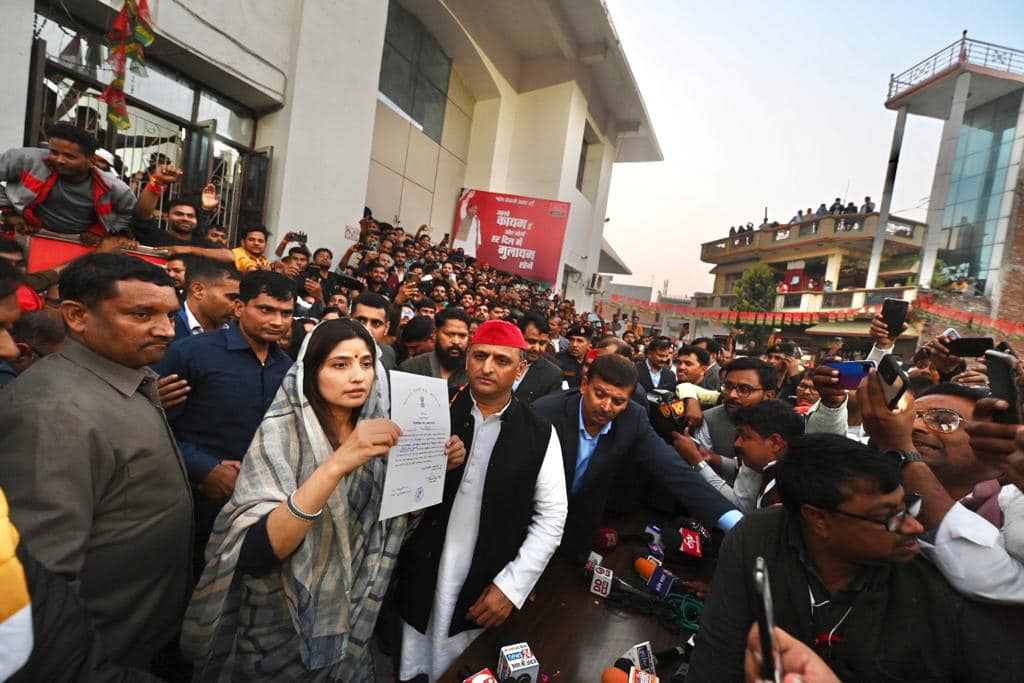
New Delhi:  Senior Bharatiya Janata Party leader and former Chief Minister Capt Amarinder Singh on Thursday met Prime Minister Narendra Modi in the Parliament here.

Amarinder said he had met the Prime Minister after about three months. He said he had a detailed meeting with the Prime Minister for about half an hour.

The former chief minister, without giving any specific details, said he had comprehensive and elaborate discussions about the prevailing situation in Punjab.

Later talking to reporters in the Parliament House Complex, Amarinder condemned the incident of arson outside a gurdwara in Jalandhar where some furniture, including chairs and benches, were set on fire.

He said this was quite unacceptable and called for an end to it. He warned against letting the situation drift any further.

Amarinder also expressed concern over the smuggling in drones from Pakistan, which were carrying weapons and drugs. He said these were finding their way into the hands of those who were trying to disturb peace in Punjab.

He pointed out that he had always been warning against Pakistani designs and now the frequency of infiltration of weapons and drugs was quite high.

Netherlands taps into gas reserves as cold wave boost heating demand

Dutch energy firms have been forced to tap into the country’s gas reserves as the cold wave is boosting demand.
Temperatures in the Netherlands have hovered around or below freezing since early December, and the cold spell is expected to continue at least until the end of this week.
As a result, the gas consumption of Dutch households and companies has risen significantly recently and the country has had to resort to its stored gas reserves to satisfy demand, a spokesperson for Dutch energy network operator Gasunie told Xinhua news agency on Wednesday.
Gasunie estimated that the Netherlands consumed 1.5 billion cubic meters of gas over the last cold week, more than doubling the average weekly usage of about 0.61 cubic meter this year until the end of November. Hence the need to tap into the reserves.
“It is normal at this time of the year and therefore not alarming, ” the Gasunie spokesperson told Xinhua.
Despite the cold, the Dutch have used less gas than they normally would in cold weather in order to save costs. About 20 percent less gas was used than in previous years under the same winter conditions.
“This applies not only to regular consumers, but also to companies, ” the spokesperson said.
“Everyone feels it in their wallet and thinks twice before turning up the heating. Instead of 20 degrees Celsius at home, the temperature now is often set at 18 degrees.”
Energy prices have remained at high levels in the Netherlands since the beginning of this year.
Statistics Netherlands (CBS) said in its most recent inflation report that in November, energy was 70 per cent more expensive than one year previously. In October, the year-on-year increase was 173 per cent.
The spokesperson acknowledged that the situation this year is different because of the ongoing Russia-Ukraine war.
“However, we will be fine for this winter, even if it turns out to be harsh.”
In preparation for a winter without natural gas supplies from Russia, the Dutch government announced in September that it had succeeded in filling the national gas storage facilities to more than 80 per cent capacity and that the process was bound to continue.
Gasunie says it wants to increase its imports to prevent a potential gas shortage and it also plans to expand the country’s liquefied natural gas (LNG) import terminals.

Musk sells Tesla stock worth $3.5 bn amid Twitter overhaul

Elon Musk has sold over 20 million more Tesla shares worth about $3.5 billion and did not provide any reason for selling more stock in the electric car company.
Since November 2021, Musk has sold more than $39 billion of Tesla shares.
After the fresh share sale, according to a form filed with the US Securities and Exchange Commission (SEC), Musk now owns about $66 billion worth of Tesla stock.
In April this year, the new Twitter CEO sold off $8.5 billion worth of Tesla stock while in August, he offloaded another $7 billion shares.
The share sale comes at a time when Tesla investors have raised concerns over Musk’s $44 billion Twitter acquisition, saying his 24/7 involvement with the micro-blogging platform is “detrimental to Tesla, ” reports TechCrunch.
Tesla stock has nosedived 60.8 per cent since January this year, and traded at $156.80 after hours on Wednesday.
According to industry analysts, “the fresh stock sell is Musk’s answer to some of the high interest debt
he’s paying on his $44 billion Twitter deal”.
Twitter took on $13 billion in debt as part of that deal, including about $3 billion of unsecured debt on which Twitter pays an interest rate of 11.75 per cent, said the report.
Meanwhile, Musk, who saw his net worth tumble by more than $100 billion in 2022, has been replaced by Bernard Arnault, the chief executive of luxury brand Louis Vuitton’s parent company LVMH, as the world’s richest man.
China’s BYD Auto is now the global market leader, shipping more than 537, 000 EV units — an increase of 197 per cent (on-year) — in the third quarter this year, leaving Elon Musk-run Tesla far behind globally.

Drug smuggled from Pakistan seized

Amritsar :  Border security Force has seized heroin at Indo-Pak border which was smuggled to India from Pakistan side.

In a statement issued here today, BSF official stated that on 14th Dec at about 2125 hrs, Border Security Force troops deployed at border heard buzzing sound of drone entering from Pakistan into Indian Territory in the area falling near Village – Daoke in District – Amritsar. As per drill, the troops tried to intercept the drone by fire. The whole area was cordoned and Police and concerned sister agencies were informed.

Further, during search BSF troops recovered 01 Packet of contraband suspected to be heroin (Gross wt – 4.490 kg) wrapped with yellow tape near Village – Daoke. Further detail search of the area is in progress.

Punjab Govt puts brakes on Badal family buses

Chandigarh:  Taking another important decision to root out the private bus mafia from the state, Chief Minister Bhagwant Mann-led Punjab government has ended the monopoly of private buses owned by Badal family and other private bus mafia on the inter-state routes.

Transport Minister Laljit Singh Bhullar, while confirming the development on Tuesday, informed that the ‘Punjab Transport Scheme-2018’, which was formulated by the Congress government to give benefits to Badal family and other private bus mafia, has been amended.

Under this scheme, the entry of private Volvo buses into Chandigarh was made intact, which led to the sheer loot of the state exchequer at a large-scale.

“The Badal family during its government’s two tenures from 2007 to 2017, created various schemes to fulfill their personal interests, in which the Congress government also helped the Badals in running their transport businesses smoothly, including one of inter-state movement of their AC buses to Chandigarh, ” said Laljit Singh Bhullar.

The Transport Minister said, “Punjab Transport Scheme-2018” has been amended to “Punjab Transport (Amendment) Scheme-2022”.

With the amendment of Serial No: B in Clause No-3 of the scheme, now only state transport undertaking buses can enter Chandigarh with their 100 per cent share. The insertion titled with “Inter-State Route” in the Gazette notification reads, “With the seating capacity of 39 or more, with the further condition that air-conditioned stage carriages shall be run only by the state transport undertakings only out of their overall share in each category.”

Cabinet Minister Laljit Singh Bhullar, while training guns at Badal family for plundering the state exchequer for their personal gain and providing benefits illegitimately to their associates by forming Schemes arbitrarily, asserted that Chief Minister Bhagwant Mann-led government will not allow to fulfill the vested interests of Badals and their powerful associates at the sake of state exchequer.

Raghuram Rajan Ex-RBI Governor joins Rahul’s Bharat Jodo Yatra in Raj

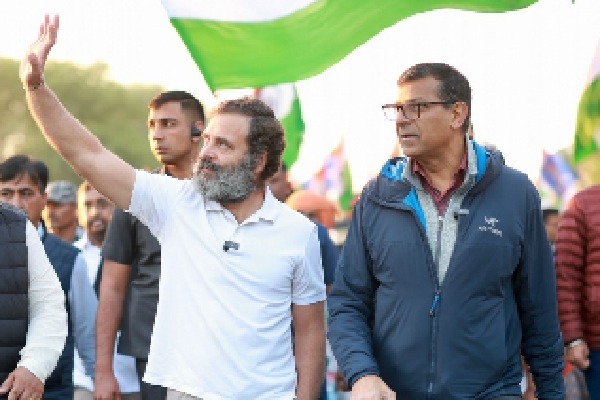
Jaipur:  Former RBI Governor Raghuram Rajan on Wednesday joined Rahul Gandhi’s Bharat Jodo Yatra in Rajasthan.

Rahul Gandhi had a more than half-an-hour discussion with Rajan during the yatra, which resumed this morning from Bhadoti of Sawai Madhopur.

Rajan is known for keeping a frank opinion on economic issues. Both put forth their views on the economic issues for a documentary.

Raghuram Rajan was the Governor of the Reserve Bank of India during the second term of the UPA and the initial years of the Modi government.

Officials confirmed that Rahul Gandhi’s Bharat Jodo Yatra will have a week-long break after crossing the Rajasthan-Haryana border. There will be a break in travel from December 24 to January 2.

Congress General Secretary Jairam Ramesh said that on December 16, on the completion of 100 days of the yatra, Rahul Gandhi will go to Jaipur. All the passengers will participate in Sunidhi Chauhan’s music event there.

MOST POPULAR

HOT NEWS