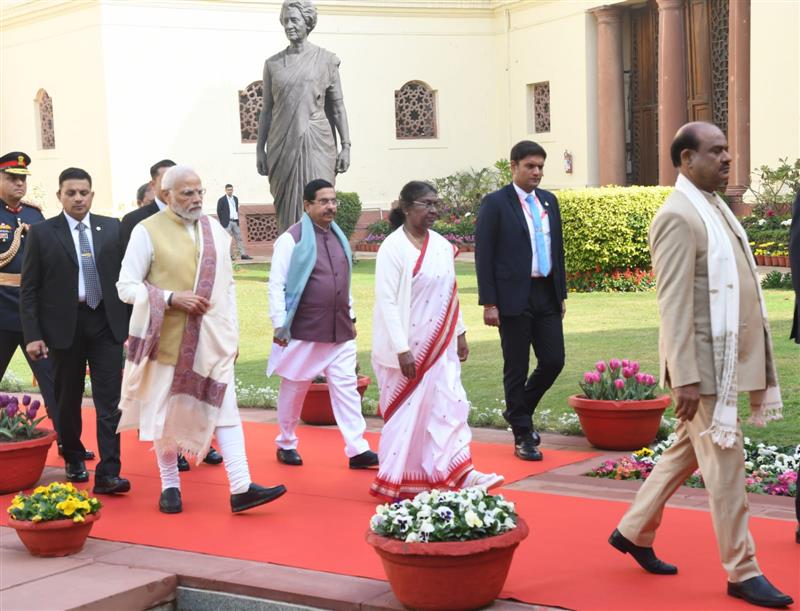
New Delhi : President Droupadi Murmu will address the joint sitting of Parliament for the first time since being elected to the post. She will outlay the government’s vision for the current year.
The Parliament Budget session will commence from Tuesday and the Finance Minister will table the Economic survey. She will present the Union budget on Wednesday.
President Droupadi Murmu, in her first Republic Day-eve speech, hailed India’s G-20 presidency, saying it is an opportunity to promote democracy and multilateralism, and also the right forum for shaping a better world and a better future.
“India holds the presidency of the Group of 20 nations. With our motto of universal brotherhood, we stand for peace and prosperity of all. Thus, the G20 presidency is an opportunity to promote democracy and multilateralism and the right forum for shaping a better world and a better future. Under India’s leadership, I am sure, the G20 will be able to further enhance its efforts to build a more equitable and sustainable world order.”
She said the ultimate goal is to create an environment in which all citizens can — individually and collectively, realise their true potential and prosper.
The President had also commended the roles of farmers, workers, scientists and engineers in the nation’s development and also praised the armed forces and paramilitary forces.
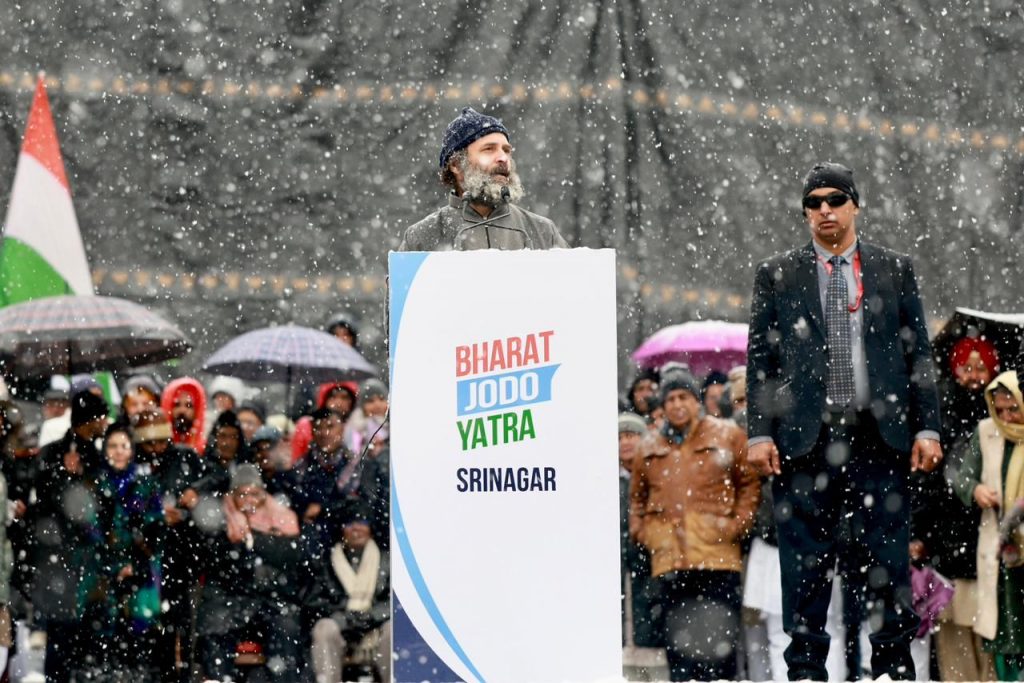
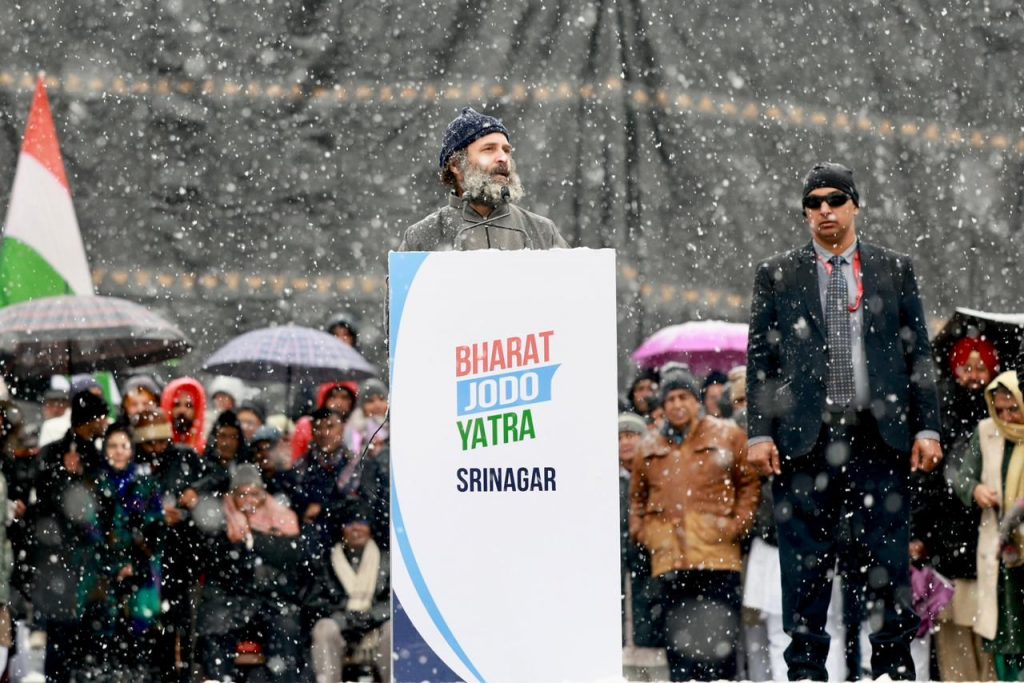
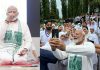
Srinagar : Amid heavy snowfall, Rahul Gandhi, delivered the final speech of his 4000 kilometre cross-country yatra on an open podium inside a Srinagar cricket stadium, reiterating his message of love and unity.
“The aim of his Bharat Jodo Yatra was to save the liberal and secular ethos of the country which is under assault from the BJP and the RSS,” Gandhi who was clad in Kashmiri pheran told the gathering braving the snow and below-freezing temperature. “I did not do the Yatra for myself or Congress, the aim is to stand against an ideology that wants to destroy the foundation of the country.”
Rahul Gandhi and Priyanka Gandhi
Gandhi also played with snow with his sister Priyanka Gandhi throwing snowballs at her. The meeting, attended also by Congress president Mallika Kharge and Kashmiri leaders such as Omer Abdullah and Mehbooba Mufti, was thinly attended by an energetic crowd that hung on to Gandhi’s every word and cheered him on.
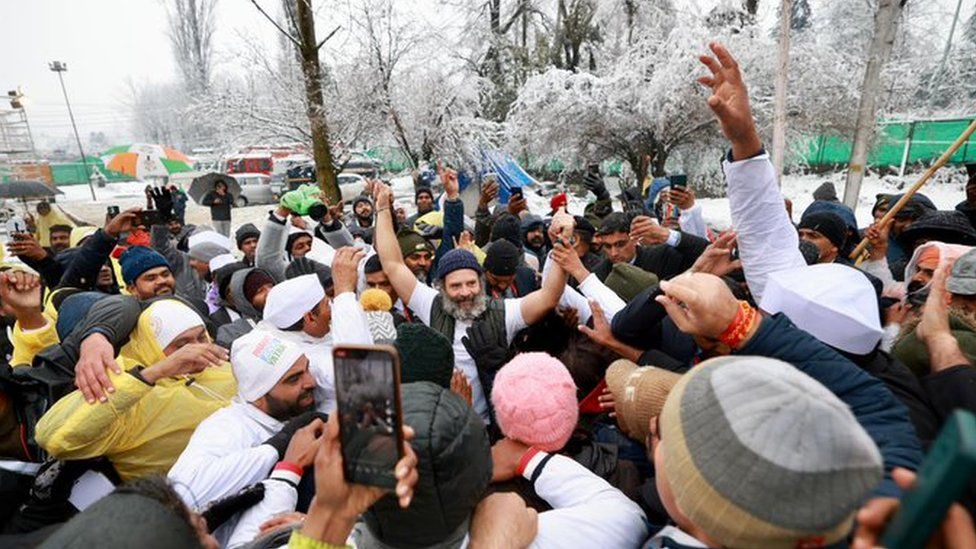
Rahul Gandhi with supporters
The yatra received an overwhelming public response in Jammu and Kashmir. More so in Kashmir Valley, where the public participation in it was the first such major political mobilization of people after the withdrawal of Article 370 in August 2019. Major Kashmiri mainstream leaders, who now generally refrain from holding public rallies, seized the opportunity to walk alongside Gandhi. But the yatra essentially was about Gandhi and his alternative secular vision for India.
It has, without doubt, reinvigorated the party’s rank and file in the union territory boosted further by the return of leaders who had joined the former Congress leader Ghulam Nabi Azad’s newly floated Democratic Azad Party. Congress entered the former state with a proper political agenda: it sought statehood and Article 371 for J&K, a constitutional provision that protects jobs and land rights in regions such as Mizoram, Manipur, Meghalaya, Tripura, Himachal Pradesh, Sikkim and some areas of Assam, some areas of Karnataka-Hyderabad.
The takeaway from the J&K leg of the yatra is that the Congress seems to have made a credible bid to re-establish itself as a party that is relevant to the dramatically altered political landscape. However whether it maintains the political momentum until the Assembly elections – likely to be held this year – or for that matter until the 2024 general polls remains to be seen. In October last year, when most of the major Congress leaders in the region flocked to Azad’s DAP, the party seemed to have been decimated. It had ceased to be a viable political force in Jammu and Kashmir with hardly any vote-gathering leader left in its ranks. Now, many of them are back. And the demand for Article 371 and statehood is likely to find a wider political resonance in the UT, including in the Jammu division, where people have become insecure about losing lands and jobs to outsiders.
Rejuvenation at the national level?
But more than J&K, the yatra has political significance for the party at the national level. It seems to have breathed a new life into an otherwise dying party. Gandhi drew reasonably good crowds. But mobilizing crowds doesn’t guarantee a good electoral performance as was clear in the last Assembly polls in Gujarat and Himachal Pradesh, where Congress performed miserably in the former state, There will be more tests ahead. Around ten Assembly elections are scheduled to be held before the national elections. Among them, the elections in Karnataka, Chhattisgarh, Madhya Pradesh, Rajasthan and Telengana will be very crucial. The BJP will hope to win all of them. But should the party suffer reverses in the majority of these states, this may not bode well for its 2024 chances. The elections in these five major states represent the last chance for the opposition, especially the Congress, to hurtle back into the reckoning.
Rahul and Priyanka with other political parties leaders
It appears, however, very likely that the BJP will do well in the upcoming state polls. Despite being in power for over eight years, the party remains untouched by anti-incumbency. So much so, that the governance issues seem to hardly matter as Morbi episode in the run-up to the Gujarat polls yet again demonstrated. Even the deaths of around 150 people in the bridge collapse didn’t affect the BJP’s chances. What is more, the BJP didn’t even lose Morbi seat. The overarching political persona of the prime minister Narendra Modi seems to trump everything. Neither the Congress nor the combined opposition are hardly in a position to mount a credible challenge to the BJP. Or so it seems.
And these elections would also be a test for the new Congress president Mallikarjun Kharge’s political smarts. He represents the old guard of Congress who are increasingly seen as out of touch with people. Besides, his being seen as a proxy for Gandhis doesn’t help his cause. That said, Kharge by no means represents the change that Congress needs for revival. It would be important to see how Congress fares in the states. An even moderate performance would be a sign of improvement.
Gandhi’s makeover
Many political observers, however, remain skeptical about Gandhi’s ability to generate a public groundswell in favour of the Congress. Some are calling the yatra an umpteenth “relaunch” of Gandhi who has so far singularly failed to match up to the political persona of prime minister Modi. Will he pull it off this time around? Odds are heavily against it. Ever since he took over the leadership of the Congress, both in his formal and de facto roles, Gandhi has proved incapable of rallying people behind the party. True, PM Modi’s charisma, oratory skills and media support have made Hindutva a reigning ideology of the country. But the lack of an alternative ideological narrative has made the BJP’s job even easier.
The absence of a narrative, however, is not the only undoing of the Congress. The organization has itself been falling apart with Gandhis becoming a principal political liability.
Will the tide turn now? The yatra has certainly generated some goodwill, and things look potentially set for a change. Congress has finally shown some assertiveness about pursuing an inclusive political agenda, even though a proper ideological narrative has yet to take shape. Based on the public response to the yatra so far, the message seems to have had some impact, although its electoral implications are still uncertain. For now, Congress can take heart from the victory in Himachal. It can put some wind in its sails as it prepares for the Assembly elections next year. The party currently rules in Chhattisgarh, Himachal and Rajasthan. It remains to be seen whether the party retains Chhattisgarh, and Rajasthan. Its performance in Karntaka and Madhya Pradesh will also be keenly watched.
Together, the outcome of the Assembly polls will be a bellwether for 2024. In case the BJP suffers major reverses in the upcoming state elections, the saffron party could apparently face an uphill climb in the elections next year.
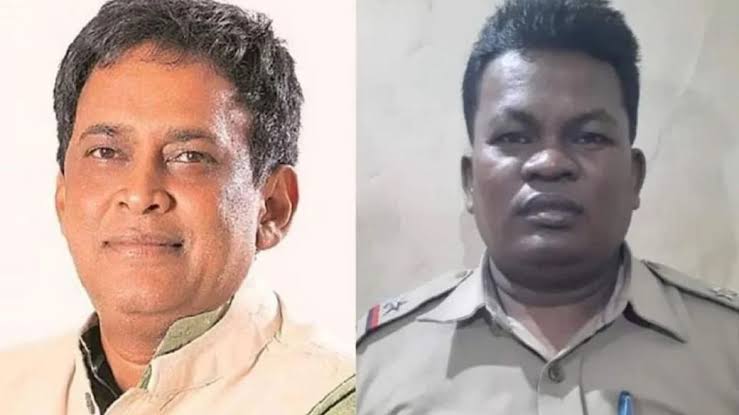
Bhubaneswar: The killing of Odisha Health and Family Welfare minister Naba Kisore Das, who was shot dead by an assistant sub inspector of police in the western Odisha town of Brajarajnagar on January 29, has sent shockwaves through the state. This is the first case of a minister being murdered in this manner.
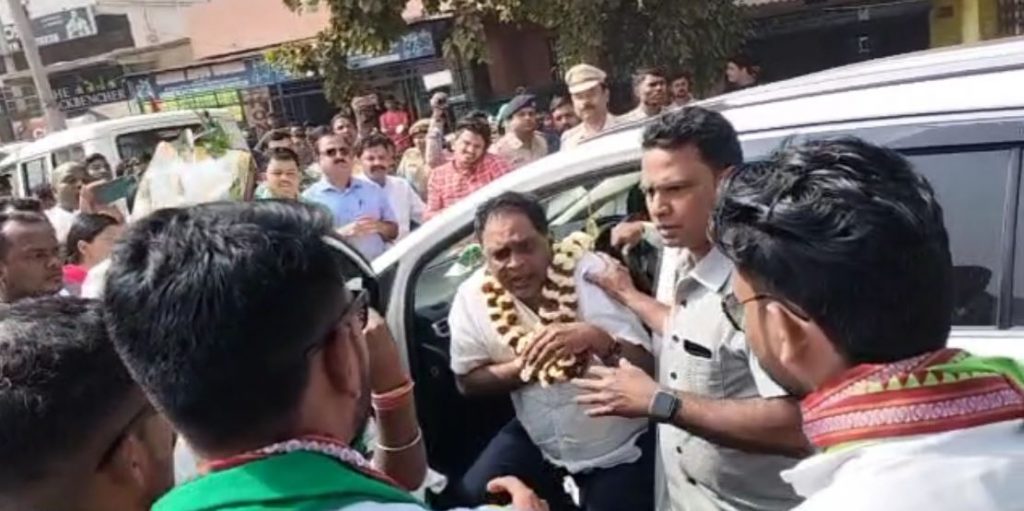
What is most shocking is that the accused, Gopal Das was an assistant inspector of police posted at the Gandhi Chowk police outpost in the industrial town of Brajarajnagar. Das, who had earlier served as the personal security officer of the minister fired two shots at him from his newly issued service revolver. The police officer shot the minister even as he stepped out of his car to inaugurate an office at Gandhi Chowk in Brajrajnagar. While he collapsed and was immediately rushed to the local hospital from where he was airlifted to Bhubaneswar, the accused was overpowered by other policemen present on the occasion.
According to the police, the officer opened fire at Gandhi Chowk, Brajrajnagar, when the minister had gone to attend an official programme. Gupteswar Bhoi, sub-divisional police officer (Brajrajnagar), said that ASI Gopal Das, who was posted at the Gandhi Chowk police outpost, opened fire at the minister taking everyone by surprise. “ The motive behind the attack remains unclear. We are investigating the matter,” said Bhoi. Das was today subjected to intensive questioning by Crime Branch Additional Director General (ADG) of police Arun Bothra at Jharsuguda. However, the ASI, whose family lives in Berhampur and who was being treated for bipolar disorder for the last several years, has not revealed much about his intentions.
Two other persons including a police officer were also injured while trying to chase and overpower the ASI who tried to flee after the incident. He had been put in charge of traffic control in the Gandhi Chowk area on the day of the minister’s visit but he left his post and went near the minister’s car to shoot him which has deepened the mystery of death. While political leaders cutting across party lines have expressed grief at the minister’s death, many have raised issues of security lapses. Senior Congress leader Narasingha Mishra went to the extent of saying that it looks like a planned murder.
The incident has also tarnished the image of Odisha as a peaceful state with many describing the shooting as the state’s Bihar moment. “ He was a popular leader who was elected to the state assembly from Jharsuguda thrice. He was also a successful businessman. A leader like him being killed in this manner is no doubt disturbing,” said Jharsuguda resident Shashi Mishra.
However, this is certainly not the first case iof a political murder in the state which has witnessed attacks on politicians in the past as well. At least five elected representatives in the state have been shot at since 2000. One of the most sensational of these attacks was on ruling Biju Janata Dal (BJD) MLA Jagabandhu Majhi back in 2011. Majhi, an MLA from Umerkote Assembly Constituency, was the first major politician of the state to have been shot dead. He was gunned down on September 24, 2011 in his constituency while he was handing over land documents to poor tribals in Raighar Block in Nabarangpur district. His bodyguard was also killed in the incident. Later Maoists claimed responsibility for the murder of Majhi.
The ultras claimed through a local newspaper that the Mainpuri division of the CPI (Maoist) was responsible for the killing of the wheelchair bound MLA . They alleged that the politician had tarnished the image of Maoists by collecting money in their name and he had got 12 people killed and put the blame on Maoists. Later, prime accused in the sensational murder Jani Salem of the Chhattisgarh Mainpur division surrendered before the police in Andhra Pradesh in 2014.
Former Puri MLA and minister Maheswar Mohanty, a powerful BJD leader, was shot at when he was the Law, Culture and Tourism Minister of the state in 2014. Two bullets were fired at him, one hitting his shoulder and another his arm while he was returning home on his scooter in the night. The assailant fled after the minister fell from his scooter. He was rushed to the district headquarters hospital and then shifted the Kalinga Hospital in Bhubaneswar. He survived the attack following a successful surgery by a team of doctors. Police later arrested mastermind Sradhamani Mohapatra and two shooters in this connection. The probe revealed the assailants opened fire at Mohanty to avenge the murder of Taluchha Bhagaban Mahapatra alias Guna Singhari, who was a senior servitor of the Jagannath Temple in Puri. The 70-year-old Sradhamani, the mother of Guna Singhari, had allegedly hired five contract killers, all former associates of her son, to take revenge for her son’s killing. She alleged that Maheswar Mohanty’s men were involved in Guna Singhari murder case.
Senior BJD leader and minister Sudam Marndi was fired upon in his native Mayurbhanj district in 2009 when he a Lok Sabha member on Jharkhand Mukti Morcha (JMM) ticket. Alleged Maoists had targeted him during his official visit to a football tournament at Bandap village under Chandua police station of the district. Marndi escaped by hiding in the nearby bushes but the Maoists gunned down three police personnel including his security guard after the football match.
Former Congress MLA from Keonjhar Dhanurjay Sidhu was shot at by unidentified assailants near the mining town of Barbil on February 26 in 2007. The gun attack took place when he was travelling in his vehicle. Some motorcycle-borne assailants sprayed bullets at his car near Bhadrasahi Chhak, about 6 km from Barbil town. He was rushed to the government hospital at Barbil and later shifted to Tisco hospital at Joda where he was operated upon by three surgeons summoned from Keonjhar and Champua. He survived the attack as the doctors successfully removed 3 bullets from his lower abdomen and the thigh.
Senior Congress leader Ramesh Chandra Jena escaped unhurt when unidentified assailants opened fire at him on May 29, 2009. The incident occurred soon after he was elected from Sanakhemundi. He was returning home after attending a felicitation function organised by the district Bus Owners’ Association in Ganjam district. According to reports, two assailants opened fire at his vehicle. The leader alleged that the attack was a handiwork of his political opponents. He was attacked again in August 2010 when he had a narrow escape. Some unidentified persons hurled bombs at his vehicle in Patapur town, about 45 km from Berhampur city, in Ganjam district. Two years later four youths were nabbed by Berhampur police for their alleged involvement in the attack.
However, Naba Das, who was cremated on January 30 with full state honours, was the first minister to have been shot dead in Odisha. His killing has raised serious questions about the security of political leaders in the state. His death still remains wrapped in mystery with the accused police officer yet to reveal his motives.
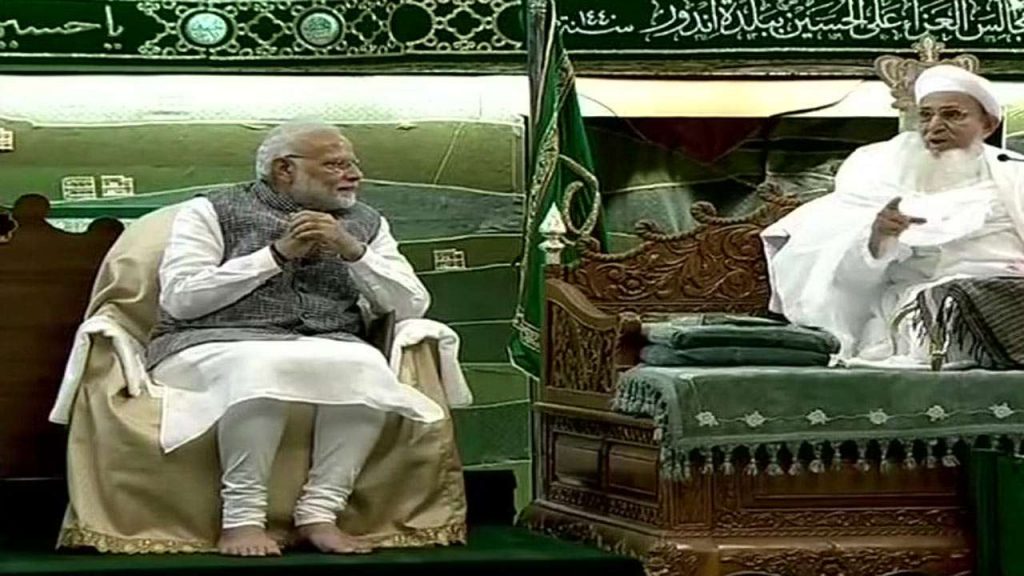
New Delhi : Prime Minister Narendra Modi is likely to visit Mumbai on February 10 for the opening of Dawoodi Bohra Community’s Arabic Academy in Andheri East, the sources said.
According to a source, “PM Modi is likely to visit Mumbai again on 10th February to participate in Dawoodi Bohra community’s Arabic Academy in Andheri East. He is expected to share the dais with His Holiness Syedna Mufaddal Saifuddin.”
Earlier on January 19, the Prime Minister was in Mumbai to lay foundation stones for a slew of projects.
Durig his visit to Mumbai this time, Prime Minister Modi is also expected to flag off two Vande Bharat express trains.
At the National Executive meeting in Delhi, Modi had asked BJP leaders to reach out to Bohra community and other Muslim community even if they don’t vote in favour of the party.
Following the split in the Shiv Sena, the BJP is now aiming to give a further blow to the Thackeray-led faction, and trying to wrest the Mumbai civic body which Shiv Sena has been ruling for close to three decades.
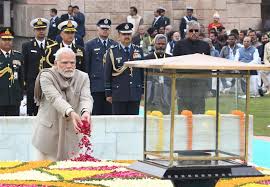
New Delhi : Prime Minister Narendra Modi on Monday paid tributes to Mahatma Gandhi on his 75th death anniversary.
It was on January 30, 1948, when the Father of the Nation was shot dead by Nathuram Godse.
The day is observed as Shaheed Diwas.
“I bow to Bapu on his Punya Tithi and recall his profound thoughts. I also pay homage to all those who have been martyred in the service of our nation. Their sacrifices will never be forgotten and will keep strengthening our resolve to work for a developed India, ” Modi tweeted.
The Congress on Monday accused the Centre of not accepting the truth and alleged that since May 2020, the Modi government’s preferred strategy to deal with the Chinese incursions in Ladakh can be summed up with “DDLJ — Deny, Distract, Lie and Justify”.
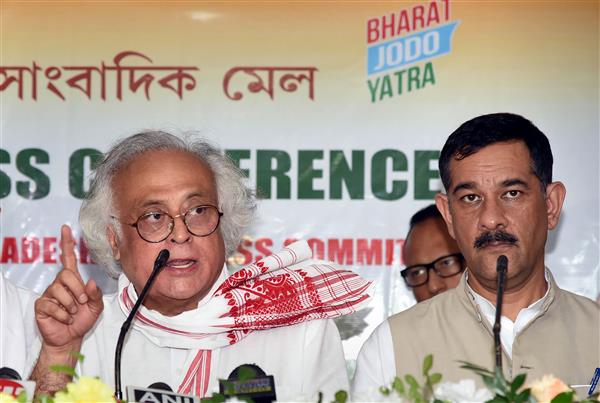
Congress General Secretary in-charge Communications Jairam Ramesh in a statement on Monday said, “External Affairs Minister S Jaishankar’s recent remarks attacking the Congress party are simply the latest attempt to divert attention from the Modi government’s failed China policy, the most recent revelation being that since May 2020 India has lost access to 26 of 65 patrolling points in Ladakh.”
He said the fact is that there is no comparison between 1962, when India went to war with China to defend its territory, and 2020 after which India has acquiesced to Chinese aggression with denials followed by ‘disengagements’ in which India has lost access to thousands of square kilometres of territory.
Jairam alleged that “EAM Jaishankar’s implied cheap shot at Rahul Gandhi for meeting the Chinese ambassador in 2017 is ironic to say the least coming from someone who as ambassador to the US during the Obama administration presumably met with leading Republicans.
“Are opposition leaders not entitled to meet diplomats from countries that are important from a trade, investment and security standpoint?” he asked.
The Modi government should have been truthful from the start and taken the opposition into confidence by discussing the China crisis in parliamentary standing committees and debating the issue in Parliament.
“At a very minimum it should have held detailed briefings for leaders of major political parties, ” he said.
“It is extraordinary that EAM Jaishankar has admitted on several occasions that he has no idea why China has turned aggressive on the Line of Actual Control, notwithstanding the unusually frequent contacts between Prime Minister Narendra Modi and President Xi Jinping and the PM’s boast that he enjoys a special ‘Plus One’ relationship with President Xi, ” Ramesh said.
He said, “No amount of obfuscation can hide the fact that the Modi government has sought to cover up India’s biggest territorial setback in decades that followed PM Modi’s naive wooing of President Xi.
“We suggest that EAM Jaishankar and the government spend more time trying to get Chinese troops out of Depsang and Demchok and less time on blaming the opposition for their own incompetence, ” he said.
Srinagar : When the concluding ceremony of the Bharat Jodo Yatra took place on the morning of 30 January, 2023. Rahul Gandhi was finally donning a pheran, the traditional Kashmiri coat, as he delivered an emotionally rousing speech, delineating the aim and achievement of the Yatra.
Gandhi said it was a home-coming for him, as he understood the pain of the Kashmiris. Invoking the brutal assassinations of his grandmother and father, Gandhi said he dared himself to confront his fears, and overcome them. He had decided he would walk the final leg of the 4080-km-long Bharat Jodo Yatra in the snow-clad valleys of Kashmir, and despite security apprehensions, walk he did.
Gandhi’s speech at the Sher-e-Kashmir stadium in Srinagar under a fluttering tricolour struck a chord with the ordinary Kashmiris, Muslims and Hindu alike, those with mutilated hopes and dashed dreams. Coming from the depths of compassion and camaraderie, its resonance for the beleaguered peoples of Kashmir couldn’t be denied.
Gandhi had said in his previous interactions in Jammu and Kashmir that the restoration of the region’s statehood and rekindling of the democratic process were top priorities for the Indian National Congress. Gandhi has walked with both the Abdullahs and the Muftis, putting up a united front that was determined to return the democratic and electoral rights of the people of J&K, as well as Ladakh.
Starting from Kanyakumari, India’s southernmost point, on September 7, 2022, and walking all the way to Srinagar, over a five-month period, is a staggering feat for Rahul Gandhi and the Bharat Yatris. Lakhs of people joined Gandhi on the way, from cinema superstars to top politicians to former sportspersons, artists, writers, academics, activists, and even retired army persons, bankers, bureaucrats and former spymasters. To walk with Rahul Gandhi on this historic Yatra has been a statement in itself, an act of resistance at every step, as well as an act of solidarity with the walk’s intentions – to heal a wounded nation, to mend the yawning cracks in its national psyche with the sparkling gold of love, fraternity, compassion and justice.
Over the course of the Yatra, Gandhi conducted several press conferences as well as group and one-on-one interactions, but most of all, he carefully listened to the plaintiff heart of neglected, marginalised Indians – those displaced and uprooted from their lands, the victims of police atrocities, victims of communal pogroms and organised religious violence, the jobless and the homeless, men, women and children from every stratum of society. The Yatra has been described as a “river” by Gandhi several times, taking along peoples from every corner of the country, a mini-nation on the move.
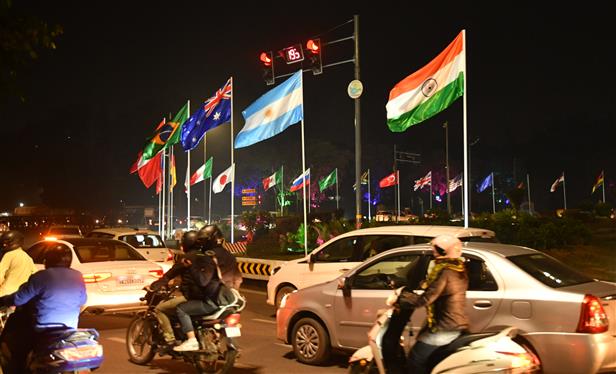
Chandigarh — the first planned modern and green city to be conceived after India’s Independence in 1947 — is rolling out the red carpet for the delegates attending the two-day International Financial Architecture Working Group meeting here on January 30-31 in the run-up to the G20 Summit.
The City Beautiful, planned by the Swiss-French architect and town planner, Le Corbusier, is located some 240 km north of New Delhi at the foothills of the Shivalik range and two seasonal rivulets flowing on its two sides. Famous for its gardens and open spaces, Chandigarh is calling upon the delegates from across the globe to explore nature with all their senses during their stay in the city.
“Go out to the nearby woods or gardens, try your hand at golf or enjoy the beautiful locales of the city, ” suggests an official who is overseeing the arrangement for the meeting, whose delegates were treated to an exhibition match at the Chandigarh Polo Club on Sunday, January 29. As many as 170 delegates are attending the meeting, which has been divided into two sessions. The first will be on strengthening multilateral development banks to address shared global challenges of the 21st century and the second will be on the International Monetary Fund’s 16th General Review of Quotas.
There’s a lot in the city for the delegates to let their hair down. It has three world-class golf courses, starting with the oldest, the Chandigarh Golf Club, and the Chandigarh Golf Association as well as the Panchkula Golf Club. The Chandigarh Golf Club was established in 1960 and it has produced champion golfers, notably Jeev Milkha Singh and Irina Brar.
“We are expecting an enormous response to playing golf from the delegates, ” added the official, who did not want to be named as he’s not authorised to speak to the media.
Adjacent to the Chandigarh Golf Club is the rain-fed manmade Sukhna Lake with the Kasauli hills and lower Shivalik hills in the backdrop.
Conceptualised by Le Corbusier as a tranquil and serene space, the Sukhna Lake, the most popular tourist spot and home to many species of winter migratory birds, was created in 1958 by damming the Sukhna Choe, a seasonal stream coming down from the Shivalik Hills.
The lake, the heart and soul of the city, is situated in the VIP area of Chandigarh, with the governors of Haryana and Punjab, senior officers of the administration and affluent people residing in its vicinity.
Close to the lake is the fairyland known globally as the Rock Garden, whose creator Nek Chand’s world of fantasy has put the City Beautiful on the world tourist map.
The Rock Garden explores a different side of human artistry. Thousands of animal and humanoid figures made out of multicoloured useless stones, industrial and urban waste, and other throwaways are the main attractions of Nek Chand’s unique creation.
Chandigarh: Punjab Congress president Amarinder Singh Raja Warring today described as merely publicity stunt the opening of the Aam Aadmi clinics in Punjab saying, it was a classic case of old wine in new bottles as the government was only renaming the existing health facilities.
Besides, the PCC president remarked, these clinics looked more like Aam Aadmi Party offices and extension counters than health centres.
Reacting to the opening of the clinics in Punjab, he pointed out, that the state government was only renaming the already existing facilities in the and naming these as “Aam Aadmi clinics” as its purpose was more to gain political mileage than provide healthcare to the people.
Warring said, in the mad race of getting the numbers of so called clinics jacked up, the AAP government had replaced the historic and religious names of various centres including the one in Amritsar which was named after one of the Panj Pyaras.
He asked as why these clinics were not named as “government clinics” and why as Aam Aadmi clinics with Chief Minister’s photograph.
Who is paying for it, the government or the AAP? he asked, while asserting that the names of these clinics must be changed. He also hinted at initiating legal course for the same.
“First of all there was no need to open such clinics as Punjab already has a robust healthcare system which was proved by the fact that the government was only renaming the existing healthcare facilities and superimposing party name on them which is illegal”, he said, while adding, “it was only trying to propagate and publicise its party name”.
Former Haryana Chief Minister Bhupinder Singh Hooda on Saturday demanded compensation for mustard farmers as 70-90 per cent of the crop has been damaged due to frost.
He said the BJP-JJP government neither carried out the ‘girdawari’ nor announced compensation. He demanded the government should come forward to help the farmers without delay.
Hooda said the farmers are protesting at many places demanding compensation for the Kharif crop of 2020. “For the last several seasons, farmers have either been given a nominal amount of compensation or they do not get any compensation at all. In this way, the government and insurance companies have duped the farmers of hundreds of crores.”
“Even after paying premium to the insurance companies every season, the hands of the farmers remain empty. While insurance companies have earned huge profits of more than Rs 40, 000 crore from Haryana. Under the protection of the government, insurance companies are minting money while farmers wait for support, ” the Leader of Opposition said.
He said the government had announced the purchase of millet under the Bhavantar Bharpayee Yojana, but neither the farmers get the minimum support price (MSP) of the crop, nor was their loss compensated under Bhavantar. “Till date, the government owes Rs 120 crore to the farmers, ” he said.
Similarly, under crop diversification, the government had announced an incentive of Rs 7, 000 per acre to the farmers for growing maize instead of paddy but they have not received any support under this scheme till date.
“From paddy to wheat scam, no action has been taken till date. The case of rotting of 42, 000 metric tonnes of wheat in four districts is still pending. The committee formed and was tasked to complete the investigation and take action after presenting the report in 30 days. But today the result is zero even after 80 days have passed, ” he pointed out.
Hooda said due to these policies and corruption of the BJP-JJP government, the farmers are on the verge of destruction.
“According to Union government reports, today, on an average, every farmer family in the country has a debt of 74, 221, while farmers of Haryana have a loan of Rs 1.82 lakh, almost two and a half times the national average. Haryana was on top in agriculture and development during the Congress government, today it is one of the leading states in terms of debt, ” he added.