Saturday, December 27, 2025

How AMU V-C tried to whitewash the grim facts

Aligarh Muslim University V-C Prof Tariq Mansoor’s blatant pro-Right stand has brought bad name to the university township, which was  once upon a time known for its earnest educationists

Aligarh was once upon a time known for  its  earnest educationists,  the crusaders for education,  but  in  recent times, the vice chancellor of the Aligarh Muslim University has  been viewed by  the students more of a  sycophant than an educationist.  They have been severely critical for his pro-Right stand. Sarkari man, he’s been labelled!

Earlier it was also widely alleged that the vice-chancellor, Professor Tariq Mansoor, was not there for his students when the anti-CAA protests had peaked and the students were  mercilessly attacked and blatantly targeted not just by goon brigades but also by the cops. It is also alleged that he had given the go-ahead for the police and paramilitary to enter the  university campus.

And more recently, the Aligarh Muslim University decided to drop books by two Islamic scholars from its syllabus – syllabus of the Department of Islamic Studies – after learning that certain “Right-wing ideologues” had written to Prime Minister Narendra Modi seeking a ban on the books by Abul A’la al-Maududi of Pakistan and Sayyid Qutb of Egypt …Muhammad Ismail, chair of the department of Islamic Studies at AMU, had  told  national dailies that the university had on its own decided to drop the books by Abul A’la al-Maududi of Pakistan and Sayyid Qutb of Egypt. Why? “Because we don’t want any controversy…”  Ismail did not reveal who were the “Right-wing ideologues” and how he had come to know about their letter, but he’d said their allegation that these two scholars’ writings promoted “terrorism and fanaticism” was incorrect and that these books contained “Nothing objectionable…Both authors have described Islam in the light of democracy and advocated it in its purest form, but some countries under monarchies had banned them in the past.”

And  now,  last week,   the AMU vice-chancellor, Professor  Tariq  Mansoor,   is once again facing criticism not just by the  university students but  also by the secular groups,  after he seemed to give his opinion on the BBC series —  The  Modi  Question — along the strain that all’s  okay  with the Muslim minority community in India under the  Right-Wing rule.

Is this genuinely and factually correct? Or is it a sarkari Musalmaan’s point of view along a rather obviously tilted strain? Did Professor Mansoor Tariq bother to talk and quote Muslims from Gujarat’s  pogrom affected areas  or for that matter from any other state of the country? Did he talk to the survivors of the 2002 Gujarat pogrom; under what severe apprehensions and fears they are managing to survive in? Did he bother to meet Bilkis Bano and hear details of her plight? Did he talk to the hundreds of young facing discrimination? Did he list the poisonous propaganda unleashed against the community?

A pity that the vice chancellor of AMU seems to have taken up the task of white washing! Facts, if nothing else!

But the fact is that facts can never ever be white washed. They carry the tendency to be there! To stand out and shriek on your face. Truth does emerge, today or tomorrow or the day after!

All that one has to do is to move to the ground situation, talk to the survivors, meet the relatives of the killed and raped and targeted and assaulted, see the signs of the aftermath and then come out with the stark truth. To settle not just the bruised forms but also to settle souls, yours and mine and that of the dead. Remember, souls never ever die; linger and hover around.

Today it is indeed a sad day for the university township. Though the very word ‘Aligarh’ brings up images of the University but there is more to that town. It has a vibrant illustrious history, dotted with the who’s who in the literary world, who lived and died unsung. Today the alive are well aware of the present times, where truth is made to be somehow killed and buried by the unknown killers of  the day!

*****.

Last  month, I had decided to delve into the life and verse and works of one of the best read  poets of this  subcontinent –Mohammad Iqbal.
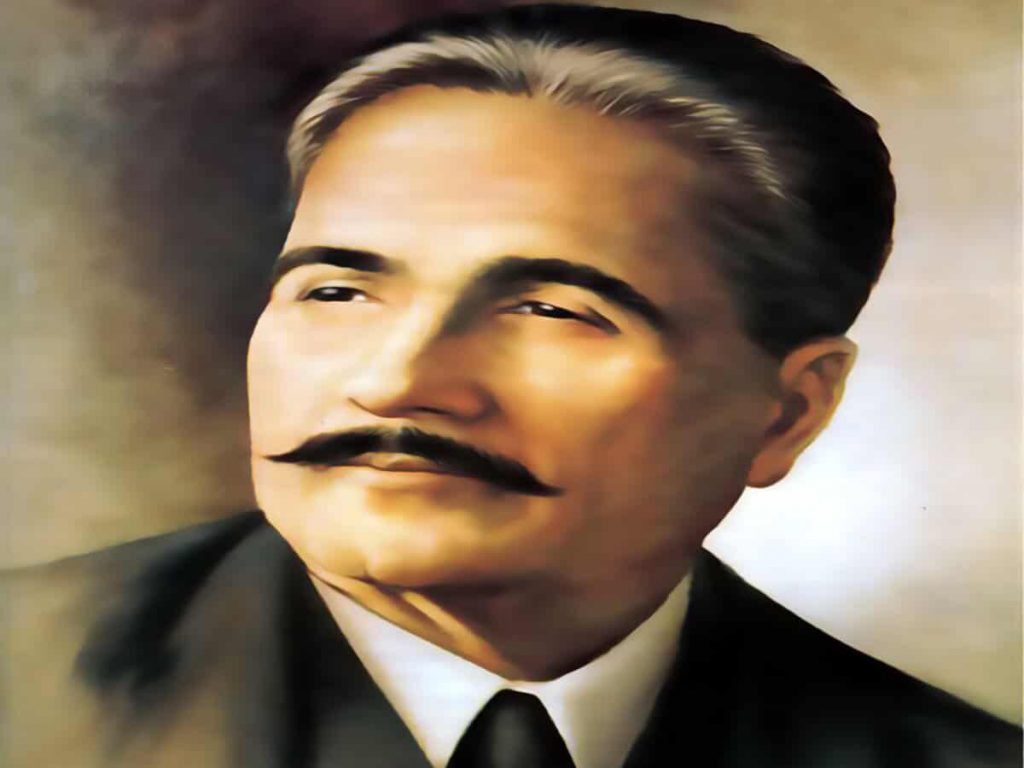
 Yes,  I decide to do so,  in  the  backdrop of the Uttar Pradesh police deciding to slap charges on  a particular government school principal and a teacher in  Uttar Pradesh, after a video of students reciting Mohammad Iqbal’s  famous Urdu poem (probably  written around 1902)  “lab pe aati hai dua banke…” went viral on social media.

Why all the uncalled for hungama? It is reported that a particular Right-Wing group objected to the poem, to a particular line of the prayer, “Mere Allah burai se bachana mujhko.”

 I recall as school children  we used to recite this poem along with many  more songs and poems…Needless  to say recite without  fear or fright  because then fascism and fascists hadn’t hit us, our very identity and survival. We were then free citizens, not to be threatened and hounded and bullied and hounded by the Right-Wing.

Leaving you with  Mohammad  Iqbal’s  verse  from  Khushwant  Singh’s  book – Celebrating  the  Best  of  Urdu Poetry-  Selected by  Khushwant  Singh & Kamna  Prasad. Translated with An Introduction  by Khushwant  Singh  (Penguin Viking).

Before the verse, it is significant to mention that Mohammad Iqbal lived from 1873  to 1938. He received his PhD (Heidelberg) and Barrister at law (London) and also  received  doctorates in literature and philosophy from many other  universities. And  Khushwant  describes  him  in this  book, in these words: “ He is recognised  as the  inheritor of  Ghalib, and the second-most renowned poet of Urdu. Like many of his predecessors, he wrote in both Urdu and Persian. The  message  he  sought  to  convey  is usually  described  as  khudi,  selfhood or self assertion to achieve one’s aim.”

Mohammad Iqbal’s verse titled, ‘Man of Faith:

You ask me for the signs of a man of faith- /

When death comes to him he has a smile on his face.’

His this verse too, ‘Stormy Life:

May God grant you the experience of a storm/

The waves of your life’s ocean are too calm.’

Also, his this verse, titled, ‘Faith,  Conduct, Compassion:

Man’s weapons in life’s battles are three:/

Conviction that his cause is just/

Courage to fight for it till eternity/

Compassion that embraces all humanity.’
Is Kejriwal’s national ambition fuelling his showdown with LG

After confrontation over Excise Policy, Delhi Chief Minister Kejriwal has levelled fresh charges against Delhi Lt Governor V.K. Saxena accusing him of deliberately stalling popular schemes of the state  government in health and  education departments, writes Pawan Kumar Bansal

Come Lok Sabha elections , Arvind Kejriwal, Delhi Chief Minister, is at his favourite pastime  – political theatrics. The scene in the state has shifted from confrontation over Excise Policy and fresh bouts of allegations against Delhi  Lt Governor V.K. Saxena regarding  stalling of the popular schemes of the State  Government in health and  education departments. Another attempt was made through a sting operation by the DCW Chief, Swati Maliwal,  to show how women are feeling unsafe  in the national capital. It is no secret  that Kejriwal is all set to cross swords with the  Union Government  led by Narender Modi to gain an edge  in view of the next year’s  Lok Sabha polls.

“Officers heading health and social welfare departments are scuttling my government’s schemes aimed at welfare of the poor and downtrodden at the instance of Lt Governor of Delhi, V.K.Saxena .” Unsparing in his verbal spats, he tried to put the Modi  Government on the mat by roaring, ” If Sawati Maliwal , Chairperson of Delhi Commission of women can be molested and dragged for fifteen  meters on roads of national capital, then nobody is safe here and Union government headed by Narendar  Modi  is responsible for this as law and order here is under direct control of Union home ministry.”

While these and the other salvos of Kejriwal, who is the boss of the Aam Aadmi Party are considered to be another of his attempts  to project himself as a “messiah” of poor and downtrodden, the bonus is portraying Saxena as a “villain” and someone who is acting at the instance of Amit Shah. Kejriwal is  using every word available in the dictionary to malign Lt Governor Saxena describing him as “stooge”  of centre.
 The BJP has reacted to Kejriwal’s outburst calling it a “pure gimmick” for earning cheap publicity and has even claimed  that the man who had reportedly molested Sawati Maliwal was an AAP  worker.
The list of Delhi Government’s confrontation with the L.G is endless. In the recent past, it was the Excise Policy and the money spent by it on advertisements, highlighting achievements of his government in various newspapers, and sending teachers abroad. Without mincing words, Kejriwal uses every opportunity to allege that Lt Governor Saxena is not allowing his democratically elected government to work  smoothly.

Political pundits think that  Kejriwal is preparing for the 2024 Lok Sabha polls. Prior to the General Elections,  the AAP  had to face yet another by-election of Jalandhar Lok Sabha seat in Punjab due to the death of the sitting Congress MP, Santokh Singh Choudhary during the ‘Bharat Jodo Yatra’ of Rahul Gandhi. It is only in the recent past that AAP lost the Sangrur Lok Sabha seat, vacated by the Punjab CM Bhagwant Mann to Simaranjit Singh Mann. Besides , Kejriwal is aiming at spreading its wings in other states  like Haryana, Gujarat, Goa and Karnataka, struggling  to increase his party’s vote share.
It is no surprise that on the political landscape , when the Opposition seems to be lacking  cohesion, clarity, calibre and vision, ,Kejriwal  is projecting himself as a firebrand leader who has the guts to challenge Modi. He is also eyeing a possible place for a  consensus candidate of the anti-BJP front  during the  Lok Sabha polls.

Till sometime back, the West Bengal CM,Mamta Bannerji was being projected as a consensus candidate of anti-BJP parties’ but now it looks as if she has shifted her stance and adopted a “soft attitude” towards Modi.

Now, with the kind of response which  Rahul Gandhi is getting through his ‘Bharat Jodo Yatra’ and the lavish praise on him by the  Jammu and Kashmir ex-CM Farooq Abdullah, he is thought to be emerging as prospective leader of the proposed anti- BJP front which is yet to take any concrete  shape. But Kejriwal might still be hopeful.

Kejriwal and his party’s government  in Punjab are utilising the state’s s resources to boost their  image by releasing advertisements in various newspapers highlighting their achievements and projecting themselves  as role models of governance for the country. The Delhi Government has already drawn  flak from Saxena for releasing  advertisements worth millions in various newspapers. Now his Punjab counterpart, Bhagwant Mann has embroiled himself into a controversy by unceremoniously shifting the Health Secretary, Ajoy  Sharma who had objected to spending three times more money than the sanctioned money for  “Mohalla Clinics” in newspapers  outside  Punjab.

Manpreet’s exit bares deep fissures in Punjab Congress

Senior Congress leader Manpreet Badal move to switch over to BJP amid the Punjab leg of the yatra has signalled further trouble for faction-ridden state Congress as prominent leaders continue to desert the ship after the party’s rout in last assembly poll, reports Rajesh Moudgil

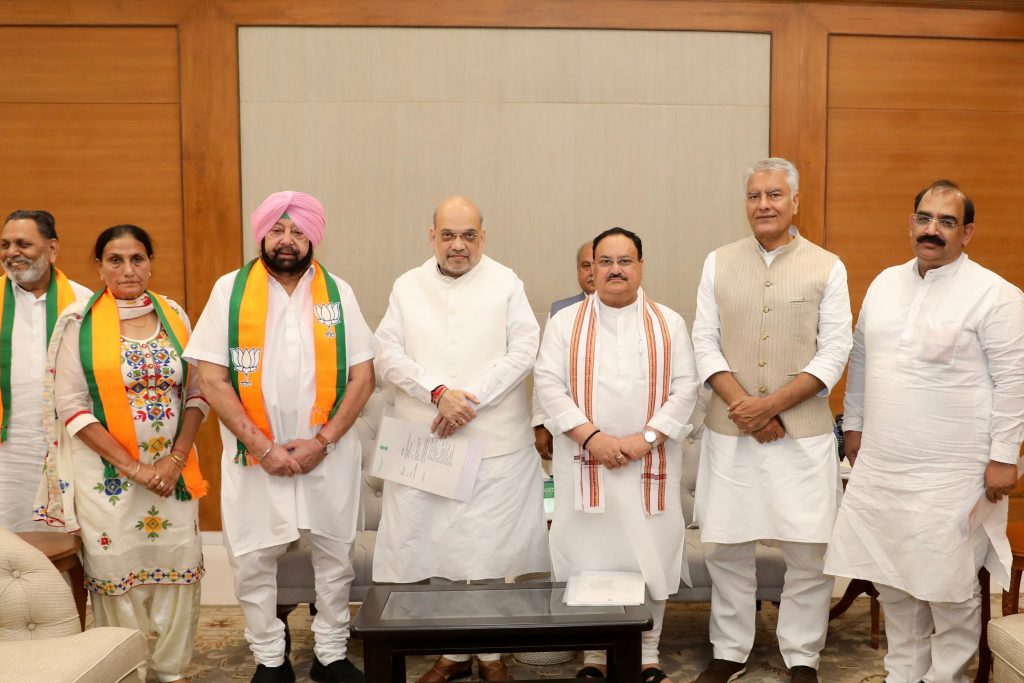
The resignation of yet another senior Punjab Congress leader, Manpreet Singh Badal from the party amid the eight-day Punjab leg of  Rahul Gandhi’s recent “Bharat Jodo Yatra’’ came as a rude shock, putting the state unit in bad light. Minutes later, Manpreet joined Bharatiya Janata Party (BJP) in New Delhi on January 18. Rahul wound up the Punjab leg of his Yatra a day later with a rally in Pathankot.

Manpreet’s departure defeated the very purpose of both – Yatra in the state as well as functioning of the state unit, leaders of which had made efforts to put up a united face of the faction-ridden state unit also eyeing the 2024 Lok Sabha elections. Manpreet minced no words in citing the reasons behind his resignation, saying that the party was at a war with itself having multiple factions.

A five-time legislator and former minister, Manpreet was the fifth minister from the previous Congress government to have left Congress and joined the BJP. About four months ago, former chief minister Capt Amarinder Singh joined the BJP after merging his Punjab Lok Congress – he had floated after leaving Congress – with the saffron party. Subsequently, former Punjab Congress leader Sunil Jakhar also joined the BJP. Earlier, former ministers Balbir Singh Sidhu, Gurpreet Singh Kangar, Raj Kumar Verka and Sundar Sham Arora had joined the saffron party in 2022.

Manpreet, a nephew of former chief minister and Akali stalwart Parkash Singh Badal, had served as the finance minister in both the Shiromani Akali Dal-BJP government from 2007-11 and in the Capt Amarinder Singh-led Congress government from 2017-22. Leaving Shiromani Akali Dal (SAD), he had also floated the People’s Party of Punjab (PPP) in 2011, contested the 2014 Lok Sabha elections as a Congress-supported candidate and joined the Congress in 2016. He was elected from Bathinda (urban) assembly segment as the Congress MLA but faced drubbing in the 2022 Punjab elections.

The bad blood in the Congress, which came to power five years ago with a thumping majority of 77 legislators out of the 117-member House, has been evident since the last assembly polls and resultantly, was reduced to humiliating 18 seats this election. And it was to blame itself more than anything else for it because of the bitter infighting.

Bad blood ran deep

While the unceremonious exit of the then chief minister, Capt Amarinder Singh last year following which he left the party, is well known, the bad blood seems to still run deep in the state unit. As Charanjit Singh Channi, a Dalit leader, who replaced Capt Amarinder Singh and was declared Congress chief ministerial candidate, a fresh bout of bickering had come to the fore in the party.

Former CM Amarinder Singh joined the BJP after the Congress high command unceremoniously replaced him with Charanjit Singh Channi

Its top leaders including state unit president Navjot Singh Sidhu, election campaign committee chairman Sunil Jakhar, deputy chief minister Sukhjinder Singh Randhawa, who were among the frontrunners to replace Capt Amarinder Singh as the chief minister in September last year before the party settled for Channi, were nowhere to be seen in Channi’s campaigns. While several of the senior leaders remained missing from the scene, there were many rebels who jumped into the fray fighting against the party’s own candidates. Ironically enough, the rebels included Channi’s brother, Dr Manohar Singh, who fought from Bassi Pathana constituency (district Fatehgarh Sahib) against Congress’ sitting MLA Gurpreet Singh.

‘Coterie increasing factionalism’

Hence, this content of Manpreet’s two-page resignation letter addressed to Rahul Gandhi plainly giving the reason behind his exit; “The coterie of men entrusted with the authority to dictate Delhi’s writ to the Punjab unit of Congress are far from sound. Instead of striving to reduce the internal disagreement in an already divided house, these men acted to further increase factionalism, and almost as a matter of policy strengthened the very worst elements within the party’’.

However, aside from the above mentioned reasons, party sources say that the aversion between Manpreet and state chief Amarinder Singh Raja warring has also been well known since 2012 assembly polls when Manpreet had defeated Raja Warring from Gidderbaha seat as a candidate of the PPP. The political observers also opine that by joining the saffron party, Manpreet hopes to revive his political fortunes. With the BJP preparing to contest all the 13 Lok Sabha seats in 2024 on its own, he hopes the party may field him from his home turf – Bathinda.

Good riddance: Warring

Terming Manpreet’s exit from the Congress “good riddance”, Warring also tweeted a strongly-worded post: “Good riddance. @MSBADAL is congenitally power hungry. He joined @INCIndia knowing the party was winning. 5 yrs is a long time for someone like him to stay out of power for reasons not unknown to anyone. Instead of crying martyrdom, he should be apologising to the Congress for betrayal.”

 Interestingly, the Shiromani Akali Dal also did not miss an opportunity to take a jibe at BJP as its spokesperson Dr Daljit Singh Cheema tweeted on the developments: “Keeping in view the rapid joining of Congress leaders in the Punjab BJP unit, I humbly appeal to the BJP high command to reserve at least 3 Lok Sabha & 23 Vidhan Sabha seats for original BJP leaders who have been working hard for the party since decades’’.

Multiple power centres

Back home, the Congress seems to continue to be faction-ridden and there does not seem to be an end to it; while there are said to be many senior leaders who think that the state party chief Raja Warring is junior to them, the leader of opposition Partap Singh Bajwa has his own set of disliking for some leaders. Warring has recently said that those who would not fall in line would face action and that 12 leaders had already been expelled.

Charanjit Singh Channi, who was state’s first Dalit chief minister and is back after months-long stay abroad after the last assembly polls, has been working overtime to have his say. The former state unit president, Navjot Singh Sidhu has his own popularity and aspirations.

BJP’s war cry against corruption ends in a whimper

Outflows from India in Swiss Banks continue to swell as the country continues to be listed among the most corrupt countries with the 86th position on the Transparency International’s Corruption Perception Index 2021

The Indians were quite elated, when in January 2021; Pakistan was ranked 140 out of 180 on the Transparency International’s Corruption Perception Index (CPI) 2021, but the government as well as its drum-beaters remain mum that India continues to be listed among the corrupt countries at the 86th position on the index.

The Indian media has been quite noisy on the issue of corruption, especially when some investigating agency raids a former minister or bureaucrat, but seldom, it tells about the follow-up and how far the allegation could be proved before judicial scrutiny. It never analyses the inadequacies of the investigating agencies in getting the conviction. It may be noted that noises in the media or the ‘media trial’ cannot be an effective tool in tackling corruption in the country.

The government’s drum-beaters focus on Pakistan that it has lost 16 spots over the previous year on the corruption index. Does it really compensate for Indians’ failure to curb the menace of the rampant corruption in the country? It may be recalled that the present ruling party, the BJP, had come to power in 2014, nine years ago, by promising corruption-free governance, and also promising that India would be the most favourable destination for investors; but India’s ranking among the corrupt countries continues to remind us that no substantial effective action appears to have been taken against the corrupt since the party has occupied power in New Delhi. In spite of the media drum-beaters, the ground realities continue to be grim in the sensitive field of governance. 

There is a general perception that the BJP made deliberate effort to dilute the Right to Information Act (RTI), by amending this 2005 legislation, which was for empowering citizens to access the government files and nothings leading to the decisions. The RTI has been amended to exempt 22 organizations, including the agencies entrusted to catch tax evaders and the corrupt. Therefore, it is not surprising that it has emboldened the corrupt, who could influence the investigating agencies, thus prolonging the court trials.

On their part, insulated from any public scrutiny, these agencies have been serving their political masters by making noisy raids on some politicians. The impact of these raids appears to be settling some political vendetta, but no real punishment given to the accused.

With the amendment in the RTI, these agencies have become a law unto themselves; they could successfully avoid any close scrutiny of courts and civil society of their poor performance. Is it not true that in recent years, they could not get any big fish convicted for indulging in corruption? However, this lack of professionalism in Indian agencies under the political patronage has resulted with the flow of the Indian money in the Swiss Banks during the past seven years. In 2020, it had jumped to 20,000 crores, and in 2022 it rose further. Besides, the money held in Indian customers’ savings or deposit accounts rose to a seven-year high of about Rs 4,800 crore, reversing a two-year declining trend. The Indian Finance Ministry, however, has stated that the Indian investment could not be called the parking of ‘black money’. These funds could also be attributed to the holdings via securities and similar instruments.

It is being stated that the lack of transparency in the functioning of the investigating agencies could have reinvigorated the common man’s perception regarding the actions being taken against the corrupt. One may recall that unnecessarily the name of Arun Jaitley, the then Finance Minister, was brought under the shadow of the suspicion that the fugitive tycoon Vijay Mallya had met him before leaving for abroad. It goes to the credit of Jaitley that he had promptly denied Mallya’s statement that he had met the minister before flying out of the country in March 2016 and had offered to settle his unpaid loans. However, is it not true that during the past six years, Mallya has been enjoying his London stay? The investigating agencies never revealed that he had actually escaped.

He has been facing legal battles in London courts since then; it is yet to be ascertained when he would be finally handed over to the Indian authorities for justice.

Meanwhile, it is quite heartening that Nirav Modi, who had fled India following the unearthing of the Punjab National Bank scam, is currently behind bars at Wandsworth prison in London. With no legal options left in the UK now, he might be flown back of India anytime now.

The Corruption Hits Poor

It is quite known that the corruption is a global phenomenon found in all countries – but evidence shows it harms poor people more than others, stifles economic growth and diverts desperately needed funds from education, healthcare and other public services. An estimated one trillion US dollars get siphoned off through bribes every year by the corrupt political leaders and bureaucrats in Asia and Africa, according to the World Bank.

The issue of corruption has been raised in various UN forums. During the Conference of the States Parties to the United Nations Convention against Corruption (UNCAC), the issue is being discussed regularly. It began with its first session held in Amman, Jordan, in 2006; two years later, its second conference was held in Nusa Dua, Indonesia, the third session in Doha, Qatar in 2009 and the fifth Session was held in Panama in 2013.

These conferences have been stressing upon the importance of enlisting the support of governments, the private sector, parliamentarians, anti-corruption authorities, civil society organizations, young people and the media cooperation in rejecting corruption at every level of society. The recovery of stolen public assets has also been widely discussed and the conference agreed to work to remove barriers to asset recovery.  This is a particularly important issue for many developing countries where high-level corruption has plundered the national wealth and where resources are badly needed for reconstruction and the rehabilitation of societies.

The UN Convention against Corruption

The UN Convention against Corruption (UNCAC) came into force in December 2005 and has been ratified by 155 States, more than two third of the Member States of the United Nations.  It is the only international legal instrument to fight corruption. The Convention obliges States to prevent and criminalize corruption; to promote international cooperation; to recover stolen assets and to improve technical assistance and information exchange in both the private and public sectors.

The Convention introduces ground-breaking measures in four areas: prevention, criminalization, international cooperation and asset recovery.

During the past two decades or so, these international conferences have evolved effective mechanisms dedicated to preventing corruption with measures directed at both the public and private sectors. These include model preventive policies, such as the establishment of anticorruption bodies and enhanced transparency in the financing of election campaigns and political parties. States must ensure that their public services are subject to safeguards that promote efficiency, transparency and recruitment based on merit.

Transparency and accountability in matters of public finance must also be promoted and specific requirements are set up for preventing corruption in critical areas of the public sector such as the judiciary and public procurement.

Need for Restoring RTI

The inability of the Union Government under the BJP’s decade-long tenure to curb the menace of corruption reminds us that the most effective way to tackle corruption is by promoting open and fair governance. The RTI Act 2005 had considerably diluted the Officials Secrets Act 1923. Earlier, the corrupt could hide behind the veil of secrecy under the 1923 legislation, which had been happily retained during the post 1947 era. It had taken almost half-a-century for the civil society in India to get the RTI Act, but the BJP leadership chose to  dilute it and make it as ineffective as possible; thus undermining its own agenda against corruption.

(A New Delhi-based independent columnist offers an in-depth study. The views expressed are his own.)

Mann govt courts controversy over publicity funds for clinics

The Punjab government is in the eye of a storm after it transferred senior IAS officer Ajoy Sharma out of the health department for reportedly refusing to sanction Rs 30 crores for publicity of  the mohalla clinics in the southern states. A report by Aayush Goel

The mohalla clinics are in the news yet again. And this time for the controversy the Punjab government has courted for splurging public funds on their publicity. The Bhagwant Mann-led AAP government is in the eye of storm after senior IAS officer Ajoy Sharma was transferred out of the health department for reportedly refusing to sanction Rs 30 crores for publicity of these clinics in southern states.

 A 1999 batch officer, Ajoy Sharma was posted as principal secretary Health and Family Welfare, and Finance Commissioner (Taxation). He was the officer behind 75 mohalla clinics that were set up in the state. He was gearing up for the inauguration of 400 such clinics on the Republic Day but was posted out overnight and had not been given any posting till the filing of this report. Vikas Partap was handed over the charge of Finance Commissioner (Taxation), while VK Meena was made in charge of the department of health.

While everybody including Ajoy Sharma, Chief Secretary Vijay Kumar Janjua and Chief Minister Bhagwant Mann have maintained a silence, sources claim that in two different meetings, Sharma was asked to allow spending of Rs 30 crore on publicity from the health budget. He however reportedly refused to sanction the amount stating that the department had already spent Rs 10 crore for setting up mohalla clinics and he would not be able to justify spending another Rs 30 crore for publicising the scheme in states like Tamil Nadu.

It is said that Ajoy stated that sanction could have been considered if it had been for Punjab as people would have benefited from this publicity but he insisted that residents of Tamil Nadu would not benefit from mohalla clinics in Punjab and refused sanction. The transfer has led to a major uproar by the opposition that is cornering Mann government for not just harassing bureaucrats for doing their job but also wasting funds of cash starved state for political benefits of AAP. 

Shiromani Akali Dal (SAD) asked Punjab Chief Minister Bhagwant Mann to explain why his government needed Rs 30 crore to advertise mohalla clinics, for which the state was spending Rs 10 crore, if it was a ‘successful model’. Senior SAD leader Daljit Singh Cheema said on the one hand the Chief Minister was touting mohalla clinics as a success with 100000 people having benefited from them and on other they wanted to spread good word at such whooping cost. 

“What is the need to publicise them in the state and up to South India, except to further the political agenda of AAP convener Arvind Kejriwal. Mohalla clinics have failed in both Delhi and Punjab but they are not ready to accept it and are going to bleed the state dry to sell this model in other states. It is even threatening and implicating the former health secretary who refused to approve the Rs 30 crore publicity proposal”, said Cheema. He said Bhagwant Mann should realise that Punjab already had primary health centres and did not need more dispensaries in the name of mohalla clinics, instead needing good secondary and super speciality healthcare.

 The former deputy Chief Minister and SAD president Sukhbir Badal said patients were being compelled to bring syringes to get injections administered in government hospitals, but the Mann government was hell-bent on wasting Rs 30 crore on publicising “useless” mohalla clinics. “And if an officer objects to this sheer wastage, he is shunted out,” he said. The SAD has demanded the entire file on the issue in public domain.

Even Congress is up against the government on the issue. Congress MLA Sukhpal Khaira tweeted, “This is Delhi health model: Spend thrice the amount of project on publicity! Bhagwant Mann shunts out the health secretary merely because he refused to sanction Rs 30 crore for publicity of mohalla clinics! They’ve ruined our rural dispensaries for the theatrics and ego of Arvind Kejriwal.” Former Deputy Speaker Bir Devinder Singh said the “blatant plundering” of the government funds to showcase aam aadmi clinics in other states was highly outrageous and a despicable move of the health department.

 “As a matter of fact, it is nothing but a propaganda mission of AAP. Why plunder Punjab’s public treasury to showcase aam aadmi clinics in other states, why Punjab be coerced to bear propaganda expenses of AAP?” he said. The state government however insists it was a routine transfer and Ajoy will get a posting soon. 

Not just in Punjab but AAP came under scanner for hefty advertisements in Delhi also as Lieutenant Governor VK Saxena has ordered the recovery of Rs 97 crore from the party for political advertisements it allegedly published in the guise of government advertisements.

Bharatiya Janata Party (BJP) has lashed out at AAP and termed this ‘advertisement scam’. The BJP also demanded that the Central Bureau of Investigation (CBI) should look into this. Leader of Opposition in the Delhi Assembly, Ramvir Singh Bidhuri said, “We see an advertisement scam here, and demand a CBI inquiry into it. We will approach the LG in this regard. The amount to be recovered from the ruling party in Delhi would rise to Rs 400 crore. AAP however alleged that the L-G had ‘no clue’ and was ‘dancing on the directions of the BJP’. “AAP has become a national party. BJP and L-G can try harder but AAP will stand tall and will not allow anyone to stop the good works being done in Delhi. L-G has no power to pass such orders. Following the directions of BJP, he is trying to create trouble for the people of Delhi and is trying to stop work”, said AAP MLA and spokesperson Saurabh Bharadwaj.

Raids unearth inter-state timber mafia

Illegal logging is one of the major causes of deforestation and loss of biodiversity. This can lead to uncontrolled emissions at a time when India is trying to reduce the use of fossil fuels and invest in renewables, writes Deepanwita Gita Niyogi

At the 26th United Nations climate summit held in Glasgow last year, Prime Minister Narendra Modi announced his intention to fight climate change by reducing the carbon intensity of the country’s economy by 45 percent by 2030.

India is among the top 10 forest-rich nations of the world. But though forests act as carbon sink and help halt climate change, deforestation is occurring in India at an alarming rate due to developmental activities and mining. Illegal logging of timber is also one of the major causes behind forest loss. This does not bode well at a time when the country is trying to reduce the use of fossil fuels and invest in renewable energy for a greener future.

Illegal trade as well as sale of profitable timber is on in many parts of the country through the mafia. Many of these systematic trade networks flourished during the Covid-19 period due to the lack of proper surveillance. But the forest department is waking up to the challenge and cracking down on criminals.

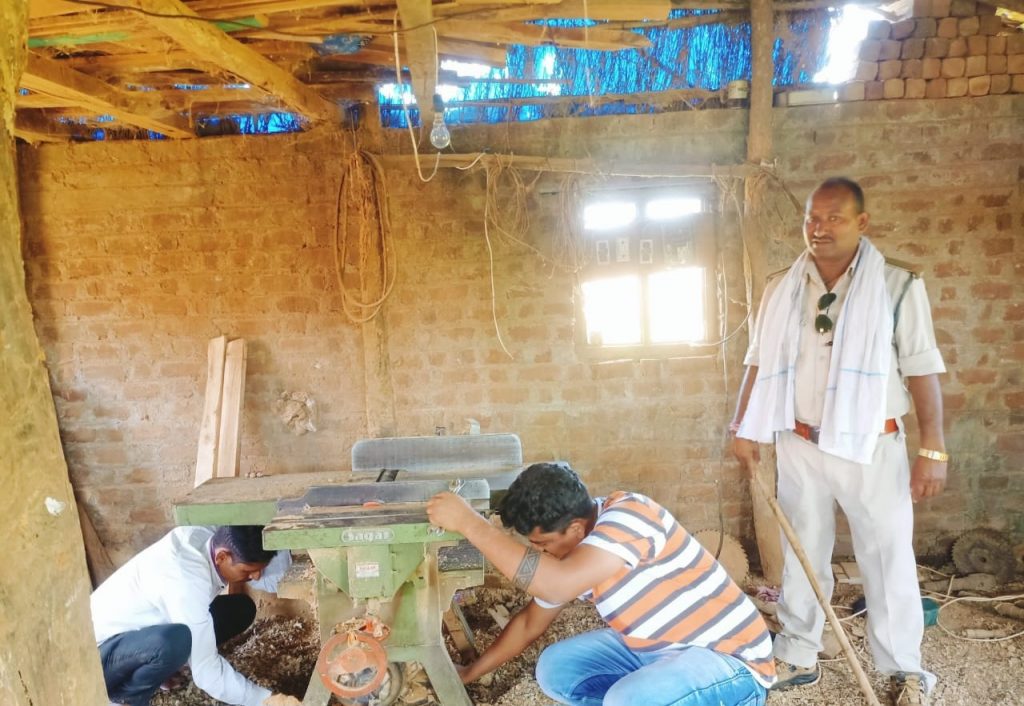
In the past few months starting August last year, the Sendhwa forest division of Madhya Pradesh in central India conducted multiple raids to seize wood cutter machines, teak logs and illegal furniture. Teams led by divisional forest officer Anupam Sharma also apprehended vehicles loaded with timber.

Dumping ground of illegal timber

The Sendhwa region in Barwani district of Madhya Pradesh, which is not densely forested, has turned into a dumping ground of illegally harvested timber smuggled through the national highway connecting the state with Maharashtra. According to forest range officer Hemant Prajapati, who took part in the raids, information about timber smuggling was received through tip-offs. There have been about four raids led by enthusiastic officers in the division. “After receiving information, raids were conducted and materials seized. Most of the illegal furniture was meant for sale in the local market.”

In this inter-state illegal timber trade, many local people of Sendhwa are involved. As teak is a valuable commodity, criminals mostly work at night. Though the forest department tries its best to keep tabs on timber felling, sometimes it lacks adequate staff for thorough patrolling.

As the Sendhwa forest division shares a border with Maharashtra, it is easy to smuggle the wood out. While Maharashtra’s forests have good quality teak most sought after for furniture, Sendhwa is more of the operation point for furniture and machines, as it lacks quality forested areas due to encroachment. Felling does not happen in Sendhwa due to the lack of exploitable trees.

Nabbing timber mafia

Apprehending criminals who work closely with one another within a network is a challenge as they are armed. When bikes carrying illegal timber were spotted by the department officials during a night patrol last year, the smugglers pelted the team with stones. The team had to return for additional backup force. There were about 15 of them in the gang. Though they managed to escape, the raids unearthed a house full of wood cutter machines, logs and furniture.

Sharma said the raids revealed that sawing and furniture manufacturing take place in Sendhwa. But he admitted that nabbing these gangs is challenging as sometimes the jurisdiction of the forest department changes. “Criminals thus take undue advantage of this situation. However, illegal timber trade is not prevalent across Madhya Pradesh. Sendhwa faces a problem, as it shares a long border with Maharashtra,” the officer added.

Wherever there are good quality forests, illegal timber logging is a reality across India. Investigation in such cases is often difficult but the Sendhwa forest division is on a mission mode to conduct more such raids in future.

Jeevan Polaya, a range officer of Sendhwa in-charge of Dhanora range, said dumping picked up in the division in the past two years. “When we carried out joint raids at several places, we found no valid records, thus showing the operation to be illegal. Supply was mostly done through bikes. Criminals avoided main roads and moved through forested areas.”

There are many new officers in the Sendhwa division under Sharma and as such there is enthusiasm in the team. But firearms cannot always be used by the forest staff and at times special permission has to be taken for this. This gives undue advantage to the mafia.

Forest guard Krishnapal Jhala, who has been posted in the Sendhwa forest division for six years, informed that the past few back to back raids had yielded a huge volume of illegal timber never seen before. Apart from illegal furniture, raw logs of wood were also being sold locally.

Prathamesh Hadape, assistant conservator of forests at Yawal division in Maharashtra, across the border, said it cannot be claimed with certainty that illegal timber is being sourced from Yawal only, lying at a distance of 100 km from Sendhwa. “But we are investigating the matter and it needs to be verified. Some parts of Madhya Pradesh also have quality forests.”

Trade in illegal timber is estimated to be at USD 30 to USD 100 billion annually, and results in crime, corruption and loss of revenue for governments.

The Kumbh Mela of Literature set to enthrall yet again

16th edition of the Jaipur Literature Festival (JLF),  set to be unveiled on February 19,  will feature sessions in 21 Indian and 14 international languages across 5 venues where audiences can expect a wide range of perspectives and discussions. A report by Gurvinder Kaur

The Jaipur Literature Festival (JLF) 2023 is set to kick off on January 19th like always and conclude on the 23rd of Jan. The much awaited 16th edition of the fest termed as the ‘greatest literary show on Earth’, will have a spectacular start with the calming strains of Morning Music by the award-winning Carnatic vocalist Sushma Soma followed by the  inaugural addresses by Founders and Festival Co-directors Namita Gokhale & William Dalrymple along with Festival Producer Sanjoy K. Roy.

The keynote address will be delivered by the recipient of the Nobel Prize in Literature Abdulrazak Gurnah. It will host 350 speakers from across the globe associated with literature, music, art and films from across the world. This diverse array of speakers includes recipients of major awards like the Nobel and the Booker as well as Sahitya Akademi, and cover a range of subjects such as climate justice, women’s writing, crime fiction, memoirs, translation, poetry, economics, and more.

The festival will feature sessions in 21 Indian and 14 international languages across 5 venues and audiences can expect a wide range of perspectives and discussions.

Namita Gokhale, Founder & Co-Director of the Jaipur Literature Festival, says, “The Jaipur Literature Festival 2023 affirms joy and creativity through books, ideas and shared narratives. We have some of the greatest writers in the world as well as new and emergent voices. It is a beacon of hope and belief in our fragile world.”

“We are proud to present almost all of the year’s most decorated writers. This year once again we have brought together the world’s greatest novelists and poets, historians and biographers, scientists and economists, artists and art historians: a free-flowing gathering of great literary minds that is like a global super-university opening its gates for anyone who wants to attend for five whole days,” Dalrymple adds.

Key Sessions at JLF 2023

Some of the key sessions will include ‘The Essential Abdulrazak Gurnah’ in which Nobel Prize winner Abdulrazak Gurnah will be in conversation with British publishing legend Alexandra Pringle. Gurnah fled Zanzibar as a teenager following the Revolution of 1964 and his most recent work, Afterlives, examines the German colonial force in East Africa and the lives of Tanganyikans – as they, work, grieve and love.

The other sessions include ‘Seven Moons of Maali Almeida’ in which Shehan Karunatilaka will be in conversation with Nandini Nair, ‘Sustaining Democracy; Nurturing Democracy’ in which Shashi Tharoor will be in conversation with Tripurdaman Singh.

Bibek Debroy, scholar and translator who had made difficult-to-access Sanskrit texts available to readers in English will be in conversation with Festival Co-Director Namita Gokhale, talking about the intricate layers of wisdom and learning contained in the Puranas.

Three experts of agrarian studies Maryam Aslany, Surinder S. Jodhka and Mukulika Banerjee will delve deep into the causes, consequences of the present situation as well as the issue of farmer suicides.

In a session titled ‘Understanding the India-China Border: The Enduring Threat of War in the High Himalayas’, Journalist and author Manoj Joshi will trace the circumstances of the LAC and its impact. Secretary Vijay Gokhale and former Ambassador to China, Myanmar, Indonesia, and Nepal, and former Foreign Secretary Shyam Saran will discuss the rising tensions at the unresolved LAC, and what that means for the region.
Writer and oral historian Aanchal Malhotra will be in conversation with the author of ‘Partition Voices’, Kavita Puri, where she reveals how the Partition is not yet an event of the past and how its legacy is threaded into the daily lives of subsequent generations.

We look forward to bringing you the diverse flavours that make this festival unique and sought after in the next issue!

PM Modi to inaugurate Delhi-Mumbai Expressway on Feb 12

Prime Minister Narendra Modi will inaugurate the much-awaited Delhi-Mumbai Expressway on February 12.

Union Minister Nitin Gadkari informed on his Twitter about the change in plan and said, “Change in the date Now Hon’ble PM Shri @narendramodi Ji will inaugurate the Sohna-Dausa stretch of the #Delhi_Mumbai_Expressway on 12th February.” In his earlier tweet, he had said that the express highway will be inaugurated on February 4.

“Going to be inaugurated by PM Shri @narendramodi Ji on 4th Feb, the Sohna-Dausa stretch of the #Delhi_Mumbai_Expressway will facilitate commuters to reach Jaipur from Delhi in two hours, ” he had said.

Gadkari, however, did not share any further details.

Local BJP sources said that there has been a change in the date with reference to PM Modi’s plan as there are fair chances that he might visit Dausa on February 12 to inaugurate the express highway which earlier were limited to the virtual meeting.

However, the last minute change comes as a part of strategy to woo local voters from different categories. Initially, he visited Mangarh keeping tribal voters in mind, then he visited Malaseri Dungri in Bhilwara keeping Gujjars in mind and this time, his visit to Dausa is targeted for the Meena community. Earlier, tribals, Gujjars and Meena were considered to be Congress’ vote bank which the BJP is now eyeing keeping forthcoming Assembly and Lok Sabha polls in mind, said sources.

Gujjars and Meenas make a strong vote bank in East Rajasthan. Rajya Sabha MP Dr. Kirodi Lal Meena presently sitting on dharna is demanding a CBI probe in the paper leak case. He is considered to be a pivotal leader in eastern rajasthan. This dharna is reportedly exposing party factionism as former ministers and CM Raje and her team are extending support to him but not the party organisation. So Modi’s visit might help Kirodi Lal Meena to dissolve the protest and hence comes the change in plan, confirmed the officials.

This visit, if it happens, can be described as a balancing act to make Gujjars and Meenas happy. Also this can be ascribed as a political visit as well keeping in mind Rajasthan’s Assembly polls and Kirodi’s ongoing dharna.

Mentally challenged man calls cops, threatens to kill Delhi CM

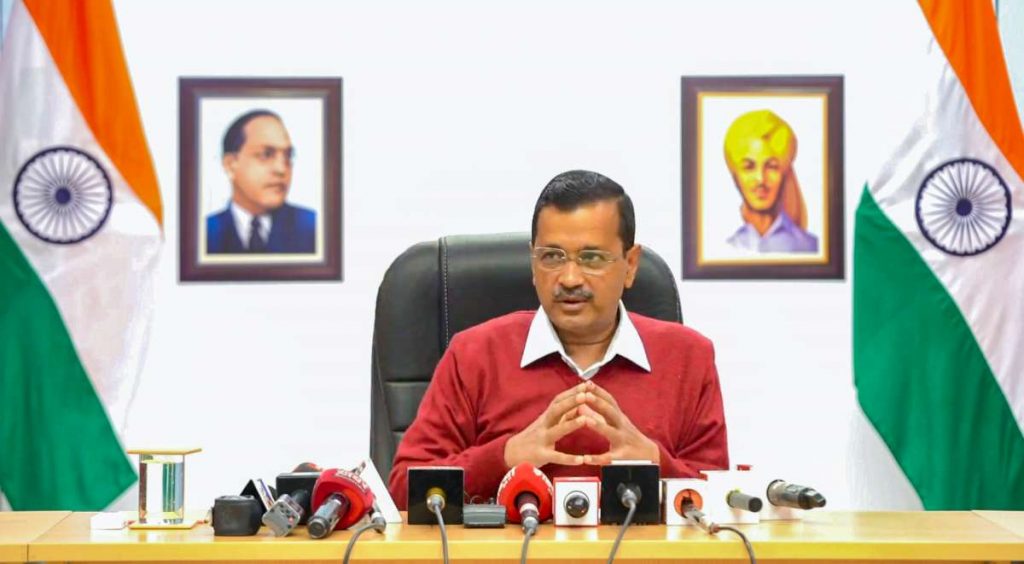
New Delhi: A mentally challenged person allegedly threatened to kill Delhi Chief Minister Arvind Kejriwal, said an official on Tuesday.

A senior police official said that no arrest has been made as the 38 year-old man is mentally disturbed and undergoing treatment at a hospital.

“The police control room (PCR) call about the threat was received at around 12:05 a.m, “said the official.

FM Nirmala Sitharaman to present economic survey for 2022-23 in Parliament

New Delhi : Finance Minister Nirmala Sitharaman on Tuesday will present the Economic Survey (2022-23) in Parliament.

She will lay the document in the Lok Sabha after the conclusion of President Droupadi Murmu’s address to both Houses of Parliament.

Tuesday is the first day of the Budget session of Parliament. Apart from this, a copy of the President’s address will also be laid in the Lok Sabha.

Obituary references will be made for sitting and former members of the Lok Sabha, who passed away during the intervening period between Winter and Budget sessions.

Obituary references will be made for sitting Congress MP from Jalandhar Santokh Singh Chaudhary, who passed away earlier this month. Apart from him, obituary references will also be made for seven-time former MP Sharad Yadav, veteran Telugu actor and former MP Satyanarayan Kaikala and Basavanagoud Kolur.

MOST POPULAR

HOT NEWS