Haryana, HP point finger at Punjab for their drug woes

Haryana is worried over the steady rise in the cases of addiction to ‘chitta’ which it believes is being brought in from Punjab, while Himachal police cites supply chains of contrabands from Punjab as their biggest challenge in its battle against drug menace, writes Aayush Goel

 “The drugs have permeated the schools and are now sold as grocery items at general stores”. The statement issued by Punjab Governor Banwari Lal Purohit has kicked up a storm. He has during his visit to border districts yet again highlighted the problem that has plagued the state for decades and threatens the generations to come. 

After Purohit, it’s the BJP that plans to take up the issue on a large scale. The party has planned a yatra next month against menace which will be led by no less than the Union Home Minister, Amit Shah. The issue has yet again become a much-debated law and order, social, and political issue. 

What has added to the notoriety is that the problem has now started affecting nearby states of Haryana and Himachal, with both holding Punjab accountable for drug overdose deaths and peddling menace in their respective states. Haryana is blaming Punjab for overdose deaths in border districts like Sirsa while Himachal CM Sukhwinder Sukhu too is pointing finger at the neighbouring state for the drug menace in hills. According to the National Crime Record Bureau‘s (NCRB) report, in 2022 the state dropped to the third place with regards to the use and trafficking of drugs. The report revealed that Uttar Pradesh has now occupied the top spot with 10,432 FIRs registered under the NDPS Act, followed by Maharashtra (10,078) and Punjab (9,972).

Being situated near the Golden Crescent crossroads (Afghanistan, Pakistan and Iran), also called the ‘Triangle of Death’, Punjab is a lucrative market for drug gangs. The state does not produce opium, cannabis or their derivatives nor does it manufacture psychotropic drugs but rides high on ‘chitta’, a synthetic heroin derivative. Punjab alone accounts for over one-fifth of the total recoveries of heroin in the country. Heroin is smuggled into India through Pakistan and the state is the gateway.

The second edition of the book, ‘Roadmap for PPrevention and Control of Substance Abuse in Punjab’, released by the community medicine department of Chandigarh’s Post Graduate Institute of Medical Education and Research (PGIMER)  stated that more than 3 million people, or around 15.4 per cent of the population of Punjab are consuming drugs. The drug trade in Punjab is estimated annually to be to the tune of Rs 7,500 crore. The most tragic however is the number of overdose deaths. According to various social organisations, the number runs over a thousand with around 200 drug overdose deaths reported in the state in 2022 only. So while the blame game is on, all the Punjabis want is that they be rescued from their biggest woe.

 Drug overdose deaths in Punjab
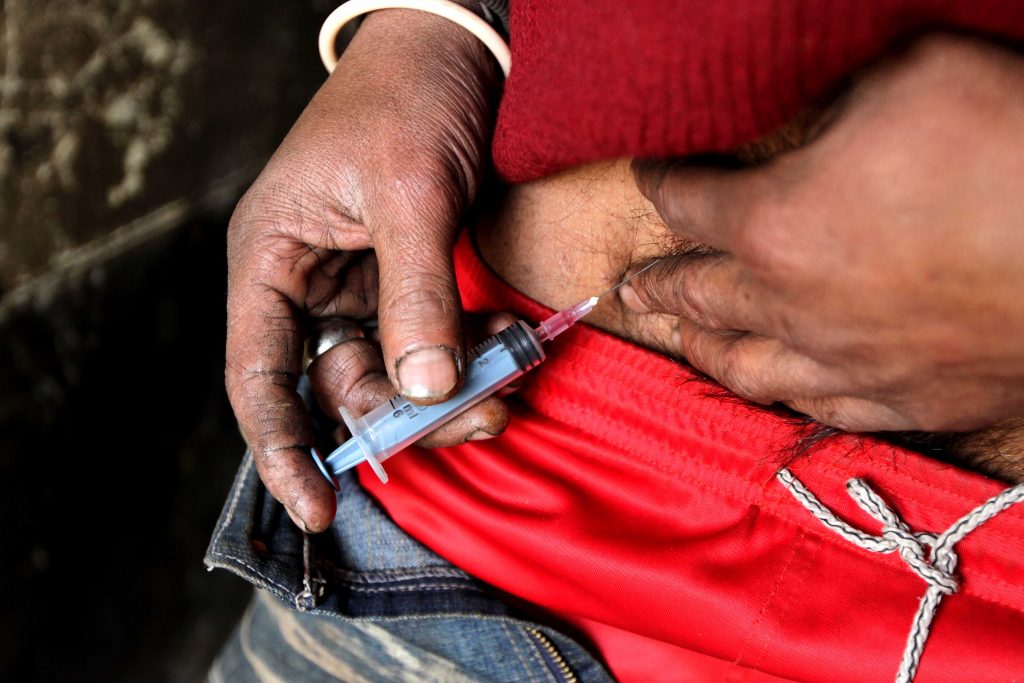
 While aspects like smuggling, peddling and drug addiction still make it to official numbers, drug overdose deaths are the darkest but most concealed aspect that plagues the state. As per records, in 2022, Bathinda recorded the highest, 31 drug overdose deaths followed by Tarn Taran and Ferozepur, which have reported 24 and 21 deaths, respectively. Jalandhar and Muktsar have reported 14 and 13 deaths, while Ludhiana and Amritsar districts have reported an estimated 11 deaths each during the past eight months. Patiala, Fazilka, Faridkot and Kapurthala have reported five to seven drug overdose deaths each. The numbers seem farce as one pays a visit to Tibba Basti in Zira in Ferozepur or Maqboolpura in Amritsar.  A study by the Institute for Development and Communications, Chandigarh, says that 75.8 per cent of the surveyed addicts lived in the border districts and were aged between 15-35 years are currently consuming drugs. “Its politico-bureaucrat-police nexus which aggravated the issue which is now claiming our children’s lives. I have been an eyewitness to many drug overdose deaths. Police officials are involved in drug trafficking and half of them are addicts themselves and have their own sales agents in each village. The politicians and bureaucrats know this but turn a blind eye as it not just helps them earn but keeps their politics alive,” says Nirbhay Singh, President of Kirti Kisan Union.

Haryana struggling with drug overdose deaths

Located at the tri-junction of Punjab, Haryana and Rajasthan, Sirsa has long been the epicentre of drugs in Haryana. What is worrying is that for the last few years, there has been a steady rise in the cases of addiction to ‘chitta’ which is being brought in from Punjab. The district along with Fatehabad has reported many drug overdose deaths. Haryana Chief Minister Manohar Lal Khttar himself has announced that over 40 deaths were reported from the area last year. The local authorities blame Punjab for the menace. “They are ruining our youth as well. Haryana on its part is taking all efforts and curtailing the menace, but not just failure but patronisation of drugs by Punjab authorities has put Haryana in a spot. The successive governments have failed to curtail the menace which is spreading to other states as well,” says state BJP President OP Dhankar. Haryana Police seized 24 tonnes of narcotic substances worth crores of rupees this year. Director General of Police (DGP), Haryana, PK Agrawal said they have also attached properties worth Rs 31.45 crore of those involved in drug trafficking under the Narcotic Drugs and Psychotropic Substances (NDPS) Act. Besides, the process to attach properties worth Rs 12.23 crore of those facing charges of smuggling drugs in the state is in progress. The police have filed a total of 3636 cases under the Narcotic Drugs and Psychotropic Substances Act in 2022, as against the 2583 cases registered in 2021.

Record number of drugs cases in Himachal

Conventionally known as a supplier of ‘Charas’ a product derivative of cannabis plants Himachal today struggles with ‘chitta’ addiction smuggled from Punjab.  In 2022, Himachal police under the NDPS Act arrested 1,992 persons, 89 of them foreigners, in over 1500 cases.  The police say that ironically drug abuse is on rise despite several strategies put in place and cites supply chains of Chitta from Punjab as the biggest Challenge. CM Sukhwinder Sukhu has on numerous occasions cited the same as top priority. “We look forward to working with Punjab on this, starting with information exchange. We need to deal with the issue in both states to uproot the menace,” he says.

Narco Politics

When contacted, the chief spokesperson, AAP Punjab, Malwinder Singh Kang, said that the Bhagwant Mann government had vowed to make all efforts to end the chain of drug smuggling and peddling. He also blamed the previous governments for allegedly patronising drug smugglers and gangsters. “Successive governments have promoted and nurtured it for decades and we are expected to be carrying a magic wand. Punjab police and BSF have to be more proactive to break the nexus. We are making steady efforts to uproot the menace and results will be visible soon,” says Kang.

Shiromani Akali Dal (SAD) spokesperson, Charanjit Singh Brar, claims that while the previous Congress government provided safe haven for smugglers, AAP government has gone a step ahead in providing home delivery of the drugs. “Most of the people who died in 2022 were aged from 16 to 35 years. Home delivery of drugs is also being done. Drugs have killed more youths in Punjab than terrorism,” Brar said. BJP which promises to catch bull by horns says they are not dealing with the issue as political. “We don’t blame anyone but the system, especially the police. This is the same force that eliminated terrorism so we don’t buy that they can’t deal with peddling. State is crying for help and we are standing up for it. We have the ability and Union Home Minister Amit Shah will lead us,” said Sunil Jhakhar, BJP national executive member while talking to Tehekla.

IT ‘survey’ at BBC ends after nearly 60 hrs; company says will continue to cooperate with authorities

New Delhi : The Income Tax department’s marathon “surveys” at BBC’s offices ended on Thursday, after clocking nearly 60 hours, as officials took with them an inventory of financial data from select staffers and cloned electronic data.

The operation that began at the British Broadcasting Corporation (BBC) offices in Delhi and Mumbai around 11:30 am on Tuesday, ended just after 10 PM Thursday, sources said.   Tax authorities have made and taken an inventory of the available stock, recorded the statement of some staffers and have impounded some documents as part of the survey action that continued for three days clocking about 57-58 hours, officials told  to media. Tax officials were seen carrying some bags as they exited the BBC office at KG Marg in central Delhi in multiple four-wheelers

MGNREGA outlay cut sparks allocation-spend mismatch concerns

MGNREGA could have been the lifeline to revive the rural economy as it has pushed up rural wages. However, it has been unable to provide a lasting stimulus to the rural economy because funds allocation has not kept pace with rising inflation

The Union Budget for the flagship scheme of poverty alleviation, Mahatma Gandhi National Rural Employment Guarantee Act (MGNREGA) has sharply reduced the outlay for MGNREGA in 2023-24 to Rs 60,000 crore. This provision for the flagship rural employment programme is the lowest in six years — as against the record Rs 1,11,170 crore in 2020-21, Rs 98,468 crore in 2021-22 and Rs 89,400 crore in 2022-23.

Persuasive though the Modi government’s arguments are, they fundamentally rest on the assumption of normalcy returning or having returned already. However,  the PM-Kisan scheme, under which over 11 crore farm households receive Rs 6,000 annual income support, the outlay has been retained at the 2022-23 level of Rs 60,000 crore.

Surprisingly, there was a drastic cut in the allocation for the Mahatma Gandhi National Rural Employment Guarantee Scheme (MGNREGS) in Budget 2023-24 – bringing it down by over 32% from the revised estimate for the programme in the current financial year.  The government slashed the budgetary allocation for the MGNREGS even as the rural employment rate stood at 6.5% on January 31, 2023.

Admittedly, there are gains in incomes of individuals but in view of more expenditure in comparison to budget allocation, at least 15 states have negative balance currently. The highest negative balance is in the case of Rajasthan at 620 crores, followed by Uttar Pradesh with a negative balance of 323 crores. Rajasthan Chief Minister Ashok Gehlot had recently written to the Prime Minister Narendra Modi, demanding immediate release of funds to clear outstanding dues of about 2000 crores. The letter mentioned that there was an outstanding liability of 848 crores for payment of wages and 1102 crores for materials. 

Indeed, MGNREGA has pushed up rural wages and incomes and has also created rural infrastructure and provided much-needed employment to the country’s rural population. However, it has been unable to provide a stimulus to the rural economy because funds allocation has not kept pace with rising inflation and growing demand because labour migration has come down resulting in more funds to provide guaranteed employment.

The MGNREGS – mandated by Mahatma Gandhi National Rural Employment Guarantee Act – is a demand-driven programme designed to guarantee at least 100 days of wage employment in a financial year to every rural household having adults ready to do unskilled manual work. The scheme was launched on February 2, 2006 and was often highlighted by the erstwhile United Progressive Alliance (UPA) Government as a programme, which legally guaranteed minimum livelihood security to rural population, contributed to bringing up rural wages, lessened distress migration and empowered weaker sections.

Nearly 6.49 crore households so far demanded work under the MGNREGS in 2022-23, while 6.48 crore were offered the same and 5.76 crore of them availed it. During 2019-20, MGNREGS was allocated 60,000 crores. While it was expected that there would be a reasonable increase in funds allocation, there was actually a decline in allocation. During 2018-19, the flagship programme of the Union government had got 61,084 crores (revised estimate).

The budgetary allocation for MGNREGA had increased to Rs 61,084 crore in 2018-19 from Rs 34,000 crore in 2014-15. Except for 2014-15, in all years since then, actual expenditure has been more than the approved budgetary allocation. According to the non-profit Centre for Budget and Governance accountability, “The allocations have actually declined when adjusted for inflation.”

 Little doubt that the Centre had always run out of funds for the MGNREGA scheme because by January 2020, more than 96 per cent of the allocated funds had already been exhausted by the States. The Mahatma Gandhi National Rural Employment Guarantee Scheme (MGNREGS) had for the first time in five years been allocated less budget than the previous year’s actual expenditure. In the Budget 2019-20, MGNREGS was allocated 60,000 crores as  against 61,084 crores during the previous year.

Since its inception, the actual expenditure has been more than the approved budgetary allocation for this scheme for all states and union territories. For instance for 2011-12, the budget allocation for all states and union territories was Rs 31,000.00 crores but actual expenditure was Rs 37,072.82 crores. Similarly for 2012-13, the allocation was Rs 30,387.00 crores but expenditure was Rs 39,778.29 crores. During 2013-14, the scheme was allocated Rs 33,000.00 crores but expenditure was Rs 38,511.10 crores.

 The allocation remained static at Rs 33,000.00 crores for 2014-15 as against expenditure later at Rs 36,025.04 crores. For 2016-17, the budget for this scheme was raised to Rs 48,220.26 crores but actual expenditure went up to Rs 57,946.72 crores. A year later in 2017-18, the allocation came down to Rs 48,000.00 crores. In 2018-19, budget allocation was raised to Rs 61,084 crores (revised estimates). The expenditure statement is yet not available for these years but the fact that the majority of funds have already been exhausted shows that fund crunch has hit the scheme hard.

 Actually the allocations have actually declined when adjusted for inflation. The fact remains that its share in the total Budget had been decreasing. It is said that at times, the figures don’t tell the story. Mahatma Gandhi NREGA is transforming rural India into a more productive, equitable and connected society. It has provided nearly 235 crore person days in the last three years, each year. This year as well, it will be around the same making it four years of consistent high performance on wage employment with durable assets for sustainable livelihoods.

The first and foremost requirement is now to ensure full transparency in wage payments, asset creation, and payment for materials. It is for this reason that efforts were started for a 100 per cent of geo-tagging of assets, AADHAAR linking of Bank Accounts, IT/DBT transfers for all wages, and material payments and Geographic Information System (GIS) based planning of works. The intention was that work should be visible in the public domain and beneficiaries receive payments in their verified accounts.

The issue of creation of durable assets was very important. The 60:40 ratio was mandated at Gram Panchayat level often leading to non-productive assets being created simply because 60 per cent had to be spent on unskilled wage labour in that Gram Panchayat. Without diluting 60:40 principle, the first big reform was to allow 60:40 at the District level rather than at the Gram Panchayat level. In spite of this reform, the ratio of expenditure on unskilled wage labour to overall expenditure remains higher than 65 per cent. This has enabled a new thrust on durable assets that generate incomes. It allows the flexibility to undertake only those assets that are productive.

Over 60 per cent of the resources are spent on Natural Resource Management focused on ensuring higher incomes to farmers by improving both the area under cultivation and yield of crops. This is done by improving the productivity of land and increasing the water availability. The major works taken up under NRM include check dam, ponds, renovation of traditional water bodies, land development, embankment, field bunds, field channels, plantations, contour trenches etc. During the last 4 years 143 lakh hectares of land benefitted through these interventions. Large scale water conservation, river rejuvenation, and irrigation works have been taken up and completed under MGNREGS.

The ambitious MGNREGA could have been the lifeline to revive the rural economy as it has pushed up rural wages,  created rural infrastructure and provided much-needed employment to the country’s rural population. However, it has been unable to provide a lasting stimulus to the rural economy because funds allocation has not kept pace with rising inflation.

Cong bid to forge oppn unity likely to be a long haul

Though the Congress found support from other opposition parties in slamming the Centre inside the Parliament mainly over the Adani issue, the grand old party faces a stiff challenge as it endeavours to become a major force among the anti-BJP block, writes Amit Agnihotri

Post Rahul Gandhi’s Bharat Jodo Yatra, the Congress has become aggressive and is trying to keep the opposition flock together ahead of the 2024 national elections and the nine assembly polls in 2023.

However, the grand old party will have to focus on restrengthening the organization and winning more states to be able to play the role of the opposition anchor.

The reason is that the regional parties too have become aspirational and some of them have recently been trying to forge a grouping of state parties often dubbed as the Third Front in Indian politics.

In this light, it remains to be seen to what extent the Congress would be able to unite the opposition parties as the opposition parties often come together during the Parliament session but then go back to their own political calculations which are solely based on maximising their space in the respective states. 

The same has been witnessed during the ongoing Parliament session. Though the Congress had been targeting the Adani group for long, the recent controversy provided an opportunity to the grand old party to unite the various like-minded parties and demand a discussion on safeguarding the interests of small investors whose money in the Life Insurance Corporation of India and the State Bank of India had been invested in the private conglomerate.

The Congress-led opposition grouping alleged that the Adani group had lost huge value at the stock exchange after a damning report from the US-based short-seller Hindenburg Research, questioning the finances of the corporate giant, surfaced.

The opposition alleged that the Prime Minister was friends with Gautam Adani, who heads the large business conglomerate, and had helped him grow in size phenomenally over the past eight years.

As the Congress became the pivot of opposition unity inside the Parliament, even the TMC and AAP, which have been critical of the grand old party in the past, attended the strategy sessions convened by the Leader of the Opposition in the Rajya Sabha, Mallikarjun Kharge, who also heads the grand old party.

The government’s initial refusal to debate the issue led to the loss of several work days as an angry opposition stalled both the houses of Parliament.

However, the opposition later agreed to debate a motion to thank President Droupadi Murmu for her joint address to both the Houses of Parliament at the start of the budget session January 31.

In an aggressive speech, Rahul Gandhi, who opened the debate from the opposition side, made a scathing attack on the Prime Minister and questioned his links with Adani over the past decades.

In turn, the PM hit back at the Congress which alleged that the premier talked about everything else but avoided the issues flagged by Rahul.

The Congress was also furious over the removal of parts of Rahul’s and Kharge’s speeches in the the Lok Sabha and the Rajya Sabha respectively, saying the Chair’s move was akin to “cremating democracy in Parliament.”

The Congress also protested outside the offices of the LIC and the SBI across the country on February 6 to amplify its demand of either a Supreme Court led or a Joint Parliamentary Committee probe against the Adani group.

Over the past years, the Congress has been careful to point out that while it targets the PM for favouring a few of the big corporates, the grand old party was not against business per se. Rahul had himself clarified that he was against monopolies not corporates and wanted a fair distribution of wealth among the population.

Though the Congress found support from other opposition parties in slamming the Centre inside the Parliament mainly over the Adani issue, the grand old party still faces the challenge of becoming a major force among the anti-BJP block.

Yatra and opposition unity

Though the yatra was not planned with an eye on forging opposition unity, the footmarch was noted for the presence of several allies of the grand old party, which was on a mission to revive itself ahead of the 2024 national elections after having suffered a series of electoral reverses over the past years.

DMK chief and Tamil Nadu chief minister MK Stalin was part of the yatra launch at Kanyakumari while Shiv Sena Uddhav Balasaheb Thackeray leader Aditya Thackeray and Nationalist Congress Party MP Supriya Sule joined in Maharashtra. People’s Democratic Party leader and former chief minister Mehbooba Mufti and National Conference leader and former chief minister Farooq Abdullah joined the march in Jammu and Kashmir to show their solidarity with the central theme of the yatra- to unite the country against hatred.

In between, Samajwadi Party and Bahujan Samajwadi Party did not join the yatra in Uttar Pradesh but sent their wishes to Rahul. Rashtriya Lok Dal had sent a party delegation while actor turned politician Kamal Hasan too walked beside Rahul in Delhi.

The concluding event of the yatra at Srinagar on January 30 was planned as an opposition conclave by the Congress managers who thought the foot march had placed the grand old party in a pole position among the opposition space.

But the attendance of the like-minded parties did not turn out to be as desired. Out of the 23 parties that had been invited by Congress chief Mallikarjun Kharge, only eight turned up in Srinagar including DMK, CPI, National Conference, PDP, RSP, IUML, JMM and VCK.  BSP MP Shyam Singh Yadav was also there but his party said he went there in his personal capacity.

The Congress leaders who had projected the January 30 rally as a big event, later revised their strategy as they realised that many of the regional parties chose to skip the show due to political compulsions.

In many states, the regional parties fought the polls against the Congress and did not want to be seen as an ally in the yatra. Also, these parties were not fully convinced over the political dividends the yatra would bring to the grand old party in the 2024 national elections.

On its part, the Congress batted for greater opposition unity ahead of the 2024 Lok Sabha elections but repeatedly said that the foot march was entirely a party event.

At the same time, the grand old party also stated that no opposition unity was possible without the Congress and that there was a need for the like-minded parties to come together on a single platform to take on the BJP, which was allegedly playing divisive politics and subverting the Constitution.

Third Front?

Even as the Congress emerged more confident from the yatra, the grand old party countered parallel moves by some regional players who wanted to set up a federation of state parties to counter the BJP in 2024.

Notably, Telangana chief minister K Chandrasekhar Rao, who recently renamed his TRS party as the Bharat Rashtra Samithi to project himself as a national player, organised a meeting with opposition leaders at Khammam on January 18.

SP leader and former UP chief minister Akhilesh Yadav, AAP leaders Delhi chief minister Arvind Kejriwal and Punjab chief minister Bhagwant Mann, Kerala chief minister Pinarayi Vijayan, and CPI leader D Raja participated in the meeting which was billed as a new opposition grouping in the offing. However, the root of KCR’s efforts lie in Telangana where the BJP has been trying to make inroads to emerge as a challenger to the chief minister.

Ater the joint opposition protests inside the Parliament House complex over the Adani issue, KCR met Kejriwal in Delhi a day before MPs of both BRS and AAP staged a joint protest to demand a probe in the matter.

This was a separate show of solidarity by the two regional parties, days after the Congress had rallied a range of smaller parties to target the business conglomerate.

A few months ago, KCR had also met Bihar chief minister and JD-U leader Nitish Kumar in Patna with similar objectives. Nitish Kumar, a former BJP ally, is now in alliance with the Congress and the RJD. When the realignment of forces had happened in Bihar, many had projected that Nitish Kumar would play the role of an opposition unifier ahead of the 2024 national elections.

Though Nitish Kumar is known to be an unpredictable ally, for now he has put himself out of the prime ministerial race ahead of the next Lok Sabha polls where the Congress would certainly like to project Rahul Gandhi.

Already, West Bengal chief minister Mamata Banerjee and Delhi chief minister Arvind Kejriwal have prime ministerial ambitions which may clash with the Congress’ plans for Rahul.

When asked, Rahul carefully sidestepped the issue by saying that a common agenda for development was needed much more for any opposition grouping to succeed than worrying about who would be the prime ministerial face.

That is a good way to begin but the plan needs more energy.

AAP attempts to quell sand mafia with baby step in Punjab

With setting up 16 public sand mining sites and 50 more such outlets set to come up across the state shortly, the AAP government in Punjab has begun its bit to crush the sand mafia;  its resolve notwithstanding, a humongous challenge stares at it, reports Rajesh Moudgil

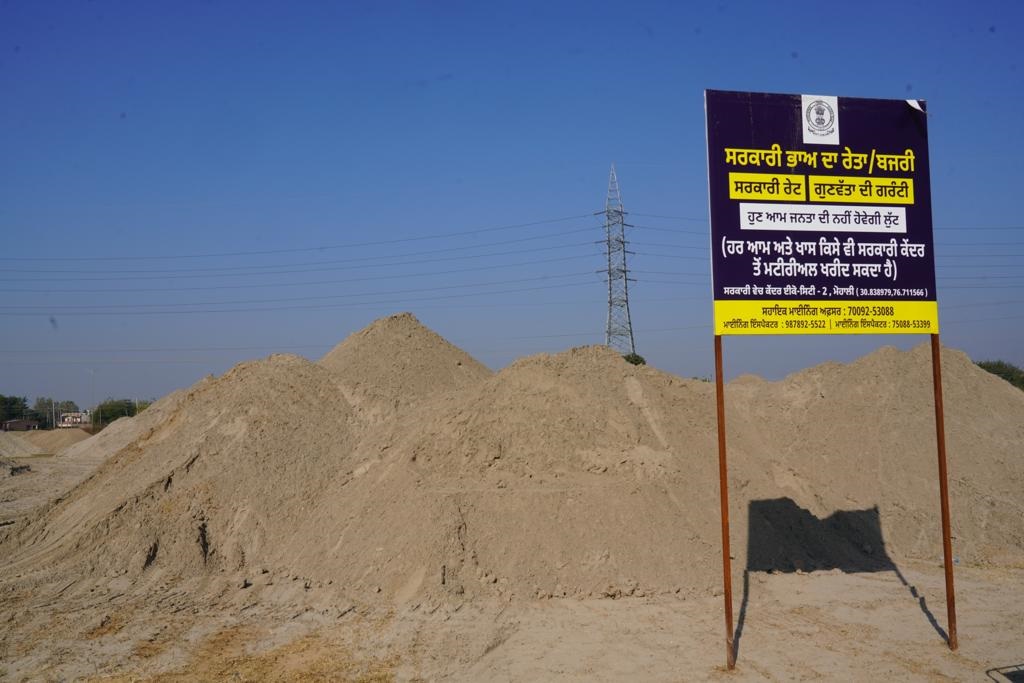
 Launching an initiative to fulfil one more AAP poll promise, the Punjab chief minister Bhagwant Mann dedicated about a week ago, 16 public mining sites from Ludhiana, spread over seven districts to ensure supply of cheap sand and gravel to the people. He said 50 more such outlets would be opened in all other parts of the state by next month.

Speaking on the occasion, he highlighted his government’s steps to eradicate the sand mafia which, he said, had flexed its muscles in the past monopolising the illegal business and leading to a steep hike in sand prices. That a nexus involving politicians has been flourishing, especially in the wake of mindless urbanisation for which construction material such as sand and gravel has been in a great demand across the state, is an open secret.

Back home, the AAP government now plans to ensure that the sand from these public mining sites would be strictly regulated, only to be sold for use in construction of non-commercial projects and that the sand sale would happen only till sunset and a government official would be present to regulate the extraction of sand at each public mining site.

Mann said that the state government had also built an App which would give complete information to people about public mining sites and would even facilitate online payments. According to Mann’s plans, the operation of the mines would be completely a transparent process as CCTV cameras had been installed at the sites to keep 24 hours surveillance on them. He said that apart from this, police patrolling would be ensured on these public sites to keep a check over it.

Mann referred to the sand mafia that he held, flourished during the previous government regimes and said that it would no longer be able to exploit the people. He went on to say that those who had minted illegal money through the sand mines would be held accountable for their misdeeds. Listing out the poll promises fulfilled so far by the AAP government which took over about 10 months ago, he said that while it had eliminated the transport mafia, free power was being provided to 87% households of the state since July, 2022, more than 26,000 government jobs given, 500 Aam Aadmi clinics set up and the schools of eminence were being set up.

Steep challenge ahead

However, the state government’s resolve notwithstanding, there seems to be a humongous task ahead for the state AAP government to quell the criminal nexus of illegal mining, given its scale across the state. According to reports, illegal mining has been rampant in several parts of the state till a few months ago, even despite a ban on the river sand mining during the monsoon season.

In several rural interiors, mindless mining has led to vanishing of the rural roads, badly damaged bridges foundations, besides taking its toll on the farm fields. It was in this wake that the state government had also got a flak by the Punjab and Haryana high court.

The high court had also pointedly said that leniency could not be shown in the cases of illegal mining as it had an irreparable adverse effect on the environment and caused colossal loss for the generation to come. The menace was besides registration of hundreds of police cases against illegal mining in different parts of the state.

And it was in this wake that AAP, especially its then chief ministerial candidate Bhagwant Mann had flagged the gravity of illegal business and made a promise to quell it so as to bring down the sand prices. He had repeatedly claimed during his electioneering that a regulated sand mining would fetch Rs 28,000 crore to state exchequer and that if voted to power AAP would regulate it.

A little earlier, even though the rampant illegal mining was a known fact, the same assumed gravity when fingers were raised during the Congress’ rule the then chief minister Charanjit Singh Channi himself, especially after the enforcement directorate (ED) conducted raids at his nephew Bhupinder Singh Honey and recovered Rs 10 crore, gold worth Rs 21 lakh and an expensive watch worth Rs 12 lakh.

Earlier, the former chief minister Capt Amarinder Singh had publicly admitted involvement of several Congress legislators in the illegal mining. He had flagged this issue while quitting Congress in his resignation letter addressed to the party leader Sonia Gandhi. “As far as the issue of illegal sand mining is concerned the offenders unfortunately were the substantive bulk of Congress MLAs and ministers, including an overwhelming number in the current government’’, he had written!

Situation grim in Haryana too

Situation in neighbouring Haryana is grimmer, as illegal mining of river-bed sand in and around rivers including Yamuna, Ghaggar, Markanda and Tangri is a common place. This is aside from the illegal mining of stones in the Mewat and some parts of south Haryana.

It may be recalled that it was in July last year that a deputy superintendent of police (DSP) investigating illegal stone mining was run over and killed by a dumper-truck driver and his accomplices before fleeing in the Tauru area of Nuh district.

The Tauru area DSP Surender Singh had gone along with his team on a raid to check the illegal mining in the Aravali hills in Pachgaon area near Tauru when he along with two policemen – a gunman and driver – spotted the dumper-truck on the said spot and when he signalled it to stop so as to check its documents, the vehicle driver instead, sped up and ran over them. Though the two cops jumped to a side to save their lives, the DSP was fatally hit.

It is pertinent to mention here that Nuh district is notorious for illegal mining as well as attacks on cops by the members of the mining mafia who, sources in police say, have standing instructions never to stop for any checking but to run over the cops in case of any interception.

However, despite such incidents, the Haryana mining department continues to be gravely understaffed to effectively check the illegal mining business. According to reports, most of the posts of mining inspectors are vacant in the state making the existing mining inspectors to toil hard to check the illegal mining across the state. Likewise, while a large number of posts of mining guards remain vacant,  several posts of mining officers are also yet to be filled. The officials, who did not want to be named, also say that there has also been an acute shortage of vehicles in absence of which the department staff found it difficult to effectively check the illegal mining in the state.

Mining mafias of Haryana and Punjab pose threat to region’s ecology

Despite Haryana government stepping up its drive against illegal mining, the mining mafia  continues to thrive in the state. On the other hand, Punjab CM Bhagwant Mann’s professed resolve to free the state from the menace seems easier said than done, writes Rajendra Khatry

The mining mafias across the country are known to be deadly. These mafias do not fear the law and are brazen in their nefarious activities. Often under the protection of politicians they have caused extensive and devastating damage to the ecology. 

It is a brutal truth that for more than two decades, the brazen illegal and mechanised mining activities across the country have been irreversibly affecting the rivers and river bank communities.

How ruthless and fearless these mafias can be came to light when a Haryana police officer of DSP rank was killed by a mining mafia near Nuh’s Pachgaon in the middle of last year. Taoru DSP Surendra Singh, who was probing illegal mining, died on the spot after being run over by a truck. His body was found in an open dumpster.

The incident took place when Surendra Singh had gone to conduct a raid at Taudu Hill after receiving a tip-off about alleged illegal mining. An eyewitness had reported that the DSP was standing near his official vehicle when he asked the dumper driver, who was allegedly carrying illegal quarrying equipment, to stop. But the driver didn’t stop and crushed the cop under his truck.

The driver escaped from the scene of crime but was later arrested from Rajasthan as the Haryana Police had launched an extensive manhunt to nab him. Haryana home minister Anil Vij had announced Rs 50 lakh compensation to the family of the deceased DSP.

According to reports emanating from various parts of the state, apart from Gurugram, Faridabad, Palwal and Nuh, stone mining is going on unabated in the Bhiwani-Mahendragarh region. In the last three years, the mafia attacked the teams of officers who came to stop illegal mining many times. 

From 2019 to 2022, 79 cases of assault on police personnel were registered in which 227 accused were arrested. According to Haryana police reports, as many as 60 police personnel were injured, while DSP Surendra Bishnoi was crushed to death by a dumper in Nuh.

Reacting to such incidents, the opposition has time and again blamed the coalition government, castigating it and questioning the law and order situation in the state. But now Home Minister of Haryana Anil Vij has decided  to act tough with mine mafias operating in the state. He told Karnal SP Gangaram Punia to deal strongly with the perpetrators of such crimes.

Incidentally, according to the Economic Survey of Haryana for 2021-22, tabled before the Haryana Legislative Assembly on March 8, 2022, a total of 21,450 illegal mining cases were detected in the state, including transportation of minerals without valid documents, from 2014-15 up to September 2021.  

Earlier the Haryana Government had proposed in the State Budget 2020-21 to deploy drones to check illegal mining. Unfortunately this has not materialized yet. According to reports, on an average, around eight cases of unauthorised mining are reported everyday in Haryana.

Despite the strictness of the National Green Tribunal (NGT) and action taken by the Haryana government, the mining mafia has reportedly continued to thrive and carry out illegal mining activities in the state. According to reports, illegal mining is still going on in full swing in Gurugram, Palwal, Nuh, Faridabad, Bhiwani, Mahendragarh and Panchkula.

Apart from Aravalli, the mining mafia is taking out mining material worth crores of rupees every day in many parts of the state including Panchkula, Bhiwani and Mahendragarh in the most unscientific and illegal manner.

Incidentally, the NGT’s order of August 26, 2022 had raised hopes that illegal mining would be curbed in Haryana, but that did not happen. The Mines and Geology Department and the police could not succeed in stopping the illegal mining. 

According to Mines and Geology Minister Mool Chand Sharma, from July 1 to September 15, mining in the rivers was stopped. Mining had been closed in Faridabad, Gurugram since 2002 and in Nuh since 2009. The contractors responsible for illegal mining will be fined, he had stated.

Unfortunately the mining mafia is undeterred by any such government action. According to reports, the mafia is active these days in Ghaggar and Tangri river in Panchkula also. Illegal sand mining is also taking place on the banks of Yamuna.

Earlier Haryana Chief Secretary Sanjeev Kaushal directed all the Deputy Commissioners and Superintendents of Police to take immediate action against the illegal miners. 

The situation with regard to the illegal mining in Punjab has been equally bad like Haryana. The situation had remained critical in all previous governments, but seemed to have worsened during the Congress regime. 

Punjab is among leading states where state governments have failed to ensure sustainable sand mining practices. No wonder the 2019-20 overview of the state showed strong clout of political parties over the illegal sand mining operations without caring for the rivers and public and the damage done to the ecology.

The Aam Aadmi Party had promised in its election of 2022 that it will stop all illegal mining if it came to power in Punjab. The AAP government came to power and in April 2022 the Punjab government ordered a crackdown on mining mafia in Punjab. Crushers were sealed in Rupnagar (Ropar). 

Punjab Mines and Geology Minister Harjot Singh Bains said that the crushers were sealed after receiving complaints that illicit mining was damaging the ecology and causing losses to the state exchequer. Bains said that many influential people were given clean chits by the previous Congress government and no action was taken against them. 

Now to facilitate the public, Punjab Chief Minister Bhagwant Mann has dedicated 16 public mining sites to the people of the state. He said that sand would be available at a rate of Rs 5.50 per cubic feet. Mann said this will give a major respite to the people.

Only manual excavation of sand will be permitted in these public mining sites and no mechanical excavation of sand will be allowed, he said. No mining contractor will be allowed to operate in these public mining sites, Mann said. Sand from public mining sites will only be sold for use in construction of non-commercial projects. 

Former Punjab CM Capt Amarinder Singh had said earlier that he had received specific inputs that former Chief Minister Charanjit Singh Channi and several other Congress leaders had a share in the money earned by the sand mining mafia when he was in power.

According to Capt Amarinder Singh, “From top to bottom, right up to the level of senior ministers, many were involved in the illegal sand mining. I had told Sonia Gandhi about it while I was the chief minister. She had asked what action I was taking in the matter, and I told her that I would have to start from the top. The one and only mistake I made during my entire tenure was that I did not take any action at that time out of my sense of loyalty to the Congress and also because I did not get a go-ahead from Sonia Gandhi,” he had claimed.

Later, former Chief MInister Charanjit Singh Channi’s involvement in the mining mafia and in the #metoo incident tainted his reputation and the Congress was routed in the 2022 Punjab assembly elections making way for the AAP to come to power with a massive majority.

Why India is wary of extending help to Pak facing financial collapse?

Though worried over the deteriorating situation in the neighbouring country, India wants to ensure that the assistance it would extend percolates down to the common people and is not misused for fomenting terrorism.

With the International Monitoring Fund (IMF) further tightening its terms for offering financial support, Pakistani establishment, an euphemism for its army, is now facing the challenge of maintaining its hegemony in the governance of the country. Meanwhile, a large section of Pakistani civil society comprising members of academia, journalists and social activists are critical of India’s apathy towards the ongoing unprecedented economic crisis in the neighboring country.

It is being repeatedly stated that India’s financial budget 2023-24 allocates huge financial assistance to Bhutan, funds for Nepal, Myanmar, Sri Lanka and many countries of the region, but no funds for starving people of Pakistan, a twin born from the womb of the outgoing white mother, the House of Commons in 1947. It is also being stated that this apathy is rooted in the two-nation theory i.e. Hindus and Muslims are two separate nations. It was germinated in the British academia, nurtured in the cow-belt of northern India, and later India’s predominant Muslim populated regions of the north-western part and Bengal of united India were partitioned for setting up a client state, Pakistan, for serving the strategic interests of the western powers, now being led by the USA.

The recent comments of the Biden administrator that Pakistan is “fighting against terrorism” is indicative of some new American plan for its survival before it finally collapses. The Americans are appreciative of the successive rulers of Pakistan that they served their Anglo-American masters faithfully even at the cost of their country’s fragmentation in 1971, when its majority region emerged as Bangladesh, thus dumping the two-nation theory. It also appears that the Whitehouse is also ready to forgive the Pakistani army’s role in harbouring dreaded terrorists like Osama bin Laden and many others, who had engineered attack on New York in 2001.

The successive US administrations continue to recognize that Pakistan is their client state. In September, 2009, however, the then Secretary of State, Hillary Clinton, paying rich tribute to Abdul Gaffar Khan, popularly known as Badshah Khan, at an Iftar party in Washington, perhaps, was the indicative of the “new mood” regarding the American policy of using Islam for catering its strategic needs. Hillary had paid rich tribute to the Khan, a close colleague of Mahatma Gandhi during India’s freedom struggle. The Pashtun leader always believed that the tenets of Islam do not subscribe to violence, but are committed to the welfare of mankind and peace blended with India’s heritage. She was heard stating, “be inspired by our leaders to fight poverty, injustice and hatred with the weapon of the Prophet: patience and righteousness.”

Indian Silence on the Peshawar Blast

The reluctance of India in reacting to the recent blasts at a mosque in Peshawar could be traced to the recent adverse comments of Pakistani government against India, especially her PM Narendra Modi. It is being recalled that Modi had told the Indian Parliament that he personally had tried to befriend Pakistan, and also told the House that he had touched the feet of Badshah Khan, when he had come to Ahmadabad. Earlier, the then PM, Rajiv Gandhi, had visited Peshawar much against the advice of the then Pakistani dictator, Zia-ul Haq.

The blast at a mosque killing more than 100 namazis and severely wounding a large of the people praying at the ill-fated place of worship has saddened people across the Indian sub-continent. Amidst this violence, the members of civil society in Lahore had assembled during the first week of February 2023 to pay homage to Badshah Khan, who was being described as ‘a traitor’ of Islam since 1947 by successive governments in Pakistan and debunked by the Sunnis of the Wahabi and Barelvi sects, Shias and Ahmedis in India and Pakistan.

Yet the voices against this injustice are emerging in the heartland of Pakistan, but it is too early to reach to a definite conclusion, whether Pakistani are really ready to abandon the opium of the religion being given to them for the past 75 years.

Encouraging Dictators

It is being repeatedly recollected that how the USA, which had become the ‘mentor’ of Pakistan during the fifties was instrumental in quietly killing democracy in Pakistan even before the constitution of the country could be finalized and enforced. In 1950, Pakistan’s first PM, Liaquat Ali Khan, was sent special American aircraft to make an official visit to the USA. He, however, was allowed to retain the aircraft for another two months to tour the USA and Europe, which indeed had immensely pleased his wife, Begum Rana, a graduate of Lucknow University in India and the daughter of a Brahmin family.

It is often stated that Liaquat Ali had promoted Ayub Khan as the first commander-in-chief of the Pakistani army on the ‘polite advice’ of the Americans, who had become quite intimate with the Pakistani establishment after Liaquat’s visit to the USA. It may be noted that Ayub Khan was not in the panel of the army commanders sent to the PM to be considered for the top position. It was for the first time that during the recently held meeting in the memory of Badshah Khan, the American interference in the top army appointments was disclosed. In spite of these revelations, a large section of the civil society in Pakistan continues to expect that the Modi government should allocate substantial funds for the starving people of their country.

Awaiting Pakistani Response

The sources in New Delhi reveal that India’s blue-chip public sector undertaking, the Food Corporation of India, has already prepared a plan for sending trucks of foodgrains for the starving people of Pakistan. However, the concerned officials are awaiting the final instructions from the South Block. India just wants that the terrorist camps in Pakistan should be closed immediately and the terrorists responsible for violence in India should be handed over to India for trial. She has been telling Pakistani authorities that the terrorists responsible for attacks on Mumbai and Parliament are yet to tried and punished.

Yet, India is also worried that the growing ethnic conflicts accompanied by man-made economic crisis in Pakistan might further fragment the country. It is estimated that if Pakistan fails to retain its unity, India might face unprecedented refugee crisis. India does not want a repeat of the 1971, when the majority of its population had decided to leave Pakistan to become Bangladesh.

It is also being noticed that the IMF has asked the government of PM Shabaz Sharif to cut 30 percent of its army budget, and the payment of the retired army officers from the main budget has caused anxiety to the civilian government. It’s negotiators have sought two days time for further negotiations. In India, it is being keenly watched whether the GHQ at Rawalpindi would allow these suggestions or it might resort to martial law blaming the country’s politicians for the economic crisis. If it concedes the IMF conditions, its role in grabbing the country’s resources would be further exposed.

It is also being stated that in 1947, Mahatma Gandhi had resorted to fast forcing the Nehru government to cough up Rs. 55 crores (estimated to be more than one thousand crores today) to save it from ‘imminent financial collapse’. Interestingly, Pakistani army used this amount for obtaining weapons and ammunitions for intensifying its aggression in Jammu and Kashmir. India, perhaps, is rightly wary of extending full scale financial help to Pakistan without ensuring that the assistance really percolates down to the common people might renew terrorism in the country. Even the food grains and other supplies meant for the people might be grabbed by the GHQ.

Notice on Indus Waters Treaty

It is also being asked  why India has asked for renegotiating the Indus waters treaty. In 1954, India and Pakistan had agreed to resolve the sharing of water of six rivers flowing from the high Himalayas originating in Tibet, now under the control of China, on the basis the World Bank report. After six years of talks, Nehru signed the Indus Waters Treaty in September 1960 with the then army dictator, president, Mohammad Ayub Khan. Under this accord, Pakistan receives the waters of the western tributaries, Indus or Sindhu, Jhelum and Chenab without giving any share to India. Similarly, India is allowed unrestricted use of the eastern rivers Beas, Ravi and Sutlej.

It may be mentioned that Pakistani has voiced its opposition to the upstream hydroelectric power stations in the rivers and tributaries of the rivers allocated to Pakistan. But as India is not using water for any other purpose, the World Bank did not entertain the Pakistani objections. However, with Pakistan’s decision to go for arbitration, India has to ask for renegotiating the treaty. India has issued notice to Pakistan, with a request for a response within 90 days. Interestingly, the treaty has survived despite the three wars the two countries have fought so far. Also, India and Pakistan continue to exchange the details of their nuclear weapons on January one every year. It has been done in 2023 too.

Its impact, however, has to be assessed in the light of the contemporary strained relations between the two countries. In India, Pakistan is being blamed for pushing the World Bank for a Court of Arbitration, which actually is against existing channel of dispute resolution through a “neutral expert” appointed by the World Bank.

India’s demand for renegotiating the 62-year-old treaty could be traced to Pakistan’s continued opposition to the Kishenganga and Ratle hydropower projects. India’s huge investment in the projects is being wasted due to the Pakistan’s opposition. Pakistan should have invoked the process already provided in the treaty, but it chose to approach a court of arbitration at The Hague. India is already boycotting the court process.

India has been stressing  that each step must be fully exhausted before both sides agree to moving on to the next step, Pakistan had moved on without waiting for India’s concurrence. The neutral expert last met with Indian and Pakistani negotiators in November 2022, while the Permanent Indus Water Commission last met in Delhi in May 2022, and is due to be held in Lahore this year.

The multiple crisis in Pakistan has forced New Delhi to remain watchful of the new political and economic developments taking place in Pakistan.

Not crackdowns, but empowerment is mantra to stop child marriage

We have to teach the parents how to make good use of the schemes for the girl child that have been put in place by governments so that they can educate their girls and they can be seen as an asset and not a liability

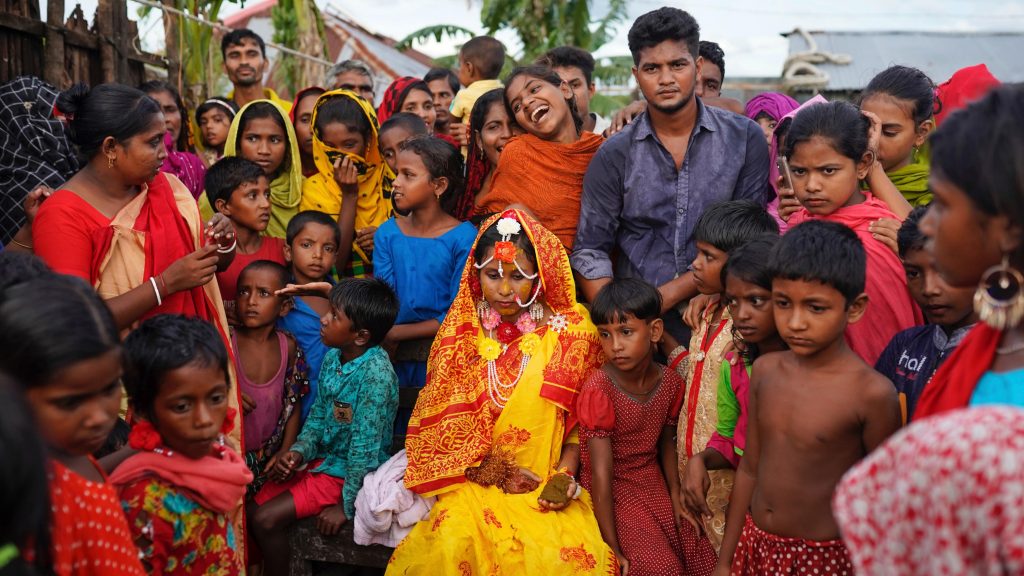
The Assam Government’s crackdown on child marriages is making headlines these days for obvious reasons. I don’t think that the country has ever seen anything like this and till now over 2500 people have been arrested and 4,074 FIRs lodged across the State.

The action came soon after the State Cabinet approved a proposal to book men who have married girls below 14 years of age under the Protection of Children from Sexual Offences (POCSO) Act. Cases under the Prohibition of Child Marriage Act, 2006 will be registered against those who have married girls in the 14-18 years’ age group. The offenders will be arrested and the marriages declared illegal. If the groom is below 14 years of age, he will be sent to a reform house.

The Government has vowed to keep the pressure up to end this malaise of child marriage and has justified this unprecedented action by citing figures, that quite honestly, are shocking.

According to Chief Minister Himanta Biswa Sarma, 17 per cent of over 6.2 lakh pregnant women in Assam last year were teenagers! Citing data from the Reproductive and Child Health (RCH) portal, Sarma said there were 6,20,867 registered pregnant women in 2022. Out of that 1,04,264 were 19 years or less, comprising 16.79 per cent of the expecting mothers. The undivided Dhubri district, including South Salmara, accounted for the highest 14,438 teenaged expecting mothers, followed by Nagaon with 12,188 pregnant teenagers  and Barpeta with 11,658 teenaged moms to  be. Other districts registering high teenage pregnancy in 2022 are Goalpara (6,250), Kamrup (4,773), Darrang (4,584), Morigaon (4,254) and Cachar (4,049).

Though the figures speak for themselves, the crackdown has faced criticism from the Opposition and legal experts alike for humanitarian reasons and there has been immense pushback and demonstrations at various places by the affected families in Barak Valley, Morigaon, Dhubri and Nagaon districts to name a few.

With the young men behind bars, their wives are left to fend for themselves and are running from pillar to post to find documents to prove they were not underage at the time of the marriage.

“Our menfolk have been taken away by the police, leaving us without anyone to look after us or to provide for us,” news agencies quoted Redshma Khatun as saying.

Some of the wives have been taken to Government shelters. “Those pregnant or with young children have been given priority to ensure they are taken care of. These facilities have limited resources. We are trying to make sure that women left alone and in need of help are given a place to stay till they can make proper alternative arrangements,” a staff member of a shelter home has been quoted as saying.

However, the State is determined to continue this drive until the objective of cracking down and discouraging child marriages in Assam is met.

Given the massive numbers, one can’t blame the Assam Government for wanting to crack down on child marriages. One only wishes that other States were as firm in their resolve to end this malaise, because the figures coming out of India are very alarming. Our country is estimated to have over 24 million child brides and according to the National Family Health Survey (NFHS) 40 per cent of the world’s 60 million child marriages take place here. India has the 14th highest rate of child marriage in the world, according to the International Center for Research on Women and as per the NFHS 2019-21. Nationally, 23.3 per cent women between the age group of 20-24 were married-off before attaining the age of 18.

Frighteningly, as per the NCRB-2021 report, at least 34 minor girls were kidnapped every day in 2021 to be compelled into marriage.

Worryingly, the conviction rate in child marriage cases stands at a paltry 10 per cent with at least 96 per cent such cases pending trial across the country by the end of 2021, says the Kailash Satyarthi Children’s Foundation.

But, despite all this, given the number of lives this crackdown has disrupted, the suffering it is causing to countless old parents, young wives, husbands and children, and the consequent human tragedy that is unfolding, there has to be another way of eradicating child marriage.

I am of the view that all Governments in the country will have to undertake mass campaigns to educate parents against the pitfalls of child marriage rather than use a coercive criminal law to deal with the malaise. We cannot ignore the human tragedy that unfolds due to knee-jerk reactions by the administrations, even as we cannot ignore the havoc that child marriages wreak on the boys and particularly girls forced into wedlock at an age when they should be in school, playing, studying, dreaming and preparing for a better future.

Because, make no mistake, that just like coercive Government action disrupts lives, so does child marriage. Trends show that while child marriage affects both, girls and boys, its impact on the health, education and human rights of girls is higher.  

According to a report by UNICEF, “Child marriage robs girls of their childhood and threatens their lives and health. Girls who marry before 18 are more likely to experience domestic violence and less likely to remain in school. They have worse economic and health outcomes, than their unmarried peers, which are eventually passed down to their children. This further strains a country’s capacity to provide quality healthcare and education services. Child brides often become pregnant during adolescence, when the risk of complications and deaths during pregnancy and childbirth increases – for themselves and their infants. The practice can also isolate girls from family and friends and exclude them from participating in their communities, taking a heavy toll on their physical and psychological well-being.”

In yet another report on the impact of child marriage on boys, the UNICEF says, “Boys who marry before age 18 might enter into unions that involve experiences and responsibilities, including early fatherhood and providing for the household, for which they may lack adequate knowledge, resources, and psychosocial support. Most of the time the boys are unable to continue their education as they are forced to provide for a family they started even before they were ready for it.”

This obviously results in them having to give up their education and thus be caught in an endless cycle of poverty, despair and hopelessness, resulting in mental health issues and violence against the hapless wife and children.

So it’s a no brainer that India and other nations where the tradition of child marriage prevails have to stop this practice. But most of the time we end up treating the symptoms instead of looking for the root cause of the disease. The only way to eradicate child marriage is to first understand the underlying causes and then fight it with awareness, empowerment, education and of course the law.

In most cases it is poverty, lack of education about the laws of the land and its impact on the health and lives of the underage couple, the lack of resources and prevalence of the dowry system that leads to child marriage. But other than that, there are more deep-seated, complex factors at play which have to be understood in their entirety before we can even dream of rooting out this problem.

Child marriage in our country is also a result of rigid and regressive mindsets of a largely patriarchal society. It is about repressing the sexuality of girls. It is about fear for their safety in a society where crimes against women are spiralling at an alarming rate and where victim-shaming is a norm.

We have to try and understand why parents prefer boys over girls in spite of the numerous schemes and incentives given by the Centre and State Governments for the benefit of the girl child. Boys are preferred because they are expected to contribute to the family income and carry on the family name.

That’s why parents with limited resources educate their boys and not girls. And even if they do send their daughter to school, her education is the first casualty in financially tough times. Plus this mindset of not taking any contribution towards the family’s income from a girl is also largely to blame for parents considering a girl child’s education as a privilege rather than a right.

And the irony is that educated parents, with stable incomes in urban areas don’t mind so much taking help from their educated and earning daughters. It’s the poor, and uneducated with the least financial security and education that shun it. So till this section of society which thinks of a girl’s education as a privilege and not a right, doesn’t change its mindset, little girls will keep on paying for their parents’ ignorance and backwardness and the parents will continue to be mired in poverty.

Another significant and more disquieting reason for minor girls from underprivileged backgrounds in both urban and rural India being married off has to do with the concept of “purity” of a female. In a world consumed with girls’ innocence, the loss of the prized virginity in a male dominated society brings shame to a family. How much this “izzat (honour)” means in the subcontinent can be gauged from the number of honour killings that take place in the region.

So, parents of a girl are burdened with the task of having to protect her. And given the sad fact that a girl child is neither safe outside or within the home, the parents prefer to marry her off as soon as they can, so that they can be absolved of all responsibility of protecting her. 

So unless we change our archaic mindsets and start treating boys and girls as equals, give them both equal educational opportunities so that girls, too, can pursue flourishing careers and provide for their parents in their old age, girls will continue to be married off at a tender age.

Until we don’t teach our males to respect females and put an end to sexual assaults and rapes, little girls will keep on paying the price and will be married off early.

In order to stop child marriages in India, we have to educate our girls, empower them with proper careers. We have to educate the parents through extensive awareness campaigns about the impact of child marriage on the health and lives of their wards, we have to teach them how to make good use of the schemes for the girl child that have been put in place by Governments so that they can educate their girls and help them get skills and careers so that they are seen as an asset and not a liability.

Apart from this we have to strengthen prevailing laws, enforce existing ones diligently. We as a society also need to do our bit and educate those who work for us in our homes against the pitfalls of child marriage. Then and only then, we will be able to slay this dragon of child marriage.

Disquiet in J-K over admn’s all-out anti-encroachment drive

The crackdown against squatters has run up against stiff opposition from the major political parties such as the NC and the PDP. Their leaders have alleged the government is retrieving land from the poor while leaving the well heeled unscathed. A report by Riyaz Wani

Jammu and Kashmir is in the midst of an all-out eviction drive. The administration is out to retrieve the government land which, according to the revenue department, has been occupied by people. The government has already claimed to have retrieved around 3.89 lakh kanals of state and grazing land over the last month and 5000 kanals of custodian land in the last two years. 

This has triggered deep unease and uncertainty in the union territory, with most people feeling apprehensive about the authenticity of their property documents. The move has run up against stiff opposition from the major political parties such as the National Conference and the PDP.  The leaders from the parties urged the government to limit the drive only to well-heeled people who have grabbed more land. They alleged that on the ground, the government machinery was retrieving land from poor people.   

The National Conference leader Omar Abdullah asked the administration to issue notices to encroachers and give them a chance to produce documents before moving to evict them. The PDP president Mehbooba Mufti held her press conference at the Delhi Press Club where she told reporters that evictions had turned Kashmir into “Afghanistan”. A day after Mufti held a protest march in Delhi prompting Delhi Police to detain her.  The videos of her protest went viral in Kashmir. The People’s Conference leader Sajad Lone, on the other hand, urged New Delhi to show its humane face in Kashmir. He said that empathy and not bulldozer should represent New Delhi in the Valley. 

However, the drive hasn’t been halted. The administration in its defence has said that it was just doing its job. It has said that land being retrieved during its anti-encroachment drive will be used to develop public infrastructure,

“This land belongs collectively to the masses. The retrieved land will be used for the benefit of all of them,” J-K chief secretary Arun Kumar Mehta said.  “No person can usurp the rights of commoners.”

Mehta said that such measures should be supported by the people as the retrieved land will be used for public utility such as hospitals, schools, playgrounds, bus stands, industries and parking spaces.

To establish its bonafides, the administration also took possession of a commercial building raised by a senior Bharatiya Janata Party (BJP) leader Sofi Yousuf on state land in South Kashmir’s Anantnag district.

But this has not carried conviction with people in the Valley who see the drive largely aimed at majority community in the region. 

Lone said as much in his press conference: “The predominant assault is against one community. A few people from the other community have been targeted just to create the perception that the drive is even-handed.” 

The land being retrieved includes the Roshni land, which was earlier handed by the previous governments to its occupiers under a scheme.  The scheme, which was originally meant to raise Rs 25000 crore to finance the purchase of hydropower projects by selling state land under unauthorized occupation turned out to be a damp squib. It has fetched only a few hundred crore rupees since it was enacted by the then National Conference government  in 2002 which makes the revenue earned from it disproportionately less than the target. 

However, it was amended by the PDP-Congress coalition government in 2004 and 2007. In 2006, the Government had estimated that the total state land was 1,25,03,973 kanal, of which 20,64,972 kanal were under encroachment. The encroached land was valued at Rs 25,448 crore. Though on paper, the scheme looked fantastic, it  turned out to be a massive disappointment.

But now the current administration has invalidated the allotment of Roshni land, and is retrieving it by vacating its occupiers. According to government figures, 2.74 lakh kanals of land are being  taken back from its occupiers over the coming weeks. As yet, however, it is unclear what the political ramifications will be.

Boundaries blur as Khalsa Aid steps in to alleviate suffering

In Turkey as temperatures are dipping below zero, to the severe freezing levels, Khalsa Aid volunteers are not just distributing blankets but also serving hot meals to the survivors.

For the last couple of hours I have been seeing photographs and videos of volunteers of the  Khalsa Aid International, reaching out to the earthquake  affected  in Turkey. Absolutely moving-touching shots, with human beings reaching out in the most selfless of ways. When boundaries are not allowed to come in way. The only and only concern is to try and save human lives in all possible ways. In Turkey as temperatures are dipping below zero, to the severe freezing levels, Khalsa Aid volunteers are not just distributing blankets but also serving hot meals to the survivors.

In fact, back home in India, the Khalsa Aid volunteers have always  reached out to human beings in deep distress, be it the Rohingya refugees or stranded  students or just about anyone  in need of immediate help. And this makes me sit back and say aloud:  Why don’t prestigious peace awards are awarded to the Khalsa Aid volunteers who are risking their lives and livelihoods trying to help save lives.

My salaams and salutes to the Khalsa Aid volunteers.

*****

Though this  month, February, is  said to be  Spring time, with the supposed bahaar around,  but this Spring  like the so many previous Springs there isn’t much to celebrate. In fact, nothing at all! What, with destruction and death spreading out.

Relay of these significant signs and pointers in our country too, with settlements and historic townships more than showing signs of deep despair, with cracks and gaps surfacing in structures. If one were to move away from the natural disasters there stands out the reality of orders of demolitions of homes. Correct me  if I’m wrong  but  never  before the very establishment  that’s  supposed to provide its citizens two square meals and a  roof over  their  heads, is making the citizens sit or squat homeless.

Needless to say that the homeless are finding it very difficult if not impossible to survive. Dismal lies the future of the hundreds of citizens whose homes have been demolished. Nobody wants to delve deep and ask the relevant: Where are those who gave the initial permission or sanction to build those homes? Who all in the political who’s who brigades are part of the land and political mafia controlling lives and livelihoods?

*****

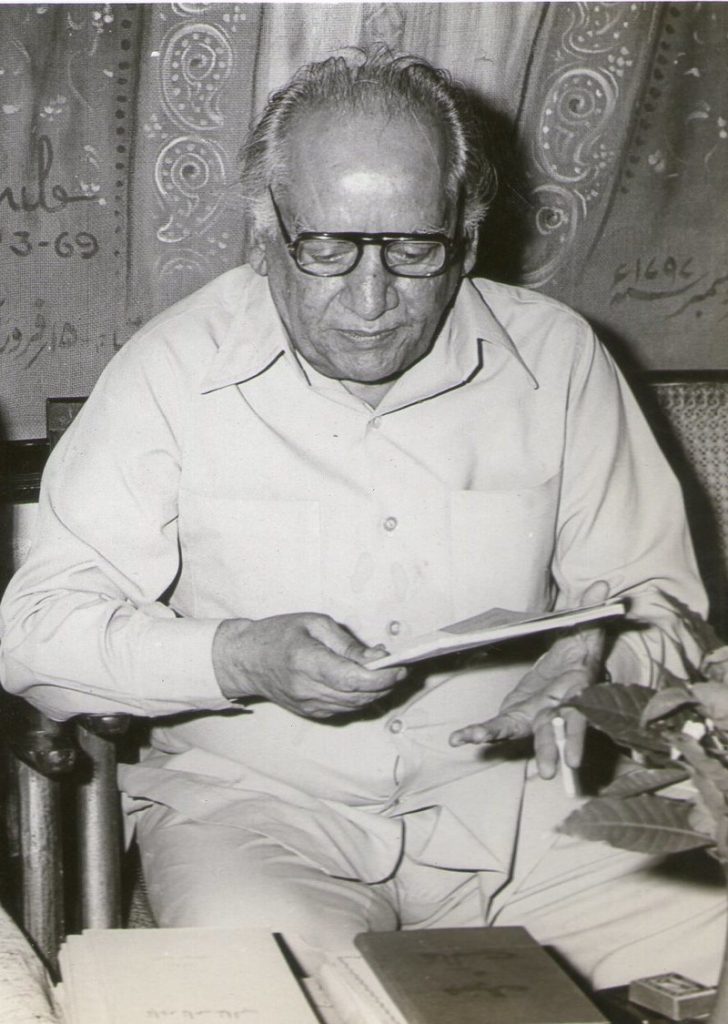
Faiz Ahmed Faiz

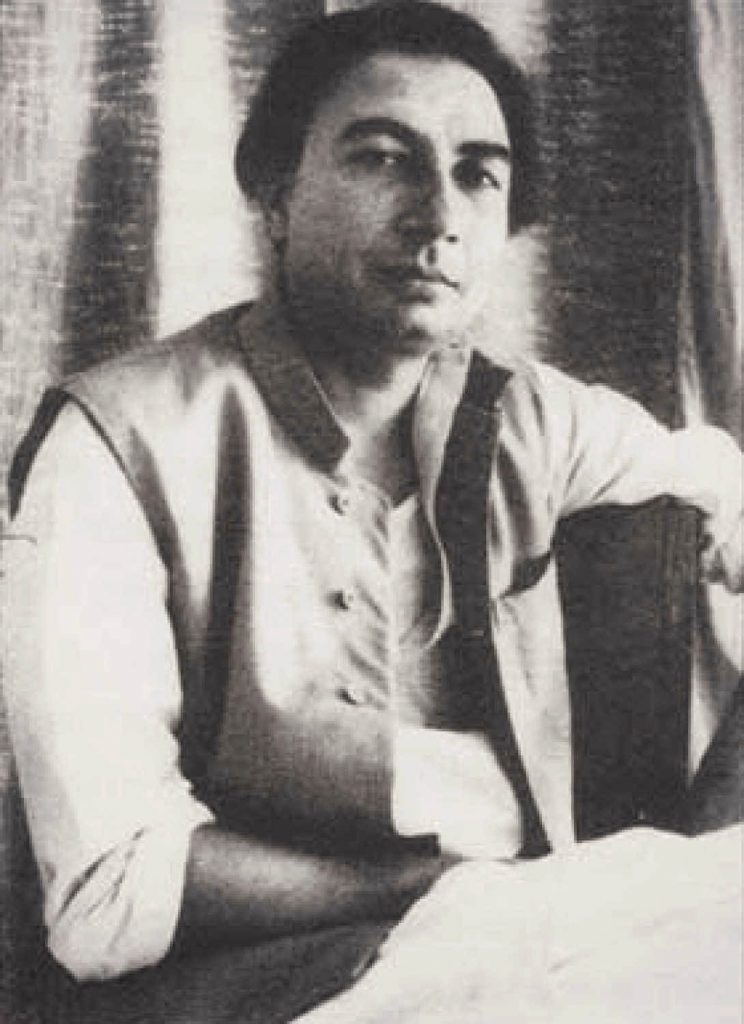
Two of the  best known  poets of this  subcontinent –Faiz  Ahmed  Faiz and  Sahir Ludhianvi,  were  born  years  back in this  season of  Spring  but  both wrote hitting verse, dripping with  pointers to the dark dismal realities.

Faiz Ahmed  Faiz’s  this verse relays much of his agony for his times and for our times:

“This moment is to mourn the death of time/

The river of the sky has paused/

And near the banks of horizon/

The moon- ferry of the gloomy hues has anchored/

All the ferry men, all the stars/

Have disembarked/

On the shore of the earth/

The leaves are gasping for breath/

The winds are dozing off/

The gong has issued the order of silence/

Then all voices lost in quietness…”

*****

I am left absolutely fascinated with this verse of  Sahir  Ludhianvi . Its  relevance stands out in this day and age, when known and also the  unknown  killers get away with murders and killings. Perhaps, little realizing that blood stains have the tendency of remaining unmoved and unwashed and unfazed …determined to stand out, spreading out all over.

Leaving you with these lines of Sahir  Ludhianvi from his poem ‘Khoon  phir  khoon hai’ (Blood, however ,is  blood) :

Sahir Ludhianvi

“Tyranny is but tyranny; when it grows it is vanquished/

Blood  however is blood;  if it spills it will congeal /

It will congeal on the desert sands, on the murderer’s hand /

On the brow of justice and on chained feet /

On the  unjust sword, on the sacrificial body/

Blood is blood; if it spills it will take root /

Let them hide all they want, skulk in their lairs /

The track of spilled blood will point out the executioners’ abode /

Let conspiracies shroud the truth with darkness /

 Each drop of blood will march out, holding aloft a lamp/

Say this to tyranny’s worthless and dishonoured Destiny/

Say this to Coercion’s manipulative intent /

Say this to Laila, the darling of the assembly /

Blood is wild, it will splatter and stain your garment /

It is a rapid flame that will scorch your harvests /

That blood which you wished to bury in the killing fields/ 

Has  risen today in the streets and courts /

Somewhere as a flame, somewhere as a slogan. Somewhere else as a flung stone /

When blood flows bayonets cannot contain it /

When it raises its defiant head, laws will not restrain it /

Tyranny has no caste, no community, no status or dignity /

Tyranny is simply tyranny, from its beginning to its end /

Blood is however  blood; it becomes a hundred things: /

Shapes that cannot be obliterated /

Flames that can never be extinguished /

Chants that will not be suppressed .”

MOST POPULAR

HOT NEWS