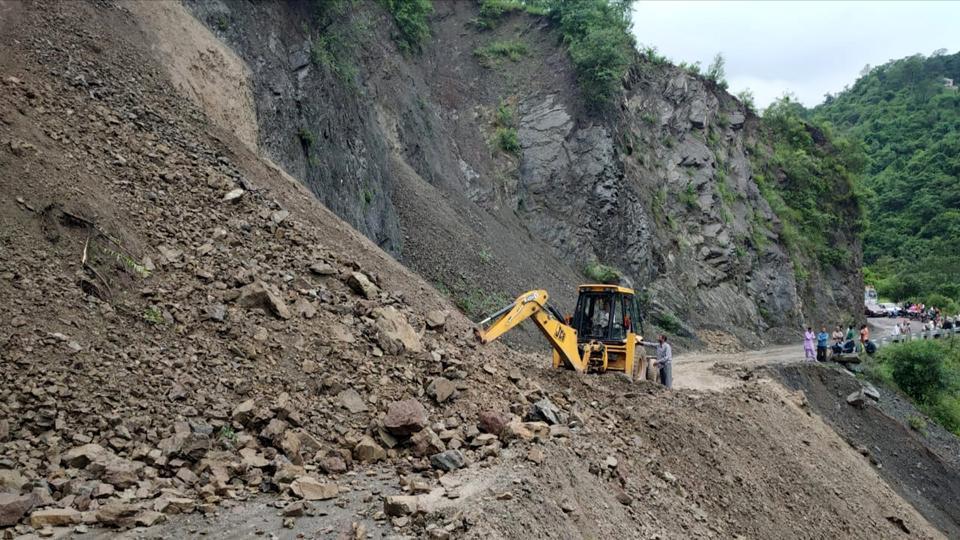
Landslide damaged nine houses and a cowshed on the Srinagar-Leh highway, said officials on Monday, adding that there was no loss of life.
Officials said that the landslide occurred in Rezin village of Sonamarg area in Ganderbal district on the Srinagar-Leh highway.
“Landslides triggered by heavy rain in the area caused damage to 9 houses and a cowshed. There was no loss of life. The residents of damaged houses have been shifted to safer places.
“Traffic on Srinagar-Sonamarg road has been restored, ” officials said.
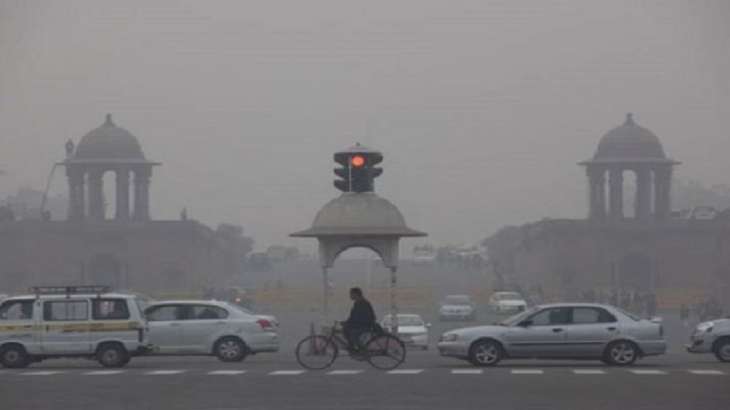
Delhi’s air quality remained in the very poor category for the third consecutive day on Monday.
According to the System of Air Quality and Weather Forecasting And Research (SAFAR), the overall air quality of Delhi was recorded at 304. However, the air quality of the city is likely to improve from Tuesday onwards.
Both the major pollutants PM 2.5 and PM 10 were recorded at 304 in the very poor category and 183 at moderate category in the city on Monday morning.
An AQI between zero and 50 is considered “good”, 51 and 100 “satisfactory”, 101 and 200 “moderate”, 201 and 300 “poor”, 301 and 400 “very poor”, and 401 and 500 “severe”.
As per SAFAR data, the air quality index at Lodhi Road was reported to be 290 under poor category, Pusa reported 304 under the very poor, and Mathura Road was most polluted at 358 in the very poor category on Monday morning.
As per the Indian Meteorological Department, due to a change in wind direction to south-easterly, there has been an increase in moisture affecting air quality.
The Met officials said that the wind speed suddenly slowed down from February 16. Although the air quality will remain in the “very poor” category till Monday, significant improvement is expected from Tuesday.
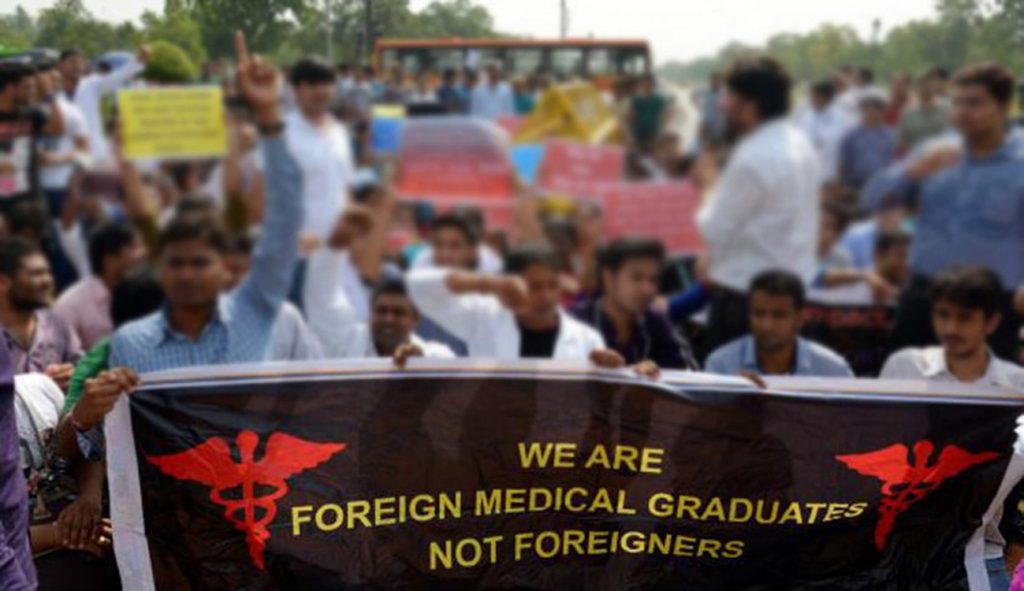
A Tehelka SIT investigative report reveals how touts help candidates cheat and clear the FMGE, a screening test for Indians with medical degrees from foreign varsities, thus compromising the quality of healthcare in India
“We will get the question papers leaked a day before the exam is to be held. They will take the candidate to some unidentified locations, and will give him or her both the question papers one night before the exam. They will also get the question papers solved for the candidate. At least 150 questions will be solved, the minimum required for passing the exam. After solving the question paper, next day they will drop the candidate at the examination centre. If the question paper in the examination matches with the leaked question paper, then the candidate is required to give a payment of Rs 15 lakh after the exam, on the same evening. But remember, before all this, the candidate has to surrender his mobile phone to us. Otherwise there is a possibility that he or she might click the picture of leak question papers and send it to his or her friends, resulting in the leaked question paper getting viral on social media, and in turn putting us in a spot”. This is Rakesh Bhandari for you. A middleman from Delhi, who is trying to strike a deal for providing a leaked question paper of the Foreign Medical Graduate Examination [FMGE] in exchange of Rs 15 lakh per candidate. According to the existing regulations, any student who pursued medicine from an institution abroad must qualify a screening test called Foreign Medical Graduate Examination [FMGE], held twice a year by an autonomous body, National Board of Examination [NBA] to get a provisional or permanent registration with the National Medical Commission [NMC] or State Medical Councils [SMCs] in order to practice medicine in India, which otherwise would be considered illegal.
“Sikkim is the only state in India, from where other (dummy) candidate can appear for the exam in place of genuine candidate. But this is a risky thing. I don’t want to go for this option. If caught, our lives will be ruined,” adds Rakesh Bhandari. Tehelka reporter, posing as a man looking for some middleman, who can get his fictitious candidate clear the FMGE, met Rakesh Bhandari in a five star hotel of Delhi.
We told Rakesh Bhandari that our candidate is an MBBS graduate from Dhaka, Bangladesh, who in first attempt had failed to clear the mandatory FMGE exam required to obtain licence from NMC to practice in India. On this, Rakesh Bhandari gave us three options through which he can help our candidate to clear the FMGE exam in return for payment of Rs 15 lakh. The first option is through question paper leak one day before the exam, second by fudging computers and third by managing a pass result even after the candidate has failed in the examination. For all this, the candidate has to fork out a sum. The payment has to be made on the day the exam is held, but only after the question paper matches with the leaked one in the first option. And after the result, in case the candidate goes for the second or third option. Bhandari describes making someone impersonate for the candidate in the examination as the riskiest option. He told us that he was averse to using that option. According to him, the question paper leak is the best option.
Every year, thousands of Indians with medical degrees from foreign universities appear for the Foreign Medical Graduate Examination [FMGE]. This is a screening test conducted by the National Board of Examination [NBE] and mandated by the National Medical Commission [previously Medical Council of India] in order to assess the ability of a person to practice medicine in India. On an average, less than 20 percent of them are able to clear it, according to NBE data. Foreign medical graduates from countries like Russia, Ukraine, China, the Philippines, Bangladesh and Nepal, among others, are allowed to practice in India only after they have cleared the FMGE. However, MBBS graduates from the US, UK, Australia, Canada and New Zealand need not take the exam. In 2019, 25.79 percent of foreign graduates cleared the FMGE, while the percentage was 14.68 in 2020 and 23.83 in 2021. The figure in years preceding 2019 was even lower. So, what do nearly 80 percent graduates do after failing to clear this test? While some give up on their dream to pursue medicine and adopt a different career path, some practice illegally in India without clearing the FMGE, others cling to it, especially since there is no cap on the number of attempts for the biannual FMGE. Tehelka carried out an investigation on some foreign medical graduates who are practicing in India illegally without clearing FMGE [At the time of filing this story]. And also the middleman, who promises a pass result for candidates appearing for FMGE through illegal means in return for cash payment.
Tehelka first caught hold of middleman Rakesh Bhandari, who told us that last year he had helped a Kashmiri foreign MBBS graduate to clear the FMGE through illegal route after he had failed to clear the same despite several attempts in the past. Bhandari boasted how he finally had this candidate sail through the FMGE after taking Rs 20 lakh from him.
Bhandari….Ek to khas aadmi hai 4-5 chance mein pass hi nahi ho raha tha.
Reporter….. FMGE mein?
Bhandari….. Haan..usko phir ek jhatkey mein karwaya mainey pichley saal.
Reporter…. Aapney karwaya FMGE mein pass.?
Bhandari…. Haan… abhi shadi ki, mujhe shadi mein dawat bhi na di, mujhe khundak aagayi itni uski, parson pata chala uski shadi bhi ho gayi.
Reporter…. Kitna paisa liya aapney ussey?
Bhandari….Rate to dekho depend karta hai, agar direct aa gaya to 20 lakh bhi letey hain.
Reporter….Option kaunsa tha uska pass honey ka?
Bhandari…. Sari cheezen nahi batatey, pata kya hota hai ye secrecy wala kaam hai. Aap kitney dino se phone kar rahe ho milne k liye, mainey aapse kya kaha. time nahi hai…kyunki actually kya hota hai hamarey pass ek ki jagah 10 aadmi khadey hotey hai.
[ Rakesh Bhandari said that he got one Kashmiri foreign MBBS graduate to clear FMGE, after he had failed in last several attempts previously. He said he took Rs 20 lakh from the candidate for the job.
We now gave a fictitious deal to Rakesh Bhandari that we have a candidate with MBBS degree from Dhaka, Bangladesh who had failed to clear the FMGE in his first attempt and now wanted to avail his services for clearing the exam. Bhandari immediately told us that he will get the question paper leaked for our candidate one night before the exam. He said that his man will solve the question papers for the candidate. And, the next day they will drop the candidate at the exam centre. If the leaked question paper matches with the exam centre question paper, then the candidate will be required to give Rs 15 lakh after the exam, same day by evening. He also told us that they will keep the mobile phone of the candidate with them, to avoid any unnecessary controversy.
Bhandari…..Aap samjhey nahi meri baat, question paper ka aisa scene hota hai, usmein mere ko bhi nahi pata hoga kab kis location par bhej raha hoga wo, secret hota hai, iski talashi 2 jagah karega. Ye mobile to nahi, koi paper to nahi hai,
Reporter….Jjab ye exam dene jayega?
Bhandari…. Haan, ussey pehle, kyunki ek din pehle milke jayega, jaantey to hain nahi isko, matlab agar iskey pass mobile ho, ye photo kheechkar 10 logon ko bhej dega. Viral ho gaya to phas gaye na wo, wo kya kaam kartey hain, din mein bulayenge isko, 11 baje bulayenge, ek jagah bulayengey.. suppose karo yahan bula liya, yahan se apni gadi mein le jayengey, wo hamari responsibility rahegi, yahan se leker doosri jagah le jayengey, doosri jagah se teesri jagah le jayengey, sham ko paper kahin aur hoga.
Reporter….. Sham ko paper?
Bhandari…..Sham ko paper dikha dengey usko, raat mein study karwa dengey isko, ek ghantey mein thodi ho payega, phir 4-5 baje tak isko karwakey subah seedhey centre par isko 8 baje , paune 8 baje pahucha denge.
Bhandari…. Aur exam centre jahan par bhi hoga, kyunki iskey pass mobile nahi hoga, chodhney to jayenge, leney to koi nahi jayega isko, 1 ghantey ka gap hoga, 2 paper hotey hain na, ek paper 8-9 baje se 12 baje tak,
Reporter….Aur doosra?
Bhandari…. Doosra ek ghantey k gap k baad hoga
Reporter…. To ye dono paper usey de dengey ek raat pehley hi…?
Bhandari….Karwa dengey solve…koi 150 questions karwa dengey…paper match ho gaya, jaisey bachey ne kar liya, paper to wahi aa gaya na, to bachey ko aaram aaram se karna hai, koi hadbadi nahi karni hai,
Reporter….Examination centre mein?
Bhandari…. Examination centre se pehle, paper to 10-15 min pehle mil jayega na, taki bhool na jaye.. exam de diya aaram se sham ko to match ho hi jayega…sham ko payment kar diya.
Reporter…. Sham ko?
Bhandari… Payment karni hai.
Reporter…. Aap jo ek ghantey ka gap bata rahe ho dono exams k beech mein, us ek ghantey mein isko kisi se baat nahi karni?
Bhandari…. Naa, kyunki doosre ko bata diya isne ye aayega wo ayega, phasney wala kaam kyun karein?
Reporter…. Sham ko payment kar deni hai.? …Lekin aap to keh rahe they payment hoga pass honey k baad.?
Bhandari…. Pass to ho hi gaya na wo, hamney to paper dikhaya, doosre din de di payment.
Reporter…. Aur result kab tak aata hai iska ?
Bhandari….10-15 din mein.
[Rakesh Bhandari told Tehelka that besides providing the leaked question paper, he will also get it solved for our candidate one night before the exam. If the leaked question paper matches with the original question paper, then the candidate has to shell out Rs 15 lakh on the same evening after the exam. And he won’t allow the candidate to carry mobile phone because he might take question paper picture and send it to his friend, who in turn can make it viral, posing problems for them.]
Rakesh Bhandari told Tehelka that he has three options through which he can help a candidate clear the FMGE. First is the paper leak, second is through server and the third is by getting the student’s result changed from fail to pass. He explained the paper leak above. Now, he explains the other two options to the reporter.
Reporter… Doosra option mein aap kya bata rahe they? Server mein kuch kartey hain?
Bhandari…. Server ka bhi khel hota hai..teesra option hai fail bhi ho gaya to pass ho jayega.
Reporter… Wo kaisey?
Bhandari…. Aapko pata hai kitney bachey pass hotey hain.. kul 2500.
Bhandari….17,18 K aur 2500-3000 maximum pass hotey hain. 10%, 8% reh jatey hain…baki 200-400 bachey to aisey hi nikal detey hain….kyunki ismein evaluation kuch nahi hai na. Mota paisa khatey hain wo. Passing certificate de diya kat kat ke..
Reporter…. Lekin usmein bhi ladka exam mein baithta hai?
Bhandari… Exam mein kahin bhi ho..main kya hai passing subject…wo last ka khel hota hai.
Reporter… Usmein kitna paisa lagta hai.?
Bhandari… End ka khel hota hai, usmein 15 lakh bhi lagtey hain ,10 lakh bhi.
Reporter… Lekin exam mein bacha baithta hai usmein?
Bhandari… Exam to wo dega.
Reporter…. Teeno options mein exam dena hai.?
Bhandari….Exam to dena hi, exam k bina kaisey hoga?
[Rakesh Bhandari revealed the three options through which he could have the candidate get the desired result in the FMGE. But in all these options, the candidate has to appear in the exam]
When asked whether someone else will appear in the exam on behalf of our candidate or our candidate himself will appear for the exam? In response to this, Bhandari replied that Sikkim is the only state of India, where impersonation is possible. But he warned it was fraught with risk. For him the best option is paper leak.
Reporter….Ab aap mujhe ye batao, ladka ye pooch raha tha usko exam dene jana padega ya uski jagah koi aur dega exam FMG ka.?
Bhandari….Dekho saab exam dena padega, sirf ek hi centre hai aisa hai, jahan doosra aadmi beith sakta hai.
Reporter… Doosra admi, wo kahan hai?
Bhandari… Wo hai Sikkim mein, usmein problem kya hai, usmein hamey drawbacks bhi dekhney hongey, waisey drawback mein main kaam karta hi nahi hoon, kismet kharab ho, phas gaya to zindagi barbaad ho jayegi.
Reporter….Hmm
Bhandari…. Risky kaam hai, iska kaam sham ko hi pata chalega isko,..ek din pehley ya to ..
Reporter…. Jaisey kal exam hai FMG ka ?
Bhandari…Raat mein hi lengey, din mein mobile le lenge, mobile nahi hoga.
Reporter… Ussey ek din pehley ladke ko question paper mil jayega?
Bhandari…Usko de jayengey wo rakh lega apney pass..
[Bhandari said that he only trusts paper leak option. Impersonation is a risky route, though this option is available in Sikkim]
Now Rakesh Bhandari told Tehelka that he will get the paper leaked one night before the exam. The candidate will see the question papers. He will get it solved also for our candidate. However he clarified that if our leaked question paper matched with the main question paper, but the candidate failed to perform in the examination, then it is was not his fault. In that case, the candidate would have to give fifty percent of the agreed amount, that is 7.5 lakh of 15 lakh.
Reporter… Ek option to aapney bata diya FMG exam ka.. aur doosra kya hai ?
Bhandari… Doosra option, bhi hota hai par dekho ye sabse sateek hota hai, sateek pata hai kaise? …apko paper dikha diya, answer de diye, 200… de diye, uskey baad bhi nahi aayega to aisey doctor banney ka kya fayda. Aur uskey baad bhi fail ho jaye to aadha paisa to dena hi padega…apni to koi galti hai hi nahi.
Reporter…. Aapney to question paper dikha diya.
Bhandari… Dikha diya ab tum yaad hi na karo, samajh lo tu doctor baney k layek hai hi nahi….hahaha tere ko kuch bhi nahi aata, jab tere ko answer de diya aur 8 ghantey mein padha bhi diya usko, tab bhi nahi aayega to phir.
Reporter…Fail ho gaya tab bhi 50% dena padega?
Bhandari…. Dena padega, wo chodega thodi jab sab match ho gaya hai.
Reporter… Matlab 15 lakh ka 7.50.?
[According to Rakesh Bhandari, if candidate failed to perform in the exam despite the leaked paper being bang on, then he has to give fifty percent of the total amount.]
That was Rakesh Bhandari for you. He narrated his story as to how he is creating “fake doctors” in the country and putting human lives in danger. Now, Tehelka met a foreign medical graduate from Dhaka, Bangladesh. At the time of filing of this story, the candidate in his first attempt had failed FMGE. But before this, he had worked in some hospital for couple of months, and is now looking for a fresh job in Delhi and is also in search of some Bhandari-type middleman, who can help him get through the FMGE, for which he is ready to pay. Though he was putting human lives in danger by practicing medicine without getting license from NMC, we decided not to reveal the candidate’s identity considering his future career. We met Siraj [name changed], a candidate from Kashmir, in a five star hotel of Delhi.
Siraj….. Maine internship khatam kiya January mein.
Reporter…..MBBS aapne Bangladesh se kiya? 2020 mein kahan kahan kaam kiya aapne?
Siraj….Mainey to wahin par intership kiya tha ek saal ka.
Reporter…. Dhaka mein?
Siraj…..Ji..Mere uncle ka ek private hospital hai Kashmir mein.
Reporter…. Kis jagah?
Siraj…..xxxxxx district.
Reporter…… xxxxxxx ke rehne wale hain aap?
Siraj…. Ji wahan par bhi mein jata tha.
Reporter…. Kitne din kaam kiya tha aapne?
Siraj…. 2-4 mahiney.
Reporter…. Kab se kab tak?
Siraj…. Feb se May 2022 tak.
Reporter…. Specialization aapka kin kin cheezon mein hai.?
Siraj… Peadritics mein achey se dekh leta hoon, orthopedix aur off gynae…
Reporter…. Aap ye bataiye aapne MCI kiya hua hai…?
Siraj…Naa.
Reporter…. Diya tha aapne?
Siraj….. Haan June mein diya tha.
Reporter…. Abhi 2022 June mein …nahi hua?
Siraj…. Nahi hua.
Reporter…. Result aa gaya?
Siraj….Haan.
Reporter….. Nahi hua aapka?
Siraj…. Nahin.
Reporter…. Ye pehla attempt tha aapka?
Siraj….Ji..
[Siraj told Tehelka that he could not clear the FMGE in first attempt. Despite that he worked in a private hospital of Kashmir for a few months]
Siraj has not cleared FMGE. It means that he doesn’t have licence to practice in India. Despite that he met us hoping that he will get a job in some private hospital of Delhi. On meeting, he told us that he gave interview in some hospital of Shahdara, Delhi. But he refused the job offer because he was required to do long hour shifts. He also revealed that the hospital management was ready to give him a job despite the fact that he is not registered with Medical Council of India [MCI], now replaced by National Medical Commission [NMC]. It means both Siraj and hospital management were ready to put patients’ lives in danger. He also asked us how much salary he would draw from the job he was going to get through us?
Reporter… Delhi mein kaam kiya hai aapne?
Siraj…. Aaya tha ek do baar…wo side Shahadara mein ek naya hospital tha.. unko ek junior resident ki zaroorat thi, subah se lekar raat tak…itna to nahi ho payega..hospital mein matlab junior to bahut hotey hain aur kaam mil baatkar kartey hain…wahan pe mein akela hi tha.
Reporter… Aapne kiya kuch din kaam?
Siraj….Nahi…mainey kaha.. mein handle nahi kar sakta.
Reporter…. Wo taiyyar they non-MCI ko dene ke liye?
Siraj…. Haan.
Reporter….Hamare yahan kitne ghantey de payenge?
Siraj…. Pehle dekhtey hain baat karke
Reporter…. Salary?
Siraj…kitna denge..?
Reporter…. Aap batao?
Siraj…. 40-45k?
Reporter … Haan itna to de denge. 40-50 tak de denge.
[Siraj has not cleared the FMGE, but that doesn’t deter him from looking for a job. He said he was called for the interview for a job in a hospital in Delhi’s Shahdara. But he refused the offer the working hours there were very long. Though he is not registered with NMC, the hospital management was ready to hire him, adds Siraj]
When asked that as practicing medicine without getting license from NMC is illegal, how did he practice in a Kashmir hospital? And how he will practice in future in any of Delhi’s private hospitals? In response to this, Siraj said that in Kashmir, hospital’s management had asked him not to disclose to anyone that he is not registered with NMC or has failed in FMGE. He said he will keep this mind if a private hospital in Delhi hires him.
Reporter… Without FMG mein dikkat ye hoti hai na… saala kahin koi pakda gaya, illegal hai ye.
Siraj… kaisey pakdega, wo jab baat bahar jayegi na tab pakdega na, andar wala nahi boleyga, mein to bilkul nahi bolunga, mujhe to karna hi karna hai, andar wala koi nahi boleyga toh?
Reporter….Hospital se kisi ne bol diya.
Siraj… Kaisey pata chalega, wo to management waley hain na unko pata hai ki bande ne kiya hai ya nahi kiya.. kya pata banda aisey hi degree le bahar chala jaye.
Reporter… Management se kisi ne bol diya?
Siraj… Kyun bolega?
Reporter….Jinhoney rakha hai aapko, hospita mein naukri di hai?
Siraj…. Wo hi to mein bol raha hoon kyun bolega….bhai 70-65 leta hai aaj FMGE karke jo hoga, mein 50 mein wahan, 15-20 karke bachengey. Aapko ek kaam karna hai chup rehna hai, wo bhi utna hi kaam karega jitna mein kar raha hoon.
Siraj…. Naukri yahi Srinagar mein ki hai.
Reporter…. Naukri ki hai aapne?
Siraj…. Ek do mahiney ki thi,..yahi Srinagar mein ki hai.
Reporter…. Phir chodh kyun di ?
Siraj… Yahan Delhi aa gaya tha.
Reporter… Kitni salary de rahe they?
Siraj…. Wo de rahe they 25, jahan XXXXXX kar rahi hai aaj.
Reporter… Usi hospital mein, kya naam hai us hospital ka?
Siraj- xxxxx.
Reporter….. xxxxx to aapki dost hain, xxxxx hospital, xxxxx Srinagar mein hi hai.. to aapney chodh kyun diya wahan se.
Siraj…. Exam tha na yahan pe, phir aapsey mulaqat hui, wait hi kar raha tha.
Reporter….2 hi mahiney kaam kiya tha aapney.
Siraj…. Haan
Reporter….Management ko pata tha ki aapney FMGE clear nahi kiya. ?
Siraj….. Haan , XXXXX ne bhi to nahi kiya hai. Wahan mil jaatey hain.. lekin pay bahut kam kartey hain.
Reporter…. To kya they wahan.. doctor they ya intern they?
Siraj…. JR, Junior Resident.
Reporter… Kya responsibility thi aapki?
Siraj… Ab yahi, patient aayega usko receive karna, kisi ka operation post-recovery mein dekhna hai, BP dekhna hai, pulse dekhna hai .
Reporter… Mareez nahi dekhtey they aap?
Siraj…. Dekhtey they matlab, senior mam saath mein hoti thee.. wo bolti thi BP dekho, pulse dekho, likho dawai isko kya kya hai.
Reporter….Apni taraf se dawai nahi likhtey they aap?
Siraj… Wo allowed nahi tha?
Reporter… kyun?
Siraj…. Boltey they senior se poochna agar dena ho to.
Reporter… Apni taraf se aap na dawai likhtey they.. na mareez dekhtey they.
Siraj…. Mareez dekhtey they, wo masla nahi tha.
Siraj… Hum mam k pass jatey they , mam ye masla hai wo masla hai wo boltey they inko ye dawai do, wo dawai do.
Reporter…Jo senior hotey they wo sab FMGE pass hotey they.?
Siraj… Haan, 10-12 saal senior.
Reporter…To ye kaam bhi allowed nahi hai JR ka bhi, bina FMGE pass kiye?
Siraj… Koi kaam allowed nahi hai.
Reporter… Internship to allowed hogi.?
Siraj…. Nahi…
Reporter…Wo bhi allowed nahi hai. Kaun keh raha hai?
Reporter- Matlab bina FMGE clear karey aap intern bhi nahi ho saktey?
Siraj… Intern to mainey kiya na..
Reporter… Main rule pooch raha hoon, India mein agar kisi ne FMGE clear nahi kiya hai to wo intern bhi nahi ban sakta.?
Siraj… Nahi
Reporter…Pakka rule hai ye?
Reporter….Aur agar koi pakda gaya toh?
Siraj… Abhi koi hai nahi.
Reporter…Abhi koi pakda gaya without FMG?
Siraj… Aisey hi hospital k bande se bola jata hai bolna nahi hai kisi se….khayal rakhna hai chup chap karo kaam.
Reporter… Management bhi bolta hoga aapse? ki bolna nahi kisi se?
Siraj… Haan.
Reporter….Wahan bola tha aapse Kashmir mein kisi ne?
Siraj… Haan bola tha koi senior mam poochey to nahi bolna….boley direct raho mere tak.
Reporter… Accha interview kisney liya tha aapka?
Siraj…. Director ne.
Reporter… kya naam tha?
Siraj… Uska naam Dr. XXXX hai.
Siraj…. Wo jantey they mujhko, haan uncle lagtey hain.
Reporter… Unko pata tha aap non-FMG hai?
Siraj… Haan
Reporter… kya kaha unhoney.?
Siraj… Mainey bola tha ki uncle nahi ho raha hai, wo boley koi baat nahi, aap yahan aakar kaam karo chup chap.
[Siraj narrated his entire tale to Tehelka as to how without clearing the FMGE, he had worked in Kashmir hospital. There, the management asked him not to reveal to anyone that he is not registered with NMC. He further said that one has to be a tight lipped in order to avoid being caught practicing medicine without clearing FMGE. Siraj said he will follow the same procedure in Delhi hospital too if he finds a job there.]
After failing in the first attempt of the FMGE exam, Siraj met a middleman who promised to fetch him a leaked paper a day before the FMGE exam, for which he will be charged Rs 15 lakh. Siraj agreed to the proposal.
Reporter…. Agar ek din pehle question paper de deta hai apko FMGE exam ka pass karney ka.. to who aap kar logey?
Siraj… Usmein ek cheez aapko mil jayegi, padh lunga mein, usmein zyada confidence hain na…
Reporter… Solve aap thodi na karogey. Solve to koi aur karega na?
Siraj… Wahi mein bol raha hoon, solve karke mujhe ye pata hoga na ki mainey ye paper rata hai. Wahan bas chaapna hai.. confidence hota hai na,..ab ye log keh rahe hain ki nahi karengey, kya matlab, nahi ho paya phir. Pachtaogey phir issey acha to mainey padha hota?
Reporter… Paisey k liye aap comfortable hain..15 lakh.?
Siraj…. 15 lakh ka masla nahi hai, masla ye hai ki agar paper mujhe ek din pehle dega na, 200 sawal hi de de bas, mein Chandigarh raat ko hi niklunga. Main rastey mein padhunga..
Reporter… Wo bhi aap solve nahi karogey question paper, koi aur karega.
Siraj…haan haan..
[Now Siraj said that he will take leaked paper one day in advance a per the plan to clear FMGE after paying Rs 15 lakh to the middleman.]
FMGE exam came into being through Screening Test Regulations, 2002. A screening test is mandatory as the standards of education and quality of training can vary from country to country. And even within the same country. “We have no mechanism today to assess the quality of education and training the students get in foreign medical colleges,” said a senior doctor in a government medical college who requested not to be named.
Tehelka’s first part investigation exposed middleman Rakesh Bhandari and foreign MBBS graduate, Siraj. Both have put human lives in danger through their shenanigans. Bhandari by creating “fake doctors” after leaking the FMGE question papers. And Siraj by practicing medicines in the hospital without getting license from NMC. In fact, Siraj is a game for the leaked paper offer from the middleman for clearing FMGE and is ready to cough up Rs 15 lakh. By clearing the exam he would become legally eligible to practice in India. He is also hunting for a job in Delhi though he has not cleared the screening test. According to Siraj and Bhandari, there are number of foreign MBBS graduates in India, who are practicing without clearing FMGE. If we believe them, then hundreds of lives are in danger. Next time you approach a doctor, you don’t know whether he or she has done MBBS from foreign soil and has cleared FMGE? And if he has cleared test, you don’t know how he has cleared it. Through Rakesh Bhandari-type middleman or through the dint of his or her hard work?
Tehelka will soon bring the second part of this investigation with Pakistan angle to it.
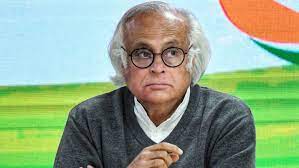
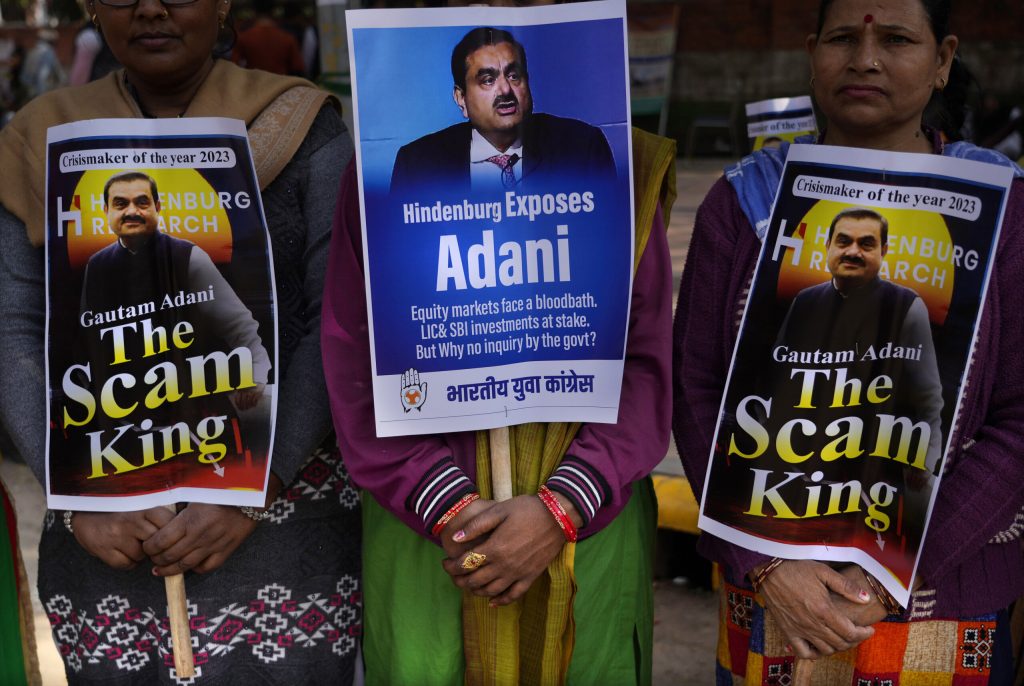
New Delhi: The Congress on Thursday said that a joint parliamentary committee is required in the Adani-Hindenburg report as there is political-corporate nexus in the whole issue and only the JPC can probe the scam.
Jairam Ramesh, Congress General Secretary, said, “It is an exercise initiated by the two principal actors…the government and the Adani group… to cover up, avoid, evade and bury all genuine scrutiny.”
He said that the proposed committee is a part of a carefully orchestrated exercise by these vested interests to prevent any real investigation into the Adani group’s relationship with the ruling regime.
“This is supported by the fact that the Solicitor General suggested, as per news reports, that the government will give the names for the committee in a sealed cover, for the consideration of the Supreme Court, ” he said.
He said that the nature of these allegations, the link between Adani and the ruling regime is examined in the full light of day by elected officials accountable to the public.
He said on February 13, the bench of the Supreme Court while hearing petitions on the Adani-Hindenburg matter, discussed the creation of a committee of experts to examine the regulatory regime post the Adani-Hindenburg expose.
“An evaluation of the regulatory and statutory regime by experts is in no manner equivalent to an investigation by a Joint Parliamentary Committee (JPC). Such a committee, however competently staffed, cannot be a substitute for a thorough investigation into the political-corporate nexus that has come to light in the last two weeks. It simply does not have the authority, resources, or jurisdiction to examine the issues that the Opposition has raised.
“If the Prime Minister and his government are to be held accountable, any committee other than a JPC will be nothing but an exercise in legitimisation and exoneration, ” he added.
An earthquake of magnitude 3.6 hit Jammu and Kashmir’s Katra on early Friday morning, according to India’s National Center for Seismology.
“Earthquake of Magnitude:3.6, Occurred on 17-02-2023, 05:01:49 IST, Lat: 33.10 & Long: 75.97, Depth: 10 Km ,Location: 97km E of Katra, Jammu and Kashmir,” tweeted National Center for Seismology.
There was, however, no casualty or damage to property reported from anywhere.
Earlier on February 13, earthquake tremors were felt in the early morning in the state of Sikkim. According to the National Center for Seismology, earthquake tremors occurred at Yuksom in Sikkim at 4.15 am. Its intensity was recorded at 4.3 magnitude on the Richter scale.
The Katra earthquake comes in the wake of the earthquakes in Syria which have claimed 44000 lives so far.
When recently an MBBS from Tajik State Medical University in Tajikistan was caught using a proxy to clear Foreign Medical Graduates Examination to enrol as a doctor, it made a telling commentary as to why the health system was ailing in India. The candidate who had failed six times in a row had almost got away with it, but was apprehended when the face detection system flagged the difference in the photograph of the exam writer, who got a huge sum in lieu of impersonation, and the candidate.
This was akin to the infamous multi crore Vyavsayik Pariksha Mandal scandal known as ‘Vyapam scam’ in which the CBI found that the accused candidates had adopted a unique engine-bogie system in the exam by engaging intelligent students (engines) as solver candidates for allowing copying of their answers by the beneficiaries (bogies), who would sit behind them. The CBI had taken over investigation following the Supreme Court order and it exposed the politicians, senior officials and businessmen nexus and has so far charge sheeted over 1200 accused, of which 55 have died in mysterious circumstances.
Tehelka decided to investigate the matter in view of the enormity of allegations. Investigation by our Special Investigation Team revealed how middlemen helped candidates cheat and clear the FMGE, a screening test for Indians with medical degrees from foreign varsities. But worryingly even those who fail the test are surreptitiously hired by hospitals leaving the quality of healthcare in India under a cloud. Resultantly the ‘fake doctors’ were putting human lives in danger.
The National Board of Examinations (NBE), an autonomous body under the Union ministry of health, conducts Foreign Medical Graduate Examination, which is a licentiate examination for Indian or overseas citizens who have completed primary medical qualification from other countries. Foreign medical graduates need to qualify FMGE to get registered with the Indian Medical Council.
Every year, thousands of Indians with medical degrees from foreign universities from countries like Russia, Ukraine, China, the Philippines, Bangladesh and Nepal appear for the Foreign Medical Graduate Examination. As on an average, less than 20 percent are able to clear the examination, they are left with the option of either using unfair means or forgetting about their avowed dream. Then, there are others who without qualifying the FMGE, start practice as doctors.
Last month, the CBI conducted searches at 91 locations across the country at several state medical councils and foreign medical graduates who were allowed to practise in India without qualifying a mandatory test. The agency registered FIRs against 14 state medical councils and 73 foreign medical graduates who were allowed to practice medicine in India without qualifying the mandatory Foreign Medical Graduate Examination. However, the scam is much bigger in proportion, Tehelka SIT has found. In fact, the Indian Medical Association in its report has estimated that about 10 lakh quacks are practicing allopathic medicine. Is anyone listening?
Delhi and Mumbai offices of the BBC have been raided by IT officials over alleged irregularities. However the timing of raids raises suspicion as these have occurred just a few weeks after the release of 2-part BBC documentary which was banned by the government, writes Mudit Mathur
Amid global criticism over Income tax raids at Delhi and Mumbai offices of the British Broadcasting Corporation (BBC) over alleged non-compliance with the Transfer Pricing Rules and its vast diversion of profits, the sleuths continued its survey operations on second consecutive day after overnight quizzing of its staff associated with finance and commercial department. Journalists were allowed to go home.
The timing of such action raises suspicion as it has occurred a few weeks after the release of two-part BBC documentary entitled “India: The Modi Question”, which was quickly blocked from airing in India by the government using emergency provisions. During the black days of emergency, former Prime Minister Indira Gandhi closed downed BBC offices while curbing democratic rights of the citizens and muzzling press freedom in India.
While there has been no official statement from the Income Tax department on the action, the British Broadcasting Corporation (BBC) has said it was cooperating with the authorities. BJP spokesperson Gaurav Bhatia alleged that BBC is the “most corrupt organisation”. “BBC is “Bhrasht Bhakwaas Corporation” (corrupt, rubbish, corporation),” he said.
“Income Tax Department must be allowed to do its work,” Bhatia said, adding that “if BBC did no wrong, then why are scared”. Bhatia also said the BBC should not “spew venom” while operating in India. “The BBC indulges in anti-India propaganda,” Bhatia told reporters.
The action of the Modi government triggered vast reactions across the international media and political circles questioning media freedom as a basic guarantee in a democracy as provided in “The Universal Declaration of Human Rights”proclaimed by the United Nations General Assembly in Paris on 10 December 1948 as a common standard of achievements for all people and all nations. According to it, “Everyone has the right to freedom of opinion and expression; this right includes freedom to hold opinions without interference and to seek, receive and impart information and ideas through any media and regardless of frontiers.” The sprit of declaration has been adopted in the Constitution of India as Fundamental Rights.
New York-based independent non-profit Committee to Protect Journalists (CPJ) urged the Indian government to stop harassing journalists and said, “Indian authorities have used tax investigations as a pretext to target critical news outlets before, and must cease harassing BBC employees immediately, in line with the values of freedom that should be espoused in the world’s largest democracy.”
The Guardian, a leading UK newspaper, reported, “The BBC is just the latest organisation to be hit with a tax evasion investigation following reports that have reflected poorly on the Modi government. Tax raids have been carried out on Oxfam and several thinktanks, while Amnesty International, which had documented the erosion of human rights and persecution of minorities, had to shutter its India operations in 2020 after its accounts were frozen by a central government agency.”
France24.com, the French state-owned international news television network, said: “Press freedom in the world’s biggest democracy has suffered during Modi’s tenure, rights activists and opposition lawmakers say. India has fallen 10 spots to 150 out of 180 countries in the World Press Freedom Index since Modi took office in 2014. Critical reporters, particularly women, say they are subjected to relentless campaigns of online abuse.”
The Independent UK said: “Modi’s government has in the past been accused by rights organisations of using allegations of financial misconduct to target its critics, including NGOs, journalists, news organisations and politicians.”
The New York Times reported: “The Indian authorities under Mr Modi have often used such raids against independent media organisations, human rights groups and think tanks in what activists call an effort to harass critical voices into silence by targeting their funding sources. Rights groups have repeatedly expressed concern about the dwindling freedom of the press, with journalists and activists thrown in jail for long periods or mired in court cases that drag on in India’s labyrinthine judiciary.”
The Press Club of India and Mumbai Press Club strongly condemns the Income Tax “surveys” at the offices of the BBC in India.The “surveys” are part of a series of attacks on the media by government agencies in recent times, especially against those sections of the media that the government perceives is hostile to it and critical of the ruling establishment. The Editors Guild of India also expressed its deep concerned about the Income Tax surveys at the offices of BBC India soon after the release of two documentaries on 2002 violence in Gujarat and current status of minorities in India.
“In September 2021, offices of News Click and Newslaundry were similarly “surveyed” by IT department. In June 2021, there were surveys against Dainik Bhaskar and Bharat Samachar. In February 2021, the ED had conducted raids at the office of NewsClick. In each case, the raids and surveys were against the backdrop of critical coverage of the government establishment by the news organisations,” the statement of Editors Guild of India added.
How will the rise of the next big thing-the artificial intelligence (AI) reshape the technology industry? Will AI affect Google’s supremacy as a search engine? Nothing lasts forever, particularly in technology, finds an in-depth report by Sunny Sharma
Artificial intelligence, which can create novel content from text to audio to images to user prompts, is already making an impact and has fuelled fears it could replace a number of jobs. Google raked in $54.48 billion in advertising revenue in the most recent quarter, representing 78.9% of its gross sales. Search ads were the biggest driver by far.
Until recently you might have used Google to search for an answer to that question. But now you have another option: to ask an AI-powered chatbot, which lets you gather information from the internet through typed conversations. ChatGPT, the leading example, can write essays, explain complex concepts, answer trivia questions and suggest menus or holiday destinations. By the end of January 2023, two months after its launch, it was being used by more than 100million people, making it the fastest-growing consumer application in history, noted The Economist, a British weekly.
Google introduced its search engine in 1998, powered by its signature PageRank algorithm, which measured each website’s importance by the ways other sites linked to it. It quickly became the dominant search tool. Google has spent decades indexing the web, and the breadth of queries it can field is unmatched.
In recent years, Google has taken steps to help users conduct searches in new ways, including through the lens of their smartphone camera and with image and text combined. It uses large language models to understand users’ queries and has also incorporated the technology into its “featured snippets,” which spotlight key information on search results pages.
Worried, Google and Microsoft are going head-to-head on the future of search, leveraging the technology behind artificial intelligence chatbots. Google has already announced that it is testing Bard, a competitor to the Microsoft-backed ChatGPT that has quickly become a sensation, and will be rolling it out to the public in the coming weeks. Microsoft, which has just integrated ChatGPT into its search engine, Bing, certainly hopes so. Could this be a Schumpeterian moment in which incumbents are toppled and rivals seize the initiative? The answer depends on moral choices, monetisation and monopoly economics. But a hugely valuable prize—to become the new front door to the internet—may be up for grabs.
For more than 25 years, search engines have been the internet’s front door. AltaVista, the first site to allow searches of the full text of the web, was swiftly dethroned by Google, which has dominated the field in most of the world ever since. Google’s search engine has made its parent, Alphabet, one of the world’s most valuable companies, with revenues of $283bn in 2022 and a market capitalization of $1.3trillion. Google is not merely a household name but an extremely successful business model.
But nothing lasts forever, particularly in technology. Just ask IBM, which once ruled business computing, or Nokia, once the leader in mobile phones. Both were dethroned because they fumbled on big technological transitions. Now tech firms are salivating over an innovation that might herald a similar shift — and a similar opportunity. Chatbots powered by AI let users gather information via typed conversations. Leading the field is Chatgpt, made by Openai, a startup.
By the end of January, two months after its launch, Chatgpt was being used by more than 100m people, making it the “fastest-growing consumer application in history”, according to UBS, a bank. ChatGPT, developed by San Francisco-based OpenAI, has reached 100 million users since its public launch in November.
Microsoft is now integrating the technology behind it into its products, with the Bing search engine being a focal point. Response to ChatGPT shows there is an appetite for AI-powered search and Microsoft clearly sees this as a competitive opportunity, as does Google, judging by its quick response. Google also believes that users increasingly want to access information in more natural, intuitive ways like Google Lens, which allows people to search using images and text.
Bard and ChatGPT are both based on so-called large language models. Google’s is called LaMDA, an acronym for “Language Model for Dialogue Applications”. These are types of neural networks that mimic the underlying architecture of the brain in computer form. They are fed vast amounts of text from the Internet in a process that teaches them to generate responses to text-based prompts. This allows ChatGPT to provide credible-sounding answers to questions about composing couplets, writing resumes, or, in what is probably the biggest panic it’s caused yet, academic work. Google hasn’t made Bard public yet, but it’s using up-to-date information from around the web and has reportedly been able to answer questions about 12,000 layoffs announced by Google’s parent company Alphabet recently.
Bard could answer a question about explaining new discoveries from NASA’s James Webb Space Telescope to a nine-year-old. It can also inform users about the best forwards in football “currently” and provide training drills to emulate top players. Screenshots provided by Google showed a more polished user interface than ChatGPT’s, but it’s still not publicly available, making direct comparisons with the competing OpenAI service difficult. Google says its search engine will use its latest AI technologies such as LaMDA, PaLM, image generator Imagen and music creator MusicLM.
Microsoft’s ChatGPT-powered revamp of Bing has also been kept under wraps, but several users said they caught a glimpse of it last week. The unconfirmed screenshots showed the “new Bing” answering questions in a conversational style and citing sources for the answers, possibly reflecting concerns from some ChatGPT users about the accuracy of some answers. It also reportedly uses up-to-date information from around the web and is based on a faster version of ChatGPT.
ChatGPT , the wildly popular AI, has offered up a potential new model for online search. The chatbot responds to questions about topics such as political science and computer programming with detailed explanations, and its question-and-answer format means users can drill down until they fully understand. Users doing similar research on Google must typically scan search results and peruse various websites until they arrive at their own conclusions. ChatGPT, by contrast, delivers a decisive answer in seconds.
A shift is under way from the prevailing model of keyword search, in which search engines comb the web for specific terms, to searches powered by large language models, which analyse enormous text databases to develop the ability to understand user questions and produce direct answers. This is the technology that ChatGPT uses to compose its rapid-fire responses. AI may offer another model of search. AI introduced a site with a diverse cast of chatbot characters that users can converse with in real time, all powered by large language models. One should never underestimate Google but there is a definite challenge!
Parliament witnessed unprecedented exchange of harsh and critical comments between the treasury and opposition benches after Congress leader Rahul Gandhi sought to link PM Modi’s relationship with Adani Group to the company’s phenomenal growth, writes Mudit Mathur
After three consecutive days of complete logjam, the budget session of Parliament of India witnessed unprecedented exchange of harsh and critical comments between the treasury and opposition benches over the questions raised with regard to proximity of Prime Minister Narendra Modi behind the meteoric rise of Adani Group conglomerate after 2014. Unruly scenes marred when the opposition demanded setting up a joint parliamentary committee (JPC) or Supreme Court-led probe into the Hindenburg Research report – that alleges fraud and irregularities in the business of the Adani Group companies.
Prime Minister Narendra Modi did not reply to the questions raised by rejuvenated Congress leader Rahul Gandhi, after his Bharat Jodo Yatra from Kanyakumari to Kashmir. Taking the pot shots at Congress leader Rahul Gandhi, Modi said, “I have the protective shield of the trust of 140 crore countrymen and you cannot pierce this protective shield with your lies.”
While participating in the debate over motion of thanks on presidential address, Rahul Gandhi launched a frontal attack on PM Modi linking his inextricable relationship with Adani Group to the company’s phenomenal growth. Rahul made scathing remarks against Modi as he posed tough questions after domestic investors suffered huge losses owing to the report of Hindenburg Research.
Hindenburg report accused Adani conglomerate of stock manipulation, accounting fraud and using offshore shell entities in tax havens allegedly routing his own money through machinations of his brother. It also accused Adani of pulling off the “largest scam in corporate history”.
Though Adani hit back saying the research report is “malicious”, “baseless” and a “calculated attack on India” threatening to take a legal action against the short seller, Hindenburg stuck to its guns saying that it’ll welcome any action and will demand documents in the legal process. The Financial Times reported that Adani Group has hired New York-based law firm Wachtell, Lipton, Rosen & Katz to challenge the allegations raised by short-seller Hindenburg Research against it, as the shares of the group’s listed firms continued to take a beating on the Indian stock market on Friday(10th February).
A ‘Forbes’ analysis revealed that three investment funds with ties to the Adani Group committed to buying up shares as investors in the Adani Enterprises’ share sale. The three firms are: Mauritius-based funds, Ayushmat Ltd and Elm Park Fund, and India-based Aviator Global Investment Fund. These three firms together agreed to buy 9.24% of all shares available to anchor investors. Anchor investors are allotted shares a day before the share sale opens and that builds the tempo of investment among the common investors.
According to Forbes valuation estimates, Gautam Adani’s current net worth stands at $58.2 billion — down nearly $7 billion on 10th February — making him the 22nd richest person in the world from the position of number two. Adani has seen his fortunes drop by more than 50% since Hindenburg’s allegations became public in the last week of January.
Nation saw live debate on Sansad TV on 7th February how the Congress leader Rahul Gandhi led the Opposition attack over the Adani-Hindenburg issue questioning the complicity of Prime Minister Narendra Modi and his government of pulling strings in his favour? “How many times did you (PM) travel together with Adani on foreign trips? How many times did Adani join you later on a visit? How many times did Adani travel to a country immediately after you did? How many of these countries after you visited Adani got a contract…Also, an important question is how much money has Adani given to the BJP in the last 20 years… through electoral bonds,” Gandhi quizzed.
Sharing his experience of the recently concluded “Bharat Jodo Yatra”, Rahul said, “From Tamil Nadu to Kerala, Maharashtra, Madhya Pradesh…everywhere we heard one name, Adani…. Adani, Adani…People asked me how it is possible that Adani tastes success in whichever sector he enters, he never fails. And they asked how Adani is entering every sector, he used to be in one or two sectors. Now, he is in eight-ten sectors: airports, data centres, cement, solar energy, wind energy, aerospace and defence, consumer finance, renewables, media, ports. They asked how the Adani Group’s net worth rose from US $ 8 billion to US $140 billion, taking him from 609 in the richest persons’ list in 2014 to 2 in 2022.”
“How to use government power to build individual businesses should be a case study in business schools and Modi should be given a gold medal in this,” he sarcastically remarked. Displaying old photographs of the Prime Minister sitting with Adani in an aircraft and boarding a plane carrying an Adani logo, Rahul alleged, “Adani was ranked 609 in the list of richest people in 2014. I don’t know through what magic…he has reached No. 2 now…so people asked how has he become successful, how he has entered so many businesses and, most importantly, what is his relationship with India’s Prime Minister?”
“The relationship began many years ago when Narendra Modi was the Chief Minister of Gujarat and when most of India’s business was asking questions of the Prime Minister, was against the Prime Minister…one man stood shoulder to shoulder with the Prime Minister. That is commendable, he was loyal to the Prime Minister and he helped Modi construct the idea of a resurgent Gujarat…the result of that was tremendous growth of his business in Gujarat, expansion of his businesses,” he said.
Gandhi said the “real magic” started after Modi moved to Delhi in 2014. “There was a rule that anybody who does not have prior experience in airports cannot be involved in development of airports. The Government changed this rule…and Adani was given six airports. After that, India’s most strategic airport, profitable airport… Mumbai airport was taken away from GVK…hijacked by using agencies. By pressurising the GVK using CBI and ED…the Government gave that airport to Adani,” he alleged. However, GVK Group vice president denied the charge of transaction under duress .
Rahul said 24 per cent of the air traffic and 31 per cent of the freight traffic is handled by airports operated by Adani group. “The Indian government and the Prime Minister facilitated this,” he charged. Similarly, in the defence sector, Gandhi said, the Adani group had no experience but now makes drones in collaboration with an Israel firm. “Adani has never done this before. HAL and other companies in India had been doing this but the Prime Minister visited Israel and immediately after that Adani got the contract,” Gandhi said.
He alleged the Adani group’s defence companies are involved in making “small arms which include Tavor which is used by our special forces, Galil sniper rifle.” He attributed this to the PM’s visit to Israel after which “90 percent of the India-Israel weapons business goes to Adani after one visit.”
Referring to the controversy surrounding Adani’s coal mining in Australia, Gandhi said: “The Prime Minister goes to Australia and by magic SBI gives a $1 bn loan to Adani. The Prime Minister goes to Bangladesh, his first trip, decides to sell electricity to Bangladesh and after some days Bangladesh Power Development Board signs a 25-year contract with Adani.”
Gandhi also flagged the allegations regarding award of a project to Adani in Sri Lanka in June 2022. “The Chairman of the Sri Lanka’s Electricity Board informed a Parliamentary committee in an open hearing that he was told by then President (Gotabaya) Rajapaksa that Prime Minister Modi pressured him to give the wind power project directly to Adani…. So, this is your foreign policy…this is not India’s foreign policy. This is a foreign policy to build Adani’s businesses,” Gandhi said. On the other hand, the Sri Lankan government denied the allegation as the corporation’s chairman resigned and withdrew his statement.
Referring to the exposure of LIC and public sector banks to the Adani group, Rahul said, the Hindenburg report had spoken about shell companies in Mauritius. He further stated that given Adani’s sprawling network across strategic sectors, its opacity was an issue of national interest. “Why does the government not question these shell companies? Who are these people, whose money is it?”He said Adani had announced last year that he would invest $ 50 billion to build the world’s largest green hydrogen ecosystem. “And in this Budget, Nirmala Sitharaman announces huge incentives for green hydrogen…Rs 19,700 crore.. which means it will be given to Adani,” he said.
Treasury benches repeatedly interrupted the allegations of Gandhi asking him to authenticate his claims, saying that such allegations cannot be levelled against the Prime Minister without documentary evidence to which Gandhi claimed he would do so. The assertions invited retaliatory political attack from the BJP leaders who recounted the scandals that had rocked the UPA government, with some of them linked to the Gandhi family. Senior BJP leader Ravi Shankar Prasad said Rahul Gandhi was not able to digest India’s development under PM Modi and his attack on the government hurt ‘the credibility of India in the economic world’.
“Gandhi’s speech in the House on Tuesday was echoing frustration, agony, anger and the sense of entitlement,” Prasad said. “We could see the sense of entitlement that the governments have to be run by him, but this Modi came and is ruling this country. And that his party has lost 2014, 2019 and (is) going to lose 2024 also,” Prasad remarked.
Prasad recalled the scams during the UPA regime and alleged that the Congress governments had tried to facilitate Bofors accused Ottavio Quattrocchi’s exit from India and later backed him to clear his accounts in a London bank. Prasad also referred to Gandhi’s brother-in-law Robert Vadra and the alleged land deals he was involved in.
Parliamentary Affairs Minister Pralhad Joshi accused Gandhi of making statements in the House without basis or documentary evidence. Joshi objected in the House that the Speaker has to take note of the fact that Gandhi had not authenticated the allegations nor had he given any notice to make the allegations. “Those have to be expunged and a privilege notice has to be sent to him,” he demanded. Speaker Om Birla said he would look into it and later he expunged the critical references of Rahul Gandhi against Prime Minister Modi.
The Speaker Om Birla conceded the demand of BJP ministers and expunged Rahul Gandhi’s remarks on Modi-Adani nexus.
In his concluding reply to debates on the motion of thanks to the presidential address, Prime Minister Narendra Modi countered Rahul Gandhi in his unique oratorial style and said,“Those sunk in arrogance feel that their way will come out by abusing Modi. The way will emerge through mudslinging of false allegations on Modi. The country’s faith in Modi has not been built by newspaper headlines or by gleaming faces on TV.” He said the trust the nation had in him is something “beyond” the Opposition’s understanding.
Taking a dig at the allegation that agencies overwhelmingly target Opposition leaders, Modi said he thought poll results would foster Opposition unity but it was the Enforcement Directorate that had these people come together on a common platform. Criticising what he called was an attempt to insult him, “After some people’s remarks yesterday in Lok Sabha, the entire ecosystem and their supporters were jumping with joy.”
Modi during his 87-minute speech, interrupted by calls of “Adani, Adani,” and “JPC, JPC” from the Opposition, made no direct reference to the allegations made by Gandhi regarding the Adani group. He invoked the UPA years and listed the scams that had riddled them. Terming the 2004-2014 “the lost decade,” Modi remarked that the UPA had a tendency for converting every opportunity into a misfortune. So the I-T boom got enmeshed in the 2G scam, the India-US nuclear deal in the cash-for-vote scandal, the energy blackout with the coal scam.
In his speech, he mainly cited the achievements of his flagship schemes. “Will the 80 crore countrymen getting free ration believe them ever?,” he asked. “Their abuses and allegations will have to pass through those crores of Indians whom they had forced to live in trouble for decades,” he said, without going into details of the allegations by Gandhi.
SC seeks Centre, SEBI views on improving the regulatory mechanism
Expressing concerns about protecting Indian investors in the wake of the Adani-Hindenburg issue, the Supreme Court has sought the views of the Centre and the Securities and Exchange Board of India (SEBI) on improving the regulatory mechanism.
The bench headed by Chief Justice of India DY Chandrachud also proposed the constitution of a committee to give suggestions on strengthening the regulatory framework to safeguard the interests of shareholders. The bench, which also comprised Justices PS Narasimha and JB Pardiwala, was hearing two public interest petitions which sought a probe into the report of a US-based short-selling firm, Hindenburg Research, which accused the Adani Group of stock manipulation and accounting fraud. The conglomerate has denied the charges.
However, Hindenburg’s accusations upset investors, with shares of listed firms of the conglomerate losing over USD 100 billion in value.
The dynamics that made the engagement possible during Musharraf’s period no longer exist. Several new factors are at play in the regional geo-politics and in the relations between India and Pakistan that have made it increasingly difficult to go back to the formula, writes Riyaz Wani
When in 2005, India and Pakistan were engaged in a promising peace process on Kashmir, billboards displaying images of the then prime minister Manmohan Singh and the then Pakistan president General Parvez Musharraf, went up all across Srinagar. Nobody seemed to mind them, least of all the political parties or the media in the country. There was a reason for this: The two leaders were discussing Four Point Proposals, a four stage incremental process for Kashmir resolution. The steps were: identification of the regions in Kashmir for solution, demilitarization, self-governance and a joint management or a consultative mechanism between India and Pakistan on the then state.
It was actually the former Prime Minister, Atal Bihari Vajpayee, who had begun the promising negotiations with Musharraf, his then Pakistani counterpart, which were later followed up by the former Prime Minister Manmohan Singh.
The peace process which was largely pursued through back-channel seemed closest to pulling off a Kashmir solution. And by the autumn of 2007 as the two countries were reportedly preparing to sign the agreement, the lawyers’ agitation broke out in Pakistan culminating soon in Musharraf’s exit. This aborted the likely agreement. And the subsequent Mumbai attack also buried the peace process.
On February 5, 2023 when Musharraf passed away, Pakistan was celebrating Kashmir Solidarity Day. But this didn’t hide the fact that both the regional and Kashmir situation have changed beyond recognition since Musharraf’s time. There is not only no more engagement between India and Pakistan but New Delhi has also taken Kashmir off the table from any discussions with Islamabad.
The dynamics that made the engagement possible during Musharraf’s period no longer exist. Several new factors are at play in the regional geo-politics and in the relations between India and Pakistan that have made it increasingly difficult to go back to the formula.
The biggest change that has since taken place is the withdrawal of Article 370, which granted J&K its semi-autonomous position within the Indian Union, and the splitting of the former state into two union territories. This, from New Delhi’s point of view, has more or less ended Kashmir as an issue between the two neighbours. India has now changed its goalpost. It seeks the return of the part of Kashmir under the jurisdiction of Pakistan. And it is loathe to the idea of resuming dialogue with Islamabad except on its own terms. And Pakistan’s response to this so far shows that the country is in no position to challenge India’s altered position on Kashmir. While Islamabad may not have reconciled to the constitutional changes in the region it claims, the country has now kind of gotten used to the new state of affairs in the region.
So Musharraf’s death, in a sense, is symbolic of the new state of affairs. Not only has the Kashmir issue, as we understood it earlier, drastically altered in its complexion, but J&K as a geographical entity has also transformed: It is no longer a state but divided into two union territories. What is, the once vaunted separatist conglomerate Hurriyat Conference has become extinct. Many of the grouping’s top leaders continue to be in jail or are under house arrest. This has hobbled its capacity to organize any political activity.
The public protests too have by and large disappeared, so has stone throwing. New Delhi has outlawed any sign of separatist activity in whatever form and disproportionately raised the cost for any leader or activist to go out and champion the cause.
Militancy, however, is still alive and kicking, even though the number of active militants has reduced drastically: the latest estimates put the number at around 100, which is one of the lowest since the militancy began over three decades ago.
In his term, Musharraf also presided over a progressive decline in the militancy, an ironic about-turn from the architect of Kargil war. The militant killings came down from 961 in 2004 to just 100 in 2013, indicating the militancy kept on declining long after Musharraf was gone. What is more, it was Musharraf who first instituted the ceasefire along the Line of Control in 2002. And it was this truce that India and Pakistan resurrected in February 2021. In a sense, in some of its features, the current uneasy calm between the two neighbours harks back to the Musharraf era.
In that sense, Musharraf was ahead of his time. He was the first Pakistani leader who dared to climb down from his country’s maximalist position on Kashmir and jettisoned the United Nations resolutions on the region. He pursued a pragmatic, flexible and what he was fond of calling an “out-of-box solution” for Kashmir. And he almost pulled it off if he hadn’t been ousted from power just when the two neighbours were bringing their long drawn dialogue process to fruition.
The situation has considerably transformed since and almost in every sense: regionally in terms of growing power disparity between India and Pakistan. And in J&K too which has since been divested of its semi-autonomous status. This, in turn, has altered the nature of the Kashmir issue as we understood it then.
Has Pakistan reconciled to the change in status quo? In public statements, the Pakistan government has stridently opposed it. But behind the scenes, the country has taken a pragmatic view of the new state of affairs. That is, if we take into account the fact that in 2021, the military establishment in the country was contemplating freezing the Kashmir issue for 20 years, reportedly in lieu of trade with India. No less than the prime minister of Pakistan, Shahbaz Sharif confirmed this in his speech in Pakistan Occupied Kashmir on February 5 on the occasion of the Kashmir Solidarity Day. That the plan failed at the last minute after the then Pakistan prime minister Imran Khan backed out of peace with India doesn’t detract from the fact that Islamabad has lost much of its bargaining power over Kashmir. And given the pathetic state of its economy, political turmoil and economic crisis, it looks unlikely that Pakistan will be in a position to pay attention to Kashmir. Putting Kashmir on the back burner, however, would be politically costly for any government in Islamabad.