Helping build their lives brick by brick

A small-scale unit in a tribal village in Udaipur employs women on a rotational basis. This is proving to be a game-changer at a place where traditionally women gather fuelwood, graze goats and work in fields, writes Deepanwita Gita Niyogi

Nathibai Meena, a woman from the tribal community of Rajasthan, earns Rs 200 per day by working a few hours at a small-scale brick manufacturing unit. This has been a game changer in a place where traditionally women gather fuelwood, graze goats and work in fields. But in Karget, a village in Udaipur district dominated by the Gameti tribe, brick making is providing income to women since 2019. 

The initiative is part of Sakhi, a corporate social responsibility programme of Hindustan Zinc. Under this, non-profit Manjari Foundation and its partner organisation, Hanuman Van Vikas Samiti are looking after the project.

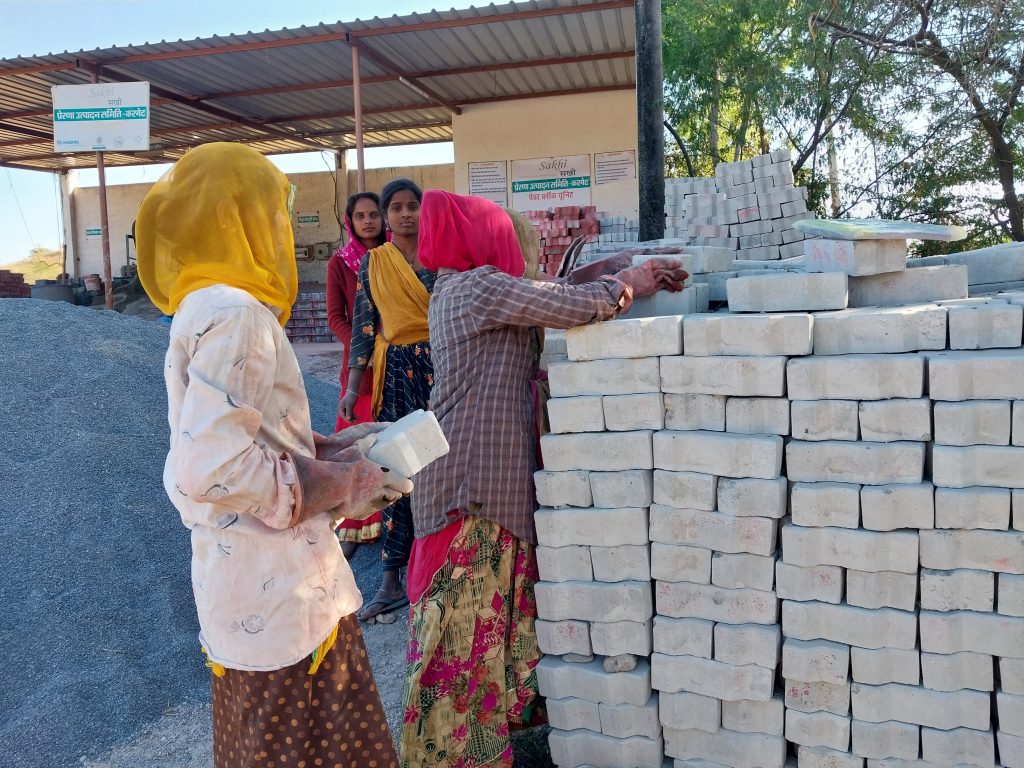
For setting up the brick unit in Karget registered in the name of Prerna Utpadan Samiti, a micro enterprise, two village organisations became involved from the start. The women work on a rotational basis for about four hours daily. Earlier, they used to make fly ash bricks but after the material got over, unbaked bricks are manufactured for use in floors. In some of the bricks, red colour is added for an attractive look and these are preferred in gardens for border. The bricks have a mixture of cement, sand, gravel and chemical hardener. Whereas the red bricks are priced at Rs 12.50 per piece, the white ones cost Rs 11.50.

The brick manufacturing unit was launched to provide decent livelihood opportunity to women belonging to the Gameti tribe. The bricks are sold to the panchayat as well as private parties.

A women’s enterprise

According to Nathibai, in case of power cut, work suffers but otherwise women come from nearby villages every day. “The brick making unit has been an answer to prayer for widows and women having small children at home. They can work for a few hours and leave. There are some women who also work in the field throughout the day to cultivate wheat and vegetables in case there is adequate water availability. They can also earn money through making bricks. On a daily basis, four women make about 500 bricks.The set of women changes after a fortnight and another group comes to work. This is to ensure that everyone gets a chance,” she said.

Normally bricks are baked in kilns but in Karget, the women make unbaked bricks which are left to dry in the sun. As part of production, these are shaped in rectangular molds, thoroughly dried and then sold off. Normally, the bricks are kept 15-20 days at the site before sale.

Workers Heera Gameti and Sagni Gameti are happy to work here as the initiative has ensured money as well as management for tribal women. Before this, for labour work, MGNREGA was the only option in the village. “Many women used to graze goats in the forest before this. Sometimes if a few women cannot come due to some family responsibility, others take their place,” Nathibaiadded.

As a group of women scooped up gravel and sand with shovels, prepared the mixture and poured it in the concrete mixing machine with water and later managed the colour mixer machine, the hard labour on their part was evident. But the women smiled and carried on. Two women managed the vibrator table before keeping the newly made bricks away.

Going strong

The Prerna Utpadan Samiti is a registered enterprise designed to offer women part-time employment. Till now, this year’s profit stands at an average of Rs 35,000. The women suffered a setback due to the pandemic. Overall, since its launch, the profit earned stands at Rs 45,000-50,000. In 2020-21 it was Rs16,000.

After the bricks are made, these are kept at the site. The total manufactured number of bricks since 2019 has crossed over a lakh. An estimated Rs11 lakh is the total budget for 2022-23 with an aim of expanding the initiative.

Bhurelal Gameti, the father in-law of Leela who is the secretary of Prerna Utpadan Samiti, looks after the entire management. “The plant started in 2019-20. But after a good start it was closed during the pandemic. The women wanted a micro enterprise here. In future, this can earn more profit for them. I am also in charge of procurement of the materials,” he said.

As there were some technical things associated with the initiative, Bhurelal was chosen for overall management. The women who work here get Rs 2 per brick. Leela said before starting work here, the women were taken to Udaipur for a thorough training. After that, work began at the site in Karget village.

India’s female labour participation rate has fallen from 26 percent in 2005 to 20.3 percent in 2019, according to the World Bank. But there has been a rise in the rural female labour force participation rate from 19.7 percent in 2018-19 to 27.7 percent in 2020-21, says the Economic Survey 2022-23.

‘Freedom is a very difficult thing to get in an Indian family’

Showcasing a stellar line up of writers and speakers the Jaipur Literature Festival (JLF) allowed for interactions and never ending candid sessions which reveal the person behind the baggage of identity a writer carries. From amongst many such delightful revelations we bring you one that stood out in its candour and brutal honesty. Sathnam Sanghera, British journalist and best-selling author was at JLF to talk about his latest book – ‘Empireland – How imperialism has shaped modern Britain.’ However his first book, a family memoir – ‘The boy with the top knot’, remains close to the heart of many Indians, especially north Indians. The book  talks about a second generation Sikh boy growing up in Britain and a British Sikh family’s struggle with mental illness. A report by Gurvinder Kaur

Ever since the venue of the world famous, dazzling yet overwhelming Jaipur Literature Festival (JLF) shifted from the quaint Diggi Palace to a banal but large hotel complex in Jaipur, many of us have been cribbing about it. The shift was necessary as the earlier venue could no longer accommodate the ever burgeoning crowds at the fest. The scale also brings along with it commercialization, highbrow events and repetitive celebrity writer-speakers that many bibliophiles disapprove of. However, such is the addictive pleasure of the fest that JLF 2023, like all the 15 editions before it, once again proclaimed to the world why it is called the ‘greatest literary show on earth’ as it connected writers to readers, provided community engagement, highlighted neglected areas of literature and also offered insights into the lives of the writers the world loves.

Showcasing a stellar line up of writers and speakers the fest allowed for interactions and never ending candid sessions which reveal the person behind the baggage of identity a writer carries. From amongst many such delightful revelations we bring you one that stood out in its candour and brutal honesty. Sathnam Sanghera, British journalist and best-selling author was at JLF to talk about his latest book – ‘Empireland – How imperialism has shaped modern Britain.’ However his first book, a family memoir – ‘The boy with the top knot’, remains close to the heart of many Indians, especially north Indians. Sanghera’s first book which was subtitled – ‘A Memoir of Love, Secrets and Lies in Wolverhampton’ talks about a second generation Sikh boy growing up in Britain and a British Sikh family’s struggle with mental illness. The book was later adapted into a television film.

Talking with Sathnam, the first question is bound to be around an early statement of his that he started writing this book partly as a message to his mother who wanted him to marry a nice Sikh girl of her choosing while he had no intention of doing that.

Q – So why did you not want to marry a nice Sikh girl?

A – Well, it may have started like that but looking back at it all I realise what I really wanted was freedom. Freedom to marry someone of my own choosing. It could have been a Sikh girl. I was an introvert, into books and I had a large loud family. I just wanted to be left alone, I thought by escaping the arranged marriage, I could escape it all, escape everyone. I was very much into my culture but I didn’t want my parents choosing for me, them saying endlessly – why don’t you marry this person! It worked and I had freedom.

Q – You have addressed mental illness in your family at length. You have talked about the schizophrenia your father suffers from and mental health challenges your sister faces, though the focus is on your father. Why did you need to talk about it? And also, does it scare you, the fact that you might have it too?

A – See, the fear is there. All my siblings are married and have children. And they are always worried because these things are inherited. They watch their children constantly and worry because such illnesses run in families. But I think you cannot live your life worrying about this stuff. One in a hundred people suffer from these issues yet no one really knows why this occurs. Anything can happen to anyone. You cannot fret about this all your life. You cannot let it dictate your life.

I decided to write about it because it’s a taboo subject in Britain and more so in India. If you compare the number of psychiatrists in India with those in America, there is a massive difference. Superstition gets involved here and people don’t get the care that they need. So there is a need to talk about this. You know people cross the street to avoid talking to someone with schizophrenia. It’s understandable because the symptoms are very troubling. So the more we talk about it, the better it is. 

Q – How did the family and people you know react to this book, to the revelations in the book?

A – About general people, I don’t really care. I did not elicit their opinion but my close family, they were very involved in the writing of this book and it was done after their approval. The weird thing was that I got unsolicited responses from my extended family, showing their annoyance or shock but they hadn’t read the book. They were arguing about the TV version of the book as well, but still hadn’t read the book. That’s frustrating. Maybe you should read it before you start an argument!

Q – Have you been totally honest in writing this book? Have you left out things which should have been written about? Is this a complete family memoir or are there pieces missing?

A –
Yes, I had to omit a lot of things, I had to take out stuff I had written. I hated it but I had to delete an entire chapter and I was very annoyed and frustrated about it. I did not want to leave it out but my family insisted. I am glad now that I did so because we still have some private experiences which the world does not know about and that’s not a bad thing. Because once you write a memoir and it goes out in the world, people look at you accordingly. It gets stuck into the people’s mind and then it is discussed. I am glad I missed some things, that it’s not the full story and you don’t have to tell the full story because people and situations evolve and change. While the writer gets stuck in the time they wrote the memoir in.

Q – Do you feel stuck too?

A – I did feel so earlier though not now. I felt stuck for a few years when people would come and ask repeated questions about it. The same questions. The way I changed the conversation was that I wrote another novel. And now I have written a book on the British empire and finally changed the conversation. I don’t mind talking about it but I didn’t want the family memoir to be known as the only thing I have done in my life.

Q – Are there any Sikh writers in the UK that you look up to or read?
A – There were none when I was growing up, now of course we have some. If you ask me who do I like, I think Sunjeev Sahota – he’s just amazing. He’s an awarded novelist and he’s very good. And this number is growing. We also have Mona Arshi, who is a brilliant poet. But at the time when I was writing my memoir, I found only one memoir written by a Sikh civil servant and none other. I think the idea of washing your dirty laundry in public is not a very Sikh or Punjabi thing to do, in fact it’s not an Indian thing to do at all.

Q – Do you speak Punjabi fluently, what’s your cultural experience been like growing up in the UK?

A – I speak it though not very fluently. I learnt it from my parents and I speak the old Punjabi that they speak. I have inherited not just a style of speaking from them but their prejudices, their awarenesses are transmitted too. Let me give you an example, a couple of years ago I was in India and someone gave me a ‘Lassi’ (buttermilk) to drink. I had never had it earlier and when I said so, people were shocked. I asked my mom how is it that I haven’t had ‘Lassi’ before? She said well I don’t like ‘Lassi’ so I never gave it to you. It is only after coming to India that you realise that they are stuck in a kind of time machine and individual preferences.

Q – What kind of cultural literature do you think is presently available or accessible to the Punjabis living in the UK or around the world, does it resonate with them?

A – I think there is a schism within the community. Lot of people are interested in their culture. They want to read more, but hardly any translations are available to them, both in English and Gurmukhi, especially in Gurmukhi. I would love that my books be translated in Gurmukhi, but it is not going to be done because it’s not commercially viable. It extends to religion as well. See a lot of Sikhs living around the world do not understand the Guru Granth Sahib because of the language. They would love to read and understand it but the translations are not available and that worries me because we are going to lose that connection with religion. Even though the community has a huge amount of interest in both their culture and religion.

Q – What, according to you, is the most poignant thing about the end of the British rule and the subsequent partition of Punjab? Especially from the perspective of your community?

A – It really troubles me when you talk about the figures of how many people died during this displacement, during the partition of Punjab. Historians vary in their estimates. Some historians say a million people lost their lives while others say two million people died during this bloody partition. At best, the estimate of the dead is between 1-2 million. I have never read about any event in history which allows for such a huge variation in its account of the dead. And that itself tells you a lot about the scale and the tragedy.

So it could be one million who died or it could be another million who also died and that’s what is extremely poignant. No one knows for sure and I find this apathy absolutely shocking. Especially in the 20th century. Wherever British people have died, you know exactly how many died, down to the last number. In every battle, the British exactly know how many British people died but about Indians or Punjabis it could be 1 million or it could very well be 2 million too. No one measured it, no one documented it, no one cared!

Q – What is it that you value most in your life?

A – Freedom and that’s a very difficult thing to get in an Indian family, in any Indian family Because this is not a quality that is prized by Indian culture.

Q – What are you writing currently? Your latest book –Empireland- has been a great hit ?

A – I am working on a sequel to Empireland, it’s called Empireworld and right now I am travelling around the world to gather information. It’s about how the British empire shaped the planet.

India’s press freedom index has fallen to 150: Congress

New Delhi: The Congress on Wednesday criticised the Centre for the Income Tax department raids on BBC offices, and alleged that due to its high-handedness the press freedom index has fallen to 150.

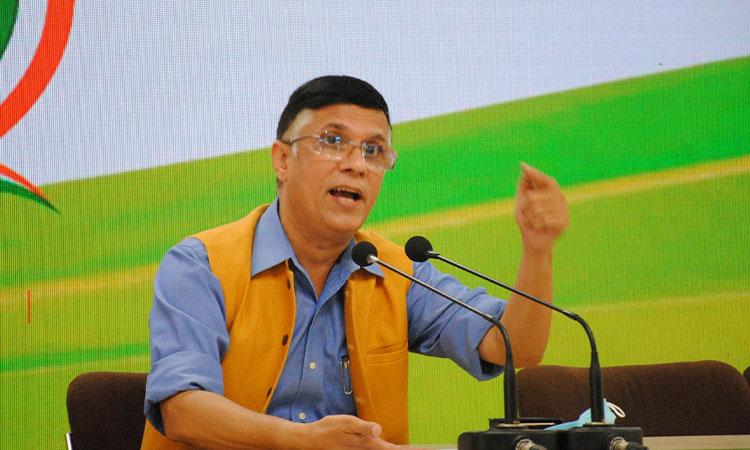
Addressing a press conference here, Pawan Khera, party’s media department chairman said, “Infact, India has a dubious position of 150th in the Press Freedom Index. 135 journalists in India were arrested, interrogated, or detained from 2014 to 2020. (As per Free Speech Collective) 37 Journalists have been killed in India since 2014 as UNESCO observatory of killed journalists.”

He said that the Indian media has been “repeatedly strangulated, muzzled and bulldozed by the Modi government just because some of them (and a very small minority of them) have refused to toe the line of the BJP”.

“When Modi ji was dreaming of becoming the Prime Minister of this country, then he was a dedicated follower of the same BBC.

“When the Prime Minister gets an award then you boast about it using your PR machinery to the whole wide world! And if the same media outlets, if the same international media sets your “record” straight, then you unleash your arrogance of power

“The party which licked the soles of the British, the party whose ideological flag bearers acted as British informers, those who pleaded clemency to the British crown, whilst Indian people were on streets peacefully fighting them, – has now suddenly started speaking against the British? Why? Is it because the real truth of Modi ji’s role in the Gujarat riots, known to every Indian, now stands exposed, yet another time!”

PM Narendra Modi held a telephonic conversation with US President Joe Biden

New Delhi : Prime Minister Narendra Modi on Tuesday held a telephonic conversation with US President Joe Biden, during the course of which both the leaders expressed satisfaction at the deepening of the India-US Comprehensive Global Strategic Partnership.

The two leaders welcomed the first meeting of the initiative on Critical and Emerging Technologies (iCET) held recently in Washington DC and express a keen desire to strengthen bilateral cooperation in space, semiconductors, defence and other spheres.

They also agreed to bolster the vibrant and mutually beneficial people-to-people ties between the two countries.

Both Biden and Modi welcomed the landmark agreement between Air India and Boeing as a shining example of mutually beneficial cooperation.A

Modi invited Boeing and other US companies to make use of the opportunities arising due to the expanding civil aviation sector in India.

The leaders agreed to remain in contact during India’s ongoing G20 Presidency to ensure its success.

Air India and Boeing on Tuesday entered into a pact under which the former will purchase 250 aircraft from the American company.

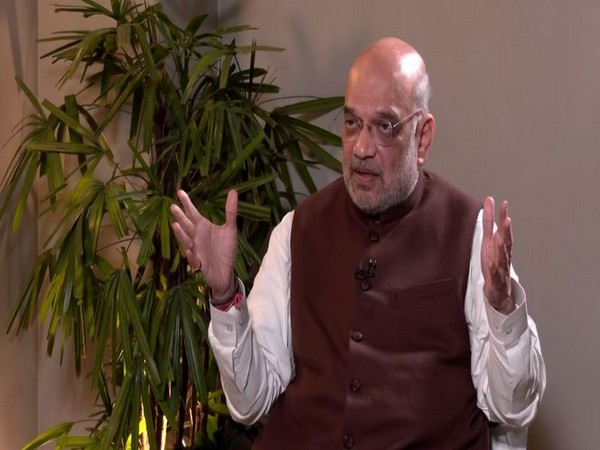
Jammu and Kashmir statehood will be discussed after elections: Home Minister Amit Shah

The reinstatement of Jammu and Kashmir’s statehood will be discussed after the assembly polls, Union Home Minister Amit Shah on Tuesday said in an exclusive interview to ANI. 

“I had clearly said that statehood will be restored in Jammu and Kashmir after elections,” Shah said. “Process of preparation of voters’ list is nearing completion in the UT. Now, the Election Commission has to take a call on elections.” 

The Supreme Court on Monday rejected a plea challenging the government’s decision to form a delimitation commission in Jammu and Kashmir.

The home minister also highlighted the gains made in Jammu and Kashmir following the revocation of Article 370 saying there has been a decrease in terrorism-related incidents in Jammu and Kashmir, and that developmental efforts in the region are contributing to the improving situation.

“See all the figures, there is a lot of change in Jammu and Kashmir,” he said.

Shah also criticized the rule of previous governments. “As far as elections are concerned, do they not remember the local body polls, these were held under our rule, these did not take place for 70 years. Three families were holding sway in Jammu and Kashmir and they are making noise. Farooq Abdullah had gone to England. In whose tenure, terrorism grew, who allowed it to grow, there should be an answer,” he said.

Press Club of India condemns I-T ‘surveys’ at BBC office in Delhi, Mumbai

New Delhi: The Press Club of India (PCI) has strongly condemned the income tax “surveys” at the office of the BBC in Delhi and Mumbai on Tuesday.

In a statement, PCI said, “The ‘surveys’ are part of a series of attacks on the media by government agencies in recent times, especially against those sections of the media that the government perceives is hostile to it and critical of the ruling establishment.

“It is deeply unfortunate as this latest instance appears to be a clear cut case of vendetta, coming within weeks of a documentary aired by the BBC on the Gujarat riots.”

The PCI said that the documentary, which appears to be the immediate provocation for the raids, has already been banned on YouTube and other social media platforms.

“We are deeply concerned and distressed that such an action on an international broadcasting network will damage the reputation and image of India as the largest democracy in the world. We appeal to the government to restrain its agencies from misusing their powers in order to intimidate the media and put curbs on the freedom of the press, ” the statement read.

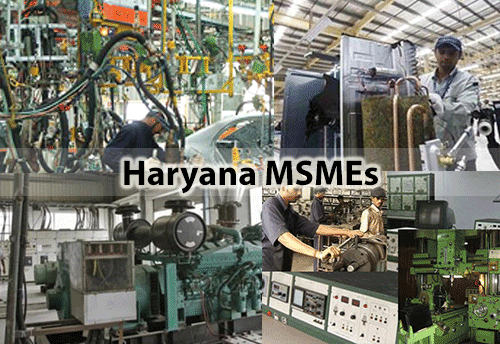
Over 2.75 lakh new MSME units set up in Haryana in past 5 years

Information reveals that in-spite of epidemic outbreak adversely affected trade and industry in Haryana state for nearly about two years still 2,81, 024 new Micro, Small, Medium Enterprises (MSME) manufacturing units were registered in Haryana state in past five years during year between 2018 to 2023 which provided employment to nearly 15,26,962 persons in the state in this period the state ranking at the top in all northern states in the country.  Whereas, new MSME units in neighboring states Punjab had provided employment to 10,52,059 persons, Himachal Pradesh provided employment to 2,56,424 persons  and Chandigarh provided employment opportunities to 51,999 persons in past five years. According to information collected from Ministry of MSME in past five years nearly 500 MSME units were also closed down for one reason or the other in this period and got cancelled their registration in Haryana state.  


According to recently declared central budget, government of India has announced several benefits including financial assistance to MSME sector in all states across the country providing employment opportunities to maximum number of youths in the country. A study by the industry department in Haryana state according to ‘Udham Portal’ reveals that during year 2018-19   employment was provided to 2,23,787 persons in 39,088 newly set up MSME units in the state. Similarly, during year 2019-20 employment was provided to 2,22,209 persons in 39,088 newly set up MSME units in Haryana. During year 2020-21 new 65,006 MSME units were set up in the state provided employment to 4,08.645 persons. During year 2021-22 employment was offered to 4,03,386 persons in 76,603 newly set up MSME units in the state in-spite of epidemic outbreak and frequent lock downs announced by the government all over in the country was facing severe slump.  

Spring- A Season to Bloom

The spring is finally here, the March and April will witness dazzling array of spring festivals in the continent. When the winter ends and the spring starts, it is time of several festivals and New year celebrations in many Asian countries. The most famous of these is mostly Nowruz. According to the Persian calendar Nowruz marks the start the new year. Originated from Zorastraian rituals, Naowruz is mainly celebrated in Iran, Afghanistan, Kashmir etc.

In India also several calendars start from beginning of the spring season. According to the Hindu calendar, popularly known as Vikram Samvat, the New year begins in March. Many Hindu groups urge people to celebrate the New year with Hindu Calendar. The  festivals like Ugadi or Yugadi and Gudi Padwa are widely celebrated in Maharashtra, Karnataka, Andhra Pradesh and Telangana. The Rajasthani and Sindhi Calenders also occur in March and April. The Harvest Festival of Punjab also starts with Baisakhi on April 14th. The Tamil Nadu New year Puthandu, Thai Songkran and Burmese Thingyan also starts in mid of April…Most of the festivals start in India according to the ancient traditions, they are derived according to the Sankranti festival celebrated on 14 -15thJanuary every year.

Asia appears amazingly beautiful and charming in spring seasons. It is also known as the season of Festivals in south Asia.In India this season also known as Vasant Ritu starts from mid Feburary to April. It is considered as the most beautiful season. The main reasons to that are…

1.Temperatures become moderate and people say goodbye to winters.

  • More sunshine as days get longer so enjoy more Vitamin D.
  • Blooming flowers and trees.
  • Enjoy more Flora and fauna.
  • Migration of Animals, as spring comes many Animals and Birds come back.
  • Abundance in vegetation as many grains sprout.

Not only this Flower festivals are celebrated in various states and Cities. Delhi Tourism has also hosted “Garden Tourism Festivals” from 17 to 19 February. More than 300 varieties of flowers and plants like roses, hibiscus,protea, lotus and tulips will be displayed.  In reference to the theme of assuming G20 presidency, the theme of this flower festival is “Garden Of Unity” The Exhibition will also witness potted plants, herbal and medicinal plants, dahlia, varieties of roses, Bougainvillea etc. The Mughal Garden at Rashtrapati Bhavan now named as “Amrit Udyan” is also opened for visitors from mid February.

 The Tulip festival in Kashmir is also celebrated every year in March and April. In the Tulip garden of Kashmir when tulips start blooming the garden is opened for public.It is the largest garden in Asia, spread in 30 hectors. The valley looks mesmerizing with varieties of tulips in this garden. It is the centre of attraction for the tourist. Every year thousands of tourist visit this place.

For the lovers of flora and fauna, a three day flower festival is being organized in Noida also from 24-26 Feb. Marigold  also called as gaindais the theme flower this time.This is the best opportunity to enjoy vibrant flowers. One can also purchase plants, manure, seeds and other accessories from this exhibition. So go and enjoy the different range of Flowers.

Valentine’s day–A festival of Love

When we think about valentine’s day what comes to our mind first, Love letters, Bouquet of Flowers, Boxes of Chocolates, Romantic dinners, attractive gifts, etc.. Have we ever wondered who created this Valentine’s day?  The historians differ on this.  From the Ancient Rome to the middle ages and to the present times, what we love about Valentine’s day is gift shopping for our partners. For some valentine’s day is love and Romance but for some it is just the opposite. For the youth this is a Crazy day, but for some this is a day of Self love….

 As the Valentine’s day is approaching and the valentine week is already going on, I approached some college students to know their plans who are demanding a Holiday.  Well we don’t want to come to college, we want a Holiday on 14th feburary, some students of Amity University said.  For me Valentine’s day is a complete Holiday, My Boyfriend is taking me for dinner, says Shefali an IT student. “I think valentine day is more Fun, I am taking my girl for a Movie date, said Rehan.  Most of the Delhi University Students who have still not seen their favourite filmstar’s movie are going for Pathan.   

For some Valentine’s day is just like any other day, why couples should show their love to each on just one day, it’s just buying expensive gifts and wooing your partner, it should not be a holiday, feels Shivani a school teacher.

Valentine’s day is over-publicised in the society. I don’t know from where it originated but I take advantage of the great deals that many companies offer, says Anurag, a video Editor. Though it is overrated but I still enjoy this day feels Shruti , an English teacher.  50-60% percent discounts on online shopping, 30% discounts for dinning in many Restaurants, what else one wants, she added. For some it’s just love but for some it’s full Enjoyment, “My mother’s Birthday falls on 14th Feburary, so it is a double celebration for us, I take my wife as well as Mom for dinner.” Says Divakar Rai Sharma, an Advocate.

It’s not that only individuals celebrate this day, some organizations also celebrate this day in their own way. DHANAK an NGO in Delhi celebrates this day as their Annual function day. This NGO felicitates those couples who are into interfaith and inter caste marriages. For them Constitution has given its citizens a “Right to Choose” so they make this day special by honoring such couples. They also distribute Roses to people on the streets. Love is a beautiful feeling , it knows no borders, community, caste and religion, says Asif Iqbal, Co-Founder of Dhanak.

According to a Wellness Expert, Khushboo Jain, Valentine’s day is our own day, we should love ourselves first, if we can love ourselves, we can love others also. For her it’s a day of self love and self care. All we can say is that this day gives an opportunity to young lovers, who are exploring relationships. This day holds more attractions for youngsters, she added. Several colleges have also transformed this day into Rose day, where they gift roses to each other. The gift shops are flooded with chocolates, greeting cards, and teddy bears.  After all it’s a festival of Love, enjoy it in whatever way it suits you.

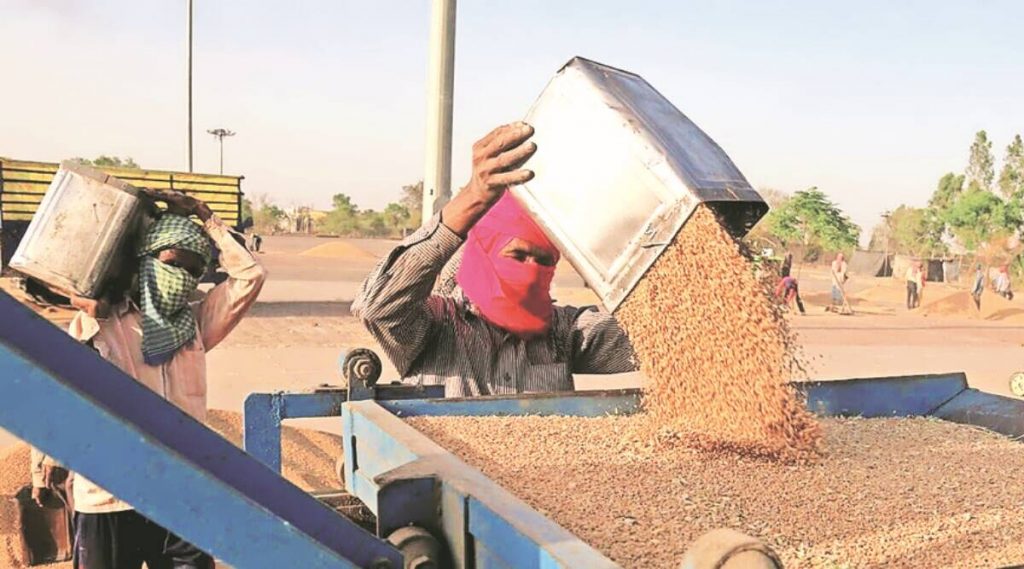
Punjab Government has decided to offload 30 lakh metric tons of wheat under Open Market Disposal Scheme

Chandigarh : With a view to cooling down the rising prices of wheat and atta, the government has decided to offload 30 lakh metric tons of wheat under Open Market Disposal Scheme (OMSS) and sales to state governments, Kendriya Bhandar, National Consumer Cooperative Federation (NCCF), National Agricultural Cooperative Marketing Federation of India Ltd. (NAFED), State Cooperatives/ Federations etc., to cool down the prices of wheat and atta.

Union Minister of State for Consumer Affairs, Food and Public Distribution, Sadhvi Niranjan Jyoti, in a written reply to a question in Rajya Sabha on Friday, said that the government takes various steps from time to time to augment domestic availability and control increasing food prices.

These steps include releases from the buffer to cool down prices, imposition of stock limits, monitoring of stocks declared by entities to prevent hoarding, and also requisite changes in trade policy instruments like rationalization of import duty, changes in import quota, restrictions on exports of the commodity etc.

In order to manage the overall food security of the country and control the increasing prices of food grains, the Government amended the export policy of wheat from free to prohibited category on May 13, 2022 for restricting export of Indian Durum Wheat, and from July 12, 2022 the export of atta (wheat) is subjected to the recommendation of Inter-Ministerial Committee (IMC) on export of wheat.

To augment domestic availability and moderate the prices of pulses, import of tur and urad have been kept under ‘Free Category’ till 31.03.2024 and import duty on masur has been reduced to zero till 31.03.2024.

To prevent hoarding and restrictive trade practices in respect of tur the Government has issued a directive to all the states and UTs to enforce stock disclosure by stockholders of tur under the Essential Commodities Act, 1955 and to also monitor and verify the stocks.

Stocks of chana and moong from the Price Support Scheme (PSS) and Price Stabilisation Fund (PSF) buffer are continuously released in the market to moderate the prices and also supplied to the states for welfare schemes, said the reply.

MOST POPULAR

HOT NEWS