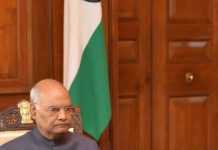
Until recently, U.S. officials handling South Asia policy had focused the bulk of their conflict management resources on preparing for a potential India-Pakistan conflict, says a study. However, they are shifting their attention to the growing potential for an India-China military crisis, writesRiyaz Wani
The increasing frequency of India-China border intrusions and clashes have forced the US to shift its attention away from India-Pakistan tension to the growing potential for an India-China conflict, Center for a New American Security has said in its latest report.
“Until recently, U.S. officials handling South Asia policy have focused the bulk of their conflict management resources and planning on preparing for a potential India-Pakistan conflict,” the report authored by senior security experts Lisa Curtis and Derek Grossman says. “However, they are shifting their attention to the growing potential for an India-China military crisis and will benefit from additional resources as part of the Indo-Pacific strategy to address the China challenge more broadly.”
What is more, the report recommends that the US should ask Pakistan to stay neutral in the event of a China-India conflict.
“Message Pakistan—and enlist help from Pakistan’s other important partners to convey similar points— about the need to stay neutral in the event of a potential future India-China border flare-up,” the report says.
It also urges the US to offer India the sophisticated military technology it requires to defend its borders and initiate co-production and co-development of military equipment in addition to assisting India in strengthening its maritime and naval capacity.
The report also advocates joint intelligence reviews with India to align assessments of Chinese plans and intentions along the LAC and enhance coordination with Indian officials “on contingency planning in the event of a future India- China conflict.”
Though the report acknowledges that Beijing’s initial motivation for launching the Galwan Valley attacks remains unclear, as does its long-term strategy for the region, it indicates that China is doing this to contain India.
“Indian officials believe China is trying to contain India by forcing it to divert more resources into defending simultaneously both its western border with Pakistan and eastern flank with China and by weakening its willingness and ability to challenge Chinese ambitions to dominate the region,” the report explains. “Developments along the LAC in 2020 brought clarity to India’s strategic approach toward China, meaning India’s views of the China challenge are starting to converge with those of the United States.”
USIP report
In another report published by the United States Institute of Peace, its author Sameer Lalwani underlines the deepening China-Pakistan military relationship.
“Geopolitical shifts in South Asia over the past decade, driven by sharper US-China competition, a precipitous decline in China-India relations, and the 2021 withdrawal of US forces from Afghanistan, have pushed the Chinese and Pakistani militaries closer together,” Lalwani says in the report. “The countries’ armies and navies are increasingly sharing equipment, engaging in more sophisticated joint exercises, and interacting more closely through staff and officer exchanges”.
However, despite this closeness, the report calls China-Pakistan only a “threshold alliance.”
“Full China-Pakistan alliance is not inevitable, as Chinese missteps and other sources of friction could slow its consummation,” the report concludes.
However, the report sketches in detail the growing cooperation between China and Pakistan, which “quantitatively and qualitatively rivals its (China’s) military partnership with Russia.”
“China and Pakistan have accelerated the tempo of joint military exercises, which are growing in complexity and interoperability. Increasingly compatible arms supply chains and networked communications systems could allow the countries to aggregate their defense capabilities,” Lalwani explains, adding that the prospects for China projecting military power over the Indian Ocean from Pakistan’s Western coast are growing.
“Chinese basing has meaningful support within Pakistan’s strategic circles. The material and political obstacles to upgrading naval access into wartime contingency basing appear to be surmountable and diminishing over time,” he adds.
Going forward, Lalwani sees a prospect for China to leverage its relationship with Pakistan in future great power competition and lays out “what US leaders can do to seek strategic clarity with Pakistan while helping it to maintain independence in its foreign policy.”
How this would pan out in the near to long term future is not clear yet. But Lalwani sees the intensifying great power rivalry creating a dilemma for the Asian countries, including Pakistan, who could be forced to choose sides. The consequences for Pakistan could be profound should it allow China to set up naval bases on Pakistan’s shores which, in turn, will have major implications for regional security.
But short of a formal alliance, China-Pakistan military relationship has grown closer with time. Lalwan estimates that by 2030, 50 percent of Pakistan’s major military platforms from each military services will originate from China.
“They’re (Pakistan) all especially dependent on China for combat strike capabilities such as tanks, fighter jets, or combat ships (like frigates) with missile cells,” Lalwani posted on microblogging site Twitter.
“In the past five years of data (2017-21), it seems China conducted more exercises with the Pakistan military than with the Russian military,” he wrote further adding that the quality of China-Pakistan military exercises is “arguably quite advanced.” .
Two alliances
Between them, the two alliances—India-US and China-Pakistan—could profoundly impact the course of geopolitics in the Indo-Pacific. Pakistan, however, is maintaining an uneasy balance in its relationships with the US and China. India too is chary of a formal alliance with the US. The country is a member of both the US-led QUAD and China-led SCO groupings.
During the ongoing Ukraine crisis, New Delhi has done a tight balancing act, playing to the west’s concerns and at the same time maintaining its longstanding relations with Russia, a close China ally. The West has found it difficult to countenance this assertion on the part of India but has played along as New Delhi is critical to its policy of containment of China.
So, the situation, as of now, is very complicated. Both India and Pakistan are hedging their geopolitical bets. But with the world almost barreling into a fresh cold war, this time between the US and China, it is likely to become increasingly difficult for the other countries to stay neutral – especially the smaller and weaker countries such as Pakistan.
Ukraine war has further queered the geopolitical pitch, and one of its most visible fallouts is being registered across Asia: The US seems to have doubled down on its efforts to contain China by recalibrating its policy in South Asia. While the tilt towards India remains very much in place, the US has restored a degree of its old warmth in its relations with Pakistan, ostensibly to halt Islamabad’s drift towards the China-Russia axis.
Basically, with the Ukraine war on, geopolitics is in a state of flux. One thing is for sure: The war’s end and its outcome is certain to alter the world fundamentally. And possibly South Asia too.
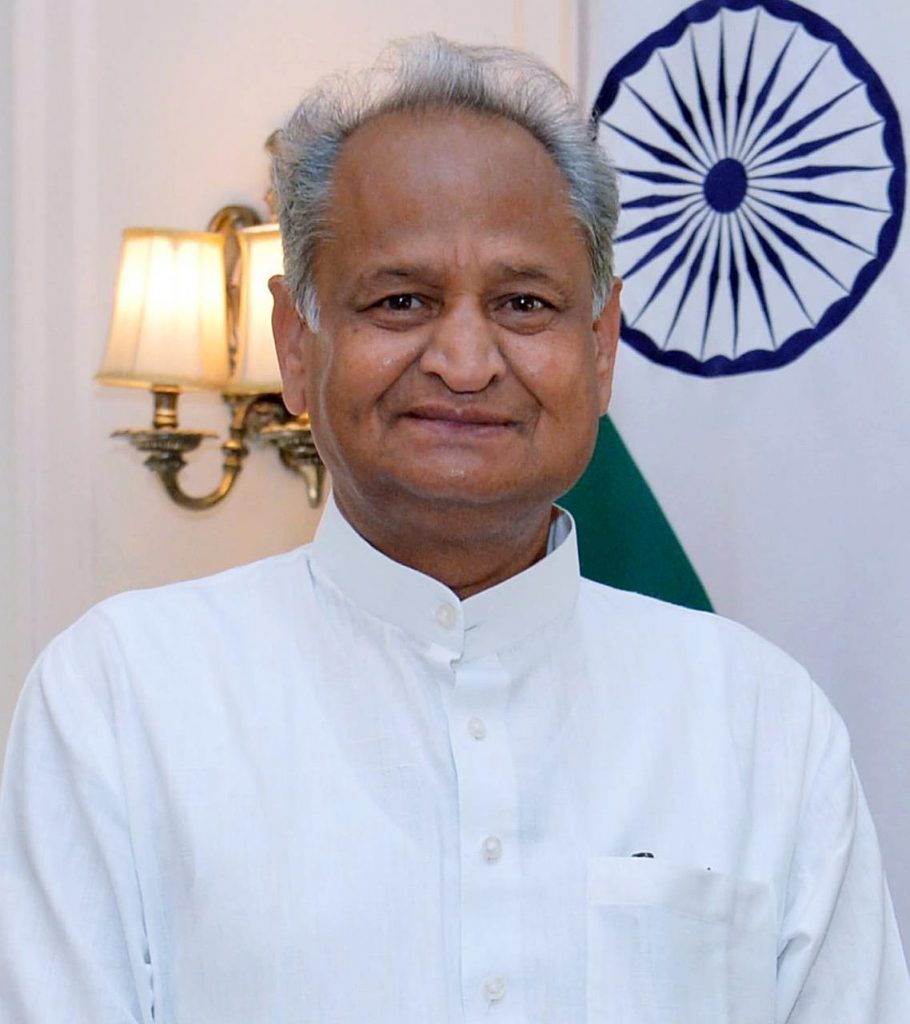
Miffed over Sachin Pilot’s move to stage fast-cum-protest on April 11 against Rajasthan CM Ashok Gehlot’s ‘inaction’ in corruption cases against former BJP chief minister Vasundhara Raje, the Congress high command has decided to back the veteran, writesAmit Agnihotri
Rajasthan is a crucial state for the Congress which is hopeful of retaining power in 2023 but faces a stiff challenge from the opposition BJP. The AAP, which had dented the Congress votes in the last year’s Gujarat assembly polls, is also trying to find a foothold in Rajasthan.
The Pilot-Gehlot rivalry actually goes back to 2018 when the grand old party had wrested power from the BJP. Pilot was then the state unit chief and had worked hard since 2014 to revive the party. Gehlot too had played a key role behind the party’s win and through his deft moves was able to get the chief minister’s post for a third time.
Pilot, who had been deployed by Rahul Gandhi after the party lost power in 2013 under Gehlot as chief minister, had expected to become the chief minister in 2018 as he had delivered on a key promise made to the party high command but the young leader was miffed when he had to settle down for the post of deputy chief minister.
Though Pilot was allowed to remain the state unit chief, the young leader continued to live in the hope that he would get a fair share in the state power structure in due time. However, as status quo continued, Pilot got impatient in 2020 and led a rebellion of over a dozen MLAs loyal to him.
Gehlot, the wily politician, used the occasion to brand Pilot as a rebel who played into the hands of the BJP to topple his elected government. Pilot, who was cornered, tried hard to explain to Rahul Gandhi and Priyanka Gandhi Vadra that he was only trying to raise the concerns of the party workers who had been neglected by Gehlot and was in no way playing the BJP’s game.
As confusion continued, Gehlot quickly managed to remove Pilot both as deputy chief minister and state unit chief, bringing in his loyalist Govind Singh Dotasara as the new head of Rajasthan Congress.
On his part, Rahul did try to get justice for Pilot and deployed state in charge Ajay Maken to ensure that the young leader’s concerns were addressed. Rahul’s push worked and Gehlot agreed for a cabinet reshuffle in which some of the Pilot loyalists were accommodated but the young leader’s aspirations for a greater say in the state and party affairs could not be met.
Gehlot as party chief
Chances of Pilot getting the chief minister’s post brightened up ahead of the Congress presidential polls in October 2022 when then party chief Sonia Gandhi asked Ashok Gehlot to take up the top party job.
She then deployed AICC observers Mallikarjun Kharge and state in charge Ajay Maken in September to bring about a change of leadership in Rajasthan. As per the formula, Pilot was to be elected the new chief minister. However, the plan went horribly wrong when over 90 MLAs loyal to Gehlot revolted against the high command’s directive and held a parallel meeting where they slammed Pilot. These lawmakers were led by Gehlot’s aide Shanti Dhariwal who wanted the AICC observers to appoint someone from their own camp as the new chief minister, if Gehlot was to be removed.
Maken returned to Delhi without meeting the chief minister but Gehlot did get a chance to explain his position to Kharge. A miffed Sonia then sent show cause notices to three of Gehlot’s aides, Shanti Dhariwal, Mahesh Joshi and Dharmendra Rathore for instigating the lawmakers forcing Gehlot to say sorry and withdraw from the presidential race.
Sonia then asked Kharge to file his nomination against rival Shashi Tharoor. Kharge defeated Tharoor with a big margin and took charge as Congress president on October 26, 2022.
Soon, the entire party got busy with the Himachal Pradesh and Gujarat assembly polls and the Rahul Gandhi-led Bharat Jodo Yatra.
In November 2022, the Congress had opted for a status quo in Rajasthan till the Plenary Session in February 2023 was over. Maken was miffed that though the three state rebels had submitted their replies to the AICC disciplinary committee headed by veteran AK Antony, the new party chief had not taken any action in the matter. What further upset the Maken camp was that instead of facing any disciplinary action, the three state leaders were given the responsibility to manage the Bharat Jodo yatra, which entered Rajasthan in December 2022. This provoked Maken to resign, expressing his unwillingness to continue as state in charge.
Before Maken, Pilot too had flagged the issue saying any delay in deciding the case of indiscipline would not convey a good message across the party. However, no action could be taken as Gehlot was supervising the Gujarat polls.
When the yatra was still in Rajasthan, Kharge appointed Punjab leader Sukhjinder Singh Randhawa as the new AICC in charge of the state. Rahul, who had a separate two-hour long meeting with both Gehlot and Pilot before leaving the state, had also pointed out that if the party was able to empower the local leaders and workers, winning the 2023 polls would be easy for the Congress.
Days before the yatra had entered Rajasthan, the Gehlot-Pilot tussle had been out in the open with the chief minister making some disparaging remarks against the young leader during a TV interview. He later played down the charges saying such things happened in politics.
On his part, Pilot remained patient during the yatra but did not give up his ambitions.
Pilot’s show of strength
In January, the Congress played down a series of rallies conducted by Sachin Pilot in Rajasthan saying they were not a show of strength but to strengthen the Congress.
Before that, Pilot briefly joined the yatra in Punjab and informed Rahul that he was embarking on a mass contact program. Subsequently, he conducted a series of rallies in Nagaur Jan 16, Hanumangarh Jan 17, Jhunjhunu Jan 18, Pali Jan 19 and Jaipur Jan 20.
The rallies, which were received well by the voters, were seen by many within the party as a show of strength by the former state unit chief and a projection of Pilot as a farmer leader who had a pan-state appeal.
When Congress communications in charge Jairam Ramesh was asked about Pilot’s rallies, he had noted that both Kharge and Randhawa were trying to work out a solution in Rajasthan. Ramesh had also said that the organization was the supreme for the Congress and not people while pointing out that both Gehlot and Pilot were assets for the grand old party.
With the Plenary Session over in February and no signs of any resolution of the leadership issue, Pilot staged a rebellion against Rajasthan chief minister Ashok Gehlot on April 9 saying he would sit on a day long fast-cum-protest on April 11 to demand action in the corruption cases against former BJP chief minister Vasundhara Raje. Pilot said he had written letters to Gehlot over the same but the chief minister had not replied to him.
The Congress high command was miffed over Pilot’s move and decided to back the veteran saying the party will go to the polls this year over the achievements of the state government and the strength of the organization.
As Pilot aired his views during a press conference in Jaipur, Congress chief Mallikarjun Kharge called a meeting of senior leaders to discuss the Rajasthan leadership which has been hanging fire for long. According to party insiders, Kharge discussed the pros and cons of Pilot’s move before deciding to side with Gehlot.
The official statement from the party was a clear hint to Pilot that no such act of indiscipline would be tolerated by the high command but he went ahead with the fast. The Congress managers then said they were trying to work out a peace formula which would emerge in due course of time.
The upcoming Karnataka poll is expected to be a close contest between the ruling BJP and Congress. However there is a buzz gaining ground about JD-S possibly playing a kingmaker role
As soon as the Election Commission announced its notification of assembly elections in Karnataka, there was a rush of opinion polls predicting either an outright Congress win, or a hung assembly. As this journalist toured through the Karnataka state for the past 10 days, there were animated discussions in Karnataka that the Janata Dal (Secular) of Gowda family would be the ’kingmaker’.
Politically aware people observed that not one poll suggested that the incumbent Bharatiya Janata Party (BJP) would improve its performance. Instead, there was a buzz about the Janata Dal (Secular) emerging as a “kingmaker’.
The Karnataka Assembly Elections 2023 are scheduled to be held on May 10 while the counting of votes will take place on May 13. The election will be held to elect the 224-member Assembly. This time it is expected that there will be a close contest between the ruling Bharatiya Janata Party (BJP) and Congress along with the Janata Dal-Secular (JD-S) playing a possible kingmaker role.
There are 224 Assembly constituencies of which 36 are reserved for the SCs and 15 for the STs. The total number of electorates in the state is 5,21,73,579, of which 2.62 crore are males and 2.59 crore are female. The total number of 80 plus electors is 12.15 lakh. It is an increase of 32 per cent from 2018. It also includes 16,976 proud electors who are 100 plus. The number of persons with disabilities (PWDs) has increased to 5.55 lakh. This is an increase of close to 150 percent. First, the vote-from-home option will also be available during election, which will be applicable for people aged 80 and above.
Opinion poll projections
The ABP-C Voter Karnataka Opinion Poll has projected 115-127 seats for the Congress, 68-80 seats for the BJP, and 23-35 seats for the JD(S). The Congress and the BJP are projected to get 44% and 37% of the votes in the Hyderabad-Karnataka region. In terms of seats, the Congress is likely to trump the BJP, winning 19-23 seats. The BJP could win 8-12 constituencies in the region. In the 50-seat Mumbai-Karnataka region, which shares a border with Maharashtra the BJP and the Congress are projected to garner 43% of the vote share each. However, the Congress is projected to win 25-29 seats, whereas the BJP has been predicted to win 21-25 seats. This is a Lingayat-majority area.
The BJP is likely to rake in 46% of the votes in Coastal Karnataka, while the Congress is projected to get the support of 41% voters. JD(S) is unlikely to get more than 6% of the total vote share. This is the smallest region in Karnataka, with just 21 seats. In terms of seats, BJP is likely to be locked in a neck-and-neck battle with Congress, with a 9-13 seat projection for the saffron party. The latter is likely to have between 8 and 12 seats. However, the BJP is projected to get 38% of the votes in Central Karnataka, which is considered to be a bastion of the saffron party. The Congress is likely to rake in 41% of the votes. In terms of seats, the BJP is projected to win 12-16 seats in the 35-seat region, while the Congress is likely to get 18-22 seats. JD(S) is unlikely to get more than 2 seats in this region.
Former CM HD Kumaraswamy is confident of winning the Karnataka polls this year. “Kannadigas have decided to elect a regional party. This time they will reject both national parties, says JD(S) leader HD Kumaraswamy,” he said. The survey projected a 20% vote share for BJP and 36% for Congress in the 55-seat Old Mysore region. Translated to seats, the survey projected 26-27 seats for the JD(S) and 24-28 seats for Congress. The BJP ranked a distant third with a seat projection of only 1-5.
2018 results
‘In the 2018 elections, the BJP had won 104 seats, the Congress 80, the JD(S) 37, and others 3. The Congress had got more votes (38.14 per cent of the total, a rise of 1 per cent from 2013) compared to the BJP’s 36.35 per cent and the JD(S)’s 18.3 per cent. While the Congress and JD(S) had come together to form the government following the results, the BJP had weaned away 17 MLAs and replaced the coalition in power a year later.
What the BJP is taking heart from are the 2019 Lok Sabha polls, when the Modi factor powered the party to 25 of the 28 seats in the state.
In this poll, Siddaramaiah topped the list of voters’ choice for the next CM, with 39.1% voting in his favour. A majority of voters also felt that Congress would win the elections this year. 50% of respondents in the ABP C-Voter Survey said that the BJP government performed poorly. As much as 47% of the respondents, said that CM Basavaraj Bommai was poor.
The saving grace for BJP was perhaps PM Narendra Modi’s ratings. As many as 47% of the respondents rated PM Modi’s performance as ‘Good’.
Lingayats factor
However, a consolidation of caste groups could be the decisive factor. The Lingayats, who make up nearly 17 per cent of the population and are spread around northern districts, have been seen as BJP supporters since the 1990s. The Vokkaligas, at 15 per cent and mainly in the south of the state, have traditionally backed the JD(S). The backward castes, who make up 33 per cent of the population; sections of Dalits, who constitute 15 per cent; and the religious minorities, who make up 12 per cent, are considered to be Congress vote blocks, though there are several divisions among them.
The BJP’s best chance lies in attracting castes besides the dominant Lingayats, with this acting as a force multiplier to its narrative of development and welfare measures (particularly those launched by the Narendra Modi government). However, it is nervous about the Lingayat vote, having relegated the community’s stalwart leader B S Yediyurappa to a secondary role. Apart from a consolidation of its existing caste base, the Congress is counting on a slip in the BJP votes due to anti-incumbency and decline of the JD(S) due to infighting.
The Congress, which has a good organisation plus several strong leaders in Karnataka, is hopeful of ending its poll drought in big states with the May 13 result. It is also counting on the corruption allegations against the BJP, with senior leaders admitting that the manner in which the government came into existence lay at the root of it. However, fresh off from its Northeast electoral win, the BJP is looking at a tough contest in Karnataka on May 10. Karnataka, the only state in south India where the BJP has a government, has never voted an incumbent back to power in 40 years. In both its two terms in government (2008-13 and 2019 to now), the BJP did not win a clear majority in Karnataka, but is hoping that the Narendra Modi factor will erase the anti-incumbency against it, and see it past the half-way mark of 113 in the 224-member Assembly.
The revelations have equally affected the allies in the on-going Ukraine-Russia war as well as Israel. High-level teams are being despatched to allies, especially the NATO members in Europe, for reassuring them that the USA stands with the allies and Ukraine, writesGopal Misra
Top secret and highly sensitive Pentagon documents have found their way on to a popular gaming site, Discord, on a social media platform, causing a huge embarrassment to the Biden administration.
The revelations have equally affected the allies in the on-going 14-month Ukraine-Russia War as well as Israel. The collapse of the Ukrainian Air Force is now known, and so the ‘dirty role’ of the Israeli secret service, Mosad, against its own prime minister, Benjamin Netanyahu, who is trying to reform judiciary in his own country. The secret documents also reveal that under what circumstances Russian President Vladimir Putin might use tactical nuclear weapons in this war.
According to one member of the chat on the ongoing Ukraine War on this site, an unidentified poster shared documents that the poster claimed were classified, first typing them out with the poster’s own thoughts, then, as of a few months ago, uploading images of folded papers.
The CIA Director William Burns has recently called the leak “deeply unfortunate” promising a quite intense investigation to get to the bottom of this.” A similar assurance has also been made by US Defence Secretary Lloyd Austin that “We will continue to investigate and turn over every rock until we find the source of this and the extent of it.”
Meanwhile, high-level teams are being despatched to allies, especially the NATO members in Europe, for reassuring them that the USA stands for the allies and Ukraine. It also reveals that the peace efforts by the European Union, Germany and France could not really take off due to the Ukraine’s plans to intensify the war during this spring.
Both Austin and Secretary of State Antony Blinken have already reached out to their counterparts in Ukraine. Austin believes that the leaks would not have much of an impact on Ukraine’s plans for a spring offensive. Ukraine’s strategy will “not be driven by a specific plan. The Ukrainian President y Zelenskyy and his leadership really know the full details of that plan,” Austin asserted.
Earlier, on April 5, Russian President Vladimir Putin told the new U.S. and EU ambassadors that their countries were responsible for a dramatic deterioration in relations with his country. It means, he appeared to be in no mood to agree to a ceasefire.
The leaks have also revealed that South Korean leaders were hesitant to ship artillery shells to Ukraine. Meanwhile, the Pentagon has also been taking steps to reduce the number of people who have access to the secret briefings on sensitive matters. Pentagon officials are also closely monitoring where the leaked slides are “being posted and amplified,” said Chris Meagher, assistant to the secretary of defence for public affairs.
The other sensitive issues being highlighted in the leaked slides, such as Ukraine’s shortage of air defence ammunitions, the shortage itself has been known and is one of the reasons U.S. military leaders have been pressing allies to supply whatever systems they can, such as the Iris-T systems pledged from Germany and the U.S.-manufactured Hawk air defense systems provided by Spain. It is being claimed that the publicizing an apparent shortage of anti-aircraft missiles may give comfort to Russia, but if it energizes Ukraine’s partners to accelerate delivery of missiles and other air defence capabilities, Kyiv will be reinvigorated for a longer–term of the on-going conflict. It is also being assessed that the bigger ‘known unknown’ is the extent to which these leaks influence U.S. political support for Ukraine,” according to Ben Barry, senior fellow for land warfare at the London-based International Institute for Strategic Studies.
The leaks, however, exposes the myth the invincibility of the American defence establishment. Its budget is estimated to be 90 US billion US dollars annually. Its intelligence agencies are equipped with the state of-art communication systems supported by spies being monitored by satellites. Yet, it could be penetrated by a gaming site!
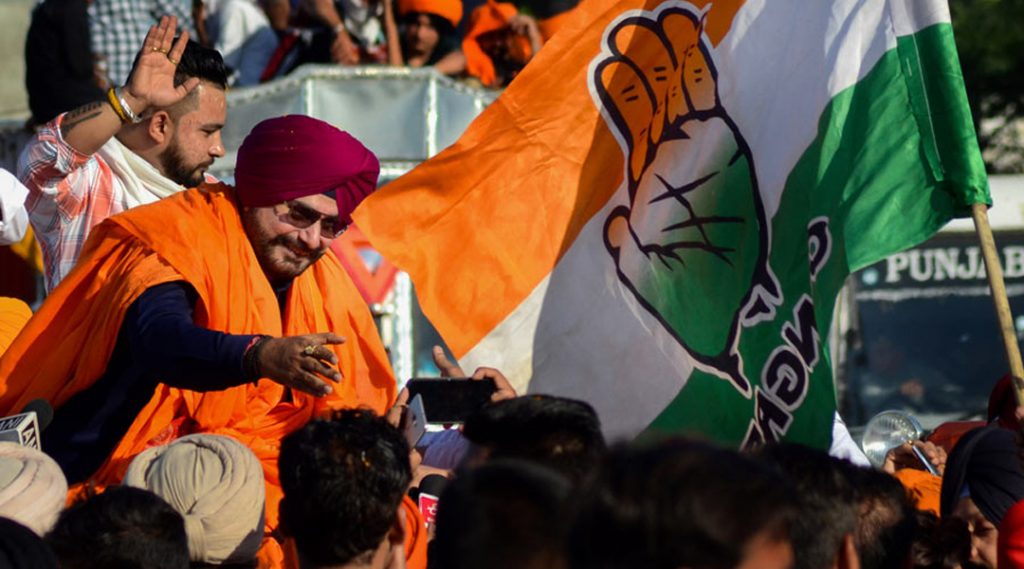
Seen by many for as a reason for Congress’ rout in the last Punjab assembly polls when he was the state party chief, Navjot Sidhu, who has come out of jail after completing his sentence, faces an uphill task as he endeavours to carve a political space for himself, writesRajesh Moudgil
Former Punjab Congress president Navjot Sidhu, 60, walked out of the Patiala Central jail on April 1, last, after completing his 10-month sentence in a road rage case. He was awarded one-year rigorous imprisonment in the said case by the Supreme Court on May 19, 2022, and he had surrendered before a Patiala court a day later. One Gurnam Singh, 65, had died after being beaten up by Sidhu over a parking issue in Patiala in 1988.
Even though his release from the jail was likely in the morning, he came out of the jail at around 6 pm to a warm welcome by party workers and some leaders who had waited for him since the forenoon.
Conspicuously enough, none of the sitting party MLAs and MPs – barring Amritsar MP Gurjeet Singh Aujla, Sidhu’s friend and Jalandhar Cantonment legislator Pargat Singh and some former MLAs and ministers – were there to welcome him. Most of top leaders including the state unit president Amarinder Singh Raja Warring and leader of opposition Partap Singh Bajwa, were also conspicuous for their absence on the occasion.
Few options in state?
Sidhu, a three-time MP who had won the 2017 assembly elections from Amritsar (east) but had lost to a first-timer AAP candidate in February 2022 assembly polls, is said to be bereft of friends among most of the top leaders in state party unit today.
Accused of being a catalyst for causing the bad blood within the party which caused a humiliating defeat of the party in the February, 2022, state polls, his role for former chief minister Capt Amarinder Singh’s removal from the post and the defeat of Charanjit Singh Channi, who replaced the former, is no secret. He even lost his Amritsar seat before going to jail.
Sidhu was asked to quit as Punjab Congress chief by Sonia Gandhi and was replaced by Amarinder Singh Raja Warring. Sidhu skipped Raja Warring’s appointment function. Even after coming out of jail, he also stayed away from recent Congress’ protest over Rahul Gandhi’s disqualification issue in Patiala.
Sidhu is thus still on the bruised state Congress leaders’ radar.
The former cricketer-turned-entertainer-turned-politician Sidhu, nonetheless, has his set of fan following and supporters and is a media darling.
While most of the party leaders did not want to be named while speaking on Sidhu’s political space after his jail term, the party MP from Ludhiana Ravneet Bittu, according to media reports, does not mince words to say that former chief ministers – Capt Amarinder Singh, who is now in BJP and Charanjit Singh Channi – and Sidhu had caused a major damage to the party.
He said that it was for the party high command to decide on Channi and Sidhu’s roles, and added that the new team of the state party unit was working and its performance would be known after the 2024 polls. Categorically stating that he had nothing personal against the senior leaders named above, he said that their performance in the last assembly polls, nonetheless, was known to all. The party won only 18 of the total 117 seats in Punjab – a steep fall from 77 in 2017 assembly polls.
However, Sidhu loyalists insist he is an honest person who sincerely worked against the mafia in Punjab and that the poll results would have been different had he been consulted for party ticket distribution for the said election. They also say that unlike Channi who also lost both his seats, Sidhu took on the AAP government immediately after coming out of jail.
Rains barbs against Mann govt
Known for his fiery attacks against his rivals, Sidhu wasted no time after stepping out of the jail and told newspersons that there was no such thing as democracy right now in Punjab and that a conspiracy was being hatched to bring President’s Rule.
A day later, he visited the parents of slain Punjabi singer Sidhu Moosewala in Punjab’s Mansa district and slammed the chief minister Bhagwant Mann-led state Aam Aadmi Party (AAP) government over the law and order situation. Lashing out at the state’s AAP government, he said that Moosewala, a shining star, was shot dead in Mansa on May 29, last year, a day after his security was pruned.
He went on to ask as to why the information about the pruning of Sidhu Moosewala’s security was made public. “The same thing is also happening with me now, though I do not care if they want to silence my voice too like Sidhu Moosewala, for, I would continue to speak the truth’’, he said.
Sidhu also tore into the AAP government alleging that the Mann government which had come to power by making false promises and showing fake dreams had also failed to act against the mafia. He also alleged that Mann was just a rubber stamp chief minister. He has also termed AAP a party of poachers and said that it had also inducted former Congress MLA Sushil Rinku to contest the Jalandhar Lok Sabha by-election.
Calls on top leaders
After his Punjab visits, Sidhu was also quick to call on Gandhi scions – Rahul and Priyanka – besides party chief Mallikarjun Kharge, heaping praises in his tweets.
After meeting Rahul and Priyanka, he tweeted: “Met my Mentor Rahul ji and Friend, Philosopher, Guide Priyanka ji in New Delhi Today. You can jail me, intimidate me, Block all my financial accounts but My commitment for Punjab and My leaders will neither flinch nor back an inch !!
He also called on Kharge and tweeted: “9 Times MLA, Thrice Member Parliament, Champion for the cause of the underprivileged, voice of truth….. “Credibility thy name is Mallikarjun Kharge. Met and took blessings of Hon’ble Congress President, he brings positive vibes and good fortune for the party’’.
Besides, he also called on party general secretary K C Venugopal and tweeted: “A conversation with a wise Man is worth Months of Education’’ …. Pillar of Strength to the organisation, Wise Council to The Party @kcvenugopalmp’’.
Sidhu, a stuntman: AAP
Meanwhile, terming Sidhu as a stuntman, the AAP said that he was coming out of jail after serving his sentence for killing an elderly person, not after fighting for freedom.
The party chief spokesperson Malwinder Singh Kang alleged Sidhu has always been a loquacious person and he will remain the same. An elderly person had lost his life because of him, rather than giving statements he should introspect about that.
He added that after serving the punishment for his crimes, he should be a little humble, but he is the same Navjot Singh Sidhu, big words from day one. By making personal remarks on the chief minister, he proved that he still hasn’t grabbed the reality that Bhagwant Mann is elected CM of three crore Punjabis.
Kang said that Sidhu needs to rest. “We understand that when someone comes after spending so long in a place like jail, he needs some stability, he needs peace’’, Kang added.
While many write Sidhu off for his mercurial nature and for ‘playing into the hands’ of his errant advisors, one cannot ignore the potential he has to turn things around for himself and for the party in Punjab. Will the party high command repose faith in him? A report by Aayush Goel
While Punjab hangs in a political vacuum, senior Congress leader Navjot Singh Sidhu has walked out of jail holding a placard of “right intention for Punjab and Punjabiyat.” Sidhu has made a re-entry when AAP government’s credibility is taking a daily hit while Congress, Akali Dal and BJP continue to struggle to recover from their electoral losses.
AAP had bagged 92 of Punjab’s 117 assembly seats in the polls held last year, decimating traditional parties such as Congress, Shiromani Akali Dal and BJP in the process. Though it’s a perfect timing for his second innings but with the state scenario having changed completely, everybody wonders – Is Sidhu still relevant? Though he has been away just for 10 months but they have proved to be a long time both for Sidhu and the state’s political scenario. This has been an eventful period for the state which saw Sidhu Moose Wala’s assassination, AAP’s defeat and Simranjit Singh Mann’s victory in the Sangrur Lok Sabha by-poll, former CM Capt Amarinder Singh switching sides with BJP, Rahul Gandhi’s Bharat Jodo Yatra, Zira Morcha, the rise of Amritpal Singh and the subsequent crackdown against him, while Sidhu was away. The man who ruled headlines in 2021 was out of sight and out of mind all this while.
And now when he returns, he faces an acid test both within his party lines and outside. While many write him off for alleged mercurial behaviour, instances of indiscipline, ego tussles and army of errant advisors, one cannot turn blind eye to the potential he has to turn things around for himself. For the unversed, Sidhu was the first and probably most successful political detractor of the mighty Badals of Shiromani Akali Dal. The man dethroned ‘Raja sahib,’ as the former Congress leader and Chief Minister Captain Amarinder Singh is fondly called.
He became a leader of masses by putting forward a Punjab-centric agenda and raising people’s hope. Sidhu’s 13-point ‘Punjab Model’, which he had posted on Twitter in the run up to the assembly polls, focused on governance reforms, income generation, women’s empowerment, healthcare, teacher’s issues, industry, law and order, entrepreneurship, digital governance, environment, farmer’s issues and social issues, including NRIs’ welfare. But he was rejected and lost to AAP’s Jeevanjyot Kaur from the Amritsar East assembly seat.
Has he turned over a leaf?
As Sidhu’s son talked about the introspection and meditation his father did in prison, everybody waited with baited breath glued to TV for the 2.0 version of Sidhu. He walked out after hours of delay. He appeared different having lost oodles of weight and restyled his mustache but the moment he spoke, one knew nothing had changed in intent or intensity. Back with his signature stinging linguistic treasure, Sidhu lashed out at the BJP and Bhagwant Mann-led AAP government. Calling PM Narender Modi a dictator, Sidhu said India’s democracy was ‘in shackles’ and he was destroying the state’s harmony to ‘impose President’s Rule in Punjab’. Though cautious not to make any controversial statement about Amritpal, he said that the tensions triggered by the provocative utterances of the Waris Punjab De chief were a BJP ploy to polarise voters. Lashing out at CM Bhagwant Mann for being a dummy, CM Sidhu said he had befooled people. “You sold dreams which turned out to be a flop. You are a CM only on paper who is seen in the media. I say to both Modi and Mann, if you weaken Punjab, you will face consequences,” he said at a media interaction.
Cold shouldered
While he is training guns at BJP and AAP but it’s not they but Congress leaders who have put their guards up against him and even opposition feel he is their problem. “Nope, Sidhu is no challenge to us but to his own party and it is evident from their cold response to his return. Whatever he says is a desperate attempt to gather media attention. He has been out of sight all this while, so he has no idea what the government has achieved. He has no major political achievement as MP or legislator or PPCC chief. He is just a one man show. He has created troubles for every party he joined. We have nothing to worry,” says AAP chief spokesperson Malwinder Singh Kang while talking to Tehelka.
The words seem to be true as the party unit in Punjab is giving a muted response to Sidhu’s release from jail. No big party leader was seen outside jail or even talking about his releases. Sources claimed that Congress Party Chief Raja Warring who replaced him had to be pushed to put out an official tweet. He has been casual and disinterested in talking about him. Party leaders are yet to work out a way to deal with the return of its former Punjab unit chief just a year before the next Lok Sabha election.
Many blame him for the party’s humiliating defeat in previous state elections owing to his alleged temper tantrums and unbridled political ambitions to be a CM. The party leaders blame Channi Sidhu fall-out for their defeat. Sidhu was appointed Punjab Congress president ahead of last year’s assembly elections and the party gave in to his request to remove Amarinder Singh as Chief Minister. Singh had then left Congress to form own party, which later aligned with the BJP. He was eventually inducted in the BJP.
While Sidhu expected to see himself as CM, Rahul Gandhi chose Charanjit Singh Channi as Dalit poster boy which rattled Sidhu and the party headed for an internal war. Amidst the crisis congress won only 18 seats out of 117 while AAP rose to power with 92 seats. Former Deputy Chief Minister Sukhjinder Singh Randhawa says, “We have been doomed even before 2022 and trying to pull things together. We don’t want more trouble by giving reins to him or listening to him”. When contacted, senior party leader and LoP Pratap Singh Bajwa refuses to even talk about him. “I have nothing to say about Sidhu or his kind of politics,” he says. “He is not a party man but has a compulsive urge to show his proximity to Rahul and Priyanka Gandhi. Everywhere he went it was the same. He was self-centred and that’s what ruined Punjab congress. We are scared and can’t trust him. He is not a team player, ” said a senior Congress party office bearer. Despite these reservations that many in the Congress have against Sidhu, the party is abuzz with reports that a prominent role in the party is in offing for him.
Political experts feel that giving him an important position is inevitable as Congress in Punjab has been hollowed out by the BJP, which has attracted within its fold over a dozen former Congress stalwarts – including former CM Captain Amarinder Singh and former Punjab Congress President Sunil Jakhar apart from several former Congress MLA’s.
Sidhu on a meeting spree
“You can jail me, intimidate me, block all my financial accounts but my commitment for Punjab and my leaders will neither flinch nor back an inch,” Sidhu said on social media while posting a picture of him with Rahul and Priyanka.
Unfazed by the response from his state party colleagues or rivals, Sidhu is out and about to get back in the game. Ever since his release he has been on a meeting spree with party high command in New Delhi. The latest meeting has been with party chief Mallikarjun Kharge. Soon after his meeting with the Congress president, Sidhu hailed him saying “credibility thy name is Mallikarjun Kharge”. Congress General Secretary Jairam Ramesh was also present there.
He also met Congress General Secretary (Organisation) KC Venugopal, and praised him as a wise man. “A conversation with a wise man is worth months of education…pillar…of strength to the organisation, Wise counsel to the party,” Sidhu tweeted.
Prior to this, he met former Congress President Rahul Gandhi and General Secretary Priyanka Gandhi Vadra. He described Rahul as his “mentor” and Priyanka his “friend, philosopher (and) guide”.
Ray Kurzweil, a former Google engineer – who has an 86 pc success rate out of his 147 predictions – has created a sensation by his assertion that advances in technology will quickly lead to age-reversing ‘nanobots’ and humans will achieve immortality by 2030, writesBharat Hiteshi
In Hindu mythology, whenever an asura asks for immortality, Brahma tells them that they can have whatever they wish except that. The clever asura then asks for a boon that will render him immortal for all practical purposes. But, embedded in the boon is a loophole, a vulnerability that the devas take advantage of, to kill him. Thus, we are reminded that no one is immortal in the world.
However, Ray Kurzweil, a former Google engineer – who has an 86 percent success rate out of his 147 predictions – has created a sensation by his assertion that advances in technology will quickly lead to age-reversing ‘nanobots’ and humans will achieve immortality in next eight years or by 2030. To add to the prediction, a prominent futurist Dr Ian Pearson has predicted that human intelligence, memory or senses could be connected to external technology. Credentials of the two are so plausible that it is difficult to raise a needle of suspicion, while Ray Kurzweil is the same computer scientist and former Google engineer who in 1999 received the National Medal of Technology, Dr Ian Pearson’s inventions include text messaging and active contact lens.
The idea of uploading your mind to a computer has been theorised for many years now, but it has mostly remained the stuff of science fiction. Nectome, a US-based start-up, is trying to change that by devising a way to preserve the human brain so that its memories can be uploaded to the cloud. The firm has figured out a way to preserve the human brain in microscopic detail using a ‘high-tech embalming process,’ according to the Massachusetts Institute of Technology (MIT} Technology Review.
Compiling the observations in UK’s MailOnline on April 8, 2023, Fiona Jackson wrote “Could you live forever? Experts claim humans could achieve immortality by 2030 and one futurist even says we shall be able to attend our own funerals in a new body by reanimating the brain and uploading our minds to the cloud”. However, in order for the technology to work, participants have to be willing to be euthanized. However, the prestigious institution claimed the technology is in its infancy and there is no guarantee that they can recreate consciousness.
The prominent futurist Dr Ian Pearson had predicted that human intelligence, memory or senses could be connected to external technology. Dr Ian Pearson runs Futurizon, a futures institute. He claims 85% proven accuracy when looking 10–15 years ahead. His inventions include text messaging and active contact lens. He is a Maths and Physics graduate, a Doctor of Science, and has worked in numerous branches of engineering, from aeronautics and weapons design to cybernetics, sustainable transport to electronic cosmetics.
Rather than creating a backed up copy of your mind, most of your intelligence would simply be running from a place outside of your physical brain. In a blog post, he wrote: ‘One day, your body dies and with it your brain stops.’ ‘But no big problem, because 99 per cent of your mind is still fine, running happily on IT, in the clouds. ‘Assuming you saved enough and prepared well, you connect to an android to use as your body from now on, attend your funeral, and then carry on as before, still you, just with a younger, highly upgraded body.’
In the past, Ray Kurzweil ‘s predictions have become accurate, inspiring a cult following among other future-thinkers. While many of his predictions have come true, a claim made by Kurzweil in his 2005 book ‘The Singularity Is Near’ has resurfaced online after YouTube channel Adagio shared a two-part clip, sharing insights from the book. The comments made by Kurzweil has kickstarted a debate on social media on immortality and if at all, humans will achieve it.
In his book, the scientist predicted that technology will allow humans to enjoy an everlasting life by 2030. He also talked about genetics, nanotechnology, robotics and more. “2029 is the consistent date I have predicted for when an AI will pass a valid Turing test and therefore achieve human levels of intelligence. I have set the date 2045 for the ‘Singularity’ which is when we will multiply our effective intelligence a billion fold by merging with the intelligence we have created,” Kurzweil had told Futurism in 2017, as quoted by New York Post.
Kurzweil talked about nanotechnology and robotics which he believes will give birth to age-reversing ‘nanobots’. As per former Google engineer, these tiny robots will constantly keep fixing damaged cells and tissues that start to deteriorate as we age, making us immune to lethal diseases.
Past predictions coming true
This isn’t the first time that this scientist has made a prediction. In 1990, Kurzweil had predicted that the world’s best chess player would lose to a computer by 2000. The prediction came true in 1997 when Deep Blue beat Gary Kasparov.
Later in 1999, he made another prediction stating that by 2023, a laptop worth $1,000 would have storage capacity and capabilities of a human brain. Kurzweil, an author who calls himself a futurist, had also predicted that by 2010, most of the world would have access to high-bandwidth wireless internet.
“By 2029, computers will have human-level intelligence,” Kurzweil had said in an interview with SXSW. Coming back to 2023, Silicon Valley is witnessing a tough battle between top tech giants as they race towards artificial intelligence and how it can be incorporated in everyday life.
Is AI smarter than humans?
In layman’s terms, singularity is a hypothetical future point in time when all the advances in technology, particularly in artificial intelligence (AI), lead to the rise of machines that are smarter than humans. Kurzweil isn’t the only man who has talked about singularity. Softbank CEO Masayoshi Son in the past has also predicted the dawn of super-intelligent machines by 2047.
“Thirty years from now, they (cyborgs) are going to learn by themselves, they are maybe going to laugh at you and us,” the tech mogul Son had said at the Future Investment Initiative in Riyadh, Saudi Arabia in 2017. Softbank Robotics already has Pepper, a semi-humanoid robot which is designed with the ability to read emotions. It was introduced in June 2014 at a conference and was later showcased in SoftBank Mobile Phone stores in Japan.
It’s just been a few months in 2023 and we have already seen big techs such as Google and Microsoft introduce their respective AI-powered chatbots, which has also resulted in fear about the future and an alarming question: Is humankind really ready for AI?
If we look around us there is an increasing acceptance of same-sex marriages globally. So, why should gay couples in India be forced to lead lonely lives?
Reena Amos Dyes
“Change is the only constant in life,” said Greek philosopher Heraclitus and truer words were never spoken. But, it is also a fact that it is not always easy to accept change, particularly so where our family systems, religious beliefs, age-old traditions, and societal norms are concerned.
While society accepts technological changes with alacrity because they increase our ease of living, there is a world of resistance to changing habits that take us out of our comfort zone.
To my mind, it is this reluctance to come out of our comfort zone and personal discomfiture with the LGBTQ+ community that is making it difficult for us to accept and sanction same-sex marriages in our country.
We, as a society, seem to be fighting change tooth and nail and are refusing to see the fact that numerous nations have now allowed gay marriages and in 50 countries same-sex couples are also allowed to adopt children.
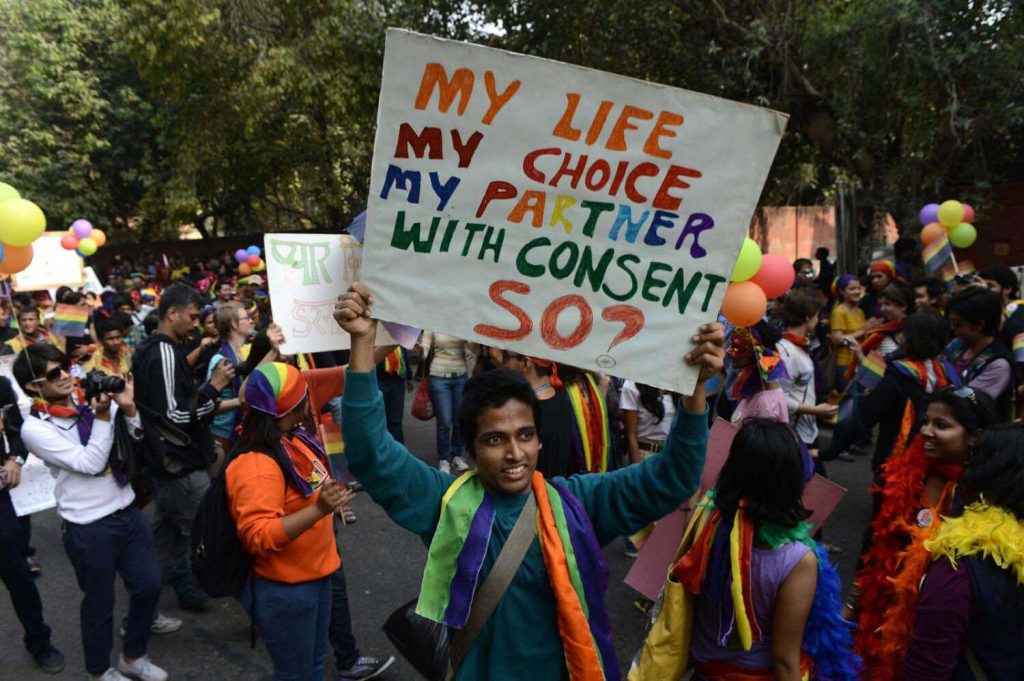
While many in India view the cause of the human rights of the LGBTQ+ community with sympathy and understanding, but a significant cisgender majority doesn’t. They can’t seem to accept and digest the fact that the LGBTQ+ community, which for centuries has been forced to live on the darker, outer fringes of society, is now standing up and demanding basic human rights. The right to love, the right to marry the person they love and the right to adopt children and complete their family. This fight for the fundamental human need for love and acceptance by a marginalized minority is being seen as chutzpah, impertinence, impudence and insolence by a predominantly cisgender society. Cisgenders are piqued by the courage and pride parades of those who till now were forced to live their lives in suffocating denial of their true selves and a significant majority feel the need to keep these “queers” in check because acceptance of diversity is not easy for everyone.
In fact, it is this fear of change, of altering the status quo that is preventing many nations in conservative Asia from allowing same-sex marriages.
Unfortunately, the brilliant work done by the Supreme Court of India through its historic 2014 verdict granting LGBTQI+ the right to employment and the 2018 judgment de-criminalised gay sex among consenting adults in private, is now being stymied by the Centre which seems to have drawn a line where same-sex marriages are concerned.
In a recent filing in the Supreme Court, the Central Government opposed recognising same-sex marriages and pleaded with the top court to nix pleas by gay couples and activists challenging the existing legal framework.
The Law Ministry argued in the top court that despite the fact that there are various kinds of relationships, legal recognition of marriage is for heterosexual relationships and “Living together as partners and having sexual relationship by same sex individuals … is not comparable with the Indian family unit concept of a husband, a wife and children.”
The court cannot be asked “to change the entire legislative policy of the country deeply embedded in religious and societal norms”, the Law Ministry said in its affidavit. The apex court has now referred the matter to a Constitution Bench of five judges that will hear it on April 18.
One just hopes that the verdict, in the end, comes in favour of same-sex couples, because we, as a nation, must move with the times. If we look around us, slowly and surely there is an increasing acceptance of gay unions globally and their right to live a normal, fulfilling family life with a person of their choice. So, why should gay couples in India be forced to lead lonely lives? Why should they be denied the right to live together in peace under the same roof with the person they love?
Marriage would give them the stability that every relationship requires and help them settle down when the right person comes along. They would be able to rent out homes with ease and inherit the property of their spouse, give approvals in case of medical emergencies, and lead fulfilling lives. They would be able to complete their families by adopting children. In short, the much-needed social sanction and mainstreaming of their relationships would take the stigma and trauma that they have to suffer at present because of our homophobic attitudes, away from their lives.
In its affidavit, the Government has expressed the fear that allowing gay marriages would somehow pose a threat to the “traditional concept of marriage” and goes against “prevailing social values.” According to legal experts, the apex court is clear that in this case the touchstone is constitutional morality, not popular morality and the Centre cannot deny LGBTQI+ their rights to equality and privacy just because this would challenge popular morality.
Even from a social aspect, how does it pose a threat to the “traditional concept of marriage” as your choice of a partner depends on your sexual orientation? Those who are not gay will not turn gay overnight just because the court has allowed same-sex marriages! In fact, it will liberate many gay people who are forced into suffocating marriages because their parents want to see them “settled.” If same-sex marriages are allowed, the parents of gay singles will see that there is social sanction and allow their children to marry a person of their choice instead of forcing them into an unhappy, lifelong union with someone they can never love. The Centre has also said that the Supreme Court cannot be asked “to change the entire legislative policy of the country deeply embedded in religious and societal norms.” But don’t people of different religions get married in our country? Don’t we have a Special Marriage Act for the same purpose? So, tomorrow will we stop all inter-religion marriages or decriminalize them because of our “deeply-embedded religious and societal norms” I think not! Why, because the fundamental rights of heterosexual couples cannot be denied because they are in a majority. But is it fair, that in this day and age, the rights of gay couples can be denied because they are a minuscule minority?
Plus, according to legal experts, same-sex marriages can be recognised under the Special Marriage Act as it already speaks of marriages between “any two persons” which are solemnized under it. Any two persons can also include two persons of the same sex.
Also, societal norms are always changing in an ever-changing world. Aren’t we the same country that has decriminalized adultery and also given legal protection to spouses in live-in relationships? We have also decriminalized gay sex among consenting adults in a private place, so why the hesitancy to give same-sex unions legitimacy?
As I had pointed out earlier in this very column, we Indians are very proud of our ‘sanskriti’ and ‘sanskars’, but why do we pick and choose which part of our ‘sanskriti’ and ‘sanskars’ do we want to be a part of? For all those pointing fingers at LGBTQ+, don’t the Vedas refer to a “third sex,” roughly defined as people for whom sex is not procreative, either through impotence or a lack of desire for the opposite sex? Members of the third sex are not ostracized in the ancient texts and are sometimes recognized for having divine powers or insights.
The world-renowned Kama Sutra, an ancient Indian text, states that same-sex experience is “to be engaged in and enjoyed for its own sake as one of the arts.” And Varuna and Mitra are famously referred to as the “same-sex couple” in the ancient Indian scripture of the Rig Veda.
There are many more such examples of the LGBTQ community being an acceptable part of our society in ancient India. They held their heads high then, so why not now? Are we to learn nothing from our glorious past, the golden India of yesteryears? Sometimes, it is good to go back to our roots and try and understand where we went astray.
Change is coming whether we like it or not. For one, the younger generation is more accepting of diversity than we ever were. Even in middle-aged educated Indians, there is more understanding and acceptance of people who do not conform to the mainstream way of living life.
Significantly and pointing towards increasing acceptance, a statutory body like the Delhi Commission For Protection of Child Rights has moved the Supreme Court in support of petitions seeking validation of same-sex marriages. Seeking intervention in the batch of petitions pending before the top court, the Delhi Commission For Protection of Child Rights (DCPCR) said multiple studies on same-sex parenting have demonstrated that same-sex couples can be good parents.
“The central and state governments should take steps to create public awareness that same-sex family units are as ‘normal’ as heterosexual family units, and specifically that children belonging to the former are not ‘incomplete’ in any way,” the plea said. Referring to examples of countries that have legalised same-sex marriages, the Commission said at present, more than 50 countries allow same-sex couples to legally adopt children. “It is respectfully submitted that legislation ought to keep pace with social evolution and the evolution of legal principles. We cannot become frozen in time, nor can we allow mere vocabulary of existing legislation to hinder the realisation of fundamental rights. Legislation is not an end but a means towards achievement of human and fundamental rights,” the plea said.
Even an apex body of psychiatrists in India, Indian Psychiatric Society (IPS) has come out in favour of same-sex marriages and stated that “members of the LGBTQ+ community should be treated like all citizens of the country and have access to marriage, adoption, education, employment, property rights and healthcare.” “There is no evidence to indicate that the lesbian, gay, bisexual, transgender, queer and asexual (LGBTQA) individuals cannot partake any of the above, and discrimination which prevents the above may lead to mental health issues,” the Gurugram-headquartered organization said in a recent statement.
Surely, these are steps in the right direction and towards inclusivity. The majority heterosexual samaj shouldn’t feel threatened by the aspirations of a minuscule gay minority to get legal sanction for their love, even if the majority doesn’t understand it. The LGBTQ+ community has woken up to its rights and will not be silenced or denied anymore. They will keep on fighting for their right to love, marry and adopt children. Let not history remember us as that generation that was not inclusive enough to embrace diversity. Let us not be afraid of love, heterosexual or gay. Let’s give our ashirwad to same-sex marriages.
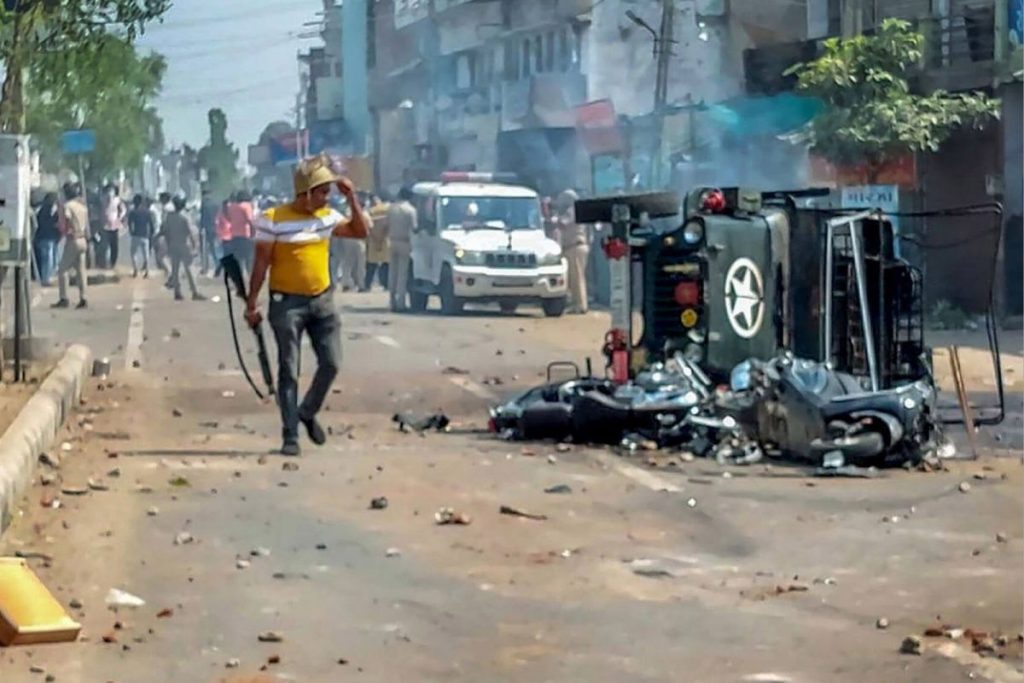
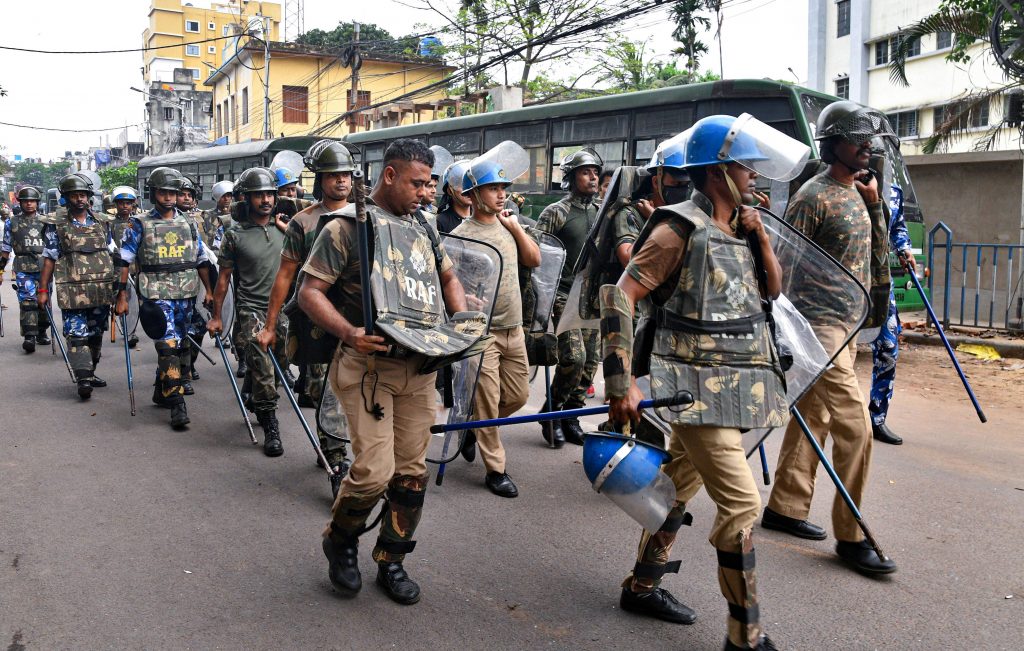
Communal clashes occurred in more than 10 states across the country during Ramanavami festivities that were marred by provocative hate speeches. The common thread running through most of these incidents was the sensitive route chosen for procession, writes Mudit Mathur
Is India heading for planned conspiracy inciting religious clashes in the different states for the sake of pity interests of divisive politics in the run-up to the 2024 Lok Sabha elections? The question assumes significance in wake of recent communal clashes which erupted in many states during Ramanavami festivities and in pursuit of saffron agenda of religious polarisation. The country appears more divided than ever along Hindu-Muslim lines – and for many, Modi’s BJP is to blame for the mailaise.
Reports of communal violence appeared from West Bengal, Bihar, Jharkhand, Maharashtra, Telangana, Chhattisgarh, Gujarat, Jammu and Kashmir, Madhya Pradesh, Karnataka and Uttar Pradesh during Ramanavami and Hanuman Jayanti celebrations that mar with provocative hate speeches. Many feel that religious festivals like Ramanavami, Ganesh Chaturthi and the recently added Hanuman Jayanti are all being weaponised to target minorities and create communal disharmony and religious divide.
It was a virtual repeat of the communal clashes that had scorched Delhi’s Jahangirpuri and Madhya Pradesh’s Khargone amid Ramanavami and Hanuman Jayanti festivities in April last year (2022). It seems that no lessons have been learnt from those deplorable incidents. This year too, the Ramanavami festival occurred during the period of Ramzan and provided the backdrop for provocations in sensitive areas where Muslims were observing Ramzan and prayers in the mosques.
Most of these incidents were reported during such processions carried out by different groups of saffron brigade like the Rashtriya Swayamsevak Sangh, Vishwa Hindu Parishad and Bajrang Dal. Viral videos depict saffron-clad persons carrying weapons including swords and even guns taking part in Ramanavami processions. One of the videos that went viral on social media showed a man carrying a gun during a Ramanavami rally in Howrah who was later arrested from Bihar after his involvement came to light.
During these 10 days,Hindus celebrate Ramanavami and Hanuman Jayanti, Muslims keep fast as a part of the Ramazan month and Christians complete Lent that culminates in Good Friday and Easter depicting plurality of our multi ethnic nation.
Home Minister Amit Shah visited parts of Bihar that have been rocked by violence since Ramanavami and discussed the situation with the Governor V Arlekar. The anguish was more than palpable when he voiced his exasperation and remarked that “both Bihar sharif and Sasaram are burning and Nitish Kumar is helpless. He has lost control over administration”.
Tearing into the Mahagathbandhan government in Bihar for “failing to check” communal violence, Shah asserted that rioters will be hung upside down if the BJP forms the government in the state in 2025. The chief minister has failed in controlling the riots, Shah charged and said Nitish was being controlled by Lalu’s men. Jungle Raj had returned to Bihar, he remarked.
Bihar CM Nitish Kumar on Wednesday (April 5) rejected the BJP and AIMIM’s allegations of administrative lapses in the recent communal riots at Bihar Sharif and Sasaram towns during the Ramanavami processions and said the communal disturbances at both the places were carefully orchestrated by “some people.”But all administrative officers did a good job and successfully controlled it.
CPI(ML) secretary general Dipankar Bhattacharyareferred to Shah’s speech at Nawada wherein the Union home minister “brazenly called for a mandate for the BJP within hours of communal violence, thereby betraying their electoral game plan”. It may be mentioned that the Left supports the Bihar government from outside. In a meeting with the chief minister, Nitish Kumar, he alleged that the recent communal riots in the state “exposed” the BJP’s “electoral game plan.” Dipankar also expressed anguish that during the riots in Bihar Sharif, a 100-year-old madrassa and a library attached to it were gutted.
“There is no problem in Bihar now. Whatever the Deputy CM has said is right. There are some undesirable elements in Bihar that create such riots in the state. In recent days, there were some disturbances but the state Government controlled the situation within eight hours. Even when Nitish Kumar was in alliance with NDA, he jailed the son of a union minister as he tried to create communal disturbance in Bhagalpur,” said Janata Dal (United) President Lalan Singh while reacting the allegations of Bharatiya Janata Party on the law-and-order situation of Bihar.
“They try creating communal riots in the state but Nitish Kumar does not compromise with the peace, law and order of the state,” he added. He blamed the BJP for creating communal riots in Bihar.
Hooghly and Howrah in West Bengal; Lakhisarai, Nalanda and Kishanganj in Bihar; Dhanbad in Jharkhand; Aurangabad and Malad in Maharashtra; Khandwa and Khargone in Madhya Pradesh; Balidih and Vadodara (multiple incidents) in Gujarat; Mathura in Uttar Pradesh; Jammu City in Jammu and Kashmir; Hyderabad in Telangana.
Clashes broke out between two groups during a Ramanavami procession in West Bengal’s Hooghly district on 2nd April evening and spread to some parts of neighbouring Howrah district. Over 45 people were arrested, prohibitory orders were imposed and internet was suspended to bring the situation under control.
The procession was taken out two days after the Ramanavami, led by BJP vice-president Dilip Ghosh when the incident happened on GT Road under Rishra police station area. BJP MLA Biman Ghosh was injured in stone pelting and rushed to a hospital. Ghosh said,”There were many women and children in the procession who were walking with saffron flags in their hands. Suddenly, stones were hurled at us from one side of the road. Several policemen were also injured in the stone-pelting even though I and some other leaders were rescued and taken out of the area through adjacent lanes,” he claimed.
Earlier, West Bengal chief minister Mamata Banerjee on the eve of Ramanavami said, “We will not stop any Ramanavami procession. But remember, Ramazan is on…. Everybody has the right to bring out processions or conduct rallies. Nobody has the right to instigate riots.”
The ruling TMC questioned what was the need to organise the procession two days after Ramanavami. “Why are they so bent to take out Ramanavami processions during the holy month of Ramzan? Why the Ramanavami rally was taken out two days later? The BJP wants to engineer riots in Bengal to create instability for political gains,” TMC spokesperson Joyprakash Majumdar alleged. Majumdar also claimed that those in the rally were carrying weapons such as swords, which created panic among the people.
In Jharkhand, incidents of violence during Ramanavami processions were reported from at least three districts amid concerns over the increasing weaponization of religious festivals. Three key incidents of communal unrest took place across Jharkhand in Sahibganj, Hazaribagh, and East Singbhum.
Sahibganj witnessed violence on April 1 during the procession in Kihripara area of the city where two communities clashed during idol immersion. Both the sides threw stones and vandalised many vehicles and shops. Internet services were suspended on April 3 after a Hanuman idol was allegedly vandalised near the Patel Chowk police station of the city. Currently, the situation is tense but under control amid heavy police deployment in the area. The police have filed FIRs against 25-30 people, which included accused persons from both communities.
The second incident is linked to the Indrapuri mosque in Hazaribagh town. A video that ostensibly shows the mosque being vandalised has gone viral, in which people from the Ramanavami procession can be seen breaking down the mosque’s gate.“ The video that went viral feature our Indrapuri mosque. It was around 4.45 am on April 1 when around 300 people in the Ramanavami procession came raising slogans and broke the gate and glasses of the mosque. Stones were hurled. This happened in the presence of nine magistrate-level officers. We have filed a police complaint,” alleged the mosque committee president Zafarullah Sadiq.
The Hazaribagh Ramanavami Mahasamiti (organizing committee) president Kunal Yadav condemned the incident, and said “See, some of the akharas of the procession take this route, but there had never been an altercation earlier. This was a first. We have told the administration to punish those found guilty. There were some anti-social elements in the procession who carried out this mischief, to vitiate the atmosphere. I believe that nobody’s religious sentiments should be hurt.”
The third incident pertains to the Haldipokhar village of the Potka block in the East Singhbhum district. “The Ramanavami procession passed next to a mosque which was not on the official route sanctioned by the administration. The police and a part of the procession were trying to prevent people from taking the mosque route, but another group diverted the procession by force and indulged in provocative sloganeering. This led to a counter-protest from the mosque side, and some stones were pelted. Then, stones were hurled by both the sides. The police have now brought the situation under control,” said District SSP Prabhat Kumar.
In Gujarat, similar clashes were witnessed in Vadodara wherein stones were hurled at two Ramanavami processions on Thursday (April 6th) wherein some persons were injured in one of the incident. According to reports, stones were thrown at mosques and houses of Muslims. While the first incident took place near Panjrigar mohalla in the Fatehpura area in the afternoon, the second incident took place in nearby Kumbharwada in the evening. The procession that came under attack in Panjrigar mohalla had been organised by VHP.
The town of Una in Gujarat’s Gir Somnath district was gripped by communal tension after an alleged hate speech against a minority community by a Hindu social and political activist Kajal Hindustani at a Ramanavami event on Thursday (April 1st). After 10 days on Monday (10 April), the right-wing activist Kajal, was sent to 14-day judicial custody after her arrest in the case of alleged “hate speech”.
In Maharashtra on the eve of Ramanavami, in Kiradpura area of Chhatrapati Sambhajinagar (erstwhile Aurangabad), a mob of 500-600 people allegedly threw stones at police personnel near a prominent Ram temple. The violence left at least 10 of them injured, while 13 police vehicles were also torched. In retaliation, the police used tear gas and plastic bullets. In Mumbai’s Malad region, Muslims and Hindus clashed during a Ramanavami procession after some of them objected to loud music being played on speakers.
Hyderabad in Telangana witnessed a suspended BJP leader T Raja Singh making a derogatory speech during a Ramanavami procession. The city police have registered a case against him for the same. Making calls for an “Akhand Hindu Rashtra”, he addressed the gathering saying that when a “Hindu Rashtra” is formed, no more cows will die and the “jihadis” will be removed from India. He further said, “In our Hindu Rashtra, only those people who say ‘hum do, hamare do’ will be given the right to vote.” Videos also showed the people at the rally waving portraits of Nathuram Godse, the assassin of Mahatma Gandhi.
In Chhattisgarh, communal violence erupted after a fight between some school children in a small town Biranpur of Bemetara district having a population of around 1,300. A youth, Bhuvneshwar Sahu (23) of the village was killed while three policemen suffered injuries in the reactionary violence. The local administration imposed section 144 of the CrPC, which bars assembly of four or more people, in the area.
Communal tension further flared up after Vishwa Hindu Parishad (VHP) called for a state-wide bandh on 11 April in Chhattisgarh. All roads leading to the Biranpur village have been barricaded by the police. Chief Minister Bhupesh Baghel appealed to people to maintain peace. The opposition Bharatiya Janata Party (BJP) and the kin of the deceased, Ishwar Sahu blamed the police for the incident. Police arrested 11 people so far in this connection after registering cross FIRs of the parties.
In Karnataka, a Muslim cattle trader was beaten to death allegedly by cow vigilantes in BJP-ruled state. The ghastly incident took place weeks after a state minister described the May 10 Assembly elections as a “battle between cow protectors and cow slaughterers”. Idrees Pasha, 38, was on Saturday (April 1st) morning was found dead on a roadside in Sathanur village of Ramanagara district, about 150km from Bangalore, local police said.
The police, which have registered a murder case, said a group of five vigilantes had allegedly stopped Pasha’s cattle-laden truck in Sathanur on 31 March night and assaulted its three occupants. Syed Zaheer, one of Pasha’s two companions who survived the alleged attack, said the vigilantes refused to let the truck go even after Pasha told them he had papers to prove he had bought the animals at a cattle market. He said the assailants asked the trio to “go to Pakistan”.
Zaheer has in the FIR named the leader of the attackers as Puneet Kerehalli, a well-known local cow vigilante, police sources said. Later, a state police team arrested Puneeth Kerehalli, the group’s leader, along with his accomplices Gopi, Pawan Kumar, Suresh and PillingaAmbigar, from Banswara in Rajasthan.
Accused Puneeth Kerehalli, head of the Rashtra Rakshana Pade (Nation Protection Army), and a well-known cow vigilante, with Jnanendra having close links with BJP national general secretary C.T. Ravi, Lok Sabha member and BJP youth icon Tejasvi Surya, state energy minister V. Sunil Kumar, Lok Sabha member Pratap Simha and some other party functionaries.
In Uttar Pradesh, a clash erupted between two groups following a spat during a Ram Navami Shobha Yatra taken out near Shahi Masjid in Madiyav village under Jankipuram police station in Lucknow. The fight involved stone throwing and physical assault, sources said. An argument ensued between two groups after a man, identified as Sumit, along with 10-15 other people, played music on a DJ while passing by a mosque, which was objected to by another group.
Mathura district of Uttar Pradesh, the birth place of Lord Krishna, also saw aggressive postures of saffron supporters during Ramanavami. A few young men climbed atop the roofs of the shops around the Mathura’s Jama Masjid and placed saffron flags on them. This incident caused communal tension among the people of Hindu and Muslim communities. One the basis of viral CCTV footage, the police arrested four people in connection with the incident that took place in Uttar Pradesh’s Braj region during a Ram Navami procession at Chowk Bazaar in Mathura.
Rajya Sabha MP Kapil Sibal termed “another jumla” the Home Minister, Amit Shah’s remarks that riots don’t take place under the BJP rule, and cited the number of instances of communal violence under a BJP government at the Centre and in some states. Sibal said, “Amit Shah: ‘Riots don’t take place under our rule.’ Yet another jumla (rhetoric).” The former union minister said, “5415 communal riots were reported between 2014-2020 (NCRB data). In 2019 alone – 25 communal riots UP (9), Maharashtra (4), MP (2). Communal violence: Haryana (2021) highest cases, Gujarat, Madhya Pradesh (April 2022)”.
In the wake of communal violence in West Bengal and Bihar, Sibal questioned the “silence” of Prime Minister Modi over the matter, and said, “Let not 2024 general elections be the reason” for the violence.
Shiv Sena (UBT) MP Sanjay Raut has accused the Bharatiya Janata Party of a conspiracy to incite riots all over India in the run-up to the 2024 Lok Sabha elections for its political interests.
Hindutva brigades have burnt down Madrasa Azizia in Bihar Sharif – the oldest Madrasa in that region, housing thousands of books, which were burnt in a blatantly targeted attack
Mosques and mosque-goers getting attacked. Perhaps, never before in the recent history of our country, this level of communal barbarism has been witnessed as is being witnessed today.
News reports just coming in more than relay that. Tension hit Haryana’s Sandal Kalan village in district Sonepat after a group of 15-20 armed men vandalised a mosque and attacked people offering namaz inside the premises of that mosque, injuring several namazis.
The list of such blatantly communal attacks taking place in today’s ‘developed’ times is long. Last week, in Uttarakhand’s Haldwani, namazis and also the Imam of a mosque were attacked by Hindutva goons.
And just days before that, on 31 March, Hindutva brigades burnt down Madrasa Azizia in Bihar Sharif – the oldest Madrasa in that region, housing thousands of books, which were burnt in that blatantly targeted attack on that Madrasa. It is estimated that more than 4,500 books housed in that Madrasa library were burnt and ruined and destroyed, with the Hindutva mob throwing petrol bombs right into the Madrasa – mosque- library. Nah, the State couldn’t protect priceless books housed in the 110-year old Madrasa library.
Strangely twisted dark times are these. Yes, fascism is here .Today, to pray is considered a serious crime! Even in this ongoing month of Ramazan, the worshippers are getting targeted! I’m not talking of praying in the open spaces, the so-called allotted open spaces or along the roads, but even inside the interiors of the age-old mosques.
In these ruthless – barbaric times, I have been reciting this verse of Akbar Hussain Akbar Allahabadi (1846-1921):
‘My rivals have lodged complaints against me in police stations for the crime
That Akbar continues to take the name of God in the present age and time.’
Hate-dripping terms
Sinking we are to such pathetic lows that instead of focusing on the environmental and human disasters taking place to such an extent that entire settlements are in danger of sinking, we are getting provoked to kill each other along the Hindu-Muslim format!
After the beef alibi, the next in line alibi is the so-called ‘Love Jihad’. How I detest this term as it reeks of utter communal nonsense and makes little sense along the religious or social or emotional strain. Simply speaking it is a Muslim man falling in love with a Hindu woman …love stretching on to living together and still further towards marriage. What’s so utterly astonishing about this? Love between men and women from different communities and creeds is bound to happen. Happens all over the world. Fall-outs can also happen. Why drag religion into the mess?
Nah, no religion, for that matter no religious speech or scripture, sanctions force or coercion to convert or to change from this to that. Love and marriage are entirely personal choices between two consenting adults. Why label it along the blatantly communal term — Love Jihad! In fact, the broader and factual term for Jihad stands for curbing or controlling or fighting one’s own weaknesses, to emerge as a better or finer human being.
Don’t know when will the hate speeches and hate-dripping provocative terms get curbed! Shockingly, every single day a new voice emerges from the Right-Wing quarters, reeking of communal hatred and bias. Quite obviously, these communal voices do seem to carry the backing of entire brigades and beyond!
It is getting just too dangerous. If these voices are not curbed, then one can well imagine how the poison will infiltrate in that unstoppable way. Hitting the souls if not the physical forms of so many innocents.
Why this spread of communal madness when we share a common cultural heritage or call it legacy? Let me recount this particular incident to relay what I’m trying to say … I’m not getting philosophical but realistic. Professor Kunwar Rifaqat Ali Khan, who taught history at the Jamia Millia Islamia, told me that post-Babri Masjid destruction, whilst riots were peaking in Mumbai, he had to travel by train from Mumbai to New Delhi. Insecurity hit him to such an extent that he removed all signs of his Muslim identity from the suitcase and bags on him. And then, in that state of insecurity, he sat on the top most tier, only to hear a co-passenger talk about obnoxious communal stuff. Rifaqat told me that he had no choice but sit perched up there, all too quiet, and hear all that anti-Muslim tirade. After all, who would be there to save him if flung right out from the running train! “That fellow continued coming out with communal comments but I couldn’t react, even when he uttered words along the strain, ‘Muslims and Christians ought to be killed! They should be finished. Weeding of Muslims and Christians necessary, only then this country will be okay.’ He just wouldn’t stop, till about the time the train reached the Ajmer railway station. And then all too suddenly announced to the passengers sitting around him, that he had decided to get off at that station, to pay his respects at the Ajmer situated dargah of Khwaja Moinuddin Chishti!”
Mind you, a dargah where there’s never been any discrimination along religious or regional formats, so much so that several shops leading to the dargah are said to be manned by Hindu refugee families.
There could be hundreds of such places where persons from different faiths gather. What’s worrying is the fact that there is rapid shrinkage of such spaces, with communal surcharged brigades getting unleashed all over.
Stray dog menace
Must watch journalist-commentator Arvind Kala’s video focusing on human forms getting mauled!
Viewed and re-viewed journalist-commentator Arvind Kala’s video ( he posts on You-Tube too) which raises some disturbing questions about stray dogs mauling us, the human beings. He gives this alarming figure: almost 54 Indians die every single day because of stray dogs!
Stray dogs attacking, biting, mauling, yet the establishment seemingly doing very little to control the havoc. Tell me, why should I get bitten and attacked by stray dogs on the roads and lanes and around parks? Why should I end up dying of rabies? Why should I be left at the mercy of strays? Why is it getting just too risky to walk down the footpath, as chances of stray dogs attacking hold out?
Though stray dog menace is in all cities and towns and kasbahs of the country but probably the worst affected is the Kashmir Valley. About four years back when I was completing my latest book on the Kashmir Valley, Kashmir The Unending Tragedy, Reports from The Front Lines, focusing on the ground realities in the Valley, I did make it a point to focus on this aspect too. I’d also quoted from the findings of three medicos of the Valley – Dr Ovais Habib, Dr Adil Hafeez and Dr MA Darzi – who had conducted a study and raised some level of awareness regarding dog bite incidents in and around the region.
This is what I wrote: It gets difficult to walk on the streets of Srinagar because of the stray dogs around. It’s a worrying factor, definitely for pedestrians and also for school going children, as they are attacked and bitten on their way to bus stops or whilst walking down to their schools. In fact, the dog concentration is noticeable close to the bunkers of the security forces. To the ‘why’ there is this explanation put forth by the local Kashmiris, “The security fellows feed these stray dogs and that’s why they are not moving from here …in fact, this (stray dogs) nuisance reminds us of the Israeli strategy of unleashing dogs on the Palestinians! “Terrorizing tactic” imported from Israel!’ …The political rulers and administrators seem least bothered. They move about in their big-bodied vehicles, far away from havoc on the streets and roads. I’m not too sure whether they are even aware of the extent of the injuries caused by dog bites and the connected aftermath.”