Sunday, December 28, 2025

Punjabi diaspora makes a mark in UK, Canada and beyond

The grandparents of Rishi and Humza had migrated from their homeland, just a few decades ago. So, the duo seems to aware of the ordeals of the partition. Therefore, they are using their respective positions for retaining the unity of Britain

The British imperialists had arrived through the sea-coast and later expanded their territories in the rest of India. It, perhaps, was for the first time that the invader had chosen the sea-route to subjugate India instead of coming via the traditional Khyber Pass in the north.

The British had established their capital in Kolkata, but the colonial rulers, asserting themselves under the banner of the East India Company (EIC), did not lower their vigil regarding the northern borders. They did not commit atrocities like other invaders from the north, but subjugated the people of the Indian sub-continent for financial gains, and the Punjab was to be focused for strategic purposes.

Rishi Sunak

The EIC deliberately penetrated in the social and religious affairs of the vast Indian lands for ensuring financial gains, and for this they introduced westernized administrative and military systems. During the interregnum between the final assertions of the British power in Delhi during the 19th century, the Punjab had enjoyed better governance than the rest of India. The idealism of Sikhism had strengthened the mosaic of the social and religious fibre of the people irrespective of their personal faith, whether they adhered to the traditional Hinduism or Islam. During the reign of Maharaja Ranjit Singh, the Punjabis had further developed liberal world-view irrespective of their faith.

Interestingly, this liberal attitude has survived in spite of India’s two centuries of tumultuous history and her unnatural partition on religious lines. It is reflected in the recent policies of the prime ministers of the U.K. and Scotland. They hail from Punjab, they follow different religions, yet they are for keeping the U.K. united. They have become the symbol of British unity, protecting the fragile future of the United Kingdom (UK) comprising England, Scotland, Wales and Ireland. The unity of the erstwhile colonial power is in the hands of the two prominent British leaders of Indian origin, PM Rishi Sunak, and the new PM of Scotland Humza Yousaf, who belong to the Punjab, now a part of Pakistan. Humza took over as the new Scotland PM recently on March 29 this year.

The grandparents of Rishi and Humza had migrated out from their homeland, just a few decades ago. They appear to be quite aware of the ordeals of the partition. Therefore, it is not surprising that they are using their respective positions for retaining the unity of Britain, perhaps, condoning its erstwhile rulers for partitioning their home land, India, in 1947.

History’s Sweet Revenge

History has its own ways to settle scores with the repressive regimes, sometimes taking sweet revenges. During the mid-forties of the 20th century, the British, the outgoing colonial power from India, was busy in carving out the partition of the country for serving their future strategic interests, especially during the post-WWII years, in the region. Its policy had nearly decimated the Punjab and its plural cultural traditions, when its people indulged in unprecedented fratricide in the name of religion, but its soul and the spirit of surviving against all possible odds could not be crushed. Its rise is phenomenal like a Sphinx. In Egyptian mythology, the sphinx is typically depicted as a man with the lion’s body and being depicted as benevolent. It is reflected in the attitude of the two leaders, who do not want to be vindictive, are keen to save the U.K. from fragmentation.

It may be noted that Humza Haroon Yousaf’s father Mian Muzaffar was born in Mian Channu. Similarly, Rishi Sunak’s grandparents came from Gujranwala. These areas are now in Pakistan, and the distance between them is estimated to be just 258 kilometres.

During the tumultuous months of 1946-47, Hindu-Muslim riots were engineered across Northern India, ultimately forcing the Congress Party under Nehru, Gandhi and Patel to concede Pakistan. Amidst the depressing violence, India’s first PM, Jawaharlal Nehru, told the nation on the midnight of August 14-15, 1947 that after centuries of repression, a new India now begins her journey as a new nation with an ancient glorious past , thus indeed a ‘tryst with destiny’ had begun 75 years ago.

Indians in US Politics

It is believed that if Nikki Haley does not get the Republican nomination for the presidency in 2024, she, like the present US vice-president, Kamala Devi Harris, might be chosen as the vice-president, if a Republican is chosen as the new president. Since the former US president, Donald Trump has been indicted, and if he could not get himself cleared from the criminal charges before the New York court, Nikki might get the nomination for the top post, a first Indian-American, to contest, or perhaps lead the world’s most powerful political position.
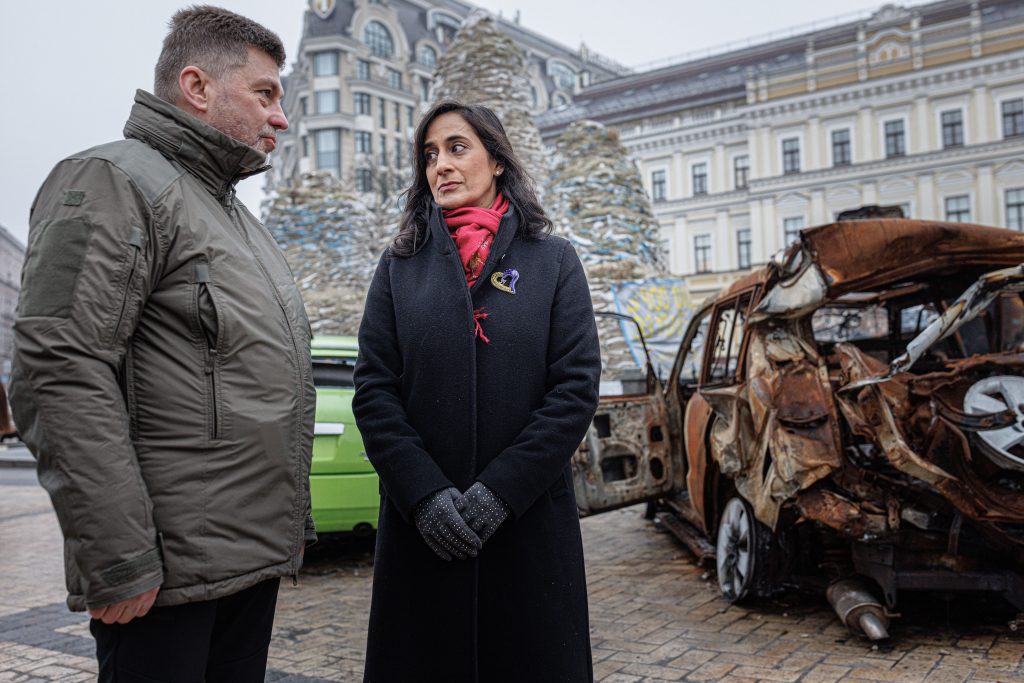
Anita Anand in Kyiv

The Indians, especially a large number of Punjabis, occupy key positions in the White House or at the Capitol and even in top American companies; irrespective which party wins the polls. President Joe Biden has appointed Ajay Banga to preside over the World Bank. Most of us are already aware of the big names in the corporate world such as Jatya Nandella, Sundar Pichai, and many known and not so known successful Indians in the corporate, Information Technology and now even in public affairs.

Interestingly, the Indians enjoy rare confidence of the American political establishment. Aparna Mathur, an economic adviser to the White House during the Trump administration was asked by President Joe Biden to continue as long as she wishes to be with the new administration. She served under the new administration before joining Harvard University as a professor.        

The incumbent Kama Devi Haris has become a living legend as the first woman vice-president, and thus holding the highest-ranking female official in US history. She also represents a complex racial cocktail; she is not only the first African-American, her father being a Jamaican, she is also the first Asian-American as her mother had hailed from India. Yet, she reaches the pinnacle of the power structure in a country, where racial discrimination often flares up. Earlier, as a member of the ruling Democratic Party, she had successfully represented California in the US Senate during 2017-2021.

With their phenomenal success and recognition of their talent, it is not surprising that another Indian woman, Nikki Haley, daughter of a couple from Amritsar, Punjab, Ajit Singh Randhawa, an agriculture scientist, and Raj Kaur, a law graduate from the Delhi University, has announced to contest the 2024 Presidential poll as a Republican. The decision of Nimrat Nikki Randhawa, popularly known as Nikki Haley, shows the dynamism of the Indians, especially Punjabis, across the Atlantic. Her intention to contest the 2024 US Presidential Poll did not surprise anyone in US politics. She had already served as the youngest governor of the South Carolina state and also the first woman to adore the high office. During the tenure of President Donald Trump, she also served as the US ambassador to the United Nations.

The story of Rohit Khanna, 47, born to Punjabi parents, father an IITian and mother a school teacher, is now one of the new generation Democratic Party leaders. He is among the few progressive capitalists among the six members of the House of Representatives, who do not accept political donations from corporate or the Political Action Committee. Before being elected to the House of Representatives from California, he had also served in the Obama administration as the deputy assistant secretary, Commerce. His family is also closely related to India’s freedom movement. His maternal grandfather, Amarnath Vidyalankar, was from the Bhera city of Sargodha district of Punjab, now in Pakistan, and was a close associate of Lala Lajpat Rai.

Anita Anand visits Ukraine

Canada’s Defence Minister Anita Anand, a daring charming woman at 56 and the daughter of an Indian couple, mother, Saroj, an anaesthesiologist from Punjab, and father a surgeon from Tamil Nadu, visited Kyiv, Ukraine, amidst the deadly missile attacks and gun fires on January 18 this year. Her daring act reinvigorates the war efforts of this war-torn country. Her visit was the part of the additional 500 million dollar military aid committed to Ukraine. A Ukrainian couple, who is serving as a faculty in India, recently confided to this author that Indian women are really daring. The myth of European superiority appears to have been on decline, if not totally wiped out. 

Eight years ago in the 2015 elections in Canada, Indian Canadians won a record nineteen seats in Parliament. It was double the number of seats that they had held in the previous House. Of the nineteen members of parliament, eighteen members trace their origins to the state of Punjab in India.

Some of the prominent Indian origin members of parliament as well as the cabinet are Harjit Sajjan, who had held the defence portfolio, Amarjeet Sohi, Minister of Infrastructure and Communities, Navdeep Bains, Minister for Innovation, Science and Economic Development, and Bardish Chagger, Minister of Small Business and Tourism. 

Punjab – the gateway to India

The Punjab being the gateway to India, had been protecting India, the most prosperous nation of the world for centuries, but it has had the history of prolonged sufferings. Being the frontline border region, it had been facing aggressions since the invasion of Alexander. The last assault on its vibrant people came from the outgoing British imperialists in 1947, when the colonial power got it partitioned in the name of the religion. The traditional Sanatan Dharma, Sikhism, Islam and Sufi cults had formed a strong mosaic of the culture of Punjab.

During WWI and WWII, the colonial power had used the brave people of the region as the cannon fodder, and before leaving India, it unleashed the communal virus, basically aimed at destroying India, but severely hurting the culture and language of the people of the Punjab. Nearly a century before the partition in 1947, according to the British archives, the British proxies were bribing the Muslim clergies to spread communal violence by speaking against Hindus, Sikhs and Russians during the Friday sermons in each mosque. Yet these efforts could not really fragment the well-knit social fabric of the region.

There were few takers for Pakistan during 1940s, but in a bid to support, its crony, Muhammad Ali Jinnah, for partitioning India, the British had hired paid goons and clergies from the Hindi heartland for convincing the predominant Muslim population of the Punjab and Pakhtoons to support a separate homeland for the Muslims. The colonial power also bribed the Communist Party of India (CPI) for obtaining its support for Pakistan. The CPI was so loyal to the British deep state, MI-5, that it called Mahatma Gandhi and Jawaharlal Nehru as reactionaries and Jinnah a progressive leader.

India was partitioned, but in the Pakistani Punjab, the Islamic zealots from UP, who had been on the forefront for the creation of Pakistan, successfully wiped out the Punjabi language. In the Punjab provincial assembly, if any member ever dared to speak in Punjabi, the speaker would be fined for using the language of Hindus i.e. Punjabi! The same restrictions were imposed on its Bengali population, but they refused to succumb to this pressure in the name of Islam and seceded as Bangladesh in 1971.

Ecotourism to Tadoba’s aid

To prevent accidental tiger attacks and stop the dependency of locals entirely on the forest, ecotourism was started in the Tadoba-Andhari Tiger Reserve. Today locals are reaping the benefits of the initiative, writes Deepanwita Gita Niyogi

The Tadoba-Andhari Tiger Reserve spanning 622.87 sq km was established in 1993 in Chandrapur district of Maharashtra. This critical central Indian landscape has humans and tigers living together. For many years, it was a peaceful coexistence as the local Gond Adivasis revere the tiger.

In 2006, however, the scenario changed. There was a spate of tiger attacks leading to 60 deaths in three years. This was due to tigers straying outside the core area of the reserve. The attacks happened in the buffer zone having about 80 villages as well as in the wildlife corridors when communities entered forest to answer nature’s call, graze cattle, collect firewood and guard crops.

“The mortality rate of tigers declined due to good protection. With more tigers, there was more dispersal in the buffer area. But as the buffer zone and wildlife corridors are human-dominated, accidental attacks happened,” said Poonam Dhanwatey from TRACT, a non-profit.

To prevent encounters and stop the dependency of locals entirely on the forest, ecotourism was started. Today locals are benefiting from it. Tadoba, which has 80 tigers inside the reserve and 200 in the larger landscape, generates one of the highest revenues for any tiger reserve in India.

Benefitting from tiger tourism

Pramod Bhoyar owns a resort in the buffer area of Tadoba.  Bhoyar has been running the place, Vasundhara Retreat, for eight years where the rates are Rs 6500, including meals. Besides regular safaris, there is kayaking, boating and nature walks for tourists.

Kushagra Pathak, deputy director of Tadoba Andhari Tiger Reserve, buffer zone, explained that the idea behind ecotourism was to protect the forest from poaching and illegal tree felling. “Locals should feel that they belong to Tadoba. So, it is in their interest to ensure that there is no forest fire as they derive economic benefits from it.”

To ensure that people living in the villages of the buffer are not left behind, skill development training was arranged to generate employment. Locals were trained in repairing home appliances. Many people joined as gypsy drivers, trained as tourist guides and learnt how to make bamboo items.

In association with the forest department, TRACT also supported the implementation of eco-tourism in Tadoba. “As the buffer zone has good tiger sightings, a proposal was made that tourism can help secure the area. We have 16 buffer zones and each provides employment benefits. The buffer is spread over 1130 sq km,” Dhanwatey added.

Along with men, women too are deriving benefits. Sapna Sagore, a resident of a village in the buffer area, received sewing machine training for six months in 2019. Today, many women like her work from home.

Women have been trained in ‘agarbatti’ making also. Puja Vinod Yedme from Agarzari village was trained in 2020 for two months. But after she got her last payment of Rs 6000 in December last there has been a lull in the initiative. Yedme hoped it would resume soon.

“Those who attended the training were taught how to make powder and the bamboo sticks. Earlier, the forest department sold the products on our behalf but then the tender was given to outsiders. About 15 women used to make agarbattis,”she said.

Conservation measures

As no other industry is permitted inside the buffer which has farms, forests, animals and resorts, eco-tourism is the only way to ensure people’s participation in conservation.

This was not difficult as traditionally the Gonds being animists worship the tiger. There are tiger statues and rituals take place around them. There is a belief that if the animal is appeased, no harm will come to the people.

Apart from ecotourism offering locals job opportunities, there has been a social revolution through Dr Shyama Prasad Mukherjee’s Jan Van VikasYojana.  After it was approved, subsidised LPG cylinders, toilets and solar lights were introduced in the villages.

But though forest dependency has reduced to a great extent, firewood is still used for heating water. It is difficult to totally wipe out dependency on firewood even though going to the forest is not easy for people. Apart from threats due to an increased number of tigers, there are snakes and the intense summer heat to account for.

Guide Devidas Mahadeo Mangam was happy to learn about the flora and fauna of the reserve as part of training. Initially, a daily wager, he has been working in Tadoba for a decade now. “As the number of tigers has increased, the number of people from the villages going to the forest has reduced or else they go in groups. But as they derive benefits from tourism, dependency on forest has reduced by up to 70 percent,” Mangam said.

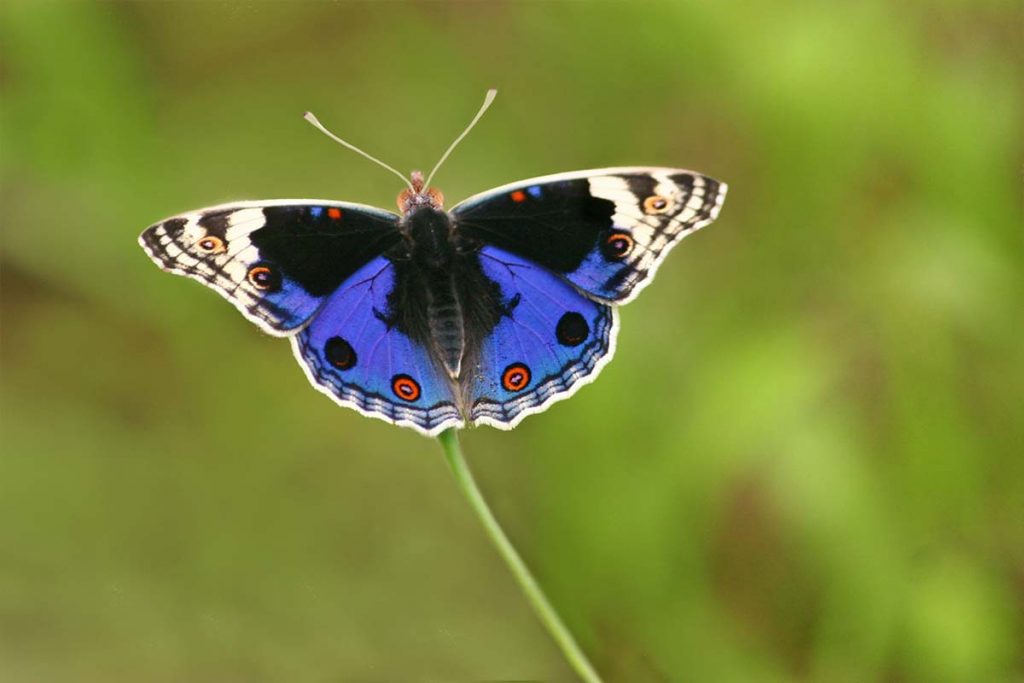
His colleague SubhashYedme pointed out that sometimes women still go for firewood as many cannot afford gas cylinders. Yedme is from Agarzari village, famous for its butterfly garden.

Earlier many people used to go to the Chandrapur power station for work. But with ecotourism peaking, the buffer area remains open even during the monsoon to cater to jungle lovers. To manage tourists, the guides receive training from time to time for 15-20 days. Yedme, who shows visitors the beautiful backwaters of the Irai dam, confessed that though he knew a lot about wildlife he was unfamiliar with English names. Now, he regales tourists with his tales.

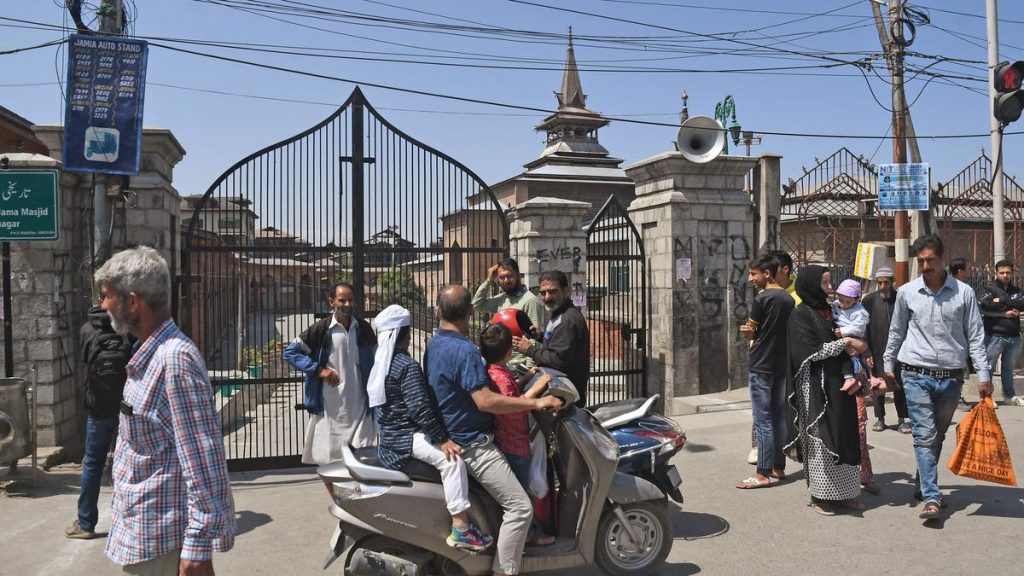
Dr Farooq Abdullah slams govt for disallowing Friday prayers at Srinagar’s grand mosque

Srinagar : Former Jammu and Kashmir Chief Minister Dr Farooq Abdullah has strongly criticized the disallowing of Jumat-ul-Vida prayers at the historic Jamia Masjid in Srinagar. 

In a statement, he called out the administration’s high-handedness and condemned the measure as a clear violation and interference with the religious rights of the people. 

“Such unwarranted curbs hurt the religious sentiments of millions and are unsuited to the country’s democratic, secular moorings besides debunking the claims of the government on changed ground situation across Kashmir,” Dr Abdullah said.

The former chief minister also expressed his concern about the continuous detention of Kashmir’s chief cleric Mirwaiz Umar Farooq, which he deemed a violation of basic human rights.

Mirwaiz who would lead the congregational prayers at the Masjid, has been under detention since August 5, 2019, when the Indian government abrogated the special status of the erstwhile state and bifurcated it into two federally administered union territories.

The administration has disallowed congregational Friday prayers at Jamia Masjid in Srinagar, which is the central mosque and an epicenter of faith for millions of Muslims across the region.  

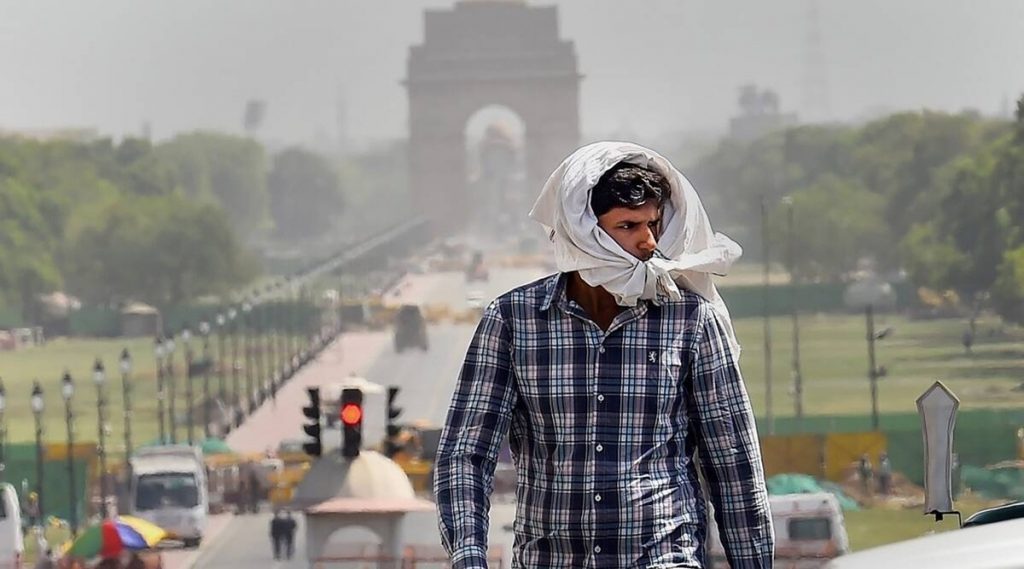
Delhi braces for heatwave as temperatures soar to season’s highest at 39.4 degrees

New Delhi : Heatwave conditions are likely in some isolated places in Delhi on Saturday as the maximum temperature in the national capital increased to 39.4 degrees Celsius a day earlier, three notches above normal.

This was the highest maximum temperature recorded so far this season.

According to the India Meteorological Department (IMD), the Sports Complex near Akshardham was the hottest station at 41.9 degrees Celsius.

Pitampura and Faridabad followed with maximum temperatures settling at 41.4 and 41.3 degrees Celsius, respectively.

“Najafgarh and Ridge recorded 40.8 degrees Celsius and Pusa saw 40.3 degrees Celsius. Lodhi Road, Ayanagar, and Palam reported 39.4, 39.1, and 39 degrees Celsius, respectively, ” according to IMD.

The IMD has issued a ‘yellow’ alert for Saturday.

While the maximum temperature at the Safdarjung Observatory is expected to be around 41 degrees Celsius for the next three days, it may touch 42-43 degrees Celsius in other stations.

“The public is advised to take precautions and stay hydrated during the hot weather, ” said an IMD official.

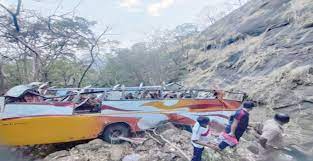
Tweleve passengers dead as bus plunges into gorge on Mumbai-Pune highway

New Delhi : At least 12 passengers were killed and 28 others injured when a private bus plunged into a gorge on the Mumbai-Pune highway on Saturday, officials said here.

The accident occurred at around 4 a.m. on the Pune-Mumbai arm of the highway and the bus reportedly fell into the ravine at least 50 meters below, near the treacherous Borghat stretch.

At that early hour, there was limited traffic on the highway but some people managed to rush to the accident spot, summoned the Raigad Police, Fire Brigade and local trekkers groups for help.

A massive rescue operation was immediately launched with ropes and climbers going down to help the victims below, numbering around 40-45 including the bus driver, said the locals.

According to the district authorities, the injured persons were rushed to the Khopoli Civil Hospital and the Jakotia Hospital, and the private MGM Hospital in Navi Mumbai for treatment.

A Raigad Police official said that a majority of the passengers were members of the Baji Prabhu Music Group, Goregaon, and were returning home after performing at a programme in Pune on Friday.

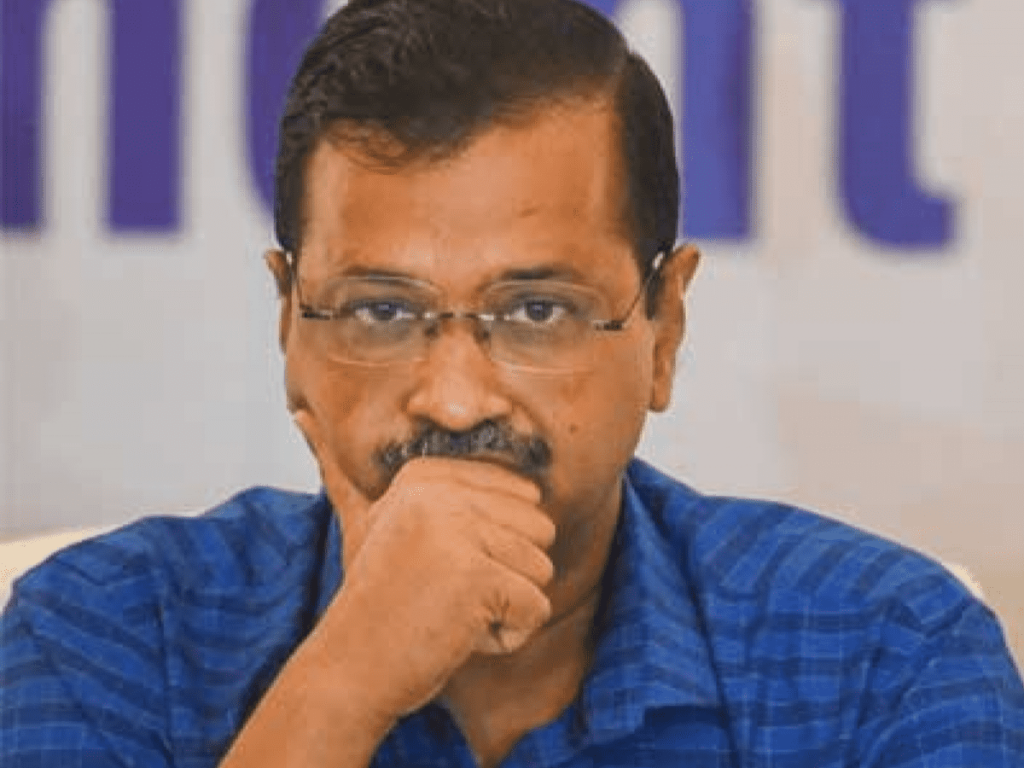
Excise policy case: Kejriwal summoned by CBI for questioning

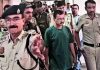
New Delhi : The Central Bureau of Investigation (CBI) on Friday summoned Delhi Chief Minister Arvind Kejriwal to join the investigation in the alleged excise policy scam case on Sunday.

Arvind Kejriwal’s testimony will be recorded by a team of top officials.

CBI sources told IANS that they will question Kejriwal about the call reportedly made between alleged accused Vijay Nair and Sameer Mahendru.

As per the probe agency, Nair had arranged meeting of the owner/controller of Indo Spirits Sameer Mahendru, with Kejriwal and when that didn’t materialise, arranged a video call through Facetime on his phone for both and in the video call, Kejriwal allegedly told Mahendru that Nair was “his boy” and that Mahendru “should trust him and carry on with him”.

It has also been alleged that Mahendru transferred around Rs 1 crore in the account of Radha Industries which is reportedly owned by Dinesh Arora, a close aide of former Delhi Deputy Chief Minister Manish Sisodia, who was earlier arrested by both the CBI and the Enforcement Directorate (ED) in the matter, and is presently in jail.

Mahendru, on behalf of Vijay Nair, the former CEO of entertainment and event management firm Only Much Louder, named as an accused in the CBI’s FIR, allegedly paid around Rs 2 to 4 crore to Arjun Pandey, another associate of Sisodia.

The CBI has already filed a charge sheet in the matter and they are about to file a supplementary charge sheet.

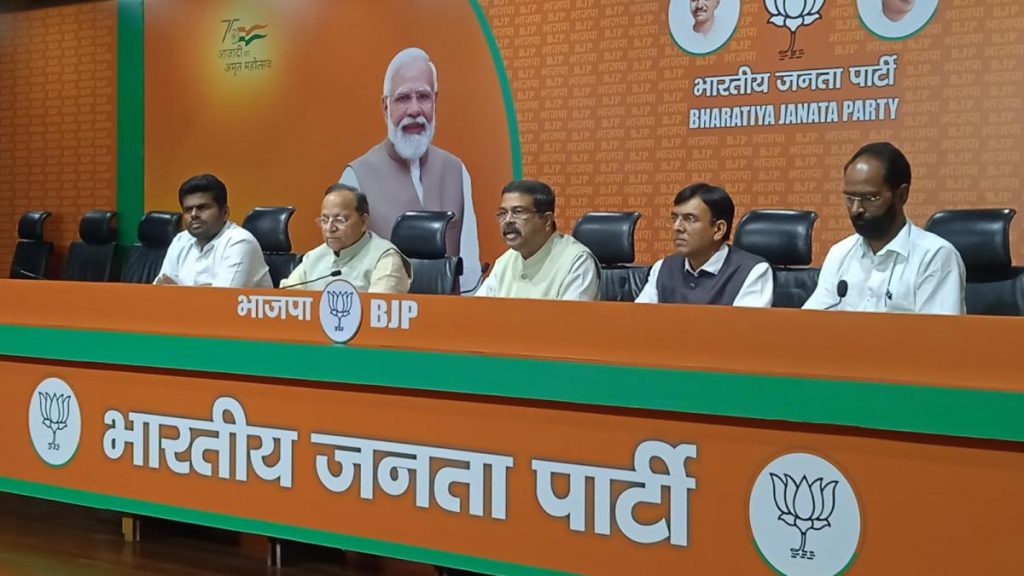
BJP releases 2nd list of 23 candidates for K’taka polls, candidate for Jalandhar LS bypoll

New Delhi : The Bharatiya Janata Party (BJP) has released the second list of 23 candidates for the Karnataka Assembly election.

Earlier on Tuesday, the saffron party had announced the names of 189 candidates in its first list.

The party has also announced candidates for the by-elections to be held in the Jalandhar Lok Sabha constituency in Punjab and the Jharsuguda Assembly by-election in Odisha.

The party has declared Sardar Inder Iqbal Singh Atwal as its candidate for the Jalandhar Lok Sabha bypoll and Tankadhar Tripathi for the Jharsuguda Assembly bypoll.

In the second list of candidates for the Karnataka Assembly election, the saffron party has fielded Nagaraj Chabbi, who recently quit the Congress, as its candidate from Kalghatgi Assembly constituency. However, BJP has not given a ticket to former Karnataka Chief Minister Jagadish Shettar in its second list as well.

Unable to get a ticket, Shettar had also met the party’s National President J.P. Nadda in Delhi on Wednesday, urging him to give the ticket.

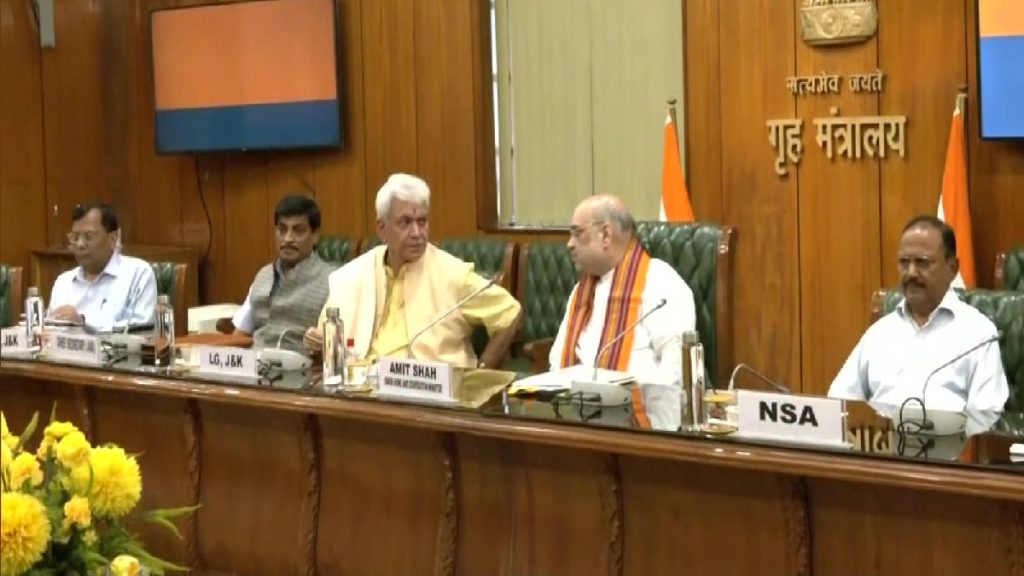
Home minister Ami Shah to chair a high-level security review meeting on Jammu and Kashmir

The Union Home Minister, Amit Shah, is set to chair a high-level meeting on Thursday to review the security situation in Jammu and Kashmir.

The meeting follows the killing of four jawans on Wednesday morning at the Bathinda Military Station in Punjab.

The home minister will be given a detailed presentation on the prevailing law and order situation in J&K by security officials of the central government and the union territory administration.

The meeting will be attended by senior officers from the Ministry of Home Affairs and Central Armed Police Forces, including the Lieutenant Governor of Jammu and Kashmir, Manoj Sinha.

 The main agenda of the meeting is to review the functioning of the security grid and the policy of zero tolerance against terrorism. 

Matters related to various developmental works being implemented in Jammu and Kashmir will also be discussed. 

 The Home Minister visited the Union Territory in October last year. 

Editors Guild conclave on Media Controls

New Delhi : The Editors Guild of India, an organisation dedicated to protect freedom of press and raising the standard of editorial leadership of newspapers and magazines, has organised a conclave on ‘Media Controls: Regulations, Denial of Access & Curbs on Press Freedom’. 

Scheduled for Friday, April 14 the Conclave will take place via Zoom, according to a press release.

There will be five sessions one each and eminent journalists, editors and writers will discuss regulations and controls in different areas of reporting namely Politics, Sports, Business, Films and Legal issues.

Those participating are 

Ms. Mrinal Pande,Sankarshan Thakur,Umakant Lakhera in the political segment while on challenges in reporting on Ayaz Memon,  Chandra Shekhar Luthra and Sharda Ugra. will share their views. The session will be moderated by Pradeep Magazine.

Those speaking on constraints in Business reporting are Paranjoy Guha Thakurta and T.N. Ninan. The session will be moderated by Anant Nath.

Speakers on the session on films include Mayank Shekhar, Shobhaa De and Anuradha Raman. This session will be Moderated by Nandini Ramnath.

In the session on legal reporting we will hear Sanjay Hegde and Samanwaya Rautray. This session will be moderated by KV Prasad. The Guild welcomed wider participation and those wishing to attend the Conclave can write to the Editors Guild of India on info@editorsguild.in for Zoom link or can join live proceedings at organisations Facebook page –Facebook.Editors Guild.

India sees surge in Covid cases; virus moving towards endemic stage

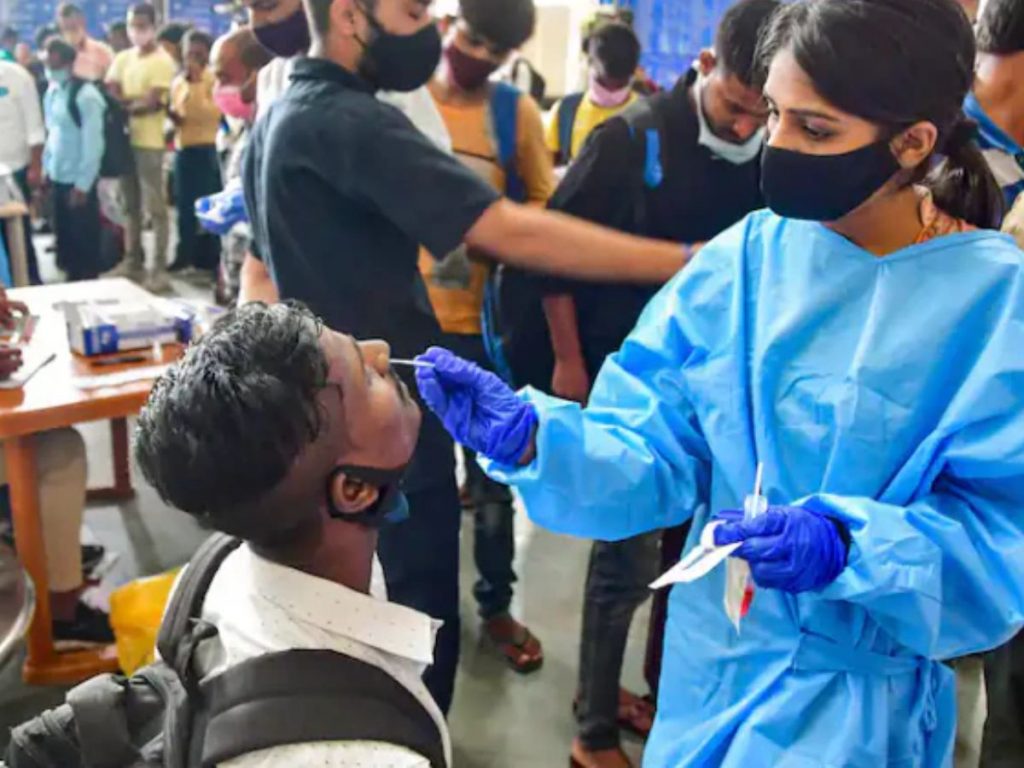
New Delhi : India is witnessing a surge in Covid-19 cases with 7,830 news infections recorded on Wednesday, the highest in over seven months, as per the Union Ministry of Health and Family Affairs data.

However, top officials in the health ministry say that the virus is moving towards an endemic stage, which means that it will be consistently present but limited to a particular region, making it more predictable and manageable.

Officials have noted that while cases may continue to rise over the next 10-12 days, hospitalisations remain low. The virus becoming endemic is likely to generate a large number of variants, according to them.

Since its detection in 2021, Omicron has spawned more than 1, 000 sub-lineages, including XBB. 1. 16 and XBB. 1. 5, according to Dr N.K Arora, co-chair of the Indian SARS-CoV-2 Genomics Consortium (INSACOG).

While XBB. 1. 16 has been identified as the cause of a surge in cases, Dr Arora stated that hospitalisations haven’t increased, and most deaths attributed to the disease are among individuals with serious comorbidities. However, he added that the biological behavior of the virus cannot be predicted and that continued surveillance of hospitalisations due to Severe Acute Respiratory Infection (SARI) is necessary.

India is ramping up its vaccination drive and promoting adherence to Covid-19 protocols such as wearing masks, social distancing, and washing hands frequently. With the emergence of new sub-lineages of Omicron, officials are urging the public to remain vigilant and take necessary precautions to prevent the spread of the virus.

“The situation is still evolving, and experts are closely monitoring the virus’s behavior to develop effective strategies to combat it, ” said an official.

With ongoing surveillance and efforts to control the spread of the virus, officials hope to mitigate its impact and protect public health.

MOST POPULAR

HOT NEWS