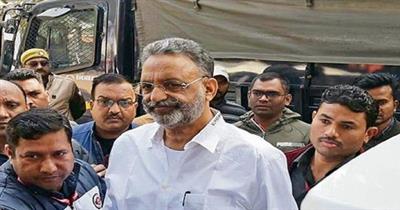
Chandigarh: Punjab Chief Minister Bhagwant Mann has returned the file to make payment worth Rs 55 lakh from state exchequer to ensure cozy stay of a dreaded criminal from UP Mukhtar Ansari in Ropar Jail.
The Chief Minister said that this is brazen loot of the public money which cannot be tolerated. He said that for reasons best known to the previous regimes this notorious criminal was kept in Ropar Jail with full comforts. Bhagwant Mann said that apart from ensuring comfortable stay the state government ensured that this hardcore criminal do not face any sort of difficulty within the jail and escapes the legal action against him.
The Chief Minister said that the benevolence of the previous rulers towards this dangerous criminal can be judged from the fact that though 48 warrants were issued against him but the government didn’t bother to produce him. He said that surprisingly the then government spent Rs 55 lakh of tax payers money to safeguard the interests of this criminal lodged in Ropar Jail. Bhagwant Mann said that this atrocious loot of the public money is totally unwarranted and undesirable adding that he has returned the file regarding this matter to the department.
The Chief Minister said that this open plundering of the tax payer’s money cannot be tolerated at any cost. He said that the government is also mulling to recover this money from the Ministers who have taken this sinister decision. Bhagwant Mann said that everyone involved in this heinous crime will be made accountable for their sin.
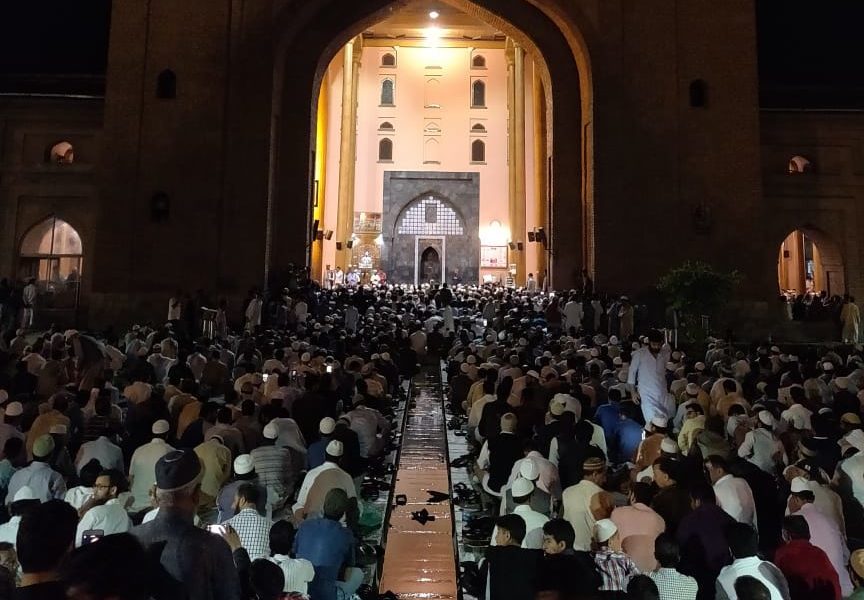
Srinagar : For the first time since 2019, Shab-e-Qadr prayers were allowed at the 14th-century Grand Mosque in downtown Srinagar. on Monday night
Muslims in the Kashmir valley observed the holy night of Shab-e-Qadr with religious fervour as they gathered at mosques and shrines for prayers and Quran recitation.
Last month, the authorities barred prayers for Shab-e-Barat, another religious festival, at the grand mosque, which added to the significance of the Shab-e-Qadr event.
The Hazratbal Shrine saw the biggest congregation. Devout Muslims also gathered at Jamia Masjid in the Nowhatta area, Dast-e-Geer Sahib, and Sayed Yaqoob Shah shrines.
Preachers and religious scholars took the opportunity to highlight the teachings of Islam and various aspects of the life of the Prophet Mohammad, urging Muslims to follow the same.
Muslims worldwide observe night-long prayers on the 26th night of Ramzan to celebrate the first revelation of the Holy Quran to Prophet Mohammad.
The festivities come as the fasting month of Ramzan is about to end.
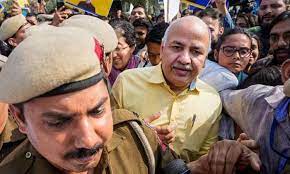
New Delhi- A Delhi Court on Tuesday reserved its decision on Aam Aadmi Party (AAP) leader and former Deputy Chief Minister Manish Sisodia’s bail plea in connection with the Delhi excise policy case being investigated by the Enforcement Directorate (ED).
Special judge M.K. Nagpal of the Rouse Avenue Court will pronounce the order on April 26.
On Monday, the court had extended Sisodia’s judicial custody by two weeks in the case.
The ED had earlier submitted before the bench of judge Nagpal that Sisodia had planted fabricated emails to show that there was public approval for the policy.
The directions to send these pre-drafted emails were given to Zakir Khan, Chairman of Delhi Minorities’ Commission, who then asked his interns to send the emails, the ED told the court.
The probe agency had also said that the 60 days given to complete the investigation against Sisodia are not over yet.
Have found fresh evidence indicating Sisodia’s involvement in the alleged excise policy scam, and the investigation is at a crucial stage, the ED had said.
Former Jammu and Kashmir Deputy Chief Minister Muzaffar Hussain Beigh on Sunday rejected the claim made by former J&K Governor Satyapal Malik that the former had told Malik that the late separatist leader Syed Ali Geelani was ready to talk to him on Kashmir.
Beigh stated that Malik’s memory had weakened due to his age. He denied the claims made by Malik that he and other mainstream politicians had met Geelani.
“I met Malik once and there was a brief chat between us. But there was no mention of Geelani in the meeting,” Baig told a local news agency KNS.
“Since I took part in assembly elections in Jammu and Kashmir, I have never met Geelani. He considered us (mainstream politicians) as untouchables. There was a time when we took part in elections, Geelani issued social boycott call against us,” he added.
“The former J&K Governor is currently going through that stage of life where his memory has got weaken,” Beige said.
Amritsar : The youths arrested from Punjab and imprisoned in the jail at Dibrugarh in Assam will now be able to meet their family members. This has become possible with the initiative of the Shiromani Gurdwara Parbandhak Committee (SGPC), said SGPC member Advocate Bhagwant Singh Sialka.
Advocate Sialka had led the legal team of SGPC formed by SGPC President Harjinder Singh Dhami to pursue the cases under the National Security Act (NSA) of youths detained in jail at Dibrugarh.
Advocate Sialka said that after the meetings with the arrested youths in the jail at Dibrugarh on April 10, their family members have now been allowed to meet them. He said that this permission has been obtained from the District Magistrate of Amritsar.
Advocate Sialka said that the youths detained at Dibrugarh include Kulwant Singh Dhaliwal, Varinder Singh Johal, Gurmeet Singh Bukkanwala, Harjit Singh Jallupur Khaira, Bhagwant Singh Bajeke, Daljit Singh Kalsi, Basant Singh, Gurinderpal Singh Aujla and Papalpreet Singh.
He said that there is a plan to take the families of the youths detained in Dibrugarh Jail to Assam on April 19 for their mulaqat (jail meetings). He requested the families of youths detained at Dibrugarh to contact the SGPC officials at the Sikh body’s headquarters in Amritsar by April 18. He said that the SGPC will make overall arrangements to take the family members of the detained youths to Dibrugarh.
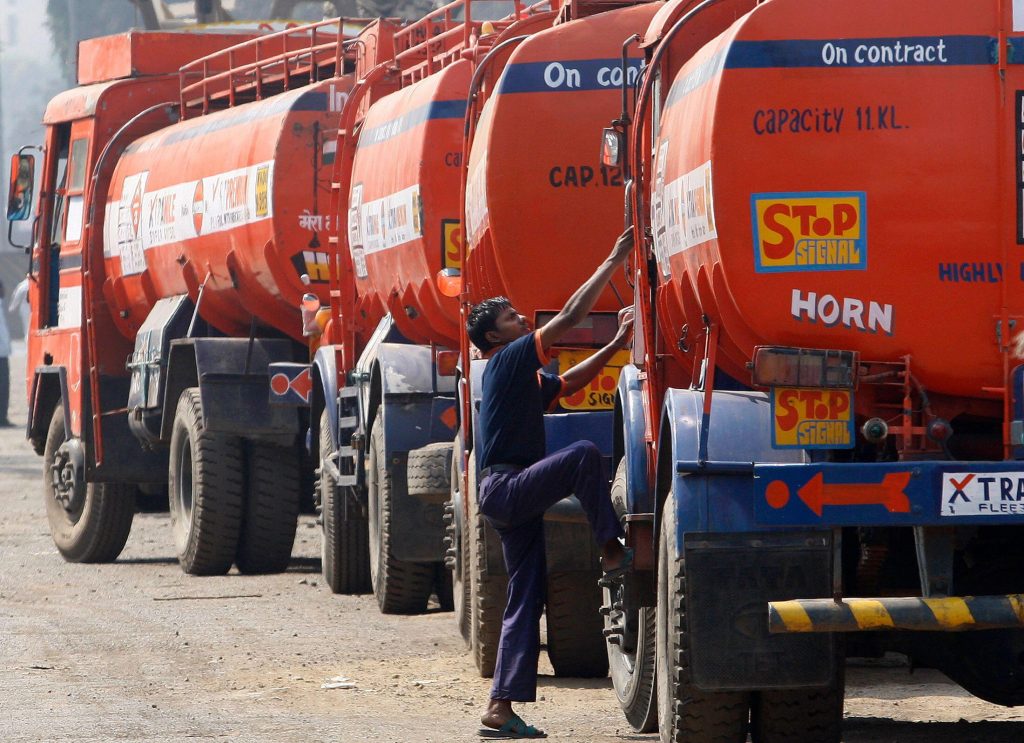
Half-hearted government steps are not enough to rein in the thriving oil mafia, which has been plundering oil wealth and bleeding the exchequer for decades. A report by Tehelka SIT
“I was a vigilance head of Indian Oil Corporation [IOC] of North India from 2001-2004. And I saw how petrol-diesel and aviation fuel were stolen by using different means: through oil tankers, oil refineries’ pipelines, and also by using government vehicles. The stolen oil was then sold either to petrol pumps or to small-scale or large-scale industries. This stolen oil is sold at cheaper rates as compared to the one sold in the normal market. Even some petrol pumps sell the stolen oil to the customers. The pump owners buy the oil for cheaper rates and then earn a huge profit. Adulteration of automobile fuel is also a big problem. In short, oil mafia still exists in the country, despite several measures having been undertaken to rein them in. It makes a profit of thousands of crores by providing stolen oil to the buyers even as it causes a huge loss to the National Exchequer, ” said R.K. Chaturvedi, a retired IPS officer and the present member of Uttar Pradesh Police Recruitment and Promotion Board, while speaking to Tehelka.
The oil mafia has grown phenomenally over the years. It first reared its ugly head in the early 1980s. At that time, there was a sudden rise in the sale of vehicle even as the country was grappling with the crisis of fuel shortage. Powerful individuals with the help of some underworld operators formed a cartel and spread their area of operation across the country. Later, some politicians, policemen and powerful industrial houses, too jumped in to have their fingers in the pie. Over the years, the illicit industry has spread to many states like Gujarat, Uttar Pradesh, Maharashtra, Rajasthan, Madhya Pradesh, Punjab, Delhi, West Bengal, Assam etc. The Associated Chambers of Commerce and Industry of India [ASSOCHAM] gave its report about the oil mafia in the country to the then Congress-led central government in 2006. According to the sources, in terms of monetary figures, the illegal industry of oil would be of Rs 10,000 crore annually.
The extent of the power the oil mafia wielded can be gauged from the ghastly murder of IIM-Lucknow graduate Manjunath Shanmugam [2003 batch]. The killing had sparked massive outrage, and had become a national talking point. Manjunath, a sales officer of the Indian Oil Corporation, was murdered in Lakhimpur Kheri, Uttar Pradesh, on November 19, 2005, by a petrol pump owner and his accomplice as a retribution for launching a crusade against adulterated fuel. His body was recovered from a secluded area on the border of Lakhimpur Kheri and Sitapur districts. Manjunath had warned the pump owner that his filling station would be sealed for selling adulterated diesel. On the day of his murder, Manjunath had gone to check the oil quality at the pump. The Lucknow bench of Allahabad High court pronounced life imprisonment to seven people including the petrol pump owner in 2009. On January 8, 2023, one of the convicts serving life imprisonment was released from prison for his good conduct in jail. A few years after Manjunath’s death, an eponymous biopic “Manjunath”, aiming to drive home a strong message against corruption, was released which gained a lot of media attention.
But Manujanth was not the only one to have been killed by the oil mafia. The Additional District Collector of Malegaon [Maharashtra], Yashwant Sonawane, was allegedly burnt alive by an oil adulteration mafia at Manmad near Nashik on 25th January, 2011. However, the CBI investigation later revealed that he was killed due to past enmity and that Sonawane had demanded bribes from the same mafia. Meanwhile, Chhota Rajan and eight others got life imprisonment in 2018 in journalist J Dey murder case. Initially, the police suspected that J Dey had also been killed by the oil mafia because the journalist was working on a report that would have exposed the nexus between oil mafia, police and politicians. J Dey was murdered in June, 2011. These are a few incidents which indicate the reach of the oil mafia in India.
Forget the automobile fuel. Oil mafia has not spared even the aviation fuel. Numerous cases of aviation turbine fuel [ATF] thefts have also surfaced during the past years. The recent one pertains to Hindustan Petroleum Corporation Limited [HPCL]. The company located a hole in the main pipeline that carries aviation turbine fuel all the way to Chhatrapati Shivaji Maharaj International Airport, Mumbai. Indicating that it was an attempt to steal the fuel, an FIR has been registered on the complaint of the HPCL.
Speaking to Tehelka, Mr R.K Chaturvedi also confirmed that the oil mafia is also involved in the theft of aviation turbine fuel for a long time. Not only automobile and aviation fuel, the cooking oil has also become the target of oil mafia gangs. The Ukraine-Russia war has pushed up the price of sunflower oil. The prices of edible oil and food grains have also gone through the roof while hoarders continue to rake in the profit. Gujarat’s food supply department has stepped up raids to nab hoarders and black marketeers.
In the wake of the reports of a thriving oil mafia in India, Tehelka decided to carry out an investigation into this illicit oil trade. Several RTIs were filed to get to the bottom of truth. The truth which everyone wants to know: right from the common man to the families of those who were killed by the oil mafia. According to an officer of Indian Oil Corporation, there are estimated 15,000-km long oil pipelines spread across India. First, the crude oil through these pipelines reaches the respective refineries spread across India. And from there, pipelines are used to supply the refined oil to the depots of various oil companies. Even the aviation fuel, the air turbine fuel (ATF) is supplied through these pipelines. The oil pipeline network is so dense that the ordinary person would not know that the piece of land on which he or she is standing has an oil pipeline underneath it. These pipelines carrying oil should naturally be well protected. But according to R.K Chaturvedi, there is no separate force in place to protect these sensitive oil pipelines. Only local police is deployed to take care of these pipelines. With the result that thugs, by putting holes in these pipelines, have been stealing oil since decades.
Responses to RTIs in possession of Tehelka indicate that oil from these pipelines is stolen on a regular basis, and that too under the nose of the police and the refinery officials. Through RTIs, Tehelka got a long and never-ending list of oil theft cases. Right from Gujarat to Rajasthan,Uttar Pradesh, Punjab, Haryana, Jharkhand, West Bengal, Maharashtra, Bihar etc.
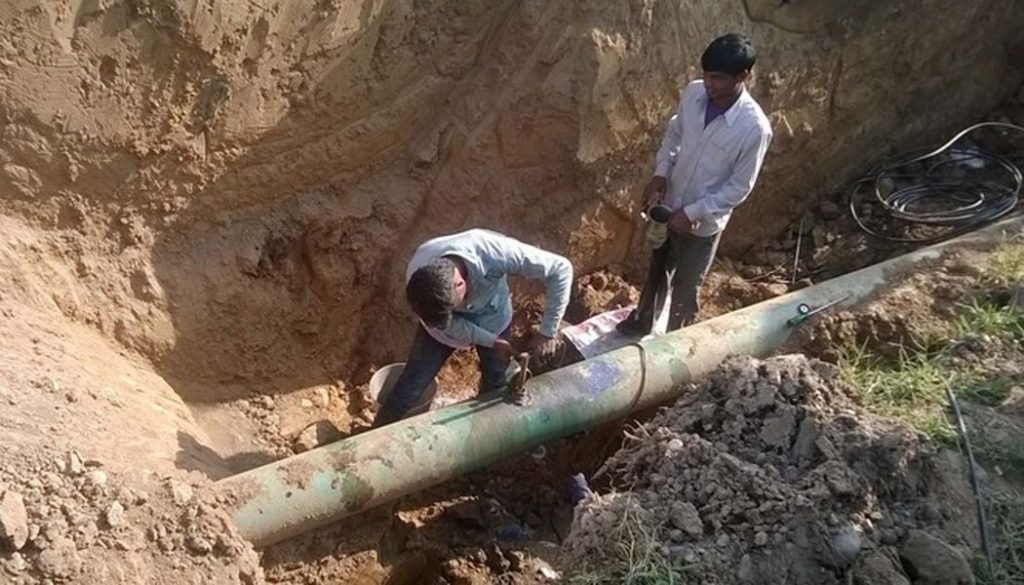
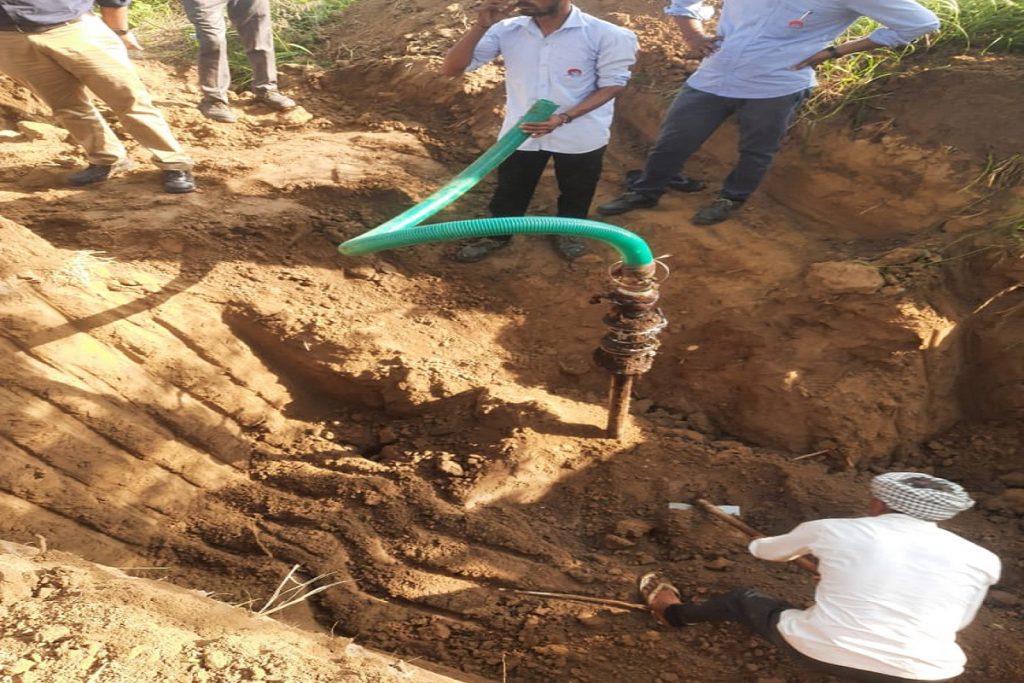
Oil mafia has not spared any oil company pipeline in which they have not put a valve and stolen oil. They have stolen oil from the pipelines of Indian Oil Corporation, Bharat Petroleum, Hindustan Petroleum and Oil and Natural Gas Commission [ONGC]. The impunity with which the oil mafia has struck repeatedly indicates that the security of the oil companies pipelines is not up to the mark. Mathura saw a bizarre incident of oil theft. There, the oil mafia set up its own small refinery near the crude oil pipeline. It stole the crude oil from the pipeline and after getting it refined in the refinery, it sold it to his customers. The accused did this on a regular basis before he was arrested. He was later released on bail. The nexus between oil mafia, politicians, refinery officials and police can be judged from the fact that in 2020-21, when entire country was under lockdown due to Covid-19, the oil mafia continued to steal oil from the pipelines of different refineries in different parts of the country before selling it to their regular customers.
To understand how the oil mafia is able to steal oil from the pipeline, we approached a technical expert. He explained that when any fuel, petrol or diesel, is released in the pipeline, it is released with certain pressure. To increase its speed, some more additional air pressure is released with it. Another expert said that to increase oil pressure in the pipeline an additional 50kg per centimeter air pressure is released in the pipeline. This indicates the speed at which oil travels through pipelines. If police officials and refinery officials are to be believed, most of the fuel theft cases have occurred after the mafia punctured the pipelines by putting valves into it. Now, the question arises as to how oil mafia are puncturing oil pipelines which are 8-24 inch in diameter, with oil flowing through them with high speed? There is a possibility that a blast may occur or a pipe may catch fire if such an attempt is made.
According to R.K Chaturvedi, the oil mafia steals oil from the pipelines by puncturing the pipelines after putting valves into them. Some lower staff of the refineries or the employees working on the contract basis tip off the mafia about the timing of the oil release: at what time, the diesel will flow in the pipelines and at what time petrol or aviation fuel will flow. With the help of this information, the mafia steals oil from the pipelines. According to Chaturvedi, there is always a gap of four to five hours between the release of petrol and diesel in the same pipelines in order to avoid mixing of the two oils. During this period when no oil flows in the pipelines, the pipelines are shut. After the mafia is tipped off about this intervening period by an insider, it swings into action. They punch a hole in the pipeline and wait for the oil to flow through the pipeline again. This is how the oil is stolen from the pipelines. Otherwise, an attempt to puncture the pipeline with oil flowing through it with high speed is like inviting a big tragedy.
According to sources, all oil pipelines carry a meter when oil is released with the pressure in them. The function of the meter is to immediately detect and inform the refinery officials about the leakage, if any, and pinpoint the spot where the leakage is occurring. If this is the case, then how some oil mafias have been recklessly pilfering oil for days and months from the pipeline after putting a valve and puncturing it without being detected by the refinery officials. R.K Chaturvedi told Tehelka that if any oil pipeline gets punctured by the mafia for stealing oil, the air pressure of the oil immediately comes down on the meter attached to it, alerting refinery officials about the possible oil pilferage.
According to RTIs, numerous oil theft cases have been registered in the country. But in most of these cases, the refineries had not mentioned about the quantity of oil that had been stolen. In some cases where they have mentioned the quantity, the figures given are so low that one would feel like laughing at those numbers. According to the refinery officials, to know the exact figure of stolen oil from the pipelines carrying millions of litres of oil is very tough. But Tehelka is in possession of responses to two RTIs of 2018 and 2020, which clearly mentions the quantity of oil that has been stolen from the pipelines. This raises a question mark over why other refinery officials are withholding information and giving different reasons for not disclosing the figures of stolen oil? The RTIs of 2018 of Hindustan Petroleum and of 13th February 2020, clearly indicate the quantity of oil that has been stolen. The response to RTI of 13th February 2020 says that the 1690 litres of Aviation Turbine fuel had been stolen from the pipeline, the FIR of which has been registered in the Chembur police station , Mumbai. In this case, the company has mentioned the exact figure of stolen oil. Such cases however are few. But there are many instances where the companies have not disclosed the oil theft figure in the cases registered with respective police stations, which raises doubt on their intentions. If financial experts are to be believed, the CBI is handed over only those cases of corruption from the government and semi-government sectors, where money involved has crossed a certain threshold amount. Is this the reason why refinery officials are not disclosing the quantity of oil theft? Because by suppressing the figures they may have succeeded in circumventing a CBI inquiry.
On April 12, 2013, villagers in Mathura helped unearth a racket through which crores of litres of crude oil was estimated to have been siphoned off from the main pipeline of Indian Oil Corporation between Salayan in Gujarat and the Mathura refinery near Sonoth village in UP, about 45km from Mathura city. Police unearthed a 400 metre pipeline of two inches in diameter through which the crude oil was being stolen from the underground main line – probably for the past three years. This crude oil was refined in the makeshift refinery developed by the mafia and the refined oil was supplied to their customers. The villagers told the police that many oil tankers visited a makeshift structure situated in the middle of a farm on the village outskirts every night, but by dawn the entire area would wear a deserted look. On the basis of this complaint, the police unearthed the oil theft racket, probably the biggest in the Mathura region, and registered a case against Mukesh Thakur and his nephew Subhash. According to the RTI reply, this case is still on. But despite several RTIs, the Mathura Police and refinery have yet not disclosed the quantity of oil that had been stolen by the mafia. They argued that they cannot part with this information because the matter is pending in the court.
Magorra police station of Mathura, under which the above case was registered, revealed in an RTI that after the April 12, 2013 case, there was no case of oil theft registered in their police station between January 1990 to December 2020. But contrary to this, an RTI reply of 6th July, 2021, of Indian Oil Corporation’s Panipat refinery said that before April 12, 2013 there was another case of oil theft registered in the Magorra police station on December 12, 2011. Why Magorra police station is hiding this 2011 oil theft case, can be best answered by the Mathura police themselves? Before April 12, 2013 oil theft, there was another oil theft reported in Mathura on March 16, 2013 under Refinery police station. Three more cases of oil theft were registered in Vrindavan police station in April, May and June in the year 2015. All these oil theft cases indicate how active the oil mafia is in the region.
According to the sources, the two biggest oil theft cases of India were reported from the Mathura region of Uttar Pradesh. In the first case which came to light in 2013, the accused was Mukesh Thakur. In the second case in 2017, Manoj Goyal of Agra was alleged to be behind the pilferage. It is said that this oil plunder was to the tune of more than Rs 100 crore. Goyal allegedly enjoyed close ties with several administrative officials and had a network spread across dozens of Indian cities, where he allegedly supplied the stolen oil. His nexus with officials enabled him to steal oil from pipelines laid around Mathura refinery for almost two years before the fraud was detected in a dramatic style. Mathura refinery officials got news that some petrol pumps of Agra and Delhi-NCR were selling oil for a price lower by one or two rupees than the normal rates. The investigation carried out by the refinery officials confirmed this report and after a complaint with the Uttar Pradesh police, the matter was handed over to the Uttar Pradesh Special Task Force [UPSTF]. The STF during its investigation in Agra and Delhi-NCR found that Manoj Goyal was supplying oil at cheaper rates to petrol pumps in Agra and Delhi-NCR. The STF then homed in on operators of oil tankers supplying oil to the petrol pumps. The owners of oil tankers told STF that they were supplying oil to the pumps after fetching it from a colony in Mathura and not from a refinery. The disclosure led STF to R.K Puram colony of Mathura.
After raiding a bungalow in R.K Puram colony in Mathura, STF found a 100 meter long and 10 feet deep tunnel under that bungalow. The area was close to the Mathura refinery. According to STF, the tunnel was dug in three months. An oxygen pipe was found in the tunnel to supply oxygen for the workers working there. A bulb was also found in the tunnel for providing light. In the tunnel, the STF discovered a Mathura oil refinery pipeline going to Jalandhar in Punjab. Through this pipeline, Manoj Goyal and his accomplice had been stealing for years. Manoj Goyal was booked under Gangsters Act and is presently lodged in a jail. Mathura refinery filed a 3.79 lakh litres oil theft case against Manoj Goyal. In 2021, Manoj Goyal and aide were convicted in another case by CBI special court for cheating and criminal conspiracy.
The petrol and diesel were sold in the market, but where did the pilferers sell Aviation Turbine Fuel [ATF]? According to the sources, the pipeline from which Manoj Goyal stole oil was supplying oil from Mathura to Jalandhar. This pipeline was also supplying ATF. The ATF was either used by Airlines, Air Force or flying clubs. Now the big question is to whom did Manoj Goyal sell ATF? In 2020, Delhi police arrested several people with 100 litres of ATF and with some cash. In Punjab also, similar arrests were made. But the question remains as to whom these people sold ATF?
Sources say that a suspended official of an oil company is helping the oil mafia to steal oil from the pipelines. It is said that putting a valve in the oil pipeline to puncture it is an expert’s job, which only a trained person can do. Sources say that this suspended official is being helped by 4-5 people. It is learnt that the same suspended official helped Manoj Goyal in putting a valve in the Mathura refinery pipeline passing through the tunnel to steal oil.
Replies to several RTIs tell that a large number of oil theft cases have come to the fore in the country so far. According to the IOC reply, from 2009 to 2021 there were 22 oil theft cases going on in various courts. In response to another RTI, the IOC replied that between 2015-16, there were 58 cases in which their oil pipelines had been attacked for oil theft. In 2016-17- ten, in 2017-18 – four, in 2018-19- thirty eight, in 2019-20 – thirty eight, in 2020-21- twenty-seven and in 2021-22 – twenty-three incidents of oil theft cases were recorded.
Several RTIs were filed to ONGC as well: on 21st September 2021, on 11th February 2022, on 1st April 2022, and on 23rd November 2022. In all these RTIs, the ONGC has not parted with any information on oil theft. In response to September 21, 2021 RTI query, the ONGC refused to give information on the ground that the applicant’s style of seeking information is ‘investigative one’. On 11th February, 2022, the ONGC rejected the application on the same grounds. While responding to the RTI application filed on 1st April 2022, the ONGC said that they were not bound by the RTI Act to give reply to such a query. They repeated the same answer in the case of 23rd November 2022 RTI application.
When the first appeal was filed in response to ONGC reply, the then appellate officer on 23rd December, 2022, directed the ONGC to give reply within 20 days. Despite this, ONGC has not given any information to the applicant till the time of filing this report. On 6th September 2021 also, in response to an appeal, the appellate officer directed the ONGC to reply within seven days. But the corporation refused to budge and did not part with any information. The action of the appellate officer in this case has also not been consistent. Sometimes, he directed ONGC to give information. Sometimes, he directed the applicant to go in for a second appeal if he is not OK with the reply.
In an RTI reply, the IOC has given information about incidents of oil theft from 2015 to 2018. But they have not shed light on the amount of oil that has been stolen. Like in 2015, there were 25 cases of oil theft. But the IOC revealed about the quantity of oil that has been stolen only in nine cases. Similarly, in 2016, out of four oil theft cases, the info about how much oil had been stolen was provided only in two of the cases. In 2017, out of nine oil theft cases, the information about the quantity of oil stolen was provided in only three of them. Similarly, in 2018, out of seven oil theft cases, we got to know the quantity of oil stolen in only two of them.
When asked as to how these oil mafias come to know about these oil pipelines, R.K Chaturvedi said that these mafia gangs do recce of the area. They get information from the people of the area and the low level officials of the oil companies and refineries and police. If they get information that the oil pipeline is passing beneath some farm land. They approach the owner of that farm land, and take that land on rent for cultivation. And after that they develop a temporary structure on a small part of the land, so as to avoid detection. And from that structure they dig land to reach the oil pipeline. After that they put a valve in the pipeline, puncture it and steal the oil, adds Chaturvedi.
The biggest oil pipeline network in India is of Indian Oil Corporation (IOC). So, Tehelka decided to get their side of the story on oil theft. We contacted Shreyas Verma, the senior maintenance manager of the pipeline division of Indian Oil Corporation. In the first instance, he refused to answer our queries on oil theft. But later on, he agreed to answer our queries if they were emailed. But when we did not receive a reply even two days after we had mailed the queries, we again contacted him on the phone. He said that our email had been forwarded to the senior officials for the answers. But till the time of the filing of this story, Tehelka did not get any response to our mail from the Indian Oil Corporation authorities.
Why can’t the oil mafia be eradicated? How long will the common citizens have to wait for the system to cleanse itself? Good clean unadulterated fuel is your right. We need to get a message across that so many honest officers did not die in vain. Get out of your cars and bikes, and demand that you be given the complaint books, and write what you think and feel in them – today. In today’s age when even pizza delivery companies can and do track their delivery staff by a variety of methods. Why can’t the oil companies and the Ministry in charge assure us that there won’t be any oil theft or oil adulteration? Time to stand up and demand it.
The Supreme Court has once again come to the rescue of the freedom of press. It has observed that the role of the press in a democratic society is crucial for it shines a light on the functioning of the state. The restriction on the freedom of the Press would only pose grave dangers to democracy. Divergent or critical views on government policies could not be termed “anti-establishment”. Citing a threat to national security without any factual basis amounts to imposing unreasonable restrictions that will have ‘a chilling effect on press freedom’.
The ruling came as a breath of fresh air when the Supreme Court quashed a ban on MediaOne channel and observed that criticism of government policy does not constitute a “reasonable restriction” under Article 19(2) of the Constitution. The court also disapproved of the filing of “sealed cover” reports in courts calling it a violation of the principles of ‘natural and open justice’. In this case, justification for banning MediaOne was not provided on the basis that doing so would jeopardise national security. Instead, the supporting evidence was provided to the court in a sealed cover, with the result that the media house did not know what to contest. The court observed that the entire procedure in every case must be marked by transparency and accountability, right from the probe to the submission of evidence. The court went a step further and “unsealed” the “sealed cover” that “covered” the government’s justification for banning MediaOne, and found it wanting.
It is hoped that the Supreme Court judgment will embolden the media to speak the whole truth! In a democracy, the independence of the press matters most because a free press uncovers the truth. A free press is vital for the robust functioning of a democratic republic and the press has a duty to speak truth to enable citizens to make informed choices and to serve as a watchdog on power to make it accountable to the people.
In another related development, the Indian Newspaper Society has asked the Centre to withdraw the IT Rules amendment notified on April 6, stating that it would have the effect of the government or its designated agency enjoying “absolute” and “arbitrary” power to determine what was fake or not in respect of its own work, and order its takedown from internet platforms. The Editors Guild of India too said it was “deeply disturbed” by the amendments to the Information Technology Rules which give sweeping powers to the IT Ministry to determine what is “fake or false or misleading”, with respect to any business of the Central Government. The Editors Guild has asked the government to withdraw the Information Technology (Intermediary Guidelines and Digital Media Ethics Code) Amendment Rules arguing that these are against the principles of natural justice, and akin to censorship!
The critical views of the channel MediaOne on policies of the government cannot be termed anti-establishment. The role of an independent press role is crucial in a democratic society for it shines a light on the functioning of the state, says a CJI-led SC bench. A report byMudit Mathur
Protecting freedom of expression of media, in a landmark judgement, the Supreme Court set aside the order of the Ministry of Information & Broadcasting (MIB) dated 31 January 2022 denying permission for renewal of the license and the judgment of the Division Bench of the High Court dated 2 March 2022 on the ground of the infringement of procedural guarantees. The court lifted the telecast ban imposed on Malayalam news channel Media One by the Ministry of Information and Broadcasting (MIB) on the grounds of national security reasons.
MIB denied the uplinking and downlinking permission revoking license granted to Madhyamam Broadcasting Limited (MBL) with the ministry declining security clearance, citing adverse intelligence inputs, which the Court found to be unreasonable restriction infringing its right to the freedom of speech and expression guaranteed under Article 19(1)(a) of the Constitution.
“An independent press is vital for the robust functioning of a democratic republic. Its role in a democratic society is crucial for it shines a light on the functioning of the state,” a bench comprising Chief Justice of India DY Chandrachud and Justice Hima Kohli said.
The bench held, “The critical views of the channel Media-One on policies of the government cannot be termed anti-establishment. The use of such a terminology in itself, represents an expectation that the press must support the establishment.” “The action of the MIB in denying a security clearance to a media channel on the basis of the views which the channel is constitutionally entitled to hold produces a chilling effect on free speech, and in particular on press freedom. Criticism of governmental policy can by no stretch of imagination be brought within the fold of any of the grounds stipulated in Article 19(2),” it said.
“The press has a duty to speak truth to power, and present citizens with hard facts enabling them to make choices that propel democracy in the right direction. The restriction on the freedom of the press compels citizens to think along the same tangent. A homogenised view on issues that range from socioeconomic polity to political ideologies would pose grave dangers to democracy,” the bench opined.
In the sealed cover submitted to the court, the Intelligence Bureau had made the following adverse remarks in its report against MBL: (i) MBL is closely associated with ‘Madhyamam Daily’ which has links to Jamaat-e-Islami; (ii) The tenor of articles carried out by ‘Madhyamam Daily’ was of an adverse nature from the security perspective; (iii) A few of the key executives of the applicant had associated with JEI-H; and(iv) The proposed TV channel may espouse the ideology of JEI-H if permitted to operate.
In nutshell, to substantiate its conclusion that MBL has been taking an anti-establishment stance, references were made to its reports on UAPA, Armed Forces (Special Powers) Act, development projects of the Government, encounter killings, Citizenship (Amendment) Act, NRC, NPR, the Indian Judiciary’s alleged “double standards in terrorism cases” and the alleged portrayal of security forces in a bad light. MHA denied security clearance based on the IB reports.
The Court found the allegation that MBL is linked to Jamaat-e-Islami-Hind (JEI-H) is fallacious. Firstly, because JEI-H is not a banned organisation and there is no material to conclude that the investment by JEI-H sympathizers would affect India’s security, and secondly, even if it is accepted that the investment by JEI-H sympathizers would affect the security of the State, there is no material to prove that the shareholders are sympathizers of JEI-H. “In view of the discussion above, the purpose of denying security clearance does not have a legitimate goal or a proper purpose,” the bench observed.
As it would be evident from the extractions of the material below, reports of investigative agencies make observations and provide inferences on the conduct of individuals which are then relied upon by the decision-making authority. To argue that reports of the intelligence agencies may contain confidential information is one thing but to argue that all such reports are confidential is another. “The reports by investigative agencies impact decisions on the life, liberty, and profession of individuals and entities, and to give such reports absolute immunity from disclosure is antithetical to a transparent and accountable system,” the apex court remarked.
The case came before the Supreme Court in an appeal under Article 136 after the Division Bench of Kerala High Court dismissed the petitions of MBL challenging the orders of MIB denying its renewal and revoking its license granted in 2011. The MIB revoked the permission which it had granted to MBL to uplink and downlink a news and current affairs television channel called “Media One”.
The management and trade union of working journalists of MBL, the trade union of working journalists, including the editor, Senior Web Designer and Senior Cameraman of Planetcast Media Services Ltd, initiated proceedings under Article 226 of the Constitution before the High Court of Kerala for challenging the action of MIB.
A Single Judge dismissed the petitions vide a judgment dated 8 February 2022. The writ appeal was dismissed by the Division Bench of the High Court by a judgment dated 2 March 2022. The High Court relied on material which was disclosed solely to the Court in a sealed cover by the then Union Ministry of Home Affairs. The appellants instituted proceedings under Article 136 of the Constitution to challenge the correctness of the judgment of the Division Bench of the High Court.
Dushyant Dave, Senior Counsel appearing on behalf of MBL, submitted that MBL was not provided access to the material which MIB submitted before the High Court to support the allegations made in the show cause notice. The Union of India, by submitting material in a ‘sealed cover,’ and the High Court, by relying on it in the course of its judgment, negated the principles of natural justice. This procedure is violative of the principle of an open court and of fairness to parties.
Mukul Rohatgi, senior counsel appearing for the Kerala Union of Working Journalists submitted that the freedom of the press protected under Article 19(1)(a) of the Constitution is one of the most precious freedoms and must not be infringed callously. He contended that though the conditions for renewal of permission are different from the conditions for the grant of permission, the High Court applied the same standard for both the grant of permission and renewal of license. On the disclosure of relevant material to the High Court in a sealed cover, it was submitted that if there was sensitive information in the material, the respondent could have redacted it before allowing the appellants to peruse the file. It was argued that the sensitivity of material cannot preclude the affected party from viewing the remaining portions.
K M Nataraj, Additional Solicitor General appearing for Union government, made the following submissions: (i) Paragraphs 9.2 and 10 of the Uplinking Guidelines demonstrate that security clearance is a pre-condition for renewal of license; (ii) MIB was justified in revoking the permission granted to Media One because MHA denied security clearance; and (iii) The principles of natural justice stand excluded when issues of national security are involved.
The Bench formulated following issues arise in the course of determining the validity of the order issued by MIB refusing to renew the uplinking and downlinking permission granted to MBL to operate the television channel, Media One: (i) Whether security clearance is one of the conditions required to be fulfilled for renewal of permission under the Uplinking and Downlinking Guidelines; (ii) Whether denying a renewal of license and the course of action adopted by the Division Bench of the High Court violated the appellants procedural guarantees under the Constitution; and(iii) Whether the order denying renewal of license is an arbitrary restriction on MBL’s right to the freedom of speech and expression under Article 19(1)(a) of the Constitution.
Examining the scope of Judicial Review on procedural grounds, the court considered, Article 13 of the Constitution states that all laws that are inconsistent with fundamental rights enumerated in Part III of the Constitution shall be void. Article 13(3)(a) states that for the purpose of this provision, law includes ‘any ordinance, order, bye-law, rule, regulation, notification, custom or usage having in the territory of India the force of law.’
It is, thus, a settled position of law that an administrative action can be challenged on the ground of a violation of fundamental rights. Following the expansion of the content of the right to equality under Article 14 to include the guarantee against arbitrariness, the grounds for judicial review of administrative action have expanded. Administrative action is judicially reviewable on the grounds of (i) unreasonableness or irrationality; (ii) illegality; and (iii)procedural impropriety. This Court has also held that in addition to the above grounds, administrative action can be reviewed on the ground of proportionality if it affects freedoms that are guaranteed under Articles 19 and 21 of the Constitution.
The principle of natural justice that is derived from common law has two primary facets- Audi Alterum Partem and Nemo Judex In Causa Sua. Audi Alterum Partem encapsulates the rule of fair hearing. Nemo Judex In Causa Sua encapsulates the rule against bias, that is, no person should be a judge of their own case. It is the case of MBL that MIB did not comply with the principle of Audi Alterum Partem because the reasons for the denial of security clearance and the material relevant to the decision of revocation were not disclosed. This, it is argued, infringes upon the right of MBL to a fair hearing.
On the other hand, MIB contends that it was not required to comply with the principles of natural justice since the denial of security clearance is on a matter involving national security, which is an established exception to the application of the principles of natural justice.
The Court drew three important considerations that have to be answered in the context: (i) Whether the non-disclosure of reasons and relevant material for the decision to deny security clearance infringes upon the right to a fair hearing, that is protected under Articles 14 and 21;(ii) Whether the infringement of the right to a fair hearing would render the decision void; and (iii) If considerations of national security are an established exception to principles of natural justice, how should the court resolve the competing interests represented by the principles of natural justice and national security.
The SupremeCourt found this case an opportunity to clarify and lay down the law on the applicability of the principles of natural justice when issues of national security are involved. The Court must choose between the two visions of either permitting a complete abrogation of the principles of natural justice or attempting to balance the principles of natural justice with concerns of national security. In the context, the bench examined national and International jurisprudence of House of Lords, (UK), United States, Canada and India dealing with jurisprudence on public interest immunity claims.
The courts in India, the United Kingdom, and Canada have held that the non-disclosure of relevant material affects public interest, and the interests of the party seeking disclosure. The non-disclosure of information injures the principle of open government which is one of the basic premises of a democracy. It denies the citizens an opportunity to initiate a discussion or question the functioning of the government.
However, the Courts in the United States have been deferential to the claim of non-disclosure, particularly on the ground of national security so much so that the court does not undertake a balancing exercise between the claims of disclosure and non-disclosure. This is also because the courts in the United States give prominence to the objective of non-disclosure as opposed to its effect.
The judgement came at a time as a sparkling star to show direction when most of the media channels and news networks toe the line of the government thereby compromising their right to freedom of expression which send demoralising signals for the health and future of a vibrant democracy.
The Apex Court’s recent judgement on media is exemplary as it gives hope to a demoralized media. The judgement has weaved in important components: national security; the importance of a free press and the futility of sealed covers.
When Chief Justice of India D.Y.Chandrachud said that he was “not here to do miracles”, he did not know that he was silently and quietly doing exactly that.
While listing out his key focus areas at a function, the Chief Justice had said: “I am not here to do miracles. The challenges are high. Perhaps expectations are also great. But this is what I tell myself every day that if this were to be the last day of my life, have I left the World a better place?”
If his recent judgement on the media is anything to go by, Justice Chandrachud certainly has brought about a dramatic change in the existing narrative. Not only has he sounded the death knell of excessive and unreasonable control over the media by the establishment but also signalled the onset of an environment where the shackled media can breathe easy: or at least hope to.
Ruling out any compromises on “judicial responsibility,” Justice Chandrachud said: “I do believe that the Chief Justice of India or the Chief Justice of a High Court is that first and foremost a Chief Justice is a judge. You will be respected or not respected based on your basic function as a judge.” And with this, he not only outlined his primary duty but also sent a strong signal to his fraternity of what is expected of it. The sum total: Stand tall in the face of adversity.
And this is exactly what the Chief Justice of India seems to be doing even while beckoning his counterparts.
It is a strong signal and coming right from the top it is sure to have a spiral effect.
The judgement has weaved in important components: national security; the importance of a free press and the futility of sealed covers.
But the facts first: In a landmark judgement, the Supreme Court held that criticism of government action cannot be called “anti-establishment” and national security claims can’t be “made out of thin air” to deny citizens remedies provided under the law.
The judgement also underlined the principles of fair speech and media freedom versus the state’s red flagging the bogey of national security to checkmate citizens: “The press has a duty to speak truth to power, and present citizens with hard facts enabling them to make choices that propel democracy in the right direction. The restriction on the freedom of the press compels citizens to think along the same tangent. A homogenised view on issues that range from socio-economic polity to political ideologies would pose grave dangers to democracy.”
The Court also said that an independent press “shines a light on the functioning of the State”.
The Court was hearing a matter concerning a ban on a television channel that went off the air in January 2022. The government had then refused to renew its licence, citing security concerns.
In February 2022, the Kerala High Court upheld the government order after the Centre submitted a sealed envelope detailing its stand to the division bench. But in March 2022, while admitting the appeal by Madhyamam Broadcasting Ltd (MBL), the channel’s owner, the top court temporarily lifted the ban.
Quashing the order, the apex court directed the central government to grant security clearance and other necessary approvals to Media One within four weeks.
The Supreme Court set aside the January 31, 2022, order of the Ministry of Information & Broadcasting which cited the denial of security clearance by the Ministry of Home Affairs as the reason for refusing to renew the channel’s licence. It is in this context that the Bench, chaired by Chief Justice DY Chandrachud, underlined the need for national security claims to be backed by evidence.
More importantly, it pulled up the Centre for denying the security clearance without there being any substantial ground to justify the ban: “The State is using national security as a tool to deny citizens remedies that are provided under the law. This is not compatible with the rule of law,” the top court said.
It also turned down the Centre’s argument on “secrecy of IB reports” on grounds that reports by investigative agencies impact decisions on the life, liberty, and profession of individuals and hence to give these reports absolute immunity from disclosure is antithetical to a transparent and accountable system.
As for the “sealed cover” procedure, the Bench observed that the procedure followed by the single judge and the division bench have necessarily left the appellants without the right to writ remedies which have been described as the “heart and soul of the Constitution” adding that this left the appellants “in a maze where they are attempting strenuously to fight in the dark.”
The judgement is truly path-breaking, particularly because it comes at a time when a free press is a thing of the past; national security is used as a pretext to curb criticism of the government and the establishment is running amuck by either throwing critics in jail or linking them with anti-national activities.
In the present case too, Media One was denied a security clearance for its alleged links with the Jamaat-e-Islami-Hind or the JEI-H.
On this, the Court said that it was precarious for the State to contend that the links with the organisation would affect the “sovereignty and integrity of the nation, the security of the State, friendly relations with foreign States, or public order”. It said that the allegation is “fallacious”.
Judgements such as these are exemplary because they give hope to a demoralized media that all is not lost. A government may run amuck but there are saner voices that would step in and save institutions that the government is hell bent on destroying. More importantly, there are still some who stand tall in the current set-up of pigmies.
Union Home Minister Amit Shah said that the government will move forward to open corridor for Sharda Peeth on the lines of Kartarpur. But PoK Assembly’s positive response to Amit Shah’s proposal within one week has surprised people on both sides of the border, writes Riyaz Wani
On March 22, Union Home Minister Amit Shah said that the government will move forward to open Sharda Peeth on the lines of the Kartarpur corridor. And on April 1, the government of Pakistan Occupied Kashmir proposed that Kashmiri Pandits and Hindus living in India should be allowed to visit the historic Sharda Peeth temple situated in the PoK, echoing Shah’s plan.
Sharda Peeth, an important pilgrimage site for Hindus, is located in the Neelum Valley of PoK in close proximity to the village of Teetwal in the Kupwara district of Jammu and Kashmir, right along the Line of Control (LoC).
The government has also built Sharda Mata Temple on this side of the Line of Control in the Teetwal area which the home minister inaugurated virtually.
Kartarpur corridor, which the Home Minister referred to, was opened in 2019, and links two important Sikh shrines — Dera Baba Nanak in Gurdaspur district of Punjab and Gurudwara Darbar Sahib in Kartarpur, Pakistan — and allows pilgrims to travel visa-free.
“The reconstruction of Maa Sharda’s temple in Kupwara is a necessary and important step in the direction of discovery of Sharda-civilisation and promotion of Sharda-script,” Amit Shah said while underlining the significance of the corridor. “Once upon a time, Sharda Peeth was considered the centre of knowledge in the Indian subcontinent. Scholars from all over the country used to come here in search of scriptures and spiritual knowledge. Sharda script is the original script of our Kashmir, which has been named after Maa Sharda.”
Surprise PoK move
It seems like a good idea that a Kartarpur-like corridor be replicated in Jammu and Kashmir. But the move of the PoK Assembly to positively respond to Amit Shah’s proposal within one week came as a surprise to people on both sides of the border. More so, when it was proposed by the Awami Muslim League led by Sheikh Rashid – an ally of Pakistan’s Tehreek-i-Insaf led by Imran Khan. Khan has been a bitter critic of the Narendra Modi-led government since the withdrawal of the special status of Jammu and Kashmir in August 2019.
The development has thus piqued curiosity on both sides of the border. People are asking how did the PoK Assembly immediately respond to Shah’s proposal. There are also speculations if the efforts to open the corridor arise out of some understanding on the back channel. After all, only a year after the revocation of J&K’s semi-autonomous status in 2019, India and Pakistan reinstated the 2003 ceasefire along the Line of Control which has still been holding. Although the two countries could not build upon the truce and initiate talks, the positive PoK response to Sharda Peeth indicates that the two neighbours might still be engaged in some form.
In Pakistan, however, there has been some harsh criticism of the PoK Assembly proposal. “The Kartarpur corridor is an international border, This is not an international border. We have always wanted that this Line of Control should not exist,” Pakistan’s former ambassador to India Abdul Basit said in an online video statement while expressing surprise that the PoK government rushed to endorse Amit Shah’s proposal.
He suggested that PoK and Pakistan governments should press for the reopening of the closed cross-LoC routes before volunteering to open the Sharda Peeth corridor. “Our eagerness to open Sharda Peeth is sending the wrong message to Kashmiris suffering persecution at the hands of the Modi government,” he said.
However, a PoK political activist Jamil Maqsood has termed the opening of the corridor as a “welcome step.” But he also echoed Basit’s line by stressing the reopening of the Line of Control and easing travel restrictions.
“The corridor will bring religious harmony among the people of PoK and India and will benefit the minority communities including Hindus, Muslims and Sikhs,” he told the ANI in an interview.