Financial strain, health risks mount as heroin addiction plagues Valley

One of the major reasons behind the problem of rising drug abuse in the valley is the political conflict of the past over three decades which is taking its toll on the youth. According to latest figures, more than six lakh educated youth are without job in the  valley, writes Riaz Wani

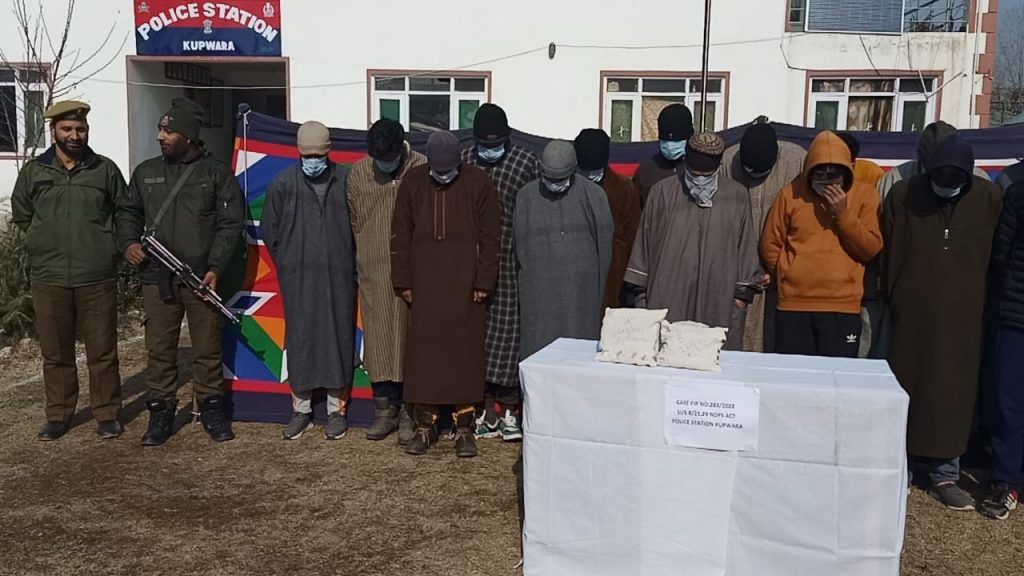
In recent years, drug addiction has assumed enormous proportions in Kashmir. The scale of the problem is apparent from the fact that over 5,000 cases have been registered under anti-narcotics laws between 2019 and 2022. And overall, nearly a million people, or roughly 8 percent of the region’s population, reportedly use drugs, including cannabis, opioids, and sedatives.

According to a study conducted by the Institute of Mental Health and Neurosciences-Kashmir (IMHANS-K), heroin addiction accounts for 2.23 percent of all substance dependence cases, affecting people from diverse backgrounds, including educated middle-class families and working-class households. The majority of addicts, aged between 20 and 30, initially start with medical opioids before transitioning to intravenous heroin use, often resulting in the contraction of hepatitis C virus due to needle sharing.

The study, titled “Prevalence and pattern of substance use in 10 districts of Kashmir,” reveals that the economic burden of heroin addiction is immense, with addicts spending an average of Rs 88,183 per month on heroin consumption alone. As their addiction deepens, the cost increases, forcing many to resort to desperate measures such as theft, selling personal belongings, and taking on debts. In their relentless pursuit of drugs, some individuals even engage in drug trafficking activities

Apart from the direct financial strain on individuals and their families, the healthcare costs associated with heroin addiction are substantial. The study highlights that only 35.1 percent of Injecting Drug Users (IDUs) have undergone screening for hepatitis C virus, primarily due to the high cost of approximately Rs 3,000 per test. This lack of awareness about free treatment for hepatitis C in government-run hospitals further exacerbates the problem.

The authorities have expressed concern over the inflow of drugs from Pakistan, facilitated by smugglers, touts, and even the use of drones. Additionally, drug dealers from Punjab and Himachal Pradesh are reportedly supplying drugs to the Valley through various channels. In 2022, Jammu and Kashmir police registered approximately 100 cases under the Narcotic Drugs and Psychotropic Substances Act, leading to the arrest of 1,560 individuals.

On June 6, Jammu and Kashmir Police seized property worth lakhs of a drug peddler Khursheed Ahmad Waza alias Mandela at Bandipora. The property included a residential plot measuring 1 Kanal, 1.5 Marlas worth a market value of Rs 44 lakh and two vehicles worth Rs 12 lakh.

The past survey has revealed that 65 to 70 percent of the student community in Kashmir has taken to drugs and shockingly enough it includes 26 percent of female students too. More than 70 percent of addicts have been found to fall in the age group of 18-35 years.

Drugs being used include prescription medicines such as Codeine Phosphate syrup, Spasmo-Proxyvon, Benzodiazepine (Valium) and Alprax. Some even get their fix from sniffing commonly available solvents like Fevicol.

However, it is not difficult to see what is leading the youth towards the drugs. One major reason is the political conflict of the past over three decades which is taking its toll on the youth. According to unemployment figures, more than six lakh educated youth are without jobs. There is also a huge number of the uneducated and unskilled youth who are looking at  a bleak future. The reigning political uncertainty and the humanitarian fallout of the past three decades have only reinforced the sense of hopelessness, leading youth to ease their frustration through drugs.

Civil society groups are asking for increasing investments in job creation and skill development programmes which are expected to offer a sense of purpose and economic stability to the population. Individuals are less likely to turn to drugs as an escape, if root causes of addiction are addressed.

“Bolstering mental health services and providing accessible support systems will help individuals cope with trauma and reduce their susceptibility to substance abuse,” read an editorial in a local daily. “The sharp increase in the number of patients seeking treatment for drug addiction, from 10-15 cases a day a decade ago to 150-200 cases a day now, underlines the urgent need for action.”
Cashing in on Sengol, and making history

The Sengol saga  is more about how the BJP can spin things to its advantage; it is about its ability to drum beat what it wants people to believe and its bid to exaggerate and magnify forgotten facts.

Till the BJP government raked it up, the majority of  north  Indians could not even pronounce the word Sengol, leave alone knowing what it meant or understanding its significance. Thanks to the BJP, the Sengol, today, is kind of a household name.

It was no less than the country’s Home Minister who took it on himself to lead the Sengol campaign, if one can use the word for the unsavoury controversy surrounding the golden sceptre. And while doing so, he blamed it all on Nehru.

It is no one’s case to defend the Nehru-Gandhi family or their bid to appropriate India’s legacy and present it as their own; or distort History to relegate all else except their lineage to the background. They have done that liberally and cashed in on the politics entirely to their own benefit.

It is this misappropriation that has kept them centre-stage and ensured that their progenies continue to use the platform and use their self- styled entitlement to remain relevant.

Ironically for them, Independence is synonymous with Nehru’s Tryst with Destiny speech which the Congress does not tire of playing over and over again.

As for the Sengol, the word is alien to them as to many others. They are perhaps more at home with the golden walking stick description that was used to describe the Sengol.

By now, much is known about the Sengol turned walking stick.

For the uninitiated,  the Sengol is a five feet long, gold coated silver sceptre which was crafted on the occasion of the British handing over power to India in 1947.

Jewellers in Chennai chiselled it after Lord Mountbatten asked Nehru how they should mark the moment of the ceremonial transfer.

It was C. Rajagopalachari, India’s last Governor General, who invoked the Tamil tradition of a priest handing over a sceptre to a  King  who is ascending the throne.

Essentially, a tradition followed by Chola kings, Rajagopalachari asked Nehru to follow the same practice. In 1947, the head of a Shaivite monastery presented the Sengol to Nehru who then sent it to the Allahabad Museum.

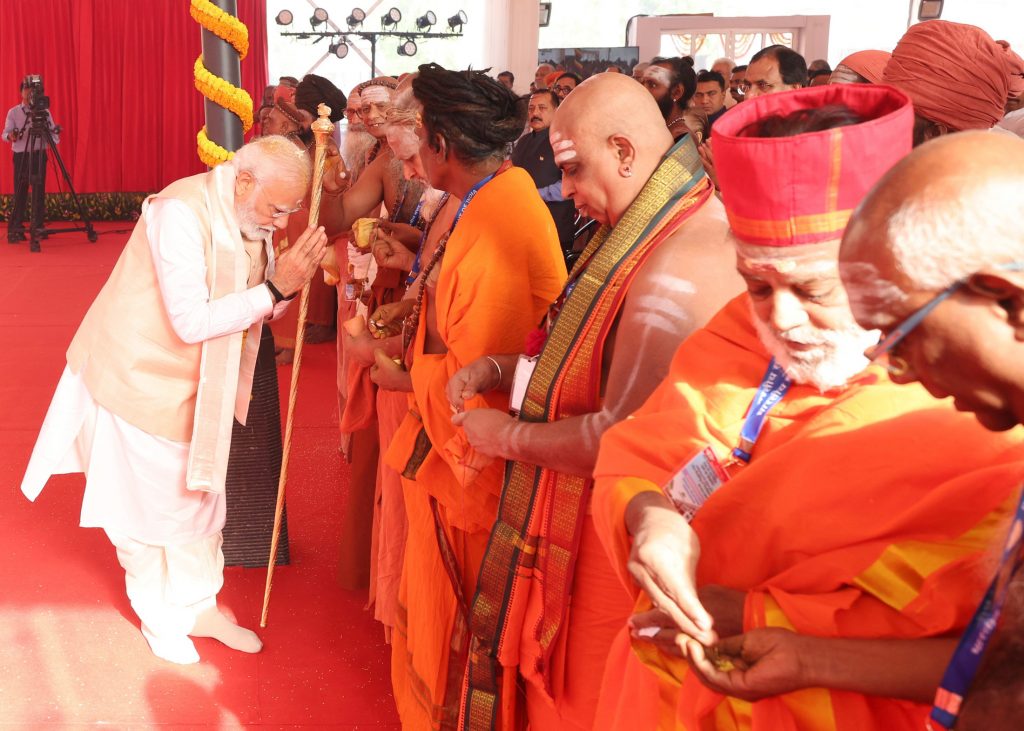
Some 75 years later, it was retrieved by the Government and received by Prime Minister Narendra Modi on the eve of the official inauguration of the new Parliament building.

On his part, the Prime Minister “revived” History by placing it near the Speaker’s seat in Parliament: “This ‘staff of righteousness’ will shine near the Lok Sabha Speaker’s podium as a national symbol of the Amrit Kaal, an era that will witness the new India taking its rightful place in the world”, Union Home Minister Amit Shah said, even as new Parliament building was inaugurated to the tune of Nagaswaram and chants by priests.

Of course there are conflicting reports on whether the sceptre was handed over by Lord Mountbatten to Nehru as a sign of transferring power from the British to India or whether it was handed over to  Mountbatten by seers who handed it back to them after which it was taken to Nehru’s residence and handed to him; whether it was kept at Anand Bhawan as the BJP claims or the Allahabad Museum in Prayagraj as some reports have suggested; and whether it was labelled  as a “golden walking stick” gifted to Nehru or simply a “golden stick” gifted to Pandit Jawaharlal Nehru.

Castigating the Congress for not giving the Sengol “due respect”, Prime Minister Modi said that it was displayed as a walking stick at Anand Bhawan in Prayagraj.

As for Mountbatten, there is no official document to support that the Sengol was presented to him before being handed over to Nehru.

Naysayers are quoting several texts including Yasmin Khan’s The Great Partition which mentions that the handover of the sceptre “took place at a private residence as part of the celebration and not as an official ceremony.”

But this is less about the veracity of claims and more about how the BJP can spin things to its advantage; it is about its ability to drum beat what it wants the people to believe and its attempt to exaggerate and magnify little known or forgotten facts.

Having said that, one cannot take away from the BJP its bid to dig information that the nation was oblivious of or kept ignorant about.

Call the present dispensation spin masters or past rulers oblivious but the fact remains that this time around  the BJP has brought to the fore a forgotten fact of History and  one that relates to India’s Independence.

At one level it may be argued that the Sengol ritual had nothing to do with the midnight hour when India breathed freedom: the “golden stick”, walking or not, was one of the many gifts that Nehru received on the eve of India’s freedom.

Be it as it may, the versions are conflicting as is evidence.
That said one must give to the BJP its ability to convert a story and trade it as a historical fact: in other words the ability to create something out of nothing; to flag symbolism and give it a colour of nationalism and tell people that they were hoodwinked by those who governed in the past.
Hoodwinked may be a strong word but it cannot be denied that a lot that should have been told was kept under wraps.

On one count this may be because those in power in the past  knew little and on another because they deliberately worked towards making Nehru more important than the nation and ensuring that everything that is India is thanks to its first Prime Minister.

Even while the BJP works overtime to erase the legacy, and rightly so, the Prime Minister Office does gear up to inflow of information. Had it not been so, Padma Subramanyam’s letter would not have seen the light of the day.

To put this into context, it was classical dancer Padma  Subrahmanyam who wrote to the Prime Minister about the existence of the Sengol: “I didn’t know about the Sengol episode in our history because no textbook has any reference to it. I thought Sengol had to be publicized. So I translated the entire Tughlaq article into English and wrote a covering letter to the Prime Minister stating that the Sengol must be brought out. This is how the whole thing started,” Subrahmanyam told a news agency.

Even while this spurred a chain of events resulting in the Sengol being resurrected and given its due place, a modest Subrahmanyam said that like the squirrel mentioned in the Ramayana she has done her “little might”.

As a consequence of this “little might”, the Sengol now stands “unbent in the new Parliament”, to quote Subrahmanyam.
Those familiar with the functioning of past governments, however, confirm that left to the Congress the letter would, perhaps, have been trashed.

Nonetheless, the BJP has done well in revisiting History and doing what it takes to correct it.

Call it politics if you will, given that it is being alleged that the Sengol is being used to woo the electorate in Tamil Nadu.

Not one to mince words, Home Minister Amit Shah is on record asking the people of Tamil Nadu to elect more than 25 MPs of the BJP-led National Democratic Alliance in the 2024 Lok Sabha election. This, he said, would be an “expression of gratitude to Prime Minister Narendra Modi for installing Sengol, a legacy of the Chola era, in the new Parliament”.

The political implication could not have been more direct than this.

That notwithstanding, the resurgence of the Sengol was long overdue and one must castigate the Congress for ignoring it, wilfully or out of ignorance, and relegating a slice of History to the background.
Also, the 100-year old Party cannot be forgiven for showcasing the historic transfer of power to the Tryst with Destiny speech that Nehru delivered at the stroke of midnight. That sure was important but there was much more preceding the historic event including the Sengol ritual which the BJP has well cashed in on and made History.

Law finally catches up with Brij Bhushan Sharan Singh

Delhi police has finally filed a chargesheet against BJP MP and WFI chief Brij Bhshan Sharan Singh for sexually harassing women wrestlers. Growing global criticism seems to have forced government’s hand as legal proceedings against him are set rolling., writes Mudit Mathur

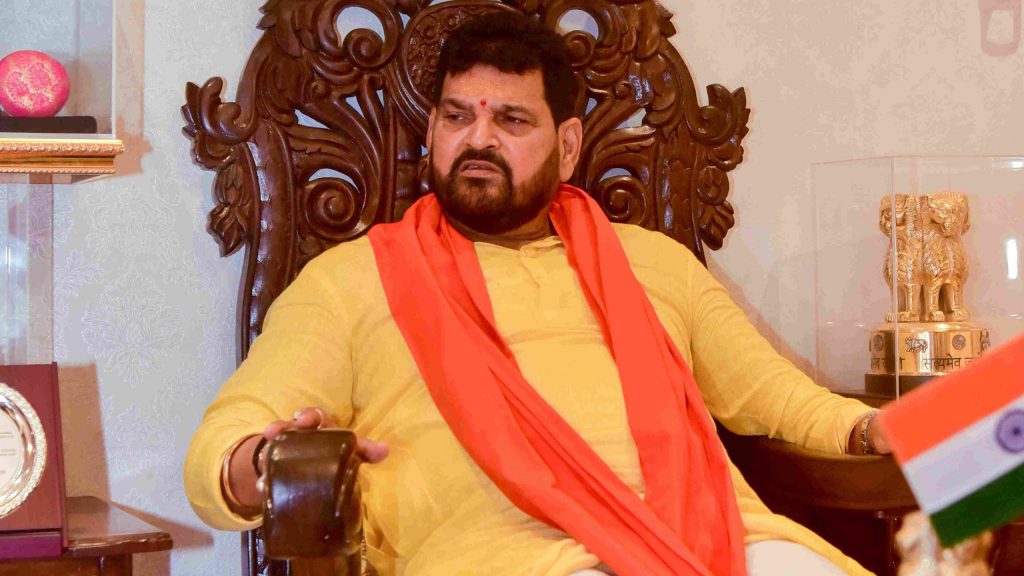
The Delhi police finally filed a chargesheet against Bharatiya Janata Party (BJP) MP and Wrestling Federation of India chief Brij Bhushan Sharan Singh for sexually harassing, using criminal force to outrage modesty and stalking women wrestlers, under sections 354A, 354 and 354D of the Indian Penal Code (IPC).

It has also submitted a report in court under section 173 of the Code of Criminal Procedure (Cr.PC), requesting for cancellation of the case filed against him under Protection of Children from Sexual Offences (POCSO) Act. Offences under all these Sections are bailable as it does not provide punishment for more than five years.

Charges have also been filed against WFI assistant secretary, Vinod Tomar for molestation, sexual harassment and criminal intimidation who has been a close aide of Bhushan. Chargesheet cites corroboration of wrestlers’ complaints by colleagues, coaches and others as main evidence as old electronic data of more than a year back is not retrievable. 

The chargesheet contains detailed statements of the six women wrestlers who complained against Bhushan have been corroborated by more than four other wrestlers and coaches, and comes after examination of over 200 witnesses, including, trainers, participants, event organisers and members of the federation.

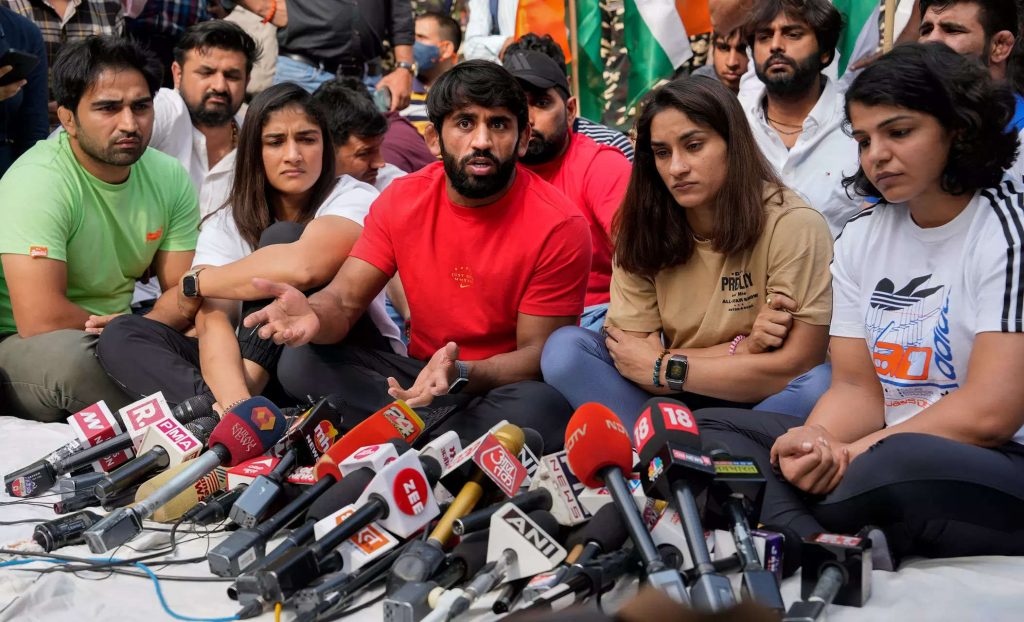
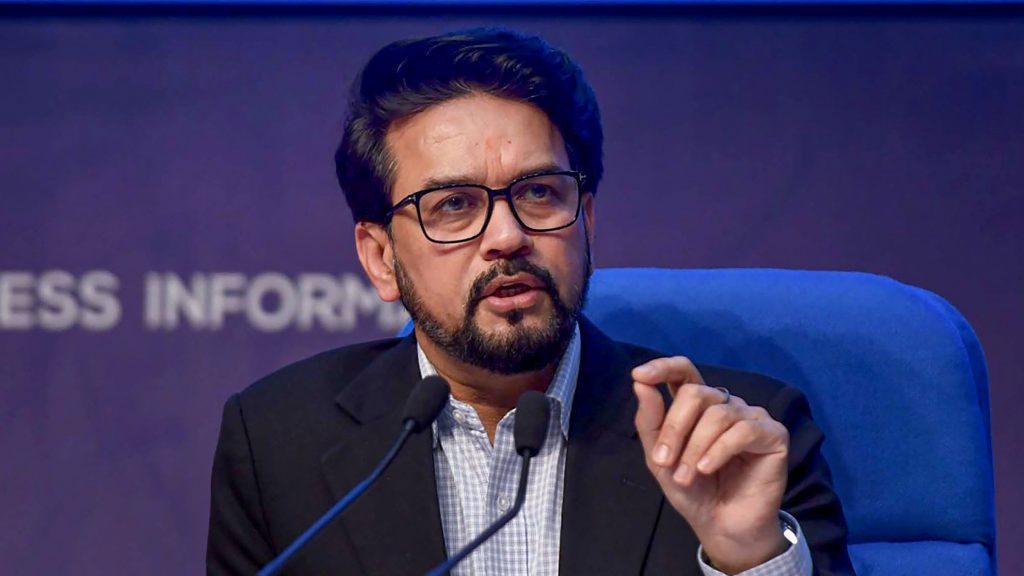
The signs of climbdown of Modi government appeared during the meeting of wrestlers with Union sports minister, Anurag Thakur who indicated to prosecute its member of parliament and erstwhile Wrestling Federation of India (WFI) chief Brij Bhushan Sharan Singh for the serious allegations of sexual harassment levelled by Medal-winning seven wrestlers including a minor led by celebrity Olympians–Vinesh Phogat, Sakshi Malik and Bajrang Punia.

The reconciliation moves to break the deadlock came in wake of Prime Minister, Narendra Modi’s upcoming official US visit amid harsh diplomatic reactions and growing criticism of international sports bodies, besides adverse reactions witnessed across the country and abroad over the confrontational approach of the government in dealing with the agitating super star women Olympians’ wrestlers, who brought laurels and pride to the Nation.

Thakur, who held a meeting with the protesting wrestlers for six hours on June 7, assured them that the investigation against Singh would conclude and chargesheet would also be filed by June 15. He promised them that a new WFI chief would be elected by June 30. The wrestlers have suspended their protest until June 15, but have warned the government that they would resume their protests if their demands are not met.

The wrestlers had put forth five demands before Thakur. These include free and fair elections to the WFI and the appointment of a woman chief to the body. Singh, who is accused of serious allegations of sexual harassment, or his family members, could not be part of the WFI, the wrestlers demanded. Three top wrestlers, Sakshi Malik, Vinesh Phogat and Bajrang Punia, have accused Brij Bhushan of running the WFI like a ‘fiefdom’; according to his whims. He acts as the overall president, selection committee chief and also chairs athletes’ grievance panel. Thus, he discharged the role of a judge, jury and executor, the wrestlers charged.

On the eve of the opening of the new parliament, with the wrestlers planning a march to the capital, there were talks held late at night to pressurise the protestors. But the wrestlers did not relent. They took to the streets and were subsequently detained using unwanted force and with cops mercilessly trampling them down under their boots on the road. The pictures of Delhi Police’s high-handedness went viral, the International Olympic Council (IOC) found them disturbing and the global media put them on their front pages.

The IOC spokesperson from Lausanne, Switzerland, said that the “treatment” meted out to the athletes when they were manhandled and detained for hours, was “very disturbing.” The IOC asked for an “unbiased, criminal investigation” into the allegations of sexual harassment and underlined: “We urge that the safety and wellbeing of these athletes is duly considered throughout this process and that this investigation be concluded speedily.”

The United World Wrestling (UWW), the global governing body for wrestling, came out with a strong statement condemning the “treatment and detention of the wrestlers”. “For several months, United World Wrestling has followed with great concern the situation in India where wrestlers are protesting over allegations of abuse and harassment by the President of the WFI,” the statement said. It threatens suspension of WFI from the world wrestling body if elections are not held within a given time of 45 days.

While expressing solidarity with protesting wrestlers, a group of international parliamentarians and academics said, “We, the parliamentarians and academics stand in solidarity with the protesting athletes and demand accountability from the Indian government.” “The Union government’s reaction to the wrestlers’ protest against BJP MP Brij Bhushan Sharan Singh sends a clear message that rebellious women will be punished, the ruling class will be protected at all costs and dissent will not be tolerated”.

The wrestlers have been on a sit-in protest at Jantar Mantar from 23 April that mustered huge support in favour of agitating women wrestlers from all walks of life including farmers’ unions, women organisations, sports bodies and human rights activists. Prime Minister Narendra Modi was inaugurating the new parliament building on May 28, where Brij Bhushan Sharan Singh was present. The Delhi Police on that day detained the protesting wrestlers, dismantled their protest site and filed FIRs against them. Thereafter the police did not allow them permission to return to Jantar Mantar or protest at India Gate.

Since then, their fight for justice reached the farmers-led Khap Panchayats of UP, Haryana and Rajasthan who supported women wrestlers wholeheartedly and consolidated their fight among the masses. Jats are a politically active and united community who dominate four states and 40-45 Lok Sabha seats out of 543 seats. Jats also hold dominance on 160-170 Assembly seats. BJP rose to power in the wake of Jat-Muslim rift after Muzaffarnagar riots but these differences healed up during one year of farmers’ movement against three farm laws which was ultimately repealed by the Modi government after facing much humiliation.

It is believed that farmers’ leader, Rakesh Tikait played a vital role to break the deadlock between wrestlers and government, who managed their meeting with Union Home Minister Amit Shah. Shah invited them for a second round of talks on the issues raised by them demanding arrest of WFI chief Brij Bhushan Sharan Singh. Demands for sexual favours, at least 10 cases of molestation are detailed in two FIRs registered against him after Supreme Court’s orders.

According to media reports, at least two instances of demanding “sexual favours” in lieu of professional assistance; at least 15 incidents of sexual harassment that include 10 episodes of inappropriate touching, molestation that includes running hands over breasts, touching the navel; several instances of intimidation including stalking — and a shared sense of fear and trauma are the key allegations in two FIRs filed with the Delhi Police on April 28 against WFI chief and BJP MP Brij Bhushan Singh.


Both the FIRs cite IPC Sections 354 (assault or criminal force to woman with intent to outrage her modesty), 354A (sexual harassment), 354D (stalking) and 34 (common intention) that carry a jail term of one to three years. The first FIR covers the allegations of six adult wrestlers and also names WFI secretary Vinod Tomar. The second FIR is based on the complaint of a minor’s father and also invokes Section 10 of the POCSO Act which entails five to seven years of imprisonment. The incidents mentioned allegedly took place in India and overseas during the period from 2012 to 2022.

The minor’s complaint, filed by her father, alleges that his daughter was “completely disturbed and cannot be at peace anymore …sexual harassment by the accused (Singh) continues to haunt her”. The minor’s allegations include “Holding her tightly, pretending to get a picture clicked, the accused (Singh) squeezed her towards himself, pressed hard on her shoulder and then deliberately…brushed his hands against her breasts”.“She clearly told the accused (Singh) she had already told him that she was not interested in having any sort of physical relationship and that he should stop stalking her…”Subsequently, the minor changed her testimony and recorded a changed statement before the court.

“There’s huge pressure on us to compromise, the minor victim changed her statement under pressure,” said Olympian Sakshi Malik accusing WFI chief Brij Bhushan of getting his men to call and threaten the complainant women wrestlers. “An impartial probe can’t be conducted without Brij Bhushan Sharan Singh’s arrest,” she added after the farmers’ Mahapanchayat.

The wrestlers have been demanding the arrest and custodial interrogation of the accused since day one as he wields considerable political power to influence and derail the investigation and intimidate the complainants and witnesses. Bajrang Punia and Sakshi briefed the Mahapanchayat sharing details of what transpired in their meeting with Sports minister Anurag Thakur.

On the other hand, Brij Bhushan denied all allegations and maintained that his 12 years tenure as WFI chief are full of achievements and protesting wrestlers have turned hostile as they did not want to participate in selection trials for the Olympics.   Indian wrestling has increased its footprints beyond its traditional fort–Haryana and is consistently among the top five wrestling nations in the world, rising from 20th rank when he took over reins.

Known as “Bahubali”, Brij Bhushan has won six times for Lok Sabha and contributed establishing 54 educational institutions that he owns or is associated with across the Ayodhya-Gonda highway in the adjoining districts–Gonda, Balrampur, Bahraich and Shravasti imparting education to nearly 80,000 students. Besides the colleges, Singh’s empire includes a hotel, a hospital, a shooting range, and a national wrestling academy.

Singh’s palatial house at his ancestral village Vishnoharpur consisting a two-storey structure sprawling in several acres, with manicured gardens, a glamorous gym, a huge parking area lined with a fleet of six SUVs and a Robinson R-66 turbine helicopter that is parked in the backyard which speaks of his invincible political clout he wields on the BJP leadership.


Reunite Ari Komban with his family in Kerala

Mercifully, the 100-odd families of Chinnakanal want Ari Komban back. They fear that driving a poor animal out of his home and hearth will bring a curse on their heads and take their peace and prosperity away.

A 32-year-old male elephant, Ari Komban, has been in the news for various reasons. First, it was due to his raids of ration shops in the hamlets close to the forest in Chinnakanal in the Idukki district of Kerala in search of rice, resulting in him being nicknamed Ari Komban (ari means rice and Komban means bull elephant in Malayalam) by the residents of the area. Later it was due to the fact that he began raiding homes after the ration shops were moved to a distant location so that the tusker could not get to them. Ari Komban is also accused of having killed seven people during his forays into the areas adjoining the forests in search of his favourite food. However, there is no proof to substantiate these claims that were mainly made by a local politician in order to buttress his case against the voiceless animal that has no means to defend itself.

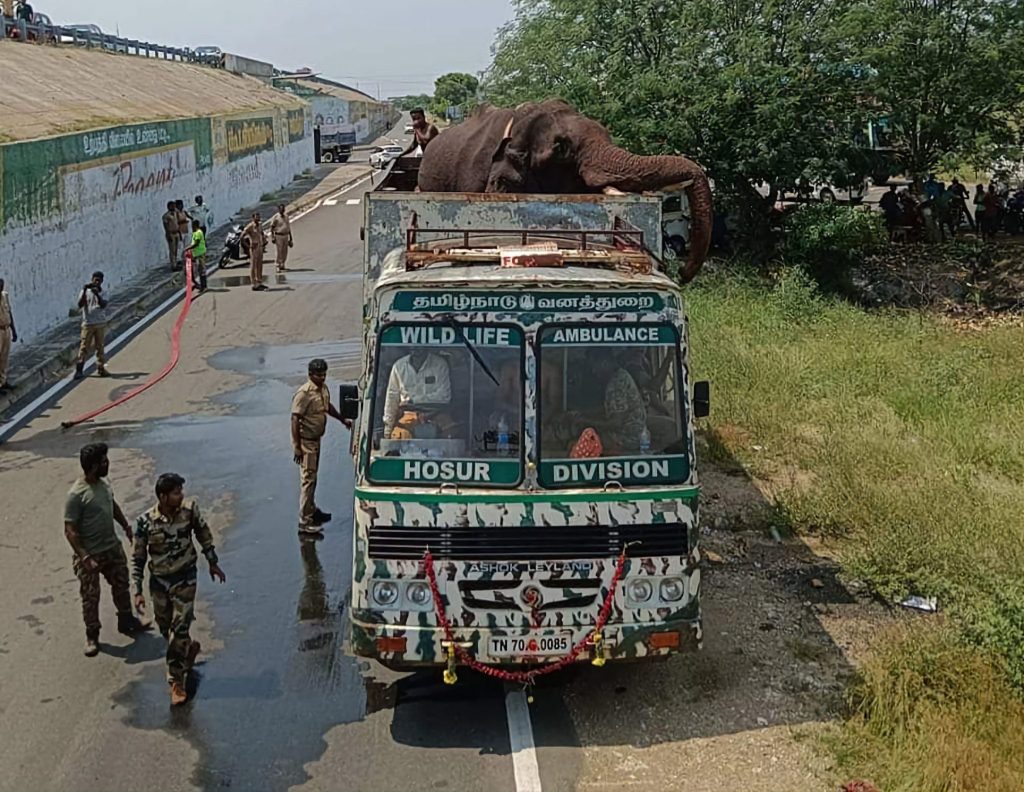
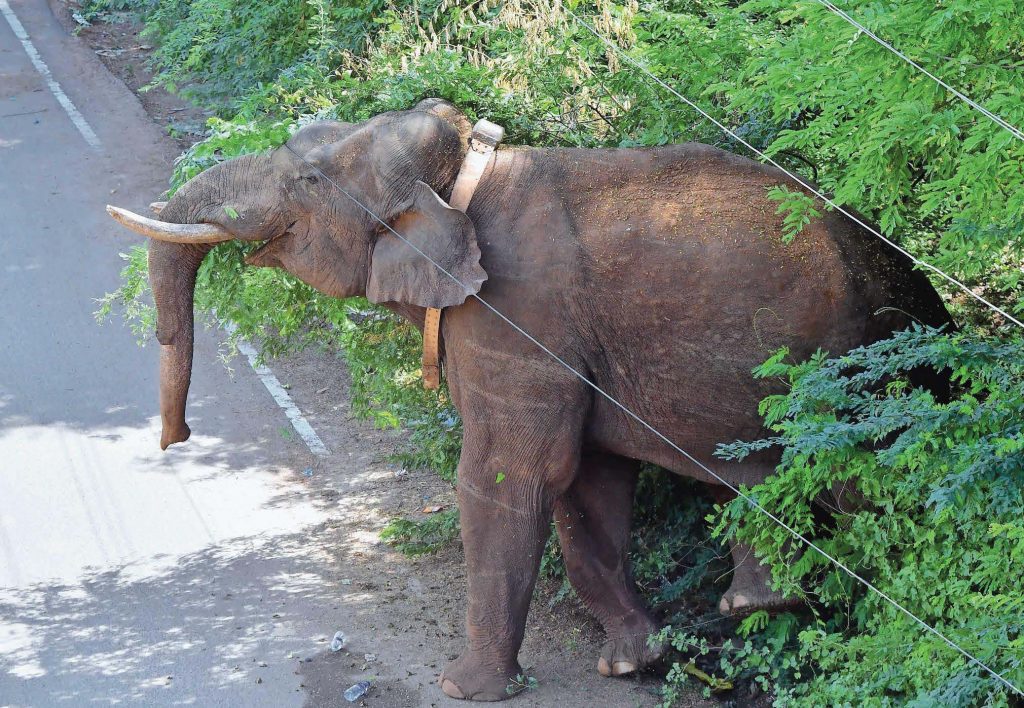
This saga of man-elephant conflict had been going on for over five years and ultimately after the villagers, egged on by the land mafia and encouraged by the local politicians, raised a major hue and cry against the marauding elephant, Ari Komban was shifted to the forests of Tamil Nadu. But over there, too, Ari Komban found his way to human habitats, either in a bid to return to his beloved forest home in Chinnakanal or in search of his comfort food, rice. In the end, after that he was tranquilised and captured and left deep into the Upper Kodayar area of Muthukuzhi forest near the Tamil Nadu-Kerala border with a satellite radio collar around his neck to begin a “new life.”

However, this new life is easier said than done! If he stays there in the Tamil Nadu forests, he will have to fight for territory with younger male elephants. As it is, Ari Komban is blind in one eye, has a severe cut on his trunk, and has sustained injuries during multiple attempts to translocate him.

Even though, the government officials at the moment are gung ho about the fact that Ari Komban is settling down in his new habitat and PR photos are being released to the Press showing how “happy” he is in his new “tranquil” haven I don’t think that we have heard the last of Ari Komban.

Remember, elephants are complex social creatures just like us humans. They have families, relationships, a complex social structure and last but not the least they have “elephantine memories.” So, it is not very likely that Ari Komban is going to forget about his family and friends anytime soon. He will try and make his way back to his family as he has many children that he sired in the forests of Chinnakanal. Though male elephants leave their herd once they enter their teens, they do keep coming back to meet their family as they have lasting bonds just like us humans. They mourn their dead, miss their loved ones and suffer separation anxiety just like us humans.

So this is the life we humans have decided for Ari Komban for no fault of his own? And I say for no fault of his own because despite all the media reports, and what the local politicians and villagers said, it was not Ari Komban who ventured into human habitats because it was the other way round. The humans had encroached on his home. In fact, media reports quote locals as saying that though humans had encroached on the forest area where the majestic elephant and his herd and ancestors had lived for centuries, Ari Komban did not mind sharing his habitat with humans till they built their homes with bamboo and mud. But he definitely took a stand to protect his turf once the humans began building brick and mortar homes, as he started raiding and destroying shops. His behaviour is akin to a human who is trying to drive encroachers off his property.    

There was no need to drive Ari Komban out of his own home. The 100-odd families who had encroached on his forest could have been relocated and if media reports are to be believed they were actually willing to do so. But the land mafia and the local politicians engineered a situation to suit their nefarious purposes and painted the tusker as a villain and got him removed from his own ancestral home. What a travesty of justice.

I don’t think that the Kerala Forest Department or the people living in Chinnakanal have seen the last of Ari Komban because he used to return to the spot where his mother died in 1984 when he was just a few months old. Just like a human visits a grave site of a loved one on their anniversaries, this orphaned tusker visits the place where his mother died, every year. He is bound to try and find his way back to that spot that is etched forever in his heart and memory. Plus, he has his herd, his family, his children and his friends there. That is his ancestral land and he is bound to try and return to his homeland.

Man-animal conflict is on the rise across the country and uprooting one elephant and sending him into exile away from all that he loves is not going to solve the problem. According to the last elephant census that was held in the country in 2017, India has close to 30,000 wild elephants and around 60 per cent of all wild Asian elephants. Loss of habitat, fragmentation and relentless encroachments by humans in forest lands often forces them to enter human habitats and raid crops, homes and plantations, leading to conflicts like the one that Ari Komban is caught in the middle of.

When news of raids or killings by elephants is splashed across TV channels and newspapers, few realize that it is we who have forced the animals into this situation through rampant exploitation of their habitat. They are pushed to the wall by our greed and senseless sanctioning of development projects by Governments who don’t pause to think about the consequences of their action on the animal kingdom.

Few realize that in this poignant saga of a marauding elephant, Ari Komban is actually the victim and not the villain that he is being painted out to be. It would have been better to leave Ari Komban in his part of the world and relocate the 100-odd families to another place. However, the Kerala Forest Department seems to have played right into the hands of the rich and powerful and did not show real will to ensure that Ari Komban his land rights. But, at the end of the day, do the rights of a voiceless animal really matter to the vast majority?

The Kerala Forest Department could have taken a page out of the Chhattisgarh Forest Department’s book which has developed an artificial intelligence (AI)-based application which can alert users about the movement of elephants in their vicinity. The ‘Chhattisgarh Elephant Tracking and Alert’ app that is being used in Udanti-Sitanadi tiger reserve on a pilot basis uses inputs provided by the ‘Hathi Mitra Dal’ (groups of local volunteers) which keeps tabs on the movement of jumbos to send alert calls and messages. This will help prevent incidents of human-elephant conflict in the reserve that is spread across Gariaband and Dhamtari districts and has been witnessing incidents of these conflicts for nearly a decade.

The ‘Hathi Mitra Dal’ has been using Open Data Kit (ODK- an open source application) for the last one year to feed data about location and movement of elephants in the affected years. This ODK app works both in online mode (in real time) and offline mode (when trackers are outside the mobile network area). The App will use inputs fed into the ODK App to send automated alert messages and calls to those whose mobile numbers and GPS location are stored in the app. Whenever an elephant is within 10 km of any village, its residents will get automated calls, text messages and WhatsApp alerts if their mobile numbers are registered with the system. The app can also be used for sending alerts about the presence of other wild animals like leopards, bears and wild buffaloes.

In a similar way, Karnataka also set up a task force headed by the Deputy Conservator of Forests in Hassan, Chikmagalur, Mysore and Kodagu districts to reduce man-elephant conflict. The task force patrols areas inhabited by elephants, monitors the movements of lone elephants or herds in human habitation, fields or coffee estates, and drives them back into forests under the direction of the Deputy Conservator of Forests. They share information about the movement of wild elephants and warn people not to move in the forest areas. Karnataka has also set up a control room in the headquarters of every task force and shared the contact number with people residing near the forest areas. Plus the task force members have been provided with walkie-talkies, guns and crackers to drive the wild jumbos back into the forests.

We have to find more humane ways to deal with man animal conflict that is growing with each passing day due to the burgeoning human population. India has become the most populous nation in the world, surpassing even China. One wonders how many more animals will have their lives uprooted and even give up their lives in order to support human lives. How is it that we presume that our lives are more important than animal lives? What is it that we have given to the planet? Each and every microorganism, bacteria, insect, animal, bird, fish and plant plays a significant role in keeping this planet alive and healthy. Humans are the only ones who play a hugely destructive role and have destroyed the delicate balance of nature. Our populations continue to grow mindlessly and we push other species inhabiting this planet closer and closer to the brink of extinction, without realising the paradox that in destroying other beneficial species we are actually signing our own death warrant.    

It is heartening to note that the 100 families of Chinnakanal want Ari Komban back. They fear that driving a poor animal out of his home and hearth will bring a curse on their heads, and take their peace and prosperity away. Driven by their guilt and remorse over causing this trauma and separation to the tusker and his family they staged a road roko on the Suryanelli – Bodimettu road recently demanding that the elephant be brought back home. I just hope that the forest department and the politicians of Kerala see reason and reunite the beautiful tusker with his family and friends. After his mother’s death, Ari Komban became an orphan. Let’s not make him homeless and take his family and friends away from him too.

Parties fret as Centre maintains studied silence on J-K election

The protracted delay in conducting polls has caused widespread resentment among the people. Though the Centre has passed the buck to ECI arguing the responsibility for holding elections lies with the latter, political parties take this explanation with pinch of a salt, writes Riyaz Wani

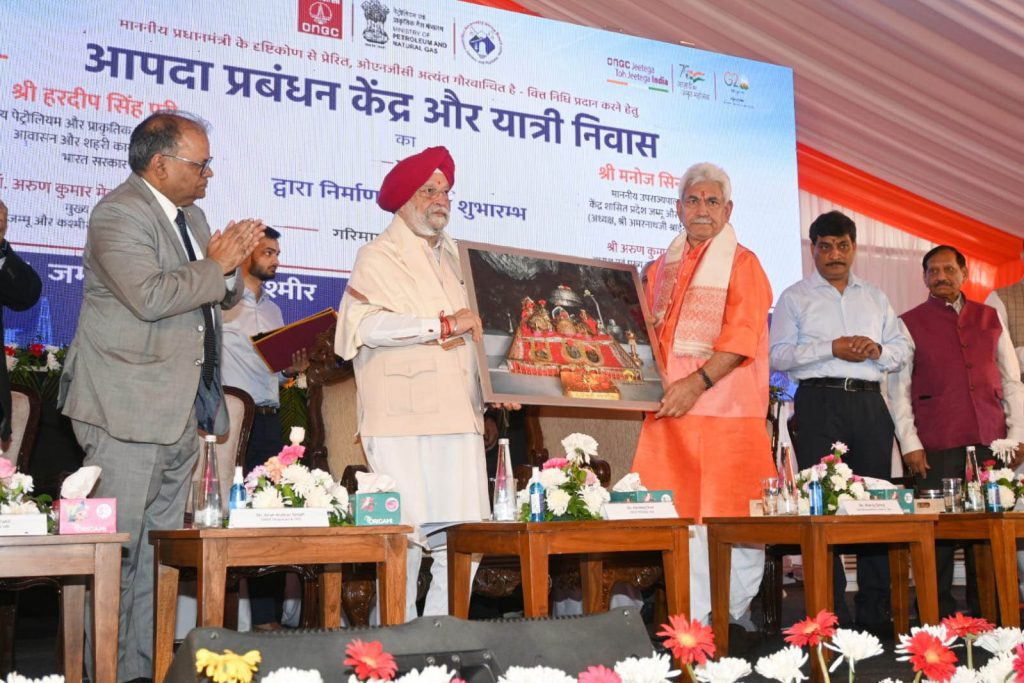
During his visit to Jammu on June 6, Union Minister Hardeep Singh Puri highlighted the progress made in Jammu and Kashmir, attributing it to improved law and order and security situations. Puri also emphasized the significant infrastructure development in Jammu and Kashmir since the abrogation of Article 370 and Article 35A. However, when asked about the Assembly elections, Puri vaguely mentioned that the region is going through a transition phase, leaving the decision up to the people themselves.

Jammu and Kashmir has been without an Assembly since November 2018 when the legislative assembly was dissolved by the then-governor Satyapal Malik. The imposition of governor’s rule in June 2018 followed the BJP’s withdrawal from the PDP-BJP coalition government led by Mehbooba Mufti.

The last Assembly elections in Jammu and Kashmir took place in 2014. The current Assembly term was originally set to end in 2020 but was extended by the central government in 2019. Despite this extension, the central government has not yet announced a date for the next Assembly elections in the union territory.

After fresh delimitation last year, the new Jammu and Kashmir Assembly has 114 seats, of which 24 are in Pakistan-occupied Kashmir. Of the rest 90 where elections could be held, 47 are in the Kashmir Valley and the rest 43 in the Jammu region.

The BJP public outreach

The BJP recently organized a series of rallies in Jammu and Kashmir to showcase what it perceives as the achievements of its nine-year rule at the Centre. The party highlighted unprecedented development in the region, but conspicuously avoided addressing the pressing question of holding Assembly polls.
Considering the fresh delimitation that gave six more seats to Jammu, the BJP is likely to play a dominant role in the elected government in J&K in future. So its reluctance to hold polls in the union territory is seen as intriguing by many.
The party argues that the responsibility for holding elections lies with the Election Commission of India (ECI). However, the local parties take the BJP’s defence with a pinch of salt, accusing the party itself of delaying the polls.

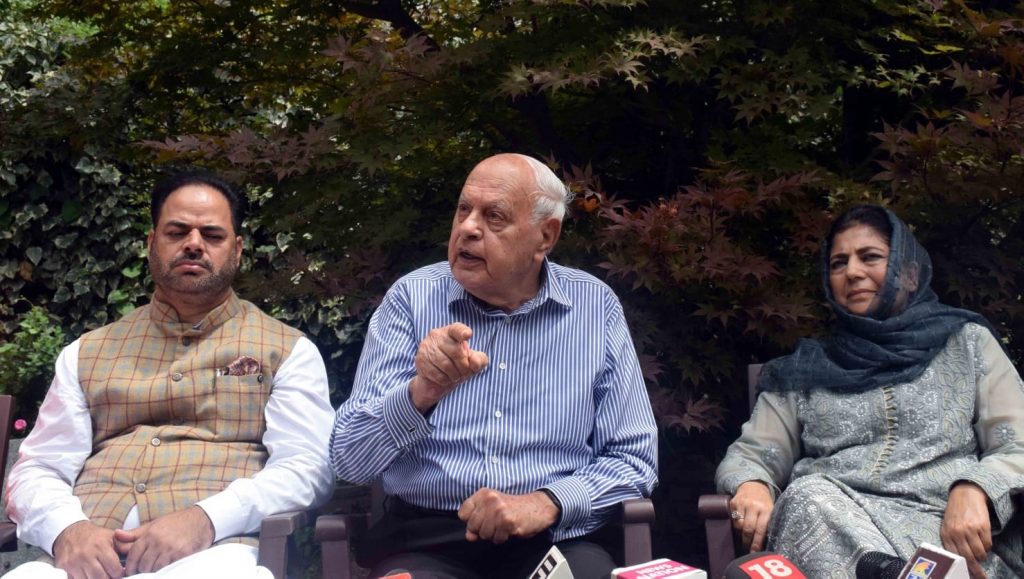
“The election commission should respond to this question (about when the election will be held in J&K). We want to hear it from the election commission,” former J&K Chief Minister Omar Abdullah said. “The Chief Election Commissioner said there is a vacuum in J&K and that vacuum needs to be filled. If the CEC realizes that there is a vacuum in Jammu and Kashmir due to the lack of elections, why is he not fulfilling it?”

Omar pointedly asked the Election Commission as to what were its “compulsions” for not holding elections. “Let the ECI show courage and tell why they are not holding the polls,” he said.
On the other hand, the J&K Peoples Conference (JKPC) led by Sajad Lone, has expressed anguish over denial of democracy in the union territory, saying it had been relegated to mere “tokenism”.
“It is with great sorrow that we observe the continuous denial of democracy and statehood in J&K. It is disheartening that amidst a population of 1.4 billion people in our nation, not a single soul outside the state seems visibly perturbed by the denial of democracy and statehood to J&K,” the party said following a meeting in Srinagar.

Memorandum to ECI

On March 6, 2023, a delegation comprising representatives from all political parties, led by Dr. Farooq Abdullah, met with the Election Commission of India, urging it to fulfill its constitutional obligation and hold the assembly elections in Jammu and Kashmir. The delegation stressed that any further delay or denial of elections would infringe upon the democratic rights of the people.

The political leaders also submitted a memorandum to the ECI, in which they called for the restoration of the democratic process in the UT. The memorandum also mentioned that union home minister Amit Shah has stated many times that the government is ready to facilitate assembly elections, but final call has to be taken by the Commission.

Significantly, the signatories of the memorandum included Abdullah, Congress national president Mallikarjun Kharge, CPI (M) general secretary Sitaram Yechury, NCP chief Sharad Pawar and other senior leaders of national political parties. Other signatories were DMK, TMC, CPIM, RJD, SP and  AAP. They have also decided to visit Srinagar in May to assure people of their support.  This was the first such attempt by leaders from Jammu and Kashmir to seek support from opposition parties from across the country for the restoration of statehood and democracy in the region. And this initiative followed immediately after Abdullah rallied opposition leaders from Jammu division where they decided to jointly approach the poll panel.

But the ECI gave no specific timeline to the delegation for the election, although it assured them of its seriousness to hold the exercise.

BJP’s reassurance

BJP secretary Arun Chugh accused the regional political parties of sowing confusion about the polls saying the Panchayat and District Development Council polls have already been held in the union territory.

But another leader Ashok Kaul, however, batted for Assembly polls saying the Assembly is the only forum to make laws which the local bodies or district development councils (DDCs) cannot.
“Assembly is a forum where laws are made. A DDC chairman will not make laws, panchs will not make laws,” General Secretary (organisation), J&K BJP, Ashok Kaul, told reporters.

But nothing appears set to change on the ground. More so, when the only excuse that the union government peddled to justify postponement of elections in the UT- the fresh delimitation of the electoral constituencies – no longer exists. In May 2022, the Delimitation Commission completed the task of redrawing the electoral map of Jammu and Kashmir. Subsequently, the ECI also worked on the revised voter list, which was published in November 2022, adding over seven lakh new voters. Despite these developments, the Assembly elections have not been scheduled, leading various political parties to exert pressure for the polls to be held.

The protracted delay in conducting the polls in Jammu and Kashmir has caused widespread resentment among the people. Although the central government has time and again expressed its intention to hold the elections as soon as possible, there is no clear timeline for when that will happen.
Around nine Assembly elections are scheduled to be held in the country before the general elections. Among them, the elections in Chhattisgarh, Madhya Pradesh, Rajasthan and Telangana will be very crucial. But J&K is not one of them.

“The centre has maintained a studied silence on the issue,” said a local political analyst not wanting to be named. “The occasional utterance by a senior BJP leader has passed the buck on to the ECI. The ECI, in turn, has gone silent on the issue. So, nothing is likely to change.”.


Indian students get relief in Canada, but Australia may be a new headache

For Indian students, it was a rude shock when they received deportation notices from the authorities after they were found to have been granted visas on the basis of fake offer letters

The stay on their deportation from Canada has provided temporary relief to Indian students who had completed their degree courses and secured work permits but were subsequently found to have allegedly been granted visas on the basis of fake admission offer letters. This leads to a question on the role of the Canadian embassy officials who issued visas without verifying the authenticity of the letters.

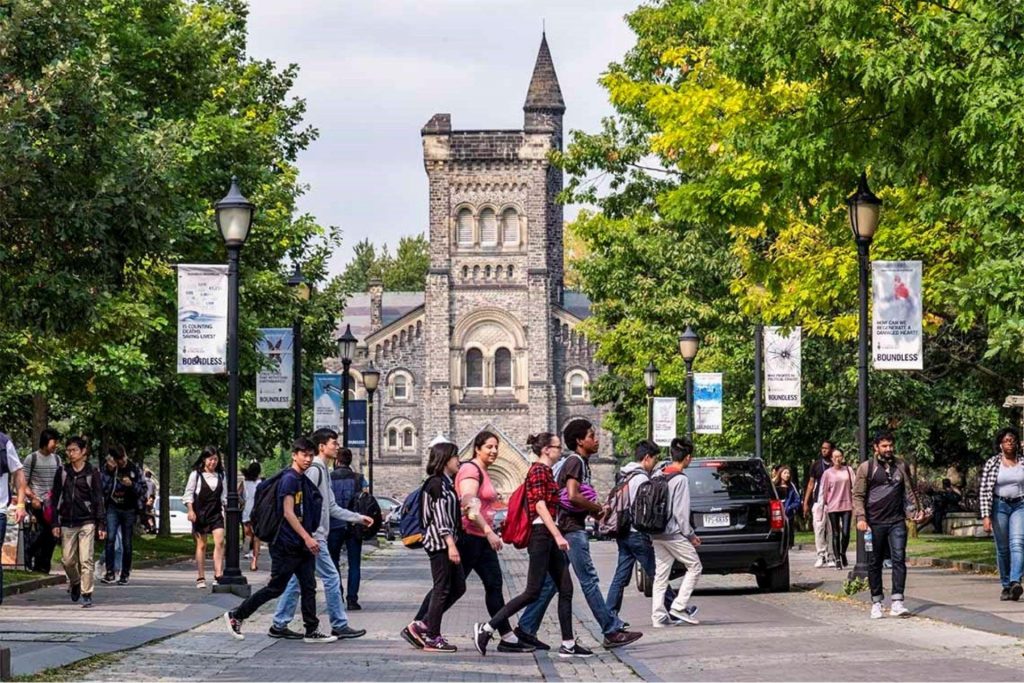
However, there are more questions as to why this brain drain is happening when jobs and other opportunities are shrinking overseas. A recent viral video originating from Kitchener, located 100 kms west of Toronto, showed long lines of Indian international students and graduates at a part-time job fair. Though this one instance has exploded on social media and garnered millions of views, it is by no means the only one: similar reports are emerging from throughout Canada.

For Indian students, it was a rude shock when they received deportation notices from the Canadian Border Security Agency. The deportations have temporarily been stalled after the Indian government took up the matter with the Canadian authorities. Prime Minister Justin Trudeau has emphasised the need for fair treatment of the aggrieved students, while Leader of the Opposition Pierre Poilievre has demanded that the fraudsters be prosecuted and ‘honest students’ be allowed to ‘stay, work and contribute to Canada.’

The fact remains students are making a significant contribution of revenue to Canada and its economy. It’s not easy for parents to send their children abroad for studies. Some of them even have to mortgage their immovable property and dip heavily into their life savings. No wonder, hundreds of students facing deportation due to forged offer letters had hit the streets in the Greater Toronto Area (GTA) in Canada.

International students coming to Canada not only bear the burden of high tuition fees – over five times what local Canadian students pay – but also have to invest a minimum of $10,000 in a mandatory Guaranteed Investment Certificate.

Students say, “Landlords are arbitrarily raising rents, even threatening eviction if we fail to pay increased amounts. Beds are renting for 800 dollars a pop in overcrowded accommodations. Some students have been forced to rely on food banks”. Canada is projected to welcome 753,000 international students this year, an increase from 550,000 last year. These students contribute about 25 billion dollars annually to the economy. Brampton, Ontario, and Surrey, British Columbia, are typically the cities associated with the Indian diaspora in Canada. They have permeated the Punjabi consciousness so thoroughly – through movies, songs and literature – that they are considered extensions of Punjab as well as integral parts of Canada.

However, the narrative of the Indo-Canadian community extends beyond these two cities. Owing to factors such as a booming economy and relative affordability, Calgary, specifically the north-eastern part of Canada’s third-largest city proper, has emerged as a prominent South Asian hub over the past decade.  The incumbent mayor of Calgary is Punjabi, Jyoti Gondek. Her predecessor, Naheed Nenshi, an Ismaili of Gujarati origin, was the first Muslim mayor of a large North American city. Moreover, the mayor of Alberta’s capital, Edmonton, Amarjeet Sohi, is also of Punjabi descent. Calgary’s relative affordability, cheaper housing compared to the Greater Toronto Area (GTA) and the Greater Vancouver Area (GVA), is attracting a substantial number of Desi newcomers. This includes both new immigrants and those migrating from the GTA and GVA.

A Canada-based Friends of Canada & India Foundation had come out in support of these students. The foundation had written a letter to Sean Fraser, Minister of Immigration, requesting an immediate stay on the proceedings to deport the students.  “We urge you to intervene in this matter and stop the deportation process immediately as this incident demands a broad investigation. The student visas and work permits were granted on the basis of forged documents pertaining to the Canadian institutions, this fact raises serious questions on the efficiency and competence of the Canadian immigration regime. It is understandable that protecting the integrity of the Canadian immigration regime is one of your priorities, but this special case demands a compassionate approach,” the letter read. It added, “The students have invested their life’s earnings in getting higher education in Canada. A number of them come from poor and marginalised families. They have invested their time, money, and youth in Canada. They have done everything to prove themselves as good students and hard workers. The deportation will prove to be catastrophic to these young lives and it will also impact Canada’s image as a preferred destination for higher studies globally”.  The allegations that student visas and work permits were granted on the basis of forged documents pertaining to the Canadian institutions, raises serious questions on the efficiency and competence of the Canadian immigration regime.

Several leaders, including MP for Mississauga-Malton Iqwinder S Gaheer, Saskatoon West MP Brad Redekopp, MPP (Member of Provincial Parliament) for Brampton South Prabmeet Sarkaria, MPP for Brampton West Amarjot Sandhu and Brampton East MPP Hardeep Grewal, have extended support to the protesting Indian students. NRI Minister Kuldeep Singh Dhaliwal had also written a letter to the MEA asking it to take up the matter with the Canadian authorities and stop the deportation. Punjabi singers Sherry Mann and Elly Mangat had also visited the students’ protest in Canada.

However, the serious issue is brain drain. No other region in India has a more pronounced effect of it than Punjab. Everyone in the state knows someone who lives and works abroad.  Mass exodus of youngsters from Punjab to Canada in search of a better life is a known fact now. Most emigrate to Canada as students, since it’s the quickest route, but marriages with Canadian residents and family or friend sponsorships are also common.  The age bracket of emigrants is 22-28, with the majority holding undergraduate degrees and some even having work experience in their respective fields of study. Unfortunately, the work that they find here in Canada seldom matches their academic qualifications. They usually end up going into logistics, driving trucks or working in other less glamorous professions such as taxi drivers, salesmen, factory workers and so on.  

Canadian GDP is about 68 per cent the size of Indian GDP, the Canadian population is, however, only 2.6 per cent the size of Indian population — to make sense of the difference in standard of living and available opportunities in the two countries. Punjabi, for example, is the second-most spoken language in the town of Surrey, a city of some 6,00,000, and it is also one of the most widely spoken languages in the Greater Toronto Area , the biggest urban agglomeration in the country with more than six million people. 

In the meanwhile, in another major shock for India, the Australian authorities and universities have reportedly rejected the application of students from Punjab and Haryana. According to reports Australian officials from the Department of Home Affairs (DHA) had warned international education operators about soaring numbers of “low-quality applications”.

Can Haryana BJP overcome odds to emerge winner in 2024 poll?

Organized with an eye on 2024 poll, Jan Samvad programmes in Haryana have not gone the way BJP would have wished. Confronted with sharp queries from public, CM Khattar lost his cool at least at three places in Sirsa district during these events, reports  Jag Mohan Thaken

The increased political activity in the state of Haryana is a clear indicator to the fact that all parties are gearing up for the upcoming 2024 electoral battleground.

After securing impressive victories in Himachal Pradesh and Karnataka, the Congress has now started flexing its muscle in Haryana. Former Chief Minister, Bhupinder Singh Hooda is trying hard to energize the Congress through ‘Hath se Hath Jodo’ programmes. But the infighting in the party may hamper Congress’ chances of securing a decisive win in the state.

Aam Aadmi Party, which has also thrown its hat in the ring, does not seem to gather much moss. It may cut into some anti-Congress city-based votes, but will get no remarkable support in the rural areas as the result of recently held Adampur by-election has amply demonstrated. Despite its candidate being a Jat, the party could not save the security deposit as out of the total 131,523 votes polled, AAP only managed to secure 3,420 votes.

The ruling BJP has been in election mode since long. While BJP state president Om Prakash Dhankhar is organizing district-wise meetings of workers, Chief Minister Manohar Lal Khattar is also trying to woo the public through his ‘Jan Samwad’ (public dialogue) programmes being organized with the help of government machinery. Only time will tell what will be the impact of these programmes on the electoral fortunes of the BJP.

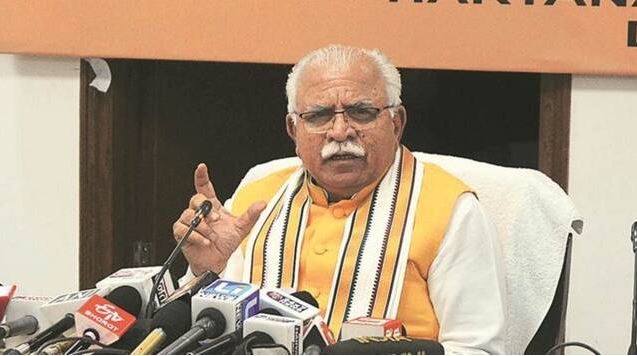
However, these Jan Samvad programmes have not gone the way the saffron party would have wished. Faced with some sharp questions raised by the public, Chief Minister Manohar Lal Khattar reportedly lost his cool at least at three places in Sirsa district during these Jan Samvad programmes. The Chief Minister was even gheraoed by hundreds of angry villagers during the Jan Samvad programme at Dongra Ahir, an Ahir (Yadav) dominated village of Narnaul district. The siege of the place where the Chief Minister was lodged vividly reflects the widespread public anger directed towards the BJP and its government

BJP’s journey in Haryana

The BJP had for the first time ascended to the position of Chief Minister in 2014 in the state which came into being in 1966.  In 2014 Lok Sabha elections, due to decline in Congress vote bank owing to its image smeared by corruption charges and the Modi wave sweeping most parts of the country, the BJP won seven of the total 10 seats in the state. Indian National Lok Dal Party won two seats of Sirsa and Hisar under the leadership of former Chief Minister Om Prakash Chautala. The Congress won the only one seat of Rohtak, where Dipendra Hooda, son of former Chief Minister Bhupendra Singh Hooda, got elected.

In the state assembly election held after a gap of only six months after the Lok Sabha poll, the BJP got only 47 seats out of 90, but despite a simple majority, it completed the full five-year term due to backing of the saffron party at the center.  

In the 2019 Lok Sabha elections, the continuing poor condition of the Congress and the strong Ram Mandir wave resulted in the BJP winning all the 10 Lok Sabha seats in the state, due to which over enthused Chief Minister Khattar set a target of above 75 seats out of 90 in the Legislative Assembly elections that were to be held six months later. But the diminished returns in the assembly election made him eat a humble pie and results even stunned the BJP high command.

The BJP did not even get a simple majority with the party tally reduced to only 40 out of the total 90 seats. Except the Chief Minister and one other minister, all the ministers in the state cabinet were made to bite the dust by the people.

But the BJP got a reprieve when the Jan Nayak Janata Party (JJP), which was cursing the BJP day and night on every stage during the whole election period, and fetched votes from the people in the name of defeating the BJP, cashed in on the opportunity to share power by extending support of its 10 MLAs to BJP. As a result, the BJP-JJP alliance government was formed in Haryana.

Though the opposition alleged it was not a government having peoples’ mandate, but an unethical alliance to relish fruits of power. Despite a poor mandate, BJP retained power. But the one-year long farmers’ movement of 2020-21 has turned the common people against the BJP-JJP, and the BJP-JJP alliance seems to be losing ground in Haryana. A clear indication of this is reflected in the Chief Minister facing a hostile public during Jan Samvad Programmes.

The ongoing treatment of women wrestlers, who have been demanding the arrest of WFI president and BJP MP Brij Bhushan Sharan Singh for sexually harassing women sportspersons, by the BJP-led central government, is further weakening the position of the BJP in Haryana. If the situation does not change, BJP may suffer its consequences in the next Lok Sabha elections as well.  

What are BJP plans?

Political experts opine that the BJP, mindful of its slim chances in the Legislative Assembly, will like to hold election of Haryana Legislative Assembly six months earlier than the scheduled time along with the Lok Sabha elections, so that they can take advantage of the “strong Modi vs weak Rahul” narrative and also succeed in obfuscating the many failures of the state government by raising national security, Ram Mandir and Bajrang Bali issues to daze the public.    

Political observers also believe that the BJP may even float the name of a Jat leader as the Chief Minister during 2024 election to woo the farmers, and especially the Jat community, who are enraged with the role of the Khattar government in the state during the farmers’ agitation and the on-going wrestlers’ protest.  

The BJP knows well that at the time of farmers’ agitation, the farmers expected that its alliance partner, JJP would withdraw support to the BJP to bring down the government, but just the opposite happened. However the JJP continued its support to the BJP government which irked the public multifold.  So, the BJP hopes that the public ire will be directed more at the JJP and would affect the BJP less.

Though the leaders of JJP are young, they also are seasoned players of politics. While Dushyant Chautala, who is the deputy chief minister from JJP quota, is seen standing shoulder to shoulder with the government, but he has given free hand to JJP national general secretary and his younger brother Digvijay Chautala to demonstrate to people about the JJP’s solidarity with farmers from time to time. Digvijay keeps claiming to be a well-wisher of farmers’ community, so that the farmers’ anger towards the JJP can dissipate.

Digvijay keeps repeating that JJP is making every effort to fulfill the promises made to the people and says the people gave them only 10 seats out of 90. The JJP however managed to share the power, but their hands are tied in the alliance due to not having a complete hold on the government.

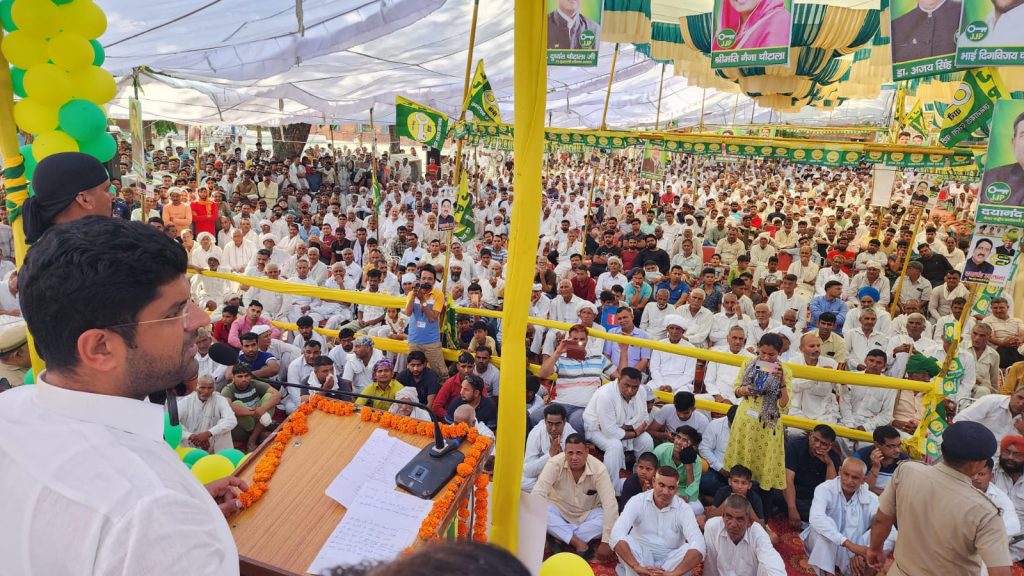
In a program in Bhiwani district, Digvijay Chautala, to entice the voters once again, clearly said, “The alliance government does not extend much freedom to JJP to take decisions as per our will, which was there under the rule of Chaudhary Devi Lal or Chaudhary Om Prakash Chautala ji. Because we have only 10 seats out of 90, our power share is only 20 percent. If you want to enjoy full power in the true sense, then you will have to put at least 46 seats in Dushyant’s bag and make him the Chief Minister of Haryana.”

Digvijay Chautala wants to reassure the people with his statement that the JJP wants to form its own independent government. To achieve this end, the party will contest the election on its own and will ask the people to give one chance to form a full independent government.

Political experts believe that even if the BJP-JJP alliance splits and both the parties contest the elections separately, it will only be a friendly match by providing the voters a separate platform in the form of JJP to prevent the sections angry with the BJP from moving towards the Congress. When the time comes, both will come together and form a coalition government again, they opine.

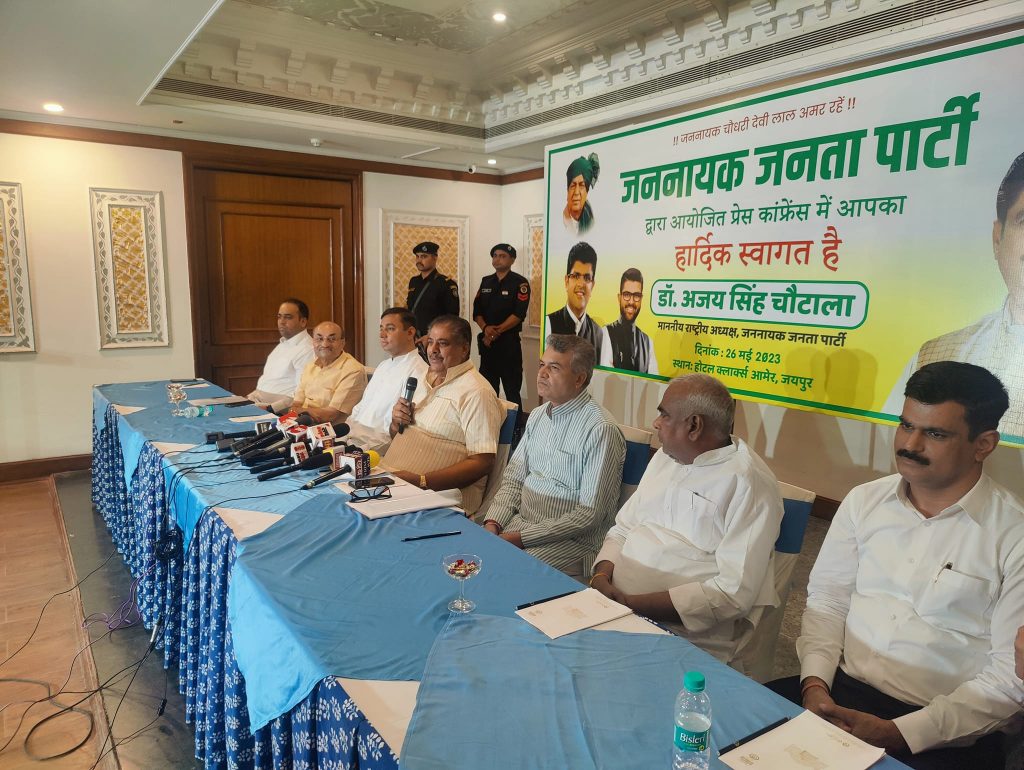
That the JJP is hands in glove with BJP is also confirmed by the fact that the JJP will join hands with the BJP in the Rajasthan assembly elections to be held towards the end of this year. The party’s national president Ajay Chautala made this announcement on May 26 in Jaipur.

Chautala said that alliance talks with BJP are going on for Rajasthan, and added that after Haryana, the party will now contest elections in Rajasthan together with BJP.

“We will contest the elections in Rajasthan on those seats where the BJP is weak,” said Chautala.

Political analysts believe that the BJP will provide the platform of its ally, JJP to the Jats of Rajasthan to diffuse the anger that has been simmering among the Jats due to the farmers’ agitation and the removal of Satish Poonia from the BJP state president’s post.

In the 2019 Lok Sabha elections in Rajasthan, BJP joined hands with a strong Jat leader, Hanuman Beniwal and left Nagaur seat for him.

But now for some time, Beniwal has been daggers drawn with the BJP on certain issues like farmers’ and wrestlers’ agitation.

So, the BJP is working on a plan to utilize the services of another big-wig Jat clan — Chautala family — to take on Beniwal.

To what extent BJP will succeed in drawing Rajasthan Jat voters in its favor by changing horses midstream in 2023 assembly elections, will impact BJPs poll strategy  for Haryana elections 2024


Congress, BJP lock horns over Rahul’s remarks during US visit

Rahul Gandhi

The Congress leader, who answered a range of questions related to Indian politics during visit to the US, pooh-poohed the saffron party’s charge that he was seeking political support in the US, and said that Congress’ fight with BJP was our internal matter, writes Amit Agnihotri

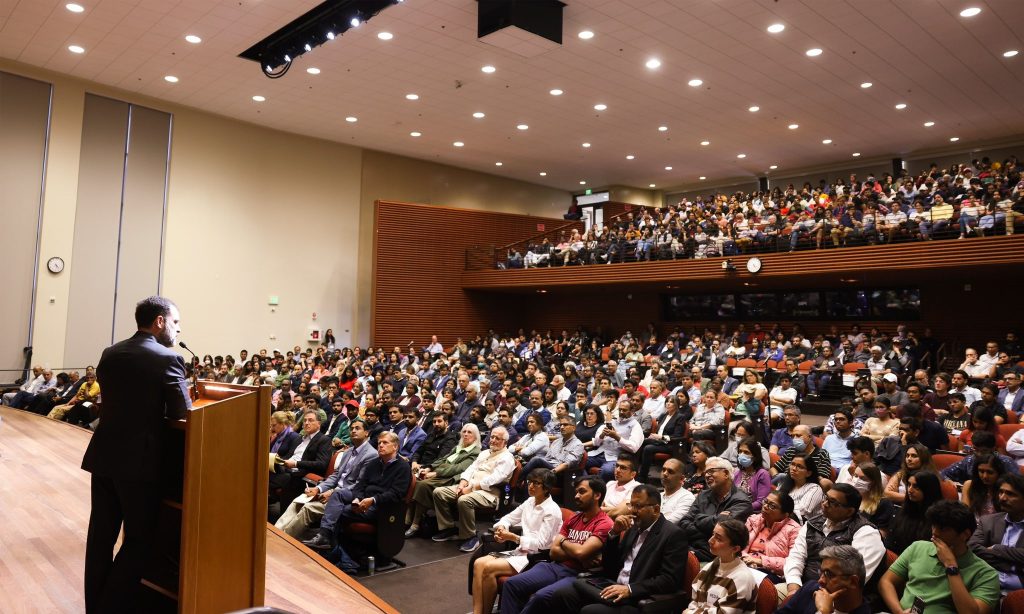
Former Congress president Rahul Gandhi’s visit to the US ahead of PM Modi’s official trip created a buzz around the former Congress chief and helped the grand old party project him as a global leader but the trip also faced criticism from the ruling BJP.

The week-long visit, starting May 30, saw Rahul participate in interactive sessions with academics, lawmakers at Capitol Hill, and Indian diaspora on a range of topics across Stanford University, California, Washington DC and New York.

Rahul also addressed a press conference at the National Press Club where he answered a range of questions related to Indian politics and global affairs.

“The purpose of his (Gandhi’s) trip is to connect, interact and begin a new conversation with various individuals, institutions and media, including the Indian diaspora that is growing in numbers in the United States and abroad to promote the shared values and vision of the real democracy with a focus on freedom, inclusion, sustainability, justice, peace and opportunities world over,” Indian Overseas Congress chairman Sam Pitroda said in a statement before the trip.

In March this year, Rahul had visited the UK during which his remarks alleging that the structures of Indian democracy were under attack and there was a “full-scale assault” on the country’s institutions, had created a row back home.

His remarks had triggered a political slugfest, with the BJP accusing him of maligning India on foreign soil and seeking foreign interventions, and the Congress hitting back at the ruling party by citing instances of Prime Minister Narendra Modi raising internal politics abroad.

The US visit too was marked by a similar war of words between the ruling BJP and the Congress, which hit back at External Affairs Minister S Jaishankar over his criticism of Rahul Gandhi’s remarks.

“The man who started the practice of taking national politics outside the country was none other than the one who gave you a ministerial position,” Congress general secretary Jairam Ramesh said in response to Jaishankar’s remarks.

“The prime minister has made fun of previous governments and made light of the country’s over-70-year-old history. What Rahul Gandhi has said is only the truth that a planned systematic attack on our constitutional bodies is happening,” Congress leader Randeep Surjewala said.

On his part, Rahul clarified that he was not seeking support from anybody in the US and noted that the Congress fight with the BJP was an internal matter.

“I am very clear that our fight is our fight… But there is a group of young students from India here and I want to have a relationship with them. I want to talk to them. It’s my right to do it. I don’t understand why the Prime Minister doesn’t come here and do it,” he said.

He further said that it was important for political leaders to put themselves in situations where they faced questions and learnt, and if that meant not being able to answer some questions or “occasional slip-ups”, it was fine for he still learnt a lot.

Rahul also touched upon some international issues like India’s relations with Russia, and country’s festering border row with China.

Can America succeed in winning back its old friend Saudi Arabia?

Though US President Joe Biden sent Secretary of State Antony Blinken to Riyadh on June 6 in a bid to repair his country’s deteriorating ties with America’s once close ally in the region, but Saudi Prince has remained non-committal

It is difficult to state whether the dictum that a good general should know how to retreat applies in diplomacy, but in geo-politics it has recently been tried. The US President Joe Biden sent his Secretary of State Antony Blinken to Riyadh on June six, maybe, in a bid to repair his country’s estranged ties with America’s close ally in the region, Saudi Arabia.

It appears that the visit was planned in such a rush that Blinken reached the Saudi capital on the same day Iran’s embassy was opened in Riyadh, perhaps, much against the wishes of Washington. The friendly ties between Iran and Saudi Arabia, and if some détente is worked out with Israel, the presence of the American army in the region becomes irrelevant. The CIA and Pentagon may congratulate themselves that the region may still need American security umbrella, because the present Israeli PM, Benjamin Netanyahu, has unleashed confrontational policies towards Palestine, and secondly, Iran has opened its diplomatic office, but Saudi Arabia is yet to honour its commitment for reciprocation made two months ago in Beijing.  

Earlier, on March 10, Iran and Saudi Arabia agreed to restore diplomatic ties seven years after the breakdown of their diplomatic relations. The peace deal, facilitated by China, also included the implementation of a security cooperation agreement signed in 2001 and a 1998 pact to enhance cooperation on trade, investment, technology, and culture. The two countries were in a state of war against each other for the past several years, particularly regarding the issues related to Syria and Yemen. The Chinese Foreign Minister Wang Yi, who had hosted the high power delegations from the two countries, led by Ali Shamkhani, secretary of the Supreme National Security Council of Iran and the Saudi National Security Advisor Musaad bin Mohammed al Aiban, appreciated their ‘sincerity for peace’.

The policy makers did not take into account the visit of Chinese President, Xi Jinping, in December 2022. During his visit, he had visited the Gulf countries, where he had met 14 Arab leaders. In February, 2023, he had hosted Iranian President Ebrahim Raisi. Saudi Arabia is yet to appoint an ambassador or announce a date for its embassy to reopen in Iran, Americans may hope that the Saudis back out from their agreement, but this expectation is too far-fetched.

Improving US-Saudi Ties

Blinken’s trip is taking place at a time, when Saudi Arab’ crown prince Mohammed is being seen disregarding American advice on the production of the crude oil. Riyadh has been ignoring US President Joe Biden on its supply of crude oil to global markets, its willingness to partner with Russia in OPEC plus and reaching a détente with Iran mediated by China are considered a total rebellion against the established US policies in the region.

Since Biden’s inauguration as the President, his relationship with the Saudi Prince was always strained, especially when Biden announced  to make Saudi Arabia a “pariah” over the 2018 killing of Washington Post columnist Jamal Khashoggi.

Saudi Arabia, like other Gulf Arab nations, have been relying upon the US to be the security guarantor for the wider Middle East as tensions over Iran’s nuclear program in recent years have spilled over into a series of attacks.

Convergence of Policies

In spite of the improvement in the Saudi Arabia-Iran ties, Saudi leaders are also keen to end the war in Yemen, something also sought by the U.S. The Blinken’s visit to Saudi Arabia also shows that he is more eager to engage internationally, particularly after being involved in prisoner swaps in the Moscow-Ukraine conflict. The kingdom hosted Ukrainian President Volodymyr Zelenskyy in May at an Arab League summit.

It is hoped that after this visit, Washington will leverage its security relationship with Saudi Arabia as it gets warmer towards China and Russia. However, the Saudis point out that Biden can’t provide weapons, when it comes to Congress stopping arms sales to the kingdom.

Interestingly, Deputy Assistant Secretary for Arabian Peninsula Affairs, Daniel Benaim has asserted before the media that “human rights are a pillar of how this administration engages with countries around the world and in this region,” but he declined to discuss specifics. He also questioned whether Blinken would be bringing up human rights issues, including Khashoggi’s death, during the visit.

Instead he indulged in the usual rhetoric of a diplomat, “I think what you’ll see on this trip is the vision of the U.S-Saudi relationship that’s both rooted in our historic mainstays of cooperation in areas like defence and security and counter-terrorism, includes ongoing important regional diplomacy when it comes to Yemen and Sudan, and looks for opportunities for regional de-escalation and regional integration.” However, he betrayed the American concern, when he stated, “We will not leave a vacuum for our strategic competitors in the region.”

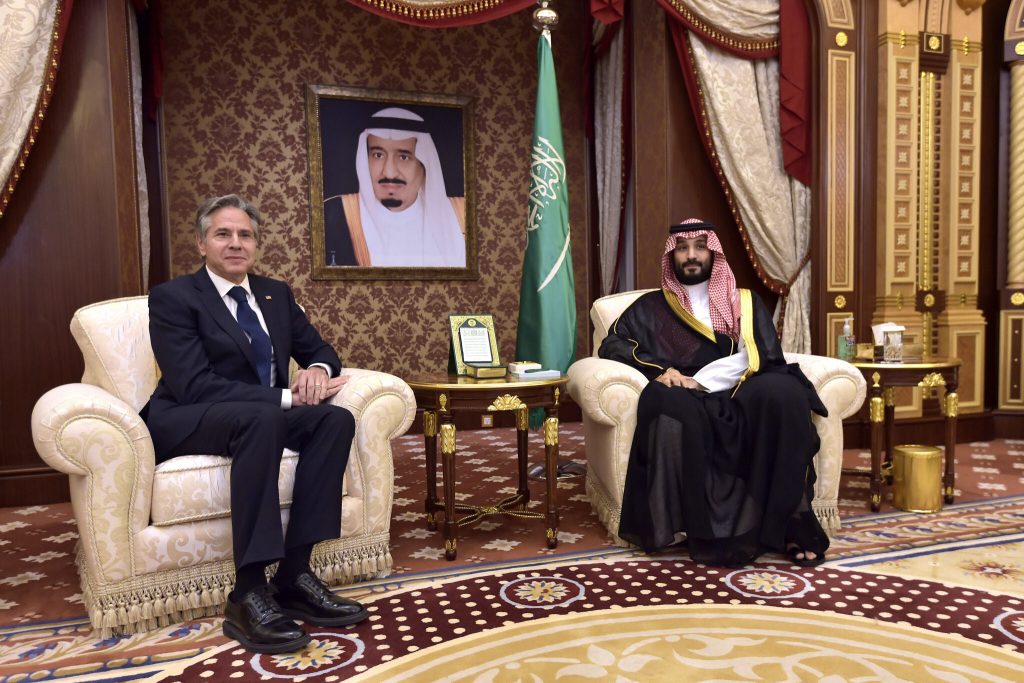
During his three-day visit, Blinken met Prince Mohammed, with the State Department saying they discussed their “shared commitment to advance stability, security, and prosperity across the Middle East and beyond.”

Earlier, Biden’s national security adviser, Jake Sullivan, had travelled to Jeddah in May, 2023, to meet Prince Mohammed. Interestingly, during his stay in the country, the prince had also hosted Venezuelan President Nicolás Maduro, a long-time foe of America.

It is difficult to analyse any substantial gain for American diplomacy during Blinken’s visit, as the Yemen war continues despite prisoner swaps and the recent efforts to end the conflict. Meanwhile, both sides likely have wants that won’t be fulfilled. It is yet to be confirmed whether Saudi Arabia has again asked for a nuclear cooperation that includes America allowing it to enrich uranium in the kingdom – something that worries non-proliferation experts as spinning centrifuges opens the door to a possible weapons program. Prince Mohammed has already warned that the kingdom would pursue a nuclear weapon programme, if Iran, a signatory to the non-proliferation treaty, becomes a nuclear power state.

The American concern was expressed during Blinken’s visit to Israel, where he told a meeting of the American Israel Public Affairs Committee that the Biden administration continues to believe “that diplomacy is the best way to verifiably, effectively, and sustainably prevent Iran from getting a nuclear weapon.” However, he added: “All options are on the table to ensure that Iran does not obtain a nuclear weapon.”

It is also believed to be in the Blinken’s agenda to obtain diplomatic recognition of Israel by Saudi Arabia. It is not known whether he could make any breakthrough on this vexed issue, though it appears unlikely at the moment, despite neighbouring Bahrain and the United Arab Emirates recognizing Israel in 2020.

The key to peace in the region remains the issue of Palestine. Saudi Arabia under King Salman has repeatedly called on Israel to allow the Palestinians to create a state in the occupied West Bank, Gaza and east Jerusalem, territories seized by Israel in the 1967 war. However, Netanyahu has adopted religious overtones, thus ending the possibility of ending the conflict in near future. He, however, forgets that Dragon is closely watching the fluid political situation in the region and might be more assertive in future.


Rift over Uchana seat further strains wobbly BJP-JJP alliance

All is not well with the over 3-year old alliance of the ruling BJP and its junior partner JJP in Haryana; the latest being their stance on JJP’s top leader Dushyant Chautala’s Uchana Kalan seat which he had won after trouncing BJP’s nominee in 2019 polls. A report by Rajesh Moudgil

A fresh tussle seems to be brewing between Haryana’s BJP-JJP coalition government. This time, it is over the issue of Jind’s Uchana Kalan assembly seat, which the JJP’s top leader Dushyant Chautala wrested from Prem Lata, the wife of BJP’s top leader Birender Singh in 2019. The BJP leadership has indicated fielding its own candidate from here in 2024 state polls.

For the record, the two parties had fought polls against each other in 2019. While BJP bagged 40 (the number rose to 41 later after Bhavya Bishnoi won in Adampur bypoll in 2022) of the total 90 seats in the state, the Congress won 31 (which fell to 30 after Congress’ Kuldeep Bishnoi quit and shifted to BJP). The JJP had won 10 seats, while independent candidates won from seven seats and Indian National Lok Dal (INLD) and Haryana Lokhit Party (HLP) won a single seat each.

The BJP and JJP joined hands after elections and also got backing of the independents. However, the two allies have spoken different languages on several occasions.

Sample this: The differences between the alliance had first surfaced about three years ago over the now-repealed farm laws when Dushyant said since his JJP had full support of farmers and he would be in a better position while being a partner with the government to raise farmers’ concerns.
More recently, on the issue of the wrestlers’ stir against WFI chief, Dushyant was quick to demand strictest action against whosoever was found guilty and even urged Delhi police to expedite the probe into the matter.

Now only a few days ago, JJP MLA Ram Karan Kala had resigned as the chairman of Haryana Sugarfed in protest against the police lathicharge on the agitating farmers and their leaders’ detention demanding MSP on sunflower seeds. Kala is MLA from Shahbad segment in Kurukshetra district where the farmers were currently holding a protest.

The Fresh Spat

Back home, the latest dispute between the BJP and JJP was whipped up after the BJP state incharge Biplab Deb exhorted the party workers while holding a workers’ meeting in Uchana Kalan assembly constituency recently to prepare to take a revenge for the defeat of the party’s former BJP legislator Prem Lata in the 2024 assembly polls.

Dushyant was first to strongly react to it stating that he would fight from his seat and only about three people seemed to have some problems with it.

The JJP state chief Nishan Singh also chipped in and remarked that, alliance or no alliance, Dushyant would contest from Uchana Kalan only.

Deb did not stop there as, according to reports, a few days later he went on to say that the JJP had not done any favour to BJP by having truck after 2019 polls as several of its leaders were given ministerial berths.

However, the JJP spokesperson Deepkamal Saharan tried to clear the air by saying that while Dushyant would obviously contest from Uchana Kalan, the JJP leader did not mean BJP but three persons – Birender Singh, his wife Prem Lata and their son Brijendra Singh – who seemed to have problem with his contesting from Uchana Kalan.

It was not the first time that such an indication had been given. In the past too, the BJP state chief Om Prakash Dhankar had said that the party would go it alone in the 2024 elections.

Stakes On The Seat

Uchana Kalan, an assembly seat in Jind district, had been the home turf of the former senior Congress leader and Union minister Birender Singh who won the seat five times before joining BJP while his wife Prem Lata won it as BJP candidate in 2014. However, the situation changed when the JJP leader Dushyant snatched it from her in 2019 when the JJP fought the polls against BJP.

Interestingly, the 2019 elections were held in October 2019, five months after the Lok Sabha polls in which Dushyant had lost to Birender Singh’s son,  Brijendra Singh – formerly an IAS officer – from Hisar parliamentary seat.

Pertinently, Dushyant is grandson of former Haryana chief minister Om Parkash Chautala, the founder of INLD. While Om Parkash Chautala along with his younger son Abhay heads the INLD, his elder son Ajay along with Dushyant had parted ways from INLD and floated JJP in 2018 ahead of 2019 polls.

The Disagreement Continues

Meanwhile, chief minister Manohar Lal Khattar has taken a dig at the reports regarding the resignation of JJP MLA Ram Karan Kala, stating that no such resignation had reached the government yet. “We are still finding the resignation. We have not received any resignation from him. Sometimes, such statements are made because of some pressure’’, he quipped.

On the question regarding the rift between BJP-JJP alliance, the chief minister said the alliance was done for public welfare and it would continue.

However, Khattar’s statements notwithstanding, it was a few days ago that four independent MLAs had called on BJP state incharge Deb after the recent squabbling over the Uchana Kalan seat. Deb subsequently said that independent MLAs Dharam Pal Gonder, Rakesh Daultabad, Randhir Singh and Somveer Sangwan had expressed their confidence in Prime Minister Narendra Modi’s leadership in the meeting. He went on to say that the BJP was leaving no stone unturned for state’s progress under the “double engine’’ government.

A day later, the HLP legislator Gopal Kanda also met Deb in Delhi and expressed his faith in Modi’s leadership. Deb also tweeted to say that Kanda wanted to make Haryana strong and prosperous through the BJP’s double-engine government.

Notably, these meetings are being seen as significant as the BJP has of late been indicating that it would contest all the 10 Lok Sabha seats in the upcoming 2024 parliamentary polls on its own.


MOST POPULAR

HOT NEWS