Myths and misconceptions float around about Muslims

In recent weeks,  one heard movie-goers’ reactions after they watched ‘The Kerala Story’, and they have been on the expected lines. Films are being made to paint the community in the darkest hues.

One news report after another of supposed lovers or the live-in partners not just killing their partners but also chopping and cutting those human forms and then throwing about those cut pieces! Sheer madness! Yes, nothing short of madness.

Love affairs and the invariable fallouts have been taking place ever since human beings took off! But inevitable fall outs led to crying and sobbing sessions, followed by depression and nervous breakdowns and much more along the strain.

Rarely did one get to hear of this level of barbaric killings of partners taking place today, in these so called developed times. Perversions and frustrations and frenzied madness seem to be hitting many. Though reasons for this madness could be several but one of the prime reasons could be what’s screened on the big and the small screens.

Violence and frenzied urges and perversions, together with twisted notions and misconceptions hovering around. Not happening overnight. But definitely reaching the unthinkable limits now, in these recent years. What, with the commercial lobbies and vested political interests not just giving the go-ahead and fillip and but much more.

It gets significant to detail that several years back, bureaucrat of the J&K cadre, Parvez Dewan, was one of the first to have researched on what’s portrayed cum relayed, through Bollywood films and television serials.

And his findings exposed some very harsh truths vis-a-vis the lopsided  notions and misconceptions of the ‘other’. According to his findings:

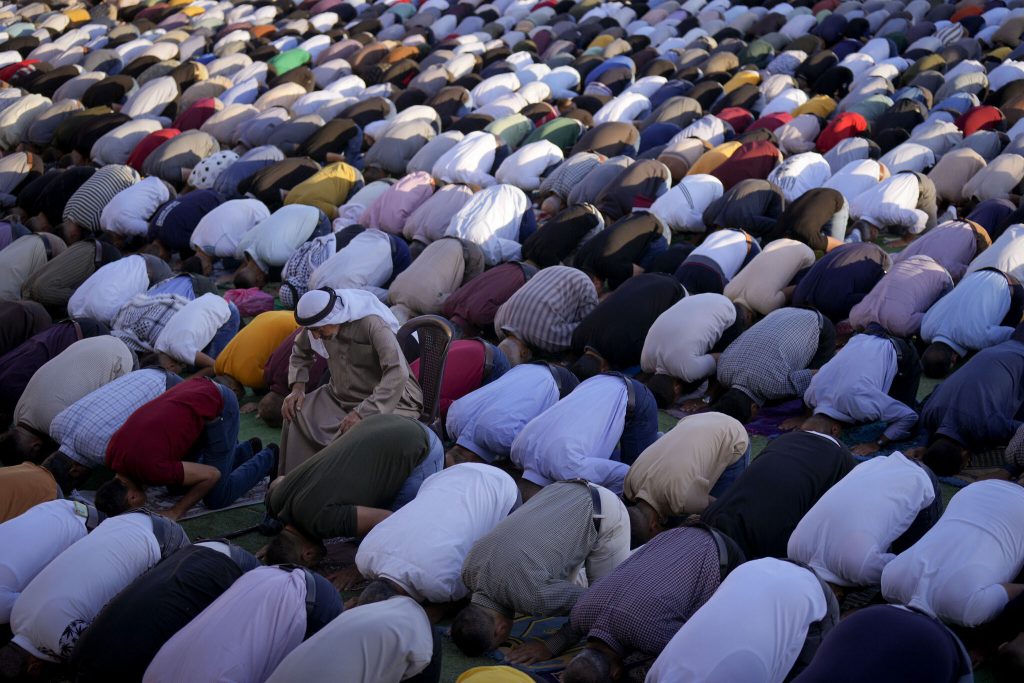
Christians are shown in a particular negative light with their men drunk petty criminals and women in skirts that bare … women with loose morals and the smoking-drinking types. Sikhs are generally portrayed as well-meaning dullards. Dalits and the tribal community in another shade of the make-believe. Parsis are portrayed as silly and old. The Chinese settled in India are usually portrayed as evil and shown as gangsters. Muslims in another set of negatives hovering around them; invariably the villain in the movies and serials equipped with a Muslim name or surname! Muslim men shown in typically ‘Muslim’ attire. They are either old, handicapped, subordinate, sterile, impotent or homosexual. If they are not any of these, then they are producing too many children. Less than 20 per cent of the Muslim men are portrayed as young but even in this category they are depicted not only as backward but as fundamentalists, mazhab ke pakke, so much so that many of the opening shots start with a Muslim offering namaaz. Another trend, since the film Tezaab, is the portrayal of Muslim men as terrorising the local population.

****

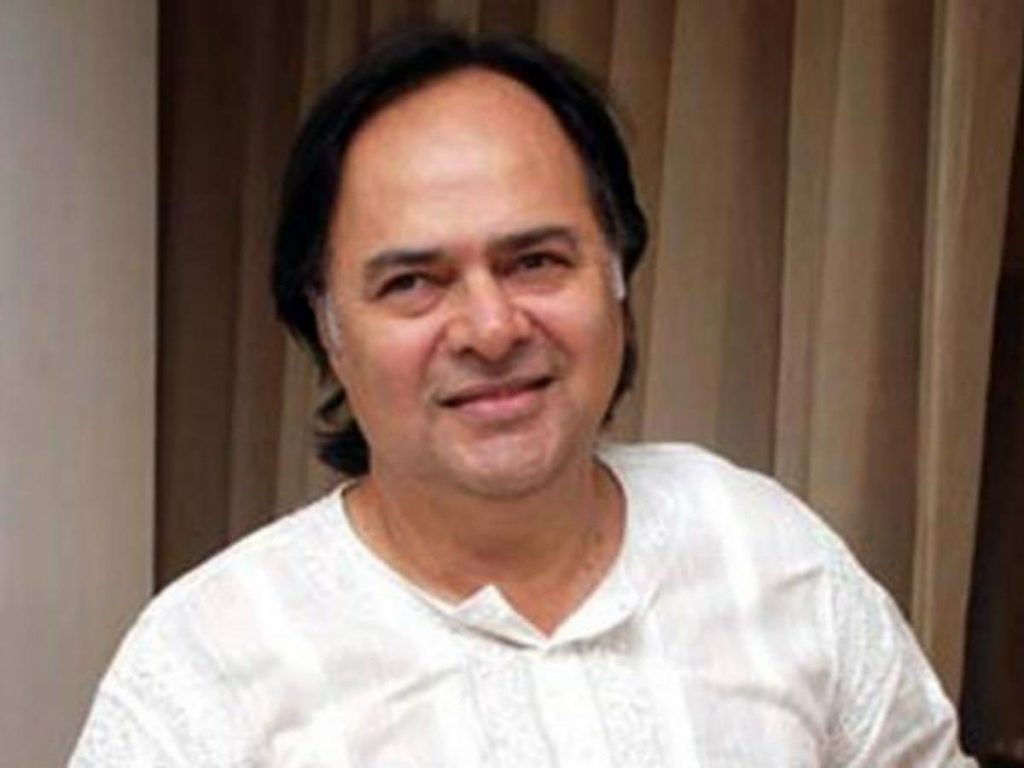
I’d met and interviewed actor Farooq Sheikh twice, once in the 90s and then around 2004 – 2005. He had lashed out to the wrong portrayal of Muslims in the Bollywood films. “Film makers in Bollywood have little concern to show the actual and real haal and halaats that an Indian Muslim is going through…the actual condition of the Indian Muslims…Film-makers in Bollywood have big budgets but little sensitivity towards relevant issues.
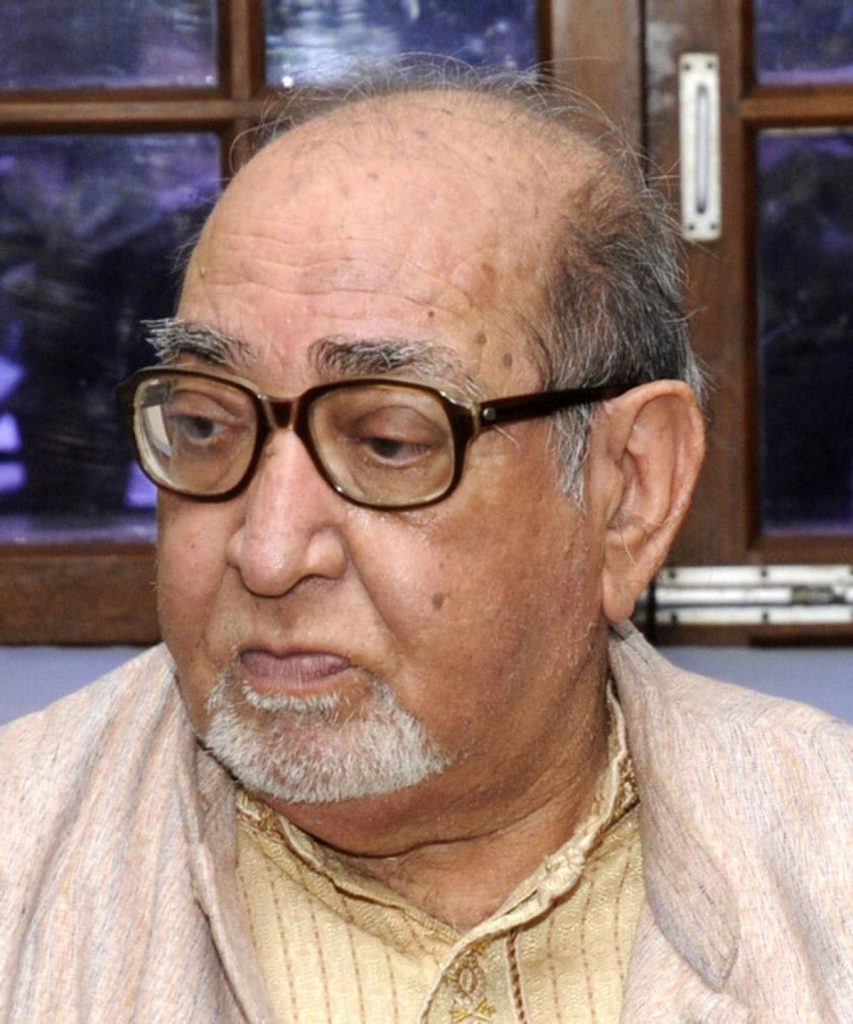


“Today, cinema has become a commodity to be sold. Community perceptions in our films have always centred around stereotypes: the Christian character is a girl dancing or wearing short skirts, with ample indications that she’s a fast girl, Farooq Sheikh said, adding, “The Parsee is shown as blundering. The Sikh is either a soldier or eating parathas. In the case of Muslims, the characters are hardly believable. Why do they portray the Muslim man to be wearing a lungi and a vest or as a ghaddar! Sometimes, as an exception or token, one of them will be shown as patriotic so that the entire community is not misunderstood. The other stereotypes — with 300 adaabs in one film and women wearing ghararas or cooking qormas — are also absent in an average Muslim household.”

He detailed that Bollywood was no place for sensitivities: “Film industry and film making is just a dhanda today …sheer money making thing, so all this doesn’t really bother them…Today there are no film producers like K Asif, Guru Dutt, Bimal Roy, Mehboob sahib…Mehboob sahib had no money yet his passion drove him to make films. And Bimal Roy lived in a rented accommodation all his life. Or the fact that it took M.S. Sathyu took 20 years to repay the debt he took to make Garam Hawa. That level of commitment and passion and sensitivity is missing in today’s film producers.”

****

Today the situation gets compounded and dangerous. What, with commercial films made to aggravate and further expand the divides and gaps between communities.
Well, reactions along the expected strain:“Yeh picture dekh kar Musalmano se darrr lag raha hai !” (After watching this film, feeling scared of Muslims!)

We have reached such horrifying, dark times when films are being made to portray the Muslim community in the darkest hues. The actual-factual factors are getting side-lined and bypassed in the agenda-mission-motive to intensify communal polarization and divides.


Another vital aspect that stands out in today’s polluted atmosphere is this stark reality: where are the occasions for any of the interactive sessions between the Muslims and non-Muslims to get-set-going to clear the communal poison around! After all, you get to interact with each other only when you are on par. A middle-class Hindu and a Muslim can only talk or walk or eat together if they are living in the same block or in the opposite building, or working or studying together. But with lopsided ratios on these fronts, when and where to interact with each other! And not to overlook moral policing brigades and the private senas unleashed in several states to thrash Muslim men if they dare to befriend Hindu women.

Today myths and misconceptions are afloat about the Indian Muslims. Needless to say that there should have been an immediate halt to these. If misconceptions about the Muslim community could stand corrected, then communal divides would automatically lessen. But seemingly, the political lot do not want the divides to dwindle. For them, political strategies would flop!

It is indeed unfortunate that we aren’t speaking out, coming out with the stark basic fact and that is:  a person who terrorizes does not belong to any faith. He is a foot soldier. Used by political powers and the agencies and the mafia. Presumably he does not follow any faith. As no religion sanctions killings or destruction.

During the course of an earlier  given interview with me, sociologist  Professor  Imtiaz Ahmad  stressed,  “ The term  Islamic   terrorists  is a   misnomer and should  be  avoided, as it’s used  by  vested  political  interests in India to drive a  wedge  between  Hindus and  Muslims.”  Professor Ahmad  was  emphatic  that  it’s a  misconception that  more and  more  Muslims are  taking to  violence: “No, it  is  not  that  more and  more Muslims are turning into  militants. Worldwide there are  many  other  forms of  militancy  and  terrorism  that are  equally aggressive  and widespread. In  our  own country we  have  had and continue to  have  militancy  in  Kashmir and  in  the North-East, to   name  two  persistent   forms of  militancy in recent  years. Outside the country, within the South Asian region, we have  had  terrorism in  Sri Lanka and Nepal. Further away  there are also Muslim  militants who  are fighting  against  regimes  which  are wholly or largely  Muslims. It  is ironic that following  September  11, the world  seems to  have  forgotten that there are  these other terrorists. Partly,  because the  US-led war has put the  focus on Muslims and  partly  because Muslims  are  more  widespread, the  impression is gaining ground  that more and more Muslims are turning  terrorists. Actually more and  more  people in the entire world are turning into terrorists.”

And when the late scholar-activist, the late Asghar Ali Engineer, was addressing a meeting in New Delhi, he was asked for reasons for Muslims turning to  terrorist activities. This is what he had to say : “These acts of  terrorism are  political and  are  not  religious…It is  important   to  analyse the  reasons  behind   terrorist  attacks. And  the  fact is that there are  extremist fringes  in each  community…And  there   wasn’t that  hue  and cry  when  Tamil  rebels  indulged  in  violence in  Sri Lanka  or when Irish  rebels did  the  same  in the  UK!”

Why Islam, the religion, is linked to violence,  he countered  it by giving one example after another  to  prove just the contrary.  Talking  of the  period of  early Islam,  he gave  examples of how the Prophet had discouraged  violence of any type and  showed compassion even  to  his enemies, so  much so that  when  he  had  conquered Mecca, there wasn’t a drop  of  blood shed and  he’d  pardoned even  those  who  had   attacked  him or his  men. He had even pardoned  a woman who  had  not  just  killed  his  uncle  but even  chewed  his  liver. There’s  been  one instance after another  focusing  on compassion. Violence is totally discouraged in Islam, except in cases of self-defence.”

Several years back when Muslims in the Middle-East reacted rather too fiercely to the series of offensive cartoons, by attacking and burning of the Danish and Norwegian embassies, the  Qatar  based  Shaikh Yusuf Alqarzadi,  a highly respected religious leader, condemned the violent attacks. He appealed to  the Muslims to  express their unhappiness over the  offensive cartoons  in a  ‘decent and civilized’ manner: “I cannot  condone  destruction and  arson  because  they are  against  basic  human decency and  against the teachings of Islam.”


Erdogan again: Can he rid Turkey of ‘Sick man of Europe’ tag

Now that Erdogan has won Turkish Presidential election for the fifth consecutive term, he must gear up to face an almost equally tough challenge to secure his place as a leader who changed the course of history.

Modern Turkey, going to complete 100 years of its founding on October 29, 1923, by Kemal Ataturk, an officer of the Ottoman army after the country’s crushing defeat in World War-I, experienced a very exciting Presidential election on May 14. The election process was watched with considerable interest not only by Turks but also the rest of the world, particularly Europe, parts of Asia and the US. It was, perhaps, the toughest fight between Islamism and secularism after the emergence of Recep Tayyip Erdogan of the Justice and Development Party (AKP) as the longest surviving executive head (first as Prime Minister and then as President) of Turkey after Ataturk.

Erdogan had to employ all kinds of tricks to emerge victorious with a 52.1 per cent vote share in a runoff election on May 28 for a fifth consecutive term of five years. It was not any easy victory as the country had been suffering from numerous problems, including hyper-inflation, with the Erdogan government unable to find effective remedies.

Erdogan’s main challenger, Kemal Kilicdaroglu of the Republican People’s Party, secured 47.9 per cent of the votes polled despite being a very weak opposition candidate, representing the Kemalists.

There is a clear indication that the Turkish Presidential election result this time could have led to an end to the Erdogan era if the most popular Kemalist leader, Ekram Imamoglu, a former mayor of Istanbul, would have been there in the ring. He was jailed for two years in December 2022 on a charge of “insulting public figures”. It is alleged that Erdogan’s party influenced the court verdict against Imamoglu as he was considered the game changer by the ruling AKP. According to opinion polls, Imamoglu had acquired enough following to defeat Erdogan as he had trounced the ruling AKP in the Istanbul mayoral elections in 2019 with a comfortable margin, undoubtedly a surprising performance.

Erdogan reportedly had the realisation that a strong anti-incumbency factor was working against him. After all, he has been controlling the levers of power in his country since 2002. That is why he left nothing to chance and ensured that his candidature got projected in a manner so that the Turks were convinced that the country could slide into an uncontrollable chaos with the people’s economic woes getting worse if the Kemalist forces captured power again.

The tactic that is believed to have proved to be most effective was an almost total control of Turkey’s important media outlets. Erdogan asked the Media and Communications head at the Presidential palace, Fahrettin Altun, to ensure that he got a good press and his principal opponent, Kilicdaroglu, was projected as a poor administrator, who would take Turkey back to the days when there was different kinds of curbs imposed to keep the country’s secular character intact. People got scared that rigorous restrictions on religious practices would be reimposed once the Kemalist party came to power.

The fear psychosis affected the thinking of women more than men as the former thought that they would not be able to use hijab again in public places as they do now. Kilicdaroglu and his party did not highlight the Kemalist secular ideology’s achievements in modern Turkey because the masses dread the persecution they suffered in the name of secularism in the twentieth century. Yet there was a massive campaign that if Kilicdaroglu got victorious in the Presidential election, the government might resort to persecution in the name of secularism with the help of the army, and Turkey would be back to where it was before the Erdogan era began in 2002.

Religion has a tight control on the Turks’ lives as a result of the freedoms allowed during Erdogan’s rule despite the Kemalist forces having remained in power till 2002, when the AKP led by Erdogan won the elections for the first time and began to change the system according to his own scheme of things. The most important step that he took was clipping the wings of the Turkish army, till then the ultimate guardian of the constitution. This meant that whenever the army saw a threat to secularism as outlined by Kemal Ataturk, the military could legally overthrow the country’s elected representatives and run the government till it wished. Through a country-wide referendum, Erdogan got the constitution amended to take away this most significant power of the military.

Keeping all these factors in view, Erdogan focused more on media management than anything else to win the crucial election. His party (the AKP) did not face much difficulty in media management as most major newspapers and TV channels are owned by either Erdogan’s family members or his relatives. It was, therefore, not surprising that he was allowed more air time to express his views on TV news channels than Kilicdaroglu. Erdogan’s media department effectively managed social media platforms like Twitter, most popular in Turkey, to make him appear as the messiah of the masses. He was described as a world leader, who was responsible for massive infrastructure development like airports and highways. Kilicdaroglu was made to appear that he was an inept administrator, whose rule may take Turkey backwards, resulting in a loss of the confidence of the countries like Russia, China and most West Asian nations which had invested heavily in Turkey.

Interestingly, Turkey, a NATO member, is not in the good books of the US and the European Union. Despite its assertion that historically, the leadership of the Sunni Muslim world belonged to Ankara and not to Riyadh, it has developed friendly relations with Saudi Arabia. It is very close to Iran, too, as Turkish banks had earlier helped Teheran to get payments for its oil and gas exports following the economic sanctions imposed by the US and the European Union.

Now that Erdogan has won the Turkish Presidential election for the fifth consecutive term of five years as allowed under the country’s constitution, he must prepare himself to face an almost equally tough challenge to secure his place as a leader who changed the course of history. The Kemalists or secularists, who have demonstrated only a little less following than the Erdogan-led Islamists, are unlikely to remain quiet if inflation does not come down considerably.

The inflation in Turkey, which has been over 50 per cent for some time, may make people’s lives too horrible to bear. The high level of inflation may cripple the Turkish economy if not brought to a tolerable level soon. Now Erdogan is likely to approach Turkey’s friendly countries like China, Saudi Arabia and the UAE to come to Ankara’s rescue. How far they lend their helping hand remains to be seen.

Erdogan’s appeal for liberal financial aid from friendly countries is based on the logic that it has been suffering all these years at the hands of the US and the EU owing to its independent stand on various global issues like the crisis in Syria and the Russia-Ukraine war.

The EU has been denying its membership to Turkey on various pretexts, and the US imposed economic sanctions on Ankara following the arrest of North Carolina’s evangelist, Andrew Brunson, on a charge of the pastor having close links with elements considered “forces of destabilisation”. Though the Turkish government released Brunson and allowed him to go back home in the recent past, Washington DC and Ankara continue to have hostile relations. That is why it will remain a herculean task for Erdogan to get Turkey’s status as the “Sick Man of Europe” changed.


Keeping tribal oral tradition alive

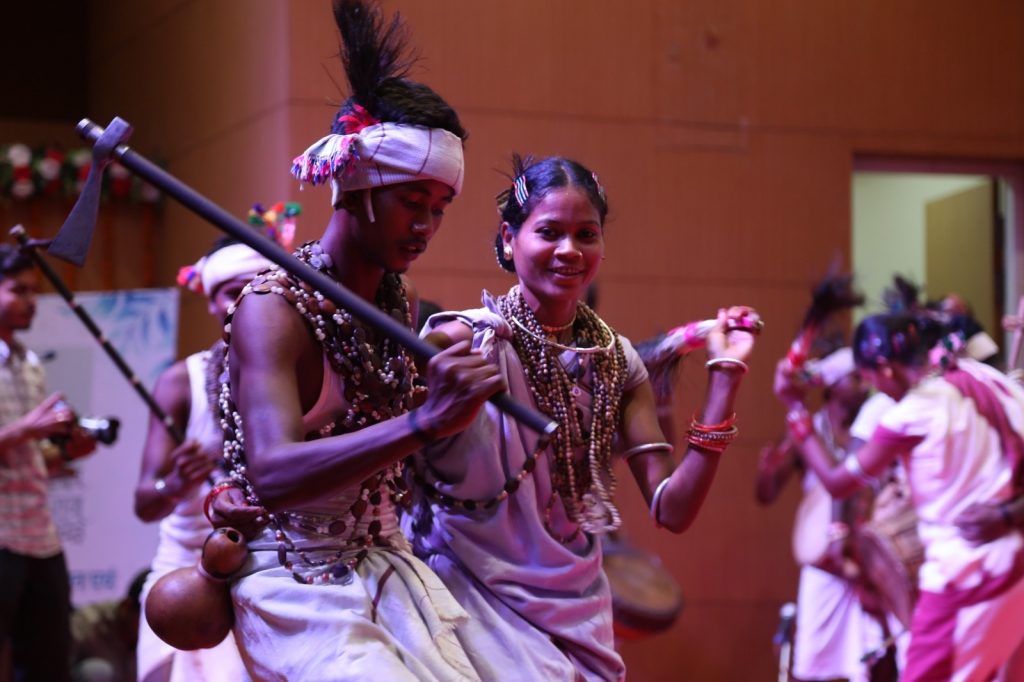
A festival organised in Chhattisgarh’s Naya Raipur in the month of May witnessed the participation of Adivasi communities with the aim to protect and promote a rich cultural heritage, writes Deepanwita Gita Niyogi

In the age of social media and the internet, bedtime stories around bonfires can even enthral the adult mind as they signify a rich oral tradition as old as the evolution of languages in human societies.

Bearing this in mind, Abhay Minz, assistant professor of anthropology at Dr. Shyama Prasad Mukherjee University in Ranchi, is planning to document indigenous songs and lore with professor John M. Peterson of Kiel University, Germany. This assumes importance as UNESCO estimates that 3000 indigenous languages and dialects spoken today around the world will vanish by the end of the century.

Across India, tribal communities have a rich storytelling heritage which is passed on through the word of mouth from one generation to the next. These include myths, stories, legends, proverbs, riddles, dance forms, songs and festivals communicated orally.

Many of these myths are linked to sacred groves or places of tribal worship rich in biodiversity. There are tales of forest deities who protect forests in Jharkhand from outside influence and stories related to Jalni Maata, an important deity, associated with the sacred groves of Bastar.

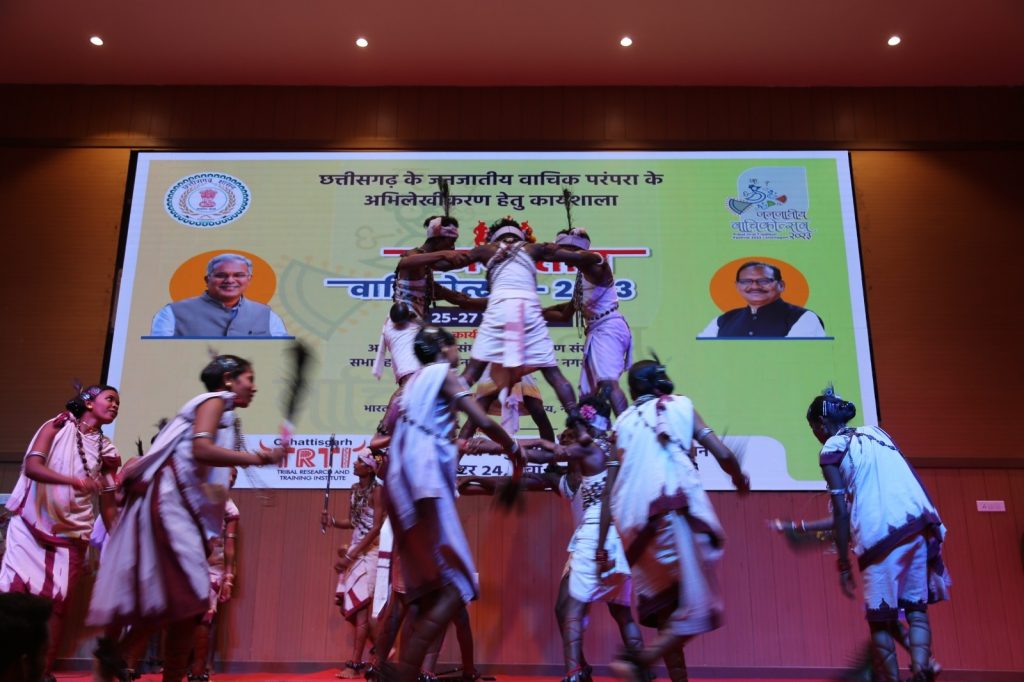
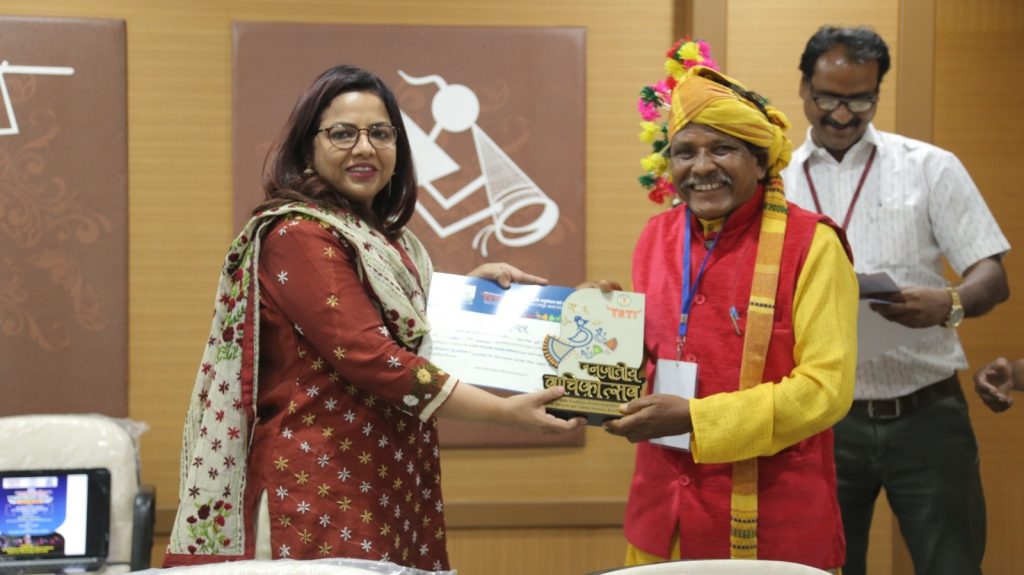
As safeguarding the tribal oral tradition is important in today’s time, the Tribal Research and Training Institute, in collaboration with the Union Ministry of Tribal Affairs, organised a festival on oral tradition or Janjatiya Vachikotsav in  the last week of May in Naya Raipur, Chhattisgarh.

In the three-day festival, 240 participants came together from different tribal communities across Chhattisgarh. The aim was to protect and promote the rich oral tradition of India. Shammi Abidi, commissioner and director, Department of Tribal and Scheduled Caste, organised the event.

India’s rich heritage

The most interesting feature about oral tradition is that it is connected across time through memory. The Vachikotsav festival explored different kinds of oral tradition such as tribal deities, folktales, proverbs, folk songs and rituals. It also highlighted the importance of the ghotul, the traditional youth dormitory of the Muria tribe, which is under threat.

In the present day, ghotuls, places where songs and dances were once regularly organised, are declining though a few are intact in Chhattisgarh’s Narayanpur district. There are several reasons behind the disappearance of ghotuls. The long-drawn battle between security forces and Maoists for decades is one of the reasons.

The modern school education system is also to be blamed for the decline in the popularity of ghotuls. With the dominance of schools even in interior villages, youths, who used to flock to ghotuls for learning songs and dances, are now giving them a miss. Many are opting for college education in cities and becoming detached from this tribal tradition.

Sensing the disintegration of the ghotul culture, Chhattisgarh chief minister Bhupesh Baghel had ordered the renovation of old ghotuls and the construction of new ones to keep this unique tradition alive.

According to Abidi, the Tribal Research and Training Institute had organised a national tribal literary festival last year where a session on folklore was held. “But as adequate time could not be devoted to it, this year the focus was on Chhattisgarh’s oral tradition.” Abidi added. She was happy that the institute provided a platform for the event which was a feast to the eyes.

Preserving oral tradition

Minz explained that several nations of the world have recognised the UN Declaration on the Rights of Indigenous Peoples. But in India, there is not much knowledge available on what is happening with the majority of the dialects or languages spoken today. “Many are on the path of becoming extinct as dialects and languages become endangered when people do not speak them anymore. Most people have also become indifferent to mother tongues.”

Explaining the importance of the mother tongue, Minz added that Lepchas, a tribe of the Himalayan range, have many words for bamboo but in English there is only one word to describe it. Oral traditions in mother tongues also highlight the importance of history. For instance, a Kharia tribe song mentions the Khyber Pass and another song speaks of the Son river. “So, if these are lost, we would lose history as well,” said Minz, who is also the director of the International Documentation Center for Endangered Languages and Cultures.

Perhaps one of the best ways to preserve tribal oral traditions is to take travellers on tours, and this is what B Bindu, who runs a travel start-up called Culture Devi, has been doing.

Bindu, who is interested in sharing information on folklore and myths on her walks, admitted that at one time she was not familiar with the real identity of Bastar, steeped in tribal tradition, and heard everything second hand from her father.

Today, Bindu’s strong points are heritage walks often associated with cultural places. She regales visitors about stories of rath yatras, temples and deities. “Devi represents the female in Indian society. Though society restricts us, it is women who carry cultural things forward,” she said.

Five terrorists killed in Jammu and Kashmir’s Kupwara

Security forces kiled five foreign terrorists in Jammu and Kashmir’s Kupwara district on Friday, according to the additional director general of police (ADGP) Kashmir, Vijay Kumar. 

This encounter marks the first major attempt of infiltration in the region this year from the Kupwara sector.

The operation was initiated based on specific intelligence input leading to a joint operation by the Army and Police forces. The encounter took place in the Jumagund area along the Line of Control (LoC) in Kupwara district. 

The Kashmir Zone Police had earlier shared this information through a tweet, stating that an encounter had commenced and that further details would be shared subsequently.

“An encounter has started between terrorists and joint parties of Army & Police on a specific input of Kupwara Police in Jumagund area of LoC of Kupwara district. Further details shall follow,” Kashmir Zone Police had earlier tweeted. On June 13, two terrorists were neutralized during this operation in the Dobanar Machhal area along the LoC. The search operation is still ongoing in that region

Kerala HC dismisses plea for law to curb superstitious practices

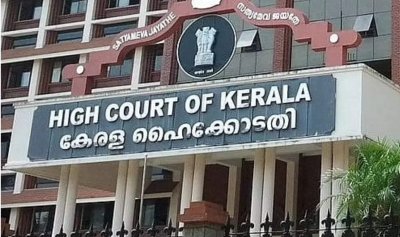
Kerala High Court has dismissed a plea that sought directions for the state government to enact a law to curb superstitious practices like sorcery and black magic.

The petition was moved by an organisation called Kerala Yukthi Vadi Sanghom.

The plea came to be filed in light of an incident of human sacrifice in the state in which two women were killed and their bodies dismembered.

A division bench of Chief Justice S.V. Bhatti and Justice Basant Balaji dismissed the plea.

According to the petitioner, this was not the only such incident.

“Several cases of human sacrifices and other types of assaults in connection with the superstitious belief of black magic and witchcraft have come to light. For the purpose of God’s grace, financial gains, getting jobs, resolving family problems, the birth of children, and for several other desires, some people are practicing black magic and witchcraft of which people belong to the downtrodden, and the children and women are mostly the victims, ” the petition stated.

The petitioner-organisation claims to have approached both Central and state governments and submitted model bills for the statute, seeking an adequate enactment of a law to combat the issue.

However, since no action was seen to be taken, the plea was moved.

The plea also sought directions to the government to consider and make a decision on the recommendation of the Law Reforms Commission report of 2019, submitted by Justice K.T. Thomas with regard to the enactment of The Kerala Prevention of Eradication of Inhuman Evil Practices, Sorcery and Black Magic Bill, 2019.

The plea also pointed that there are many films, telefilms, and advertisements on television, YouTube and OTT platform that advertise superstitious practices that prompt people to indulge in such activities and hence appropriate actions must be taken.

The petitioner further prayed that advertisement of books with regard to black magic on internet sites be declared illegal.

In October last year, the state government had informed the Court that it is actively considering enacting an anti-superstition legislation. However, since no one appeared on behalf of petitioner when the case was posted for hearing, the Court decided to dismiss it for default.

PM Modi to lead yoga session at UN HQ in New York to mark Int’l Yoga Day

Prime minister Narendra Modi will lead a yoga session at the UN headquarters in New York on June 21 to mark the 9th International Day of Yoga.

An advisory issued by the UN said: “The Permanent Mission of India to the UN invites you to a celebration of the 9th annual International Yoga Day on June 21, 2023, from 8-9 a.m. EST at the North Lawn of UN Headquarters in New York.”

The headline of the advisory said that the session will be led by Modi.

The International Yoga Day is coinciding with the Prime Minister’s state visit to the US, which is scheduled between June 21-25.

He has been invited by President Joe Biden.

“Recognising its universal appeal, on 11 December 2014, the UN proclaimed 21 June as the International Day of Yoga through a resolution. The International Day of Yoga aims to raise awareness worldwide of the many benefits of practicing yoga, ” the UN advisory said.

“The draft resolution establishing the International Day of Yoga was proposed by India and endorsed by a record 175 member states. The proposal was first introduced by Prime Minister Narendra Modi in his address during the opening of the 69th session of the General Assembly, ” it added.

Giani Raghbir Singh replaces Giani Harpreet Singh as Jathedar of Sri Akal Takht

Amritsar: The Shiromani Gurdwara Parbandhak Committee (SGPC) on Friday in an emergency meeting of Executive members of SGPC appointed Giani Raghbir Singh as the new (regular) Jathedar of the Akal Takht the highest Sikh temporal seat.

Giani Raghbir Singh replaces acting Jatehdar Giani Harpreet Singh who was appointed in 2018 by the SGPC. He remained as acting Jatehdar for the past four and a half years.

Now Giani Sultan Singh would be the next Jatehdar Takht Kesgarh Sahib replacing Giani Ragbir Singh, said Dhami adding that now Giani Ragbir Singh besides Jatehdar Akal Takht would also hold additional charge of Head Granthi (priest) of Golden Temple Amritsar.

Addressing the press conference here, SGPC president Harjinder Singh Dhami informed that Giani Harpreet has resigned voluntarily from his additional charge as Jatehdar Akal Takht and at the same time he will continue to serve as the Jathedar of Takht Damdma Sahib at Talwandi Sabo in Bathinda.

On being asked about the resignation of acting jathedar Harpreet Singh as he had submitted resignation in writing, Dhami replied, “No, “I have talked to him over the phone and he gave his consent for the appointment of  regular Jathedar Akal Takht , he quipped.

Adding further Dhami said, “It is not easy to leave such a significant post, but Giani Harpreet Singh has set an example. SGPC respects him for this act”.

Talking to media after his appointment as Jatehdar Akal Takht, Giani Ragbir Singh said, “ I am thankful to Guru Ramdas Ji ( Fourth Sikh master) who gave me privilege to serve as a Sewadar of Akal Takht Amritsar which Shiromani ( supreme) Takht among five Takhts.

Talking about his predecessor Giani Harpreet Singh, he said that I always enjoyed good terms with him and in future would also discuss important issues with him.

However, earlier, Giani Harpreet Singh remained in news for regularly questioning the present leadership of SAD, advising them to shun political motives to concentrate at Sikh religious affairs. He was landed in sheer controversy when he had attended the pre-wedding event of AAP Rajya Sabha MP Raghav Chadha and Bollywood actor Parineeti Chopra at Kapurthala house in New Delhi. SAD spokesperson and former MLA Virsa Singh Valtoha had publicly opposed his participation in a private event that was deadly against the Sikh tenets. 

Charge sheet filed against WFI chief, Delhi Police seeks cancellation of POCSO case

New Delhi:  Delhi Police on Thursday recommended dropping of POCSO charges against BJP MP and outgoing WFI chief Brij Bhushan Sharan Singh but charged him with sexual harassment and stalking six women wrestlers.

The government had assured the agitating wrestlers including Olympic medallists Bajrang Punia and Sakshi Malik and fellow Olympian Vinesh Phogat that the charge sheet would be filed by June 15, following which they had suspended their stir. They were demanding Singh’s arrest on allegations of sexual harassment against seven wrestlers, including the minor. Singh has denied all the charges.

The police recommended the cancellation of the complaint filed by the minor wrestler against Singh, citing “no corroborative evidence”.

PM Modi’s clean chit to China a body blow to national security: Kharge on Galwan valley  clash anniversary

Congress on Thursday paid tributes to 20 soldiers, who died in Galwan Valley clash in 2020, and slammed the BJP-led Centre for not maintaining the status quo ante at the Line of Actual Control (LAC) and also said that Prime Minister Narendra Modi’s “clean chit” to China was a body blow to national security.

In a tweet, Congress President Mallikarjun Kharge said, “A greatful nation pays heartfelt tributes to the supreme sacrifice made by 20 bravehearts in the Galwan valley, three years ago. Modi government is responsible for not maintaining the status quo ante at the LAC. We have lost possession of 26 Patrolling Points (PP) out of 65.”

Lashing out at the Centre, Kharge, who is also the Leader of Opposition in the Rajya Sabha, said, “We have attempted to raise this issue several times in the Parliament, but the Modi government wants to keep fellow Indians in the dark. Modi ji’s ‘clean chit’ to China on Galwan is responsible for China achieving its nefarious designs. This is a body blow to our National Security and Territorial Integrity.

“Modi government’s ‘Laal Aankh’ (red eye) has become blurred, on which it is wearing tinted Chinese glasses! As a responsible opposition, our job is to keep the country united against the Chinese expansionist policy and to show the mirror of truth to the Modi government, ” the Congress leader added.

At least 20 Indian soldiers died in the Galwan Valley clash in 2020.

The Congress has been criticising the government for not holding debate over the China issue in Parliament and has also slammed the Prime Minister for giving “clean chit” to China in June 2020.

BJP-RSS maligned UPA by promoting Anna Hazare, Kejriwal says Ashok Gehlot

Jaipur- Rajasthan Chief Minister Ashok Gehlot on Wednesday accused the BJP-RSS of maligning the atmosphere against the erstwhile UPA government.

“By promoting Anna Hazare and Arvind Kejriwal, the BJP-RSS created an environment against the UPA government. It also defamed the UPA by raising the issues of 2G spectrum, Coalgate etc. Today, no one takes the names of these ‘scams’. Did anyone go to jail? There was so much hue and cry over Lokpal, but it is hardly discussed in the country today. However, government changes in the name of religion, ” Gehlot said while addressing the Gandhi Darshan Sammelan here on Wednesday.

Targeting the Central government, Gehlot said that ‘critics’ are being treated as ‘traitors’.

“I like when me or my government is criticised. It may be that there are some areas where there is scope for improvement. What’s the problem with that? If I don’t like criticism, how will the truth come out? The allegations levelled by the Twitter co-founder (Jack Dorsey) are serious, the situation is not good, ” said Gehlot.

To recall, during an interview on a YouTube channel on Monday, Dorsey was asked if he had faced any pressure from foreign governments.

Dorsey had replied: “India, for example. India is one of the countries which had many requests around farmers protests, around particular journalists which were critical of the government, and it manifested in ways such as ‘we will shut Twitter down in India’… ‘we would raid the homes of your employees’, which they did; ‘we will shut down your offices if you don’t follow suit’. And this is India, a democratic country.”

Gehlot further alleged that the Constitution is being torn to pieces in the country.

“Those in power at the Centre do not like criticism, and want to eliminate the opposition. If there is no opposition in a democracy, what is the point of having a government, ” Gehlot asked.

The Chief Minister also claimed that democracy is in shambles in the country.

“It is very easy to win elections in the name of religion and caste, but it is not an act of bravery, ” Gehlot said.

MOST POPULAR

HOT NEWS