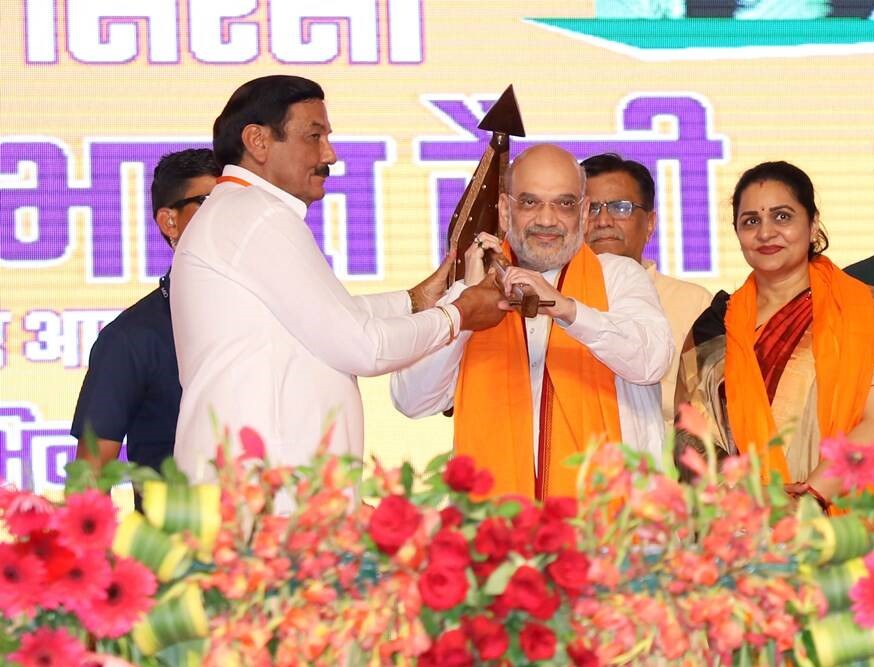
Sirsa: Addressing a large gathering at ‘Gauravshali Bharat Rally’ at Sirsa presided by Union Home Minister Amit Shah on Sunday said that Bhartiya Janta Party has been successful in wiping out ‘3 D’ government comprising of Darbari, Damad and Property Dealers in Haryana state launched by Congress when ruling in the state for about a decade, whereas BJP government in the state became corruption-free, completely transparent and progressive in past nine years BJP government rule. He said, we are proud of achieving success in every sector in this period in which the state has become No. 1 in production of steel, No. 2 in manufacturing of automobiles and No. 3 in production of mobile phones in the country today, whereas most of the countries in the world are presently facing severe economic crisis, Shah said.
Amit Shah expressed deep concern over fast increasing drug addiction among people in the country, especially in youths for which a campaign ‘Nashamukti Bharat Abhiyan’ has been started. He said, it is only due to our Prime Minister Narender Modi’s policies that our country ranks at the top in-spite of the fact of worldwide economic crisis is going on. While addressing, Amit Shah remembered the services to Sirsa farmers by the former Deputy Prime Minister Choudhary Devi Lal always having dreams for the welfare of the farmers which are presently being followed by the chief minister Narender Modi distributed Rs 1330 crore to the farmers in the state towards insurarance claims as well as Rs 6000 was deposited in their bank accounts. Shah said, not only this during the COVID epidemic outbreak nearly 130 crore people in the country were injected free of cost, even Rahul Baba team initially objected to it later got himself vaccinated during midnight to save himself from Carona fever.
Amit Shah said, when Congress was ruling in the country, the Pakistan army had chopped of the heads of Indian army men and terrorism was constantly rising in the country, whereas our army forces had replied to Pakistan through surgical strike within 10 days during present BJP government rule.
However, Amit Shah during his address gave no indication about the future of alliance between BJP and JJP as expected by all those present, although he gave green signal for ‘Mission 2024’ for 10 Lok Sabha and 90 Vidhan Sabha seats in Haryana assuring that BJP will come to power in Haryana state third time in coming polls. Shah was warmly welcomed by Haryana Chief Minister Manohar Lal Khatter, Anil Vij Home Minister and several others.
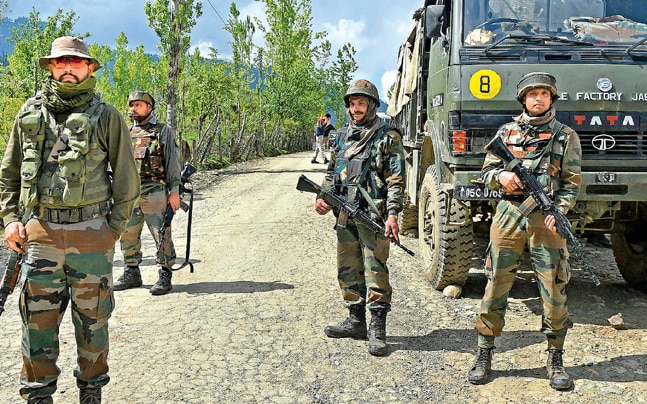
It was on June 19, 2018, that the BJP withdrew support to the J&K coalition government headed by the then Chief Minister Mehbooba Mufti, paving the way for Governor’s rule in the then state. Later, former J&K Governor, Satya Pal Malik, dissolved the assembly in November.
Over five years have passed since then, and there are no signs of the long-awaited assembly elections.
J&K has been under direct central rule for eight times since 1977.
Following the abrogation of Jammu and Kashmir’s special status on August 5, 2019, the region was downgraded to a union territory. The position of the Governor was reduced to that of Lieutenant Governor.
However, despite the subsequent delimitation of seats the union territory is still awaiting Assembly polls.
The National Conference president Omar Abdullah has said that the BJP, fearing potential losses in both the Kashmir Valley and Jammu is intentionally postponing the elections.
They assert that the party seeks to extend its time in power to further its “nationalist agenda.”
New Delhi : “Netaji had great faith in the capabilities of the people. Today, our priority should be empowering our 1.4 billion citizens and making them internationally competitive,” stated Ajit Doval, KC, National Security Advisor, Prime Minister’s Office, at the Netaji Subhas Chandra Bose Memorial Lecture organised by the Associated Chambers of Commerce & Industry of India (ASSOCHAM). He called for continuous improvement in all aspects of life, stating, “Wherever you are, whatever you are doing, do it better than yesterday.”
Doval acknowledged India’s immense human resource potential, stating, “Our biggest strength is our human resource- a highly motivated and committed workforce. We need to develop their skills to make them globally competitive.” He highlighted the contributions of Indian workers abroad, stating, “Workers in the Middle East alone have contributed over a hundred billion dollars to our economy.”
Encouraging entrepreneurs and businesses, Doval stressed the need to become globally competitive, stating, “Our companies and people should strive to be innovative and cost-effective. Let us embrace critical and emerging technologies to secure a prominent position in the global market.”
“The country needs inspiring personalities who can transcend personal interests and engage in actions that go beyond business and industry. It is the sense of dedication to the nation that truly matters.” Reflecting on the significance of the event, Ajit Doval expressed his gratitude for the opportunity to address the esteemed audience. He humbly acknowledged that the introduction he received might make him appear unqualified to deliver a lecture on such a scholarly topic.
Recognising the remarkable achievements of Netaji Subhas Chandra Bose, Ajit Doval applauded his audacity and tenacity. He highlighted how Bose fearlessly challenged the British authorities, from confronting a British principal during his college days to resigning from the Indian National Congress at a young age, defying even Mahatma Gandhi. Ajit Doval remarked, “Bose possessed audacity like no other. He had the courage to challenge the prevailing powers, regardless of the consequences. His audacity was evident throughout his life, from his journey to London for the ICS to his escape from India during detention. He displayed unparalleled bravery and determination.”
Delving into the legacy of Netaji Subhas Chandra Bose, Ajit Doval acknowledged his unique leadership style. He emphasised Bose’s ability to unite people from diverse backgrounds and envision a unified India. Ajit Doval remarked, “Bose’s leadership was exceptional. He recognised India as a reality, transcending divisions of caste, religion, and ethnicity. His vision of a united India, encapsulated in his famous slogan ‘Kadam Kadam Badhaye Ja,’ resonated with people across all walks of life. He inspired them to fight for their country, united in their pursuit of freedom.”
Ajit Doval concluded his speech by reflecting on the importance of effort and results. He pondered on whether one’s efforts truly matter, regardless of the outcomes. He acknowledged that Bose’s efforts were tremendous, driven by his passion for patriotism and his unwavering dream of a great India. He stated, “Bose’s efforts were monumental, fuelled by his romantic ideals of patriotism and his unwavering hope for a great India. History may have been unkind to him, but his impact and nationalism continued even after his passing. He left an indelible mark on the hearts and minds of countless Indians who were inspired by his extraordinary journey.”
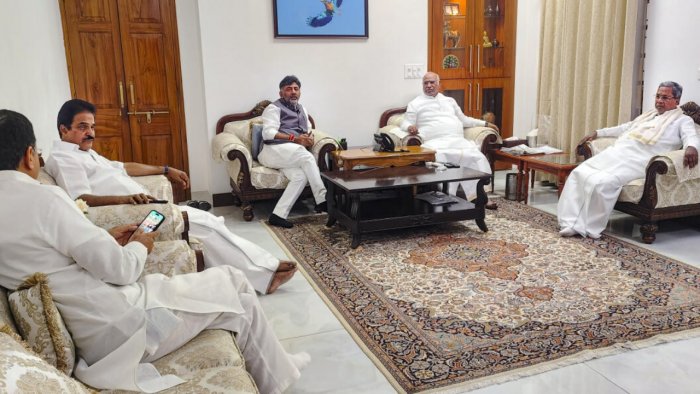
All Karnataka Ministers have been called to Delhi by Congress President M Mallikarjun Kharge on 21st June. KPCC Chief Shivkumar on Friday said that the entire State cabinet of Karnataka has been called to Delhi for a meeting with the top Congress leaders.
During their visit to Delhi on 21st June they will meet some cabinet ministers separately to discuss some state projects. According to the sources Karnataka Chief Minister Siddaramiah has also sought an appointment with Prime Minister Narendra Modi also. According to KPCC Chief Shivakumar.. “We all are in a federal Structure, All of us have to work together” “ We all have been called by our President to Delhi on 21st June to meet some top leaders including Rahul Gandhi. We will also discuss about the implementation of manifesto and guarantees. “ we will also meet some Cabinet Ministers I am requesting time with some Ministers to discuss on some pending projects Shivkumar said while speaking to some Reporters in Karnataka.” We have to work in the interest of Karnataka irrespective of political differences, he added.
It will be the first meeting of the Karnataka cabinet after they took oath on 20th May.
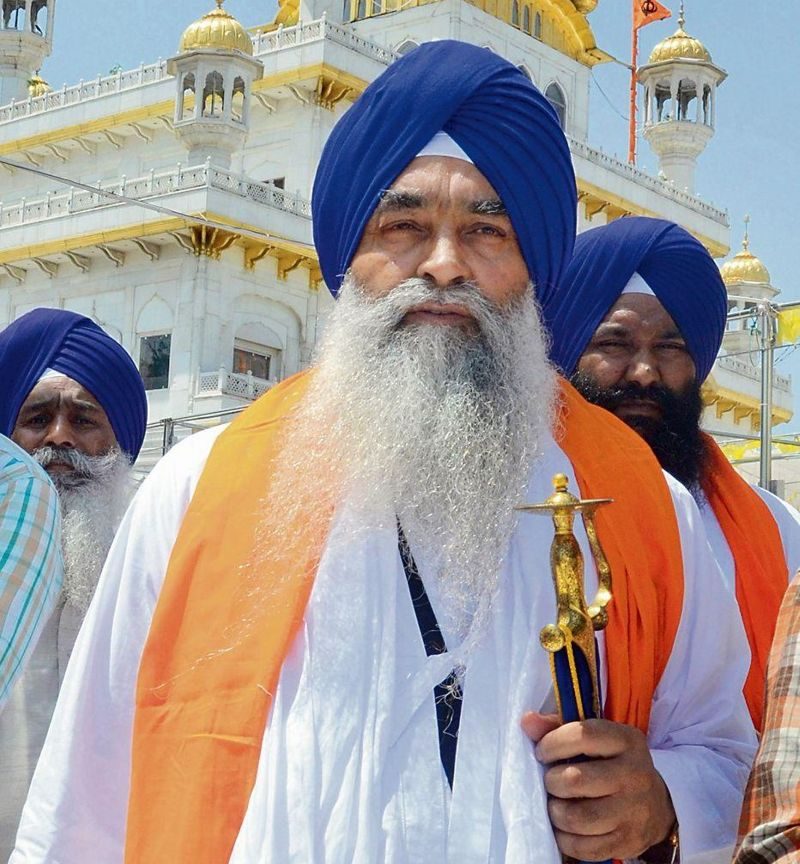
Amritsar : Giani Raghbir Singh, who has been appointed Jathedar of Akal Takht Sahib (The highest Sikh temporal seat of Sikhs) by the Executive Committee of Shiromani Gurdwara Parbandhak Committee (SGPC), will take charge if his service on June 22.
SGPC President Harjinder Singh Dhami said that a ceremony will be held on June 22 at 10 am at Akal Takht Sahib to hand over charge of service as Jathedar of Akal Takht Sahib to Giani Raghbir Singh, which will be attended by all the Panthic jathebandis, Nihang Singh Dals, Sikh sampradas, Gurmat Taksals, representatives of Sikh organizations including Panthic leaders, saints and Sangat.
SGPC President urged the Panthic personalities to attend this ceremony. Meanwhile, SGPC Secretary Partap Singh said that preparations are being made by the SGPC for this ceremony, and invitations are being sent by the manager of Sri Darbar Sahib.
The Centre comes under the Opposition fire for exhibiting complete disregard of rail safety by ‘ignoring’ earlier warnings that flagged several gaps in the system, writes Amit Agnihotri
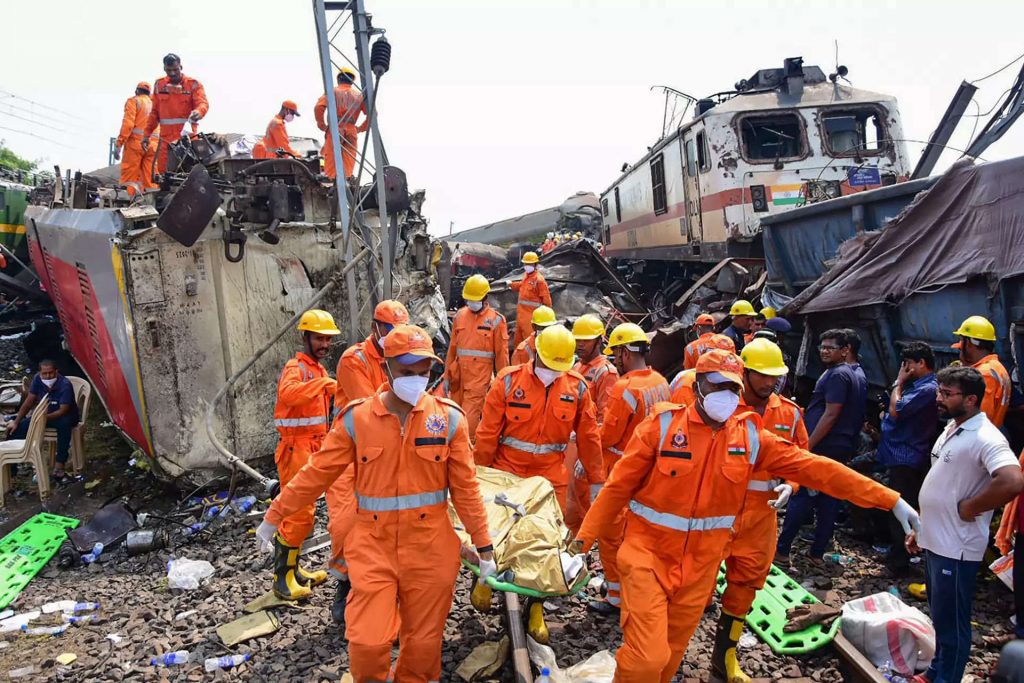
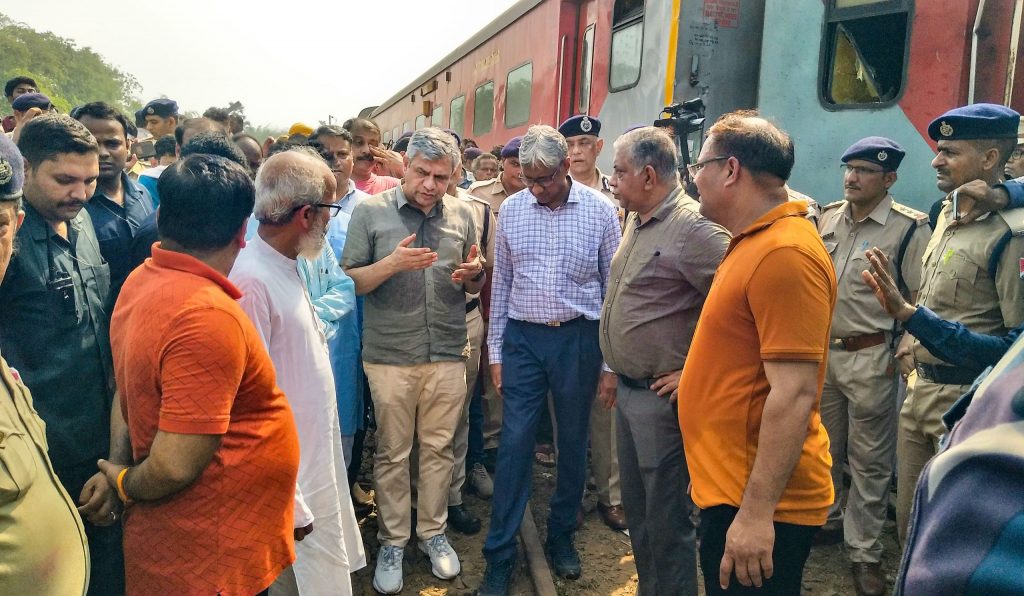
The Opposition has slammed the Centre over safety of the huge railway network and demanded that Union Railway Minister Ashwini Vaishnaw be removed after the deadly, three-train accident in Odisha’s Balasore left around 290 passengers dead and around 1000 injured.
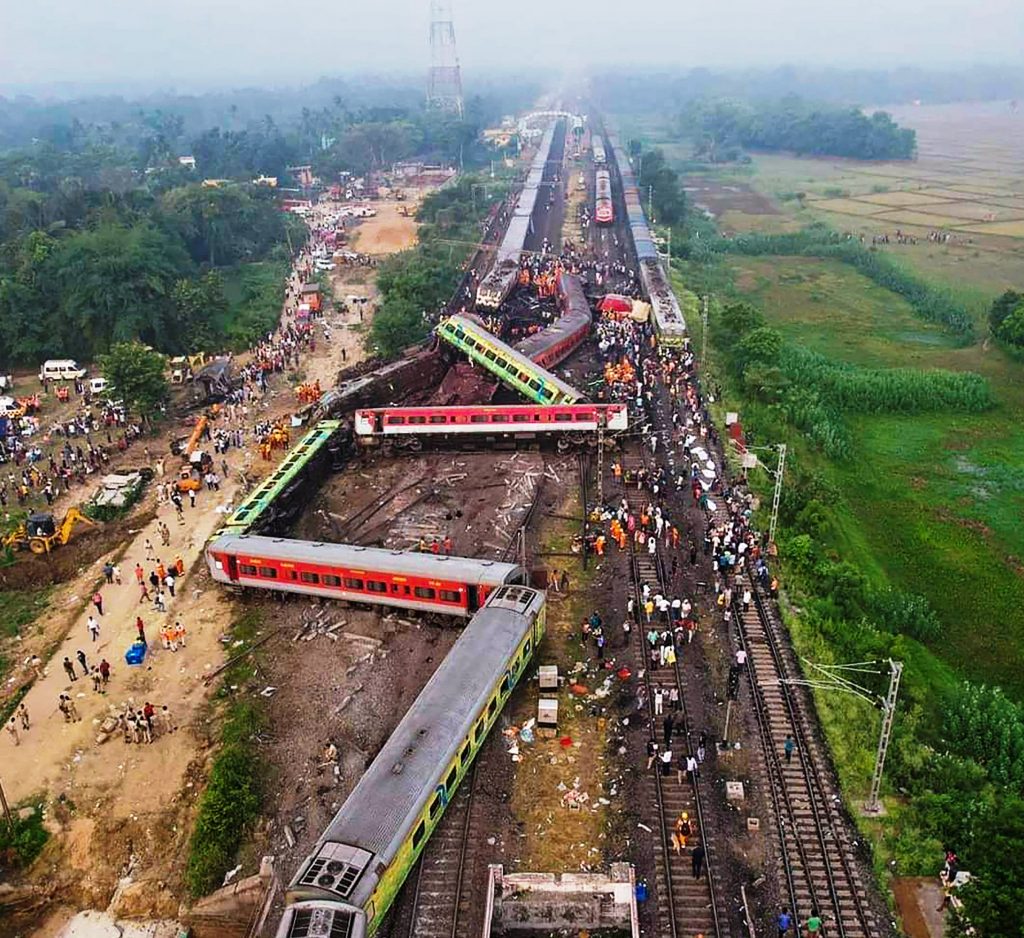
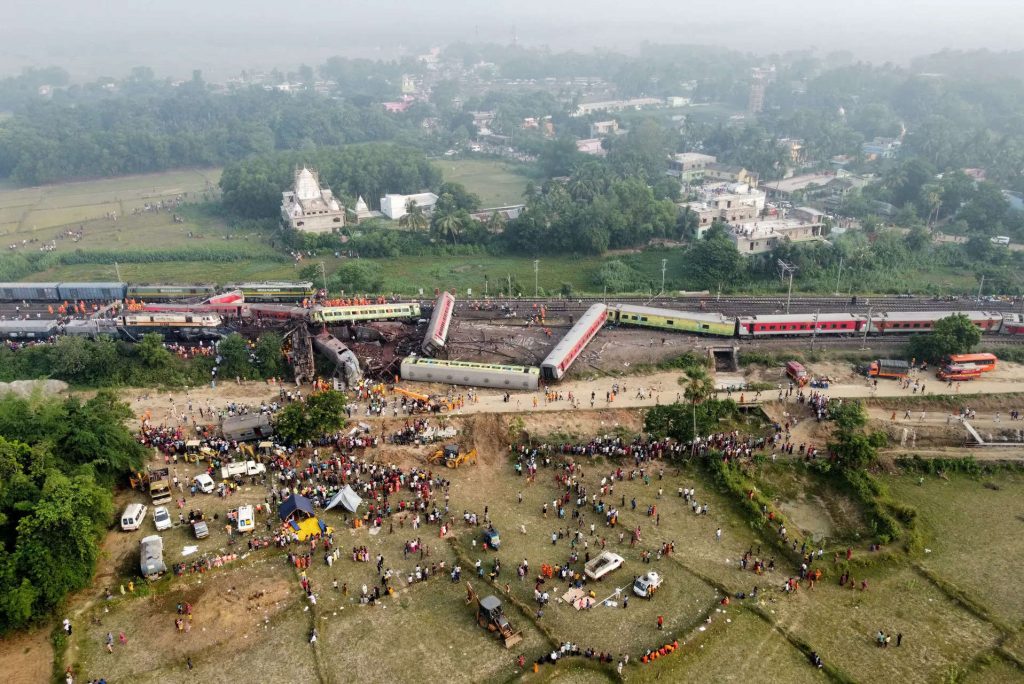
The triple-train accident involved the Bengaluru-Howrah Superfast Express, the Coromandel Express and a goods train on three separate tracks at Bahanaga Bazar station in the Balasore district of Odisha on June 2.
Prima facie, electronic signal failure appeared to be the main reason behind the ghastly accident, which raised several questions about maintenance of the vast railway network used by 2.2 crore passengers every day.
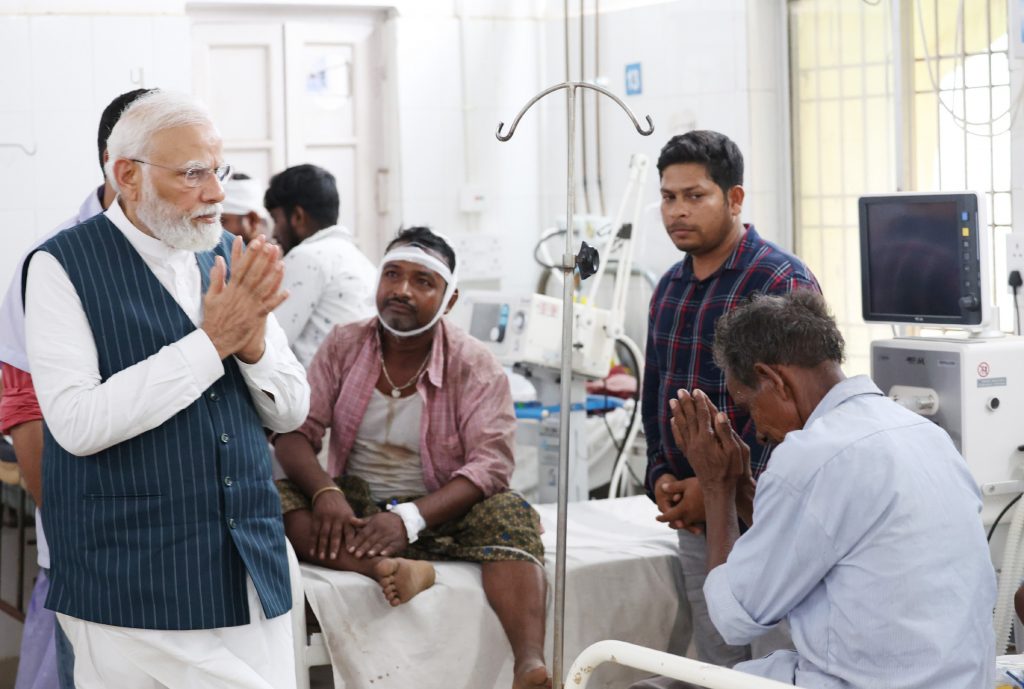
The opposition parties including the Congress, TMC, Shiv Sena UBT and CPI asked PM Modi, who visited the accident site along with Railway Minister Vaishnaw, to take responsibility for one of the worst accidents even as it alleged that the government was indulging in a public relations exercise to hide its failures.
The Opposition was also angry that the government had ordered a CBI probe into the accident, citing a sabotage angle, arguing that the Commissioner Railway Safety, who is a technical expert, should have been entrusted with investigation into the tragedy instead.
The Opposition also questioned the government’s flip-flop over the accident in first announcing a CRS probe, then railway minister saying the root cause of the accident had been identified before suddenly handing over the case to the CBI.
“This is a conspiracy by the PM and the railway minister to deflect public attention from its failures. The government is talking about sabotage behind the accident but the CBI FIR only talks about the negligence issue,” Congress leader Ajoy Kumar said, adding, “The CBI is not a technical body and probes crime cases. The CRS is the technical authority which should probe a train accident and it has been placed under the aviation ministry to insulate it from any railway ministry influence.”
According to Congress leader Supriya Shrinate, earlier train accident probes given to the NIA had not produced any result over the past seven years.
“Indian Railways carries about 2 crore 20 lakh people to their destinations every day, which is almost the population of Australia. Every single day, 2 crore 20 lakh people are on the tracks of Indian Railways, but when accidents like Balasore happen, how is it that there is no accountability, no responsibility and instead of finding out what caused this grave accident where almost 300 people died, the government is now spinning conspiracy theories, and shifting the focus away from safety to all kinds of conspiracy theories like deliberate interference,” Shrinate said.
The Congress leader then went on to deliberate on the futility of the CBI probe ordered by the government. “ You have roped in the CBI, but you had roped in the NIA in the 2016 Kanpur train accident as well. Not a single proof has been found by the NIA. The NIA has even not been able to file the chargesheet in the Kanpur train accident. The NIA has also not been able to file the chargesheet in the Kuneru, Andhra Pradesh train accident, where almost 40 people died. Between Kanpur and Kuneru, almost 192 people were killed in these rail accidents… the NIA was probing, but the reality is… this happened due to the interlocking failure, this happened due to the signal failure, this happened due to low track maintenance and I think the very basic question is- why should premier agencies like CBI and NIA be roped into this, because, this is not their area of expertise. Why should the CRS not probe into this accident? Why has the CRS been restricted to probe only 8 to 10 percent of rail accidents that happen,” Shrinate said
The CBI, said Shrinate, would not be able to look into the reasons behind the neglect of the railways over the past years.
“Will the CBI find out why three lakh positions are vacant in the railways? Will the CBI find out why loco drivers are being made to work more than 12 hours? Will the CBI find out why the track maintenance fund has been cut by 23 per cent? Will the CBI find out why the Rashtriya Rail Sanraksha Kosh funding has been reduced by 79 per cent? Will the CBI find out all these things, because these are questions that the elected government of the day needs to answer. Why must we not assert that once again the Modi government is shifting the focus away from its own failures and from the failures of the railways which has refused to prioritise safety of citizens,” asked Shrinate.
“The government is instead turning the focus away from them by roping in the CBI or any such agency because this has not led to a conclusion before. It has been 7 years since the 2016 Kanpur train accident, but not a single chargesheet has been filed by the NIA and we fear that exactly the same thing will happen with this CBI probe. The reality is that accidents are happening because safety of passengers is not the priority of this government. Will the CBI probe why the Chintan Shivir did not allow a discussion on passenger safety and kept talking about revenue instead,” she said.
Congress leader Ajoy Kumar pointed out that over the past four years, 1,129 trains had derailed as the tracks were not maintained properly and the fund meant to be spent on track upgradation was reduced by Rs 2000 crore.
He cited the derailment of a goods train in the Balasore area and the Delhi-Bhubaneswar Rajdhani Express that had a narrow escape from crashing into a tractor trolley at a manned railway crossing in West Bengal, just days after the Balasore accident to support his charge.
Red Flags Brushed Aside?
According to the opposition, there were “serious deficiencies, criminal negligence and complete disregard for safety and security” of the railways over the past years despite the CAG and a parliamentary panel pointing out several gaps in the system earlier.
Rahul Gandhi, while addressing the Indian diaspora in the US, hit out at the Centre over the horrific triple-train accident in Odisha, claiming that the only ideology that it espoused was to make excuses and not accept the reality. While speaking in New York as part of his visit to the US, Rahul claimed that the BJP was in the habit of not owning up to its mistakes and shifting the blame, instead, to the Congress when questioned. “You ask them (BJP) anything, they will look back and pass the blame. Ask them how the Odisha train accident happened. They will talk about what the Congress did 50 years ago. I remember a train accident when the Congress party was in power. The Congress did not say that the train crashed because of the fault of the British. The minister in charge of the railway at the time said, ‘It’s my responsibility and I’m resigning’. So, this is the problem we have back home,” he said.
Congress MP Shakti Sinh Gohil and party’s media head Pawan Khera alleged that the Odisha train accident was a “man-made devastation” caused by “utter negligence, serious lapses in the system, incompetence, and a narcissistic sense of know-it-all attitude of the Modi government.”
“PM Modi, who said that the ‘guilty would be punished, should start with the railway minister. Unequivocally and unambiguously, we demand the resignation of the Union Railway Minister Ashwini Vaishnaw. Nothing short of it,” Gohil and Khera said.
The Congress leaders questioned the central government saying, “PM Modi himself is responsible for a green-flagging spree of Vande Bharat Express trains. He himself is responsible for creating this ‘all is well’ facade in the Indian Railways, even as crucial, sensitive, and critical infrastructure of the Indian Railway languishes is suffering from neglect. We demand that despite multiple warnings by the CAG, Parliamentary Standing Committees, and experts — why did the Modi government not spend on sprucing up railway safety?”
The Congress leaders also asked when will the government implement the much-hyped KAVACH Anti-Collision system nationwide, after testing the same and said that past railway ministers had resigned on moral grounds after big accidents.
“We don’t look for political scores during human tragedy. Madhavrao Scindia, Nitish Kumar and Lal Bahadur Shastri resigned on moral grounds. The Railways Minister should take responsibility but Modi and morals travel in opposite directions,” they said.
Congress MP Jairam Ramesh said, “I recall that Lal Bahadur Shastri resigned in the wake of the Nov 1956 Ariyalur train disaster and Nitish Kumar did so following the ghastly Aug 1999 Gaisal train tragedy.” “It reinforces why safety should always be the foremost priority in the functioning of the rail network. There are many legitimate questions that need to be raised but that should wait till tomorrow,” said Ramesh.
Former MoS railways and Congress MP Adhir Ranjan Chowdhury, who visited the accident site, said that there was “mismanagement” which led to the loss of so many lives.
West Bengal Chief Minister and TMC supremo Mamata Banerjee, who visited the train accident victims, remarked in the presence of Vaishnaw that the accident could have been averted had the train been fitted with an anti-collision device.
“Coromandel is one of the best express trains. I was the railway minister three times. From what I saw, this is the biggest railway accident of the 21st century. Such cases are handed over to the Railway’s Safety Commission and they investigate and give a report. There was no anti-collision device on the train, as far as I know. Had the device been on the train, this would not have happened”, she said.
“The Railway minister was standing with me. I should have said a lot of things because I had served as a railway minister in the past. Why was there no anti-collision device in Coromandel Express and Bengaluru-Howrah Express? The railway has been left to be sold”, Banerjee said in Kolkata later. “When he was present with me and I mentioned anti-collision devices, why didn’t he open his mouth? ‘Dal mein kuch kaala hai’, we want the truth to come out,” Banerjee said.
CPI MP Binoy Viswam too demanded that Railway Minister Ashwini Vaishnaw should resign over the Odisha incident. “The government concentrates only on luxury trains. Trains and tracks of common people are neglected. Odisha deaths are the result of this attitude. The railway minister must resign,” Viswam said.
This prompted the Centre to put out briefs on the latest iteration of Kavach technology, and its deployment plans. The anti-collision system is still under development. Union Railway Minister Ashwini Vaishnaw said that the “root-cause” of the incident has been identified, and said that it was the issue of point machine and electronic interlocking. The change that was done to electronic interlocking which led to the accident had been identified, Vaishnaw said while denying that the incident had anything to do with the anti-collision system “Kavach”.
Every Indian Is Shaken: Kharge to PM
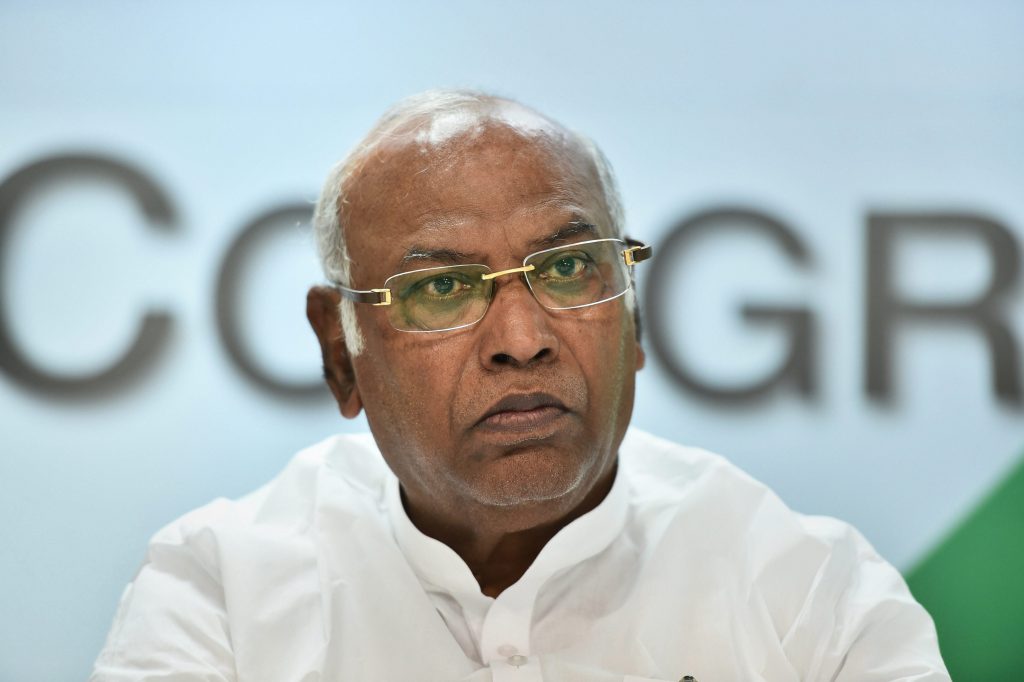
Congress chief Mallikarjun Kharge, who himself has served as railway minister in the past, wrote a letter to the Prime Minister over the accident. “The devastating train accident in Balasore, Odisha, which is one of the worst such mishaps in Indian history, has shocked the nation. The country stands united in this hour of grief. However the loss of so many precious lives has shaken the conscience of every Indian. The loss of these lives is irreparable and no amount of monetary compensation or words of condolence can make up for this grave tragedy,” he said in the letter.
Congress President Mallikarjun Kharge
The Congress president then went on to charge the Modi-led Central government of meting out a “step-motherly treatment” to the railway. “Despite all the revolutionary strides in the field of transportation, Indian Railways is still a lifeline for every common Indian. It isn’t just the most reliable but also the most economical mode of transport. It’s remarkable how the railways transport passengers that equal the whole population of Australia every single day. But I say with remorse that instead of focusing on strengthening the railways at the basic level, only superficial touch up is being done to stay in news. Instead of making the railways more effective, more advanced, and more efficient, it is instead being meted out with step-motherly treatment. Meanwhile, consistently flawed decision-making has made travelling by rail unsafe and has in turn compounded the problems of our people,” Kharge said.
Kharge then sought to draw Prime Minister Modi’s attention to a few important facts. “At present about 3 lakh posts are lying vacant in Indian Railways. In fact, in the East Coast Railway – the site of this tragic accident – about 8278 posts are vacant. It’s the same story of apathy and negligence even in the case of senior positions, where both the PMO and the Cabinet Committee play a crucial role in appointments. There were more than 18 lakh railway employees in the decade of nineties, which have now been reduced to about 12 lakhs, of which 3.18 lakh are employed on contractual basis. Vacant posts pose a threat to the assured jobs of people who belong to SC/ST/OBC and EWS. It’s a pertinent question to ask – why have such a high number of vacancies not been filled over the last nine years,” he said.
The Congress chief further said that the Railway Board itself has recently admitted that loco pilots have had to work longer hours than mandated due to manpower shortage. “Loco pilots are crucial to rail safety and their overburdening is proving to be the main reason behind accidents. Why have their positions not been filled yet,” he questioned.
Kharge said that on February 8, 2023, the Principal Chief Operating Manager of South West Zonal Railway, referred to the collision of two trains in Mysore, and asserted the need to repair the signalling system and had also forewarned about potential accidents in the future due to this flaw. “But why and how could the Ministry of Railways ignore this crucial warning,” he wondered.
The Congress chief also said that the Parliamentary Standing Committee on Transport, Tourism and Culture in its 323rd Report (December 2022) had criticized the complete apathy and negligence of the Railway Board towards recommendations of the Commission of Railway Safety (CRS).
“The report further revealed how the CRS investigates only 8 percent to 10 percent of train accidents. Why has no effort been made to make CRS stronger and ensure its autonomy,” he said.
According to Kharge, the latest audit report of CAG, made a special mention of how between 2017-18 to 2020-21, about 7 out of 10 train accidents happened due to derailment from tracks.
“But this was erroneously ignored. Between 2017-21, there was zero testing of Rail and Weld (Track Maintenance) for safety in East Coast Railway. Why were these grave red flags ignored,” questioned Kharge.
“The CAG report also highlighted that funding for the Rashtriya Rail Sanraksha Kosh (RRSK) had been reduced by a massive 79 percent. It was claimed during the budget presentation that about Rs 20,000 crore would be available annually, but this was not done. Why were the required funds not allocated for track renewal work? Is this not being callous about the safety of passengers,” said Kharge.
The Congress chief asked why the previous government’s plans to roll out the anti-train-collision system, originally named Raksha Kavach, was put on the back burner?
“This system was developed by the Konkan Railway and tested successfully by the Research Designs and Standards Organization (RDSO) in 2011, it was meant to prevent collision of trains. Your government simply renamed the scheme ‘Kavach’ and in March 2022, the Railway Minister himself projected the rechristened scheme as a novel invention. But the question still remains, why have only a measly 4 percent of routes of Indian Railways been protected by ‘Kavach’ till now,” Kharge said.
The Congress chief further asked, “What was the reason for merging the Budget for Indian Railways with the Union Budget in 2017-18? Has this not adversely affected the autonomy and decision-making capacity of Indian Railways? Was this done to undermine the autonomy of Railways to push reckless privatisation? Even though privatisation of Railways was repeatedly opposed during Parliamentary proceedings, all concerns have been ignored by bringing trains to stations under the ambit of brazen privatisation. It’s apparent that the government’s arbitrary decision making, including the National Rail Plan for up to 2050, without any consultation or detailed discussion, is aimed at exploiting the railways and making it an easy target and fodder for private companies.”
According to Kharge, a huge entity like the Indian Railways had brought respite to all sections of the society since Independence.
“But it’s puzzling to comprehend, who has been the beneficiary of the decision to withdraw concessions that were being given to the elderly, children and women during the pandemic? The insensitivity is evident when upper berths are being allotted to the elderly and women, who are also being forced to face different kinds of problems now,” he said.
“Unfortunately, the people in charge – your good self and Railway Minister Ashwani Vaishnav – do not want to admit that there are problems. The Railways Minister claims to have already found a root cause, but yet has requested the CBI to investigate. The CBI is meant to investigate crimes, not railway accidents. The CBI, or any other law enforcement agency, cannot fix accountability for technical, institutional and political failures. In addition, they lack the technical expertise in railway safety, signalling, and maintenance practices,” Kharge said.
The Congress chief pointed out that the nation still remembered the 2016 derailment in Kanpur, where 150 people lost their lives.
“The then Railway Minister had asked the NIA to investigate. Subsequently, you yourself claimed in an election rally in 2017 that there was a “conspiracy”. The nation was assured that strictest punishment would be meted out. However, in 2018, the NIA closed the investigation and refused to file a chargesheet. The nation is still in the dark – who is responsible for 150 avoidable deaths,” asked the Congress president.
“The statements so far and the roping in of yet another agency without the required expertise, remind us of 2016. They show that your government has no intent to address the systemic safety malaise, but is instead finding diversionary tactics to derail any attempts to fix accountability,” he said.
According to Kharge, the latest train accident in Odisha had been an eye opener for all.
“All the empty safety claims of the railway minister have now been exposed. There is serious concern among the common passengers about this deterioration in safety. Therefore, it is incumbent upon the government to ascertain and bring to light the real reasons that caused this grave accident. Today, the most crucial step is to prioritise installation of mandatory safety standards and equipment across railway routes to ensure safety of our passengers and pre-empt recurrence of an accident like the one at Balasore,” said Kharge.
Major Train Accidents in India
October 2018: A commuter train in Amritsar killed at least 59 people and injured 57 among a crowd that had come on tracks to watch the Dussehra celebrations.
January 2017: At least 41 people were killed after several coaches of a passenger train derailed near the village of Kuneru in Vizianagaram, Andhra Pradesh.
August 2017: The Puri-Haridwar Utkal Express derailed killing 23 people and injuring nearly 60 others after 14 of the 23 coaches of the train derailed near Khatauli in the Muzaffarnagar district of Uttar Pradesh.
August 2017: Nine coaches of Kaifiyat Express derailed near Auraiya, Uttar Pradesh, causing at least 70 injuries.
November 2016: Around 146 people were killed and more than 200 injured when the Indore–Patna Express 19321 derailed near Pukhrayan, Kanpur at around 3.10 am. Around fourteen carriages were derailed.
May 2014: The Gorakhdham Express collided with a halted goods train in close proximity to Khalilabad station, resulting in 25 fatalities and more than 50 injuries in Sant Kabir Nagar area of Uttar Pradesh.
May 2012: The Hampi Express, a cargo train, and the Hubli-Bangalore Hampi Express collided close to Andhra Pradesh. Nearly 25 fatalities and about 43 injuries were reported.
July 2011: Around 70 people were killed and over 300 injured when 15 coaches of Howrah-Kalka Mail derailed near Malwan in Fatehpur.
October 2005: Several coaches of a passenger train derailed in southern Andhra Pradesh near Velugonda. At least 77 people were killed in the accident.
August 1999: Two trains collided near Kolkata leading to the death of at least 285 people. Signal failure played a role.
August 1995: At least 350 people were killed when two trains collided 200 km from Delhi.
July 1988: An express train plunged into a monsoon-swollen lake near Quilon in southern India, killing at least 106 people.
June 1981: At least 800 people were killed when seven rear coaches of an overcrowded passenger train were blown off the track and fell into a river during a cyclone.
Could Kavach help avert Odisha train tragedy?
The CBI probe into the Balasore triple train tragedy will look into multiple dimensions of the mishap, and will also try to find out whether Kavach, the ace security system of the railways, could have averted the mishap, writes Aravind Mohapatra
As the CBI probe into the June 2 Bahanaga triple train tragedy continues, the investigating agency is expected to look into multiple dimensions of the mishap including whether KAVACH, the ace security system of the railways, could have averted the mishap that claimed 288 lives officially and left more than 1100 injured. The inquiry was handed over to the CBI on the recommendation of the Railway Board as there is a strong suspicion about the possibility of sabotage.
Neither the Shalimar-Coromandel Express nor the Yeshwantpur-Howrah Express, which suffered severe damage in the accident with multiple bogies getting derailed after Coromandel hit a stationary goods train at Bahanaga Bazar railway station leading to a chain reaction, were fitted with KAVACH. This is an indigenously developed Automatic Train Protection (ATP) system by the Research Design and Standards Organisation (RDSO) in collaboration with the Indian industry.
KAVACH is meant to provide protection by preventing trains to pass the signal at Red (which marks danger) and avoid collisions. It activates the train’s braking system automatically if the driver fails to control the train as per speed restrictions. In addition, it prevents the collision between two locomotives equipped with functional Kavach systems. The system also sends out SoS messages during emergencies.
However, neither the Shalimar-Chennai Coromandel Express nor the Yeshwanthpur-Howrah Express were fitted with KAVACH-TACS. The Kavach system project is yet to be implemented on the Howrah-Kharagpur-Chennai line which these trains were running on. However, sources said the probe agency has been told by railway officials that even KAVACH would not have averted the accident as the reaction time in the case the accident was too short. Since an obstruction in the form of the stationary goods train came in front of Coromandel Express, running at a speed of around 128 kms per hour, so suddenly it was difficult to avoid the mishap. “In these circumstances, perhaps no technology in the world can prevent an accident,” railway officials are believed to have told the probe agency.
Sources said CBI is looking closely into the sabotage angle as railway minister Ashwini Vaishnaw has indicated that the railway board itself is not ruling out such a possibility. The minister also said that the root cause of the accident, which in all probability was caused by the failure of the interlocking system, has been identified and officials responsible for the error have also been identified.
The Central Bureau of Investigation (CBI), which took over the probe a few days ago, has registered a case on the request of the Ministry of Railways. The agency, among other things, will look into different angles including human error or deliberate attempts to cause the accident. The Odisha government, which has also given its consent for the probe, would be cooperating with the agency officials.
On the other hand, railway authorities had expanded their probe and questioned the assistant station master and drivers of the two trains to ascertain how the accident, one of the worst in nearly three decades, occurred. Preliminary investigation had hinted at the possibility of a change in the interlocking system and point machine, an intricate system of interconnected safety checks designed to keep trains from crossing each other’s path. But now the entire focus is on the CBI probe.
The accident at Bahanaga Bazar station in Balasore district occurred around 6:56 pm on June 2 when the Coromandel Express rammed into a goods train carrying iron ore. Since the goods train was heavy with freight the impact of the collision led to the derailment of around 15 bogies of Coromandel Express which fell on the parallel track. A few of these coaches hit the last two bogies of the Howrah-bound Yesvantpur Express, which was passing by on the opposite line at the same time. It was the worst train mishap in the country since 1995.
Sources said CBI investigators and forensic experts have picked up evidence from the accident site, documents from the railway ministry, and also examined some of the victims, railway staff, rescuers and the local administration apart from talking to eyewitnesses. It is also taking the help of technical experts to find out exactly how the mishap occurred and what and who was at fault.
On the other hand, even as the CBI intensified its probe into the tragedy, opposition parties have stepped up the demand for an inquiry by a Special Investigation Team (SIT). Around 12 Opposition parties including CPI (M), RJD, Samajwadi Party and AAP recently submitted a memorandum addressed to the Prime Minister in this regard. However, the CBI continues with its work and has examined, among other things, the call records, WhatsApp calls and social media usage of the railway staff.
A 10-member CBI team along with some Central Forensic experts has already visited the accident spot to collect evidence. It had a good look at both the main line and loop line at Bahanaga Bazar railway station. Members of the team also visited the signal room and held discussions with the officials there. The outcome of the investigation will be keenly awaited.
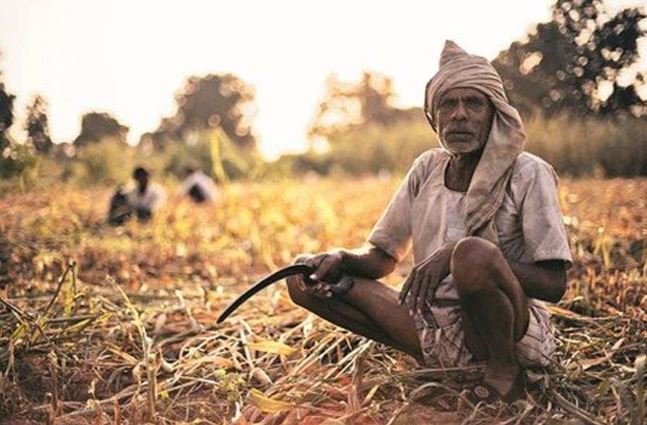
Despite various farmer welfare schemes, including populist loan waivers, there is a disturbing news – increase in farmer suicides. According to a recent report released by the Centre for Science and Environment, as many as 10,881 persons engaged in the farm sector died by suicide in 2021, the count being highest over the preceding five years. The research think-tank has observed that “Despite the Centre promising to double farm income, the number of farmers dying by suicide has been rising”. In fact, the data released by the Ministry Statistics and Programme Implementation confirms that the farmers’ income rose by 30 per cent while their debt surged by around 58 per cent between 2013 and 2019.
A parliamentary panel on agriculture had, in a report tabled in Parliament, also revealed that the government was far from achieving its 2022 goal of doubling the farm income. The panel said the average monthly agricultural household income was just Rs 10,218. Maharashtra reported the highest number of 4,064 suicides, followed by Karnataka (2,169) and MP (671). In Punjab, 270 farm-related deaths were witnessed in the year as per the report but the farmers’ leaders allege that the governments often try to downplay the poor condition of the farming community in the state, which ushered in the Green Revolution. However, compared to 2020, nine states witnessed an increase in suicides in 2021, with Assam alone seeing a nearly 13-fold increase. It is obvious that the Centre’s grand goal of doubling the the income of farmers, who put in sweat and blood to produce food grains, still remains a dream.
According to a study by Punjab Agricultural University, at least 83 per cent of the suicides took place due to debt and the farmers who ended their life owned less than five acres of land. They make up for 45.61 per cent of the total suicides, while small farmers (owning land between 2.47 acres and 5 acres) account for 30.53 per cent of cases. The study has found that most of the victims were in the prime of their youth as 72 per cent of the victims were in the age group of 15- 35 years.
It found that the major reasons for farmers’ suicides were änti-farmer laws, poor government policies, indebtedness, rising input costs, declining incomes, costly healthcare and education, high interest rates, corruption in disbursal of subsidies, crop failures, disturbed mental health and distress sale of crops. Then the minimum support price sometimes does not even cover the cost of production and in some cases even it is not ensured.
Looking at the dismal scenario, the government must take immediate steps to come to the aid of the agrarian sector on which more than 70 per cent of people are directly or indirectly dependent!
The new draft legislation “The Digital India Bill’ will enable the government to make big technology companies pay Indian newspapers and digital news publishers for the content that they use on different social media platforms and garner huge profits. A report by Tehelka Bureau
The new draft legislation ‘The Digital India Bill’ that is likely to be released for public consultations this month, will address the issue of content creation and its monetisation. The government wants to make big technology companies including Google, Meta -Facebook, Instagram and WhatsApp, Twitter, Microsoft, Apple and Amazon pay Indian newspapers and digital news publishers’ a share of revenue for using their original content.
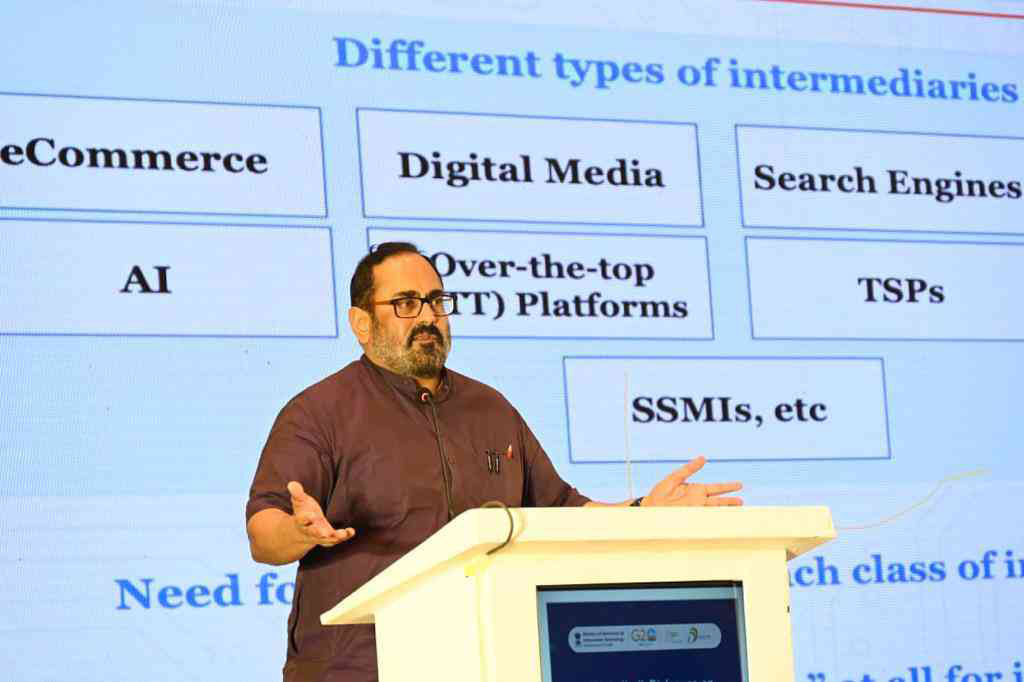
Rajeev Chandrasekhar, Union Minister of State for Skill Development & Entrepreneurship and Electronics & IT, has begun the process of consultations with stakeholders on soon-to-be introduced Digital India Bill — a future ready legislation that aims to catalyse India’s ambition of being in the leading pack of nations that would shape the future technologies. The proposed Bill aims to help India achieve the goal of becoming a trillion-dollar digital economy and be a significant trusted player in the Global Value Chains for digital products, devices, platforms, solutions and help develop India as a globally competitive innovation and entrepreneurial ecosystem while at the same time protecting the rights of its citizens.
The Digital News Publishers Association has long sought its share in the revenue that social media players like Google and Facebook generate by funnelling their content. Social media has emerged as an essential platform for news distribution. This will provide funds to Indian publishing companies to invest in quality journalism and credible content. The new draft legislation seeks to make companies pay news publishers for the content that they use on different social media platforms and garner huge profits. The draft Digital India Bill, is likely to be released for public consultations this month and content creation and the issue of its monetisation are going to be raised by stakeholders according to many publishing houses.
In many countries, the aggregators share revenue with the creators. For instance, in Australia, Facebook and Google shared about $140 million revenue with the Australian news industry. Australia, France and Spain, have already passed legislation that requires tech companies, including Google, to adequately compensate content producers for using their content and search results. However, India currently has no law to make Google, Facebook and other social media platforms pay for news they host on their platforms.
Ironically, in recent times, revenues of most media houses have come down while aggregators have profited without even creating any original content. There is no denying that both the tech giants and publishers need each other. Social media has emerged as an essential platform for news distribution. Close to 85 crore people in India are connected to the Internet. By 2025, the number is expected to grow to 120 crore.
The move is being mooted through regulatory interventions, which may happen as part of revisions to the existing IT laws. According to Rajeev Chandrasekhar “The market power on digital advertising that is currently being exercised by the Big Tech majors, which places Indian media companies at a position of disadvantage, is an issue that is seriously being examined in the context of new legislations and rules.” The government feels that the growth of social media and tech platforms has resulted in “consolidating market power” only with a handful of Big Tech companies, leaving many of the original content creators at a disadvantage. “The news publishers have no negotiating leverage at all, and this needs to be tackled legislatively. This is an important issue for us,” said Chandrasekhar.
The matter had been raised by the Digital News Publishers Association (DNPA) and the Indian Newspaper Society (INS) who have approached fair play watchdog Competition Commission of India (CCI) against Google, accusing the company of abuse of dominant position in news aggregation to impose unfair conditions on news publishers.
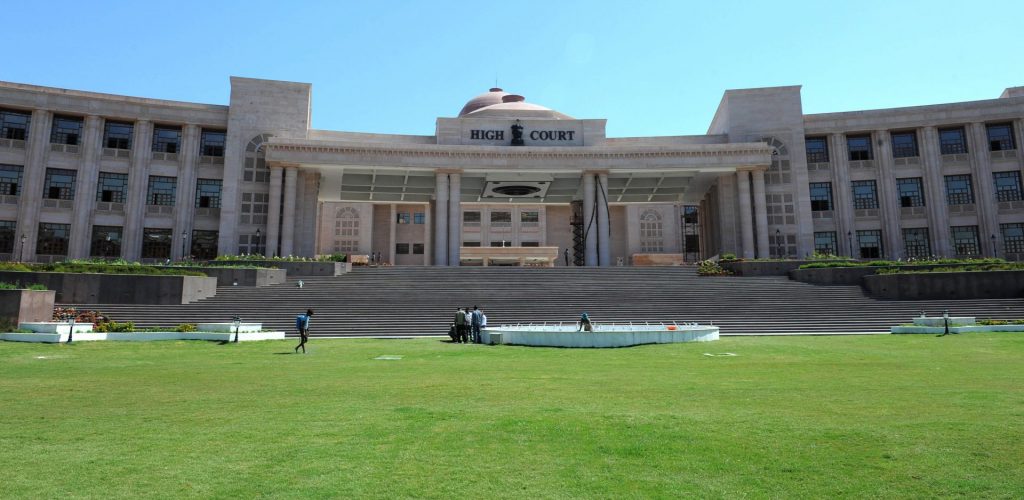
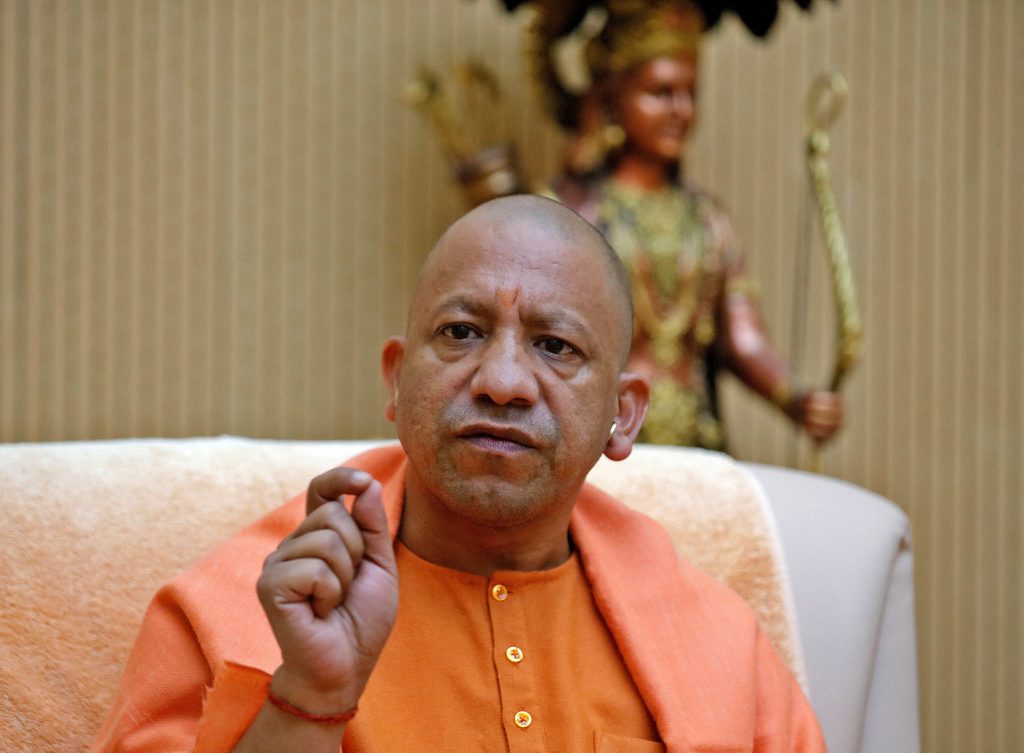
The Yogi-led UP government’s anti-corruption plank suffers a blow as it braces to challenge the Allahabad High Court directive to the CBI to probe the role of former Ayush Minister Dharam Singh Saini others in the massive Ayush admission scam, writes Mudit Mathur
A single judge Lucknow Bench of the Allahabad High Court, Justice Rajeev Singh, ordered the Director, CBI, to register a case and investigate the role of former Ayush Minister Dharam Singh Saini and the then Additional Chief Secretary (ACS) of the Ayush department, Prashant Trivedi, along with others after their names surfaced during the STF investigations exposing allegations of politico–bureaucratic nexus relating to massive fraud and high-level corruption in the corridors of power. Chief Minister Yogi Adityanath has always preached “zero tolerance” for crime and corruption, but the Ayush admission scam appears to have dealt a blow to the UP government’s clean image and its anti-corruption plank.
However, surprisingly, the Uttar Pradesh government has decided to oppose the CBI investigation and decided to challenge the High Court order in the Supreme Court. The CBI is yet to register a case in the matter. The serious allegations for investigation surfaced against 1989 batch IAS officer, Prashant Trivedi at the fag-end of his unblemished career, just a month before his retirement. The unexpected development has triggered a panic among the top bureaucracy of the Yogi government. Soon after the court’s orders, Trivedi was divested of the important charge of Additional Chief Secretary (Finance) and was posted as chairman, UPSRTC.
Initially, when the scam came to light last year, the state government on November 8th, referred the Ayush admission anomalies scam for a CBI probe looking into its nation-wide ramifications. An official spokesperson had then revealed, “Following the orders from Chief Minister Yogi Adityanath, the case of anomalies in Ayush colleges admission has been referred to the CBI.” Now, a sudden change of stance of the government has deeply puzzled the political circles.
While granting bail to one of the 16 accused persons arrested following the investigation by the Special Task Force, which was formed to probe the matter, the High Court Bench took cognizance of the testimony of Dr Umakant, officer-in-charge of Ayurveda Directorate who was later inducted into Counselling Board, recorded under Section 161 Cr.P.C. in the present case. The court directed the CBI to conduct an investigation with regard to the revelations made by Dr Umakant about mal-practices adopted in the admission process of UG and PG courses in Ayush Department, in the year 2019. The case diary no. 20 highlighted high-level corruption and gross injustice to those candidates who actually succeeded in the NEET 2019 and 2022.
Following is the testimony of Dr Umakant during STF investigations: “Question: Kuldeep Singh Verma (whose company had been hired to conduct online counselling) in his statement said that after some Supreme Court’s orders, you and S.N Singh (former Ayush Director) got many admissions done after conniving with owners of many colleges wherein substantial dealings took place from government to Minister. What is the reality behind it?
Answer: “In the year 2019, the hon’ble Supreme Court passed orders on the petitions jointly filed by private Ayurved College Association, Private Unani Medical College Association, some colleges including Bharat Ayurved Medical College, Sri Satya Ayurved College Moradabad, Jamia Tibbiya Unani, Deoband Unani, Vivek Auvedic College, Santushti Ayurvedic College, Hakeem Raees Unani College, Aligarh Ayurved Unani College, Vivek College, Dr Anar Singh College, Babu Singh Daddu Singh College, Jeevan Jyoti College, WTM College, Sanjivani College, Bhartiya Ayurved College, De Abdul Ali Tibbiya College and 10-12 other colleges. Dr Anwar Saeed of Jamia Tibbiya Saharanpur, and Dr Akram of Bharat Ayurved Muzaffarnagar came to meet me carrying the orders of the court. The copy of the order was delivered to the Director, Prof. S.N. Singh who read the orders. Director S.N. Singh also called me in his chamber.”
“Akram and Anwar said that Sir if you ensure quick implementation of the orders, then together with all private colleges can give you Rs. 1.10 Crores for UG and Rs. 50 lacs for PG. On this, the Director and myself gave them assurance to bring Rs 10 lacs advance, then we will settle the deal with the Minister through his PS Raj Kumar Diwakar. Thereafter, they went back. Director S.N. Singh asked me to send a proposal along with court orders immediately to the government which I did. The same evening, I talked to Raj Kumar Diwakar to meet Minister Dharam Singh Saini. He told me to come to his residence 16, Gautam Palli, in the evening.”
The testimony of Dr Umakant Singh further revealed, “I along with Director Dr S. N. Singh reached the Minister’s bungalow where Raj Kumar Diwakar was present. He took us to the Minister in the meeting hall where I and Dr S.N. Singh gave him the copy of the orders and told him that Dr Akram and Dr Anwar Saeed had approached us for its quick implementation and thereafter they will come and meet on behalf of all the colleges after implementation. We came back.”
“After a few days, Akram and Anwar called me near Sri Ram Tower in an Innova car and handed over me a bag containing Rs. 10 lacs and informed me that they have talked to all the colleges and you issue the orders quickly. I came back to the Directorate and informed Dr S.N. Singh in his chamber. He told me you keep Rs. 2 lacs, go and give two lacs to Ram Kumar Diwakar and keep six lacs of mine with you. My house is under construction and I will tell you to give it in that. Soon, thereafter, orders were implemented and action was taken. A college-wise list of candidates for admission also came to the Directorate for verification from the counselling members – Joint Secretary Laxman Singh, Prof P.C. Saxena, Director S.N. Singh and myself. Thereafter it got approval of the Minister through the government. Thereafter, the college wise list was sent back.”
Dr Umakant further revealed, “After a few days, Akram and Anwar again called me in the car and handed over Rs. 1 crore cash which I carried to the Directorate. I gave Rs one crore to Dr S.N. Singh out of which Rs. 35 lacs were for Minister Dharam Singh Saini, Rs 3 lacs for Prof P.C. Saxena, Rs 2 lacs for Joint Secretary Laxman Singh, Rs 10 lacs for me and Rs 26 lacs for the officers of the state government. The minister’s Rs. 35 lacs were given to him by S.N. Singh and myself in the presence of Raj Kumar Diwakar at his residence which Diwakar carried inside. Remaining Rs 25 lacs were given to Additional Chief Secretary Prashant by S.N. Singh at his residence. Rs 1 lac was given to Vishnu Srivastav, Section Officer, by Director S.N. Singh.”
“After a few days Anwar and Akram brought Rs 50 lacs for PG admissions and I collected the same from them near Sri Ram Tower and gave it to Director S.N. Singh. Out of this, Rs. 30 lacs for Minister Dharam Singh Saini, Rs. 8 lacs for Prof Suresh Chandra Saxena, Director Syllabus and Evolution, Rs 2 lacs for Prof P.C. Saxena, Rs 5 lacs for S.N. Singh and Rs. 5 lacs for me.”
Dr Umakant also said, “In 2020-21, I collected Rs 4-5 lacs per college for granting no objection to new colleges. Out of this collected money, myself and Dr S.N. Singh gave Rs 20-20 lacs to Minister Dharam Singh Saini at his residence in the presence of Raj Kumar Diwakar.” The testimony of Dr Umakant was admitted by Dr S.N. Singh, who was called from the prison to face Dr Umakant Singh, along with kingpin of the admission scam, Kuldeep Verma, whose company was hired to conduct online counselling of the selected candidates through NEET 2021 examination.
The Bench observed, “From a bare perusal of the aforesaid statement given by Dr Umakant Singh, it is evident that huge money was usurped by various persons in the admission process of the year 2019, in the name of compliance of the order of the Hon’ble Supreme Court. The Investigating Officer present before this Court at the time of arguments, accepted that the allegations levelled by Dr Umakant, quoted above, which are undoubtedly very serious, were not verified from any senior officers of the government.”
“After looking at such wrong doings by the authorities for admission in UG and PG courses and that too, in the name of compliance of the order of the Hon’ble Apex Court, depriving the eligible students; as also finding grave lapses on the part of the Investigating Agency, which may have fatal consequences on the justice delivery system, this court cannot simply shut its eyes,” the Bench remarked.
The Bench while directing the Director, CBI, New Delhi, to register a case on the statement of Dr Umakant, recorded under Section 161 Cr.P.C. in the present case, as mentioned in para 17 of this order (part of CD 20), ordered investigation into the allegations made by Dr Umakant in relation to malpractices adopted in the admission process of UG and PG courses in Ayush Department, in the year 2019. It further directed the Deputy Superintendent of Police, STF to hand over all the relevant copies of the documents, including the case diary, to the Director CBI.
Appearing for Dr Ritu Garg, who was arrested by the STF on March 1, 2023, senior advocate, I.B. Singh, assisted by Purnendu Chakravarty, submitted that the applicant is a renowned lady doctor, who completed her M.B.B.S. and M.D. from the Institute of Medical Sciences, BHU, Varanasi and has been running Ritu Diagnostic Centre for the last 23 years. The applicant is also providing free medical treatments to the needy persons in Santushti Ayurvedic Medical College and Hospital, Chunar, District Mirzapur, of which she is the owner. He contended that the applicant has been falsely implicated in the present case under Sections 419, 420, 467, 468, 471, 120-B of the IPC and Section 66D of the IT Act, and she has been in jail since February 28, 2023. Dr Garg was accused of facilitating admissions of at least 70 undeserving candidates to her institution in connivance with other officials of the Ayurveda directorate.
Senior Advocate I.B. Singh explained that the owners of the colleges have no role in handling merit data and NEET counselling process and emphasised that there is no allegation that the applicant was able to interpolate the result of NEET 2021 examination or conspired with the co-accused persons for offline counselling. He submitted that it is undisputed that the counselling was done by the Members of Board and alleged that the investigation is going in the wrong direction to save higher government officers.
During the arguments, the government counsel conceded the fact that no content related to interpolation in the result provided by the DGME is found against the applicant. The A.G.A. also accepted that the only offence made out against the applicant is of conspiracy. The court thus allowed bail to the accused Dr Ritu Garg and further ordered CBI investigations into the allegations against the minister and officers of the government.
The STF has been probing the scam since November 2022 and has arrested 16 people including Dr Garg, the former director, Ayurveda, SN Singh, counselling in-charge, Dr Umakant Yadav, former senior assistant director, Rajesh Singh, and former junior assistant in Ayurveda Directorate, Kailash Chandra Bhaskar, among others.
In November last year, a major scam surfaced in Uttar Pradesh in granting admission to hundreds of ineligible candidates, who appeared in the online counselling process to join Ayurvedic, Homoeopathic and Unani medical courses in the various government and private colleges, fudging and corrupting the merit list declared after National Eligibility Cum Entrance Test (NEET) for 2021-2022 session. Even 22 candidates who had not appeared in NEET, got admission in some of the good colleges. The government suspended 891 such students who failed to score necessary cut-off marks in NEET but manoeuvred the system, scarred by a deeply rooted scam, to get admissions. It was seen as a major blow to the much-hyped plank of corruption-free governance in the BJP-ruled state of UP.
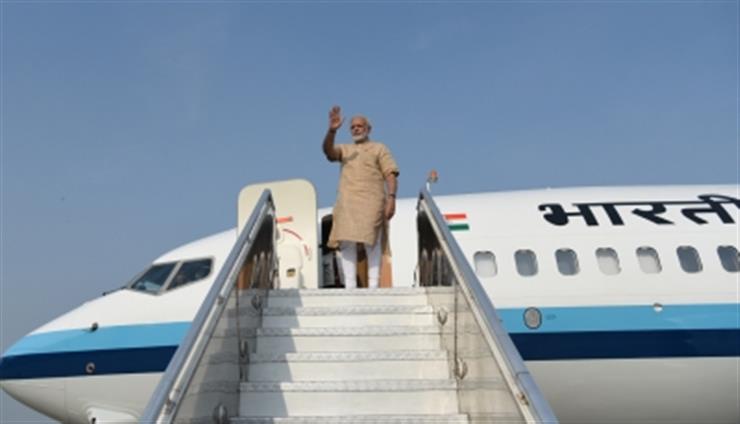
New Delhi : Prime Minister Narendra Modi will embark on a visit to the US and Egypt from June 20 to 25.
Modi’s state visit to the US is at the invitation of President Joseph Biden and First Lady Jill Biden.
The visit will commence in New York, where Modi will lead the celebrations of the International Day of Yoga at the UN headquarters on June 21.
In December 2014, the UN General Assembly had adopted a resolution proclaiming June 21 as the International Day of Yoga.
Modi will thereafter travel to Washington D.C., where he will receive a ceremonial welcome at the White House on June 22, and meet President Biden to continue their high-level dialogue, according to a statement issued by the external affairs ministry said.
The Bidens will host a state dinner in honour of the Prime Minister the same evening.
At the invitation of Congressional leaders, including the Republican House of Representatives Kevin McCarthy and Democratic Senate Speaker Charles Schumer, Modi will address a joint sitting of the US Congress on June 22.
The next day, the Prime Minister will be hosted at a luncheon jointly by Vice President Kamala Harris and Secretary of State Antony Blinken.
In addition to the official engagements, Modi is scheduled to have several curated interactions with leading CEOs, professionals, and other stakeholders.
He will also meet members of the Indian diaspora.
After wrapping up the US trip, the Prime Minister will then head to Egypt for a state visit from June 24-25.
The visit is at invitation of Egyptian President Abdel Fattah El-Sisi, which he extended to Modi in January 2023 when he had graced the Republic Day celebrations as the chief guest.
This will be Modi’s first visit to Egypt.
Apart from his talks with President Sisi, the Prime Minister is likely to interact with senior dignitaries from the Egyptian government, some prominent personalities, as well as the Indian community in the African nation.
Relations between India and Egypt are based on ancient trade and economic linkages as well as cultural and deep-rooted people-to-people ties, according to the External Affairs Ministry statement.
During the state visit of President Sisi in January, it was agreed to elevate the relationship to a ‘strategic partnership’.