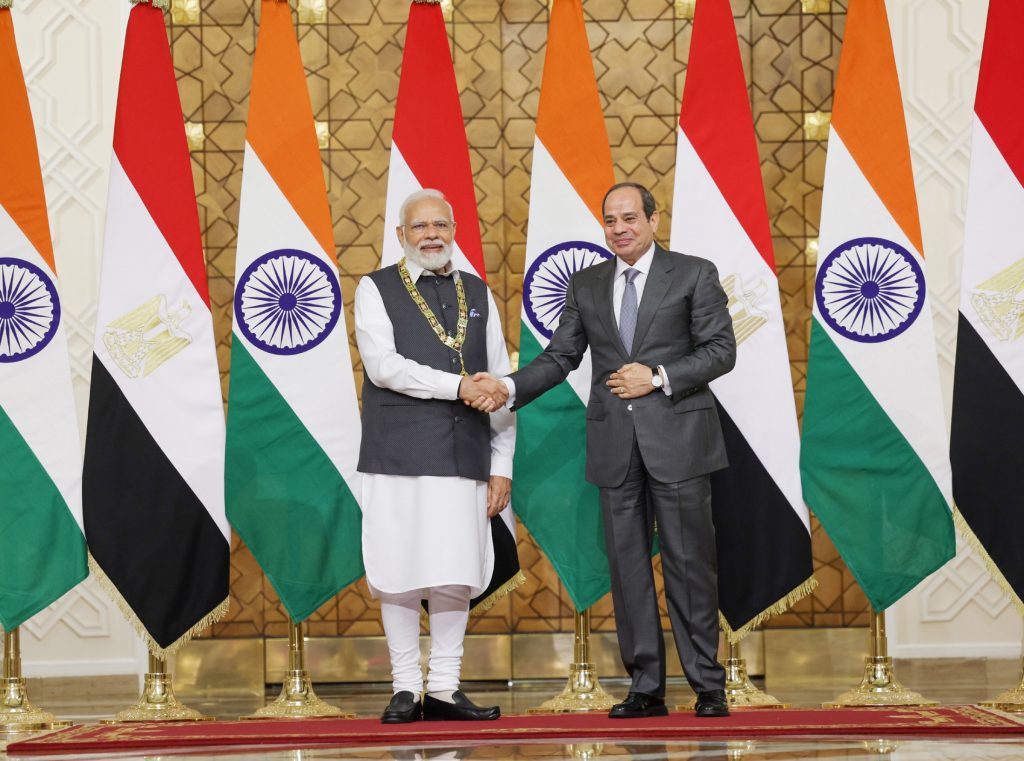
The PM’s visit to Egypt is expected to boost the bilateral ties between the two countries, with the two sides expected to put in place arrangements to ramp up cooperation in areas ranging from security to trade and investment.
The belated visit of the Indian PM Narendra Modi to Egypt, on June 24-25 this year is an attempt to re-establish the warm ties, the two countries they had during fifties and sixties, the cold war era. An Indian PM visited the country after a gap of 26 years, and seven years after the visit of the Chinese President, Xi Jinping, who had travelled to Egypt in 2016 offering billions of USD investment in the Suez Canal Economic Zone (SCZONE).
A pretty Egyptian woman, Jena, dressed in a traditional Indian saree, compensated for this delayed Indian response, when she warmly welcomed Modi with the popular song ‘Yeh Dosti Hum Nahi Chhodenge’ from the movie ‘Sholay’ meaning that we would never abandon our friendship. It was also a surprise for the PM, when she revealed her limited knowledge of Hindi and never having visited India before. He warmly responded by saying that “Kisi ko pata bhi nahi chalega ki aap Misr ki beti ho ya Hindustan ki beti ho (Nobody will be able to tell whether you are an Egyptian or Indian woman).
In spite of the love and affection India enjoys in Egypt, her leadership has to invest in the country on a much larger scale than was planned. The Chinese assistance had begun in 2008 with the setting up of the Tianjin Economic-Technological Development Area. During the past 15 years, Chinese have already initiated a number of projects in textiles, power generation, apparel and fashion and other industries, worth tens of millions of dollars at the Suez, Sokhna and Abu Khalifa. With its excellent access to the African and Arab markets, the Egyptian industrial zone has become a coveted destination for the Chinese industries and investors.
After this prolonged gap of her low-key relationship with Egypt, the Indian efforts to regain ties with the country had begun following the visits of the Egyptian President, Abdel Fattah el-Sisi, who had also graced the Republic day Parade in 2022 as the chief guest. Both sides appear to be keen for reinventing their bilateral close relationship, which they had during the fifties and sixties.
Just a day before Modi’s arrival in Cairo, a high-power delegation was having meetings with senior officials and businessmen in New Delhi and Mumbai for setting up industrial units at the SCZONE. Waleid Gamal El Dien, Chairman of the SCZONE, who was leading the four-day promotional tour in New Delhi and Mumbai, announced the launch of the Indian “Platinum” project, the leading Indian company in the manufacture of additives and PVC stabilizers, within the industrial developer, Orascom Industrial Parks. India will be investing USD 20 million in this project in the next two-three months.
Initially, the response of the Indian investors to the SCZONE has been slow, which was set up in 2015 and despite being strategically located at the intersection of major international shipping routes providing easy access to global markets. It encompasses an area of over 461 square kilometres and is located along the eastern and western banks of the Suez Canal.
During the past seven years, its infrastructure was further improved with a new major expressway linking it to the regional network, six new road and rail tunnels to increase cross-canal connectivity, seven underwater tunnels under the Canal to link Sinai Peninsula to Egypt’s mainland, power, water and tele-communications networks to support integrated development, and the dry port projects at Ismailia and 10th Ramadan to boost the region’s logistical capacity.
Modi’s Agenda
Modi’s official visit to Egypt is expected to boost their bilateral ties, with the two sides expected to put in place arrangements to ramp up cooperation in areas ranging from security to trade and investment. They may also set up joint ventures for producing military equipment. The Egyptian ambassador, Wael Mohamed Awad Hamed, in New Delhi has told Indian media that Modi’s visit is going to be a game changer, because his visit is expected as a confidence-building measure.
The leaders of the two countries are expected to propose a road map for working together benefitting each country, but also for the rest of the countries of the region, especially Global South. It may be noted that India has already invited Egypt as a guest country during her G20 presidency.
The last bilateral visit by an Indian prime minister, I.K. Gujaral, to Egypt was in 1997. At that time, there was a different leadership in Egypt and in India, and the world was different. The whole world, the international context and the polarisation was different. It is hoped that with Modi’s visit to Egypt, the relations between the two countries would regain the same momentum they had in the 1950s and 1960s.
New Alignments in West Asia
Modi’s visit comes at a time when West Asia is witnessing a change. Saudi Arabia and Iran have restored their diplomatic ties. India is getting the attention of the Egyptian leaders for closer economic ties, when other countries in the region are seeking Chinese support and investments. It is being stated that the two countries are re-inventing their old ties of the “non-aligned era, when they had decided to remain neutral from the big power rivalries i.e. between the US and the USSR. With the new emphasis on closer economic ties, India and Egypt may not only regain old ties, they may also work more closely together, with Egypt serving as a gateway not just to the Arab world but also to Africa.
During his two-day schedule in Egypt, Modi visited the Helopolis War Memorial of 3779 Indian soldiers, who were martyred during the World War-I defending Egypt in various battles against the armies of the Ottoman Empire. His visit to the 11th century Al-Hakim mosque built during the reign of the Fatimid dynasty reaffirms India’s old ties with the region. The Bohra community, known as accomplished businessmen in India, are mostly settled in the Western India. They have a large presence at Siddhpur, Mehsana and Gujarat, and they trace their origin from the Fatimid dynasty. The political and religious persecution in Egypt had forced them to take refuge in India.
Meeting With Ministers
The visit is seen as an attempt by India to strengthen its ties with Egypt, a key regional player in the Middle East. India is looking to expand her trade and investment ties with Egypt, and seeks cooperation in the fight against terrorism. Modi has also participated in a roundtable discussion with the India Unit of the Egyptian Cabinet. Apart from having interaction with ministers and government officials, he also met Egypt’s grand mufti, Dr Shawki Ibrahim Abdel-Karim Allam, and later held discussions with prominent Egyptian intellectuals.
Meanwhile, India’s ambassador to Egypt, Ajit Gupte told the Indian news agency that India’s multi-faceted relations with Egypt, now being elevated to a strategic partnership, would be receiving further impetus with the first state visit of Modi to this key Middle East nation.
The warm welcome accorded to Modi in Cairo indicates that the Egyptian leaders do not want the investments only from China, which is expected to reach USD three billion this year, but want to diversify with investments from other countries. Since India enjoys credibility and trust, the Indian participation is likely to increase in a big way, especially during the forthcoming visit of El-Sisi to India in September for the G-20 Summit where Egypt has been invited as a special guest.
Modi-Biden summit has scripted a new chapter in the relationship between the two countries, which, perhaps, will have worldwide impact on the geo-politics. But the meeting between the two leaders has fallen short of forging any formal security alliance, writes Gopal Misra
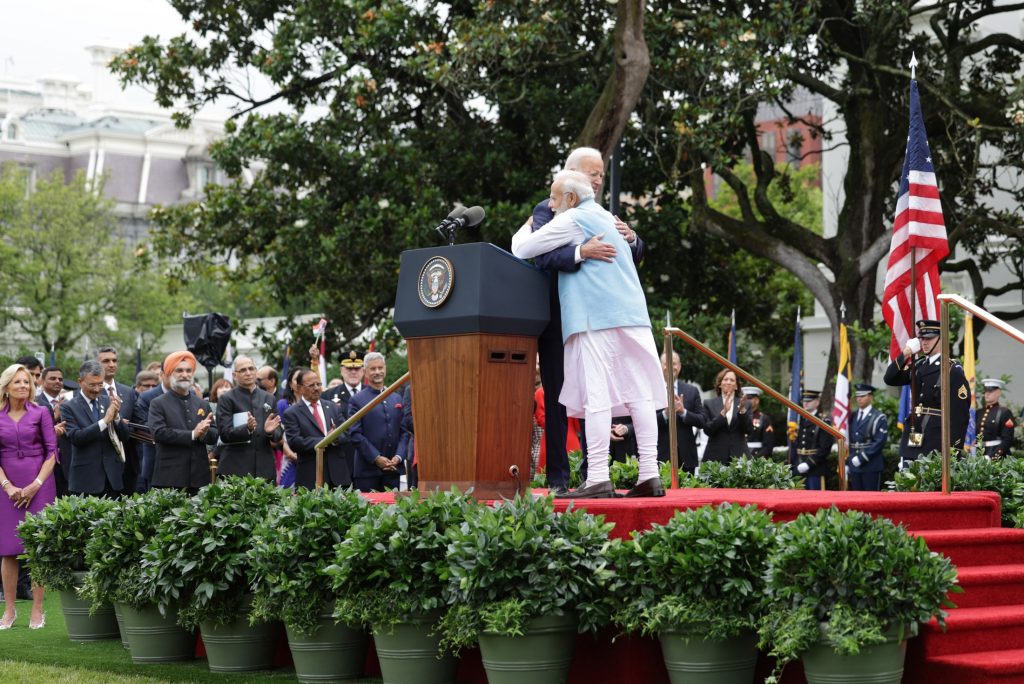
It was a rare blending of the statecraft with the stagecraft, mastered by the two leaders, US President Joe Biden and his official guest, Indian PM Narendra Modi. They scripted a new chapter in the relationship of their countries, which, perhaps, will have worldwide impact on the geo-politics.
Modi’s three-day action packed programme between June21-24 could have out shadowed any blockbuster either in Bollywood or Hollywood with its meticulous details, each scene loaded with well thought out ideas and weighed that how much it would be impacting the audience across the continents, and indeed on the law makers at Capitol, where the Indian PM was the first chief executive of his country to address the Congress second time- a rare honour extended to a world leader. Thus, he joins the elite club of the leaders such as Nelson Mandela and Winston Churchill. Earlier, they had addressed this powerful bicameral legislature, Senate, the Upper House and the Lower House of Representatives, and on the chair were Vice-President Kamala Harris and Speaker Kevin McCarthy.
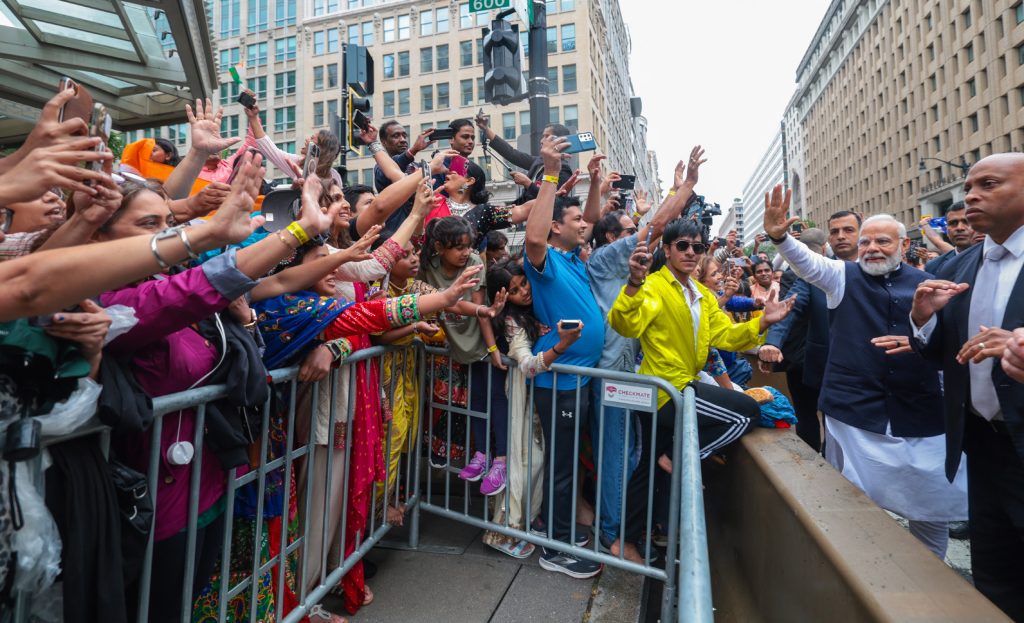
There were joint communiqué and other statements; but the most significant event, perhaps, was when Modi’s nearly hour-long address to the US Congress which evoked multiple standing ovations, applauses and cheers from American lawmakers. Amidst the thunderous applause and clapping, he received a rousing reception as he walked up to the podium to deliver his address. The grand House Chamber at the US Capitol also echoed with the chants of ‘Modi, Modi’ from members of the Indian community sitting there. Earlier, Modi had addressed a joint meeting of the US Congress for the first time in 2016, but it was different this time. During the past seven years, the two countries have successfully evolved common perception on many key issues influencing the earth.
Modi’s address before the Congess that “any hesitation in India-US relations belongs to the past, emphasizing that the two democracies are currently at a critical juncture and that he is visiting the country to speak about the “calling for the century.” It means that the present 21st. century is the era of progress and cooperation that the relationship between the two countries is being founded for the coming decades.
Rahul’s visit no spanner in works
Just two weeks before Modi’s official visit to the USA, Rahul Gandhi, de-facto chief of the Indian National Congress, the party which had ruled India most of years since the departure of the British in 1947, presented his anti-Modi campaign in a most amicable way. Being under the spell of his political Guru, Sam Pitroda, admired for the telecommunication revolution in India, he was more amicable and accessible this time. Pitroda claims that he hails from a family of carpenters, claiming to be having a tag of the backward community, from Gujarat was seen telling Rahul, his disciple or “chela” to be more caste-focussed and speak for Muslims. However, he never tells that his wife is from a high-caste Brahmin community. It is difficult to assess, whether Rahul’s visit adversely affected the outcome of Modi’s visit, but it definitely emboldened Indian American Muslims to enlist support of as many as 75 lawmakers at the Capitol as well as statement from the former US president Barrack Obama.
Obama’s statement, issued during the summit, that India might be further split, if the minority rights are not ensured. He, perhaps, was responding to the resolution of the two lawmakers Rashida Talib and Juan Vargas urging the State Department to act on the recommendations of the US Commission on International Religious Freedom (USCIRF) and designate India as a Country of Particular Concern (CPC) under the International Religious Freedom Act.
There was an intense campaign against Modi’s visit in New York, where posters were displayed on trucks asking “Hey Joe! Ask Modi why student activist Umar Khalid has been imprisoned for over 1000 days without trial?” Another poster drew the attention towards the ‘Lynching of Muslims, Christians and Dalits have surged under Modi’s rule,” The BBC documentary “India: The Modi Question” and the denial of a U.S. visa to Chief Minister Narendra Modi were the highlights of the anti-Modi campaign.
In a bid to counter the anti-Modi campaign, President Joe Biden and his administration appeared to be in full gear in defending Indian democracy. Both Modi and the US administration successfully turned the anti-Modi campaign as a part of “anti-India conspiracy”. On his part, Modi also presented himself in the best of his humour, when a journalist of an American channel asked him at the joint press-conference he had shared with Biden, about the plight of “minorities’ and the shrinking of “human rights” in India, and she also stated in a satirical tone that it is hoped that Modi would also hold press-conferences in his own country.
Indeed, it was Achilles heel for Modi, as during the past nine years since he is holding the country’s most important office, he did not hold any press-meet in New Delhi.
Before embarking on his official visit to Washington, Modi had stated that the two countries enjoy ‘trust’, and he reiterated in his address before the Congress that the mutual trust between the two democracies will enable us to explore new frontiers in science and space. Figuratively speaking, both Biden and Modi are determined to take the US-India relationship to new heights, even beyond moon and the unexplored space. During the summit, India and the US have committed themselves to work together in the exploration of the space, including frequent human visits to the moon and mars, and even exploring other planets.
Burying the Past
The India-US ties were always warm, if not intimate, except during President Richard Nixon’s administration in1971, when he had deployed his country’s warship equipped with nuclear devices in the Bay of Bengal to brow-beat India in support of the military rulers of Pakistan committing genocide of Muslims of the then East Pakistan, and the present Bangladesh. The White House archival details, now available in public domain, reveal that Nixon and his National Security Adviser (NSA), were not only abusive to the then Indian PM, Indira Gandhi, they also found themselves isolated within the adminsitraiton, when the American diplomats and media had rallied around opposing Nixon’s policies, which were favouring the genocide of Bengali Muslims in East Pakistan. During this period, Nixon had even asked China to invade India and warned USSR to face “consequences” if India is not restrained in supporting the uprising of Muslims in East Pakistan.
Even before Independence, the seeds of closer ties between the two countries were sown during the presidency of Roosevelt, who had been a consistent supporter of India’s independence and had even advised the then British leader and the war-time PM, Winston Churchill against India’s partition, but the British divided India on communal lines before leaving the country.
A Successful Visit
Modi’s three-day official visit to Washington is considered much more important than the earlier visits of his predecessors, Pandit Jawaharlal Nehru, P.V. Narsimha Rao, Atal Bihari Vajpayee and Dr. Manmohan Singh. During fifties and sixties, India-US relations could not blossom despite Nehru’s official visit to the USA. It was the period of cold war between the US-led western powers and the USSR’s Communist camp, and Nehru’s much-trumpeted non-aligned foreign policy was not acceptable to the Americans. They had continued to arm Pakistan with the state-of-the art weapons, which were later used against India. However, the relationship between the two countries started improving following the visit of P.V. Narsimha Rao to Washington, who had laid the foundation of opening of the Indian economy. It was the beginning of new India-US ties, which was continued during the regimes of Vajpayee and Dr. Singh.
It was the period, when the world witnessed a paradigm change in the world politics following the collapse of the USSR, and the emergence of the USA as the only Super Power on the earth. Three decades later, during the third decade of the 21st. century, China has emerged as a serious contender to replace America as a Super Power.
Blossoming of India-US Ties
Modi’s visit is just not limited to a security understanding or obtaining new generation weapon systems, but it paves the way for the blossoming of Indian genius with the American resources for better world order. In his address to the Congress, Modi told the law-makers that India has a huge pool of well-trained engineers and scientists, who could be contributing to the US-India joint ventures with their hard work blended with talent.
Earlier, Biden’s predecessors used to harbor ‘suspicion against Nehru’s non-aligned policies, but in contemporary America, the political leadership across the party lines consider the economic empowerment of the Global South is the only solution to contain China’s growing penetration across the continents.
Modi’s American visit has taken place, when Indian geniuses are transforming the country’s economy by blending knowledge with financial resources. In recent years, India has already achieved third position among the successful 108 unicorns. It may be noted that the new start-ups having a USD one billion investments are called unicorn. The Indians comprise a little more than the one third of the work force in the Silicon Valley, India is already technically advanced to receive and further develop technologies received from the USA. Therefore, the visit is being aptly described that “Modi’s time has come, when India’s time has also come”.
For many, it was a three-day show or “tamasha” of blending glamour and excitement from New York to Washington for Modi as well as for Biden, as both are going to face elections in 2024. Biden would be re-contesting for his second innings in the White House and Modi for his third –term.
Apart from joining the Yoga Day at the UN with famous film stars and celebrities, Modi met the scientists and investors, thus laying the foundation of a long-term multi-lateral cooperation with US academia, business and joint ventures in the frontier of science and technology.
US-India ties on the upswing
During the first quarter of the 21st. century, the successive US administrations, especially during the presidency of George W. Bush (2001-2009) and Barack Obama (2009-2017), have been accommodating to India’s core national interests and acknowledged outstanding concerns.During this period, there was a phenomenal increase in bilateral trade and investment, co-operation on global security issues. Before Modi’s official visit in 2023, the USA had been supporting India for admission to the Nuclear Suppliers Group and started joint-manufacturing through technology sharing arrangements. India was declared a Major US Defense Partner.
Both Biden and Modi are aspiring for yet another term for them in their respective high offices in the 2024 elections, when American would be electing a new President and In India, the Lok Sabha polls would be deciding the future of Modi and the ruling BJP.
There could be many reasons, which have finally led to the signing of ‘Critical Partnership’ in key areas, the first, that the Indian scientists and engineers have attained worldwide fame for their excellent performance in the frontiers of science research and technologies. It is often stated in America that it is easier to get admission to MIT, Harvard or any other Ivy League schools, viewed as some of the most prestigious universities in the world, than seeking admission to an IIT in India; secondly, Indians, who are trusted for their professional integrity occupy top positions in the American companies and universities, thirdly, India’s multi-party democracy has brought a stable system of governance for 140 billion people. The fourth reason, which is not being talked about is that despite grave provocations, India has been facing China with her own resources and defence capabilities.
Another reason which could have prompted the American establishment to have closer ties with India is that there are only two countries in Asia, India and Vietnam, who refused to be over-awed by the PLA. In February 1979, Vietnam had successfully repulsed the Chinese forces. One month later in March, China unilaterally withdrew its army. Earlier, during September 11-15, 1967 during the clashes at the Nathu La in Sikkim, Chinese casualties were estimated at 300 soldiers, while India had lost only 32 soldiers. The two countries do not subscribe to the much-trumpeted ‘invincibility’ of the Red Army.
Meanwhile interestingly, just 48 hours before Modi’s official visit to the US, the American Secretary of State Antony Blinken rushes to Beijing on June 19 ,where the Chinese President Xi Jinping welcomes the top U.S. diplomat at the Great Hall of the People, a grand venue usually reserved for greeting heads of state, and observed “progress” after shaking hands with his American guest.
Some key takeaways from PM visit
The US has decided to draw a bilateral roadmap for the next level of interoperability by sharing some critical and emerging technologies with India. The initiative signed on Critical and Emerging Technology (iCET) between India’s Defence Minister Rajnath Singh and the US National Security Advisor Jake Sullivan has been furthered with INDUS-X during Modi’s visit. It will connect the national security innovation ecosystems of the two nations for research, development, and production of dual-use critical and emerging technologies.
Joint statement against terrorism
Biden and Modi not only condemn cross-border terrorism, they have also unveiled an extensive 58-point joint press statement , which commits for increasing trade and investment partnership as an “engine for global growth.” It envisages establishment of the interagency-led Strategic Trade Dialogue to explore avenues for enhancing high technology commerce and facilitating transfer of technology, which included the signing of a Memorandum of Understanding on Semiconductor Supply Chain and Innovation Partnership. They have also decided to launch of two Joint Task Forces on advanced telecommunications, with a specific focus on research and development of technologies like Open RAN and 5G/6G and the joint Indo-U.S. Quantum Coordination Mechanism, which aims to foster collaboration among industry, academia, and government. These agreements also included the collaboration between General Electric and Hindustan Aeronautics Limited for manufacturing of GE F-414 jet engines in India.
…………..
Ukraine no hurdle
The USA did not ask India to condemn Russia for the Ukraine war, but in the joint statement, both leaders expressed deep concern over the ongoing conflict in Ukraine and mourned the humanitarian loss and emphasized the need for a peaceful resolution.
More muscle for Quad
Both Biden and Modi have decided for further strengthen the Quad as a partnership for global good. They emphasized the significance of a “rules-based international order. In West Asia, they decided to further the partnership between the I2U2 countries (India, Israel, United Arab Emirates and the United States).
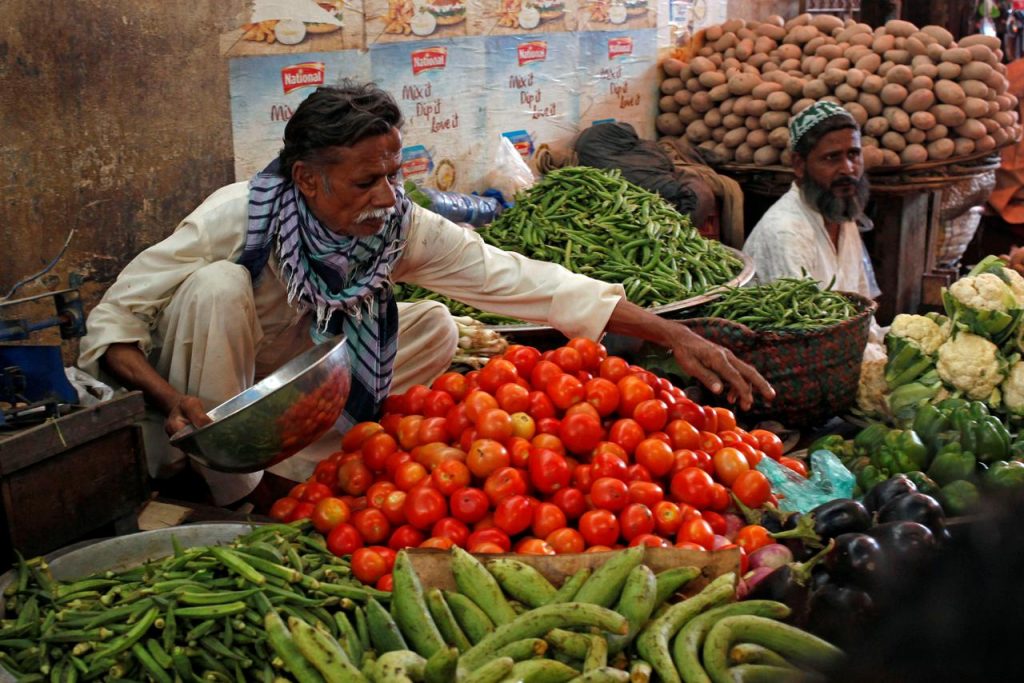
New Delhi : The spurt in prices of tomato is a temporary seasonal phenomenon, and rates will cool down soon, a top government official said, as retail prices of the kitchen staple shot up to Rs 100 per kg in major cities.
It is a highly perishable commodity. Transportation gets affected in areas that received sudden rains. It is a temporary issue. Prices will cool down soon. It happens every year during this time,” said an official at the Department of consumer affairs.
Stating that there is a seasonality in tomato, he said the data on tomato prices of the last five years shows that the rates have risen every year at this time. From Himachal Pradesh, the supply to Delhi will start coming in the next 10 days and prices will soften.
According to the data maintained by the Department of Consumer Affairs, the average price of tomato on an all-India basis is Rs 46 per kg on June 27. The modal price is Rs 50 per kg while the maximum price is Rs 122 per kg.
Across four metros, the retail price of tomato in Delhi is Rs 80 per kg, Mumbai is Rs 80-110 per kg, Kolkata is Rs 100-150 per kg and Chennai is Rs 50-70 per kg.
Among other major cities, the prices stood at Rs 52 per kg in Bengaluru, Rs 80 per kg in Jammu, Rs 60 per kg in Lucknow, Rs 88 per kg in Shimla, Rs 100 per kg in Bhubaneshwar and Rs 99 per kg in Raipur.
The maximum price of Rs 122 per kg has been reported from Gorakhpur (Uttar Pradesh) and Bellary (Karnataka), as per the department data.
In the Delhi-National Capital Region (NCR), tomato prices at Mother Dairy’s Safal stores have doubled to nearly Rs 80 per kg in the last one week as supplies have been affected due to rains in key producing states.
The best quality tomatoes at Mother Dairy’s Safal retail stores are being sold at Rs 78 per kg on Tuesday. Some varieties are available at lower rates also. There are more than 300 Safal stores in the Delhi-NCR market.
“With the onset of monsoon, the tomato crop is currently going through a seasonal transition. Rainfall in areas such as Himachal Pradesh and Uttarakhand have impacted the crop and also restricted its supply, resulting in a demand-supply gap,” a Mother Dairy spokesperson said.
Agritech startup Otipy, which markets fresh fruits and vegetables through a mobile app, is selling tomatoes at Rs 86 per kg. Tomatoes are available at Rs 80-85 per kg on the e-commerce platform Big Basket.
Vegetable vendors in the national capital are selling tomatoes between Rs 80-120 per kg, depending on the location and quality.
“We were selling tomatoes at Rs 25-30 per kg around June 15. It started to increase gradually after that to Rs 40, then Rs 60 and now we are selling at Rs 80 per kg,” Babloo, a vegetable vendor in Paschim Vihar, West Delhi, said.
The prices at Azadpur, the biggest wholesale market of fruits and vegetables in the country, have increased sharply, he added.
However, according to the price prediction made based on artificial intelligence by the consumer affairs ministry, the prices of tomato are likely to remain lower in July, the official said.
In the producing centre of Madanapalle (Andhra Pradesh), the average whole prices at present are ruling at Rs 5,600 per quintal and the rates are expected to come down to Rs 4,400 per quintal in July. Similarly, the average price of tomato is ruling at Rs 3,670 per quintal in Kolar (Karnataka) at present, and is likely to decline to Rs 2,700 per quintal in July, he added.
As per the government data, tomato production is estimated to fall slightly to 20.62 million tonnes in 2022-23 from 20.69 million tonnes in the previous year.
A bill passed during a special Punjab assembly session held last week to remove Governor Banwarilal Purohit, as Chancellor of all the 11 state universities has become the latest flashpoint in the ongoing tussle between CM Mann and Purohit, writes Rajesh Moudgil
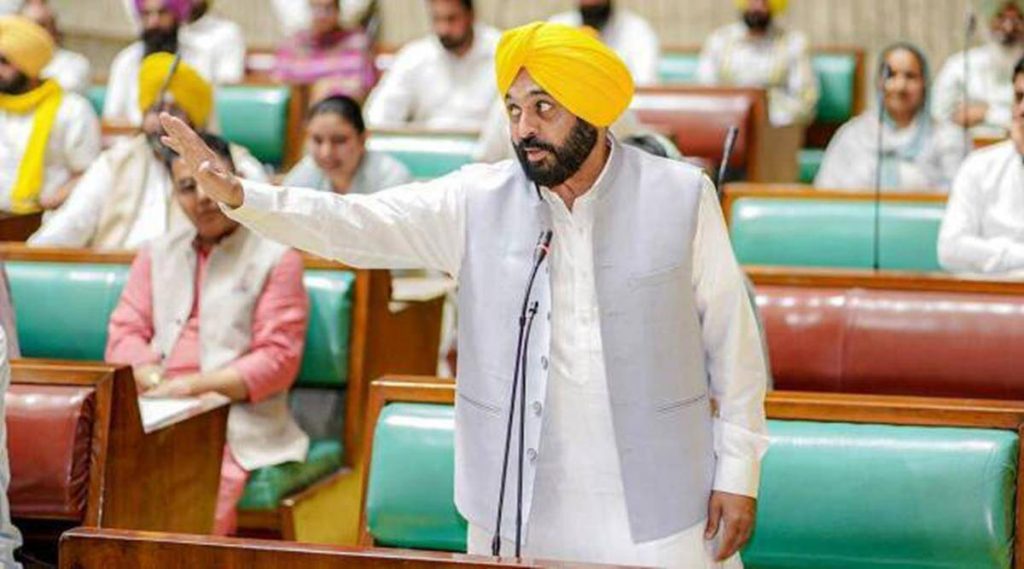
It was on June 20, the last day of the two-day of special session convened by chief minister Bhagwant Mann-led Aam Aadmi Party (AAP) government in Punjab, that passed a Bill to ensure free Gurbani telecast from the Golden Temple, Amritsar, and, another Bill to remove governor Banwarilal Purohit, as Chancellor of all the 11 state universities. The same has whipped up a fresh furore with not only Purohit but all the opposition parties gunning for Mann.
For the record, in the House of 117 members, the ruling AAP has 92 legislators, Congress, 18, Shiromani Akali Dal (SAD) three, BJP two, while one belongs to BSP, an ally of SAD. There is also one independent MLA.
The Sikh Gurdwaras (Amendment) Bill, 2023, was passed amid opposition from Shiromani Akali Dal (SAD) and its ally BSP legislators inside the House, and Shiromani Gurdwara Parbandhak Committee (SGPC) outside it, besides the other opposition parties, namely Congress and BJP.
The Bill aims to make the broadcast and telecast of Gurbani from Sri Harmandir Sahib (Golden Temple) free for all. The rights for the same have so far been with PTC channel, a private channel which is often linked to the SAD’s Badal family.
Speaking on the Bill, Mann said that the Bill aimed at freeing the undue control of a particular family over the rights to telecast sacred Gurbani. He said that it was a paradoxical situation that SGPC under the influence of a family that controlled its affairs, had given intellectual property rights of telecasting the sacred Gurbani to a channel owned by them.
The SAD member, Manpreet Singh Ayali opposed the Bill saying that the government should not interfere in the affairs of the SGPC, an elected body. Nachhatar Singh of BSP, which is an ally of SAD, also opposed the Bill saying before taking such decisions, religious bodies and others concerned should be consulted.
Also, while several of the top Congress leaders including state chief Amarinder Singh Raja Warring as well as state BJP chief Ashwani Sharma have flayed the AAP move, the SGPC has met the governor and demanded from him to nullify the Bill.
Varsities bill also passed
The House also passed Punjab University Laws (Amendment) Bill 2023, thereby removing the governor from the post of chancellor of all the 11 state varsities and vesting the powers of the chancellor with the CM.
Speaking on the Bill, Mann held that the governor, who was not from the state and was not aware of its history and culture, created unnecessary hurdles in it. He further alleged that contrary to securing the interests of the state, the Punjab governor was often seen on the other side – Haryana. Citing the issue of Panjab University (PU), he said that instead of safeguarding the interests of Punjab and Punjabis, the governor had been taking the stance in favour of Haryana. Mann said that this was a very strange situation as the governor was doing all these gimmicks just to appease his political masters sitting in Delhi.
This issue was seen as a fallout of the rift between the two which had earlier erupted when the governor had stalled the selections for the post of VCs of a few varsities, citing lapses in the selection procedure.
Governor questions session’s legality
Banwari Lal Purohit, Governor of Punjab
However, reacting to the Bills, Purohit said that he would examine the constitutional legality of the two-day special House.
He told newspersons that it was to be seen whether the special session was an extension of the Budget session held in March because the House was not prorogued and that if the special session was an extension, it was to be examined that, could the Bills be passed or the proceedings should have been limited to the business related to the Budget. He said that in case it was found that the procedure was not followed, then these Bills would face rejection.
Referring to the PU issue, Purohit held that this matter had come to light last year during the meeting of the inter-state north zonal council when it was said that the Punjab government was not paying its share of 40% of the university’s budget. He further held that while Haryana government offered to support the varsity seeking affiliation of its colleges in the three neighbouring districts, the council chairman asked the UT Administrator (Purohit is also UT Administrator) to intervene and this was why he had raised the issue.
Reacting to Mann’s comment that the governor was acting like a British-era viceroy, Purohit said that the school in which Mann was studying, he had retired as its headmaster. Terming Mann’s remarks as “derogatory’’, he also said he could not match their level as he had to maintain the Raj Bhawan’s dignity.
Remarks on ‘beard’ also flayed
Meanwhile, Mann’s remarks on “beard’’ of some leaders during the session have also evoked sharp criticism from SAD and Congress leaders.
It may be recalled that Mann had, without naming any leader, taken a dig at “some leaders who rolled up or kept flowing their unshorn beard depending upon the situation and requirement’’, during the session.
Senior SAD leader Bikram Singh Majithia tore into Mann for his remarks on the beard of some Sikh leaders, which, the former alleged was a “shameless act of ridiculing beard of a Sikh and a systematic attack on the unique identity of the Khalsa panth (Sikh community)’’.
Majithia, a former three-time legislator, also took on the House Speaker Kultar Singh Sandhwan saying that it was shocking that Sandhwan felt no hurt to his religious sentiments and kept smiling in his chair watching Mann tearing Sikh religious heritage to pieces.
Bathinda MP Harsimrat Kaur Badal, wife of SAD president Sukhbir Badal, also took to social media to say that she could not believe that “an atheist and arrogant person was making fun of beard which was an inseparable part of Khalsa identity given by Guru Gobind Singh Ji….’’.
Congress leader Sukhpal Khaira also condemned the remarks of Mann saying that he strongly condemned the remarks by Punjab CM on the beard of Sukhbir Singh Badal. This was an identity of a Sikh and the CM had insulted the identity by making such remarks. He must apologise for his words, Khaira said.
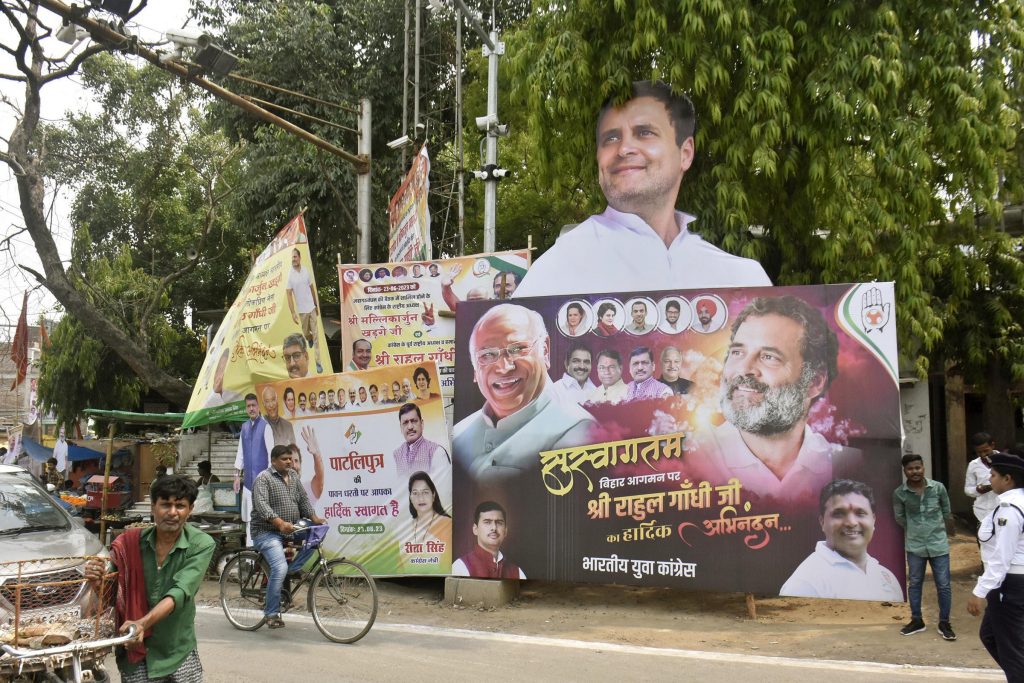
As 15 political parties at the Patna event team up to challenge the BJP in 2024, the alliance may be christened ‘Patriotic Democratic Alliance’ in order to blunt ‘nationalism’ narrative of the BJP.
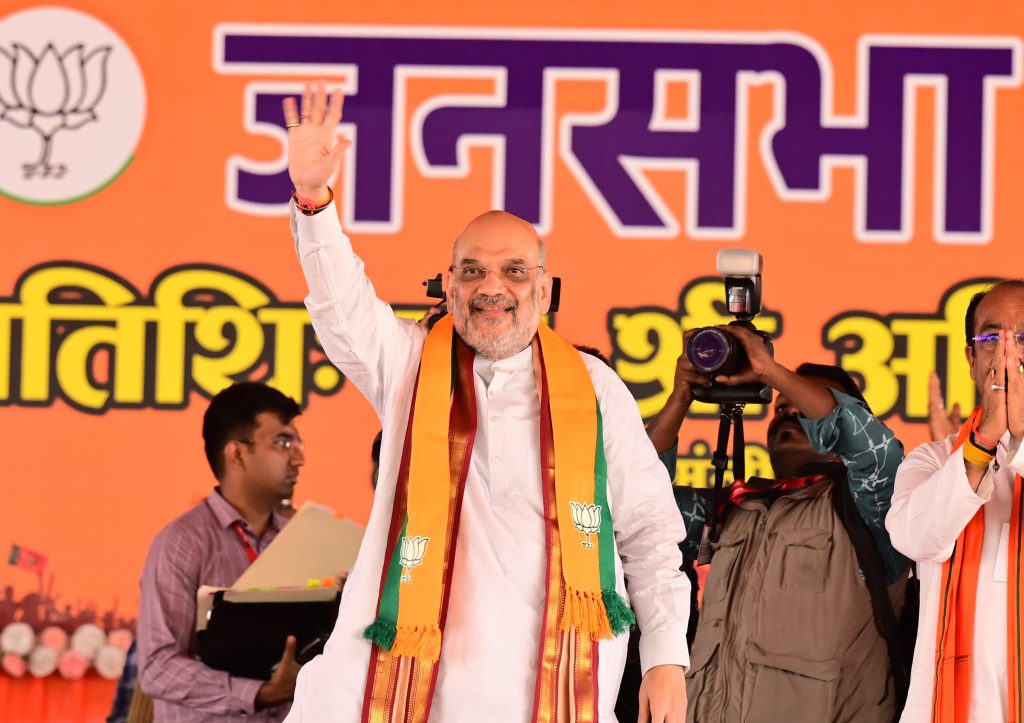
Though Union Home Minister Amit Shah pooh-poohed the united opposition meeting at Patna as a mere ‘photo session’ and a ‘no show’, the joining of hands by leaders of 15 political parties for their common goal of ousting the BJP-led government at the Centre is a significant move.
The assemblage of 15 political parties, 32 leaders, ahead of the 2024 Lok Sabha elections is enough to send a strong signal for opposition unity to take on ruling BJP at the Centre in the 2024 general election. However, the blip, between the Congress and the Aam Aadmi Party over the Central ordinance on the Delhi government’s powers sends a wrong signal to the public. The Congress maintained that the meet was not a platform to discuss parliamentary issues such as the ordinance, the AAP insisted that it will be difficult for the party to attend any future meetings till the Congress publicly denounces the ordinance. The deliberations lasted close to four hours, after which the leaders, in one voice, announced that they intended to contest the polls together.
The positives before Bengaluru meet
The united opposition is to soon formulate its common minimum programme at Bengaluru on July 12. According to reliable sources, the old United Progressive Alliance is being given a go by and the new alliance of opposition parties would be named ‘Patriotic Democratic Alliance’. The new word “Patriotic” symbolises the determination of a direct confrontation to the political hegemony of RSS-BJP of using nationalism for their political benefit. The opposition intends to blunt ‘nationalism’ narrative of the ruling party with its patriotic identity.
That the ruling party is taking note of the developments can be understood from the fact that Amit Shah must not have convened the opposition leaders to discuss the Manipur massacre but for the opposition forging unity. The resolve of the opposition leaders to defeat the BJP is also manifest in their move to prepare a blueprint of the strategy and programme even before arriving in Patna to participate at the meet. They had already worked out the tactics to field one candidate against the BJP candidate in one constituency making the contests one on one on most seats. As Congress president Mallikarjun Kharge told the mediapersons after the meet that the stronger party in a particular state would be given preference in finalising the electoral mechanism.
Though Rahul Gandhi is willing to walk extra miles to accommodate the desires of the opposition leaders, it is presumed that after demolishing BJP’s Karnataka fort, the party may like to have some major share in other states too. The sources however maintain that Congress is keen to contest in at least 350 seats across the country, including in Bihar, Bengal, Jharkhand and Delhi, where regional parties RJD-JD(U), JMM, TMC and AAP, are the ruling parties with bigger vote shares.
The Bengaluru conclave would set a small core committee for constant monitoring and scheduling of the policies and programmes. The core committee would be entrusted with the responsibility to interact with the major state level party to finalise the seat sharing and sort out any problem.
Thorny issue of ordinance
As for the hostile attitude of AAP chief Arvind Kejriwal, a majority of opposition leaders opine that he should have adopted a pragmatic approach. On May 19, the Centre brought in an ordinance to curtail the powers of the elected government in Delhi. This was within a week of the Supreme Court’s order stating that the government in Delhi can make laws and administer civil services in the state. It is likely that the ordinance will be tabled as a Bill in the upcoming Monsoon Session of Parliament.
Soon after the Patna meet concluded, the AAP released a scathing statement targeting Congress. “The Congress, a national party that takes a stand on almost all issues, has yet to make its position on the Black Ordinance public. However, the Congress’ Delhi and Punjab units have announced that the party should support the Modi government on this issue,” AAP alleged. Before releasing this statement, Arvind Kejriwal and Bhagwant Mann also skipped the joint press conference addressed by leaders of parties present at the closed door meeting.
The Congress is in power in Rajasthan, Chhattisgarh, Himachal Pradesh and Karnataka while it shares power with alliance partners in Tamil Nadu and Jharkhand. It is the main Opposition in several other states. The AAP currently is in power in Delhi and Punjab and has made some inroads in Gujarat.
The Congress is unlikely to support AAP on the issue. In several public statements so far, the Congress first said that it would consult its state unit before announcing support for Kejriwal. Party President Mallikarjun Kharge said that the meeting was to discuss the possibility of a united front against the BJP ahead of 2024 and not for parliamentary matters. “Opposing it (ordinance) or proposing it does not happen outside, it happens in the Parliament. Before Parliament begins, all parties decide what issues they have to work on together. They (AAP) know it and even their leaders come to our all-party meetings,” Kharge said.
“It has not come as a setback at all for the opposition unity,” observed the CPI, General Secretary D Raja, who asserted that as independent political parties there can be “small angularities” on certain matters but those were being overcome. He said the secular democratic parties that have come together are capable of taking a decision on any issue “collectively”.
Even Nitish was unimpressed with the AAP going into a sulk over the ordinance, which seeks to curtail the powers of the Delhi government. The CPI(ML) Liberation general secretary Dipankar Bhattacharya said, “It is very unfortunate that the AAP seems to be looking at the issue through the prism of rivalry with Congress in Delhi and Punjab”. People’s Democratic Party chief Mehbooba Mufti said; “Arvind Kejriwal did raise the issue of the ordinance at the meeting. Nobody flinched from criticising the ordinance. I also did not hold a grudge against his party having voted in favour of scrapping Article 370. Though the agenda of the meeting was opposition unity”.
As the opposition parties gear up for the crucial Bengaluru conclave, more internal discussions will follow, new non-BJP parties will be approached and all efforts will be made to make the Bengaluru discussions more productive. Nitish Kumar, Rahul Gandhi, Mamata Banerjee and Sharad Pawar will play key roles.
The Centre has dismissed from service IPS officer Patidar, who is in jail in connection with the death of a trader from Bundelkhand. The victim’s kin have accused Patidar of plotting the trader’s ‘murder’, and are hopeful that the truth will come out during trial, writes Mudit Mathur
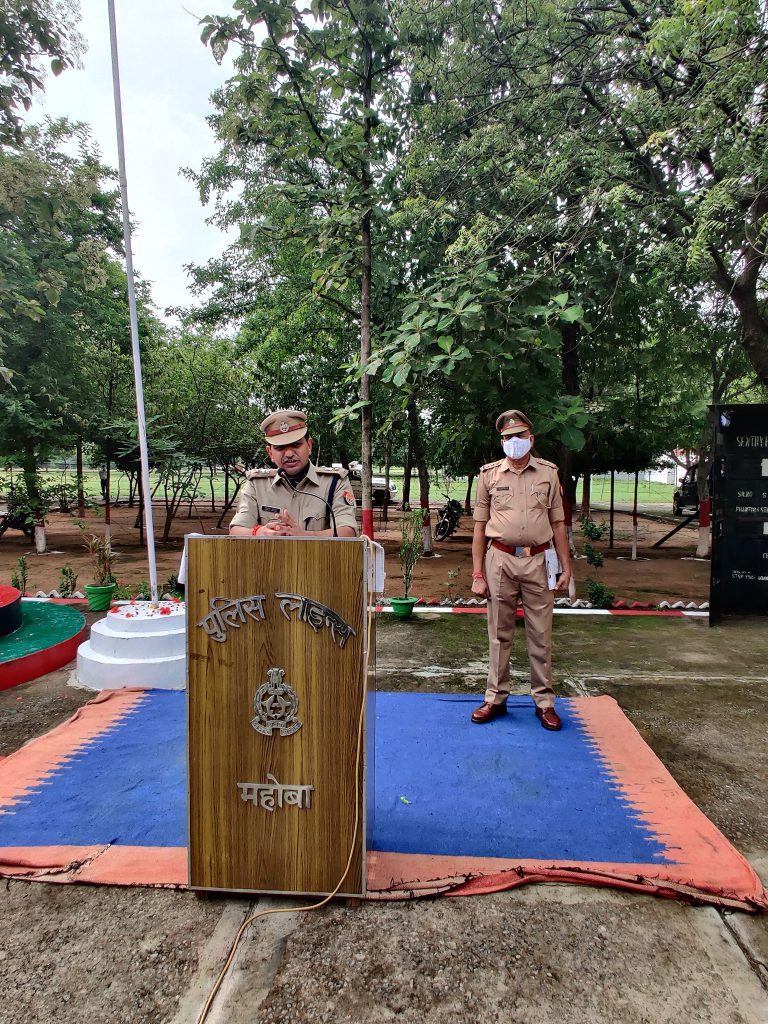
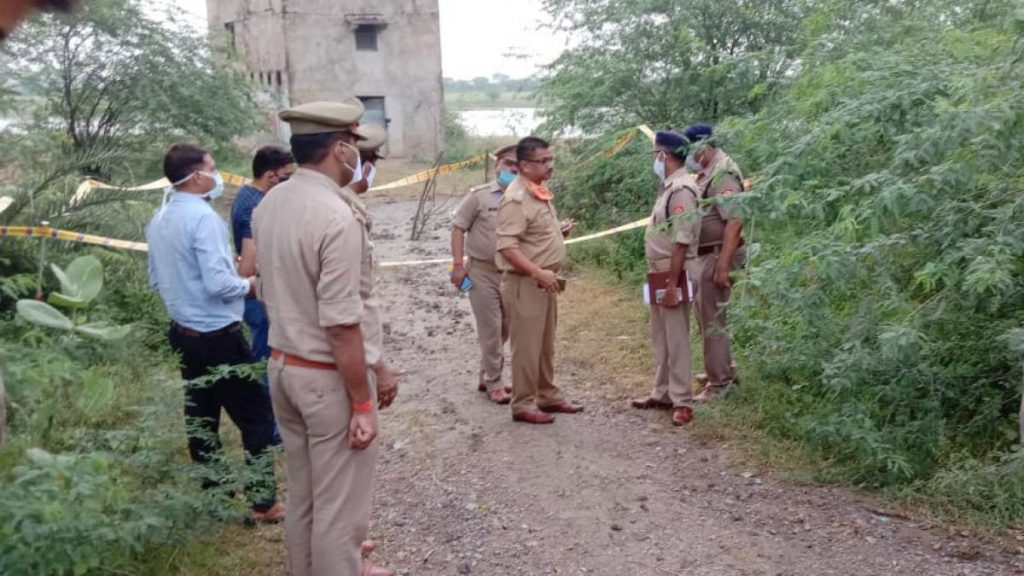
In an unprecedented move, the President of India has dismissed the services of 2014 batch officer of Indian Police Service, Manilal Patidar who is in jail in connection with the death of a Mahoba (Bundelkhand)-based trader. It is the first time when an IPS officer has been awarded punishment of dismissal from service in Uttar Pradesh. Patidar’s name has also been removed from the UP Police website.
The order of dismissal was issued on the recommendations of Yogi Adityanath-led BJP government in UP in view of a shocking video of a trader appearing in social media wherein he had accused Patidar of running an extortion racket by misusing his official position.
On September 5, 2020, Indrakant Tripathi, a businessman involved in the crusher business in the Bundelkhand district’s Mahoba, in a video addressed to chief minister Adityanath alleged that Patidar, then district police chief (Mahoba SP), had threatened to eliminate him after he refused to pay Rs 6 lakh per month as extortion money to the officer.
Two days later, Indrakant was found dead in his luxury car with a bullet wound in his neck. He succumbed to the injury a week later in the Regency Hospital Kanpur. Earlier, the trader, Indrakant Tripathi, had sent a written complaint to chief minister Yogi Adityanath and DGP claiming threat to his life in case he did not accede to Manilal Patidar’s demand for bribe.
The state government ordered registration of an FIR against SP Mahoba, Manilal Patidar on charges of attempt to murder (later converted to murder) and criminal conspiracy at Kabrai police station on the complaint of Indrakant’s brother, Ravikant Tripathi. SHO Kabrai Police Station, Devendra Shukla, constable Arun Yadav and two local traders were also accused of “conspiring” to murder Indrakant, while a probe was launched into Patidar’s assets through the vigilance department. While the others were arrested, Patidar continued to roam free.
Before absconding from the scene, Patidar had dismissed the allegations against him and said that Indrakant had issued the video as he was irked by the police action over his illegal gambling business and for his protection.
A twist in the case came on September 26, 2020 when the special investigation team (SIT), formed to probe the case, concluded that Indrakant may have shot himself with his own pistol from close range. From the investigation, it was clear that Indrakant was shot from the front and that the bullet was fired from close range inside the car, ADG Prayagraj Prem Prakash, a senior police officer, had then said. The bullet was found lodged in the seat of the car and the pistol was lying between Indrakant’s feet, police said.
ADG Prem Prakash had also said that the ballistic probe of the seven pistols recovered in the case – four of the accused persons, two of the businessman’s partners and one belonging to the businessman himself – showed that he was shot with his own licenced pistol.
The state government suspended Patidar on charges of corruption and extortion and was attached to DGP office but he overnight disappeared and was declared absconder. A manhunt was launched by police and teams were also sent to his hometown, Dungarpur in Rajasthan, during the course of the investigation. Later, the police declared a bounty of Rs 1 lakh on his head. The case has generated interest across Uttar Pradesh.
But the state police failed to trace him despite all efforts. Then, suddenly, in October last year, after evading arrest for two years, Patidar surrendered before a Lucknow court in a dramatic manner. Since then, he has been in jail. Several questions relating to the sensational case remain unanswered and with Patidar in custody, the family of the deceased businessman has finally got some hope of justice.
According to media reports, the SIT found Indrakant harboured a feeling of deep insecurity and was on the brink of a breakdown after a video went viral showing him gambling. A gambling case had been filed at a local police station in August that year and though it did not feature Indrakant, his name was added to the FIR later, said police.
In his complaint, however, Indrakant’s brother, Ravikant, alleged that after receiving death threats from the IPS officer, Indrakant had on September 8, 2020 announced that he would hold a press conference the next day to expose the officer with evidence. However, at around 2:30 pm on the same day, Indrakant was found shot in his car on the Kabrai-Banda Road, said Ravikant.
The charges of murder and conspiracy were reduced to abetment of suicide following the SIT probe. Remarkably, the SIT reached the conclusion that Indrakant may have shot himself even without interrogating the suspended IPS officer Patidar. He could not turn up for questioning as he was COVID-19 positive, his lawyer had informed the SIT, according to the police.
However, the brother of deceased, Ravikant refused to buy the findings of SIT and in an interaction with media, he said, “The investigating officer can convert the hatya (murder) into atmahatya (suicide) or durghatna (accident) what can I do about that? The court will decide what it was. Everything will become clear during the trial. I lodged a complaint under IPC section 307 (attempt to murder) and it was converted to section 302 (murder) after the death of my brother.”
Ravikant, who had on several occasions accused the police of protecting Patidar, said the suspended officer’s surrender after two years did ignite hopes of justice but he was still living in fear. Samajwadi Party president Akhilesh Yadav had raised the matter of the absconding Patidar during his 2022 Uttar Pradesh Assembly election campaign to accuse the Yogi Adityanath government of protecting tainted police officers.
Barring Patidar, all other accused were arrested and sent to jail. As the case was also registered on the charges of the Prevention of Corruption Act, the chargesheet was filed in a Lucknow court as the jurisdiction of Mahoba district falls under it. The chargesheet against Patidar was filed when he was on the run.
Many twists and turns came in the case including a filing of a habeas corpus writ petition seeking the production of Manilal Patidar. A division bench of Justices Manoj Misra and Syed Aftab Husain Rizvi on May 27, 2021 noted that an IPS officer having gone missing for many months was a “serious issue” and directed the Yogi Adityanath-led government to investigate if Patidar was “dead or alive” and what efforts were being made to apprehend him.
Arguing in the court, the Uttar Pradesh government said that since Patidar was trying to evade arrest, he got the habeas corpus petition filed to malign the administration with an “oblique purpose”.
The petition filed by an Advocate, Mukut Nath Verma, as his legal representative, revealed that as Patidarwas about to unravel some foul play in the state administration, it was possible that his life might be in danger. He was afraid Patidar had gone missing because the state respondents, who are high ranking officials in the state administration, might have him in unlawful custody, the petition alleged. It requested the court to initiate an investigation in the matter of Patidar’s whereabouts through the Central Bureau of Investigation (CBI). The High Court however did not concede his prayers.
Pani panchayats led by women have been formed in several villages of Bundelkhand to tackle water wastage and address conservation issues, writes Deepanwita Gita Niyogi
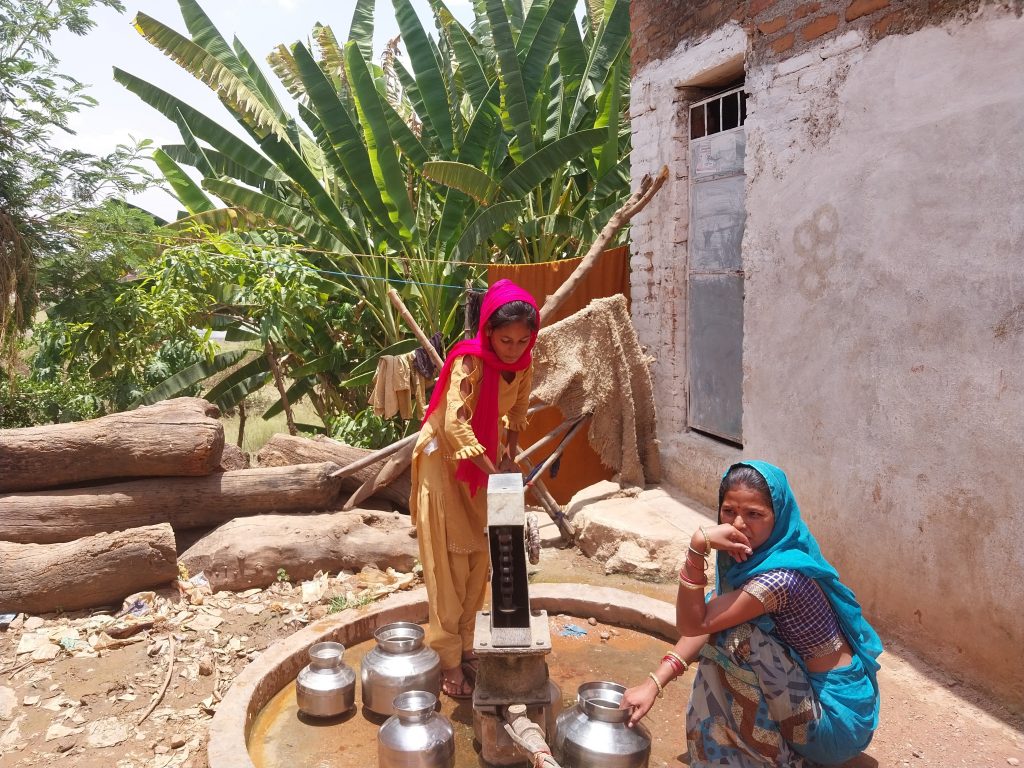
In Narayanpur village of Baldeogarh tehsil, about 32 km from Tikamgarh district of Madhya Pradesh, the house of Ladkunwar Ahirwar had a few women visitors on a summer morning. They highlighted the importance of the pani panchayat formed in February last year at the village level. It has 15 members of which seven are women.
In the dry Bundelkhand region spanning two Indian states, Uttar Pradesh and Madhya Pradesh, pani panchayats are addressing the grave issue of water misuse. These usually comprise 10-15 members who meet once every month to discuss how to conserve this precious resource.
“It is important to reduce water misuse. So, the members of the pani panchayat talk on how to save every drop of water during meetings. To prevent wastage and ensure groundwater recharge we have demanded soak pits so that water can seep into the ground gradually. People do not understand the importance of water,” said resident Geeta Verma.
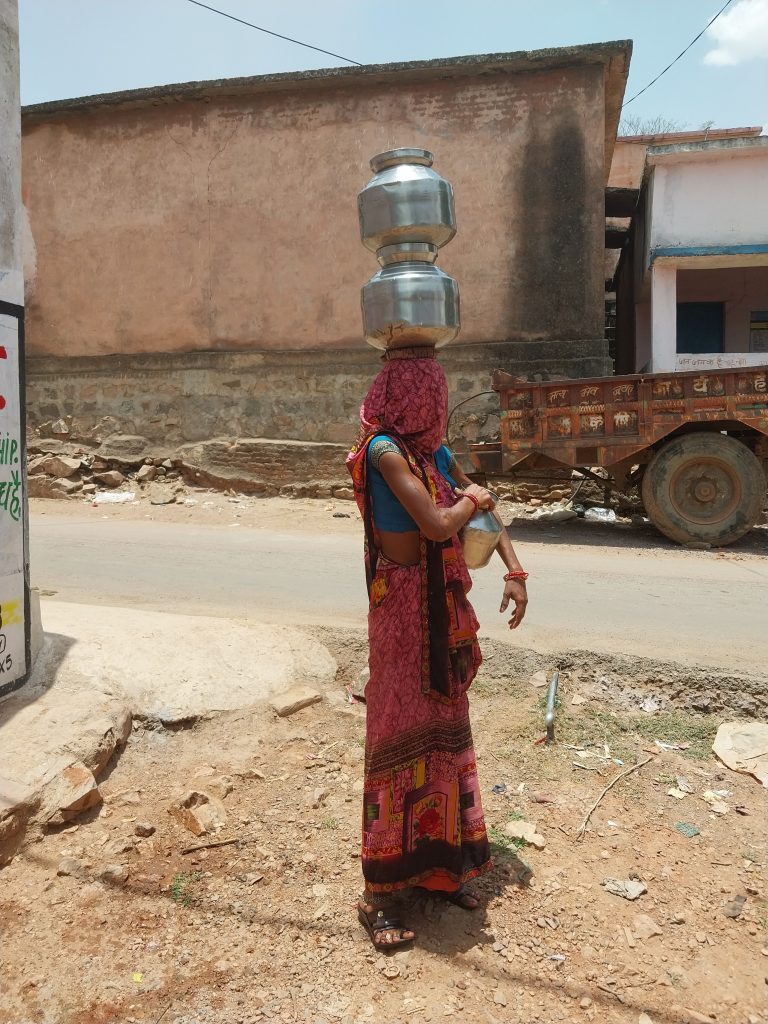
As rural women bear the burden of fetching water from long distances, pani panchayats are led by women who make up about 70 percent of the membership. In the harsh summer months when Bundelkhand’s villages face difficulty in accessing water, it is imperative to think about how to support livestock and agriculture besides drinking water needs. In many houses, goats are thus preferred over buffaloes as the latter needs 150 litres of water daily.
Desiring for change
The formation of the pani panchayat was possible in Narayanpur as many women empowered themselves first through self-help groups. Naturally, they can now place their demands related to water usage with confidence. There has been a marked change after pani panchayats were formed in several villages of Bundelkhand. The members submit action plans for common water harvesting structures. In Narayanpur, the members have placed a proposal for a water storage tank.
Verma and her companions desire for a real change at the ground level through the pani panchayat. “In the village, members of the pani panchayat urge others to only use as much water as needed. Water wastage is being tackled by directing waste water towards a vegetable garden. This is also ensuring nutrition,” said Ramvati Devi while pouring out tea.
Even for the milk tea to be tasty for visitors, the water quality has to be right. But in Narayanpur village, there is only one hand pump which yields good quality water which is used for making tea and for cooking tasty dal. As all women depend on it for water, it takes an hour and sometimes even more than that to fetch water, Verma added. The rest of the hand pumps yield salty water.
“There is too much rush in the mornings as we have to cook and send the children to school. So, we often fetch water in the afternoon when the sun is at its peak. Even water for bathing has to be fetched from outside,” said resident Seema Ahirwar.
Since its formation, the pani panchayat of Narayanpur has functioned like a self-help group. It has discussed the importance of water conservation for a sustainable future. The meetings are held from 10 am to 3 pm at the Panchayat Bhavan.
When water spills over or gets accumulated in any place in the village, mosquitoes breed. That is why the pani panchayat members of Narayanpur even urge children not to waste water.
Speeding up work in villages
In many villages, pani panchayats are ensuring that work on water harvesting structures like farm ponds, which help farmers irrigate lands, gather speed by asking questions to gram panchayats. Wheat is the dominant winter crop in Bundelkhand and in the Kharif season, mainly urad is grown.
“When the pani panchayat members meet, they take decisions related to water and how to mend matters. The link happens through pani panchayats to gram panchayats and all informal talks turn into formal matters,” said Harendra Kumar, programme officer and team lead in Tikamgarh for Manjari Foundation, a non-profit working on livelihood and asset creation in several villages of Bundelkhand.
Avadh Kishore Bharti, who works for the foundation at the ground level, said the selection process of the villages happened through the formation of self-help groups. The organisation’s water conservation measures are aimed at helping marginal farmers and pani panchayats are playing a crucial role in this. Narayanpur village has water deficit.
In another village called Rorai, the pani panchayat was formed about a month ago and there are 10 members in it. Resident Dharmendra Singh Thakur said there are six women and four men in it. “We formed the pani panchayat to ensure that there is groundwater recharge.” However, even if pani panchayats are doing commendable work, village heads do not sometimes favour them.
In Papawani village, there are eight men and 10 women members in the pani panchayat. They have met about 12 times over the course of a year. The village has a few hand pumps, but still its residents face drinking water crisis. The pani panchayat was formed for conserving water in the village, which has a high migration rate and received inadequate rainfall last year. Pani panchayats are also preparing water budget reports.
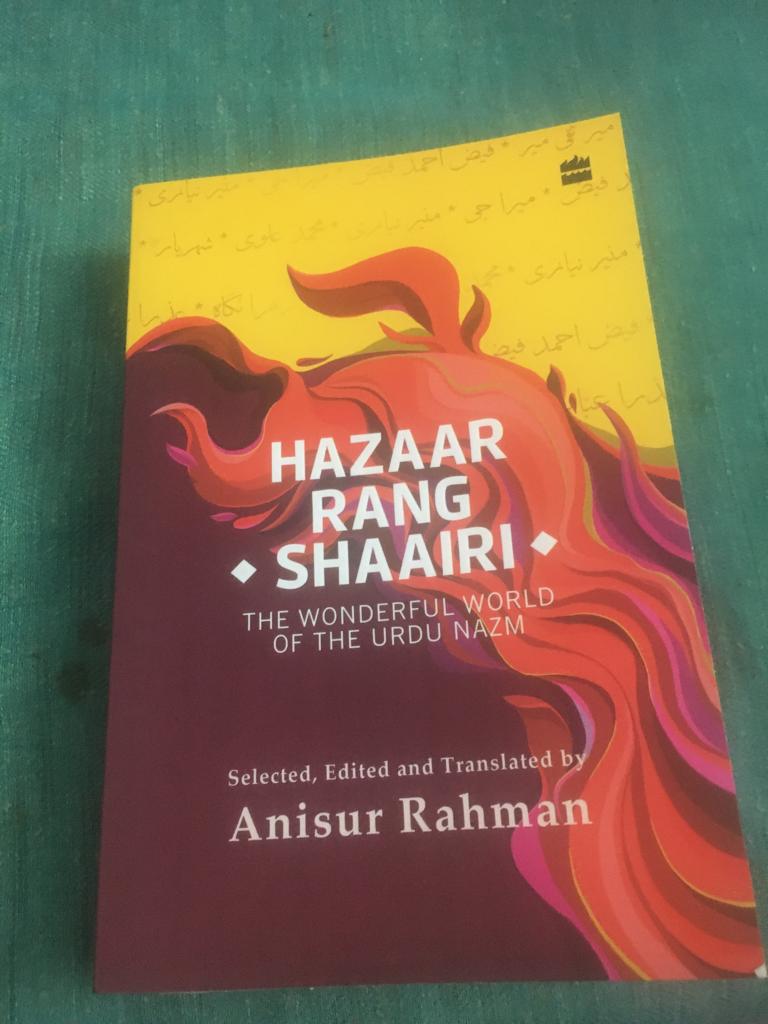
Hazaar Rang Shaairi is Anisur Rahman’s second major work focusing on the nazms. He had earlier in 1995, published his book on nazms titled- Fire and the Rose, where he focused on modern Urdu nazm, translating the verse of forty-five poets from 1930s to 1980s. And in this latest volume, he has expanded the range, bringing to the fore, many more verses of many more poets of the passed-by centuries. A book review by Humra Quraishi
Title of the book –Hazaar Rang Shaairi
Publisher – Harper Collins
Selected, Edited and Translated by – Anisur Rahman
Pages – 522
Price – Rs 699
This book is indeed laden, or shall we say loaded, with the best of Urdu poetry. Selected, edited and translated by the well-known literary personality, Anisur Rahman, this volume stands out. Tucked in are 140 nazms, from the sixteenth century to the present times…Poets and their verse from the Deccan region to the Northern states and regions.
This is Anisur Rahman’s second major work focusing on the nazms. He had earlier in 1995, published his book on nazms titled- Fire and the Rose, where he focused on modern Urdu nazm, translating the verse of forty-five poets from 1930s to 1980s.
And in this latest volume, Anisur Rahman has expanded the range, bringing to the fore, many more verses of many more poets of the passed-by centuries. To quote him on the various aspects to this volume: “The poets represented in this volume are divided into six literary periods as I conceived them for the convenience of the readers…I have tried to make this collection fairly representative of ages, poets, forms, styles and thematic concerns.”
Credit goes to him for putting together this diverse selection of nazms in their translated form, and also taking pains to explain to the reader the various details and backgrounders and the relevant significance to the nazm. To quote him from this volume, “Nazm is a Arabic word which, as a noun, means arrangement, and as a verb, it implies, an act of stringing together, maybe of beads or pearls. Nazm also means verse, or poetry, which interestingly enough, is also born out of an act of stringing, not of beads or pearls but of words. Metaphorically speaking, words are the beads or pearls, which the poet strings together in the larger body of a poem, in the many ways and forms as desired.”
With that take off, tucked in the volume are the nazms of Vali Deccani, Mohammad Quli Qutub Shah, Mir Taqi Mir, Mohammad Iqbal, Kaifi Azmi, Ali Sardar Jafri, Sahir Ludhianvi, Shahryar, Balraj Komal, Nida Fazli, Sarwat Hussain and many other poets.
Leaving you with this verse, of Nida Fazli, titled ‘Identification’, tucked in this volume:
Identification
(For Hajira Begum, whose four children were burnt alive by rioters in Jalgaon)
‘No, not he,/
Not he,/
Not even he – /
I don’t know who they were – /
All these are like me, /
Little moons twinkle in their heartbeat,/
All these are like me, the fuel of time’s furnace/
Those who broke into my hut last night and burnt my children/
Alive before me,/
Were some others – /
Those faces are no longer in my memory, Your Honour! /
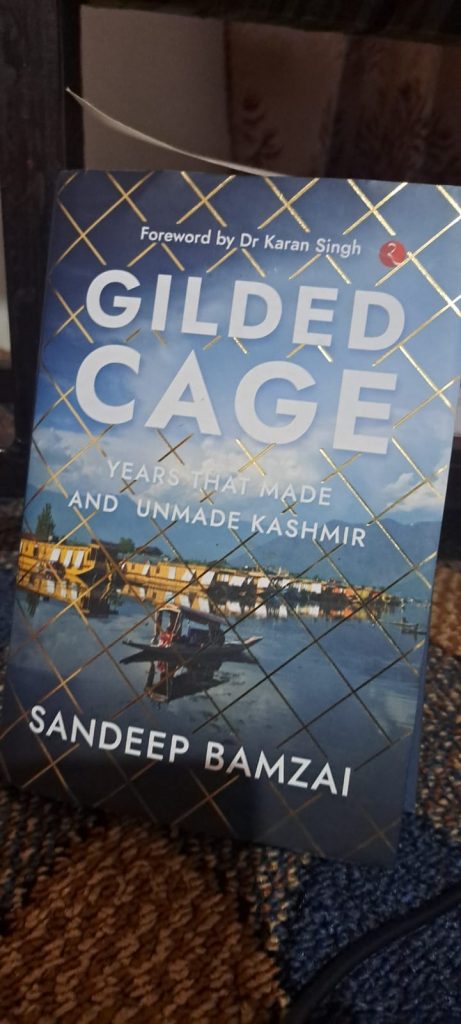
“Gilded Cage: Years That Made and Unmade Kashmir,” a book written by the noted journalist Sandeep Bamzai, highlights and also acknowledges the critical role Sheikh Mohammad Abdullah played in Kashmir’s accession to India. The book, which is the third part of a trilogy following ‘Bonfire of Kashmiriyat’ and ‘PRINCESTAN: How Nehru, Patel and Mountbatten made India.’ A book review by Riaz Wani
Book name: Gilded Cage: Years That Made and Unmade Kashmir
Author: Sandeep Bamzai
Publisher: Rupa Publications India Cost. Rs 275 Pages: 140
Sheikh Mohammad Abdullah, also known as Sher-i-Kashmir (Lion of Kashmir) by his admirers in the Valley, has been a very contentious figure who has loomed large over the post-1947 history of the region. His detractors in the now state-turned-union territory accuse him of being primarily responsible for tying the Muslim majority region’s lot with New Delhi in defiance of the logic of Partition whereby Hindu majority regions would become a part of India and Muslim majority areas that of Pakistan. For the past 33 years, his mausoleum at Hazratbal is guarded lest it be subjected to sabotage.
Ironically, Sheikh has now no takers in New Delhi too. In fact, New Delhi is out to erase his name from public memory of Kashmir. Kashmir has already dropped his birth anniversary from the list of public holidays, so has J&K Police his epithet from the title of its gallantry medal. Similarly, Sheikh’s name has been excised from the SKICC that has now become Kashmir International Convention Centre.
But “Gilded Cage: Years That Made and Unmade Kashmir,” a book written by the noted journalist Sandeep Bamzai, highlights and also acknowledges the critical role Sheikh played in Kashmir’s accession to India. The book, which is the third part of a trilogy following ‘Bonfire of Kashmiriyat’ and ‘PRINCESTAN: How Nehru, Patel and Mountbatten Made India,’ Bamzai aims to uncover the real story of Kashmir’s history between 1931 and 1953.
The author challenges the mainstream historical perspective surrounding the events leading up to the abrogation of Article 370 in Jammu and Kashmir. The book chronicles the time from the emergence of Sheikh Abdullah in Kashmir’s politics up to his arrest in 1953 to the disillusionment of the Kashmiri masses with their leadership. It also delves into Pakistan founder Mohammad Ali Jinnah’s efforts to make Kashmir a part of Pakistan and Sheikh antipathy towards him. Similarly, from Jawaharlal Nehru’s comprehension of the Valley being a shop window for his brand of secular politics to Maharaja Hari Singh’s streak of remaining independent in the face of both India and Pakistan, this book covers the vital years that defined Kashmir’s accession to India.
Gilded Cage also offers fresh insights into the lesser-known figures of Ram Chandra Kak and Swami Sant Deo, who played significant roles during this important period.
Bamzai criticizes the Bharatiya Janata Party (BJP) for their attempts to rewrite history and downplay the contributions of Sheikh. The author highlights the role of Maharaja Hari Singh, the last Dogra ruler of Kashmir, and portrays him as a ruler driven by self-preservation. The author, however, credits Maharaja Hari Singh for introducing the state subject ordinance, later enshrined as Article 35A which he hails as a revolutionary legislation.
One of the key figures discussed in the book is Swami Sant Deo, an advisor to Maharaja Hari Singh and a shadowy figure associated with the Rashtriya Swayamsevak Sangh (RSS). Bamzai examines Swami Sant Deo’s influence on the Maharaja’s decision-making process and his vision of an independent Kashmir. The author explores the complex dynamics between Maharaja Hari Singh, Ram Chandra Kak, and Swami Sant Deo, and explains their differing aspirations for Kashmir’s future.
But Bamzai does put Sheikh at the centre of the debate about Kashmir’s accession to India: He spotlights his role in the events of 1947, praises him for his patriotic mindset and his opposition to Jinnah’s thinking. The author credits Sheikh for Maharaja’s accession to India, viewing it as a result of the advice and support provided by him and his party Jammu and Kashmir National Conference.
The book draws on the previously unpublished papers belonging to his grandfather, K.N. Bamzai, a former Delhi bureau chief of ‘Blitz’ who served as Sheikh Abdullah’s private secretary and Officer on Special Duty to Nehru. This privileged access allows for a deeper exploration of the estrangement that unfolded between Nehru and Sheikh in the years following India’s independence.
The book’s achievement is going beyond the familiar narratives surrounding the Kashmir conflict and highlighting the role of external powers such as Britain and the United States. Bamzai presents evidence and documents to support his claims, suggesting that these powers had vested interests in the region and contributed to the subsequent internationalization of the Kashmir issue. The documents and letters add depth to the book, offering readers unique insights into the minds of key figures during the transformative 1947-53 period. The book challenges conventional narratives and prompts readers to reevaluate their understanding of the complex political landscape of Kashmir.
While Bamzai acknowledges the controversial nature of the Modi government’s decision to read down Article 370 in August 2019, he expresses optimism that it will consign the troubled history of Kashmir to the past. He believes the move has helped integrate the region. However, he also expresses the importance of restoring peace in the Valley before expecting Kashmiri Pandits to return to their homeland, emphasizing that the community would not support the creation of a ghetto for them.
However, the author does not fully address the impact of this decision on the Sheikh’s family, with Farooq Abdullah and Omar Abdullah being also arrested under the Public Safety Act. The duo were released months after the withdrawal of Article 370. So were the other senior senior mainstream leaders including the PDP chief Mehbooba Mufti, the People’s Conference chief Sajad Gani Lone and others.
Though an uneasy peace has held in the Valley since the loss of autonomy, people are far from reconciled to the loss of autonomy as a fait accompli. They have been watching the unfolding state of affairs silently. There have been fewer protests and far fewer stone pelting incidents. Hartals are no longer observed. But despite these outward manifestations of peace, the Valley is more alienated than ever. The militancy has suffered a setback but remains very much alive and kicking. It is difficult to predict what the future holds. The situation in Kashmir may have stabilized in the last years but it remains deeply uncertain and far from peaceful.
But ‘Gilded Cage’ is not about the present but the past. It is, however, a piece of the past that relates directly to the present. Article 370 that was withdrawn in August 2019 was agreed to between New Delhi and J&K during the 1947-53 period explored in the book. But whether the repeal of the constitutional provision will end the troubled fallout of this period – as author believes it will – remains to be seen.
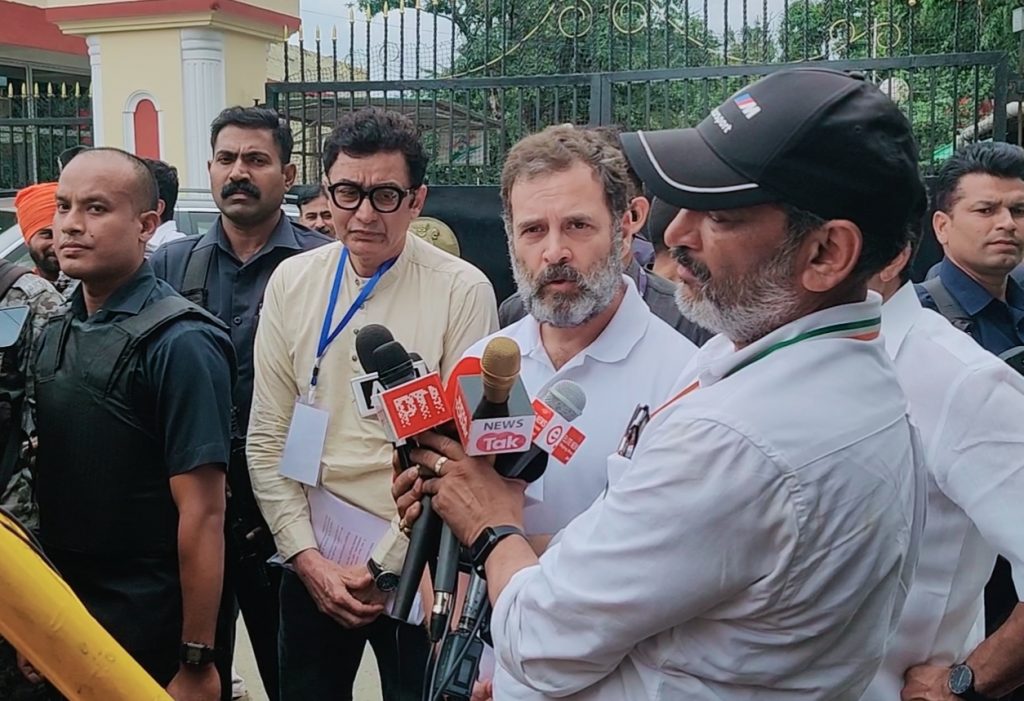
Rahul Gandhi takes a moment to address the media following his meeting with Manipur Governor Anusuiya Uikey at the prestigious Raj Bhavan in Imphal.
Imphal : Congress leader Rahul Gandhi, has said that his visit had no political agenda and his sole objective was to bring about peace in Manipur, emphasizing his intention to promote peace in the state. He was taking the opportunity to address the media and express his views following his meeting with Manipur Governor Anusuiya Uikey in front of the Raj Bhavan, Imphal.
When asked to comment on Prime Minister Narendra Modi’s prolonged silence since the outbreak of violence on May 3, Gandhi stated that he would refrain from making any political remarks and reiterated his focus on achieving peace in Manipur.
Gandhi expressed his purpose in visiting Manipur by emphasizing his desire to empathize with the people and acknowledged the tragic events that had unfolded. He remarked, “It is a horrible tragedy that has taken place,” expressing his sorrow on behalf of both the people of Manipur and India as a whole.
He further elaborated on the dire situation in Manipur, having visited relief camps and interacted with individuals from various communities. Gandhi highlighted the deficiencies in these camps and urged the government to take immediate action to address them.
Drawing attention to the conditions in both Imphal and Churachandpur districts, Gandhi stressed the need for improved basic amenities, enhanced food provisions, and the supply of essential medicines in the relief camps.
He expressed that he believed that violence would yield no positive outcome and called upon everyone to actively work towards achieving peace.
Gandhi assured his commitment to assist in restoring normalcy to Manipur, stating, “I am here. I will help anyway, do anything I can to bring peace to the state. I love all the people of Manipur, and once again, it’s a terrible time, and we need to bring peace to the state.”
During his two-day visit to Manipur, Rahul Gandhi assessed the situation in both the valley and Churachandpur district, which have been severely affected by the ongoing violence. Since May 3, the violence has claimed the lives of over 125 individuals, causing significant damage to properties in both Meitei and Kuki concentrated areas.