In a video that went viral, well-known American singer Millben is seen walking towards Modi and almost spontaneously touching his feet. Cynicism apart, the gesture is a moment of pride for India
When Mary Millben touched Prime Minister Narendra Modi’s feet, it was kind of a déjà vu’ moment.
A well-known African American actress and singer, Millben set the tone by singing India’s national anthem during Modi’s three day visit to the United States of America. She performed at the Ronald Reagan Centre in Washington DC at the concluding event at what Prime Minister Modi described as a “very special USA visit”.
In the video that went viral, Millben is seen walking towards Modi and almost spontaneously touching his feet: “A night I will treasure forever,” Millben tweeted after her performance.
Rewind to May this year, when Papua New Guinea’s Prime Minister James Marape touched Modi’s feet during his visit to the island nation.
Modi, the first Indian Prime Minister to visit Papua New Guinea, was given a ceremonial welcome which was a break from protocol given that Papua New Guinea does not accord a ceremonial welcome to any leader arriving after sunset. Modi had landed after 10 pm.
Marape was not only present at the airport to welcome Modi but in a rare gesture he bent down and touched Modi’s feet.
It was a moment to be recorded, remembered and cherished. Unprecedented as it was, it showed Modi and through him India in a new light. It was truly India’s wow moment.
First Marape and then Millben: So people are asking: Is feet touching a new normal?.
Equally, critics are wondering whether this is stage managed. They don’t put it past BJP’s spin masters to do what it takes to churn out never before kind of ideas, feet touching on an international forum being one such.
Be as it may, what began with Marape has been carried on through Millben. Stage managed or spontaneous it has shifted focus to Modi in a new persona on the world stage: a persona where the world bends at his feet quite literally.
Marape set the ball rolling and others, including Millben, followed. If reports are anything to go by, two ministers of Marape’s Cabinet too followed suit.
However a cynical view is that this is just the beginning of what will soon become a norm as far as Modi is concerned.
So even if Millben says she “kind of pinched” herself into believing that she shared stage with “Honourable Prime Minister Modi”, whom she admires and respects, critics put a question mark on the sudden spurt of devotion that people abroad are suddenly experiencing for the Indian leader.
Cynicism apart, whether it is Millben, Marape or others that may follow, the gesture is a moment of pride for India.
The focus may be Modi but the beneficiary is unmistakably every Indian worth his salt.
There may not be tangible gains from every overseas visit that Modi embarks on but the perception that he is a serious player on the world stage is good for starters.
From being denied a visa to the very same country which is now bending over backwards to host him, from looking at the White House through locked gates to the red carpet being rolled out for him, Modi has, indeed, come a long way.
Standing next to Modi on the White House South Lawn, Biden said he has long believed that the relationship between the United States and India will be “one of the defining relationships of the 21st century.”
There sure were moments which Modi loyalists wished should never have happened: be it the faux pas on women including the mix up between investing and investigating: instead of saying investing in a girl child, Modi mistakenly said “investigated” causing an oops moment, as it were.
There were other tense moments including the question on human rights which came up during the joint news conference which Modi and US President Joe Biden addressed.
But to Modi’s credit and everyone’s surprise Modi not only handled it well but went into a kind of a monologue on democracy being in “India’s DNA” and how there was no discrimination in India: “Democracy is our spirit, democracy runs in our veins – we live democracy,” he said, speaking through an interpreter.
“There’s absolutely no space for discrimination,” he said.
Instead of being stumped by the unexpected and rather tricky question, Modi appeared to have turned the tables on his detractors.
Having said that, a group of lawmakers did attempt to show the mirror to Modi by circulating a letter about “troubling signs in India toward the shrinking of political space, the rise of religious intolerance, the targeting of civil society organizations and journalists, and growing restrictions on press freedom and internet access”. But that somehow remained a sideshow to the hullabaloo around Modi’s three day trip.
In fact, the media focus seemed to be more on the specially curated plant based menu at the state dinner hosted by President Biden rather than India’s alleged violations on human rights .
That Modi is a skilled politician is a given as is the fact that his spin masters manage to create a hype which makes even routine visits appear historic. So also with the recent US trip.
But this is not to say that Modi returned empty handed. There were gains by way of defence deals, space cooperation and technology. The Biden administration agreeing to transfer its jet engine technology is indeed unprecedented.
What would be music to ears is the visa relaxation for Indian Americans who would be able to renew their H-1B visa within the US itself unlike in the past.
The H-1B visa is a non-immigrant visa that allows US companies to employ foreign workers in specialized areas. The technology companies hugely depend on this work force.
But this is less about gains and more about the world looking up to India and believing that it is a force to reckon with and an emerging power that cannot be trifled with.
Naysayers concede, even though grudgingly, that if India is taking strides, it is thanks to Modi’s leadership and the fact that he has led India into a new world order.
This singular factor more than any other makes every Indian proud and helps negate the negatives associated with the divisive yet decisive leader like Narendra Modi.
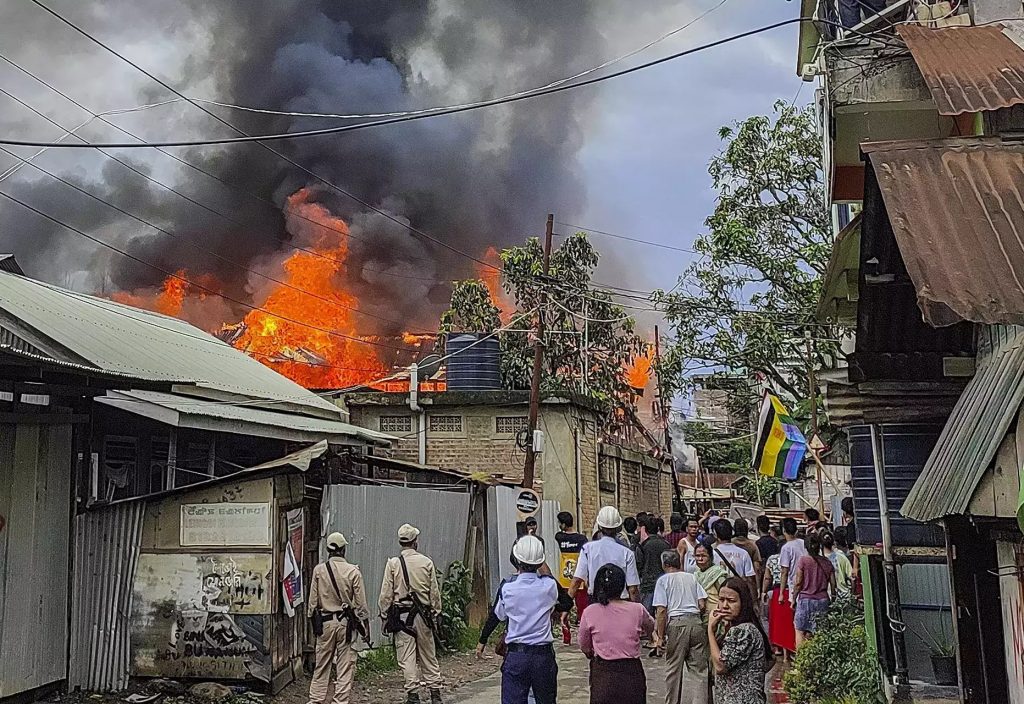
The state has been in the grip of violence for nearly two months, with over one hundred lives lost and thousands of families rendered homeless. There is a need to address sense of insecurity among Meiteis and also lend ear to the concerns of the Kuki community, writes nava thakuria
Manipur has been burning for nearly two months, killing over one hundred people and rendering thousands of families homeless after more than 9000 houses were burnt down by miscreants. The north-eastern State continues to witness stray violent incidents following the growing conflicts between the Meitei and Kuki ethnic groups. The tiny state turned into a volatile place of India on 3 May, when an incident of violence broke out at Churachandpur locality. It spread to other parts of Manipur very quickly and till now one hundred people have lost their precious lives, a large volume of properties damaged, and thousands of local families directly affected as a result.
The tense situation surfaced since a section of Meitei people (mostly Hindus) started demanding the scheduled tribes (ST) status for them. Meanwhile, the Manipur High Court on March 27 directed the State government in Imphal to consider the ST status for the Meiteis, who constitute nearly half of the State population. Mostly confined in Imphal valley, the Meiteis remain dominant in all sectors of Manipur like sports, literature, theatre, cinema, education and even the media.
The directive was strongly opposed by the Kuki people (mostly Christians), who apprehended that it would enable the socio-economically empowered Meiteis to buy land in the surrounding hilly areas. Otherwise, the Meiteis are not permitted to own land in hills, whereas the Kuki, Naga and other tribes can buy land in Imphal valley too. Kuki leaders argued that their people will be marginalized once the Meiteis enjoy the ST status as they are advanced many folds than the other ethnic groups.
As the State experienced unprecedented violence for weeks, the central security forces have been deployed in various sensitive localities. Appeals have been made to maintain peace and tranquility across Manipur. Lately, Rashtriya Swayamsevak Sangh (ideologue of the ruling Bharatiya Janata Party both in New Delhi and Imphal) appealed for peace and harmony among various communities and also urged all concerned stakeholders to initiate steps for ensuring a seamless supply of relief materials to the displaced families.
Terming the Manipur situation as worrisome, RSS Sar Karyavah (general secretary) Dattatreya Hosabale in a media communique commented, “It is very unfortunate that the spate of unrest and violence that erupted among those who have been living a peaceful life with mutual harmony and co-operation for centuries has not stopped.” He added the Sangh stands with the displaced persons and other victims of the Manipur crisis.
“RSS is of the considered opinion that there is no place for violence and hatred in a democratic setup, and also believes that the solution of any problem is possible only through mutual dialogue and expression of brotherhood in a peaceful atmosphere,” said Hosabale, adding that it should be resolved by addressing the sense of insecurity and helplessness among the Meiteis and genuine concerns of the Kuki community, simultaneously.
Asom Nagarik Samaj, a civil society group also appealed for peace in Manipur. Expressing its anguish at the continuing cycle of deaths and violence in the neighbouring state, the Assam-based forum urged all stakeholders to exercise restraint while reacting to the situation. It also criticised Prime Minister Narendra Modi for his silence over the Manipur situation and demanded a proactive initiative to end the vicious cycle of destruction there at the earliest.
However, many political observers believe that the Manipur situation cannot be described as a simple ethnic conflict between two groups of residents, which was stimulated by the recent demand by the Kuki people for a separate administration or a Union territory carved out of Manipur. The return of normalcy to the State, adjacent to northern Myanmar, may take a longer time as the Meiteis will strongly oppose the move (as they had done in case of pro-Nagalim movement).
Rinku Khumukcham, an Imphal-based journalist, analyzed that the Kuki National Front (KNF), an armed group, has not been waging a war against the Union government in New Delhi. Even though the rebel group demands a separate land for Kuki people, it has cultivated a ‘good relationship’ with the army and paramilitary forces. He also stated that the KNF operating in Chittagong hill-tracts of Bangladesh maintains its demand for a separate territory.
“Similarly, the Kuki National Army is raising voices for a separate state inside Myanmar. At this juncture, what the authority of India needs to understand is the demand put up to the notice of the United Nations for formation of the Zogam (Zalengam) State by carving out portions of land from India, Myanmar and Bangladesh by an organization spearheading the ongoing conflict in Manipur called the Zo Reunification Organisation,” said Khumukcham.
Amidst all troubles, an Assamese newspaper found a fake news to seemingly propagate more hatred among the people of northeast India. The daily published a wrong news-photograph to describe the horrible stories from Manipur on its front page of 19 June 2023 issue. But the conscious social media users instantly picked up the fake content and slammed the acclaimed daily. They tracked the origin of the disturbing news content in a viral video that was used in a completely different context by the daily.
The small video clipping, where a young lady was seen repeatedly tortured on a roadside and finally shot down by some armed people in camouflage attires, was generated from Myanmar a few months back. But the daily reported the incident as being taking place in Manipur recently, where the victim (read a Kuki lady) was targeted by those aggressive individuals (projected as Meitei armed group members). The report even compared the brutality revealed by the incident with that of Syria or Lebanon in recent years.
The published news has been confirmed to be related to a Myanmarese lady (identified as a local teacher named Aye Mar Tun) from Tamu locality of Sagaing region, who was killed on the suspicion of being a military informer. Myanmar’s influential media outlet Mizzima used the photograph a few months back with a news item relating to a statement of National League for Democracy (led by Daw Aung San Suu Kyi) about its investigation on alleged execution of the informer. The National Unity Government (of Myanmar) also decided to take strict action against any member of the People’s Defence Force (PDF) who were found guilty of killing the lady.
Mizzima editor Soe Myint, while speaking to this writer from Yangon, confirmed that the photograph was related to the viral video, and it was published in his newspaper a few months back. He affirmed that the lady was a Burmese (not a Manipuri). The veteran journalist, who spent many years in New Delhi during the initial days of Mizzima, added that nobody from Assam had earlier talked to him about the viral video or the particular photograph and its content.
Facing the heat, the editor of the concerned daily admitted that the photograph was incorrectly used in the newspaper to depict the Manipur situation. He even apologized to his readers for the mistake, while encountering brickbats from social media users if his editorial team had taken it granted for the readers to digest whatever they report. Nonetheless, it’s amazing that a Guwahati-based daily has no source (be it the authority or media or common people) in its neighbouring State capital to authenticate information before using the troubling content with flowery language!
Most regional satraps now perceive an “existential threat” over harassment tactics used by government through agencies like the Income Tax, ED and CBI against non-BJP parties, and this seems to have prompted over 15 parties to close ranks at Patna
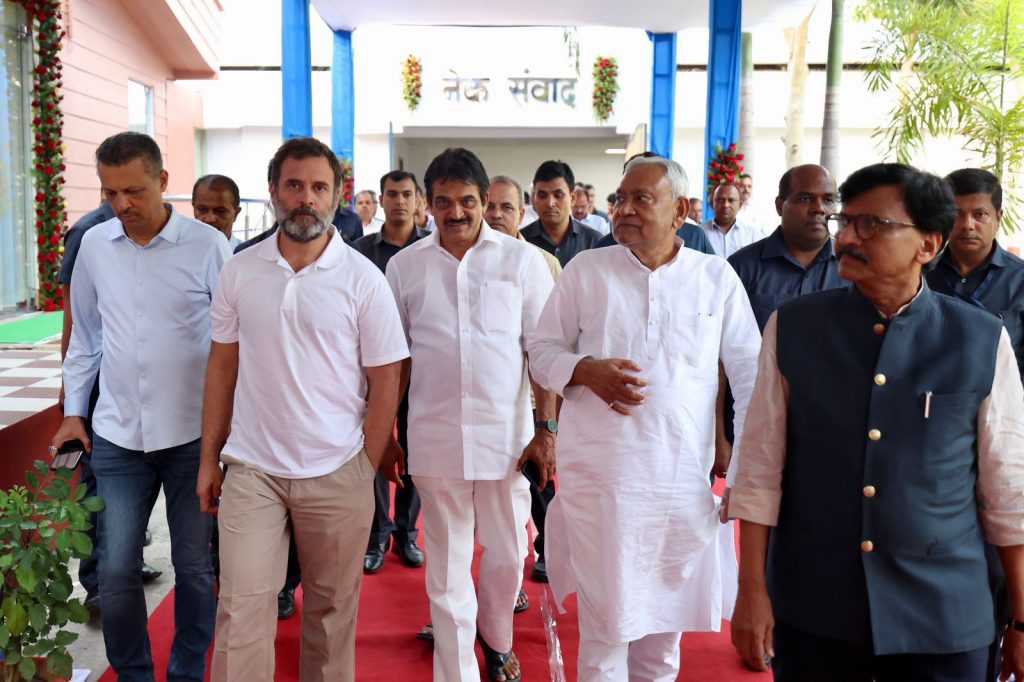
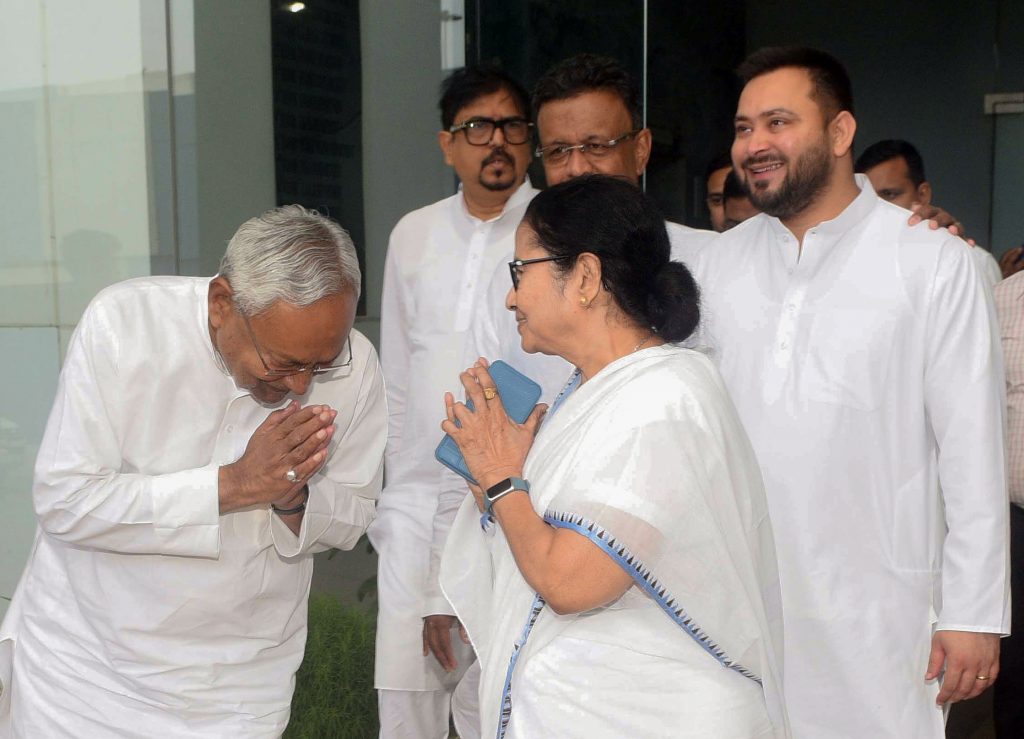
Bihar Chief Minister Nitish Kumar and his RJD deputy Tejashwi Yadav hosted a meeting of about 15 non-BJP Opposition parties on June 23 in Patna, which is seen as the beginning of the Opposition parties’ cooperation in order to challenge the Narendra Modi-led BJP in the upcoming 2024 Lok Sabha elections. The basic framework and strategy for Opposition unity is said to have been discussed at the meeting, with the contentious issues of seat sharing and leadership questions to be resolved at the Shimla meeting scheduled for 12 July.
Since the adoption of the Constitution of India and the holding of the first General Elections in 1952, many political figures, political theorists, and political scientists have undoubtedly emphasized the establishment of a two-party system in the Indian polity; however, the multiparty system has prevailed and persists to this day. One-party rule of Congress persisted at the Centre and in many states for about 25 years, from 1952 to 1977, during which time multiple Opposition parties struggled to coexist. The Janata Party, which ruled India from 1977 to 1979 and experienced numerous splits, brought together the majority of the non-Congress Opposition parties during the post-Emergency period. There had also been some splits in Congress.
The Janata Party experiment’s failure dealt a fatal blow to efforts to establish a two-party system. While the recurrent phenomenon of splits in the Janata Party and the Congress in the 1980s not only sped up the transition to a two-party system, it also contributed to the exploding number of regional satraps, some of whom became significant players in local politics. In the final years of the 1980s, coalition governments emerged at the Centre and in many states of the India Union as a result of the decline of the one-party dominance phenomenon, which followed the Congress party’s weakening. In some ways, this was similar to the late 1960s.
By the 1990s, the phenomenon of a coalition government, whether at the federal or state level, had taken over Indian politics. During this time, neither the Bharatiya Janata Party (BJP) nor the Congress party were able to form a government on their own at the federal level, which opened the door for the formation of coalition governments known as the United Democratic Front (UDF) and National Democratic Alliance (NDA). Nevertheless, the BJP’s electoral boom in the latter half of the 1990s allowed it to bring together over 20 parties to form the NDA coalition government, which held office for the entire five-year term.
With the aid of coalitional regional parties and a strong showing in the 2004 Lok Sabha elections, the Congress party was able to overthrow the NDA and establish the United Progressive Alliance (UPA) as the central government. From 2004 to 2014, the UPA served two full terms as the government at the Centre. However, the UPA’s final years in office were marred by scandals and accusations of corruption, and from 2012 on, Anna Movement-led demonstrations against the UPA- II government began. According to some media reports, both the RSS and the BJP took advantage of the situation and made an effort to use public sentiment for their own political gain.
In the 2014 Lok Sabha elections, the BJP ran the party’s campaign under the direction of Narendra Modi, who was Gujarat’s chief minister at the time. The BJP easily won a majority of seats for itself. At the federal level, an NDA government with BJP leader Narendra Modi as Prime Minister was put in place. Gradually, BJP governments also came to hold the reins of power in numerous states. However, by weakening the non-BJP state governments, PM Modi altered the grammar of Indian politics, and the BJP’s massive victory in the 2019 Lok Sabha elections propelled the party toward one-party rule in the Indian polity.
Most regional satraps now perceive an “existential threat” as a result of harassment tactics used by central agencies like the Income Tax, Enforcement Directorate, and CBI, primarily against non-BJP parties, and strategies to overthrow elected non-BJP state governments. This is what prompted more than 15 parties to recently come together in Patna to present a challenge to the BJP in the Lok Sabha elections of 2024. The name of the new alliance, however, will be decided at the Shimla meeting of these parties, and according to some media reports, it is anticipated to be Patriotic Democratic Alliance (PDA).
Regional parties’ coalition is not very common or simple in India due to the multiparty system’s troubled past and current influence on the country’s polity. The choice of regional parties to join forces with or form alliances with national parties is influenced by a variety of factors, including ideological compatibility, electoral prospects, public opinion, leadership dynamics, policy concerns, and bargaining power. If regional parties join forces with national parties that are perceived as adversarial or incompatible with their interests or values, they may encounter opposition or backlash from both their supporters and detractors. It is therefore unlikely that all regional parties in India would consent to a two-party system by unifying their identities with the BJP or the INC. A scenario like that would necessitate a significant change in India’s political culture and environment, which is distinguished by diversity, rivalry, and coalition-building. However, what occurs in Shimla and afterwards is still interesting to watch.
The opposition meeting in Patna on June 23 was significant in that 15 parties — some of them having divergent views on crucial issues — came together on a single platform and spoke in one voice over the need to fight the 2024 polls jointly against the BJP, writes Amit Agnihotri
As many as 15 opposition parties took the first concrete step towards an anti-BJP platform ahead of the 2024 Lok Sabha elections but would need to work out a common minimum program and sink their differences to keep the alliance intact.
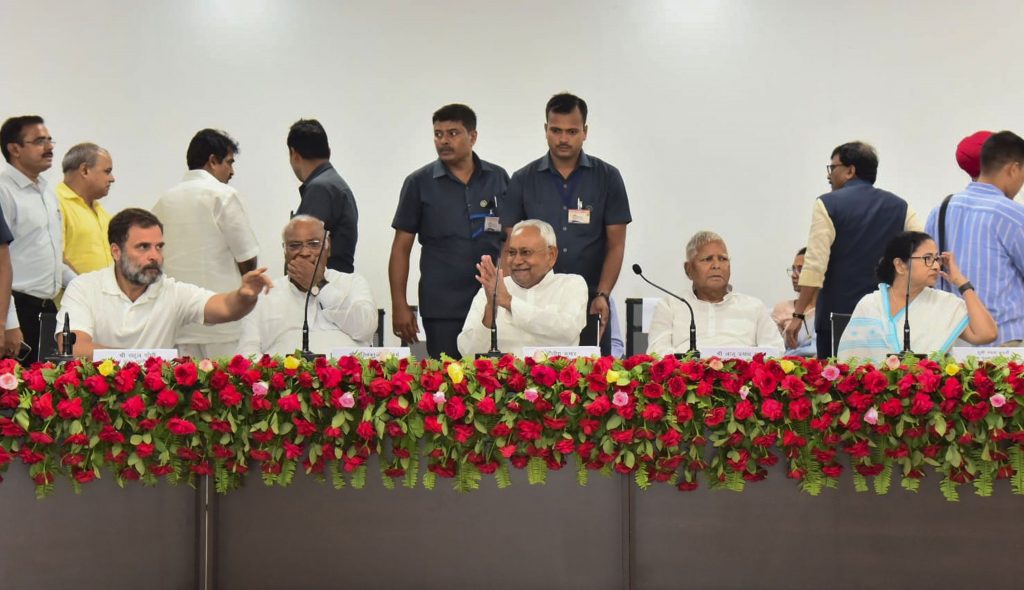
The opposition meeting in Bihar’s capital Patna on June 23 hosted by chief minister Nitish Kumar was significant as the 15 like-minded parties came together on a single platform and spoke in one voice over the need to fight the 2024 Lok Sabha polls jointly against the BJP.
Earlier, there had been positive noises coming from these parties but there were doubts whether such a conclave would actually take place and even if that happened, if the meeting would send out a loud and clear message.
The press conference addressed by the opposition leaders after the four-hour long meeting showed that they were all focused on the joint poll fight next year and were prepared to work out the finer details of the alliance.
The opposition meeting was earlier scheduled to take place on June 12 but could not take place due to unavailability of some leaders, including Kharge and Rahul Gandhi, who was in the US.
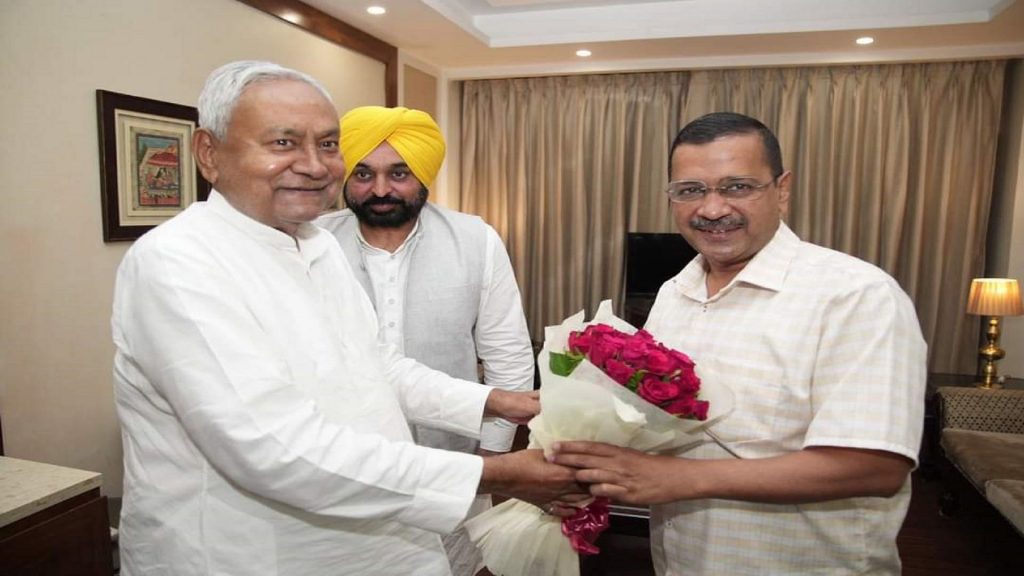
On June 23, TMC leader and West Bengal chief minister Mamata Banerjee, AAP founder and Delhi chief minister Arvind Kejriwal, Punjab chief minister Bhagwant Mann, DMK leader and Tamil Nadu chief minister MK Stalin, PDP leader Mehbooba Mufti, former Congress chief Rahul Gandhi, Congress chief Mallikarjun Kharge, Shiv Sena UBT and former Maharashtra chief minister Uddhav Thackeray, party MP Sanjay Raut, NCP chief Sharad Pawar and NC leader and former Jammu and Kashmir chief minister Omar Abdullah attended the meeting.
“It was a good meeting where it has been decided to fight the 2024 elections together. Another meeting will be held soon. There was consensus on fighting elections together. Mallikarjun Kharge will lead the meeting next month. In that meeting, things like who will contest where will be finalised,” Nitish Kumar said.
“We will meet again in Shimla on July 10 or 12 to prepare an agenda on how to move ahead together while working in our respective states to fight the BJP in 2024,” Kharge said.
The issues that would be discussed between the parties over the coming days would include a common minimum program to be presented before the voters as a poll manifesto and more importantly, the seat sharing between the parties.
Over the past weeks, there have been internal discussions among the parties around Nitish Kumar’s one-on-one formula which means putting up a single opposition candidate against the BJP nominee in as many Lok Sabha seats as possible.
On the other seats, there could be a seat sharing between the regional parties and the Congress, the only national party in the opposition space, depending upon who was a strong player in the region.
On several seats, the Congress directly fights the BJP, and there, the opposition could help in whatever way possible.
However, this seat sharing is easier said than done as the stakes are high for both the Congress and the regional parties when the national polls come up.
Many regional parties fight state elections against each other in states for instance the TMC vs the Congress vs the CPI-M in West Bengal or the Congress vs SP in Uttar Pradesh, or the UDF vs LDF in Kerala, the seat sharing would need a lot of negotiations.
However, the initial success of the opposition meeting could be gauged from the fact that these divergent parties came together on a single platform despite the differences.
The reactions of the BJP, which had been dismissing reports of the conclave but strongly attacked the gathering later, also showed that the meeting had left the saffron party worried as the total votes combined of these 15 parties is more than the BJP’s national vote share.
Get together
The meeting saw several leaders speak out over the need for greater opposition unity ahead of the next general elections.
In a fiery speech, Mamata Banerjee slammed the BJP. “We are united, we will fight unitedly…The history started from here, the BJP wants that history to be changed. And we want history to be saved from Bihar. Our objective is to speak against this fascist government…,” the Trinamool Congress supremo said.
“Many CMs, ex-CMs are present at the meeting. It was well organised. All senior leaders are present here. I had suggested a meeting to be held in Patna. We are united. We will fight unitedly. Don’t call us Opposition. We are also patriotic, if Manipur burns, we feel pain,” the West Bengal chief minister said.
“The BJP’s atrocity, making Raj Bhavan as an alternative government. Anyone who dissents faces the Enforcement Directorate and the Central Bureau of Investigation,” she said.
“If this dictatorial government returns this time, there will be no elections in future,” the TMC supremo said. The first meeting of opposition leaders was organised in Patna as “whatever starts from Patna, takes the shape of the public movement”, she said. “We resolve that we all are united and will fight unitedly against the BJP,” she said and added that “the BJP wants to change history, but we will ensure history is saved.”
RJD chief Lalu Prasad Yadav said, “Lord Hanuman thrashed BJP with his mace in Karnataka and made Rahul Gandhi’s Congress party win.” He said Lord Hanuman was with the Opposition, and it was certain that BJP would face massive defeat in the upcoming polls.
“From Jammu and Kashmir to Kanyakumari, every like-minded party participated in the meeting. It is not the fight for power but for values and ideology. It was nice to hear the prime minister speaking about democracy in the White House. However, it’s regrettable that what could have been the reason that there was no democracy in Jammu and Kashmir?” said Omar Abdullah.
“The Republic needs to be reclaimed before it is lost. In order to save and reclaim the republic, we have all agreed, and we are of the same view that BJP has to be defeated in the forthcoming elections,” said Communist Party of India leader D Raja.
NCP chief Sharad Pawar and former Maharashtra chief minister Uddhav Thackeray made attempts to iron out differences between the Congress and AAP at the mega opposition meet. The two leaders cited the example of Maha Vikas Agadi unity. “We have been criticising each other for the past 25 years but we need to set every difference aside. We have kept it aside and now we are working together,” Pawar said.
“I don’t consider myself as Opposition. However, we’ll all oppose anyone who would attack the democratic values of the country and try to establish a dictatorship,” said Uddhav Thackeray, adding “the Patna meeting was a good start, adding he believed that everything goes well when it begins well.” He said the time had come to keep differences aside and come together.
Tamil Nadu chief minister MK Stalin said, “A consultative meeting of various opposition parties was held in Bihar to save India’s democracy. All opposition parties have a single goal to defeat BJP. No decision was made on the PM candidate in the meeting.”
Raising the pitch for a united opposition front in the 2024 Lok Sabha polls, Congress president Mallikarjun Kharge addressed party workers in Patna before the opposition meeting along with Rahul Gandhi.
Kharge noted that Rahul’s Bharat Jodo Yatra against BJP’s hate politics had borne fruit and brought the various opposition parties together to fight the ruling party.
The Congress chief also exhorted the party workers in Bihar to restrengthen the party in the state. “The Congress’ ideology can never be separated from Bihar. If we win Bihar, we will win India,” Kharge said.
Challenges before opposition
The inherent differences between some of the parties will pose a challenge before the proposed opposition front. This was reflected in the war of words between the Congress and the AAP before, during and after the meeting.
The AAP signalled a further deterioration in its strained ties with the Congress, saying that unless the latter publicly denounces the Delhi ordinance promulgated by the Centre it would be “very difficult” for it to be a part of any alliance that included the grand old party.
The BJP-led Centre’s Delhi ordinance takes control of administrative services from the Arvind Kejriwal-led AAP government in the national capital. The AAP leaders attended the joint meeting where Kejriwal raised the ordinance issue but was snubbed by NC leader Omar Abdullah.
TMC’s Mamata Banerjee also said that the ordinance was not the focus of the opposition meeting in support of Kharge who pointed out that the issue would be taken up during the parliament’s monsoon session. A miffed AAP later skipped the joint press conference addressed by the opposition leaders.
Later, in a statement released on Twitter, AAP condemned the Congress for not supporting it against the Delhi Ordinance. The statement said that “out of all the parties that attended the meet, 12 had representation in the Rajya Sabha. Except for the Indian National Congress all others have clearly expressed their stand against the ordinance and announced that they would oppose it in the Rajya Sabha.”
“The Congress, a national party that takes a stand on almost all issues, is yet to make public its position on the black Ordinance”, the statement read, adding that Delhi and Punjab units were of the view “the party should support the Modi government on the issue”.
Before that ex-Delhi Congress chief Ajay Maken strongly opposed the idea to back Kejriwal saying the AAP founder had supported the BJP over removal of Article 370 from Jammu and Kashmir and had advocated that Bharat Ratna be taken away from former prime minister Rajiv Gandhi.
In the past, Kejriwal has been severely critical of both Sonia Gandhi and Rahul Gandhi and had attacked the Congress saying the grand old party was not able to take on the BJP. The TMC and the SP too had similar views.
After the opposition meeting, AAP again targeted Rahul saying he should not be made leader of the Congress for a third time.
BJP worried
Union home minister Amit Shah, BJP chief JP Nadda, union minister Smriti Irani and party leader Ravi Shankar Prasad all came out to question the opposition meeting.
Amit Shah called it a “photo session” and said that the various Opposition parties could never unite. BJP MP Sushil Modi said, “This is a ‘Gathbandhan of Thugs’. They are preparing to fool the country. They have no principle, or policy and all are involved in corruption.”
Smriti Irani said, “AAP blackmailing (Congress) at the very beginning of ‘gathbandhan’ is proof of what will come out of this unholy alliance.” She further said: “No one can stop Narendra Modi from becoming the Prime Minister in 2024. This alliance of selfishness is targeting India. Whenever these political parties came together, they brought along corruption and familism.”
RS Prasad said both “Nitish Kumar and Lalu Prasad were day-dreaming.” The BJP even released a poster of Rahul Gandhi’s bearded look saying he was like Devdas
The Congress
The recent Karnataka win boosted the Congress’ plans of forging opposition unity ahead of the 2024 Lok Sabha elections.
Congress president Mallikarjun Kharge had been leading a group of 19 like-minded parties during the Budget Session of Parliament to counter the BJP-led Centre over the Adani-Hindenburg and other issues.
To take that unity forward, Kharge invited the like-minded parties for the swearing-in ceremony of Karnataka chief minister K Siddaramaiah on May 20. These included the NCP, Shiv Sena UBT, RJD, JD-U, DMK, CPI-M, CPI, RSP, Kerala Congress, IUML, JMM and TMC.
Besides JD-U leader and Bihar Chief Minister Nitish Kumar and his deputy Tejashwi Yadav of the RJD, Jharkhand Chief Minister Hemant Soren of the JMM, Nationalist Congress Party chief Sharad Pawar, Tamil Nadu Chief Minister M K Stalin of the DMK, Shiv Sena UBT MP Priyanka Chaturvedi, and National Conference president Farooq Abdullah attended the event.
West Bengal Chief Minister Mamata Banerjee was invited but she skipped the event. BRS, BJD, AIADMK, AIMIM, YSRCP, TDP and AAP were not invited.
The opposition parties also found a common ground in boycotting the inauguration of the new Parliament building by PM Modi saying the job should have been done by President Droupadi Murmu and slammed the PM for not inviting the President for the ceremony on May 28.
A joint statement of opposition parties said there was no point in attending the inauguration of the new Parliament building when the BJP had sucked the soul out of the institution by silencing the voice of the opposition. Rahul Gandhi said Parliament is not built by “bricks of ego” but through constitutional values.
Nitish Kumar’s role
Nitish is a former BJP ally but over the past weeks, the Bihar Chief Minister and his deputy Tejaswi Yadav interacted with Mamata Banerjee and Arvind Kejriwal to push the opposition unity plan keeping the Congress in the loop.
After the Karnataka results, Nitish Kumar met Congress chief Kharge and former chief Rahul Gandhi in Delhi. Earlier, Nitish Kumar had also met BJD leader and Odisha chief minister Naveen Patnaik, who supports the BJP on specific issues.
“Strong regional parties should take on the BJP in 2024 on their home turf and in turn, they would back the Congress in the 200-odd seats where the two national parties are in direct contest,” Banerjee said.
2023 polls
Before 2024, the Congress hopes the Karnataka results will have an impact in the coming four assembly polls in Madhya Pradesh, Rajasthan, Chhattisgarh and Telangana this year. In three out of these four states, the Congress fights directly with the BJP. In Telangana the grand old party fights the ruling BRS.
The five southern states including Andhra Pradesh, Telangana, Karnataka, Tamil Nadu and Kerala have 129 Lok Sabha seats.
The Congress believes the pro-people promises made in Karnataka convinced the voters and a detailed common minimum programme would have to be worked out along with the other parties to set the agenda for the 2024 national elections.
Manipur is in severe turmoil yet the rulers of the day are flying abroad, saying that all’s okay in the country! The deadly strife has left hundreds dead and survivors economically & emotionally ruined
Around this time of the year, June, there’s that sudden frenzied focus on the declared Emergency of 1975. Ironically, today, in 2023, there’s an undeclared Emergency on! Hitting hundreds and thousands in the country, yet we are going along as though oblivious of the disasters unfolding every single day.
Today, as joblessness and price rise and crime are thriving, in a communally surcharged atmosphere, the situation stands absolutely dismal. There’s a definite unease hovering around, as violence takes over.
Look, Manipur is in severe turmoil yet the rulers of the day are flying abroad, saying that all’s going okay in the country! Hundreds have died in Manipur and the survivors economically and emotionally ruined, not sure what the future would hold out for them. How do they survive?
Look, the minority groups and the disadvantaged communities in the country are sitting as though silenced and compelled into accepting their fate! Not to be overlooked is the fact that a large percentage are subjected to discrimination and humiliations. The situation is grave to the extent that for an Indian Muslim even going to the local masjid to offer namaaz could prove to be challenging as Right-Wing goons could attack and assault!
Look at the crime graph. Crime on the rise. Criminals on the prowl, in various hues and forms. Many masterminds get away, whilst the foot soldiers apprehended. Rapists and molesters and tormentors could be let off. The situation gets rather too obviously blatant if the culprit is from the so called who’s who category.
*****
With this in the backdrop, there’s not just sheer disappointment but utter disbelief when rulers of the day whilst travelling to those foreign lands, talk of growth and development and whatever else they can package in their well-crafted speeches. In fact, contrary to their claims, never before have we witnessed the blatant destruction of the human being.
Not to overlook the killings by the State machinery, the so-called encounter killings. And where is the required transparency and the much-needed accountability to get to know the profiles of those killed by the State machinery?
What is the role of the State in killing its own citizens? What is the State trying to achieve, bypassing the traditional ways to settle crime and the so labelled criminals? Why this new form of terrorizing tactics on the citizens, who are anyway surviving amidst tough challenging circumstances?
Till about a decade back, the term encounter killings seemed reserved only for those living in the so-called conflict zones of the country or for those fitted in the underworld, but today the State seems to have adopted this strategy to ‘settle’ just about any rival coming in the way. Victims could range from political opponents to personal enemies to those who are not part and parcel of the very nexus controlling the very system.
Also, why should political characters in a democracy raise and nurture their own private brigades? In these recent years, the who’s who in the Right-Wing political parties are seen pampering their private senas! And nobody dares to ask why they are raising these brigades, when the police and the paramilitary and, of course, the Right-Wing cadres are all there!
Who gives them the sanction to maintain these brigades? Who pays for their upkeep? Who controls them? Who directs them? Who trains them to target the ‘enemy’? Who all are fitted into these brigades and what for?
Today, State tyranny has reached campuses. Hired political goons are made to enter campuses to cause rifts and much more. The unruly incidents that had taken place on the campus of several universities were grim reminders of the level to which the State machinery could be used to crush young rebellious voices.
Why don’t we talk of the terrible hunger pangs killing hundreds. Malnutrition deaths could frighten you and I, but for the rulers these are just about numerical numbers. These rulers can talk of vote-banks and money-banks but not of roti or milk banks, from where those basics could flow out, to help save lives of hundreds of our dying malnourished children and men and women.
In fact, the biggest irony of the day is that farmers who feed us are hanging themselves because they cannot cope with the daily round of struggles. And what has the sarkar done for the kisan – well, nothing very much except fed them promises! The reality is that our farmers and cultivators are in deep distress yet nothing concrete is coming up to lessen their struggles.
We are living in dark times, where one is not too sure what the next day would drag along, unfold, hold out! Violence has been accelerating in these recent years, peaking as never before. Today you and I can be lynched on any possible alibi – right from selling cattle to trading in beef. Not to overlook the other much-in -circulation alibi: the Right-Wing crafted term ‘love jihad’, where a Muslim has to think a hundred times before daring to fall in love and marry a non-Muslim friend! No explanations or counter explanations are sought and, of course, no hope of protection by the political rulers of the day who seem hell bent on following a divisive agenda.
And see what’s happening in the jails and prisons of the country. Isn’t it time that overcrowded prison cells pave way for open jails where those imprisoned could survive in dignity! Jails are there to reform the so called wrong- doers but see what’s been happening.
Name changing sessions are in full swing! Names of towns and townships and cities are getting changed! Why should new names come up and those historical names get going, discarded and crushed! Why?
Entire chapters on the Mughals are getting deleted from text books! Why this sudden aversion for the Mughal Emperors, that entire chapters on them are getting removed!
Ending the column with this verse of the last of the last Mughal Emperor of Hindustan – Bahadur Shah Zafar ( 1775 – 1862):
‘Ode to Hindustan/
Matchless is the soil of Hindustan/
In it grow love, compassion, fidelity/
As sure as the sun rises from the East/
So surges from this land sincerity./
This is the true seed of Hind and from its earth/
These fruits have spread across the world, far and wide.’
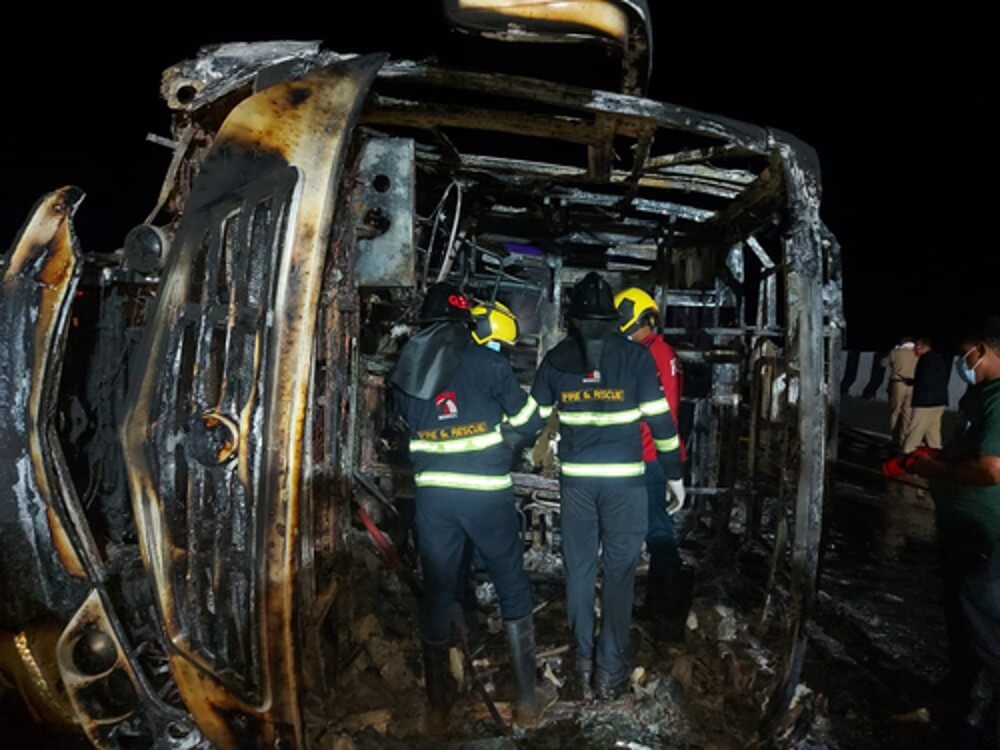
Mumbai : At least 25 passengers were charred to death and eight others injured after a bus burst into flames following a major accident on the Nagpur-Mumbai super-expressway at Buldhana on Saturday, officials said.
The private luxury bus, belonging to Vidarbha Travels, was traveling from Nagpur to Pune and the tragedy occurred near the Sindhkhedraja area at around 1.25 a.m., a police official said.
As the bus was speeding, it apparently suffered a tyre burst, after which it hit an expressway electric pole, rammed into a divider then went out of control and overturned, police said.
As it skid for several metres, its diesel tank exploded into a huge ball of flame, engulfing the vehicle and trapping the passengers inside, said a police official.
There were 33 people on board, including two drivers and a cleaner.
The eight injured persons have been admitted to the Buldhana civil hospital for treatment.
Prime Minister Narendra Modi, Union Home Minister Amit Shah, Maharashtra Chief Minister Eknath Shinde and Deputy Chief Minister Devendra Fadnavis have expressed condolences.
Nationalist Congress Party President Sharad Pawar, Leader of Opposition Ajit Pawar, National Working President Supriya Sule, General Secretary Dr. Jitendra Awhad, and several other state leaders have expressed grief over the tragedy.
While Modi declared an ex-gratia of Rs 2 lakhs from the PMNRF for the victims’ kin, with Rs 50, 000 for the injured, Shinde announced a Rs 5 lakh compensation for the kin of each deceased, and free treatment for the injured.
In a message, the Prime Minister said: “Deeply saddened by the devastating bus mishap in Buldhana. My thoughts and prayers are with the families of those who lost their lives.”
Pawar said that the tragedy had brought to the fore the issue of speed-limits for vehicles on the expressway and the government should take serious note of this and initiate immediate measures.
“Concern was expressed by asking the statistics of accidents from the concerned department a week ago. Urgent measures were suggested to prevent accidents.”
Meanwhile, Fadnavis said that the police are probing the cause of the accident.
According to reports, none of the injured were in a serious condition.
The scene of the accident presents a ghastly picture with dark charred skeletal remains of the luxury bus lying beside the expressway, and a stench of the bodies and the ashen vehicle looming there.
At dawn, a chilling picture was present when the burnt bodies of the victims were retrieved and kept on a clearing, covered with sheets, while scores of bags, clothes, papers, files and other belongings of the passengers could be seen strewn around for several metres in the vicinity.
As a majority of the victims have been burnt beyond recognition, the police said that they will try to match them with the DNAs of their relatives before handing them over for the last rites.
Shinde and Fadnavis will visit the accident site for a spot assessment of the situation and meet the injured in the hospital.
The top echelon of state bureaucracy heaved a sigh of relief after the Supreme Court stayed part of the Allahabad HC order, which had directed the CBI to investigate alleged the malpractices in admission to various courses in ‘Ayush’ colleges in UP. A report by Mudit Mathur
The top echelon of state bureaucracy heaved a sigh of relief after the vacation bench of the Supreme Court stayed part of the Allahabad High Court order, which had directed the CBI to investigate alleged malpractices in admission to various courses in ‘Ayush’ colleges in the state in 2019.
A Supreme Court vacation bench of justices Dipankar Datta and Manoj Misra on an appeal by the state government issued notice which was limited to the question of examining the propriety of the direction of the High Court to order investigation by the CBI. The order was challenged on the grounds that court had exceeded its jurisdiction in exercising its inherent powers “conferred by Article 226 of the Constitution of India read with Section 482 Cr.PC.”
The Bench further directed that “there shall be stay of operation of the order of the High Court directing CBI investigation until further orders.”
Appearing for the state government, Additional Solicitor General K M Natraj, assisted by Ruchira Goel, advocate on record, argued that the High Court has transgressed its jurisdiction as a Bail Court under Section 439 of the Cr. PC.
He argued that the decision was in the teeth of a recent Supreme Court decision rendered in the matter of Inspector of Police v. M. Murugesan and Another. (2020) 15 SCC 251, wherein under similar circumstances, the apex court held that “the jurisdiction of the High Court came to an end when an application for grant of bail under Section 439 of the Cr.PC was finally decided.”
On May 24th, a single-judge Lucknow Bench of the Allahabad High Court, Justice Rajeev Singh granted bail to one accused Dr Ritu Garg. By the same order, the High Court, in exercise of its inherent powers “conferred by Article 226 of the Constitution of India read with Section 482 Cr. P.C” directed the CBI to undertake investigation of the scam that resulted in admission of undeserving students in various medical courses.
The state government had filed Special Leave Petition before the apex court on technical grounds challenging the May 24 order of the Lucknow bench of the Allahabad High Court asking the CBI to file a case and probe allegations of bribery against former Uttar Pradesh Ayush minister Dharam Singh Saini, the then additional chief secretary, Ayush department, Prashant Trivedi and others. The high court had also asked the CBI to submit a status report in the matter by August 1.
While ordering CBI probe the high court had noted the investigating officer had recorded detailed statement of one of the accused Dr Umakant Singh, who had categorically spoken about corruption in the 2019 admissions and claimed while Saini had taken a bribe of Rs 35 lakh and Additional Chief Secretary1989 batch IAS Prashant Trivedi had pocketed Rs 25 lakh at their residences. Though Trivedi had unblemished career but at the fag-end of his services this month he suffered irreparable loss to his reputation. The unexpected development triggered a scary situation among the top bureaucracy of the Yogi government. Soon after the court’s orders, Trivedi was divested of the important charge of Additional Chief Secretary (Finance) and posted as chairman UPSRTC. Initially, when the scam surfaced last year, the state government on November 8th, referred the Ayush admission anomalies scam for a CBI probe looking into its nationwide ramifications. Therefore, the sudden change in stance of the government by taking a U-turn on the issue has puzzled the political circles.
In November last year, a major scam broke out in Uttar Pradesh in granting admission to hundreds of ineligible candidates, who appeared in the online counselling process to join Ayurvedic, Homoeopathic and Unani medical courses in the various government and private colleges, fudging and corrupting the merit list declared after National Eligibility Cum Entrance Test (NEET) for 2021-2022 session. Even 22 candidates who did not appear in NEET got admission in some of the good colleges. The government suspended 891 such students who failed to score necessary cut-off marks in NEET but maliciously manoeuvred admissions, marred with a deeply rooted scam. It was seen as a major blow to the much-hyped plank of corruption-free governance in the BJP-ruled state.
Some BJP-backed senior wrestlers have dubbed protestors as Congress puppets. Also, the exemption granted to agitating wrestlers from the trials for the forthcoming Asian Games has not gone down well with the competing sportspersons. A report by Mudit Mathur
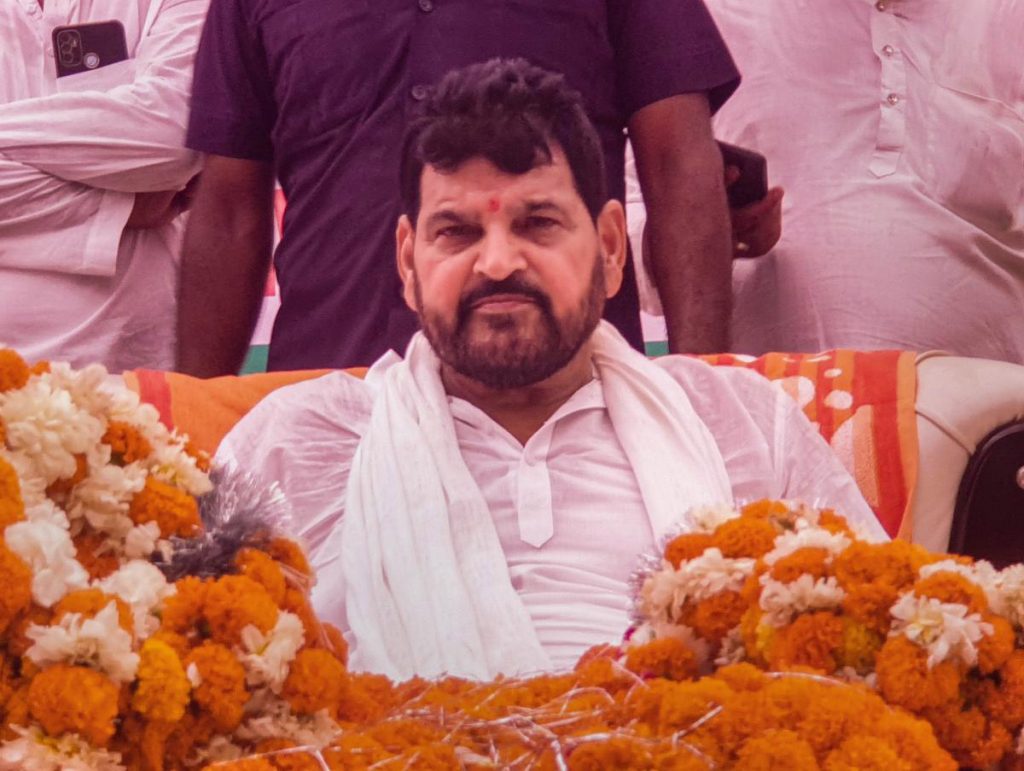
Political machinations have been successful in creating cracks in the unity of wrestlers protesting over the alleged sexual harassment by the Wrestling Federation of India chief and BJP MP, Brij Bhushan Sharan Singh.
Some BJP-backed wrestlers made an attempt to derail serious issue of sexual harassment by bringing politics into play by alleging that the Congress party was behind the protests. It attracted sharp reactions from protesting wrestlers.
Olympic medallist Sakshi Malik and former wrestler Babita Phogat recently indulged in an unpleasant slugfest on the social media platforms over the wrestlers’ protest against the Wrestling Federation of India (WFI) chief Brij Bhushan Sharan Singh. Targeting protesting wrestlers, Babita Phogat wrote in her social media post, “People of this country have understood that you have become a Congress puppet. Now is the time that you reveal your real motive because people are asking questions.”
In the video posted on social media by Sakshi Malik and her husband Satyawart Kadian, narrated how Teerath Rana and Babita Phogat ‘were trying’ to use wrestlers for their selfish motive and how when the wrestlers are in trouble, they have opted to sit in the lap of the government. Babita, it may be mentioned, had mediated between the wrestlers and the government during their three-day protest in January.
Babita tweeted a long reply to Malik and claimed that she had nothing to do with their protest since she was against agitating on the streets on the issue from day one. “From day one, I was not in favour of any protest or demonstration. I have maintained that I have faith in the PM and the judiciary and the truth will come out,” she said, adding, “I repeatedly told you to meet Prime Minister or Home Minister for a solution but you tried to find solution with Deepnder Hooda, Congress and Priyanka Gandhi, who themselves were accompanied by rape accused people.”
Denying such accusations, Olympic medalist Sakshi and her wrestler husband Satyawart Kadian said that their protest is neither politically motivated, nor instigated by the Congress. They said that the wrestlers were quiet for years despite facing harassment because the wrestling fraternity was not united earlier. In a video posted on Twitter, they addressed the allegations made against the wrestlers and presented “real truth” about the wrestlers’ protest against the WFI’s outgoing chief, Brij Bhushan Sharan Singh.
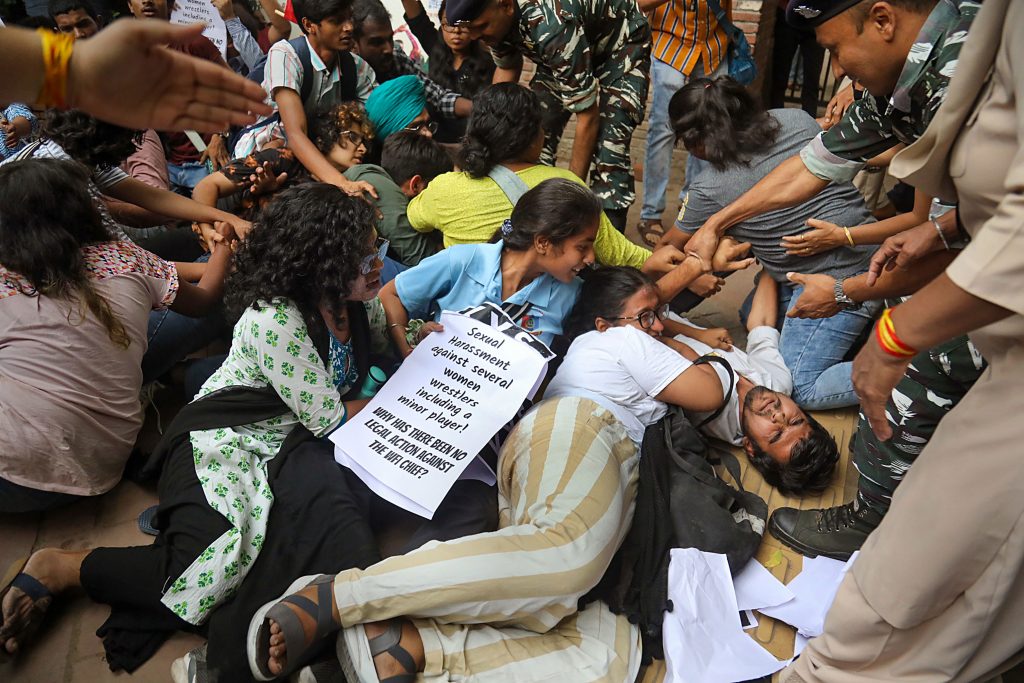
The country’s top wrestlers including Malik, Vinesh Phogat and Bajrang Punia, have accused Brij Bhushan Sharan Singh of sexual harassment and intimidation. Leaders from different political parties, including Congress leader Priyanka Gandhi, Delhi Chief Minister Arvind Kejriwal and former Jammu and Kashmir Governor Satya Pal Malik visited the protest site and extended their support to the agitating wrestlers before they were removed from Jantar Mantar on May 28.
Kadian said a false narrative was being created around their protest and they wanted to clear the air. Kadian, while sitting beside Malik, said rumours were being spread about their protest.
“Let me make it clear that our protest is not politically-motivated. We came to Jantar Mantar in January, and police permission for the protest was taken by two BJP leaders,” Kadian said and asked Malik to show the letter, seeking permission for the protest. It was written by former wrestlers Babita Phogat and Teerath Rana, who are both associated with the BJP.
“This protest is not Congress-supported. More than 90 per cent people knew that for the last 10-12 years, it has been going on. A few people wanted to raise their voice but the wrestling fraternity was not united,” Kadian said. However, Babita denied signing any letter for seeking permission for their protest in Jantar Mantar.
Kadian, who competes in the heavy-weight category, reiterated that their fight is against the WFI chief and not against the government. Sakshi said they were silent for years because wrestlers were not united. “Many individuals within the wrestling community wanted to raise their voice against the problem but they lacked unity and feared negative consequences for their careers,” they further said.
“You have seen that the minor has withdrawn her statement. Her family was intimidated. These wrestlers come from poor families. It’s not easy to muster the courage to take on a powerful man,” she said. “The police brutality they faced on May 28 broke their spirits. The police had detained them and pushed them into buses, an action that faced criticism from all quarters. The wrestlers were booked for violating law and order as they marched towards the new parliament building without permission,” Kadian added, clarifying, “Let me make it clear that the call for ‘Mahila Samman Mahapanchayat’ was given by the Khap leaders and we followed their order and faced police brutality. That broke us.”
Sakshi and kadian said in the video message, “Can’t explain in words what we went through. We won so many medals for our country and our dignity was being trampled. I can’t explain in words what we went through. We then decided to immerse medals in (Haridwar) but one man from the ‘Tantra’ (system) grabbed Bajrang’s arm and took him to a corner and made him speak with many (influential) people.”
“If we had done that (immersed medals), there could have been violence. So, better senses prevailed. We gave the medals to coaches and parents.” “We were not in a mental state to understand if there’s a conspiracy. We had gone then under stress. We have just played sports our whole life, and did not know how to handle such a situation.”
“After that incident, we did not know who was on our side, who was part of the system. We met a lot of people but did not know whom to trust. We were advised to meet the Home Minister, we were told that the solution to our problem lies with him, so we met him to put across our view point.” “If we have done something wrong, we apologise,” they pleaded.
He also appealed to the Khaps, who they believe have got angry with them, not to believe rumours. “If we have done something wrong, we apologise,” he said, and thanked everyone who came out to support them. Towards the end of the 11-minute-long video, Kadian said, “The system takes advantage when we are not united. If you are facing any sort of injustice, do raise your voice and stay united.”
As soon as Olympic medalist Sakshi and her husband’s jointly addressed video appeared on social media, a rift has suddenly emerged between Khap leaders and wrestlers who claimed that the decision to hold women’s mahapanchayat at the new Parliament Building in New Delhi on May 28 was taken by the Khap leaders and not by them. The development has also come as a major setback to the Khap leaders who are now gearing up to hold another meeting of Sarv Khaps (all Khaps) to discuss this latest development and to clear their stand over the issue.
Hitting back at the wrestlers, Ramphal Rathi, general secretary, Maham Chaubisi Khap, said that holding the women mahapanchayat in Delhi was the wrestlers’ decision and the Khap leaders merely endorsed it at a meeting of the 17-member committee that was formed by the Sarv Khap Panchayat in Meham town here on May 21 to decide the next course of action.
At the meeting, the wrestlers told the members that they had already decided on two programmes, a candle march on May 23 and Women Mahapanchayat on May 28. The agitation has been led by wrestlers themselves since the beginning and the committee members endorsed their decision assuring them of full cooperation to make the events successful,” said Rathi. He claimed the wrestlers did not inform the Khaps about their decision of throwing medals into the Ganga.
Coming forward in open support of Sakshi Malik and her wrestler spouse Satyawart Kadian, the Olympian Vinesh Phogat termed the move as an act of oppression by some traitors while reacting to allegations levelled by BJP-supported camps including wrestler Babita Phogat. “As long as Jaichand like Yogeshwar remains in wrestling, surely the spirit of the oppressors will remain high,” she tweeted.
While targeting Yogeshwar Dutt for his alleged act of influencing complainant wrestlers, Vinesh commented, “Wrestling world will always remember you for licking the feet of Brijbhushan. Don’t use so much force to break women wrestlers, they have very strong resolve. Keep in mind that by applying too much force, the back should not break. Your acts have given confidence to Brijbhushan. You are a very insensitive person. Standing in favour of the oppressor, you are flattering him.” Dutt was one of the six members of the oversight panel formed by the Modi government to probe the sexual harassment allegations against Singh. The government has not made public all the findings of the probe.
Vinesh came out with a long hitting statement, “When I saw the video of Yogeshwar Dutt, his obnoxious laugh got stuck in my mind. He was a part of both the committees made for women wrestlers. When women wrestlers were narrating their ordeals in front of the committee, he used to laugh vulgarly. When two female wrestlers came out to drink water, he chased them out and told them that nothing will happen to Brijbhushan. Go and do your practice.”
Vinesh alleged, “Yogeshwar influenced another female wrestler in a very uncouth manner saying these things happen and not to make it such a big issue. After the committee meeting, Yogeshwar leaked the names of women wrestlers to Brijbhushan and the media. He also contacted relatives of many women wrestlers and told them to make their girls ‘understand’ the situation. He was already publicly giving statements against women wrestlers, yet he was kept in both the committees.”
“Yogeshwar earlier made shoddy comments on farmers, jawans, students, Muslims, and Sikhs, and now is engaged in defaming women wrestlers. Because of betraying the society, you have fallen on your face twice in the elections. And I challenge that you will never win an election in your life, because the society is always careful of poisonous snakes and never lets it set foot,” Vinesh’s blistering attack came in reaction after Dutt questioned the logic and criteria behind the exemption granted to Vinesh from participating in trials.
It appears that the agitation of women wrestlers is getting diluted day by day and its momentum is fast diminishing. Many coaches and parents of several established and upcoming wrestlers demanded withdrawal of exemption granted to Vinesh Phogat, Sakshi Malik, Bajrang Punia, Jitendra Kinha, Sangeeta and Satyawart Kadian for Asian Games and World Championships trials, saying the selection for these important events should be fair.
Fathers of Anshu Malik and Sonam Malik, and Vikas Bhardwaj, who coaches U-20 world champion woman wrestler Antim Panghal, have deplored the IOA panel’s decision. Dayanand Kalkal, coach of fast-rising wrestler Sujeet, who is emerging as a worthy opponent to Bajrang in 65kg, also met head of WFI ad-hoc panel, Bhupender Singh Bajwa, and demanded revocation of exemption saying, “Trials should be fair and without any bias.”
The protesting wrestlers on 24th June hit out at those questioning the exemption granted to them from the ongoing trials for Asian Games and World Championships. Asserting that they didn’t ask the Indian Olympics Association for such a favour. They challenged they would quit wrestling if it was proved otherwise. Tokyo Olympics bronze medallist Bajrang said that he would quit wrestling if it is proved that they had asked for just one-bout trial for the Asian Games and World Championships.
“We did not ask for an exemption from trials, just asked for time to prepare,” said Sakshi Malik, one of the leaders of the wrestlers’ stir against Wrestling Federation of India president, Brij Bhushan Singh, whom they accuse of sexually harassing seven women wrestlers including a minor.
The Supreme Court in 2021, in response to a clutch of petitions, put the sedition law in abeyance all over the country. While the law commission has recommended more stringent punishment under the law, the Centre has yet not made its stand clear on the issue, writes Amitabh Srivastva
Once again the controversial Sedition Law of 1870, known as Section 124 A of the Indian Penal Code is in public domain for removal/amendment but no one is sure which way the decision will go.
In a historic move in 2021 after hearing a clutch of petitions in the Supreme Court, challenging the law, the highest court put the law in abeyance all over the country.
The Centre as usual is prevaricating and has not come out with a clear cut stand on the matter involving hundreds of politicians, journalists, intellectuals and activists who have been put behind bars for raising dissenting opinions.
All that the Centre has done is to divert attention by reshuffling the portfolio of the Law Minister.
Since the earlier one, Kiren Rijiju was too hostile to the Chief Justice DY Chandrachud and the Supreme Court generally, he was dropped, and Arjun Ram Meghwal was given the charge of the crucial ministry.
Immediately after taking charge, Meghwal tried to cool down tempers by saying that the government will take a decision on the matter after discussion with various stakeholders involved.
Meanwhile there were alarm bells about the 279th recommendation of the Law Commission of India which recommended in its report that punishment under the Sedition Law must be enhanced from 3 years to 7 years.
This appeared contrary to the Centre’s response in the Supreme Court last year that it was willing to do a rethink about the law that Mahatma Gandhi called the ‘Prince’ among all the laws of the IPC during his trial in March 1922 which sent him to six years in jail.
Contrary to expectations, the Law Commission has clearly stated that the Sedition Law was not only a must to protect the sovereignty and integrity of the country but recommended that the tenure of punishment under it must be enhanced from three years to seven years.
Meghwal said on his Twitter handle that the Government would take an ‘informed decision’ about the matter after consultation with various stakeholders.
But he let the cat out of the bag when he said that the Law Commission report was ‘persuasive’ but not ‘binding’.
“The law commission report on Sedition is one of the steps in the extensive consultative process. The recommendations made in the report are persuasive and not binding,” he wrote on Twitter.
We don’t know if the Minister is serious about consultations but lawyers, journalists and prominent citizens have started to come out openly against the law.
The Congress was the first to react which had in its manifesto clearly stated that it would do away with the Draconian Law which is slightly ironic, but that’s how politics is.
Journalists are obviously agitated. Umakant Lakhera, President, Press Club of India, says, “It is very unfortunate that this draconian law which was enacted by the British in 1870 to suppress the voice of political opponents and editors is being used by the present regime celebrating its 75 years of independence (the Amritkal of India). The intention seems to be the same- to kill the voice of dissent, stifle all opposition and crush people’s movements through threats and jail terms.”
The central rule was imposed for the first time on March 26, 1977 after the Congress withdrew support to Sheikh Mohammad Abdullah-led NC government. Since then, successive state governors have helmed the affairs of the state on number of occasions, writes Riaz Wani
It was on June 19, 2018, that the BJP withdrew support to the J&K coalition government headed by the then Chief Minister Mehbooba Mufti, paving the way for Governor’s rule in the then state. Later, former J&K Governor, Satya Pal Malik, dissolved the assembly in November. Over five years have passed since then, and there are no signs of the long-awaited assembly elections.
Following the abrogation of Jammu and Kashmir’s special status on August 5, 2019, the region was downgraded to a union territory. The position of the Governor was reduced to that of Lieutenant Governor.
Governors have been direct participants in the history of the state, helping shape and direct it during their respective periods of rule.
Governor’s rule was imposed for the first time on March 26, 1977 during the tenure of Governor L K Jha after state Congress – then headed by Mufti Mohammad Sayeed – withdrew support to the minority government of Sheikh Mohammad Abdullah of National Conference. Sheikh had come to the power following an accord with the then prime minister Indira Gandhi in 1975, which ended his 23 years of struggle for self-determination.
The Governor’s rule lasted for 105 days and ended as Abdullah returned to power in the Assembly polls.
Governor’s rule was imposed for the second time in March 1986 after the state Congress — again headed by Sayeed — withdrew support to the minority Government of Ghulam Mohammad Shah.
Shah became the Chief Minister after he led a rebellion against his brother-in-law and then incumbent Chief Minister Farooq Abdullah in 1984.
This 246-day spell ended after Farooq Abdullah entered into an alliance with the then prime minister Rajiv Gandhi called Rajiv-Farooq accord.
The third time Governor’s rule was imposed in January 1990 when Farooq Abdullah resigned as the chief minister over the appointment of Jagmohan as the Governor following eruption of militancy in the state.
Mufti Sayeed was the Union Home Minister at that time and had brushed aside Farooq Abdullah’s opposition to Jagmohan’s appointment. This was the year when the armed separatist uprising began in Kashmir and Jagmohan was sent back to the state with a hope that he will replicate the success of his previous tenure. His short spell at the helm was marked by a tough security response to the then rampant militancy.
Jagmohan was followed by Girish Chandra Saxena and K V Krishna Rao. Between them they presided over the longest Governor rule – six years and 264 days — which ended in October 1996 after the National Conference returned to power in Assembly elections held after a gap of nine-and-a-half years.
In October 1996, the National Conference returned to power in Assembly elections held after a gap of nine-and-a-half years.
Six years later, Governor’s rule had to be imposed in the state for the fourth time in October 2002 after caretaker Chief Minister Farooq Abdullah refused to continue in the office in the wake of his party’s defeat in the assembly elections that year. The 2002 Assembly polls threw up a hung assembly with no party in a position to form a government on its own.
Sayeed, whose regional PDP had won 16 seats, negotiated an alliance with the Congress and dozen-odd independents to form the government, ending the 15-day direct Central rule on March 1, when Sayeed was sworn in as the chief minister.
It was the shortest spell of Governor’s rule – 15 days – as the PDP and Congress with support of 12 independents formed a government on November 2.
Governor’s rule was imposed in the state for the fifth time for 174 days after the PDP withdrew support to Ghulam Nabi Azad-led Congress-PDP coalition government in 2008.
The PDP withdrew support to the government on June 28, 2008 following widespread protests during the Amarnath land row agitation that pitted Hindu-dominated Jammu region against the Muslim-majority Kashmir valley.
Azad was to seek a vote of confidence in the Legislative Assembly on July 7 but chose to resign instead. The central rule came to an end on January 5, 2009 after NC leader Omar Abdullah was sworn in as the youngest chief minister of the state.
The Governor’s rule was imposed in the state for the sixth time after the assembly election results on December 23, 2014 threw up a hung assembly with no party or combination of parties able to stake claim for government formation and Omar Abdullah, the caretaker chief minister, asking to be relieved from the duties with immediate effect on January 7.
The central rule ended after the PDP and the BJP stitched an alliance paving the way for the return of Mufti Sayeed as chief minister on March 1, 2015. Governor’s rule was imposed for the seventh time in 2016, when Mehbooba refused to be the chief minister after Mufti Mohammad Sayeed, her father, passed away.