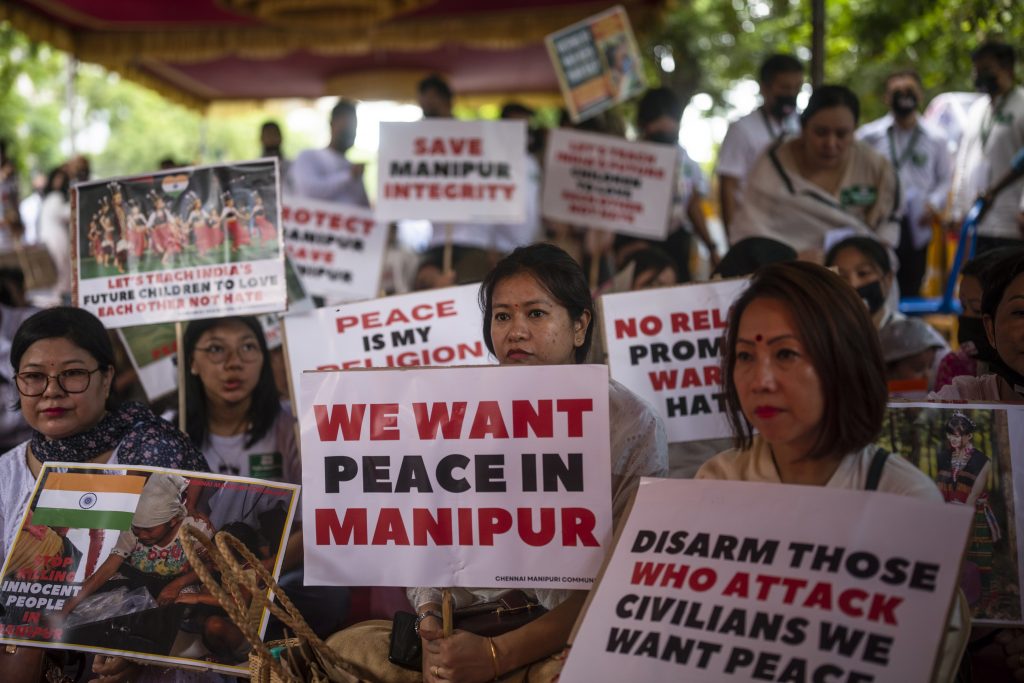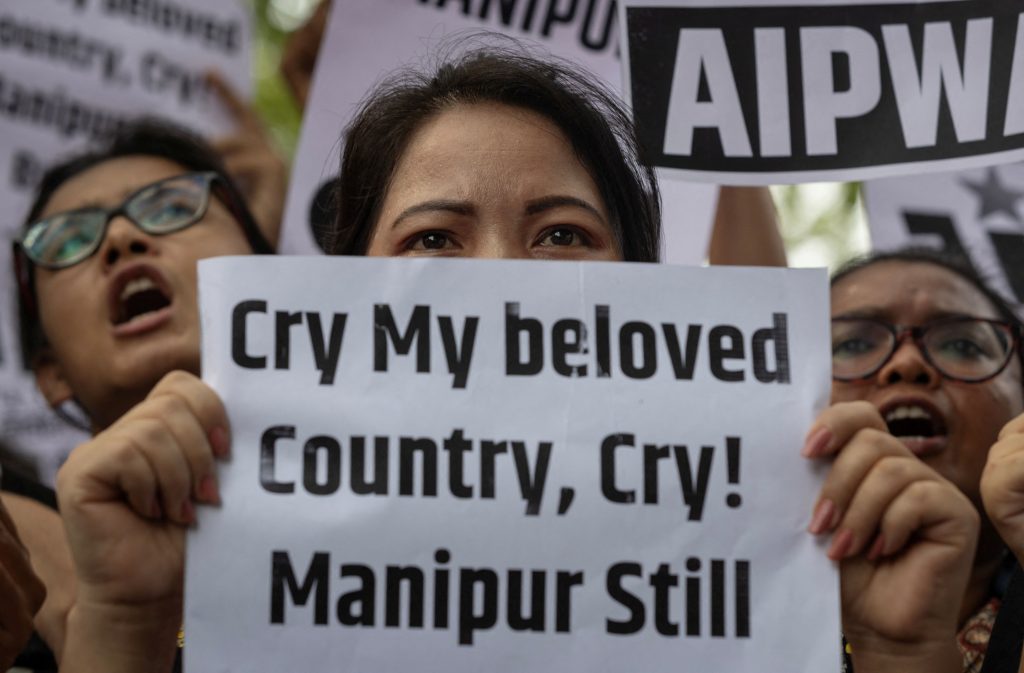
Manipur continues to burn as leaders look away

What we see today is less of governance and more of political rulers of the day indulging in the age-old tactic of divide and rule: set one community or section against other and see them kill each other.


There seems little relief and much hopelessness as violence spreads. Ask citizens surviving; rather trying to survive. Mute spectators, witnessing abuses and tortures and violations, sitting so disadvantaged and distraught and by-passed in these so-called developed times! Couldn’t be a bigger irony!

Barbaric and dark and ruthless. Women stripped naked and raped in strife-torn Manipur. The video surfacing relays what tortures and humiliations and barbarism the two women went through in Manipur, over two months ago.

Mind you, this is a reported rape case. What about other victims of rape and killings and torture, in the un-reported gruesome happenings? There could or would be many more cases of torture and abuse and humiliation and molestations. Nah, sitting in New Delhi, we don’t want to talk of these horrific realities! We seem to be pushing these gruesome realities under the stained carpets! But for how long!  Truth has the tendency to come up, one day for sure. Come up in such a forceful way; strong enough to hit even the mighty.

In fact, these rapes remind one of the film ‘Hotel Rwanda’, where as the civil war raged, rape was used as a ‘weapon’ by the two warring  tribes of  Rwanda to ‘settle’ the other. Disasters and destruction of the worst forms unfolded. Uncontrolled was the horrifying situation, with the powerful politicians flying away Westwards! Nowhere near the masses!

Where is the governance?

Getting back to the tragedies unfolding in Manipur, the very first set of queries that hits is this: Where’s governance? Where are the political heads or the administrative representatives in the state?  Couldn’t they have sensed the frenzy and unrest and anger reaching the limits? Couldn’t the vulnerable sections be protected? Why don’t these politicians and sarkari men be questioned and made answerable?

The grim reality is this: What we see today is less of governance and more of political rulers of the day indulging in the age-old tactic of divide and rule. Set one community or tribe or section against the other and then sit back. See them kill and throttle and demolish and destroy each other.

Bluntly put, this present situation in Manipur required immediate and urgent action or dialogues or talks to reach out to the ground situation. Mind you, with earnestness and genuineness involved. But here, the political rulers believe in giving lofty speeches along  the strain of  ‘All’s okay  …see how great and developed we are!’

Weeks and months of people’s unrest in the state and yet there seemed no reaching out to settle the grim issues. Even the naïve do realize that no people’s grievance can be settled by arrests or encounters or razing homes and burning abodes or playing stale political games. One can’t, just can’t, suppress people’s anger by the boot. Yes, one can frighten and threaten the people but for how long?

Catching hold of the foot soldiers is no solution to settling the grievances of the masses. That is mere sham. This is mere mockery that the state has been indulging in. Stuff the foot soldiers in hell-holes and then declare the culprits have been caught or killed in encounter killings and problems are well settled and the situation under control! Really!

The actual and factual political masterminds have got to be arrested, and immediately. Political mafia seems to be spreading out ever so steadily with an agenda to destroy forms, human and otherwise. Till the master minds are not exposed and off their camouflages, people’s grievances cannot be settled with political games surmounting. Serious issues require earnestness and genuineness and not shrewd distractions. Enough of all those stale bogus strategies.

And where are the political rulers of the day? Nowhere in sight. No one out there, who even bothers to travel down to the state and sit with the bruised masses.

There’s no one to hear human cries and pleas and shrieks. Such is the level of ruthlessness spreading out that human forms are raped in public!


Facts and figures

India registered 31,677 cases of rape in 2021. That is, an average of 86 daily, while nearly 49 cases of crime against women were lodged every single hour, according to the latest government report on crimes in the country.

News reports had also stated:  Among states, Rajasthan (6,337) was on top of the list followed by Madhya Pradesh (2,947), Maharashtra (2,496) and Uttar Pradesh (2,845), while Delhi recorded 1,250 rape cases in 2021.

The rate of crime (per lakh population) for rape was highest in Rajasthan (16.4) followed by Chandigarh (13.3), Delhi (12.9), Haryana (12.3) and Arunachal Pradesh (11.1). The all-India average rate stood at 4.8, according to the NCRB.

Overall, 4,28,278 cases of  ‘crimes against women’ were lodged across the country in 2021, with a rate of crime (per one lakh population) at 64.5. The charge-sheeting rate in such offences was 77.1, the official data showed.

In 2021, the maximum cases of crimes against women were lodged in Uttar Pradesh (56,083) followed by Rajasthan (40,738), Maharashtra (39,526), West Bengal (35,884) and Odisha 31,352, the NCRB showed.

However, in terms of rate of crime against women, Assam (168.3) was on the top of the list for 2021, followed by Delhi (147), Odisha (137), Haryana (119.7) and Telangana (111.2).

Together with the rising rape cases, the latest figures focusing on the rising graph of murders and kidnappings and abductions, are shocking. To quote from news reports:

An average of 82 people were murdered daily across India in 2021, while more than 11 kidnappings were reported every single hour during the year, according to the latest National Crime Records Bureau (NCRB) report.

The rate of murder per one lakh population was highest in Jharkhand, while that of kidnapping and abduction in Delhi, NCRB’s ‘Crime in India 2021’ report showed.

A total of 29,272 cases of murder involving 30,132 victims were registered during 2021, showing a marginal increase of 0.3 per cent over 2020 (29,193 cases), showed the NCRB.

While 1,01,707 cases of kidnapping and abduction involving 1,04,149 victims were registered during 2021, showing an increase of 19.9 per cent over 2020 (84,805 cases), nearly a lakh were “recovered” too, during the year, the data showed.
Among the top five states reporting murders were Uttar Pradesh (3,717 cases, 3,825 people), Bihar (2,799 cases, 2,826 people), Maharashtra (2,330 cases, 2,381 people), Madhya Pradesh (2,034 cases, 2075 people) and West Bengal (1,884 cases, 1,919 people).

And every single day there are reported cases of human trafficking, theft of children, abuse of staff and domestic help. Not too sure how many cases go unreported, as fear holds sway among the victims and their families.

This is the condition of us human beings! Surviving in the midst of severe  violence and abuse and torture.


******


Leaving you with these lines of Faiz Ahmed  Faiz – ‘If  Pain   Could   Speak …’

‘If  pain could  speak /

My  pain, a voiceless song ,/

My being a nameless mote./

If  only  my pain could  speak,

I’d  know who  I am ./’

******

And  also  these  lines  of  Faiz Ahmed Faiz   –  We  People  –

‘Carrying in the  hallways of our  hearts /

Rows  of extinguished  lamps/

Bored and fearful of  sunlight /

Like the mercurial image of the  beloved’s  beauty ,/

Hugging our darkness, wrapped up in it./

Our concern – loss and gain /

Beginning and end  – /

The same futile curiosity, the same  pointless  quest  /

Fatigued by the greyness of the daily scene/

Grieving  over the remembrance of things  past /

Enervated by the dread of the future ./

Unquenched thoughts, never  satiated;/

Burnt –out tears that  never well up in the  eyes  -/

A harsh pain that never  melts into a  song,/  

Never oozes from the heart’s dark crevices …’


How no-trust vote on Manipur has put BJP on the back foot

Though no-confidence motion is most likely to be defeated on the floor of the House, it might breach perception of ‘invincibility’ surrounding Modi and also dent the credibility of his government, which in turn may impact the BJP’s prospects in 2024 polls, writes Gopal Misra

With its sizable majority in the Lok Sabha, the BJP-led PM Narendra Modi government is expected to wade through the no-confidence resolution tabled in the wake of Manipur violence. The sponsors, a group of disparate political outfits, are aware that motion might be defeated, yet the ruling party is worried.

It is just not the political confrontation as the decade-old Modi Government is pitted against, but the heat of the wrath of the judiciary has alarmed the ruling party.  The Chief Justice, D.Y. Chandrachud summoned Attorney General, R.Venkataramani and Solicitor General Tushar Mehta, to tell them that either book the perpetrators of the crime in the video showing two women being paraded naked and sexually assaulted in strife-ridden Manipur or step aside for the judiciary to take action.

The motion most likely to be defeated on the floor of the House, but it might breach the perception regarding Modi’s ‘invincibility’ as well as the credibility of his government, which may adversely affect  the ruling party’s prospects in the 2024  Lok Sabha polls. For this faux pas, only Modi and his cronies in the ruling party have to be blamed for their failure in tackling the Manipur crisis, which erupted following a High Court verdict giving tribal status to the Meiteis promptly.

The highlanders, Kukis, opposed the judicial verdict leading to unprecedented violence in the state. The Meiteis argue that before the merger agreement between the Manipur kingdom and the Union of India in 1949, the British had designated the Meiteis as a “tribe amongst tribes”. “We are essentially demanding the restoration of our tribal status that we had under the British,” they argued. A review petition is already pending before the High Court.

It is being asserted that the opposition is not going into the merits or demerits of the issue, but is focusing on the country-wide anguish over the surfacing of a video clip which shows two women being paraded naked and molested by their tormentors in Manipur. The women were later gangraped. Though a gory incident occurred on May 4 in Kangpokpi district, the video surfaced 40 days after the incident.

The opposition is also focussing on the failure of the ruling party including PM Narendra Modi and Manipur CM N. Biren Singh for their failure to book the culprits for their unpardonable crime even after 79 days of filing the police reports. The issue is being camouflaged by the ‘unpardonable’ behaviour of some social media channels believed to be close to the ruling party depicting the crisis as a Hindu-Christian conflict.

The number game

The National Democratic Alliance (NDA) government having a substantial majority, including the 301 members of the BJP, with a total of 331-strong presence cannot be defeated in the House. The combined opposition parties, including two national and 24 regional outfits, could barely manage the support of less than 200 in the 543-strong House under the banner of the Indian National Developmental Inclusive Alliance (INDIA). Yet the strategists in the opposition camp are optimistic about a paradigm change in the common pro-Modi perception by focusing upon the ‘anguish’ of the common Indian on the unpardonable crimes in Manipur.

The sponsors of the motion are believed to be led by the Congress president, M. Mallikarjun Kharge, and have also commissioned powerful speakers such as irrepressible Mahua Moitra of the Trinamool Congress, Adhir Ranjan Chowdhury, Leader of the Congress Party and many other powerful orators in the Lok Sabha.

The mood of the new alliance under the banner of INDIA is to launch a country-wide political battle encircling the government on issues like the human rights, dignity of women, manipulation of investigating agencies and press freedom for political gains. They appear to be using BJP’s slogan that “Modi hai to Mumkin hai” meaning “it is possible, if Modi is at the helm of the state affairs”. They are asking why no action was taken against the erring police officers, who had handed over the women to the crowd to be paraded naked and thus, punctured the 56-inch chest of Modi being projected as the only bold and effective leader of India.

The impact of the violence  

It is difficult to explain how the wonderful people of Manipur living in the hills, the Kukis-Nagas, and Meiteis, mostly concentrated in the plains, are being pitted against each other. It is being stated that the Kukis had triggered demonstrations at Churachandpur on May 3, and the violence erupted following the counter agitation by Meiteis. It is yet to be explained why the state government did not take effective measures to rein in violence despite detailed reports of the spread of violence. The death toll, according to available reports, has already crossed 142 with more than 300 wounded, and approximately 54,488 displaced, but the Manipur administration is not doing anything to quell the violence.

The Meiteis in the adjoining states such as Mizoram are seeking refuge in safer areas, including Kolkata. The exodus is continuing despite  Mizoram Chief Minister, Zoram Thanga’s repeated appeals offering security to the Manipuris working in state as doctors, teachers and in other professions.

The government is also being accused of adopting an ostrich approach genuinely believing that Manipur being a remote region would not get adequate attention of the country.

The anthropological studies reveal that the word, “Kuki” used synonymously with Mizo, Zomi, Chin, Zo, Lushai and an all-inclusive CHIKUMI (short for Chin-Kuki-Mizo) and Meiteis have common genes. Therefore, the violence among them is fratricide. The warring groups genetically belong to the same roots and are known for their valour. For the armed forces, the region is also a place for recruiting soldiers. The Naga regiment raised from the region comprises one of the most feared regiments by India’s enemies.

Manipur’s contribution

Manipur’s contribution alone in the field of sports is well known. It has produced several great sportspersons – boxers like MC Mary Kom; weightlifters like N. Kunjarani Devi, Mirabai Chanu, and Khumukcham Sanjita Chanu; hockey players like Tingonleima Chanu; and footballers like Jackson Singh Thounaojam, Givson Singh Moirangthem.

The region has also provided strong national leaders like Purno Sangma, 1947 –2016, who had successfully served as the Speaker of the Lok Sabha from 1996 to 1998, had contested for the presidency in 2012 with the support of the BJP and AIADMK against the Congress nominee, Pranab Mukherjee.  He had lost the election.

Meanwhile, Mizoram CM Zoramthanga, who is well aware of the possible role of foreign powers, especially China in meddling in the Manipur crisis, has offered to mediate to end the strife.

The government’s poor handling of the Manipur violence accompanied by the false or cooked up narratives of the sponsored social media has eclipsed pro-active efforts of Narendra Modi and the Union Home Minister, Amit Shah, in the region. To their credit, the duo has successfully ended feuds among the warring groups among Bodos in Assam and have rehabilitated the Bru families, a branch of the Kuki tribe in Tripura. The Bru were made to suffer for decades, leading sub-human life in tattered camps without adequate food and even without potable water.

The Union Government’s affidavit before the Supreme Court just exposes its ineptitude, if not the ‘mischief’ of the government, says Ravinder Kumar, a senior advocate. The affidavit says that it has identified the person who had made the video, but has taken no action against the police officer, who had handed over the wife of the military officer, who had fought in the Kargil War, to the mob to be paraded naked.

Like the Odisha railway accident killing nearly 300 passengers, in Manipur too, it is feared that the CBI is being deployed, perhaps to save the BJP’s Manipur government from any.

Women’s bodies are not battle fields!

Because, heavens forbid, if the kind of sexual violence against women that was perpetrated in Manipur recently gets normalized, then we no longer have the right to call ourselves human. By Reena Amos Dyes

That women are always at the receiving end in the midst of any conflict is something that we are acutely aware of. In a male-dominated society, this violation of women to score a point or domination over the other party or as “spoils of war” is as old as time itself. But, that doesn’t make it right. It was not right then, nor is it right now. It’s not acceptable and never should be. Because, heavens forbid, if the kind of sexual violence against women that was perpetrated in Manipur recently gets normalized, then we no longer have the right to call ourselves human.

As a society we seem to have become desensitized (and sadly so) to sexual assaults and rapes because we hear so much about it. Sexual violence against women and girls seems to be all around us, to the extent that we have developed a thick skin and just seem to shrug it off as “none of our business” or “she must have been at the wrong place with the wrong kind of people” or “why did she venture out at that time.” This victim blaming in order to console ourselves and to stop our conscience from pricking us at the lack of action on our part (ostensibly to protect ourselves and our loved ones) seems to be the way we deal with news that is highly disturbing to say the least. We have become immune to sexual violence; we have become hardened to it.

May be that is why it takes something as heinous as the 2012 Nirbhaya gangrape case, or the 2018 Kathua rape case for us to react as a nation. Maybe that is why, after a studied silence for the last two months the aam janata, the media, celebrities and political parties of all hues have finally chosen to speak up after the gut-wrenching, soul-shaking, highly traumatising video of two hapless, crying and pleading Kuki women being paraded naked and being sexually assaulted by a mob of Meitie men before being taken to the nearby fields and being gangraped, has finally made people sit up and take notice of the horrors that have been taking place in Manipur. Finally, there is a national conversation happening on the issue. Finally people are asking for justice for the victims of Manipur violence and asking the Government to put a stop to it and bring the perpetrators to justice.

Sadly, it took such a heinous incident for the conscience of the nation to be shaken and for people to open their mouths and demand an end to this madness, this inhumanity, this shaming of India in the eyes of the world.

Why did we, as a nation, not speak up before, I wonder? Were we not aware of what was happening in Manipur till now? Were we as a nation not aware of the violence, burning of houses, places of worship, businesses, burning alive of people, sexual violence against women in Manipur and the displacement of thousands upon thousands of people caught in the middle of a horrific civil war the likes of which has not been seen in this nation for a long time? Or is it that we couldn’t be bothered because all this was happening in a far off place like a northeastern State? Or because we don’t want to get caught up in the highly sensitive minority-majority debate? Because it’s just too uncomfortable and dangerous to stick our precious necks out and speak up for our suffering fellow citizens?

Whatever it was that was holding this nation back till now, the fact remains that Manipur is a black spot on humanity, it has shamed India and Indians.

We, as a society, should realize that there are elements who are depraved and they thrive on this kind of depravity. So, the mob in Manipur has set a new benchmark for those who would perpetrate this kind of atrocity on women gladly and display the kind of animalistic behaviour that was displayed by the men in Manipur. These are called copycat crimes. Remember, soon after the 2012 Nirbhaya gangrape took place where the victim was not only gangraped, sodomised but also brutalised, there was a rash of copycat crimes across the country. There was a Nepali woman who was gangraped and burtalised in a similar fashion as Nirbhaya, there was a 5-year-old girl who was brutalized by her rapist and there were a few other cases as well but it’s not possible to list all of them here.

And why go as far back as 2012? The most recent examples of copycat crimes is the spate of murders and chopping up of bodies that happened soon after the Aftab-Shraddha sordid tale unfolded in the media. I can recount at least seven to eight such chilling kill-and-chop cases that took place across the nation soon after. One such case that comes to mind is the murder of Aradhana Prajapati in Uttar Pradesh. Prince, the man she was in love with before marriage, killed her and chopped up her body in several pieces for refusing to return to him. Then there was Vandana Kalita, a woman from Assam who killed her husband Amarjyoti Dey and mother-in-law Shankari Dey, chopped up their bodies and kept them inside a fridge in Assam’s Noonmati, a neighbourhood in Guwahati before throwing the body parts some 150 km away in Meghalaya’s Cherrapunji area. Kalita’s relationship with her husband was strained as she was having an extramarital affair. So she chose to end her marriage this way.

There were a host of such cases but then I would be deviating from the point I am trying to make, which is that if we don’t speak up against injustice and force the powers that be, to act against an injustice that is being perpetrated against our fellow citizens then we become a party to it, we are as guilty as the perpetrators of the crime and worse, we are in danger of falling victim to that crime ourselves.

Take for example the recent case of the beating up of two Dalit women in West Bengal by a group of women and men in a busy marketplace and parading them half naked on the accusation of stealing something. Or the case of a minor girl and a male teacher in Bihar being stripped and beaten up in Bihar by goons recently.

It’s shameful how such horrific incidents are happening in so many parts of the country in the wake of the Manipur incident and as usual our politicians are busy trying to score political points out of someone else’s misfortune. It’s appalling how sexual violence is being used as a tool to settle scores, political and otherwise. But amid all this, we must remember that a chilling and blood curdling precedence has been set. Today it’s them, tomorrow it could be us!

Unless we, as a nation, don’t demand an end to such dirty games that netas, anti-social elements and sociopaths play, no woman is safe. Today it’s someone else’s beti, tomorrow it could be yours. Today it’s a Kargil veteran’s wife, tomorrow it could be yours. Today it is someone else, tomorrow it could be you. So don’t remain mute spectators to depravation, injustice, hate crimes, sexual violence. Don’t normalize it. Speak up for India, speak up for Indians. You don’t want to leave this horrific legacy for your children.

2024 General Election: It boils down to NDA vs INDIA, finally

The opposition has firmed up the name of the new grouping as Indian National Developmental Inclusive Alliance (INDIA) at a strategy meet held in Bengaluru even as Congress chief Kharge described the forging of anti-BJP front as a key step ahead of 2024 polls, writes Amit Agnihotri

The 2024 Lok Sabha polls are going to be contested between the opposition alliance INDIA and the ruling coalition NDA.

While Congress is the largest party in the opposition grouping, BJP is the centre of the NDA, which came to power in 2014 and again in 2019. The Congress, which led the UPA government from 2004-2014, has claimed that INDIA will defeat NDA in 2024.

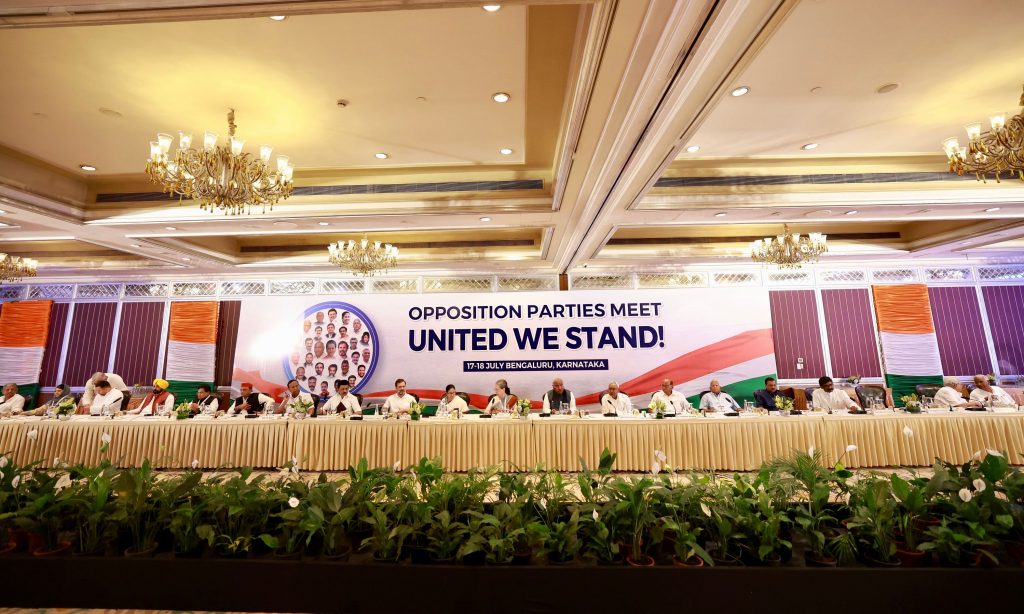
The opposition had been talking about forging an anti-BJP platform for the 2024 national polls for long but firmed up the name of the new grouping the Indian National Developmental Inclusive Alliance (INDIA) at a strategy session in Karnataka’s Bengaluru on July 18.

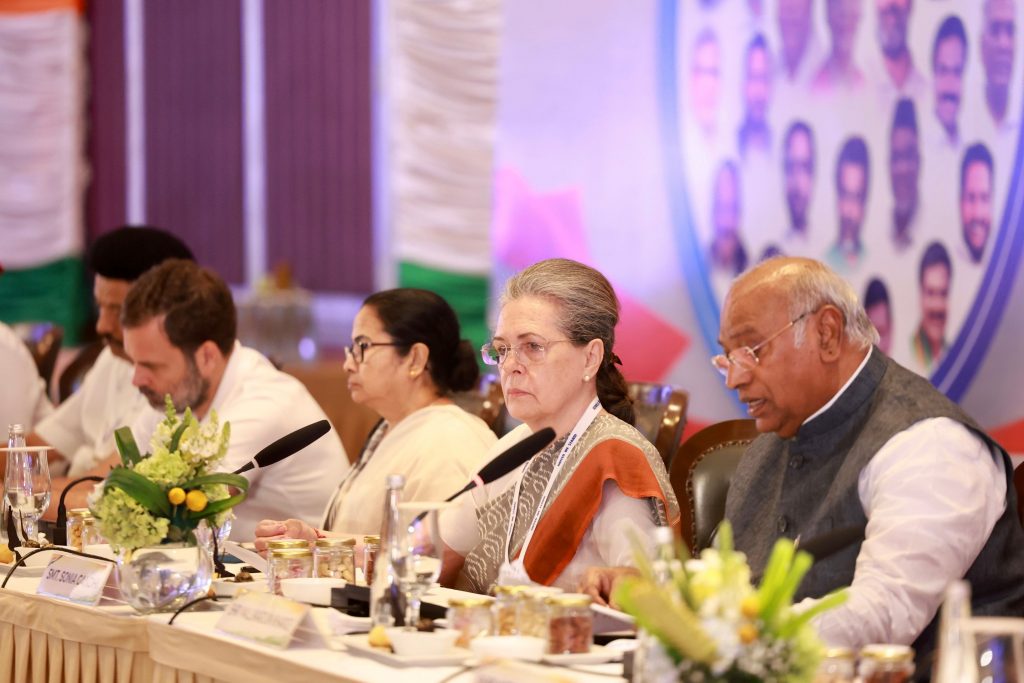
As many as 26 opposition parties attended the July 18 meeting hosted by Congress chief Mallikarjun Kharge who announced that his party was not hankering for power or position but was keen on protecting democracy in the country.

Besides former Congress chief Sonia Gandhi, Congress president Mallikarjun Kharge, former party chief Rahul Gandhi, Tami Nadu chief minister and DMK leader MK Stalin, Bihar chief minister and JD-U leader Nitish Kumar, Delhi chief minister and AAP founder Arvind Kejriwal, Jharkhand chief minister and JMM leader Hemant Soren, West Bengal chief minister and TMC leader Mamata Banerjee and RJD chief Lalu Prasad were among those who attended the two-day meet.

NCP chief Sharad Pawar, whose party underwent a split earlier this month with the rebellion of nephew Ajit Pawar, had joined the meeting besides former Maharashtra chief minister and Shiv Sena UBT leader Uddhav Thackeray.

The Congress and other allies claimed that the opposition unity had rattled the BJP, which panicked and hurriedly convened a meeting of the NDA on the same day in New Delhi to show that the ruling alliance was intact and had more members, 38 to be precise, than INDIA.

The INDIA leaders alleged that the BJP had ignored the NDA over the past many years but suddenly started talking about the ruling alliance to put up a brave face.

PM Modi described the new alliance as a coming together of the parties that were facing corruption charges. Priyanka Gandhi Vadra attacked the PM saying he had levelled false charges on senior opposition leaders who had been raising people’s issues for decades.

Kharge announced that after the 26 parties agreed on a name for the opposition alliance, they would hold the next meeting in Mumbai where the key panels like the 11-member coordination committee would be set up besides specific committees for planning joint nationwide agitations, a common minimum program and seat-sharing.

INDIA Alliance

The Bengaluru meeting also decided to set up a secretariat in Delhi to coordinate the nationwide campaign of INDIA for which senior leaders would identify the issues.

The presence of Sonia Gandhi, who successfully forged and steered the United Progressive Alliance from 2004 to 2014, at the Bengaluru opposition meeting certainly helped rope in TMC boss and West Bengal chief minister Mamata Banerjee.

In her capacity as the chairperson of the Congress Parliamentary Party, it was Sonia Gandhi again who cleared the way for the grand old party Congress to publicly state that it will oppose the controversial Delhi ordinance during the monsoon session of Parliament starting on July 20.

The presence of Kharge, who had been leading 19 like-minded opposition parties in the parliament, helped the grand old party increase the number of partners from 16 at the June 23 opposition meeting in Patna (hosted by JD-U leader and Bihar chief minister Nitish Kumar) to 26 at the Bengaluru conclave hosted by the Congress.

Not only this, the Congress was able to pull SP leader and former chief minister Akhilesh Yadav who had travelled to Hyderabad after the Patna meeting to hold parleys with BRS leader and Telangana chief minister K Chandrasekhar Rao.

The organizational skills of Karnataka state unit chief and deputy chief minister DK Shiv Kumar helped the grand old party to successfully pull off a mega opposition conclave. While all the guests were impressed with the arrangements at the meeting venue Hotel Taj West End, particularly by the way DKS personally received all of them, both Mamata Banerjee and Arvind Kejriwal made it a point to thank the Congress for hosting the strategy session.

 Key step

The opposition meeting was hosted by the Congress at a carefully chosen spot. The Congress victory in the recent Karnataka assembly election has not only galvanised the opposition, but also placed the party in a commanding position. Congress chief Kharge described the new alliance as a key step ahead of 2024 polls.

 “This is a very important meeting for the purpose of saving the democracy and Constitution and in the interest of the people of this country, we have come together, discussed various points and with one voice, people supported the resolution. I am thankful to all the leaders who have come here from various 26 parties. They gave very good suggestions and particularly today’s situation… that the BJP government wants to destroy the democracy in this country and also, they want to destroy the Constitution. They are using the autonomous bodies like CBI, ED and Vigilance… all such institutions they are using against Opposition party leaders and their workers,” said Kharge.

“Therefore, there is a grave situation… so we have come together, and the country is important for us. Though we have got some differences in each state politically but that is why, we have kept that behind… not in front. In the front is only how to save the country and people of this country… that is the issue before us and our leaders have shown that we should be together in the interest of the country, and they gave many suggestions and we have accepted and we will continue to follow it,” he said.

Kharge pointed out that the BJP was under pressure over the opposition unity.

“After seeing everything, now Modi Ji is calling an NDA meeting with 30 parties. I don’t know where 30 parties are there… whether they are registered parties with Election Commission or not…. because I am also in the Parliament, in the Rajya Sabha, here also…. I have not heard of so many parties in India, and that too 30 parties with NDA. They are also holding meetings and earlier, they never cared even about their own alliance, they never used to even talk to them. Many people left but one by one, he is calling and they are meeting and their party president is also going to each state and within one party, several divisions were there. He is doing it now, so it means that he is now afraid of opposition parties… otherwise there was no necessity for him, he never bothered… this is one thing,” he said.

The Congress chief said the opposition leaders had not come together for power or post.

“Our people gathered here not to become something… they want to save democracy and the Constitution and to fight against unemployment, inflation…. so many issues are there…. all those issues in the interest of the country, we will take and we will fight. Now, our aim will be to take important issues one-by-one and we will highlight… we will move throughout the states, entire country with all these issues and also highlight the failure of the government,” he said.

“When some proposal came for keeping the name and other things, I was happy everybody… Rahul Gandhi Ji, Mamata Banerjee and everybody… those who are sitting here… they all agreed. This is the first achievement of our alliance… agreeing for the name. And friends, I don’t want to take much of your time today. We are facing many issues including media also… because all media are captured by PM Modi and without their signal, nobody moves. I have seen it because of the many meetings I have conducted… I have seen and even earlier in my 52 years of political active life, I have not seen such hostile information against us or against the Opposition parties and suppressing the Opposition leaders. So, anyway we have to fight… we will fight and we will move together and I hope we will succeed in this. All youngsters, farmers, MSME people…. everybody is fed-up with freedom of speech and everything,” he said.

“So, this is the situation… we have to come out from this and 2024 election we will fight unitedly and we will come out with great success.

 INDIA leaders slam NDA

“NDA, BJP, can you challenge INDIA?” Mamata Banerjee said after the Bengaluru meeting “We love our motherland. We are the patriotic people of the country. We are for the country, the world, farmers, for all,” she said, adding that people — Hindus, Dalits, minorities, farmers, in Bengal, and Manipur — are under threat from the BJP, whose only job is “buying and selling governments,” she said.

 “There is a fear in people’s minds about what will happen next… So, we want to assure them that don’t worry, we are here. Just one person or one party cannot be the country, all people are the country,” said Thackeray.

“We have gathered here…to save the country from hatred. PM Modi ruined everything in 9 years,” said Kejriwal.

Former Congress chief Rahul Gandhi said the 2024 polls would be a fight between INDIA and PM Modi.

“The idea of India is being attacked today… it is being attacked by the ideology of the BJP. The wealth of India is being snatched from the millions and millions of Indians and being handed over to a few business people, who are close to the Prime Minister and to the BJP. Unemployment is spreading, prices are rising, and this is what the fight is about. The fight is about two different ideas of India, and while we were having this discussion… This name frankly emerged from the discussion because we asked ourselves what is the fight… who is the fight between and we realised that the fight is not between two political formations… the fight is to defend the idea of India. We are defending the Indian Constitution, we are defending the voice of the Indian people, we are defending the idea of our great country… the idea of India,” he said.

“You know what happens to anybody who opposes or tries to fight the idea of India. You can look in our history and you will see that nobody has been able to fight the idea of India. So, I don’t need to go into who is going to win this fight. This is a fight between the idea of India and the idea of the BJP… this is a fight between INDIA and the BJP… it is a fight between INDIA and Mr. Narendra Modi,”  he said.

 Cong denies rift

The Congress rejected reports of a rift in the new opposition alliance and said that Team INDIA was united.

“We are all one. There are no differences in Team INDIA. Our slogan is ‘Jeetega Bharat’. Those who question Team INDIA are the ones who want to divide Bharat through words,” Congress leader Randeep Surjewala said when asked if Bihar chief minister and JD-U leader Nitish Kumar was miffed over the new alliance name.

“The BJP has been using foul language against Nitish Babu…Now they are spreading rumours. However hard Modiji tries, there are no cracks in the Team INDIA. The BJP can go on with its conspiracy theories,” he said.

Nitish Kumar later clarified that he had left soon after the Bengaluru meeting as he had to reach Rajgir in Bihar for a scheduled event.

Surjewala, who is in charge of Karnataka where the new opposition alliance name INDIA was finalized on Tuesday by 26 parties, said “The focus of the new alliance is on the issues affecting the people and the fight of the new grouping is to bring about a change of guard.”

According to the AICC functionary, the NDA meeting on July 18 was a panic reaction to the opposition coming together.

“I want to ask, where was this NDA over the past 9 years. First, they used to say one is enough for all others. Suddenly, they panicked and started talking about the NDA. Suddenly they arranged 38 parties, many of whom are not even registered with the Election Commission. Only 12 parties have MPs and only two parties have more than 2 MPs. It is like throwing an open invitation to people to just form a party and join the NDA,” said Surjewala.

The Congress leader slammed Assam chief minister Himanta Biswa Sarma for questioning the new alliance name INDIA and saying it showed a colonial influence over the opposition parties.

“Himanta Biswa Sarma is trying to be more loyal than the king. He was in the Congress for around 30 years then he left. Now he needs to prove his loyalty to the BJP,” said Surjewala.

The Congress leader acknowledged that there would be some confrontation among the partners who are rivals in states and the new alliance would have to sort out the differences.

“There would be some political and ideological differences in the new alliance. You will have to work out those differences. This alliance is not for power, we have brought forward a constructive agenda for the country,” said Surjewala, when asked that the West Bengal Congress leaders were reportedly upset over TMC being a part of the new grouping.

The Congress leader urged BSP leader and former Uttar Pradesh chief minister Mayawati to ‘introspect” and “review” her policies after she said that her party would fight the coming assembly polls alone and will have no truck with any party.

“She is not a part of Team INDIA but she is a very senior leader of the country. I would not like to react to what she has said but I would urge her to introspect and review her policies,” said Surjewala.

With eye on 2024 poll, BJP steps up outreach to OBCs and Dalits

In less than a fortnight, a number of opposition leaders in UP have joined the BJP, reinforcing its poll narrative in the run-up to 2024 poll. In latest development, SP MLA Dara Singh Chauhan joined BJP days after Rajbhar’s SBSP had joined NDA as its ally. A report by Mudit Mathur

Union Home Minister Amit Shah is suddenly seen overactive in Uttar Pradesh to change the poll dynamics, once again playing the card of caste consolidation among Dalits and Other Backward Classes (OBCs). The move is aimed to overcome growing anti-incumbency visible among the masses, who are questioning the government’s fiscal policies which are resulting in heavy unemployment, price rise of essential commodities and unbearable tax burden on common man.

Political circles are keenly watching new electoral alignments with Dalit-OBC outreach, how caste configurations could overcome aspirations of the people miffed at poor implementation of its previous poll promises with regard to price rise, youth and farmers?

After the death of Samajwadi Party’s patriarch Mulayam Singh Yadav, his son Akhilesh Yadav has been entrusted with the duty to carry forward his legacy among the masses but he has utterly failed due to his failure to galvanise party workers at the grassroots. Old guards of Samajwadi movement are feeling isolated in the new scheme of things. BJP leadership has seriously planned to fill the vacuum by wooing back OBC leadership that Akhilesh Yadav brought together in the 2022 state assembly elections.

However, now most of them have defected to the BJP in view of time-tested modus operandi of the “Chanakya” (master strategist) of the BJP, Amit Shah, who has been cutting into the support base of Samajwadi Party among the OBCs including its Yadav leadership. Shah is considered to be an expert in the art of manoeuvring its support base by toppling governments in many states like Madhya Pradesh, Goa, Maharashtra and some north eastern states. Now, the  biggest challenge is Uttar Pradesh where in the last assembly elections, the results of eastern UP were below the satisfaction mark.

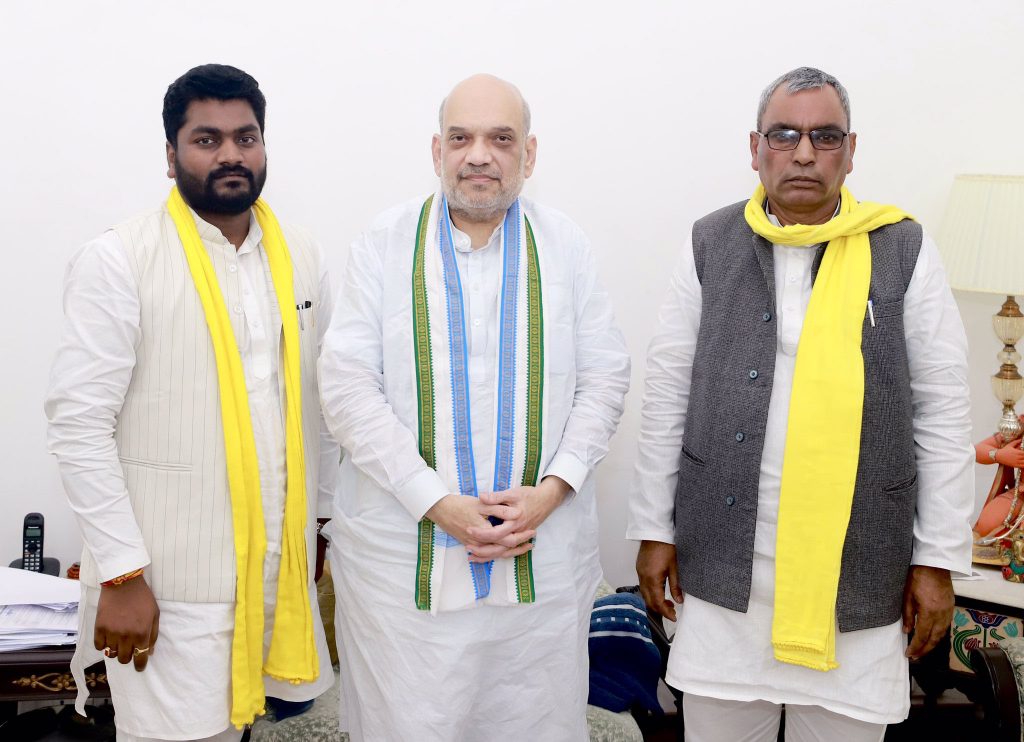
The BJP’s recent tie-up with Suheldev Bharatiya Samaj Party (SBSP) ensued after the latter’s chief, Om Parkash Rajbhar met Amit Shah in New Delhi, months after breaking up with the Akhilesh Yadav-led Samajwadi Party. It had contested the last assembly polls in UP in alliance with the SP. Though it won only six seats, it took away Rajbhars, a “most backward caste” with an important presence in eastern UP, causing huge loss to BJP in the region. The Deputy Chief Minister Brijesh Pathak played conduit to reconcile differences and brought back Rajbhar, who is a firebrand orator. SBSP’s clout among OBC voters, particularly in eastern UP belt is seen as a win-win situation for BJP.

The BJP emerged as a dominant political force in UP after Modi led the party to its second term majority in 2019 Lok Sabha polls but in the 2022 assembly polls, the Samajwadi Party managed to dent its prospects in the ‘poorvanchal’ (eastern) region by aligning with the Rajbhars, a rival faction of Apna Dal.

In less than a fortnight, many leaders from the opposition camp have joined the BJP in two phases, reinforcing its poll narrative in the run-up to 2024 Lok Sabha elections. Last week, SP MLA Dara Singh Chauhan quit the Assembly and joined BJP days after Om Prakash Rajbhar, leader of Suheldev Bhartiya Samaj Party (SBSP) had joined BJP-led NDA as its ally.

The Uttar Pradesh, which emerged BJP stronghold since 2014, Rajbhar joins OBC leaders like Sanjay Nishad, who enjoys influence among boatmen and fishermen communities, and Union Minister Anupriya Patel of Apna Dal (Soneylal), a party with support mostly among backward Kurmis.  While Nishad had aligned his ‘Nishad’ party with the BJP ahead of the 2019 Lok Sabha polls, Patel has been a BJP ally since 2014.

Many Samajwadi Party leaders have joined BJP, questioning the ability of Akhilesh Yadav to carry forward the legacy of Mulayam Singh Yadav, who has struggled to build strong Yadav-Muslims alliance and other backward castes consolidation under his leadership. Shalini Yadav, daughter-in-law of former Union Minister, Shyam Lal Yadav, during the Congress regime contested on Samajwadi Party ticket from Varanasi against Prime Minister Narendra Modi, but now she joined BJP. She secured 18 percent votes against Modi. She had earlier contested the mayoral election from Varanasi on a Congress ticket but lost. Yadav and her family’s past association with various parties may help BJP consolidate Yadav votes in the region.

The defection of senior SP leaders like Sahab Singh Saini and former RLD MLA Rajpal Singh Saini, too, could help the BJP reinforce its base in west UP. Sahab Singh, a key political leader in Saharanpur, was an SP MLC and minister in the Akhilesh government. He started distancing from Akhilesh last year and later formed his outfit, Rashtriya Krantikari Morcha. SP MLA from Machhlishahr seat, Jagdish Sonkar, both in Jaunpur, too defected to BJP.

Rajpal Saini started his political career with BSP and won from Morna seat in Muzaffarnagar. He later joined SP and then RLD. In 2022, he contested from Khatauli on an RLD ticket but lost to BJP’s Vikram Saini. Saini was also Rajya Sabha MP (2010-2016) from RLD.

Some OBC leaders from the BJP, including Dara Singh Chauhan, had defected to the SP to boost its outreach to non-Yadav backwards and Chauhan’s decision to quit as an MLA and likely return to his former party marks yet another setback to the opposition at crucial juncture.

Former BSP MLA from Mungra Badshahpur, Sushma Patel also joined BJP. Patel is a Kurmi, an OBC sub-caste having a sizeable presence in east UP, Bundelkhand and Vindhyanchal region. She defected to SP in 2022 and contested from Mariyahu seat but lost. Among others who joined the BJP on 24th July included former BSP leaders from Sitapur and Muzaffarnagar, Pushpendra Pasi and Sivansh Saini, respectively, and Congress leader Rajeev Bakshi.

The induction of Anshul Verma could help the BJP firm up its foothold amongst Dalits in and around Hardoi. Verma won from Hardoi seat on a BJP ticket in 2014 but joined the SP after being denied a ticket in 2019 Lok Sabha polls. He reportedly fell out with BJP leader Naresh Agarwal, who wields considerable influence in the district.

Eyeing upcoming state assemblies’ elections including Rajasthan, Madhya Pradesh, Chhattisgarh, Telangana and Mizoram, the BJP has resolved in its Jodhpur conclave to consolidate OBCs into the BJP’s mainstream politics. Since the Mandal Commission recommendations, OBCs constitute 54% of the Indian population and play a decisive role in elections. Since assuming power at the Centre in 2014, the BJP has inducted 27 ministers belonging to different castes within the OBC category.

The eastern UP is adjoining territories of Bihar where BJP outreached to align with Kushwaha leader Upendra Kushwaha and former chief minister Jitan Ram Manjhi, whose Manjhi community is part of Dalits. Both have left the RJD-JD(U)-Congress-Left alliance and joined the BJP-led NDA. Manjhi has already joined the NDA while Kushwaha has also had several meetings with senior BJP leaders. The BJP has also roped in Chirag Paswan, whose Lok Janshakti Party (R) enjoys the support of Paswans, the major Dalit community in Bihar.

Similar efforts for outreach to OBC communities in other states are going on in the BJP structure under overall supervision of Home Minister Amit Shah. While addressing a ‘Jan-Swabhiman Divas’ programme on the 74th birth anniversary of the late Apna Dal founder Sone Lal Patel in Lucknow, Amit Shah asked National Democratic Alliance (NDA) workers to pledge to make Prime Minister Narendra Modi the PM again in 2024. BJP OBC Morcha National General Secretary Dr Nikhil Anand said, “The front takes pride that PM Modi has emerged as a champion of OBCs after granting constitutional status to the National Commission for Backward Castes”.

INDIA Alliance: Key Kashmiri leaders jump on the bandwagon

Prominent mainstream leaders such as Farooq Abdullah, Omar and Mehbooba Mufti are looking towards INDIA alliance to get political concessions for the region. The future direction of valley politics depends on how the NDA-INDIA alliance rivalry shapes up, reports Riaz Wani

As the opposition alliance christens itself as the INDIA (Indian National Developmental Inclusive Alliance) and shapes up as a credible challenger to the BJP, the major mainstream parties in Jammu and Kashmir have lost no time to rally around it. Both Omar Abdullah and Mehbooba Mufti, the former chief ministers of the J&K state attended the opposition meet in Bengaluru on July 18.and batted for the wider opposition unity to take on the BJP in the 2024 general elections.

Though, J&K has little political weight in terms of bolstering the seat strength of opposition in parliament, the situation in Kashmir has perennially been a polarizing political issue in the country, more so during the parliamentary elections. And it has always been employed to great political effect by the BJP. In 2024 polls too, the altered political situation in Kashmir following the abrogation of Article 370 in August 2019 is set to be one of the major talking points of the saffron party. And to the BJP’s advantage, its hardline policy on Kashmir resonates with significant sections of people in the country.

Would the INDIA alliance be able to combat this political trump card of the ruling party? Only time will tell. It also depends on the political discourse prevailing in the country at the time. The BJP has other pan-India issues such as Ram Mandir, the Citizen Amendment Act, the Uniform Civil Code to go to people with. And despite the mounting opposition challenge, the BJP continues to be favourite to win next year’s election. That is, unless the Opposition does something that is truly spectacular and fashions an alternative political narrative that resonates with a large majority of people.

Kashmir, a side issue

As things stand, Kashmir for all its overarching importance in the past has slid into the background, something that may not give the BJP the same amount of political mileage it traditionally derived from the issue. In 2019, it was the killing of 40 security personnel in Pulwama bombing that became a major factor in retrieving the saffron party from a cornered position. Thereafter, there was no looking back for the BJP. Since then the party has become more and more entrenched in the country. Though, over the last year, it has suffered some electoral reverses in some states, including losing Bihar where it was ruling to Mahagathbandhan, the Hindutva party looks set to rule for the third time.

But as is the case with politics, it is possible that many imponderables can come into play as 2024 draws nearer. One of them is that Kashmir no longer commands the urgency that it once did. The situation in the former state has materially transformed since the withdrawal of Article 370: an uneasy calm prevails in the region, if not the peace in the true sense of term . The Modi government seems to have set a new Kashmir template which also aligns with India’s core interests in Kashmir. The dominant perception outside Kashmir is that the region has been pacified. And it does appear so to the untrained eye. While the devil may lie in the details, it won’t matter as long as the situation stays calm. Appearances may be deceptive, but it is the appearances that count.  

Another change is that the reading down of the constitutional provision may have been on the BJP’s agenda, but its opposition by the other parties has become more nuanced now. The past four years have witnessed emergence of a certain political and social consensus in India around the erasure of Article 370. One can’t now find even the pretence of a contrary view on the issue as a broad spectrum of regional and national parties deem that a large majority in the country supports the move. Whether this approach outlives the end of the BJP rule remains to be seen.

One thing that this turn of events guarantees is that Kashmir won’t figure prominently as an issue in the electoral politics of the country in the run-up to 2024. That is, if there is no dramatic shift in the situation of the union territory.

Article 370 case

After four years, the Supreme Court has finally decided to hear the Article 370 petitions every day from August 2. Incidentally, the decision to do so came shortly after a team of judges visited Jammu and Kashmir. The timing of the hearings is also significant for another reason: it will be only nine months before the general elections. So, the BJP will be interested in the case being decided during this period and in its favour. This will be a shot in its arm just before the polls which it is already favourite to win.

But the party will also be aware that being the favourite doesn’t necessarily translate into a definite win. In 2003, the favourably placed Atal Bihari Vajpayee-led NDA government failed to secure a second term despite running a high-decibel Shining India campaign which appeared to resonate with people. So, ideally, the BJP may not like the case about Article 370 passing into the hands of a successor government, should that be of an opposition party or a broader alliance of anti-BJP parties. They may choose not to defend the case as aggressively as the BJP does.  


Marginalized Kashmiri mainstream parties

Ever since revocation of Article 370, the BJP has ensured that Kashmiri mainstream parties are marginalized. And this has been achieved not only by curbing their political activities but also by diminishing their role through delimitation commission which gave more seats to Hindu majority Jammu. This has ensured a degree of political parity between the two regions. This despite the fact that Jammu’s population, according to the 2011 census, is around 16 lakh lesser than that of Kashmir Valley. The perpetuation of the governor’s rule because of the delay in holding Assembly polls has further removed Kashmiri mainstream parties from the political scene.

That said, even the Assembly elections, if they are‌ held while J&K continues to be a union territory, would serve little purpose. The ultimate power will continue to vest with the Lieutenant Governor, who will also be in control of the security, which has a dominant role in the affairs of a long-troubled region.

So, the major mainstream leaders such as Dr Farooq Abdullah, Omar and Mehbooba are looking towards INDIA alliance to get political concessions for the region, as also the space for their brand of politics. The future direction of Kashmir depends on how the rivalry between the NDA and the newly launched INDIA alliance shapes up and which one of them comes to power in 2024.

Rejuvenated, Congress looks for a rebound in J-K

J&K Congress is holding a mega convention in Srinagar on August 6, its first in a long time. Even though the grand old party has been bolstered by the signs of turnaround at the national level, it will need more effort to re-establish its footing in the UT. A report by Rriyaz Wani

In signs that Congress’ recent rejuvenation across the country has also put wind in the sails of its Jammu and Kashmir unit, the latter is holding a mega convention in Srinagar on August 6, its first in a long time. The event which will host senior leaders from all districts, district development council and block development council members, along with present and former panchayat members, is geared to prepare the party cadre for the possible Assembly elections in the union territory. 

The convention is scheduled to be addressed by the All India Congress Committee (AICC) in-charge of Jammu and Kashmir, Rajini Patil, and co-in-charge Manoj Yadav. 

Talking about the event, Jammu and Kashmir state Congress president Vikar Rasool emphasized the importance of restoring democracy in the union territory and demanded that elections be held at all levels. He also stressed the need for delimitation in panchayats to ensure fair representation and effective governance, particularly in regions with vast geographic spread.  

Under Rasool, Congress is trying to pick up the pieces following the deep erosion in the party’s support base since 2015 Assembly polls in which it just won 10 seats, all of them from the Kashmir Valley.  The exit of Ghulam Nabi Azad, once a top national-level Congress leader and a former J&K Chief Minister, last year also left the party reeling in the region. Azad floated Democratic Azad Party (DAP) which attracted many former Congress leaders, including some senior leaders commanding significant support on the ground.  

Even though the J&K Congress has been bolstered by the signs of the Congress turnaround at the national level, particularly after its resounding victory in Karnataka early this year, the party will need more effort to re-establish its footing in the union territory. Ever since the BJP rose to power at the national level in 2014, it has been on a roll not only in other states but also in J&K. The Congress, on the other hand, has witnessed a steep fall in its electoral fortunes in the region.  

But now the party is slowly finding its feet again. And one of the major factors in this has been Rahul Gandhi’s yatra which ended in Kashmir Valley on January 30. Like elsewhere in the country, the yatra generated some political buzz in the Valley. It reinvigorated the party’s rank and file in the union territory boosted further by the return of leaders who had joined the Azad’s DAP. And for another, Gandhi entered the former state with a proper political agenda: the party sought Article 371 for J&K. 

The J&K unit is currently trying to build on these gains. However, whether it maintains the political momentum until the Assembly elections, now unlikely to be held until the 2024 general polls, remains to be seen. And the demand for statehood and possibly for Article 371 is likely to find a wider political resonance in the UT, including in the Jammu division, where people have become insecure about losing lands and jobs to outsiders following the revocation of Article 370 and Article 35A.   

“Democracy which has been wiped out by the BJP in J&K should be restored,” Rasool said. “It has been nine years since assembly elections were held.” 

But ultimately, Congress’ fortune in J&K, both in the yet to be announced Assembly polls and the general elections next year, will be determined by how fast Congress recovers at the national level. And to this end, the upcoming elections in Madhya Pradesh, Rajasthan and Uttarakhand will be crucial.  Should Congress do well in these polls, its J&K unit could also hope to get back into the political reckoning in the union territory. 

Words, verse and the Holy Book

From Pathan to Oppenheimer to CJI, where and when will this stop? Or will it? Will someone from the Government step in to say this far and no further?

If earlier the dispute was colour, read besharam rang, then this time around it is the scriptures.

Earlier if the row was around a Hindi movie, then this time an English language film is being targeted.

The common thread: either ban the film or delete the objectionable parts.

The context: Colour, words and verse in that order.

When Shahrukh Khan-Deepika Padukone starrer Pathan, which later turned out to be a blockbuster, was released, there was a storm over a song.

In one scene, Padukone was clad in a saffron-coloured bikini as she danced to the song Besharam rang.  

Literally translated, Besharam Rang means shameless colour.  

Hell broke loose with the BJP alleging that the saffron colour is being degraded.

It was of no relevance that the colour was one of the many bikinis Padukone adorned of which saffron, rather orange, happened to be one.

For the record, it may be pointed out that saffron is associated with the BJP. In fact its symbol is saffron based.

The protest had its effect and the Central Board of Film Certification or the CBFC made “adequate changes”. Consequently, the sanitized version had what were then termed as “suitable shots”. In other words, saffron was no longer besharam rang, at least as far as Pathan was concerned.  

Cut to 2023: In the eye of a storm was Adipurush, a Prabhas-Kriti Sanon starrer with its adaptation of epic Ramayana.

Unlike Pathan where the lyrics conflicted with clothes, this time around it was about the dialogues: Lord Hanuman delivering lines like “Kapda tere baap ka, tel tere baap ka! Jalegi bhi teri baap ki” and “Jo humaari beheno ko haath lagaega, unki lanka laga denge”.

The dialogue writer Manoj Muntashir Shukla’s defence that this was done for “simplicity” did not cut ice.

Once again, hell broke loose and Shukla’s head was on the chopper block for hurting Hindu sentiment.

Add to this, actor Saif Ali Khan’s remarks that Ravan comes across as  “humane” in the film. The backlash that followed left no option for Khan to publicly apologize and state on record his loyalty to Lord God Ram.

 In Adipurush, Khan plays the character of Ravan.

The fact that Khan is a Muslim, made it worse for him because the self-styled flag bearers also targeted him and called him an ‘anti-Hindu Muslim’.

The protests, however, did not stop here.

Even Kriti Sanon, who plays Sita, was on the mat on grounds that she had in the past performed a ‘vulgar’ dance sequence and was thus considered “unfit” to play Sita.

In the case of Adipurush, the protests crossed borders.

In Nepal, Kathmandu’s Mayor Balen Shah objected to a dialogue in the film wherein Sita is described as the “daughter of India”.

Sita, Balen Shah wrote, is considered the daughter of Nepal. He also issued an ultimatum to the producers giving them three days to alter the line if they wanted to release the film in Nepal.

Geography apart, film makers, actors, dialogue writers and all else, have to tread with caution.  In other words, irrespective of the number of steps forward they have to retreat if and when they cross the Lakshman Rekha or break a rule that cannot be broken.

When Brahmastra was released, there were protests to ban the film because its lead actor, Ranbir Kapoor had, in the past, said that he was a beef lover.

The lesson: do not essay roles that propagate ethics and an austere lifestyle if you cannot follow them in real life. Put simply, this means that if Ranbir Kapoor eats beef he must stop immediately if he wants to bag roles showcasing the Gods or the Hindu culture.  

Having said that, what about Christopher Nolan and the biographical thriller Oppenheimer which he wrote and directed?

For the record, Oppenheimer chronicles the life of physicist Robert Oppenheimer who is credited with developing the first nuclear weapon and ushering in the Atomic Age.

So where did the filmmaker go wrong? Rather what did he do to raise the hackles of the Hindus and the Hindu-minded people in India?

However, this time around, the debate was not confined to the saffron brigade. It went beyond.

This time, the focus was the sanctity of the text. On this count, film makers, netizens, and NGOs joined the bandwagon.

Union Minister for Information and Broadcasting Anurag Singh Thakur upped the ante and rapped the Censor Board and demanded accountability for approving the objectionable content.

That apart, Information Commissioner Uday Mahurkar too questioned CBFC’s approval even as he failed to decipher the “motivation and logic behind this unnecessary scene on the life of a scientist”. The scene, he said, was “a direct assault on religious beliefs of a billion tolerant Hindus,” even as he compared it to “waging a war on the Hindu community.”

Or writer-director Ram Gopal Varma who doubted whether the nuclear scientist had read the Gita.

The furore is about an intimate scene where the protagonist Oppenheimer invokes a verse from the Bhagvad Gita while making love.

If reports are anything to go by, Oppenheimer was said to be influenced by the Bhagavad Gita.

In an interview, the physicist had recalled that the only thought which came to his mind after he witnessed the first detonation of a nuclear weapon on July 16, 1945, was a verse from the ancient Hindu text — “Now I am become Death, the destroyer of world.”

It is this line that finds its way in the controversial scene in the film.  

On one count, the Hindus and believers are perhaps right in their objections.

For many, the Gita is a holy book. Therefore to find it being quoted while making love can make many squirm if not scream. So at one level, it may be less about religion and more about defiling sanctity.

However at another level, there are political elements who would do what it takes to disturb peace and create situations that could damage the social fabric of this country.

These are the same elements who are not only overactive on social media but also comprise the troll army.

To dismiss them as goons of the online world would be underplaying their role and reach. Many in India mistake them as being nationalists except their nationalism is more to do with their allegiance to their masters rather than the country.

Contrary to perception, the troll armies are not exclusive to the BJP but exist across parties. That the BJP’s machinery outweighs and outwits those run by others is another matter.

The common thread: spew venom and be abusive, especially to those who are high profile.

A case in point: trolling of Chief Justice of India D.Y. Chandrachud.

This has led to a dozen MPs  writing to President Droupadi Murmu to act against a “troll army”, for its “filthy” and “deplorable” comments” adding that this was not possible without  the support of the ruling dispensation”.

The attack followed as a five-judge constitution bench, headed by Justice Chandrachud, dealt with issues arising from the change of government in Maharashtra last year.  The matter is sub-judice.

So what does this tell us? From Pathan to Oppenheimer to CJI, where and when will this stop? Or will it? Will someone from the Government step in to say this far and no further? Or will they continue to look the other way simply because the Party they belong to is a major player in the way things have unfolded? Many questions and few, rather no, answers.

VIPs’ greed for land cuts into the glory of Morni Hills

Former Haryana CM Devi Lal wanted Morni Hills to be developed as a world-class tourist spot. But now, a large chunk of  town’s land is in illegal possession of VVIPs while large-scale construction on encroached land has destroyed the town’s pristine charm, writes Pawan Kumar Bansal

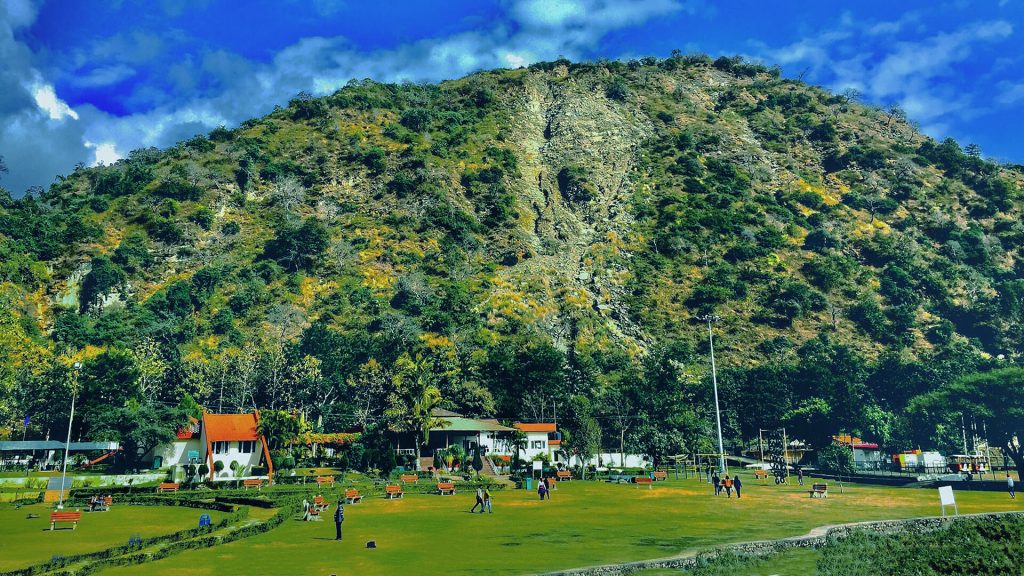
Such was the beauty of Morni hills, situated at a height of 1,267 meters, an offshoot of Shivalik Range in Himalayas near Chandigarh in Panchkula district of Haryana, that thirty six years ago, Devi Lal  after taking oath as Chief Minister of Haryana spent a week with his family in the quaint town and ran the government  from there.  

He also gave directions to develop it as a world –class tourist spot. But much water has flown under the bridge since then. A large chunk of land in the picturesque town is in illegal possession of  VVIPs and large scale construction activities on farm houses of these VVIPs  have destroyed its pristine beauty and charm.

The beauty of Morni hills lies in its lush greenery and diverse flora and fauna. The hills are adorned with dense forests of pine and Sal trees, providing a serene and refreshing ambience.  One of the main attractions of Morni hills is the Morni Fort, which stands as a silent witness to the region’s rich history and architectural heritage.

But the town’s beauty has also drawn land sharks and VVIPs, who have developed illegal farm houses and construction activity has destroyed its beauty. Shockingly, the Forest department who is the custodian of land as it is a reserved forest has miserably failed to check the illegal construction.

According to an affidavit filed by the Haryana government in Punjab and  Haryana High Court responding to a writ filed by activist Vijay Bansal, challenging the illegal constructions , as many as 656.64 acre land of reserved forest is in illegal possession  of private persons . Although the figure given by the government is challenged by Vijay Bansal, who has alleged that about ten thousand acre land is in illegal possession and the process is still going on. According to the affidavit, 3101.77 acre land of private people is under the possession of forest Department Haryana.  Bansal regretted that the Forest department has so far not taken any steps for taking the encroached land back from these VVIPs.

Shockingly for demarcation of land in hills there is no competent revenue officer available in Haryana. District Revenue Officer, Panchkula, in status report filed in Punjab and Haryana High Court has recommended that before taking any decision for revenue settlement, a team shall be sent to Shimla for gathering detailed information regarding the steps taken for the revenue settlement by Himachal Pardesh because no competent revenue officer is available in Haryana for carrying settlement work in hilly areas of Haryana.

Efforts to elicit the version of Additional Chief Secretary, Forests , Vinit Garg and Jagdish Chander, Principal Chief Conservator of Forests, Haryana, on the issue bore no fruit as they didn’t respond to text message sent on their mobile to know as to what steps have been taken for  the removal of illegal encroachments. Jagdish Chander asked to contact Anant Pandey, Additional  Principal  Chief Conservator of Forests ,who didn’t respond.

Coming back to the beauty of the Morni which the government must preserve, it must be mentioned that the local culture of the region adds to the beauty of Morni hills as the warm hospitality of the locals and their traditional lifestyles make visitors feel welcomed and connected to the essence of the place. In conclusion, the beauty of Morni lies not only in its natural grandeur but also in the sense of tranquillity and serenity it offers.

So, the Haryana government must make sincere efforts to preserve this gift of nature.


Red faces as Yasin Malik walks into the court sans permission

DG (Prisons) Sanjay Beniwal said that a Deputy Superintendent, two Assistant Superintendents and a head warder have been suspended at Tihar for the fiasco of the physical production of JKLF chief  Malik before SC bench without its prior permission to do so, writes Mudit Mathur


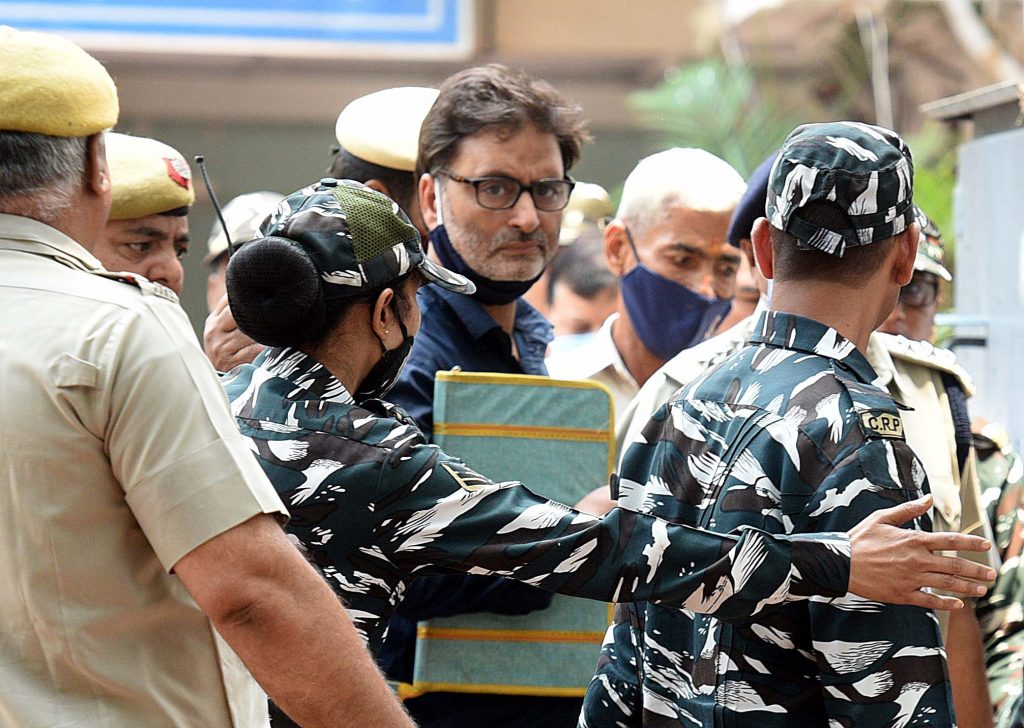
In the Supreme Court, a controversy erupted over the serious security lapse of Tihar jail authorities who allowed the appearance of Jammu and Kashmir Liberation Front (JKLF) commander Yasin Malik on July 21 in the wake of notice issued to him by the court. Malik is undergoing life sentence in the cases of terror funding and various terrorist actions.

When the Bench of Justice Surya Kant and Justice Dipankar Dutta took up criminal appeals filed by Central Bureau of Investigation against the orders of 3rd Additional Session Judge (TADA/POTA) of Jammu, Yasin Malik came up to argue his own case but the apex court orally clarified that it had passed no order allowing his personal appearance.

The court had already stayed impugned orders on last hearing on 24th April this year wherein it issued notices for 21July, 2023 to 12 respondents including Mohd Yasin Malik. The Superintendent of Prisons, Central Jail, Tihar, vide its letter dated 26.05.2023 forwarded the affidavit of respondent No.1Yasin Malik S/o Ghulam Qadir Malikin response to notice, requesting therein to allow enter appearance as in person.

“Why does he want to appear in person? These days there is a virtual option. This is the best thing without compromising anything,” Justice Surya Kant, who headed a two-judge bench, said. While Justice Datta recused from the case, the bench was taken aback when it learnt that Malik was present despite the fact that no order seeking his physical presence was passed by the court. Malik did not speak at any time during the hearing.

Solicitor-general Tushar Mehta blamed the Tihar authorities for bringing Malik to court, saying: “There is a huge security risk and he is a high-risk individual who cannot be taken out of prison.”

The apex court was hearing a CBI appeal against an anti-terror court’s order in September in connection with the killing of four air force personnel and the 1989 abduction of Rubaiya Sayeed, daughter of the then Union home minister Mufti Mohammed Sayeed.

The NIA court in Jammu had directed Malik, an accused in these cases, to appear personally before it so that he could cross-examine certain prosecution witnesses. In its appeal, the CBI argued that Malik was a threat to national security and could not be allowed outside jail. The Supreme Court stayed the Jammu’s court orders in its earlier hearing in April this year.

However, the agency’s appeal did not have an effective hearing on 21st July as the other judge on the bench, Justice Dipankar Datta, recused himself. Justice Kant then referred the matter to Chief Justice of India D.Y. Chandrachud for the constitution of another bench to hear the matter after four weeks.

Mehta emphasized that the Union home ministry had issued a notification under Section 268 Cr.PC that empowered the government to direct “that any person or class of persons shall not be removed from the prison in which he or they may be confined or detained”. He said this had been applied to Malik, yet jail authorities had brought him to the Supreme Court.

“It is a serious security issue,” Mehta protested and assured the court that it would not be allowed to happen again. Tihar jail is under the control of the Arvind Kejriwal-led Delhi government.

Solicitor General Tushar Mehta later wrote to Union Home Secretary Ajay Bhalla flagging JKLF commander Yasin Malik’s appearance on Friday in the Supreme Court as a “serious security lapse”. “A person with terrorist and secessionist background like Yasin Malik, who is not only a convict in a terror funding case but has known connections with terror organisations in Pakistan could have escaped, could have been forcibly taken away or could have been killed,” the letter said.

“Even the security of the Supreme Court also would have been put to a serious risk if any untoward incident were to happen.” “I consider this to be a matter serious enough to once again bring it to your personal notice so that suitable action /steps can be taken at your end,” the Solicitor General wrote.

Meanwhile, Director General (Prisons) Sanjay Beniwal said the prison department has suspended a Deputy Superintendent, two Assistant Superintendents and a head warder as they were found to be “prima facie” responsible in a preliminary enquiry into the fiasco of the physical production of JKLF chief Yasin Malik before a Supreme Court bench. “A detailed inquiry is being conducted by DIG (HQ) Tihar, Rajiv Singh, to identify any other officials who may also be responsible for the serious lapse,” he added.

Case against Yasin Malik

Yasin Malik, head of the JKLF, was arrested by the NIA in 2019 in connection with an overarching terror-funding case that it had opened in 2017. In its FIR, the NIA said Kashmiri separatists were receiving funds from Pakistan, including from Hafiz Saeed of the Lashkar-e-Taiba and Syed Salahuddin of the Hizb-ul-Mujahideen, to foment trouble in the Valley through stone-pelting, burning down of schools, and organising strikes and protests.

The NIA investigations revealed: “Yasin Malik has been involved in more than 65 criminal cases. Most of them are of murder, attempt to murder, rioting and sedition. Besides, abducting of Rubaiya Sayeed, daughter of the then Union Home Minister, Mufti Mohammed Sayeed in 1989, he is also involved in killing of four Indian Air Force personnel in the early part of 1990s. “The NIA arrested over a dozen separatists in the case, including Malik, Shabir Shah of the Jammu and Kashmir Democratic Freedom Party and Asiya Andrabi of the Dukhtaran-e-Millat.

The agency has claimed that the protests, which followed the killing of Hizb-ul-Mujahideen militant Burhan Wani in July 2016, caused death and injuries to civilians and security forces. In these violent protests orchestrated by Malik, 89 cases of stone-pelting were reported, the NIA has said.

Malik was arrested many times. He was arrested from the house of Watali along with other “militants namely Sajjad Lone, Sheikh Abdul Hamid, Yasin Khan and Firdous Masoodi with arms and ammunition on August 6, 1990. In May 1994, after being released on bail, Malik declared an indefinite ceasefire on behalf of the JKLF, and “renounced violence”. This was not acceptable to many in the outfit, which led to a split.

Terror funding charges

The NIA has claimed that Kashmiri businessman Zahoor Ahmad Shah Watali was one of the main hawala conduits who generated and received funds from Pakistan, the ISI, and the UAE using various shell companies that he had floated to disguise foreign remittances, and transferred the funds to separatist leaders and stone pelters in the Valley.

NIA claimed its investigations had found that Malik not only received funds from Pakistan to foment trouble in the Valley, but had also acquired properties valued at more than Rs 15 crore. The agency has alleged that Malik was allegedly in constant touch with the ISI through his Pakistani wife, who is “very close to” the spy agency.

It is also alleged that Malik and his associates had grabbed government land and usurped properties belonging to Kashmiri Pandits. The report listed 12 alleged benami properties of Malik in Bohrikadal, Mirgund, Bemina, Maisuma, Abi Gujar and Kanipura in Srinagar, and put the cumulative value of seven of these properties at Rs 12 crore. He allegedly possesses five properties in prime areas of Srinagar, including Lal Chowk. The properties include those held in the names of Malik’s sisters, associates, and his maternal uncle.

The report also alleged that Malik had a stake in a popular chain of schools in Kashmir, and had grabbed a government property in Gobachibag, which he had initially taken to run a school. He also has a stake in a housing colony being built in Nowgam, the NIA said.

MOST POPULAR

HOT NEWS