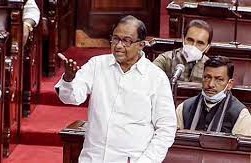
New Delhi : Senior Congress leader P. Chidambaram on Wednesday questioned the Modi-led Central government about the situation in Manipur, and said, “the Centre has switched off the engine of Constitutional responsibility and thrown away the key.
Taking a swipe at the BJP governments at the Centre and in Manipur, Chidambaram said, “How long will it take for the Supreme Court’s indictment of the Manipur Government to reach PMO in Delhi and CMO in Imphal? If the chief minister of Manipur, N Biren Singh, has any sense of constitutional morality, he should quit immediately. Only those who practise rajdharma can preach rajdharma.
“The central government is like the driver of the police jeep who told the molested women ‘there is no key’. The central government has switched off the engine of Constitutional responsibility (Articles 355 and 356) and thrown away the key, ” the former Union minister said.
His remarks came after the Supreme Court on Tuesday came down heavily on the Centre and Manipur government. The court said that the state police “is incapable of investigation” and “there is no law and order left” in the northeastern state.
“The investigation is so lethargic. There has been a breakdown of constitutional machinery to the extent that FIR could not be registered. Maybe it is correct that the police could not arrest as it could not enter the locality. There was a complete breakdown of law and order machinery of the state, ” remarked a bench headed by CJI D.Y. Chandrachud questioning the delay in registration of FIRs and recording of statements of victims by the Manipur Police.
The top court summoned Manipur’s Director General of Police (DGP) on August 7, the next date of hearing.
The Supreme Court also raised questions over non-interrogation of the police officials who allegedly handed over the victims in the viral video to the mob, as per their statements recorded under section 161 CrPC (Criminal Procedure Code). “If law and order machinery cannot protect them then what happens to the people?, ” it asked.
Ethnic clashes erupted in Manipur on May 3 and since then hundreds of people have died while thousands have been forced to take refuge in the relief camps.
A delegation of INDIA bloc MPs, who visited Manipur on July 29 and 30, along with the floor leaders will meet President Droupadi Murmu on Wednesday.
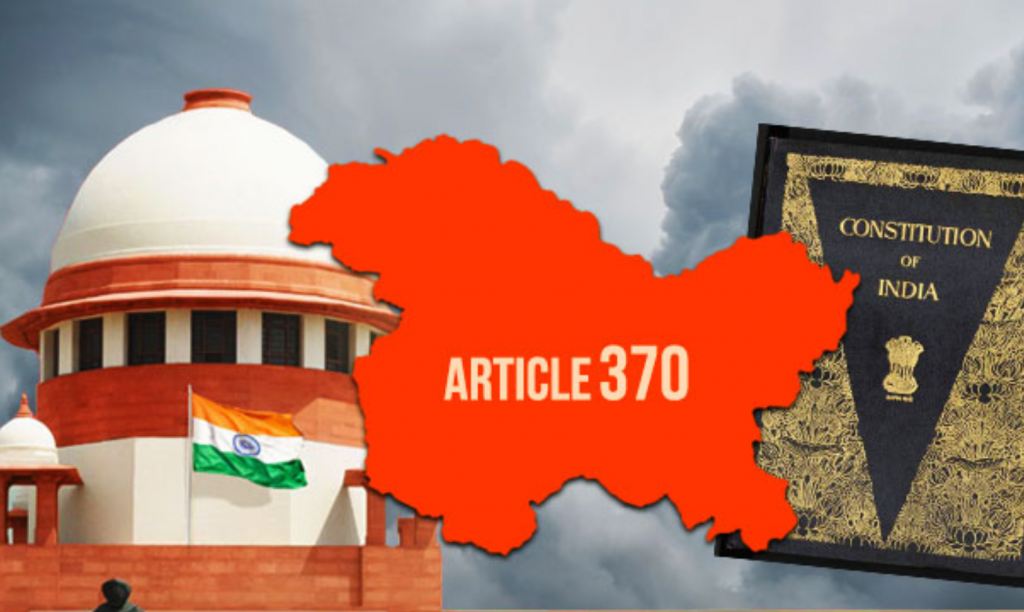
The Supreme Court of India has initiated hearings on a series of petitions that contest the abrogation of Article 370 of the Constitution, a provision that granted special status to the former state of Jammu and Kashmir.
A five-judge constitution bench, led by Chief Justice DY Chandrachud, will oversee the proceedings, conducting daily sessions from Wednesday onward.
The bench includes Justices Sanjay Kishan Kaul, Sanjiv Khanna, BR Gavai, and Surya Kant. Setting the stage for the hearings, the court had previously stipulated July 27 as the deadline for parties involved to submit written arguments and compilation of relevant materials.
The hearings will take place on a daily basis, excluding Mondays and Fridays, which are reserved for miscellaneous matters in the apex court. During these days, the court will exclusively consider fresh petitions for admission, while regular proceedings will not be conducted.
The bench has designated two lawyers, one representing the petitioners and the other the government, to compile and submit pertinent materials by July 27.
The court clarified that the Centre’s affidavit detailing the situation in Jammu and Kashmir subsequent to the August 5, 2019 notification – when Article 370 was revoked – will not impact the core constitutional issue under consideration by the five-judge panel.
On August 5, 2019, the Indian government revoked the special status accorded to the former state of Jammu and Kashmir and divided it into two separate union territories.
This legal challenge stems from numerous petitions lodged against the revocation of Article 370 and the enactment of the Jammu and Kashmir Reorganisation Act, 2019, which led to the reorganization of the erstwhile state into the union territories of Jammu and Kashmir, and Ladakh. The petitions were initially referred to a Constitution bench in 2019, paving the way for the current proceedings.
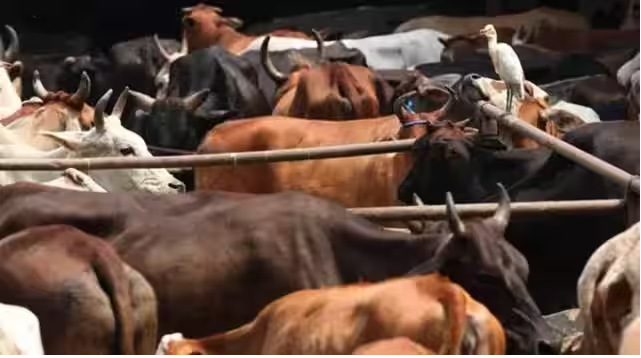
On May 4, the Enforcement Directorate filed a 204-page supplementary prosecution complaint before a court making startling revelation of the involvement of the Border Security Force and a syndicate that operated in smuggling of cows through a porous border to Bangladesh. The ED found that cow smuggling along the Bangladesh border mostly took place “between 11 PM and 3 A.M. in night after prior setting in connivance with the BSF officials” and a syndicate operated to launder money. The Central Bureau of Investigation too had arrested a BSF commandant and some traders for their alleged role in the smuggling of cattle to Bangladesh.
It was time for Tehelka to blow the lid off the scam and the result is our Cover Story “Cow Smuggling Files” that brings out the inside story of the thriving business of cattle smuggling along the Bangladesh border. Tehelka SIT report reveals the nuts and bolts of the thriving business of cattle smuggling along the Bangladesh border. This illegal business is a cash cow which no one wants to take by its horns as it is an industry worth billions of dollars and involves the high and mighty.
It is not that BSF, hit by bribery allegations, did not make an effort to check the cross border smuggling that has been going on for years, but the scale is too large. In fact some BSF jawans have lost their lives while trying to stop trucks and pickup vans through which cows are transported from various parts of the country including Punjab, Haryana, Uttar Pradesh, Rajasthan, Bihar, Jharkhand and other states.
India and Bangladesh share a 4095 km border that runs through rivers and ponds. Smugglers tie bundles of logs to animal’s necks to keep them afloat. There have been instances when smugglers tie socket bombs to the neck of the cows so that an explosion can be triggered when their movement is intercepted.
A Parliamentary Standing Committee on Home Affairs report titled “Border Security: Capacity Building and Institutions” admitted that mass movement of cattle occurs from all the states and once it reaches the border areas, it becomes extremely difficult to stop their movement across the border. “ It goes on to state, “The Committee feels that Police forces of various States have failed to stop this mass movement of cattle to border states”.
Cow vigilantism in such a scenario is no solution because cow vigilantes themselves have become a law unto themselves due to political patronage and police laxity to lynch even innocent members of a minority community. An affidavit submitted in the Punjab and Haryana High Court by Haryana Police claimed that experiment of social boycott of persons accused of cattle smuggling has proved to be pivotal in dealing with the menace. It is for other states to elicit community support to check the menace.
The idea of rewilding is to revive landscapes that have lost their historic faunal diversity and numbers due to various factors, writes Deepanwita Gita Niyogi
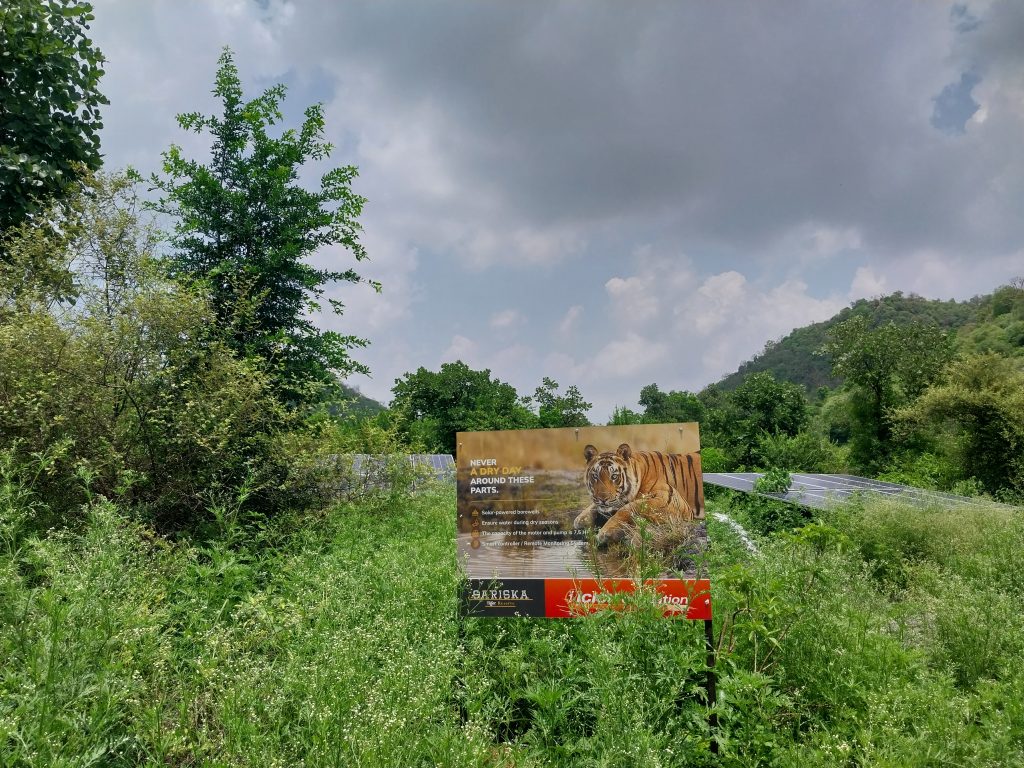
As the camper vehicle screeched to a halt near a solar-powered water pump system in the Sariska Tiger Reserve in Rajasthan’s Alwar district, the wilderness of the surroundings caught the eye.
The national park, which lies close to Delhi, lost its tigers in 2004-2005. As part of the reintroduction plan, two animals were brought from the Ranthambore Tiger Reserve in 2008. Today, Sariska supports about 30 tigers.
To ensure that tigers and other wildlife flourish in Sariska, the park management concentrated on rewilding, an attempt made to naturalise an area. This was carried out in the Talvrisksh range of the park. Guides informed this has helped in increasing the movement of tigers. In the peak summer months, water holes ensure that there is never a dry day for the animals.
Around May this year, two bears were also reintroduced in Sariska from Mount Abu as the area historically had the presence of bears, said Sariska National Park deputy director DP Jagawat at his office.
Talking about the rewilding attempt, the officer informed that there was immense pressure on the forest area in the Talvriksh range due to the presence of cattle. “After rewilding, the forest quality has improved which was in a degraded condition before. The number of herbivores increased as their competition with cattle decreased. Now, grass will also be introduced even though many trees flourished on their own after two villages were shifted out.”
Restoring landscapes According to Jharkhand-based wildlife conservationist Raza Kazmi, the idea of rewilding is to restore landscapes that have lost their historic faunal diversity and numbers due to various factors. In the case of tiger conservation, it means restocking forests with prey animals that might have declined or gone locally extinct in the recent past.
Even places without tigers have been rewilded and the best example in this case is Uttarakhand where a mini forest has been created in Kalsi near Dehradun. According to forest officer Sanjiv Chaturvedi, who planned this entire exercise, it was carried out on an experimental basis. “Now that it has been successful, it can serve as an example elsewhere in the country to both governmental as well as non-governmental players,” said Chaturvedi, who is posted as the chief conservator of forests (research) in Haldwani, Nainital.
The Kalsi forest area was covered with lantana, an obnoxious weed, which is difficult to control. In 2020, work started on the eradication of the weed and the introduction of native species of trees and shrubs on one hectare of land. Now, there are about 9000 trees and plants, many of which are fruiting and flowering. More than 70 native species have been introduced here which will take care of carbon sequestration and biomass.
Chaturvedi added that the Kalsi model may not be the only way forward as there can be other options too. He also spoke about efforts to eradicate another weed in Uttarakhand by replacing it with bamboo and native grass species.
Just like Sariska where tiger movement has increased post rewilding, in Kalsi certain bird species are now spotted often after the rehabilitation attempt which is showing results in just three years.
Defining rewilding According to Jayant Kulkarni, executive director of Pune-based non-profit Wildlife Research and Conservation Society, sometimes the terms rewilding and reforestation are used in a similar fashion. However, Kulkarni informed that rewilding is a more natural phenomenon as part of which an entire ecosystem is considered. “In the West, rewilding is being promoted on large areas of land. It can be done anywhere, in a tiger reserve and also away from it. Rewilding restores an area to a natural habitat after human interference and presence has been removed.”
In Europe, the Greater Côa Valley found in northeastern Portugal and encompassing the border region between Portugal and Spain from the Douro river in the north to the Malcata Mountains in the south, has been taken up for rewilding, according to the website of Rewilding Portugal, a non-profit.
Coming back to India, Chaturvedi informed that the Kalsi model has elements of rewilding, reforestation, afforestation and rehabilitation. “The native species had an important role to play here and it wasn’t merely a plantation effort. After lantana was removed, local tree and plant species flourished.”
As rewilding happens before tigers are introduced, the Satkosia Tiger Reserve management in Odisha, which is planning to reintroduce tigers possibly by next year, is working towards ensuring a healthy prey base for the tiger by developing meadows. The reserve has no tiger at present but a viable leopard population. A few villages will also be relocated in the process.
Nowadays, whoever you see, he is seen roaming around with redness in eyes and keeps inadvertently spreading it to others too. Current weather conditions are also playing a part in spreading the infection among the masses.
In this article, we will know about the cause of conjunctivitis and how we can avoid it. In this disease, the white part of the eyes starts appearing red or pink. That’s why it is also called Pink Eye.
There are many types of conjunctivitis such as acute or chronic, viral conjunctivitis, bacterial conjunctivitis, allergic conjunctivitis and exposure to chemicals. The problem of conjunctivitis can occur due to the closure of the tear duct in newborns. It is a highly contagious condition, so prompt treatment is essential.
Symptoms
Conjunctivitis can be very uncomfortable, and in very rare cases it also affects vision. It is very contagious, and can spread very quickly to other people. If you develop these symptoms, the chances are that you have contracted the disease.
* Red or pink appearance of one or both eyes. * Burning or itching in one or both eyes. * Tearing more than usual. * Watery or thick discharge from the eyes. * Gritty feeling in the eyes. * Swelling in the eyes.
These symptoms usually appear due to allergic conjunctivitis.
How can you get infection? * Coming in contact with someone who has viral or bacterial conjunctivitis. * Exposure to something you are allergic to (allergic conjunctivitis). * Exposure to chemicals; like exposure to chlorine present in swimming pool water. * Using contact lenses; especially wearing them continuously for a long time.
How to prevent it ? To prevent the spread of conjunctivitis, it is most important to keep cleanliness, apart from this, also keep these things in mind:
* Do not touch your eyes with your hand. * Wash your hands whenever necessary. * Do not share your personal things like towel, pillow, eye cosmetics etc. with anyone. * Wash your handkerchiefs, pillow covers, towels etc. daily.
Homeopathic medicine – You can take Belladonna 200 twice a day every morning and evening for a week. And if you have it, then keep on taking Euphrasia 200 tablets thrice a day until you get cured, if you take Euphrasia drops twice a day along with the medicine, you will see quick benefits. Take the medicine only on the advice of the doctor.
The main thrust of the Cinematograph (Amendment) Bill, 2023 appears to be on stopping piracy of films, which is easier said than done. The Bill prohibits carrying out or abetting the unauthorised recording and unauthorised exhibition of films. According to a report by Ernest and Young, the Indian film industry suffered a loss of about Rs 18,000 crore in 2019 due to piracy.
Though the government claims to address this problem of piracy, through this Bill —which is basically on censorship (not piracy), it has neither manpower nor expertise to tackle this sophisticated digital crime. It is likely to be ineffective as a quasi-judicial body like Censor Board just cannot function like a policeman.
The Bill is to control unauthorised recording of films (section 6AA) and their exhibition (section 6AB) as it t proposes imprisonment ranging from 3 months to 3 years and a fine of Rs 3 lakh to Rs 10 lakh. I fear that with such huge powers, corrupt inspectors may let loose a jungle raj of threats and blackmail on those who are not guilty, especially cinema exhibitors.
The central government has removed its appellate powers as it was getting caught in litigation. It does not need legal powers as it is in the habit of constantly interfering in the functioning of the Act and the administration of CBFC. Recently, a Union Minister has threatened those officials who cleared a particularly scene in a Hollywood film, Oppenheimer because he felt it was offensive.
In effect, it is this regime that decided on certification and promotion of divisive films like Kashmir Files and Kerala Story, and encouraged through publicity and tax exemptions. What is the point of an Act of Parliament or a so-called autonomous body like the CBFC if the regime can carry out its agenda of spreading hatred?
If the Ministry seeks to play the role of a policeman why does it not play it to control mobs that vandalise creativity of film makers both during the process of making a film, as in the case of Padmavat, and during exhibition?
This Bill substitutes the UA category with the following three categories to also indicate age-appropriateness UA 7+, UA 13+, or UA 16+. This is all too complicated and such fine tuning of age related matters will trouble hall owners. They will either be lax and then pay the price or be strict and face the wrath of the people.
Films with an ‘A’ or ‘S’ certificate will require a separate certificate for exhibition on television, or any other media prescribed by the central government. This is again a bureaucratic and political interference in the television industry and may affect OTT films like those Netflix and Amazon. The regime can do a lot of arm twisting and these new provisions may soon emerge as draconian.
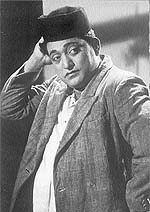
On the 110th birth anniversary of the iconic actor, director and producer, Bhagwan Dada, whose unique dancing style continues to resonate across generations, and who has had a profound impact on Indian cinema, Sunetra Palav, the legend’s granddaughter, pays a heartfelt tribute.
Born as Bhagwan Abaji Palav on August 1, 1913, to a humble mill worker in Parel, Mumbai, Master Bhagwan Dada’s life was as diverse as the myriad characters he portrayed on the silver screen. From being a devoted son, a caring brother, a loving husband, a nurturing father and grandfather, to being a cherished friend, he effortlessly embodied every role he played in his life. Moreover, he proved his mettle as a visionary producer, a skilled director, an accomplished actor, a mesmerizing choreographer, and a dancer who could make the art form feel like floating in the clouds.
It was his exceptional skills in the game of wrestling that earned him the moniker “Bhagwan Dada,” despite his short stature. Notably, he could place a drop kick on the chest of an opponent twice his size and land on his feet with grace and agility. However, his love for contact sports eventually led him to scale the walls of a nearby movie studio, Ranjit Studios in Dadar, where he observed action scenes being filmed.
Perched between the worlds of wrestling and filmmaking, this accidental encounter sparked his insatiable curiosity in the art of movie-making. Master BhagwanDada’s journey from that wall to the heart of the cinematic world was serendipitous, marking the beginning of an extraordinary odyssey.
Years of dedication, perseverance, and a relentless pursuit of knowledge became the pillars of his success. Lady Luck finally smiled upon him, and a star was born. Master Bhagwan Dada’s creative genius and self-starter attitude drove him to make a string of successful movies, leading to the establishment of his movie studio and production house. As his cinematic ventures flourished, so did his family.
As a ground-breaking filmmaker, he gifted the Hindi film industry its first horror film, “Bheedi Bungla,” and won the hearts of the masses with the timeless classic, “Albela” (1951). Master BhagwanDada’s distinctive and graceful dancing style became his trademark, endearing him to millions who cherished his artistry and followed him with unwavering devotion.
Despite reaching the pinnacle of fame and fortune, Master Bhagwan Dada never lost sight of the world beyond the studio walls, where he spent his humble childhood.
Witnessing the transition of the film industry from silent movies to the era of sound, music, dance, and Technicolor, Master Bhagwan Dada’s career was a witness to the creative changes of Indian cinema. He proved to be a guiding light for numerous newcomers, providing them with their first break, and his mentorship led many to become pioneers and legendary artists in their own right. Overcoming tragedies, such as losing his studio to fraud and a freak fire destroying nearly all of his film prints, Master Bhagwan Dada danced through life’s storms and left behind the blueprint of facing challenges with grace for those who came after him.
Despite the roller-coaster journey of success and setbacks, Master Bhagwan Dada continued to adapt and innovate, consistently winning the hearts of his audiences, even beyond the confines of the cinematic world.
His magnum opus, “Albela,” not only achieved tremendous financial success but also brought him closer to his family. It was a project that exemplified the sacrifices made by his loved ones during its making. Despite a few post-“Albela” ventures, his heart was no longer in filmmaking. He returned home to his family, leaving behind an indelible legacy in the hearts of the industry and his global fans.
Master Bhagwan Dada never abandoned his humble abode in the heart of Mumbai, a place where precious memories of his late wife, Asha, remained alive, and where his children and grandchildren always found solace. The window through which he gazed upon his adoring fans symbolized his eternal connection with them. On February 2, surrounded by his loving family and close friends, he took his last breath, leaving behind a legacy that still burns brightly today.
The street named after him remains a testament to the man and the legend, an eternal reminder of his contributions to the world of Indian cinema.
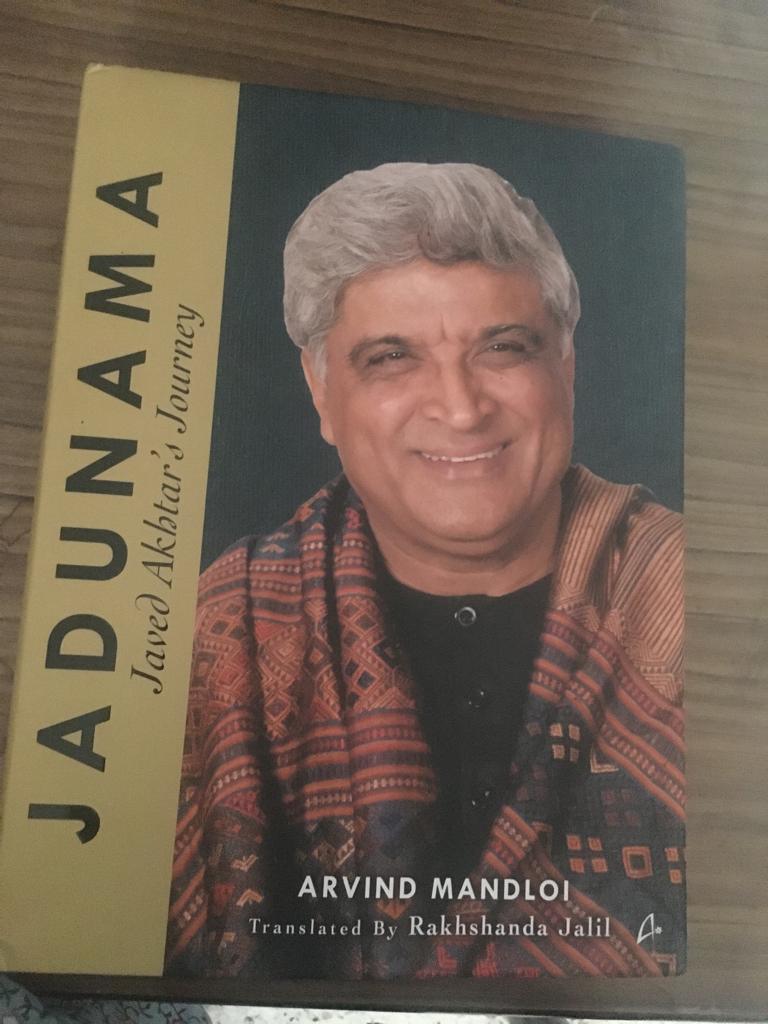
The photographs, the sketches and images published along with the text have not just highlighted what’s written but has also brought to life each one of those incidents in his life and also the characters involved. Each photograph and sketch published in Jadunama – Javed Akhtar’s journey, authorded by Arvind Mandloi stands out, holds out. A book review by Humra Quraishi
Title of the book- JADUNAMA – Javed Akhtar’s Journey
Author – Arvind Mandloi
Translator – Rakhshanda Jalil
Publisher – Amaryllis
Pages -339
Price – Rs 2999
Well, as the title of this volume relays, focus is on Javed Akhtar’s journey, along the personal and professional strain. Several plus elements to make it a highly readable volume.
Foremost, the photographs and the sketches and images published along with the text have not just highlighted what’s written but also brought to life each one of those incidents in his life and also the characters involved. Must comment, the publishers been absolutely focused on the production quality. Each photograph and sketch published in this volume stands out, holds out. This indeed is a sleek and sophisticated production.
Another highlight is short and long conversations – gulftagus – of the author of this volume, Arvind Mandloi, with the various personalities who came into Javed Akhtar’s life. Many of them still around.
The text seems brimming with details. Javed Akhtar coming forth with details of the various turns and twists in his life. And as they say, childhood memories never really fade or diminish, so let me quote Javed Akhtar from this book, on one of his first memories. A painful memory, lasting to this day. “Today life is good for me in every way, but I still remember that day from my childhood: 18 January 1953. The place is Lucknow, my nana’s house. My distraught khala takes my younger brother Salman, who is six-and-a-half years old, and me by the hand and brings us to the big room in the house. There, many women are sitting on the floor. My mother, wrapped in a white shroud, is placed on a takht; her face is uncovered. My nani sitting at the head of the takht, is crying, softly, slowly, as though she is exhausted. Two women are supporting her. My khala takes both of us children to the takht and says, ‘ See your mother for the last time.’ It was just yesterday I had turned eight. I am old enough. I know what death is. I look closely at my mother’s face so that I remember it well. My khala is saying, ‘Promise her that you will become something in life. Promise her that you will do something in life.’ I am unable to say anything. I just keep looking at her till some woman pulls the shroud over my mother’s face, covering it.”
This volume is laced with anecdotes and happenings and incidents from Javed Akhtar’s life. One after another …many! All recounted by him in one of those direct and un-complicated ways. That’s perhaps the forte and backbone of this volume.
Even the way he mentions about his first love letter. To quote him: “I am a little older. I am fifteen years old. I am writing a letter to a girl for the first time in my life. My friend Biloo is helping me. We prepare this letter together. The next day, I meet that girl in an empty badminton court. Gathering all my courage, I give her the letter. This is the first and last love letter of my life. (I have forgotten what was written in that letter but I remember that girl even today. ) I am leaving Aligarh after matric. My khala is crying copiously. My khalu is trying to quieten her by saying, ‘You are crying as though he is going to the battlefield and not Bhopal.’ (at that time neither he nor I knew that I was indeed going to a ‘battlefield’).”
Gurugram/Nuh : In order to maintain peace and law and order in the Sohna area of Gurugram, a meeting of the Peace Committee was held under the chairmanship of deputy commissioner Gurugram Nishant Kumar Yadav in Sohna area of Gurugram on Tuesday.
Sohna MLA Sanjay Singh and former MLA Tejpal Tanwar along with enlightened people of Hindu and Muslim society also participated in this meeting organized at the Tourist Complex of Haryana Tourism Department, Sohna.
In the meeting, both sides assured to maintain peace and harmony in the region.
During the meeting the DC said, the situation normalized in Sohna, and on the demand of the Peace Committee, the district administration permitted to open of the market in Sohna.
The administration formed a committee comprising 20 members each from the two communities. The committee will help in enforcing peace and harmony.
DC Nishant Kumar Yadav insisted on establishing a dialogue with the people of Hindu and Muslim society with the general public to keep the law and order peaceful in the area in view of the Nuh episode.
The DC said that the only way to prevent the spread of communal frenzy in the area was to ignore rumours.
The DC appealed to the citizens to ignore the rumours and maintain peace and tolerance and help the administration in maintaining law and order.
“The situation is now normal in the Sohna area. So we gave consent to open the market on the demand of the committee members amid normalcy in Sohna,” he said.
In the meeting, the members of the committee also demanded compensation for the people affected by the arson and vandalism that happened on Monday evening.
“The assessment report of the persons and institutions affected by the incident is being prepared by the district administration. Soon it will be sent to the government,” he said.
The DC said that if any objectionable post is posted by any person or organization, legal action will be taken against it as per the rules.
He said that no one should spread any kind of false rumour on social media platforms. If anyone spreads rumours on social media or makes any wrong comment about anyone’s religion or caste, then the police will take strict action on that.
DCP Headquarters Deepak Gehlawat appealed to both communities that the incident that happened in Sohna in the context of Nuh clashes. If you have any information regarding him, immediately inform the police so that legal action can be taken against the guilty person.
“We appealed to the general public that if any anti-social element, suspicious person or vehicle is seen around you or in any emergency, immediately report it to the concerned police station or dial 112. The name of the informer will be kept secret. Besides this, a number of police forces have deployed at key locations in Sohna to maintain peace and law and order in the Sohna area, a flag march was taken out by the police in the city,” Gehlawat told to media.
The flag march was taken out under the chairmanship of DC Nishant Kumar Yadav and DCP Deepak Gehlawat on Tuesday. This flag march was taken out through all the square intersections, and major markets of Sohna city till the Nuh border on the Gurugram-Sohna-Alwar highway.
DCP South Siddhant Jain, Sohna SDM Pradeep Singh and many senior officers of the district administration were present in the meeting.
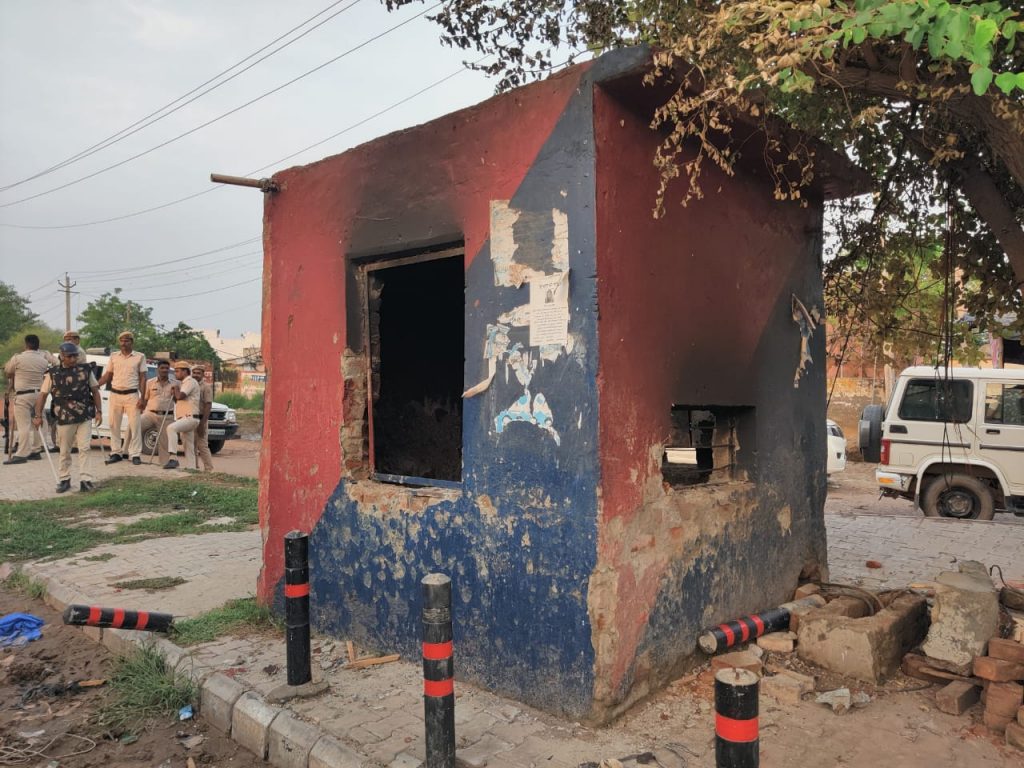
Apart from this, the police said, 5 vehicles, 01 auto, 01 shop and 04 roadside shops were set on fire by a crowd of around 200-250 protesters at Ambedkar Chowk Sohna at around 6 pm on Monday.
Law and order were restored by pelting stones and the peace was disrupted. Taking action against the disturbance as per the rules, an FIR has been registered by the police in this regard.
Meanwhile, the family of deceased home guards Neeraj and Gursev, who lost their lives in Nuh violence will be provided with Rs 57 lakh each by the Haryana police.
India is in a state of shock and disbelief over a video clip which shows two women being paraded naked and molested by their tormentors in Manipur.
The women were later gangraped and their two male relatives killed by a group of men in a barbaric display of tribal hostilities. The gory incident occurred on May 4 in the early phase of the ethno-religious violence that rocked the state, and it has now scorched the collective consciousness of the country.
Predictably, reports of similar cases of rape and murder have surfaced and it is likely that other horrific acts of killing and mutilation will emerge from the destruction and depravity that have engulfed Manipur.
Women being subjected to sexual violence during conflicts and wars has a hoary past. While this deplorable practice deserves condemnation and cannot be condoned in any manner by a modern democratic state, sadly, it still occurs in contemporary conflicts. Post-Cold War regional conflicts and recent local wars in Africa are illustrative.
In the Indian context, the 2012 Nirbhaya episode jolted the nation’s conscience for the extreme brutalisation of the hapless victim, but it was seen as an isolated case of diabolical criminality. However, the Manipur case will remain different for the impunity with which the two women were stripped naked by a mob and forced to walk, with men groping them — and all of this being recorded on camera.
One of the victims of the May 4 atrocity has revealed, “The police were there with the mob which was attacking our village. The police picked us up from near home, and took us a little away from the village and left us on the road with the mob. We were given to them by the police.” Alas, state complicity is an ugly reality and a distinctive characteristic of the Manipur horror.
This dastardly act is an unforgivable and shameful reflection on the institutional credibility of state and Central agencies, as also the media — for 76 days, this horrific act of degrading the bodies of women (to instil fear in the minority community) was either ignored or kept under wraps.
Prime Minister Modi’s belated statement before the start of the Monsoon Session of Parliament — “This incident is a shameful act for any civilised society… What has happened to the daughters of Manipur can never be forgiven” — will not be enough to end the trauma that the victims and their families are undergoing.
It has since been reported that the husband of one of the humiliated women is an Army veteran who took part in the 1999 Kargil war and had served as a JCO (junior commissioned officer) in the Assam regiment. His remarks to a TV channel are heart-rending: “I fought for the nation in the Kargil war and was also in Sri Lanka as part of the Indian Peace-Keeping Force. I protected the nation but am dejected that after my retirement, I could not protect my home, my wife and fellow villagers. I am sad, depressed.”
The violence in Manipur began in early May and while the trigger was a hasty High Court order that pitted the majority Meitei community against the others, there is no denying the exacerbation of old fault-lines and fissures among the tribes and other groups by the prevailing socio-political churn in India that has prioritised the majority demography/religion over vulnerable minorities.
The polarisation between the local communities in Manipur has reached disturbing levels and the fact that police personnel are now deployed according to their ethnic/tribal identities is indicative of the state of affairs. And what points to institutional complicity is the manner in which the local police have become complicit in the spiralling violence.
The state, which is expected to ensure citizens’ security without making any distinction on the basis of identity, has become suspect in Manipur, and the larger national trend with respect to women’s safety is a cause for deep dismay. The kid-glove treatment by the Delhi Police of accused BJP MP Brij Bhushan Sharan Singh in the wrestlers’ sexual harassment case and the generous parole given to a rape convict (Gurmeet Ram Rahim Singh) make a mockery of the much-touted ‘beti bachao’ slogan of the Modi government.
In an unusual but welcome development, the Supreme Court has taken suo motu cognisance of the May 4 Manipur crime and told the government to act, “otherwise, we will take action if nothing is happening on the ground.”
The current state leadership in Imphal has lost its ability and credibility to ‘act’ and restore stability in Manipur in a non-partisan manner. Hence, other options of governance will have to be explored. In such an exigency, the Army would have to be inducted to restore law and order. and the recovery of arms and ammunition looted by local groups from the police armoury would have to be accorded the highest priority. The old adage — ‘remove the guns’ to stop the fighting — holds true in the current atmosphere of discord and bloodshed.
The Army, which has considerable experience in managing the troubled areas of the North-East, will now be dealing with a different Manipur, which is burdened by its trauma and venal institutional transgressions. Maintaining its much-respected professional credibility and constitutional fidelity will be an onerous challenge for the Indian fauj — the last-resort institution in the national quiver.
The article first appeared in The Tribune
Women writers, activists want CM to go
Tehelka Bureau
A group of women, comprising eminent writers, activists and researchers, has issued a statement demanding speedy justice for the Manipur sexual assault victims and dismissal of the N Biren Singh government.
The signatories include Anuradha Banerji of Saheli Women’s Resource Centre, New Delhi; writer-activist Farah Naqvi; activist-researcher from Coimbatore Kalyani Menon Sen; activist Kavita Krishnan; Kavita Srivastava of the People’s Union of Civil Liberties; Koninika Ray of the National Federation of Indian Women; and writer-activist from Odisha, Ranjana Padhi.
“We are outraged that it takes a viral video of unbelievable brutality on Kuki women of Kangpokpi district for the Manipur CM to act and for the Prime Minister to speak after 75 days of deafening silence,” the statement reads. “When the CM of a state confesses on national television to hundreds of rapes and incidents of sexual assault on his watch, it is time for him to go,” they said, seeking Biren’s resignation