Is this the end of road for ex-WFI chief Brij Bhushan Singh?

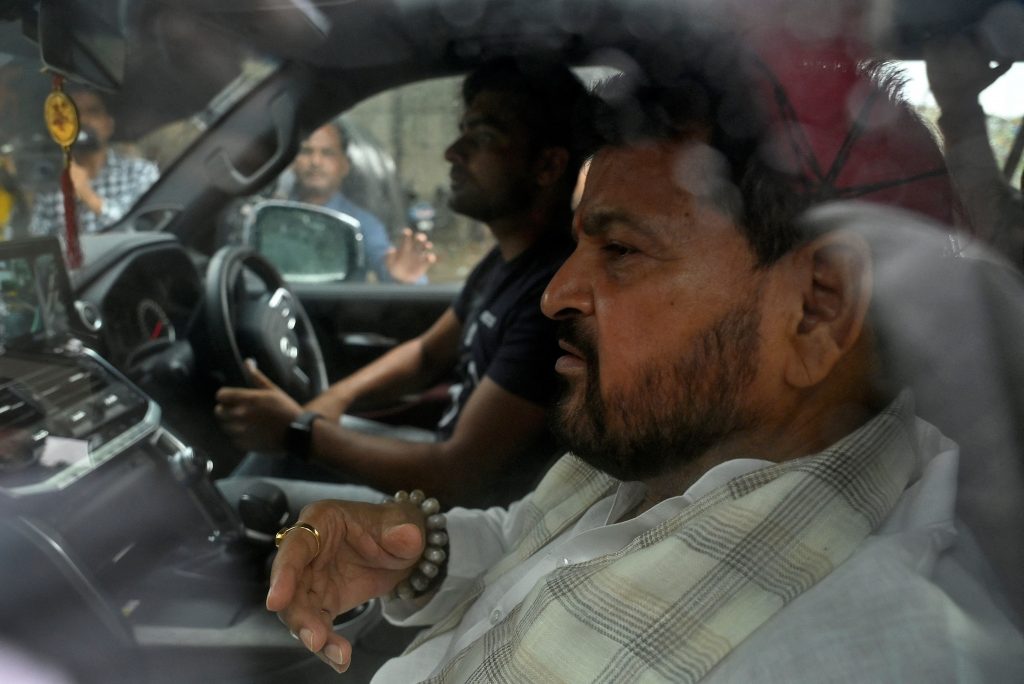
Brij Bhushan Sharan Singh

In the eye of a storm after India’s top wrestlers accused him of sexually harassing female athletes, Brij Bhushan and his son are not part of the electoral college for the upcoming WFI elections

Brij Bhushan Sharan Singh, MP who until recently had been the chief of the Wrestling Federation of India for the past 12 years but had been in the eye of a storm after India’s top wrestlers, including Olympic medallists and world champions, accused him of sexually harassing female athletes and his son Karan are not part of the electoral college for the upcoming Wrestling Federation of India (WFI).  Is this the end of the road for the former WFI boss?

It is worth mentioning that Sports minister Anurag Thakur had promised to the protesting wrestlers led by Vinesh Phogat and Bajrang Punia that none from Brij Bhushan’s family will contest the elections. Brij Bhushan Sharan Singh is an influential MP from the ruling party and recently, he has been at the centre of a sporting row. The allegations against him are serious and top wrestlers, including Olympic medallists and world champions, had accused him of sexually harassing female athletes and have held months of protests demanding his arrest. The wrestlers’ protests had made global headlines and after a number of medal-winners were dragged through the streets last month when they tried to march on parliament, even the International Olympic Committee weighed in, calling on India to ensure the safety of athletes and carry out a fair investigation.

As per the revised schedule, on the last day for receiving nominations, the Uttar Pradesh unit filed fresh nominations withdrawing the names of Brij Bhushan and son Karan Bhushan, who had also served as WFI vice-president since 2019.

In the electoral list, 25 states have nominated two representatives each for the electoral college. Elections will be held for the post of president, senior vice-president, four vice-presidents, a secretary general, a treasurer, two joint secretaries and five executive members.  The submission of nominations for elections is from July 28-31. The scrutiny of nominations will be done on August 2 while the final date of withdrawal of nominations is August 8. Elections for the general body will be held on August 12.

Some WFI officials were taken by surprise by some of the names in the electoral college. A top wrestling official said they will raise a complaint with the returning officer as some of the names in the electoral college were not part of the respective associations, which is not compliant with the WFI constitution. For instance, “Prem Chand Lochab is not part of the Gujarat association. He is from the Railways. Same with Devender, who is from Haryana and is representing Assam. Also Anita, who is a former wrestler, will represent Odisha. We are surprised how these names which are not part of any state unit of WFI have been included,” the official said.

 Devender Singh Kadyan, who is the chairman of the Mannat Group of Hotels, from Haryana is likely to contest for a key position in the federation. Anita Sheoran is one of the witnesses in the sexual harassment case against Singh and is employed with the Haryana police. Anita Sheoran, who is one of the witnesses in the sexual harassment case against Singh, has been named in the list as Odisha representative for the August 12 polls. The 38-year-old Sheoran, the 2010 CWG gold medallist, hails from Haryana and is employed with the state police. Similarly, Prem Chand Lochab’s name figures as a representative from Gujarat when he is actually the secretary of Railways Sports Promotion Board (RSPB). Also, Assam has been given voting rights following the ad-hoc panel’s surprise decision to grant membership to the state.

While Singh, who is the UP president and his son Karan, who is vice president in the same state body, have not entered, the outgoing chief’s son-in-law Vishal Singh will be a representative from Bihar in the polls. Maharashtra and Tripura will not have any representatives at the elections as the Returning officer deemed claims of both factions from the former “ineligible” while Tripura has remained disaffiliated since 2016. Two representatives from each state unit will be allowed to vote.

Not new to controversies

Brij Bhushan Sharan Singh, who until recently had been the chief of the Wrestling Federation of India (WFI) for the past 12 years, has denied the allegations. He accuses the wrestlers of being “politically motivated” and recently said he would “hang himself even if a single allegation is proved” against him. However, after months of headline-making protests by wrestlers – and a nudge from the Supreme Court – police in the capital Delhi registered two cases against him in April. Seven female wrestlers told the police that he had molested and groped them at training camps and tournaments. As one of them is a minor, police invoked the stringent Protection of Children from Sexual Offences (Pocso) Act. However, the minor later withdrew the complaint.

 Born on 8 January 1957 in Gonda district in the northern state of Uttar Pradesh, the six-term MP claims substantial support in a number of parliamentary constituencies and analysts say with general elections due next year, he is expected to play a pivotal role.

Singh, who studied law in college and participated in wrestling competitions in his youth, became politically active while he was a student and joined the BJP in 1988. He was elected to parliament in 1991.

 He first came into prominence for aggressively participating in the BJP’s movement for the construction of a temple in the town of Ayodhya. Along with several party leaders and workers, he was named as an accused in the December 1992 demolition of the 16th-century Babri Mosque. Years later, they were all absolved.

Despite the controversy surrounding him at present, Singh insists that he will contest next year’s elections. Recently, he addressed a rally – his first since the allegations – in his home town where he arrived in a huge convoy, leading a 25km-roadshow that was seen as a show of strength by analysts. In Gonda and some of the adjoining districts, where Mr Singh and his family own and run more than 50 schools and colleges, he enjoys tremendous popularity.
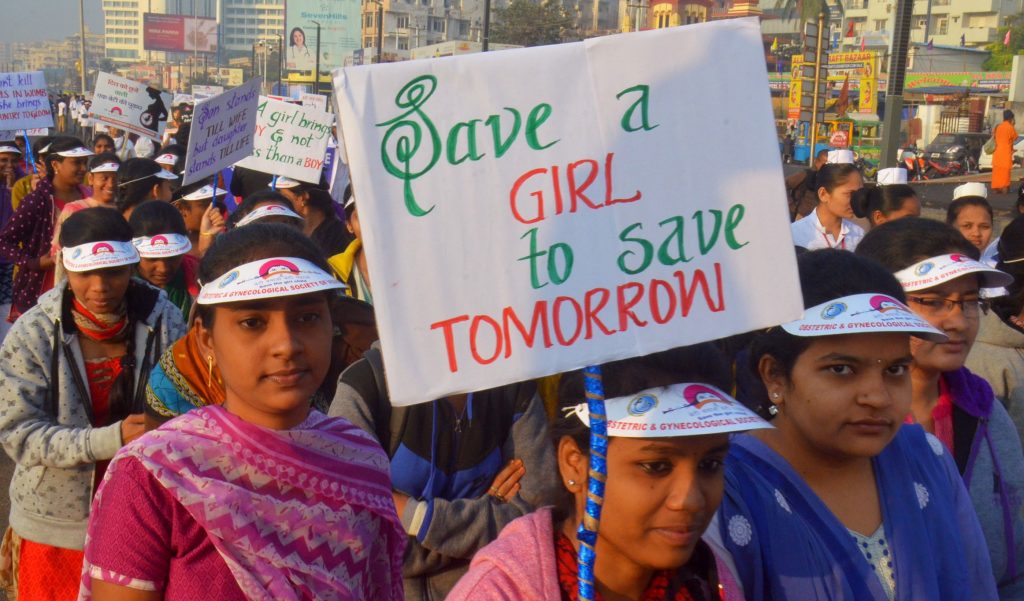


B3P drive’s flagbearer Haryana stung by sharp drop in sex ratio

Haryana lagged badly with respect to sex ratio till about a decade ago, but got its act together after PM Modi launched the B3P campaign at Panipat in 2015, and saw a steady increase in sex ratio thereafter. The latest SRB report however has shocked the state, writes Rajesh Moudgil


Haryana got the disappointing news it was afraid of on the sex ratio at birth in the six-monthly 2023 June Civil Registration System (CRS) data report. It reported a drop in sex ratio at birth (SRB) by 11 points. The SRB, which was 917 in 2022 year-end, was reported at 906 by June 2023, causing concerns for the state government and leaving its top functionaries worried.

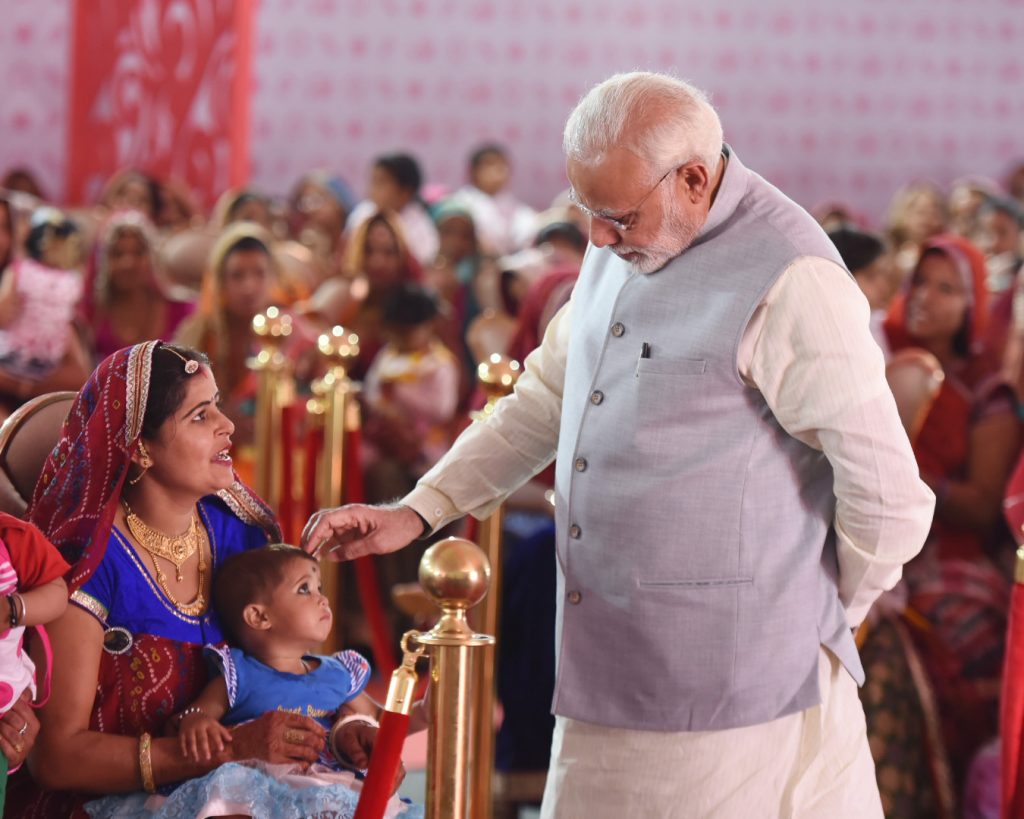
For, Haryana had hogged the limelight after it launched an aggressive drive against the menace of female foeticide after the Prime Minister Narendra Modi launched the Beti Bachao, Beti Padhao (B3P) campaign from Panipat, on January 22, 2015. And it did improve its sex ratio to 923 female births per 1,000 males by 2019.

The official records say that the state teams since then undertook more than 1,000 decoy operations and nabbed a large number of unscrupulous elements engaged in female feticide and sealed several of their illegal scanning and abortion centres.

These included more than 300 inter-state raids which were conducted in the adjoining states including UP, Punjab, Delhi, Rajasthan, Uttarakhand and Madhya Pradesh wherein accused were arrested under various sections of Pre-Conception and Pre-Natal Diagnostic Techniques (PCPNDT) Act, Medical Termination of Pregnancy (MTP) Act and the Indian Penal Code (IPC). The state agencies also confiscated various gadgets and equipment including the ultrasound machines, the accused used for the crime and cases against them were filed in the court.

However, this drop in the SRB in just six months this year as compared to previous year end, despite the state’s “efforts’’ to check female feticide has left the health authorities disappointed, agree several senior officials.

But, why the drop?

Asked about the reasons behind the drop in the sex ratio now, several officials, who did not want to be named, agreed that the same was primarily because of the official agencies’ delay or failure in timely registration of births in some districts which finally reflect adversely in the overall SRB records.

To the pointed question if the fear of law was waning, they agree partially saying that it was due to the laxity in some state teams which was noticed during the over nine-year old “exercise’’. Besides, lingering court cases and convictions and a spurt in the use of new gadgets by the miscreants have also been among the reasons behind the prevalence of female foeticide.

“There have been mushrooming portable scanners or similar (and smaller) gadgets being used by unscrupulous elements (including quacks who “promise’’ male child) or other professionals indulging in the inhuman act of determining pre-natal sex determination (SD) test. The state agencies have been in the know of these gadgets and that these were some of the major factors behind the dismal gender ratio posing a huge challenge to the authorities.”

Some of the senior officials also admit that mobile-phone-sized “very handy’’ equipment was now being found to be frequently used for conducting the sex determination test and it was a worrisome trend in the recent past. The machine was connected with a probe through a wire and a “picture-like’’ ultrasound started appearing on the screen of the phone-sized gadget when the “probe’’ was rotated over the abdomen of a pregnant woman”, they added.

However, they specified that though the authenticity or precision of the results of such scanning machines was under the cloud, the fact remains that it is successfully being used by the racketeers to attract the aspirants of a male child.

On the other hand, the technology or trick was posing a serious challenge to the health authorities which found it difficult to bust each and every such racket as the sex determination test could, thus, be performed at any place.

PM Modi

Yet, the state teams busted some inter-state rackets and recovered such (cell-phone-sized) gadgets and found that in some cases it was done just to make the patients “feel” that she was being tested. Majority of the times in such cases, the quacks or operators of such equipment declared the unborn child as female, convincing the parents for the abortion!

The miscreants also remain in touch with such hospitals where illegal abortion is performed or supply MTP kits for inducing such illegal abortions, the officials said, and added that frequent availability of these MTP kits also posed serious threat to B3P (Beti Bachao, Beti Padhao)  drive, these being convenient to use, cheap and could be used without medical advice.

Such gadgets cost about Rs 2 lakh while the miscreants charge anything up to Rs 40,000 each from their “gullible customers’’ and even operated across the region while having rented accommodations in different cities and having their agents on commission in lieu of sending customers there, say the officials while showing FIRs against such miscreants.

The challenge ahead

The state teams have stepped up their drive and conducted more than 60 raids so far in the year 2023, says Dr G L Singal, B3P campaign convenor, Haryana, and adds that the state government is committed to curb the menace of female foeticide. With the teams also proactively conducting decoy operations with enhanced vigour, he said, the sex ratio is set to improve in the state.

Charkhi Dadri  records steepest drop

Meanwhile, according to the CRS half yearly report, while there has been an improvement in eight districts of the state, there has been a sharp drop in the sex ratio in as many as 13 districts. The 22nd district – Sirsa – has shown no change in the SRB, according to the report.

The steepest drop of 65 points was noticed in Charkhi Dadri district, followed by Rohtak which showed a decrease by 60 points, Gurugram, 45 and Kaithal by 32 points.

The Charkhi Dadri recorded 868 ratio till June 30 this year, while it was 933 in December, 2022. The other districts which show decline in the sex ratio included Rohtak with 874, Gurugram 880, Kaithal 889, Karnal 874, Mewat 910, Fatehabad 926, Panchkula 914, Narnaul 888, Bhiwani 897, Sonepat 885, Palwal 909 and Ambala 922.

However, the districts which showed improvement in sex ratio included Rewari with 923 followed by Kurukshetra 928, Jhajjar 919, Jind 961, Faridabad 904, Yamunanagar 933, Panipat 932 and Hisar 908.


Resurging Sri Lanka… pushing to get back the glitz

The Sri Lankan government has made bold economic reforms as it tries to fulfill the terms of the IMF for extending assistance to the trouble-torn nation. The government has embarked upon a three-pronged strategy of stabilization, recovery and growth, reports Priti Prakash


What’s the relation between a casino and a nation’s economy? Well, it mirrors the nation’s economic health too! Surprised?!

As I entered the Bally’s casino, Sri Lanka’s largest and most luxurious one located in the heart of Colombo, it had a story to tell. Out of 100 gaming tables it has, almost half had people betting. It’s the place where money pours in anything from 5 to 9 digits, both won and lost, at the blink of an eye. The casino caters all luxury hotels in close proximity and takes care of its visitors by offering a free pick and drop in Mercs & BMWs. It also offers complimentary coupons to high-end travellers entering SL. Bollywood stars are a common sight, not for gaming but as celebrity entertainers, and mind you they don’t come cheap. Interestingly after the economic crisis in 2022, Bally’s Casino owner was tasked with turning the nation’s flailing economy around in his own unique way.

The signs of resurgence are showing. With India extending a lifeline with a $4 billion credit line and a nudge to the IMF, the country managed a loan of $US 2.9 billion and ADB $350 million. Now, the island country seems confident of its resilience. TukTuks are back on the street though with much higher fares as compared to pre-2021 period. Fuel is costly as the government has increased taxes. Malls have opened albeit with much less crowd compared to last time I visited the island country in 2018 when the famous House of Fashion was choc o bloc with people on a weekend. Tourism has started picking up, hotel occupancy is catching up too (remember Sri Lanka is an all-year-round tourist destination), Travel industry wants to make the most of every single traveller. The government says inflation is under control; fuel, food and medicines are easily available. The construction industry is what the government is pinning its hopes on as it waits for it to start booming again, which will spur growth.

As I go into an Ayurveda products selling shop, I find its walls are stacked with oils, spices and herbal medicines but buyers are just trickling in, mostly tourists. Ayurveda is one of SL’s main exports along with tea and textiles.

What people say

People of Sri Lanka seemed more than thankful for the help India has provided when the small country was in the throes of bankruptcy and political unrest. SL Speaker Abeywardhane, at the recently held 67th Travel Agents Association of India (TAAI) Convention said, “If India had not come in, there would have been a bloodbath on the streets of Colombo.”

Common people too are aware of the help rendered by India. Tour guide Nalinda John can’t thank India enough. ‘It is a great solidarity, our big brother India stood by us throughout the crisis. India came forward with infrastructure reconstruction after the catastrophic tsunami in 2004, in 2022 and 2023 up to June the highest numbers of tourists recorded were from India. This is a great gesture of friendship from India.’

The past and the present

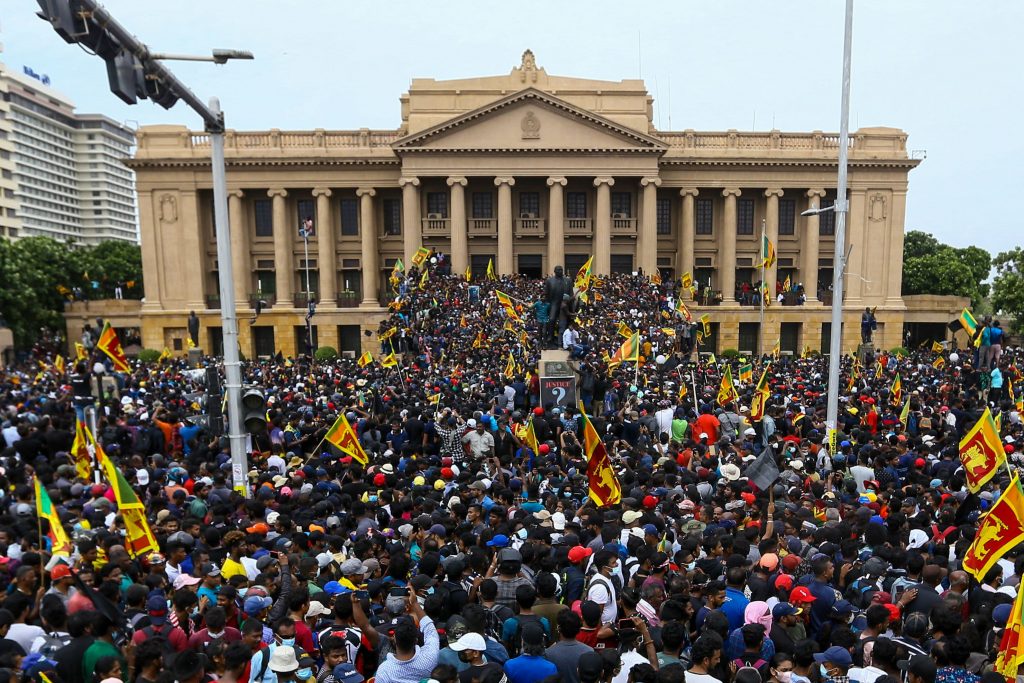
It was just last year that people were on the streets and all over the Presidential palace that stands on the banks of the Port City being constructed by China with an estimated construction cost of $392 million. It is said that the Chinese brought prisoners from China to build roads, highways, ports and other infrastructure instead of roping in locals who  would have garnered income for them. Instead, they paid the Chinese prisoners who would take the money back home. A typical Chinese model was replicated in Pakistan too. The Port City now stands beautifully made with a grassy bulwark between the harbor and the main arterial road lined up with skyscraping five star hotels standing tall just across. China has funded most of the highways and has invested in a terminal. China accounted for about 10% of Sri Lanka’s US$35 billion foreign debt as of April 2021. It is the largest investor in Sri Lanka today, with funding and investment of nearly $15 billion.

Sri Lankan people endured 13 hrs of power cut even as they stood for 5 days in queue for fuel last year. There was no cooking gas available as people in Colombo in posh apartments cooked with firewood. Food inflation went up to 95% , general inflation touched 80%. ‘Had it gone a little beyond that, we would have gone the path of Lebanon, Venezuela, Argentina or Zimbabwe. That would have destroyed our social fabric. $3.9 billion worth of huge credit line at a time when a country is declared bankrupt, was a huge help,’ acknowledged Foreign Minister of Sri Lanka MUM Ali Sabry.

He further informs, ‘Now, one year down the line, there are no more power cuts, we have plenty of fertilizers, good harvest during the last season, foreigners are coming in, tourism has revived, rupee has depreciated about 19% this year. Inflation is totally under control having come down to 12% and should further come down to 6-7% by the end of this month’.

Pinning hope on tourism

‘Give us 10% of your tourists and we are sorted,’ says Sri Lanka’s Tourism Minister Haren Fernando at the 67th TAAI Convention in Colombo. Tourism being the mainstay of Sri Lanka bringing in the much needed forex, is the government’s main focus sector. India’s travel industry has pledged to handhol Sri Lanka back to its previous place on the tourism map.  With just one flight everyday from Chennai and Jaffna other than from New Delhi to Colombo, more connectivity between India and SL will definitely boost tourism. Ferry services and cruise tourism along with privatization of SL Airlines, their national carrier, are being worked out after the visit of SL President Wickremesinghe to New Delhi recently.

With Dr Manmohan Singh, the former Prime Minister of India as the role model of public services and economic reforms in the late 90s, Wickremesinghe government in Sri Lanka has taken some bold steps, pushed by IMF aid terms. Cost Reflective Pricing for electricity, water, fuel, gas, and food has been started for the state so that it does not make losses. A three-pronged strategy of stabilization, recovery and growth has been charted. Investment is invited from countries. Some plans in petroleum, refinery, renewable energy, port development and tourism are already in the pipeline. A few big Indian companies have come in, particularly on Colombo port. Big projects on wind power are also on the anvil. Sri Lanka is in need of FDI as capital is needed to start new projects.

Measures have been taken to improve revenue in terms of taxation, reduce expenses, and decouple business from the government. The government is undertaking reform of state owned enterprises by privatizing them and denying subsidies on popular policies while working on digitalization and direct transfer of money.

Opposition counters govt claim

For Sri Lanka, the main source of foreign revenue is from overseas remittances which is almost $2.3 million. Apparel manufacturers export their products to Europe and North America. Tea industry, which is the third highest income source from foreign countries, has had no big impact on geo-political or internal conditions. Hospitality industry almost collapsed during the pandemic, but gradually it was nursed back to health and is booming now. Share market prices are moving forward slowly.

However, the opposition leader and National Organizer & Member Political Bureau of People’s Liberation Front of Sri Lanka and a 4-times MP Bimal Rathnayake has something different to say. ‘There are many facts to prove that the economy is going in a negative direction. Contraction of the economy in 2023 Q1 was 11.5%. Fuel consumption is around 35%, which means a great reduction of economic activities. 500,000 formal jobs have been lost. Although food inflation shown by the government is 26% but reality is that all poor and middle class families now spend around 50%-60% of their income on  food. Fuel prices have gone up by 300% within eight months and electricity tariff has seen 250-300% jump. Transport bus fares have gone through the roof with a 300-400% hike within the last months. Now they are reducing some of them by 10%.’

As Sri Lanka is under an interim government after Rajapakse fled the country with the country slowly straddling towards normalcy, the question of elections is a matter that is on everyones’ mind. According to Foreign Minister Sabry elections will be held on time i.e next year. But the opposition is wary about it. MP Bimal Rathanayake says elections are not a possibility.


Exclusive- I saved Kuki’s lives: Bikramjit

At least 160 people have been killed in  clashes between the Meitei and Kuki ethnic groups. Thousands have been injured and more than 60,000 displaced in the violence that have engulfed India’s north-eastern state of Manipur, on the border with Myanmar. The violence broke out in Churachandpur, a town just south of the state capital Imphal, on  May 3, following a Kuki-led tribal solidarity march in ten of the state’s sixteen districts . As the Meiti organised counter-protests and blockade, clashes spread across Manipur. Women were part of some of the mobs.  More than 12000 have fled to the neighbouring Mizoram state.  Just a day before the monsoon session of a parliament, a 26- second video from Manipur has triggered outrage in the whole country where three women were stripped naked, assaulted and paraded by a mob.  According to the First Information Report [ FIR] filed in the case, one of the three women of a family was gang raped while a mob of 800-1000 men killed her brother and father on May 4. Ministry of Home Affairs [MHA] officials have informed that Central Bureau of Investigation [ CBI ] will probe Manipur viral video case. The opposition in order to corner the Modi government and make the Prime Minister address the issue which has rocked the Monsoon session of Parliament since it began on 20 July, filed a  no-confidence motion in the Lok Sabha.

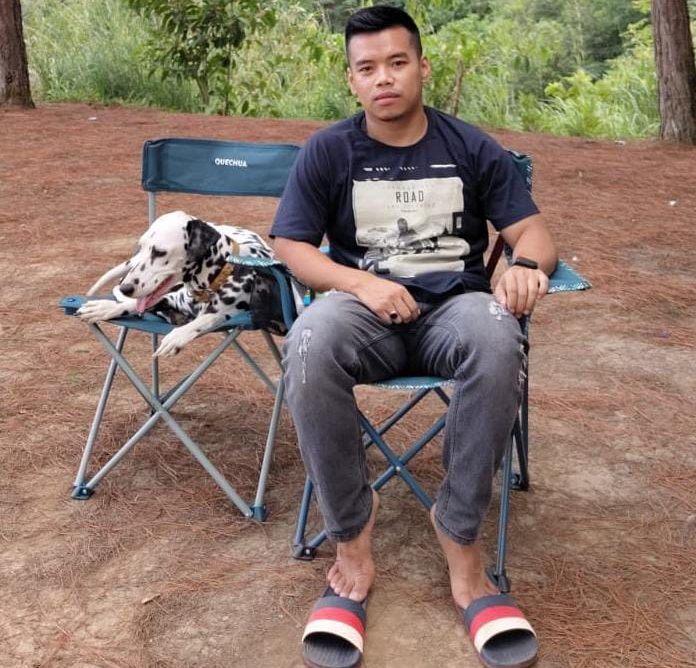
After nearly three-month-long ethnic violence in Manipur, the lines of division have become sharper than ever with both communities expressing mistrust, anger and even hate against the other. In this atmosphere of hate Tehelka exclusively caught hold of a 28 year old Manipuri youth, Bikramjit Rajkumar from Meitei community, who claimed to have saved many Kuki’s lives in Imphal when the ethnic clashes broke out on May 3. Bikramjit comes from IT sector with his office in Gurugram. His company is still following work from home method, due to which Bikramjit is  operating from Imphal. Apart from his job, Bikramjit is also a secretary of a society ‘Youth Welfare Front’ registered in 1978 in Imphal west. In an exclusive conversation with Tehelka over phone, Bikramjit spoke in length on various issues, including how he saved Kuki’s lives when violence broke out on May 3. ? How interfaith couples are finding it difficult to save their marriages in Manipur ? How he saved the lives of his relatives , caught in the violence  in another worst- affected district, Churachandpur, dominated by Kuki. The excerpts of Bikramjit’s edited interview are given below.

How you saved Kuki’s lives on May 3 when violence broke out ?

When violence broke out on May 3. We through our society ‘Youth Welfare Front’ issued notices in our locality of Imphal area that anyone from kuki community living in our area should contact us or the government for the save exit from the Meitei dominated area. After this we discovered around  50 members of Kuki community living in our locality. They were mostly students, businessmen and ones who are doing jobs. We took them in our society cars and safely dropped them at  Manipur Rifle [MR] battalion. From their they were sent to the relief camps, Churachandpur or outside Manipur. We used four-five cars of our society to ferry kuki. If we would have not rescued these kukis from our Meitei dominated area, they would have been killed. The Kukis we rescued were living in our area on rent. My society ‘Youth Welfare Front’ is being dominated by Meitei.

How you saved your relatives lives ?

After the violence broke out on May 3. My Relatives from Churachandpur, Kuki dominated area were stranded in violence. They had no option but  to run from pillar to post to save their lives. Five members of the family including an old man remained in the violence hit area for many days. We were everyday following up with the army asking them when they will going to rescue them. We were calling police every now and then for the update of our relatives. Gradually Army started rescuing my relatives. From May 5 to 11 all my relatives came out from the violence hit Churachandpur area safely. But not before their house were demolished in the violence. Presently all five members are in the relief camp. They have lost their business, jobs with nothing ahead except for a dark lane.

Are Meiteis and Kukis divided like India -Pakistan ?

Yes, Meitei and Kukis are divided like India-Pakistan in Manipur. In Churachandpur, which is Kuki dominated area Meitei cannot enter the area. Otherwise he or she will be killed. Likewise in Meitei dominated area Kuki cannot enter otherwise they will get killed. We have houses in Kuki area but we cannot visit our houses, we can only see them from the distance. There is an area in Manipur where after the violence Border Security Force [ BSF ] has done fencing, dividing the area of Meitei and Kuki debarring them from visiting each other area to avoid any eventuality.

What you have to say on Manipur’s poppy cultivation ?

Yes, Manipur has been neglected by all the political parties. There is a poppy cultivation going on in Manipur since long, but no political party has taken any step to stop it. Manipur has become a hub of drug peddlers. Before the violence broke drugs pouch were easily available on the Imphal and Churachandpur streets. But after the violence drug has not only become hard to get but have also become costly. Many friends of mine have become drug addicts. Living in drug rehabilitation camps. Their families has been ruined.

Does Meitei looted arms and ammunition from the police stations ?

Yes I confessed that Meitei looted arms and ammunition from the police stations, but their reason is different. When violence broke out and para military forces came in. They failed to control the violence. Instead they were seen as they have come in Manipur on holidays. So to protect themselves Metei looted around 4k arms from the police stations for their safety. And they have so far returned around 1500 to 2k arms back to the police stations.

After Metei-Kuki divide. Are you still in contact with your Kuki’s friends ?

Meitei and Kuki were living together before the violence in Manipur. But after the violence the divide between the two communities has widen up. With the result that I had five kuki friends, all school time. But now after this bloodshed all have stopped taking up my phone.

Future of interfaith couples in Manipur ?

There are many interfaith couples in Manipur. Where Metei is married to Kuki and vise versa. All interfaith couples are feeling insecure about their lives and marriages after Metei-Kuki clashes in Manipur. They are not sure whether they will remain alive or not.? Whether their marriages will remain intact or not.? With threat to their lives many interfaith couples have left Manipur to other cities like Delhi and Pune.  And one who are  still in Manipur are hiding at some unidentified locations with a constant fear of being killed if found.

Kashmir soldier goes missing on leave, security forces launch search operation

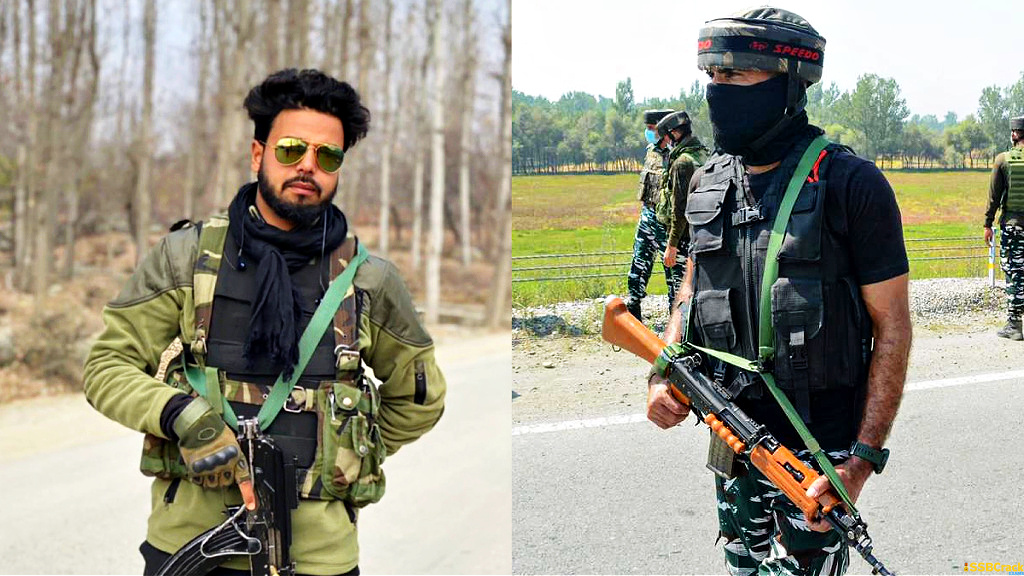
Rifleman Javed Ahmad, a 25-year-old soldier belonging to the Jammu and Kashmir Light Infantry regiment, has gone missing in Kulgam district of South Kashmir. He had returned home on leave to celebrate Eid with his family and was scheduled to resume duty on Monday.

The soldier was last seen on Saturday around 6.30 pm when he ventured out to buy some items from the local market, driving an Alto car. However, when he failed to return home by 9 pm, his worried family members began searching for him. Their concern heightened when they discovered the abandoned car near the market, which reportedly had blood stains.

Local authorities were promptly notified, and the Kashmir police have registered a case. 

Security forces have launched a large-scale search operation to locate the missing soldier. 

Kashmir has witnessed similar incidents in the past, where soldiers on leave have been abducted and killed by terrorists.

J&K L-G Manoj Sinha joins historic 10th Muharram procession in Srinagar

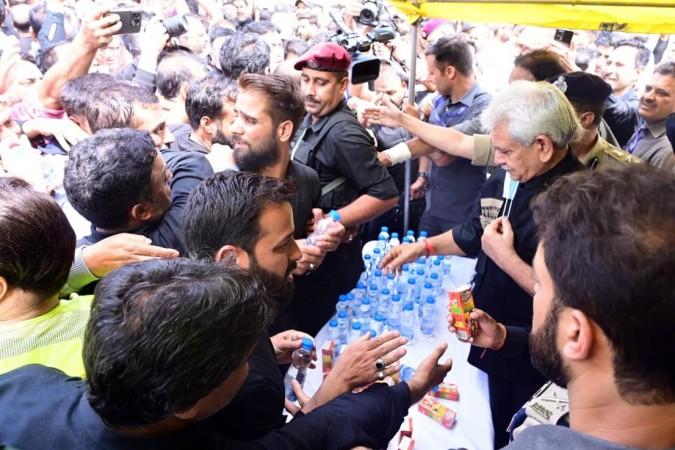
In an unprecedented move, Jammu and Kashmir Lt. Governor Manoj Sinha participated in the 10th Muharram procession held in Srinagar’s Bota Kadal area. This marks the first time in the last 34 years that a head of administration has joined a Muharram procession in the region.

The 10th Muharram holds immense significance for the Muslim community as it commemorates the martyrdom of Imam Hussain, the grandson of the Prophet of Islam, along with his devoted followers at the hands of Yazid’s army in the historic Battle of Karbala in present-day Iraq.

L-G Manoj Sinha, accompanied by Kashmir Divisional Commissioner Vijay Bidhuri, paid solemn and heartfelt tributes to Imam Hussain during the procession. The event saw the presence of scores of mourners, who were deeply moved by the high-profile participation of the Lt. Governor.

Authorities made special arrangements to ensure the smooth and secure conduct of the Muharram procession. Adequate security measures were put in place to maintain peace and order during the event. Additionally, healthcare facilities were readily available, and arrangements for refreshments were made to cater to the needs of the participants.

During the procession, L-G Manoj Sinha took a personal interest in ensuring the well-being of the mourners and distributed refreshments among them as a gesture of solidarity and compassion.

The Muharram procession continued through the streets of Srinagar and is set to conclude at Imambada in the Zadibal locality.

PM Modi urges G20 for Int’l legally binding document to end plastic pollution

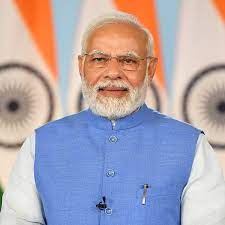
New Delhi : Prime Minister Narendra Modi on Friday called upon the G20 to work on an international legally binding document to end plastic pollution In a virtual address at the inaugural session of the G20 Environment and Climate Sustainability Ministerial meeting in Chennai, Modi said, “I call on the G20 to work constructively to work on an effective international legally binding instrument to end plastic pollution.”

He also highlighted responsible management of oceanic resources.

“Responsible use and management of ocean resources is of vital importance. I look forward to the adoption of G20 high-level principles for a sustainable and resilient blue and ocean-based economy, ” the prime minister said.

PM Modi pointed out that India is one of the top five countries in the world in terms of installed renewable energy capacity.

“We have also set a target of attaining net-zero by 2070. We continue to collaborate with our partners through our alliance, including the international solar alliance, CDRI and the leadership group for industry transition. India has consistently been at the forefront of taking action on biodiversity conservation, protection and enrichment, ” PM Modi informed delegates.

Speaking about the recently launched International Big Cat Alliance for conservation of seven big cats of the planet, the prime minister said that it is based on the learnings of India’s Project Tiger.

“As a result of Project Tiger, 70 per cent of the world’s tigers are found in India. We are also working on Project Lion and Project Dolphin, ” PM Modi informed.

Preneet Kaur writes to PM Modi, seeks relief for flood-hit Punjab

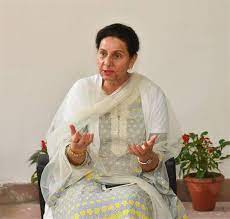
Patiala : Member of Parliament from Patiala, Preneet Kaur, on Friday wrote a letter to Prime Minister Narendra Modi seeking relief for people badly affected in Punjab.

In her letter, she wrote: “As you are aware, the incessant floods have devastated 19 districts in Punjab, including my constituency, Patiala, which has been the worst affected. Around 500 villages have marooned and 1.25 lakh acres of farmlands are still under deep waters. Patiala city, many towns, and a large number of ‘bastis’ (villages) in the constituency have been badly hit.”

Describing the damage to the crops, she further wrote, the Kharif crop is totally destroyed, over three feet sand and silt brought in by the Ghaggar river is deposited all over the fields, leaving little chance for re-sowing of paddy and other crops, for it is not immediately possible to reclaim the lands.

“It needs a great deal of effort and funds, too. The loss of dwellings and cattle heads has further added to the despair of these people.”

Requesting a special one-time special assistance for Punjab, she wrote: “While I would like to thank you and the Central government for sending Rs 218.40 crore to Punjab for undertaking various measures to deal with the disaster, I would like to suggest for your consideration that a special one-time assistance may be directly given to the farmers which could be released through the Prime Minister’s Kisan Sanmaan Nidhi Yojana.”

Urging the Prime Minister for a package for farm labourers and people belonging to the economically weaker section, she said: “A similar dispensation could be considered for the farm labourers and other weaker sections of the populace who have completely lost their home and all their belongings within.”

CAIT urges govt for early roll-out of e-commerce policy & rules

New Delhi : Confederation of All India Traders (CAIT) on Thursday, appealed to Commerce Minister Piyush Goyal for an early rollout of the E-commerce policy and E-commerce Rules under the Consumer Protection Act.

In a letter to the Commerce minister, CAIT called for an even playing field for traders competing with the “foreign e-commerce companies” against alleged challenges such as uneven competition created by predatory pricing, exclusivity and inventory management.

“Through e-commerce, no substantial FDI is entering into India rather which comes under the guise of FDI, is used for cash-burning or to support huge losses incurred by global e-tailers,” it said.

CAIT in the letter alleged that several foreign-funded e-commerce companies practice predatory pricing, deep discounting, loss funding, and owning inventory; and use a preferential seller system in their operations, causing unfair practices that add to the vulnerability of Indian e-commerce companies.

The umbrella body also sought the prohibition of flash sales and predatory pricing along with urging to make e-commerce companies responsible for the products they sell on their platform, reported Financial express.

As per reports, the trader’s body has also urged for setting up grievance redressal mechanisms by e-commerce companies against mis-selling of goods and services.

BC Bhartia, National President and Praveen Khandelwal, Secretary General of CAIT said, “We are not urging for any special favour for the traders but are certainly inclined to ensure that laws, rules & regulations and policies of the government must be followed by one and all both in letter and spirit.”

“If level playing is not granted, the traders of the country shall be compelled to lose their businesses because of the manipulative and unethical business practices of the e-commerce companies. We are sure that the government led by Prime Minister Narendra Modi must not have this intention,” they added.

Muharram procession held in Kashmir after three decades

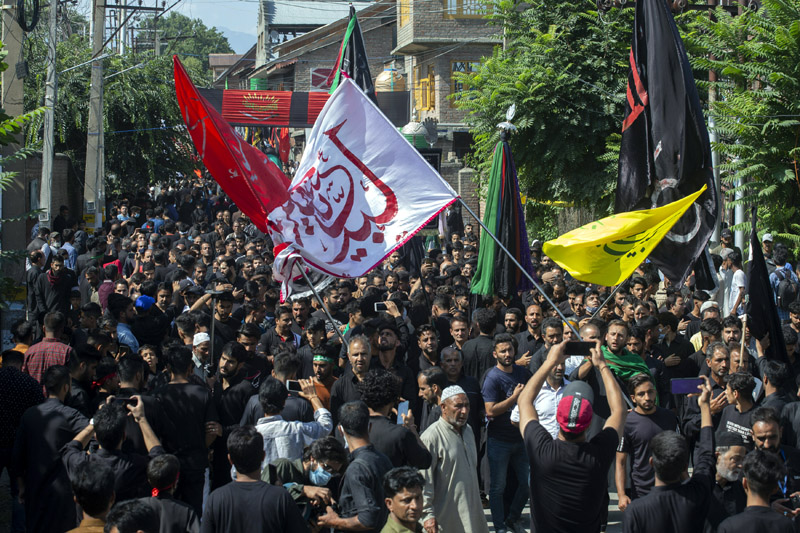
For the first time in 34 years, thousands of Shia Muslims in Kashmir Valley participated in a procession to commemorate the eighth day of Muharram, the first month of the Islamic lunar calendar. 

The mourners dressed in customary black, beating their chests and chanting elegies passed through streets of Srinagar  . 

However, the procession was held amid heavy security arrangements.

Muharram is an important month in Islam during which Muslims worldwide conduct processions to mourn the martyrdom of Hussain Ibn Ali al-Hussein, the grandson of Prophet Muhammad, who died in 680 AD at the Battle of Karbala in present-day Iraq.

The Muharram procession had been banned in Kashmir since 1989 when separatist movement broke out in the then state. The ban was lifted, allowing the event to take place after more than three decades. 

Saturday, known as Ashura, marks the 10th day of Muharram.

MOST POPULAR

HOT NEWS