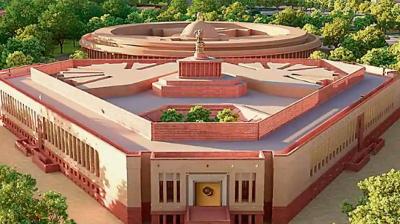
New Delhi : Members of both the Rajya Sabha and Lok Sabha will attend a function in the Central Hall to commemorate the legacy of the Parliament before moving to the new Parliament building on Tuesday.
According to sources, after a group photo session of the members of both the Houses at 9:30 a.m., a function titled ‘Legacy of Parliament of India and Making Bharat Developed by 2047’ will be held in the Central Hall between 11 a.m. and 12:30 p.m. After this, the special session will resume in the new Parliament building at 1:15 p.m.
At the programme in the Central Hall, Parliamentary Affairs Minister Pralhad Joshi, leader of Congress in the Lok Sabha Adhir Ranjan Chowdhury, NDA’s leader of the Rajya Sabha Piyush Goyal and leader of opposition in the Upper House Mallikarjun Kharge will speak, sources said.
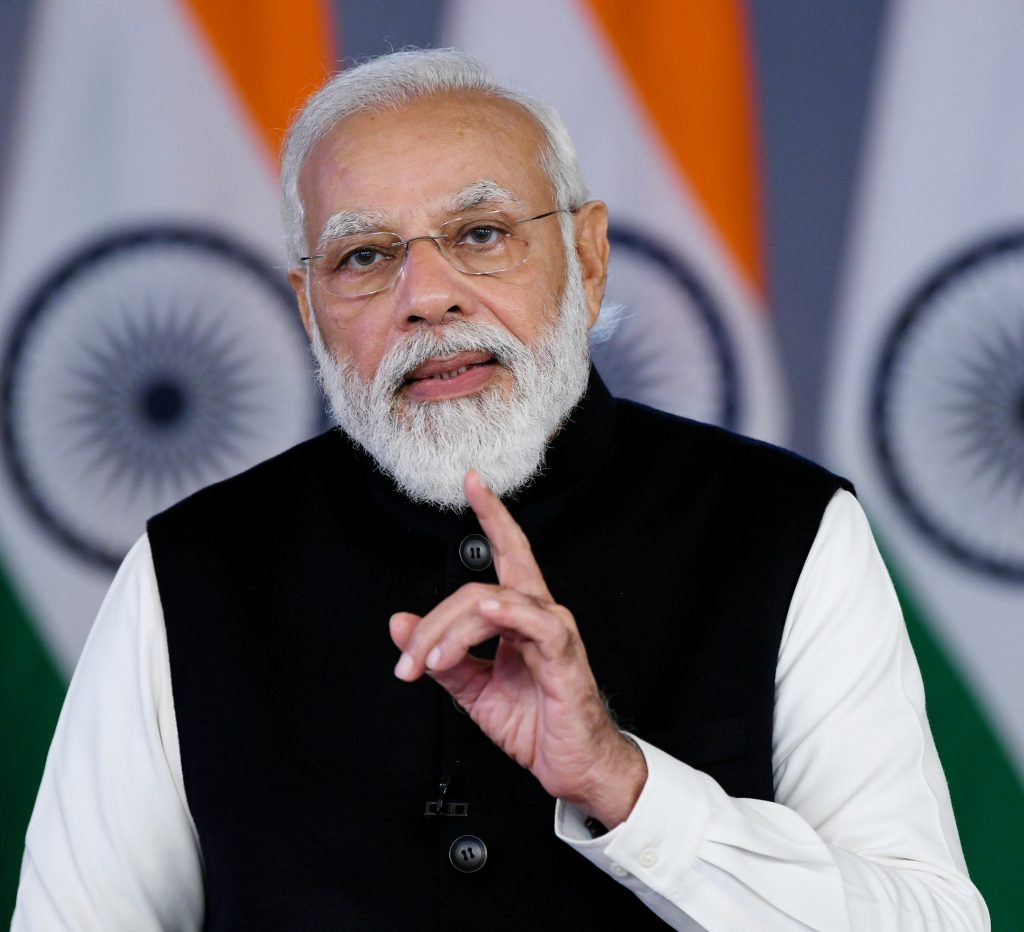
Prime Minister Narendra Modi, who is the leader of the Lok Sabha, will be present at the function but it is not clear if he will address the gathering.
Meanwhile, the Lok Sabha was adjourned for the day on Monday after the culmination of the discussions on 75 years of Parliament.
Earlier on Monday, the Prime Minister had initiated the discussions at 11:20 a.m., after which several MPs shared their experiences of the old Parliament building for the next seven hours.
Speaker Om Birla, after the end of the discussions, adjourned the House till Tuesday, informing that the proceedings will now resume in the new Parliament building.
Birla said he has had a memorable experience in the last four years of his tenure in the old building and expressed hope that in the new Parliament building, proceedings will be held with renewed vigour and energy.
Regular functioning in the new building is expected to begin from September 20, sources said.
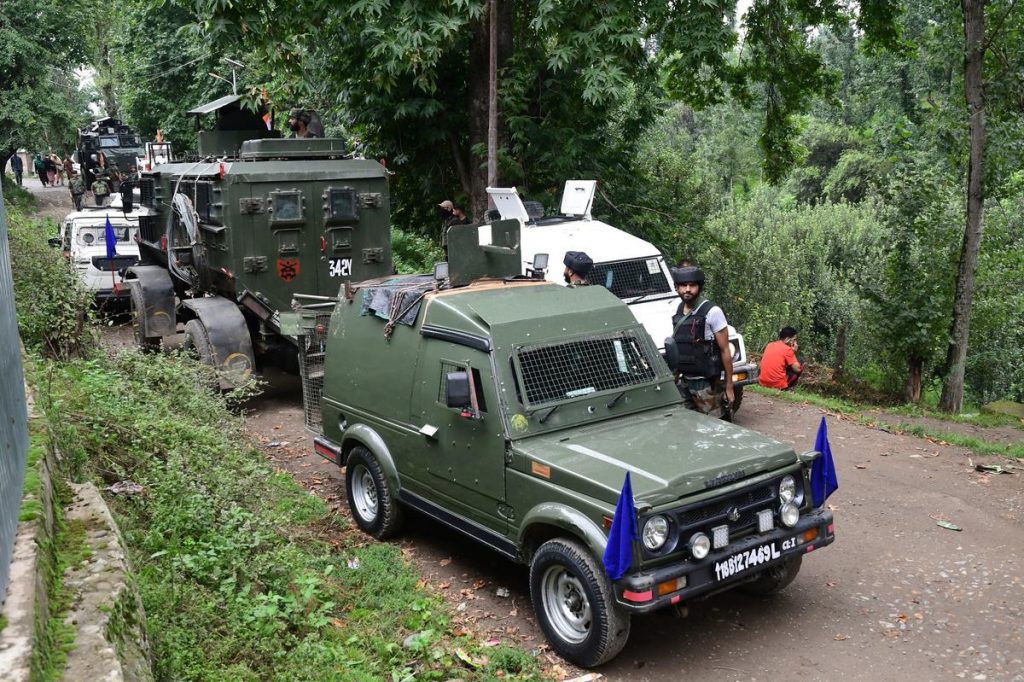
Security forces are closing in on a terrorist hideout deep within the dense forests of Gadol area in Kokernag in south Kashmir in an operation that is now in its sixth day and has seen thousands of troops, including para commandos, engaged in a protracted gunfight with the terrorists.
Three officers, including two from the Army and a policeman, have lost their lives in the encounter so far. The security forces also recovered the charred remains of an unidentified body from a cave.
The terrorists, believed to number between two to three, are heavily armed and strategically positioned within the steep and dense forest terrain. One of the terrorists has been identified as Uzair Khan, who joined Lashkar-e-Taiba last year and is familiar with the area.
The operation has been further complicated by intermittent rainfall at the encounter site, reducing visibility significantly. The Pir Panjal hills boast dense forests, caves, and ditches, making it a challenging environment for the operation.
The security forces are proceeding cautiously, suspecting the possibility of terrorists lying in wait or improvised explosive devices (IEDs) planted in their hideout.
To mitigate the risks, the army is employing dogs and specialized equipment to detect explosives in the area.
The troops have utilized mortar shells, rockets, advanced drones, and hi-tech equipment to target suspected terrorist hideouts.
The joint operation by the Army and police commenced based on intelligence input, and the terrorists, apparently anticipating the move, opened fire on the forces, trapping them between the dense forest and a deep ditch.
This engagement resulted in the tragic loss of two Army officers, Colonel Manpreet Singh and Major Ashish Dhonchak, and Deputy Superintendent of Police Himayun Bhat. Two more soldiers were injured, while one remains missing.
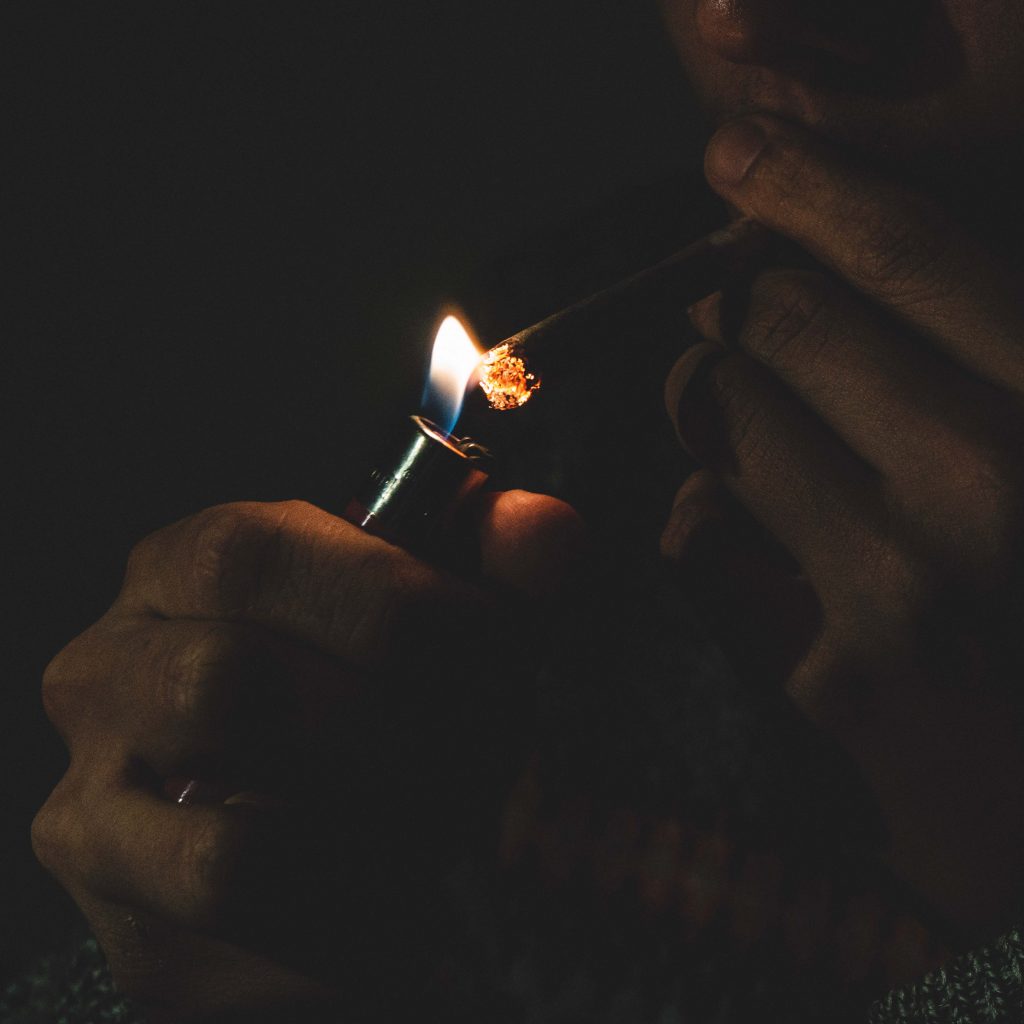
A drug epidemic is quietly tightening its grip around Imphal, a city recently ravaged by ethnic violence. The allure of the drugs now extends well beyond the youth of Manipur, and has ensnared even the government employees besides others. A report by Tehelka SIT
Upon arriving at Imphal airport, inquiries with local taxi drivers reveal insights into areas where drug-related issues are prevalent. When prodded, they mention neighbourhoods like North Aoc, Kshetrigao, Lilong and Top Heikhru Makhong. These areas, according to them, are a few hot spots of the city where drugs are easily available.
A taxi driver also shared another revealing insight with us: when you arrive at one of the aforementioned locations and request “Heroin number 4,” which is the popular term for the fourth-stage drug extracted from poppy, peddlers will try to ignore your query. However, the moment you signal with four fingers, they immediately understand that you are a regular customer and would promptly supply the drug. Sources familiar with the drug trade in Manipur informed Tehelka that these days, “Heroin number 4” is the most sought-after drug in Imphal.
Based on our investigative findings, it becomes evident that the allure of this drug extends well beyond the youth of Imphal, capital city of Manipur, which has been struck by ethnic violence during the last couple of months. Tehelka also unearthed a disconcerting reality: a substantial number of state government employees, including engineers, contractors, clerks, and worryingly teachers—who are entrusted with the responsibility of spreading awareness against drug abuse —are also falling victim to heroin addiction. Sources indicated that approximately 10-15 government employees sought treatment at a drug rehabilitation centre in Imphal. “We do not have precise figures for other rehabilitation centres in Manipur,” sources added.
The ongoing crisis in Manipur has unveiled one of the most significant non-traditional threats to India’s internal security, taking the form of narco-terrorism. The Government of Manipur’s “War on Drugs” has laid bare the presence of a formidable drug cartel and their pervasive influence on the social and political fabric of Manipur.
During the investigations, we learnt that drugs have made deep inroads into Manipur society. Not only youth and those working in private firms are buying, using and selling drugs, but even the state government employees, including teachers — who shoulder the responsibility of shaping the future of our country — are not immune to drug use either.
To get to the bottom of what went wrong in Manipur, Tehelka spoke exclusively to Dr Stalin Oram (name changed), a medical officer at a drug rehabilitation centre in Imphal, one of the many operating in the city.
Dr Stalin Oram (name changed) shared his experiences of treating 10-15 Manipur state government employees who had been battling drug addiction for an extended period. And this is a figure from a single rehabilitation centre.
Also, in an exclusive interview, Rajesh Raj (name changed), a science graduate who struggled with drug addiction for five years beginning in 2016, revealed his journey to recovery. He explained how with the assistance of an NGO and a rehabilitation centre, he successfully overcame his drug dependency. Today, Rajesh Raj is not only leading a drug-free life, but is actively engaged in drug prevention efforts as a member of an NGO.
While informing that he has treated many clients at his centre, Dr Stalin expressed concern over the fact that many Manipur state government employees are also hooked on drugs. Reports about Manipur state government employees getting into drugs were thus corroborated by Dr Stalin Oram, incharge of a rehabilitation centre.
Reporter: From which background do these drug addicts come from?
Dr Stalin: It varies. We have seen people from all walks of life, from extremely poor labourers to very educated individuals, including government employees turning to drugs.
Reporter: Even government employees are taking drugs?
Dr Stalin: Yes, unfortunately. Drugs can affect anyone, regardless of age, sex, or background. They don’t discriminate.
A rehabilitation centre for drug addicts in Manipur
[Dr Stalin told us that drug addiction is a major problem in Manipur. It affects people from all walks of life — from labourers to educated individuals to government employees. Stalin first hesitated but later revealed that he has treated even Manipur state government employees at his centre]
Dr Stalin went on to reveal that government contractors, engineers, clerks and, alarmingly, even teachers, in significant numbers, are involved in drug use.
Reporter- Were the government servants you treated from the Centre or the State?
Dr Stalin- Mainly from the state government offices.
Reporter- So how many government employees you have treated at your rehabilitation centre so far?
Dr Stalin: In one year of my tenure at the rehabilitation centre, I guess I have treated about 10-15 government employees, including teachers, engineers, contractors and clerks.
Reporter: What positions did these employees hold?
Dr Stalin: As I mentioned earlier, they encompassed engineers, contractors, and teachers, with most being from teaching profession.
[Dr Stalin confessed that in one year of his service at the rehabilitation centre, he had treated around 10-15 employees, mainly from the state government, with none belonging to the central government. ]
Dr Stalin voiced concern for Manipur’s youth falling prey to drugs, considering that they are the future of both the state and the country.
Reporter: Is the drug addiction among government employees a major issue in Manipur?
Dr Stalin: Of course. It is a major problem, not only for government employees but for any individual. When you cannot focus on your work, it causes harm to yourself and to the entire society. While on the one hand, government employees are succumbing to the lure of drugs, on the other hand, youth are also becoming victims of substance abuse. This is a big problem. My area of concern is the youth, sir, because the future of the state and the country depends on them.
Reporter: We hear even women are taking drugs?
Dr Stalin: Indeed. There are some centres in Manipur that specifically cater to women. Not mine, but there are some other centres.
[Beyond government employees in Manipur, Dr Stalin disclosed that even women in the region are falling victim to drug addiction. He noted that there are a few drug rehabilitation centres in Imphal that specifically cater to women.]
As the talk progressed, Dr Stalin told us that the prices of drugs had gone up since the ethnic violence broke out in Manipur. This is because the drugs are not coming easily from Myanmar into Manipur due to the violence. Previously, drugs were readily available on the streets of Imphal. However, after the violence, drugs are scarcely available, and when they are, it’s at a higher price, he said.
Reporter: What is the present situation of drugs in Manipur?
Dr Stalin: Over the past four months, the situation in the state has been chaotic due to ethnic violece. As a result, the cost of drugs has gone up because of its limited availability. The drugs have to come from the main border areas, such as Myanmar, Moreh, and Churachandpur, which have been difficult to access. As a result, though drugs are available, they are very expensive.
Reporter: So what are the drug’s current and previous prices?
Dr Stalin: The price of 1 gram of drugs is around Rs 400 to 600 at present, which is much higher than the previous price of Rs 150 to 200. Drugs were easily available at some hotspots in Imphal city earlier, but it is no longer the case.
[Dr Stalin disclosed that after the violence broke out in Manipur, it has become difficult to get drugs in Myanmar. This has led to an increase in the price of drugs, which one can still get with some difficulty on the streets of Imphal, but at a much higher price than before.]
Dr Stalin nows opines that the Manipur government’s war on drugs is not enough. The government is trying to rein in the drug trade, but the drugs are still coming into the state from Myanmar through the porous border. He said that now heroin is more in demand than cocaine. Reporter: What are the police doing to control the drug menace in Manipur?
Dr Stalin: The current government has waged a war on drugs to curb this menace, but it’s a daunting task. On the one hand, the police are trying to control the supply of drugs, but on the other hand, the drugs are still coming in from the border. The border is not sealed, and the drugs that are coming in are of the best quality. Heroin is the most popular drug now, even more popular than cocaine. Heroin is also more expensive than cocaine.
[According to Dr Stalin, because of the porous border, war on drugs in Manipur by the government and the police is not yielding results. He said that demand-wise, Heroin has long overtaken cocaine in Manipur]
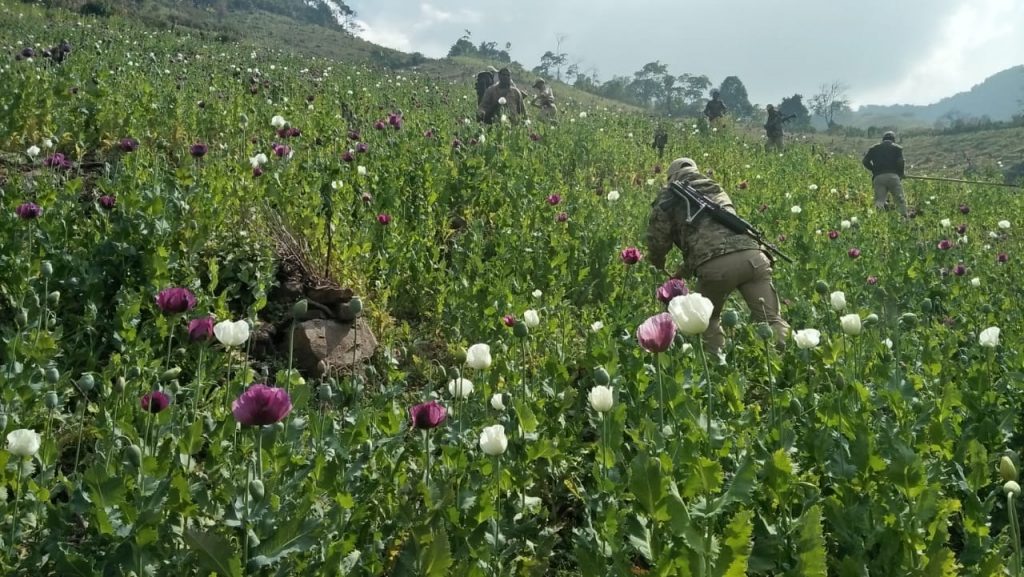
According to Dr Stalin, the longstanding issue of poppy cultivation in Manipur’s hills has been jeopardizing the future of the state’s youth. He highlighted the helplessness of civilians who, he argued, cannot venture into the hills to eradicate these illegal crops. According to him, it falls upon the government to address this problem by implementing stringent deterrent laws.
Reporter: What is your take on the issue of illegal poppy cultivation in Manipur?
Dr Stalin: As we all know, sir, poppy cultivation has persisted in Manipur for many years now. It’s a situation where neither you nor I can personally venture into the hills to halt these plantations. Therefore, it is the duty of the incumbent government to enact effective laws to eradicate this cultivation at any cost, considering the immense risk it poses to the future of our youth.
[Dr Stalin emphasised the urgent need for government intervention to combat the persistent problem of illegal poppy cultivation in Manipur’s hills, recognizing the severe threat it poses to the state’s youth. ]
While talking about his drug rehabilitation centre, Dr Dr Stalin said that in last 20 years, 11000 patients have been treated at the centre. The success rate is 41%. However in some cases the patients after recovery goes back to drugs again.
Reporter- Dr Dr Stalin, do you keep track of patients after they leave your rehabilitation centre to see if they are living normal lives or have relapsed?
Dr Stalin: Yes, we do. We have a routine follow-up system in place. We either visit their homes or they come to us. We also have telephone conversations with them. Of the 11,000 patients we have treated in the past 20 years, we have been conducting evaluations for the past 2 years. For these 11,000 people, the recovery rate is 41%. That means 41% of them are doing well, but there is a chance of relapse for the others. We call them for counseling sessions along with their families and encourage them to return to the rehabilitation centre for further support.
[In the conversation, Dr Stalin, a drug rehabilitation expert, discussed about the drug issues in Manipur and the challenges of rehabilitation. He also talked about the importance of follow-up care for recovering addicts.]
Now, Dr Stalin explains the varying admission durations at his rehab centre: two months for new clients, one month for second-time clients, and 3-4 months for those abandoned by their families.
Reporter: What’s the minimum duration of admission at your rehabilitation centre?
Dr Stalin: It depends. For first-time patients, it is two months. For patients who have been to the centre before, it is one month. However, patients who are neglected by their families can stay for 3-4 months.
[ Dr Stalin emphasized the importance of tailoring the length of stay to the individual patient’s needs. He stressed that some patients may need more time to recover than others. ]
Now, Dr Stalin reveals how he treats the drug addicts and efforts he make to reduce withdrawal symptoms among them.
Reporter: What is the method of treating drug addicts?
Dr Stalin: We use a detoxification program. We give them prescribed drugs to help them withdraw from the drugs they are addicted to.
[ Dr Stalin emphasized the importance of detoxification in the treatment of drug addiction. He said that it is the first step in the recovery process and that it helps in reducing the withdrawal symptoms.]
Dr Stalin now talks about how patients can become violent and aggressive during withdrawal, and how it can become difficult to control them.
Reporter- How tough it is to treat them? Tell me any incident when you were abused while treating them?
Dr Stalin–I have never come across any type of abuse as such…but yes when a patient suffers from withdrawal it is difficult time, as the patient becomes little a bit wild and aggressive so it become a little bit hard to control. So we have to hold legs or hands.. but I have not been abused.
[ Dr Stalin discussed the challenges of treating drug addicts. He stressed upon the importance of patience and understanding when treating drug addicts, even when they become violent or aggressive during withdrawal.]
After Dr Stalin, a medical officer, shared his experiences at his rehabilitation centre in Imphal, we caught up with Rajesh Raj (name changed), a science graduate who struggled with drug addiction for five years, beginning in 2016. While revealing his journey to recovery, he explained how with the assistance of an NGO and a rehabilitation centre, he successfully overcame his dependency on drugs. Today, Rajesh Raj is actively engaged in drug prevention efforts as a member of an NGO while leading a drug-free life himself.
While sharing experiences of his life as a drug addict, Rajesh claimed that while taking drugs he was caught several times by the police. However he managed to bribe his way to freedom every time he fell in the police net.
Reporter: Were you ever caught by the police?
Rajesh: Yes, I was arrested 2-3 times by the police. But I managed to bribe my way out every time.
Reporter: How much money did you pay?
Rajesh: The narcotics police arrested me once. I paid them Rs 3,000, and they let me go. I always paid the police, so there is no case against me.
[ Rajesh disclosed that when he was taking drugs, he was caught several times by the police. But every time he was let off after he paid money to the cops. He said that there was no case pending against him.]
Rajesh now disclosed the amount of drug he used to consume. He said that he consumed 2 grams of drug every day, which cost him Rs. 1,000. He said that he quit drugs after realizing the financial and health costs of his addiction.
Reporter: How much drug did you consume every day?
Rajesh: Two grams. It cost me around Rs. 1,000.
Reporter: Why did you quit?
Rajesh: I realized that it was costing me too much money. I was also starting to get sick. I decided that it was time to get my life back on track.
[Rajesh said that quitting drugs was difficult, but it was worth it in the end.]
Rajesh explained that in 2016 he had a job, and that’s how he was managing to buy drugs for himself. Reporter: How did you afford the drugs?
Rajesh: I had a private job in 2016, so I had the money to purchase drugs.
Bikramjit Rajkumar
[Rajesh clarified that his employment in 2016 provided the financial means for his drug purchases during that time.]
Now, Rajesh disclosed the name of the drug he was using, the source from which he was obtaining it, and the friend who was supplying it to him.
Reporter- Which drug you were taking?
Rajesh- I was taking opium. But now I am off-drugs… I took opium for around 4-5 years..
Reporter- You took heroin?
Rajesh- Opium is Heroin in Manipur. I used to buy from BOC area, a red light area of Imphal. It is a market. My friend also sometimes supplied drugs to me.
[While remembering his drug days, Rajesh disclosed he used to take opium, which he would buy from a market in Imphal.]
Rajesh said that he started taking drugs in 2016 after his father married another woman, and stopped living with him and his mother..
Reporter: What led you to start using drugs?
Rajesh: When my father married another woman and stopped living with my mother and me, it had a significant impact on me. My mother stayed with me, and my father only occasionally visited home.
[Rajesh explained that he turned to drugs in 2016 after his father remarried and moved away from him and his mother to live with his second wife]
“How did he overcome his drug addiction?” In response to this question, Rajesh said that he successfully battled addiction with the support of an NGO, underwent therapy at a drug rehabilitation centre, and is now completely drug-free. In fact, he said that he was also working with an NGO to help other people who were struggling with addiction.
Reporter- How did you leave drugs?
Rajesh – I met some kind of NGO… which helps those who want to give up drugs. I got therapy at XXXX society. Now, I am providing my services at the same NGO ….I am working there as au pair educator.
[Rajesh’s journey from addiction to recovery also serves as a testament to the transformative power of rehabilitation and support from NGOs. His story highlights the possibility of rebuilding one’s life after battling addiction.]
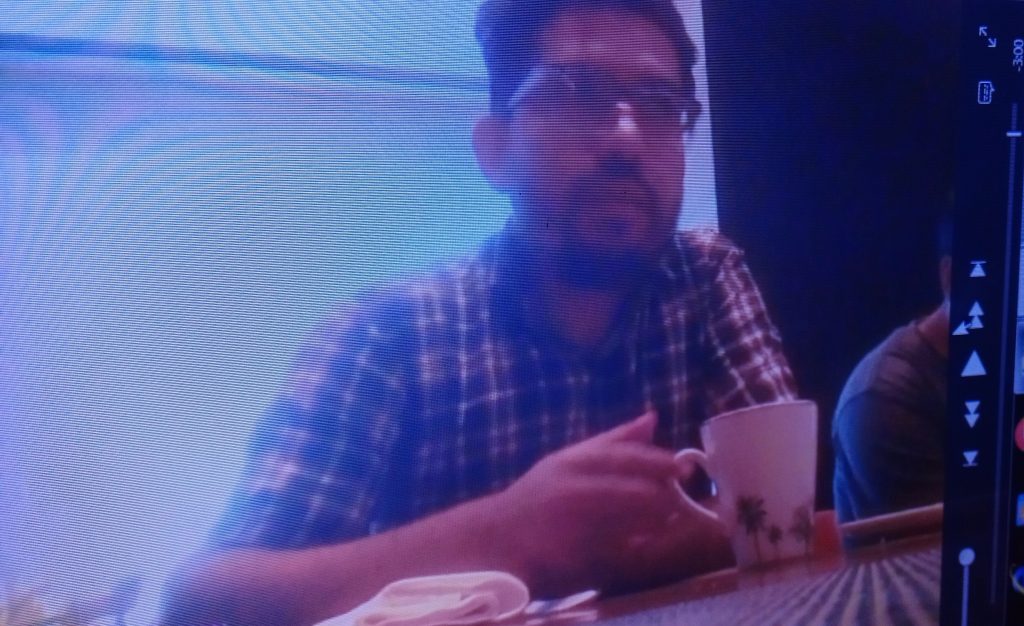
After speaking with Rajesh, we met Azharuddin Sheikh, another MBBS doctor hailing from Manipur. Azharuddin echoed Rajesh’s concerns, pointing out that a growing number of government servants in Manipur were grappling with drug addiction. He emphasized that it wasn’t just limited to government employees; many young individuals, including Muslims, in Manipur were also succumbing to drug dependency.
Azharuddin Sheikh
To address this issue, Azharuddin highlighted the efforts of an organization called Anjuman, which runs a rehabilitation centre in Imphal that helps Muslim youths overcome drug addiction. Azharuddin also said that some Maulanas were also working tirelessly to prevent young people from falling into drug addiction. They are encouraging these youths to engage in Jamaat (religious preaching) activities in order to divert their focus away from drugs.
Reporter- Accha kis level k log wahan drug addict hain.. Manipur mein.?
Azhar- Addict wala to youth hi hai…haan bahut..Muslim mein thoda kam hua hai…matlab maulana log pakad- pakad kar, ek organization hai Anjuman ..maulana log pakad kar usko sahi kar rahe hain..
Reporter- Accha Muslims ki organization hai… kya naam hai ?
Azhar- Anjuman..wahi log kaam kar raha hai..uske opar.
Reporter- Maine suna hai employee bhi drug addict hai..?
Azhar- Haan ..bahut kam percentage hai..
Reporter- Wahan drug rehab centres bhi honge.?
Azhar- Haan wo to hain..
Reporter- Kitne honge..?
Azhar- Muslims k to 2-3 hain aur Meiteis k to uncountable hoga…
Reporter- Muslims kay apne drug rehab centres hain..?
Azhar- Haan..Leilong kay ander hamara ek hai..
Reporter- Wo centre ka hai ya state ka..?
Azhar- Wo Anjuman…Muslim wala, wahan sare Muslim ladke aatey hain…wahan unka Ilaj hota hai…phir jamaat mein bhejtey hain…
Reporter- Jamaat mein kya sikhatey hain.?.
Azhar- Matlab wo deen ka, namaaz padhna, drug lena gunah hota hain ye sab batatey hain…
[While confirming that the many government servants of Manipur state are indeed suffering from drug addiction, Dr Azharuddin Sheikh praised the role Anjuman, a rehabilitation centre, for helping Muslim youth in overcoming drug addiction]
Dr. Azhar then shed light on the operational intricacies of the drug trade in Manipur. He explained that in the hills, poppy cultivation is primarily carried out by the Kukis. Once the poppy reaches the plains, the illegal drug trade is jointly managed by both Meteis and Muslims.
Reporter- Accha poppy cultivation karte hain Kuki..?
Azhar- Haan ..khatarnak kartey hain, matlab deforestation karke.. pahadon pe 80 percent to kar diya wo…matlab kukis…habitant area mein poppy cultivation kar diya..plain mein Muslim aur Meitei karta hai…cultivation hota hai pahad mein..harvest honey k baad plain mein aata hai.
Reporter- Plains mein kaun sambhalta hai ?
Azhar- Meiteis aur Muslims.
[Dr. Azhar explained how the drug trade operates in Manipur. He said that poppy cultivation is done in the hills by Kukis. The poppy is then transported to the plains, where it is processed and sold by Meteis and Muslims.[
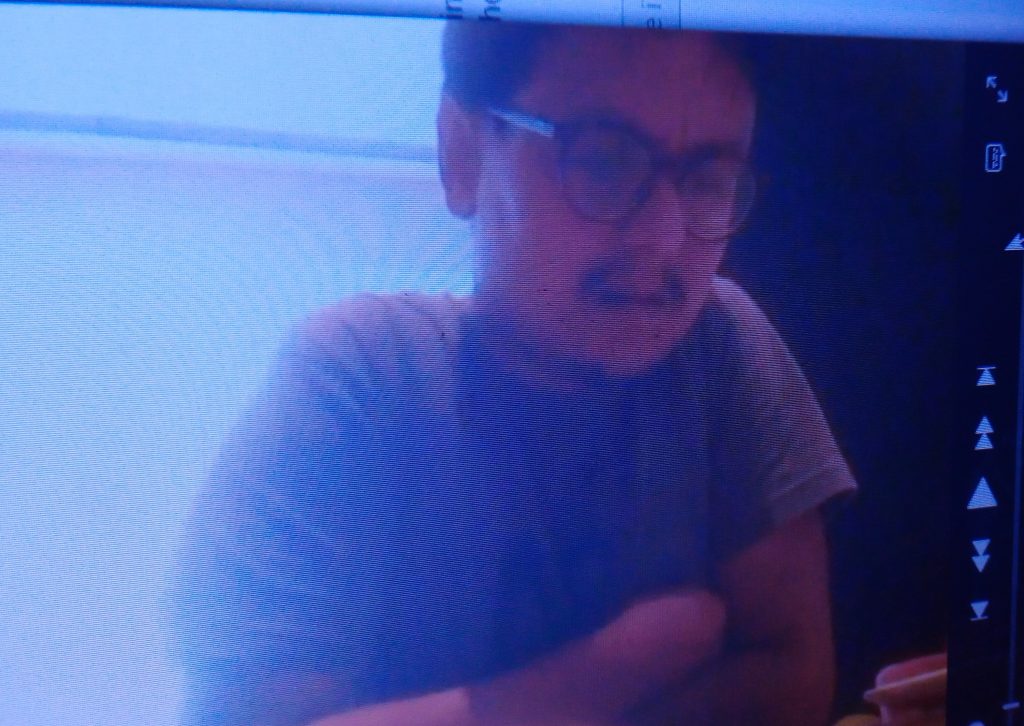
Next, Tehelka interviewed Mohammad Wasim, another MBBS doctor from Manipur, who corroborated the observation regarding drug usage among government employees in the state. He revealed that this issue extended beyond government servants adding that even some doctors themselves were involved in drug consumption. Wasim emphasized that anyone, regardless of their profession, could fall into the trap of drug dependency.
Reporter- Accha muje koi bata raha tha Manipur mein jo government servants hain.. wo bhi drug addict hai.?.
Wasim- Haan …Wo to hai…hamara doctor bhi drug addict hai.
Reporter- Doctor bhi ?
Wasim- Haan…har aadmi ki aadat hota hai…kisi k bare mein kuch nahi keh sakte, doctor bhi aadmi hota hai..
Reporter- Manipur mein doctor bhi hai drug addict ?
Wasim- Haan hai..
Reporter- Aur government servants ?
Wasim-Haan – Haan hain bahut saara.
Mohammad Wasim
[Dr. Mohammad Wasim affirmed the presence of drug usage among Manipur state government servants. He pointed out that this issue extended beyond government employees, as some doctors had also succumbed to drug abuse. He emphasized that drug addiction could affect anyone, irrespective of his status and background]
Wasim then shared with the reporter that he had been observing the drug abuse situation in Manipur since 2013, even before completing his MBBS.
Reporter- Aap kab se dekh rahe ho drugs ko Manipur mein..kis age se?
Wasim- Jab hum….2013 se dekh rahe hain..MBBS complete karne se pehle.
[Now Wasim told reporter that since 2013, before completing MBBS, he has been watching Manipur getting mired in drug issues.]
Meanwhile, Bikramjit Rajkumar, an activist from Manipur, told Tehelka that drug use among state government employees and Manipur police personnel was widespread. He claimed that even some state police personnel had also succumbed to addiction.
According to Bikramjit, while many of his childhood friends are involved in drug use, one of his friends has successfully overcome addiction with the assistance of an NGO. “He managed to break free from drug addiction through therapy at a drug rehabilitation centre,” he said.
He further revealed that the drug pouch which was easily available on Imphal streets earlier was hard to obtain now. “The supply has been badly affected after ethnic violence broke out in Manipur, with the result that purchasing a drug pouch would now burn a hole into your pocket,” he said.
According to Dr Dr Stalin Oram, there 20 rehabilitation centres in Imphal alone, while there are more than 100 in Manipur. This indicates how serious the drug issue has become in the state, which is affecting government employees, teachers, and other professionals. If the problem is not addressed, it will have a devastating impact on the state’s future.
When ahead of the G20 Summit, former Prime Minister Manmohan Singh praised the Modi government’s stand on the Russia-Ukraine war, saying the country has “done the right thing by prioritising its sovereign and economic interests while advocating for peace”, it was clear that it was India’s moment. In fact the former PM was so profuse in his praise that he went on to say that he was “more optimistic about India’s future than worried and very glad that India’s rotational chance for the Presidency of the G20 came during my lifetime.” Another leader Shashi Tharoor described the New Delhi Declaration at the 18th G20 Summit as “undoubtedly a diplomatic triumph for India”. He lauded the government for bringing all member states to a consensus on the New Delhi Declaration amidst the changing geopolitics.
It is indeed creditable that the government actually made it a people’s G20 by holding 200 meetings in 58 cities. The most daunting task was the tightrope walk diplomacy but it proved to be our trump card during the just-concluded G20 summit. The challenge for India was neither to antagonise the US-led West nor to annoy old ally Russia over the raging conflict in eastern Europe and Modi pulled it off with aplomb. As curtains fell, both Russia and the Western powers claimed that their respective positions on the Ukraine crisis had been vindicated. It was in India’s best interest to not get trapped in conflicts and maintain an equilibrium across nations. The G20 Declaration was adopted by consensus and it avoided any mention of the Russian invasion of Ukraine. Indeed, India’s growing clout on global platforms is a key takeaway from the G20 summit besides its independent foreign policy.
PM Modi’s words that today’s era must not be of war sum up the diplomatic skill in navigating this complex challenge at the summit and at the same time showcasing India’s growing economic strength, diplomatic capabilities, and leadership acumen to reshape the global order. Modi’s decision to hold a virtual “review” meeting in November, before India gives up its presidency, will deftly ensure implementation of the decisions arrived at the crowning glory moment of G20 Summit.
India has been able to engage with America, and President Joe Biden’s visit to India represents trust and cooperation at the global and bilateral levels. The India-Middle East-Europe corridor announcement is equally significant. To reassure Russia, India ensured that the declaration dropped the specific reference to Russian aggression. As far as China is concerned, it was the first time that President Xi Jinping skipped the G20 summit. Modi-Xi handshake would have invited criticism from the Opposition given the situation at the border. From the bilateral to the global, India had its best moments in geopolitics and it heralds a new chapter in the global order.
Indian diplomacy reached its zenith at the G20 Summit, when India was able to persuade Russia on one side and the US-led western powers on the other at G20 to give ‘peace’ a chance, paving the way for the historical 34-page Delhi Declaration, writes Gopal Misra
Indian diplomacy was at its zenith, when India was able to persuade Russia on one side and the US-led western powers at G-20 on the other to give ‘peace’ a chance under the framework of the UN Charter reasserting the concept of sovereignty of its members for ending the Ukraine conflict. The consensus, thus finally paved the way for a 34-page Delhi Declaration for intense economic cooperation among the expanded family of the group, which is now G-21 with the admission of the African Union (AU).
New Delhi witnessed intense exchanges of ideas among the world leaders as well as during the backroom diplomacy almost facing breakdown in the negotiations during the two-day session of the group. It, however, finally concluded successfully on September 10. The noted absentees on the high-table were the Russian President, Vladimir Putin, Chinese President Xi Jinping and the President of Mexico, Andres Manuel Lopez Obrador, who has been skipping the forum since 2019, raising his concerns regarding inequality in international forums such as G20. The Chinese Premier Li Qiang was present to lead his country’s delegation.
The initial Indian document circulated on the Ukraine-Russia conflict was considered too soft towards Russia. It was not acceptable to the European Union. The Russian foreign minister, Sergey Lavrov, however, vehemently opposed any reference blaming Russia for the conflict in the Declaration.
Stalemates during the intense negotiations prompted doubting Thomases among foreign policy experts across continents, from New York to London, to discount the chances of the New Delhi Declaration. Yet consensus evolved and the deadlock was resolved. The Russia-Ukraine War has been casting its dark shadow on the internal forum since its Bali Summit in 2022. It appeared difficult to resolve the stalemate, especially when India and China were consistently opposing any condemnation of Russia for invading Ukraine.
The unanimous approval of the Delhi Declaration has proved the earlier analysis and apprehension of the self-appointed strategic affairs experts in the West wrong. Even some of the functionaries at White House had expressed doubts about its success. They believed that the G-20 under the Indian presidency was destined to be concluded without any declaration. In spite of these adverse predictions, a beaming Narendra Modi finally announced the Delhi Declaration. In the second session at the 18th session of G-20 on day one, he, however, told the summit leaders that “Consensus among the members has been difficult to achieve as the member countries are divided over Russia’s war in Ukraine.”
The Indian experts on strategic affairs, including a few veteran Indian diplomats, quipped,” the western commentators were focusing on ‘difficulties or impediments,’ but India was keen for ‘solutions’ that finally ended the stalemate.
Focus on Economic Growth
The Ukrainian leaders have expressed their dismay for not condemning Russia for the aggression, but it definitely offers a window for negotiating peace as well as rehabilitation of the war-torn country and its economy. The consensus draft also expresses its “deep concern over the immense human suffering and the adverse impact of wars and conflicts around the world”; thus indicating an international commitment for assisting it.
The presence of the top executives of the world’s financial institutions such as the International Monetary Fund (IMF), the World Bank, the United Nations (UN), the Organization for Economic Co-operation and Development (OECD), the World Trade Organization (WTO), the International Labour Organization (ILO) and the Financial Stability Board (FSB) could enable the financially weak economies to access their resources. It means, if peace finally dawns, Ukraine could be one of the major beneficiaries.
The forum offers a unique platform for the Global South to have financial arrangements with the G-7 countries. They include the world’s richest nations such as Canada, France, Germany, Italy, Japan, United Kingdom, the United States, as well as the European Union.
Apart from them, G-20, which has become G-21 following the induction of the African Union, comprises Argentina, Brazil, China, India, Indonesia, Republic of Korea, Mexico, Russia, Saudi Arabia, South Africa and Turkey. These countries currently account for more than 80 per cent of world GDP, 75 per cent of global trade, and 60 per cent of the global population.
The G20 process is led by the Sherpas (Securing a Hybrid Environment for Research Preservation and Access) of member countries. They function as personal emissaries of the leaders and oversee negotiations, discussing agenda items for the summit and coordinating the substantive work of the forum. The Indian Sherpa, Amitabh Kant, who has been quietly working with Brazil, South Africa and Indonesia to reach a consensus on the language on the war in Ukraine in the summit document has been working round-the-clock during the conference.
The Delhi Declaration has decided to scale up sustainable finance in line with the G20’s Sustainable Finance Roadmap. It will be promoting the adoption of social impact investment instruments and improving nature-related data and reporting, informed by the stocktaking analyses, considering country circumstances.”
With its 112 outcomes and presidency documents, India has more than doubled the substantive work from previous presidencies.
India-Middle East-Europe Corridor
The announcement of the India-Middle East-Europe Corridor (IMEEC) with the endorsement of American President Joe Biden is considered a game-changer for the regional economy as well as a challenge to the Chinese Belt and Road Initiative (BRI). It envisages the shipping of Indian products to UAE and later the goods to European markets via rail-road systems. Meanwhile, Italian Defence Minister Guido Crosetto has told the media that the previous government made an “improvised and atrocious” decision when it joined the BRI. India and UAE have been toiling for the past 30 months for the proposed project before it was presented before G-20. Biden has extended American support to the US-led Partnership for Global Infrastructure and Investment (PGII). It envisages movement of goods through standardized containers from India to Fujairah Port on the eastern seaboard of UAE and then to Port of Haifa in Israel through 2650 kilometre of railroad via Saudi Arabia and Jordan. It is being given full support from Saudi Arabian Crown Prince Mohammed bin Salman; perhaps resetting the Arab powers’ growing proximity with China. .
Modi’s blitzkrieg visit on the concluding day of ASEAN on September 7 to Jakarta further strengthened India’s ties with the region facing growing Chinese threat in the region.
A Paradigm Shift
The successful conclusion of G-20 Summit and Biden-Modi talks augmenting the relationship between the two countries is expected to impact the geo-politics in near future. It was not just a rare gesture from Biden to drive directly from the airport to Modi’s residence offering bouquets of new deals and further confirming the high-tech defence offers.
It is rightly believed that this gesture has finally bridged the confidence deficit, if any, between them. Earlier, Indians having elephantine memory were being haunted by the American support to the genocide in East Pakistan, now Bangladesh. Further, during the G-20 session, Bangladesh PM Sheikh Hasina and her daughter were seen being photographed with Biden, thus burying the past forever.
Americans are also appreciative of Modi’ blitzkrieg visit to Jakarta just on the eve of the G-20, where he addressed the East Asia Summit comprising 18 countries, including the ASEAN Member States. It is hoped that Indian presence in the region will generate confidence in the region apprehensive of Chinese intentions.
India has also appreciated Biden’s decision according a priority to India; he arrives on the eve of G-20, skipping ASEAN conference..
It was further reflected in Biden-Modi’s joint statement highlighting deals on jet engines, armed drones and WTO dispute settlement.
Experts like Ashok Kantha, a former Indian ambassador to China, think the G20 remains “the most important platform for international financial and economic issues and for the development agenda”. By arriving at a consensus on the Delhi Declaration , Modi has restored G-20’s economic agenda. The presence of the representatives of the UN, International Monetary Fund and the World Bank at the conference enabled the countries of Asia, Africa and Latin America to initiate negotiations for investments
Happymon Jacob, a foreign policy analyst and associate professor of disarmament studies at the Jawaharlal Nehru University has endorsed the Indian view that “India is recognising that global governance led by the UN system has failed and there are alternative, non-Western forums or a mix of the two that have to take up some of those responsibilities.”
4 Babus Behind Declaration Draft
There were four Indian Foreign Services officials, Abhay Thakur, Ashish Sinha, Nagaraj Naidu Kakanur, and the only woman among them Enam Gambhir had burnt the midnight oil to draft the New Delhi G20 Leaders Declaration, a historic achievement.
They held 300 meetings and circulated 15 drafts with their counterparts on the contentious Ukraine conflict.
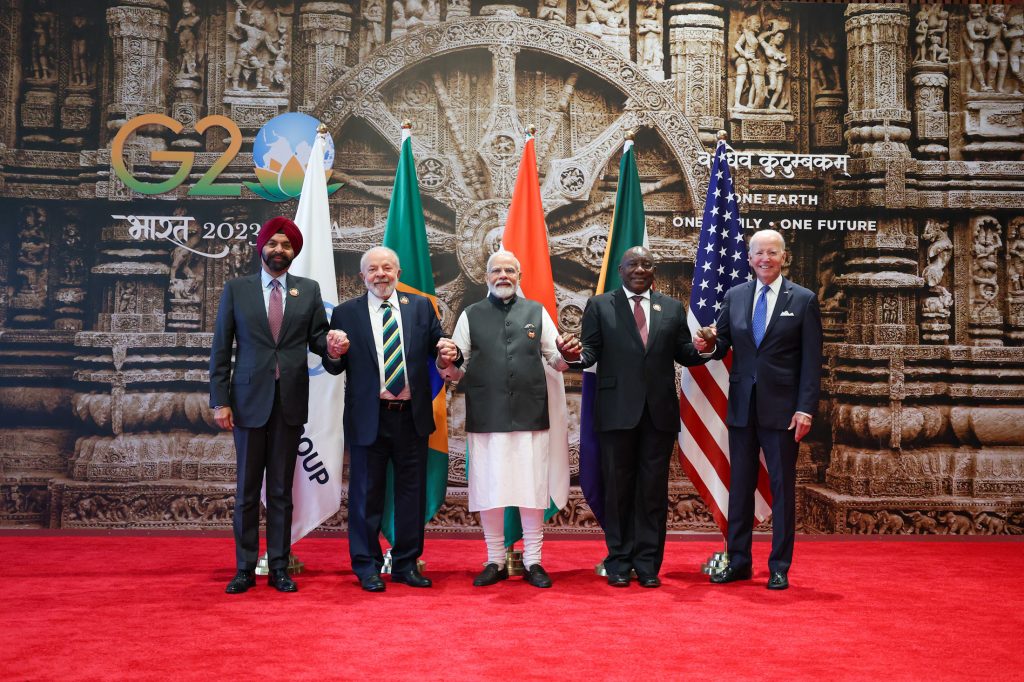
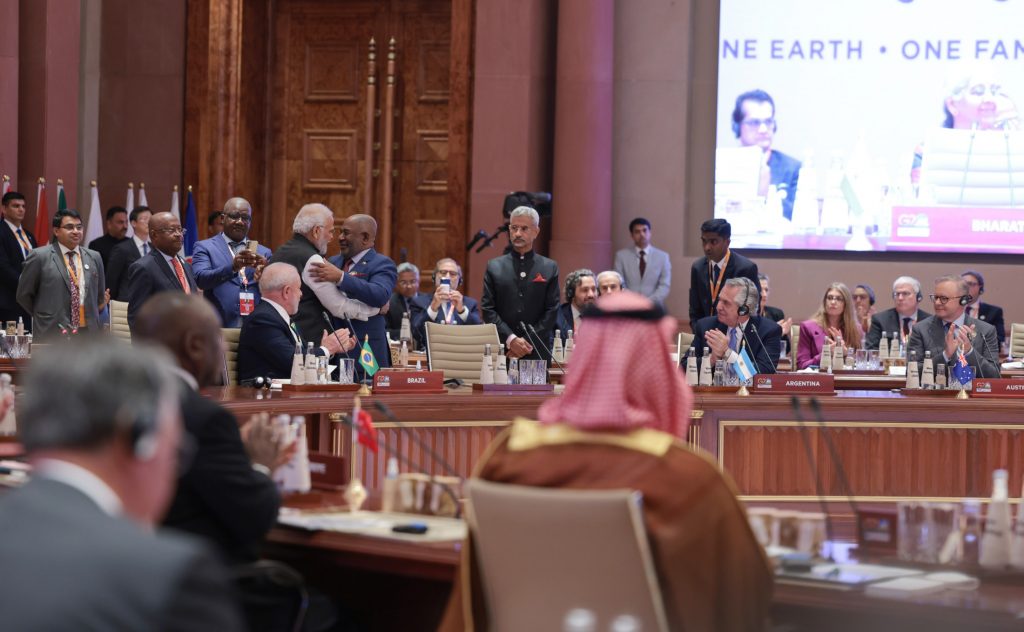
In the concluding session, Modi formally handed over the gavel of the Presidency to Brazil President, Luiz Inácio Lula da Silva with a promise of India’s full support to Brazil and are confident that under their leadership, the G-20 will be furthering our shared goals. Earlier, 55-member African Union (AU) having as many as 13 countries having more than 20 per cent population of Muslims was inducted. AU’s current Chairperson Azali Assouman, who had already arrived at the venue as a guest, joined as a permanent member.
India’s Ukraine peace initiative
With the successful conclusion of the G-20 in New Delhi, India is preparing for a peace offensive in Europe to end the Russia-Ukraine conflict. Much to the discomfiture of China, apart from ushering in peace in Europe, India may also try to end the confrontation between Russia and the US-led western powers.
It is being stated that if 1970-71, US President Richard Nixon and his irrepressible National Security Advisor, Henry Kissinger, now 100, could win China to their side, weakening the grip of the USSR and finally leading its disintegration, what prevents Washington and London from ending the current stalemate in Europe.
The impact of G-20 is yet to be ascertained, but the mixed Chinese reactions indicate that all is not well in the middle kingdom. It appears that the era of Jinping’s Wolf warrior diplomacy known for confrontational and combative approach is now finally over. It is quite amusing that China’s PM Li Qiang, greets India for the success of the conference, but Beijing’s China Institute of Contemporary International Relations accuses India of sabotaging the world meet for her own interests. Qiang had first hand experience of the ineffectiveness of China’s Wolf diplomacy, when British PM Rishi Sunak asked him to stop spying in the U.K., and Italy, the gateway to Europe, has also indicated its plans to leave China’s favourite Belt and Road Initiative.
Jawaharlal Nehru’s dream of Afro-Asian unity was reasserted, when the 54-member African Union was inducted into G-20 having as many as 19 pre-dominant Muslim countries. India’s time-tested non-aligned policy has been further augmented by the presence of Latin American countries. With Brazil assuming the G-20 presidency for 2024, PM Modi has extended India’s cooperation to its president, Luiz Inacio Lula da Silva.
Amidst the G-20 sessions, India has also been quietly preparing to send assistance to Morocco hit by earth-quake killing more than 2000 people. India, thus, has become a pivot, playing an affirmative role in the geo-politics.
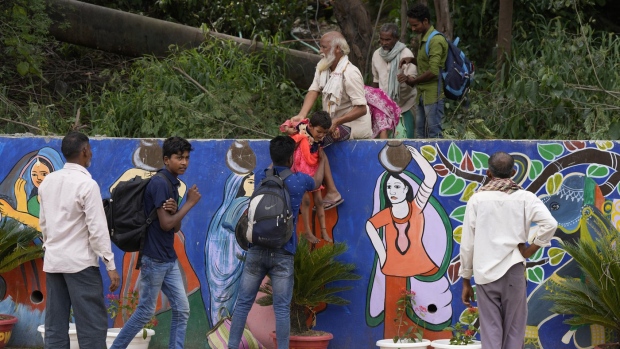
They were uprooted and shooed away from the streets and pavements of Delhi because the establishment did not want them to be seen or even spotted by the foreign delegates to the G20 meet!
I’m sitting, writing this column on 9 September…It’s well past sunset and it’s raining, in and around New Delhi. Heavy to very heavy downpour. Wondering rather aloud: what’s been the fate of the hundreds of our citizens who have been uprooted and shifted and shooed away from the streets and parks and pavements of the capital city. Perhaps, because the establishment wanted it this way. That is, keep them away from the scene!
Yes, for the past many days sprucing has been on …make-up has been put on, inflicted on this capital city. Cover ups! Removal of men and women and children who do not fit in the happening category! Even cart pullers and rickshaw pullers and road side sellers pulled aside. None of them to be seen or even spotted by the foreign delegates to the G20 meet!
What’s all this? Let the foreign guests and the supposed who’s who of the world see our capital city with its ground realities, with its citizens in the varying surviving modes.
Also, let’s not overlook the fact that the foreign delegates would be well too aware of the ground realities of the day. They would be aware of the poverty and malnutrition and the tough living conditions of a large percentage of our population. They would also be aware of the dismal realities faced by the minority communities and groups in the country – Dalits, Christians and the Muslims. They would be more than aware of the civil strife in Manipur, the communal poisoning-cum-violence being made to spread out in the various states, and the tight-grim conditions prevailing in the Kashmir Valley.
‘Khyaal’ for the seniors!
With the World Senior Citizens’ Day 2023 just passing by (August 21) and as the World Alzheimer’s Day ( 21 September) nears, I’m focusing on the platform – Khyaal – for the senior citizens of the country.
Last month at the Bengaluru Poetry Festival, I’d met the Mumbai-based Hemanshu Jain, who started this forum to try reach out to the senior citizens of the country. He and his team members come from diverse fields and professions; two of his team members were formerly crew members with a well-known airlines but quit so as to reach out to the senior citizens!
What struck was their enthusiasm; earnestness cum sincerity rather writ large. And it’s not that they were focusing only on the ailments and setbacks related to the elderly but they were so very freely discussing the varying aspects to life and everyday living.
‘My work kept me going all these years’
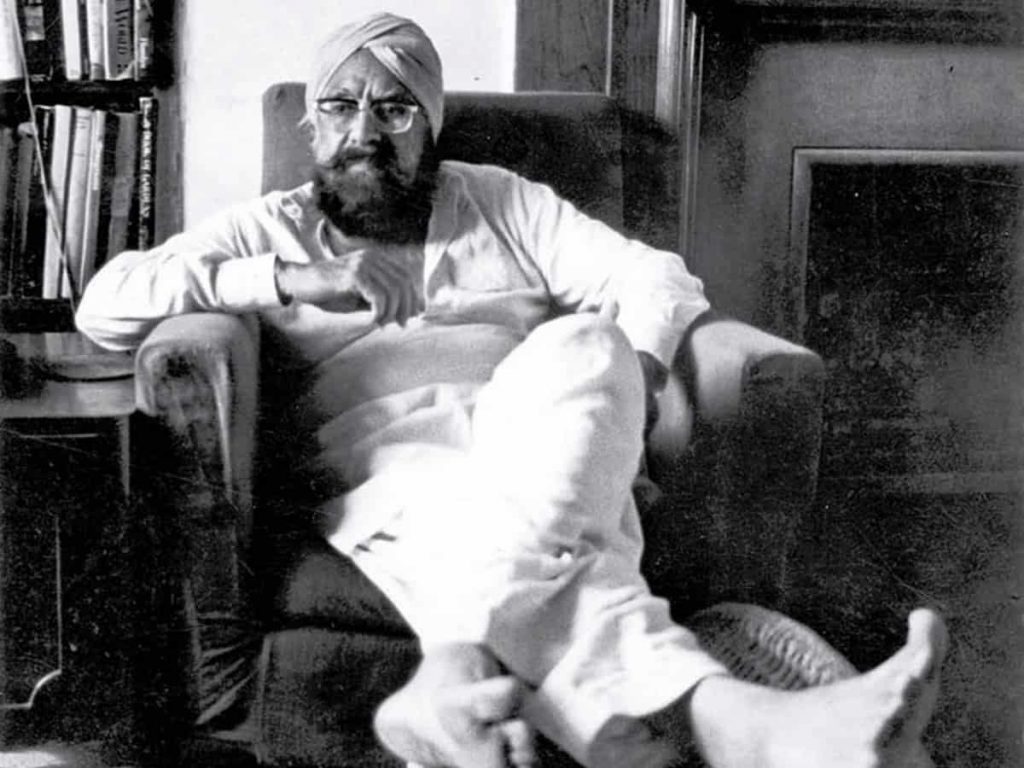
Khushwant Singh
I ‘m reminded of what Khushwant Singh had told me when I’d asked him what’s kept him going …He’d passed away at 99 and all too intact! This when he suffered several upheavals, went through some very tough phases in life — both, on the personal and also on the professional fronts yet he continued undeterred and strong…Reasons to his longevity? According to me, one of the reasons for his longevity was the fact that there was no contradiction between his head and the heart. He was straightforward and honest and had the grit to talk aloud the stark realities. Also, he never bypassed talking about his insecurities and challenges he’d faced. And also the regrets in his life.
On how he managed to live all intact all those long years he’d said in that characteristic blunt way, “ Don’t know why and how I have lived so long! This could be because of the fact that I’m alone, by myself, sitting in silence …after all, silence is meditation. I’m fortunate I can spend a lot of time alone, by myself …it is very beneficial, as the mind gets an enormous amount of rest and a day’s silence gives more energy. Blank your mind for a while and this I suppose is the sole purpose of meditation …enjoy solitude!”
He’d also detailed, “No, never, have I sat depressed …even when I was sacked as editor of the Illustrated Weekly I didn’t go into depression but took up writing a novel and writing helped me to go ahead …Even when my wife passed away (after almost 62 years of marriage) I sat alone all night, going over the past. But when people kept dropping in, it got tough to cope and I went off to Goa. I wanted to be left alone. Today, my friends and contemporaries have all gone. I feel like a solitary traveler left on the road, when others have fallen by the roadside. I have gone through several setbacks, and each time it’s work and more work that has kept me going. I’m emotionally strong. Even as a child I have been known to speak my mind. And have rarely ever lied. And I rarely get angry. And I’m not short tempered nor vengeful so that also helps. Even when a friend has been rude I just move away. One thing I can’t stand is rudeness and making sure that I don’t ever meet that person again.”
But life couldn’t have been all too smooth? I had asked him
“No life hasn’t been smooth. I have had my quota of setbacks and financial insecurities in those earlier days but what actually helped me to go ahead is writing. Yes, only and only my writing helped me .Writing has been a constant factor. In fact, even to this day I ‘m engrossed in writing and would do so till the very end. No, there’s nothing called retirement for me. In fact, in my third year as editor of the Hindustan Times, when my contract was due for renewal, KK Birla asked me about my retirement plans, whether I’d like to retire. I told him rather categorically that I’d only retire at the Nigambodh Ghat!”
He’d also added, “I do follow what the Quran and Hadith stresses on – don’t waste time, so every single moment is to be used, to be well utilized and one cannot just sit and brood. Earlier, whenever tense I used to go and visit the cremation grounds. It does have a cleansing effect but now I go nowhere. Once in a while to the dentist’s otherwise for weeks or months I’m here, in my apartment.”
He would also say, “No matter how big the setback or irritant, don’t get hassled or worked up. Instead, try saying this one-liner to yourself whenever something has gone wrong: ‘It doesn’t matter…I don’t give a damn!’ Yes, say this sentence to yourself and you will surely feel lighter and less tense.”
Khushwant would often quote this verse of Nathaniel Cotton (1721-1788):
This prickly issue has earlier been taken up by multiple bodies including a parliamentary standing committee, the law commission and the election commission but consensus eluded every time because of conflicting interests of the Union and the states, writes Mudit Mathur
The concept of simultaneous Lok Sabha and state assembly elections is not something new, but its implementation may pose challenges in a parliamentary democracy with a federal structure. The country held simultaneous elections to Lok Sabha and state assemblies since 1952 and continued this practice till 1967. Thereafter irreversible action of premature dissolution of some State Legislative Assemblies transpired, using Article 356 in 1968 and 1969, coupled with the dissolution of the Lok Sabha itself in 1970 which derailed the founding pattern. This is how the cycle got disrupted and elections were conducted separately in accordance with a constitutionally fixed period of next five years from the date of its first meeting.
The decision of forming a committee on “one nation one election” caught opposition bloc INDIA. by surprise and raised political heat during the alliance’s conclave in Mumbai. The opposition alliance slammed the decision as a “threat” to the country’s federal structure. This prickly issue has earlier been taken up by multiple bodies including a parliamentary standing committee, the law commission and the election commission but failed to evolve unanimous consensus because of conflicting interests of the Union and the states.
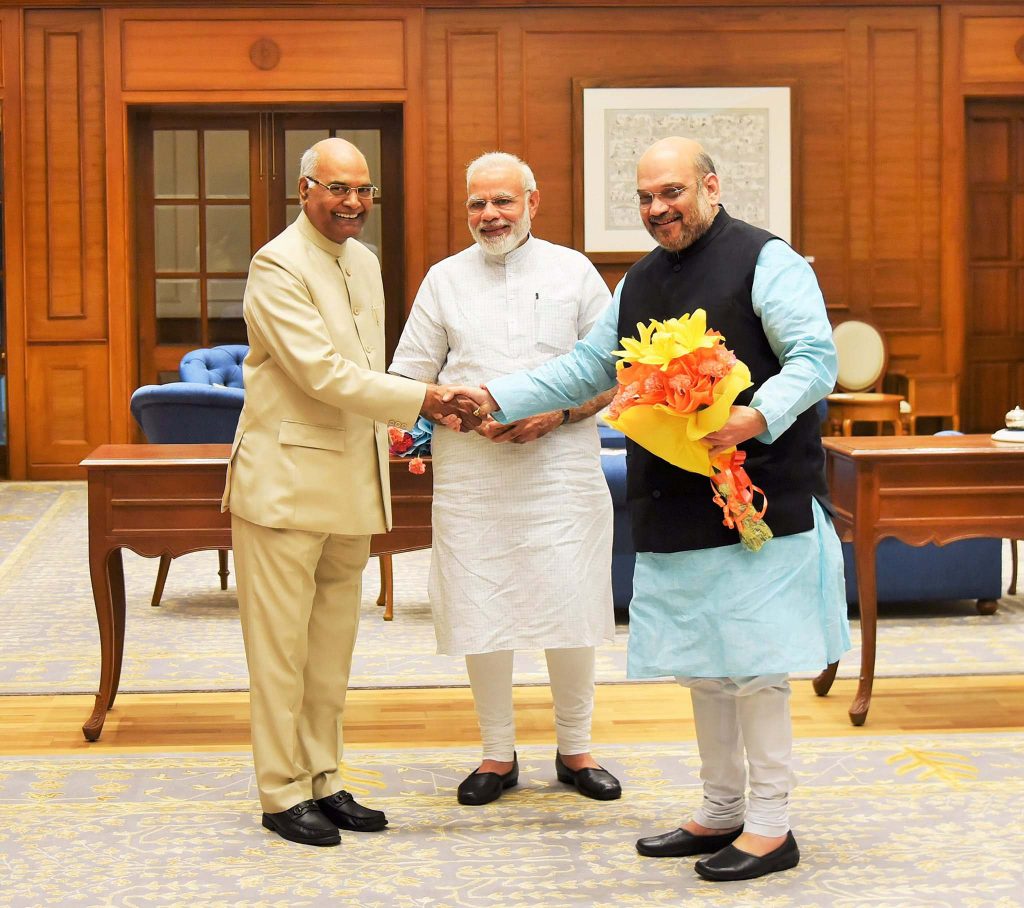
Now out of the blue moon, the Union Law Ministry notified another committee on the ‘One Nation One Election’ under the chairmanship of former President of India, Ram Nath Kovind and seven other members. ‘One Nation One Election’ found place in BJP election manifesto along with uniform civil code, abolition of Article 370 and construction of Ram Mandir in Ayodhya. The opposition parties are highly critical of Kovind accepting the task after holding the highest constitutional office of India. The parties said he is expected to keep aloof from such political activities.
Prime Minister Narendra Modi had also stressed the need for debate and discussion on simultaneous elections in his Independence Day speech from the ramparts of the Red Fort in 2019. Union Home Minister Amit Shah, as BJP chief in 2018, had written to the Law Commission, urging him to examine the matter of simultaneous elections which will save government funds and ensure the country is not in election mode most of the time.
The idea of simultaneous elections, or “One Nation, One Election”, was first formally proposed by the Election Commission of India (ECI) in its 1983 report. The ECI suggested that conducting simultaneous elections to Lok Sabha and state legislative assemblies could reduce the frequency and associated costs of elections. Subsequently, the Law Commission of India headed by Justice BP Jeevan Reddy in 1999 also examined the issue and submitted several reports suggesting measures to synchronise the terms of the state legislatures with those of the Lok Sabha.
Former Prime Minister Atal Bihari Vajpayee was a vocal supporter of simultaneous elections. In 1999, he was elected to the Lok Sabha and he brought the idea with him. However, the proposal did not lead to legislative changes. Later in 2009, L. K. Advani made the same suggestion and also proposed a fixed term for legislatures. The Parliamentary Standing Committee on Personnel, Public Grievances, Law and Justice in its 79th Report in 2015 also concluded that simultaneous elections were required for long term governance. In 2017, the Niti Aayog released a paper titled ‘Election Time Table’, discussing the feasibility of simultaneous elections. It suggested a practical roadmap for implementing the concept. In 2018, the Law Commission of India released a draft working paper that outlined the legal and constitutional aspects of simultaneous elections.
And yet, it must also address concerns about the proposal being part of its larger political narrative to bring homogeneity in India which is acclaimed as the ‘land of diversity ‘– cohabitated with all the multi religions of the world with different ethnic groups – performing multiple cultures, myriad rituals and festivals, different foods, inimitable attires and about 1600 local and regional dialects. ‘One Nation, One Election’ may be a topic of discussion, but it has deeper challenges and problems. The most important of which are the challenges to federalism and democratic ethos.
The elements of plurality are inalienable features reflected in the composite cultural heritage of the nation. In such a conflicting background the idea of ‘one nation one election’ will have to pass the test of constitutionality as proposed step would amount to arbitrarily cut short the remaining fixed term of state assemblies against the spirits of democracy and thereby invite massive criticism of people being violative of doctrine of federalism which forms part of “Basic structure”. Basic structure doctrine evolves after the 7:6 apex court’s judgement in Kesavananda Bharti case that places restrictions on the amending power of parliament. So, it is not easy to do.
In the parliamentary history of free India, there is no precedent dragging a former president of India to indulge in political affairs relating to parliamentary deliberations after demitting the dignified office of the constitutional head of the nation. Kovind during his presidential address to members of both Houses of Parliament on June 20, 2019, had said, “One Nation, Simultaneous Elections is the need of the hour, which would facilitate accelerated development, thereby benefiting our countrymen.” He further described the proposal of ‘One Nation, Simultaneous Elections’ as “development-oriented”. Earlier, former President Pranab Mukherjee had also echoed the same view.
Seven other committee members which includes Home Minister Amit Shah, Adhir Ranjan Chowdhury, Leader of Congress Party in Lok Sabha, Ghulam Nabi Azad, a veteran parliamentarian and former Leader of the Opposition in Rajya Sabha, N.K Singh, a retired IAS officer and former Rajya Sabha MP, who also served as chairman of the 15th Finance Commission from 2017-2020, Retired Lok Sabha secretary-general Subhash C Kashyap, Harish Salve, an expert in constitutional, administrative, commercial and taxation laws, and Sanjay Kothari, a former Central Vigilance Commissioner (CVC) who had previously worked as secretary to former President Ram Nath Kovind from August 8, 2017 to April 24, 2020. Most of these members have already been articulating their views in favour of simultaneous elections to Lok Sabha and state assemblies.
However, in a letter written to Home Minister Shah, Congress leader Chowdhury declined to be part of the committee. “I have no hesitation whatsoever in declining to serve on the Committee whose terms of reference have been prepared in a manner to guarantee its conclusions. It is, I am afraid, a total eyewash,” he said in his letter.
Union Parliamentary Affairs Minister Pralhad Joshi said, “Right now, a committee has been constituted. A report from the committee will come out which will be discussed. The Parliament is mature, and discussions will take place, there is no need to get nervous. India is called the mother of democracy, there is always an evolution. I will discuss the agenda of the special session of Parliament.”
Chief General Secretary and National Spokesperson of the Janata Dal and former Rajya Sabha member K.C. Tyagi wrote an article on the subject highlightingd that, “One Nation, One Election may be a topic of discussion, but it has its challenges and problems. The most important of which are the challenges of federalism. India is a country of diversity, which has its federal structure with the division of powers between the central and state governments. Simultaneous elections are an attack on the autonomy and independence of state governments. This can not only weaken this federal structure but also increase the conflict of interest between the Centre and states.”
Tyagi stressed, “Amending the Constitution is a lengthy and politically challenging process that requires a two-thirds majority in both Houses of Parliament. States will also have to give consent. Due to the complex nature of the country’s political and constitutional framework, implementing One Nation, One Election in India presents many legal challenges.”
He said, “One Nation One Election has to face challenges of Constitutional amendments which require significant amendments to the Constitution, particularly, the provisions relating to the terms of elected bodies (Lok Sabha, state assemblies and local bodies). At least five articles of the Constitution — 83, 85, 172, 174 and 356 — and several statutory laws would have to be amended before any such proposal could be implemented. It will also be necessary for Union and state assemblies to have fixed tenures. This means that the House’s tenure cannot be extended at any cost, except in case of a declared emergency. It would also allow for the House to be dissolved before the expiry of its term.”
Terming the move amounts to an undemocratic attack on the constitutionally protected autonomy of the states, as it may disturb their independent functioning, Tyagi explained, “Coordinating the tenures of different levels of government (central, state, and local) to simultaneously coincide with the election cycle is legally complex. For example, the terms of state governments vary, and some states are given special provisions under Article 371 of the Constitution. State governments in India have a large degree of autonomy and can oppose any move that violates their powers”.
Most of the bureaucrats are just supporting the idea of ‘One Nation One Election.’ Former Secretary General of Rajya Sabha and eminent civil servant Yogendra Narain has been advocating for this cause. He served as Defence Secretary of the country with Defence Minister George Fernandes in the Atal Behari Vajpaiyee rule. He also served as chief secretary of Uttar Pradesh at crucial times besides being the first Chairman of Greater NOIDA and National Highways Authority of India. He has been actively involved in deliberations making public opinion in favour of the move.
Responding to the queries of Tehelka, Narain asserted, “This idea of simultaneous elections has been deliberated, discussed at various forums. The concept has been agreed to by the Law Commission, the Parliamentary Standing Committee, the Niti Ayog and the Election Commission. So, it is not a sudden idea of the present government. Secondly to legally support the concept of simultaneous elections, an amendment to the Constitution has to be done and this will again be deliberated in Parliament. Thirdly, a Fixed Term of legislatures Bill has to be passed (on the lines of the British Legislation) where again Parliament will discuss the whole question.”“The implementation of the concept does not adversely affect Federalism. This concept was accepted in the elections of 1952, 1957,1962 and 1967 and it had no effect on the Federal structure of India. So why now?,” Narain said.
Bureaucrat-turned-BJP politician K J Alphons, from Kerala who served the Modi government as Minister of State (Independent Charge) for Tourism, had also endorsed the views in support of the move. In a prominent national daily he wrote a lead article highlighting the benefits of simultaneous elections citing urgency in taking forward this idea.
However, former law minister and noted constitutional expert Kapil Sibal is not ready to buy bureaucratic views as he sees much deeper complications behind it. Sibal dismissed the main arguments in support of One Nation One Election. He said the claim that this would be cheaper shouldn’t be a significant concern for a country that boasts that it is the mother of democracy. He said the savings are minimal when you bear in mind the size of the Indian economy.
In an interview with a prominent anchor on public funded social media, Sibal claimed, “One Nation One Election will be the downfall of the Modi government”. “The Modi government is playing with fire and they will not simply sing their hands but destroy the government,” he remarked.
Sibal argued during his interview that One Nation One Election would create a situation that would require horse-trading and that would enhance political corruption and diminish and badly damage India’s democracy. Sibal also questioned the real intention of the Modi government in pursuing ONOE. “Is that they want to create through this mechanism a one-party state and, thereafter, convert India, officially and constitutionally, into a Hindu Rashtra?,” he wondered
Opposition leaders in India have criticised the Union government’s decision to form a committee to study ‘One Nation, One Election’, claiming it threatens the country’s federal structure. Congress president Mallikarjun Kharge, in a post on X, asserted that no matter how many “diversions and distractions” the ruling regime presents, the people will not be deceived any longer. He declared that the countdown for the exit of this “autocratic government” has begun.
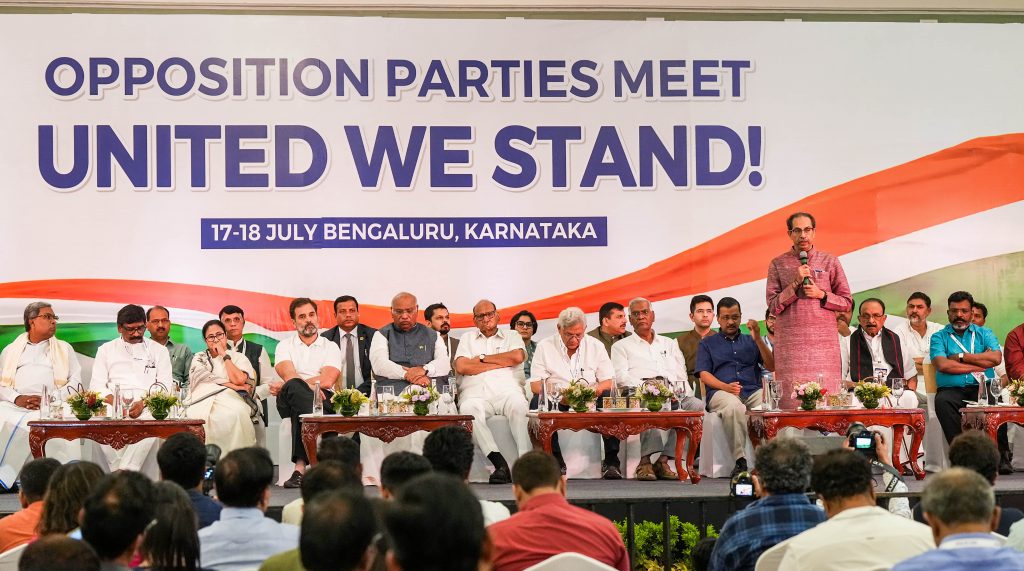
During the opposition meeting in Mumbai, Kharge noted that the government is becoming “nervous” due to the strength of the opposition alliance. He advised I.N.D.I.A bloc partners to be prepared for “vendetta politics” as there will be further “misuse” of agencies against them.
Congress leader Rahul Gandhi tweeted saying: “INDIA, that is Bharat, is a Union of States. The idea of ‘one nation, one election’ is an attack on the Union and all its States.” Senior Congress leader Digvijaya Singh called the plan an attack on the constitution.
Slamming the move, CPI general secretary D. Raja said, “Prime Minister Narendra Modi always talks about India being the mother of democracy and then how can the government take unilateral decisions without consultation with political parties and Parliament?”
“We demand fair elections, not ‘one nation one election’. This move of ‘one nation one election’ is being brought to divert the attention from our demand of fair election,” said Shiv Sena (UBT) leader Sanjay Raut.
Shiv Sena (Uddhav Balasaheb Thackeray) leader Priyanka Chaturvedi said, “Today the country is facing farmers’ issues, rising unemployment, China’s aggression. If the special session will address all these issues, then it’s welcomed. If it is used to divert attention from these issues, then it shows the nervousness of the BJP.” “I want to ask the Union government as to when a committee will be formed on inflation, corruption, rising unemployment, women’s reservation,” asked Chaturvedi.
In view of 2024 Lok Sabha elections, the BJP leaders are continuously pitching controversies one after another with an aim to propagate the unbridled cult of Hindutva (Sanatan Dharma) with prime minister Narendra Modi at its helm of affairs. Reflections of unitary issue like one nation-one election, one civil code, one party and one leader appear to be larger plan to stymie the fresh unity efforts of opposition parties who have formed a coalition to challenge the economic, social and industrial policies of the Union government and its development claims resulting in economic disparities, huge unemployment, unrestricted price rise and above all threat to secular values due to increasing social disharmony.
While the Government is pointing to the advantages of ONOE, there are many concerns that have been raised by political parties and constitutional experts on the issue
The idea of One Nation, One Election (ONOE) that is making headlines these days is not something that India is a stranger to. For the uninitiated, the main idea behind ONOE is to hold Lok Sabha, State Assembly and local elections across all States at the same time in order to reduce the frequency of polls that are held in the country.
In fact, ONOE was the norm till 1967, but those were different times because we had fewer States and a smaller population. Eventually, despite the aforementioned factors, frequent defections, horse-trading and dissolution of Assemblies in the 60s led to separate elections for the Lok Sabha and State Assemblies.
However, given the frequency of polls in India and the massive expense that is incurred for holding each election, the idea of ONOE was once again put on the table in 1999 by BP Jeevan Reddy who was heading the Law Commission then. Not much came out of it though and the issue was put on the backburner, till in January 2018 the then President of India, Ram Nath Kovind in his Parliamentary address referred to ONOE as one of the reforms proposed by the Prime Minister Narendra Modi-led Government.
Now, with the 2024 Lok Sabha polls looming large, ONOE has again gained traction with the Centre bringing it up with increasing frequency. So it was obviously on the mind of this Government which has by now earned a reputation for making some landmark decisions that are good for the nation, some hasty, uncomfortable ones and sometimes not making any decisions at all when it should be acting with alacrity. But, that is a conversation for another day. Right now, the Opposition parties are up in arms about ONOE ever since the Government announced the formation of the fourth panel to discuss this concept. Unsurprisingly, the high-level committee will be led by Ram Nath Kovind and it has been tasked with studying and making recommendations on the issue of holding simultaneous polls to the Lok Sabha, State Assemblies and local bodies.
The panel in question includes Union Home Minister Amit Shah, former Leader of the Opposition in Rajya Sabha, Ghulam Nabi Azad, senior advocate Harish Salve, former Lok Sabha Secretary-General, Subhash Kashyap, retired IAS officer NK Singh and former Central Vigilance Commissioner Sanjay Kothari.
It would definitely have served the nation better if the panel had included a few more leaders of key Opposition parties to create a balance and have more free and wide-ranging discussions. But that was not so and sadly, the one Congress leader in Lok Sabha, Adhir Ranjan Chowdury, who was given the opportunity to be a part of this crucial study refused to be a part of it and called it “eyewash.” One wishes that he had stayed on the committee and been the voice of the Opposition that is so needed in a healthy democracy. Anyways, for reasons best known to the Congress the party kept out of this crucial exercise.
As of now political parties of all hues are slamming the Government’s decision as an attack on democracy. For instance, renowned Supreme Court lawyer, Swaraj India leader and activist Prashant Bhushan has alleged that the Central Government has been campaigning for ONOE to postpone the forthcoming Assembly elections in the five States of Madhya Pradesh, Rajasthan, Chhattisgarh, Telangana and Mizoram later this year.
“ONOE cannot be implemented in a Parliamentary democracy like India because in our system, a Government can fall in midterm when it loses majority and a fresh Government forms,” Bhushan is quoted as saying in media reports. However, if the ONOE is implemented, in such a situation, Presidential Rule will be imposed, which is against democracy, he pointed out.
Senior Congress leader and lawyer P Chidambaram has opined in an article that the “Law Commission and other committees have pointed out that the idea requires at least five Constitutional Amendments, besides the huge political and administrative objections. Nevertheless, the Government is accelerating the process with the appointment of a puppet committee. The goal is not one poll; the real goal is one pole — the BJP — around which the entire political system will be re-constructed. By combining national and State elections, the BJP hopes to win the Lok Sabha poll with a two-thirds majority and win enough States. That will pave the way for radical Constitutional changes which will sweep aside all obstacles to the establishment of a Hindu Rashtra. It is a bold gamble.”
Now, with the Opposition going hammer and tongs at the Government for trying to introduce ONOE without wide-ranging consultations with all stakeholders, India’s Chief Election Commissioner Rajiv Kumar has indicated that the Election Commission may be ready to conduct simultaneous polls to the Lok Sabha and State Assemblies soon. So, it’s very obvious that the Centre is keen to push this through and given its massive mandate it is possible that the Government will go through with it too, sooner than later.
So let’s take a look at the pros and cons of ONOE.
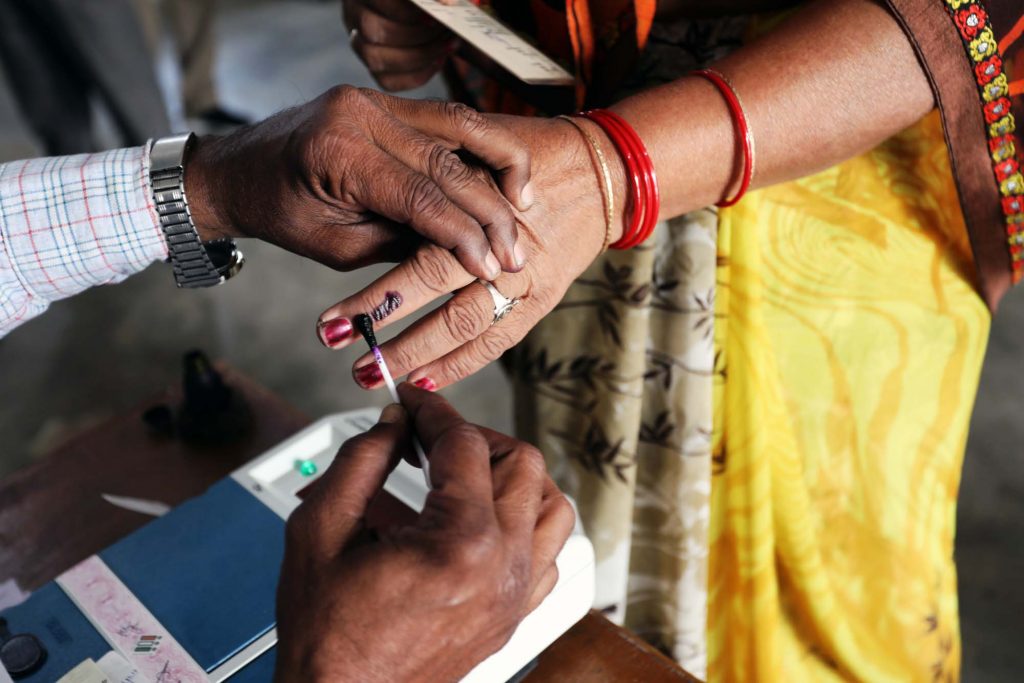
One very obvious benefit that comes to mind when we talk about ONOE is the fact that it would save citizens a lot of bother and time if they had the opportunity to choose their representatives for the Lok Sabha, the State Assembly, and the local bodies, all in one go. Voting is not just our right it is also our duty, but many times because of our busy work schedules or other pressing demands on our time we let go of the opportunity to cast our precious vote. So, having all three elections at one time will make it easier on the electorate and will also address the issue of voter apathy that we have been facing for so many Assembly elections.
It will also save the Election Commission a lot of effort, time, and expense if all three elections are held simultaneously. Of course, buying more EVMs and creating the infrastructure to enable the whole nation to cast their vote for three different elections at the same time will be a major expense but that would be an initial investment. Plus the onerous task of creating and updating the electoral rolls that cost the poll panel a lot of time, manpower, and money will not have to be done every time and the same roll would be used for all the elections. This works well for the voters as well because they would be assured of their names being in the rolls for all the elections.
Another advantage of ONOE is that political parties will not have to spend again and again on campaigning etc. for the Lok Sabha and Assembly elections. The expense would be brought down considerably, giving everyone a huge respite because holding an election is not a cheap exercise for any political party if it is serious about winning. It is all about creating hype and visibility and outreach to the electorate. All this requires money. For instance, during the 2019 Lok Sabha Elections a whopping Rs 60,000 crore was reportedly spent.
However, that said I would like to point out that in all fairness there is economic research out there that suggests that spending by parties and candidates during elections actually benefits the economy of the area and the Government’s tax revenues by boosting private consumption and serving as a stimulus.
Plus, most major political parties use their top leadership to woo the electorate. For those parties who are not in power, it is easy to get the party brass on the campaign trail, but for those in power, it is a nightmare to coordinate the dates on when the leaders would be available. So, in one go the party leadership will be able to fulfill their campaign commitments.
This, in turn, would also be good for the country as governance will not be hit. Frequent elections in the country force leaders to put all their work on hold and hit the campaign trail. From the Prime Minister to Union Ministers, from Chief Ministers to State Ministers to MPs, MLAs and Panchayat members, everyone has to be seen and heard if their candidate is to have any chance of being elected. ONOE will put an end to such frequent disruptions and all those in power will be able to spend more time on governance.
Plus, every time there is an election, the administration at various levels gets disrupted as work in various Government offices comes to a standstill just as it does in Government schools. This disruption will happen but just once, in one go, and not as frequently as it does now and the administrative machinery will run a little more efficiently.
That said, one cannot talk about elections and ignore the massive deployment of the paramilitary and CAPF for the peaceful conduct of polls. Due to the frequency of elections in India, they are time and again called away from their main duties and their redeployment is a costly affair. ONOE will ease the burden on the exchequer and also on the already-stretched security forces.
The other advantages of ONOE would be less frequent policy paralysis due to the Model Code of Conduct coming into play once the polls are announced by the election panel and fewer announcements of freebies by State Governments. This, in turn, would result in improving the finances of States because sops do burn a hole in a State’s budget.
However, there are always two sides to a coin. While the Government is pointing to the advantages of ONOE, there are many concerns that have been raised by political parties and constitutional experts on the issue. The most major issue that has been raised is the erosion of the concept of ‘federalism’ via ONOE as it contradicts Article 1 which states that India is a “Union of States”.
In fact, legal experts hold that ONOE is not feasible within the existing framework of the Constitution, the Representation of the People Act 1951, and the Rules of Procedure of Lok Sabha and State Assemblies, and that these would have to be amended suitably to enable ONOE.
Plus there is a major concern and rightly so that the ONOE would eclipse regional interests of the people that are highlighted in the Assembly and local body polls as Lok Sabha elections are fought on issues of national importance.
Last but not least the tenure of Lok Sabha and State Assemblies is for five years unless dissolved earlier. So, once ONOE is in place, what will happen if the Central or State Government collapses before completing its term? Would elections be held again in every State or will President’s Rule be imposed?
These and many other issues regarding ONOE will come to the fore as the days go by. One thing is certain, it’s a very complex issue, and as it involves the future and the interests of the whole nation the powers that be would do well to build a consensus through talks, campaigns, and outreach programmes so that an informed, well-thought-out decision can be taken for the good of the janata janardhan.
At the political level, there are enough gains to be had for the BJP by championing Bharat. It projects itself as a nationalist party and demonstrates that it roots for everything Indian, rather Bharatiya.
“What’s in a name/That which we call a rose /By any other name would smell as sweet”
When William Shakespeare wrote these lines for Juliet to profess her love for Romeo, little did he know that a few centuries later, there would be a hullabaloo over a mere name. Neither had he fathomed the extent of the controversy and its fall out. Little did Shakespeare know that the’ what’s in a name’ theory would, one day, flip on its head and kick up a political storm in this part of the world: India to be specific.
Yes, but India is no longer India. If the BJP-headed Government has its way, they would erase the anglicized name to a purely desi, puritan, one.
There is nothing new in this move.
The BJP, it is well known, has publicly shunned whatever is British. Yet, going the whole hog to change the name of the country was a bit of a surprise, to put it mildly.
For many, it was nothing less than a shock.
Quite contrary to its track record where the Government goes to town with whatever little or big it does, this time around it just slipped in the name, quietly pushed out India and replaced it with Bharat.
So how did all this start? Rather when did this become public?
It was days before the dinner President Droupadi Murmu had on the side-lines of the G20 summit.
The invite read: President of Bharat instead of the customary President of India. Given that the invites were in English, the change was visible and somewhat intriguing, to say the least.
Convention has it that the President is referred to as President of India in English and Bharat ke Rashtrapati in Hindi. But this time around, it was not the language but the nomenclature war that seemed to have erupted.
Convention apart, the Constitution of India states: “We the people of India…” and goes on to say “India, that is Bharat…”
In the Hindi version of the Constitution, Bharat replaces India: “Bharat, that is India, shall be a Union of States”.
Hence there is no aberration here.
So what is all this noise about?
Is it because the BJP-led Government chose to reiterate what the Constitution had already spelt out? Is it the manner in which it was done? Or is it that the BJP let the change slip in, as it were, without consulting the stakeholders, in this case the Opposition and the political spectrum across the Board?
Is this yet another attempt to erase the legacy of the colonial past? Or is this the niggle of no announcement, no warning and no heads-up but a simple invite which said President of Bharat instead of the customary President of India.
It could be neither, either or all of the above.
As for the colonial past bit, there is little evidence to prove that the name India was a brainchild of the British. It predates the colonial roots, tracing its origins to the river Indus, Sindhu in Sanskrit. As for Bharat, it is mentioned in the scriptures.
While there is a hullabaloo over the President’s invite, what has perhaps escaped attention is the fact that the Government had “done the deed” as it were much before the President’s invite was sent out.
If reports are anything to go by, Prime Minister Narendra Modi was referred to as Prime Minister of Bharat during his official visits to South Africa and Greece last month.
Hence the President’s invitation is not the first but it generated enough controversy. In one sense, it also sealed the name.
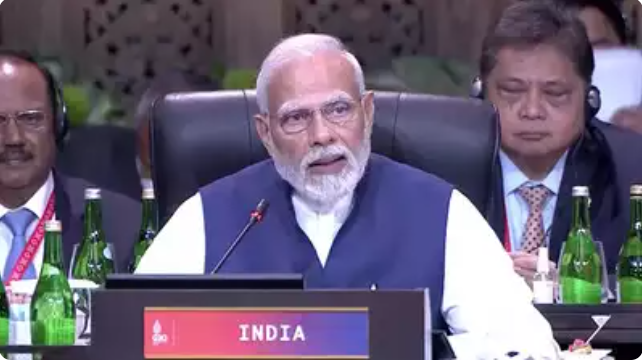
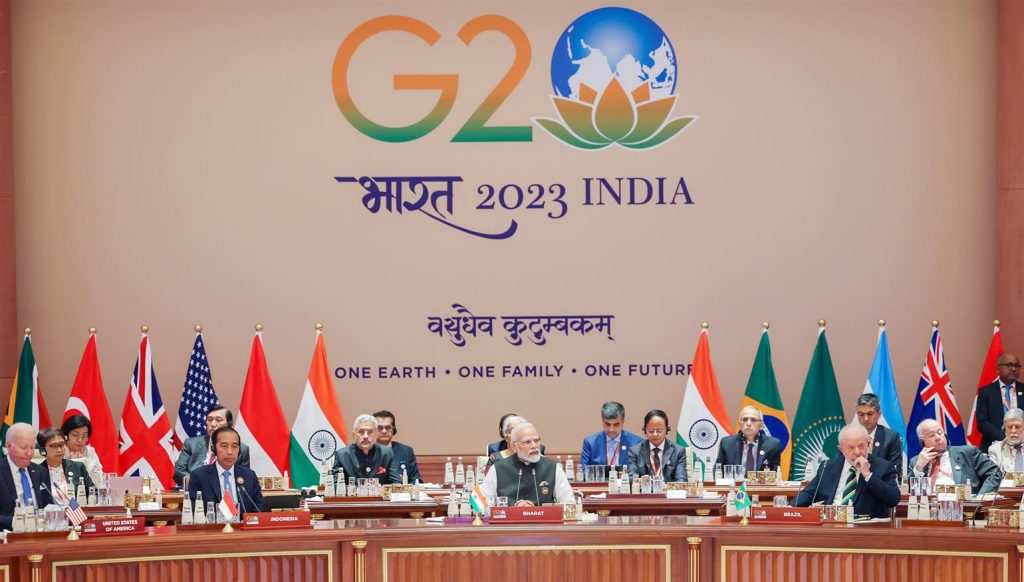
The invite apart, at the high table at the G-20 Summit, the country name flanking Prime Minister Modi was Bharat.
All hell broke loose and the country indulged in an endless debate of Bharat versus India.
Those who grew up in India do not seem to belong to Bharat. It is the name for the other India: the non-elitists, the Hindi speaking, the rural and the unlettered.
It is the versus that seems to be the issue. On the face of it, interchangeability is acceptable but a name change perhaps is not.
In other words, the use-both theory has more takers than replacing India with Bharat. Simply put, this means Indians can go with India while Bharatiyas can root for Bharat.
Were that to happen it would be kind of a status quo because the Constitution provides for both. So how would BJP score a point? And if it does not, then why would it go that extra mile?
Clearly, the BJP is eyeing a double advantage.
The first is at the national level where going back to its roots resonates with that class of Indians who rue the devaluation of the Indian ethos and want to shed off the weight of the erstwhile imperialism; take pride in everything that is Indian and rooted deeply in its civilisation; look the world in the eye with the pride of being Indian; and proud of using its original name and tell the world that we do not shy away from what is intrinsically and basically embedded in our history and culture.
At the political level, there are enough gains.
For starters, it projects the BJP as a nationalist Party and demonstrates its government as being one that roots for everything Indian, rather Bharatiya.
More importantly, it showcases Prime Minister Modi as one who has resurrected lost Indian values from the debris: those that past governments had ignored or given a go-by to. That this would reap electoral benefits is a given.
In fact, the Bharat spiel is likely to add to the BJP vote-kitty which seems to be better than what it was a few months ago.
Rising prices, unemployment, the dictatorial style of governance, muzzling the media and the Opposition coming together under the I.N.D.I.A. banner have been worrying factors.
In fact the Opposition conglomerate seems to be the last straw.
In this context, the assumption that country-renaming is a knee jerk reaction to the I.N.D.I.A. nomenclature, has takers. Delhi Chief Minister Arvind Kejriwal sought to know whether the Government would change the name Bharat too, if the I.N.D.I.A. alliance is rechristened Bharat?
Irrespective, the BJP seems upbeat.
Armed with Bharat, the resounding success of the G-20 Summit, both in terms of content and optics, the opening of the Ram temple in Ayodhya, the success of Chandrayan and Aditya, the moon and the sun solar missions respectively, is enough political ammunition.
Post the G-20 summit, the elite can rejoice at India occupying center-stage on the world stage; Modi devotees can sing peons at the name game; the other India get a sense of inclusion with the resurrection of Bharat; the devout thronging the temple at Ayodhya and the aspirational generation holding their head high at the success of the lunar and solar missions: all these are right ingredients for Prime Minister Modi to hammer on in the run-up to the 2024 election, complete with his one-liners and gift of rhetoric.
To what extent the Congress accommodates the aspirations of the 27 regional parties and how much the alliance partners remain committed to staying together will have a bearing on the success that INDIA block achieves in the 2024 General Elections. A report by Amit Agnihotri
The opposition grouping Indian National Developmental Inclusive Alliance (INDIA) is gradually taking shape to take on the BJP in the 2024 Lok Sabha elections, but the grouping faces several challenges from within.
Subsequent to the first opposition meeting in Patna, Bihar on June 23 and the second meeting in Bengaluru, Karnataka on July 18, the third meeting of the INDIA alliance took place in Mumbai on Aug 31 and Sep 1.
After the deliberations spread over two days, the leaders announced the formation of several panels to work out joint strategies for campaign, protests and communications but the real challenge would be to sort out seat sharing between the 28 constituent parties.
The most important panel is the 13-member Coordination Committee which includes KC Venugopal (Congress), Sharad Pawar (NCP), TR Baalu (DMK), Hemant Soren (JMM), Sanjay Raut (SS-UBT), Tejasvi Yadav (RJD), Abhishek Banerjee (TMC), Raghav Chaddha (AAP), Javed Ali Khan (SP), Lalan Singh (JD(U)), D Raja (CPI), Omar Abdullah (NC) and Mehbooba Mufti (PDP).
This panel would play a key role in ensuring a smooth coordination between the opposition alliance as well as between the senior leadership of the respective parties.
At the Mumbai meet, Shiv Sena (UBT) leader Aaditya Thackeray announced three big resolutions that the member parties would “contest the forthcoming Lok Sabha elections together as far as possible” and “seat-sharing arrangements in different states will be initiated immediately and concluded at the earliest in a collaborative spirit of give-and-take and that the parties would organise public rallies at the earliest in different parts of the country on issues of public concern and importance.
Besides, the parties decided to coordinate communications and media strategies and campaigns on the theme of ‘Judega Bharat, Jeetega India’ in different languages.
The opposition alliance INDIA has identified over 400 Lok Sabha seats out of the total 543 in the country where a single candidate will be fielded against the BJP nominee. The idea was first floated by Bihar chief minister Nitish Kumar, who hosted the first meeting in Patna on June 23.
“As far as seat sharing is concerned, it will be state-centric and would have to be worked out. For instance, in Maharashtra, the Congress-Shiv Sena UBT-NCP alliance is already functional. Hence, seat sharing will be no problem here. The BJP took away the MLAs of the Shiv Sena UBT and the NCP to grab power but the voters are still with Uddhav Thackeray and Sharad Pawar. Together, the MVA has around 60 percent vote share and is in a position to win over 40 of the total 48 Lok Sabha seats in the state,” said a senior Congress leader.
In UP, the alliance is trying to rope in BSP chief Mayawati also but she has refused to join hands either with the INDIA alliance or with the BJP-led NDA.
The Congress leader further said that as the INDIA alliance brings together diverse political parties, a process where the workers from different outfits can interact, share experiences and build trust, would be implemented over the coming days.
“Joint protests will have a greater impact. Yes, the workers of the parties come from different backgrounds but they can be brought together. Due processes would be followed to ensure that,” he said, adding that “a common minimum program reflecting the policy intent of the opposition would also have to be worked out to show that it had a better agenda of development for the country than the claims being made by the ruling BJP.”
However, Congress insiders agreed that working out seat sharing in states like Uttar Pradesh, West Bengal, Delhi, Punjab, Kerala and Gujarat would not be easy.
In Uttar Pradesh, the SP has an alliance with RLD and may not be willing to give too many seats to the Congress which had won just 1 seat in 2019. In West Bengal, the ruling TMC may not be willing to share seats with the Congress and the CPI-M, which lack ground support and were wiped out in the last assembly polls. Besides, the TMC and Congress-CPI-M leaders are constantly attacking each other in Bengal, something the leaders may find difficult while working out seat sharing and launching joint protests.
The same is the situation in states like Delhi, Punjab and Gujarat where the local Congress leaders don’t see eye to eye with the AAP, which has grown there by taking away grand old party’s votes.
AAP is also busy campaigning in the poll bound states like Madhya Pradesh, Chhattisgarh and Rajasthan where the Congress has a direct fight with the BJP and believes it has a better chance of defeating the saffron party.
Recently, the DMK-Congress alliance in Tamil Nadu also came under strain over the controversial remark made by a state minister Udhayanidhi Stalin over the Sanatan Dharma. The BJP slammed both DMK and the Congress over Udhayanidhi remarks against Sanatan Dharma, which were supported by chief minister K Stalin.
The Congress distanced itself from the DMK leaders over the controversy by saying it did not approve of the remarks and believed in equality of all religions. In Kerala, the Congress led UDF is pitted against the CPI-M led LDF, which is in power. Like in the case of AAP, while the central leaders of both Congress and CPI-M work together in the INDIA alliance, the respective state units regularly attack each other.
Further, the issue of the alliance’s prime ministerial face is another contentious issue the INDIA parties would have to deal with. The Congress is keen to project Rahul Gandhi saying his nationwide Bharat Jodo yatra actually led to the anti-BJP alliance INDIA and that the Congress was the largest opposition party in the grouping.
The problem is that other parties like SP, AAP, TMC, Shiv Sena, DMK and CPI-M also think that their nominee should be considered for the top post. However, for now the alliance has tried to keep the issue on the back burner as it can derail the entire opposition unity process. The grouping had repeatedly said to counter the BJP that it will choose its prime ministerial candidate after the polls and that defeating the BJP was the priority till then.
Another point of disagreement was the designing of the INDIA logo which could not be finalized at the Mumbai meet and has been deferred for the next meet likely to be held either in New Delhi or in Bhopal.
The first meeting of the INDIA coordination committee was held on Sep 13 at Sharad Pawar’s residence in New Delhi. However, the Congress and Sena leaders are doubtful over the role of the NCP chief who has been making some strange remarks over the rebellion led by his nephew Ajit Pawar, now a deputy chief minister of Maharashtra government supported by the BJP.
Pawar has been saying there is no split in the NCP and that Ajit Pawar is still part of his party. He also attended a recent gathering in Pune where PM Modi was honored by the Tilak Trust.
While the INDIA alliance claims the BJP is nervous over the opposition alliance which can defeat the saffron party in the next Lok Sabha polls, PM Modi has slammed the opposition grouping saying it was the coming together of parties that were corrupt and believed in dynasty. The Congress and Sena countered this charge by questioning the BJP move to make NCP leader Ajit Pawar a deputy chief minister days after alleging that Sharad Pawar’s party was corrupt.
Speaking at the Mumbai meet, Rahul Gandhi summed up the situation very well by acknowledging that there were differences among the partners of INDIA but the best part was that the parties were showing flexibility to work out the common goal of defeating the BJP in 2024.
To what extent the Congress accommodates the aspirations of the 27 regional parties and how much the alliance partners remain committed to staying together, will have a bearing on the success that INDIA achieves in the big electoral battle next year.