Decoding the mystique of Special Session

While the Modi government’s decision to hold a five-day special session of the Parliament starting on September 18 remains shrouded in mystery, let’s wait and watch which way the wind blows. 

The avowed objective of the Modi government in promulgating the special session of the Parliament is shrouded in mystery. Whatever underlines this mystique behind the special session, let’s wait and watch the way the wind blows.  
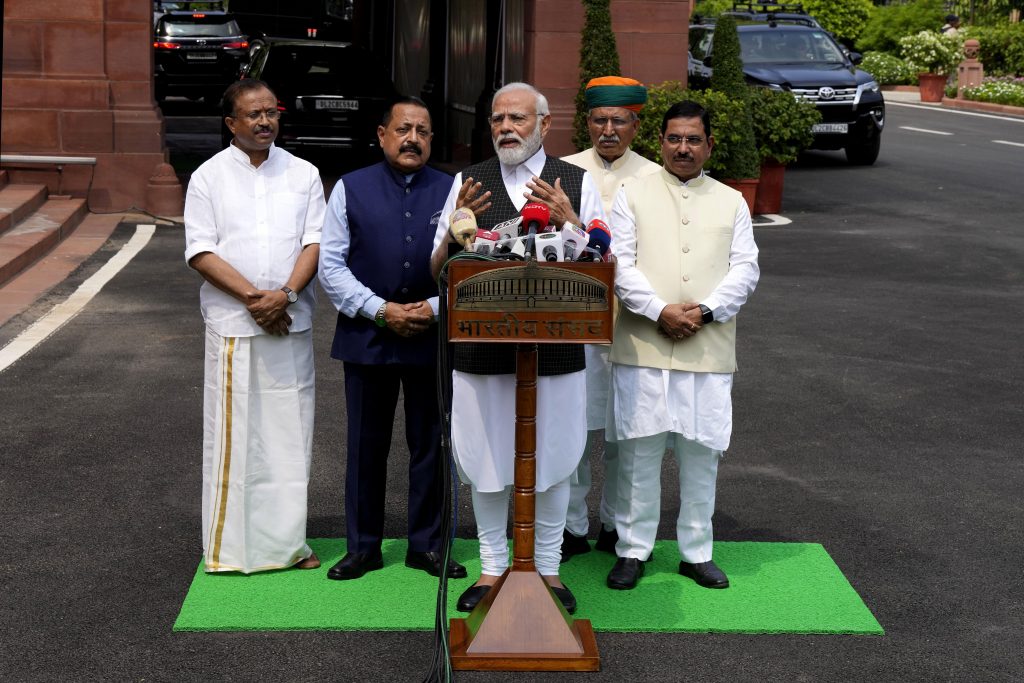
The Modi Government is known for hurling surprises from demonetization to promulgating a special session of the Parliament from September 18 to 22, an unprecedented move perhaps undertaken by any government in post-independent India thus far. In the absence of any clear official notification on the proposed agenda to be deliberated in the special session, only speculative reports hogging media headlines serve as the source of information for conjectures. Media reports have come to serve as the basis of speculations and explanations by political pundits and experts.

Some experts are of the opinion that the Modi government may want to appraise the Parliament with regard to the outcomes and implications of the ensuing G20 Summit scheduled to be held in New Delhi on September 8 and 9, an event that will bring together the global leaders of the world’s leading economies to deliberate on pressing issues such as climate change, health, and sustainable development.    

Another chunk of political pundits avers that the forthcoming special session could focus on the Amrit Kaal, a nomenclature coined by PM Modi to mark the 75 anniversary of the independence of India, and according to these pundits, the Modi government could utilize the occasion to showcase its achievements and vision for the next 25 years of country’s development journey and endeavour to seek the support and cooperation of the Parliament and the people. However, keeping in view the past behaviour of the present dispensation, such an eventuality seems to be a remote possibility.  

 Nevertheless, some political observers have opined that the occasion of the proposed special session could be utilized by the Modi government as a political tool to counter the opposition’s opprobrium and allegations on multiple issues like the eruption of ethnic violence in Manipur and Adani issue, etc. A couple of experts have also pointed out that the occasion may be availed of by the Modi government as a symbolic gesture to facilitate the inauguration of the new Parliament building that was completed in May this year, thereby demonstrating its steadfast commitment to modernising and consolidating democracy and governance in the country.

Undeniably, a large chunk of experts is unanimous that the Modi government could utilize the special session to introduce some important bills and get them passed, and some of these proposed bills may either be constitutional amendments having bearing on the ensuing 2024 Lok Sabha elections or use the session to push through some of its flagship schemes or reforms that may find favour with the BJP’s core voters or elicit political support from new allies.

One Nation One Election

According to these experts, the Modi government may introduce during this special session the ‘One Nation One Election’ bill that could propose to conduct simultaneous elections to the Lok Sabha and all the state assemblies in the country, with the avowed objective of reducing the frequency, cost, and disruption of elections and to ensure continuity in policy and stability both at the Central and state levels. Concurrently, it is also argued that the bill could moot constitutional amendments to bring into line or synchronise the terms of the Lok Sabha and state assemblies, and to manage the scenarios such as premature dissolution, no-confidence motion, hung verdict, etc.    

The notion of One Nation One Election is not a novel idea in India, which has seemingly garnered added traction in recent times, with PM Modi and his BJP stoutly supporting this concept while many opposition parties and dispassionate observers and critics opposing it on constitutional, legal and practical grounds. Actually. India witnessed four general elections from 1951 to 1967 being held simultaneously, which however got disrupted in the wake of the premature dissolution of certain state assemblies in 1968 and 1969 along with the subsequent dissolution of Lok Sabha in 1970, and since then, India could never have a concurrent election at the national and state levels.

Nonetheless, the notion of a One Nation One Election was revived in a suggestion by the then Election Commission of India in 1983 and also found endorsement by the Law Commission of India in 1996. With the assumption of power by PM Modi in 2014, this proposal gathered fillip and in 2016, the Niti Aayog brought out a working paper on the viability and desirability of simultaneous elections. On September 1, the Government of India announced the formation of an eight-member committee on One Nation One Election under the chairmanship of former President of India, Ram Nath Kovind. Other members of the committee include Amit Shah, Union Home Minister, Ghulam Nabi Azad, former MP, N.K. Singh, former Finance Commission Chairman, Subhash C. Kashyap, former SG of Lok Sabha, Harish Salve, senior advocate, Sanjay Kothari, former Chief Vigilance Commissioner, Arjun Ram Meghwar, Union  Law Minister, Adhir Ranjan Chowdhury, Congress leader in Lok Sabha, and Niten Chandra, Legal Affairs Secretary to act as secretary to the committee.  The Congress leader, Adhir Ranjan Chowdhury, however has not accepted the offer.        

Meanwhile, some legal experts and critics are disinclined to subscribe to the concept of One Nation One Election on the plea that major constitutional amendments are needed to reconcile to the terms of the Lok Sabha and state assemblies, which are presently determined by different provisions such as Article 83 (2), Article 85 (2), Article 172 (1), Article 174 (4), etc. It is also argued that the implementation of the notion of a One Nation One Election would be detrimental to the federal structure and diversity of the country by affording an undue advantage to national parties relative to regional parties. While arguing that such a move entails the likelihood of compromising the democratic rights and choices of electorates, the critics aver that voters could be deprived of their right to exercise vote for a fresh mandate in the eventuality of a government losing its majority or confidence prior to the expiry of its tenure.    

Critics also point to practical hurdles and challenges that may come in way for holding concurrent elections across such a vast and diverse country like India where the ECI would have to acquire and manage a massive number of electronic voting machines (EVMs), and Voter verifiable paper audit trail (VVPAT) machines which could augment the risk of technical glitches or dysfunction along with the problem of ensuring appropriate security arrangements and logistical support to conduct free and fair elections throughout the country. However, many experts feel that the Modi government may introduce a bill in this regard in the ensuing special session because the bill draft may not be ready and the newly set up committee cannot be expected to prepare such a draft in such a short time.    

Other Bills

Many experts don’t rule out the probability of the introduction of bills such as the Uniform Civil Code (UCC) Bill and the Women’s Reservation Bill.  The UCC aims at replacing personal laws, customs, and traditions with one common law for everyone irrespective of religion, creed, caste, and gender. The Women’s Reservation Bill is designed to reserve 33% of seats in the Lok Sabha and state assemblies for women candidates. Nevertheless, some experts are also sanguine about the Modi government focusing on introducing some other bills pertaining to its flagship programmes, reforms, and other measures to hoodwink the electorate and attract new allies through bills on farm laws, labour codes, education policy, or healthcare.

Conclusion

The avowed objective of the Modi government in promulgating the special session of the Parliament is shrouded in mystery in the absence of any reliable and authenticated official information and all surmises by experts or critics are based on speculations based on media reports. Some experts don’t rule out the possibility of the Modi Government calling the special session as a diversionary tactic to divert public and media attention from the political mileage being garnered by the Mumbai meeting of the INDIA alliance and the new revelations on Adani Group. Whatever underlines this mystique behind the special session, let’s wait and watch the way the wind blows.  


FIRs against Editors Guild of India akin to shooting the messenger

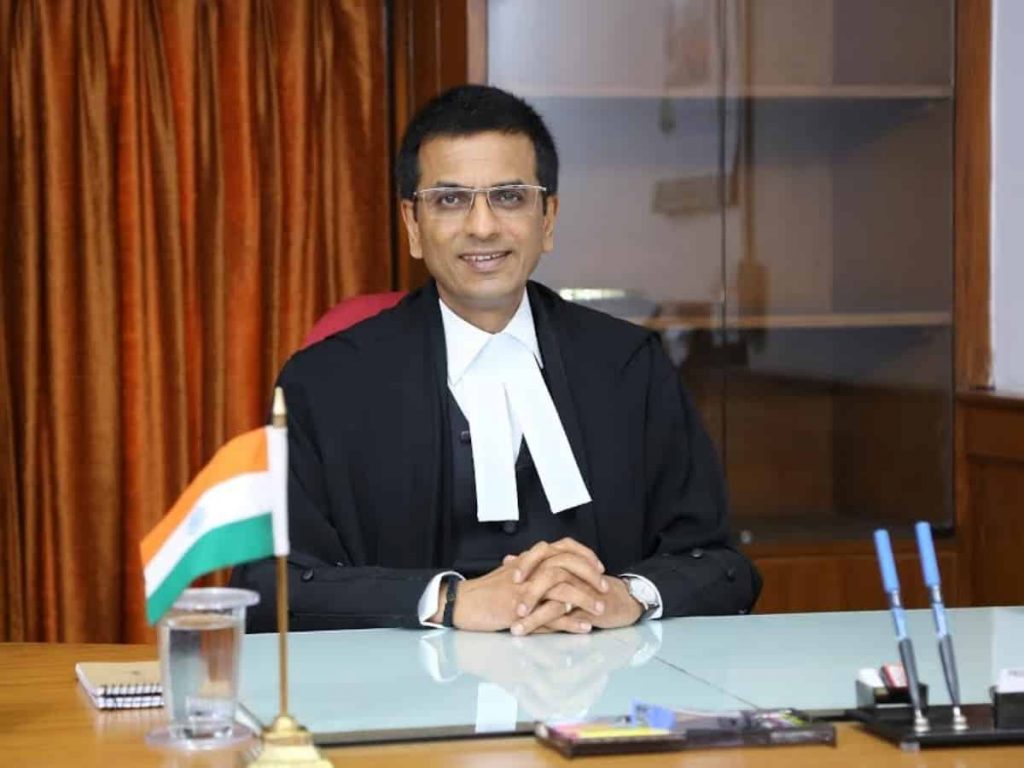
Dhananjaya Yeshwant Chandrachud, Chief Justice of India

The FIR registered by the Manipur Police against a three-member team of the Editors Guild of India that visited strife-torn Manipur recently is akin to shooting the messenger. A report by Sunny Sharma

The three journalists and the Editors Guild President who had published a fact finding report on the situation in Manipur face charges of promoting enmity, inciting religious feelings and criminal conspiracy. A second FIR had the additional charge of defamation. Manipur police have registered an FIR against Guild president Seema Mustafa, Seema Guha, Sanjay Kapoor and Bharat Bhushan under penal sections 153A (promoting enmity between communities), 298 (deliberately inciting religious feelings), 505 (statements conducive to public mischief) and 120B (criminal conspiracy). The FIRs had been registered on the basis of separate complaints from two citizens who claimed to be social activists.

The Editors Guild of India that visited strife-torn Manipur criticised what it termed one-sided reporting by some media outlets. It claimed there were indications that the state leadership had turned partisan. The internet ban was slammed as being detrimental to reportage. Accusing the fact-finding team of trying to provoke clashes, Chief Minister N Biren Singh called it anti-state, anti-national and anti-establishment.

The Supreme Court has provided protection to the three against any coercive steps. The Editors Guild has claimed that the visit followed an alert from the Army, which wanted an ‘objective assessment’ on whether journalistic norms were being violated.

On July 12, 2023, when the conflict had already been going on for a little over two months, the EGI also received a written complaint from the Indian Army’s 3rd Corps headquarters citing specific examples of the media in Manipur suggesting that it may be playing “a major role in arousing passion and not letting sustainable peace to come in”. A three-member team comprising Seema Guha, Bharat Bhushan, and Sanjay Kapoor was sent to Manipur to examine the media reportage in the state. The team visited Manipur from August 7 to 10. The report was released on September 2.

During the hearing, the Chief Justice D.Y. Chandrachud wondered orally whether the publication of a subjective analysis by a group of journalists could be a ground for the registration of an FIR. The apex court also decided to examine the Guild’s plea for transfer of the FIR to the jurisdiction of Delhi High Court from that of Manipur High Court.

Representing the Guild journalists, senior advocate Kapil Sibal told the bench, which included Justices J.B. Pardiwala and Manoj Mishra, that the situation in Manipur made it “hazardous” to visit the state. “We did not volunteer to go there…. We got a letter from the army. Please see the letter of the army to the Editors Guild,” Sibal said.

 Justice Chandrachud asked: “But why should the army invite you?” Sibal replied: “They wanted us to make an objective assessment of what is happening. We published our report on September 2. On September 3 night, we were prosecuted for offences under the Indian Penal Code. The chief minister also makes a statement against us and holds a press conference. How can we be prosecuted for the publication of a report?” Justice Chandrachud then turned towards solicitor-general Tushar Mehta, who was appearing for the Manipur government, and asked: “It is a report after all. The basic point he is arguing is that they have only filed a report that may be a matter of their subjective opinion. “This is not a case of somebody on the ground having committed an offence. They have published a report. Can that be a ground for an FIR?”

After FIRs against the team of Editors Guild of India, many media bodies and the Guild have reiterated that the underlying idea of the report was to enable introspection and reflection on the media’s conduct in such a sensitive situation. They have urged the state government to close the FIRs.

Haryana Cong grapples with internal feud ahead of polls

Intense factionalism has affronted the Congress in Haryana as it braces up to fight the upcoming polls by constituting its district-level bodies. Factionalism, which is not new to the party, has an immense potential to damage its polls prospects,  reports Rajesh Moudgil

Factionalism in Haryana Congress was out in the open at all the meetings held by AICC observers in different districts of the state with the groups of supporters having allegiance with different leaders openly raising slogans against their rivals.

These meetings are aimed at starting the process to constitute the party organisations including the district units in Haryana which have not been formed for the past about nine years. Notably, it has been the bickering within due to which the party has so far failed to do so.

The uproar was evident everywhere the AICC observers held these meets. It was witnessed when the AICC state coordinator Mayank Patel, state observers Mewa Singh and Ajay Sharma, and Anand Dangi had held the meeting in Hisar and Jind districts to take feedback on the names for the district unit office-bearers.

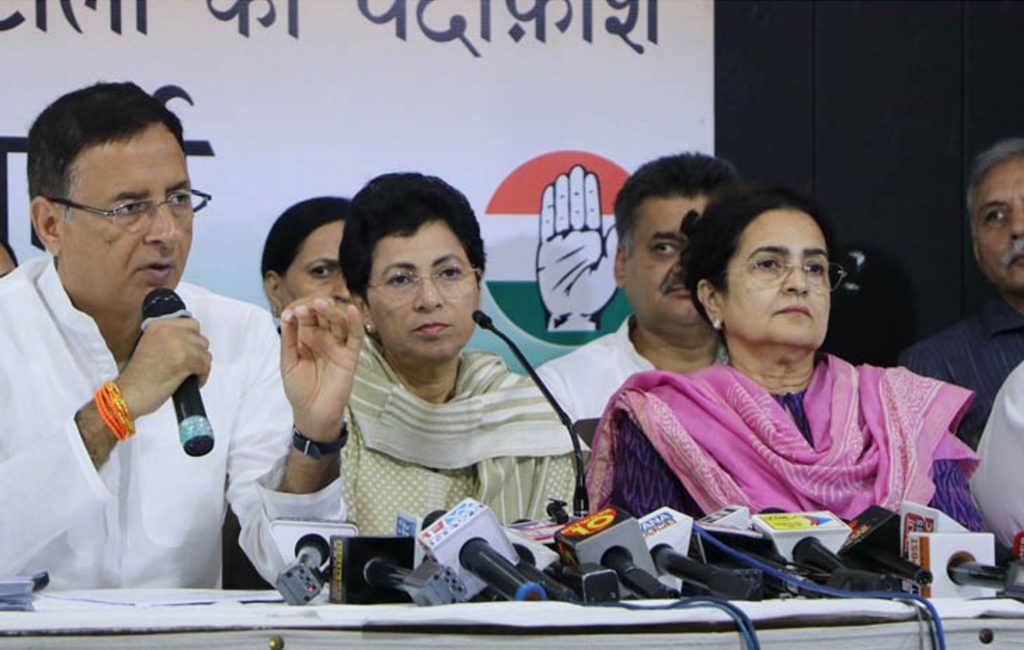
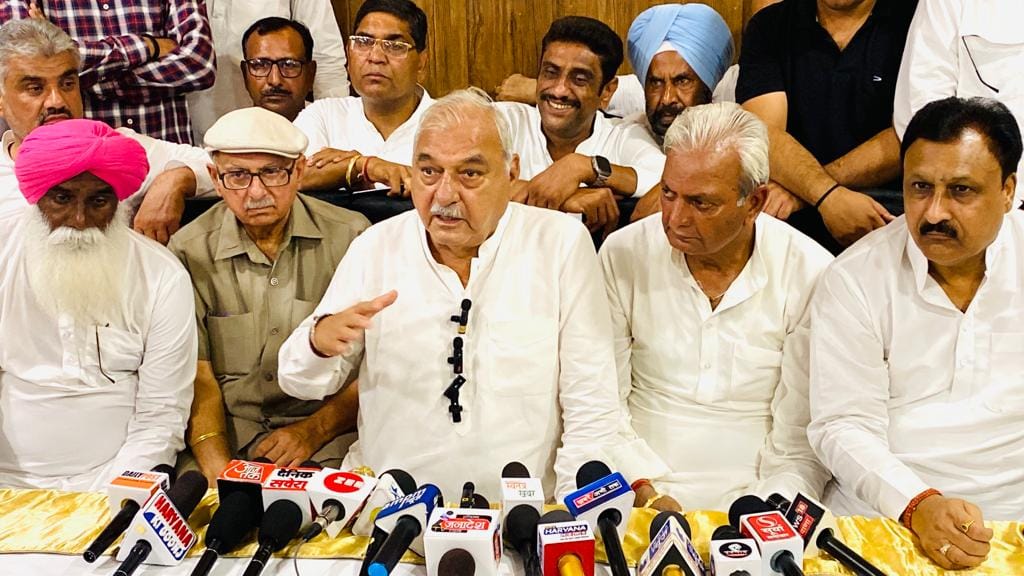
Supporters belonging to the camp of former chief minister Bhupinder Singh Hooda on one side and former state unit president Kumari Selja, Rajya Sabha member Randeep Surjewala and Tosham MLA Kiran Choudhary, on the other, openly shouted slogans against their rival camp leaders.

While several workers raised slogans against Hooda and his son Deepender and several other workers against the other side, several even shouted slogans against the observers. Similar scenes were also witnessed at Mahendergarh district earlier in the beginning of this month.

Likewise, such infighting also came to the fore during the meetings held by AICC observers in Hisar, Jind, Kurukshetra and Panipat districts in following days. And as if this was not all, more was on the way in the subsequent days at Karnal and Yamuanagar meetings.

At Karnal, supporters of the rival camps even pushed each other, almost came to blows and got engaged in heated arguments during such a meeting. The anti-Hooda faction shouted slogans like “Babu-bete ki party nahi chalegi’’ (meaning “would not allow high-handedness of Hooda (father), and his MP son Deepender Hooda’’). Allegations are that Hooda is maintaining his stronghold in Sonepat, Rohtak and Jhajjar districts (his citadel) and now promoting his son Deepender while side-lining several senior leaders and their supporters in the state.

The supporters of the Hooda detractors also raised slogans against state party president Udai Bhan for ignoring senior leaders like Kumari Selja, Randeep Surjewala and Kiran Choudhry by not allowing their supporters to these meetings.

According to information, former Congress legislator Sumita Singh who was present at the meeting expressed regret saying it should not have happened and that it was time all the party workers unitedly fought against the ruling BJP-JJP combine.
 
Here the AICC observers including district coordinators Yograj Bhadoria, S L Sharma and former MLAs Jarnail Singh and Lahiri Singh had held a meeting to start the process to select district level office-bearers including presidents.

In Yamunanagar district too, the groups loyal to Radaur MLA Bishan Lal Saini and Sadhaura MLA openly raised slogans against each other.

According to information, the observers were scheduled to consult former state presidents, MPs and former MPs, legislators and former MLAs as well as the candidates of previous Lok Sabha and assembly elections and former district presidents, besides other leaders of different wings of the party during these meetings.

Slip of tongue!

Most recently, tempers ran high among several groups within the party at Rohtak where the visiting AICC coordinator Deepak Pathak said that the next government would be formed under the leadership of Rahul Gandhi and Bhupinder Singh Hooda would lead the next government in the state.

However, according to a media report, party general secretary and state in-charge Deepak Babaria, has termed Pathak’s comments as “a slip of tongue’’, stating that it was up to the party to decide who would be the chief minister.

On the issue of bickering in the party, Babaria, held that while public display of internal rift was unfortunate, the senior leaders could have informed the party leadership for redressal of their issues. He further held that the party’s priority was to form the Congress government in the state and hence, the efforts were on to have a strong organisational structure by having strong district bodies and office-bearers at the earliest.

However, Hooda, on the other hand, who interacted with newspersons in Karnal a few days ago, maintained that while it would be the people of the state and the MLAs of the party who would choose their chief minister, he was a strong contender for the post!
 

Kharge apprised of grudge

Meanwhile, Kumari Selja, Surjewala and Kiran Choudhry have held a meeting with the AICC president Mallikarjun Kharge and general secretary (organisation) K C Venugopal and apprised them of the anguish of the party workers who were being ignored or side-lined.

They told newspersons that there were several leaders whose families and themselves had worked for the party during all adverse circumstances, but were now being side-lined. They alleged that there were some people who wanted to divide the party in a planned manner and that would not be allowed.

The Cong standing


It may be recalled that in the House of 90, Congress as of now has 30 members. While BJP has 41 MLAs and 10 legislators of Jannayak Janta Party (JJP), an ally of BJP, there are one each of Indian National Lok Dal (INLD) and Haryana Lokhit Party (HLP) and seven independent MLAs.

Till November last year, Congress’ tally was 31 which came down to 30 after Congress senior leader Kuldeep Bishnoi quit Congress and joined BJP reportedly after not being made the state party chief by the party high command. This necessitated this bye-election in which his son Bhavya, 30, not only retained the family stronghold but also registered his maiden win of his political career. He defeated Congress’ Jai Prakash, 67, the choice of the former two-time chief minister Bhupinder Singh Hooda, with a margin of 15,714 votes.

It may be recalled that it was Hooda-led Congress which had formed government in Haryana twice in a row – first time in 2005 when it had won 67 seats and then in 2009 when it won 40 seats and formed the government with the help of seven independents. In 2014 Congress’ graph fell to 15 seats when the BJP came to power with 47 seats.

Rising imports threaten profitability of Kashmir’s walnut and apples

While cheaper imported walnuts from countries such as China, Turkey and the US are causing alarm among the growers, the apple industry, which is the economic lifeline of Kashmir, is also being adversely affected by foreign imports. A report by Riaz Wani

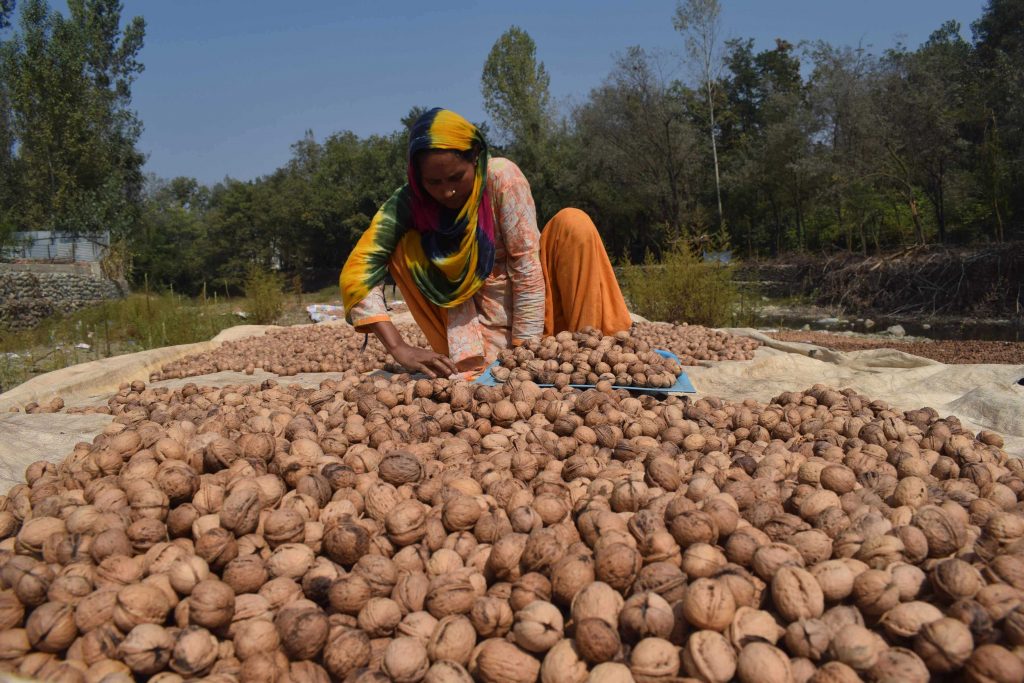
Cheaper imported walnuts from countries such as China, Turkey, and the United States are threatening the produce in Kashmir and causing alarm among traders who want the government to step in.

Walnuts cultivated in Kashmir are more expensive to produce due to various factors, such as the high cost of labour and a lack of irrigation facilities. The cost disparity has thus allowed cheaper foreign imports to corner the Indian market, to the detriment of the produce in J&K.

“The core issue lies in the price differential between Kashmiri walnuts and those from other countries,” said Haji Bahadur Khan, President of the Kashmir Walnut Growers Association, who expressed concern about the declining demand for Kashmir walnuts in Indian markets, attributing it to government actions. “The government has slashed the import duty, and GST has also affected the farmers and dealers.”

Khan, however, emphasized the superior quality of local Kashmiri walnuts, highlighting that they are naturally grown without the use of pesticides or manure. He criticized the preference for walnuts imported from California, China, and Chile, despite their foreign origin.

 “The walnut farmers are worried. They spend more on harvesting crops, and it is a laborious process,” Khan said, while lamenting the decreasing rates for the crop. “One kilogram of walnut kernel which would sell at Rs 1200, sells at Rs 700 per kilogram now. Likewise, the low-quality kernel would sell at Rs 300 per kilogram, at Rs 150.”

Another major hurdle for Kashmiri walnuts is their lack of organic certification, unlike their foreign competitors. This absence of certification limits their export potential, especially to markets such as the European Union, thus undermining the industry’s global competitiveness.


Upsetting the apple cart

The issue is not confined to walnuts alone. The apple industry, which is the economic lifeline of Kashmir, is also being adversely affected by foreign imports. In July, the import duty on Washington apples was reduced from 70 percent to 50 percent, delivering a big blow to local apple growers and traders.

Apple cultivation provides employment to millions of people. Approximately five lakh families, equivalent to around 25 lakh individuals, in the state depend on horticulture, with apples covering about 40 percent of the total fruit-growing area and contributing to a staggering 90 percent of the total fruit production.

Already, similar to the walnut, the growing costs of pesticides and transportation have considerably reduced the returns from apples. Till the time apple is harvested, a farmer has to spray pesticides between 10 to 15 times to save crop from scabs and other ailments.

 “The returns from the apple crop have been diminishing over the years,” said Basharat Bhat, an orchardist from Sopore, Kashmir’s one of the prominent apple towns. “Costs of spraying pesticides and transportation have gone up manifold. This has eaten into returns.”

 The rates of pesticides, Bhat said,  have over the years increased by almost Rs 1,000 per kg. Similarly, the price of wooden boxes in which apples are packed has also gone up to over Rs 100. Labourers who pick apples from trees charge Rs 800 per day. To top it all, the rising cost of transportation has further raised the cost for borrowers.

“The cost of a Kashmiri apple box goes up to Rs 600,” Bhat said. “And to earn a reasonable profit, a box of apples should fetch us around Rs 1000. But the import of apples from other countries puts further pressure on margins.”

So, the reduction in import duty has made it increasingly challenging for local apple growers to compete with imported varieties, which are often sold at lower prices despite their high quality. This is expected to diminish the demand for local apples, potentially leading to a decline in the industry.

If the sector continues to face significant losses due to the influx of low-priced imported apples, the consequences could extend beyond apple farmers, impacting the region’s economy as a whole.

Local stakeholders, including traders and growers, are urging the Union Territory administration to intervene and request support from the central government. Their plea is for measures that can, at the very least, establish a level playing field for Kashmiri fruit and nut producers.

The growers are hopeful that things will improve going forward. For the first time, Kashmir apple is seeing a potential market in Dubai where it has been exported. Dubai’s Lulu Group has started importing Kashmiri apples and also has plans to set up a fruit processing centre in Kashmir.

J-K in limbo: Awaits Art 370 ruling amid elusive polls, statehood

Srinagar

Whatever be the Supreme Court’s verdict on legality of the government decision to abrogate Article 370, it could pave the way for, at least, the Assembly elections in Jammu and Kashmir. But when? No one is sure about the timing. A report by Riaz Wani

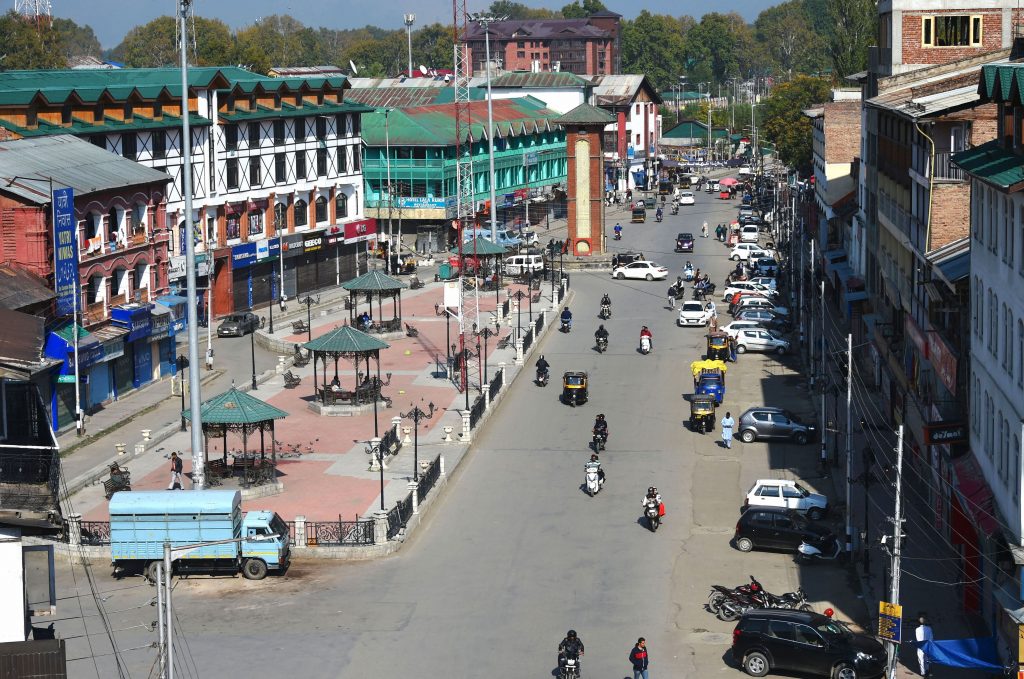
As the Supreme Court reserves its order on the constitutionality of the revocation of Article 370, Kashmir is waiting with bated breath for the verdict. Four years after the constitutional provision was withdrawn and J&K was downgraded into two federally administered areas, both the Assembly elections and the promised statehood continues to elude the former state minus Ladakh, which is now one of the two union territories.

Whatever be the verdict of the Supreme Court, it could pave the way for, at least, the Assembly elections in J&K. But when? No one is sure about the timing. More so, when general elections are just eight months away and there is no indication that the centre has any plans to hold Assembly polls in the union territory.

In fact, during the ongoing hearings of the Article 370 case in the Supreme Court, the union government told the Supreme Court that it cannot give any exact timeframe and it would take “some time” for restoration of statehood in Jammu and Kashmir while reiterating that the union territory status is “temporary”.

Solicitor General Tushar Mehta, however, said  that the Central government is ready for elections at any time as updating of the voters’ list being carried out by the Election Commission is due to be completed soon. He said that the call for election will be taken by the State Election Commission and the Election Commission of India.    

But in Jammu and Kashmir few people believe that Assembly elections are around the corner. In fact, few see any hope that polls will be held even after 2024 national elections. And could in all likelihood be further delayed should the BJP return to power, which it is favourite to do.  

Such a prospect indefinitely delays the restoration of statehood.

“Elections and statehood in J&K don’t appear to be the priorities of the BJP government at the centre,” said a Kashmir University teacher who didn’t want to be identified. “The reason seems not to let the grip the central government has acquired over the situation in the union territory slip and also to take the execution of its roadmap for the region to its logical conclusion.”

In a recent statement, the Lieutenant Governor Manoj Sinha said that his administration had framed a roadmap of the next 25 years about the changes that are going to happen in the union territory.  And such a roadmap would hardly be realizable, should power in future pass into the hands of the local political parties who, in a democratic set up would be accountable to people. This would make them unable to take steps which don’t enjoy support among their political constituency.  

But this fear of a democratic rule would only prolong the ongoing central rule and, in turn,  indefinitely delay the restoration of statehood.


Unease in Jammu and Ladakh

On September 7, former J&K Chief Minister Dr Farooq Abdullah told party workers at Nawa-i-Subah complex, which houses the headquarters of his party National Conference, that the ruling BJP is non-existent in Kashmir and has forfeited its political space in the Jammu division as well.

“BJP has lost its political ground and relevance across both provinces of Jammu and Kashmir due to its anti-people policies. They had promised a lot to the people of the Jammu province but delivered poorly on the ground,” Abdullah said. “BJP betrayed the trust of the people in the region, leaving them feeling cheated. People are suffering due to dilapidated roads, huge power cuts, non-availability of potable water and acute deficiency of teaching staff in the schools.”

It is true that Jammu is witnessing a degree of anxiety about the post-Article 370 state of affairs and for more or less similar reasons as in Kashmir Valley: loss of jobs, land and identity. People apprehend that the militancy in the Valley will persuade all eligible outsiders to settle in Jammu. People from outside are expected to find Jammu safer and culturally favourable. Besides, the new residency law has already granted citizenship to West Pakistan refugees, Gurkhas and Valmikis, who live in Jammu.

In fact, other than the BJP, all other parties in Jammu, including the Congress, have expressed their unhappiness with the existing situation. An undercurrent of unease is also underlined by the videos of the interviews of the people from the region. Jammu fears becoming the first stop in the impending demographic change being facilitated by the new domicile rules for J&K.

Ditto for Ladakh

The union territory carved out of J&K is now more alienated than ever before. Ladakh has experienced significant growth in its tourism sector, attracting an increasing number of visitors. This has played a big role in bolstering the local economy. However, the region’s transition to union territory status in August 2019 has increasingly confronted Ladakhis with challenges they had not foreseen. While initially celebrating this change, they now worry about the potential influx of outsiders without adequate constitutional safeguards against the settlement of non-local residents. With a small population of around 274,000 people, Ladakhis fear being overwhelmed and losing control over their economic activities.

Earlier, the Ladakh Hill Development Council (LAHDC) demanded statehood, the extension of the sixth schedule, separate Lok Sabha seats for Leh and Kargil, and the establishment of a Public Service Commission. Notably, the Apex Body Leh (ABL) and the Kargil Democratic Alliance (KDA) have displayed rare political unity, jointly protesting and organizing strikes to advocate for their demands. Now, the LTTA, representing both districts, echoes the sentiment by opposing outside investment in tourism, driven by the shared fear of being overshadowed by outsiders in every aspect of economic activity.

Waiting for the verdict

But, for now, all eyes are fixed on the apex court’s verdict on Article 370 which might come in the near to medium future. And that would determine J&K and Ladakh’s future trajectory. In case of the SC’s endorsing the withdrawal of Article 370 and the bifurcation of the former state into two union territories, the discourse will decisively shift towards Assembly elections and the subsequent grant of statehood – truncated or otherwise – as promised by the union home minister Amit Shah himself on the floor of Parliament.

Under the circumstances, this looks to be a likely scenario. But then again, it looks highly improbable that the J&K Assembly elections will be held until after the 2024 parliamentary polls. The question, however, remains whether Assembly polls will even elude J&K should the central government implement ‘one nation, one election scheme’?

By-election results: INDIA Alliance gains momentum

By election Kerala

Out of the seven seats up for grabs in the by-polls, the BJP managed to secure only three while four went to INDIA Alliance, signalling potential challenges ahead for the ruling party. The opposition thinks that if it remains united it can take on the BJP.  A report by Mudit Mathur

The performance of the newly formed opposition bloc – I.N.D.I.A. in the recently held by-elections in six states has compelled the top BJP leadership to sit up and take notice. Out of the seven seats up for grabs in these by-polls, the BJP managed to secure only three, signalling potential challenges ahead for the ruling party.

The by-elections, which were held in Uttar Pradesh, Kerala, West Bengal, Jharkhand, Uttarakhand and Tripura, were the first electoral test of the I.N.D.I.A, a grouping of 28 parties.

The BJP’s resounding loss in the Ghosi assembly constituency of Mau district of eastern Uttar Pradesh, a BJP stronghold, is significant. It perhaps reflects the changing mood of the electorate as the high profile campaign led by the party’s top political leadership came undone.

The high-intensity campaign by the BJP, however, failed to shift the focus of the people away from the pressing issues such as frequent price rises, increasing unemployment, and dwindling economic prosperity, all of which were highlighted by the Samajwadi Party during the election campaign. Undoubtedly, the result is a booster dose for the Congress-led opposition alliance I.N.D.I.A., which supported the Samajwadi Party candidate against Dara Singh Chauhan, SP turncoat fielded by the BJP.

Political observers are surprised over the result of Ghosi seat as both the Prime Minister Narendra Modi and UP Chief Minister Yogi Adityanath represent eastern Uttar Pradesh on the national canvas and have been instrumental in large scale infrastructural development and social upliftment. The setback in Ghosi is understandably causing worries to the BJP high command.

The BJP candidate, Dara Singh Chauhan, an influential OBC leader, had won in the 2022 Assembly elections on a SP ticket and had recently defected to BJP.  His entry into the BJP was not taken kindly by local BJP workers. The bickering among the party workers over the issue also contributed to the BJP’s humiliating defeat.

In caste-ridden politics of Uttar Pradesh, BJP engineered polarisation by aligning with non-Yadav most backward castes and non-Jatav Dalits by promoting their leadership. This arrangement paved the way for landslide parliamentary election win for the BJP in 2019 and saw the return to power of Yogi Adityanath after a resounding BJP win in 2022 assembly elections. Samajwadi Party and Bahujan Samaj Party failed to make any dent in voting patterns in the stronghold of BJP.

The Bahujan Samaj Party (BSP) often refrains from participating in by-elections, as it believes that the outcomes overwhelmingly favour the ruling party. But result of Ghosi by-election are seen as a deep setback to Mayawati whose political aloofness has puzzled political circles as she announced that it would remain equidistant from the BJP-led NDA as well as the Congress-led I.N.D.I.A alliance.

The winning Samajwadi Party candidate, Sudhakar Singh, 64, a Rajput leader, has shot to national fame, by defeating the BJP’s high-profile OBC candidate Dara Singh Chauhan by a huge margin of 42,759 votes. Singh has over three-decade-long political association with the party as a worker and has also remained legislator for two terms. His victory came at a time when the party president, Akhilesh Yadav is raising a pitch for a caste census at national level besides besides demanding empowerment of the “Pichchde, Dalit and Alpsankhyak (PDA—backwards, Dalits and minorities)” that forms the majority of the electorate.

Soon after the result, the SP chief Akhilesh Yadav said: “It is a victory for positive politics and a defeat for negative communal politics. It is Bharat starting towards INDIA’s victory.” Samajwadi chief Akhilesh Yadav, who  normally refrains from campaigning in by-elections, addressed a rally for Sudhakar in the Ghosi. The political strategist and senior party leader Shivpal Singh Yadav also camped in the constituency during the entire campaign trail.

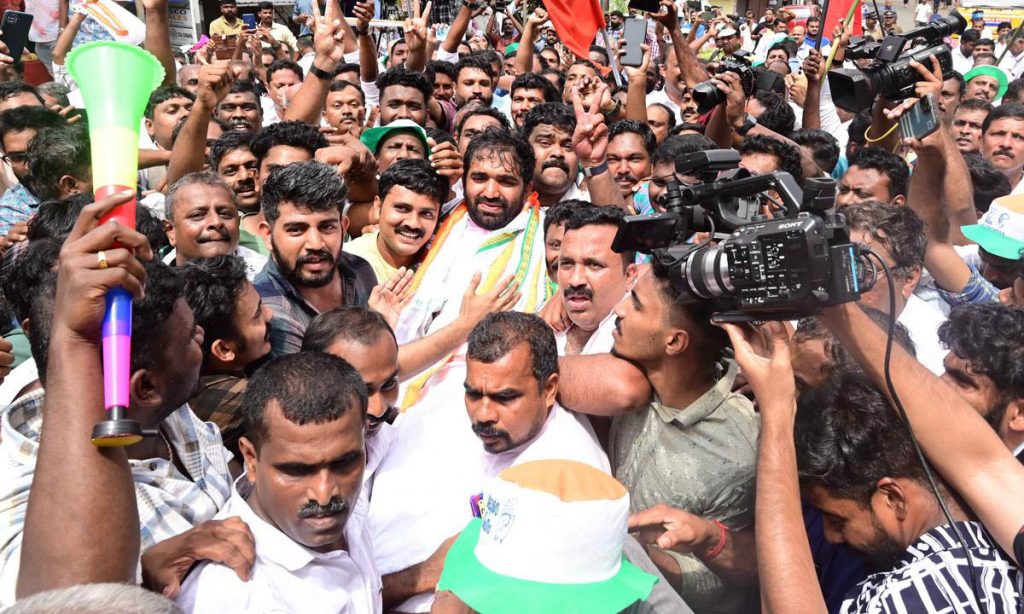
However, a spectacular win for the opposition came from Puthuppally in Kerala where the Congress candidate Chandy Oommen won by a margin that surpassed his late father and veteran Congress leader Oommen Chandy’s highest ever victory margin in 53 years. It was considered as a big blow to CM Pinarayi Vijayan, who had turned the by-election into a referendum on his government and led the campaign from the front. The aggressive CPI(M) campaign, and the sharp attacks on the Chandy family, appear to have not gone down well with the voters, who continue to hold affection for the late Congress leader.

Addressing the media after his win, Chandy Oommen described the by-election result as his father’s “13th victory” (Chandy Senior had won 12 Assembly elections from Puthuppally). “My father had been a member of every family in Puthuppally. He was a father, a brother, a son for the people. I will be here for all of you as my father had been. This is the victory of the people who loved my father. The care and development which my father bestowed upon you will continue.”

Congress leader Ramesh Chennithala said, “The spectacular victory in the Puthuppally by-election is a clear message to the Modi and Pinarayi Vijayan governments. Both BJP and CPM have been thrown out by the people of Puthuppally. Such a landslide margin has not been achieved in any of the by-elections held in Kerala. The message is very clear.”

In Bengal also, it was the BJP which was at the receiving end. The party had been counting on retaining Dhupguri to check its slide in the state. However, the ruling Trinamool Congress, dogged by problems of its own, spared no effort and wrested the seat from BJP with a victory margin of  4,309 votes.

TMC nominee Nirmal Chandra Roy, a professor of history, defeated the BJP’s Tapasi Roy, whose husband was in the CRPF and died in a terrorist attack in Jammu and Kashmir in 2021.Apart from being a prestige win for the party in its battle against the BJP, it is further indication of the TMC making its way back into North Bengal. Commenting on the Dhupguri win, West Bengal CM Mamata Banerjee said: “The BJP has lost four by-elections out of the seven held on September 5. This is a big win for INDIA.”

In Jharkhand, INDIA fielded a joint candidate Bebi Devi of Jharkhand Mukti Morcha fromDumri who registered a comprehensive win over the NDA nominee. Dumri seat was held for a long time by her late husband Jagarnath Mahato, a popular tribal leader who had participated in the agitation for the separate Jharkhand state. His death necessitated the bye election. She won the seat by a margin of over 17,000 votes. While the counting indicated a close fight, the JMM’s Bebi Devi finally pulled ahead, getting over 1 lakh votes against 83,164 votes for NDA candidate Yashoda Devi of the All-Jharkhand Students’ Union (AJSU).

Meanwhile, BJP bagged one seat in Uttarakhand and two seats in Tripura. Bageshwar seat of Uttarakhand was retained by BJP where Congress lost by a narrow margin of 2,405 votes. BJP fielded Parvati Dass, wife of Chandan Ram Dass, minister with portfolios of Social Welfare, Minority Welfare, Road Transport, and Micro, Small, and Medium Enterprises, whose sudden death had necessitated the by-election. BJP candidate got sympathy vote enabling her to win by a narrow margin.

In Tripura, the ruling BJP got a big boost where the party won both Boxanagar and Dhanpur Assembly seats in the bye elections. BJP snatched one of the constituencies which was held by CPI(M) MLA Samsul Haque. Though son of Haque, Mohd Mizan Hossain was fielded as a joint candidate of opposition alliance I.N.D.I.A from Boxanagar but BJP nominee Tafajjal Hossain won with a margin of 30,237 votes. The CPI (M) candidate got only 3,909 votes.

The Dhanpur bye election had been necessitated due to the resignation of the BJP’s Pratima Bhoumik from the seat, after she chose to continue as an MP and Union Minister of State. The CPI(M) again fielded Kaushik Chandra, who had lost to Bhoumik in the Assembly elections in February this year. This time, he lost to the BJP’s Bindu Debnath with a margin of 18,871 votes. Dhanpur was once the home turf of former Chief Minister and CPI(M) stalwart Manik Sarkar.

The by-elections in the states are fought on regional issues and cannot be a yardstick for upcoming 2024 general elections. But the results have kindled a hope among the INDIA block that if it remained united and fielded consensus candidates it could take on the BJP .


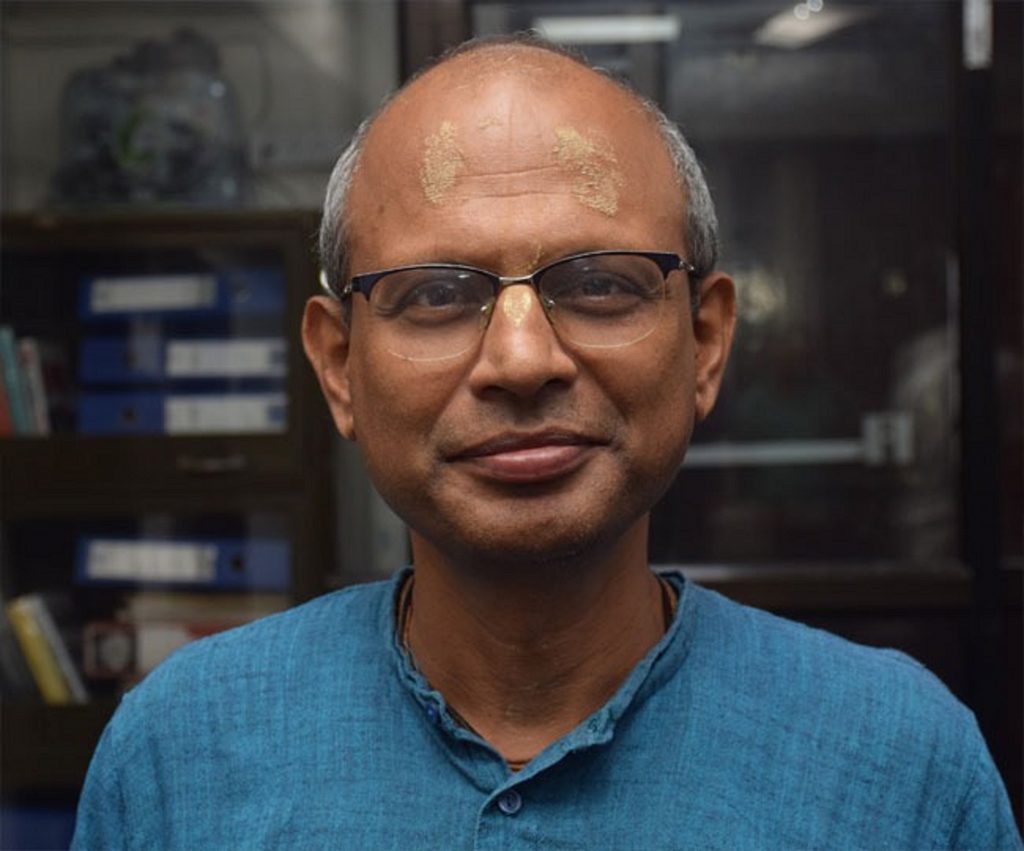
IIT Mandi director has a knack for courting controversies

Laxmidhar Behera, Director, IIT Mandi Director

After previously raising eyebrows by affirming the existence of ghosts, Behera has now sparked controversy by suggesting a link between natural disasters  and people’s meat-eating habits.

It’s been two months since the monsoon rain began unleashing its fury on Himachal Pradesh with tens of thousands of people still struggling to pick up the pieces as the crumbled roads, bridges, homes and other buildings have affected both agriculture and tourism, the mainstays of the hill state.

However, instead of pointing out why hills have become so fragile and vulnerable, the top IIT Professor has created a stir with a viral clip in which IIT Mandi Director Laxmidhar Behera, while addressing a group of students in an auditorium, says that to become a good human being, they have to avoid eating meat.

“To become a good human being what do you have to do?,” he asks and then answers: “No meat eating.” He further exhorts students to repeat the answer. “Himachal Pradesh will have a significant downfall, if the innocent animals are butchered.” The top professor explained to students during a recent address, the ‘butchering of innocent animals’ had an unseen yet ‘symbiotic relationship with the degradation of the environment’. The debate has since taken a political turn as a video of Professor Behera urging students to turn vegetarian went viral.

“…you cannot see right now but you are there. It is having landslides, cloudbursts and many other things again and again, these are all effects of cruelty on animals…people eat meat. To become good human beings, what do you have to do? No to meat-eating,” he explained.

Netizens have been vocal in their criticism of his views. While some flagged his role as an educator others attempted to reason scientifically with the academic.

“Director of an IIT. Why is Himachal having landslides? Because of unplanned construction/deforestation/climate change/all of the above? No. Because of meat-eating. Is he saying farming animals leads to deforestation? No. He says it leads to cloudbursts,” derided one user on X (née Twitter).

As the video gained traction it also became a talking point for Opposition politicians. Congress general secretary, communications in-charge, Jairam Ramesh asserted that Behera was unfit to be the director of an IIT and the longer he stayed in office the “more the damage he will do to the spirit of scientific temper.  A senior Minister confused Newton and Einstein while another justified excluding Darwin from textbooks…Now, this simply flabbergasting statement from the Director of a prestigious institution!!!.”

 “Science and spirituality is one thing, but science and crackpot theories that are put out by people in positions of power is quite another,” a social media user said. Another user, Professor Ravikant said, “IIT Mandi ranks in top 20 of India’s NIRF rankings. It’s an elite institute. Its director claims that he can drive out ghosts by chanting and that eating meat causes landslides.”

The fact is the sunken roads and washed-away highways tell the unfortunate tale of a system that has allowed constructions in the fragile hills by ignoring scientific rigour. Mountains have been cut indiscriminately and the retaining walls of roads are not strong enough. The Landslide Hazard Risk Assessment-2015, undertaken by a think tank, had warned of the threat and high landslide vulnerability faced by 60 per cent of HP’s road network. The state government has estimated the losses caused to be over Rs 10,000 crore because the number of roads swept away is staggering and more than 160 roads still remain closed across the state for its failure to build stable and ecologically sustainable structures.

The IIT Professor

Enquiries reveal that Prof Laxmi Dhar Behera had joined as the Director of IIT Mandi on January 19 , 2022. Prior to this, he was working as the Poonam and Prabhu Goel Chair Professor in the Department of Electrical Engineering, IIT Kanpur, and simultaneously served as TCS affiliate faculty. After completing BSc (Engg) and MSc (Engg) from NIT Rourkela in 1988 and 1990 respectively, he received the PhD degree from IIT Delhi in 1997.

During his 26 years of research and teaching career, Prof Laxmidhar Behera has contributed significantly to areas such as Intelligent Systems and Control, Vision based Robotics, Warehouse automation, Brain-Computer-Interface and Drone based pipeline inspection system. He has established industrial collaboration with TCS, Renault Nissan, and ADNOC, Abu Dhabi, BEL Bangalore while making significant technological development in the areas such robotics-based ware-house automation, vision and drone guided driver assistance system, and drone guided pipeline inspection systems. Prof. Behera has worked as Reader at University of Ulster, UK during 2007-2009 and has taken up visiting professor assignments at ETH Zurich, and FHG, Germany. Prof. Behera has supervised 22 PhD students to completion. He has published three graduate level textbooks, 110 peer reviewed journal papers, 208 papers in conference proceedings and 17 book chapters.

Other controversy

This is not the first time his statements have stirred a row. In 2022, days after he was appointed as the director, Behera, in a five-minute video clip on YouTube, spoke about his apparent act of exorcism to rid his friend’s apartment and parents of  “evil spirits” through the chanting of holy mantras of  “Hare Ram, Hare Krishna”. When asked about the video, Behera had said, “I narrated what I said. Ghosts exist, yes.”

While this viral video has given enough fodder to social media users, another viral video showing Haryana  Chief Minister Manohar Lal Khattar, purportedly of his interaction with a member of audience at a public meeting, has led to a controversy and criticism by Opposition leaders. The viral video, shared on social media by both Congress and Aam Aadmi Party, shows a woman demanding a factory be set up at Bhatol Jatan village. Mocking the demand, the CM is heard replying: “Agli bar jo chand ke upar jayega na Chandrayaan 4, usmein tumko bhej denge. Baith jao. (Next time, you will be sent to the moon on Chandrayaan 4. Sit down).”

With Haryana due to hold assembly elections next year, the Opposition targeted the CM’s remarks. Sharing the video on its official X account, AAP said: “Those who were elected by the public to serve, today they are making fun of the public. The woman’s crime was that she sought a factory for employment.” Many party leaders, especially those from Haryana, shared the video clip on social media.

Haryana CM had allegedly mocked the woman at a public event when she asked him for a factory in her neighbouring village saying that she would be sent on the Chandrayaan-4 mission. Two days after coming under criticism for mocking the woman who sought a factory for a women’s self-help group in a Hisar village, Haryana chief minister Manohar Lal Khattar had a video conversation with her and told her that he was joking earlier.

Suman Bhatol, who had raised her demand for the construction of a factory during an interaction with the CM at his Jan Samvad event at Hisar’s Thuran village, claimed that now the CM has agreed to construct a building on 200 square yards of land in Bhatol, with a hall, an office and a machine for the self-help group. She added that the CM described her as “brave and fearless woman”. The woman said she felt better after the CM talked to her. Suman said that after this, the MLA also honoured her at the village’s chaupal and CM was like her father or brother.

India’s space missions: A glimpse into the future

A major reason for sudden interest in the moon mission is the quest for a cheap source of energy. Helium 3, which is found on the moon, where it has accumulated by solar winds in billions of years, promises to be a future energy superstar.  A report by Pawan Kumar Bansal

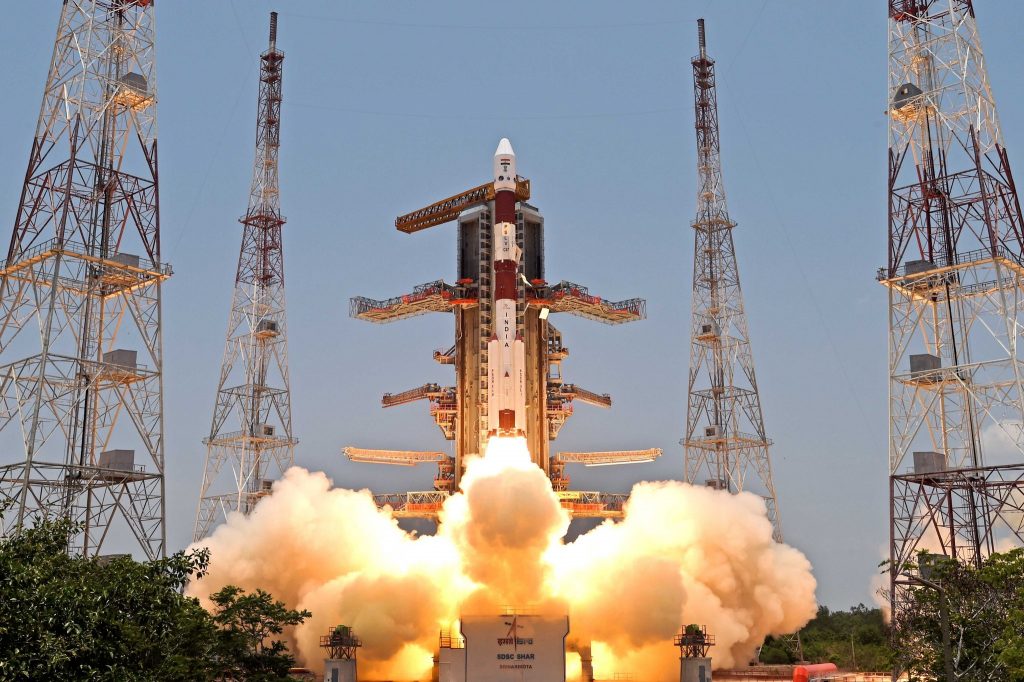
India’s space agency, ISRO (Indian Space Research Organisation), has demonstrated technological prowess by successfully launching missions to explore Mars (Mangalyaan), the Moon (Chandrayaan) and now the Sun (Aditya L1).

These missions contribute to our understanding of the universe and our own planet. Chandrayaan missions, for example, have provided valuable data on the Moon’s composition, helping scientists to learn more about lunar history and resources.

The Indian Space Research Organisation (ISRO) has just shared fresh images taken by Aditya-L1. As part of ISRO’s solar mission, Aditya-L1 is scheduled to reach the Sun-Earth L1 point. It has now taken a selfie. It has also captured images of the Earth and the Moon, as shared by ISRO on X (formerly Twitter).

India’s first space mission to study the Sun is called Aditya L1. It will reach a point 1.5 million km away from Earth to a special spot known as Lagrange point 1 (L1). Being at this point lets the spacecraft always see the Sun without any interruptions like eclipses. This will help ISRO better understand what the Sun is doing and how it affects space weather in real-time.

ADIYTA L1 mission will study the Sun’s atmosphere and help scientists to better understand how the Sun works and how it affects life on Earth. It will be projected at about 1.5 million km from Earth in a halo orbit around the L1 Lagrange point between the Earth and the Sun where it will study the solar atmosphere, solar magnetic storms, and their impact on the environment around the Earth. India’s space agency says it will take four months to travel that far. India’s first space-based mission to study the solar system’s biggest object is named after Surya – the Hindu god of Sun who is also known as Aditya.

 Indian forays into Space technology are crucial for national security. India’s space capabilities play a role in communication, surveillance, and defence, ensuring the country’s security interests. As India collaborates with other space agencies and nations, fostering international cooperation in space exploration and technology development is another motive. This helps strengthen diplomatic ties and scientific exchange.

The space industry can boost a nation’s economy through satellite services, launch services, and technology spin-offs that find applications in various sectors, from agriculture to telecommunications. Successful space missions inspire the nation’s youth and promote STEM (Science, Technology, Engineering, and Mathematics) education. They serve as a source of pride and motivation for future scientists and engineers.

Indian satellites are crucial for monitoring environmental changes, weather forecasting, disaster management, and resource management. This helps in mitigating the effects of natural disasters and managing resources effectively. India’s participation in space missions contributes to global efforts to understand space, climate change, and sustainable development. It also elevates India’s standing in the international community.

The ultimate objective of space missions is to showcase the World where India stands now and what it aims to achieve in future. A major reason for sudden interest in the moon mission is the quest for a cheap source of energy. Real game changer is helium 3 which is found on the moon. Helium 3 has accumulated on the moon by solar winds for billions of years. Helium will be a future energy superstar.

One tonne of Helium 3 will produce 1000MW of energy, the cost of 100 kg of Helium 3 will be 140 million dollars, sufficient to run a 1000-megawatt plant for a year. Helium 3 will be a game changer in the energy industry. This energy will be produced by fusion with hydrogen isotope deuterium. Vikram lander and Pragyan will be looking for helium deposits. If India succeeds in this, oil dependence will go. We will be the first 3 countries of the world who will dominate planet earth.

How Black Sea deal’s revival can avert global food crisis

Russia Africa Summit

The world is headed for a major food crisis with Russia refusing to extend the Black Sea Grain Initiative. The Russian stand reflects its growing desperation owing to its failure to win war with Ukraine

The world is headed for a major food crisis as Moscow has refused to extend the Black Sea Grain Initiative, agreed to by the UN, Turkey and Russia in July 2022 following the Russia-Ukraine full-scale war that began on February 24 last year. African countries, in particular, are more perturbed than anyone else as the development may not only lead to an acute shortage of wheat and other food grains in the black continent but also make these commodities too costly to afford for the extremely poor people living in that part of the globe.

Therefore, some time back, African leaders came out with a proposal for ending the war that actually began in 2014, and averting the dangerous disruption of wheat export from Ukraine to different parts of the world.

Wheat supplies from Ukraine, one of the top 10 wheat producers of the world, serve as the lifeline for 79 countries, according to the International Rescue Committee.  Experts believe that these countries would find it difficult to cope with the problems that might arise in
the absence of Ukrainian wheat supplies.

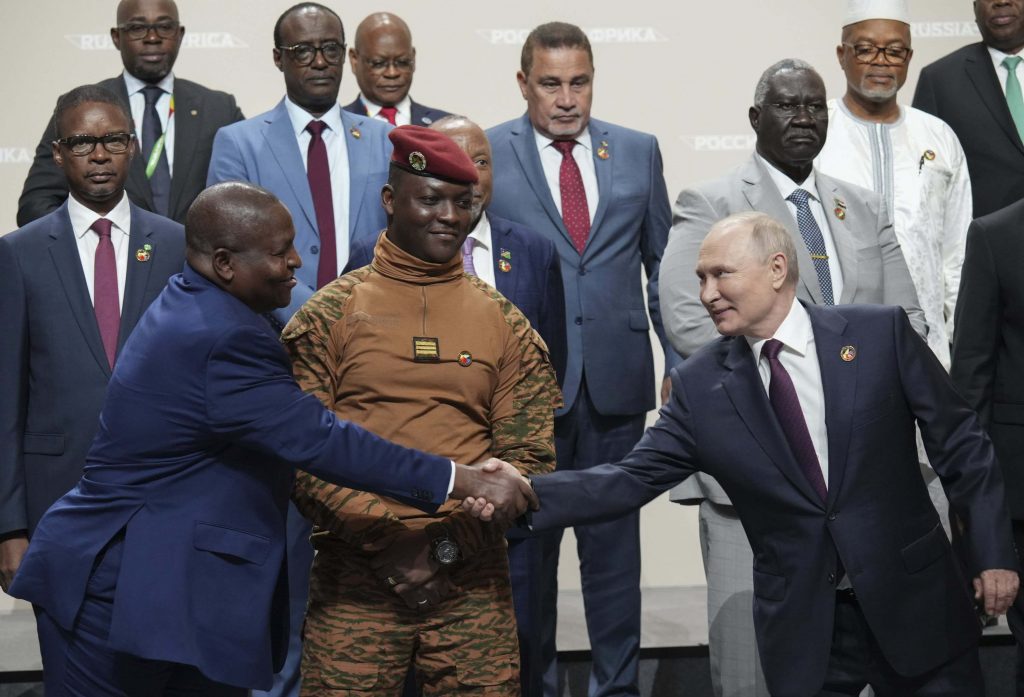
The African proposal came during a two-day Africa-Russia summit in the last week of July. But Russian President Vladimir Putin was adamant. Instead of making any commitment on extending the UN-brokered Black Sea Food Initiative, he promised to provide free wheat supply to the most needy countries of Africa. To assuage the feelings of the African
leaders, he assured them to “examine” their proposals, but with the assertion that ships passing through the Black Sea would henceforth be bombed for sure.

The Russian stand is that loaded ships entering the Black Sea would now be treated as if these were carrying weapons for Ukraine.

But very few countries have taken President Putin’s otherwise high-sounding assurance very seriously: “Our country will continue supporting needy states and regions, in particular, with its humanitarian deliveries. We seek to actively participate in building a fairer system of distribution of resources. We are making maximum efforts to avert a global food crisis.”

Some of the African leaders at the St Petersburg conference told Putin clearly that they were there not to beg for anything. They were primarily interested in an end to the war, which would ultimately lead to the normalisation of food grain supplies through the Black Sea.

Putin’s arguments in support of his desperate stand could not convince the world community as foolproof arrangements were there to supervise the loading and unloading of ships, which would pass through the Bosporus Strait under Turkish control to reach the Black Sea and then to their actual destinations.

Another summit to avert the feared food crisis was called in August by Ukraine and sponsored by Saudi Arabia, but Russia was not invited. As expected, it ended in a fiasco, but highlighted the growing anxiety of the world with the war showing no sign of coming to an  end and the Black Sea Initiative having been dumped in the dustbin of history.

The truth is that Russia does not want Ukraine to use the Black Sea route to export its grains to the world’s needy countries, which had been depending on Ukrainian supplies for years. Moscow has provided proof of this intention as Putin has claimed that his country is going to have a bumper wheat crop this year and can replace the supplies from Ukraine.

He tried to comfort African leaders, though unconvincingly, that “our country can replace Ukrainian grain, both on a commercial basis and as grant-in-aid to the neediest African countries, more so since we expect another record harvest this year.” The US and other western countries, however, assert that this is not based on truth.

Russia, in fact, adopted go-slow tactics much before it finally ended the Black Sea deal. Till the end of last year over 10 ship inspections were done every day, but this came down to two in May allegedly as a result of Russian non-cooperation. The UN has claimed that it has the capacity to inspect as many as 40 ships a day, but this is not acceptable to Russia.

Putin has stated that he had to withdraw from the Black Sea deal because the sanctions imposed on Russia’s grain exports and related activities had not been lifted by the West, resulting in ship insurers demanding more than the normal premium. But he does not make it clear that lifting of the sanctions was part of the export deal.

The Black Sea Initiative was, no doubt, an excellent arrangement to ensure that the Russia-Ukraine war did not affect the food supply arrangements finalised to help the world’s poor countries. It had come to the rescue of not only a number of needy African nations, but also countries like Afghanistan. The deal had led to international wheat prices, which had shot up considerably after Russia declared full-scale war on Ukraine, stabilising at $800 per tonne from $1,360 per tonne.

USAid chief Samantha Power has described the Russian excuse to end the deal as a “life and death decision” not based on truth. It was full of “falsehood and lies” and could jeopardise the lives of millions of the world’s poorest of the poor living in the least developed countries like Bangladesh, Afghanistan, Sudan and Somalia.

The Russian stand, reflecting its growing desperation owing to its failure to win the war as it expected, is being interpreted as its ultimate strategy to use the disruption of food supplies as a weapon. President Putin, perhaps, believes that this is how he can force the western countries and others supporting Ukraine to accept Russian conditions to end the war, including a guarantee that Ukraine will never join the NATO bloc and the annexed Crimea region will remain a part of Russia. Ukraine and its western allies, as expected, have straightaway rejected these “unreasonable” demands.

Now since the Black Sea deal remains a thing of the past, Ukraine has begun to use the land route to export its wheat and other grains. Since this route passes through European Union territories, it has caused uneasiness among the farmers in Europe because the prices of their wheat are crashing owing to its increased availability there. The EU as a bloc is the world’s largest wheat producer after China.

Therefore, with a view to protecting the interests of the EU farmers, the EU authorities have allowed five member-countries – Bulgaria, Hungary, Poland, Romania and Slovakia – to ban the sale of Ukrainian wheat, corn, rapeseed and sunflower seeds in their areas while allowing the transit of these commodities to other destinations. However, the fact remains that the land route can never be a replacement for the sea route.

How barasinghas have bounced back in Kanha

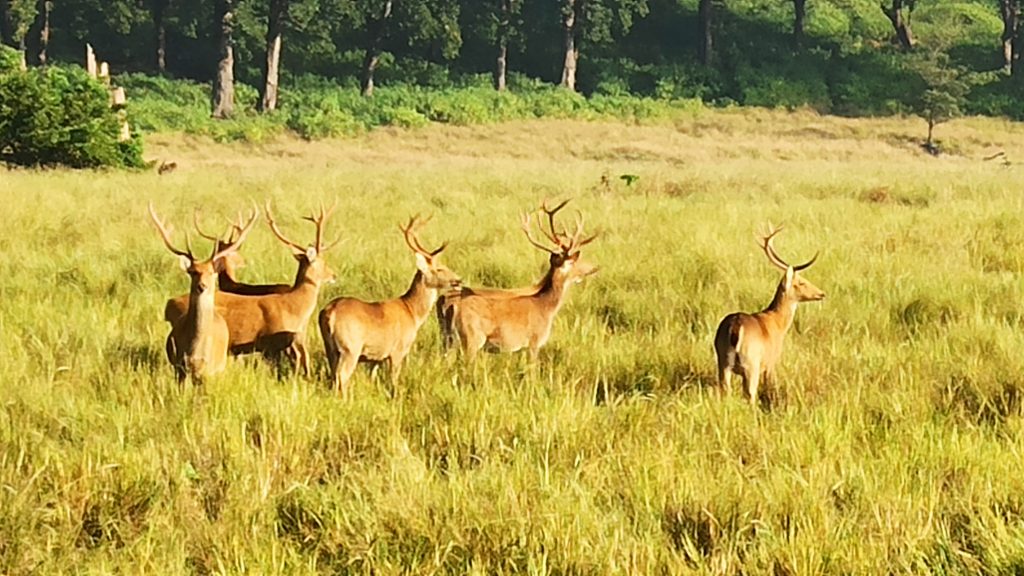
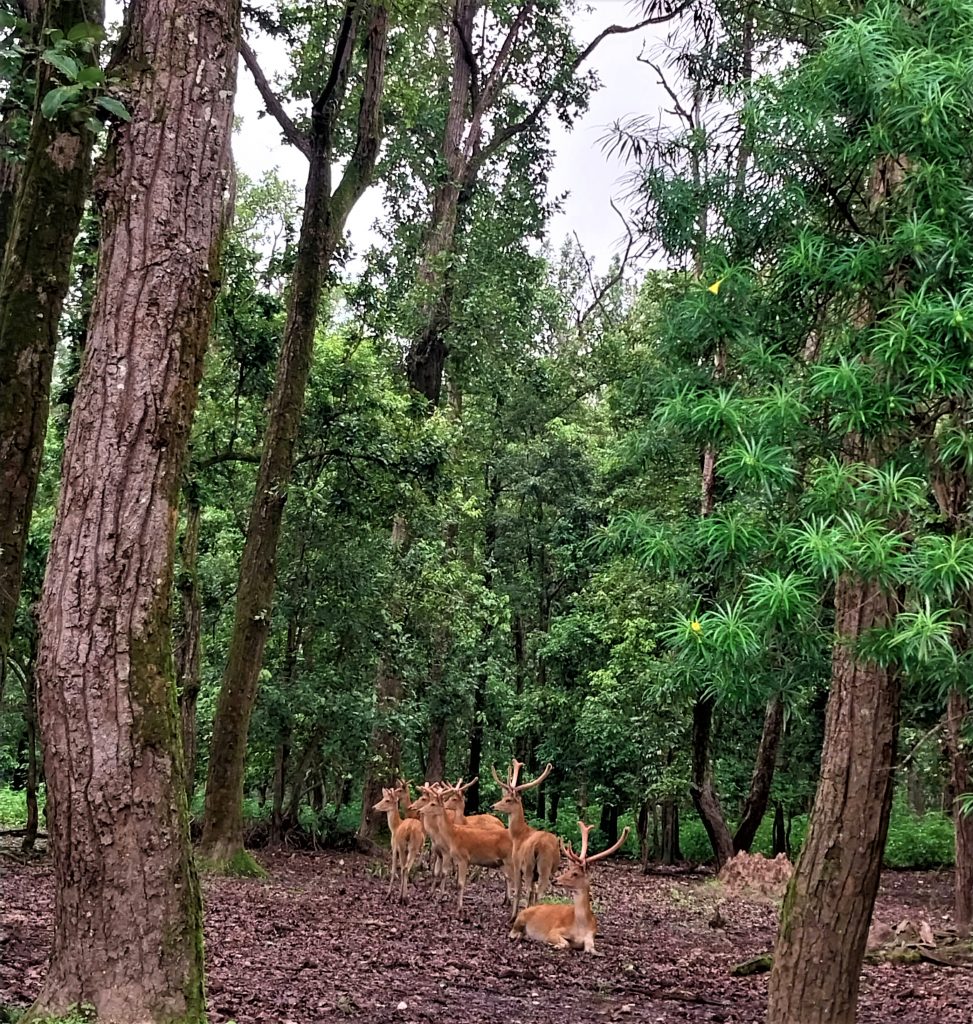
In Kanha Tiger Reserve, barasingha conservation started in 1967 even before project Tiger was launched. Photo credit: Kanha Park Management.

Kanha’s success story revolving around the barasingha recovery over the past five decades is nothing short of remarkable. From just about 66 animals in 1967, the population has now reached 1100, writes Deepanwita Gita Niyogi

At the Sondar patrolling camp inside the Kanha National Park and Tiger Reserve in Madhya Pradesh, forest guard Ram Bharose Masram came out carrying a binocular in his hands.

Masram, who has been working for six years, is still excited to spot the barasingha (Rucervus duvaucelii), also known as the hard ground swamp deer, in Kanha. “Forest guards like me watch over the animals and note down their activity on a daily basis. At times, we cover even 10 km on patrol duty,” Masram said while running for cover as sudden heavy rains blurred the vision and made barasingha sighting difficult.

Though Madhya Pradesh is known as India’s tiger state and tourists flock to Kanha for viewing the charismatic big cat, the reddish-orange barasingha with its beautiful antlers is the iconic animal of the national park. It is often spotted roaming the grasslands. The animal’s colour changes according to season. In monsoon, however, the hue is the brightest.

The barasingha is the official mascot of Kanha. In fact, the Bhoor Singh Public School run by the Kanha Workers’ Society is named in honour of the barasingha.

Recovery efforts

On the way towards Sondar, the driver stopped the vehicle at a point in Mukki range for a spectacular view. A barasingha herd was spotted, with a few animals seated on the grass; their soft velvety antlers looking lovely in the green foliage. Barasingha was once common in the central Indian landscape in the 1960s. But towards the end of that period about 66 animals were left in Kanha.

“As their population decreased to unviable levels, conservation was launched for a turnaround. As part of this, enclosures were constructed to ensure the safe breeding of the species. Today, the animals have increased in number and move about freely,” said Punit Goyal, deputy director of the Kanha Tiger Reserve.

Kanha has about 130 tigers. But the park’s success story revolving around the barasingha over the past five decades, is remarkable. From just about 66 in 1967, the barasingha population has now reached 1100. Though there is an ample number of spotted deer in Sondar, barasinghas are seen most often as the animals use a corridor of six km in length for movement.

The population jump has made translocation of the species an option. “From Kanha, barasinghas have been sent to other places like the Satpura Tiger Reserve and the Bandhavgarh National Park,” Kanha park superintendent Sanjeev Kumar Sharma said.

According to Goyal, if a species is confined to one location, there is a chance of it getting extirpated. To ensure its survival across the state, separate habitats for the barasingha were created. Till now, 98 animals have been sent to Satpura in three to four phases from 2018 onwards and 37 to Bandhavgarh.

Back at Sondar when the rain lessened in intensity, a male barasingha was spotted near a water body called the Sondar tank which dates back to British time. “The animals graze without any disturbance and feed on grass. There are over 100 animals in Sondar,” Masram added.

Kanha’s pride

Adjusting the focal length of the binocular revealed a solitary male barasingha with soft antlers at Sondar. Masram explained that when the antlers are soft, the males stay away from the herd. From the third week of April, the males start shedding their antlers and then from May end once more the antlers start growing.

In Kanha, barasingha conservation started even before Project Tiger was launched in 1973. This was after the relocation of Sounf village. To protect mothers and newborns, fences were erected.

For the females, the fawning season starts from August- September. “At this time, the females are kept inside fences so that jackals do not eat the newborns. The babies take 48 hours to become active after birth. Depredation of  barasingha fawns was the main reason behind the dip in population,” Sharma pointed out.

Besides ensuring corridors for free movement of the barasingha, enclosures have been constructed at a few places in Kanha Tiger Reserve to protect the mothers. The enclosure in Kanha range is spread over 50 hectares.

Daily counting of the animals is carried out, said beat guard Ramesh Rahangdale. However, due to tiger movement near the enclosure, barasingha is not there at present in the Kanha range. From January till August, 16 barasinghas have been killed by tigers. “We observe the kills, and hence, know how many barasingahs have been killed,” Rahangdale added.

In Kanha, the barasingha population has 60 percent females which is a good sign. Sharma assured that the enclosures would be maintained as the park management wanted to increase the number even further.

Jodha Baiga, an Adivasi man, looks after female barasinghas and deeply cares for them. Besides jackals, the threat to barasingha babies is also from pythons.

“We ensure python-proof fencing for their survival. Jodha used to catch pythons to protect the fawns. When the survival rate of fawns increases, the population automatically rises. Kanha has an old barasingha enclosure inside which a boma was constructed later. This was used for the capture and translocation of the animals to Van Vihar National Park in Bhopal, besides Satpura and Bandhavgarh,” Goyal said.

MOST POPULAR

HOT NEWS