GST 2.0: Can sweeping tax reforms help transform India’s economy?

India’s Goods and Services Tax sees its biggest overhaul in nearly a decade. With new slabs, reclassified goods and luxury taxes, the reform aims to boost consumption, ease inflation, and balance growth with fiscal responsibility. But will the government’s gamble pay off? A report by Priyanka Tanwer
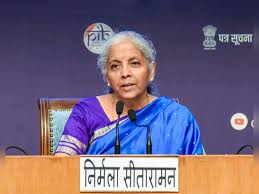
India’s tax landscape is set for its most dramatic reshaping in nearly a decade. Effective 22 September, 2025, the Goods and Services Tax (GST) will undergo a sweeping overhaul that changes how consumers spend, how companies price their products, and how the government balances growth with fiscal responsibility.

Approved at the GST Council’s meeting on 3 September 2025, the reform simplifies the old system of four major tax slabs — 5%, 12%, 18% and 28% — into two broad rates of 5% and 18%, while creating a new 40% slab for luxury and “sin” goods. Nearly 440 items have been reclassified, ranging from soaps and shampoos to cars, televisions, hotel tariffs, and premium apparel.

The government has pitched the change as a pro-consumer, pro-growth measure designed to cut inflation, spur spending, and simplify compliance. But like all major policy shifts, it comes with trade-offs — from potential revenue losses to transitional challenges for businesses and state governments.

Why now? The political and economic timing

The timing of the GST revamp is deliberate. It arrives just ahead of India’s festive season — a crucial period for retail sales, automobile purchases, and consumer goods demand. With the festive quarter often accounting for up to 40% of annual sales for some sectors, the government hopes that lower taxes will amplify demand.

There is also an inflation angle. India has struggled with sticky prices in food and household items. By cutting GST on essentials, policymakers aim to shave off 50 to 90 basis points (0.5–0.9%) from headline inflation, providing breathing space for both households and the Reserve Bank of India (RBI).

Externally, India faces new US tariffs on certain exports, raising concerns about slower trade-driven growth. The GST cut is thus intended as a buffer — stimulating domestic consumption to offset global headwinds.

Speaking to Tehelka, Navy Vijay Ramavat, MD, Indira Group said that the government decision was more about global geopolitical pressures than domestic politics, though it naturally comes with a collateral political advantage.

“GST reforms had been in discussion for a while, but the recent US tariffs became the real trigger. The government made this move primarily to deal with tariff shocks which is kind of “Aapda mein Avsar” and as a result, it will also give a lift to consumption, the basic wheel of any economy,” he said.

“It’s a timely reform, shaped by global circumstances but one that ends up strengthening domestic demand too,” he further added.

WHAT GETS CHEAPER, WHAT GETS COSTLIER
  ·         The biggest winners of the new GST regime are everyday essentials. Products such as packaged foods, dairy items, toiletries, and household cleaning goods are moving to the 5% slab. Many small cars, electric vehicles, and mass-market two-wheelers will also enjoy lower rates.  
·         Household appliances are another category to see relief. Televisions, dishwashers, refrigerators, and air-conditioners are expected to become 8–9% cheaper.  
·         Luxury comes at a price. Premium fashion above Rs 2,500, high-end cars, five-star hotel tariffs, cigarettes, tobacco products, and imported liquor will fall under the steep 40% slab.  

Counting the cost: Revenue and deficit pressures

The cheer for consumers comes with a cost for the exchequer. Official estimates suggest that the GST changes could reduce government revenues by Rs 48,000 crore in the current fiscal year.

While the government argues that higher consumption and better compliance will partly make up for the shortfall. States, which share GST revenues with the Centre, are especially concerned about compensation for lost collections.

Premchand Chandrasekharan, Partner, Avalon Consulting, said that GST reforms are expected to have a definite positive impact on the Indian economy.

“The rationalization of indirect taxes is expected to reduce the cost of manufacturing goods in India, and to some extent, this competitiveness can be expected to help exporters mitigate the impact of global tariff barriers,” Premchand told Tehelka.

He said that GST reforms could be seen as primarily a way to provide an alternative growth path to the Indian economy, which could be potentially impacted by reduced export demand.

Rate cuts could provide a boost in consumption in price-elastic sectors. The intended benefits can be secured if mechanisms to increase compliance, including digital invoicing, AI-enabled audit, and digital data validation, can expand the tax base and improve collections. As a secondary benefit, being attentive to citizen concerns related to the cost of living can help improve optics.

“Lower indirect taxes also can be seen as progressive since they lower the tax burden on lower income categories, who are likely to spend the extra disposable income on buying more goods. We can also expect second-order impacts in terms of attracting fresh investments to augment domestic capacity. Lower indirect taxes will also be an incentive for any new foreign investor considering India as a manufacturing destination,” he added.  

Meanwhile industry associations have largely welcomed the reform, though with caveats.

FMCG companies expect higher sales volumes as consumer demand picks up.

Automobile manufacturers have hailed the lower rates on small cars and EVs. The Society of Indian Automobile Manufacturers (SIAM) has welcomed the move and said that this step will encourage first time buyers and middle income families.

SIAM chairman stated, “We are confident that the government will soon notify a suitable mechanism for utilization of compensation cess on unsold vehicles.”

Santosh Iyer, Managing Director & CEO, Mercedes-Benz India, said that we are thankful to the government for keeping GST rate for BEVs unchanged, ensuring faster transition to a decarbonized future.

“Government listened to the automotive industry’s long standing wish list of rationalizing GST rates. This GST revision is the step in the right direction, is progressive and will induce the much-needed impetus by boosting consumption and bring momentum to the automotive industry which essentially remains the pulse of the Indian economy,” Iyer added.

Hospitality groups welcomed cuts on mid-tier hotel tariffs but warned that the 40% slab on premium stays could dent India’s luxury travel market.

For households, the new GST regime is both a relief and a mixed bag. Middle- and lower-income families, who spend a larger share of their budgets on essentials, stand to gain the most. Everyday shopping baskets — from bread and milk to soap and toothpaste — will shrink in cost.

At the same time, aspirational spending may be squeezed. For families saving up for a luxury holiday, a designer outfit, or a high-end car, the higher GST rates will feel like a pinch.

Economists note that this balancing act — easing costs for the many while taxing the few — is politically astute, but its economic impact will depend on how consumption patterns shift.

The impact will be closely watched on several fronts

·         Economists forecast an additional 0.2–0.3% boost to GDP in FY 2025–26 from higher consumer spending.

·         Monetary policy: Softer inflation may give the RBI space to maintain supportive interest rates, aiding growth.

·         Fiscal balance: Revenue losses could push the fiscal deficit above target, unless offset by higher growth or spending cuts.

WINNERSLOSERS
·         Consumers of essentials and mass-market goodsLuxury and premium brands
·         FMCG and retail companies  Tobacco and liquor industries
·         Automobile sector, especially small cars and EVsHigh-end hospitality and fashion retailers
·         Consumer durables and electronics, Mid-tier hospitality  State governments reliant on GST revenues

What political parties have to say?

Former finance minister and Congress Rajya Sabha MP P Chidambaram said that the GST rationalization and the reduction in rates on a range of goods and services are welcome but eight years too late.

“The current design of GST and the rates prevailing until today ought not to have been introduced in the first place. We have been crying hoarse for the last eight years against the design and rates of GST, but our pleas fell on deaf ears,” he said.

He also raised a question and said, “It will be interesting to speculate on what drove the government to make the changes, Sluggish growth? Rising household debt? Falling household savings? Elections in Bihar? Mr Trump and his tariffs? All of the above?”

Meanwhile, Communist Party of India (Marxist)’s Central Committee member Thomas Isaac called the GST reforms a ‘big setback for fiscal federalism.’

The road ahead

Policy reforms are rarely judged in the first week of their rollout. Much will depend on:

·         How businesses adjust prices — will they pass on savings to consumers, or keep margins higher?

·         How states are compensated — and whether fiscal tensions rise between Centre and states.

·         How consumer sentiment responds — will households spend the extra savings, or save amid global uncertainties?

·         How durable the benefits are — a festive-season surge is likely, but sustaining demand in 2026 will be the true test.

As India enters what some officials call the era of “GST 2.0,” the reform is both a gamble and an opportunity. If the bet on lower rates spurring higher consumption pays off, it could mark a new chapter in India’s growth story. If not, the government may find itself grappling with higher deficits and uneven sectoral outcomes.

The new GST rates represent more than just tax tinkering; they are a statement of intent. India is signaling that it values consumption-driven growth, inflation relief, and simplification over short-term revenue maximization.

The next few months — as new price tags roll out, festive sales data comes in, and inflation figures are released — will reveal whether this gamble pays off. For now, what is certain is that 22 September 2025 will mark a turning point in India’s journey with GST, shaping the economy, politics, and daily lives of citizens in ways both big and small.
Floods 2025: Human folly fuels climate chaos

The recurring heavy rains and consequent floods and devastation underscore that the real disaster lies not in the surging waters, but in our failure to learn before the next storm arrives. A report by Tehelka Bureau

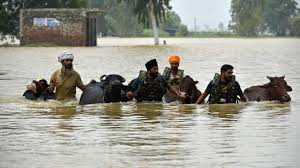
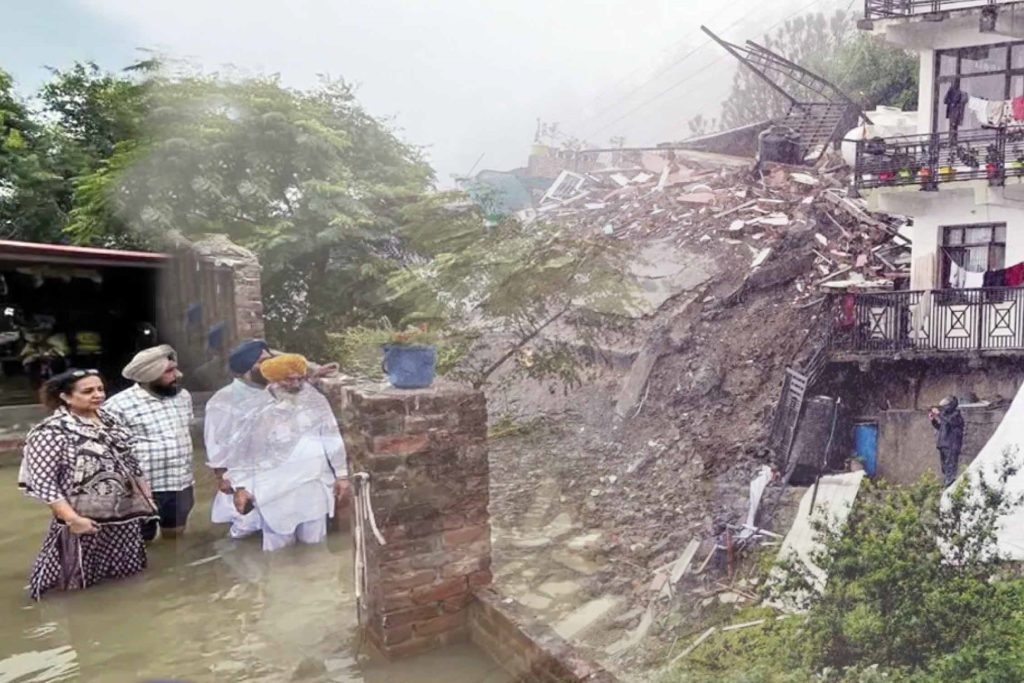
The monsoon is usually welcomed as a season of renewal, when parched fields drink deep and rivers run with fresh life. But this year, the rains turned into a roaring nightmare. Punjab, Himachal Pradesh, Jammu and Kashmir, and Uttarakhand are reeling under one of the most punishing flood crises in living memory. These states have been battling one of the worst flood crisis in decades. What started as seasonal rains has quickly escalated into a massive disaster, with hundreds of lives lost, millions displaced, and entire villages submerged under the swelling waters of rivers and seasonal rivulets.

On July 28, 2025, the Supreme Court Bench of Justices J.B. Pardiwala and R. Mahadevan had observed, “If things proceed the way they are as of date, then the day is not far when the entire State of Himachal Pradesh may vanish in thin air from the map of the country”.  Earlier in 2019, the Supreme Court had issued a stark warning regarding the rapid environmental degradation of Himachal Pradesh and other flood-prone areas in the north. The court noted that due to excessive deforestation, unregulated construction, and the rapid urbanization of these states, the very geography of these regions was at risk of disappearing from the map. The court specifically highlighted the need for better disaster management and early warning systems to prevent such catastrophes.

Despite these warnings, the authorities failed to take meaningful action to mitigate the risks posed by such extreme weather events.  One is witness to deforestation and concrete jungles in the name of development. Dr. Raghav Sharma argues, “The lack of long-term planning and foresight in the face of these threats is a grave concern. While governments often react with emergency measures, proactive investments in resilience and prevention are missing. We are caught in a cycle of disaster and relief, rather than preparedness and protection.”

This unprecedented flood crisis has brought into sharp focus the intersection of climate change, inadequate infrastructure, and poor urban planning, all of which have made the region vulnerable to such extreme weather events. As the deluge continues to wreak havoc, experts are now asking: what went wrong, who is responsible, and what can be done to ensure that this disaster doesn’t repeat itself?  The human suffering, the faces behind the statistics, is what makes this disaster searing. It also raises the uncomfortable question: why does North India keep reliving this cycle of flood and fury?

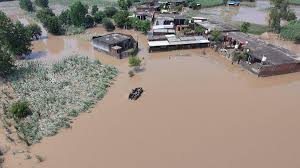
The floods, which have severely impacted all 23 districts of Punjab, have left the state grappling with its worst natural disaster in nearly four decades. Punjab’s economy, primarily based on agriculture, has been decimated, with vast tracts of land submerged under water. The devastating floods have claimed 29 lives so far, with many more feared dead as rescue operations continue. The floodwaters have left more than 2.56 lakh people displaced, forcing them to take shelter in temporary relief camps across the state.

The pride of India’s breadbasket, Punjab, has almost been reduced to waterlogged wastelands. The Sutlej, Beas, and Ravi rivers, swollen by relentless rain upstream, have swallowed villages and cut off towns. The crisis in Punjab is compounded by the inundation of major river systems, such as the Sutlej, Beas, and Ravi rivers, which have been swollen due to incessant rainfall in their catchment areas—particularly in the hills of Himachal Pradesh and Jammu and Kashmir. In addition to the loss of life, there has been extensive damage to property, crops, and infrastructure, as bridges collapse and roads are washed away, leaving communities cut off from essential services.

In the hill states of Himachal Pradesh and Jammu and Kashmir, the situation is equally dire. The hill states tell a similar tale of heartbreak. Himachal Pradesh has been pounded by cloudbursts and landslides, turning scenic valleys into rivers of mud and rocks.  Landslides triggered by the torrential rains have blocked roads, and flash floods have left thousands of tourists stranded, including at the Vaishno Devi shrine. In some places, the floodwaters have risen above danger levels in dams and reservoirs, further threatening communities downstream.

In the wake of this massive tragedy, both the central and state governments have announced emergency relief measures. Prime Minister Narendra Modi has authorized the release of funds for the affected states, including financial assistance to flood-hit families, medical aid, and the rebuilding of infrastructure. He visited Himachal Pradesh and Punjab on September 9  and announced relief packages. He announced financial assistance of Rs 1,500 crore for Himachal Pradesh and an aid of Rs 1,600 crore for Punjab.

However, there are concerns about the adequacy of these measures. Immediate relief is essential, but the true test lies in the long-term recovery and rehabilitation efforts. The Prime Minister’s relief package, while helpful in the short run, has been criticized for not addressing the root causes of the flood risk and not providing sufficient funds for the rebuilding of flood-resilient infrastructure.

Additionally, many social organizations and local celebrities have stepped forward to provide aid to the affected people. Popular Punjabi stars such as Diljit Dosanjh, Sonu Sood, Ammy Virk, and Gippy Grewal have donated money and essential goods to flood victims. Singers like Karan Aujla, Satinder Sartaaj, and Jasbir Jassi have been actively involved in raising awareness and supporting the distribution of relief material.

While these efforts are commendable, experts argue that recovery cannot simply be about charity—it needs to be about building resilience. Dr. Meera Singh underscores this, saying, “The focus should not only be on providing immediate relief but also on ensuring that these communities are not as vulnerable to future disasters. We need a comprehensive, long-term strategy that addresses both the causes and consequences of flooding.”

A Perfect Storm of Factors

While flooding due to heavy rainfall is not uncommon, the intensity and scale of the current disaster are unprecedented. Experts are now pointing to a combination of factors that have exacerbated the impact of these floods.

The most obvious factor in this year’s flooding is the erratic weather caused by climate change. India, like many other parts of the world, has been experiencing increasingly severe and unpredictable rainfall events. What used to be seasonal, moderate rains have turned into torrential downpours, with some areas receiving up to 300% more rainfall than normal. According to the India Meteorological Department (IMD), Punjab and the surrounding states have seen an average rainfall increase of over 50% in recent years, making such catastrophic floods more likely.

Dr. Aditi Narayan, an environmental scientist at the Center for Climate Change, explains, “The increasing frequency and intensity of extreme weather events—such as heavy rainfall and flooding—are a direct result of global warming. In the case of Punjab and neighboring states, the situation is worsened by the fact that the rainfall is falling on already saturated ground, making it almost impossible for the land to absorb the excess water.”

Dr. Karan Kapoor, a climatologist, adds, “The changes in monsoon patterns are causing severe rainfall in the catchment areas of rivers like the Sutlej and Beas. This, in turn, has led to a rapid rise in water levels that the existing flood management systems were not designed to handle.”

While heavy rainfall has certainly played a role, human activity has exacerbated the situation. The rapid deforestation of the Himalayas and surrounding regions, combined with unplanned urbanization, has led to the loss of natural buffers that would otherwise absorb rainfall. Rivers that were once able to spread their waters over floodplains now have nowhere to go but into urban centers, where drainage systems are often inadequate.

The region’s agricultural landscapes, too, have been altered by human encroachment. Wetlands, which traditionally acted as natural sponges to absorb excess water, have been drained for development purposes, further increasing the likelihood of flooding.

Dr. Raghav Sharma, an environmental policy expert, says, “Human intervention in natural landscapes has made the region more susceptible to such catastrophic events. Deforestation and urban sprawl have reduced the ability of the land to manage water, making floods more frequent and more damaging.”

In cities like Amritsar, Ludhiana, and Patiala in Punjab, the drainage systems have proven ineffective in handling the unprecedented rainfall. While these cities have been developed rapidly over the past few decades, the infrastructure has not kept pace with the growing population and the increasing intensity of rainfall.

In rural areas, the situation is even worse. Many villages still lack basic flood protection infrastructure such as embankments, proper drainage systems, and flood barriers. In some cases, flood management plans have either not been implemented or have been poorly executed, leaving communities vulnerable to the kind of devastation currently unfolding.

One of the major contributing factors to the severity of the floods in Punjab has been the rising levels of water in its numerous reservoirs and dams. The Bhakra-Nangal Dam, one of the largest in India, was operating at near-full capacity during the peak of the floods, and its excess water was released into the Sutlej River, further aggravating the flooding downstream.

While the release of water from dams is a necessary measure to prevent structural damage, it has added to the already existing floods. The Punjab State Disaster ManagementAuthority has pointed out that the dam management protocols were not adequately updated to account for the intensity of this year’s rainfall, leading to the catastrophic overflow of water into already-saturated rivers.

The loss of human life is, of course, the most tragic aspect of this disaster. As of now, 29 people have been confirmed dead, with hundreds more injured or missing. Many of the victims have been swept away by flash floods, while others have perished due to drowning or landslides. The floodwaters have also left over 2.56 lakh people displaced in Punjab alone, with entire villages submerged and crops destroyed. The Indian Army and National Disaster Response Force (NDRF) have been deployed for rescue and relief operations, and temporary shelters have been set up for displaced people.

The human toll is compounded by the destruction of livelihoods. Punjab, the “Granary of India,” has seen massive destruction of crops, including wheat, rice, and vegetables. With irrigation systems washed away and agricultural infrastructure damaged, farmers face the prospect of lost income and food insecurity. In rural areas, many families have lost their livestock—cattle, goats, and poultry—which are vital sources of both food and income.

Dr. Meera Singh, a disaster management expert, emphasizes, “In agricultural communities, the loss of livestock and crops is not just an economic blow but a psychological one as well. For many, their entire livelihood depends on these animals and crops, and losing them in a disaster like this can have long-lasting consequences.”

The floods across North India are not just a natural calamity; they are a wake-up call. If India is to prevent a repeat of such devastation, a multi-pronged, long-term strategy is urgently required. Experts suggest investment in modern forecasting tools, real-time data collection, and community-level alert systems can drastically reduce casualties. They also suggest that roads, bridges, drainage systems, and housing in vulnerable areas must be built to withstand extreme rainfall and flooding. Embankments and riverfront protections must be modernized. Wetlands, forests, and floodplains must be preserved and restored. They act as natural sponges, absorbing excess water and reducing the intensity of floods. States like Punjab and Himachal need stricter land-use policies that prevent construction in ecologically fragile zones and river catchments. Local communities, farmers, and civil society must be trained in disaster preparedness, evacuation drills, and resilient farming practices.


The floods of 2025 will go down as one of the worst humanitarian and ecological disasters in recent decades for North India. The images of stranded families, submerged fields, and collapsing bridges are stark reminders of how fragile human settlements are in the face of nature’s fury when planning and foresight are missing.

At the same time, the crisis also offers an opportunity to rethink India’s approach to climate resilience. Relief and charity provide immediate succour, but only systemic change—rooted in sustainable development, strong governance, and climate-sensitive policies—can prevent such devastation in the future. If there is one message from this catastrophe, it is this: floods may be natural, but the scale of destruction is often man-made. The choice before India is clear—either continue reacting to disasters or start preparing for them.

The floods have stripped away illusions of safety. They remind us that while we cannot control the rain, we can control how prepared we are for its wrath. Relief can mend wounds, but resilience can prevent scars. As the waters recede and the rebuilding begins, North India faces a choice: to continue in the cycle of disaster and despair, or to finally invest in a future where rains bring life, not ruin.

How shifting geopolitics, India’s growth story shaped US ties

From early caution under first Prime Minister Nehru, confrontation under Indira Gandhi, to incumbent PM Modi’s personalised diplomacy, India-US relations have come a long way since India’s Independence balancing optics, strategy and pragmatism. A report by Vibha Sharma

From a relationship that began to evolve during Jawaharlal Nehru’s tenure, to confrontation under Indira Gandhi, to a nuanced shift under P. V. Narasimha Rao, to a perceptibly favourable one under Atal Bihari Vajpayee, to a strategic partnership under Manmohan Singh, and to a personalised one-on-one under Narendra Modi, the India–US relationship has come a long way, evolving in response to shifting geopolitical dynamics and India’s economic trajectory.

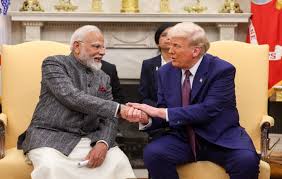
Recently, after a barrage of incendiary remarks against India by US President Donald Trump and his associates over trade tariffs, there was a sudden shift with an exchange of pleasantries between him and Prime Minister Narendra Modi, which can be interpreted in many ways—India’s pragmatic foreign policy approach; a reiteration of the strategic importance of the relationship; a genuine diplomatic effort to de-escalate tensions and open the way for reconciliation; or perhaps a recognition of India’s independent standing and growing economic and strategic importance, not just in the region but globally.

“Deeply appreciate and fully reciprocate President Trump’s sentiments and positive assessment of our ties. India and the US have a very positive and forward-looking comprehensive and global strategic partnership,” PM Modi said in response to Trump, who spoke of friendship and the special relationship between the two countries. Saying that he will “always be friends with Modi and that he is a great Prime Minister,” Trump also added that “There is nothing to worry about.”

How this turnaround transforms the situation on the ground in terms of economic and trade relations between the two nations remains to be seen, as just a day earlier than this friendly exchange, Trump had cynically posted: “Looks like we’ve lost India and Russia to deepest, darkest China. May they have a long and prosperous future together!”

A couple of days later, while indicating another step towards putting things back on track and “continuing negotiations to address the trade barriers” between the two countries and speaking with “very good friend, Prime Minister Modi, in the upcoming weeks,” he reportedly urged EU officials to hit China with tariffs of up to 100% as part of a strategy to pressure Russian President Vladimir Putin, and encouraged them to slap India with similarly expansive tariffs.

This came just hours after he wrote on Truth Social: “I feel certain that there will be no difficulty in coming to a successful conclusion for both of our Great Countries!” To which, PM Modi responded: “India and the US are close friends and natural partners. I am confident that our trade negotiations will pave the way for unlocking the limitless potential of the India-US partnership. Our teams are working to conclude these discussions at the earliest. I am also looking forward to speaking with President Trump. We will work together to secure a brighter, more prosperous future for both our people,” thus indicating that things were back on track.

Former Fellow with the US Congress and senior journalist K. V. Prasad explains: “To say that India-US relations are under stress is stating the obvious. For the past few months, New Delhi has been pounded with threats of tariffs, which eventually kicked in last month. The move injected a major disruption in the course of an over two-decade partnership characterised as strategic. It rekindled memories of the low point in bilateral relations when then President Richard Nixon sent the Seventh Fleet during the Bangladesh war.

“Otherwise, since PM Jawaharlal Nehru, New Delhi sought to build a strong relationship with Washington. Since the 1971 episode it took several years of hard work from both sides to plough it back and put it on track, growing across sectors from the depths of the ocean to the frontiers of space. In his second term, President Trump appears to move beyond being transactional. The latest move brings back a sense of uncertainty. It will require both patience and dexterity—political and diplomatic—to strike a new rhythm,” he adds.

Optics and geopolitics

Whether it is politics or geopolitics, optics play a major role, especially with Modi and Trump.

The recent positive exchange between the two leaders suggests an effort to open a window for recalibration of the relationship, signalling a concentrated effort to reset ties, soothe nerves, and pave the way to resume trade discussions, though officials in the know of developments maintain that backchannel talks never really stopped. Despite Trump’s erratic, emotional behaviour, India tried to portray a calm and collected self.

Analysts attribute Trump’s reactions to his extremely transactional nature, perhaps also to India’s stance after the ceasefire announcement in Kashmir. The lack of Indian endorsement to his repeated claims of credit for the ceasefire may have added to his sharp reactions, but the end of the tirade underscores India’s strength and importance—both in the region and the world.

PM Modi’s positive responses to Trump’s recent overtures are in alignment with India’s diplomatic strategy of keeping communication channels open regardless of disagreements. “PM Modi’s foreign policy is known for being pragmatic and prioritising India’s national interests over rigid ideological stances. Despite US concerns, India continued its engagement with Russia and recently also displayed warmer interactions with China. PM Modi’s response to Trump, along with participation in events like the Shanghai Cooperation Organisation (SCO) summit, highlights India’s independent foreign policy, influence in the world and the ability to balance multiple relationships simultaneously,” they say.

India–US ties under Modi

The Trump–Modi relationship has been a mix of personal one-on-one, political optics and strategic convergence. During Trump’s first term (2017–2021) there was a show of visible camaraderie with high-profile events like the “Howdy Modi” rally in Houston and the “Namaste Trump” event in Ahmedabad. During Trump’s second term, PM Modi aimed to build on their personal rapport as he does with many global leaders—a personalised approach stemming from the belief that strong personal relationships can drive better policy outcomes for India, say analysts.

Strengthening ties is important for both nations. However, after Modi’s much-discussed “abki baar Trump sarkaar” remark and the US later electing President Joe Biden, India has been cautious not to anchor its foreign policy too closely to a particular US leader or political party. The aim has been to maintain continuity in the India–US relationship regardless of who is in power, which was evident in India’s measured response to Trump’s harsh statements. The objective has been to present the partnership as institutional and consistent, not tied to an individual—and those following India-US relations say that Trump seems to have finally recognised that.

Under PM Modi, India-US ties strengthened around shared concerns about China’s rise and the need for a free and open Indo-Pacific. Defence cooperation also deepened with India purchasing US helicopters and other equipment. Trump’s transactional stance on trade created friction, but the relationship between the two leaders can be described as high-visibility, friendly, pragmatic and heavy on optics.

The India-US relations have come a long way since India’s Independence in 1947 and the first Prime Minister Jawaharlal Nehru.

Jawaharlal Nehru (1947–1964)
During the Cold War, Nehru adopted a policy of non-alignment, refusing to join either the US-led Western bloc or the Soviet bloc. Washington often perceived this as tilting toward Moscow. Though India received American aid under the PL-480 programme and some development assistance, relations remained tentative. The US backed Pakistan through pacts like CENTO, which Nehru saw as threats but after the 1962 India–China War, however, it also briefly extended military support to India.

Indira Gandhi (1966–1977; 1980–1984)
Indira Gandhi’s era was marked by tense relations with Washington. The deepening of ties with the Soviet Union under her regime created distrust with President Richard Nixon and Secretary of State Henry Kissinger. The 1971 Bangladesh Liberation War is described as the lowest point in India-US relations by analysts. India supported Bangladesh’s independence and Nixon backed Pakistan, even deploying the Seventh Fleet to the Bay of Bengal. India’s 1971 Treaty of Peace, Friendship and Cooperation with the USSR, and its 1974 nuclear test, further strained ties, resulting in sanctions.

Rajiv Gandhi (1984–1989)
Rajiv Gandhi’s tenure saw a modest thaw. As a modern, tech-savvy leader, he pushed computerisation and economic reforms—areas that looked attractive to US businesses. His aim was to balance ties with the USSR while opening to the West. His 1985 visit to Washington and outreach to President Ronald Reagan marked the beginning of a cautious re-engagement with the US.

P. V. Narasimha Rao (1991–1996)
During Rao’s tenure, the Cold War had ended and the USSR collapsed. Though relations remained cautious, Rao’s bold economic reforms attracted American business interest. The US pressed India on nuclear non-proliferation and human rights. India refused to sign the NPT or CTBT, but Rao kept channels open via pragmatic diplomacy, planting the first seeds of closer ties between the two countries without compromising on India’s strategic autonomy.

Atal Bihari Vajpayee (1998–2004)
Vajpayee’s tenure saw a major transformation. India’s 1998 nuclear tests led to sanctions but New Delhi continued engagement with Washington through sustained dialogue. Vajpayee famously called India and the US “natural allies,” and President Bill Clinton’s 2000 visit reinforced this bond. The shift was further cemented in the years following the 9/11 terror attacks in the US. India supported the US-led global war on terror diplomatically and through intelligence cooperation, deepening ties in defence, trade and IT. Vajpayee’s foreign policy can therefore be credited with laying the foundation for future ties.

Manmohan Singh (2004–2014)
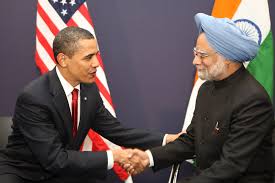
It was under Manmohan Singh that India-US ties reached a truly transformative phase, putting the two nations on a path of strategic partnership built on long-term alignment. Singh’s tenure coincided with the US “pivot to Asia,” thereby bolstering the relationship. The landmark 2005 US–India Civil Nuclear Agreement ended India’s isolation from global nuclear trade, giving it recognition as a responsible nuclear power outside the NPT. Defence, trade, IT, and outsourcing ties expanded, though differences over climate change, intellectual property, and trade barriers remained. President George W. Bush often described India as a “natural ally,” echoing Vajpayee’s earlier phrase.

Thousands of tonnes of apples rot in Kashmir as highway closure enters third week

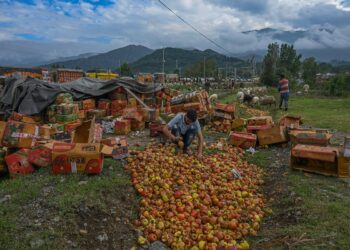
Srinagar: Thousands of tonnes of apples are rotting in stranded trucks along the Srinagar-Jammu National Highway, with farmers across Kashmir facing huge losses as the road remains closed for the 20th consecutive day.

Visuals of spoiled fruit being dumped near the highway have gone viral on social media, highlighting the scale of damage to Kashmir’s horticulture sector. Apple growers have shut down mandis and staged protests, blaming official inaction for the crisis.

Kashmir produces about 80 percent of India’s apples, and horticulture is considered the backbone of its rural economy. Farmers, already hit by adverse weather earlier in the year, now find their produce stuck on the road at the peak of the harvesting season.

The closure follows last month’s heavy rains, floods, and avalanches that caused major damage to the highway, particularly near Udhampur. A 300-metre stretch at Thared was washed away, while other sections between Chenani and Udhampur, and Nashri and Banihal, were severely impacted. Despite ongoing repair work, the road has not been made fully operational, leaving thousands of vehicles stranded, most of them carrying apples.

The Srinagar-Jammu highway is not only Kashmir’s main trade link but also the key supply route for the Indian Army. With the road shut, the Army has begun using freight trains for advance winter stocking. On the return journey, the trains are carrying apple consignments to Delhi, but the volume transported so far is a fraction of the produce stuck in the Valley.

Vijay—the newbie in Tamil Nadu’s star-struck politics, will he hurt Stalin’s DMK or AIADMK-BJP

Tamil Nadu’s political drama has acquired a new cast member ahead of the 2026 Assembly elections; the southern state has a unique tradition of superstar politicians blending cinema and politics

Photo: Vijay’s social media account

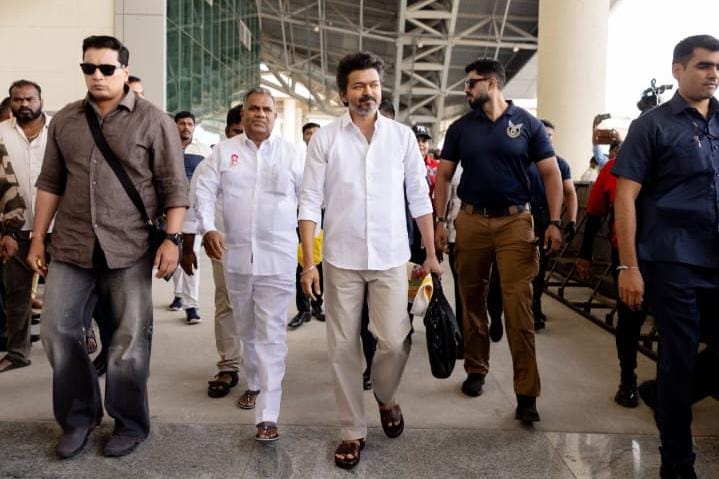
Tamil superstar Vijay, who started his 98-day Tamil Nadu tour from Trichy on September 13, is and remains the top-paid actor in  ‘Kollywood’ and possibly among the highest-paid film stars in the country. As he attempts to enter politics at the peak of his career, the question is will he be a top hero in his new calling as well.  As Vijay formally steps into politics with his newly launched party Tamilaga Vettri Kazhagam (TVK), Tamil Nadu’s political landscape is poised for interesting action ahead of the 2026 Assembly elections. While his entry has energised a section of young voters, its remains to be seen how cadres of Chief Minister M.K. Stalin and the ruling DMK and the rival AIADMK respond to him

Vijay’s TVK has ruled out alliances with both BJP and AIADMK, positioning itself as a new option, focussing on youth, anti-corruption, and grassroots development. Basically he is trying to woo voters disillusioned with the two Dravidian heavyweights—DMK and AIADMK—with his mass appeal and a huge fan base.

Legendary actor Rajinikanth has openly backed Stalin, calling him his friend and “emerging star of Indian politics”. Stalin’s government enjoys strong rural support due to his popular welfare schemes and a strong alliance with the Congress and Left. 

Analysts believe Vijay is more likely to hurt the AIADMK by dividing the opposition vote, especially in urban and semi-urban regions, pulling away young, neutral and fence-sitters. If he does manage to build organisational depth and statewide reach, then he can become a real threat to both.

Vijay’s biggest challenge is lack of organisational depth and political experience. Without a structured cadre, clear ideological framework/ policy roadmap, TVK risks being labelled another celebrity-driven experiment, a vote-spoiler. If it captures even eight-10 per cnet  it can play the role of a vote-cutter and a third force in these elections.

Meanwhile, recognising Vijay’s appeal, the ruling DMK seems to be adjusting its strategy. The ruling party has increased its social media presence and youth outreach. Stalin lacks the cinematic charisma of past leaders like MGR,  Karunanidhi and J. Jayalaithaa so his focus is steady leadership and governance. 

According to some, Vijay may actually end up helping DMK in 2026 by splitting the anti-incumbent vote.

Tamil Nadu and its superstar politicians

Tamil Nadu’s political drama has acquired a new cast member ahead of the upcoming polls. 

The southern state has a unique tradition of superstar politicians blending cinema and politics.

In the past, legends like M.G. Ramachandran (MGR) and J. Jayalalithaa used their massive film popularity to build powerful political careers, both leading the AIADMK and serving as Chief Ministers.

The DMK, led by M. Karunanidhi, leveraged cinema’s influence through scriptwriting and film personalities, shaping Dravidian politics.

Vijay is following in their footsteps.

Blind Elephant Arya thrives in sanctuary, celebrates 5 years of care at wildlife SOS

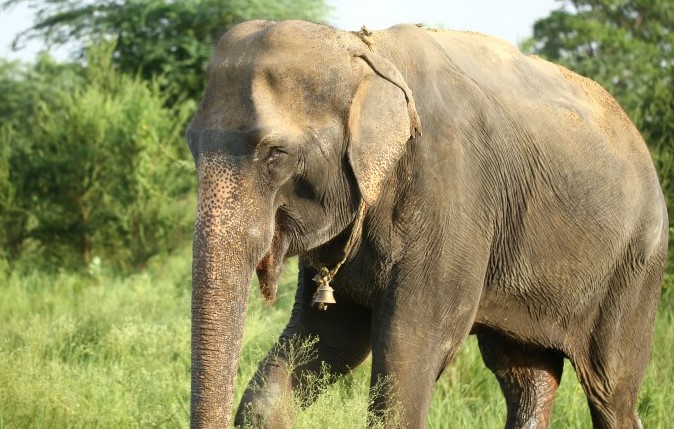
This month marks a poignant milestone for Arya, the brave and gentle Asian elephant, as she celebrates her 5th rescueversary at the Wildlife SOS Elephant Hospital Campus. Rescued in 2020 after decades of hardship, Arya arrived completely blind, malnourished, and suffering from painful foot injuries. Since then, her story has become one of profound healing and resilience.

With devoted care, customised nutrition, and daily enrichment, Arya has regained her strength: her weight has been stable, and she relishes her favorite green fodder, watermelons, and raw bananas. Alongside her closest companion, Zara, who herself recently marked five years, recently. Arya enjoys monsoon walks, cool baths, and a safe haven meticulously adapted to her needs. Arya and Zara’s friendship has blossomed with each passing year. Their daily walks and gentle interactions highlight the power of companionship in emotional recovery.

During the celebration, the team prepared a vibrant fruit feast featuring raw and ripe bananas, watermelon, papaya, apple, corn, and fresh green fodder, while a special porridge cake was made to mark Arya’s 5th rescueversary with joy and happiness.

Kartick Satyanarayan, Co-founder & CEO, Wildlife SOS, shared, “Every animal deserves a second chance. Arya’s transformation, supported each day by Zara’s companionship, shows the impact of empathy and expert care.”

Geeta Seshamani, Co-founder, Wildlife SOS, said, “Arya and Zara’s journey shows the healing that friendship and safety can bring. Their story gives us all hope and reminds us of our responsibility to protect these majestic beings.”

“Providing a life of dignity for elephants like Arya is at the heart of our mission. Their thriving in sanctuary is the result of tireless care and the unwavering belief that every life matters,” said Baiju Raj, Director, Conservation Projects

India’s no handshake snub, Pak’s threat to boycott next match—what do ICC rules say 

The ongoing Asia Cup 2025 has taken a controversial turn with Pakistan formally asking for the suspension of match referee Andy Pycroft after India’s refusal to engage in the customary pre- and post-match handshakes during their Sunday match

The Pakistan Cricket Board (PCB) has submitted an official protest to the International Cricket Council (ICC), calling the act a “breach of the spirit of cricket” and accusing Pycroft of being complicit. According to PCB Chairman Mohsin Naqvi, the referee allegedly instructed Pakistan captain Salman Ali Agha not to shake hands with Indian players at the toss. Naqvi described the incident “utterly disappointing”, saying that dragging politics into cricket undermines the values the sport was built on.

Demanding Pycroft’s immediate removal from all Asia Cup matches, Pakistan also threatened to boycott their upcoming fixture against the UAE if action is not taken. Head coach Mike Hesson said his players were ready to shake hands after the match but Indian players had already retreated to the dressing room.

India has not released an official statement, and officials deny any directive to avoid the handshake. At the same time, they also say that there was no violation of ICC playing conditions and that the gesture is not mandatory under official rules. The ICC’s Code of Conduct and Playing Conditions do not require handshakes, in other words, it is a tradition not a regulation, though “spirit of cricket” talks of mutual respect and fair play.

As of now, the ICC has not issued a public response to the protest, whether the governing body will take any action remains to be seen

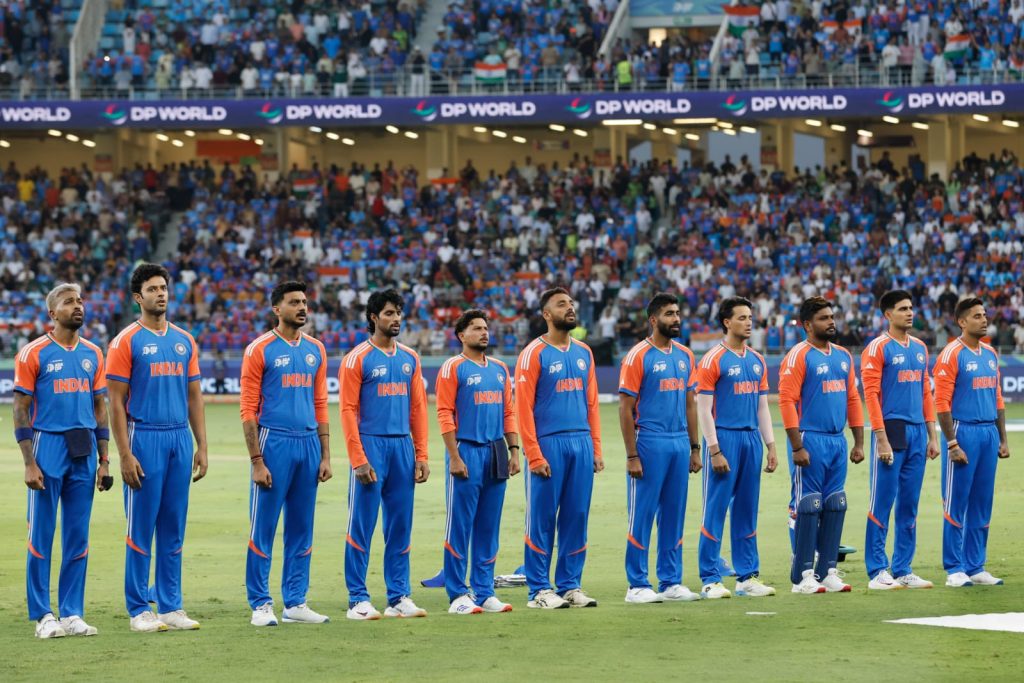
India on Sunday cruised to victory by seven wickets, chasing down 128 with ease after Pakistan managed only 127 for nine. Suryakumar Yadav anchored the chase with an unbeaten 47, sealing the win in just 15.5 overs. But more than the result, attention was drawn to the behaviour and attitude of the Indian side.

 Captain Suryakumar Yadav and his team skipped the customary handshake with Pakistan—both before the match at the toss and after the game. While Pakistan’s players were seen waiting, the Indians had already started walking off. Yadav later confirmed that it was a team call, taken in line with the BCCI and government directives. “Some things in life are bigger than sportsmanship,” he said, dedicating the victory to the armed forces and expressing solidarity with the victims of the Pahalgam terror attack.

The refusal to shake hands carried strong political weight in India. With backing from the BCCI and government, the Indian team signaled that cricket cannot be “business as usual” with Pakistan after terror incidents—a message that resonates with a large section of voters who expect a firm stance. It also helps the ruling BJP maintain control over the nationalist narrative.

AIMIM and Shiv Sena (UBT) had opposed the match even before it was played, calling it an insult to the Pahalgam martyrs.

Centre sets one-year deadline to clear Delhi’s garbage’ mountain—Bhalswa landfill

Is it possible to clear Bhalswa landfill in a year?

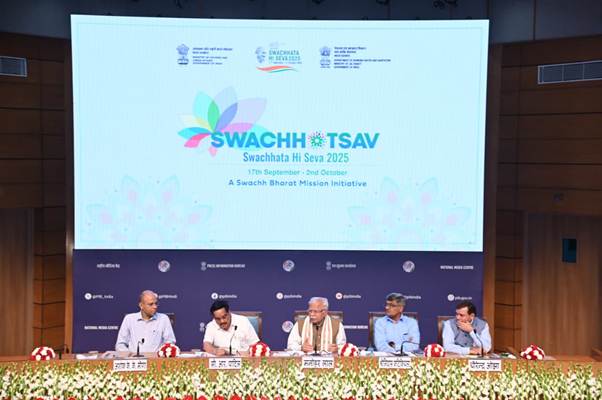
The towering mountain of garbage—Bhalswa landfill— visible to anyone entering Delhi from the Sonipat side, may finally be cleared within a year. Urban Development Minister Manohar Lal Khattar on Monday announced that work at the site will begin on September 17, coinciding with the launch of the 15-day Swachhata Hi Seva campaign.

Khattar said the government has “adopted” Bhalswa dumpsite for transformation and beautification. “I will visit Bhalswa on September 17 along with senior officials to review the plan for remediation and processing. From that day, the cleanup process will start. Given the lack of space for waste processing at the site, I have requested the DDA to provide additional land,” he told mediapersons.

The minister said coordination meetings had already been held with agencies, including the Municipal Corporation of Delhi (MCD). “We will start from Bhalswa and clean it in one year. Work on Delhi’s other landfill sites will also be taken up,” he was quoted as saying.

Khattar admitted that earlier deadlines were missed due to rains, protests, and logistical hurdles but insisted that the new plan would have “clear targets and accountability.”

The drive will also cover the other two major landfills at Ghazipur and Okhla.

MCD officials said that in 2019, the three sites together held nearly 24 million tonnes of legacy waste. By December 2024, about 14.8 million tonnes had been processed through biomining, but fresh dumping kept the total at 16.15 million tonnes. Bhalswa alone is said to hold around five million tonnes.

Jal Shakti Minister C.R. Paatil said better waste management was vital for water security.

The Swachhata Hi Seva (SHS) campaign, held every year from September 17 to October 2, is a nationwide sanitation initiative led by the Ministry of Housing and Urban Affairs and the Ministry of Jal Shakti. It mobilises citizens, institutions, and local bodies for visible cleanliness drives, with a focus this year on neglected urban spots.

Clearing Bhalswa has proved difficult. The biomining project was first launched in 2019 under a National Green Tribunal order but has faced repeated delays and deadline extensions. The MCD’s latest target is December 2028 for clearing all three landfill sites. However, officials said the renewed focus on Bhalswa under SHS 2025 could accelerate progress at the site.

Can Bhalswa be cleared in a year?

The government’s one-year deadline for Bhalswa faces a tough reality.

The landfill still holds around five million tonnes of waste, and fresh garbage continues to be dumped daily, slowing down progress.

Past efforts since 2019 have repeatedly missed deadlines due to rains, protests, and lack of land for processing. The Bhalswa landfill is located in north Delhi, near Bhalswa Dairy and Jahangirpuri, close to National Highway-44 (the GT Karnal Road) on the Delhi–Sonipat route. It lies about 15 km from central Delhi and is one of the three major landfill sites in the city, along with Ghazipur (east Delhi) and Okhla (south Delhi).

While political push and strict monitoring may reduce Bhalswa’s height and make a visible impact, whether a complete cleanup in just 12 months is possible, remains to be seen.

Decoding China’s ‘Five Finger Strategy’; warning on Nepal by Tibetan Govt-in-Exile

The origin of the ‘Five Finger Strategy’ traces back to the early years of the People’s Republic of China and is attributed to Mao Zedong, though no official Chinese document codifies it

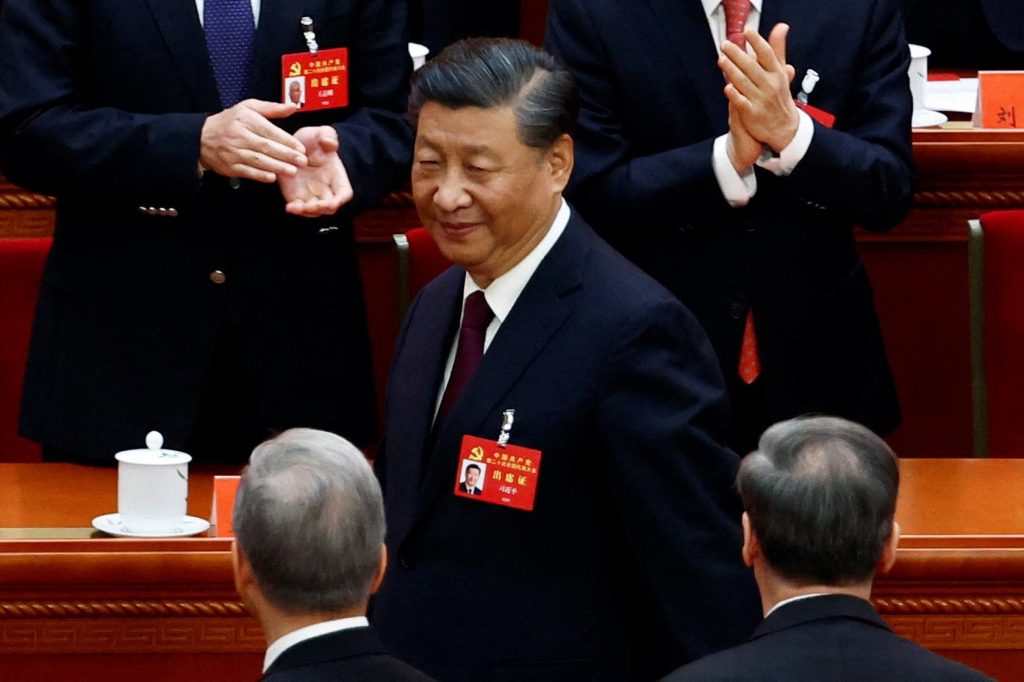
File photo Xi Jinping

Warning India about China’s “expansionist agenda,” former Prime Minister Lobsang Sangay of the Tibetan Government in exile recently said that Beijing views Tibet as the “palm” and surrounding regions as “five fingers” that it aims to control. According to Sangay, Chinese President Xi Jinping reinforced the strategy by tightening Beijing’s grip on Tibet and now India needs to careful since it was no longer about Tibet or its border areas but neighbouring countries, including in Southeast Asia and Central Asia.

“Wherever India seeks to build influence or relationships—China is always there to checkmate,” he was quoted as saying.  Citing Nepal as an example, he also claimed that Chinese officials are the most powerful players in Kathmandu, even more than Indian or American embassies.


“Five Finger Strategy”

China’s strategic posture in the Himalayas continues to reflect a decades-old vision attributed to Mao Zedong, known as the “Five Finger Strategy” in which Tibet is considered the “palm” of China’s hand and surrounding regions—Ladakh, Nepal, Sikkim, Bhutan, and Arunachal Pradesh—are the “five fingers” to be brought under Chinese influence.

It is not an officially declared policy but Beijing’s actions seem to indicate towards it—like the 2020 Galwan Valley clash in Ladakh, China’s frequent claims over Arunachal Pradesh (which it refers to as “South Tibet”), and growing political and economic footprint in Nepal and Bhutan. The 2017 Doklam standoff near Bhutan’s border is another reminder of the so-called strategy, experts say, pointing that it wasn’t until 2003 that China formally recognised Indian sovereignty over Sikkim.

“For India, the strategy serves as warning given China’s expanding regional ambitions and border aggressions,” say experts

Origin

The origin of the strategy traces back to the early years of the People’s Republic of China and is attributed to Mao Zedong—founder of the People’s Republic of China in 1949, though no official Chinese document codifies it. Mao is believed to have said: “Tibet is the palm of China. To control the palm, we must also grasp its five fingers, ”referring to Ladakh, Nepal, Sikkim, Bhutan, and Arunachal Pradesh (then the North-East Frontier Agency) the regions, seen as historically or culturally linked to Greater Tibet..

Sustainability non-negotiable in India’s growth journey: Piyush Goyal

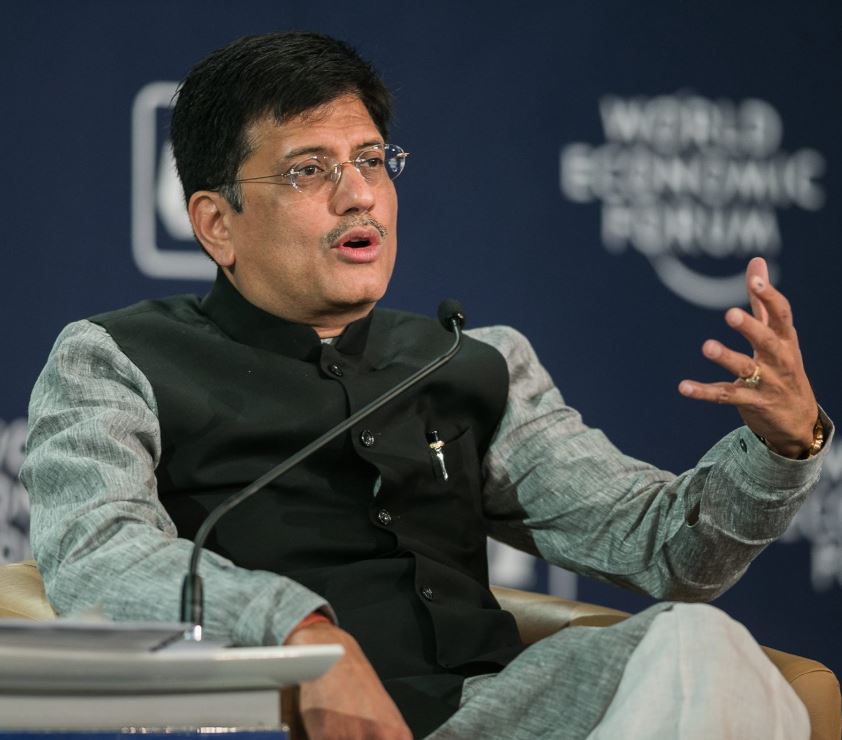
Union minister of commerce and industry Piyush Goyal on Monday said that India is very focused on sustainability as the pillar of growth because every Indian intrinsically believes in respecting nature, being born into a culture and tradition where harmony with the environment is a way of life.

While addressing the inauguration of the International Electrotechnical Commission (IEC) General Meeting Exhibition Goyal said sustainability is non-negotiable in India’s growth journey.

He said that India believes in learning from the developed world, particularly from the high-quality standards that have helped economies across the globe to grow and prosper.

“When countries come together to develop such standards, they not only help harmonize practices and bring them to a high minimum level, but also create opportunities for stronger economic cooperation. Good standards are the need of the hour for a developing country like India, as they provide the foundation for growth both at the national level and for contributing to international progress,” he added.

Highlighting India’s strong commitment to meeting its nationally determined contributions under the Paris Agreement, and further improvements made through different COP announcements, the minister said that India does this not because of external force or pressure, but as a responsible global citizen, out of belief in sustainability itself.

“India has thousands of technical bodies and committees that work on setting standards across different sectors. In the early years, the focus was more on creating standards and allowing their voluntary implementation. Over time, however, experience taught that stricter adherence to standards was necessary, leading to the introduction of Quality Control Orders in critical areas,” he added.

The Minister also underlined the growing role of the electrical and electronic industry in energy efficiency and sustainability. He noted that as India transitions from electrical to electronic solutions, the sector can significantly reduce energy consumption, minimize pollution, and contribute to climate action while ensuring high-quality products for consumers.

MOST POPULAR

HOT NEWS