In the backdrop of rising output from unconventional fields, the share of total oil output globally had fallen 77 per cent in 2024 while in 2000, conventional oil fields contributed 97 per cent of total oil output globally.
According to IEA, nearly 90 per cent of annual upstream oil and gas investment since 2019 has been dedicated to offsetting production declines rather than to meet demand growth.
“Investment in 2025 is set to be around USD 570 billion, and if this persists, modest production growth could continue in the future. But a relatively small drop in upstream investment can mean the difference between oil and gas supply growth and static production. At the same time, less investment is required in a scenario in which demand contracts,” it added.
While in case of natural gas, around 70 per cent of the 4300 billion cubic metres (bcm) produced today is from conventional fields, with nearly all of the rest being shale gas produced in the United States.
Even with the shale revolution, overall oil and gas output still relies heavily on a small number of supergiant fields, largely in the Middle East, Eurasia and North America, which together accounted for almost half of global oil and gas production in 2024.
Alongside the observed rate declines that are derived from field production histories, it is possible to estimate the natural rate declines that would occur if all capital investment were to stop. These declines are even steeper. If all capital investment in existing sources of oil and gas production were to cease immediately, global oil production would fall by 8 per cent year on year on average over the next decade, or around 5.5 million barrels per day (mb/d) each year.
“This is equivalent to losing more than the annual output of Brazil and Norway each year. Natural gas production would fall by an average of 9 per cent, or 270 bcm, each year, equivalent to total natural gas production from the whole of Africa today,” it stated in the report.
Most unconventional sources of oil and gas production generally exhibit much faster decline rates than conventional types. If all investment in tight oil and shale gas production were to stop immediately, production would decline by more than 35 per cent within 12 months and by a further 15 per cent in the year thereafter.
If current levels of production are to be maintained, over 45 mb/d of oil and around 2 000 bcm of natural gas would be needed in 2050 from new conventional fields. Investment in existing conventional oil and gas fields – for example through well workovers, infill drilling, waterflooding – slows production declines from the natural decline rate.
There will also be a contribution to the supply balance from oil and gas projects that are still ramping up, from projects that have already been approved for development, and from ongoing investment in unconventional resources. Still, this leaves a large gap that would need to be filled by new conventional oil and gas projects to maintain production at current levels, although the amounts needed could be reduced if oil and gas demand were to come down.
Around 230 billion barrels of oil and 40 trillion cubic metres (tcm) of gas resources have been discovered that have yet to be approved for development. The largest volumes are in the Middle East, Eurasia, and Africa. Developing these resources could add around 28 mb/d and 1 300 bcm to the supply balance by 2050.
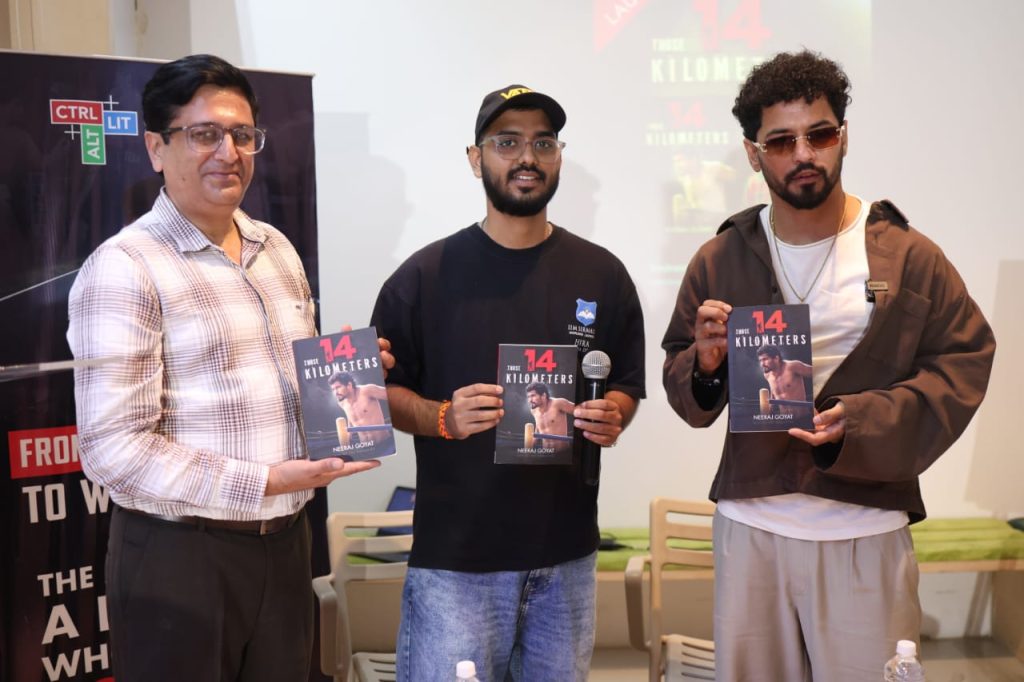
Neeraj Goyat, an Indian boxer and a successful World Boxing Council (WBC) Asia titleholder for a record-breaking three occasions, has unveiled his first book — Those 14 Kilometres, by CTRL+ALT+LIT.
The volume provides a real account of the struggles, determination, and tenacity of Goyat, in and around the boxing ring. Through candid personal experiences, he reveals the lessons of tenacity, mental toughness, and resolve by which he became one of India’s foremost sportsmen.
On the launch, Neeraj Goyat said, “Those 14 Kilometres is not just a reflection of my sporting life; it contains the strife I encountered outside and inside the ring. Every page represents the moments in which I had to push my boundaries—physically, mentally, and emotionally. My dream is for readers from various backgrounds, whether young players or people tackling their own challenges, to draw courage and motivation from these stories. If a mere reader draws strength from my experiences, this book shall emerge as my best achievement till now.”
Goyat, who has represented India in the high-profile events of Olympic qualification and world boxing championships, earned respect for possessing courage and unflinching dedication. In this book, he goes beyond the sporting world and provides readers with classic life lessons in discipline and persistence.
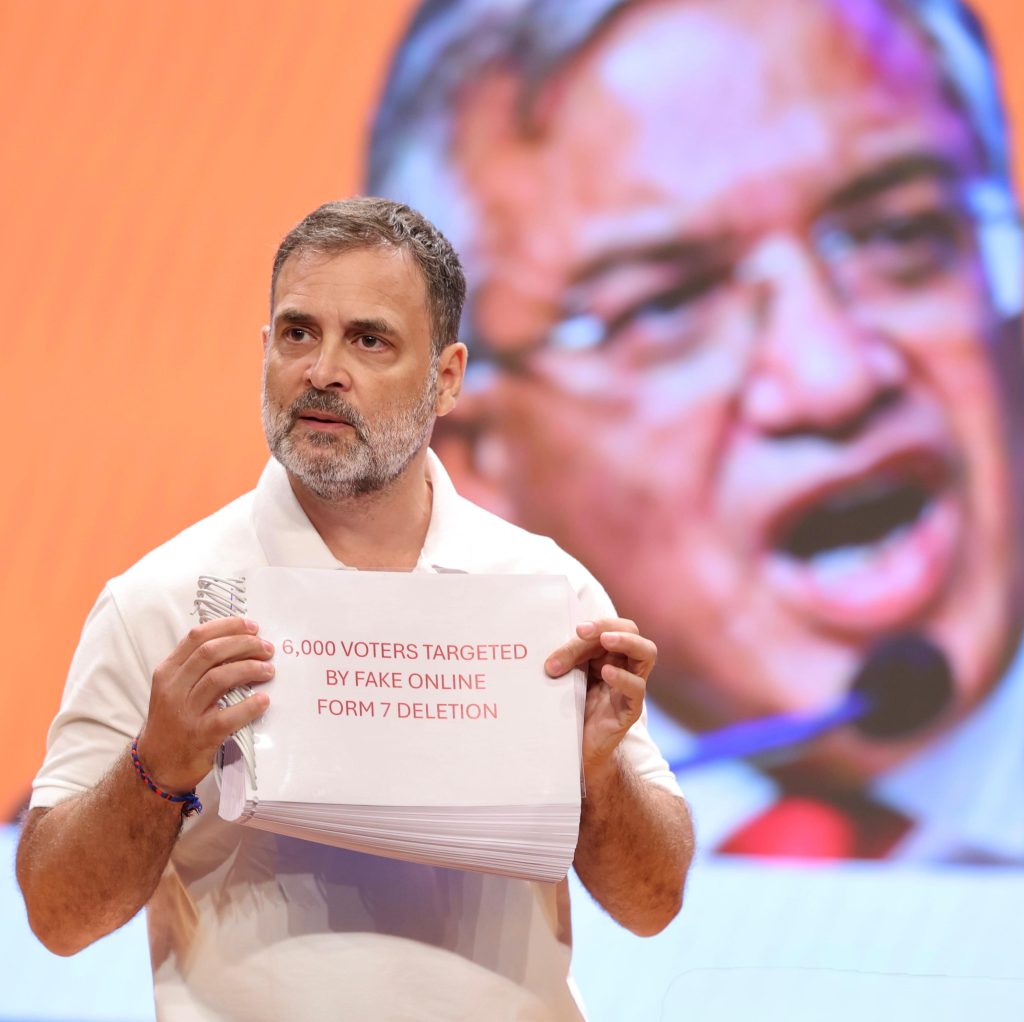
Rahul Gandhi claims mass voter deletions targeting party supporters; Election Commission denies charges, BJP calls it a political stunt
Photo: courtesy AICC
In a sharp political escalation, Congress leader Rahul Gandhi on Thursday accused Chief Election Commissioner Gyanesh Kumar of shielding those responsible for alleged mass voter deletions across India, calling it an attack on democracy. Citing specific examples from Karnataka and Maharashtra, Gandhi alleged a systematic attempt to remove Congress-leaning voters using automated means. The Election Commission firmly denied the charges as “baseless,” stressing that voter deletions follow due legal process, BJP’s Anurag Thakur slammed Gandhi, calling them “fabricated”, aimed at deflecting from Congress’s electoral setbacks.
Gandhi, who accused Gyanesh Kumar of protecting “vote chors” and those who have destroyed democracy, cited data from Karnataka’s Aland constituency to claim that votes of Congress supporters were being systematically deleted ahead of elections.
Gandhi said the Election Commission must stop this and provide within one week information sought by the Karnataka CID in an investigation into voter deletions. He described his revelations as another milestone in showing youth how elections are being rigged, adding that these are not the “hydrogen bomb” he promised which would be coming soon.
Gandhi spoke of attempts in Aland in 2023 to delete 6,018 votes, alleging impersonation and use of mobile numbers from outside Karnataka and also cited a case in Maharashtra’s Rajura constituency of fraudulent additions. He also called on stage people whose votes were attempted to be deleted or whose names were misused, both of whom denied awareness of any wrongdoing. “I am the leader of opposition and I will not say anything which is not backed by 100 per cent proof,” he said.
The ECI rejected Gandhi’s allegations of widespread voter deletions as “incorrect and baseless,” stating that no online deletion of any vote can occur by the public, and procedural safeguards exist. It clarified that electoral roll changes follow due process and that no irregular mass deletions as claimed have been recorded, asking Gandhi either to provide evidence under oath or retract his allegations.
BJP leader Anurag Thakur strongly countered Rahul’s claims, calling them a “blunder,” not a revelation. He accused Congress of seeking to protect its vote-bank under the guise of exposing fraud, questioning the authenticity of Gandhi’s data, claiming similar claims were made by the opposition in various states without credible proof. He alleged that Congress was resisting necessary revisions like the Special Intensive Revision because genuine voters are being corrected, but Congress portrays it as disenfranchisement. “There is dust on your face; you kept cleaning the mirror,” he said
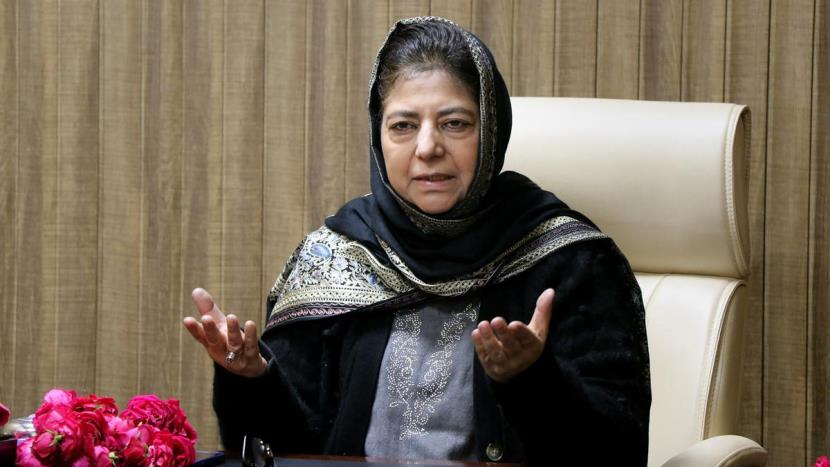
SRINAGAR: Peoples Democratic Party (PDP) president Mehbooba Mufti on Thursday alleged that she was placed under house arrest to prevent her from travelling to Sopore in North Kashmir to offer condolences on the death of former Hurriyat Conference chairman Professor Abdul Gani Bhat.
In a post on X, Mufti said the move “lays bare the harsh and undemocratic reality in Jammu and Kashmir,” accusing the administration of deliberately curbing political movement.
“The decision to place the political leadership under house arrest today, simply to stop us from visiting Sopore to offer condolences on the demise of Professor Abdul Gani Bhat, lays bare the harsh and undemocratic reality in Jammu and Kashmir,” she wrote.
Mufti also referred to the recent uproar at Hazratbal Dargah, calling it an “eruption of spontaneous, raw public anger” and warning that it was “not an isolated incident but a loud, unmistakable message from a people pushed to the edge.”
She accused the Bharatiya Janata Party (BJP) of ignoring widespread resentment in Kashmir. “The BJP remains wilfully blind to this truth, refusing to learn anything from the suppressed emotions that have been building for years,” she said.
The PDP chief further alleged that the ruling party was “determined to keep the region in a constant state of turmoil, weaponising pain and unrest for political mileage across the rest of the country,” a strategy she described as “irresponsible, dangerous and reprehensible.”
There was no immediate response from the Jammu and Kashmir administration or the BJP to her allegations.
The latest State of Global Water Resources report highlights the growing imbalance in river basins, widespread glacier loss, and the urgent need for better monitoring to tackle the rising threats of extreme water events and shortages worldwide
Photo: courtesy WMO website
The World Meteorological Organization (WMO) latest ‘State of Global Water Resources report,’ has painted a stark picture of the world’s water systems becoming increasingly unpredictable and extreme. From devastating droughts to severe flooding, the report underscores the cascading impacts of erratic water availability on societies, economies, and ecosystems.
While much of the world was hot and dry in 2024—hottest year on record—with severe droughts in many regions, other regions suffered multiple devastating floods. Lake surface temperatures were anomalously high, and nearly all out of 75 main lakes across the globe saw above average water levels. Meanwhile all glaciated regions in the world reported ice loss last year, as per the WMO
In 2024, only about one-third of the global river basins experienced “normal” water conditions. The rest of the river systems faced either above or below average water levels, marking the sixth consecutive year of imbalance. This erratic trend highlights the intensifying consequences of climate change, including worsening droughts and floods, and puts enormous stress on freshwater resources worldwide, it said
Glaciers too faced unprecedented loss for the third consecutive year with a staggering 450 gigatonnes of ice lost globally—the equivalent of a massive block of ice measuring seven kilometers in height, width, and depth
The report warns that this meltwater is contributing to rising sea levels, which exacerbate flooding risks in coastal areas, many glaciers, particularly in small-glacier regions, are nearing their “peak water point,” beyond which annual runoff will begin to decrease as the glaciers continue to shrink.
The report also emphasises the severe regional disparities in water availability. Southern Africa and the Amazon Basin faced significant droughts, while parts of Central Europe, Asia, and Africa experienced wetter-than-normal conditions. The El Niño climate phenomenon played a major role in exacerbating the water imbalances, pushing river basins in northern South America, southern Africa, and parts of Asia into drought. Conversely, flooding in regions like West Africa, Central Europe, and parts of Asia caused widespread damage.
“Water sustains our societies, powers our economies, and anchors our ecosystems. Yet, the world’s water resources are under growing pressure,” said WMO Secretary-General Celeste Saulo. She stressed the importance of reliable, science-based information to manage water resources and mitigate these extreme water-related hazards.
The report also highlights the critical need for improved water monitoring and data sharing. The WMO urges continued investment in data collection to better track water resources and anticipate future challenges. “Without data, we risk flying blind,” Saulo remarked, pointing to the growing gap in global water access. Currently, 3.6 billion people face inadequate water access for at least one month per year, and this number is expected to rise to over 5 billion by 2050.
In addition to the challenges posed by extreme weather, over-extraction of groundwater continues to threaten future water security, especially in parts of Africa, Australia, and the Americas. The report also noted that nearly 62% of global groundwater wells are showing signs of depletion or irregular levels.
In the face of these mounting water challenges, the WMO is calling for enhanced global cooperation and improved monitoring systems to ensure more effective management of water resources and support communities facing increasing water stress.
“Water is one of the first frontlines where the climate crisis becomes visible whether through devastating floods or persistent droughts. The science is clear: unless we rapidly cut fossil fuel emissions, these extremes will intensify, threatening ecosystems, agriculture, and human health. Reducing our dependence on coal, oil, and gas is the only way to stabilize water resources for future generations, says Dr Davide Faranda, Directeur de recherche CNRS, IPSL, France.
Drama in Asia Cup shows how athletes become unwilling symbols of diplomacy; Linking sports to politics can unfairly subject them to criticism for choices not of their making
Photo: courtesy social media
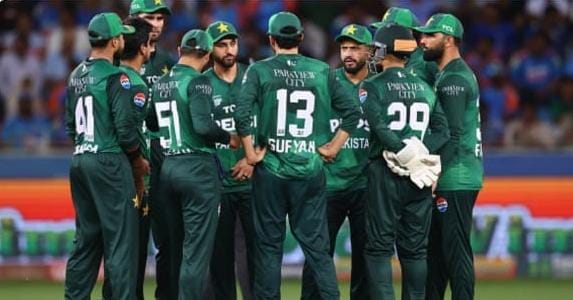
The Asia Cup clash between Pakistan and the United Arab Emirates on Tuesday was less about runs and wickets and more about a storm brewing off the field. The start was delayed by nearly an hour after Pakistan refused to take the field, demanding the removal of match referee Andy Pycroft.
Their anger stemmed from the India–Pakistan encounter on September 14, when Indian players avoided shaking hands with their Pakistani counterparts before and after the match. Indian captain Suryakumar Yadav, who refused to shake hands with Pakistan’s Salman Ali Agha, said “a few things in life are bigger than sporting spirit,” dedicating the victory to victims of the April terror attack in Pahalgam and to the Indian armed forces who carried out retaliatory strikes across the border.
The Pakistan Cricket Board called the act disrespectful and accused Pycroft of mishandling the matter. Tensions ran high with fears the game might be forfeited. Negotiations followed, and Pycroft eventually issued a clarification and apology, calling the no-handshake incident a “miscommunication” rather than deliberate instruction. “Andy Pycroft termed the September 14 incident a result of miscommunication and apologised. The ICC has expressed its willingness to conduct an inquiry into the code of conduct violation that occurred during the September 14 match,” PCB was quoted as saying
On the field, the batting side lifted Pakistan to 146/9, and bowlers bundled UAE out for 105, sealing a 41-run win and a place in the Super Four alongside India, but the result was secondary—the real story was the off-field drama.
The handshake row has added political and emotional heat to the tournament. For Pakistan, the controversy carried as much weight as qualification, underlining once again how cricket between the two neighbours rarely stays confined to sport.
Analysts warn that athletes are being dragged into political battles not of their making. “Players are national symbols, and every gesture between India and Pakistan carries political weight. A refusal to shake hands or a delayed start becomes more than a sporting matter—it is read as a statement on bilateral tensions. But players often have little control over such situations,” they point out.
“Players are national symbols, and every gesture between India and Pakistan carries political weight. A refusal to shake hands or a delayed start becomes more than a sporting matter; it is read as a statement on bilateral tensions. For fans, it can heighten emotions, fuel rivalries, and even overshadow the cricket itself. But players often have little control over such situations, such incidents are not expected to enhance their game or anything,” they add
The bottom line is they perform on the field, but decisions taken by boards, officials, or governments shape the narrative around them.
Linking sports to politics can unfairly subject them to criticism for choices not of their making. The controversies grab headlines, give a talking point to TV journalists and add drama, but do they help in any way, ideally India should have stayed off the match with Pakistan if a message is what it wanted to send.
The fact is pulling out is not simple, either for India or Pakistan.
A withdrawal could have cost the PCB between $12–16 million, as Test-playing nations each receive 15% of the Asian Cricket Council’s annual revenue. Walking away would have meant forfeiting nearly 7% of income, according to reports
Test-playing nations—India, Pakistan, Sri Lanka, Bangladesh, and Afghanistan—receive 15% each of the Asian Cricket Council’s annual revenue, while associates share the remaining 25%. A pullout would cost PCB nearly 7% of revenue, leaving it isolated within the ACC
The mix of warm wishes and sharp satire encapsulates the complex reality of India’s political landscape, say analysts
PM in Dhar, Photo courtesy PIB
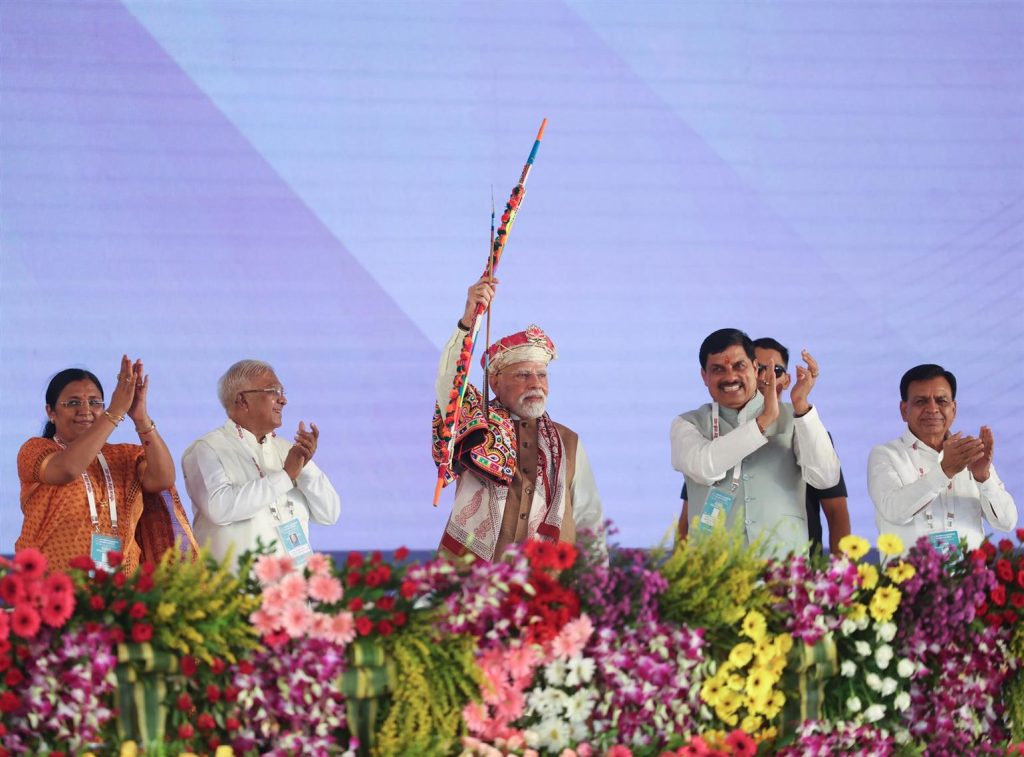
On his 75th birthday, Prime Minister Narendra Modi received an outpouring of greetings from around the globe, underscoring his significant influence on the world stage. US President Donald Trump personally called to commend Modi’s leadership while Italy’s Prime Minister Giorgia Meloni described him as an inspiration to millions. Tech visionary Bill Gates shared a heartfelt video message praising India’s progress under him while industrial giants Mukesh Ambani and Gautam Adani lauded his transformative leadership. Even figures from the entertainment world, including actor-politician Pawan Kalyan and Bollywood star Aamir Khan—who had previously voiced concerns about intolerance in India—extended their wishes, marking a rare moment of public unity.
Domestically, the occasion also brought political barbs.
The Congress party used the milestone to launch a veiled attack on Modi’s alleged ties with tycoon Gautam Adani. Using the hashtag #MyModiStory, Congress released an AI-generated video featuring a character resembling Adani speaking in Hindi with a Gujarati accent, claiming Modi’s unwavering loyalty and access to favors: “Factories, lands, tenders, deals — Modi got it done in my name.”
Despite the sharp digital onslaught, senior Congress leaders chose a more reserved tone. Leader of Opposition Rahul Gandhi posted a brief birthday wish, while Congress President Mallikarjun Kharge wrote: “Best wishes to Prime Minister Narendra Modi Ji on his birthday. May he be blessed with good health and long life.”
PM Modi’s 75th birthday also sparked reflection and criticism amid growing public concerns. Persistent challenges such as unemployment, particularly among India’s youth, remained front and center. Activists and opposition groups seized the day to highlight economic concerns, sometimes dubbing it “Unemployment Day” to emphasize the urgent need for job creation and reform.
Adding to the political discourse are familiar satirical jabs that have become staples of India’s vibrant political culture. Terms like “Jumla Divas” (Empty Promise Day), “Feku Divas” (Liar Day), and “Vote Chor Divas” (Vote Thief Day) are commonly used by critics to underscore perceived broken promises, electoral manipulation, and unfulfilled commitments, reflecting frustrations of those who feel that despite Modi’s grand rhetoric and ambitious campaigns, key challenges such as unemployment and corruption remain unresolved.
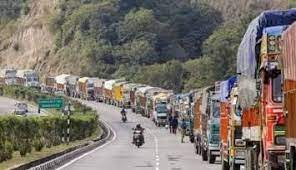
Srinagar: National Conference MP Aga Ruhullah Mehdi on Tuesday accused the government of inflicting economic distress on Kashmir, citing the prolonged closure of the Srinagar–Jammu highway and its impact on apple growers.
Mehdi said fruit traders and transporters were bearing the brunt of stalled truck movement, with perishable produce at risk of damage. “You see a pattern. At times, substandard pesticides are pushed into the market; at others, cheap apples are imported from abroad. Now our roads are blocked,” he told reporters in south Kashmir.
The Srinagar MP alleged that deliberate attempts were being made to undermine the Valley’s economy. “Even after today’s partial reopening, only traffic from Jammu to Srinagar was allowed. Our trucks remain stuck. Last year too, trucks were stranded until the produce rotted. This looks like a battle against our economy,” he said.
Union road transport and highways minister Nitin Gadkari, meanwhile, said a two-lane temporary diversion had been created to allow traffic movement. He added that full restoration of the highway was underway.
The Srinagar–Jammu highway, a vital lifeline for the Valley’s economy, has seen repeated closures in recent weeks due to landslides and repair work, sparking mounting concern among growers during the peak apple harvest season.
New Delhi: Dr. Ratnesh Lal, Senior Director, Corporate Affairs, Herbalife India, has been elected as the new Chairperson of the Indian Direct Selling Association (IDSA), the apex body of India’s direct selling industry. He succeeds Vivek Katoch, Corporate Affairs & Public Policy Director, Asia, Oriflame.
The elections to the new executive committee were held during the 29th Annual General Meeting of the IDSA here on Wednesday, in which Ms. Aprajita Sarcar, Head of the Growth Office at Modicare, was elected as Vice Chairperson. The newly constituted Executive Committee, elected for a two-year term, will also see Katoch serving as Treasurer, while Rajat Banerji, vice president of corporate affairs at Amway India, in the role of Secretary.
Commenting on his new role, Dr. Lal said “IDSA is committed to strengthening the industry’s contribution to the nation’s economy, while creating equitable opportunities for employment and entrepreneurship across both urban and rural India, with consumer protection at its core. With the Consumer Protection (Direct Selling) Rules, 2021 in place and state-level monitoring mechanisms evolving, our next focus is nationwide harmonisation to ensure clarity and consistency.”
Outgoing Chairperson Vivek Katoch reflected “during my tenure, the industry consolidated its position as a trusted retail channel and embraced digital transformation to better engage with consumers, build trust, and deliver value. As I pass on the baton, I take pride in these achievements and remain confident that direct selling will continue to empower people and contribute meaningfully to India’s growth story.”
The Indian direct selling industry, aligned with the World Federation of Direct Selling Associations (WFDSA) Code of Ethics, now ranks 11th globally. With a market size exceeding ₹22,000 crore, it provides livelihood opportunities to nearly nine million people nationwide.
From the street corner to the shrine, how beggars are fast adapting to QR codes and digital transfers to receive alms. A report by Tehelka SIT
In a strange twist to the government’s push for a “Digital India,” the country’s beggars too have decided to go cashless. Some now sport QR code placards around their necks or carry a tablet, offering passers-by the option to pay alms with a scan. Those without personal digital access rely on trusted neighbourhood shopkeepers—sharing their QR codes or UPI IDs—who accept the donations on their behalf and return the equivalent in cash.
What was once an act rooted in folded hands and spare coins has now entered the age of e-wallets and UPI transfers, where the language of alms is increasingly spoken in digital code.
It may sound unbelievable to some, but across India, beggars have embraced digital payments, reshaping the very act of begging in this new age. Take Raju Singh from Delhi. “I accept digital payments, and it’s enough to get the work done and fill my stomach,” he said. A self-professed follower of former Bihar chief minister Lalu Prasad Yadav, Raju also makes it a point never to miss Prime Minister Narendra Modi’s Mann Ki Baat radio address.
Raju explained that he could not find any other means of livelihood. Many times, people refused him alms, citing the absence of small change. Travellers in particular would argue that in the era of e-wallets and pay apps, there was no longer any need to carry cash. That pushed Raju to open a bank account and get an e-wallet. While most people still hand him cash, some do transfer money digitally. To open the account, the bank insisted on his Aadhaar and PAN, so he even went ahead and had a PAN card made to set the process rolling. Today, Raju begs digitally across Delhi.
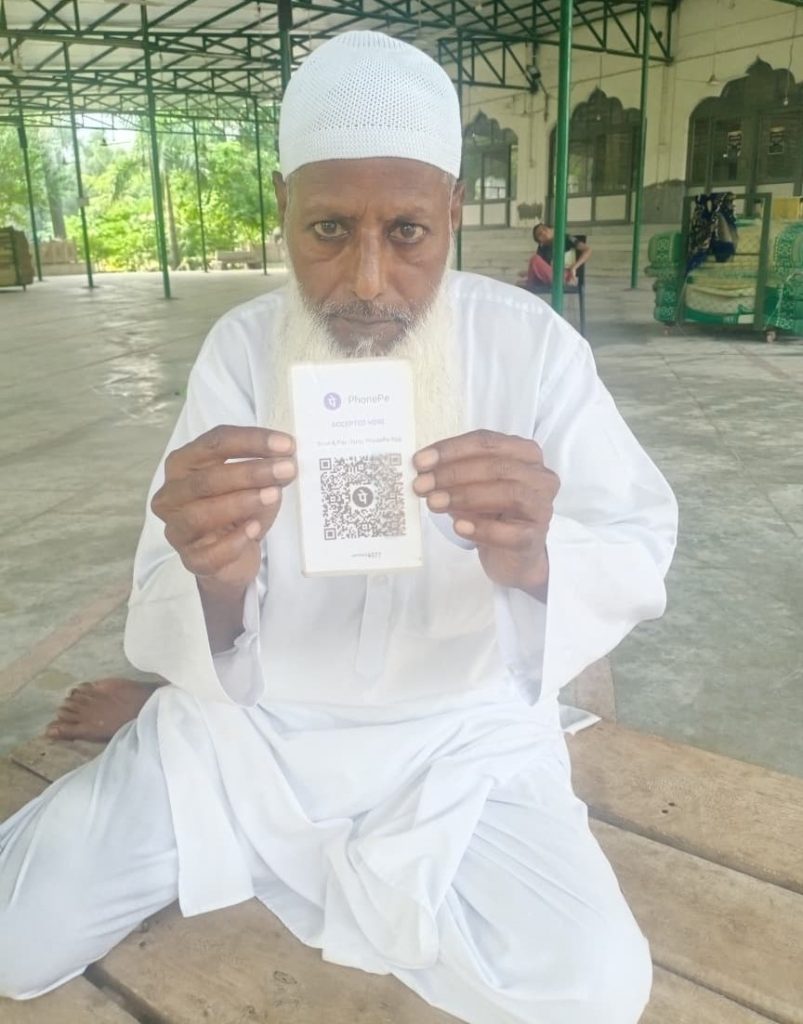
“Today at the Friday prayers in the Noida mosque, I got 4–5,000 rupees as alms in cash. Since I also have a scanner, I received some money through digital payment too. How much exactly? That I’ll have to check,” said Mohammad Akhtar, a beggar at the Noida mosque where Muslims gather in large numbers every Friday for the special namaaz.
“I am presently living in Badarpur, Delhi. But someone advised me to visit the Noida mosque on Fridays, saying the alms would be better. So I came here. To get the scanner, I had to open a bank account,” Akhtar told Tehelka.
“Today when I left my Noida home for begging, I told my local grocery shop owner I would use his Paytm UPI ID for digital transfers of alms. Because today is the digital world and most people prefer paying that way,” said Afsana, another beggar.
“Today I am begging with my two minor children, Neha and Bilal. I want my daughter Neha to get married, for which I am collecting money. My husband Nizam works in Gorakhpur as a domestic help, earning 4–5,000 rupees a month,” Afsana added.
“I have been living in this graveyard for the last 25 years, begging. People come and give alms to me. Every Friday I get around 400–500 rupees, and on Eid about 1,500. Now I have opened a small tea stall, but people who have long given me alms still donate—either in cash or by scanning. Today I even have a scanner, and those who want to give digitally, use it,” said Rehana Khatoon, another beggar.
“This scanner belongs to my local shopkeeper, Intezaar. I collect money through it and then buy rations from his shop. I live in Ghaziabad and come to Noida and Shaheen Bagh to beg. On Fridays alone, I manage to collect 300–400 rupees,” Rehana added.
“Please make the digital payment to this shopkeeper—we will get the money from him. But don’t give only to me, give to all the beggars sitting in the dargah campus. Otherwise I will face their wrath,” said Gopichand, a beggar at Matkapeer Dargah, near Bharat Mandapam in New Delhi.
“You can see the attitude of these beggars—they earn 400–500 rupees a day. Don’t give them money; they misuse it on illegal substances like drugs. Instead, arrange tea or biscuits for them with that money. By the way, I accept digital payments on their behalf and then distribute cash to them,” said Irfan, a shopkeeper at Matkapeer Dargah.
“Those who want to give us alms digitally—we take them to the chaiwala. They pay him online and we get the money in cash from him. I’ve been begging at Matkapeer Dargah for the last 20 years,” said Geeta, another beggar there.
“Yes, I accept money from people who want to give digitally to beggars, and then return it to the beggars in cash. I am from West Bengal and have been running my tea stall at Matkapeer Dargah for 20 years,” said Lab Karmakar, a shopkeeper.
Begging is illegal in those Indian states that have adopted anti-begging laws, most of which are based on the Bombay Prevention of Begging Act, 1959. These laws criminalise the act of soliciting alms and allow authorities to detain offenders in designated institutions. However, there is no single national law against begging—each state and Union territory has its own legislation. Critics argue that these laws are outdated, punish the vulnerable, and fail to address the root causes of poverty.
In 2018, the Delhi High Court struck down key sections of the Bombay Act, decriminalising begging in the capital. The court held that treating begging as an offence was unconstitutional and a violation of fundamental rights. Still, it remains a crime under Section 363A of the Indian Penal Code to kidnap, maim, or use a child for begging.
In Uttar Pradesh, however, begging continues to be illegal under the Uttar Pradesh Prohibition of Beggary Act, 1975, which makes it a punishable offence and allows for arrest and court proceedings. Section 76 of the Juvenile Justice (Care & Protection of Children) Act, 2015 also makes employing a child for begging an offence, punishable with up to five years’ imprisonment or a fine of one lakh rupees.
There are no recent official figures on India’s beggar population. The last data presented in Parliament was on December 14, 2021, based on the 2011 Census. According to that, India had over 4.13 lakh beggars—2.21 lakh men and 1.92 lakh women. More than 61,000 were below the age of 19. West Bengal topped the list with 81,244 beggars, followed by Uttar Pradesh (65,835), Andhra Pradesh (30,218), and Bihar (29,723).
The reason for revisiting the subject today is the surprising shift to digital payments among beggars. Reports of QR codes being used to collect alms have surfaced from many parts of the country, sparking curiosity. A recent viral video even showed a man on the roadside calling himself a “VIP beggar,” refusing to accept anything less than 200 rupees. Crowds gathered to see him, but no one donated because he would not accept anything less than Rs 200!
To probe deeper into this phenomenon of “digital begging,” Tehelka conducted an investigation in Noida and Delhi. The first encounter was with Afsana, who was begging along with her two minor children—daughter Neha and son Bilal—outside a mosque in Noida. She said she was seeking alms to get her daughter married. By doing so, Afsana committed three offences: using minors for begging, begging in Uttar Pradesh where it is illegal, and intending to marry off a child.
In this exchange, Afsana openly admits that she is seeking alms on the pretext of her minor daughter’s marriage. The reporter reminds her that the girl is only 15, far too young for marriage, and urges her to focus on education instead. Afsana, however, insists that poverty leaves her with little choice, falling back on the argument of survival. The dialogue exposes both her desperation and her resignation.
Reporter- To aap shaadi ke liye paise mang rahi ho?
Afsana- Haan bhai-jaan, kuch madad ho jaata to?
Reporter- Neha to abhi bahut choti hai…kitni umar hai iski?
Afsana- 15 saal.
Reporter- Itni kam umar mein shaadi….ye to gunah hai.
Afsana- Arey kuch nahi to jugad to ho jayega.. shadi to 2-3 saal baad karenge. Ab aaye hain to kuch jugad ho jaaye…rashan ka ho jayega?
Reporter- Kya naam bataya aapne?
Afsana- Afsana.
Reporter- Ladki bahut choti hai.. abhi shaadi ka mat socho; padhai karwao.
Afsana- Bhai jaan kya karen…gareeb aadmi hain, dar-dar ghoomna bhi to accha nahi lagta.
[When our reporter tries to dissuade Afsana from planning her minor daughter’s marriage, she insists that poverty leaves her with little choice, falling back on survival as her only argument. The exchange reveals both her desperation and resignation.]
We asked Afsana whether she had a QR code through which we could transfer money to her. She replied that she could share the Paytm UPI ID of her local grocery shop owner in Noida, to whose number digital alms could be sent. Afsana said she is originally from Gorakhpur, Uttar Pradesh, and has been living in Noida for the last 4–5 years with her two minor children. She added that her husband works as a domestic helper.
Reporter-Scanner hai aapke pass?
Afsana- Scanner to nahi hai…number hai…ladki jaati hai ration wale ke dukaan par.. ration le lega bhai.. bacche bhooke hai bahut pareshan hain.
Reporter- Aapke pass scanner hai to de do?
Afsana -Scanner nahi, number hai…number par Paytm kar do to ho jayega..Paytm ka number hai bhai jaan, pareshan hoon bahut..Afsana naam hai mera, Gorakhpur ki rehne wali hoon.
Reporter- Yahan Noida mein kaise?
Afsana- Wahan rehte hain Noida 37 mein bhai jaan. Kya karen…kuch bacche log ko khane ke liye nahi hai.
Reporter- Shadi to ho gayi aapki?
Afsana- Haan ye beti hai meri.
Reporter- Shauhar kya kartey hain?
Afsana- Wo jhadu pocha ka kaam kartey hain….usmein poora nahi hota hai.. ab ladki ke liye bhi to jodna hai.
Reporter- Kitne bacche hain appke?
Afsana- Do bacchey hain.
Reporter- Kya naam hai bacchon ka aapke?
Afsana-Ladka-Bilal, ladki-Neha.
Reporter- Ye to Hindu naam hai! School nahi jaatey aap log?
Bilal- Jaata hoon.
Reporter- Kaun si class mein?
Afsana- Madarse mein jata hai.
Reporter- Madarsa kahan hai yahan?
Afsana- Noida mein.
Reporter- Kahan rehti hain aap?
Afsana- Sombazar mein, sector nahi pata… Sombazar ke peeche jhuggi hai hamara.
Reporter- Kitne time se reh rahi hain?
Afsana- 4-5 saal se reh rahe hain.
Reporter- Aap kaam nahi karti?
Afsana- Yahan kaam karne ke liye pehchaan patra mangtey hain…lekin hamare pass nahi hai.
Reporter- To aap shadi ke liye paise mang rahi ho?
Afsana- Haan, bhai jaan, kuch madad ho jaata to.
Reporter- To shauhar to aapke 4-5 hazar kama rahe hain?
Afsana- Haan. Kama rahe hain gaon mein.
Reporter- Gaon mein hain.. yahan nahi?
Afsana- Haan.
[Here, the reporter presses Afsana on her reasons for seeking alms, even questioning her daughter’s schooling and her child’s Hindu-sounding name. Afsana insists her struggles leave her with no other choice. The dialogue underlines how poverty, lack of identity papers, and low income push families into dependency.]
When asked whether the shopkeeper, on whose QR code Afsana was requesting us to send money, could be trusted to pass it on to her, she replied that he was indeed a reliable man. A Muslim named Saeed, he provides her with rations once money is sent to his number. Afsana also mentioned that on the day she met the Tehelka reporter at a mosque in Noida during Friday prayers, it was raining heavily and consequently she received no alms.
Reporter- Agar aapke pass scanner hota to main madad kar deta.
Afsana- Number hai, ration waley ka, thoda bahut ration dila dogey to chaley jayenge.
Reporter- Dekho behan meri, mein dukandaar ko kar doon, lekin agar won na de aapko?
Afsana- Dega. Vishwas hai hamko…wo bhi koi Hindu nahi, bhai jaan.. Musalmaan hai.
Reporter- Kya naam hai dukandaar ka?
Afsana- Mohd. Saeed.
Reporter- To aap paise waisey hi mangawatey rehtey ho wahan?
Afsana- Nahi –nahi.
Reporter- Phir?
Afsana- Hum unko bol detey hain ke koi aapko paytm kar deta hai to humko rashan de do, jitna karengey utne ka humko tel, chawal, dal deta hai. To aaj aayi, masjid mein paani barasney laga.., kuch nahi mila.
Reporter- Jume ki namaaz mein aayi thi?
Afsana- Haan…lekin kuch nahi mila.
[In the above exchange, Afsana reveals she depends on her local grocer’s Paytm account to receive digital alms. She stresses her trust in him, pointing out that he belongs to her own community. She explains how donations made to his number are converted into rations—oil, rice, and pulses—for her family.]
Afsana then gave us the shopkeeper’s number, and asked that money be transferred to him. She explained that in today’s digital world, everyone uses Paytm, so she had already informed the shopkeeper that while seeking alms she would share his number with donors for digital transfers.
Afsana- Hum usko bolkar aaye hain na bhaijaan aise hum ja rahe hain, koi dega ya nahi dega, paytm ka aajkal zyada system hai. To wo bol raha tha aap number de dena hum ration de denge. Ek daana bhi nahi hai khaney ko…5 -6 din se barish ho raha hai.
Reporter- To aap usko bolkar aayi ho mein ja rahi hoon mangne?
Afsana- Nahi mein kalam-walam bechti hoon, maine socha isey bech lungi koi banda mil jaye.. mujhe rashan washan de de. Mainey bola tha ek bhai ko…wo bola yahan aapka fariyad kar lo. Idhar, bhai jaan aap mil gaye.
Reporter- Agar usne nahi diya ration aapko? Jhoot bol diya nahi mile paise?
Afsana- Nahi bhai jaan, aise nahi hai wo.
Reporter- Kya number hai?
Neha- 98715XXXXX
Reporter- Is number par paytm karna hai, aapka naam Afsana hai?
Afsana- Haan, Neha ki mummy.
[In this exchange, Afsana speaks of her struggle to arrange food for her family, saying the local shopkeeper had assured her of ration if someone transferred money to his number. She adds that heavy rains had left her without grain for days. The account lays bare the extent of Afsana’s hardships—five to six days without food is no small trial.]
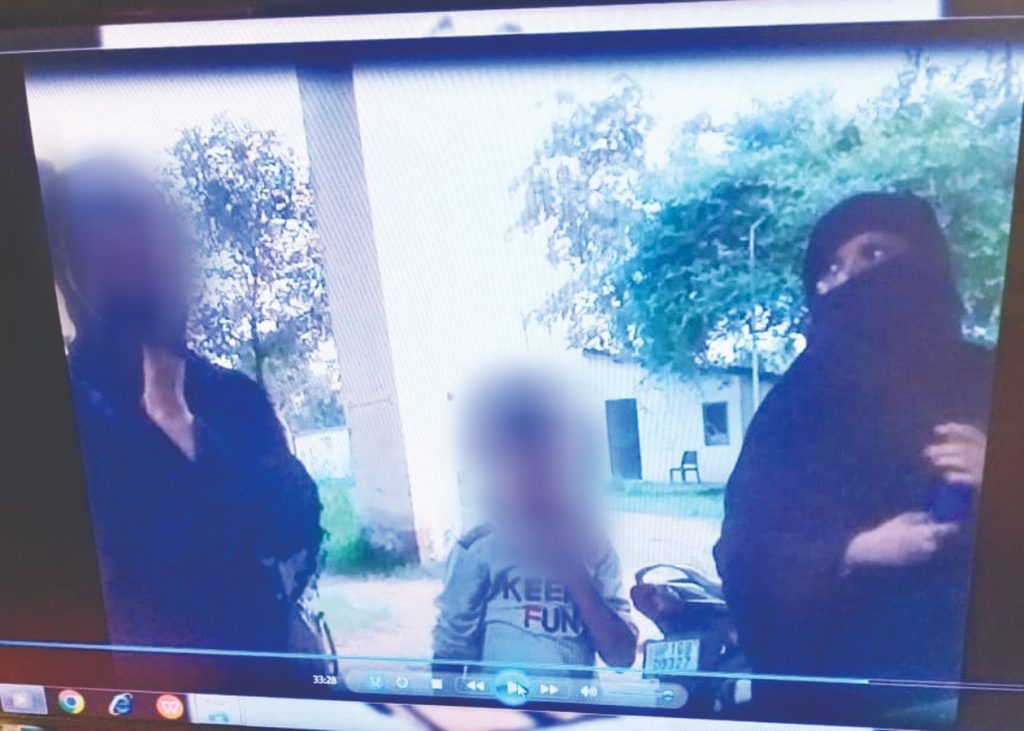
After a week, on Friday, Afsana was again seen at the same mosque in Noida, this time with only her minor son, Bilal. She was caught on camera begging, with her son holding a scanner in his hand. Afsana told the Tehelka reporter that since people no longer trust the shopkeeper’s Paytm number, she had brought the shopkeeper’s scanner with her for begging.
When confronted that thrusting her two minor children for begging is a crime, Afsana replied that she is poor, helpless, and needs money to survive. She also admitted that she receives 5 kg of free food grains every month under the government’s ration scheme, yet continues to beg.
When her attention was drawn to the fact that begging is itself a crime in Noida, Uttar Pradesh, she gave no reply. On being contacted, Afsana’s local shopkeeper Saeed—whose phone number and scanner she uses—confessed that he is digitally receiving the alms money on her behalf. Afsana explained that since she does not own a phone, she cannot have her own QR code.
Meanwhile, in the same mosque of Noida, on Friday, Tehelka’s correspondent met another beggar, Mohammad Akhtar, holding a scanner in his hand while seeking alms. He admitted that he had collected Rs 3-4K in cash and the rest digitally, through digital scans linked to his son’s account, on the same day. Akhtar, a resident of Badarpur in Delhi, had travelled to Noida and engaged in begging, which is illegal in Uttar Pradesh. He said that after opening a bank account, he received the scanner, which he now uses for begging.
Reporter- To aap Badarpur se paisa mangne ke liye yahan aatey ho Noida?
Akhtar- Hum kabhi nahi aaye… bata to rahe hain ye bhai ghoomtey rehtey hain…kapde ka kaam kartey hain, dari bechtey hain. To unhone batai thi ye masjid, ki wahan chale jao, Allah tumhara kara dega kuch na kuch.
Reporter- Yahan pehli baar aaye ho?
Akhtar- Haan, pehli baar.
Reporter- Kitna paisa mil gaya?
Akhtar-3-4 hazar mil gaye.
Reporter- Scanner par liye honge aapne?
Akhtar- Kuch scanner par pahuch gaye…aur baki ye hain.
Reporter- Ye sab aaj hi ka collection hai?
Akhtar- Haan ye abhi ka hai.
Reporter- 3-4 hazar ho gaye?
Reporter (continues)- Scanner par kitne aa gaye?
Akhtar- Ab poochengey jakar….ismein awaz hi nahi aa rahi ye mobile mein.. iska speaker kharab ho gaya.
Reporter- Aapka smartphone hai na?
Akhtar- Haan ye hai…iska speaker kharab ho gaya hai.
Reporter- Haan to ye scanner hai aapka.. isi se paise mang rahe hain aap?
Akhtar- Ye hamare bete ka scanner hai…khaata hamne khulwaya tha… ismein se nikal kar de denge.
Reporter- Scanner se kitna mil gaya aaj aapko?
Akhtar-Ismein to poochna padega kitne aaye aaj, dekha nahi… jo kuch Allah ne bhej diye honge.
[In this exchange, Akhtar explains how he came to Noida’s mosque for the first time on someone’s advice, hoping for help. We learn that alms are now tracked through scanners and smartphones. What emerges here is how even begging has been reshaped by digital tools.]
Mohammad Akhtar, a resident of Jalaun, Uttar Pradesh, came to Delhi and then to Noida for begging. He said that he was collecting money for his nephew’s surgery through begging.
Now, Tehelka met another beggar, Rehana Khatoon, originally from Kanpur, Uttar Pradesh, and now living in Noida. She admitted that she has been begging in the graveyard for the last 25 years—again, a crime under Uttar Pradesh law. Rehana said she receives about Rs 1,500 on Eid through begging, and around Rs 400–500 every Friday. She has also opened a small tea stall at the gate of the mosque, which shares the premises with the graveyard. According to her, she now uses a scanner to receive alms, in addition to cash, from her regular acquaintances who continue to support her with alms despite her stall.
Reporter- Ab paise nahi maang rahi aap?
Rehana- Koi de gaya apni raji khushi se to alag baat hai, to le leti hoon.
Reporter- Nahi ye aapne bahut accha kaam kiya….scanner bhi le liya aapne.
Rehana- Ye laga diya company walon ne free mein… paisa nahi liye. Wo laga rahe they tab mein rone lagi ke mere pass kuch bhi nahi hai.
Reporter- Arey to aap cash le leti…scanner thodi tha pehle.
Rehana- Nahi ab scanner laga liya…ladko ka kya bharosa de na dein.
Reporter- Aap to ander hi rehti hain na masjid mein?
Rehana- Haan.
Reporter- Pehle bhi to accha collection ho jata tha aapka jume ke jume, Eid ke Eid.. kitna kama leti thi aap?
Rehana- Eid par to mil jata tha kareeb 1500 aur jume par 400-500 rupaiye, koi jaaney wala 500 alag se de jata tha.
Reporter- Yahan kab se reh rahi hain aap…kabristan mein?
Rehana- 25 saal ho gaye.
Reporter- Ab koi aapko paise dene aata hai to kaise leti ho.. scanner se?
Rehana- Jisko jaise dena hota hai…scanner se ya cash…log aise hain kehtey hain aap bethi raho aunty…manga kisi se nahi…na pehle na ab..log khushi se de jaate hai.
Reporter- Abhi bhi koi dena chahe to de jaaye?
Rehana- De jaaye…Allah deta hai beta.
Reporter- Abhi de jate hain log…jo pehle de jaatey they?
Rehana- Haan, abhi ek banda 100 de gaya…aur ek 20 rupiya.
[In this exchange Rehana explains how she began using a scanner, fitted free by a company, to receive alms—though she still accepts cash. She says donations come willingly and that Eid and Fridays bring better collections. Rehana treats occasional small gifts as blessings.]
During the investigation, Tehelka met two more beggars—Rehana from Ghaziabad and Reshma from Faizabad—both hailing from Uttar Pradesh. The two were found begging in Noida, which, as mentioned earlier, is a criminal offence since begging is illegal in Uttar Pradesh.
Rehana was carrying a placard with an appeal for alms along with a scanner for receiving donations. People were seen donating money to her through the scanner. She told Tehelka that she collects around Rs 300–400 on Fridays, and revealed that the scanner she uses belongs to her local shopkeeper, Intezaar.
Reshma, who lives in Sombazaar in Noida, provided the phone number of her local shopkeeper, Shahzaad, through which she receives digital transfers of alms. However, when contacted, Shahzaad’s phone was found to be switched off.
Tehelka’s digital beggars story now moves from Noida to Delhi, where we met a group of beggars at Matkapeer Dargah near Bharat Mandapam in New Delhi. We first spoke to Nasreen, who has been living at the Dargah and begging for the last 35 years. She laments the meagre earnings of the day—barely sixty rupees—despite it being a Thursday, usually a better day. She blamed the lean day on rain-flooded streets that kept people away. Nasreen does not have any digital platform of her own to receive alms, so she directed us to transfer money digitally to a flower seller at the Dargah.
Nasreen- Scanner uske pass hai.. phool wale ke pass.. usmein daal dena.
Reporter- Aapke pass nahi hai?
Nasreen- Hamare pass nahi hai, wo baant detey hain.
Reporter- Aaj mila nahi kuch?
Nasreen- Nahi mila.
Reporter- Aaj to jumeraat hai?
Nasreen- Subah se sirf 60 rupees mile hain.
Reporter- Jume raat ko bhi 50-60?
Nasreen- Public bahar nahi aa rahi na.
Reporter- Kyun?
Nasreen- Jagah jagah pani bhara hua hai.
Reporter- Normal din mein kitni ho jati hai amdani?
Nasreen- Rs100…. zyada se zyada.
Reporter- Aap kab se ho dargah par?
Nasreen- 30-35 saal se.
[At the Dargah, Nasreen reveals how she depends on a flower seller’s scanner to receive digital alms, since she has none of her own. We learn how beggars adjust by relying on others’ digital tools, showing how technology intertwines with poverty in uneasy ways]
Gopichand, another beggar who arrived at Matkapeer Dargah just a few months ago from Mahoba, Uttar Pradesh, took us to a florist’s shop at the shrine. He asked us to transfer alms digitally to the shopkeeper for all the beggars at the Dargah, warning that if the money was sent only for him, the others would make his life miserable.
Reporter- Chalo- chalo scanner par karwao?
Reporter (continues)- Hame inko paise dene hain, lekin inke pass scanner hai nahi.
Gopichand- Gopichand ko akele thodi dene hain… sabko dene hai.
Reporter- Ye tumhare pass layen hain paytm ke liye.
Irfan- Haan mujhe kar do.
Gopichand- Mere ko akele mat dena…sab ko dena.. nahi to sab chadh jayenge mere uper.
[This exchange shows the fragile balance within the group of beggars. We learn how even alms are bound by rules of collective survival. It underlines how poverty often creates its own codes of fairness, driven more by fear than equity.]
Irfan, the florist to whom Gopichand directed us for the digital payment, told us that the beggars’ conduct was questionable. He advised us not to give them money, but instead to arrange tea for them. According to Irfan, these beggars earn between ₹300–400 a day.
Irfan- Bheekh mangne walon ka ye haal hai.
Reporter- Ye kitna kama letey hain ek din mein?
Irfan- Kama letey hain 300-400.
Irfan (continues)- Aap meri baat suno…paise ka to ye galat istemaal kartey hain, aap inhe chai pila do.
[Irfan paints a picture of how begging works on the ground. He discloses the average daily earnings, which are not insignificant. Yet, he is quick to allege that the money is often misused. Instead, he suggests offering them tea.]
After speaking with Irfan, we met Geeta, another beggar at the Dargah who has been living there for the past 20 years. Geeta told Tehelka that whenever someone wishes to give them alms digitally, they take the person to Lab Karmakar, a tea stall owner at the shrine. Lab receives the money digitally and then gives them cash in return.
Geeta- Aap chai wale ke pass scanner par kar do…dene wale detey hain….nahi dene wale nahi detey.
Reporter- Agar kisi ke pass cash na ho to wo kaise karega?
Geeta- Arey meri baat suno…ye Lab hai iske pass kar do.
Reporter- Matakapeer par kab se ho?
Geeta- Hame 20 saal ho gaye.
[This exchange reveals how beggars depend on intermediaries to bridge the digital divide as Geeta, a long-time resident at the shrine, explained how digital alms are managed through one Lab, the local tea seller. We learn that survival has forced them to create informal systems.]
We decided to meet Lab Karmakar, who digitally accepts money on behalf of the beggars and later relays the same to them in cash. Lab, originally from West Bengal, has been running his tea stall at Matkapeer Dargah for the last 20 years. He told Tehelka that many people who wish to donate alms digitally pay through him, and he, in turn, hands the money back to the beggars in cash.
Reporter- Jitney bhikari hain sab keh rahe hain: ‘lab bhai ko de do’.
Lab- Haan koi dena chahta hai…kuch log de jaate hain hum de detey hain…cash nahi hota na… matlab ye hai.
Reporter- Bhikariyon ki bhi dua le rahe ho aap.
Reporter (continues)- Yahan kitna time ho gaya aapko?
Lab – Yahan 20 saal ho gaye…
[This brief exchange shows how an informal network sustains the practice of begging in the digital age. Having run his stall at Matkapeer for the past twenty years, Lab has become a familiar part of the beggars’ ecosystem.]
Tehelka’s investigation into digital beggars exposed many realities. Those able to open bank accounts are using their own QR codes or phone numbers for the digital transfer of alms. Those who cannot, and therefore lack QR codes or numbers, have devised a unique alternative for donors wishing to give digitally in the absence of cash. They rely on scanners, phone numbers, or Paytm UPI IDs of local shopkeepers, who receive the alms and then hand over the amount in cash to beggars. Afsana was caught on camera using her two minor children for begging and seeking money to marry off her minor daughter—both criminal offences. Beggars filmed in Noida, Uttar Pradesh, are also violating the law, since begging is illegal in the state. This investigation reveals not just illegality, but also the disturbing normalisation of such practices in the name of survival.