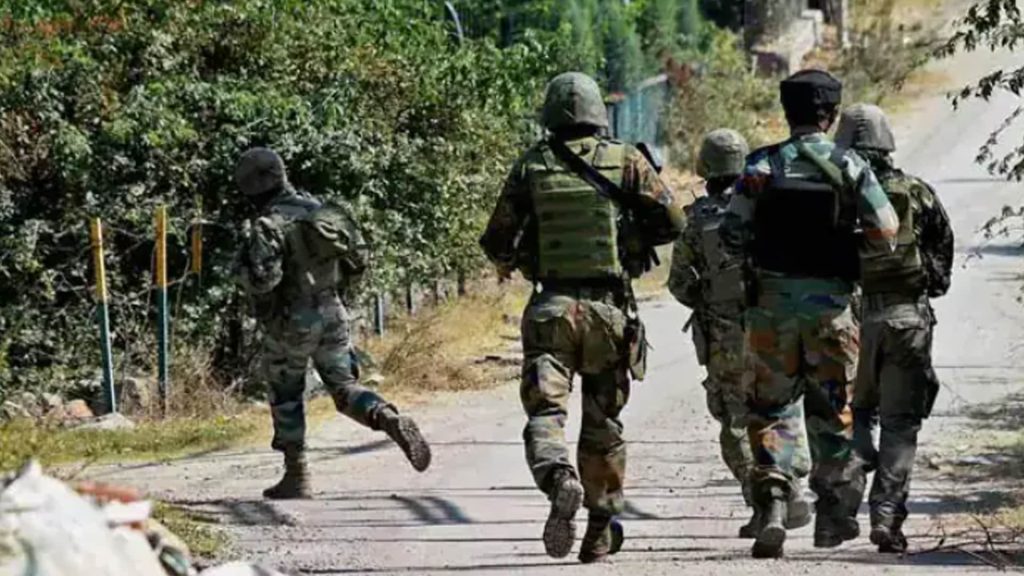
Srinagar: An encounter broke out between security forces and terrorists on the Doda–Udhampur border in Jammu and Kashmir late Friday night, leaving an Indian Army soldier injured.
According to reports, three to four Jaish-e-Mohammed (JeM) terrorists are believed to be trapped in the area. The Army’s White Knight Corps said in a post on X, “Contact with Terrorists Update | Contact Site of the ongoing operation is Doda-Udhampur border. Operation continues..”
The gunfight began after security forces launched a search operation based on intelligence inputs and cordoned off the area. The terrorists opened fire, drawing retaliation from the troops. The operation is still underway.
Serene Goa, small in size but rich in heritage, has long witnessed alarms raised by activists over land conversion, leading to mega-resorts and unchecked development—a grievance that cuts across party lines.
Photo: social media
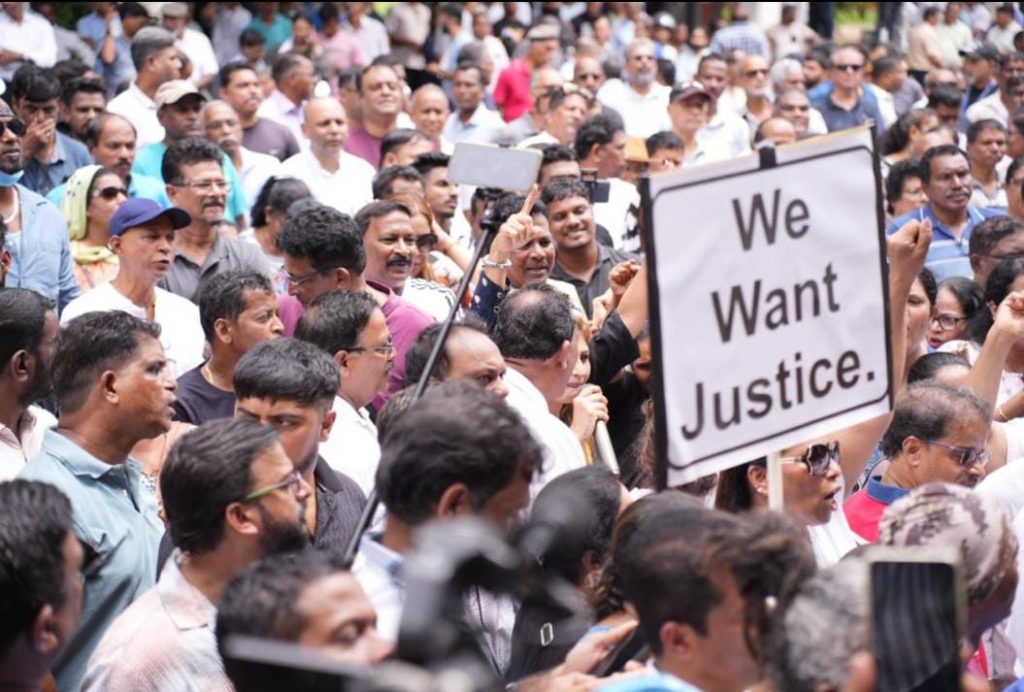
While national attention is on politically significant Bihar, quietly on India’s western coast, a turbulence is brewing in the small state of Goa, where susegad—a relaxed, contented way of life marked by siestas, music, and a laid-back pace—is being challenged by rapid urbanisation, land conversions, and political unrest. Activists and ordinary Goans are now taking to the streets to protect their rights and heritage.
The spark
The immediate trigger was the assault on social activist Rama Kankonkar in Panaji, where a group of men smeared cow dung on his face and physically attacked him. The incident sparked outrage across the state, with protests in the capital drawing activists, citizens, and even legislators. Under pressure, Chief Minister Pramod Sawant assured police protection for Kankonkar and promised a fair probe, but opposition parties were quick to brand the attack as evidence of a deeper collapse of law and order.
The protests demonstrated that Goans are no longer content to “take it easy” when their land, culture, and safety are under threat. While they still value balance and harmony, there is a growing belief that peace must be actively protected through vigilance and collective action.
According to informed sources, the current situation in Goa is not merely the result of political rivalry. It reflects a deeper unease among ordinary Goans who feel their state’s identity, land, and voices are under siege. The assault on Rama Kankonkar became a turning point—not just because of the attack itself, but for the message it sent. The strong turnout at protests forced the government to sit up and take notice.
Simmering frustrations
Goa’s political turbulence is fueled by frequent party-hopping, where elected representatives shift allegiances for personal or strategic gain. Voters feel betrayed when their chosen leaders switch sides mid-term, eroding trust in democratic processes. Core issues—land conversions, environmental concerns, and law-and-order lapses—often remain unresolved, amplifying public anger.
Layered on top is frustration with law and order, which opposition parties like the Aam Aadmi Party (AAP) and the Revolutionary Goans Party (RGP) are trying to channel. Yet their traction rests on real sentiment: Goans feeling alienated, vulnerable, and increasingly willing to assert their rights.
According to reports, the recent episode was backed by simmering discontent over land conversions. Activists allege that in just two years, nearly 25 lakh square metres of land have been converted under provisions of the Town and Country Planning Act, and they have demanded the resignation of Minister Vishwajit Rane. The charge that Goa’s limited land and cultural fabric are being sold off to outsiders has become a rallying point, with the RGP pushing a strong nativist line.
Sensing an opportunity, the AAP moved quickly, bringing on board Srikrishna Parab, a founding member of the RGP, as its state general secretary. On the defensive is the ruling BJP, with ministers linked to land controversies. With the 2027 assembly elections looming, Goa’s streets and activists may well shape the next big political realignment.
Bihar 2025: Seat-sharing struggle in both NDA and Mahagathbandhan; Congress pushes for more winnable constituencies, RJD resists; In NDA, Chirag Paswan eyes bigger role as allies haggle over winnable seats
With Assembly elections drawing closer in Bihar, the real contest for now is not between the NDA and the Opposition Mahagathbandhan but within the alliances themselves. Both the RJD-Congress bloc and the JD(U)-BJP-LJP camp are caught in tough negotiations over seat-sharing, with each partner insisting on a bigger slice of “winnable” constituencies.
In the Opposition camp, the Congress has taken a strong stance, demanding around 70 seats out of the 243 in the Assembly — similar to its 2020 tally — but this time it wants a larger share of winnable constituencies. Its leaders claim that the RJD keeps the best seats for itself, leaving Congress to fight on weaker turf. The RJD, meanwhile, seems reluctant to cede ground, especially with new allies like the Jharkhand Mukti Morcha (JMM), the Pasupati Paras faction of the Lok Janshakti Party (LJP), and Mukesh Sahani’s Vikassheel Insaan Party (VIP) in the mix. The presence of Left parties further complicates the arithmetic.
In the 2020 Assembly polls, the RJD contested 144 seats and won 75, emerging as the single-largest party. The Congress could manage only 19 wins. Together, the Opposition fell short as the NDA secured 125 seats. This time, with broader alliances and sharper ambitions, arriving at a consensus is becoming more difficult but, as analysts point, posturing too is part of the game and eventually everything falls in place.
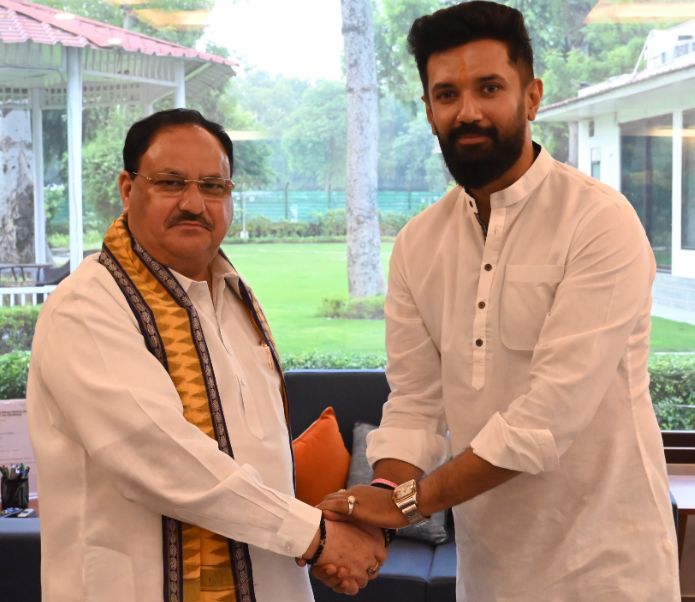
The NDA is facing its own issues. Chirag Paswan, Union Minister and leader of the LJP (Ram Vilas), is said to be pushing aggressively for winnable constituencies. Riding high after his party’s clean sweep in the Lok Sabha elections — where the LJP contested five seats and won all — Paswan is talking of “100 percent strike rate” in the Assembly polls. His assertiveness is being read as more than just bargaining, a possible projection as a chief ministerial candidate.
For Paswan, the timing is critical. With Chief Minister Nitish Kumar reportedly ailing and speculation rife about a leadership transition in the JD(U), the young LJP leader senses a rare opening. “It is now or never,” a senior party functionary remarked, underlining his determination to stake claim to Bihar’s top job.
Seat distribution within the NDA is expected to follow a tightrope balance—JD(U) around 101–103 seats, BJP 101–103, LJP 25–28, HAM (Jitan Ram Manjhi’s Hindustani Awam Morcha) 6–7, and Upendra Kushwaha’s Rashtriya Lok Morcha 4–5—according to the local buzz. How it happens remains to be seen, for now the battle of Bihar 2025 is being fought across negotiating tables in both blocs.
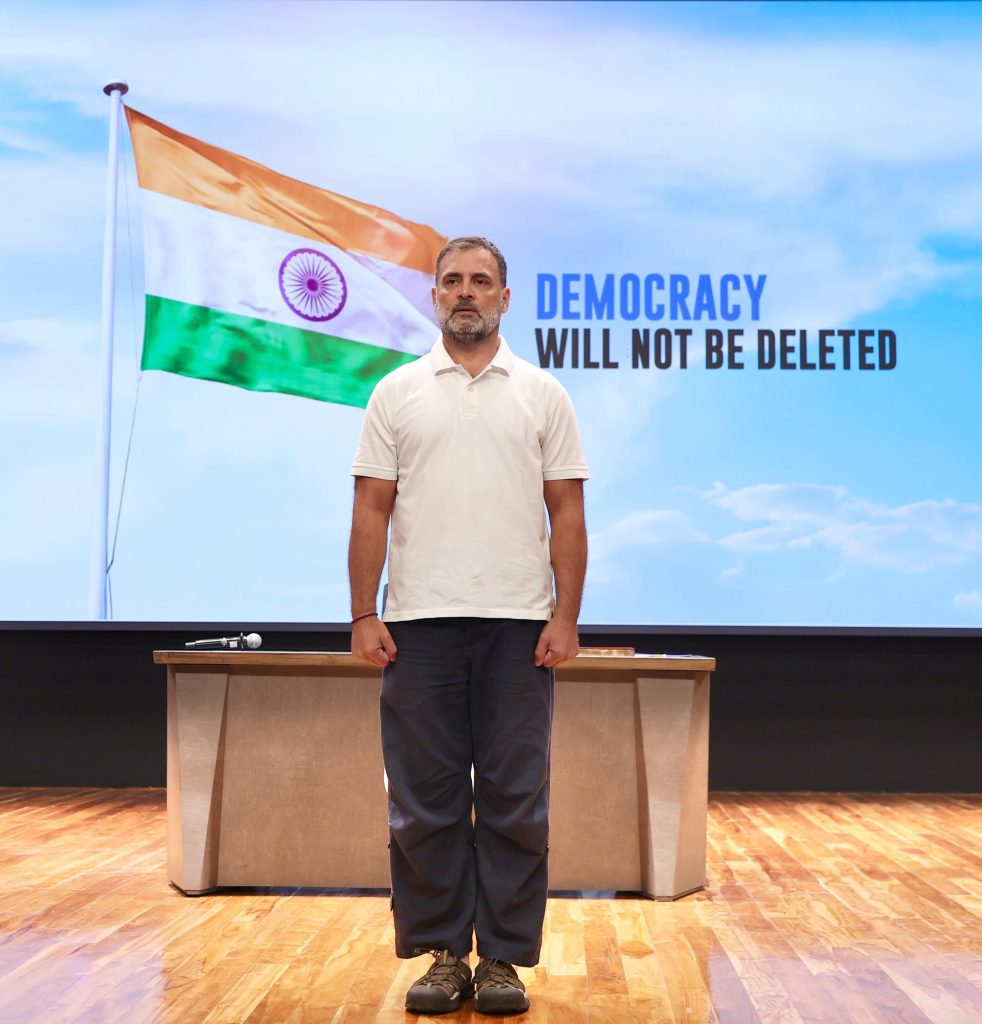
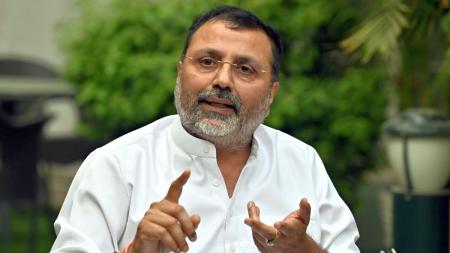
Congress MP Rahul Gandhi’s appeal to India’s Gen Z to take an active role in safeguarding the Constitution and preventing alleged “vote theft” has sparked a fierce backlash from the ruling BJP, which accused him of inciting violence and attempting to stir civil unrest in India. BJP leader Nishikant Dubey also claimed that Gandhi is collaborating with the Soros Foundation to divide the nation.
The war of words erupted after Gandhi, fresh off his second round of voter fraud allegations, urged the country’s youth to defend democracy and resist alleged electoral manipulation. “The nation’s youth, the nation’s students, the nation’s Gen Z, will defend the Constitution, protect democracy, and stop vote theft. I always stand with them. Jai Hind!” Gandhi wrote in Hindi on X
In response, Dubey said that Gen Z has rejected corruption and dynastic politics—a pointed reference to Gandhi’s family lineage, which includes several former prime ministers.
The Gen Z will not tolerate leaders like Rahul Gandhi, he wrote posing questions like “1. Why would they tolerate Rahul Ji after Nehru Ji, Indira Ji, Rajiv Ji, Sonia Ji? “2. They are against corruption; why wouldn’t they chase you away? “3. They want to create an Islamic nation in Bangladesh and a Hindu nation in Nepal—why wouldn’t they make India a Hindu nation? “Get ready to leave the country; they are coming…”
Generation Z, also known as Zoomers, includes those born roughly between 1997 and 2012. As the first generation of digital natives, they’ve grown up with the internet, smartphones, and social media, influencing their values and behaviours. Known for their digital fluency, commitment to diversity, and environmental concerns, Gen Z’s political and social views have it in them to political discourse, as was seen recently in Nepal.
The question is will Gandhi’s allegations about “vote theft”, including specifics about his previous accusations or any ongoing investigations, provide context for his appeal to Gen Z. Analysts say the BJP’s response is not just a simple counter-attack, it raises a serious accusation of Gandhi inciting violence or even instigating a civil war. Why the BJP views Gandhi’s words as dangerous is in mind past political unrest and of course as a party of political strategy.
Gandhi’s supporters rubbish BJP’s allegations saying that Gandhi’s appeal to Gen Z is an appeal to politically active youth both on social media and in street protests as the younger generation is a powerful voice in any debate. How Gen Z responds to the political back-and-forth between Gandhi and the BJP, especially in mind upcoming state elections, remains to be seen.
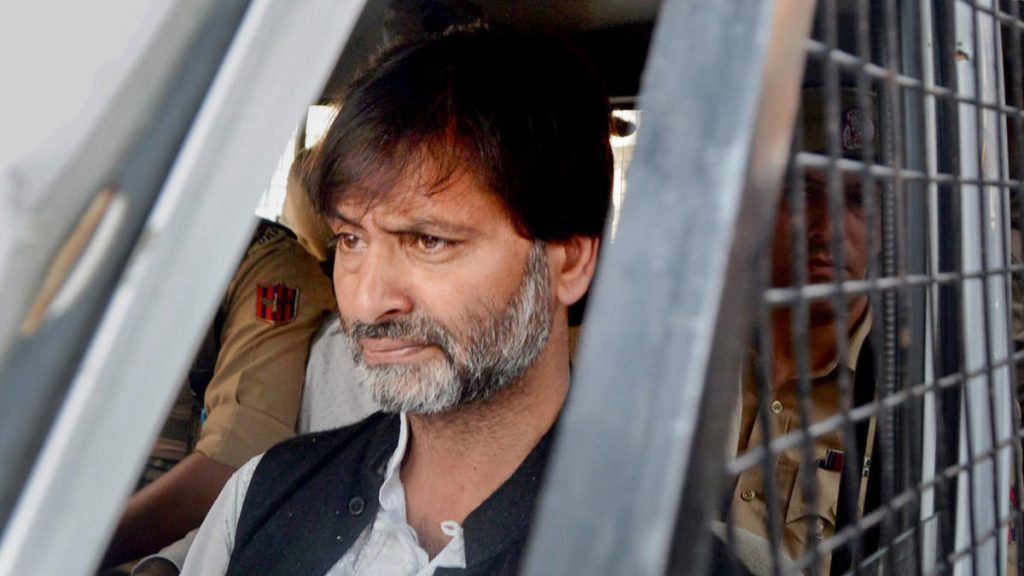
Jammu and Kashmir Liberation Front (JKLF) chief Yasin Malik has told the Delhi High Court that far from being a terrorist, he was repeatedly engaged by successive Indian governments for peace talks on Kashmir.
In written submissions filed in response to the National Investigation Agency’s (NIA) plea seeking the death penalty against him, Malik claimed that six governments, from VP Singh to Manmohan Singh, had involved him in peace initiatives.
He said his engagement began in the early 2000s, when then Intelligence Bureau (IB) Special Director Ajit Doval met him in jail to convey the Vajpayee government’s interest in dialogue. Malik said Doval later arranged meetings with IB Director Shyamal Dutta and National Security Advisor Brajesh Mishra, who sought his support for the Ramzan ceasefire.
According to Malik, he also held meetings with Congress leader Sonia Gandhi and Left parties in opposition to build consensus for peace. In 2002, he launched a signature campaign promoting non-violence in Jammu and Kashmir, claiming to have collected 1.5 million signatures over two-and-a-half years.
Malik further alleged that in 2006, during a Pakistan visit for earthquake relief, the IB asked him to meet Hafiz Saeed and other militant leaders. He said he later briefed then Prime Minister Manmohan Singh and NSA NK Narayanan on the meeting, but the interaction was “later distorted to brand me a terrorist.”
The JKLF chief also argued that after the abrogation of Articles 370 and 35A, the 2006 meeting was used out of context to justify UAPA charges against him.
In his affidavit, Malik wrote that he was prepared to face capital punishment if imposed. “If my death finally gives respite to some, let it be so. I shall go with a smile but with pride and honour,” he stated, likening himself to JKLF founder Maqbool Bhat, who was executed in 1984.
The Delhi High Court is hearing the NIA’s appeal to enhance Malik’s life sentence, awarded in 2022, to the death penalty. The trial court had held that his case did not fall in the “rarest of rare” category. Malik has been directed to file his reply by November 10.
Earlier this year, a tribunal extended the ban on JKLF for another five years, saying “no tolerance can be shown” to organisations promoting secessionism.
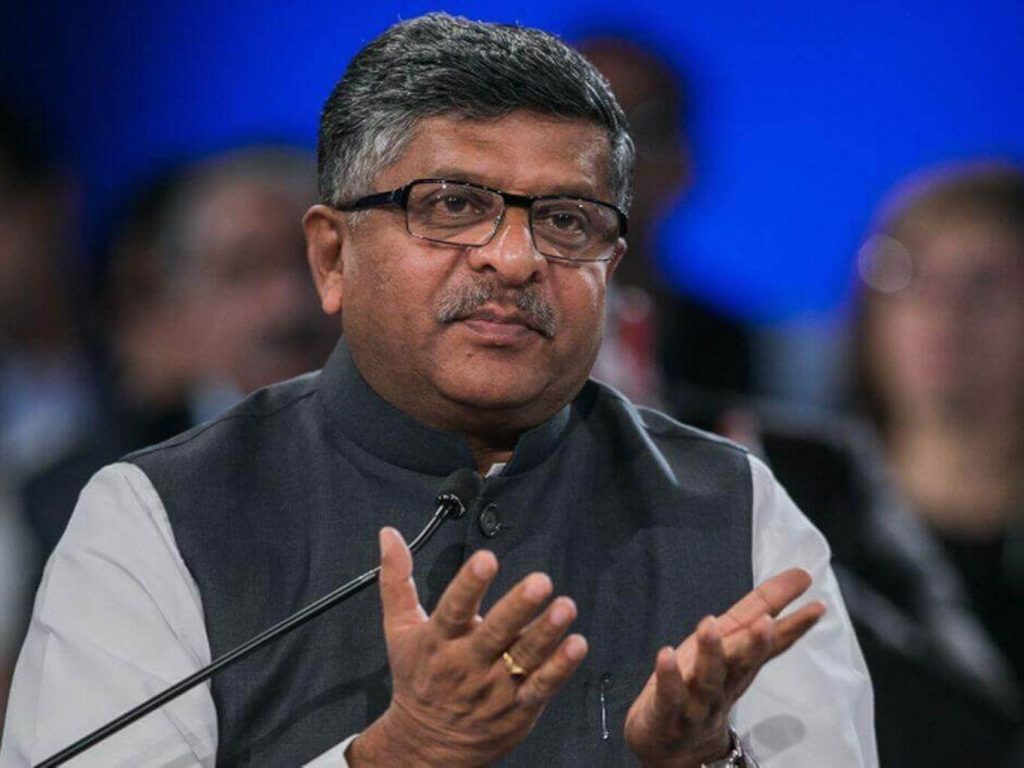
A day after Congress leader Rahul Gandhi held a press conference in Delhi, BJP senior leader Ravi Shankar Prasad on Friday slammed Gandhi for spreading lies and said that he is betraying the democracy of the country.
Speaking at the press conference in Patna Prasad said, “I have spoken many times and again I am telling you that Rahul Gandhi does not do his homework; but what he had spoken yesterday he made a record.”
“He held a press meet yesterday. I ask what is the point of blaming Gyanesh Kumar who just acquired the post of Chief Election Commission, for the elections that were held in 2023 that too when the Congress party won the election,” he added.
“Have you lost all sense of purpose and propriety that in the 2023 voting of Vidhan Sabha your candidate won the seat and HC is hearing the challenge against that election you won by 248 seats,” Prasad said.
Speaking on the election commission, he said that ECI has already said FIR has been registered for attempting deletion of votes.
“He is raising questions about the election of his own candidate. It’s in his nature to lie about and blame people unnecessarily,” he said.
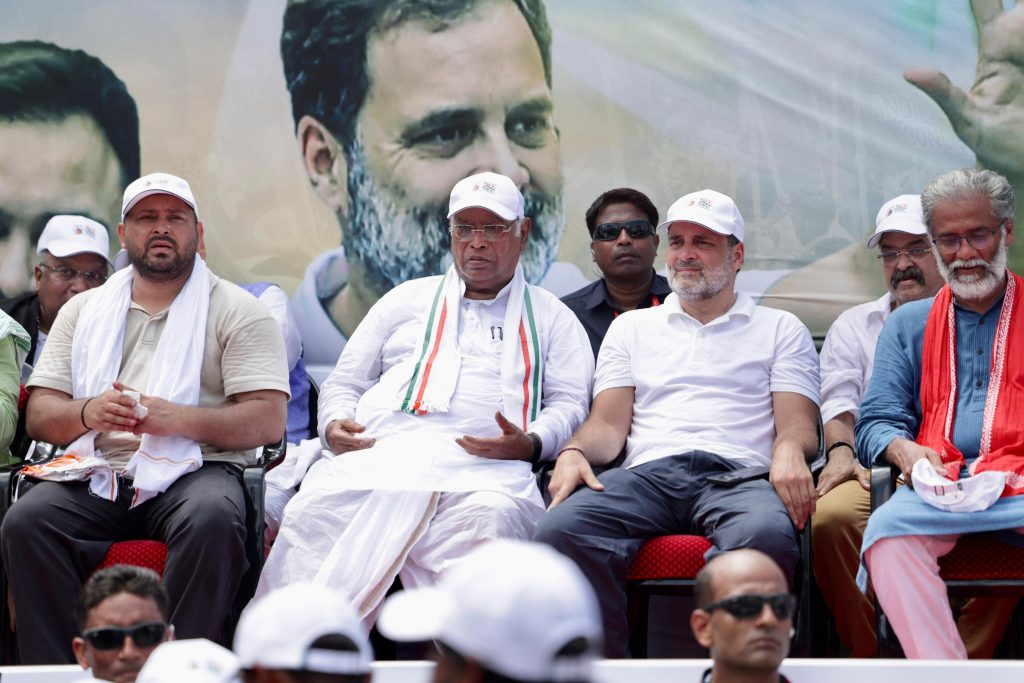
In a sharp political escalation, Congress leader Rahul Gandhi on Thursday accused Chief Election Commissioner Gyanesh Kumar of shielding those responsible for alleged mass voter deletions across India, calling it an attack on democracy.
Citing specific examples from Karnataka and Maharashtra, Gandhi alleged a systematic attempt to remove Congress-leaning voters using automated means.
The Election Commission firmly denied the charges as “baseless,” stressing that voter deletions follow due legal process, BJP’s Anurag Thakur slammed Gandhi, calling them “fabricated”, aimed at deflecting from Congress’s electoral setbacks.
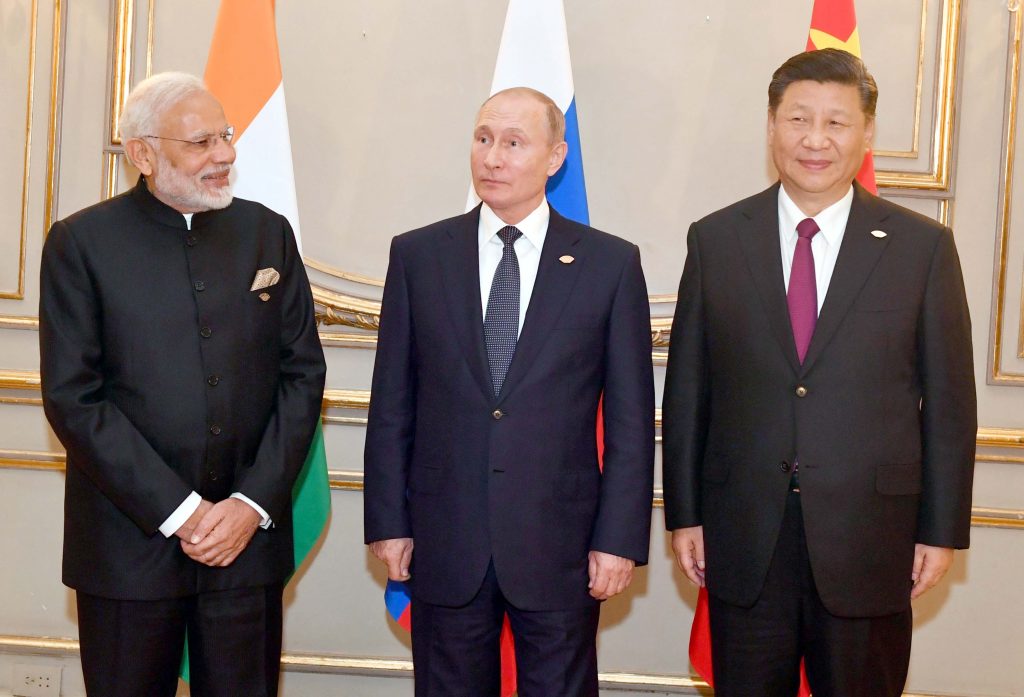
The Prime Minister, Shri Narendra Modi, the President of Russian Federation, Mr. Vladimir Putin and the President of the Peoples Republic of China, Mr. Xi Jinping at the RIC (Russia, India, China) Informal Summit, in Buenos Aires, Argentina on November 30, 2018.
Critisizing US demands on tariffs, Russian Foreign Minister Sergei Lavrov said that these pressure will not succeed and countries like India and China will not yield to ultimatums.
Speaking at ‘The Great Game’ programme of Russia’s main Channel 1 TV, Lavrov explained how the ‘demands’ that US has put forth for countries like China and India to stop purchasing Russian energy are pushing the countries further away.
“It forces them to look for new energy markets, new resources, and forces them to pay more,” the Russian minister said.
For the past few weeks, US has been criticizing India for purchasing oil from Russia and claimed that India has been funding Ukraine war.
Recently, the US government has pushed additional 25 per cent tariffs on Indian export making it 50 per cent, sending frenzy into the export market of India.
Lavrov cautioned the US that there has been ‘moral and political’ opposition related to the approach chosen by them. “Both China and India are ancient civilisations, and to use this language with them, ‘either stop doing what I don’t like, or I’ll impose tariffs on you’ well, that won’t work.”
Amid threats of new sanctions on Russia, Lavrov said he does not see any problem.
“Frankly speaking, I don’t see any problem with the new sanctions imposed on Russia. An enormous amount of sanctions, unprecedented for that period, were imposed during President Donald Trump’s first term,” he said.
“We have started to draw conclusions from the situation when the West imposed these sanctions. Later, during President Joe Biden’s term, sanctions were used as a replacement for any diplomatic effort. There was no search for a compromise,” Lavrov said.
Although the Trump administration has not yet imposed tariffs on China for its purchase of Russian oil, the US president has been pushing for it.
No sickness or abnormal behaviour reported till September 16 says authorities, activists describe Shankar’s premature death as heartbreaking culmination of several years of institutional apathy, neglect
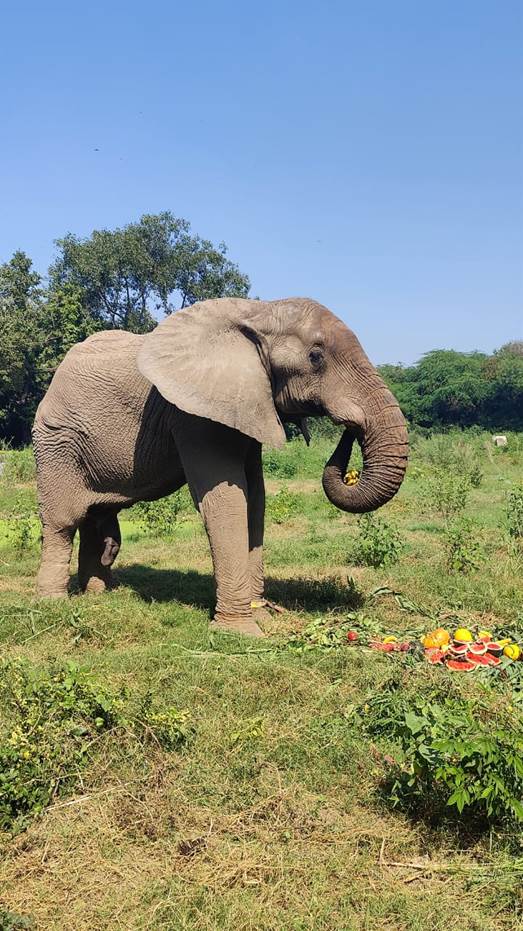
Shankar: photo PIB
Shankar—Delhi Zoo’s lonely, male African elephant—died on Wednesday at just 29 years of age and the authorities have ordered a probe to find what happened.
Shankar’s death comes amid significant public controversy around his care and mental health—a reason why the Centre issued a press statement on Thursday to address concerns and explain steps taken by the authorities. Also, the Delhi Zoo is the only zoo in the country directly managed by the Union Ministry of Environment, Forests, and Climate Change.
Shankar had been in a solitary enclosure since 2012 and was even chained up when he began acting stubborn and aggressive, though in the press note the Delhi Zoo said Shankar was known for his “gentle nature”. For years, animal activists and welfare organisations had been criticising Shankar’s solitary confinement, mental health issues, and treatment at the zoo. The zoo had been repeatedly warned by the courts, and even the World Association of Zoos and Aquariums (WAZA) to improve Shankar’s living conditions and find him a mate, according to reports.
Shankar, at 29 years old, was relatively young for an African elephant, since they typically live 50–70 years in the wild. That means he passed away at about mid-life, well before the natural upper range of his species. In captivity, where elephants sometimes face stress, limited space, and health issues, lifespans can be shorter (around 40–50 years on average), but even then, Shankar’s death was earlier than expected. So, his sudden demise is considered premature compared to the normal lifespan of African elephants.
Shankar arrived in India in 1998 as a diplomatic gift from Zimbabwe—thereby making his affairs a matter of national and international concern.
The bull elephant had been living alone since 2005, following the death of female elephant Bambai. Over the years, he experienced recurring health problems related to musth—a condition where a bull elephant’s testosterone levels spike, leading to aggressive and unpredictable behaviour.
According to the statement, an inquiry had been ordered to determine the cause of death, with a post-mortem conducted by experts from the Indian Veterinary Research Institute (IVRI).
“On the morning of 17th September, it was observed that ‘Shankar’ was consuming fewer leaves and grasses with slight loose motion but was taking concentrate, fruits, and vegetables normally. The veterinary team of NZP provided treatment, and animal keeping staff maintained close observation. At approximately 7:25 PM on the same day, Shankar suddenly collapsed in its shed, and despite emergency treatment, succumbed to death. No sickness or abnormal behaviour was reported until 16th September 2025,” it added
Director Dr. Sanjeet Kumar described Shankar as a symbol of strength and love, whose loss leaves a deep void in the zoo and conservation community.
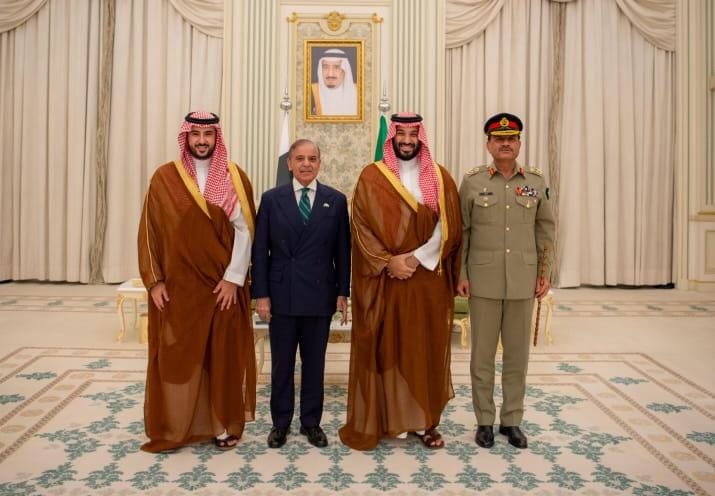
A day after Saudi Arabia and Pakistan signed a formal mutual defence pact, India said it will “study the implications” of this development for its “national security as well as for regional and global stability” and is committed to “protecting India’s national interests”
Photo: social media
India’s immediate neighbourhood is witnessing a whole lot of strategic geopolitical action. Two developments this week — Pakistan’s elevation of defence ties with Saudi Arabia and the presence of US military aircraft in Bangladesh — is an indication how alliances in West and South Asia are being reshaped, leaving New Delhi in carefully cautious position
A day after Pakistani Prime Minister Shehbaz Sharif and Crown Prince Mohammed bin Salman signed the Strategic Mutual Defence Agreement (SMDA), India on Thursday said it will “study the implications” of this development for its “national security as well as for regional and global stability”, and is committed to “protecting India’s national interests.
Official Spokesperson Randhir Jaiswal said: “We have seen reports of the signing of a strategic mutual defence pact between Saudi Arabia and Pakistan. The Government was aware that this development, which formalises a long-standing arrangement between the two countries, had been under consideration. We will study the implications of this development for our national security as well as for regional and global stability. The Government remains committed to protecting India’s national interests and ensuring comprehensive national security in all domains.”
The pact is being read as a response to Washington’s retrenchment from the region, Israel’s attack on Hamas leaders in Qatar’s capital Doha and its geopolitical ramifications across the region, being described as ‘Islamic NATO’
In Riyadh, Sharif was escorted by Saudi F-15 fighter jets and received with full protocol. Saudi cities lit up their skylines with the flags of Saudi Arabia and Pakistan to mark the signing of the new agreement, according to reports. The pact binds both nations to treat an attack on one as an attack on both, effectively institutionalising what had long been an informal security understanding.
Though the agreement avoids explicit reference to nuclear weapons, its symbolism is powerful. Pakistan remains the Muslim world’s only nuclear-armed state, while Riyadh has often been suspected of leaning on Islamabad’s deterrence in the face of Iran’s ambitions. Coming days after Israel’s strike on Hamas leaders in Qatar, the timing suggests Saudi Arabia is signalling strategic resolve to both adversaries and allies. The pact also reflects Riyadh’s recalibrating of its security posture. Historically reliant on American protection, it seems to be now diversifying its defence architecture
For India, which has built deep economic and strategic ties with Saudi Arabia, the agreement has more than one significance. Riyadh’s growing closeness enhances Pakistan’s standing but Saudi Arabia also values India as a vital energy partner and rising power. How this unfolds, remains to be seen.
Meanwhile reports of US military aircraft in Bangladesh also created substantial flutter and chatter. Officially linked to joint drills and logistical cooperation, the move aligns with Washington’s Indo-Pacific strategy to counter China’s presence in the Bay of Bengal. Dhaka, meanwhile, seems to be balancing Beijing and Washington
For India it may be an opportunity as well as a challenge. American engagement tempers Chinese dominance, but a stronger US role may constrain India’s influence in its immediate neighbourhood.
PM Modi speaks with Sushila Karki, assures support amid political transition; Karki says responding to the call of recent Gen-Z movement, elections her topmost priority; decoding the India-Nepal relations henceforth
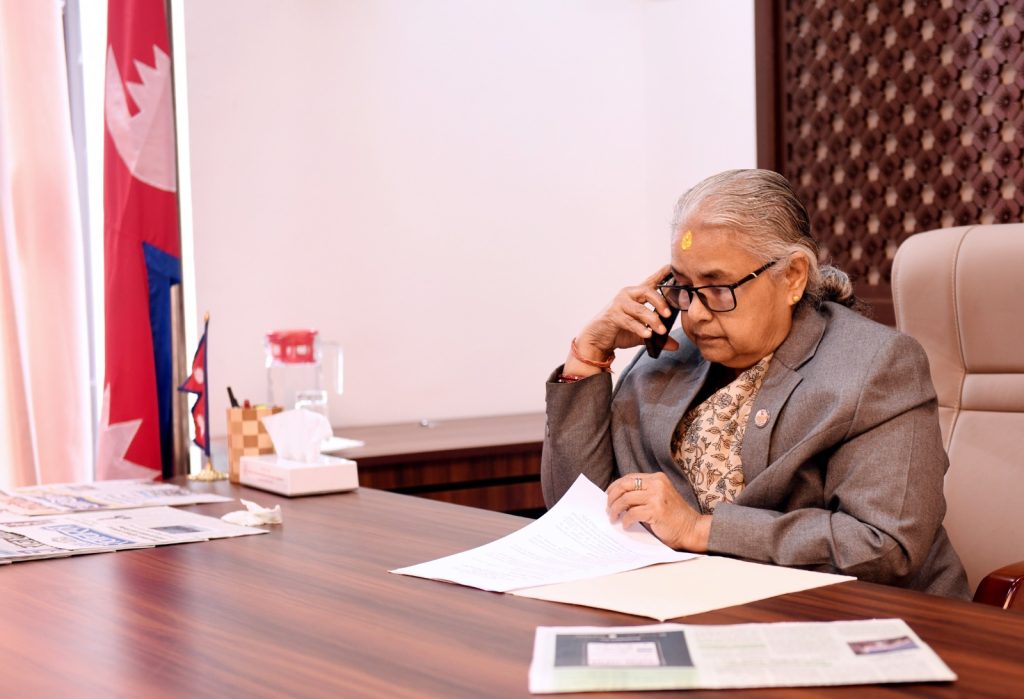
Photo: Nepal Government official website
Marking a significant diplomatic development, Prime Minister Narendra Modi held his first official conversation with Nepal’s newly appointed interim Prime Minister, Sushila Karki, on Thursday, reaffirming India’s support for the Himalayan nation’s transitional leadership amid ongoing efforts to restore stability following recent unrest.
“Had a warm conversation with Mrs. Sushila Karki, Prime Minister of the Interim Government of Nepal. Conveyed heartfelt condolences on the recent tragic loss of lives and reaffirmed India’s steadfast support for her efforts to restore peace and stability. Also, I extended warm greetings to her and the people of Nepal on their National Day tomorrow,” PM Modi posted on X.
“Nepal PM Karki thanked the Prime Minister for India’s firm support to Nepal and reciprocated his desire to further strengthen ties between the two countries. The leaders agreed to remain in touch,” according to an official statement
Nepal Foreign Minister posted that PM Karki conveyed her heartfelt greetings and best wishes to PM Modi on his 75th birthday and appreciated his message of solidarity. “She further stated that responding to the call of recent Gen-Z movement, elections will remain topmost priority of the present government, with strong determination for accountable, responsive and corruption-free governance, reflecting the aspiration of the youth. The Indian Prime Minister assured of full support and cooperation as per the priorities of the Government of Nepal,” the PM said, adding that “historical and close relationship between Nepal and India will continue to be strengthened by multifaceted people to people ties.”
This was reportedly Karki’s first diplomatic interaction with a foreign head of government since assuming office on September 12. Underlining India’s prominence in Kathmandu’s foreign policy priorities, the call is expected to set the tone for future bilateral engagement during Nepal’s political transition, say analysts
According to those in know of developments, the interim government led by Karki is working to restore normalcy after weeks of youth-led protests. Curfews have been lifted in Kathmandu and key districts like Lalitpur and Bhaktapur, markets have reopened, and the administration has announced compensation measures and pledged general elections by March 2026. The situation is “under control” but underlying tensions remain and that further unrest could erupt if promised reforms are delayed or fall short, they add
On Tuesday, Indian Ambassador to Nepal Naveen Srivastava met PM Karki at her office in Singha Durbar, delivering PM Modi’s personal message of congratulations and reiterating India’s commitment to the “close bonds of friendship and cooperation” between the two nations. He had also attended Karki’s swearing-in ceremony at Shital Niwas, Nepal’s presidential residence.
Despite the recent optics of bonhomie between Pm Modi and Chinese premier Xi Jinping, strategically India needs to remain alert to growing Chinese influence in Nepal and the broader Himalayan region. Former Tibetan Prime Minister-in-exile Lobsang Sangay recently warned of Beijing’s “expansionist agenda,” referencing Mao Zedong’s “Five Finger Strategy”—a geopolitical vision in which Tibet is seen as the palm and regions like Nepal, Sikkim, Bhutan, Arunachal Pradesh, and Ladakh are the “fingers” to be brought under Chinese sway.
Sangay claimed that Chinese officials today wield more influence in Kathmandu than their Indian or American counterparts, urging New Delhi to remain vigilant.