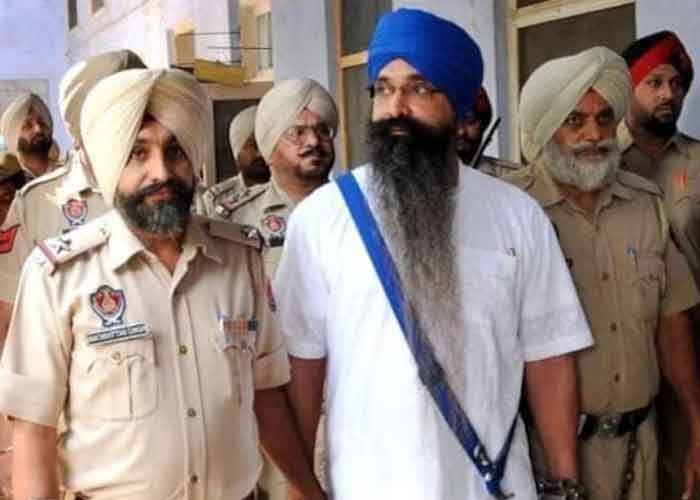
New Delhi : The Supreme Court on Monday asked the Secretary to the President of India to place before President Droupadi Murmu the mercy petition filed by Balwant Singh Rajoana, a death row convict in the 1995 assassination case of former Punjab Chief Minister Beant Singh and others.
A special bench headed by Justice B.R. Gavai requested President Murmu to consider Rajona’s mercy plea within two weeks.
The Bench, also comprising Justices P.K. Mishra and K.V. Viswanathan, was hearing a writ petition filed by Rajona challenging a 12-year-long delay in deciding the mercy petition seeking commutation of his death penalty.
The apex court clarified that if Rajona’s mercy plea is not decided within two weeks, it will proceed to consider his application for interim release.
It expressed dismay over the non-filing of a response by the Union government in the matter and recorded that on the last date, the plea was adjourned to enable the Solicitor General to obtain instructions from the President’s office.
In the previous hearing, the top court had granted two more weeks to the government to file its response and told Rajona’s counsel that it was not inclined to grant him interim relief at this stage.
Before this, in May last year, the Supreme Court had turned down Rajoana’s plea seeking commutation of his death penalty and had said, “It is within the domain of the executive to take a call on such sensitive issues”.
It was noted that the Rajoana himself never submitted any mercy petition and the alleged mercy petition of 2012, was filed by the Shiromani Gurdwara Parbandhak Committee (SGPC).
Disposing of the plea, the apex court had directed that the competent authority, in due course of time, would again as and when it is deemed necessary, deal with the mercy petition, and take a further decision.
Former Punjab Chief Minister Beant Singh, along with 16 others, lost their lives while a dozen others were injured in a bomb blast in August 1995. Rajoana was arrested on January 27, 1996. Rajoana, along with eight others, who had hatched a conspiracy and had executed the bomb blast, were put to trial.
In July 2007, the trial court convicted Rajoana along with co-accused Jagtar Singh Hawara, Gurmeet Singh, Lakhwinder Singh, Shamsher Singh and Nasib Singh. The petitioner along with co-accused Jagtar Singh Hawara was awarded the death sentence.
In death reference, the high court vide judgment dated December 10, 2010, confirmed the conviction and sentence of the petitioner. However, while confirming the conviction of co-accused Jagtar Singh, it commuted the death sentence to life imprisonment.
The other co-accused preferred to appeal before the top court. However, Rajoana did not file any appeal after the judgment of the high court.
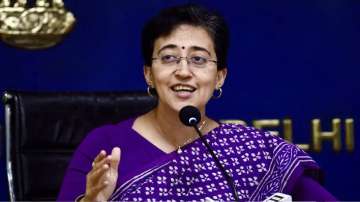
New Delhi : As the air in Delhi turned toxic on Monday, Delhi Chief Minister Atishi hit out at the Central government’s alleged inaction and uncontrolled stubble burning in Madhya Pradesh and other neighbouring states of Uttar Pradesh and Haryana for pushing the entire North India, including the national Capital, into a state of medical emergency.
Addressing mediapersons, the Delhi Chief Minister asked the Centre to stop indulging in politics and take concrete steps to address the problem that has impacted all north Indian states, including those ruled by the BJP.
Looking to shift the blame for the city’s toxic air on the BJP-led central government, she said, “I want the Central government to tell the people if it has taken even a single step in the last seven years to control the menace of stubble burning.”
“What steps has the Central government taken in the past seven years to check stubble burning in Haryana, Uttar Pradesh, Rajasthan and Madhya Pradesh,” she said.
To prove her point that the problem was not limited to Delhi, CM Atishi read out information from a Central Pollution Control Board (CPCB) report indicating that since Sunday evening cities like Ghaziabad, Noida, Hapur and Bulandshahar in Uttar Pradesh, Gurugram, Hisar, Dharuhera and Bahadurgarh in Haryana and even Churu in Rajasthan, have been battling bad air.
She credited Punjab, another AAP ruled state, for containing crop residue burning but alleged all other states in the north have failed to do so.
“If the Punjab government can reduce stubble burning, why are these incidents increasing in other states?” asked Atishi, claiming that in Punjab this year 8,404 farm fires were reported, as compared to 36,650 fires in 2023 and 71,300 fires in 2021.
Training her guns on the Madhya Pradesh government, she said between September 15 and September 17 about 9,600 stubble burning incidents took place there.
“Over 700 incidents of stubble burning are occurring daily in Madhya Pradesh, which is contributing to severe air quality. If you look at the air quality in other cities, it has also reached very poor and severe levels,” she said.
“The Central government has to take the lead and adopt a collective approach for tackling the problem as the toxic air impacts elderly and children from all parties in all states,” she said, calling for an end to politics over the issue and an early solution.
The Chief Minister’s media briefing coincided with Delhi BJP’s protest in central Delhi where its leaders distributed free air masks to people near Krishi Bhawan Metro Station.
In a public appeal, Delhi BJP chief Sachdeva asked Delhiites to remain indoors and use masks for the next one week till the GRAP Stage IV provisions remain in force.
CM Atishi responded to the mask distribution by the BJP by saying there was no need to do politics over the issue.
“If Punjab can control the problem, so can others. Why are farm fires increasing in Haryana, UP and MP?” she asked and said that cities in BJP-ruled states were also experiencing severe air quality.
According to the CPCB, the majority of Delhi’s 39 monitoring stations recorded AQI readings above 450.
Neighbouring regions reported varying levels of air pollution, Noida’s air was in the ‘very poor’ category with an AQI of 384, Faridabad registered ‘poor’ at 320, while Ghaziabad and Gurugram faced ‘severe’ conditions with AQIs of 400 and 446, respectively.
Though Kamla Harris has celebrated her Indian roots whenever necessary and convenient, but US Prez-elect Trump is a natural ally and one the Modi govt would comfortably break bread with.by KUMKUM CHADHA
It was in 2019 that Prime Minister Narendra Modi had hailed US President Donald Trump and cheered for his re-election.
Prime Minister Modi had then reworded his own campaign slogan of ‘abki baar Modisarkar’ to ‘abki baar Trump sarkar’.
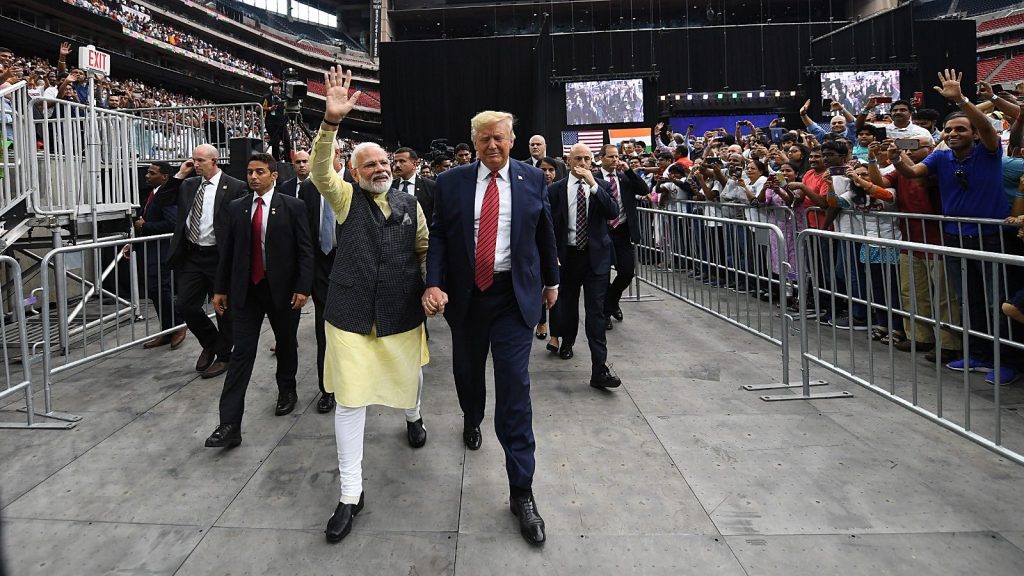
Trump had then joined the Indian Prime Minister at a mega event in Houston during his visit to the US.
That Union External Affairs Minister S. Jaishankar refuted the charge of Modi campaigning for Trump is another matter. Or Trump not winning that election. Jaishankar had also said that India has a “non-partisan” approach towards foreign leaders.
But that is History. The current scenario is that Trump has won the election and America has him as President for the second time.
As for India having a non-partisan approach towards foreign leaders as Jaishankar would have us believe, there is enough evidence to the contrary.
Nearer home, India was overtly friendly to the Sheikh Hasina regime in Bangladesh. India, to quote analysts, “over-invested in Hasina” which has cast a shadow over the bilateral relationship between the two countries under the new dispensation headed by Professor Mohd Yunus.
Further, her continued presence in India has led to a peculiar diplomatic challenge for India in developing a strong relationship with the new regime in Dhaka.
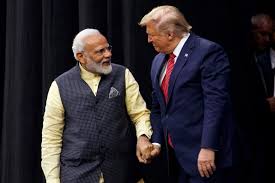
Air-dash to the USA, and the bonhomie between Modi and Trump is there for everyone to see.
Friendship between the leaders of the United States of America and India was in focus in 2020 at a cricket stadium in Modi’s home state Gujarat.
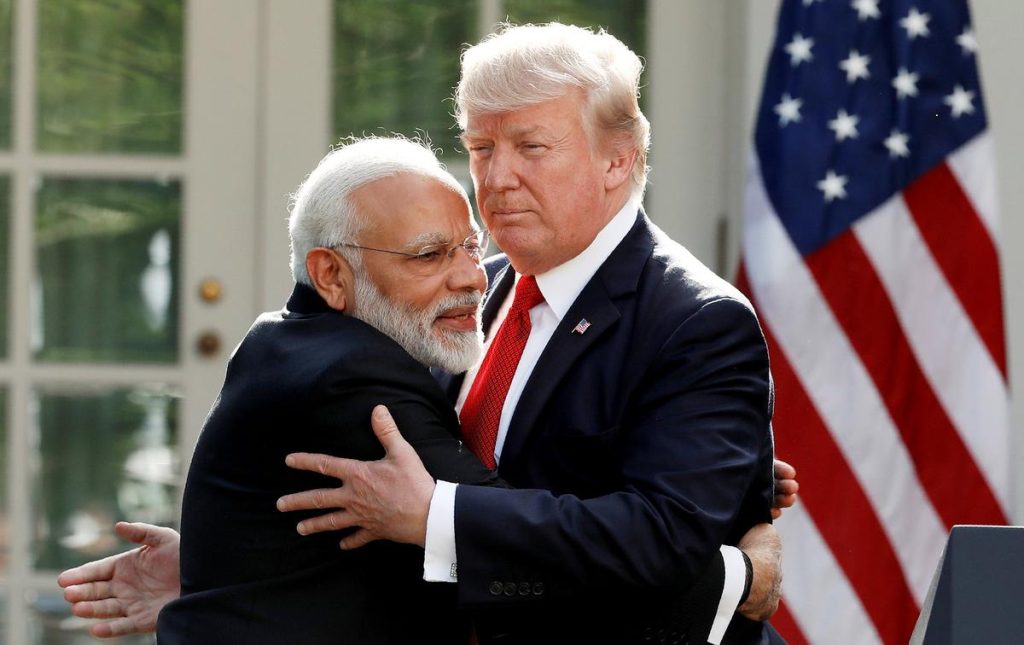
US President Donald Trump had then called Prime Minister Narendra Modi his “friend”. This followed the two exchanging half a dozen hugs throughout the day: “Modi…a man I am proud to call my friend”, Trump had then said.
Fast forward to 2024: Trump is back at the White House after trouncing Kamala Harris in what was an exciting and nail-biting election.
Within hours of Trump’s victory, Modi called “my friend” Trump and congratulated him on his win. Incidentally, he was among the first of world leaders to dial Trump after his decisive victory in the American Presidential polls.
Trump is reported to have called Modi a “magnificent man” adding that “the whole world loves PM Modi”.
Recently, he had dubbed Modi as a “total killer”. Heaping adjectives, Trump said that Modi was “the nicest human being”.
All eyes are on how this bonhomie and camaraderie will translate into transforming the Indo-US relationship in the years that follow.
It is well known that the Indo-US relationship transformed during Trump’s first term as President between 2016 and 2020. The focus was on strategic partnership. A common cause was to counter China’s growing influence globally.
During Trump’s first term as President, India and the US became closer than ever before. To quote media reports “India grew from being a strategic partner to an indispensable one”.
When Modi visited the White House in 2017, Trump promised that he would visit India during his Presidency: a promise that he fulfilled some three years later.
Meanwhile, the Trump administration backed India on issues of terrorism. It went as far as supporting Jaish-e-Mohammad Chief Masood Azhar being declared a “global terrorist”. Cooperation in sectors of defence and energy between the two nations were also significant. Of course, there were hiccups but the big picture was that the two nations were more in agreement than disagreement with each other.
Therefore, it is no surprise that the Trump win is being hailed as “good for India”.
However, there is skepticism on how things will pan out in Trump’s second tenure as President of the United States.
The bonhomie may continue but when it comes to strategic partnerships, the thumb rule is: “nation first”. In any case, Trump has, in foreign policy matters, always mooted for “America first.”
Therefore, for India and Indians to translate the Modi-Trump bonhomie into significant gains for India in future may be akin to jumping the gun.
The much-publicized friendship may be a favourable factor but whether it would lead to pro-India decisions is, as of now, uncertain.
However, on the face of it, the closeness, as one is compelled to dub the friendship, could spell continuity and deepening of economic ties to mutual benefit. Therefore, the India first and America first policy of the respective leaders may work in tandem rather than against each other.
Yet the past may not necessarily guide the future course. Trump does have an ambitious agenda for the second term which may or may not be the way India would like to see things pan out.
Trump wants to bring industrial activity back to the US which could adversely affect its trading partners including India. Also, Trump’s avowed policy of cracking down on illegal immigration could be a problem given that several thousand Indians have entered the US illegally through the borders of Canada and Mexico. Mass deportation of Indians could pose a huge problem, feel experts.
But these are tangible issues and have the scope of being resolved. However, what stares one in the face is Trump’s own unpredictability. In that context, India should be prepared for a few roadblocks and think twice before cheering Trump’s second tenure as President.
Having said that, as of now Trump is India’s best bet.
Pitch him against Kamala Harris and a negative that stares one in the face is the absence of her bonding with Prime Minister Modi. If anything, she has been critical of Modi’s revocation of Article 370 in Jammu and Kashmir.
Of course, she has celebrated her Indian roots whenever necessary and convenient but by way of explicitly spelling out policy initiatives aimed at India she has very little to show. Sum total: Trump is a natural ally and one the Modi government would comfortably break bread with.
Hundreds of families in India are displaced, forced to flee their ancestral homes due to the unchecked power of land and political mafias, surviving like refugees in their own country.by Humra Quraishi
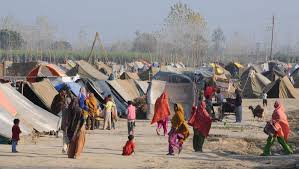
What are we doing for our internally displaced fellow citizens? Today, in India, hundreds are displaced, with entire clans and families forced to shift from one locale to the next, as land mafia as well as political mafia hound and target vulnerable communities. They are made to run from their ancestral homes, forced to survive like refugees in their own country!
One first heard the severity of it all when hundreds of Kashmiri Pandit families had to shift base, from Srinagar towards Jammu and further beyond. Leaving back their ancestral lands and homes, coping with severe challenges in unknown locales of North India.
And now in recent years, one town after another in Uttar Pradesh and Uttarakhand has been witnessing the vulnerable targeted communities moving out, fleeing from their ancestral homes and lands, to save their lives. A major level of displacement was witnessed in Muzaffarnagar after the rioting of 2013. Entire Muslim families and clans survived under tattered tents. All lost for them! And just months ago, Haldwani witnessed the same pattern. Muslims fled and tried to seek shelter in other townships after suffering huge losses. And after last month’s targeted attacks and assaults in district Bahraich, Muslims left their homes, shops and business establishments behind …to save their lives!
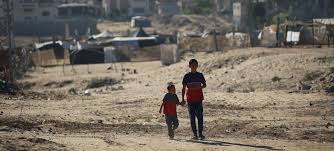
And if one were to grasp the severity of this crisis from a broader perspective, images and videos emerging from the Middle East, hit… and hit hard. The ongoing targeted bombardments and killings in the Middle East are leaving huge imprints. The civilian population trying to move out… But where to!
A major offshoot of this Israel and Allies unleashed war on the Arab lands, is the very future of the civilian population. Victims of the political wars and civil strife, hundreds and thousands of Arab children are either dead or dying. Those surviving with a nothingness to them. Haven’t we all seen shots of Syrian, Palestinian, Yemeni kids and their families looking all too hopelessly … many tried to flee. Even those managing to reach Europe are treated as aliens; tags thrown at them – suspects, intruders, beggars seeking refuge!
Many children lay dead even before they could reach some sort of destination. For months, I couldn’t get over the picture of the Syrian child, Aylan Kurdi, lying dead by the sea shore. The innocence of the refugee child, compounded by the pain of hundreds of refugees fleeing into nowhere of sorts, brought into focus the grim reality of those trying to seek refuge… European right-wing lobbies coming in the way, sealing the fate of hundreds and thousands of Aylan Kurdis, who ironically have been reduced to refugee status because of the civil war triggered off the western expansionist strategies.
Before I could recover from Aylan Kurdi’s death, what had hit were those haunting photographs of the four-year-old injured Syrian child, Omran Daqneesh. Though alive, he looked lifeless; covered with blood and dust, he didn’t cry in pain or shock. And then came news of Omran’s older brother, 10-year-old Ali Daqneesh, succumbing to his injuries. Hundreds of children and their families killed or disabled in and around Syria by bombardments and much more havoc.
And such is the level of intolerance spreading out in the Western world, that even refugee children are seen as potential threats. Sadist cartoonists lampooning dead refugee toddlers! Why French publications like Charlie Hebdo mocked the tragic death of the Syrian child Aylan Kurdi! Wasn’t that lampooning blatantly vulgar and much too insensitive!
Mind you, this ongoing destruction in the Middle East is bound to affect us. In fact, this has already been leaving imprints here in our country. In terms of employment and job avenues, business and trade, travels for pilgrimages and ziarats, and interactions of academics and writers during seminars and meets.
Changes all too visible
One could see and sense changes coming about here, in the country, from the 90s, when America invaded Iraq. Before the USA aggression into Iraq, the Iraqi Embassy in India, then situated at New Delhi’s posh Jor Bagh locality, was ‘alive’; buzzing with activity with over 40 Iraqi diplomats at work. And almost double the number of the junior-rung staff. As the ‘Mother of all Wars’ peaked in the 90s, I would visit the Iraqi embassy on several occasions to interview the then Iraqi envoy to India. I also met many Sikhs and Muslims and Hindus who gathered there in large numbers, outpouring support for Saddam Husain, “for taking on the super power of the world – America!”… I saw for myself Indian families carrying huge food and ration containers and medicine cartons, pleading that those be sent to the Iraqi soldiers fighting the Americans… And contrary to the Western propaganda that Saddam Husain was a regressive tyrant, Iraqi diplomats and their families, residing in New Delhi, seemed far ahead of the times. The envoys and their spouses, well educated with their attires very western, most spoke fluent English. I recall the receptions hosted by the then Iraqi envoys at their official residence/bungalow on the Prithvi Raj Road, which was gifted by Pandit Jawaharlal Nehru to the first Iraqi envoy posted to India in the 1950s…Those receptions continued till Iraq was actually Iraq! When July 17th heralded the celebration of Iraq’s national day with a series of receptions, with Iraqi intellectuals, editors and writers, and the top creamy brass flying down here, from several cities of Iraq. Of course, that before it was intruded into and ruined by American and Allied Forces on that alibi of ‘looking for weapons of mass destruction’ but didn’t manage to find any! Instead, they destroyed that land, its very fabric, its people, an ancient civilization.
Stand out memories of the cultural evenings held in the 90s, by the Arab envoys to India. I recall the first time I heard a Dhrupad concert was at the residence of the then envoy of Qatar to India, Dr Hassan Al Nimah. He was one of those suave diplomats who hosted classical musical evenings in that traditional baithak style. Also, the envoys of Lebanon, Iraq, Libya, Jordan and Algeria would also host interactive meets at their residences and embassies …Today I am not too sure whether the once well-functioning Arab League office in New Delhi still functions with that level of out-reach. After all, there’s been a slow and steady phasing out of the very vibrant and spirited strength of the Middle East and the West Asian countries. Rather too obvious that several of these countries are battling on the various fronts, devastated by the tactics-cum-strategies of America and Allies, using the age-old western ploy of creating a civil war like situation, with that going right ahead to rule!
Compounding the situation for us Indians, is India’s apparent slant towards Israel and Allies. This pro-Israel tilt was more than obvious right from 2014, peaking in the summer/July of 2017, when Indian Prime Minister Narendra Modi made his first trip to Israel.
What a contrast to India’s stand under Jawaharlal Nehru and Indira Gandhi. In fact, Jawaharlal Nehru’s vision and policies vis-a-vis West Asia made the Arab world tilt towards India. He was clear about his stand on Palestine, and with that made the Arabs and West Asians strong allies of India. Today, there’s no Nehru and there’s little trace of the connect with the Middle East…I have attended press conferences of fiery Palestinian envoys to India and the emotions they generated amongst the Indian masses. I recall that warm hug that Palestinian leader Yasser Arafat gave Indira Gandhi when she had hosted an elaborate reception for him in New Delhi.
Today, that’s all history as disturbing patterns are emerging of the changed world order. Where there’s little concern for human life.
India’s rising global influence, economic interests in the Indo-Pacific, the shift of economic power to Asia, and China’s continued assertions are drawing New Delhi into a range of triangular partnerships. A report by Niivedita Mukherjee
At a time when the international community—mired in multiple conflicts and facing a stalemate at the United Nations—proactively seeks trilateral alliances for strategic and economic security, India’s policy on trilateral cooperation is also undergoing a significant recalibration. India’s growing clout in the world and economic interests in the Indo-Pacific, shift of economic power to Asia, and China’s continued assertions are drawing New Delhi into a slew of triangular partnerships. These alliances aim to address shared concerns, support India’s developmental goals, and benefit its less privileged Global South partners. While trilaterals are not new to India’s cooperation practices, as demonstrated by the India-China-Russia format in the 1990s and the IBSA with Brazil and South Africa in 2003, these mechanisms are work in progress, marked by successes and failures. But many experts like Kabir Taneja, Deputy Director and Fellow, Observer Research Foundation, believe them to be a good format for India to engage with partners from a variety of backgrounds. Like with smaller platforms, trilaterals are more nimble in nature, easier to navigate. “These are sort of alternative architectures being produced, which are completely new and different and India is one of the countries which is seen as a stakeholder of these things. As far as India goes, the main interest here is that it is able to take onus and responsibility of these newer systems that are in play,” says Taneja.
For instance, in 2022, the Ministry of External Affairs launched the Trilateral Development Cooperation Fund to support private sector enterprises in big-ticket investment projects in the Indo-Pacific region and other geographies. “Importantly, these partnerships will also align with India’s larger geoeconomic objectives, providing momentum to both economic and foreign policy efforts,” opines Bipul Chatterjee, Executive Director, CUTS International. Since 2011, India has established three trilaterals with Japan, three with Australia, two with the US, two with France, and one each with Indonesia and the UAE
From India’s standpoint, geoeconomic deliverables may be seen in two contexts – first the global messaging that needs to go out from the establishment of these mechanisms as counterweights to the increasing Chinese belligerence and second, the long term economic and developmental benefits they can shower on the participants. “Trilateral development cooperation as a key pillar of India’s economic diplomacy,” points out Chatterjee. “It has the potential to firm up India’s position as a bridge between the North and South. Leveraging its credentials as a trusted development partner, by harnessing Northern funds for transformative physical and digital infrastructure projects in Southern recipients around the world, India can establish its credentials as a true Vishwamitra,” says Chatterjee.
A strategic move by India which marries these objectives of development and enhancing its footprint is the recent trilateral partnership with the US and South Korea. This builds on the US- India initiative on Critical and Emerging Technology in January 2023, followed by the US-South Korea Next Generation Critical and Emerging Technology Dialogue in December 2023, to fructify into a trilateral technology dialogue. What India can tangibly benefit from is economic security, supply chain resiliency and emerging technologies in the broader Indo-Pacific region.
Though countering China may not be a conscious strategy in India’s decision to onboard a Triangular Development Partnership with the US and Tanzania to strengthen energy infrastructure and promote renewable energy development in Tanzania, the Chinese presence in the continent is not lost to anyone. India, as part of this first-of-its-kind alliance on the African continent, will be instrumental in engaging Tanzania’s policymakers, regulators, utilities, academia, and the private sector, in order to expand the use of renewable energy in the country and promote climate-smart energy investments. Since 2013, Tanzania has increased connections from just about 1.2 million then to over 4.5 million in 2023. The partnership will also support Tanzania’s continued emergence as a net regional energy exporter in East Africa.
An ambitious trilateral with an eye on development and China’s advances is the India-France-Australia trilateral architecture. The Third India-France-Australia Trilateral Focal Points Meeting, held on 19 June 2024, has brought the three partners a long way since the alliance was envisioned by President Emmanuel Macron in May 2018 as a new strategic alliance between the three countries to respond to challenges in the Asia-Pacific region, explicitly, the growing assertiveness of China. India is seen by Macron and Australian Prime Minister Anthony Albanese as a natural ally in their vision for a free, open, inclusive and resilient Indo-Pacific, to be enabled through enhanced cooperation through maritime surveillance agencies, including in partnership with India.
The IFA, using the joint roadmap agreed upon in February 2023, has since been pushing to serve as a forum to promote the design and execution of projects in areas such as solar and nuclear energy, fight against climate change, promotion of compatibility and joint development and co-production in defence, digital and innovation, development of trilateral cooperation between relevant academic and research institutions. A number of other areas of cooperation, including developing quality infrastructure and critical and emerging technologies are also in the works, going by the 2nd IFA focal meeting.
There are some trilaterals which are displaying a lot of promise in areas such as defence cooperation, such as the India-UAE-France mechanism. The Trilateral which had its second Focal Points Meeting virtually on 9 July, 2024, is making progress under the joint roadmap and discussing new initiatives to further strengthen cooperation. The initiative forged by the Foreign Ministers of France, India and the UAE, meeting in a trilateral format in February 2023 for the first time, harnesses the synergies of France which has emerged as a strong defence partner for military modernisation. Similarly, the UAE has embarked on a military modernisation programme and both India and the UAE are buyers of French Rafale jets, paving the way for 3-way joint exercises and training.
The India-South Korea-US trilateral partnership, which builds on the inauguration of the US India Initiative on Critical and Emerging Technology in January 2023, followed by the US-South Korea Next Generation Critical and Emerging Technology Dialogue in December 2023, fructified into the first inaugural trilateral technology dialogue in Seoul in March 2024. The now firmed up trilateral promises to bolster cooperation in areas of semi-conductor supply chains, digital public infrastructure, artificial intelligence and quantum computing. India’s emergence as a significant importer of military equipment opens opportunities for collaboration with exporters like South Korea and the United States to further develop their defence industries.
There are examples where triangular projects did not materialise at all. For instance, according to an ORF study, the India–UAE–Ethiopia partnership for an ICT Centre for Excellence in Addis Ababa failed to take off because the Ethiopian government could not provide land for the project. “Going forward, the focus needs to be on further diversifying the nature of such cooperation beyond project exports, and identifying more avenues for trilateral cooperation,” points out Chatterjee.
Taneja also doubts that any trilateral really at this point of time has delivered anything significant. “Trilateral mechanisms are, however, a very broad and uncharted territory for the moment. So while there are a whole bunch of trilateral ecosystems at play right now, we still need to see how successful they are in actually delivering proper institutional worth among any of these three countries that are participating,” adds Taneja who argues for stronger outputs and blueprints on what kind of vision it encapsulates.
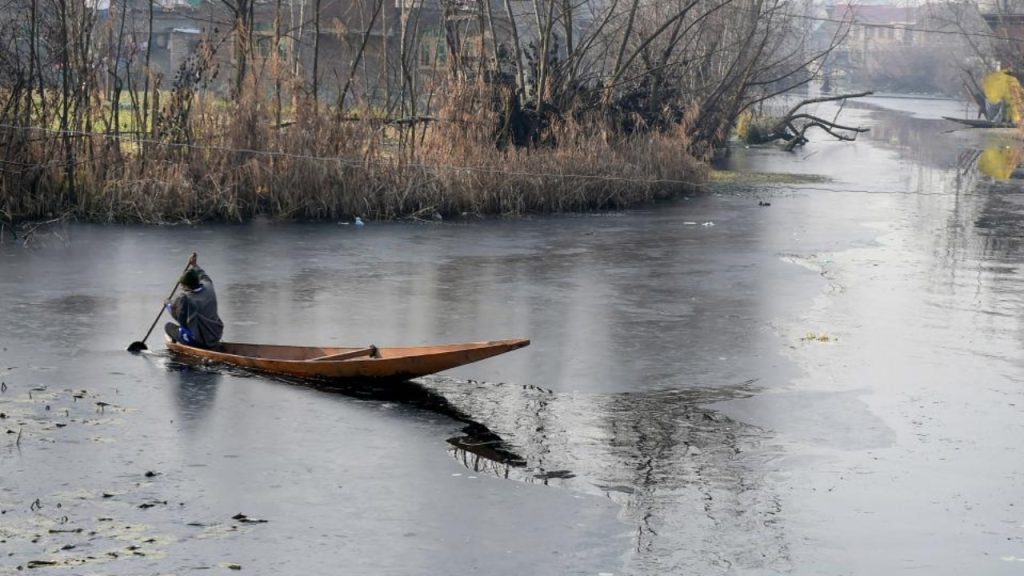
The Kashmir Valley is reeling under intense cold as night temperatures in many areas have dropped below freezing. Srinagar recorded a minimum temperature of 2°C, while hill stations Gulmarg and Pahalgam witnessed minus 3°C and 2.6°C, respectively, according to the Meteorological (MeT) Department.
Kupwara experienced a low of 0.2°C, while temperatures in Jammu city stood at 11°C, with Katra at 11.2°C and Bhaderwah at 3.6°C.
The Valley is embracing the onset of winter, marked by the shedding of crimson and yellow Chinar leaves. Residents have begun preparing for the lean months ahead by storing dried vegetables and relying on traditional winter gear like ‘Pherans’ and the‘Kangri’ (firepots) for warmth.
Migratory birds from Siberia, China, and Eastern Europe have started arriving in the region’s water bodies, seeking refuge from harsher winters in their native habitats.
With temperatures expected to drop further, the Valley braces itself for a prolonged spell of biting cold.
The controversial directives of the Uttar Pradesh State Women’s Commission (UPSWC), intended to bolster women’s safety, have raised the hackles of women activists and organisations besides ordinary citizens, who see them as retrogressive. A report by Mudit Mathur
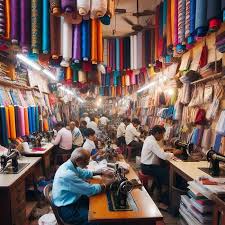
The Uttar Pradesh government faces a tricky situation in enforcing the latest gender-discriminatory directives issued by the Uttar Pradesh State Women’s Commission (UPSWC). The commission recommended controversial steps ostensibly to provide safety to women at large. These include barring male tailors from taking women’s measurements and restricting male trainers from instructing women in gyms and yoga sessions. The commission also suggested deploying women makeup artists instead of men in beauty parlours.
The directives of the UPSWC have sparked a sharp debate among progressive women activists and organisations, who viewed such extra-constitutional initiatives as a violation of the spirit of the Indian Constitution, which prohibits discrimination based on religion, race, caste, sex, or place of birth.
These directives directly conflict with citizens’ fundamental rights, which guarantee the freedom to practise any profession or pursue any occupation, trade, or business of choice. The state government has yet to implement the UPSWC’s recommended directives and is currently assessing their feasibility
The UPSWC headed by chairperson Babita Chauhan had communicated its decisions to the state’s chief secretary Manoj Kumar Singh for implementation via vide letter dated 28th October, recommending the engagement of female security personnel on school buses and hiring female staff in women’s clothing stores to enhance security for women in public and commercial spaces.
The Commission has proposed the installation of CCTV cameras in school buses, beauty parlours, gyms, yoga centres, and drama and dance schools. Police verification of all male employees in these establishments is also required to be done. Letters regarding the proposals have been sent to district magistrates across the state of Uttar Pradesh to encourage compliance and raise awareness.
These measures were discussed and resolved at a recent meeting of UPSWC in Lucknow following recent high-profile incidents, including a case in Kanpur where a male gym trainer allegedly murdered his client, Ekta Gupta, wife of a prominent Kanpur businessman, and buried her near the premises of the Kanpur District Magistrate’s residence.
Boutiques and beauty parlours were also highlighted as areas of concern in the meeting. “In boutiques, incidents of inappropriate touch by male tailors are common. Female staff should take women’s measurements to save them from any such embarrassment. Similarly, in beauty parlours, male beauticians working on bridal make-up and dressing often make customers uncomfortable,” the members stressed.
“There have been increasing complaints of ‘bad touch’ by male trainers in gyms and in women’s boutiques where tailors who take measurements are mostly male,” said Babita Chauhan, chairperson of the commission while justifying the decision. “What we are saying is that it isn’t a problem if the tailor is male but only women should take measurements,” she emphasised.
The commission also visualizes that this shift would help create more employment opportunities for women, though it acknowledges that training and hiring may take time to implement. The directives seek to ensure a more comfortable environment for women by limiting men’s roles in certain professions where physical proximity is required.
The approach of the commission has sparked a debate with many wondering if instead of “isolating men”, the focus should have been on “empowering women. “There is a difference between sensitising men and isolating them,” said Lucknow-based Niti, who works on women’s issues.
The commission’s approach has sparked debate, with many suggesting that the focus should be on ’empowering women’ rather than ‘isolating men.’ ‘There is a difference between sensitising men and isolating them,’ said Niti, a Lucknow-based advocate for women’s issues.
Former acting Vice-Chancellor of Lucknow University, teacher and activist Roop Rekha Verma, said, “There cannot be a more stupid idea than this, because what is required is to create mindset among the public that we are not so different and so exclusive human beings as we are seen by each other.” “We are human beings and citizens in the same sense, and therefore this ghettoisation that only women will speak to women, only women will cut the hair of women doesn’t make sense. This sort of exclusive separation between boys and girls is the main reason behind the issues we face today,” she opined.
Madhu Garg, national joint secretary of AIDWA (All India Democratic Women’s Association), said, “This is not the correct thought process, and is done by those with a narrow mindset. Such actions risk jeopardising the jobs of hundreds of people.” “Generally, it is seen that women themselves give their measurements to the tailors. This is not a big issue. If the UPSWC wants to do anything, then it should stop the rape and murder of women. They are unable to do anything about this, and are speaking like this on petty issues,” Garg added.
“We consider this type of directive of the Women’s Commission as an assault on the employment of Muslim minorities who are largely engaged in tailoring and embroidery artworks. If a woman goes to the police station with a complaint of such harassment, the police normally do not register an FIR so what is the use of such an absurd order? This is an attack on a community. This decision is also against the constitution, as it also restricts the right to choose employment. The government must intervene and withdraw it immediately,” said noted writer and women’s rights activist Naish Hasan.
Samajwadi Party MLA Ragini Sonkar (Machhlishahr, Jaunpur) believed that it should be left to individuals to decide which store or gym they want to go to. “I don’t think this decision is justified as it should be left to an individual to decide whether one prefers a male or a female to attend to her. It is a matter of choice,” she said. “We are okay with the proposal about women’s presence being mandatory at shops selling women’s garments and at tailoring shops. But then, ultimately, it boils down to an individual’s choice and this can’t be limited to a particular sex,” Sonkar remarked.
After her contentious recommendations attracted severe criticism, the chairperson, Babita Chauhan, explained through the media that her suggestions weren’t aimed at forcing anyone to take services from any particular gender. “I am not telling women that you take services at gyms or boutiques only from women. What I am saying is that I am all for providing options and leaving it to women to choose whether she is more comfortable having men or women around.”
Justice DY Chandrachud, who demitted office as the 50th CJI on November 10, leaves behind a legacy of reshaping the country’s jurisprudence. He oversaw landmark judgments on issues like Sabarimala temple entry, decriminalization of same-sex relations and electoral bonds. A report by Mudit Mathur
The tenure of the 50th Chief Justice of India, Dhananjaya Y.Chandrachud, has been marked by significant contributions to the country’s legal infrastructure and jurisprudence. His commitment to upholding individual rights, promoting social justice, and strengthening constitutional governance has left a lasting impact on India’s judicial system.
Chandrachud demitted his office on November 10, leaving behind an indelible legacy of reshaping the landscape of the country’s jurisprudence and reforming it to new heights in constitutional law, and human rights that reflects a broader vision of justice aligning with the evolving values of society. President Draupadi Murmu administered the oath of office to new CJI Sanjiv Khanna on November 11.
Many jurists showered praises on Justice Chandrachud for his intellectual prowess, progressive judgments, and for bringing about technological reforms in the judiciary. His landmark judgments on issues like women’s entry into temples, decriminalization of adultery and same-sex relations, privacy rights, rights to free speech and electoral bonds have been commended by society at large. His mastery of constitutional law, history, and sociology has been widely acknowledged.
Justice Chandrachud demonstrated judicial compassion in cases involving child rights, disability rights, and social justice. His tenure has been marked by significant efforts to reform the judicial system in India. One of his notable contributions is the introduction of technological reforms, such as virtual courts, e-filing, and live streaming of court proceedings, aimed at improving accessibility and transparency. He vigorously pushed the e-courts project to modernise the judiciary of the country.
Justice Chandrachud pioneered virtual courts, enabling remote hearings and reducing the need for physical presence in court rooms. He implemented e-filing systems and live streaming of court proceedings to enhance transparency and accessibility.
Besides introducing the Inter-Operable Criminal Justice System (ICJS), a system aimed at integrating various stakeholders in the criminal justice system, Justice Chandrachud also oversaw the development of the NJDG, a digital platform for tracking court cases and improving judicial efficiency. These reforms have improved the efficiency and accessibility of the judicial system. However, his critics argue that more needed to be done to address the systemic issues plaguing the Indian judiciary, such as delays, backlogs, and corruption.
CJI Chandrachud’s relations with the Central Government have been critical of the government on several occasions, pulling up the Central government counsel in significant cases but despite that, he faces criticism for the Supreme Court’s handling of sensitive cases as master of rosters, and the lack of diversity and opaqueness in functioning of the judiciary remain pressing concerns. Justice Chandrachud faced allegations of violating listed rules by moving politically sensitive cases to the select benches.
The collegium headed by CJI Chandrachud has made its views clear on the government rejecting or returning names already reiterated, ensuring more transparency in the appointment process by putting the government’s reservations on its website but his approach to judicial appointments sparked debate within the legal community.
His landmark judgements that reshaped the jurisprudence of the nation include Justice K.S. Puttaswamy v Union of India (Privacy Case, 2017) wherein it was held that passing the Aadhaar Act as a Money Bill was a fraud on the Constitution.
His judgement on the Ayodhya dispute drew criticism when he said it was inspired by God (M Siddiq v Mahant Suresh Das (Ayodhya Title Dispute) (2019) as part of the unanimous five-judge bench decision, the court granted the disputed land to Shri Ram Virajman while ensuring justice for all parties.
In the Association for Democratic Reforms v Union of India (Electoral Bonds Case) (2024), the five-judge bench declared the Electoral Bonds Scheme unconstitutional for violating the right to information under Article 19(1)(a). The Bench held that the Scheme violated the voters’ right to information enshrined in Article 19(1)(a) of the Constitution.
In the matter of Sita Soren v Union of India (Legislative immunity for lawmakers facing bribery charges) (2024), a seven-judge bench unanimously overruled the P.V Narasimha Rao case, holding that lawmakers don’t enjoy parliamentary immunity for bribery under Articles 105(2) and 194(2). This judgment strengthened anti-corruption measures in legislative bodies.
The historic judgment in Navtej Johar v Union of India (2018) case decriminalized homosexuality as Justice Chandrachud’s concurring opinion declared Section 377 unconstitutional.
The legacy of Justice D.Y. Chandrachud will indubitably continue to influence future generations of legal practitioners and scholars. His landmark judgments not only serve as important precedents in Indian law but also mark the judiciary’s role in nurturing democracy and upholding human rights. His legacy will inspire future leaders in the legal domain to advocate for justice, equity, and constitutional integrity in their pursuit of a just society
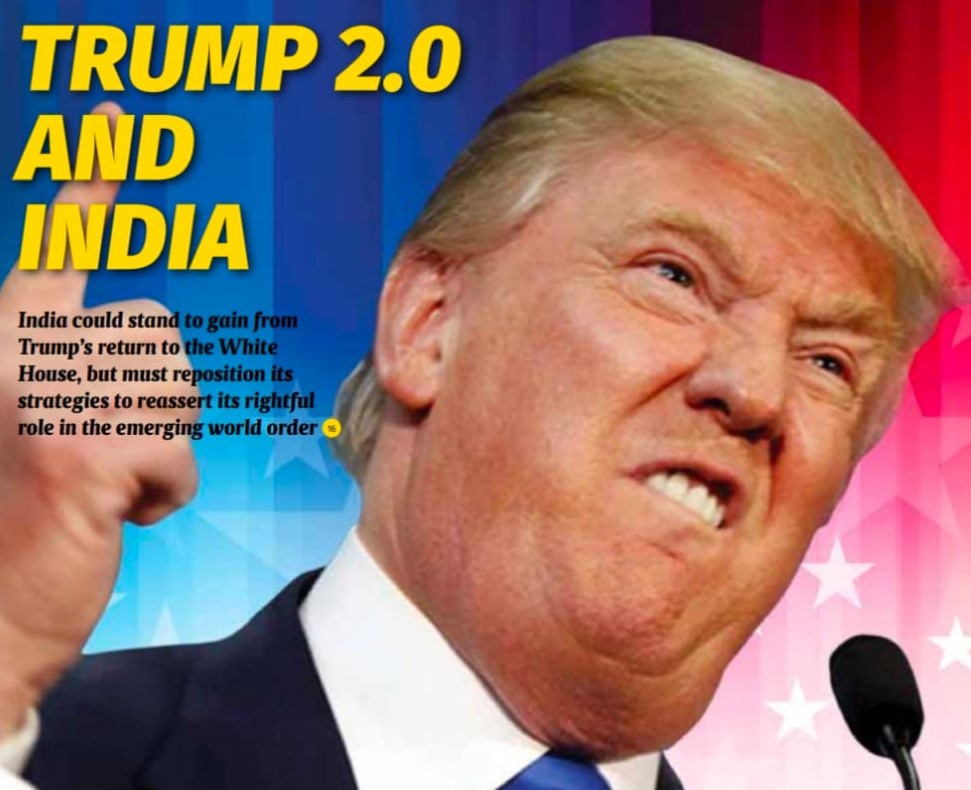
As Donald Trump prepares for a return to power, the world, including India, braces for the return of a figure who thrives on unpredictability. For India, managing relations with Trump is far from simple. On one hand, the U.S. President often praised Prime Minister Narendra Modi, even calling him “my good friend.” On the other hand, Trump’s actions and rhetoric have repeatedly cast India in a less flattering light. The cover story by senior journalist Gopal Misra “Trump 2.0 and India” analyses how India couldfind new opportunities with Trump back in the White House, but will need to reposition its strategies to reassert its rightful role in the emerging world order.
Awards-winning journalist and noted author Kumkum Chadha in her column for Tehelka “That Special Bond” traces PM Modi’s equation with Trump for whom he had earlier cheered ‘abki baar Trump sarkar’. Also, an incisive column exclusively for Tehelka by Dr. Anil Singh, Editor of STAR Views, who is currently in Washington D.C. explains for our readers the implications of Trump’s comeback for global geopolitics.
Ironically however, Trump, during his campaign, had criticized India’s trade practices, particularly its heavy tariffs on U.S. goods, warning of a “tit-for-tat” policy to bolster American wealth. Additionally, Modi’s “Make in India” campaign could clash with Trump’s “America First” agenda. While Modi aims to boost Indian manufacturing and attract foreign investment, Trump’s protectionist policies may curb those ambitions, especially in sectors where U.S. interests dominate.
Optimists hope that on the diplomatic front, India will likely hope that Modi’s rapport with Trump can smooth over potential areas of friction, such as the ongoing dispute over Gurpatwant Singh Pannun and related matters. However, when dealing with Trump, unpredictability is the only constant.
India will also be closely watching developments in Canada, where the Trudeau government’s handling of anti-India elements has strained relations with New Delhi. The recent violence at the Hindu Sabha Mandir in Brampton exposed the Canadian government’s inability—or unwillingness—to address growing tensions between pro-Khalistan activists and the Indian community. The incident underscores the precariousness of India-Canada relations, which have been deteriorating since the 2020 murder of Khalistani activist Hardeep Singh Nijjar. Canada’s failure to take a firm stand against these anti-India forces is seen as a diplomatic failure.
At a time when Canada is struggling to manage internal divisions related to Sikh separatism, India will be hoping that a second Trump administration does not stoke further instability in the region. The situation is complex, and Modi’s relationship with Trump may offer some diplomatic leverage, but India must remain cautious. Given Trump’s unpredictability, New Delhi must be prepared for any eventuality.
Donald Trump’s return to power would undoubtedly present challenges for India on multiple fronts—trade, diplomacy, and immigration. While India may find some opportunities to leverage Modi’s rapport with the U.S. president, the overarching unpredictability of Trump’s policies makes it hard to chart a clear course.
India couldfind new opportunities with Trump back in the White House, but it will need to reposition its strategies to reassert its rightful role in the emerging world order, writes Gopal Misra
Donald Trump, who served as the President of the US during 2017-21, is now poised to reoccupy the White House as the country’s 47th President, on January 20, 2025. Few may recollect that Donald Trump hosted reality TV shows, The Apprentice, and The Celebrity Apprentice from 2014 to 2015. He also has made dozens of cameo appearances in films and TV serials and various advertisement films. Apart from winning the Worst Supporting Actor Award at the 11th Golden Raspberry Award for “Ghosts can’t do it” in 1990. In 2019, he won the Worst Actor and Worst Screen Combo at the 39th Golden Raspberry Awards for his role in the documentary film “Death of a Nation and Fahrenheit 11/9” in 2019. There is a dialogue in one of his television serials, which says “You are fired”, that reflects the fragile job markets in the US; it becomes also relevant when despite huge financial support of the country’s military-industrial complex, Kamala Harris, aiming for the presidential office suffered a humiliating defeat in November election.
It has not been just an electorate selecting a new president in the country, but the re-election of Donald Trump, a former President, to lead the world’s most powerful country again entails a new set of opportunities and challenges, sometimes directly or often indirectly, affecting and influencing the countries around the continents.
With Donald Trump’s political supremacy being recognized and established by his political rivals, the recently concluded election also has a spicy taste of a theatre or the show world, he had been associated through a number of assignments. In one of them, the common corporate exclamation “you are fired!” is being remembered.
The initial reactions of the bitterly contested election held recently in the US have not only sent shock waves in the domestic American politics, but were also being focused by the major world powers, including Russia and China. Their reactions varied: either being subdued or more cautious than expected. Israeli Prime Minister Benjamin Netanyahu and Ukrainian President Volodymyr Zelenskyy too have greeted Trump for his victory. Interestingly, Netanyahu was told in the last week of October that the Gaza conflict must end before his Administration is inaugurated, and Zelenskyy too is quite aware of the fact that the Trump Administration would not be giving support to his country anymore.
In the US, the presidential election process is somewhat complex, but it has garnered so much attention in distant lands that even the uninitiated in India are aware of what the red and blue states represent: the American political parties, Republicans and Democrats, respectively. Similarly, they know that the states described as purple are actually the ‘swing states’ or battleground states. The changing preferences of the electorate in these swing states—such as Michigan, Wisconsin, and Pennsylvania—among the seven out of the 50 US states impact a candidate’s prospects. Despite Kamala Harris of the Democratic Party appearing to be a formidable candidate, she could only secure 226 votes in the electoral college. Meanwhile, Trump crossed the 270 mark to secure his majority, ultimately receiving 295 votes in the final tally.
Reorienting the strategies
India now having a much more friendly regime in Washington, needs to review her lack-lustre approach towards various issues, especially in the key areas of economics and strategic affairs. It is quite well known that the Indians being a part of India’s pleasant tropical environment are prone to laziness. In other words, India should avoid being lured to slumber with a friendly President in the White House. According to well-known defence experts, she has to reorient her strategies and efforts for becoming a strong partner of the democratic world, especially in the context of a noted drift in her manufacturing systems and strategic efforts in her immediate neighbourhood. They quietly point out that it cannot be denied that in recent years, instead of stressing for substantial gains in various key and strategic areas, more emphasis was being given to unnecessary rhetoric, perhaps, only to give a macho-look to the Indian leadership. It is being felt in the knowledgeable sections of New Delhi that this much-trumpeted approach might prove counter-productive, while dealing with the new American President.
In this context, it is being suggested that the present Indian establishment under Prime Minister Narendra Modi, perhaps, has to become much more result-oriented than it had been during President Joe Biden’s tenure. Following the exit of the Biden regime, Donald’s Trump’s second inning will formally begin in the next two months, in the Whitehouse, but the process of change, especially focusing on ending conflicts, is expected to be witnessed during this transitional period.
During this historic transition, Indians, in their role as the most trusted ally in Asia, must reinvent and reinvigorate themselves for a meaningful, mutually beneficial contribution to the new emerging world order emphasised by Trump. For many, it was perhaps easier for the mandarins in New Delhi to navigate dealings with naives occupying key positions in the American power structure during the outgoing regime
It included a section of them identifying with the West’s outdated colonial agenda, such as reinventing radical Islam in Bangladesh or being reluctant to challenge the clergy regime in Iran. Before the final epitaph is scripted on the burial site of the Biden regime, the Indians have to weave a new narrative for not only dealing with the US Administration, but they have also to reinvent a new investment-friendly environment. It is worth noting that the Modi regime, which succeeded Prime Minister Dr. Manmohan Singh’s 10-year tenure did not unleash the shackles on the economy. Instead, tax and police officials were often deployed to serve the political interests of the day.
With the arrival of Trump on the political scene, if the Modi government is keen to be benefitted by the friendly regime, it finally has to restore the process of the economic reforms and transparency in the Indian domestic systems. It is going to be difficult for the Modi government to resort to excuses that due to the apathy of the outgoing Biden Administration, it could not perform as expected. It has to abandon the repeated efforts to camouflage its claims quoting some known and unknown statistics. A recent visit to any Indian market will reveal that for the past 10 years, India has continuously been importing toys and lights for the Deepawali illuminations and even idols of Ganesh-Lakshmi are being imported from China. Thus, she is estimated to have contributed about 1200 billion USD during this period to the Chinese economy by suffering a perennial trade deficit with her northern neighbour.
It is hoped that the next two months are going to be crucial for the forces playing a key-role in the global strategic issues and trade policies. It was not surprising that a reluctant Chinese President, XI Jinping, finally greeted the president-elect Trump. In a cautious message, he expressed hope that the two countries would finally succeed in evolving a strong mechanism for dialogue on tricky issues, including the trade war, the future of Taiwan and the strategic issues related to the South China Sea. Meanwhile, Germany has been suffering financial losses due to the sudden cancellation of the orders for weapons and ammunition from Ukraine. It, however, is expected that this financial loss could just be temporary, if the ceasefire begins on the East European war front. The other members of the European Union might also get some respite, if the forces of peace are finally activated.
With the new political incarnation or avatar, Trump, is expected to win back the US allies in the West. During his earlier tenure, they were unhappy that Trump had asked them to cough up the high cost of the security umbrella under NATO, but the ongoing war between Russia and Ukraine, appears to have chastised them. They are now willing to work together for security, freedom and free-trade.
India has its task cut out – The discussion regarding the possible impact of the new US Administration on India will remain inconclusive if Trump’s global agenda is not properly understood. It can be explained that the US has to regain its economic power by synergizing the state-of-the art technologies. In one of his election speeches, he had asked for giving job visas to the Indians, who become millionaires in their home country after studying in the USA. In other words, it means that New Delhi has to work overtime to reposition India by updating her technologies, and also introduce transparency in business and trade dealings with the US-led West. The insiders, however, both in the South Bloc, which houses the PMO, defence and foreign affairs, and the North Bloc, the headquarters of the home and finance ministries, concede that it could, indeed, be a tough task, but not impossible.
It is expected that a friendly Administration in Washington will be helping India to re-win her allies and friends in the region. In recent years, India has also been smarting under Biden’s pro-China policy. Perhaps, due to the financial pressures of his family, including his son, Hunter, and other American investors, he was unable to formulate any far-reaching political strategy to deal with the Dragon.
However, India has much homework to do in dealing with a friendly president in Washington. Trump’s four-year exile from power, marred by embarrassing and unsubstantiated accusations, has transformed him into a more mature, weather-beaten politician—now ready to step into the role of a statesman.
The upshot of his election campaigns and observations during the recent months for his countrymen, allies and associates have been, “We have to sink and swim together.” No more false hopes and agenda for conflicts, and the US citizens no more have to bleed for others, whether it is Afghanistan or Ukraine.
India, indeed, as a number of defence and foreign affairs experts point out, can be benefitted by Trump’s presence in the White House, but she has to revamp and reinvent her strategies to reassert her legitimate role.
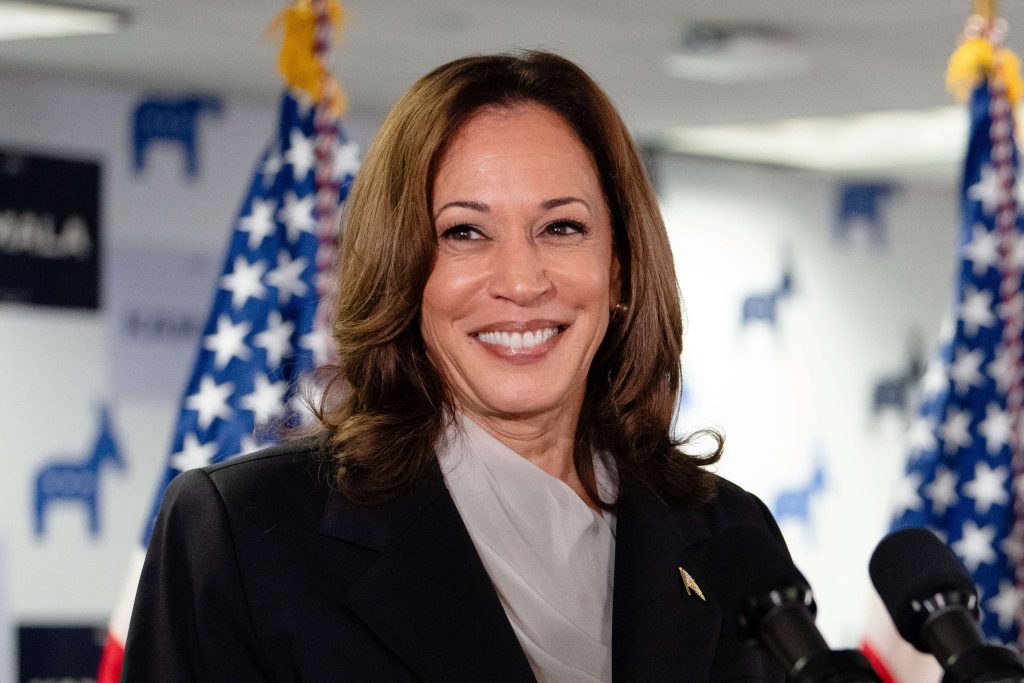
TOPSHOT – US Vice President and Democratic presidential candidate Kamala Harris speaks at her campaign headquarters in Wilmington, Delaware, on July 22, 2024. Harris on Monday compared her election rival Donald Trump to “predators” and “cheaters,” as she attacked the first former US leader to be convicted of a crime. (Photo by Erin SCHAFF / POOL / AFP) (Photo by ERIN SCHAFF/POOL/AFP via Getty Images)
Kamala Harris’ election office in Washington was reluctant when the election results started pouring in. But, later, she not only maintained the decorum of a democratic leader, but also congratulated Trump for his election victory, but she also told a high-profile gathering at the Harvard University, that despite being coming from a humble background, she never expected that she would be occupying such a high-position in the American establishment, and could also be contesting for the presidency.
Meanwhile, it appears that the liberal funding to the Russia-Ukraine War has adversely affected American resources, which in turn impacted the relief offered to the hurricane victims. Besides the political storm that has been hitting America, a large population of the US has suffered from the hurricanes during the months of September, October and November. The victims, despite assurances from the top officials including Kamala Harris, are struggling for survival.
The two hurricanes, Helene and Milton, have already hit the Mexican bay in September and October causing widespread damages, and the new cyclone is expected to hit the coastal areas any time. It is likely to cross the Bay of Mexico in November. Already five hurricanes have made landfalls in the USA. In spite of her personal efforts, Kamala Harris could get only USD 750 per household for the cyclone victims from the Federal Emergency Management Agency, which has reported that it does not have adequate funds for the thousands of the homeless starving victims.
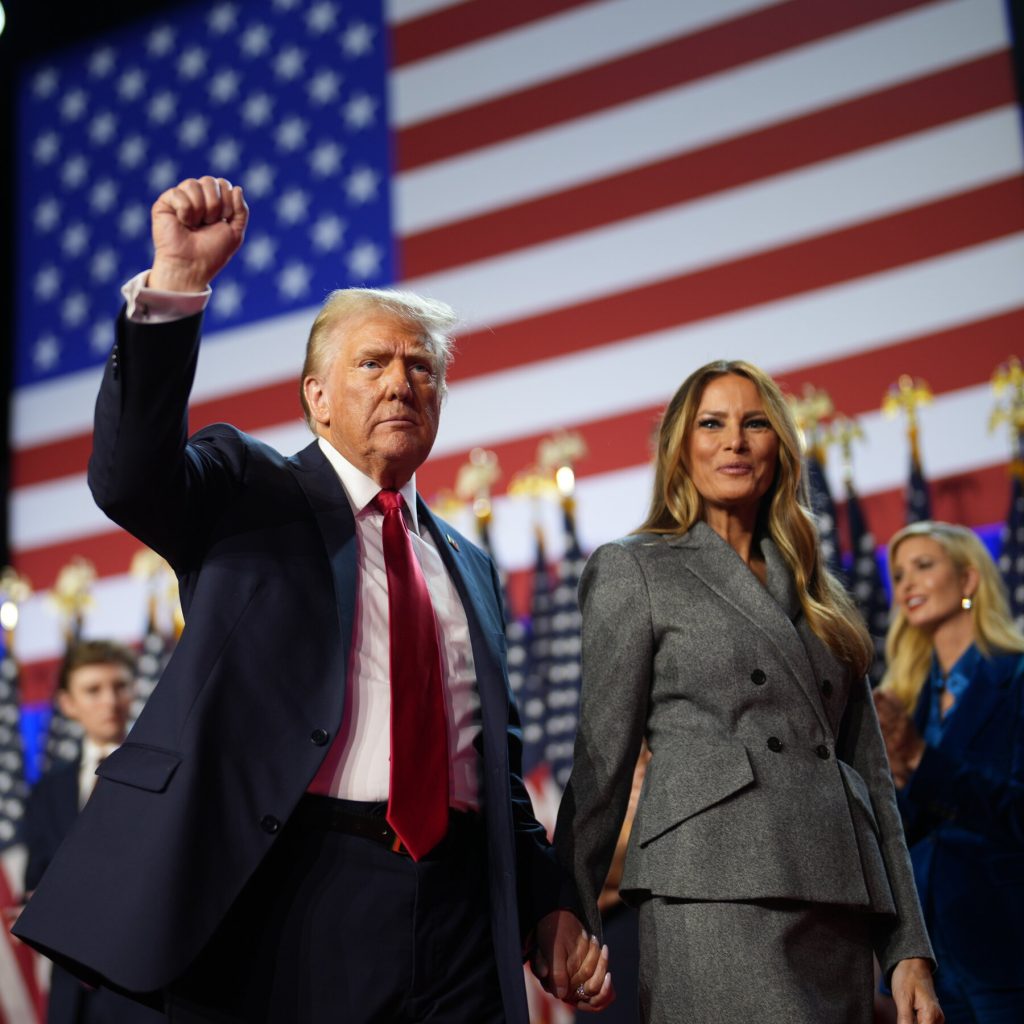
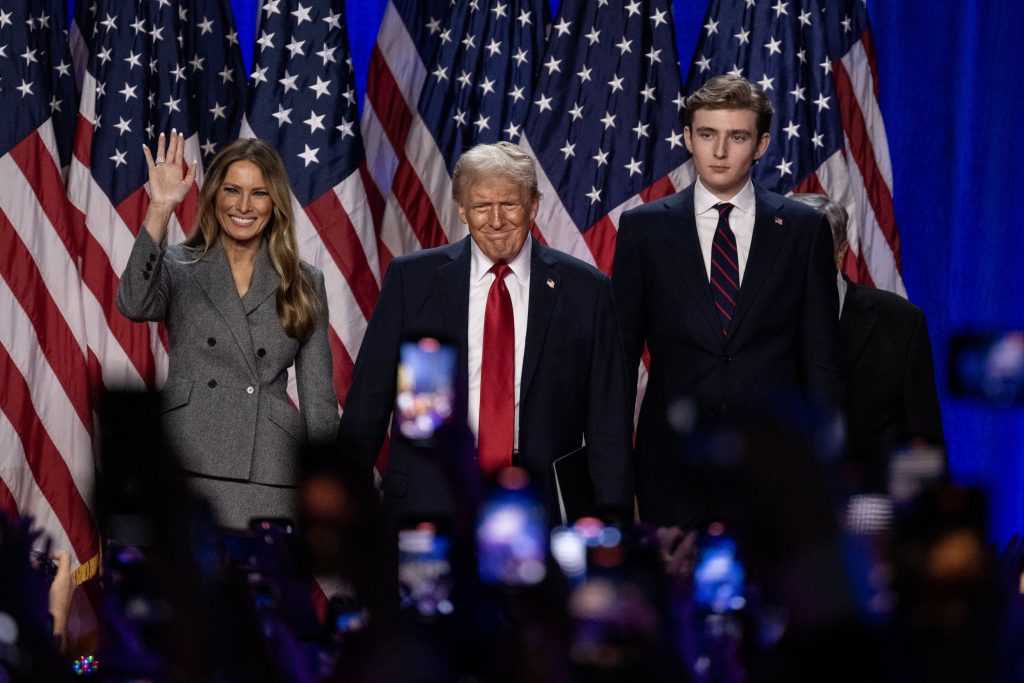
Melania Trump, who served as the first lady from 2017 to through 2021, has issued a statement on social media, “We will safeguard the heart of our republic—freedom, I anticipate the citizens of our nation re-joining the commitment to each other and rising above ideology for the sake of individual liberty. She further says, “American energy, skill and initiative will bring together our best minds to propel our nation forwards forever.”
Will Trump walk the tax talk?
The President-elect, Donald Trump has proposed to eliminate the income tax on American citizens, according to an American media channel. He has assured that he would soon be announcing a tariff plan to end this draconian system of harassing the citizens.
Elon Musk, one of the world’s most admired billionaires, is expected to usher in an era of eliminating redundancies in the vast government machinery as well as stopping wasteful expenditures in the government institutions. As promised by Trump, he would soon be leading the DODGE or a new department of government efficiency. Like India, the unnecessary expansion of government offices in the USA has not only slowed the functioning of the government, it has adversely affected the economy of the state.
In India, in spite of the assurances of the successive prime ministers, the nexus between the politicians and the civil servants have compromised the efficiency of the administration. The Indian bureaucracy has expanded like an octopus, almost stifling the Indian initiative in every walk of life, especially in developing modern agriculture, Indian industry, the state-of-the art technology and world-class education.
Trump’s team: Who’s in the running?
Both the electronic and print media across the continents are abuzz with the names of the probables, who might be occupying key positions in the cabinet of Donald Trump. He is expected to finalize the names before his formal inauguration in January next year. The aspirants include John Paulson for Treasury Secretary, Marco Rubio or Richard Grenell, Rubio has served as the acting Director of the National Intelligence, and Grenell has served as Ambassador to Germany, for the Secretary of State, Elon Musk, and Robert F. Kennedy too is expected to be inducted in the new Administration. It may be recalled that Robert F. Kennedy, son of the assassinated senator, Bobby Kennedy and nephew of JFK, could be asked to lead the health department, especially in the context of the controversial role of Beijing and a section of American corporate.
Former CIA director, and secretary of state, Mike Pompeo, might be heading the defence establishment as the secretary of defence. It is not known what strategy Trump would be adopting in the case of Attorney General, Jack Smith, who reportedly has been supervising the ongoing criminal cases against Trump under the Justice Department.